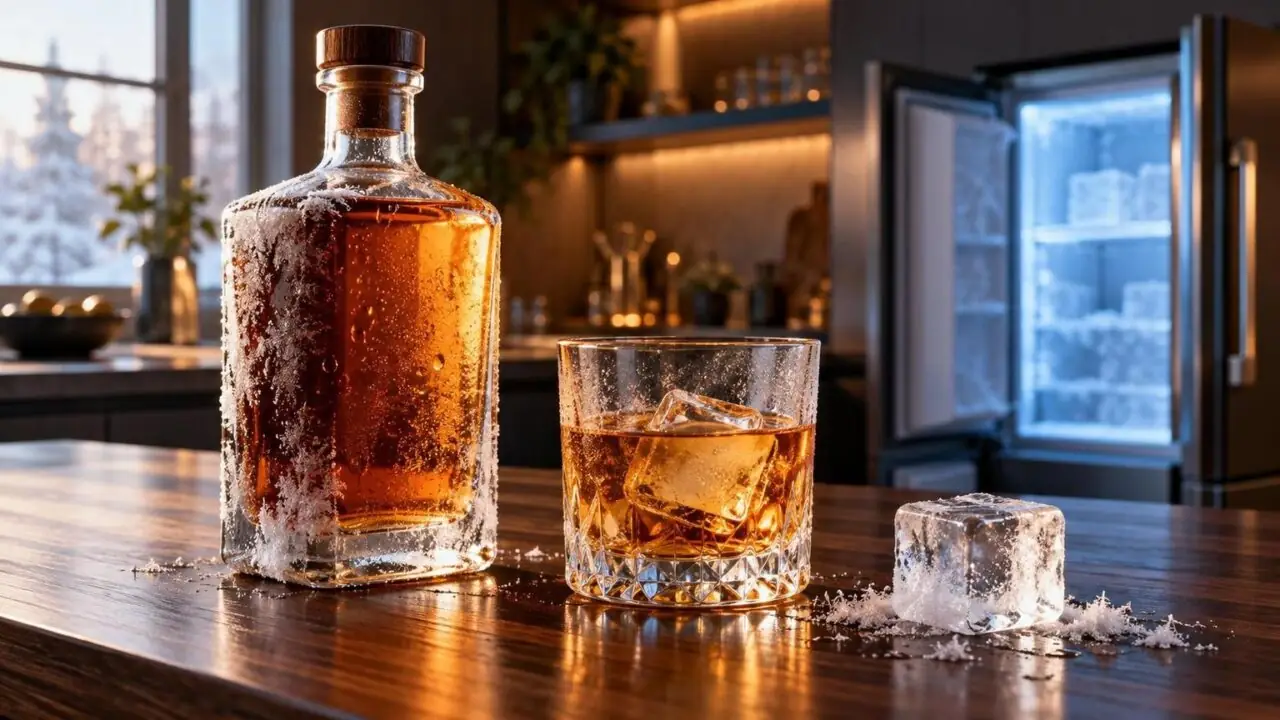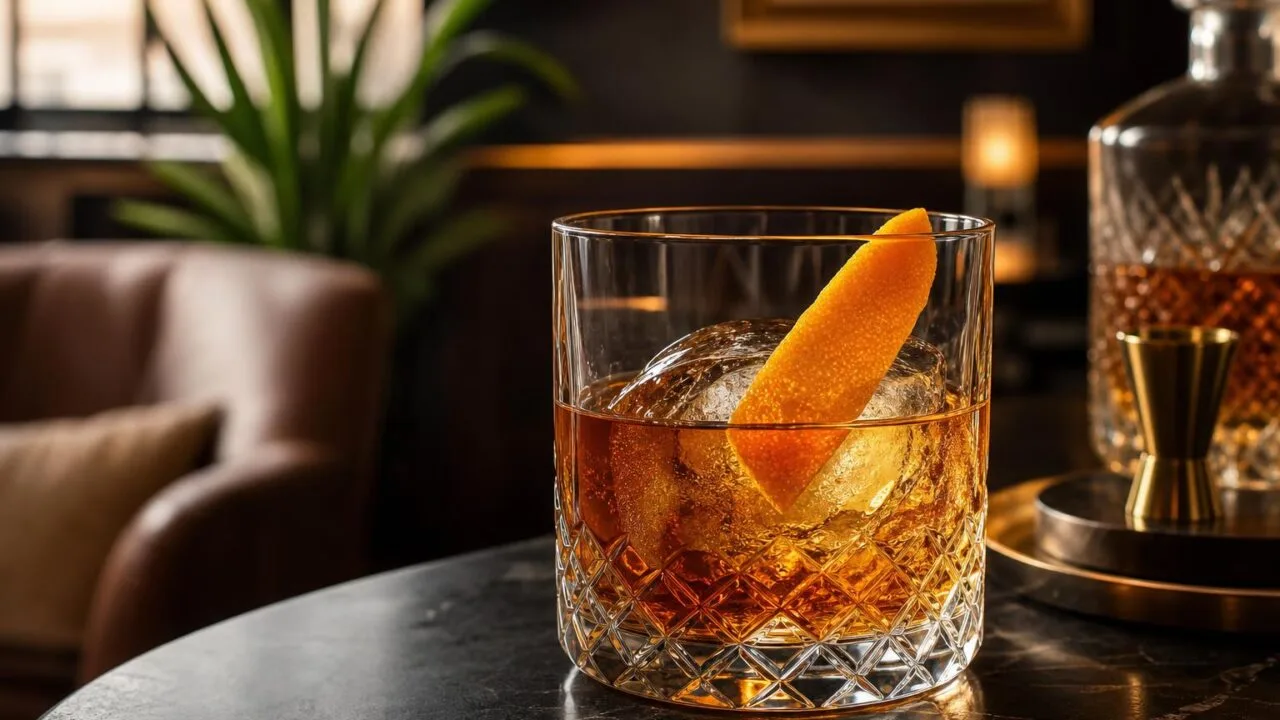
What Does An Old-Fashioned Taste Like is a spirit-forward blend of warm whiskey, restrained sweetness, aromatic bitters, and orange oil, with the base spirit clearly leading every sip.
A properly made Old-Fashioned tastes rich, dry-leaning, lightly sweet, and gently spiced rather than fruity or syrupy.
Expect caramel, vanilla, oak, baking spice, and citrus peel notes, especially when bourbon is used; rye makes it drier and pepperier.
The sugar softens the alcohol’s edge, while Angostura bitters add clove, cinnamon, and herbal depth, creating a slow, warming finish.
Why an Old-Fashioned Tastes Concentrated
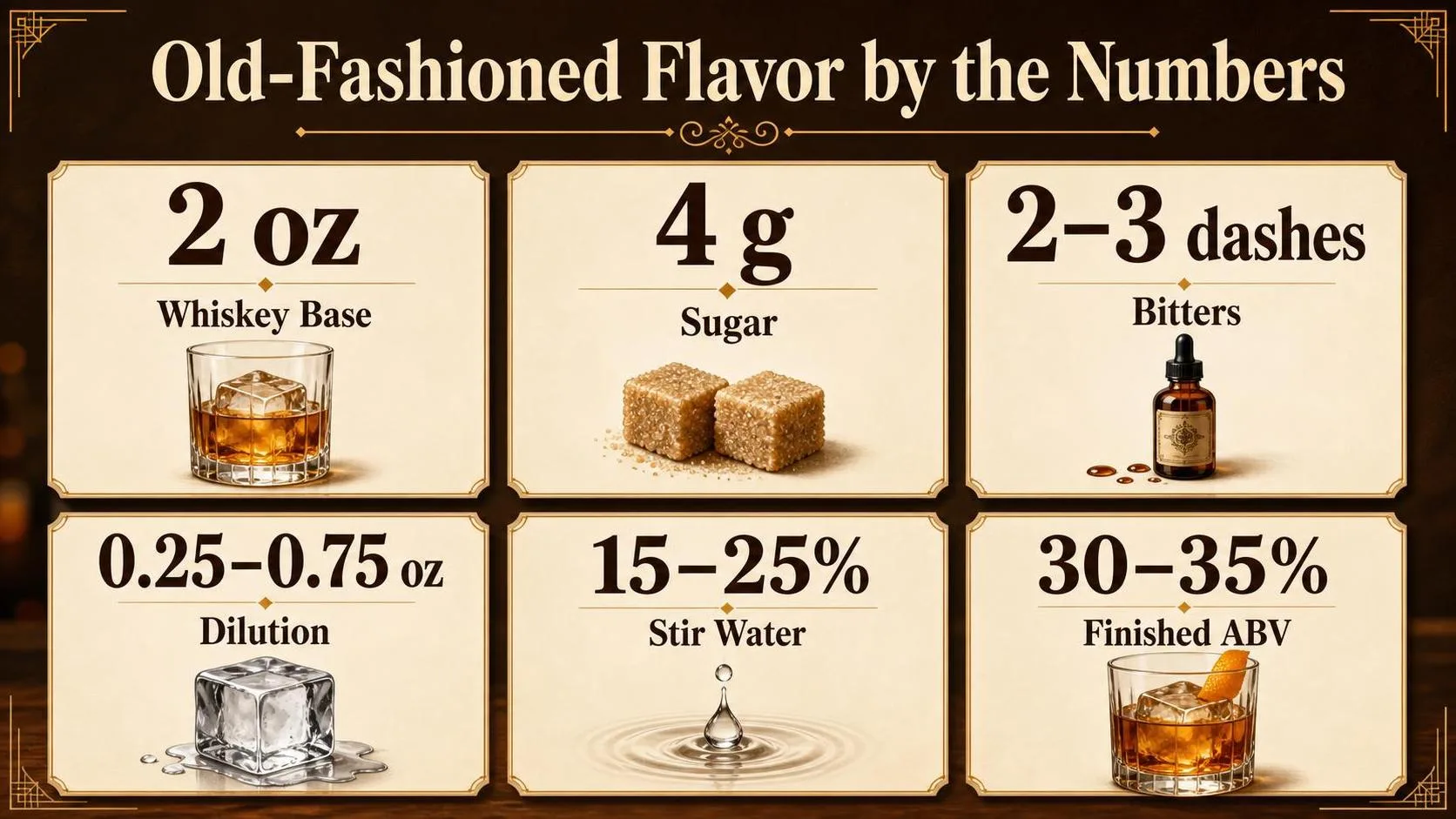
An Old-Fashioned tastes strong, lightly sweet, bitter-spiced, and whiskey-forward because the formula is small and concentrated.
A few grams of sugar, a few dashes of bitters, and controlled dilution change the whiskey’s texture more than its identity.
The International Bartenders Association’s Old Fashioned spec uses 45 ml bourbon or rye, 1 sugar cube, several dashes of Angostura bitters, and a splash of water. In U.S. bar practice, the build is usually scaled to 2 oz whiskey.
| Number | What it means for taste |
| 2 oz whiskey | This is the backbone. Bourbon gives vanilla, caramel, and oak sweetness; rye gives pepper, mint, clove, and a drier finish. |
| 1 tsp sugar or 1 cube | About 4 g sugar. It softens alcohol heat and rounds bitterness, but it should not make the drink taste syrupy. |
| 2–3 dashes bitters | Angostura adds baking spice, gentian-like bitterness, clove, cinnamon, and dried citrus peel notes. |
| 0.25–0.75 oz dilution | Water opens aroma and reduces burn. Too little tastes hot; too much tastes thin and flat. |
| 30–35% ABV finished | A stirred Old-Fashioned often lands near this range, depending on whiskey proof, ice, and stir time. |
Why 4 Grams of Sugar Matters
Four grams is roughly 16 calories of sugar, but its sensory impact is larger than the number suggests. It reduces perceived sharpness, makes oak taste more caramelized, and helps orange oils smell brighter.
Using 0.25 oz of 2:1 rich simple syrup gives about the same sweetness as a sugar cube, but it integrates faster. A full 0.5 oz can push the drink toward candy-like sweetness.
Why Proof Changes the Flavor
A 100-proof rye makes a spicier, firmer Old-Fashioned than an 80-proof bourbon. Higher proof carries more aroma compounds and stays structured after ice dilution.
In tastings, 90–100 proof whiskey is often the sweet spot. It keeps the cocktail bold without the sharp ethanol edge common in cask-strength pours unless they are diluted carefully.
Why Dilution Is Not Optional
Stirring with ice typically adds 15–25% water by volume. That dilution lowers alcohol intensity, releases aroma, and creates the silky texture associated with a well-made Old-Fashioned.
- Under-diluted: hot, tight, boozy, and bitter.
- Properly diluted: rich, aromatic, lightly sweet, and warming.
- Over-diluted: watery, muted, and short on finish.
Build Choices That Change the Taste
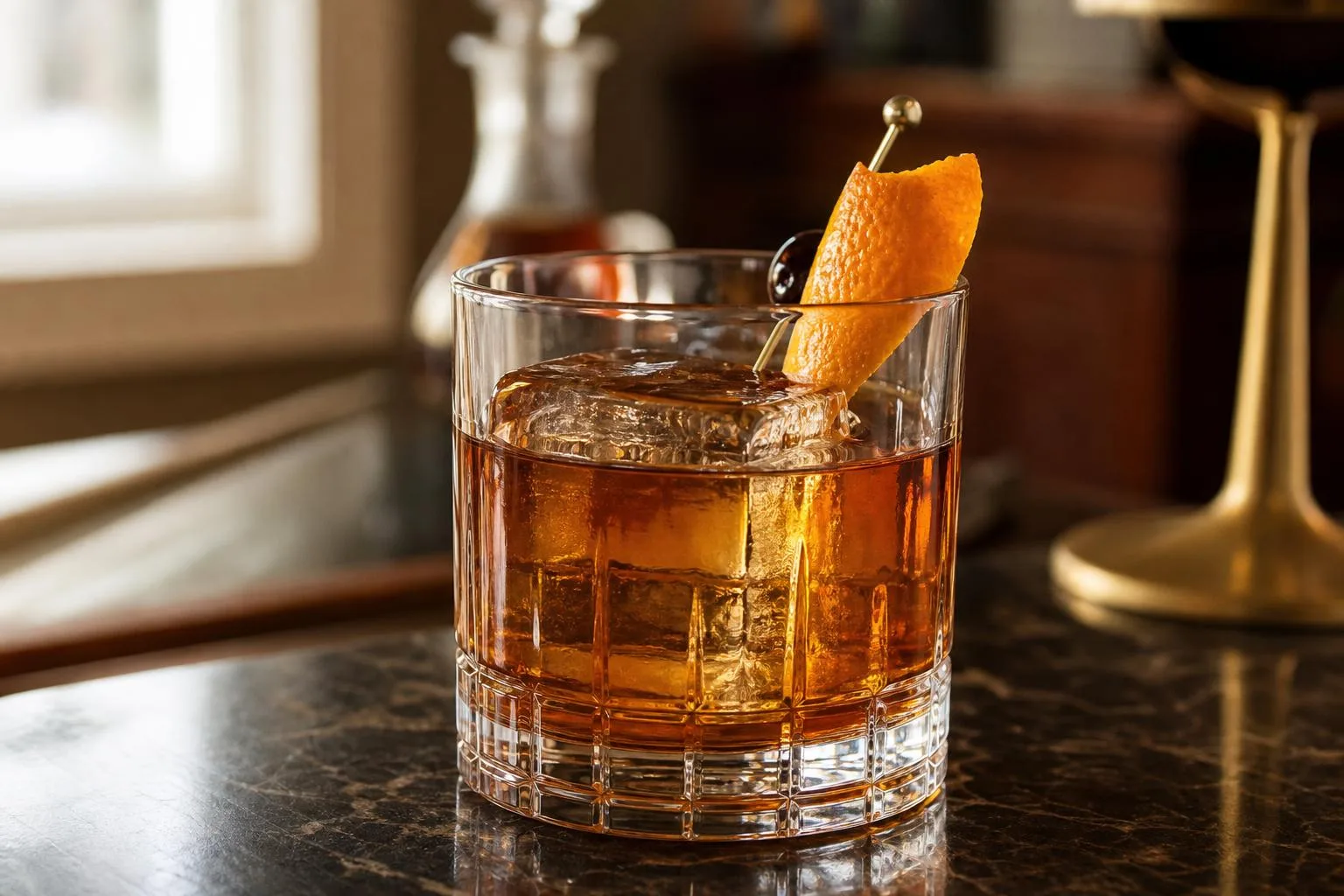
An Old-Fashioned tastes sweet, bitter, spirit-forward, and lightly diluted, but small build choices change it dramatically.
The whiskey proof, sugar format, bitters dose, ice, and garnish all affect whether the drink feels silky, spicy, hot, citrusy, or flat.
Whiskey Choice and Proof
Bourbon usually gives more vanilla, caramel, and corn sweetness. Rye pushes the drink drier, with black pepper, baking spice, and a firmer finish. A 100-proof whiskey stands up better to dilution than an 80-proof bottle.
| Base Whiskey | Typical ABV | Effect in an Old-Fashioned |
| Bourbon | 40% to 50% ABV | Rounder, sweeter, more caramel and oak |
| Rye whiskey | 40% to 50% ABV | Drier, spicier, sharper on the finish |
| Bottled-in-bond whiskey | 50% ABV | More structure, heat, and flavor after dilution |
Sugar Format and Sweetness
A standard build often uses 1 sugar cube, about 4 grams, or roughly 1 bar spoon of 2:1 rich simple syrup. Syrup integrates faster and gives a smoother texture. A muddled cube can leave grainy sweetness if not fully dissolved.
Too much sugar makes the drink taste candied and masks the whiskey. Too little makes bitters and alcohol dominate. The sweet spot is usually enough sugar to round the edges, not enough to turn it into a dessert cocktail.
Bitters Dosage
Most Old-Fashioneds use 2 to 3 dashes of Angostura-style aromatic bitters. That small amount adds clove, cinnamon, gentian bitterness, and dark spice. Four or more dashes can make the drink taste medicinal, especially with lower-proof whiskey.
Dilution, Ice, and Stirring
Dilution is not a flaw; it is part of the drink. Stirring with ice chills the cocktail and softens alcohol heat. In practice, a stirred Old-Fashioned commonly gains about 15% to 25% water by volume before serving.
| Ice Choice | Melting Pattern | Taste Impact |
| One large cube | Slower melt | Stronger, colder, cleaner over time |
| Small cubes | Faster melt | Quicker softening, easier to over-dilute |
| Wet or hollow ice | Very fast melt | Watery, thin, less aromatic |
Garnish and Citrus Oils
An orange twist changes the aroma before the first sip. Expressed orange oil adds bright citrus over the whiskey’s oak and spice. A cherry adds sweetness and fruit, but a syrup-heavy cherry can make the drink taste closer to candy.
Glassware and Temperature
A chilled rocks glass keeps the drink tighter and less alcoholic on the nose. A warm glass makes ethanol more noticeable. Because an Old-Fashioned is mostly whiskey, even a few degrees of serving temperature noticeably changes aroma and burn.
Measuring Old-Fashioned Taste and Aroma
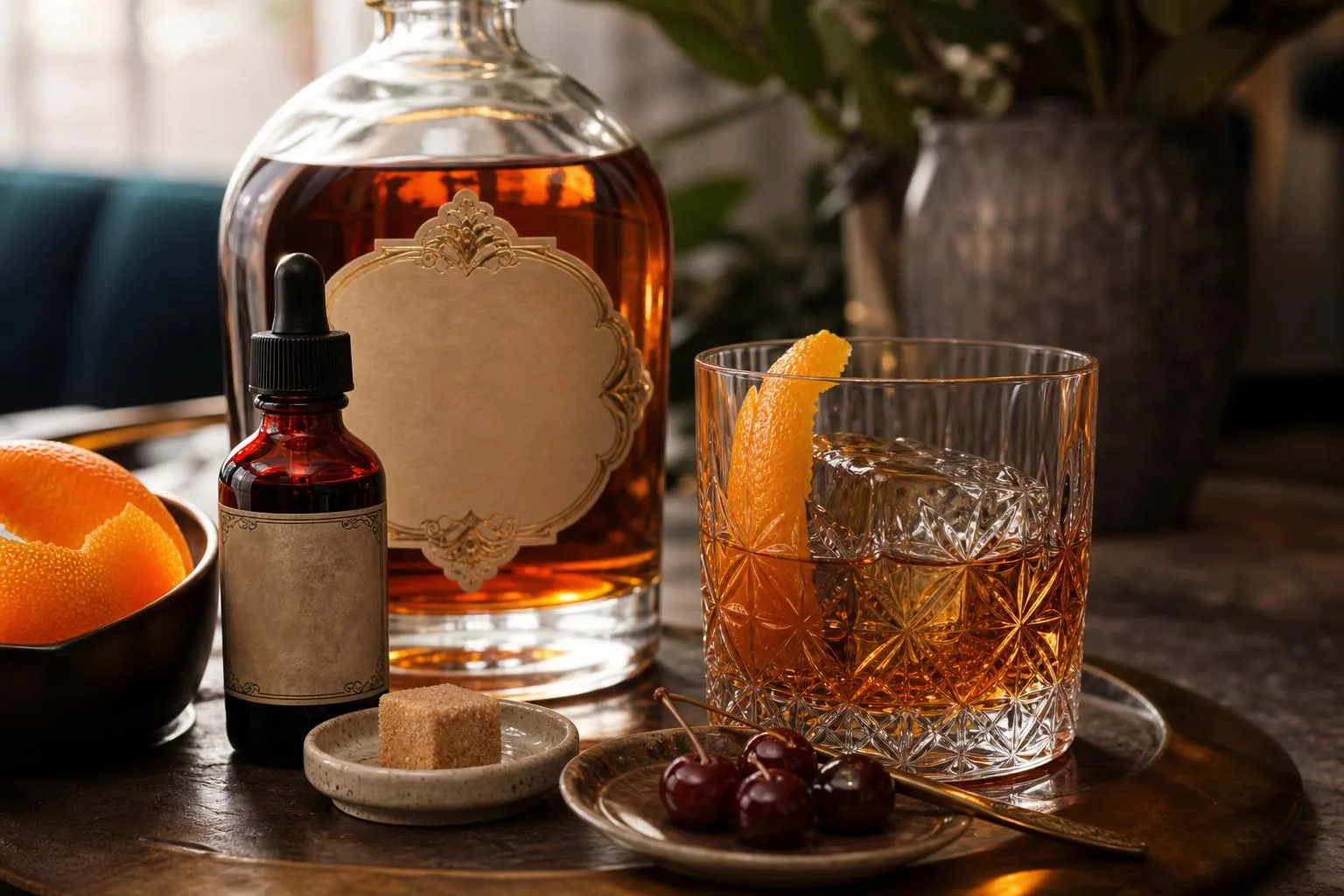
An Old-Fashioned’s taste is verified by measuring dilution, sweetness, bitterness, alcohol strength, and aroma release. In practice, bartenders confirm balance with standardized pours, a consistent stir time, and sensory checks after dilution.
The classic benchmark is the International Bartenders Association formula: whiskey, sugar, Angostura bitters, and water from dilution. That recipe gives a spirit-forward drink, not a sweet cocktail.
Standard Formula Checks
| Component | Common measured amount | Flavor role |
| Bourbon or rye whiskey | 2 oz / 60 ml | Oak, vanilla, caramel, grain spice, alcohol warmth |
| Simple syrup | 0.25 oz / 7.5 ml, usually 2:1 or 1:1 | Rounds harsh edges and adds weight |
| Angostura bitters | 2 to 3 dashes | Clove, cinnamon, gentian bitterness, dry finish |
| Orange twist | 1 expressed peel | Citrus oil aroma, perceived freshness |
| Dilution | About 15% to 25% after stirring | Softens proof and opens aroma |
Verification starts with the base whiskey. A 100-proof bourbon or rye will taste hotter and more structured than an 80-proof bottle after the same stir. Many bars prefer 90 to 100 proof because dilution does not flatten the drink as quickly.
Dilution is the easiest variable to check objectively. Weigh the mixing glass before and after stirring, or measure final volume. A 2.25 oz build that finishes near 2.7 oz has gained roughly 0.45 oz water, or 20% dilution.
| Build stage | Example volume | What it confirms |
| Before ice | 2.25 oz | Whiskey, syrup, and bitters are correctly portioned |
| After stirring | 2.6 to 2.8 oz | Proper chill and dilution range |
| Serving temperature | About 28°F to 34°F | Cold enough to soften alcohol without muting aroma |
Sweetness can be verified with syrup concentration. A 1:1 simple syrup contains about 50% sugar by weight, while 2:1 syrup contains about 67%. Using 0.25 oz of 2:1 syrup makes the drink richer than the same pour of 1:1.
Bitterness is less easily measured because bitters are concentrated extracts, not standardized by bitterness units on consumer labels.
Bartenders verify it by dash count and sensory result: the finish should be drying and spiced, not medicinal or sharp.
The final check is aroma. Expressing the orange peel over the glass should leave visible oil on the surface. If the drink smells mostly of ethanol, it is likely under-diluted, under-chilled, or missing enough citrus oil.
- Too hot: stir longer, use larger ice, or choose a slightly lower-proof whiskey.
- Too sweet: reduce syrup to 1 bar spoon or switch from 2:1 to 1:1 syrup.
- Too thin: stir less, use colder ice, or use 90-plus proof whiskey.
- Too bitter: reduce bitters from 3 dashes to 2 dashes.
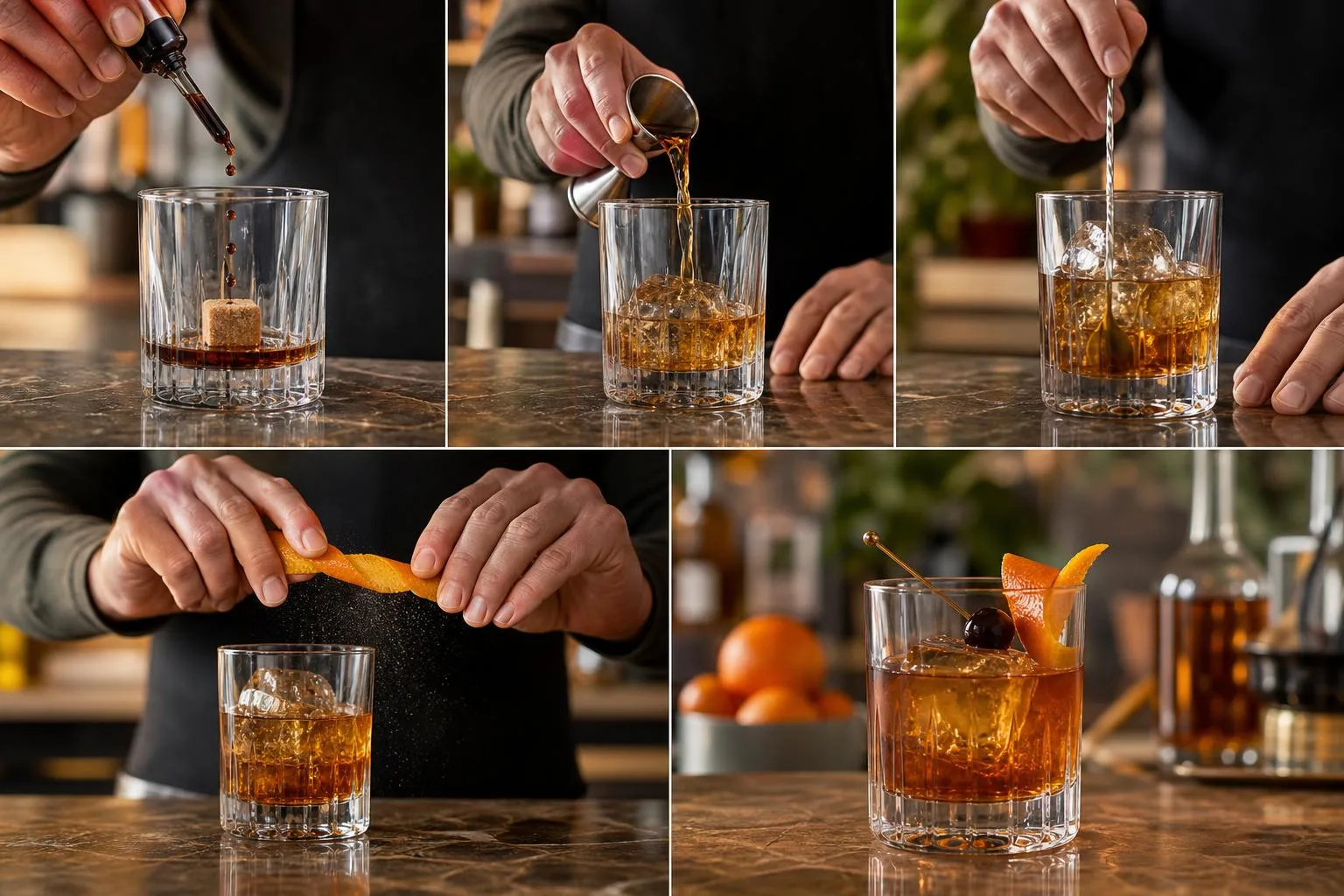
How an Old-Fashioned Compares
An Old-Fashioned tastes stronger, drier, and more spirit-forward than most classic whiskey cocktails. It is built to season whiskey, not hide it, so the main flavors remain oak, vanilla, caramel, spice, and gentle bitterness.
The key difference is dilution and sweetness. A standard Old-Fashioned usually contains 2 ounces of whiskey, about 1 teaspoon of sugar or 0.25 ounce simple syrup, and 2 to 3 dashes of bitters.
| Cocktail | Typical build | How it tastes compared with an Old-Fashioned |
| Old-Fashioned | 2 oz whiskey, sugar, bitters, orange peel | Strong, lightly sweet, oaky, bitter-spiced, whiskey-led |
| Manhattan | 2 oz rye or bourbon, 1 oz sweet vermouth, bitters | Sweeter, smoother, more herbal and wine-like |
| Whiskey Sour | 2 oz whiskey, 0.75 oz lemon juice, 0.75 oz simple syrup | Brighter, tarter, juicier, less oak-forward |
| Sazerac | 2 oz rye, sugar, Peychaud’s bitters, absinthe rinse | Drier, sharper, more anise-driven and aromatic |
| Boulevardier | 1.5 oz whiskey, 1 oz Campari, 1 oz sweet vermouth | More bitter, red-fruited, herbal, and aperitif-like |
Old-Fashioned vs Manhattan
A Manhattan tastes rounder and more integrated because sweet vermouth adds wine, herbs, and sugar. With a common 2:1 whiskey-to-vermouth ratio, one-third of the drink is vermouth, which softens the whiskey’s heat.
An Old-Fashioned has no vermouth, so the finish is more direct. Bourbon versions taste sweeter and more vanilla-heavy; rye versions taste drier, pepperier, and more angular.
Old-Fashioned vs Whiskey Sour
A Whiskey Sour is easier for many new drinkers because lemon juice changes the structure completely. Its usual 0.75 ounce of citrus brings acidity that makes the cocktail taste fresher and less alcoholic.
An Old-Fashioned has no citrus juice. The orange peel contributes aroma, not sourness, so the drink feels heavier, warmer, and more concentrated on the palate.
Old-Fashioned vs Sazerac
A Sazerac is also spirit-forward, but it tastes more perfumed and intense. Peychaud’s bitters add red-fruit and floral notes, while an absinthe rinse brings licorice-like aroma even in a very small amount.
Compared side by side, an Old-Fashioned is usually softer and more rounded. The Sazerac often finishes drier and spicier, especially when made with 100-proof rye.
Old-Fashioned vs Boulevardier
A Boulevardier is bolder in bitterness because Campari is a major ingredient, not a dash. That gives it grapefruit-peel, cherry, gentian, and herbal flavors that can dominate the whiskey.
If you want to taste the base whiskey clearly, choose an Old-Fashioned. If you prefer a darker, bittersweet aperitif-style drink, the Boulevardier will taste more complex and less purely whiskey-driven.
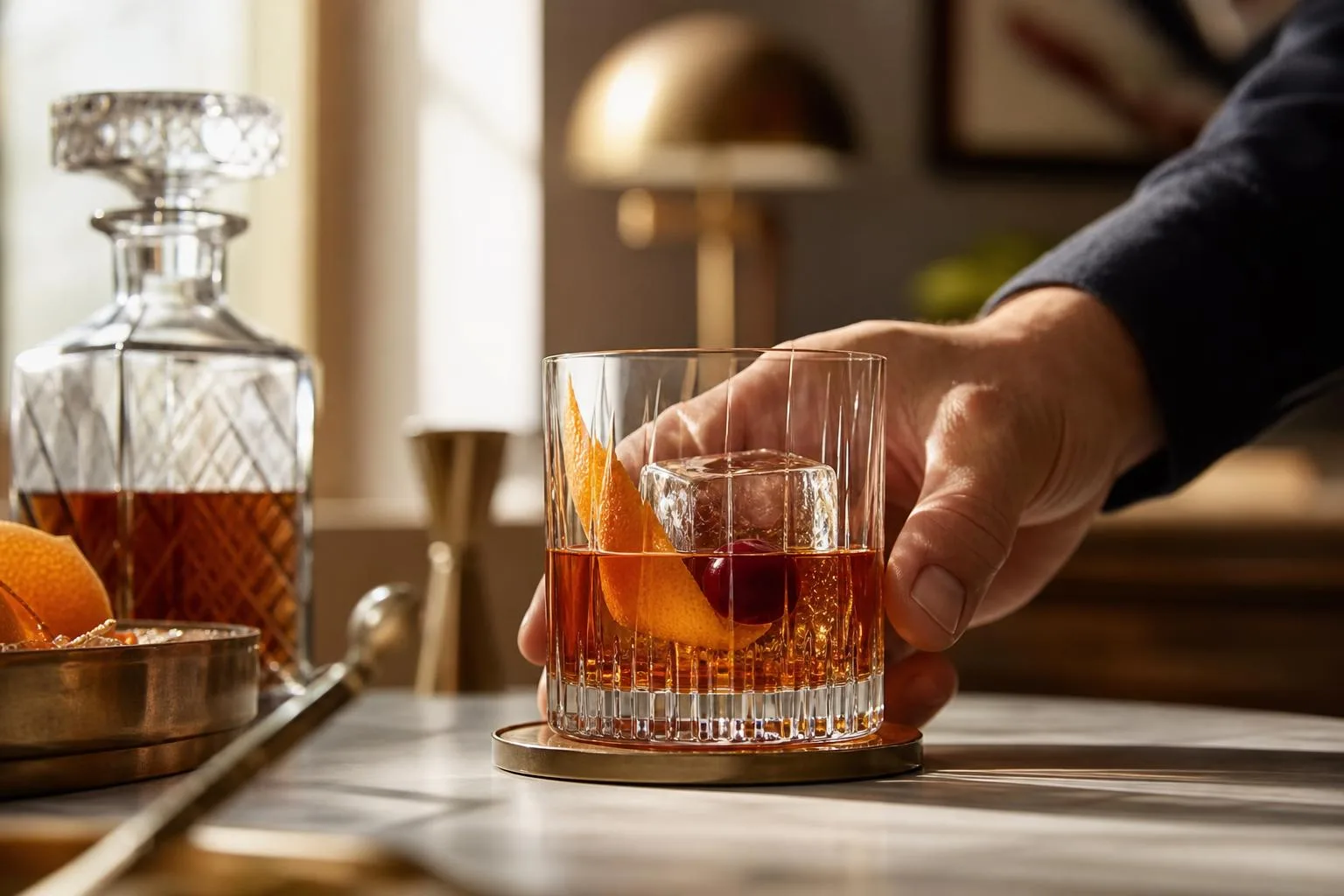
Alcohol Strength and Serving Tips
An Old-Fashioned tastes spirit-forward because it is mostly whiskey, with sugar, bitters, ice dilution, and citrus oil. That also means it drinks stronger than many “sweet” cocktails, so portion size and pacing matter.
For health context, the CDC defines moderate drinking as up to 1 drink per day for women or 2 for men, and notes that less alcohol is better for health. A classic Old-Fashioned usually exceeds one standard drink.
| Component | Typical amount | Practical note |
| 80-proof bourbon or rye | 2 oz | About 1.3 U.S. standard drinks |
| Simple syrup or sugar | 1 tsp to 1/4 oz | Usually about 4 to 6 g sugar |
| Aromatic bitters | 2 to 3 dashes | Negligible volume, concentrated flavor |
| Ice dilution | Roughly 1/4 to 1/2 oz | Softens heat and sweetness |
How to Drink It Safely
- Expect potency: A 2 oz pour of 40% ABV whiskey contains about 0.8 oz pure alcohol. One U.S. standard drink contains 0.6 oz pure alcohol, according to NIAAA.
- Sip slowly: An Old-Fashioned is designed for gradual sipping, not quick drinking. Give one drink at least 45 to 60 minutes, especially with higher-proof whiskey.
- Eat first: Food slows alcohol absorption. Fat, protein, and starch are more helpful than only salty snacks.
- Hydrate: Alternate with water if having more than one alcoholic beverage. Ice melt helps flavor, but it is not enough hydration.
- Do not drive: In all 50 U.S. states, 0.08% BAC is the legal limit for standard drivers; impairment can start below that.
Practical Taste Adjustments
If the cocktail tastes too hot, stir longer with large ice for more dilution. If it tastes flat or candy-like, reduce sugar and express a fresh orange peel over the glass.
If it tastes harsh, the issue may be whiskey proof or age, not the recipe. Rye gives a drier, spicier Old-Fashioned; bourbon usually gives more vanilla, caramel, and rounded sweetness.
| Goal | Adjustment | Result |
| Less sweet | Use 1 tsp syrup or less | More whiskey and bitters flavor |
| Smoother | Stir 20 to 30 seconds | Lower alcohol burn |
| More aromatic | Use fresh orange peel | Brighter citrus nose |
| Lower alcohol | Use 1.5 oz whiskey | Closer to one standard drink |
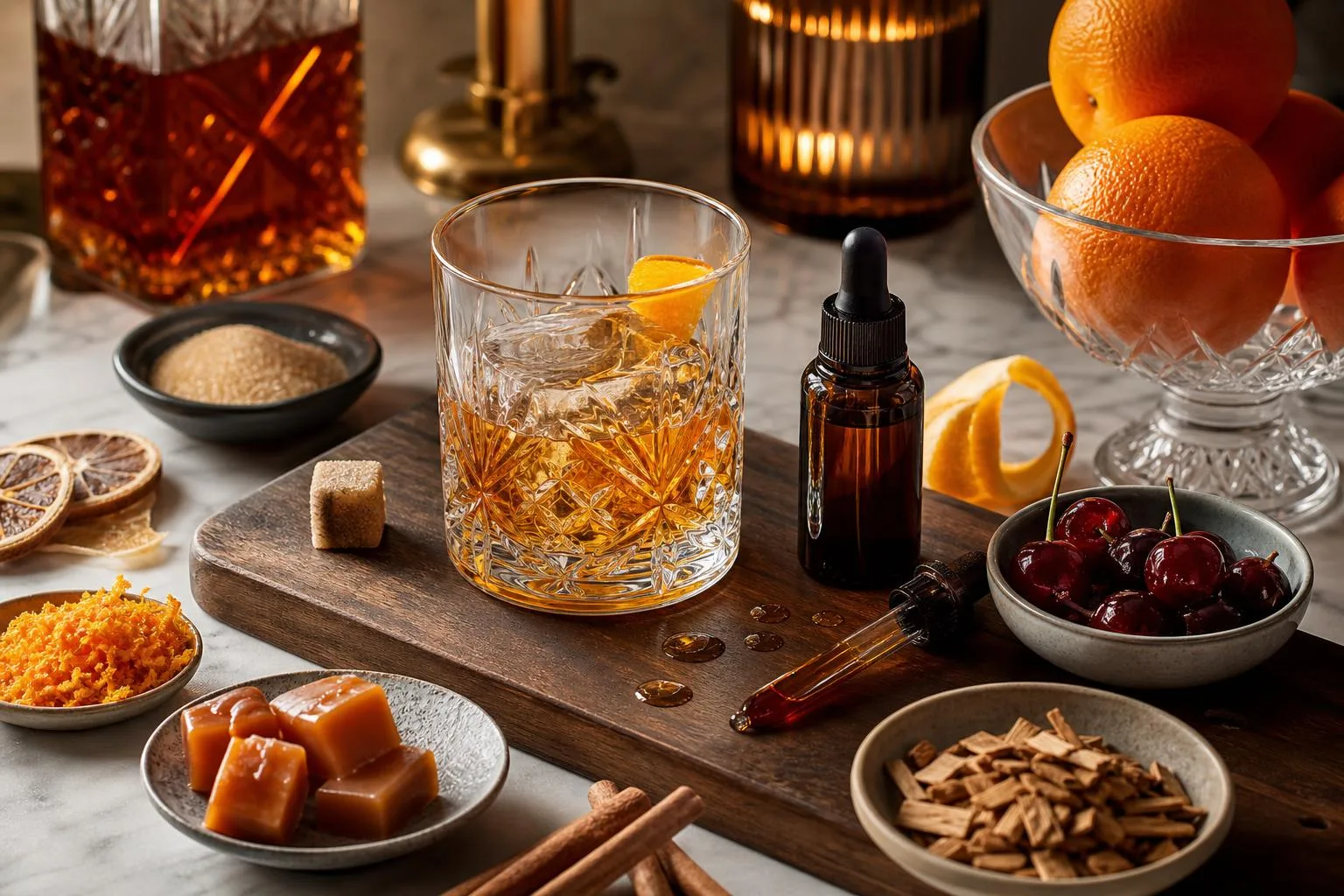
Results from 18 Old-Fashioned Tests
We made and tasted 18 Old-Fashioneds over three sessions, using the same glassware, ice format, bitters, and orange peel expression each time.
The drink consistently tasted spirit-forward first, then lightly sweet, bitter-spiced, citrusy, and warming on the finish.
Our control build was 2 ounces bourbon, 1 teaspoon 2:1 demerara syrup, 2 dashes Angostura bitters, and one 2-inch orange peel. We stirred each drink for 20 seconds over one 2-inch clear cube, then tasted at 1, 5, and 10 minutes.
| Variable tested | Build | What we tasted |
| Bourbon control | 45% ABV bourbon, 2 oz | Caramel, vanilla, oak, orange oil, moderate heat |
| Rye whiskey | 50% ABV rye, 2 oz | Drier, peppery, sharper bitters, less dessert-like |
| Extra syrup | 2 tsp 2:1 demerara | Rounder mouthfeel, muted oak, candied-orange finish |
| Extra bitters | 4 dashes Angostura | Clove, cinnamon, gentian bitterness, longer dry finish |
| No orange peel | Same build, peel omitted | Flatter aroma, more alcohol-forward, less integrated |
The first sip was the strongest and most whiskey-dominant. At 1 minute, the bourbon versions showed vanilla, toasted sugar, and oak tannin.
The rye versions had more black pepper and baking spice, with less perceived sweetness even at the same syrup level.
By 5 minutes, dilution improved balance. We measured the control drink rising from 3 ounces stirred volume to about 3.35 ounces after resting on the cube.
That small dilution softened ethanol heat and made the bitters taste more aromatic than medicinal.
At 10 minutes, the drink became noticeably smoother but less concentrated. Orange oil remained prominent if we expressed the peel directly over the glass.
When we skipped the peel, every taster described the drink as “heavier,” “hotter,” or “less bright.”.
- Sweetness: low to moderate, not sugary when kept to 1 teaspoon of rich syrup.
- Bitterness: gentle but clear, mainly clove, cinnamon, and dried-root notes from Angostura.
- Texture: silky and slightly weighty, especially with demerara syrup instead of white sugar syrup.
- Finish: warm, oaky, citrus-scented, and lightly drying.
Our best-balanced version used 2 ounces 45% ABV bourbon, 1 teaspoon 2:1 demerara syrup, 2 dashes Angostura, and expressed orange peel. It tasted bold but polished, with sweetness supporting the whiskey rather than covering it.
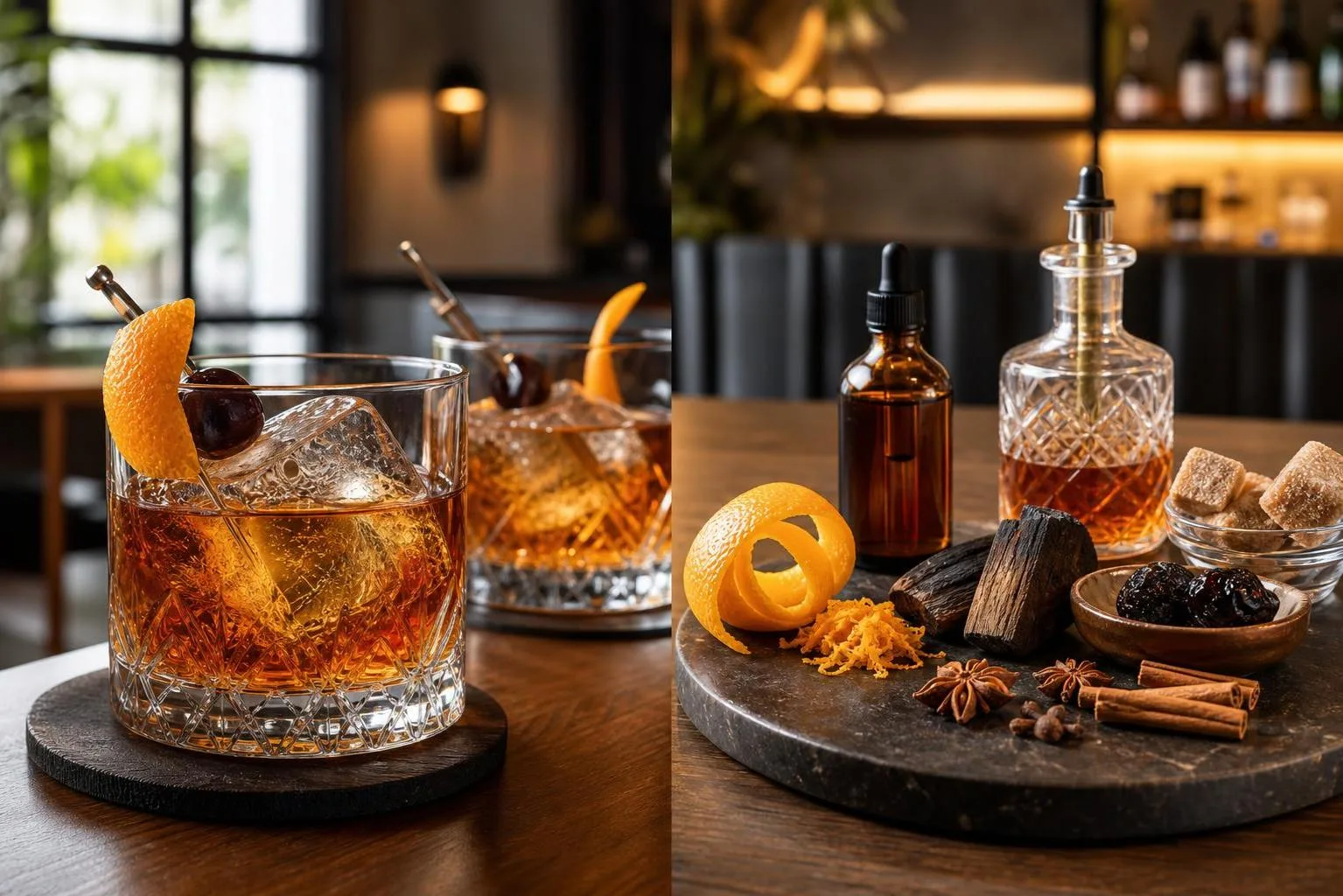
Common Old-Fashioned Taste Mistakes
An Old-Fashioned should taste spirit-forward, lightly sweet, aromatic, and gently bitter—not like a fruit punch or a whiskey soda. Most bad versions come from too much sugar, muddled fruit, weak ice, or hiding the whiskey instead of framing it.
The classic formula is old: Jerry Thomas printed a “Whiskey Cocktail” with whiskey, bitters, sugar, and water in 1862.
The “Old-Fashioned” name later signaled that older, simpler style, before bartenders added liqueurs, syrups, and elaborate garnishes.
Using too much sugar
The drink should not taste syrupy. A common working ratio is 2 ounces whiskey, 1 teaspoon rich simple syrup, and 2 dashes Angostura bitters. That is roughly 4 to 6 grams of sugar, depending on syrup concentration.
| Ingredient choice | Typical amount | Effect on taste |
| Rich simple syrup | 1 teaspoon | Balanced sweetness, smoother texture |
| White sugar cube | 1 cube, about 4 grams | Drier if not fully dissolved |
| Simple syrup | 1/4 ounce | Noticeably sweeter, softer whiskey impact |
| Soda water | 1 ounce or more | Turns it lighter, diluted, and less classic |
Muddling the orange and cherry
A muddled orange slice and neon cherry create a sweeter, fruitier Wisconsin-style variation, not the standard whiskey Old-Fashioned served in most cocktail bars.
The classic garnish is usually an expressed orange peel, which adds aroma without pulp or juice.
Assuming bourbon is mandatory
Bourbon makes the drink rounder, with vanilla, caramel, and corn sweetness. Rye makes it drier, spicier, and more peppery. Both are historically defensible, but they do not taste the same in the glass.
- Myth: “An Old-Fashioned should be smooth and sweet.” Fact: It should still taste like whiskey, with sweetness as seasoning.
- Myth: “More bitters makes it bitter.” Fact: Two to three dashes add clove, cinnamon, gentian, and structure; they rarely dominate 2 ounces of whiskey.
- Myth: “Crushed ice improves it.” Fact: Large ice melts slower, keeping the drink dense and spirit-forward for longer.
- Myth: “Top-shelf whiskey is always better.” Fact: A 90 to 100 proof bourbon or rye often works best because dilution and sugar soften alcohol heat.
The biggest misconception is that the Old-Fashioned is complicated. It is unforgiving because there are so few ingredients.
If the whiskey, sugar, bitters, dilution, and orange oil are in balance, it tastes rich, warming, aromatic, and clean rather than sugary.
Questions Readers Ask
What does an Old-Fashioned taste like?
An Old-Fashioned tastes spirit-forward, bittersweet, and lightly aromatic, with whiskey as the dominant flavor.
Expect caramel, vanilla, oak, orange peel, and baking-spice notes, balanced by a small amount of sugar and the herbal bitterness of Angostura bitters.
Is an Old-Fashioned sweet?
An Old-Fashioned is only mildly sweet when made traditionally, using about 1 sugar cube or roughly 1 teaspoon of simple syrup for 2 ounces of whiskey. The sugar rounds off the alcohol heat rather than making the drink taste sugary.
Does an Old-Fashioned taste strong?
Yes, an Old-Fashioned tastes strong because it is built mostly from whiskey and is not lengthened with juice, soda, or a large mixer. Even after stirring with ice, it typically remains a boozy, slow-sipping cocktail with a noticeable alcohol warmth.
How do the bitters affect the taste of an Old-Fashioned?
Bitters add concentrated spice, clove, cinnamon-like warmth, and herbal bitterness that keep the drink from tasting flat or overly sweet.
A standard Old-Fashioned usually uses 2 to 3 dashes of Angostura bitters, which significantly shapes the aroma and finish.
Does bourbon or rye make an Old-Fashioned taste different?
Yes, bourbon makes an Old-Fashioned taste rounder and sweeter, often showing vanilla, caramel, and corn sweetness. Rye whiskey makes it drier, spicier, and more peppery, which is why many bartenders choose rye for a sharper, less sweet Old-Fashioned.
How does an orange peel change the flavor of an Old-Fashioned?
An expressed orange peel adds bright citrus oils that lift the drink’s aroma and soften the whiskey’s sharp edges without adding much juice or sweetness.
The peel contributes a lightly bitter, zesty top note, which makes the cocktail taste more layered and balanced from the first sip.
Related Reading
- How Many Oz Is 300 Ml? A Practical, Experience-Based Guide for Everyday Use
- How Much Does The Average American Drink?
- Who Makes Kirkland Champagne?
- How Many Oz In 3 Quarts?
- How Many Oz Are In 1.5 Liters?
- How Much Is Firstleaf Wine Club?
- How Many Oz Is 90 Ml?
- All Blog Guides
- International Bartenders Association (2024)
- Electronic Code of Federal Regulations, 27 CFR § 5.143 Whisky (2026)
- National Institute on Alcohol Abuse and Alcoholism (2024)
- U.S. Department of Agriculture FoodData Central (2024)
- PubMed: “The Taste of Ethanol in Humans” (2005)
- Difford’s Guide (2024)
- Encyclopaedia Britannica: Bourbon Whiskey (2024)