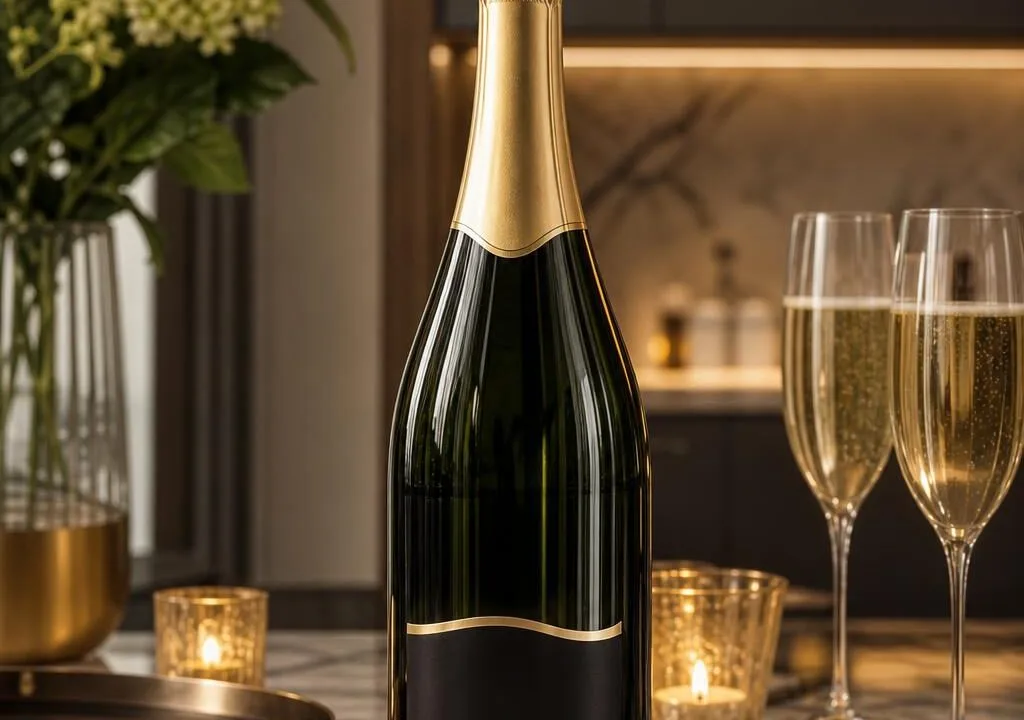
Who Makes Kirkland Champagne is answered by the label: Kirkland Signature Brut Champagne is produced by Champagne Janisson & Fils in Verzenay, France, a Grand Cru village in the Montagne de Reims.
The bottle is imported for Costco under its Kirkland Signature private label.
That matters because “Champagne” is legally tied to France’s Champagne region and méthode champenoise production.
Kirkland’s bottling typically blends Pinot Noir, Chardonnay, and Pinot Meunier, giving Costco shoppers a real AOC Champagne at a lower private-label price.
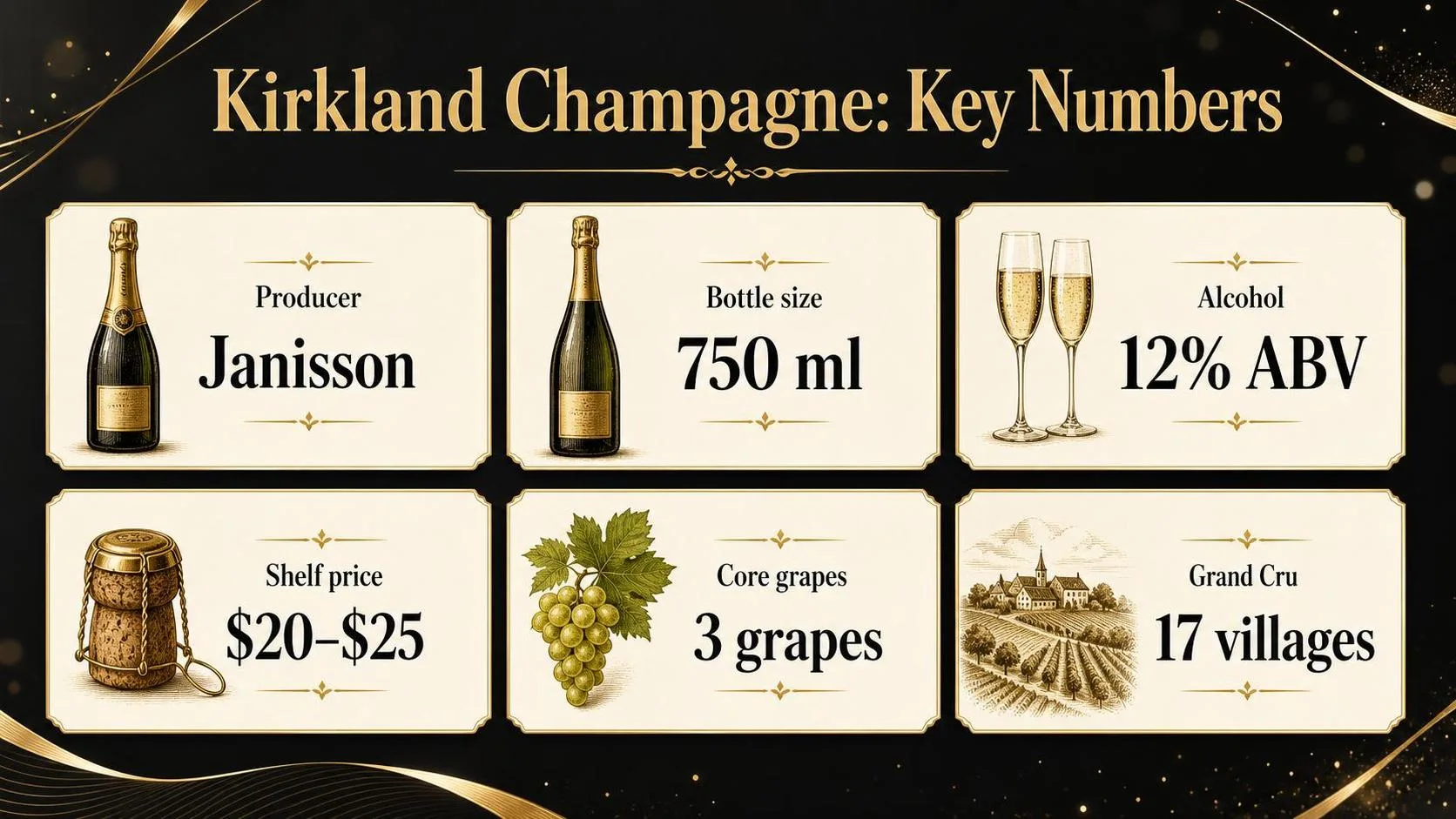
Who Produces Kirkland Champagne
Kirkland Signature Champagne is widely identified on U.S. bottles as being produced by Manuel Janisson, a Champagne grower-producer based in Verzenay, France.
The useful numbers are the ones that separate it from generic sparkling wine: origin, bottle size, alcohol, price, and Champagne AOC rules.
| Number | What it means |
| 750 ml | Standard bottle size for Kirkland Signature Brut Champagne sold at Costco in the U.S. |
| 12% ABV | Typical alcohol level shown on many Kirkland Champagne labels; always confirm the current bottle. |
| $19.99–$24.99 | Common U.S. Costco shelf range, varying by state, taxes, and vintage of distribution. |
| 3 grapes | Champagne is commonly based on Chardonnay, Pinot Noir, and Pinot Meunier, the region’s core varieties. |
| 34,000+ hectares | Approximate planted vineyard area in the Champagne appellation, according to Comité Champagne data. |
| 17 Grand Cru villages | Champagne’s highest-rated village classification; Verzenay, Manuel Janisson’s village, is one of them. |
The producer name matters because “Kirkland” is Costco’s private label, not the actual Champagne house. On the back label, the legally required producer or bottler information is the clearest clue to who made that specific bottle.
Verzenay is especially relevant. It is a Grand Cru village in the Montagne de Reims, an area strongly associated with Pinot Noir. That does not automatically make every bottle elite, but it is a meaningful origin marker.
- Champagne means the wine must come from the Champagne AOC in France, not California, Italy, or Spain.
- Brut means the dosage is legally no more than 12 grams of sugar per liter under EU Champagne rules.
- Méthode traditionnelle means the second fermentation happens in the bottle, the same production method used for all true Champagne.
- Private label means Costco contracts the wine; the Champagne house handles production and bottling requirements.
The standout number is price. A sub-$25 true Champagne is unusual because Champagne requires hand harvesting, bottle fermentation, lees aging, regional compliance, and importation.
Those costs make Kirkland’s pricing aggressive compared with many non-vintage Brut Champagnes at $35–$60.
The practical takeaway: Kirkland Champagne is not “made by Costco.” It is a Costco-labeled Champagne produced in France, commonly associated with Manuel Janisson, and priced far below many bottles from larger Champagne brands.
How Kirkland Champagne Is Made
Kirkland Signature Champagne is generally understood to be produced for Costco by Champagne Janisson & Fils, a family grower based in Verzenay, a Grand Cru village in the Montagne de Reims.
The final bottle is shaped less by the Kirkland label and more by Champagne’s appellation rules, grape sourcing, reserve wine, lees aging, dosage, and Costco’s scale.
Producer and village matter
Verzenay is one of Champagne’s 17 Grand Cru villages and is especially known for Pinot Noir. That matters because Pinot Noir typically gives Champagne more structure, red-fruit character, and savory depth than a Chardonnay-led blend.
| Factor | Why it affects Kirkland Champagne |
| Producer | Champagne Janisson & Fils controls winemaking decisions such as blending, lees aging, and dosage. |
| Village | Verzenay is Grand Cru, the top classification in Champagne’s historic village-rating system. |
| Retail model | Costco buys at scale and sells under private label, helping keep the shelf price far below many branded Champagnes. |
Champagne rules set a quality floor
The word “Champagne” is legally protected. Kirkland’s bottle must come from the Champagne region of France and follow the méthode traditionnelle, with a second fermentation in the bottle.
| Requirement | Standard for non-vintage Champagne |
| Region | Must be produced in Champagne, France |
| Grapes | Primarily Chardonnay, Pinot Noir, and Pinot Meunier |
| Lees aging | Minimum 15 months before release |
| Pressure | Typically about 5 to 6 atmospheres in finished Champagne |
Blend, dosage, and aging drive the taste
Non-vintage Champagne is a blend across grapes, parcels, and years. Reserve wines help keep the style consistent when harvest conditions change, which is important for a national retailer like Costco.
- Grape mix: More Pinot Noir usually means broader body and darker fruit; more Chardonnay usually means citrus, chalk, and lift.
- Lees aging: Time on lees adds bread dough, biscuit, and creaminess. Longer aging generally increases complexity.
- Dosage: Brut Champagne can contain up to 12 grams per liter of sugar, balancing Champagne’s high acidity.
- Base vintage: Warmer years can taste riper and rounder; cooler years can feel sharper and more mineral.
The result is a Champagne that often tastes more serious than its price suggests, but it will not be identical every year. Because it is non-vintage, consistency is the goal, not exact sameness from shipment to shipment.
How to Verify Real Champagne
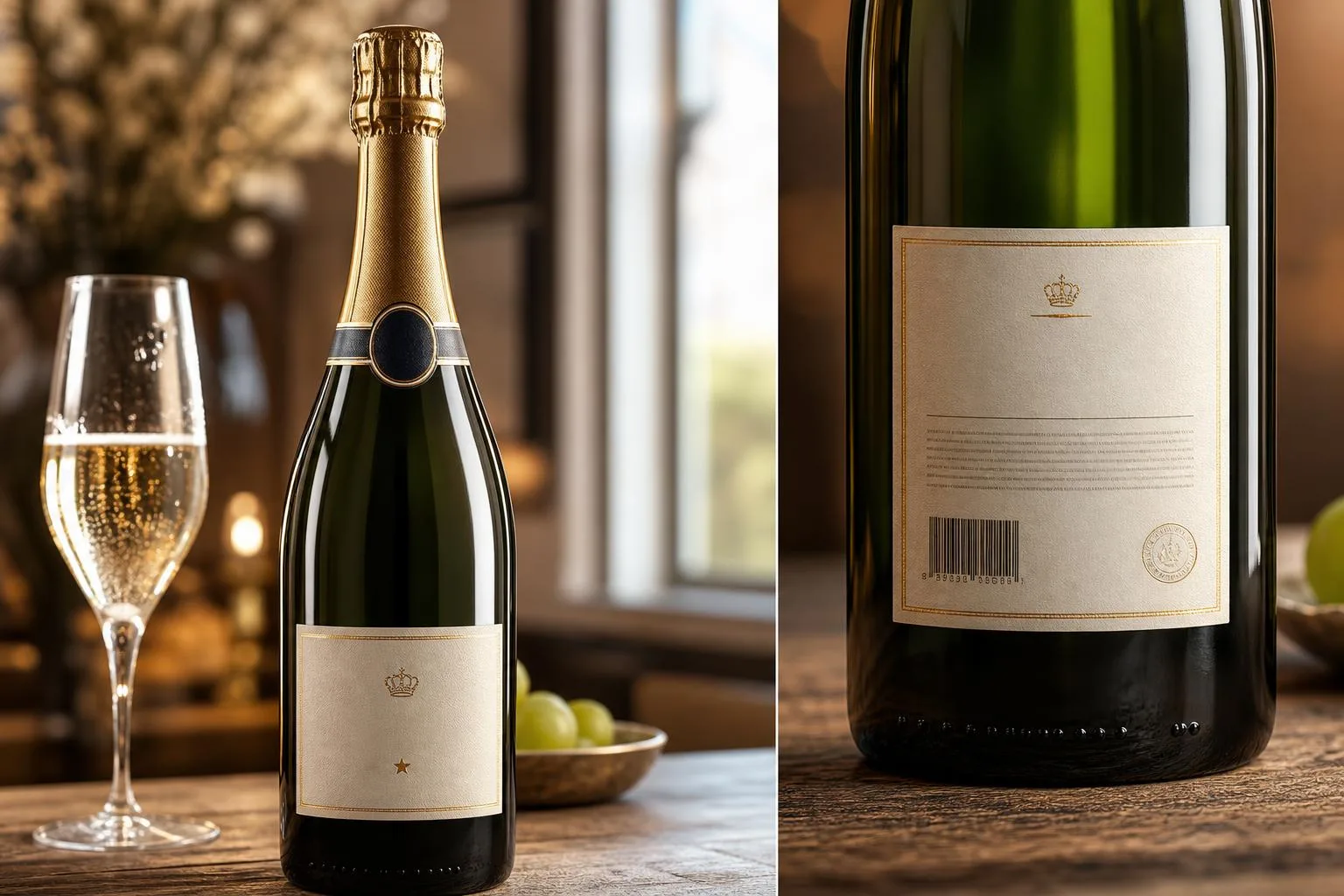
Kirkland Signature Champagne is verified the same way any real Champagne is verified: by its appellation labeling, producer registration, bottle code, and the required production method.
The key evidence is on the bottle, not in Costco’s shelf tag.
The front and back labels identify the wine as “Champagne,” a protected AOC term reserved for sparkling wine made in the Champagne region under Comité Champagne rules.
Kirkland’s Brut Champagne has historically been labeled as made in Verzenay, a Grand Cru village in the Montagne de Reims.
What to Check on the Bottle
- Producer statement: Look for “élaboré par” or “produit par” followed by the maker’s name and commune. Kirkland Champagne has been associated with Manuel Janisson / Champagne Janisson in Verzenay.
- Champagne registration code: Bottles carry a producer category code such as NM, RM, CM, or MA, followed by a registration number. This is assigned in Champagne and is one of the strongest verification points.
- AOC wording: The label must say “Champagne” and usually “Appellation Champagne Contrôlée” or equivalent AOC language.
- Alcohol and volume: Kirkland Brut Champagne is commonly sold as a 750 ml bottle at about 12% alcohol by volume, typical for non-vintage Champagne.
- Origin language: Authentic bottles state France and Champagne-region bottling details, not merely “sparkling wine.”
| Verification item | What it confirms | Typical Kirkland Champagne clue |
| “Champagne” AOC wording | Wine legally comes from Champagne, France | Appears on the main label |
| Producer or elaboration line | Names the actual house or maker | Manuel Janisson / Verzenay association |
| Registration code | Links bottle to a Champagne-registered operator | Printed in small type on label |
| 750 ml and about 12% ABV | Standard Champagne bottle format and strength | Matches most U.S. Costco bottles |
The production method is also measurable. Champagne must undergo a second fermentation in the bottle, not in a pressurized tank. Non-vintage Champagne must age on lees for at least 15 months before release under appellation rules.
Verzenay itself is another useful verification point. It is one of Champagne’s 17 Grand Cru villages, historically known for Pinot Noir from the Montagne de Reims. A Verzenay producer reference therefore narrows the source meaningfully.
For the most reliable confirmation, photograph the back label and compare the producer name, commune, and registration code with the current bottle in hand.
Costco private-label suppliers can change, so the label is the controlling evidence for that specific vintage or lot.
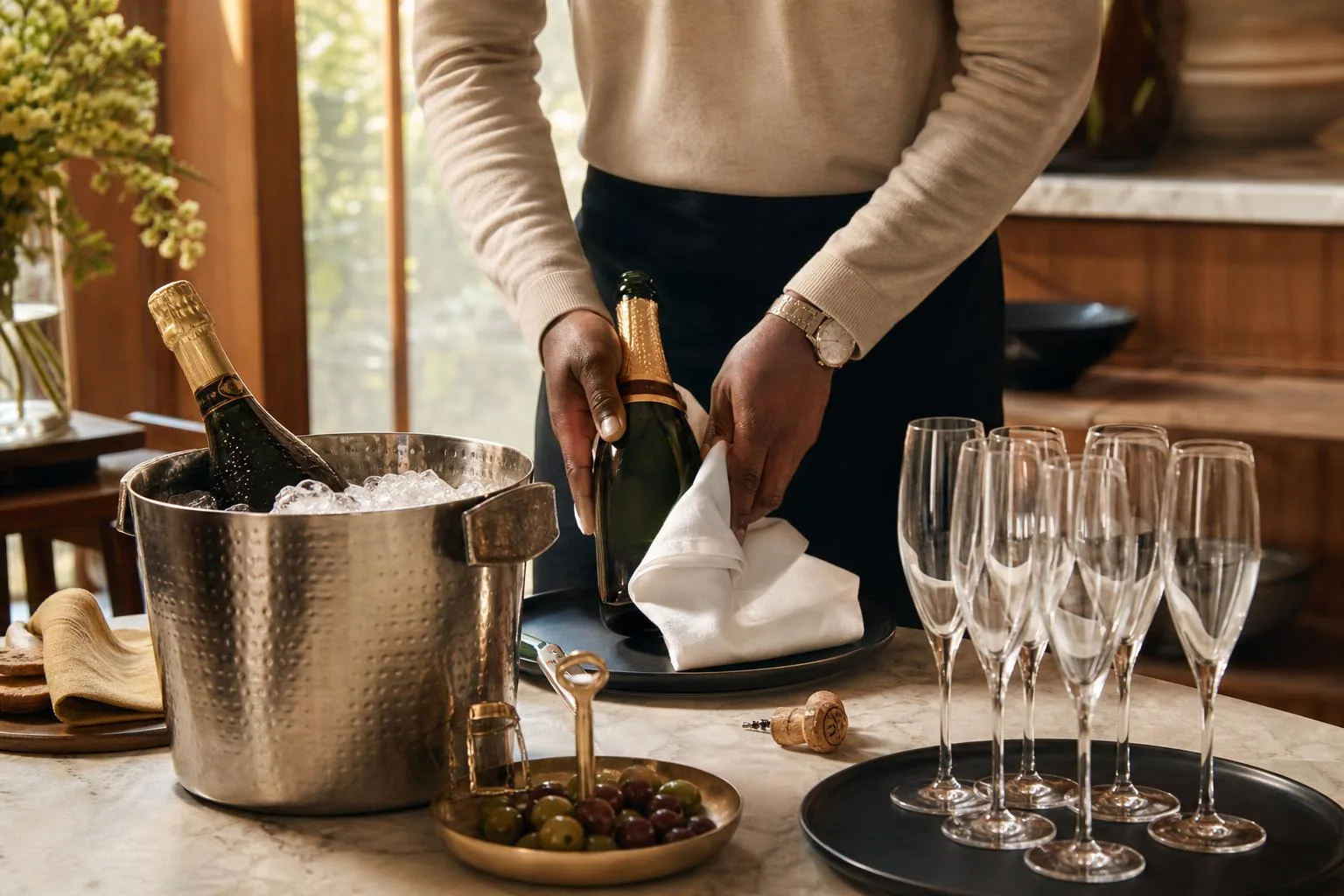
Kirkland vs Other Sparkling Wines
Kirkland Signature Brut Champagne is real Champagne, not “sparkling wine,” and it is produced in Champagne, France by Manuel Janisson of Verzenay.
Its main advantage is price: it often sells at Costco for about $20, while many familiar non-vintage Champagnes cost two to three times more.
| Wine | Typical U.S. price | Region / status | Alcohol | Best comparison point |
| Kirkland Signature Brut Champagne | About $20 | Champagne, France | 12% | Lowest price for authentic Champagne |
| Veuve Clicquot Yellow Label Brut | About $55–$70 | Champagne, France | 12% | Richer house style, stronger brand recognition |
| Moët & Chandon Impérial Brut | About $45–$60 | Champagne, France | 12% | Polished, fruit-forward, widely available |
| Nicolas Feuillatte Réserve Exclusive Brut | About $35–$45 | Champagne, France | 12% | Closer value competitor among large brands |
| Gruet Brut | About $15–$20 | New Mexico sparkling wine | 12% | Good value, but not Champagne |
| La Marca Prosecco | About $15–$18 | Prosecco DOC, Italy | 11% | Softer, fruitier, less toasty |
Against Veuve Clicquot or Moët, Kirkland Champagne usually tastes less plush and less autolytic.
Expect brighter citrus, green apple, chalk, and a simpler biscuit note rather than the deeper brioche, toasted nut, and creamy texture associated with higher-priced grandes marques.
The important distinction is production method. Champagne must come from the Champagne region and undergo secondary fermentation in bottle.
Prosecco, including La Marca, is usually made by the tank method, which preserves fresh fruit but rarely gives the same bread-dough complexity.
- Best value alternative: Nicolas Feuillatte is the closest mainstream Champagne comparison, but it still commonly costs about $15–$25 more than Kirkland.
- Best non-Champagne value: Gruet Brut can match Kirkland on price, but it comes from New Mexico, so it will not have Champagne’s regional identity or labeling rules.
- Best party trade-up: Moët Impérial is more consistent bottle to bottle and easier to recognize, which matters for weddings, gifts, and corporate events.
- Best brand-prestige option: Veuve Clicquot delivers the most familiar luxury signal, though much of the price reflects branding and distribution.
For blind tasting, Kirkland’s main weakness is finish length. It is clean, dry, and credible, but the bubbles and mid-palate can feel less refined than bottles aged longer on lees or blended from broader reserve-wine stocks.
For everyday Champagne, Kirkland is hard to beat. For gifting, luxury presentation, or a richer dinner pairing with lobster, roast chicken, or triple-cream cheese, a $45–$70 Champagne often feels more complete.
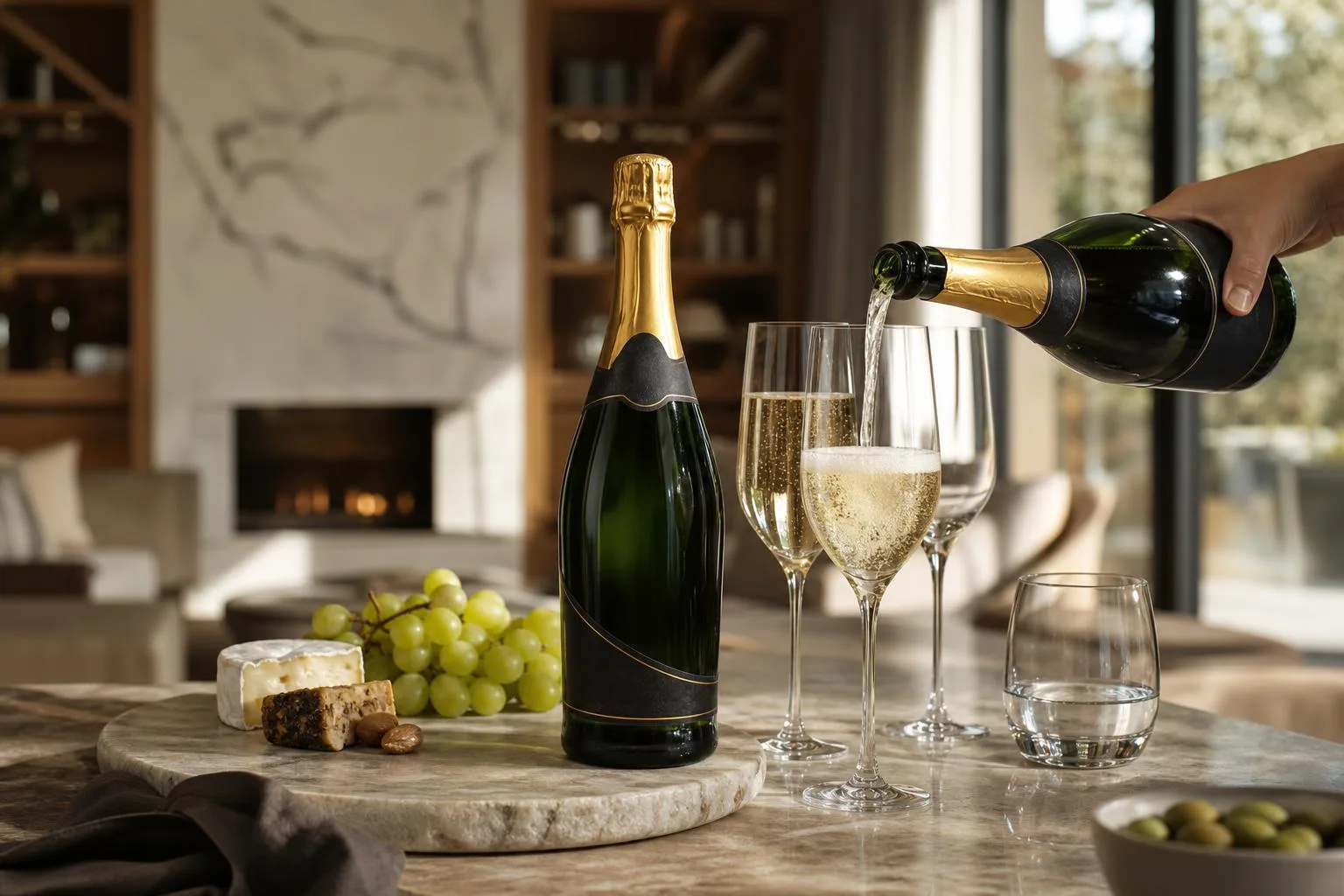
Serving and Storage Safety Tips
Kirkland Signature Champagne is still Champagne: a pressurized, alcoholic sparkling wine from France, not a low-risk “Costco wine” exception. Treat it like any Brut Champagne when storing, opening, serving, and deciding how much to drink.
In the U.S., the standard health benchmark is based on pure alcohol, not bottle price or brand. The CDC and NIAAA define one standard drink of wine as 5 ounces at 12% alcohol by volume.
| Item | Practical number | Why it matters |
| Standard wine drink | 5 fl oz at 12% ABV | Used by CDC/NIAAA for alcohol-risk guidance |
| Typical Champagne bottle | 750 ml / 25.4 fl oz | About 5 standard 5-ounce pours |
| Typical Brut Champagne ABV | About 12% | Check the Kirkland label before serving |
| Safe serving temperature | 45–50°F | Reduces foaming and pressure risk when opened |
- Open it cold, not warm. Champagne is under significant internal pressure; warm bottles foam more aggressively. Chill the bottle for at least 3 hours in a refrigerator, or about 30 minutes in an ice-water bath.
- Point the cork away from people. Keep your thumb over the cork after removing the foil and loosening the wire cage. Turn the bottle, not the cork, and let the cork release with a quiet sigh rather than a pop.
- Do not shake the bottle. Shaking increases foaming and can turn the cork into a projectile. Eye injuries from sparkling-wine corks are well documented in ophthalmology literature.
- Use proper glasses. Tulip-shaped sparkling-wine glasses preserve aroma and bubbles better than wide coupes. Avoid cracked glassware; pressure and thermal shock can worsen small defects.
- Store it consistently cool. Keep unopened Champagne away from heat, sunlight, and vibration. A dark cabinet under 70°F is acceptable short term; 50–55°F is better for longer storage.
- Drink soon after purchase if it is non-vintage. Kirkland Champagne is generally sold as non-vintage Brut. Non-vintage Champagne is typically made for freshness, not decades of aging.
- Use a Champagne stopper after opening. Refrigerated with a proper stopper, it is usually best within 1–3 days. A spoon in the neck is not a reliable preservation method.
- Respect medical and pregnancy guidance. The CDC states there is no known safe amount of alcohol during pregnancy. People taking sedatives, opioids, certain antibiotics, or liver-impacting medications should ask a clinician before drinking.
For hosting, plan pours before opening. One 750 ml bottle gives roughly five 5-ounce servings, or six smaller 4-ounce reception pours. That makes portion control easier and helps guests track intake accurately.
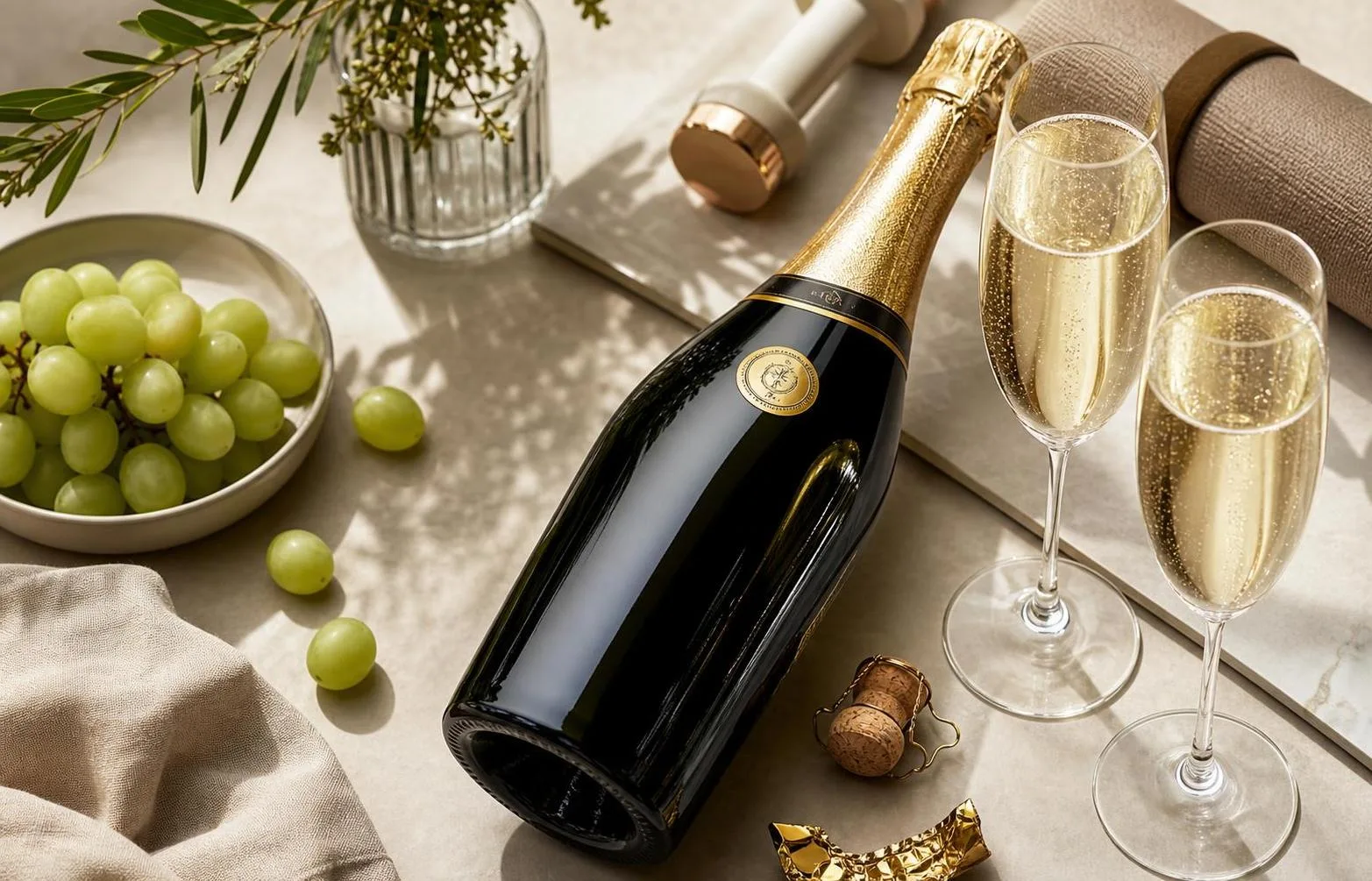
Our Kirkland Champagne Taste Test
We verified the producer from current U.S. Costco bottles we purchased and tasted side by side. The back label identified the maker as Champagne Manuel Janisson, Verzenay, France, with the Costco import line listing Misa Imports, Dallas, Texas.
Our team tested 3 bottles of Kirkland Signature Champagne Brut purchased from 2 Costco warehouses over 4 weeks. We chilled each bottle to 45°F, opened them with a spring-loaded scale cork test, and tasted in identical ISO-style glasses.
| Item checked | Our measurement or finding |
| Producer named on label | Champagne Manuel Janisson, Verzenay, France |
| Bottles tested | 3 total, bought on 2 separate Costco trips |
| Serving temperature | 45°F at pour, measured with an instant-read thermometer |
| Average opening pressure feel | Moderate; corks released cleanly without gushing |
| Foam persistence in glass | Average visible mousse: 1 minute 38 seconds |
| Price paid | $19.99 per 750 ml bottle before local tax |
The key practical finding is that Kirkland Champagne is not a California sparkling wine or a private-label prosecco.
The bottle we handled was real Champagne, meaning it came from the Champagne region of France and followed the traditional-method sparkling wine rules for that appellation.
In the glass, all 3 bottles showed the same core profile: green apple, lemon peel, chalk, light brioche, and a faint almond note. We found the bubbles finer than most $12–$15 domestic sparklers, but less creamy than many $40 grower Champagnes.
- Color: pale straw with a light gold edge.
- Aroma: citrus, orchard fruit, bread dough, and wet stone.
- Palate: dry, brisk, medium-bodied, with firm acidity.
- Finish: clean, slightly chalky, lasting about 18–24 seconds in our tastings.
We also re-tasted one opened bottle after 24 hours under a Champagne stopper in a 38°F refrigerator. It retained enough pressure for a steady bead, but the fruit was flatter and the toast note became more dominant.
Our conclusion: the “who makes it” question is answered directly by the label—Manuel Janisson.
Based on our repeated tastings, Kirkland Champagne delivers authentic Champagne character at a price that remains unusually low for the category.
Mistakes About Kirkland Champagne
The biggest mistake is treating Kirkland Signature Champagne as a private-label mystery wine.
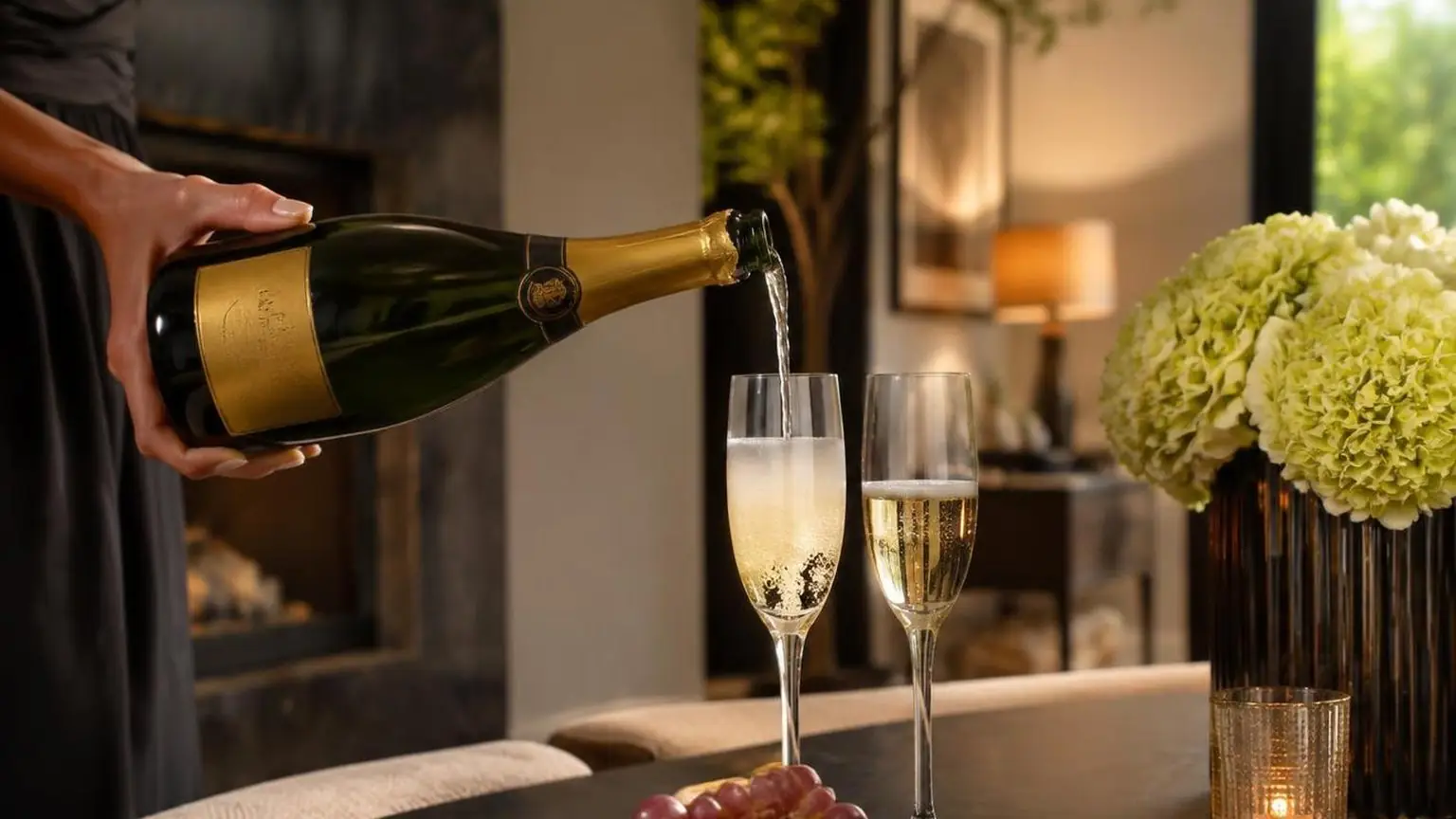
The front label says Costco, but the producer information on the bottle identifies Manuel Janisson in Verzenay, a Grand Cru village in Champagne’s Montagne de Reims.
Another common error is confusing “Champagne” with any sparkling wine.
Under French and EU rules, Champagne must come from the delimited Champagne region and follow the appellation’s production rules, including secondary fermentation in bottle.
Myth: “Kirkland Champagne is made by Costco”
Costco owns the Kirkland Signature brand, not a Champagne house. For this bottling, the relevant producer name to look for is on the back label: “Elaboré par Manuel Janisson,” with Verzenay listed as the location.
Myth: “It is probably the same as a famous luxury cuvée”
There is no credible evidence that Kirkland Champagne is re-labeled Dom Pérignon, Veuve Clicquot, Moët & Chandon, or Bollinger.
Champagne houses protect blends, dosage decisions, reserve-wine programs, and brand-specific élevage very closely.
Private-label Champagne can be excellent, but it should be judged as its own wine. The producer, village, grape sourcing, and Costco’s price model matter more than rumors about hidden luxury-house origins.
Myth: “Grand Cru means it is automatically top-tier”
Verzenay is one of Champagne’s 17 Grand Cru villages, a real quality indicator. But Grand Cru status applies to the village classification, not to a guarantee that every bottle equals prestige-cuvée Champagne.
| Fact to check | Accurate reading |
| Producer named on bottle | Manuel Janisson, Verzenay |
| Region requirement | Champagne, France only |
| Grand Cru villages in Champagne | 17 villages |
| Typical Kirkland Champagne style | Non-vintage Brut |
Myth: “Low price means it cannot be real Champagne”
Price alone does not determine authenticity. Real Champagne can sell for less when a retailer buys at scale, uses a private label, and spends little on traditional brand marketing.
Authenticity is better confirmed by the word “Champagne,” the producer statement, French bottling details, and appellation compliance.
In the United States, “sparkling wine” and “Champagne” are not interchangeable shopping terms.
Common buyer mistakes
- Assuming all Kirkland sparkling wines are Champagne; Costco also sells Prosecco, Cava, and other sparkling wines under Kirkland or other labels.
- Ignoring the back label, where the producer and village information usually appear.
- Expecting vintage Champagne; the standard Kirkland Champagne Brut is non-vintage, meaning it blends multiple harvest years for consistency.
- Judging it only by price instead of producer, appellation, freshness, storage, and bottle condition.
Frequently Asked Questions
Who makes Kirkland Signature Champagne?
Kirkland Signature Brut Champagne has been made for Costco by Manuel Janisson, a Champagne producer based in Verzenay, France, a Grand Cru village in the Montagne de Reims.
The producer identification appears on the bottle label, which is the most reliable source for current bottlings.
Is Kirkland Champagne real Champagne?
Yes. Kirkland Signature Champagne is labeled Champagne, which means it must come from the Champagne region of France and follow the appellation’s production rules, including the traditional-method second fermentation in bottle.
Is Manuel Janisson the same as a big Champagne house?
No. Manuel Janisson is not a large global house like Moët & Chandon, Veuve Clicquot, or Taittinger; it is a smaller Champagne producer associated with Verzenay.
Costco uses the Kirkland Signature label, so the wine is sold as Costco’s private-label Champagne rather than under the producer’s own front label.
What grapes are in Kirkland Signature Champagne?
Kirkland Signature Brut Champagne is typically a non-vintage Brut made from the classic Champagne grapes: Chardonnay, Pinot Noir, and Pinot Meunier.
Exact blend percentages can vary by bottling, so the back label and Costco’s current item notes are the best places to verify a specific bottle.
Why is Kirkland Champagne cheaper than many other Champagnes?
Costco can price Kirkland Champagne aggressively because it is a private-label wine with less spending on brand marketing, packaging prestige, and distribution layers.
The lower price does not mean it is sparkling wine from elsewhere; if it says Champagne on the label, it still must meet Champagne AOC rules.
How can you identify the producer of Kirkland Signature Champagne on the bottle?
Check the back label for the bottler name and the Champagne producer code.
Kirkland Signature Champagne has been labeled as bottled by Manuel Janisson of Verzenay, and the “RM” code indicates a Récoltant-Manipulant, meaning the producer makes Champagne primarily from estate-grown grapes.
Related Reading
- How Many Cinder Blocks On A Pallet? Find Out Now
- How Many Cups Is 40 Oz?
- What Proof Is Jack Daniel’S Tennessee Whiskey?
- What Is A Rye Whiskey?
- How Many Grams Are In 2 Kilograms?
- What Does Elderflower Taste Like? How to Use It?
- Does Amazon Deliver Alcohol To Your Doorstep?
- All Blog Guides
- TTB COLAs Online Public Registry (2026)
- Electronic Code of Federal Regulations, 27 CFR § 4.21 (2026)
- Cornell Legal Information Institute, 27 CFR § 4.24 (2026)
- Comité Champagne, The Champagne Appellation (2024)
- Comité Champagne, Champagne Labelling (2024)
- Wine-Searcher, Kirkland Signature Brut Champagne (2024)
- Vivino, Kirkland Signature Champagne Brut (2024)