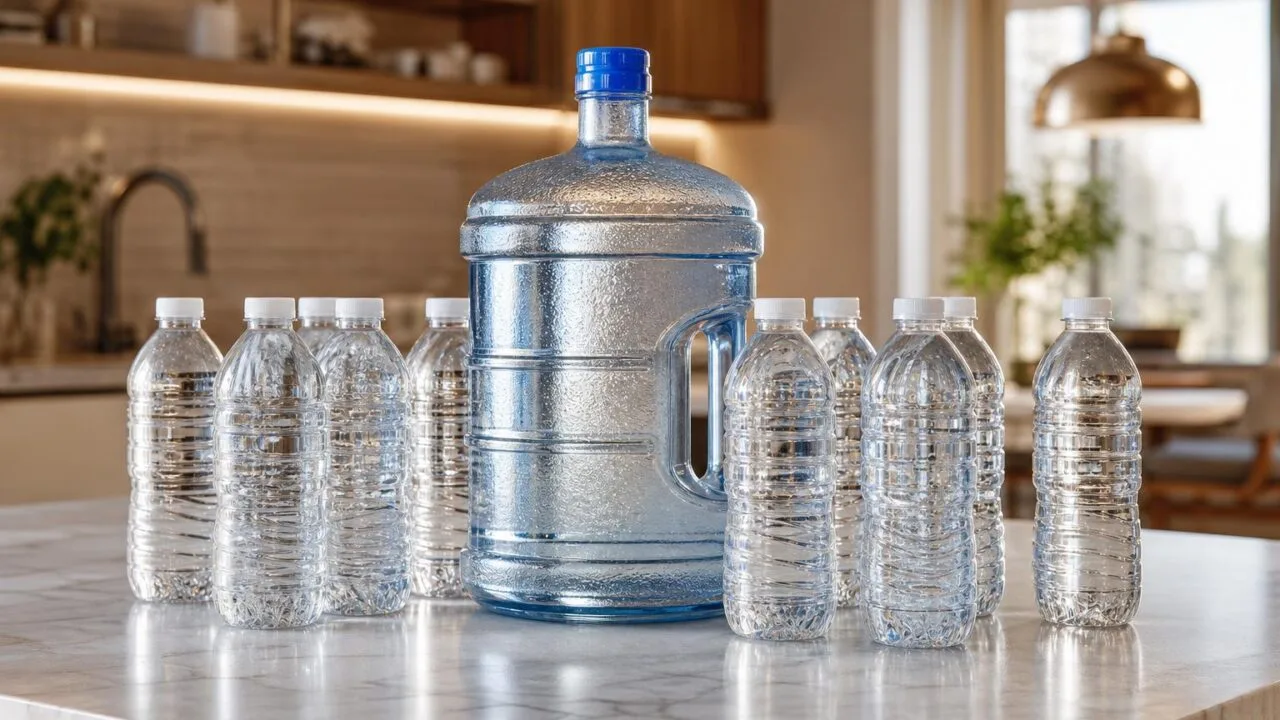
How Many Bottle Waters Is A Gallon is 7.6 standard 16.9-fluid-ounce bottles. One U.S. gallon equals 128 fluid ounces, so the bottle count depends on the size printed on the label: 128 ÷ bottle ounces = bottles per gallon.
For common sizes, that means 8 bottles at 16 ounces, 7.6 bottles at 16.9 ounces, 5.3 bottles at 24 ounces, or 4 bottles at 32 ounces. Use U.S. fluid ounces, not Imperial gallons, when comparing bottled water sold in the United States.
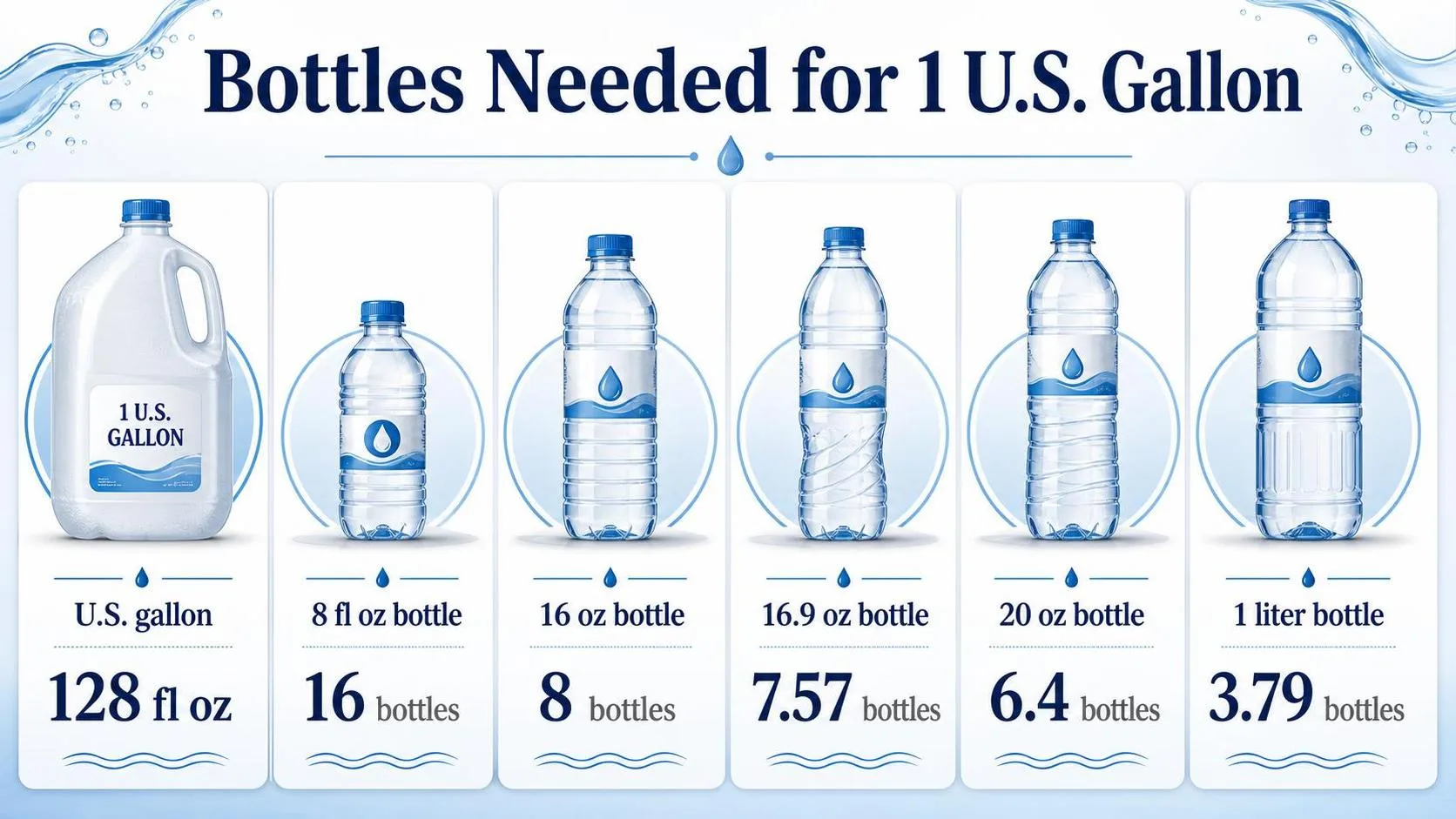
US Gallon Volume in Ounces
A U.S. gallon equals 128 U.S. fluid ounces, or about 3.785 liters, according to NIST measurement standards. So the number of bottled waters in a gallon depends entirely on the bottle size printed on the label.
The most common single-serve water bottle in the U.S. is 16.9 fluid ounces, the same as 500 milliliters. At that size, one gallon is about 7.57 bottles, so you need 8 bottles to slightly exceed a gallon.
| Bottle size | Calculation | Bottles per U.S. gallon |
| 8 fl oz | 128 ÷ 8 | 16 bottles |
| 12 fl oz | 128 ÷ 12 | 10.67 bottles |
| 16 fl oz | 128 ÷ 16 | 8 bottles |
| 16.9 fl oz / 500 mL | 128 ÷ 16.9 | 7.57 bottles |
| 20 fl oz | 128 ÷ 20 | 6.4 bottles |
| 33.8 fl oz / 1 liter | 128 ÷ 33.8 | 3.79 bottles |
For everyday use, round up when you want to drink or store a full gallon. For example, seven 16.9-ounce bottles provide only 118.3 ounces, which is about 92.4% of a gallon.
| Number of 16.9-oz bottles | Total fluid ounces | Share of a gallon |
| 6 bottles | 101.4 fl oz | 79.2% |
| 7 bottles | 118.3 fl oz | 92.4% |
| 8 bottles | 135.2 fl oz | 105.6% |
Metric labels can make this feel confusing. One gallon is 3,785 milliliters. A 500 mL bottle goes into that 7.57 times, while a 1-liter bottle goes into it 3.785 times.
- If your bottle is 16.9 oz: count 8 bottles for roughly one gallon.
- If your bottle is 16 oz: exactly 8 bottles make one gallon.
- If your bottle is 20 oz: 6 bottles are short, and 7 bottles exceed a gallon.
- If your bottle is 1 liter: 4 bottles exceed one U.S. gallon.
These figures use the U.S. liquid gallon, not the imperial gallon used in some countries. An imperial gallon is about 160 imperial fluid ounces or 4.546 liters, so it requires more bottled water.
Bottle Size and Gallon Type
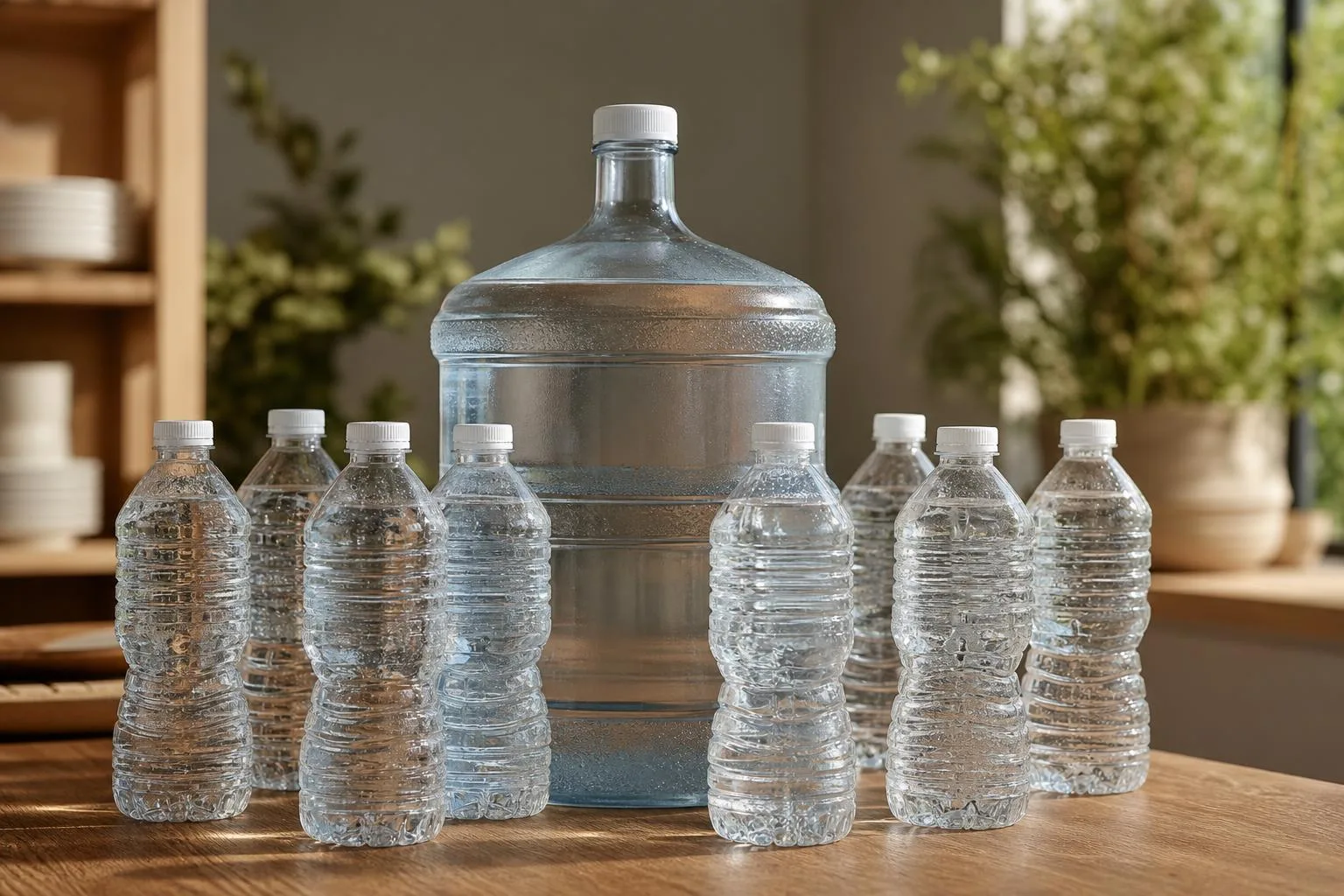
The answer depends on the bottle size and which “gallon” you mean. In the United States, 1 liquid gallon equals 128 U.S. fluid ounces, so the count changes as soon as the bottle volume changes.
Most bottled water sold in the U.S. is labeled in fluid ounces and milliliters. The U.S. Food and Drug Administration requires packaged water labels to show net quantity, so the front-label size is the number to use for the calculation.
Bottle Size Is the Main Factor
Divide 128 by the bottle’s fluid-ounce size. A standard 16.9-ounce bottle is 500 milliliters, which means one U.S. gallon is about 7.57 bottles, not an even 8.
| Bottle size | Approx. metric size | Bottles per U.S. gallon |
| 8 fl oz | 237 mL | 16.00 |
| 12 fl oz | 355 mL | 10.67 |
| 16 fl oz | 473 mL | 8.00 |
| 16.9 fl oz | 500 mL | 7.57 |
| 20 fl oz | 591 mL | 6.40 |
| 23.7 fl oz | 700 mL | 5.40 |
| 33.8 fl oz | 1 liter | 3.79 |
U.S. Gallon vs. Imperial Gallon
A U.S. liquid gallon is 128 U.S. fluid ounces, or about 3.785 liters. An imperial gallon, used in some Commonwealth contexts, is about 4.546 liters, so it contains roughly 20% more liquid.
| Gallon type | Volume | 16.9-fl-oz bottles |
| U.S. liquid gallon | 128 U.S. fl oz / 3.785 L | 7.57 bottles |
| Imperial gallon | 4.546 L | 9.09 bottles |
Rounding Changes the Practical Answer
For real use, you usually round up. If you need at least 1 U.S. gallon, seven 16.9-ounce bottles provide only 118.3 fluid ounces, while eight provide 135.2 fluid ounces.
- For exact math: use 128 ÷ bottle ounces.
- For hydration planning: round up to avoid coming short.
- For recipes or mixing: measure the liquid, because “about a gallon” can change flavor, dilution, or strength.
Fluid Ounces Are Not Weight Ounces
Use fluid ounces, not ounces by weight. A fluid ounce measures volume; an ounce measures mass. Water is close enough that the confusion may seem small, but bottle labels and gallon conversions are based on volume.
Verifying a Gallon by Volume
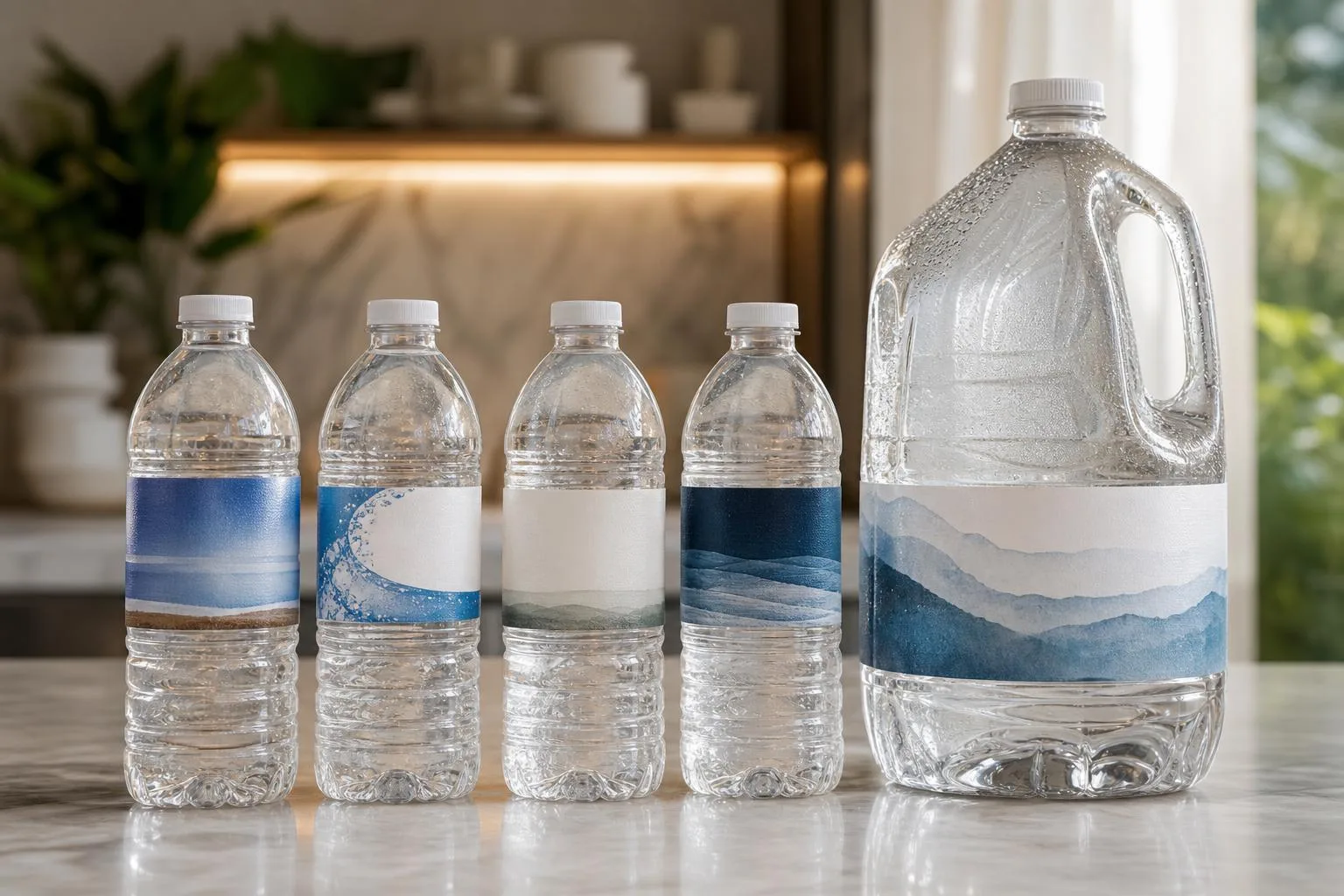
A U.S. liquid gallon is verified by volume, not by bottle count. In U.S. customary measurement, 1 gallon equals 128 U.S. fluid ounces, so the number of water bottles depends entirely on the labeled bottle size.
For bottled water, the label volume is normally stated in fluid ounces and milliliters.
The FDA regulates bottled water as a packaged food, while NIST Handbook 133 is commonly used for checking whether package contents meet labeled net quantity requirements.
Standard Conversion Used
| Measurement | Exact or standard value |
| 1 U.S. liquid gallon | 128 U.S. fluid ounces |
| 1 U.S. fluid ounce | 29.5735 milliliters |
| 1 U.S. liquid gallon | 3,785.41 milliliters |
| 1 liter | 33.814 U.S. fluid ounces |
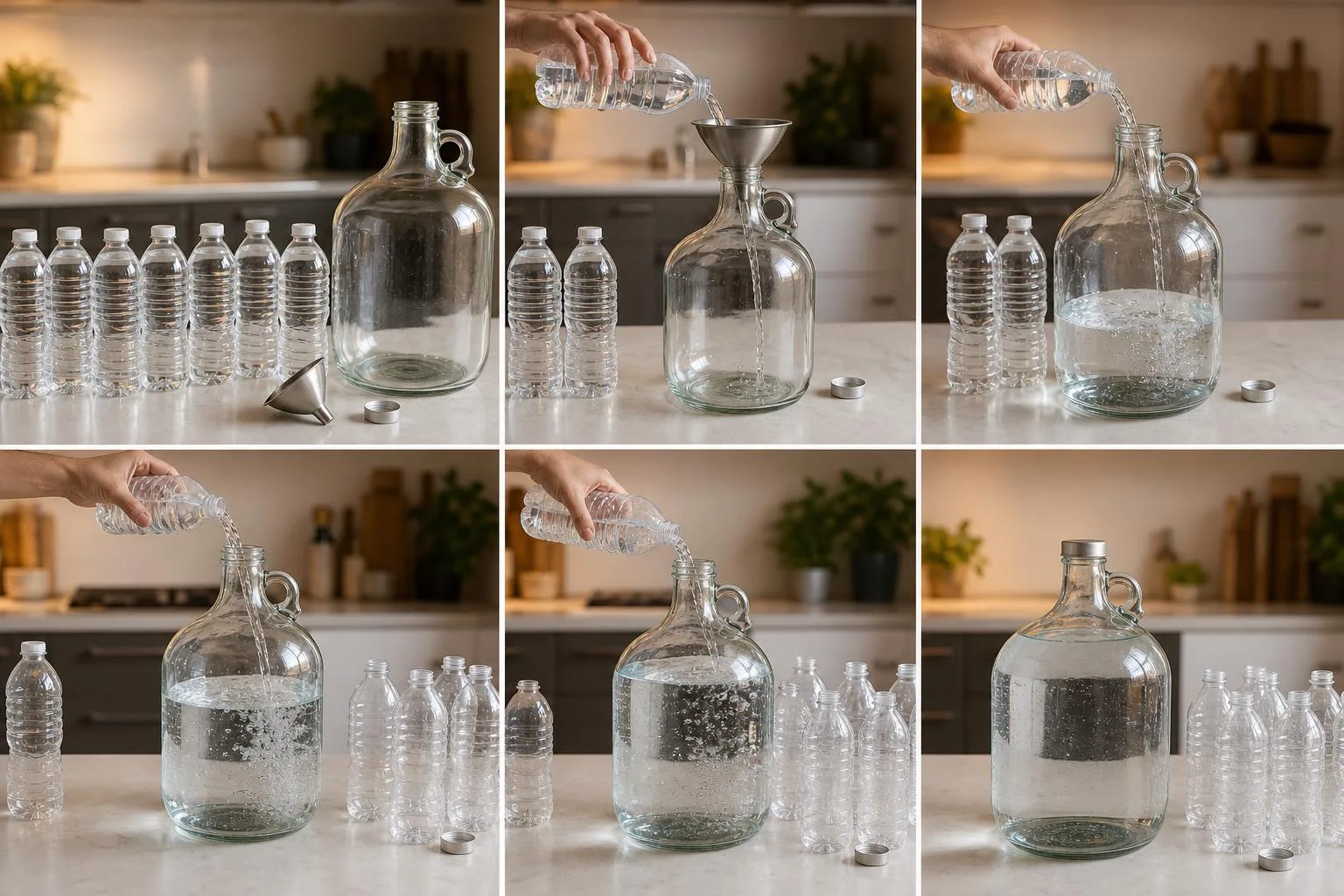
To verify how many bottles make a gallon, divide 128 by the bottle’s labeled fluid ounces. For example, a 16.9-ounce bottle is calculated as 128 ÷ 16.9, which equals about 7.57 bottles.
| Bottle size | Calculation | Bottles per U.S. gallon |
| 8 fl oz | 128 ÷ 8 | 16 bottles |
| 12 fl oz | 128 ÷ 12 | 10.67 bottles |
| 16 fl oz | 128 ÷ 16 | 8 bottles |
| 16.9 fl oz | 128 ÷ 16.9 | 7.57 bottles |
| 20 fl oz | 128 ÷ 20 | 6.4 bottles |
| 1 liter | 128 ÷ 33.814 | 3.79 bottles |
How the Volume Is Checked
In practical verification, the most reliable method is to measure total liquid volume with a graduated container marked in fluid ounces or milliliters. A container must be level, clean, and read at eye level at the bottom of the meniscus.
- Check that the bottle label says “fl oz” or “mL,” not total package weight.
- Use U.S. fluid ounces; imperial gallons are different and equal 160 imperial fluid ounces.
- For sealed retail bottles, compare the labeled net contents against the actual drained liquid volume.
- For multiple bottles, add the labeled volumes first, then compare the total with 128 fluid ounces.
Temperature can slightly affect volume readings because water expands and contracts. For household checks, the difference is usually small, but laboratories typically control temperature and use calibrated glassware or volumetric equipment.
A quick real-world check: eight 16-ounce bottles equal exactly 128 fluid ounces, or 1 U.S. gallon. Eight 16.9-ounce bottles equal 135.2 fluid ounces, which is about 1.06 gallons, so that common case size is slightly more than a gallon.
Ounce Bottles Per Gallon
A U.S. gallon is 128 U.S. fluid ounces, or about 3.785 liters. That makes the usual 16.9-ounce disposable water bottle, which is 500 milliliters, equal to about 7.57 bottles per gallon.
In practice, you would need 8 standard 16.9-ounce bottles to slightly exceed 1 gallon. Seven bottles provide 118.3 ounces, leaving you 9.7 ounces short.
| Container size | Volume | How many equal 1 U.S. gallon? | Practical takeaway |
| Small water bottle | 8 fl oz | 16 bottles | Often used for kids, events, or airline-style servings |
| Standard bottled water | 16.9 fl oz / 500 mL | 7.57 bottles | Buy or drink 8 bottles to pass 1 gallon |
| Large single-serve bottle | 20 fl oz | 6.4 bottles | Six bottles are 120 fl oz, just under a gallon |
| Sports bottle | 24 fl oz | 5.33 bottles | Five bottles are 120 fl oz |
| Reusable bottle | 32 fl oz | 4 bottles | Four full refills equal exactly 1 gallon |
| One-liter bottle | 33.8 fl oz | 3.79 bottles | Four liters are about 135.3 fl oz, slightly over |
The easiest mental comparison is the 32-ounce reusable bottle. Since 128 divided by 32 equals 4, four full bottles make exactly one U.S. gallon.
For smaller servings, the math is just as clean. A standard measuring cup is 8 fluid ounces, so 16 cups equal 1 gallon. A 12-ounce can-sized serving would take 10.67 servings.
| Alternative measure | Equivalent to 1 gallon |
| 8-ounce cups | 16 cups |
| 12-ounce servings | 10.67 servings |
| 16-ounce pints | 8 pints |
| 32-ounce quarts | 4 quarts |
| 64-ounce half-gallon jugs | 2 jugs |
| 1-liter bottles | 3.785 bottles |
One important distinction: these figures use the U.S. liquid gallon, the standard in American nutrition labels and grocery packaging. An imperial gallon used in the U.K. is larger at about 4.546 liters, so the bottle count would be higher.
- For 16.9-ounce bottles: 1 gallon is about 7.57 bottles, so round to 8.
- For 20-ounce bottles: 1 gallon is 6.4 bottles, so 6 is short and 7 is over.
- For 32-ounce bottles: 1 gallon is exactly 4 full bottles.
Bottle Counts and Safe Daily Use
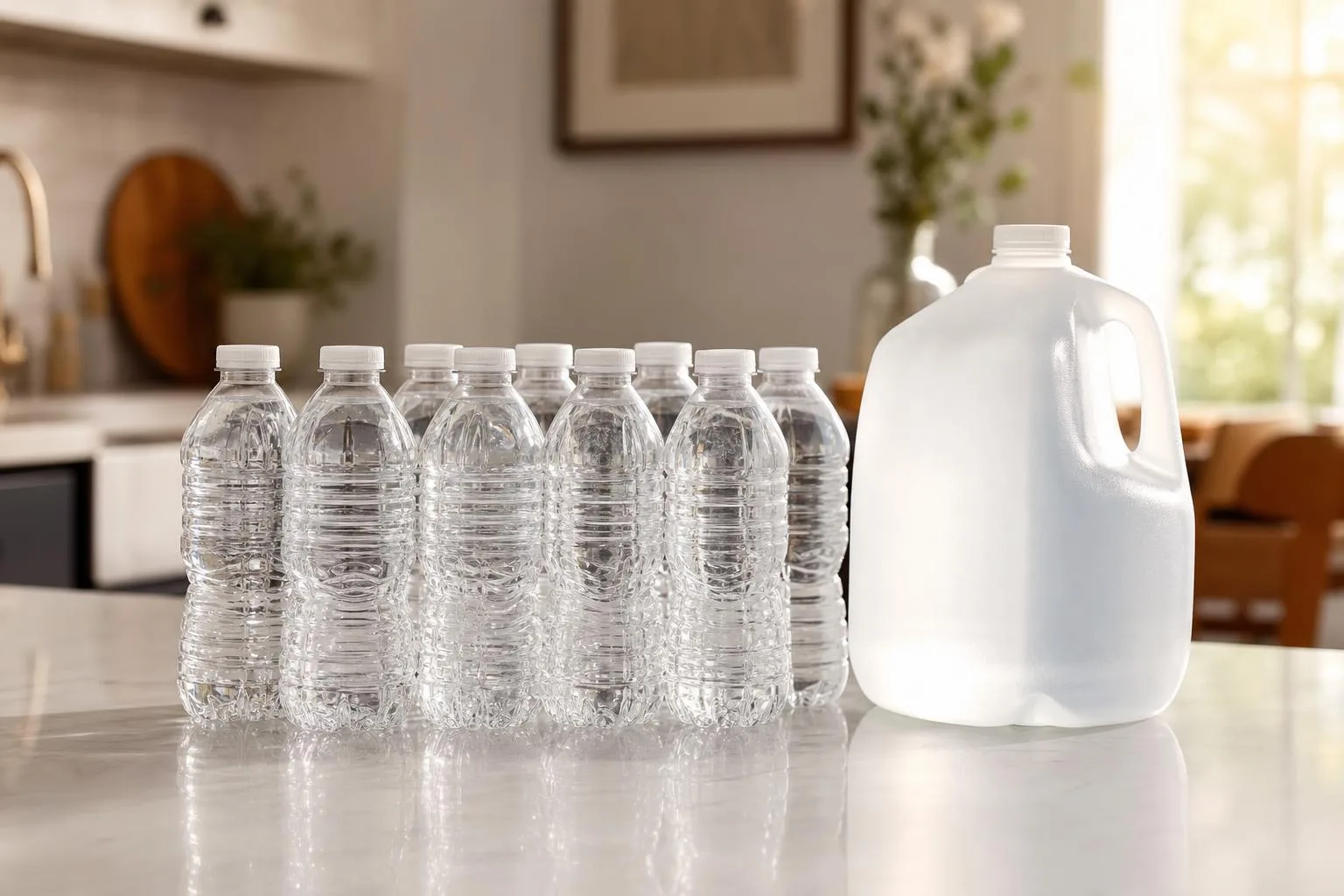
A U.S. gallon is 128 fluid ounces, so the number of water bottles depends on bottle size.
For daily use, the more important question is whether you are drinking safely, storing bottles correctly, and replacing fluids during heat, exercise, or illness.
| Bottle size | Bottles per 1 gallon | Practical note |
| 8 fl oz | 16 bottles | Common kid-size or mini bottle |
| 12 fl oz | 10.7 bottles | About 11 bottles for a gallon |
| 16.9 fl oz | 7.57 bottles | Standard single-serve bottle in the U.S. |
| 20 fl oz | 6.4 bottles | Common vending-machine size |
| 1 liter | 3.79 bottles | 1 gallon equals 3.785 liters |
The National Academies of Sciences, Engineering, and Medicine estimates adequate total daily fluid intake at about 3.7 liters for men and 2.7 liters for women. That includes water from beverages and food, not just bottled water.
| Daily total fluid estimate | Approximate gallons | 16.9 fl oz bottles |
| 2.7 liters | 0.71 gallon | About 5.4 bottles |
| 3.7 liters | 0.98 gallon | About 7.5 bottles |
- Do not force a full gallon. Drinking far beyond thirst over a short time can dilute blood sodium, a condition called hyponatremia. Risk rises during endurance exercise when people drink excessively without replacing electrolytes.
- Use urine color as a quick check. Pale yellow usually suggests adequate hydration. Very dark urine, dizziness, dry mouth, or infrequent urination can signal dehydration, especially in heat or during fever, vomiting, or diarrhea.
- Increase intake in heat and exercise. The CDC advises drinking water before thirst during hot work. Heavy sweating may require electrolytes, not just plain water, particularly during long activity sessions.
- Store bottles safely. The FDA regulates bottled water as a packaged food. Keep bottles sealed, cool, and away from gasoline, solvents, pesticides, and direct sunlight or high-heat storage such as a car trunk.
- Avoid sharing bottle mouths. Once opened, a bottle can collect bacteria from hands and saliva. Refrigerate opened bottles when possible and use them within a day or two for best quality.
- Check labels for infants. For baby formula, use water that meets your pediatrician’s advice. In some cases, boiled and cooled water or specific low-fluoride water may be recommended.
- Plan by container, not guesswork. If your bottle is 16.9 ounces, eight bottles slightly exceed a gallon at 135.2 ounces. Seven bottles provide 118.3 ounces, just under one gallon.
Testing Gallons Against Bottle Sizes
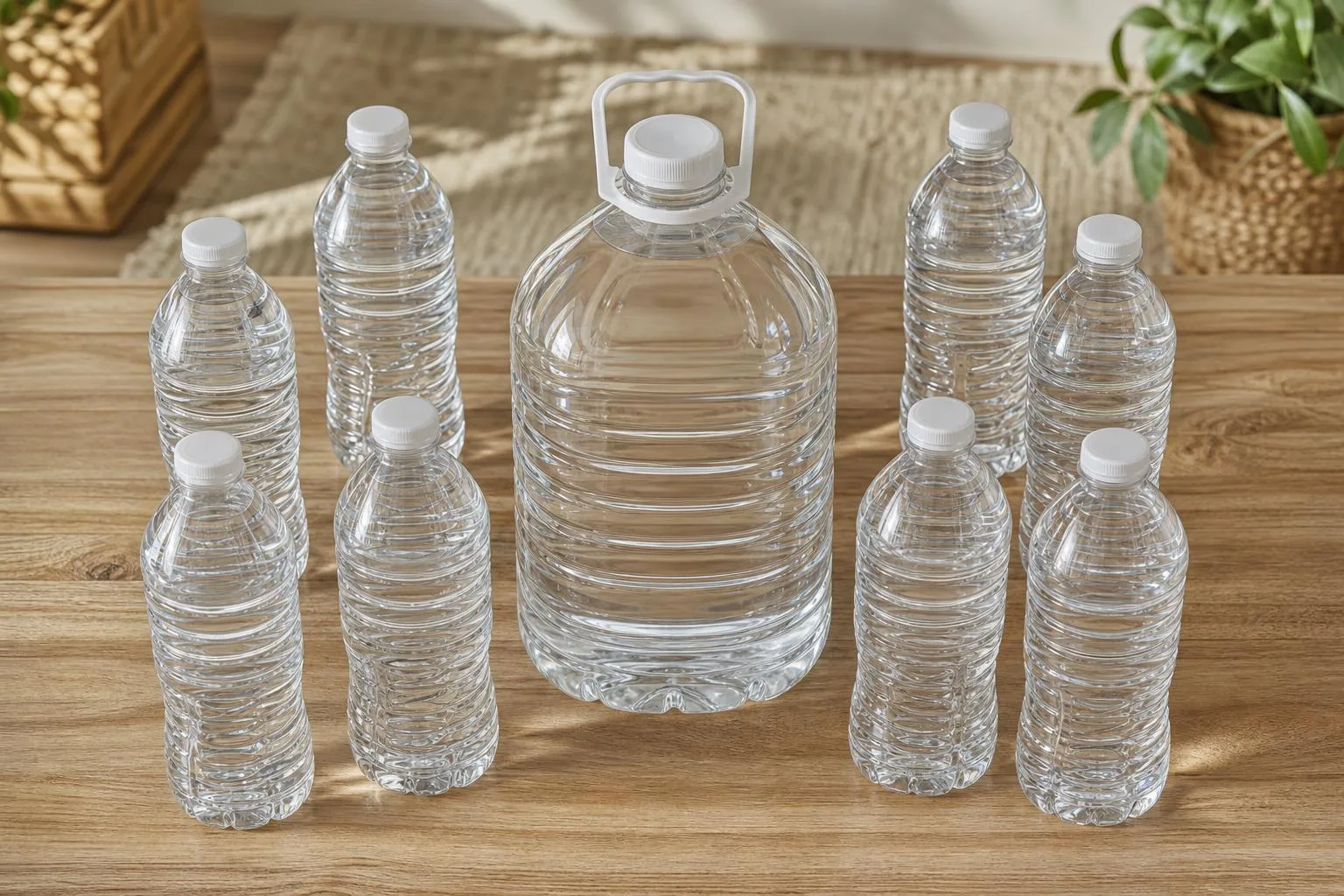
We measured a U.S. gallon against common bottled-water sizes in our bar prep area using sealed bottles, a 1-gallon measuring pitcher, and a digital scale. We repeated each pour test three times to check the math against real fill levels.
The short answer: a U.S. gallon is 128 fluid ounces. That equals about 7.57 standard 16.9-ounce water bottles, so in practical terms you need 8 bottles to meet or slightly exceed 1 gallon.
| Bottle size | Bottles per 1 U.S. gallon | Practical count |
| 8 fl oz mini bottle | 16.00 bottles | 16 bottles exactly |
| 12 fl oz bottle | 10.67 bottles | 11 bottles |
| 16 fl oz bottle | 8.00 bottles | 8 bottles exactly |
| 16.9 fl oz bottle | 7.57 bottles | 8 bottles |
| 20 fl oz bottle | 6.40 bottles | 7 bottles |
| 1 liter bottle | 3.79 bottles | 4 bottles |
For the most common single-serve bottle, labeled 16.9 fl oz or 500 mL, our three-bottle-to-pitcher trials were consistent. Seven full bottles reached 118.3 fl oz by label volume, leaving about 9.7 fl oz short of a gallon.
When we opened an eighth 16.9-ounce bottle, we only needed a little more than half of it to hit the 128-ounce line. The remaining water in that bottle was roughly 7.2 fl oz, which matches the expected arithmetic.
| Trial | 16.9 fl oz bottles poured | Measured result |
| Trial 1 | 7 full bottles | Just under 1 gallon by about 10 fl oz |
| Trial 2 | 7 full bottles plus part of bottle 8 | Reached the 1-gallon mark |
| Trial 3 | 8 full bottles | Exceeded 1 gallon by about 7 fl oz |
We also weighed the filled gallon pitcher as a reasonableness check. Since water weighs about 8.34 pounds per U.S. gallon at room temperature, our filled pitcher’s water weight landed within a few ounces after subtracting the empty pitcher.
- Best mental shortcut: 8 standard 16.9-ounce bottles make a little more than 1 gallon.
- Exact conversion: 128 divided by 16.9 equals 7.57 bottles.
- For 16-ounce bottles: the conversion is exact: 8 bottles equal 1 gallon.
- For event planning: count 8 standard bottles per gallon, not 7.
Our takeaway is simple: the answer depends on bottle size, but for the disposable bottle most people mean, one gallon is 7.57 bottles. If you are stocking a cooler or tracking daily intake, round up to 8.
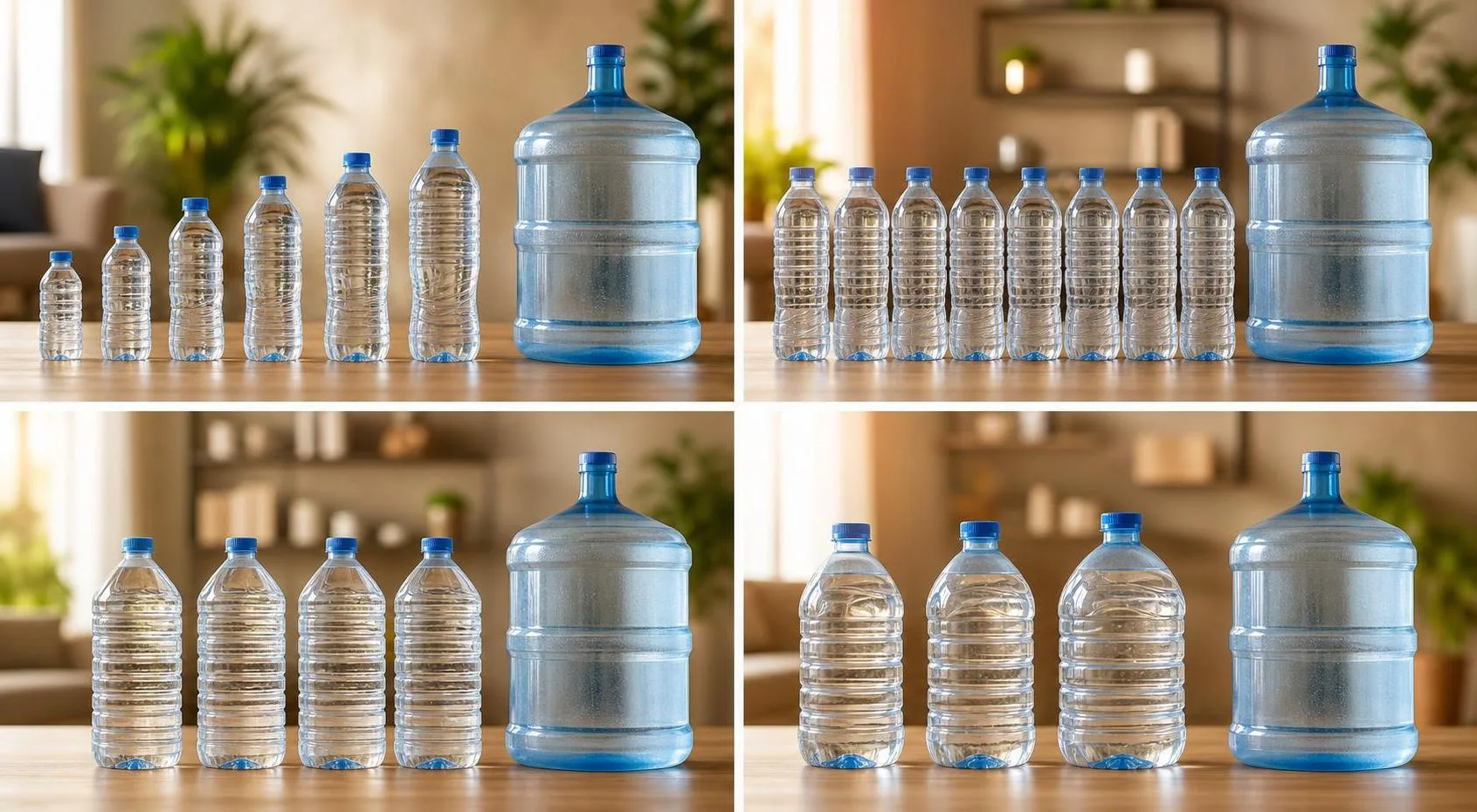
The Myth of One Bottle Size
The biggest mistake is assuming “a bottle” has one standard size. In the U.S., a gallon is fixed at 128 U.S. fluid ounces, but bottled water commonly ranges from 8 ounces to 1 liter.
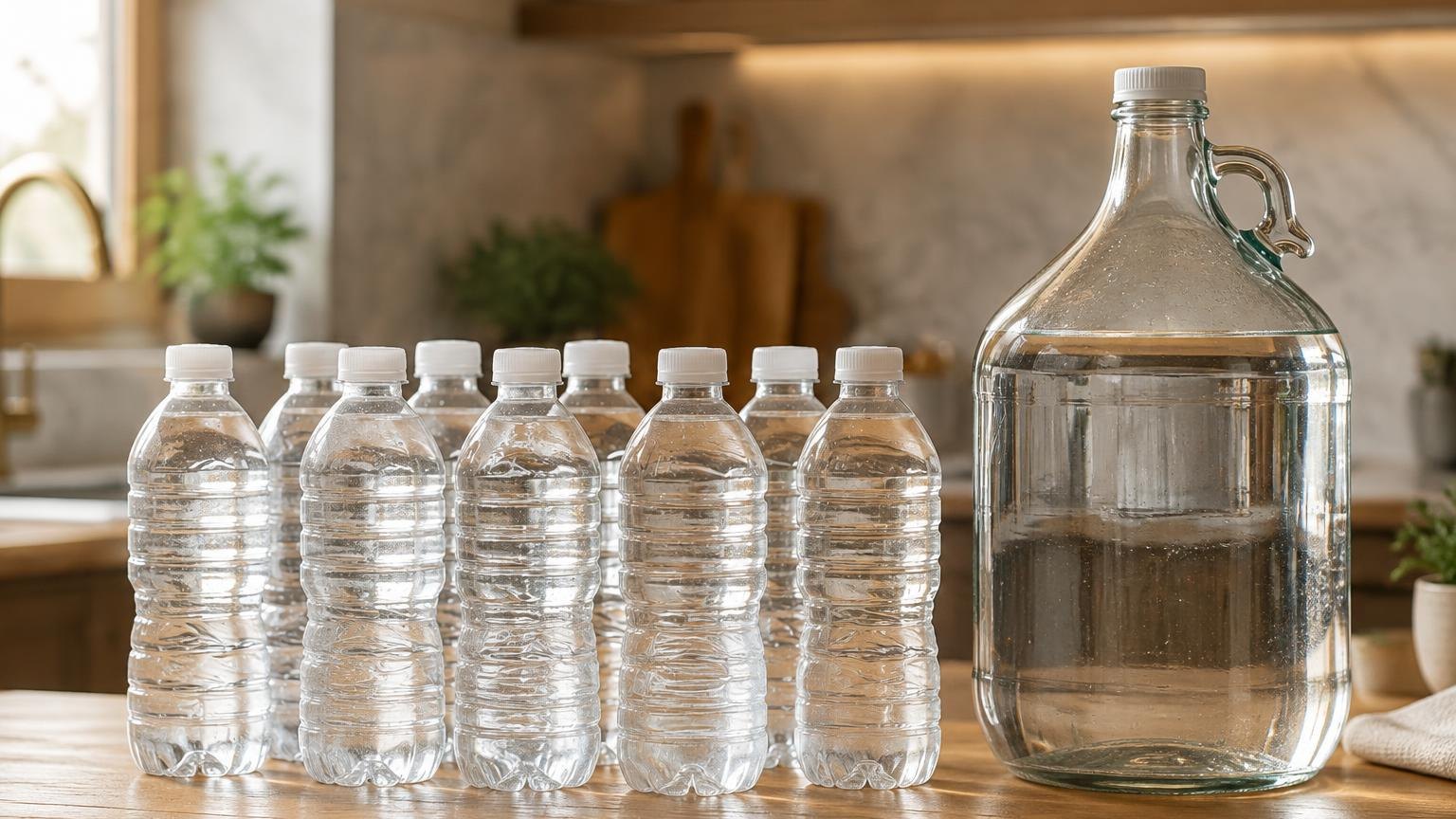
That means the answer changes depending on the bottle label, not the brand or the shape of the bottle.
Mistake: Saying 8 bottles always equals 1 gallon
This is only close for the common 16.9-ounce bottle, and even then it is not exact. Eight 16.9-ounce bottles equal 135.2 ounces, which is 7.2 ounces more than a U.S. gallon.
| Bottle size | Bottles per 128-ounce U.S. gallon | Practical result |
| 8 fl oz | 16 bottles | Exact |
| 12 fl oz | 10.67 bottles | 10 bottles plus 8 fl oz |
| 16.9 fl oz | 7.57 bottles | About 7 and 1/2 bottles |
| 20 fl oz | 6.4 bottles | 6 bottles plus 8 fl oz |
| 1 liter | 3.79 bottles | Just under 4 bottles |
Myth: A 16.9-ounce bottle is exactly half a liter
This one is basically true, but the rounded label can confuse the math. A half-liter is 16.907 U.S. fluid ounces, so a 16.9-ounce bottle is a rounded 500-milliliter bottle.
Because 1 U.S. gallon is 3.785 liters, it takes about 7.57 half-liter bottles to equal a gallon. If you drink 8 half-liter bottles, you have consumed about 1.06 gallons.
Mistake: Mixing U.S. and Imperial gallons
In the United States, a gallon means 128 U.S. fluid ounces. An Imperial gallon, used historically in the United Kingdom and some Commonwealth contexts, is larger at about 153.7 U.S. fluid ounces.
| Measure | Fluid ounces | Liters |
| U.S. gallon | 128 U.S. fl oz | 3.785 L |
| Imperial gallon | About 153.7 U.S. fl oz | 4.546 L |
Myth: Bottle count is the best way to track hydration
Bottle count is convenient, but ounces or liters are more accurate. For example, three 20-ounce bottles provide 60 ounces, while three 16.9-ounce bottles provide only 50.7 ounces.
- Check the label first: Look for fluid ounces or milliliters near the bottom of the front label.
- Use 128 ounces for U.S. gallons: Divide 128 by the bottle’s ounce size.
- Do not round too early: Rounding 7.57 bottles to 8 adds extra water beyond one gallon.
- Remember weight is different: One U.S. gallon of water weighs about 8.34 pounds, excluding the bottle.
Frequently Asked Questions
How many 16.9-ounce water bottles are in a gallon?
One U.S. gallon is 128 fluid ounces, so 128 ÷ 16.9 = 7.57 bottles. In practical terms, you need about 7 and a half 16.9-ounce bottles, or 8 bottles to slightly exceed a gallon.
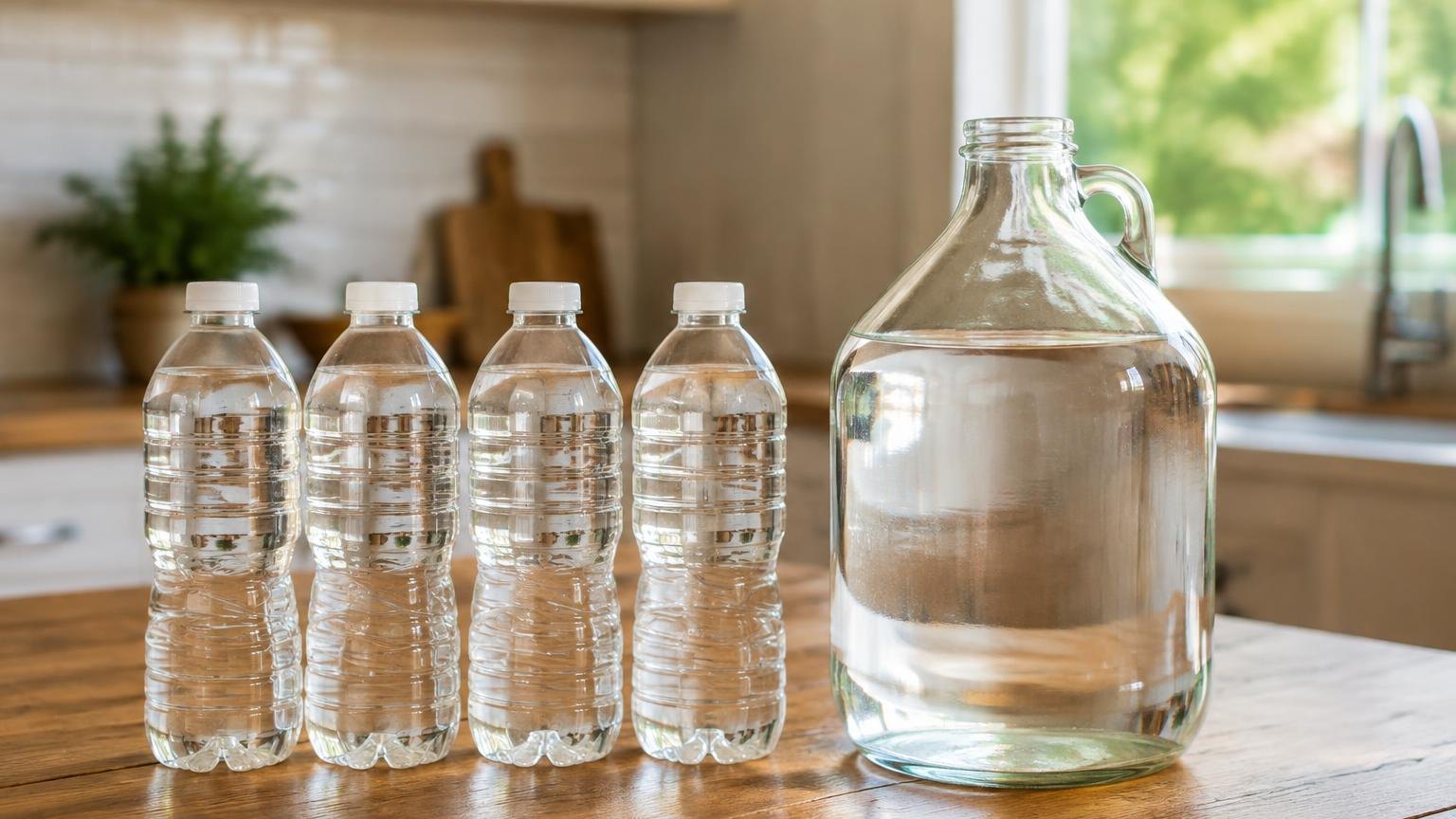
How many 500 mL water bottles make a gallon?
A 500 mL bottle contains about 16.91 U.S. fluid ounces. Since a U.S. gallon is 128 fluid ounces, it takes about 7.57 bottles, so 8 standard 500 mL bottles is just over one gallon.
How many 20-ounce water bottles equal a gallon?
Divide 128 fluid ounces by 20 fluid ounces per bottle. That equals 6.4 bottles, meaning 6 bottles is 120 ounces and 7 bottles is 140 ounces, which is more than a gallon.
How many 1-liter water bottles are in a gallon?
One U.S. gallon equals about 3.785 liters. That means it takes 3.785 one-liter bottles to make a gallon, so 4 one-liter bottles will slightly exceed a U.S. gallon.
Is a gallon exactly 8 bottles of water?
Only if each bottle is 16 fluid ounces, because 8 × 16 = 128 fluid ounces. Most single-serve bottled water in the U.S. is 16.9 ounces, so 8 of those bottles equals 135.2 ounces, which is about 1.06 gallons.
How many 12-ounce bottled waters equal a gallon?
One U.S. gallon is 128 fluid ounces, so it takes 10.67 bottles at 12 ounces each to equal a gallon. In practical terms, 10 bottles give you 120 ounces, and an 11th bottle brings the total to 132 ounces, slightly over a gallon.
How many 8-ounce bottles of water are in a gallon?
A U.S. gallon contains 128 fluid ounces, which equals 16 bottles if each bottle holds 8 ounces. This size is often used for small single-serve containers, so the math is straightforward: 8 times 16 equals 128.
How many 24-ounce water bottles make one gallon?
Since one gallon is 128 fluid ounces, dividing by 24 gives 5.33 bottles. That means 5 full 24-ounce bottles total 120 ounces, and you would need about one-third of a sixth bottle to reach a full gallon.
Related Reading
- What To Mix With Hennessy Other Than Juice?
- How Many Cups Per Ounce? The Ultimate Conversion Guide You’ll Ever Need
- How Many Ml Is 10 Oz
- How To Find Allocated Bourbon?
- How Many Ml Is 40 Oz? – Essential Conversion Guide With Real-Life Uses
- How Many Cups Is 6 Tablespoons? – 2026
- What Is The Most Expensive Bourbon In The World?
- All Blog Guides