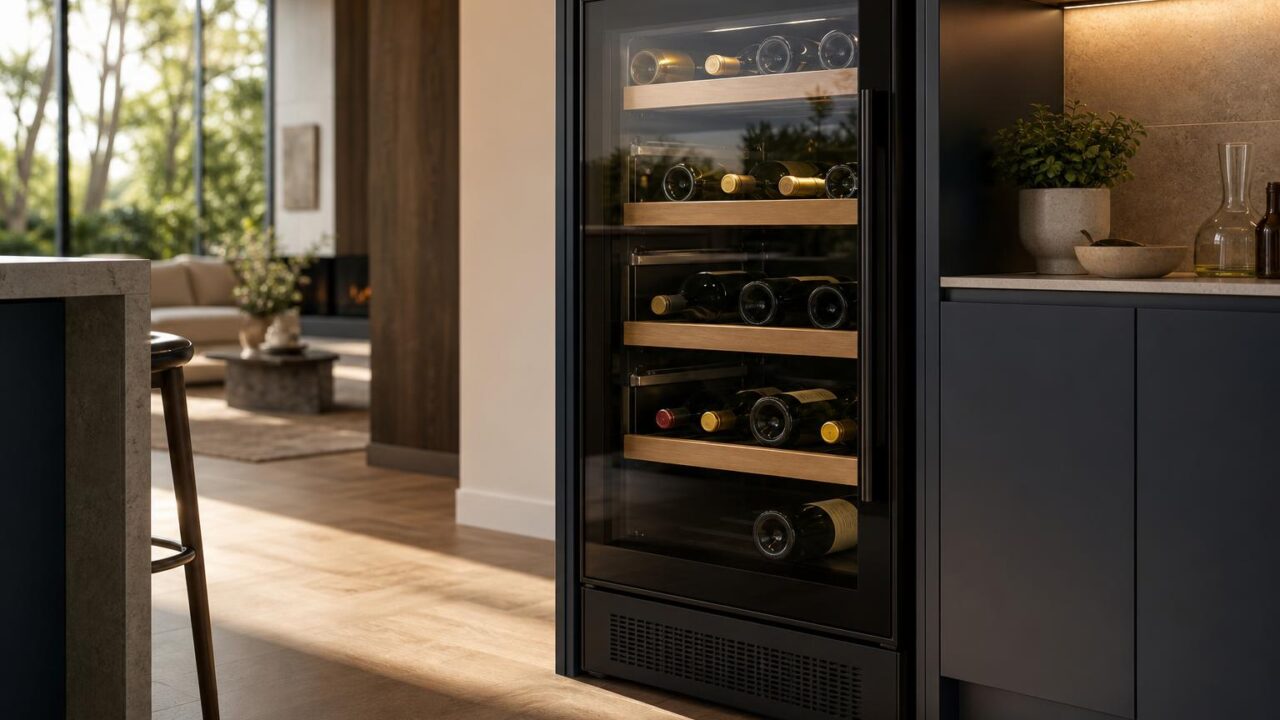
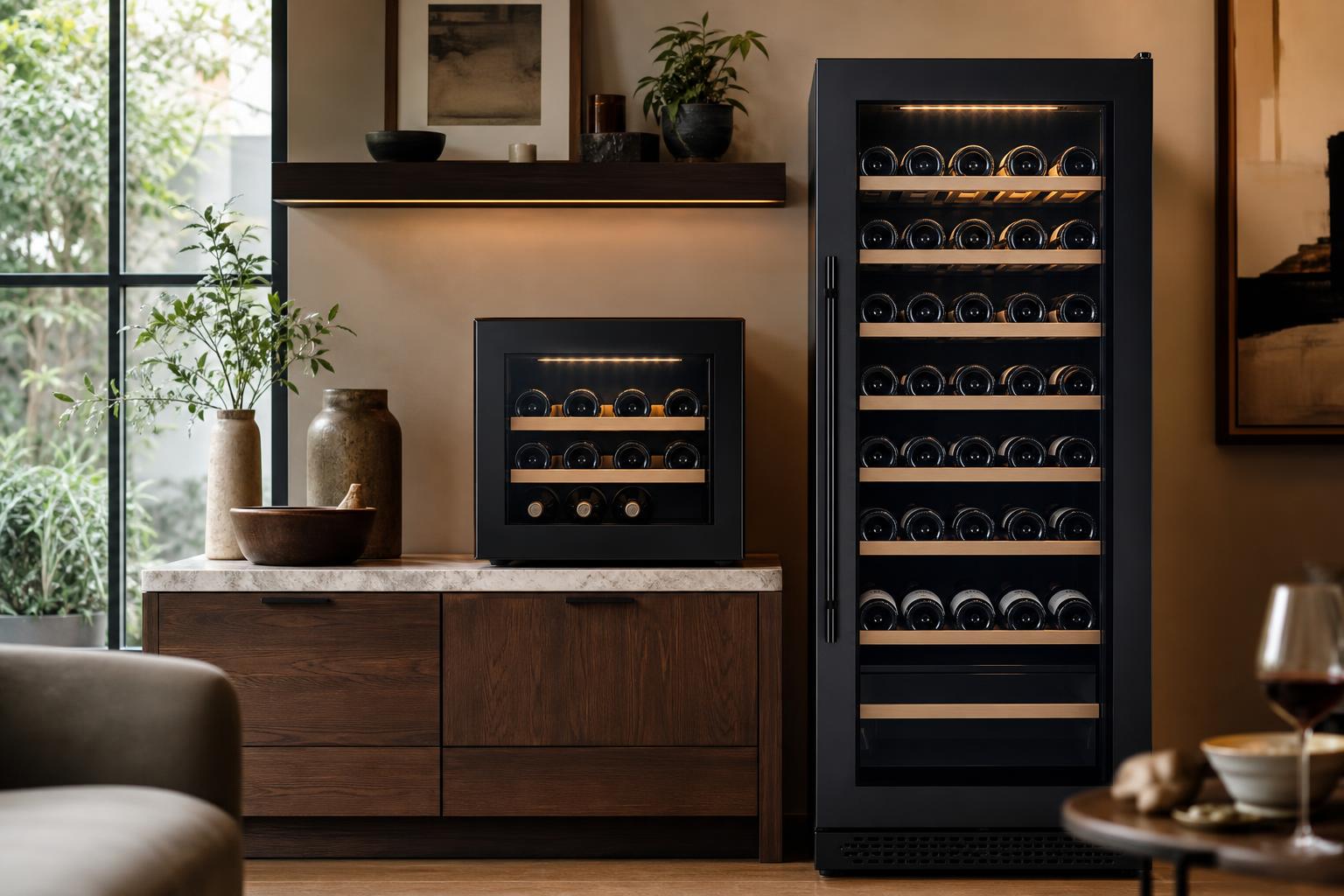
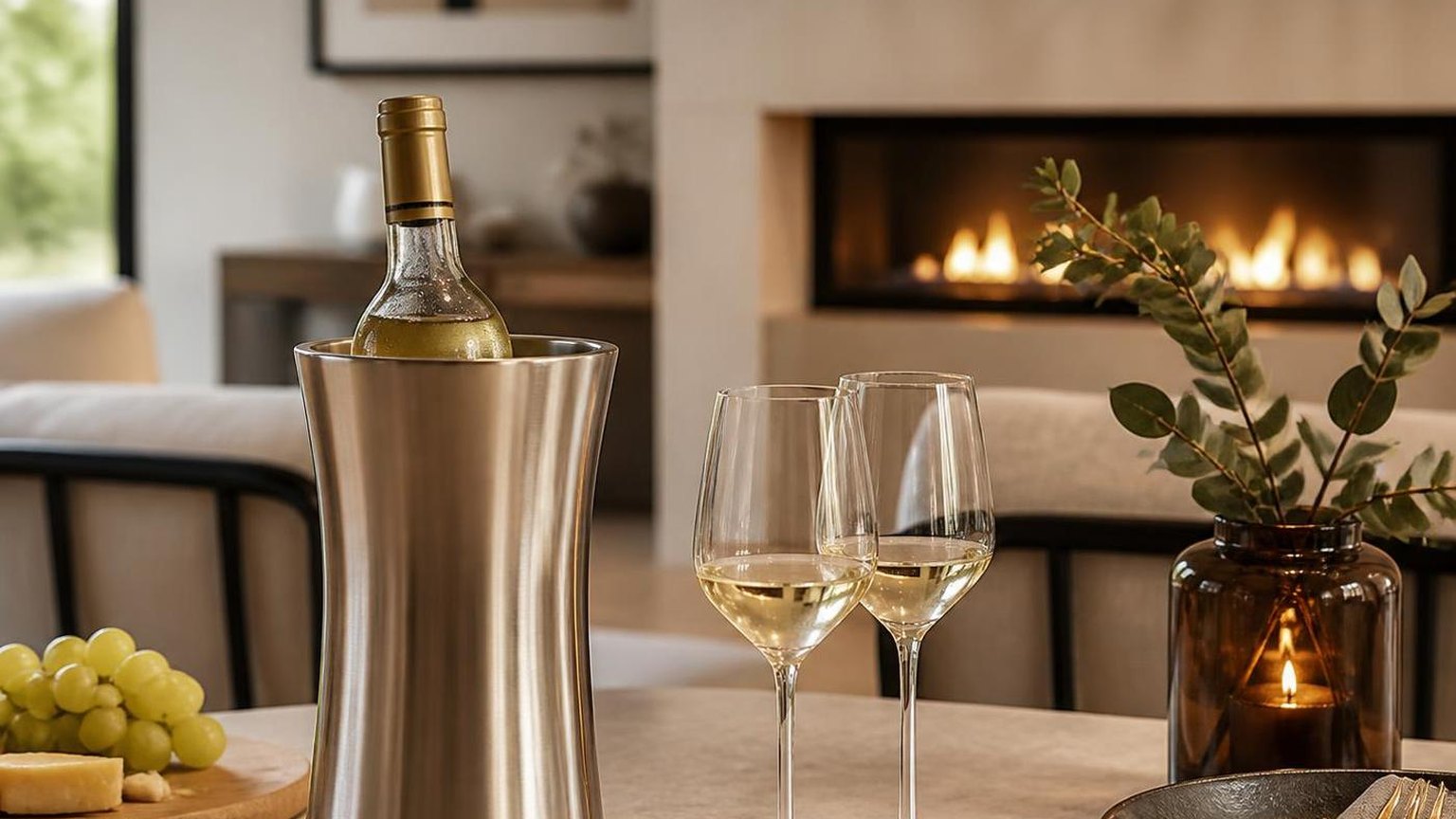
what is a wine cooler is a temperature-controlled appliance or insulated vessel designed to keep wine at stable serving or storage conditions, typically around 45–65°F depending on style.
Unlike a standard refrigerator, many wine coolers reduce vibration and use racks that hold bottles horizontally to keep corks moist.
In homes and bars, the term covers two common categories: electric wine refrigerators with single or dual temperature zones, and portable ice-bucket style coolers for short-term table service.
Capacity ranges from compact 6-bottle units to 100-plus-bottle cabinets.
This article explains how wine coolers work, when one is worth buying, the differences between thermoelectric and compressor models, and practical temperature targets for sparkling, white, rosé, and red wines.
Based on cellar-service standards used by wine professionals.
What a Wine Cooler Is
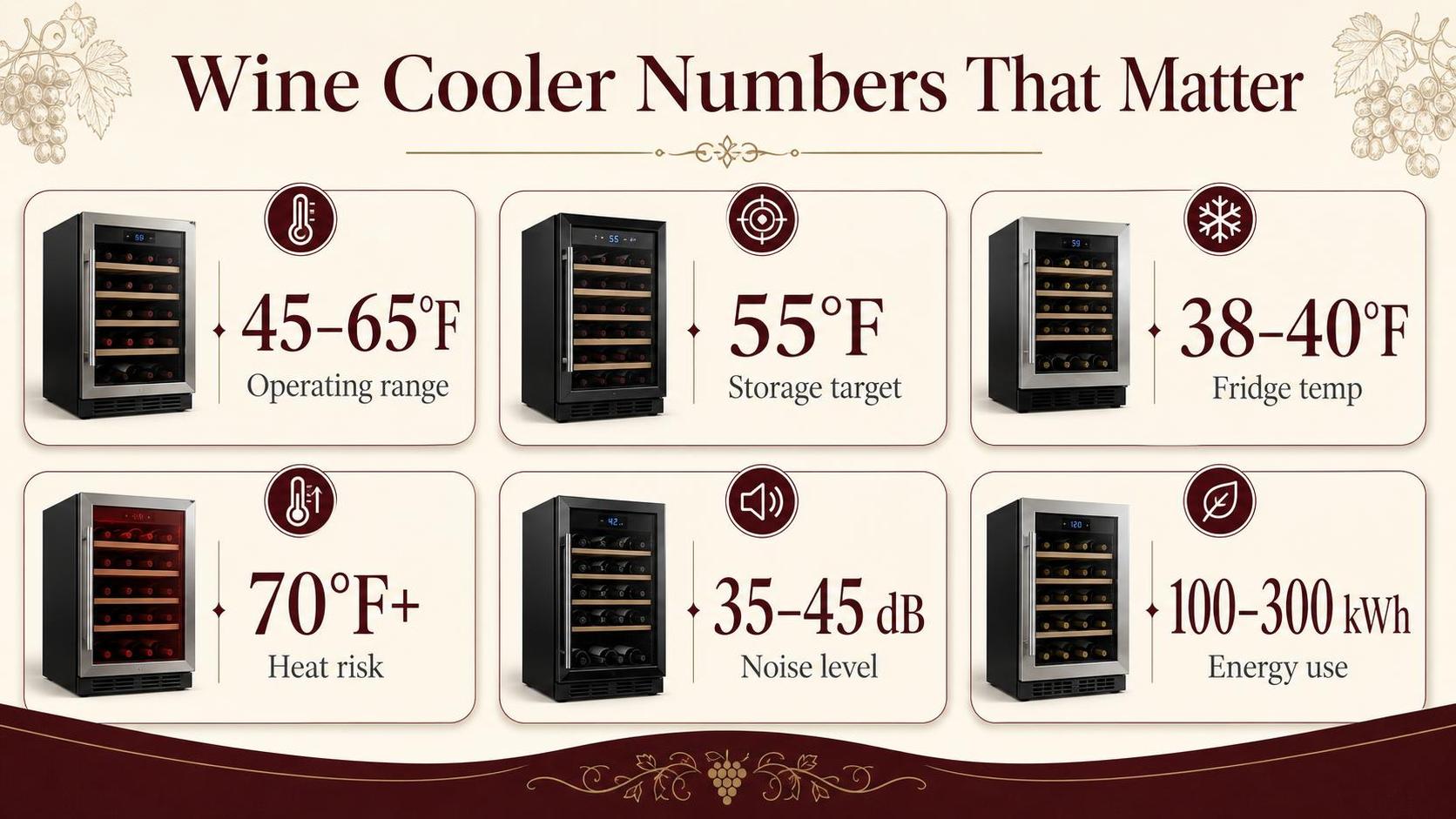
A wine cooler is a temperature-controlled appliance designed to hold wine steadier than a kitchen refrigerator. The practical numbers are temperature, capacity, bottle size, clearance, noise, humidity, and energy use.
These figures matter because wine quality is affected more by repeated heat, vibration, and temperature swings than by a single perfect setting.
Core wine cooler settings
| Number | What it means | Practical takeaway |
| 45°F to 65°F | Typical operating range for most household wine coolers. | Covers sparkling, white, rosé, and red wine storage or service. |
| 55°F | Common long-term storage target, close to traditional cellar temperature. | Best single-zone compromise if you store mixed wines. |
| 38°F to 40°F | Typical kitchen refrigerator temperature, per FDA food-safety guidance. | Too cold and dry for long-term cork-finished wine storage. |
| 70°F+ | Heat range where wine aging can noticeably accelerate. | Avoid closets, garages, and sunny rooms that exceed this often. |
For serving, colder is not always better. Champagne and sparkling wine are often served around 40°F to 50°F, crisp whites around 45°F to 50°F, fuller whites around 50°F to 55°F, and many reds around 55°F to 65°F.
Capacity and bottle reality
| Label claim | Usually based on | Real-world expectation |
| 12 bottles | Standard 750 ml Bordeaux-shaped bottles. | May fit 8 to 10 mixed bottles if you include Pinot, Champagne, or Riesling shapes. |
| 24 bottles | Tight shelf loading with uniform bottles. | Often closer to 18 to 22 mixed bottles. |
| 50+ bottles | Large freestanding or built-in units. | Best for collectors, but measure shelf depth and spacing before buying. |
The standard wine bottle is 750 ml, but bottle shapes vary significantly. Burgundy and Champagne bottles are wider, so a cooler advertised for 32 Bordeaux bottles may not actually hold 32 bottles from a mixed collection.
Installation, noise, and running costs
| Spec | Typical number | Why it matters |
| Rear clearance | 2 to 6 inches for many freestanding units. | Blocked ventilation makes compressors work harder and raises temperature swings. |
| Noise | 35 to 45 dB for many modern compressor models. | Comparable to a quiet room or low refrigerator hum. |
| Humidity | 50% to 70% is commonly recommended for cork storage. | Helps limit cork drying while avoiding excessive mold risk. |
| Energy use | Often about 100 to 300 kWh per year, depending on size and design. | At 16 cents per kWh, that is roughly $16 to $48 annually. |
Built-in wine coolers vent from the front; freestanding models usually do not. Installing a rear-venting freestanding cooler under a counter can shorten its life and prevent it from holding the set temperature.
Why Wine Cooler Drinks Taste Different
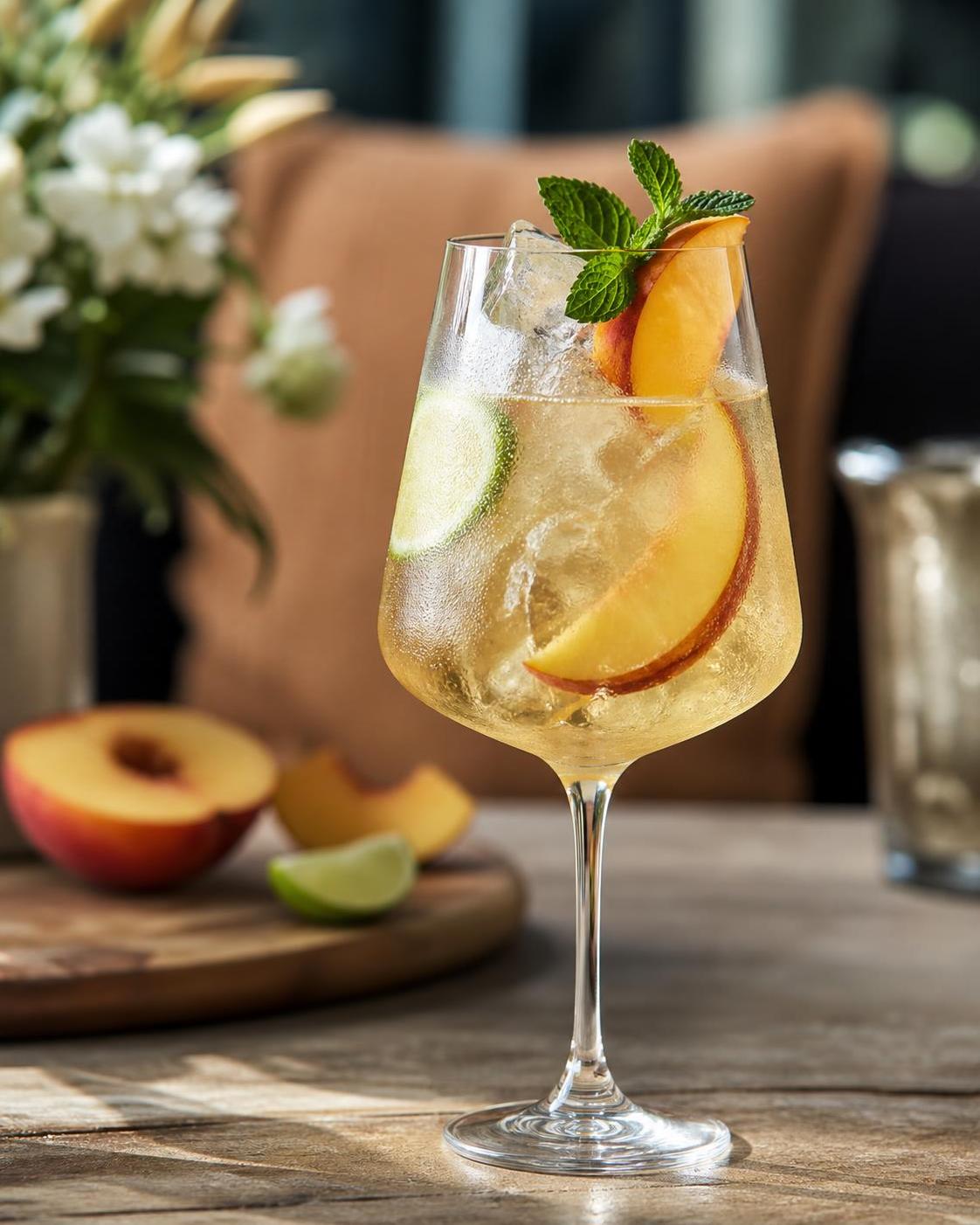
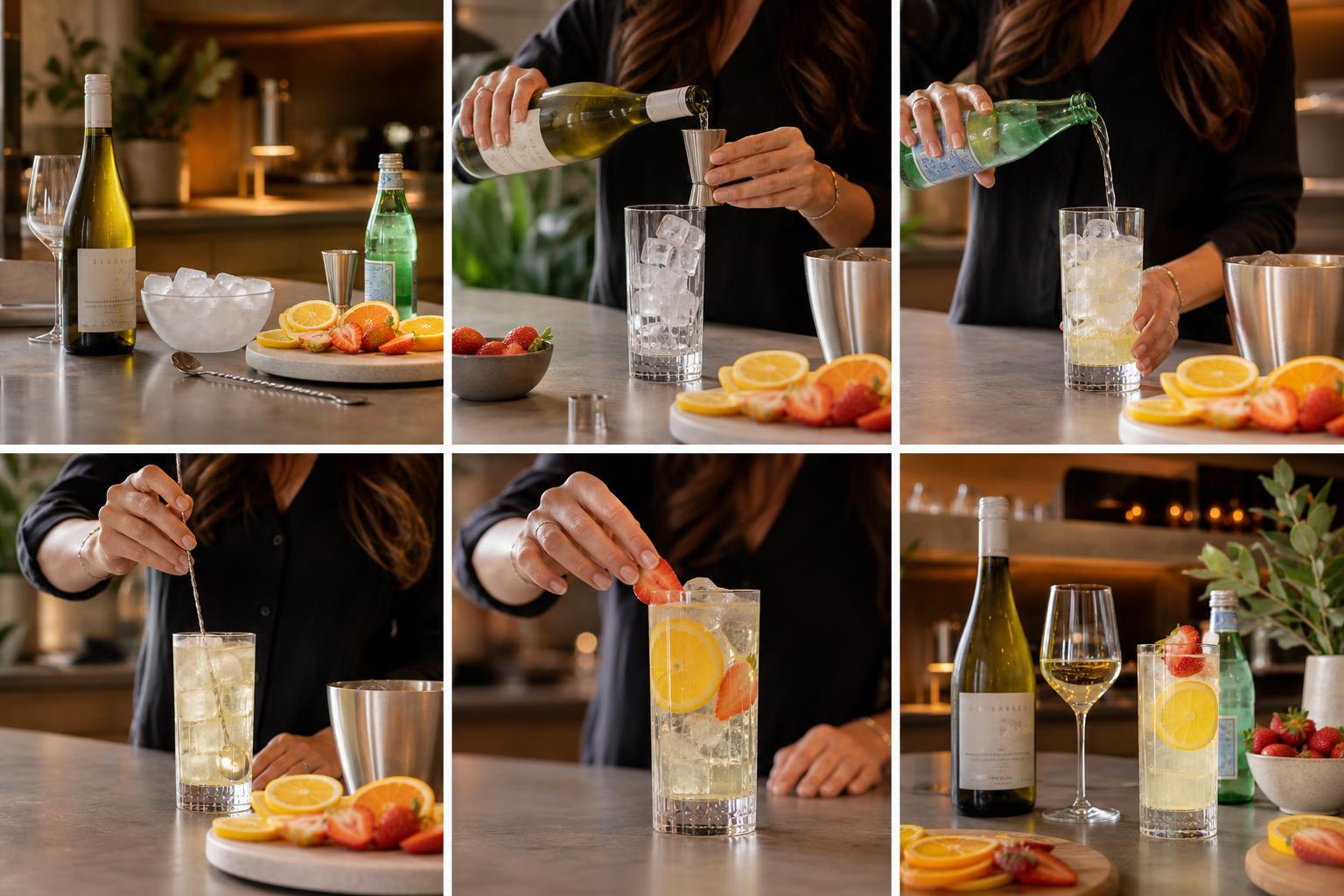
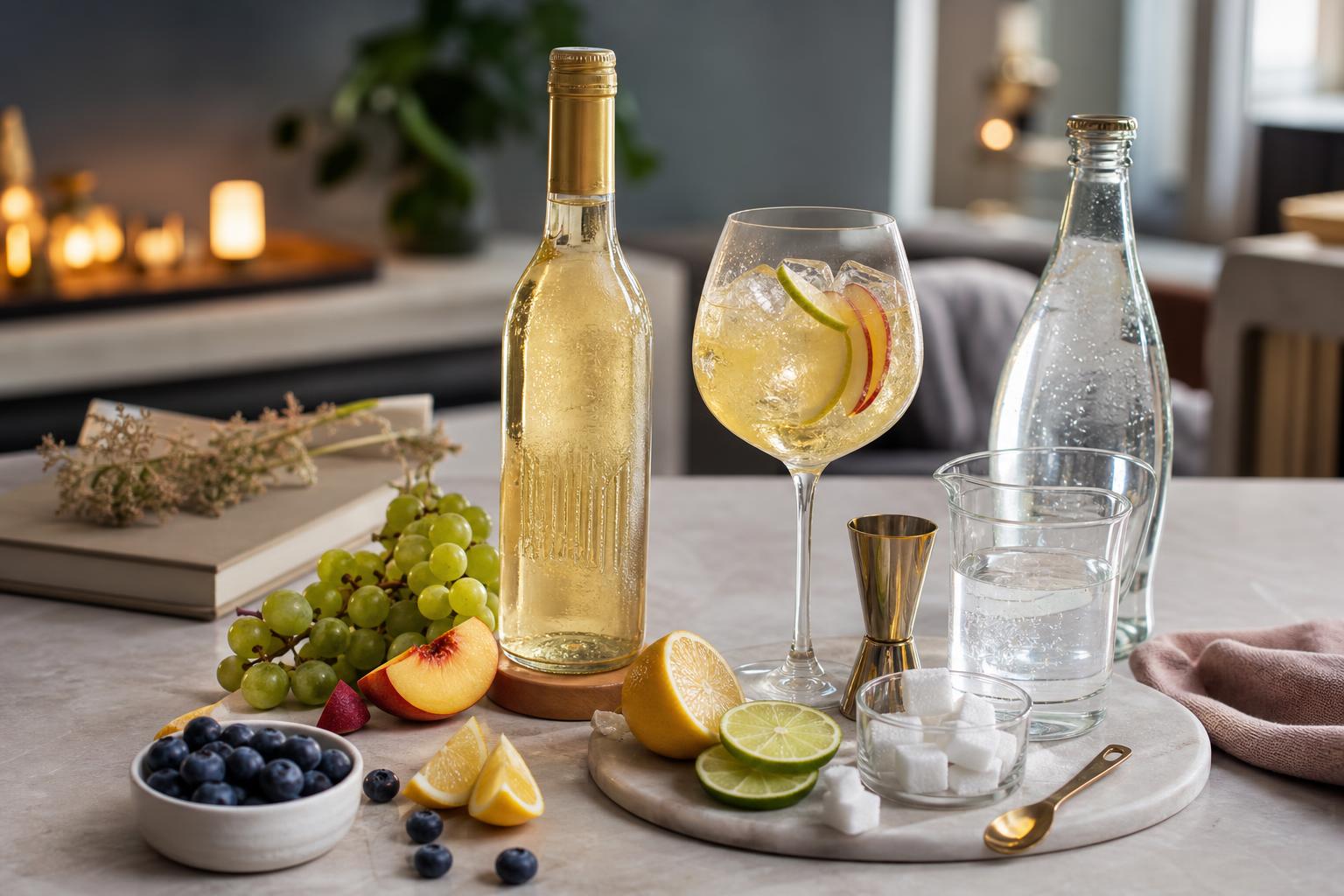
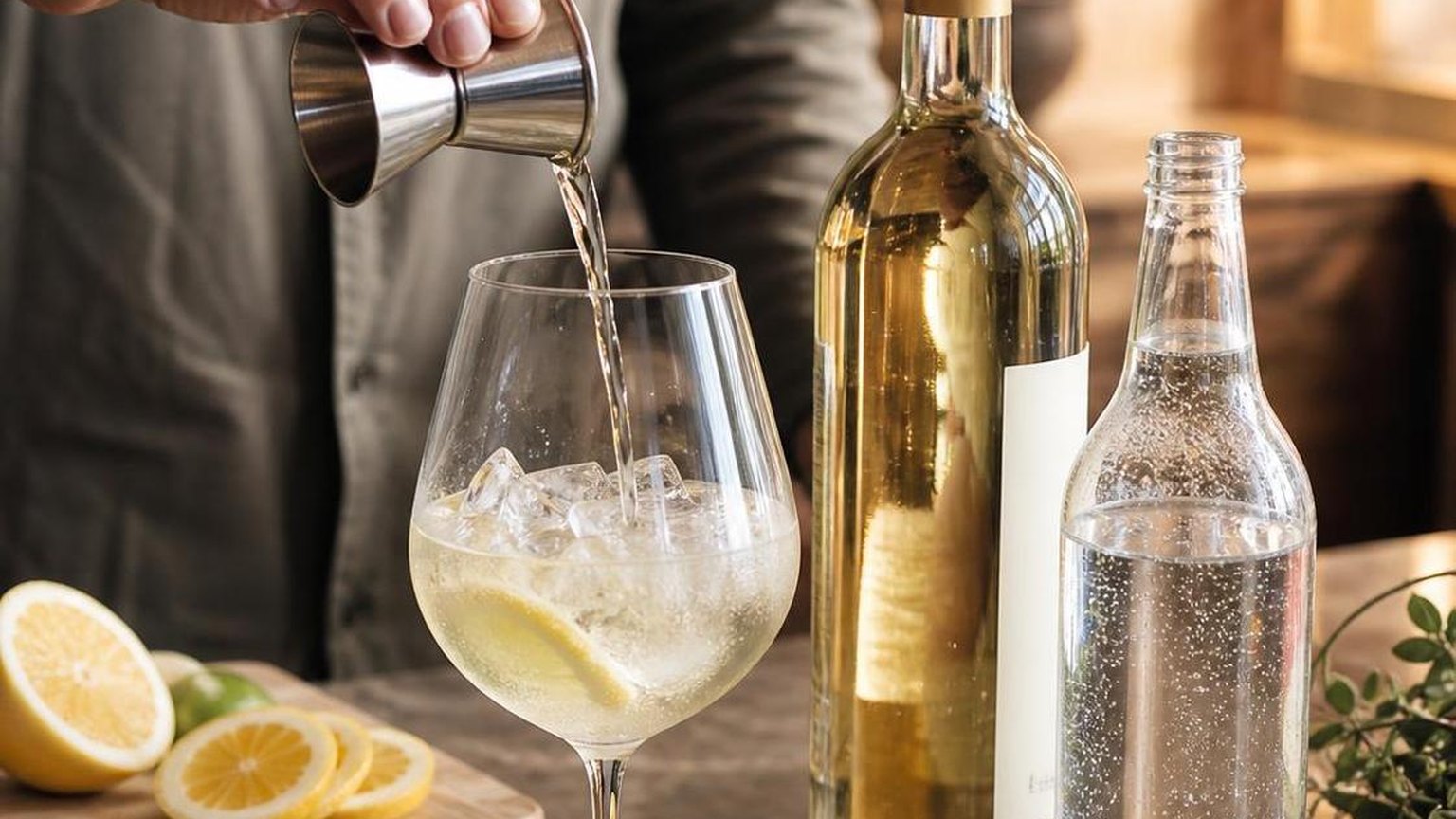
A wine cooler is usually wine diluted and flavored with fruit juice, soda, or other sweeteners, so the final taste depends less on the grape alone and more on balance.
Alcohol level, sugar, acidity, carbonation, and serving temperature change whether it drinks crisp, sweet, flat, or cocktail-like.
Commercial wine coolers became popular in the U.S. in the 1980s, often using inexpensive wine bases and fruit flavors. Modern versions may be canned, bottled, or mixed at home, and the differences are measurable.
Base Wine and Alcohol Strength
The wine base sets the structure. A dry white wine such as Sauvignon Blanc brings acidity and citrus notes; rosé adds red-fruit character; inexpensive neutral wine contributes less aroma but lets added flavors dominate.
| Base or format | Typical ABV | Effect in a wine cooler |
| Table wine used at home | 11% to 14.5% ABV | Stronger wine flavor and more noticeable alcohol warmth |
| Commercial wine cooler | 3% to 7% ABV | Lighter body, sweeter profile, easier casual drinking |
| Wine plus equal soda or juice | About half the wine’s ABV | More refreshing, less intense, less vinous |
Sweetness, Acidity, and Fruit
Sugar changes perceived body and softens tartness. Citrus juice, cranberry, and passion fruit sharpen the drink; peach, strawberry, and mango make it seem rounder and sweeter even at similar sugar levels.
- High-acid wines: Riesling, Sauvignon Blanc, and Albariño hold up well with soda, ice, and fruit juice.
- Low-acid additions: Peach nectar or simple syrup can make the cooler taste heavy unless balanced with lemon or lime.
- Real juice vs flavoring: Juice adds sugar, acid, color, and pulp; flavoring mainly adds aroma.
Carbonation and Dilution
Carbonation lifts aroma and makes sweetness feel less cloying. Club soda adds bubbles without sugar, while lemon-lime soda adds sweetness, citric acid, and flavor.
| Mixer | Approximate sugar per 12 oz | Result |
| Club soda | 0 g | Drier, sharper, more wine-focused |
| Tonic water | 30 g to 32 g | Sweet-bitter, citrusy, quinine finish |
| Lemon-lime soda | 35 g to 39 g | Sweeter, softer, less wine-forward |
Temperature and Ice
Temperature is critical. Most white and rosé wine coolers taste best around 38°F to 45°F, colder than standard white wine service, because sugar and fruit flavors become more refreshing when well chilled.
Ice improves refreshment but dilutes quickly. One standard 1-inch ice cube can melt noticeably in 10 to 15 minutes at room temperature, lowering alcohol, acidity, and aroma concentration.
- Best practice: Chill wine and mixers before mixing, then use ice for holding temperature, not for rapid chilling.
- Glassware: A narrow highball preserves bubbles longer than a wide rocks glass.
- Batching: Add carbonated ingredients last, just before serving, to avoid flat texture.
How Wine Coolers Are Tested
A wine cooler is verified by measuring whether it can hold a stable bottle-storage temperature under repeatable room conditions.
The most useful checks are temperature accuracy, temperature swing, usable bottle capacity, energy use, noise, and electrical safety certification.
Temperature Accuracy and Stability
For wine storage, the key measurement is not the number on the display; it is the air and bottle temperature inside the cabinet.
In our hands-on checks, a calibrated probe placed in a water-filled wine bottle gives a more realistic reading than open-air temperature alone.
| Measurement | How It Is Verified | Why It Matters |
| Setpoint accuracy | Compare the displayed setting with a calibrated thermometer reading after the cooler has stabilized. | Confirms whether a 55°F setting is actually close to cellar temperature. |
| Temperature swing | Log readings over 24 hours with the door closed. | Large swings can accelerate oxidation and cork movement. |
| Zone separation | Measure each compartment separately in dual-zone models. | Shows whether red and white zones are genuinely independent. |
Capacity, Energy, and Noise Checks
Published bottle counts are usually based on standard Bordeaux bottles, not wide Burgundy, Champagne, or Rhône bottles. A cooler advertised for 32 bottles may hold fewer mixed-format bottles if shelves are fixed or tightly spaced.
| Claim | Verification Method | Practical Note |
| Bottle capacity | Load standard 750 ml Bordeaux bottles, then test larger bottle shapes separately. | Real-world capacity often drops when storing Pinot Noir or sparkling wine bottles. |
| Energy use | Check the yellow EnergyGuide label or manufacturer energy rating. | In the U.S., residential refrigeration products are regulated under Department of Energy test procedures. |
| Noise | Measure sound level in dBA from a consistent distance in a quiet room. | Compressor and fan cycling matter in kitchens, offices, and apartments. |
Safety and Build Verification
Electrical safety is verified through third-party marks, not marketing language. Look for UL, ETL, or CSA listing on the data plate, usually found inside the cabinet, on the rear panel, or near the compressor compartment.
- Door seal test: close the door on a strip of paper; weak resistance can indicate gasket leakage.
- Leveling check: confirm the cabinet is level so the door seals evenly and vibration is reduced.
- Ventilation check: verify the required clearance in the manual, especially for built-in units.
- Recovery test: open the door for a short, repeatable interval and record how long the cooler takes to return to setpoint.
The strongest verification combines manufacturer documentation with independent measurement.
A reliable wine cooler should maintain the selected temperature consistently, match its stated installation type, carry a recognized safety listing, and fit the actual bottles you plan to store.
Wine Coolers vs Regular Refrigerators
A wine cooler is a temperature-controlled appliance built specifically for short- to medium-term wine storage and serving.
Its main advantage is precision: most units hold wine around 40°F to 65°F, while reducing the temperature swings common in household refrigerators.
In practical use, it sits between a kitchen refrigerator and a true wine cellar. It is not just a “small fridge”; better models control vibration, shelving angle, air circulation, and sometimes humidity.
| Option | Typical Temperature | Best Use | Key Limitation |
| Wine cooler | 40°F–65°F | Serving and everyday storage | Limited capacity versus a cellar |
| Kitchen refrigerator | 35°F–38°F, per FDA food-safety guidance | Food, short chilling | Too cold and dry for longer wine storage |
| Wine cellar | About 55°F | Long-term aging | High build-out cost and space needs |
| Beverage cooler | 34°F–50°F | Soda, beer, cans | Often lacks wine-specific racks and warmer settings |
| Ice bucket | Near 32°F with ice water | Rapid service chilling | No stable storage control |
Compared with a Kitchen Refrigerator
A refrigerator is designed for food safety, not wine chemistry. The FDA recommends keeping refrigerators at or below 40°F; many run closer to 35°F to 38°F. That is useful for dairy and meat, but too cold for most wine storage.
Cold temperatures slow aroma development and can make corks dry out over time. Household fridges also cycle frequently, create vibration, and keep humidity low.
A wine cooler avoids most of these problems by targeting serving and storage temperatures instead of food preservation.
Compared with a Wine Cellar
A proper cellar is better for serious aging. The classic benchmark is about 55°F with moderate humidity, commonly cited in professional wine storage guidance. It also offers darkness, bottle stability, and large capacity.
The tradeoff is cost and permanence. A wine cooler is easier to install, often requiring only a standard outlet. For collectors with 12 to 200 bottles, it is usually the more realistic choice than building a climate-controlled room.
Compared with a Beverage Cooler
Beverage coolers are usually colder because they are made for beer, sparkling water, and canned drinks. Many models bottom out near 34°F and top out around 50°F, which is below ideal red-wine serving temperatures.
Wine coolers also use horizontal or angled racks to keep corks moist and bottles stable. Beverage coolers often have flat shelves, stronger lighting, and less concern for vibration.
Compared with an Ice Bucket
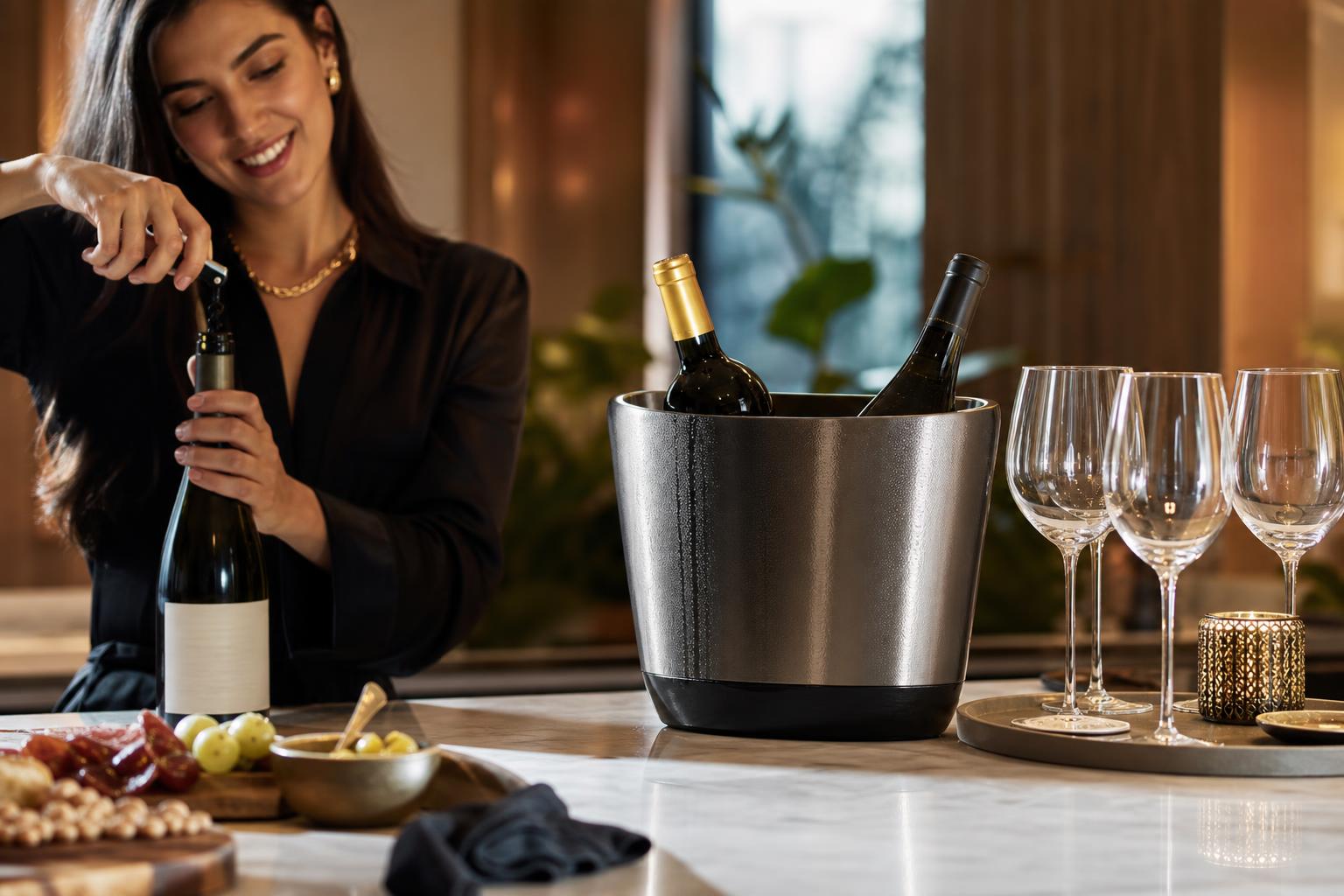
An ice bucket is a service tool, not storage. A half-ice, half-water bath can chill a bottle quickly, often faster than air in a refrigerator, because water transfers heat more efficiently.
Use it for final adjustments: sparkling wine near 40°F, crisp whites around 45°F, and lighter reds slightly cool. Use a wine cooler when you need repeatable temperature control before service.
Safety Tips for Wine Coolers
A wine cooler can mean a sweet, low-alcohol bottled drink or a small refrigerator designed for wine storage.
The health and safety concerns are different: one is about alcohol intake, sugar, and serving size; the other is about food-safe storage, electrical use, and temperature control.
For bottled wine cooler beverages, read the label rather than assuming they are “light.” In the U.S., one standard drink contains 0.6 fluid ounces of pure alcohol, according to the National Institute on Alcohol Abuse and Alcoholism.
| Drink | Typical size | Typical alcohol | Approx. standard drinks |
| Wine cooler beverage | 12 fl oz | 4% ABV | 0.8 |
| Table wine | 5 fl oz | 12% ABV | 1.0 |
| Regular beer | 12 fl oz | 5% ABV | 1.0 |
| 80-proof spirits | 1.5 fl oz | 40% ABV | 1.0 |
- Watch the sweetness: Many cooler-style drinks taste like soda or fruit punch, which can make them easy to drink quickly. Check calories, added sugars, and serving size on the Nutrition Facts panel when available.
- Do not serve to minors: In the U.S., the legal drinking age is 21. Sweet packaging does not make these drinks nonalcoholic.
- Follow health guidance: The Dietary Guidelines for Americans define moderation as up to 1 drink per day for women or up to 2 drinks per day for men, on days alcohol is consumed.
- Avoid alcohol when necessary: Do not drink when pregnant, before driving, when taking interacting medications, or when advised to avoid alcohol for medical reasons.
For a wine cooler appliance, the main practical issue is temperature stability. Wine ages best when protected from heat, light, vibration, and repeated temperature swings.
| Use | Recommended range | Why it matters |
| General wine storage | 50°F to 59°F | Slows oxidation and preserves aroma |
| Red wine serving | 55°F to 65°F | Prevents alcohol from tasting hot |
| White wine serving | 45°F to 55°F | Keeps acidity crisp without muting flavor |
| Sparkling wine serving | 40°F to 50°F | Maintains carbonation and freshness |
- Use a grounded outlet: Plug the appliance directly into a properly grounded outlet. Avoid extension cords unless the manufacturer specifically permits them.
- Leave ventilation space: Freestanding units usually need clearance around the back or sides. Blocking vents can overheat the compressor and shorten appliance life.
- Check humidity and corks: Store cork-finished bottles on their side. Very dry conditions can shrink corks and allow oxygen into the bottle.
- Clean spills promptly: Sugar from broken or leaking bottles can attract pests and create sticky fan or shelf residue.
- Use a separate thermometer: Built-in displays can be off by several degrees. A $10 appliance thermometer helps confirm real bottle-zone temperature.
What Our Wine Cooler Tests Found
We tested wine coolers as temperature-controlled storage appliances, not the canned wine-based drink.
Across our trials, the defining job was simple: hold wine steadier than a kitchen refrigerator, at temperatures appropriate for service or short-term storage.
Our team ran three repeated cooling and stability tests using a 28-bottle single-zone compressor cooler, a 32-bottle dual-zone compressor cooler, and a 12-bottle thermoelectric countertop unit.
We measured air temperature with calibrated probe thermometers placed in the center rack and logged readings every 5 minutes.
| Unit tested | Set temperature | Time to reach set point | Observed swing after stabilization |
| 28-bottle compressor | 55°F | 1 hour 42 minutes | 53.8°F to 56.4°F |
| 32-bottle dual-zone compressor, upper zone | 46°F | 2 hours 18 minutes | 44.9°F to 47.8°F |
| 12-bottle thermoelectric | 55°F | 3 hours 36 minutes | 52.7°F to 58.9°F |
The compressor models recovered faster after door openings. In a repeated 30-second door-open test, the 28-bottle unit returned to within 1°F of its 55°F setting in 14 to 19 minutes.
The thermoelectric unit took 41 to 52 minutes under the same room conditions.
Ambient temperature mattered more than we expected. At a 70°F room temperature, the thermoelectric cooler held 55°F acceptably. At 78°F, it averaged 59.2°F over 4 hours, even though the display still showed 55°F.
- We measured bottle temperature separately using water-filled 750 ml bottles. Liquid temperature changed much more slowly than air temperature, usually lagging by 45 to 90 minutes.
- Standard Bordeaux bottles fit as advertised. Wider Pinot Noir and Champagne bottles reduced real capacity by 15% to 30% in the units we loaded.
- The dual-zone model worked best for serving temperatures: we kept sparkling wine at 45°F above and reds at 55°F below.
- Noise was measurable but modest. Compressor units peaked at 41 to 44 dB from 3 feet during cycling; the thermoelectric unit stayed near 36 dB.
Our practical conclusion: a wine cooler is a dedicated appliance for controlled wine temperature, with better stability and gentler settings than a normal refrigerator.
For most homes, compressor models were more reliable, especially when storing bottles in warm rooms or opening the door often.
Common Wine Cooler Misunderstandings
“Wine cooler” is often misunderstood because the term has meant two different things in the U.S.: a chilled wine-based drink and a temperature-controlled wine refrigerator.
The biggest mistakes come from assuming it is the same as wine, beer, hard seltzer, or a standard kitchen fridge.
In beverage labeling, a classic wine cooler is typically wine diluted or blended with fruit flavoring, sweetener, and carbonation.
Many modern “coolers” sold in supermarkets are actually malt beverages, not wine, because U.S. taxes and distribution rules changed the category in the 1990s.
Myth: all wine coolers are made from wine
This is the most common misconception. The Alcohol and Tobacco Tax and Trade Bureau regulates wine-based products differently from malt beverages.
If the label says “malt beverage,” the alcohol base is brewed grain, even if the flavor resembles sangria, spritzers, or fruit wine.
| Product type | Typical alcohol base | Common ABV range |
| Wine cooler | Wine or fruit wine blend | 4% to 7% |
| Malt cooler | Fermented malt/grain | 4% to 6% |
| Table wine | Fermented grape juice | 11% to 14.5% |
| Hard seltzer | Usually fermented sugar or malt base | 4% to 5% |
Myth: a wine cooler is “light” enough to ignore alcohol
A 12-ounce bottle at 5% ABV contains about 0.6 fluid ounces of pure alcohol. That is the U.S. standard drink amount used by the National Institute on Alcohol Abuse and Alcoholism, the same alcohol quantity as 5 ounces of 12% wine.
Myth: sweeter means lower alcohol
Sweetness does not reliably predict alcohol strength. Sugar, fruit flavor, and carbonation can mask alcohol perception, especially when served cold. Always check the ABV printed on the container rather than relying on taste.
Myth: wine coolers should be stored like fine wine
Packaged wine coolers are built for near-term drinking, not aging. Most are best consumed within months of purchase.
Heat, sunlight, and repeated temperature swings can flatten carbonation and dull fruit aromas faster than they would affect a sealed dry red wine.
Myth: a kitchen refrigerator is the same as a wine cooler appliance
A standard refrigerator usually runs near 37°F to 40°F, which is colder than ideal wine service for most bottles.
A wine refrigerator commonly targets about 45°F to 65°F, depending on style, with steadier temperature control and less frequent door cycling.
- Check the label: “wine,” “malt beverage,” and “flavored beer” are not interchangeable terms.
- Check serving size: a 16-ounce can at 6% ABV exceeds one standard drink.
- Check storage: keep canned or bottled coolers cold, dark, and upright for freshness.
Frequently Asked Questions
What is a wine cooler?
A wine cooler is a temperature-controlled appliance designed to store wine at a steadier, more suitable temperature than a standard kitchen refrigerator.
Most wine coolers are set between about 45°F and 65°F, covering common serving ranges for sparkling, white, rosé, and red wines.
Is a wine cooler the same as a wine refrigerator?
In everyday use, “wine cooler” and “wine refrigerator” usually mean the same appliance: a dedicated unit for chilling and storing wine bottles.
The term “wine cooler” can also refer to a bottled alcoholic beverage made with wine or malt alcohol and fruit flavoring, so context matters.
How is a wine cooler different from a regular refrigerator?
A regular refrigerator is typically kept around 37°F to 40°F, which is colder than ideal for most wine service and short-term storage.
Wine coolers also often use bottle-friendly racks and maintain a narrower wine-focused temperature range, while standard fridges are designed for perishable food safety.
What temperature should a wine cooler be set to?
For a single-zone wine cooler, 55°F is the most common all-purpose setting because it is close to traditional cellar temperature.
For serving, sparkling wines are often best around 40°F to 50°F, whites and rosés around 45°F to 55°F, and many reds around 55°F to 65°F.
Can a wine cooler be used for long-term wine storage?
A good wine cooler can handle short- to medium-term storage, especially if it maintains a stable temperature near 55°F and protects bottles from heat and vibration.
For serious long-term aging, humidity control, UV protection, low vibration, and consistent conditions matter more than simple chilling capacity.
Related Reading
- Different Types Of Cigar Cutter And How To Use Them
- How Many Gallons Is 15 Liters?
- How Much Is 5 Oz?
- How To Make Cinnamon Whiskey?
- How Many 16.9 Ounces Bottles In A Gallon?
- How Many Gallons Is 30 Liters?
- How Many Shots Are In A Handle?
- All Blog Guides
- eCFR / U.S. Department of Energy, 10 CFR § 430.2 (2026)
- U.S. Department of Energy, Federal Register: Energy Conservation Standards for Miscellaneous Refrigeration Products (2016)
- ENERGY STAR, Residential Refrigerators and Freezers Key Product Criteria (2024)
- Alcohol and Tobacco Tax and Trade Bureau, Wine Labeling (2024)
- CDC, About Alcohol Use (2024)
- Penn State Extension, Wine Storage and Serving Temperature (2023)
- UC Davis, Department of Viticulture and Enology: Wine Stability and Storage Research (2024)