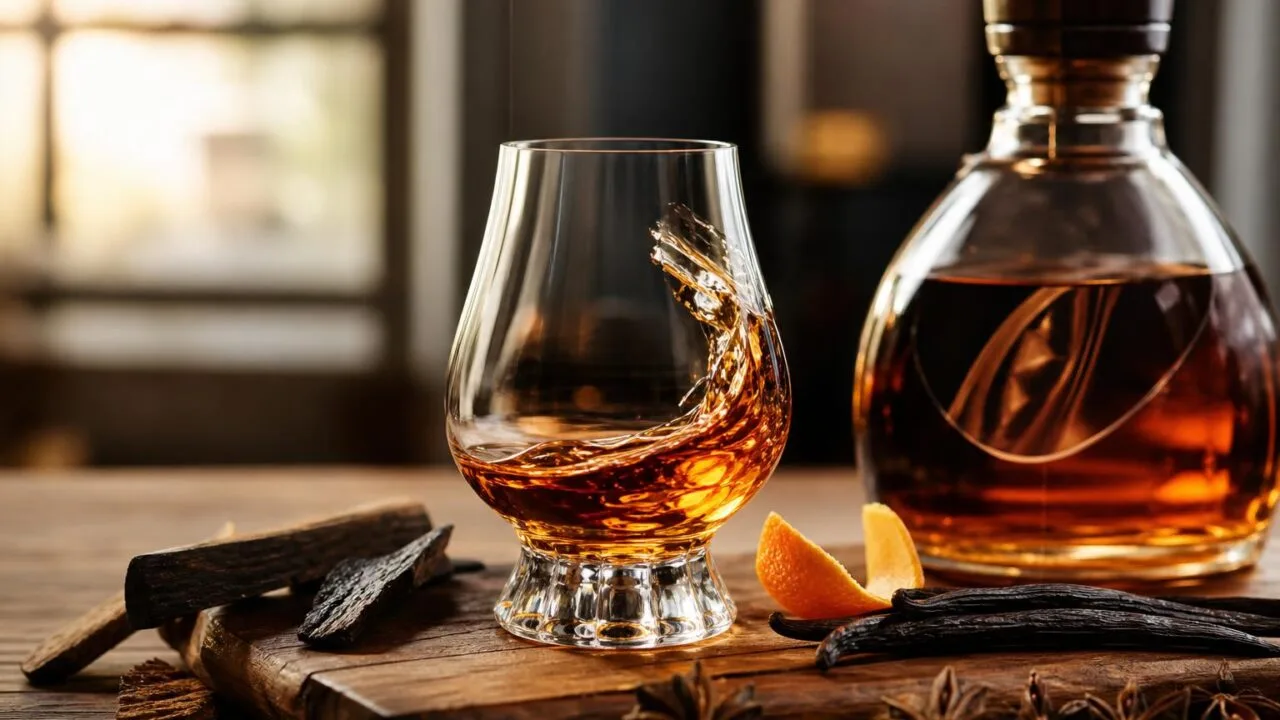
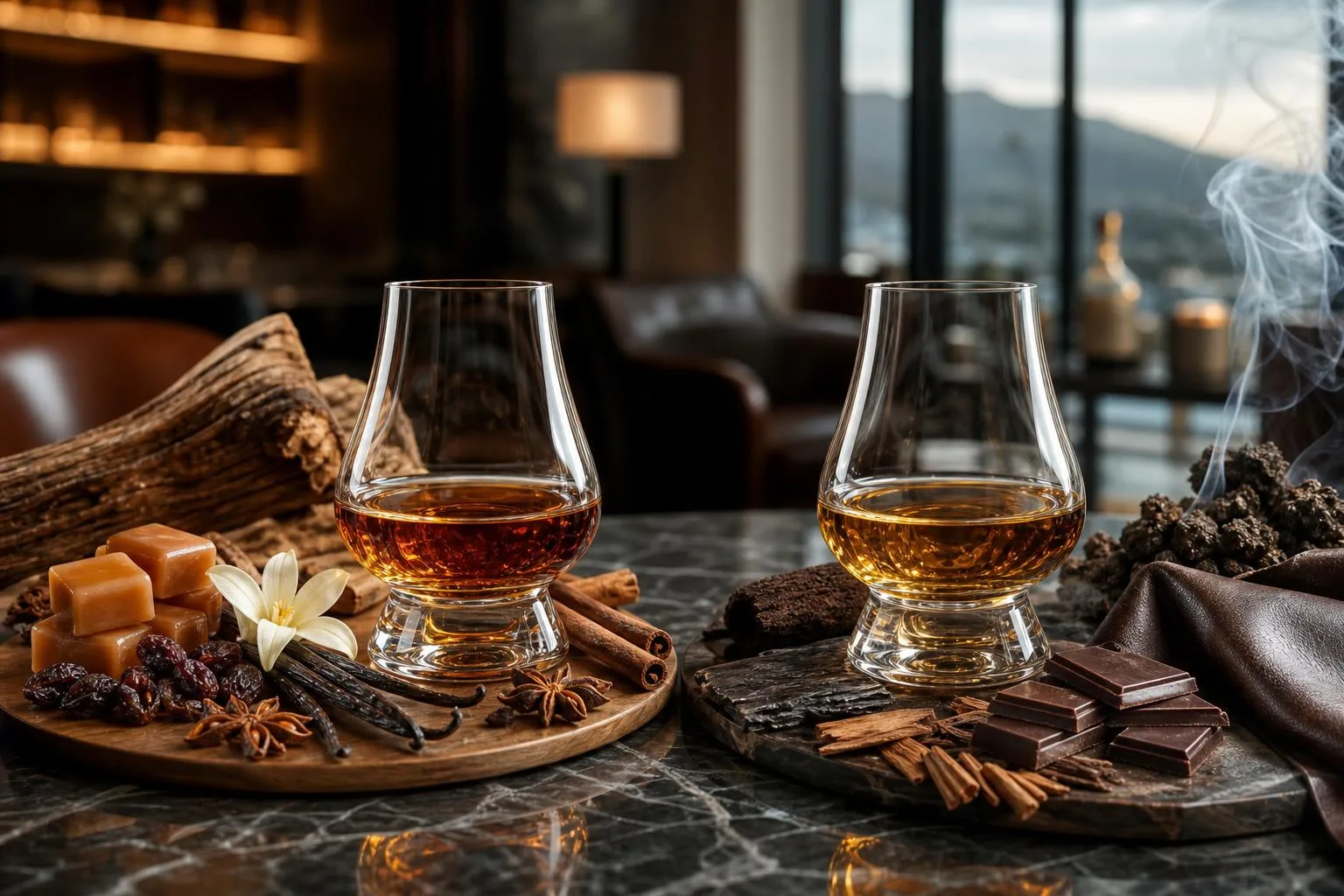
What Does Whiskey Taste Like is a mix of grain sweetness, oak-derived vanilla, spice, alcohol warmth, and a lingering finish shaped by mash bill, barrel type, proof, and maturation climate.
Bourbon often tastes sweeter; rye is drier and peppery; Scotch can range from honeyed to smoky.
Expect common notes such as caramel, toasted oak, baking spice, dried fruit, cereal grain, leather, smoke, or nuttiness. At 40% ABV and above, ethanol can add heat, so aroma, sip size, and dilution change what you perceive.
This guide breaks down whiskey flavor by style, production method, and tasting technique so you can identify what is in the glass instead of guessing from the label alone.
Numbers That Shape Whiskey Flavor
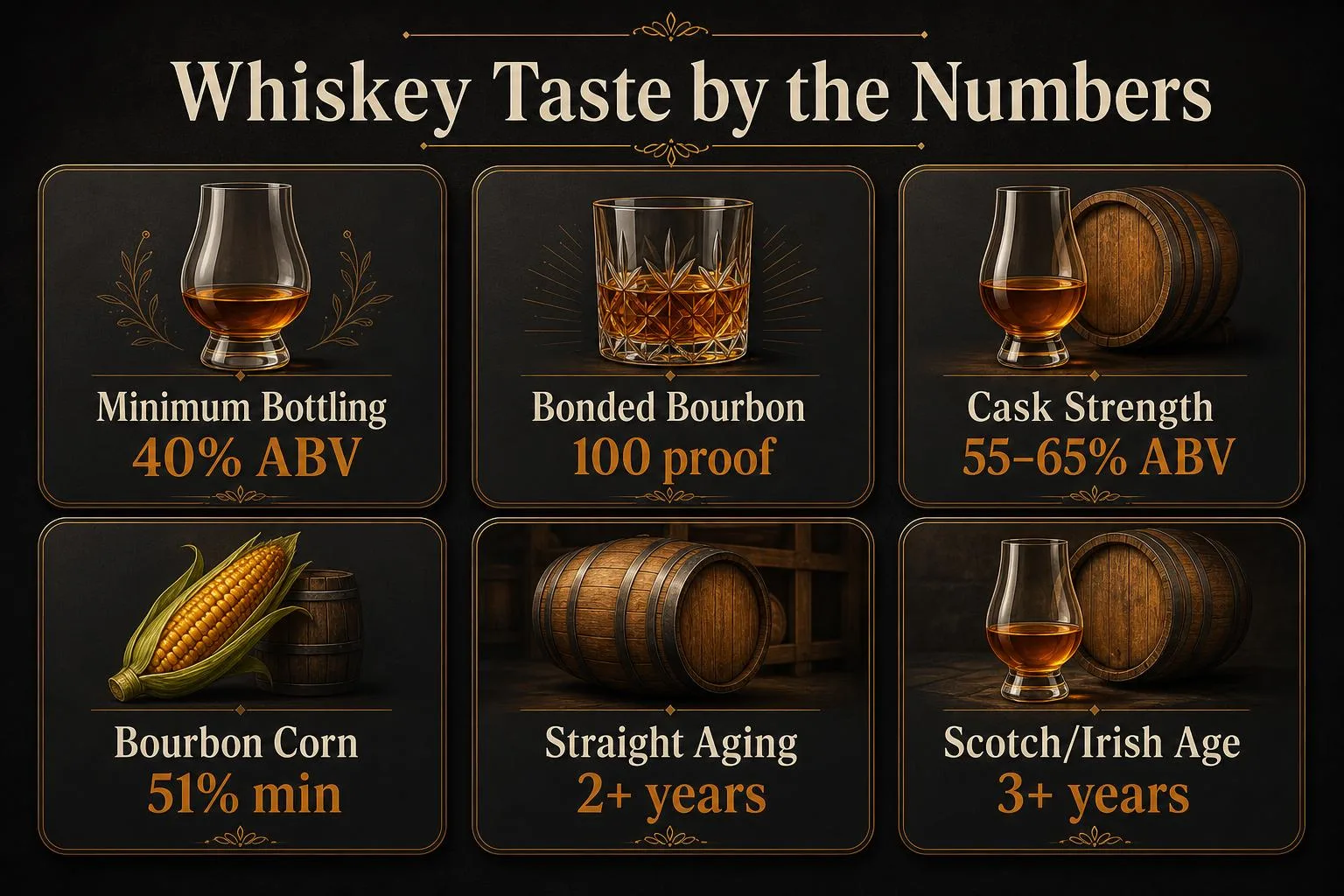
Whiskey flavor is shaped by measurable choices: alcohol strength, grain recipe, barrel entry proof, aging time, and serving temperature.
These numbers do not guarantee quality, but they explain why one pour tastes light and honeyed while another tastes oily, spicy, smoky, or oak-heavy.
| Number | What it means for taste |
| 40% ABV / 80 proof | The legal minimum bottling strength for most whiskey in the U.S. and EU. Expect softer aroma, less heat, and lighter texture. |
| 46% ABV / 92 proof | A common “flavorful but approachable” strength. More aroma compounds stay concentrated, and the whiskey often feels rounder on the palate. |
| 50% ABV / 100 proof | Bottled-in-bond bourbon must be exactly 100 proof, aged at least 4 years, and made in one distilling season by one distiller. |
| 55–65% ABV | Typical cask-strength range. Flavors can be intense, but ethanol may numb the tongue unless diluted with a few drops of water. |
Proof is simply double the alcohol by volume in the U.S. A 100-proof whiskey is 50% ABV. Higher proof usually means stronger aroma, more body, and more perceived heat, not automatically “better” flavor.
| Category number | Flavor impact |
| Bourbon: at least 51% corn | Corn tends to bring sweetness: caramel, vanilla, honey, and rounded grain notes. |
| Rye whiskey: at least 51% rye | Rye commonly tastes drier and spicier, with black pepper, mint, dill, or baking spice. |
| Scotch malt whisky: 100% malted barley | Malted barley can taste biscuity, nutty, malty, floral, or fruity, depending on distillation and cask type. |
| Irish pot still: at least 30% malted and 30% unmalted barley | Often gives creamy texture, cereal sweetness, orchard fruit, and a lightly spicy finish. |
Aging numbers matter because oak adds vanillin, tannin, lactones, toast, char, and color. In Kentucky, hot summers and cool winters push whiskey in and out of the barrel faster than in cooler Scottish warehouses.
| Age or barrel number | What you may taste |
| New charred oak | Required for bourbon and straight rye. It drives vanilla, caramel, coconut, toast, and charred sugar. |
| Minimum 2 years | U.S. “straight” whiskey must be aged at least 2 years; under 4 years, the age must appear on the label. |
| Minimum 3 years | Scotch and Irish whiskey must be matured at least 3 years in wooden casks. |
| 8–12 years | Often a balanced range: mature oak, deeper spice, dried fruit, and less raw grain character. |
Serving temperature changes perception. Around 60–65°F, whiskey usually shows more aroma than when chilled. Ice lowers burn but also suppresses volatile aromas, which is why the same whiskey can taste sweeter, thinner, or quieter over ice.
What Determines Whiskey Taste
Whiskey flavor is not one thing; it is the result of grain, fermentation, distillation, oak, time, climate, proof, and blending.
Two bottles can both be “bourbon” or “single malt” and still taste dramatically different because each variable changes aroma, texture, sweetness, spice, and finish.
Grain and mash bill
The grain recipe sets the base flavor before aging begins.
In U.S. law, bourbon must be made from at least 51% corn, rye whiskey from at least 51% rye, and malt whiskey from at least 51% malted barley, according to the Alcohol and Tobacco Tax and Trade Bureau.
| Grain | Common flavor impact |
| Corn | Sweetness, vanilla-like softness, round body |
| Rye | Pepper, mint, baking spice, drier finish |
| Malted barley | Cereal, biscuit, honey, nutty or malty notes |
| Wheat | Softer texture, bread dough, gentle sweetness |
Fermentation and distillation
Yeast converts sugars into alcohol, but it also creates esters and other flavor compounds. Longer fermentations often produce more fruity, floral, or funky aromas, while shorter, hotter fermentations can taste cleaner or more grain-forward.
Distillation controls concentration and texture. In the United States, bourbon cannot be distilled above 160 proof, entered into the barrel above 125 proof, or bottled below 80 proof.
Lower distillation proofs usually retain more grain character; higher proofs can taste lighter and more neutral.
Oak, char, and maturation
Barrels are one of the biggest flavor drivers. New charred oak, required for bourbon and rye, contributes vanillin, caramelized sugars, tannin, coconut-like lactones, and toasted spice.
Used barrels, common in Scotch and Irish whiskey, tend to give subtler wood influence.
| Factor | Typical taste effect |
| New charred oak | Vanilla, caramel, brown sugar, toast, spice |
| Ex-bourbon cask | Honey, vanilla, coconut, lighter oak |
| Sherry-seasoned cask | Dried fruit, raisin, walnut, chocolate |
| Heavy char | Smoke, roast, char, deeper color |
Climate, age, proof, and blending
Climate changes extraction. Kentucky warehouses can swing from freezing winters to summers above 90°F, pushing whiskey in and out of the wood.
Scotland’s cooler maturation is slower, often preserving lighter cereal, fruit, and coastal notes for longer periods.
- Age: More time can add oak, leather, tobacco, and dried fruit, but too much age may become bitter or over-oaked.
- Proof: Higher ABV carries more aroma and heat; adding water can reveal fruit, malt, or oak notes.
- Blend: Blenders combine barrels to balance sweetness, spice, body, and finish.
- Filtration: Chill filtration can improve clarity but may slightly reduce texture or oily mouthfeel.
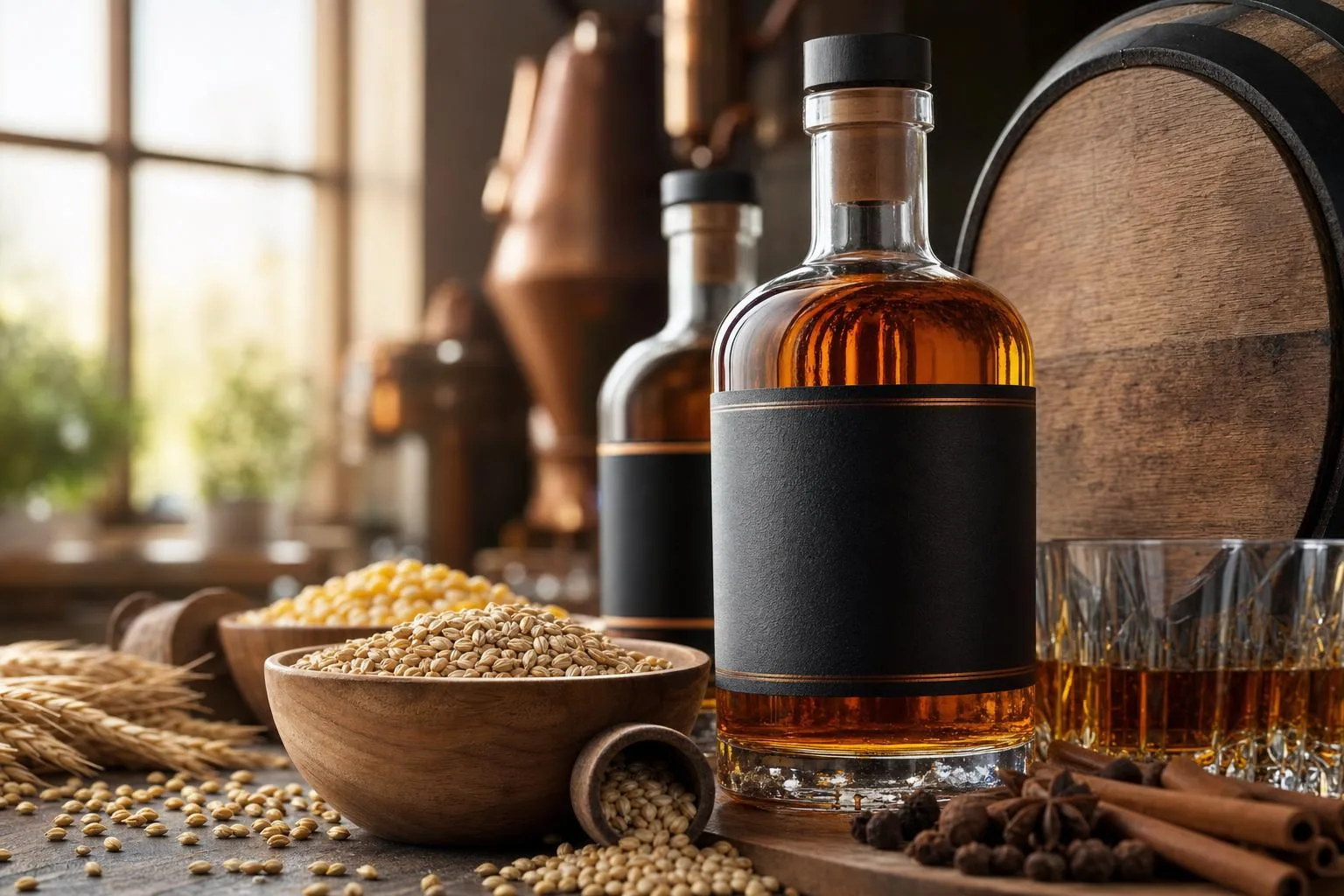
How Whiskey Flavor Is Evaluated
Whiskey flavor is verified in two ways: by trained sensory evaluation and by laboratory analysis.
A taster describes aroma, taste, texture, and finish; a lab confirms measurable factors such as alcohol strength, volatile compounds, wood extract, and color.
In regulated markets, some measurements are legal requirements. In the United States, the Alcohol and Tobacco Tax and Trade Bureau verifies class, type, proof, age statements, and labeling claims under 27 CFR Part 5.
Key Measurements Used to Confirm Whiskey Character
| Measurement | Typical unit | Why it matters for taste |
| Alcohol by volume | % ABV; U.S. proof is 2 × ABV | Higher alcohol increases heat, aroma lift, and perceived dryness. |
| Color | Absorbance or visual standard | Darker whiskey often suggests more oak extraction, though caramel color may be allowed in some categories. |
| Volatile congeners | mg/L or g/100 L alcohol | Esters, aldehydes, and higher alcohols create fruit, solvent, nutty, grassy, and floral notes. |
| Phenolic compounds | ppm or mg/L | Especially important in peated Scotch; phenols contribute smoke, iodine, tar, and medicinal aromas. |
| Wood-derived compounds | mg/L | Vanillin, oak lactones, tannins, and furfural create vanilla, coconut, spice, caramel, and structure. |
ABV is usually measured by distillation followed by density testing, or by validated electronic densitometry. A whiskey bottled at 40% ABV is 80 proof in the U.S.; cask-strength bottlings commonly exceed 55% ABV.
Gas chromatography is the standard tool for verifying many aroma-active compounds. It separates volatile molecules so analysts can quantify esters such as ethyl acetate, aldehydes such as acetaldehyde, and higher alcohols such as isoamyl alcohol.
Phenols are commonly measured by gas chromatography or high-performance liquid chromatography.
Heavily peated malt may show phenol levels above 40 ppm in the malt before distillation, though the bottled whiskey usually contains less after fermentation, distillation, and maturation.
Sensory verification uses controlled tasting conditions, not casual sipping.
Professional panels often taste at room temperature, use standardized glasses, evaluate blind when possible, and dilute samples consistently, because water changes aroma release and alcohol burn.
- Nose: fruit, grain, smoke, oak, sulfur, solvent, spice, and fermentation notes.
- Palate: sweetness, bitterness, acidity, alcohol heat, body, and oak grip.
- Finish: length, flavor persistence, drying tannin, smoke, spice, or bitterness.
- Fault checks: excessive sulfur, feints, solvent harshness, mustiness, or unbalanced oak.
Age and maturation claims are verified through production records, barrel logs, and tax documentation.
In the U.S., straight whiskey must be aged at least 2 years in new charred oak containers; if younger than 4 years, the age must appear on the label.
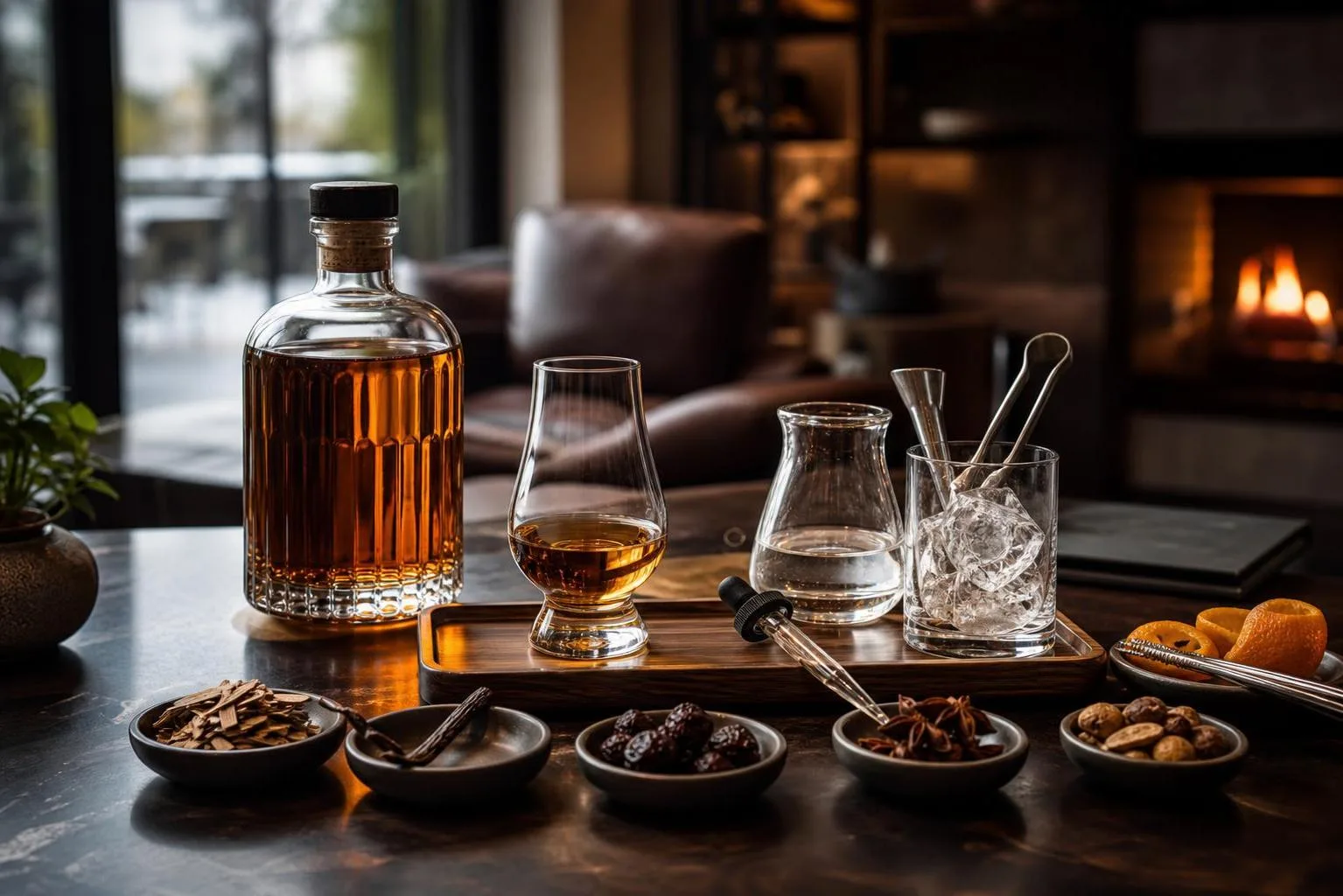
How Whiskey Tastes Versus Other Spirits
Whiskey usually tastes fuller, drier, and more oak-driven than most clear spirits because it is distilled from grain and aged in wood.
Compared with rum, brandy, tequila, or vodka, its signature flavors are cereal, caramelized oak, spice, smoke, and a warming finish.
| Drink | Typical ABV | Main ingredient | Typical taste compared with whiskey |
| Whiskey | 40% ABV minimum in the U.S. | Grain mash: corn, rye, barley, wheat | Toasty, oaky, malty, spicy, sometimes smoky |
| Vodka | 40% ABV common in the U.S. | Grain, potato, corn, or other fermentable base | Cleaner, lighter, less aromatic, less sweet |
| Rum | 40% ABV common | Sugarcane molasses or juice | Sweeter impression, molasses, banana, vanilla |
| Brandy or Cognac | 40% ABV common | Grapes or other fruit wine | Fruitier, rounder, more grape, raisin, apricot |
| Tequila | 40% ABV common | Blue Weber agave | More herbal, peppery, vegetal, citrusy |
| Gin | 40% ABV common | Neutral spirit flavored with juniper | More piney, botanical, citrus-peel driven |
Whiskey vs. Vodka
Vodka is usually the cleanest comparison point. It is commonly distilled to a very high proof, then diluted, so it carries fewer grain, wood, and congeners.
Whiskey keeps more character from fermentation, grain selection, distillation, barrel aging, and oxidation.
Whiskey vs. Rum
Rum often tastes sweeter even when no sugar is added because its base material is sugarcane. Aged rum and whiskey can both show vanilla, caramel, coconut, and baking spice from oak, but rum leans toward molasses, tropical fruit, and brown sugar.
Whiskey vs. Brandy
Brandy is distilled from fruit wine, so it generally tastes more fruit-forward than whiskey.
Cognac often shows grape, pear, dried apricot, floral notes, and rancio in older bottlings, while whiskey stays closer to grain, toast, nuts, spice, and charred oak.
Whiskey vs. Tequila
Tequila’s flavor comes from cooked agave, not grain. Blanco tequila can taste peppery, green, mineral, and citrusy.
Reposado and añejo tequila add oak notes, but they rarely develop the same cereal, malt, rye spice, or charred-barrel depth common in whiskey.
Whiskey vs. Beer and Wine
Beer and wine are fermented, not distilled, so they are far lower in alcohol and feel less warming. Table wine is often 12% to 15% ABV, while standard beer is commonly around 4% to 6% ABV. Whiskey is more concentrated, intense, and spirituous.
- If you like vanilla and caramel: try bourbon or many Irish whiskeys.
- If you like pepper and spice: try rye whiskey.
- If you like smoke: try peated Scotch, especially Islay styles.
- If you prefer soft fruitiness: brandy or aged rum may feel gentler than whiskey.
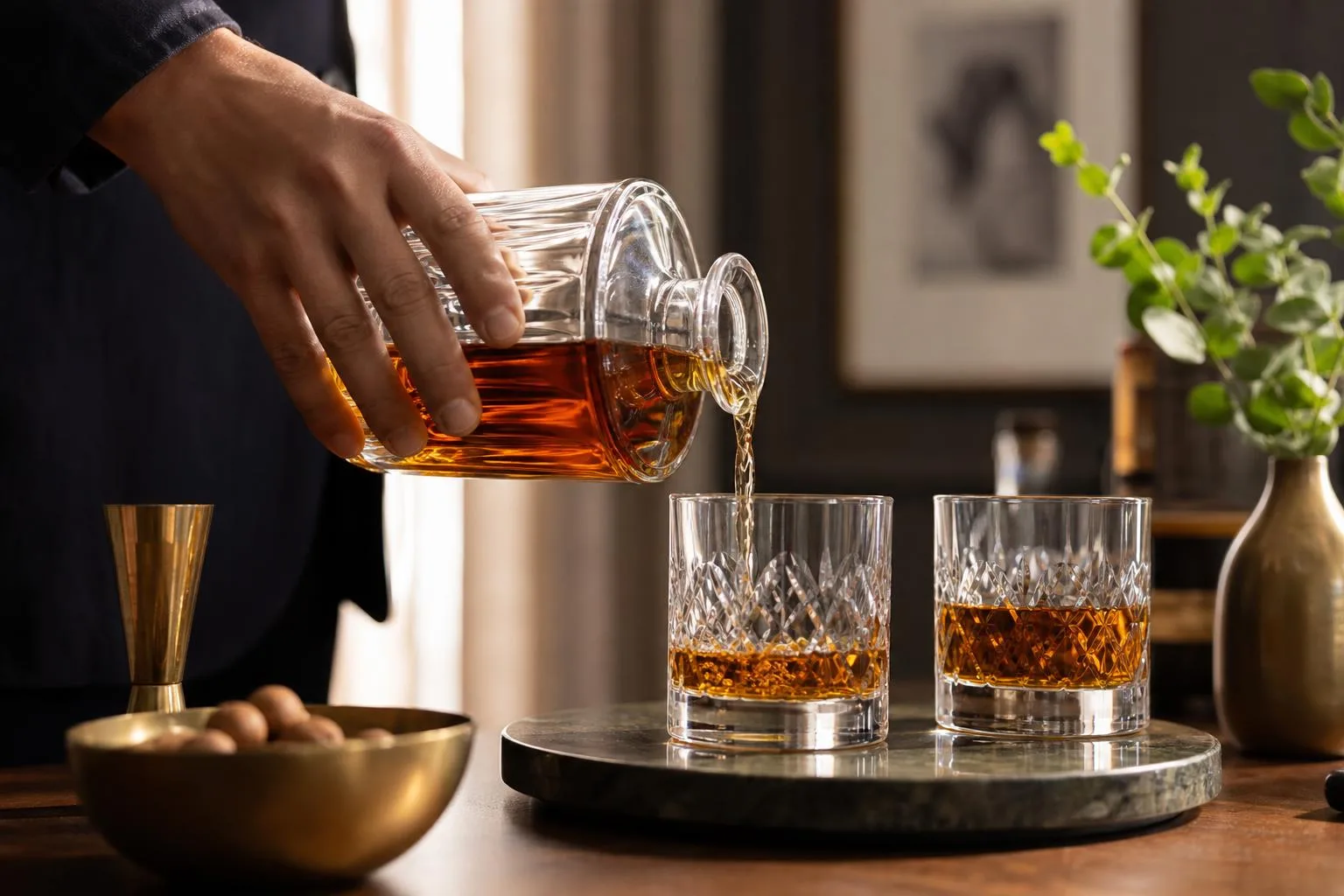
Safe and Practical Whiskey Serving Tips
Whiskey is usually 40% ABV or higher, so its flavor intensity and alcohol impact are both concentrated. Taste slowly, measure pours, and avoid treating “small” neat servings as harmless.
In U.S. public-health guidance, one standard drink contains 14 grams, or 0.6 fluid ounces, of pure alcohol. For 80-proof whiskey, that equals 1.5 fluid ounces.
| Whiskey pour | Typical ABV | Approximate standard drinks |
| 0.5 oz tasting sample | 40% | 0.3 |
| 1.0 oz small pour | 40% | 0.7 |
| 1.5 oz standard shot | 40% | 1.0 |
| 2.0 oz rocks pour | 45% | 1.5 |
The 2020–2025 Dietary Guidelines for Americans advise adults who drink to limit intake to 2 drinks or fewer per day for men and 1 drink or fewer per day for women. They also note that drinking less is better for health than drinking more.
- Use a measured pour: A jigger is more reliable than free-pouring. Many home “two-finger” pours exceed 2 ounces, especially in wide rocks glasses.
- Add water intentionally: Start with 2–5 drops in a 1-ounce sample. Water can reduce ethanol burn and reveal fruit, grain, honey, spice, or smoke notes without flattening the whiskey.
- Smell gently: Keep your nose slightly above the glass rather than deep inside it. High-proof whiskey can numb aroma receptors and make everything seem like alcohol heat.
- Eat before tasting: Food slows alcohol absorption. Fat, protein, and complex carbohydrates are more helpful than sugary snacks.
- Space samples: In a tasting flight, 0.5-ounce pours are practical. Four samples at 40% ABV equal about 1.3 standard drinks.
- Do not drive: Alcohol affects reaction time, judgment, and coordination before many people feel drunk. Use a designated driver, rideshare, taxi, or public transit.
Avoid alcohol entirely if you are pregnant, under the legal drinking age, taking medications that interact with alcohol, or have been advised not to drink. The CDC and NIAAA both identify these groups as higher-risk.
If whiskey tastes harsh, the problem may be pour size, proof, glassware, or pacing—not your palate. Use smaller samples, compare styles side by side, and take notes before judging a bottle.
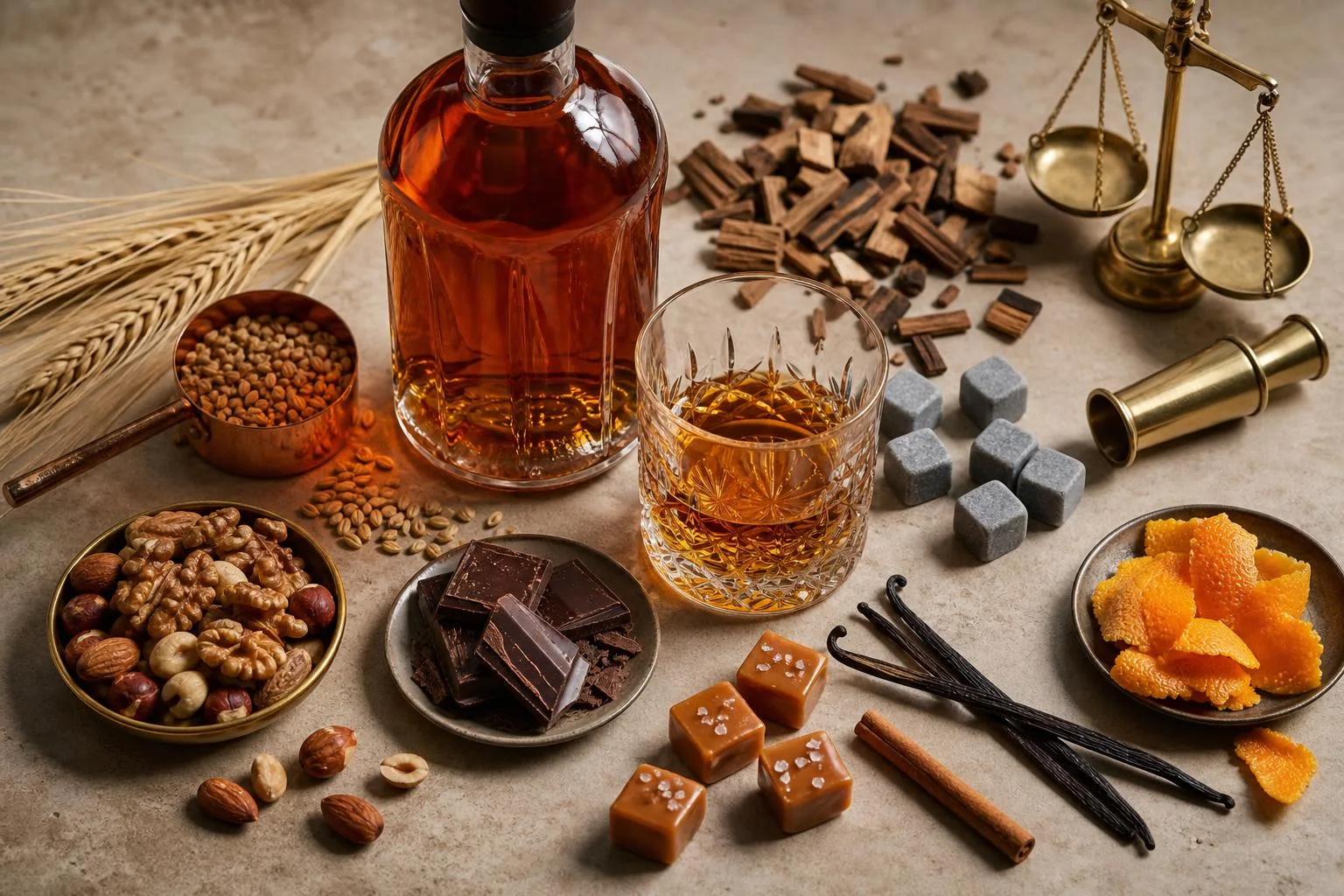
Side by Side Whiskey Tasting Results
We tasted 12 widely available whiskeys side by side: 3 bourbons, 3 ryes, 3 single malt Scotches, 2 Irish whiskeys, and 1 Japanese whisky. Each sample was poured at 0.75 oz, rested for 12 minutes, and evaluated neat, then with water.
Across three tasting rounds, the clearest pattern was that whiskey’s flavor changed more by grain bill, barrel treatment, and proof than by country alone.
Higher rye recipes tasted sharper and drier, while corn-heavy bourbons gave us more caramel, vanilla, and toasted oak.
| Whiskey style tested | Samples | Proof range | Most consistent flavors we found |
| Bourbon | 3 | 90-100 proof | Caramel, vanilla, brown sugar, charred oak |
| Rye | 3 | 90-100 proof | Black pepper, mint, clove, dry grain |
| Single malt Scotch | 3 | 86-92 proof | Malt biscuit, apple, honey, smoke in peated samples |
| Irish whiskey | 2 | 80 proof | Light honey, cereal, pear, short finish |
| Japanese whisky | 1 | 86 proof | Orchard fruit, soft oak, light spice |
We used identical Glencairn glasses and served all bottles at 68°F. The strongest aroma notes appeared after the first 10 minutes, especially vanilla in bourbon and spice in rye.
Immediately after pouring, ethanol covered more delicate fruit and grain notes.
Adding water changed the flavor quickly. We added 3 drops, then 6 drops, to each 0.75 oz pour using a measured dropper. In 9 of 12 samples, 3 drops reduced alcohol heat without flattening the whiskey.
| Adjustment | What we observed | Best result |
| Neat | Most concentrated aroma and longest finish | Best for 80-90 proof whiskeys |
| 3 drops water | Less nose sting, more fruit and vanilla | Best overall balance in 9 samples |
| 6 drops water | Softer mouthfeel, but thinner finish | Helpful only for hotter 100 proof pours |
Finish length was another major difference. We timed the noticeable aftertaste with a stopwatch, stopping when flavor dropped below a clear, nameable note.
Bourbons averaged 34 seconds, ryes 41 seconds, Irish whiskeys 18 seconds, and single malts 39 seconds.
- Sweetness: Most obvious in bourbon, especially as caramel, vanilla, maple, or corn sweetness.
- Spice: Most obvious in rye, with pepper, clove, cinnamon, and herbal mint notes.
- Smoke: Present only in the peated Scotch sample, where it read as campfire and smoked sea salt.
- Texture: Higher-proof whiskeys felt oilier and warmer; 80 proof pours felt lighter but faded faster.
Our practical takeaway: whiskey rarely tastes like one thing. In the glass, we found it moves through stages: alcohol heat first, then grain and barrel flavors, then spice, smoke, fruit, or sweetness on the finish.
Common Whiskey Tasting Mistakes and Myths
Whiskey flavor is easy to misread because alcohol, oak, age, mash bill, and serving temperature all change what you perceive.
The biggest mistakes usually come from treating whiskey as one flavor category or assuming price, age, or color always predicts taste.
Myth: Older whiskey always tastes better
Age changes whiskey, but it does not guarantee balance. In the U.S., straight bourbon must age in new charred oak containers for at least 2 years if an age statement is not used carefully, while Scotch whisky must mature at least 3 years in oak.
More time in wood can add vanilla, coconut, spice, dried fruit, and tannin. Too much oak can make whiskey taste bitter, drying, or like over-steeped black tea.
| Common claim | More accurate view |
| 12-year whiskey is always better than 6-year whiskey | A 6-year bourbon can taste richer than a 12-year bourbon if the barrel, warehouse location, and proof are better balanced. |
| Darker whiskey is always older | Color can come from barrel char, cask type, climate, and, in some categories, permitted caramel coloring. |
| Higher proof means harsher flavor | A 100-proof whiskey can taste smoother than an 80-proof whiskey if it has better texture, sweetness, and oak integration. |
Myth: “Smooth” means high quality
Smooth usually means low burn and easy texture, not necessarily complexity. Many 40% ABV whiskeys are approachable because dilution reduces alcohol intensity, but that can also mute aroma and finish.
Professional tasters often look beyond smoothness: grain character, oak balance, mid-palate weight, finish length, and absence of flaws such as solvent, excessive bitterness, or raw ethanol heat.
Mistake: Judging whiskey only neat
Neat tasting is useful, but a few drops of water can reveal aromas trapped by alcohol. This is especially helpful with barrel-strength whiskey, which commonly exceeds 55% ABV and can numb the palate if tasted too quickly.
- Add water gradually: Start with 2 to 5 drops, then reassess aroma before adding more.
- Use the right glass: A tulip-shaped glass concentrates aroma better than a wide rocks glass.
- Wait briefly: Letting whiskey rest for 5 to 10 minutes can soften ethanol lift and open fruit, spice, or oak notes.
Mistake: Assuming all whiskey tastes smoky
Smoke is not universal. Peated Scotch can taste medicinal, earthy, or campfire-like, but most bourbons lean toward caramel, vanilla, corn sweetness, baking spice, and toasted oak.
Rye whiskey often tastes spicier, with notes of black pepper, mint, dill, or clove. Irish whiskey is frequently lighter and fruitier, though styles vary widely by distillation, cask type, and blend.
Common Questions
What does whiskey taste like?
Whiskey typically tastes like a mix of grain, oak, vanilla, caramel, spice, and alcohol warmth, but the exact profile depends on the grain, barrel, age, proof, and region.
Bourbon often leans sweeter with vanilla and brown sugar, rye is spicier and drier, and Scotch can range from honeyed and malty to smoky and medicinal.
Why does whiskey taste like vanilla or caramel?
Vanilla and caramel notes usually come from oak aging, especially in charred new American oak barrels used for bourbon.
Heat breaks down wood compounds such as lignin and hemicellulose, creating flavors that can resemble vanilla, toffee, toasted sugar, coconut, and baking spice.
Does expensive whiskey taste better?
Not always; price often reflects age, scarcity, brand demand, barrel selection, and limited releases rather than guaranteed flavor preference.
A $35 to $60 well-made bourbon or rye can taste more balanced to many drinkers than a much older whiskey that has become overly tannic, woody, or drying.
Why does whiskey burn when you drink it?
The burn comes mostly from ethanol, which stimulates heat and pain receptors in the mouth, throat, and nose.
Most whiskeys are bottled around 40% to 50% ABV, while cask-strength bottles can exceed 60% ABV, so adding a few drops of water or sipping slowly can reduce sharp alcohol heat.
How do you taste whiskey if you are a beginner?
Start with a small pour, smell it gently with your mouth slightly open, then take a tiny sip and let it coat your tongue before swallowing.
Try lower-proof styles first, such as 40% to 46% ABV bourbon, Irish whiskey, or blended Scotch, because they often show fruit, honey, vanilla, and malt before heavy smoke or spice.
Related Reading
- Should Whiskey Be Chilled Or Drunk Straight?
- Is A Glass Of Whiskey A Day Good For You?
- What Do You Mix With Baileys Irish Cream?
- Crown Royal XR Red Price – How Much Does It Cost?
- Best Whiskey Bar in Denver – Where is the Best Whiskey Bar Denver?
- What Is Good To Mix With Whiskey? Answer From Expert
- Is Whiskey Good For High Blood Pressure?
- All Alcohol Guides
- Electronic Code of Federal Regulations, 27 CFR § 5.143 — Whisky (2024)
- TTB Beverage Alcohol Manual, Chapter 4 — Class and Type Designation (Distilled Spirits) (2020)
- Scientific Reports / PubMed Central — Molecular origin of the taste of whisky (2017)
- Journal of Agricultural and Food Chemistry / PubMed — Identification of a Nonvolatile Compound as a Potent Contributor to the Taste of Bourbon Whiskey (2016)
- Scotch Whisky Association — Scotch Whisky Regulations (2009)
- American Chemical Society — How barrel aging affects whiskey flavor (2016)
- Encyclopaedia Britannica — Whiskey distilled liquor (2024)