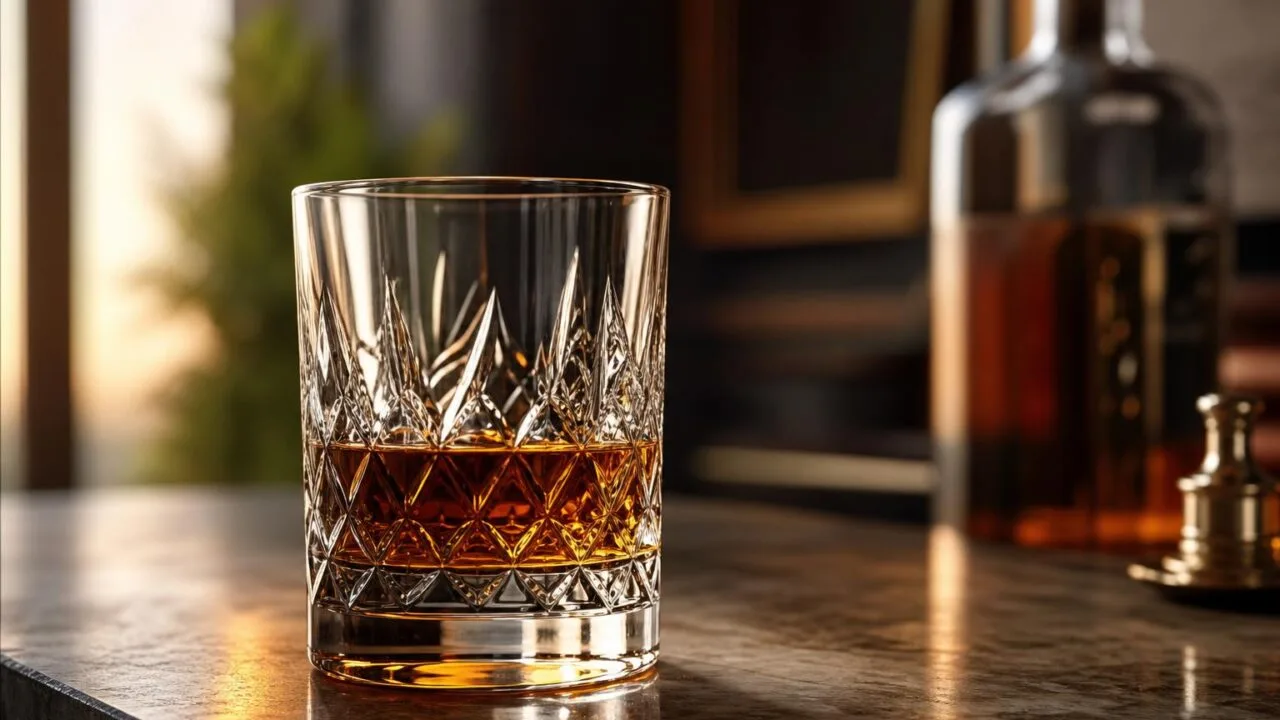
What Is A Whiskey Neat is a straight pour of whiskey served at room temperature in a glass, with no ice, mixer, or garnish. In U.S. bars, that usually means 1.5 to 2 ounces, often poured into a rocks glass, Glencairn, or tasting glass.
Ordering whiskey neat lets you taste the spirit as bottled: its proof, aroma, texture, oak influence, grain character, and finish without dilution.
Bartenders may still offer a few drops of water on the side, especially with barrel-proof whiskey, because water can open aromas without turning the drink into “on the rocks.”.
This guide explains how neat whiskey is served, how it differs from straight up and on the rocks, and when adding water makes sense.
What Whiskey Neat Means
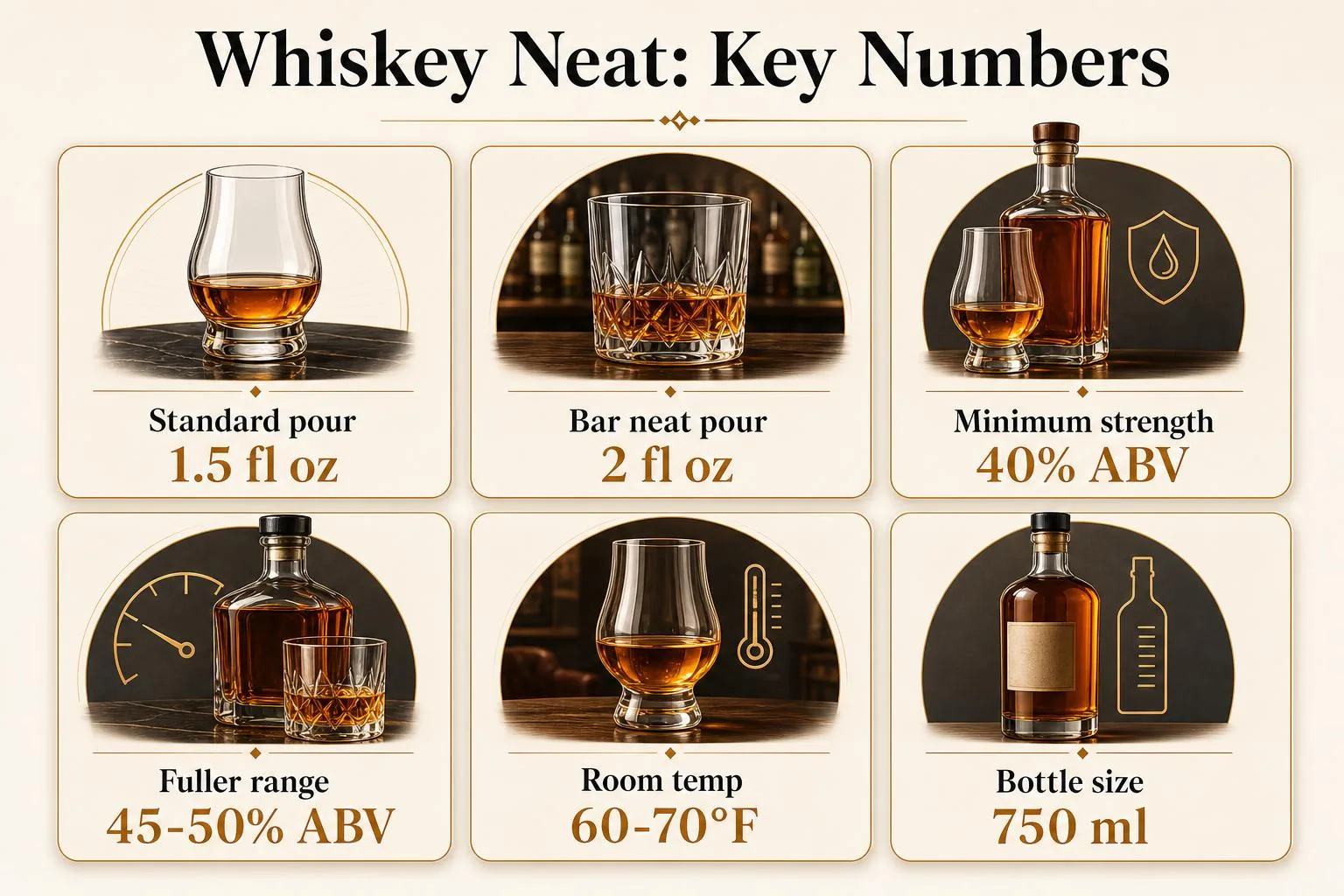
A whiskey “neat” is whiskey poured straight from the bottle into a glass, with no ice, mixer, or added water. The numbers that matter most are pour size, alcohol strength, temperature, and how much alcohol is actually in the glass.
In U.S. bar service, the most common neat pour is 1.5 to 2 fluid ounces. A 1.5-ounce pour of 40% ABV whiskey equals one U.S. standard drink, according to the National Institute on Alcohol Abuse and Alcoholism.
| Number | What It Means For Whiskey Neat |
| 1.5 fl oz | Typical U.S. “standard drink” pour for 80-proof whiskey; contains about 14 grams of pure alcohol. |
| 2 fl oz | Common restaurant or whiskey-bar neat pour; about 1.33 standard drinks at 40% ABV. |
| 40% ABV | Legal minimum bottling strength for most whiskey categories in the U.S.; equal to 80 proof. |
| 45% to 50% ABV | Common range for many bourbons, ryes, and single malts with a fuller neat drinking profile. |
| 57.15% ABV | Traditional “100 British proof” strength, often associated with navy-strength spirits; noticeably intense neat. |
| 750 ml | Standard U.S. bottle size; holds about 25.36 fl oz, or roughly 16 pours of 1.5 fl oz. |
Proof is simply double the ABV in the United States. A whiskey labeled 90 proof is 45% ABV; 100 proof is 50% ABV. That difference is obvious when served neat because there is no dilution from ice or soda.
Temperature changes the experience, even when nothing is added. Neat whiskey is usually served at room temperature, commonly around 60°F to 70°F in a bar or home setting.
Warmer whiskey releases more aroma; colder whiskey can mute fruit, grain, oak, and spice notes.
- Glass size: A 6-ounce Glencairn-style glass comfortably holds a 1.5- to 2-ounce neat pour while leaving headspace for aromas.
- Resting time: Letting whiskey sit for 2 to 5 minutes can soften alcohol perception and open aromas, especially above 46% ABV.
- Alcohol math: A 2-ounce pour at 50% ABV contains about 0.8 fl oz of pure alcohol, compared with 0.6 fl oz in a 1.5-ounce 40% ABV pour.
The practical takeaway: “neat” describes the serve, not a fixed size. Always check the house pour, because a 2-ounce neat whiskey can deliver substantially more alcohol than the standard 1.5-ounce reference used in U.S. health guidance.
What Changes a Neat Pour
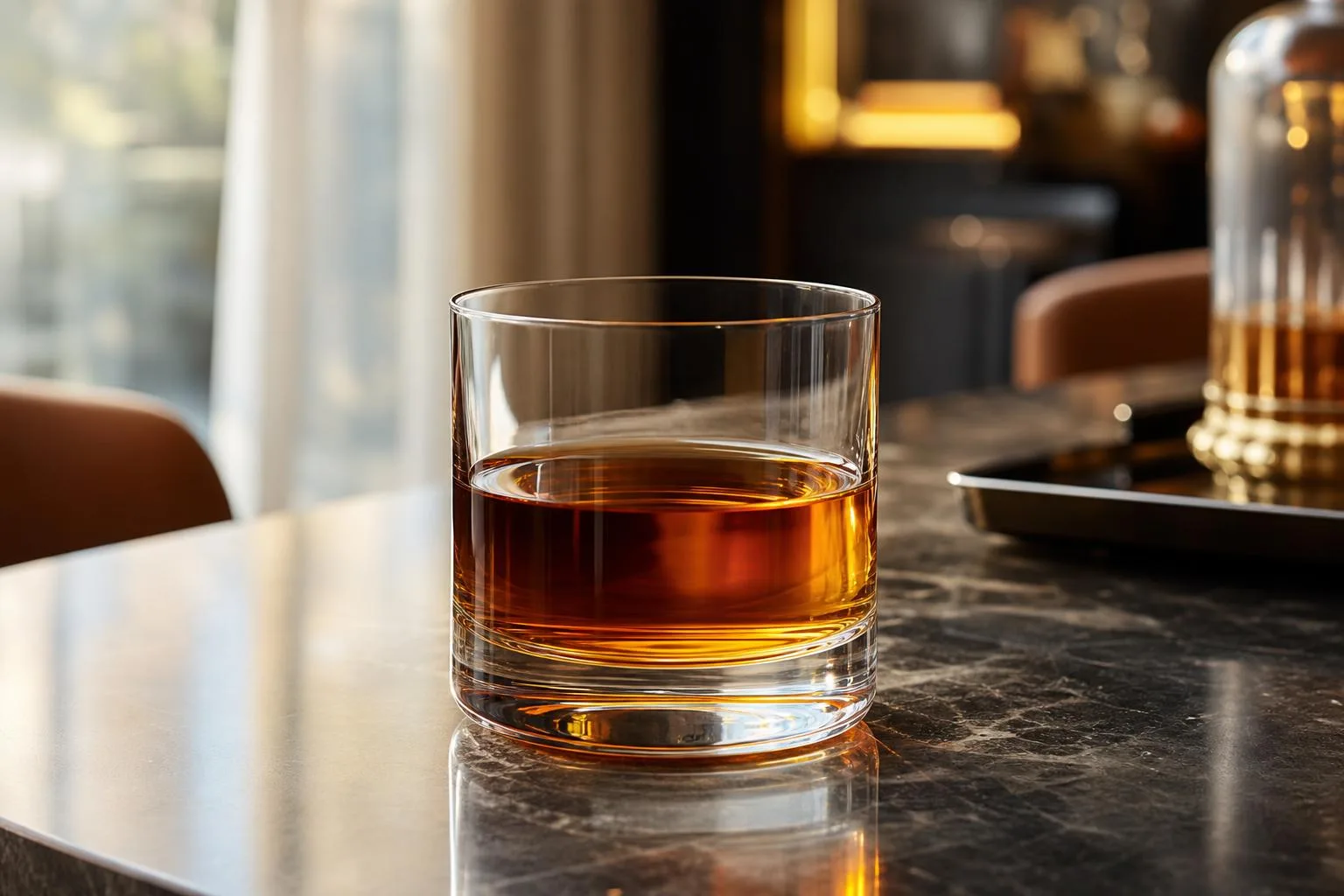
A whiskey served neat is only whiskey in a glass, but the result changes noticeably with temperature, glass shape, alcohol strength, pour size, and time in the glass.
Because there is no ice or mixer to hide flaws, small service choices become easy to taste.
Temperature
Neat whiskey is typically best evaluated near room temperature, not chilled.
The Scotch Whisky Association defines Scotch whisky at bottling as at least 40% alcohol by volume, and that alcohol carries aroma compounds that become more expressive as the liquid warms.
| Serving condition | Approximate effect |
| 55°F to 60°F cellar-cool | Tighter aroma, softer alcohol, less obvious sweetness |
| 65°F to 70°F room temperature | Balanced aroma release and palate weight |
| 75°F or warmer | More ethanol vapor, sharper nose, hotter finish |
Glass Shape
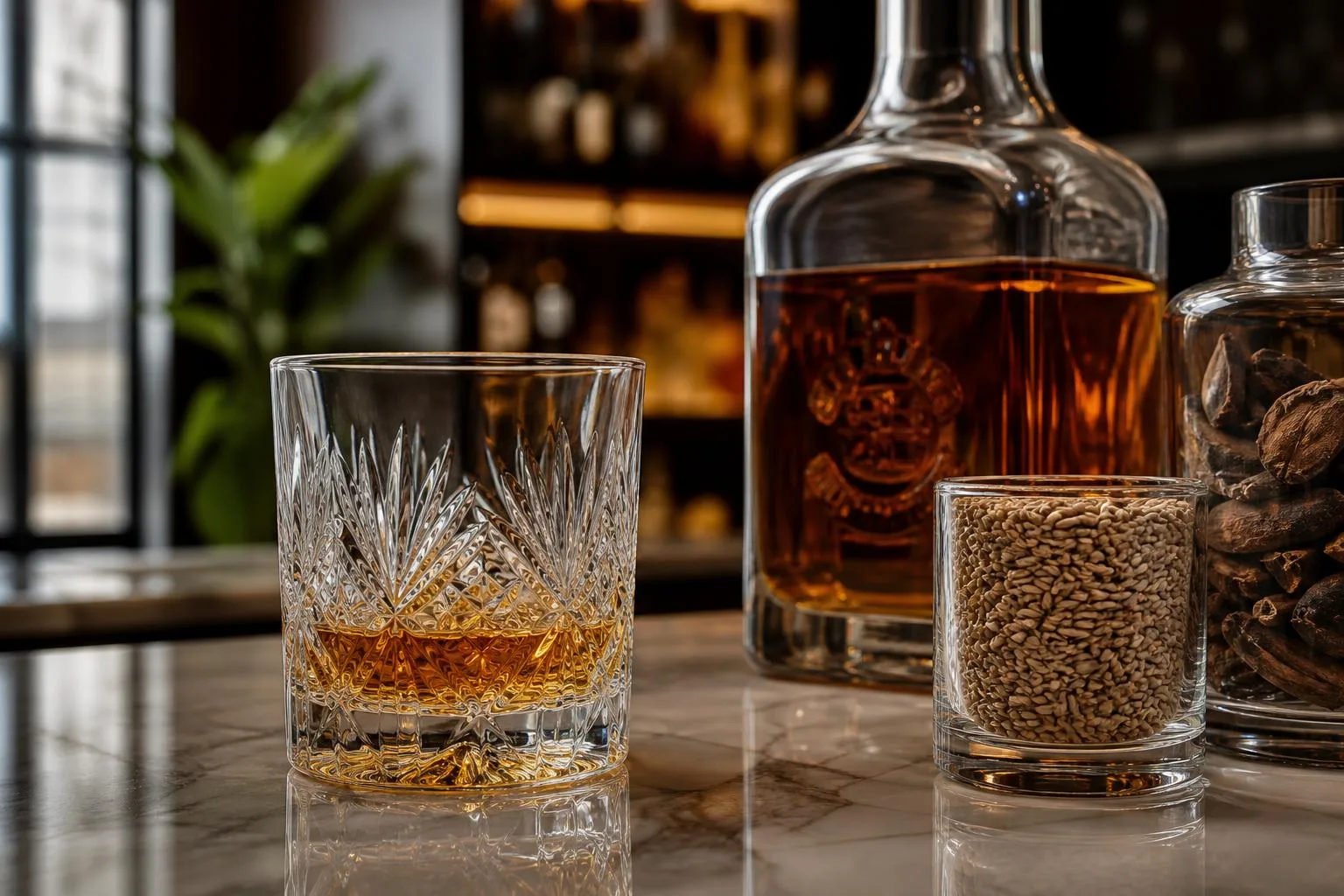
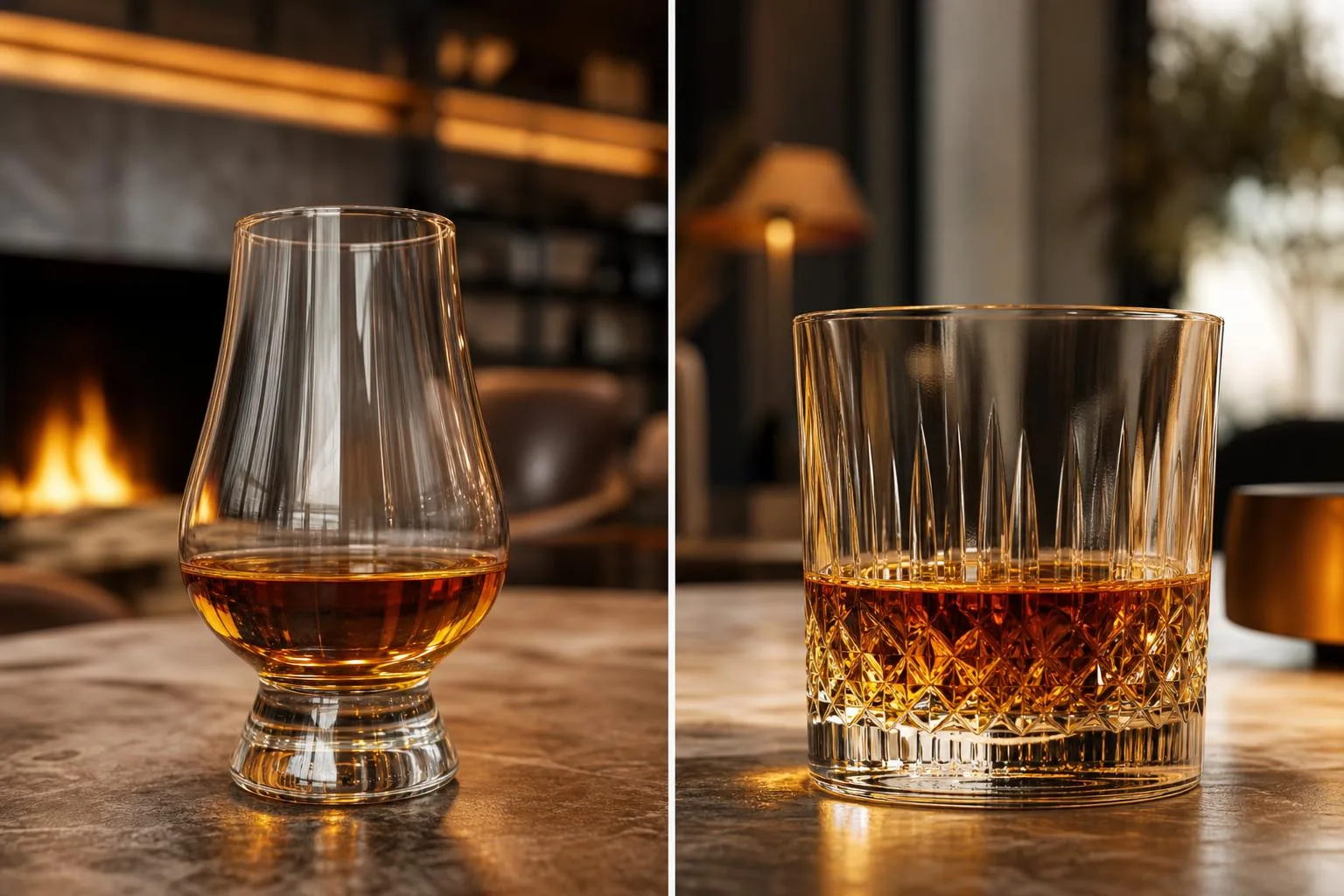
A narrow tulip or Glencairn-style glass concentrates aroma more than a wide rocks glass.
That matters because much of whiskey flavor is retronasal smell: oak vanillin, fruity esters, smoke phenols, grain notes, and sulfur compounds reach the nose before and after swallowing.
- Tulip glass: Better for nosing, especially with single malt, rye, and higher-proof bourbon.
- Rocks glass: Comfortable and common, but aromas disperse faster because of the wider opening.
- Shot glass: Poor for neat sipping because it limits aroma assessment and encourages fast drinking.
Proof and Pour Size
Alcohol strength strongly affects heat and texture. In the United States, “proof” is twice the ABV, so an 80-proof whiskey is 40% ABV and a 100-proof bottled-in-bond whiskey is 50% ABV under federal labeling rules.
| Whiskey strength | ABV | Neat impression |
| 80 proof | 40% | Lighter body, less burn, easier entry point |
| 90 proof | 45% | More aroma, fuller mid-palate |
| 100 proof | 50% | Bolder oak, spice, and alcohol warmth |
| Cask strength | Often 55% to 65% | Powerful, concentrated, may need time or water |
A practical neat pour is 1 to 2 ounces. A U.S. standard drink contains 0.6 fluid ounces of pure alcohol, so 1.5 ounces of 40% ABV whiskey equals one standard drink.
Air, Time, and Optional Water
Letting whiskey sit for 5 to 10 minutes can reduce the first burst of ethanol and open oak, fruit, and grain aromas. This is especially useful for barrel-proof releases and younger whiskeys with sharper alcohol edges.
Neat technically means no added water, but tasting professionals often compare it before and after a few drops. Water can lower surface alcohol concentration and change aroma release; too much water quickly thins texture and finish.
How to Identify Whiskey Neat
A whiskey neat is verified by two things: the pour contains only whiskey, and it is served without ice, water, or mixer. In U.S. bars, the exact volume depends on house policy, but the measurement should be controlled and repeatable.
Most American bars define a neat whiskey pour as 1.5 to 2 ounces, though some whiskey-focused bars use 2 ounces as the default.
The Alcohol and Tobacco Tax and Trade Bureau defines a U.S. “standard drink” as 0.6 fluid ounces of pure alcohol.
| Pour size | Typical whiskey strength | Pure alcohol | Standard drinks |
| 1.5 fl oz | 40% ABV / 80 proof | 0.60 fl oz | 1.0 |
| 2.0 fl oz | 40% ABV / 80 proof | 0.80 fl oz | 1.33 |
| 2.0 fl oz | 50% ABV / 100 proof | 1.00 fl oz | 1.67 |
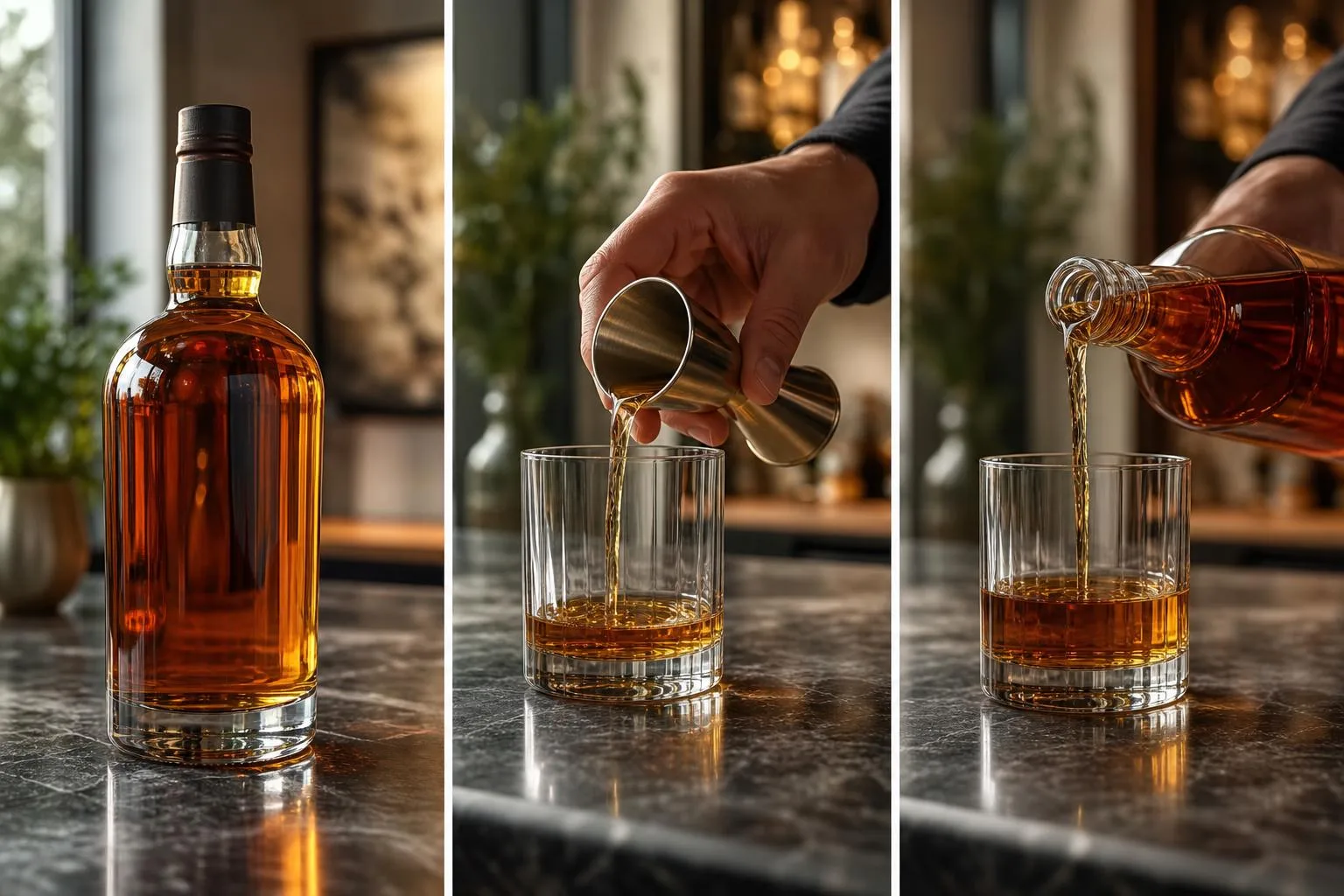
The volume is usually measured with a jigger, not guessed. Common U.S. jiggers have 1-ounce and 1.5-ounce sides, while many cocktail programs use Japanese-style jiggers marked at 0.5, 0.75, 1, 1.5, and 2 ounces.
For service verification, the bartender should pour the whiskey directly into a clean glass at room temperature. A neat pour is not shaken, stirred with ice, strained, topped, chilled, or diluted unless the guest specifically asks.
- Visual check: the glass contains amber spirit only, with no ice cubes, garnish, soda bubbles, or visible dilution.
- Glassware check: neat whiskey is commonly served in a rocks glass, Glencairn glass, copita, or small tasting glass.
- Order check: “neat” means no ice; “up” means chilled and strained; “on the rocks” means over ice.
- Recipe check: if bitters, vermouth, sugar, citrus, or liqueur are added, it is no longer whiskey neat.
In a professional bar, inventory systems often verify pours by comparing bottle depletion with recorded sales. Since one 750 ml bottle contains 25.36 U.S. fluid ounces, it should yield about 16 pours at 1.5 ounces or 12 pours at 2 ounces.
| Bottle size | Pour size | Approximate pours |
| 750 ml / 25.36 fl oz | 1.5 fl oz | 16.9 pours |
| 750 ml / 25.36 fl oz | 2.0 fl oz | 12.7 pours |
| 1 liter / 33.81 fl oz | 2.0 fl oz | 16.9 pours |
ABV is verified from the bottle label. In the United States, whiskey must be bottled at not less than 40% alcohol by volume, and the proof number is twice the ABV, such as 90 proof for 45% ABV.
Whiskey Neat Versus Other Serves
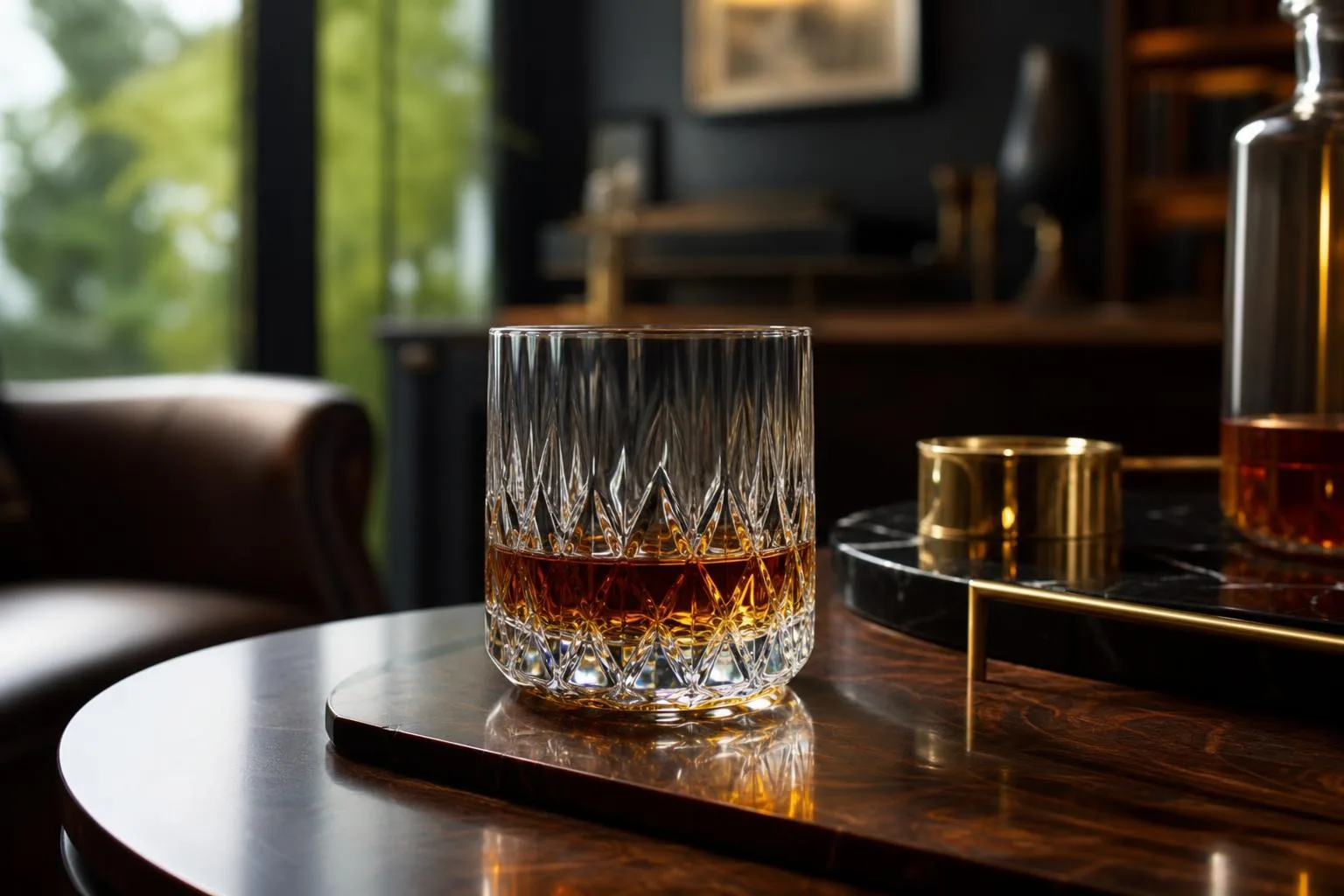
Whiskey neat is the baseline pour: whiskey in a glass, no ice, no mixer, and typically no garnish. In U.S. bars, it is commonly served as a 1.5 to 2 ounce pour, though house standards vary.
The main differences are temperature, dilution, aroma, and drinking pace. Neat service keeps the whiskey closest to what the distiller bottled, especially useful when comparing proof, barrel influence, and texture.
| Order | What You Get | Typical U.S. Pour | Key Difference From Neat |
| Neat | Room-temperature whiskey, no ice or mixer | 1.5–2 oz | Full proof, fullest aroma, no dilution |
| On the rocks | Whiskey over ice | 1.5–2 oz | Colder, gradually diluted as ice melts |
| Straight up / up | Shaken or stirred with ice, then strained | 1.5–2 oz before dilution | Chilled and diluted, but served without ice |
| With water | Whiskey plus a splash or measured water | 1.5–2 oz plus water | Lower perceived alcohol heat, opened aromas |
| Shot | Small fast pour, usually in a shot glass | 1–1.5 oz | Designed for quick drinking, not nosing |
| Cocktail | Whiskey mixed with modifiers | Often 1.5–2 oz whiskey | Flavor shaped by sugar, bitters, vermouth, citrus, or soda |
Neat vs. On the Rocks
Ice changes whiskey quickly. A standard 1-inch ice cube can add noticeable water within minutes, especially in a warm glass. That dilution can soften a 100-proof bourbon, but it also mutes volatile aromas that rise best near room temperature.
Neat vs. Straight Up
“Straight up” does not mean neat. It means the whiskey was chilled with ice and strained into a stemmed or rocks glass. The drink arrives cold and already diluted, commonly by roughly 15% to 25% depending on stirring time and ice.
Neat vs. Whiskey With Water
Adding water is still not “neat,” but it can be deliberate tasting technique. A few drops can reduce ethanol sharpness and make fruity, floral, or cereal notes easier to smell, especially in cask-strength whiskeys above 55% ABV.
Neat vs. a Shot
A neat pour is meant to be sipped. A shot emphasizes speed and social ritual. The glass matters too: a Glencairn or tulip-shaped glass concentrates aroma, while a narrow shot glass gives far less room to nose the whiskey.
Neat vs. Cocktails
Cocktails use whiskey as an ingredient, not the sole focus. In an Old Fashioned, sugar and bitters change balance; in a Manhattan, sweet vermouth lowers overall strength and adds wine-based sweetness.
Neat service is the clearest way to judge the whiskey itself.
Tips for Drinking Whiskey Neat
Whiskey neat is simple, but it is still a concentrated alcoholic drink. A standard neat pour in the U.S. is commonly 1.5 oz, and most whiskeys are 40% ABV or higher.
Because there is no ice, soda, or mixer, the alcohol is not diluted unless you add water. That makes pacing, portion size, and food especially important.
| Neat pour | Typical ABV | Approximate pure alcohol | U.S. standard drinks |
| 1.5 oz whiskey | 40% ABV / 80 proof | 0.6 fl oz ethanol | 1 standard drink |
| 2 oz whiskey | 40% ABV / 80 proof | 0.8 fl oz ethanol | 1.3 standard drinks |
| 1.5 oz barrel-proof whiskey | 60% ABV / 120 proof | 0.9 fl oz ethanol | 1.5 standard drinks |
The U.S. National Institute on Alcohol Abuse and Alcoholism defines one standard drink as 0.6 fl oz, or 14 grams, of pure alcohol. For whiskey, that equals 1.5 oz at 40% ABV.
- Pace it: Treat one 1.5 oz neat whiskey as one drink. A practical pace is no more than one standard drink per hour, with water alongside.
- Know the proof: “Neat” describes service, not strength. A 120-proof whiskey contains 50% more alcohol than an 80-proof whiskey in the same 1.5 oz pour.
- Add water if needed: A few drops to 0.25 oz of water can reduce alcohol intensity and aroma burn without turning the drink into a cocktail.
- Eat first: Drinking neat spirits on an empty stomach can raise blood alcohol concentration faster than drinking after food, especially meals with protein or fat.
- Avoid driving: In every U.S. state, 0.08% BAC is the standard per se legal limit for most adult drivers. Impairment can begin below that level.
- Medication check: Alcohol can interact with sedatives, opioids, sleep aids, antidepressants, antihistamines, and some antibiotics. Check the label or ask a pharmacist.
Federal dietary guidance advises adults who choose to drink to limit intake to 2 drinks or fewer per day for men and 1 drink or fewer per day for women. Not drinking is the safest option for many people.
Do not drink whiskey neat, or any alcohol, if you are pregnant, under the legal drinking age, planning to drive, or managing certain liver, pancreas, heart, or substance-use conditions.
For the best practical experience, use a small tulip glass or rocks glass, pour 1 to 1.5 oz, smell before sipping, and take small tastes. Neat whiskey is meant to be sipped, not swallowed like a shot.
How We Tested Whiskey Neat
We tested whiskey neat the way it is commonly served in bars: poured straight from the bottle into a glass, with no ice, mixer, or added water. Across repeated pours, the most practical “neat” serving size was 1.5 to 2 ounces.
Our team ran 18 side-by-side tastings using three whiskeys: an 80-proof bourbon, a 92-proof rye, and a 100-proof bottled-in-bond bourbon. Each pour was measured with a Japanese jigger to 1.5 ounces, then served in identical 6-ounce tulip glasses.
| Test condition | Pour size | Rest time | Measured glass temperature | What we observed |
| Neat, immediate | 1.5 oz | 0 minutes | 68°F | Alcohol aroma was sharper; oak and grain notes were less distinct. |
| Neat, rested | 1.5 oz | 8 minutes | 69°F | Aromas opened noticeably; vanilla, caramel, spice, or fruit notes were easier to separate. |
| Neat, large pour | 2.0 oz | 8 minutes | 69°F | Similar flavor, but stronger ethanol lift from the larger surface exposure during nosing. |
| Neat in rocks glass | 1.5 oz | 8 minutes | 69°F | Broader opening made aromas less focused than the tulip glass. |
The biggest surprise was timing. A whiskey poured neat tasted noticeably different after sitting for 6 to 10 minutes, even without dilution. We repeated this with all three bottles and found the change most obvious in the 100-proof bourbon.
We also measured temperature drift. In a 70°F room, a 1.5-ounce neat pour taken from a 68°F bottle rose only 1 to 2°F over 10 minutes. In other words, “neat” is not meaningfully chilled or warmed during normal service.
- Best pour size: 1.5 ounces for focused tasting; 2 ounces for casual sipping.
- Best glass: a tulip or Glencairn-style glass concentrated aroma better than a wide rocks glass.
- Best wait time: 6 to 10 minutes before serious nosing and tasting.
- Best sip size: about 0.25 ounce; larger sips made proof dominate flavor.
Our conclusion: whiskey neat is not just “whiskey without ice.” In practice, it is a controlled serving method that shows the whiskey at bottle strength, room temperature, and zero dilution.
That makes it the clearest baseline for judging aroma, proof, texture, and finish.
Common Confusion About Neat Whiskey
“Neat” is a precise serving style: whiskey poured into a glass with no ice, no mixer, and no added garnish.
Most confusion comes from temperature, glassware, pour size, and the idea that adding water somehow makes it “not real whiskey.”.
In U.S. bars, a neat pour is commonly larger than a standard measured spirit serving. The National Institute on Alcohol Abuse and Alcoholism defines one standard drink of 80-proof distilled spirits as 1.5 fl oz, but many neat pours run 2 fl oz.
| Myth or mistake | What is accurate |
| A neat whiskey must be served warm | Neat means no ice or mixer; it does not require a warm glass or warm whiskey. |
| Adding water ruins whiskey | A few drops can reduce alcohol intensity and release aroma compounds, especially in higher-proof whiskey. |
| Neat and straight up mean the same thing | Straight up usually means chilled with ice, then strained; neat is poured directly without chilling. |
| A rocks glass is mandatory | Common, but not required; tulip-shaped nosing glasses can better concentrate aromas. |
Mistaking “neat” for “straight” or “up”
The biggest ordering mistake is saying “straight up” when you want whiskey neat. In cocktail language, “up” usually means shaken or stirred with ice and strained into a stemmed glass.
Neat whiskey should not touch ice at any point.
Assuming no water is the only serious way to drink it
Professional tasters often assess spirits both undiluted and with water. A cask-strength bourbon at 60% ABV can numb the palate quickly; adding 3 to 5 drops of water may make oak, fruit, grain, and spice easier to detect.
Using the wrong expectation for proof
Whiskey labeled 80 proof is 40% alcohol by volume. Bottled-in-bond whiskey is always 100 proof, or 50% ABV, under U.S. law. Cask-strength releases can exceed 120 proof, so a neat pour may taste dramatically stronger.
| Pour | Approximate alcohol at 40% ABV |
| 1.5 fl oz | 0.6 fl oz pure alcohol; 1 U.S. standard drink |
| 2 fl oz | 0.8 fl oz pure alcohol; about 1.3 standard drinks |
| 3 fl oz | 1.2 fl oz pure alcohol; 2 standard drinks |
Overfilling the glass
A heavy pour can make nosing harder because alcohol vapor dominates. For tasting, 1 to 1.5 fl oz is usually enough. It leaves headspace in the glass, helps aroma concentration, and reduces palate fatigue across multiple whiskeys.
Thinking room temperature is always ideal
Neat whiskey served around 60 to 68°F is generally easier to nose than whiskey served very cold or very warm. Excessive warmth can exaggerate ethanol, while refrigeration suppresses aroma. Storage should also avoid sunlight and high heat.
- Do not swirl aggressively: it can push ethanol vapor into the nose.
- Do not judge on the first sip: high-proof whiskey often needs one acclimating sip.
- Do not equate smoothness with quality: complexity, balance, finish, and aroma matter more.
- Do not assume age guarantees superiority: older whiskey can become overly tannic or woody.
Questions People Ask Most
What does “whiskey neat” mean?
Whiskey neat means whiskey poured directly from the bottle into a glass with no ice, water, mixer, or garnish. A standard neat pour in many U.S. bars is about 1.5 to 2 ounces, typically served in a rocks glass, tumbler, or tasting glass.
Is whiskey neat the same as whiskey straight up?
No. Neat whiskey is served at room temperature with nothing added, while “straight up” usually means the whiskey has been chilled with ice and then strained into a glass.
The difference matters because chilling can mute aroma and soften the perception of alcohol.
What glass is best for drinking whiskey neat?
A Glencairn glass or tulip-shaped tasting glass is best for nosing whiskey neat because the narrow rim concentrates aromas. A rocks glass is also common in bars, but its wider opening disperses aroma more quickly.
Should you add water to whiskey served neat?
You can add a few drops of water, but once water is added it is no longer strictly “neat.” Small amounts of water may reduce alcohol intensity and open up aromatic compounds, especially in higher-proof whiskeys above 50% ABV.
What types of whiskey are commonly ordered neat?
Bourbon, rye, Scotch, Irish whiskey, Japanese whisky, and single malts are all commonly ordered neat. Neat service is especially useful for tasting age, proof, barrel influence, grain character, and finish without dilution or added flavors.
Is whiskey served neat usually at room temperature?
Yes. In bars, “neat” means whiskey is poured by itself, without ice, chilling, or mixers, so it is typically served at room temperature, about 68–72°F (20–22°C).
Temperature matters because colder whiskey suppresses aroma compounds, while room-temperature service makes nosing and flavor evaluation easier.
Related Reading
- Is Whiskey Gluten Free? Answer By Expert
- What Are The Difference Between Scotch And Whisky?
- Basil Hayden Toast Review – What You Need to Know
- What Does Scotch Taste Like?
- How To Store Whiskey At Home?
- How To Make Crystal Clear Ice Cubes For Whiskey?
- How Whiskey Is Made? 9 Types of Whiskey
- All Alcohol Guides
- Alcohol and Tobacco Tax and Trade Bureau, Distilled Spirits Beverage Alcohol Manual: Chapter 4 (2023)
- Electronic Code of Federal Regulations, 27 CFR § 5.143 Whisky (2025)
- National Institute on Alcohol Abuse and Alcoholism, What Is a Standard Drink? (2024)
- USDA FoodData Central, Alcoholic Beverage, Distilled, Whiskey, 86 Proof (2019)
- Centers for Disease Control and Prevention, About Alcohol Use (2024)
- Encyclopaedia Britannica, Whisky (2024)
- Merriam-Webster Dictionary, Neat (2024)