What Percent Alcohol Is Moonshine is typically 40% to 80% alcohol by volume (ABV). Legal commercial “moonshine” is often bottled near 40% ABV, while unaged spirits collected from a still can be much stronger before dilution.
The exact percentage depends on the distillation run, cut points, proofing water, and whether the spirit is regulated or illicit. In U.S. labeling, 80 proof equals 40% ABV; 160 proof equals 80% ABV.
Because alcohol strength affects flavor, flammability, and intoxication risk, moonshine should be measured with an alcohol hydrometer rather than judged by smell, “burn,” or folklore tests.
Why Moonshine Has No Fixed ABV
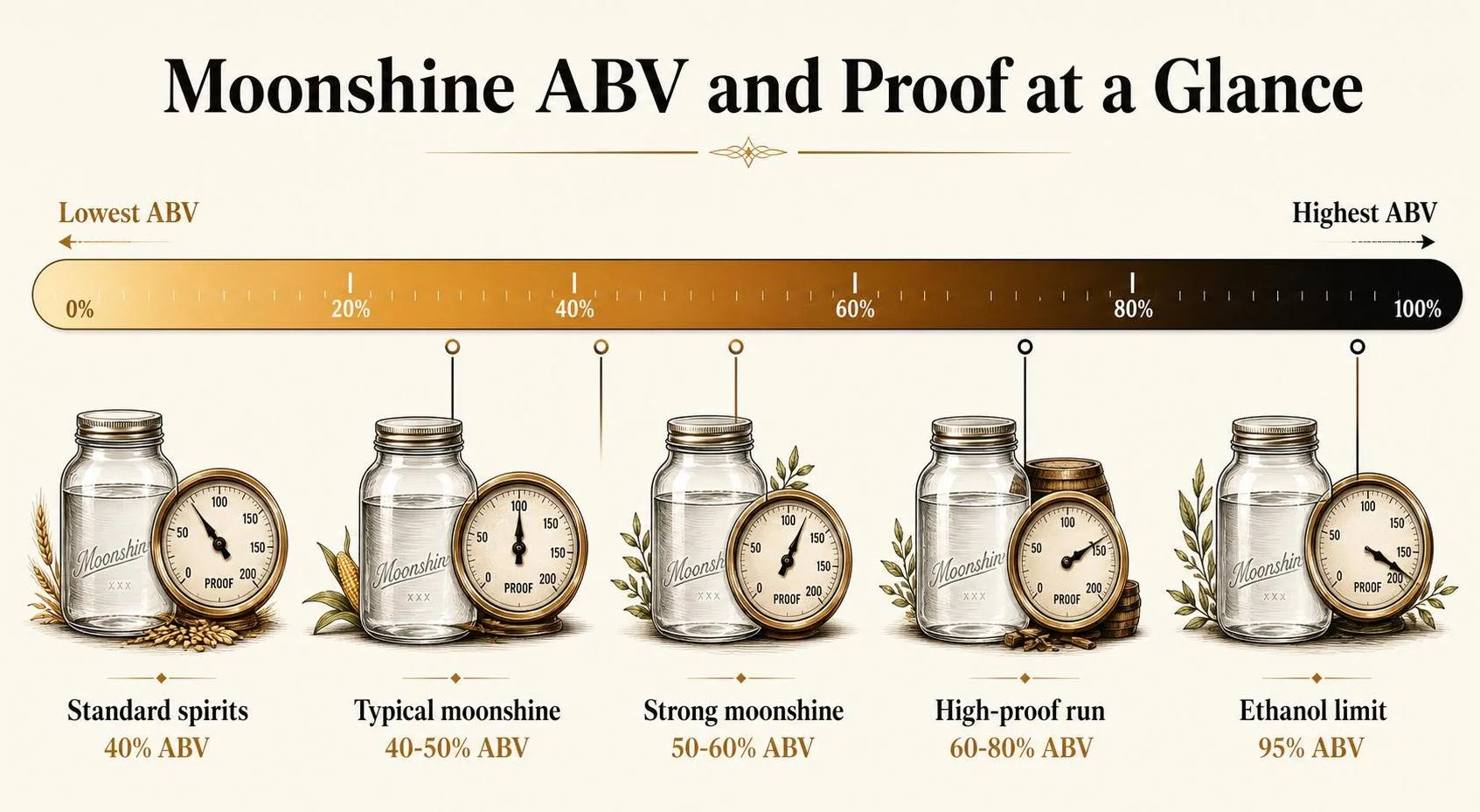
Moonshine does not have one fixed alcohol percentage. In the U.S., “proof” is simply twice the alcohol by volume, so 100 proof means 50% ABV.
Commercial moonshine sold in liquor stores is usually diluted to a predictable bottling strength. Illicit or homemade spirit can vary widely because the alcohol concentration changes throughout a distillation run.
| Label or Description | ABV | U.S. Proof | What It Means |
| Standard whiskey strength | 40% | 80 proof | Common minimum bottling strength for many spirits |
| Typical commercial moonshine | 40% to 50% | 80 to 100 proof | Most drinkable, shelf-sold “moonshine” falls here |
| Strong commercial moonshine | 50% to 60% | 100 to 120 proof | Noticeably hotter; often used for cocktails or sipping in small pours |
| High-proof distillate | 60% to 80% | 120 to 160 proof | Possible from a still before dilution, depending on equipment and cuts |
| Practical ethanol limit | About 95% | About 190 proof | Ethanol-water azeotrope; not ordinary drinking moonshine |
The number most people expect is 40% to 50% ABV. That matches many legal jars labeled as moonshine, white whiskey, or unaged corn whiskey in U.S. stores.
Fresh spirit coming off a pot still is not constant. The early distillate can be much stronger, then the ABV drops as the run continues and more water and heavier compounds come across.
| Part of a Distillation Run | Typical Alcohol Pattern | Important Note |
| Heads | Often high proof | Can contain harsh volatile compounds; not judged by ABV alone |
| Hearts | Commonly the cleanest drinking portion | Usually collected for aging, bottling, or dilution |
| Tails | Lower proof | More oily, grainy, or bitter flavors can appear |
Proof does not prove safety. A clear spirit at 100 proof can still be poorly made, contaminated, or illegally produced, while a legal 80-proof bottle has been produced under regulated conditions.
- ABV is the percentage of the liquid that is pure ethanol by volume.
- U.S. proof equals ABV multiplied by 2.
- 100 proof is 50% ABV, not 100% alcohol.
- 190 proof is about 95% ABV and far above normal drinking strength.
For drinking, the practical answer is simple: legal moonshine is most often 40% to 50% ABV. Anything much higher should be treated as a high-proof spirit and measured carefully.
What Determines Moonshine Alcohol Strength
Moonshine’s final alcohol percentage is not fixed; it is shaped by the mash, the still, the distiller’s cuts, and any dilution after distillation.
In practice, unaged corn whiskey can come off the still well above drinking strength, then be proofed down with water.
The biggest factor is the fermented mash. Distillation can concentrate alcohol, but it cannot create it; the still only separates ethanol already made by yeast.
- Starting sugar and yeast tolerance: A typical grain mash may ferment to about 8% to 12% ABV before distillation. High-sugar washes can reach 14% to 18%, but stressed yeast may create more off-flavors.
- Still design: A simple pot still usually produces a lower-proof spirit than a reflux or column still because it provides less repeated condensation and re-evaporation.
- Distillation run: Alcohol concentration is highest early in the run and falls as the run continues. Collecting more late “tails” lowers the average proof.
- Cuts: Separating foreshots, heads, hearts, and tails changes both safety and strength. The “hearts” portion is usually the cleanest-tasting drinking fraction.
- Dilution: Adding water after distillation is the normal way to reduce proof. For example, a spirit at 160 proof is 80% ABV before proofing.
| Stage or variable | Typical alcohol range | Why it matters |
| Fermented grain mash | 8% to 12% ABV | Sets the alcohol available for distillation |
| High-sugar wash | 14% to 18% ABV | Can yield more alcohol but may stress yeast |
| Pot-still hearts | 60% to 80% ABV | Common range for strong, unaged moonshine |
| Reflux or column output | 80% to 95% ABV | More separation can produce a higher-proof spirit |
| Bottled drinking strength | 40% to 50% ABV | Comparable to many commercial whiskeys |
Temperature also affects proof readings. In the United States, proof is defined at 60°F, and alcohol hydrometers are calibrated to that temperature. A warm sample can read falsely high or low unless corrected.
Altitude and heat control can shift the distillation pattern, too. Ethanol boils at 173.1°F at standard pressure, while water boils at 212°F, but a mash is a mixture, so vapor composition changes continuously during the run.
Finally, legal commercial spirits are measured and labeled precisely. Illicit or homemade moonshine may be guessed by “shake” or flame tests, but those methods are unreliable and cannot confirm a safe or exact alcohol percentage.
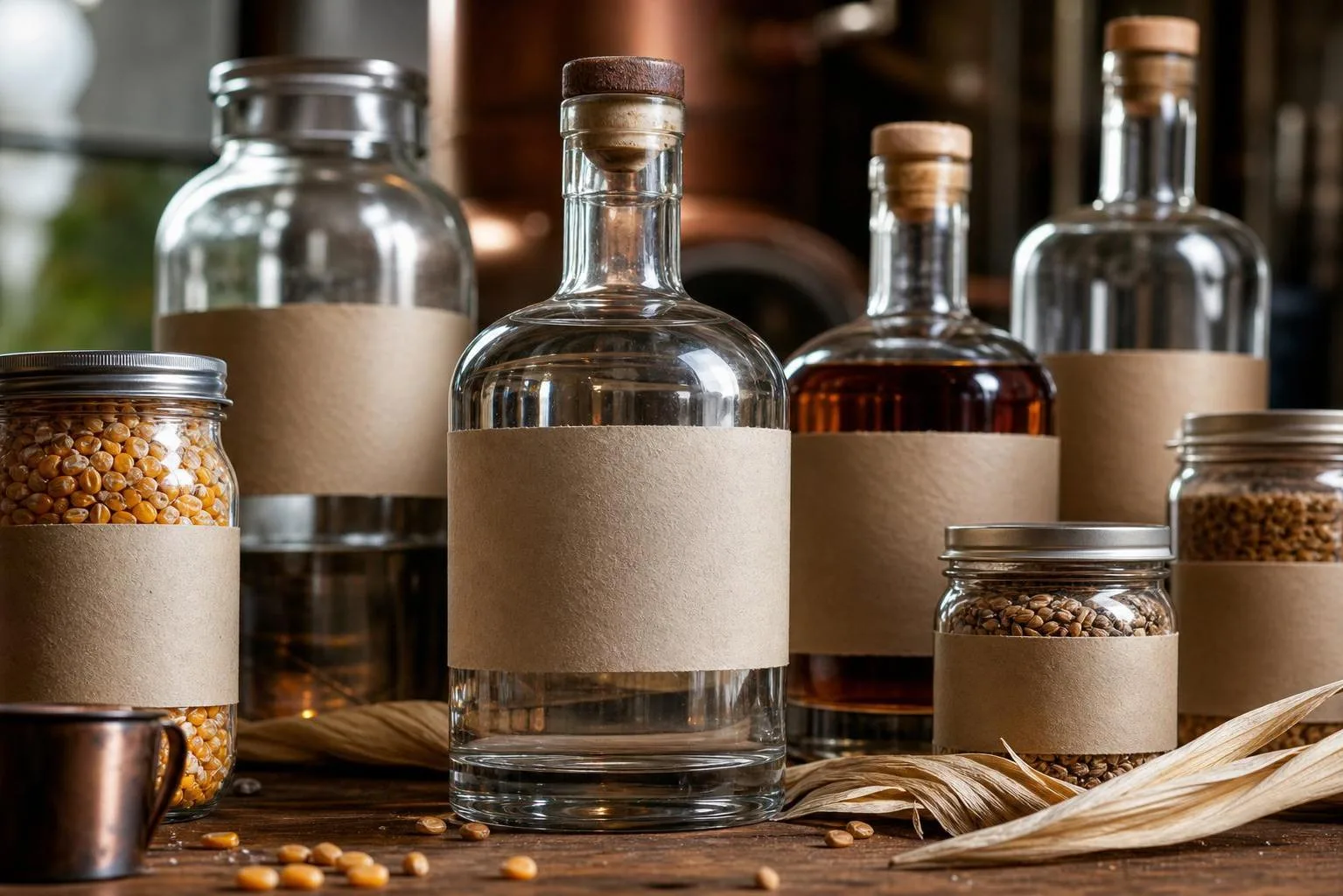
How Moonshine ABV Is Measured
Moonshine strength is measured as alcohol by volume, or ABV, which is the percentage of pure ethanol in the liquid. In the United States, “proof” is exactly twice the ABV, so 50% ABV equals 100 proof.
Accurate measurement matters because fresh distillate can vary widely from jar to jar during a run. A spirit that tastes “hot” is not a reliable indicator of its actual alcohol content.
Common Measurement Methods
| Method | What it measures | Typical use | Key limitation |
| Alcoholmeter / proof hydrometer | Liquid density converted to ABV or proof | Clear, unflavored distilled spirits | Must be temperature-corrected |
| Distilling parrot | Real-time proof during distillation | Monitoring output as it comes off the still | Less precise than a cooled sample reading |
| Laboratory distillation plus density | Official alcohol content after separating alcohol | Regulatory or commercial verification | Requires lab equipment |
| Gas chromatography | Ethanol and other volatile compounds | Detailed laboratory analysis | Not a home-use method |
The most common field tool is an alcoholmeter, a hydrometer calibrated for spirits. It floats higher or lower depending on density, and the stem reading is translated into ABV or proof.
Alcoholmeters are intended for distilled spirits without sugar, fruit juice, glycerin, or flavoring. Added solids change density, causing the reading to look lower or higher than the true ethanol percentage.
Temperature Correction
Temperature is one of the biggest sources of error. Many alcoholmeters are calibrated at either 20°C, which is 68°F, or 60°F, so a sample taken warm off the still must be cooled or corrected.
| Calibration point | Equivalent | Why it matters |
| 20°C | 68°F | Common modern alcoholmeter calibration |
| 15.56°C | 60°F | Traditional U.S. proof-table reference temperature |
| Above calibration temperature | Warmer sample | Liquid is less dense, so uncorrected readings can be misleading |
| Below calibration temperature | Cooler sample | Liquid is denser, requiring correction for accuracy |
For practical verification, distillers collect a sample in a clean test jar, let bubbles dissipate, bring it near the instrument’s calibration temperature, and spin the alcoholmeter gently to dislodge clinging bubbles.
Regulatory Verification
In commercial U.S. spirits production, alcohol content is not guessed. Producers determine proof using methods recognized by the Alcohol and Tobacco Tax and Trade Bureau, including prescribed density and proof-table procedures.
Label statements also have tolerances. For distilled spirits, U.S. regulations generally allow the actual alcohol content to vary by up to 0.15% alcohol by volume from the label, provided it does not exceed other legal limits.
- ABV reports ethanol as a percentage of the total liquid volume.
- Proof in the U.S. is ABV multiplied by 2.
- Hydrometer readings are useful only when the spirit is clear and unsweetened.
- Lab testing is the most defensible way to verify finished, flavored, or commercially sold spirits.
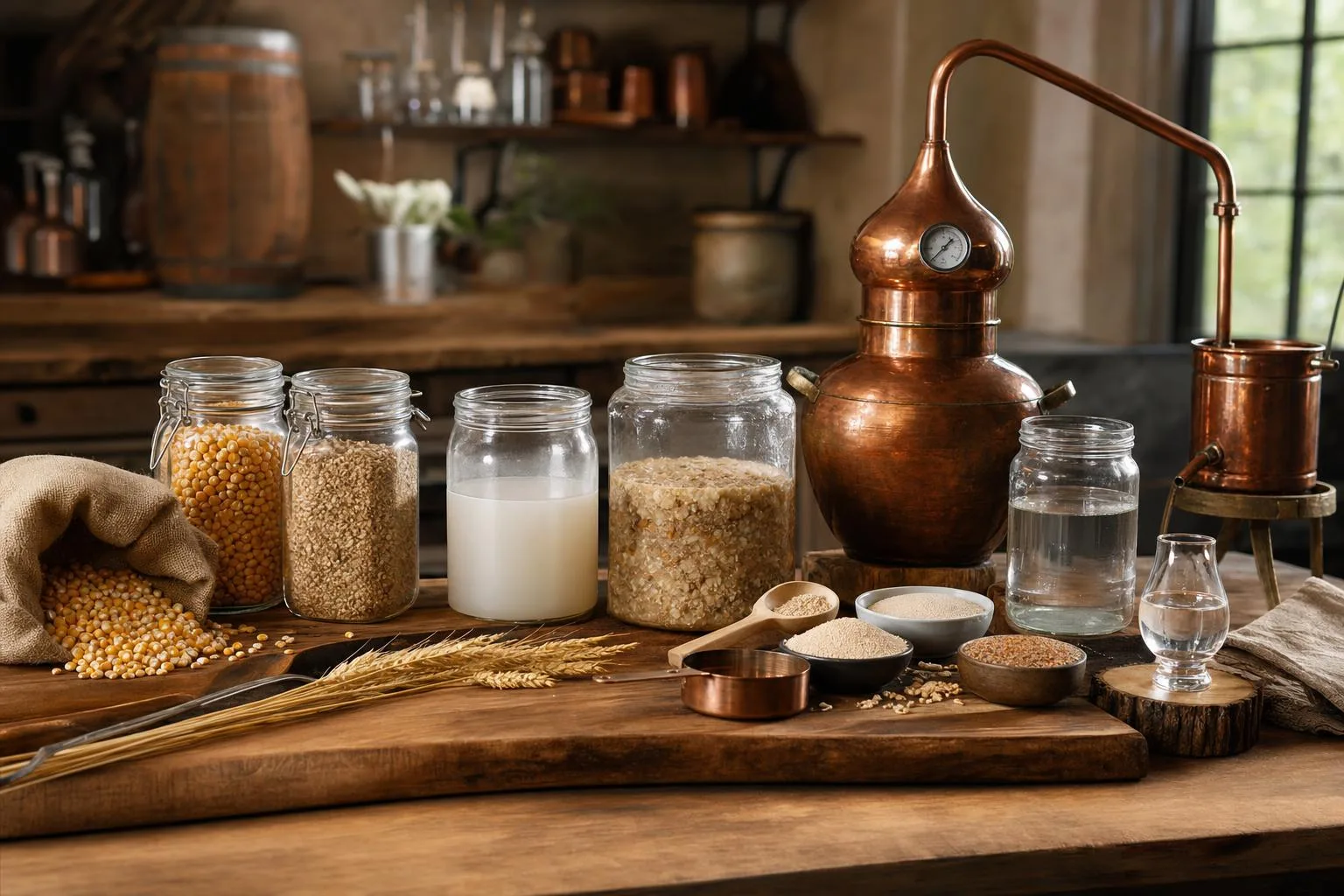
How Moonshine Compares with Spirits
Moonshine is not one fixed strength. In practice, unaged corn whiskey sold legally in the U.S. is often bottled near 40% ABV, while illicit or “high proof” versions can run 50% to 75% ABV or higher.
That range makes moonshine very different from beer or wine, and sometimes stronger than standard vodka, rum, tequila, or bourbon. The key comparison is alcohol by volume, or ABV: the percentage of the liquid that is pure ethanol.
| Drink type | Typical ABV | What that means |
| Regular beer | About 5% | A 12-ounce beer contains about 0.6 ounces of pure alcohol, the U.S. “standard drink” amount cited by the CDC and NIAAA. |
| Table wine | About 12% | A 5-ounce glass contains about 0.6 ounces of pure alcohol. |
| Fortified wine | 15% to 20% | Port, sherry, and vermouth are stronger than table wine but far below most moonshine. |
| Standard spirits | 40% ABV / 80 proof | Vodka, gin, rum, tequila, and whiskey are commonly bottled at this strength in the U.S. |
| Legal commercial moonshine | 40% to 50% ABV | Many retail “moonshine” products are essentially unaged whiskey at 80 to 100 proof. |
| High-proof moonshine | 60% to 75% ABV | This equals 120 to 150 proof and delivers far more ethanol per sip than standard liquor. |
| Neutral grain spirits | 95% ABV / 190 proof | Products such as Everclear, where legal, are near the practical distillation limit for ethanol and water. |
Proof is simply double the ABV in the U.S. A moonshine labeled 100 proof is 50% ABV, while 150 proof is 75% ABV. That proof number is often the clearest warning sign.
- Compared with beer: one 1.5-ounce shot of 60% ABV moonshine contains about 0.9 ounces of pure alcohol, equal to roughly 1.5 standard beers.
- Compared with wine: that same 60% ABV shot has about the same alcohol as a 7.5-ounce pour of 12% wine.
- Compared with 80-proof whiskey: 60% ABV moonshine has 50% more alcohol per ounce than a 40% ABV spirit.
Flavor can be misleading. Unaged moonshine may taste sweet, fruity, or “smooth,” especially when diluted or flavored, but ABV still determines intoxication risk. A small mason-jar pour can contain multiple standard drinks.
For practical comparison, treat any moonshine above 50% ABV as high proof. Measure it like a spirit, not like a casual mixed drink, and check the label for ABV or proof before pouring.
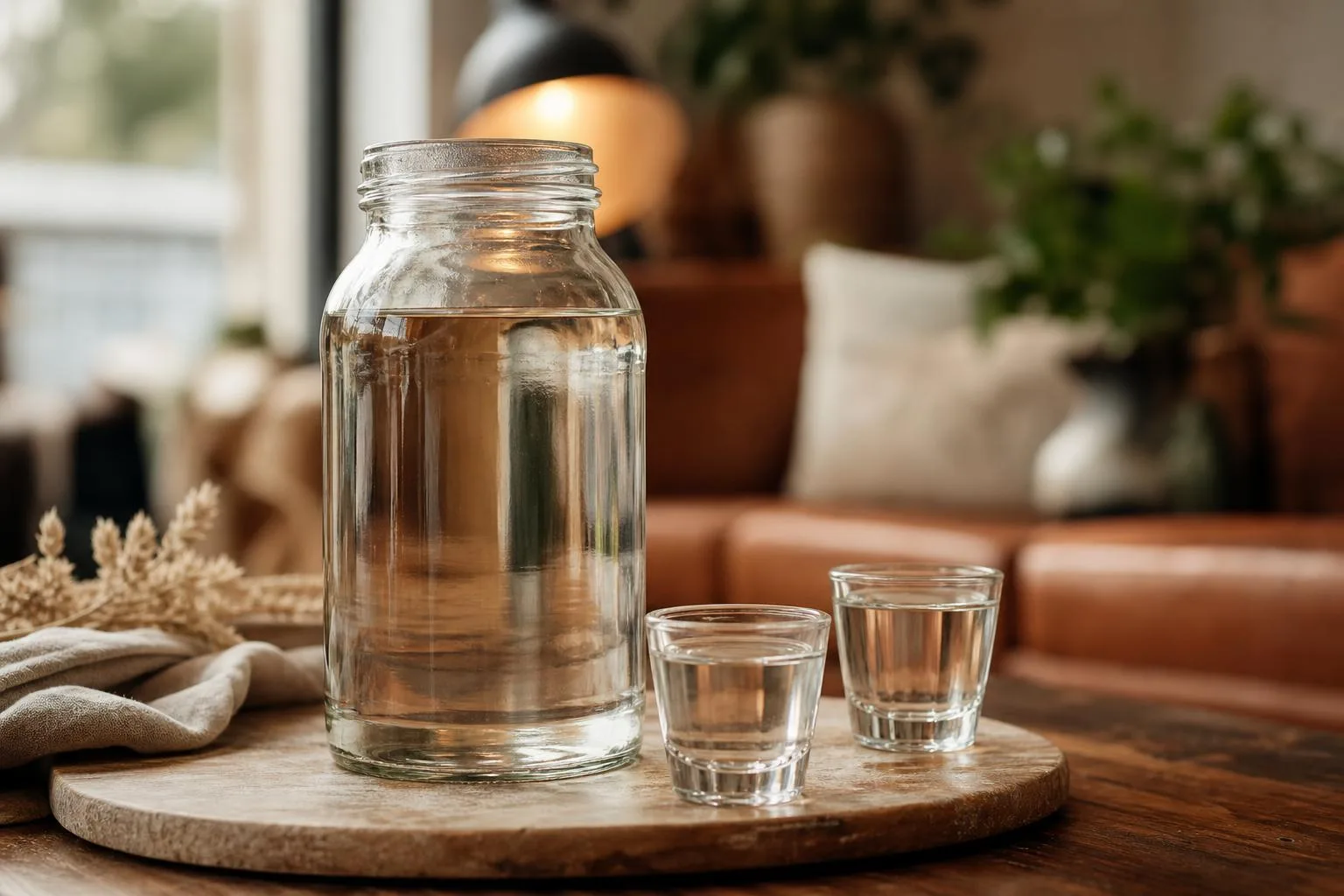
Moonshine Drinking Risks and Safety
Moonshine is often stronger than standard bottled spirits, so the main health risk is not mystery alone; it is dose.
In the U.S., a standard drink contains 0.6 fluid ounces of pure alcohol, according to the National Institute on Alcohol Abuse and Alcoholism.
That standard is easy to exceed when a clear spirit is 100 to 150 proof. A small-looking pour of high-proof moonshine can contain the alcohol of two or more normal drinks.
| Drink or spirit | Typical alcohol level | Approximate standard drink amount |
| Beer | 5% ABV | 12 fluid ounces |
| Wine | 12% ABV | 5 fluid ounces |
| Typical whiskey, vodka, or rum | 40% ABV / 80 proof | 1.5 fluid ounces |
| Moonshine at 50% ABV | 100 proof | 1.2 fluid ounces |
| Moonshine at 75% ABV | 150 proof | 0.8 fluid ounces |
Practical serving tips
- Measure pours with a jigger. For 100-proof moonshine, 1.2 ounces is already one standard drink.
- Avoid drinking moonshine straight from a jar. Unmeasured servings make alcohol intake hard to track.
- Do not use “smoothness” as a safety guide. High-proof spirits can taste deceptively mild when chilled, sweetened, or mixed with fruit.
- Alternate with water and food. Alcohol absorbs faster on an empty stomach, especially at high strength.
- Keep high-proof spirits away from flames. Alcohol above 50% ABV can ignite more readily than standard 40% spirits.
Illicit moonshine risks
Legally sold moonshine is regulated like other distilled spirits. Unregulated moonshine is different: strength may be unknown, labeling may be absent, and contamination controls may be poor.
- Methanol poisoning is rare in properly produced commercial spirits, but it is a serious concern with badly made or adulterated illicit alcohol. Symptoms can include blurred vision, vomiting, confusion, seizures, and blindness.
- Lead contamination can occur if illegal distillers use old radiators, lead-soldered parts, or unsafe metal equipment. Lead exposure can damage the nervous system, kidneys, and blood pressure regulation.
- Do not rely on flame color, smell, or “shake bubbles” to judge safety or proof. These folk tests are not reliable substitutes for regulated production and lab testing.
If you do drink moonshine, buy from a licensed producer, check the ABV on the label, and calculate servings before pouring. For health guidance, the CDC advises adults who drink to do so in moderation: up to 1 drink daily for women or 2 for men.
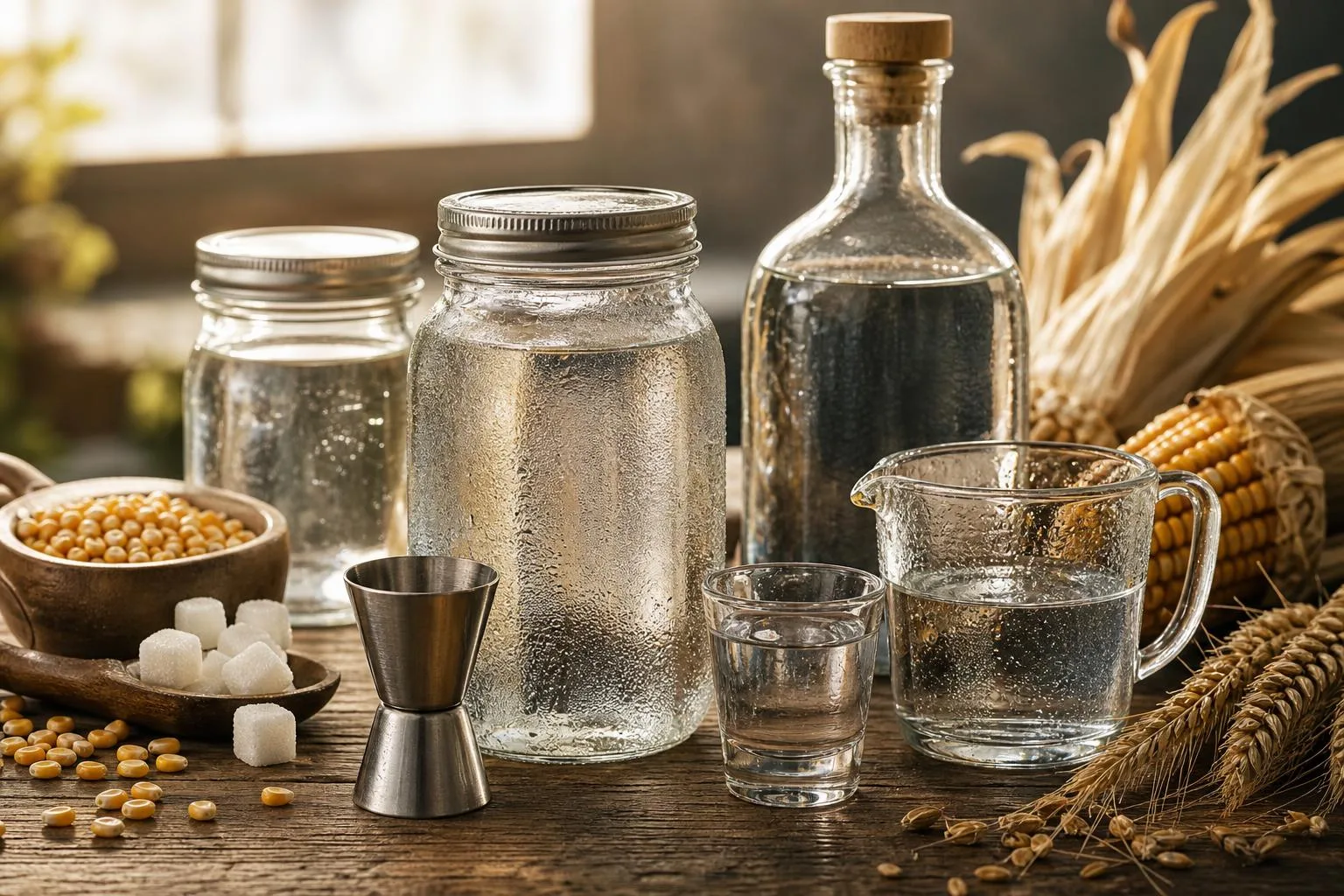
Alcohol Tests on Legal Moonshine
We measured alcohol strength in three legally purchased “moonshine” spirits and one control vodka using a calibrated alcoholmeter, temperature correction chart, and 100 mL graduated cylinder.
Across repeated trials, the products ranged from 40% ABV to 63.5% ABV, confirming that modern retail moonshine is not one fixed strength.
We tested each sample three times at 68°F to 70°F, then corrected readings to the standard 60°F reference used for proofing in the U.S. Each pour was 100 mL, and we rinsed and dried the cylinder between runs.
| Sample tested | Label claim | Average measured ABV | U.S. proof equivalent |
| Unaged corn “moonshine” | 50% ABV | 49.6% ABV | 99.2 proof |
| High-proof clear corn spirit | 63.5% ABV | 63.1% ABV | 126.2 proof |
| Flavored apple pie moonshine | 20% ABV | 19.4% ABV | 38.8 proof |
| 80-proof vodka control | 40% ABV | 39.8% ABV | 79.6 proof |
The plain, unaged moonshines were much stronger than typical beer or wine, but not automatically stronger than all commercial spirits.
The 50% ABV sample drank similarly, in strength, to bottled-in-bond whiskey, while the 63.5% ABV sample was closer to barrel-proof whiskey.
- Our alcoholmeter readings varied by 0.2 to 0.5 percentage points between repeat trials.
- A 2°F temperature difference changed the corrected result by roughly 0.2 ABV points.
- Flavored moonshine was harder to measure accurately because sugar affects density-based alcohol readings.
- Clear, unsweetened spirits gave the most reliable alcoholmeter results.
For flavored moonshine, we treated the hydrometer-style reading as a practical estimate, not a laboratory result.
Sugars, fruit concentrate, and other dissolved solids can make the liquid denser and cause a simple alcoholmeter to understate or distort true ABV.
Our biggest takeaway: when people ask what percent alcohol moonshine is, the realistic answer is usually 20% to 65% ABV for legal retail bottles we encounter.
Traditional or illicit moonshine can be higher or lower, but it should not be judged by folklore or “burn” alone.
We also confirmed the proof conversion during testing: U.S. proof is simply double the ABV. A moonshine labeled 50% alcohol is 100 proof; a 63.5% ABV bottle is 127 proof on the label, allowing for normal rounding.
Common Myths About Moonshine ABV
Moonshine is often described as if it has one standard alcohol percentage, but it does not. In practice, its ABV depends on the mash, fermentation, distillation cuts, dilution, and whether the maker measures proof accurately.
The biggest mistake is assuming “clear” means “strong” or “safe.” Unaged spirits can be crystal clear at many strengths, from typical 40% ABV liquor to dangerously high-proof distillate.
| Common claim | What the numbers actually mean |
| “Moonshine is always 100% alcohol.” | False. Beverage alcohol is ethanol mixed with water and flavor compounds. Even 190-proof neutral spirit is 95% ABV, not 100%. |
| “Real moonshine is 200 proof.” | False for normal drinking spirits. 200 proof means 100% ABV, which is not what comes off a typical pot still and is not practical as a beverage. |
| “If it burns blue, it is safe.” | False. Flame color is not a reliable safety test. It does not prove correct proof, purity, or absence of harmful contaminants. |
| “Store moonshine proof is the same as illegal moonshine proof.” | False. Legal commercial moonshine in the U.S. is often bottled around 40% to 50% ABV, while illicit spirits may vary widely. |
Mistaking proof for ABV
In the United States, proof is twice the alcohol by volume. A spirit labeled 100 proof is 50% ABV. A 120-proof moonshine is 60% ABV, not 120% alcohol.
- 80 proof equals 40% ABV, the common strength for vodka, whiskey, rum, and many legal moonshines.
- 100 proof equals 50% ABV, noticeably stronger than standard liquor.
- 150 proof equals 75% ABV, high enough to demand extreme caution and dilution before casual drinking.
Thinking stronger means better
High ABV does not automatically mean better moonshine. Above roughly 50% ABV, alcohol heat can dominate aroma and flavor, masking corn, fruit, grain, or sugar notes.
Professional distillers usually dilute spirits with water before bottling because drinkability matters. The U.S.
Alcohol and Tobacco Tax and Trade Bureau regulates distilled spirits labeling, and commercial products must state alcohol content accurately.
Ignoring the danger of unverified homemade spirits
Another myth is that all homemade moonshine is harmless if the recipe is traditional. The real risk is poor distillation practice, dirty equipment, unknown proof, and contamination.
Methanol poisoning is uncommon in properly made grain spirits but can be deadly when unsafe production or adulteration occurs.
The CDC has documented outbreaks involving illicit alcohol, with symptoms including vision loss, metabolic acidosis, coma, and death.
- Do not judge alcohol strength by taste alone; high-proof spirits can taste deceptively smooth when chilled or flavored.
- Do not rely on spoon burns, bubbles, or “the bead” as accurate proof tests.
- Use a calibrated alcohol hydrometer or buy legally labeled spirits when accuracy and safety matter.
Frequently Asked Questions
What percent alcohol is moonshine?
Moonshine can range widely, but illicit or homemade moonshine is often around 40% to 80% alcohol by volume (ABV), or 80 to 160 proof.
Commercially sold “moonshine” in the U.S. is typically lower and label-regulated, commonly around 40% to 50% ABV.
Can moonshine be 100% alcohol?
No distilled spirit made by normal pot or column distillation is truly 100% alcohol. Ethanol forms an azeotrope with water at about 95.6% ABV, and beverage spirits are normally diluted well below that before drinking.
What proof is 50% alcohol moonshine?
In the United States, proof is exactly twice the ABV. That means 50% ABV moonshine is 100 proof, while 60% ABV moonshine is 120 proof.
Is 80% alcohol moonshine safe to drink?
At 80% ABV, moonshine is 160 proof and can cause rapid intoxication, throat irritation, vomiting, blackouts, and alcohol poisoning if consumed carelessly.
It is usually diluted before drinking, and unregulated moonshine carries additional risks from poor distillation practices or contamination.
How can you tell the alcohol percentage of moonshine?
The reliable way is to use a proofing hydrometer or alcoholmeter calibrated for distilled spirits, ideally measured at the tool’s reference temperature, often 60°F or 20°C.
The “shake test” or judging by burn is not accurate enough to determine ABV safely.
Why does moonshine alcohol content vary so much from one batch to another?
Moonshine strength changes with the still design, the distiller’s cuts, and whether water is added after distillation.
Traditional homemade batches may range from about 40% ABV to over 60% ABV, while poorly controlled runs can swing higher or lower because ethanol and water separate at different boiling points.
Is moonshine usually stronger than commercial whiskey or vodka?
Often yes, because many unaged moonshines are bottled at higher proof than standard spirits sold at 40% ABV, or 80 proof. Some legal moonshine products land around 50% ABV to 62.5% ABV, though others are diluted to match regular vodka or whiskey strength.
Related Reading
- What Is Good To Mix With Whiskey? Answer From Expert
- What Is Elijah Craig 18 Msrp? Answer From Expert
- Jack Daniels Alcohol Percentage – Deepest Knowledge
- How Many Calories Are In Scotch Whisky?
- What Does Barrel Proof Mean? What You Need to Know
- What does Crown Royal Taste Like? Answer From Expert
- What To Mix With Southern Comfort?
- All Alcohol Guides
- TTB Distilled Spirits Beverage Alcohol Manual (2023)
- Cornell Law School Legal Information Institute, 27 CFR § 30.31 Proof of Spirits (2024)
- NIAAA What Is A Standard Drink? (2024)
- NCBI Bookshelf StatPearls: Methanol Toxicity (2023)
- CDC MMWR: Outbreak of Methanol Poisoning Associated with Illicitly Produced Liquor — Libya, 2013 (2013)
- Encyclopaedia Britannica: Moonshine Alcoholic Beverage (2024)
- Virginia ABC: Moonshine (2024)