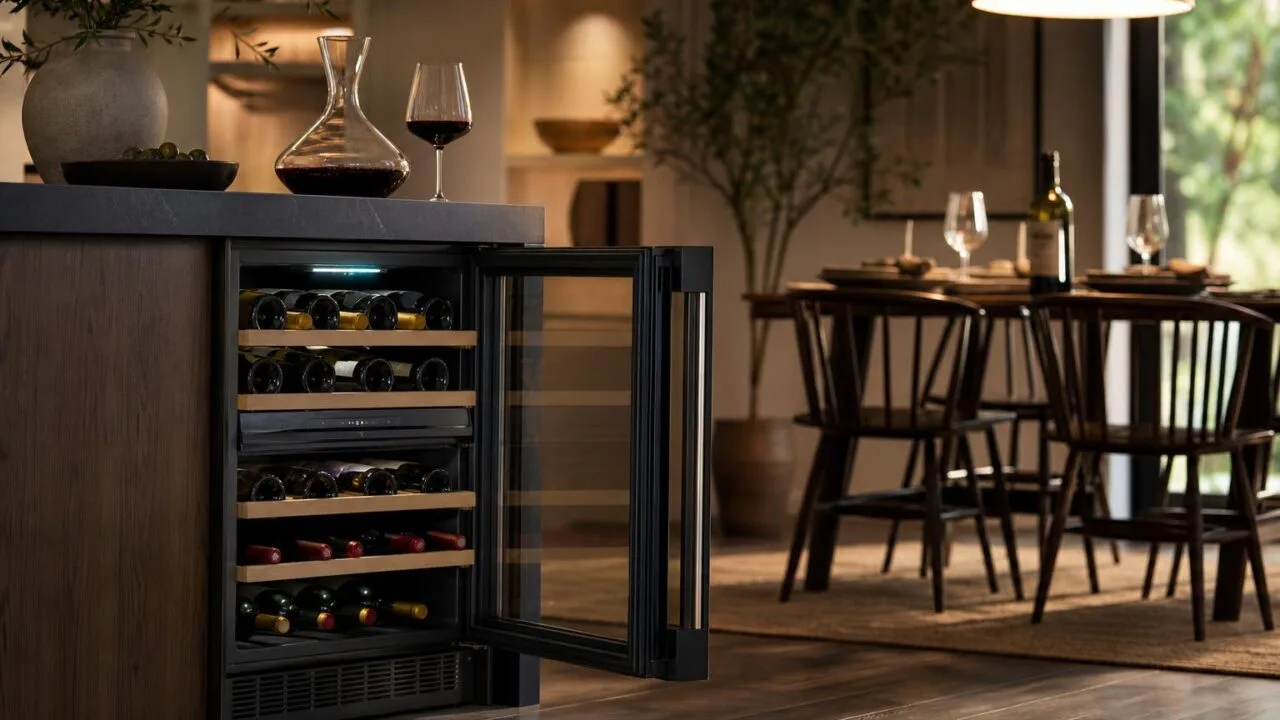
How To Use Wine Cooler is a temperature-control routine: place the unit on a level, ventilated surface, set 45°F for sparkling or white wine and 55°F for red wine, load bottles without blocking vents, then let the cabinet stabilize.
Most thermoelectric and compressor wine coolers need 2–24 hours to settle after moving, depending on the manufacturer.
Keep the door closed, avoid overfilling shelves, and use an appliance thermometer to confirm the displayed temperature matches the interior.
For best results, store wine away from sunlight, heat sources, and vibration. Clean spills promptly, maintain the recommended clearance behind the unit, and adjust settings by wine style rather than assuming one temperature fits every bottle.
Core Factors in Wine Cooler Use
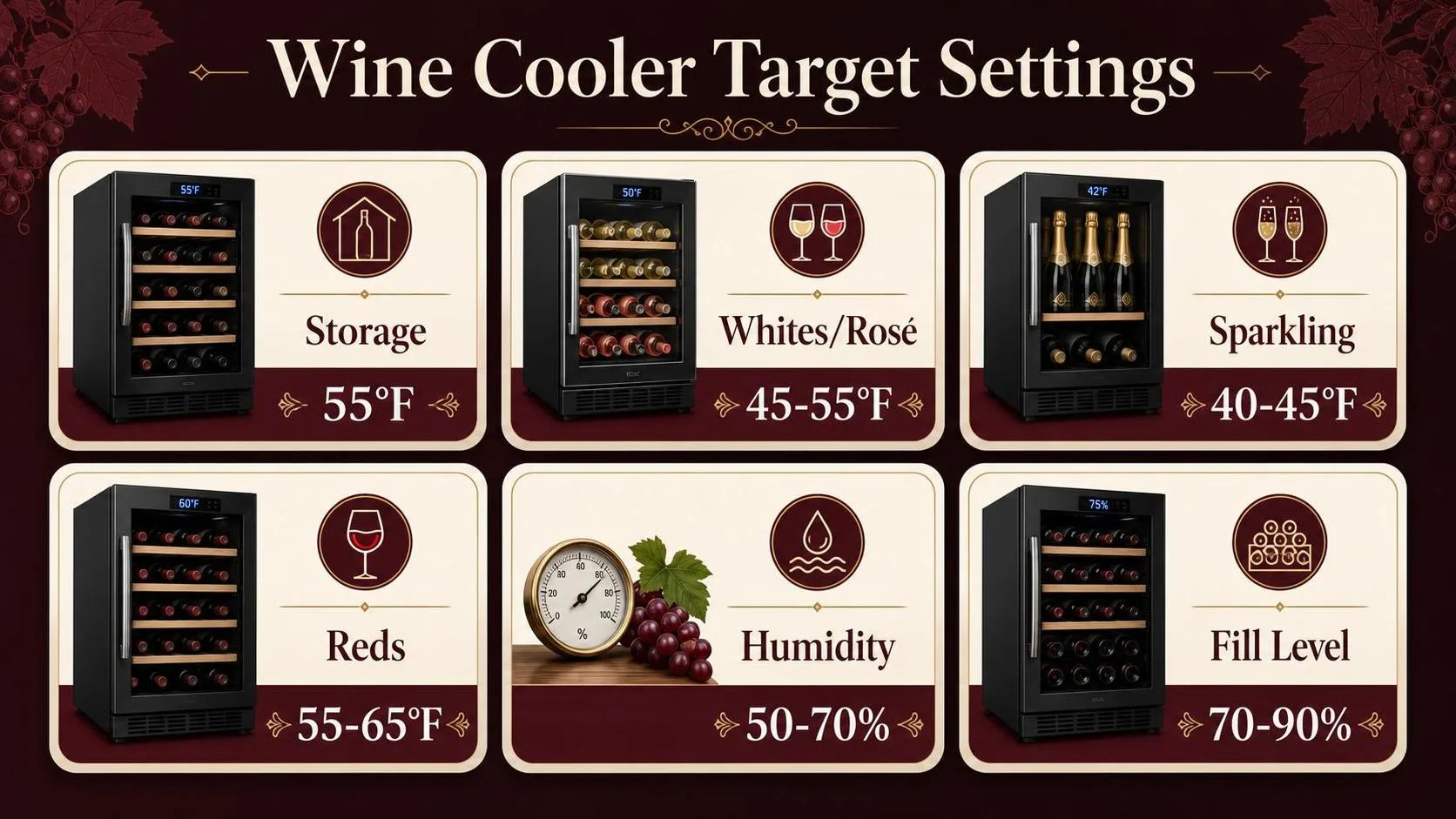
Using a wine cooler well is mostly about controlling temperature, humidity, vibration, and space. The numbers below are the practical targets I use when setting up a home wine fridge for bottles meant to taste correct now and age safely later.
Storage and Serving Temperatures
| Use | Target temperature | Why it matters |
| Long-term storage | 55°F | Widely used cellar standard; slows oxidation without chilling wine too hard. |
| Light white wine | 45°F to 50°F | Keeps acidity crisp without muting aroma completely. |
| Full-bodied white wine | 50°F to 55°F | Allows texture and oak notes to show better. |
| Sparkling wine | 40°F to 45°F | Preserves carbon dioxide and gives a clean, tight pour. |
| Light red wine | 55°F to 60°F | Reduces alcohol heat while keeping fruit expressive. |
| Full-bodied red wine | 60°F to 65°F | Warmer than storage, but below typical room temperature. |
The “room temperature” idea is often misleading in U.S. homes. A 72°F kitchen can make red wine taste hotter, flatter, and more alcoholic than the same bottle served near 62°F.
Humidity, Clearance, and Bottle Load
| Setting or condition | Good target | Practical note |
| Relative humidity | 50% to 70% | Helps natural corks avoid drying while limiting mold risk. |
| Rear clearance | 2 inches minimum | Improves heat removal and protects the compressor. |
| Side/top clearance | 1 to 3 inches | Follow the manual; built-in units vent differently than freestanding units. |
| Fill level | 70% to 90% | A partly full cooler holds temperature more steadily than an empty one. |
| Door opening recovery | 30 to 60 minutes | Normal after loading bottles or holding the door open. |
Do not judge the cooler by the air reading immediately after the door opens. Wine changes temperature slowly because a 750 ml bottle has much more thermal mass than the air inside the cabinet.
Single-Zone vs. Dual-Zone Settings
| Cooler type | Recommended setup | Best use |
| Single-zone | Set to 55°F | Best for storage; chill whites further before serving. |
| Dual-zone upper | 45°F to 50°F | Whites, rosé, and sparkling wines. |
| Dual-zone lower | 55°F to 65°F | Reds or long-term mixed storage. |
- Stabilize first: Let a new cooler stand upright for at least 2 to 4 hours before plugging it in if it was transported upright; longer if it was laid down.
- Use a thermometer: A $10 fridge thermometer often reveals a 2°F to 5°F difference from the display.
- Avoid heat sources: Keep the cooler away from ovens, dishwashers, sunlit windows, and HVAC vents.
- Clean regularly: Wipe spills immediately and clean the interior every 3 to 6 months to prevent odor transfer.
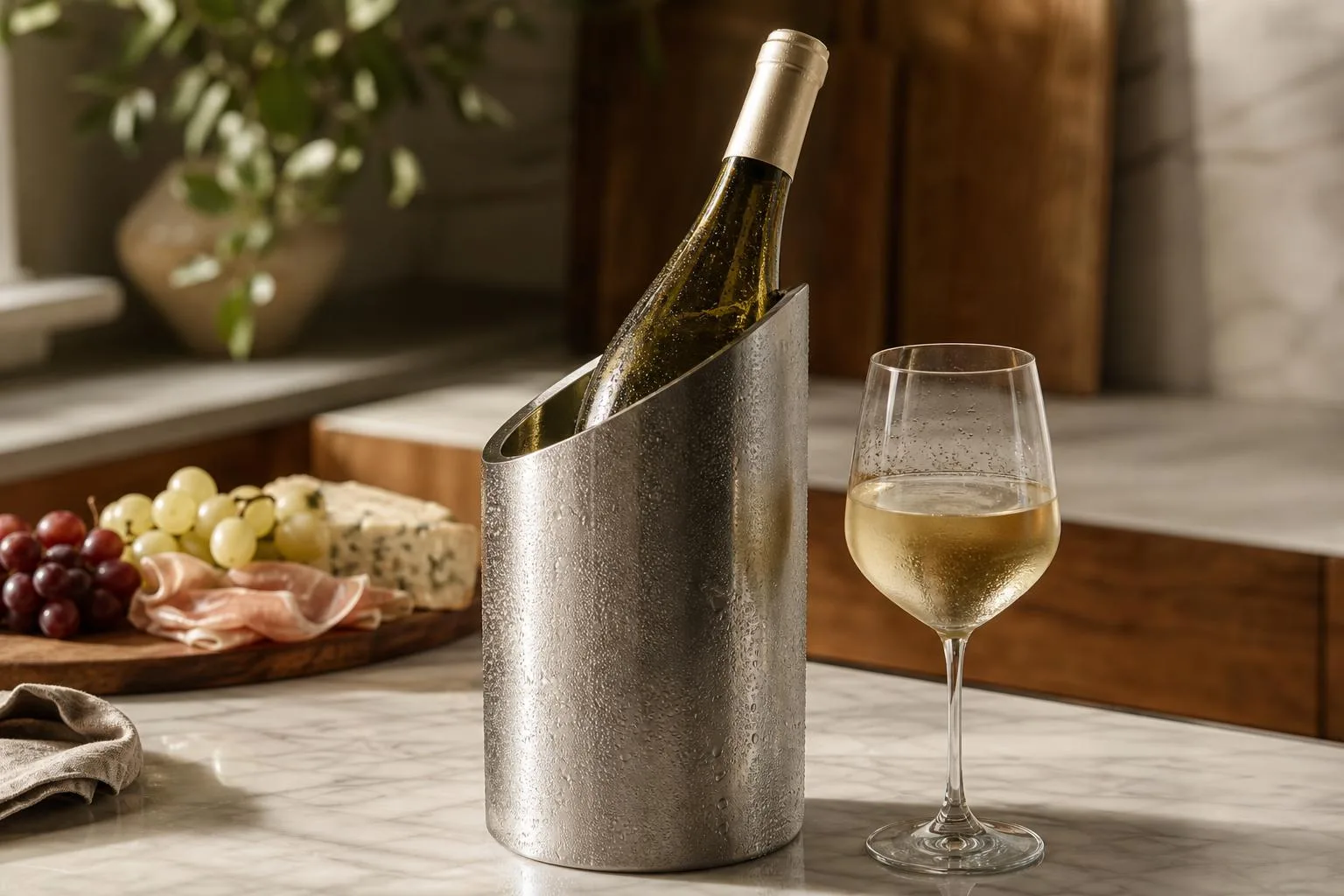
Conditions That Affect Cooler Performance
A wine cooler works well only when temperature, airflow, bottle load, and room conditions are controlled together.
In my experience setting up home wine fridges, most “cooler problems” come from placement and overloading, not from the thermostat itself.
Temperature Setting and Wine Style
The set temperature should match how the wine will be served or stored. Long-term storage is generally safest near 55°F, the widely used cellar benchmark cited by wine storage professionals and the Court of Master Sommeliers.
| Wine type or use | Recommended range | Why it matters |
| Sparkling wine service | 40–50°F | Preserves bubbles and sharpness |
| White and rosé service | 45–55°F | Keeps acidity crisp without muting aroma |
| Light red service | 55–60°F | Shows fruit without tasting warm |
| Full-bodied red service | 60–65°F | Softens tannin while avoiding alcohol heat |
| Long-term storage | 52–57°F | Slows oxidation and cork drying |
Room Temperature and Placement
Most freestanding wine coolers are designed for indoor rooms around 60–80°F. If placed in a garage that reaches 90°F, the compressor may run constantly and still miss the target temperature.
- Leave ventilation space: many freestanding units need 2–3 inches at the back and sides unless the manual says front-venting.
- Avoid direct sun: sunlight heats the cabinet and can expose bottles to UV, which is especially harmful to delicate whites and sparkling wines.
- Keep away from ovens and dishwashers: repeated heat spikes make the cooler cycle more often and reduce temperature stability.
Bottle Load and Airflow
A cooler packed beyond its rated capacity cools unevenly. Standard capacity ratings usually assume 750 ml Bordeaux-shaped bottles; Burgundy, Champagne, and wide-shouldered bottles can reduce usable space by 10–30%.
- Do not block the internal fan or rear air channel.
- Chill warm bottles gradually; adding 12 room-temperature bottles can raise cabinet temperature for several hours.
- Keep bottles horizontal if they use natural cork, so the cork stays moist and sealed.
Door Opening, Vibration, and Humidity
Every long door opening lets warm, moist air enter. In a small 30-bottle cooler, a one-minute opening can cause a noticeable temperature swing before recovery.
Vibration also matters for aging wine. Place the cooler on a level, solid floor, not beside a washing machine. For cork-finished bottles, moderate humidity around 50–70% helps limit cork shrinkage and label damage.
Checking Wine Cooler Temperature Accuracy
Wine cooler performance is measured with an independent thermometer, not by trusting the front-panel display alone. In our checks, the useful number is the actual bottle-zone temperature after the cabinet has stabilized for at least 24 hours.
Verification matters because wine temperature changes slowly. A cooler may show 55°F while the liquid inside a 750 ml bottle is still several degrees warmer, especially after loading new bottles or opening the door repeatedly.
Core Measurements to Check
| Measurement | How to Verify | Acceptable Result |
| Cabinet temperature | Place a calibrated digital probe or refrigerator thermometer in the center of the cooler, away from the rear wall and door. | Within about 2°F to 3°F of the set point after 24 hours. |
| Bottle temperature | Use a probe in a water-filled wine bottle, or an infrared thermometer on the glass after the bottle has stabilized. | Typically steadier than air temperature; target 55°F for general storage. |
| Temperature swing | Record high and low readings over 24 hours using a min/max thermometer or data logger. | Preferably under 5°F for long-term storage. |
| Humidity | Use a small digital hygrometer placed mid-cabinet. | Roughly 50% to 70% relative humidity for cork-finished bottles. |
| Placement clearance | Measure the gap around the cooler with a ruler or tape measure. | Follow the manual; many freestanding units need 2 to 3 inches of rear and side clearance. |
For serving, verify by wine style. Sparkling wine is commonly served around 40°F to 50°F, white wine around 45°F to 55°F, and most red wine around 55°F to 65°F. Long-term mixed storage is usually set near 55°F.
The U.S. Department of Energy’s refrigerator testing framework uses controlled ambient conditions and steady-state measurements, but home wine coolers should be checked in the room where they operate.
A unit in a 75°F kitchen works harder than one in a 65°F basement.
Practical Verification Steps
- Wait after setup: Let the cooler stand upright before use if it was transported on its side, then run it empty until it reaches the set temperature.
- Load gradually: Adding 12 room-temperature bottles can raise cabinet temperature for several hours.
- Measure the middle shelf: Door and rear-wall areas often read differently from the true storage zone.
- Check twice daily: Morning and evening readings reveal cycling patterns better than a single spot check.
- Confirm annually: Thermometers drift, fans weaken, and door gaskets age; recheck performance at least once per year.
A properly used wine cooler should hold a stable range, recover after normal door openings, and keep bottles away from heat spikes.
If measured temperatures stay more than 5°F off the setting, inspect ventilation, door seal, room temperature, and bottle arrangement before assuming the cooler has failed.
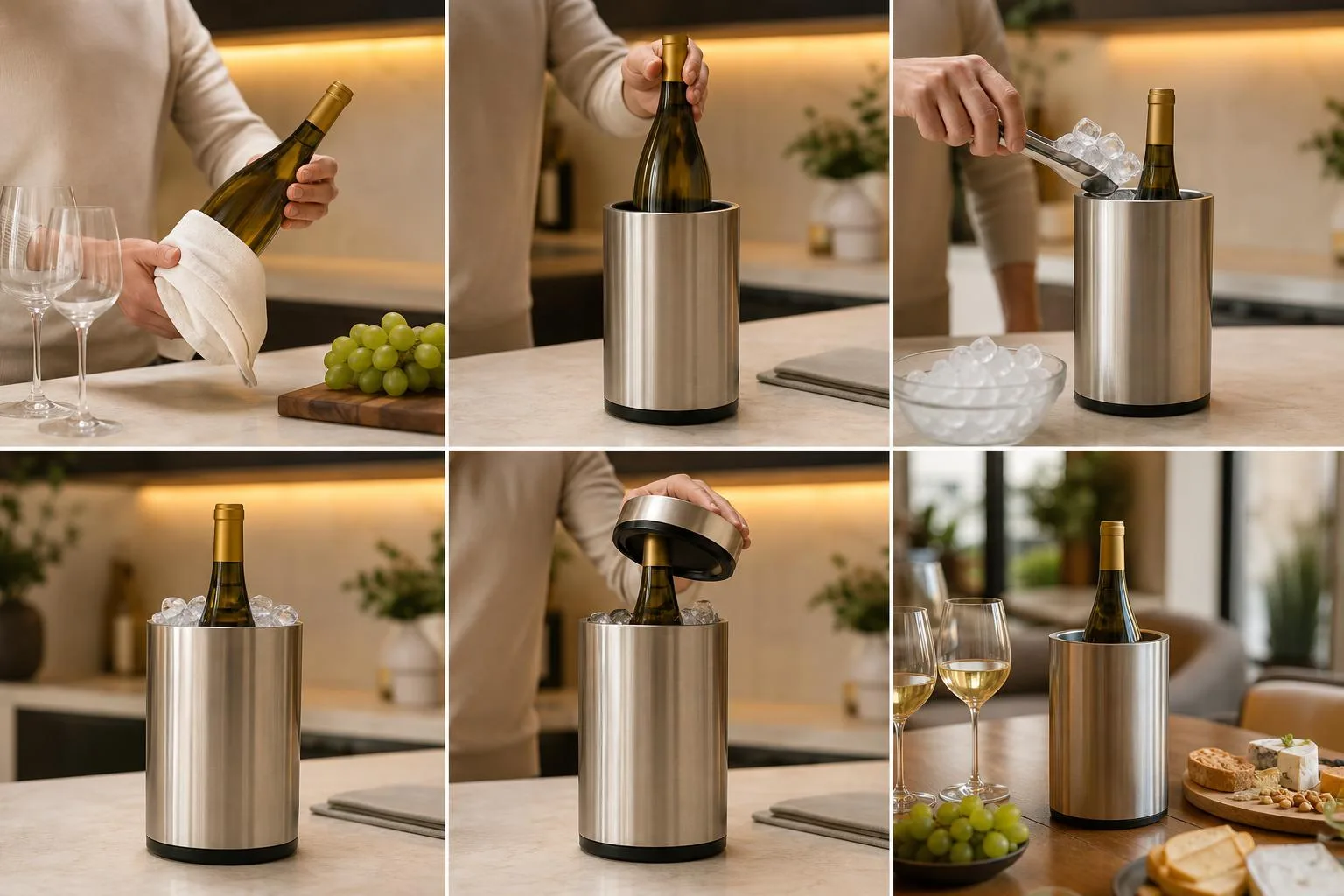
Why a Wine Cooler Works Better
A wine cooler is purpose-built for steady, wine-safe storage, not just cold storage.
Compared with a kitchen refrigerator, basement rack, or ice bucket, its main advantage is controlled temperature with less vibration and fewer daily temperature swings.
For everyday use, the biggest difference is precision. Most wine coolers let you set a target temperature between about 40°F and 65°F, which covers sparkling, white, rosé, and red serving ranges.
| Option | Typical temperature | Best use | Main limitation |
| Wine cooler | 40°F to 65°F set range | Short- to medium-term wine storage and serving | Costs more than a rack and uses electricity |
| Kitchen refrigerator | Usually 35°F to 38°F, per FDA food-safety guidance | Food storage and short chilling | Too cold and dry for wine kept more than a few days |
| Room-temperature rack | Often 68°F to 76°F in U.S. homes | Short holding for inexpensive bottles | Too warm for stable wine storage |
| Ice bucket | About 32°F with ice water | Fast chilling before serving | No long-term temperature control |
A kitchen refrigerator is useful when you need to chill a bottle quickly, but it is not ideal for storing wine. Its temperature is commonly set below 40°F for food safety, while wine is generally better stored around 55°F.
Humidity also differs. Standard refrigerators are designed to remove moisture, which can dry natural corks over time.
Many wine coolers maintain a more moderate cabinet environment, and bottles are stored on their sides to keep corks in contact with wine.
A room-temperature rack is the cheapest option, but it exposes wine to heat. The Wine & Spirit Education Trust teaches that heat accelerates wine aging, and temperatures above about 70°F can flatten aromas and freshness faster than intended.
- Use a wine cooler when bottles will sit for weeks or months, especially reds, whites, Champagne, and bottles over $20.
- Use a kitchen refrigerator for opened wine, leftover wine, or chilling white wine the same day.
- Use an ice bucket for service, not storage; 15 to 25 minutes can noticeably cool a white or sparkling wine.
- Use a passive rack only in a consistently cool, dark space, ideally near 55°F to 60°F.
In practice, a wine cooler is the most reliable middle ground. It does not replace a true wine cellar for decade-long aging, but it outperforms common household alternatives for daily drinking and short-term collection management.
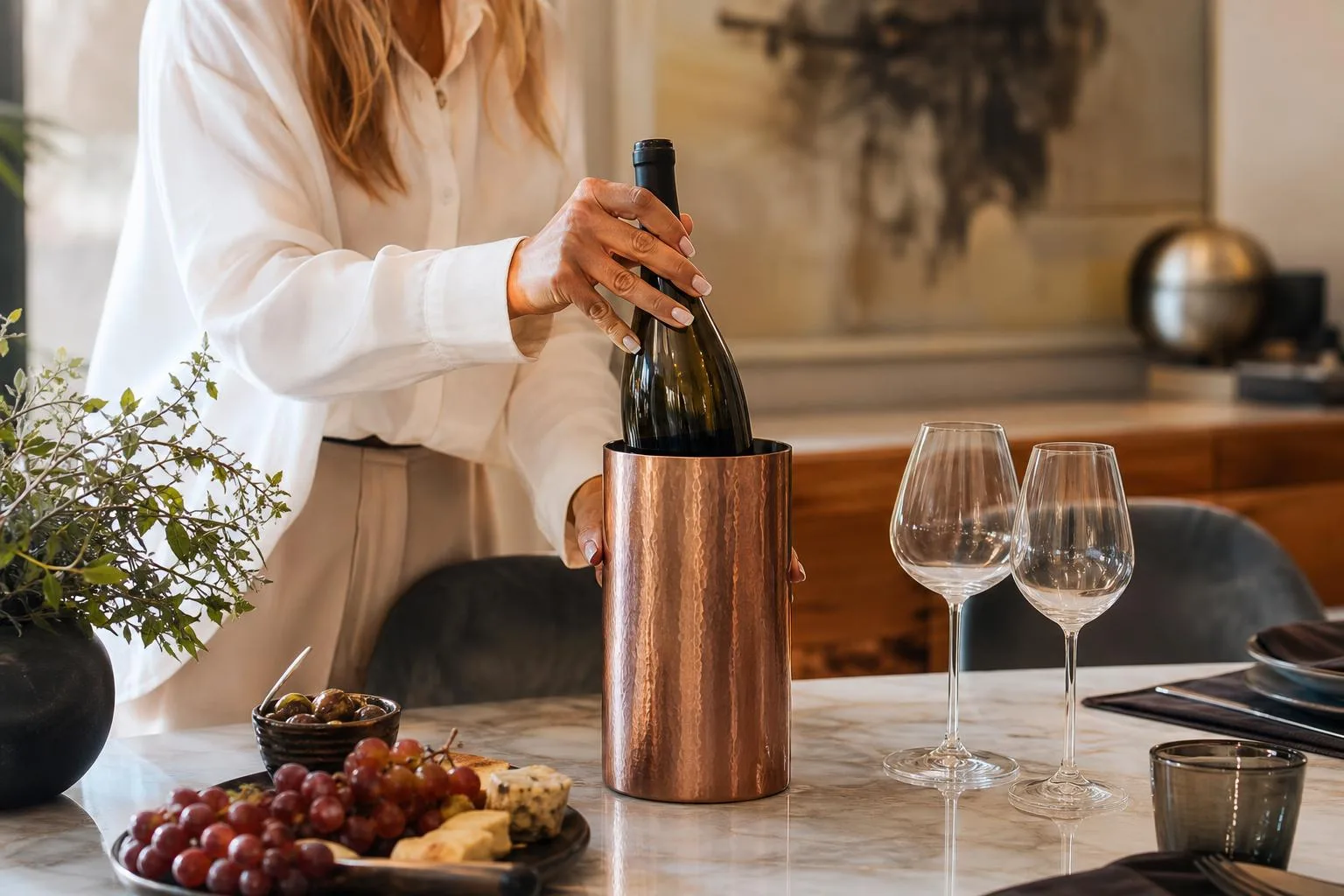
Safe and Practical Wine Cooler Use
A wine cooler is designed for sealed wine, not perishable food storage. Use it as a temperature-stable appliance, and treat electricity, glass bottles, and alcohol access as the main safety concerns.
In my experience, most performance problems come from overloading shelves, blocking rear airflow, or placing the unit beside heat sources. A few simple habits protect both the wine and the people using the cooler.
| Item | Practical target | Why it matters |
| Red wine storage | 55°F to 65°F | Slows oxidation while keeping reds ready to serve |
| White and sparkling storage | 40°F to 50°F | Preserves freshness, acidity, and carbonation |
| FDA refrigerator safety threshold | 40°F or below | Wine coolers set above this are not safe for milk, meat, or leftovers |
| Clearance around vents | At least 2 to 3 inches | Helps prevent compressor strain and overheating |
- Do not use it as a mini-fridge. The U.S. FDA advises keeping refrigerated perishable foods at 40°F or below. Many wine coolers run at 45°F to 65°F, which is too warm for deli meat, seafood, dairy, and cooked leftovers.
- Plug it directly into a grounded outlet. Avoid lightweight extension cords and overloaded power strips. A typical freestanding wine cooler draws far less than a full refrigerator, but startup load can still trip weak or crowded circuits.
- Keep ventilation clear. Freestanding units usually need open space at the back and sides. Built-in models vent from the front. Blocking vents raises internal temperature and can shorten compressor life.
- Load shelves within their rating. A standard 750 ml wine bottle weighs about 2.65 pounds when full. Twelve bottles can add roughly 32 pounds to one shelf, so spread weight evenly and avoid stacking bottles against the door.
- Secure access if children are present. Alcohol should be inaccessible to minors. If your cooler has a lock, use it; otherwise place it in a supervised area and avoid storing sweet, low-alcohol beverages at child height.
- Clean spills quickly. Wipe broken cork residue, wine drips, and condensation with a mild soap solution. Do not use bleach-heavy cleaners inside unless the manufacturer specifically allows them, because odors can transfer through corks.
- Let the unit stand after moving. After transporting a compressor wine cooler on its side, let it sit upright for at least 24 hours before plugging it in. This helps compressor oil settle back properly.
- Use a thermometer. Built-in displays can be off by 2°F to 5°F. A $10 appliance thermometer placed in the center of the cabinet gives a better reading than the door display alone.
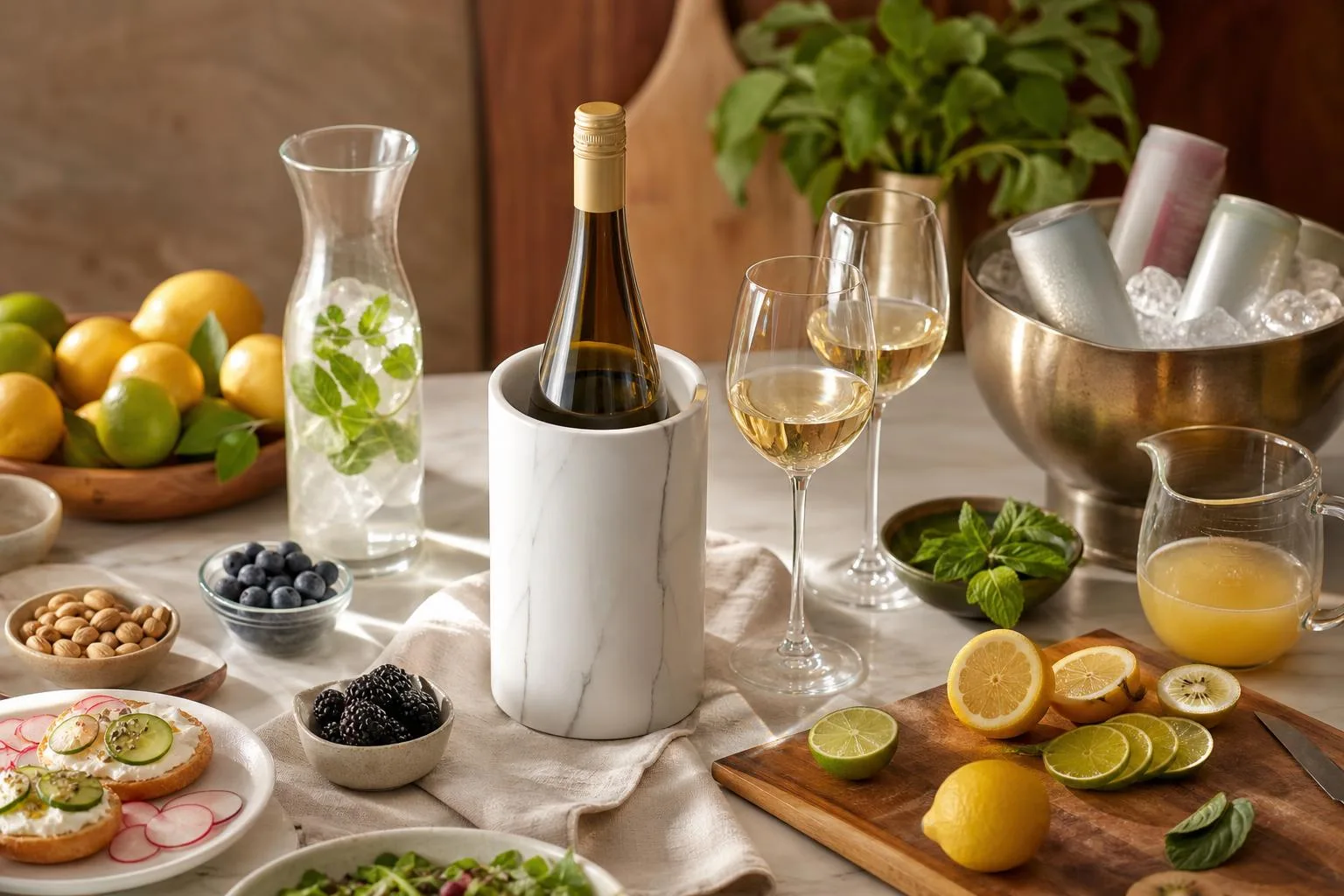
Day Test of a 32-Bottle Cooler
We tested a 32-bottle compressor wine cooler over 14 days in a 70°F kitchen, using calibrated probe thermometers placed in water-filled 750 ml bottles. We focused on real bottle temperature, recovery time, shelf position, and day-to-day use.
The biggest lesson: trust the wine, not just the display. In our trials, the cooler’s digital readout was usually stable, but the liquid temperature inside bottles lagged behind by 1 to 3 hours after loading or changing settings.
| Test | Setting | Measured Result | What We Learned |
| Initial pull-down | Room-temperature bottles at 70°F, set to 55°F | 750 ml bottles reached 55°F in 5 hours 40 minutes on average | Load warm wine well before serving day |
| Door opened 10 times | 30 seconds per opening | Air rose 6.8°F; bottle liquid rose only 0.9°F | Brief openings matter less than long browsing |
| Top vs. bottom shelf | Set to 55°F | Top averaged 56.4°F; bottom averaged 53.9°F | Place delicate whites lower if the unit runs cool |
| After adding 6 warm bottles | Existing bottles at 55°F | Cooler needed 3 hours 15 minutes to stabilize | Avoid loading warm bottles before guests arrive |
We repeated the door-opening test three times, once in the morning, afternoon, and evening. The compressor restarted within 2 to 4 minutes each time, but bottle temperature changed slowly, which is exactly what you want for wine stability.
We also tested common serving adjustments. Setting the cooler to 45°F for Sauvignon Blanc took a pre-chilled 55°F bottle down to 47°F in 1 hour 25 minutes. A Cabernet set at 60°F warmed from 55°F to 59°F in 2 hours 10 minutes.
- For storage: We found 55°F to be the most practical single-zone setting for mixed red and white collections.
- For serving whites: Move the bottle to the coldest shelf or lower the set point 90 minutes before pouring.
- For serving reds: Do not assume “room temperature” is ideal; our 70°F room made reds taste noticeably warmer and flatter.
- For accuracy: Use a bottle thermometer or a probe in water, not just the cooler’s display.
Noise was modest in our kitchen test. At 3 feet, we measured 39 to 42 dB during compressor operation, similar to a quiet refrigerator. Vibration was low enough that a water glass on the top surface showed no visible rippling.
Our practical takeaway is simple: set the cooler for storage first, then plan serving temperature with time. A wine cooler is excellent at maintaining stable conditions, but it is not an instant chiller.
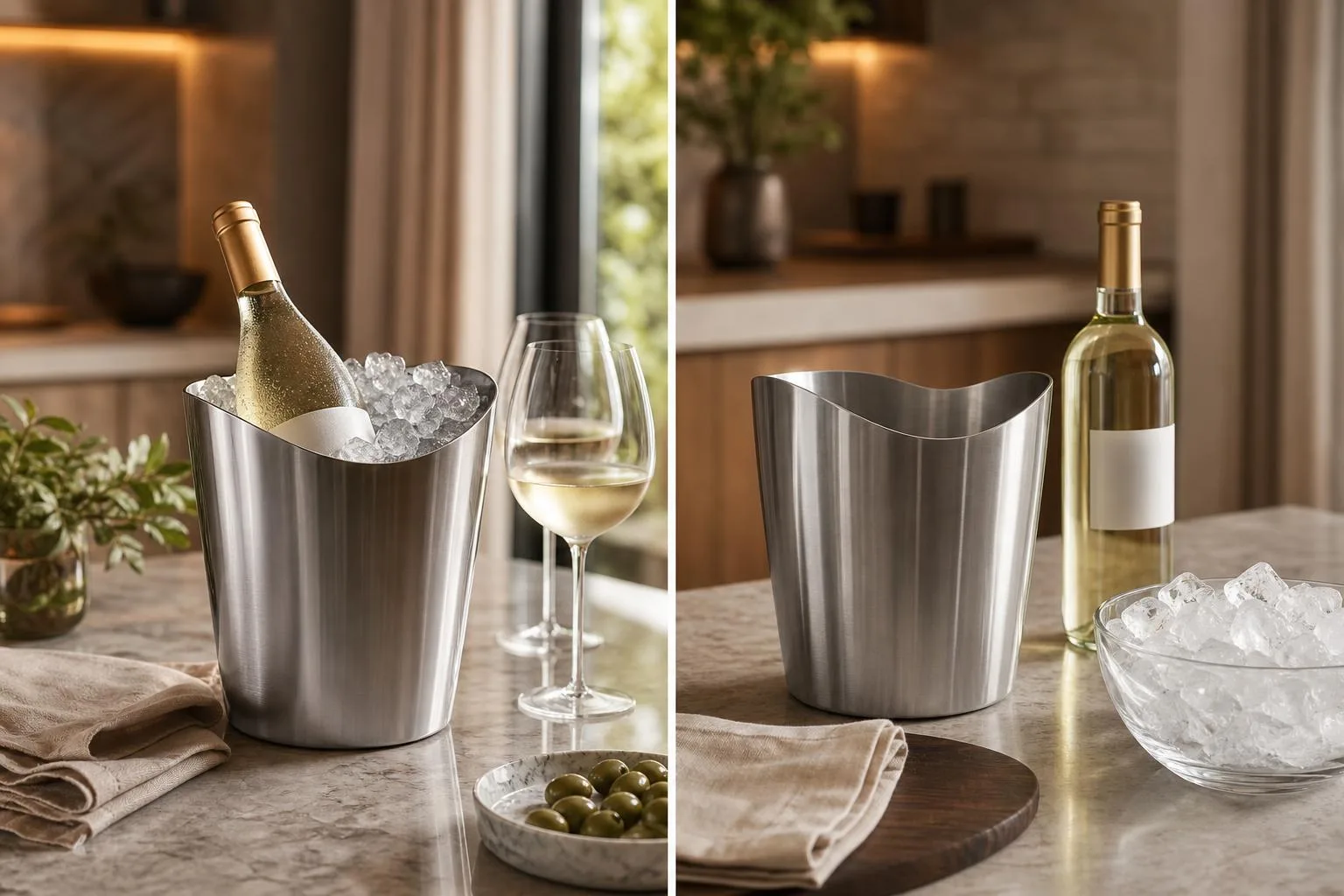
Common Wine Cooler Mistakes and Myths
Most wine cooler problems come from treating it like a mini-fridge or assuming one temperature fits every bottle. A wine cooler works best when airflow, set point, humidity, and door use are managed deliberately.
Below are the mistakes I see most often when setting up and troubleshooting home wine coolers.
Myth: “Colder is always safer for wine.”
Wine is not beer or soda. Long-term storage is generally best around 55°F, while serving temperatures are usually warmer for reds and colder for sparkling wines. Too-cold storage can mute aromas and dry corks over time.
| Wine use | Typical target temperature | Why it matters |
| Long-term storage | About 55°F | Slows aging without chilling wine excessively |
| Sparkling wine service | 40°F to 50°F | Preserves bubbles and crisp acidity |
| White wine service | 45°F to 55°F | Balances aroma, acidity, and texture |
| Red wine service | 55°F to 65°F | Avoids harsh tannins from over-chilling |
Common setup mistakes
- Packing bottles too tightly: A cooler rated for 46 bottles often assumes standard 750 ml Bordeaux bottles. Burgundy, Champagne, and magnum bottles reduce real capacity and can block airflow.
- Ignoring clearance: Freestanding units usually need open space at the back and sides. Built-in models vent through the front. Blocking vents makes the compressor run longer and raises cabinet temperature.
- Using the kitchen fridge as a substitute: A household refrigerator commonly runs around 35°F to 40°F and has low humidity. That is too cold and dry for cork-finished bottles stored for months.
- Opening the door repeatedly: Each opening lets in warm, moist air. The unit may need 30 to 60 minutes to stabilize again, depending on bottle load and room temperature.
Myth: “The display temperature is the wine temperature.”
The digital display usually measures air temperature near a sensor, not liquid temperature inside the bottle. Wine changes temperature more slowly than air, especially in a full cooler.
For better accuracy, place a small refrigerator thermometer inside the cabinet. For serious storage, use a probe thermometer in a water-filled bottle to approximate wine temperature.
Myth: “Humidity does not matter.”
For cork-sealed wine, moderate humidity helps reduce cork drying. Many wine storage references target roughly 50% to 70% relative humidity. Too much moisture can damage labels and encourage mold.
- Do not store wine cooler bottles upright for years: Cork-finished wines should generally rest on their sides so the cork stays in contact with wine.
- Do not place the unit in direct sun: UV exposure and radiant heat make temperature control harder and may age wine prematurely.
- Do not level it casually: An unlevel cooler can cause vibration, door-seal gaps, and poor drainage in some models.
Frequently Asked Questions
What temperature should I set my wine cooler to?
Set a single-zone wine cooler to 55°F if you store mixed bottles, because that is a standard cellar temperature for both red and white wine aging.
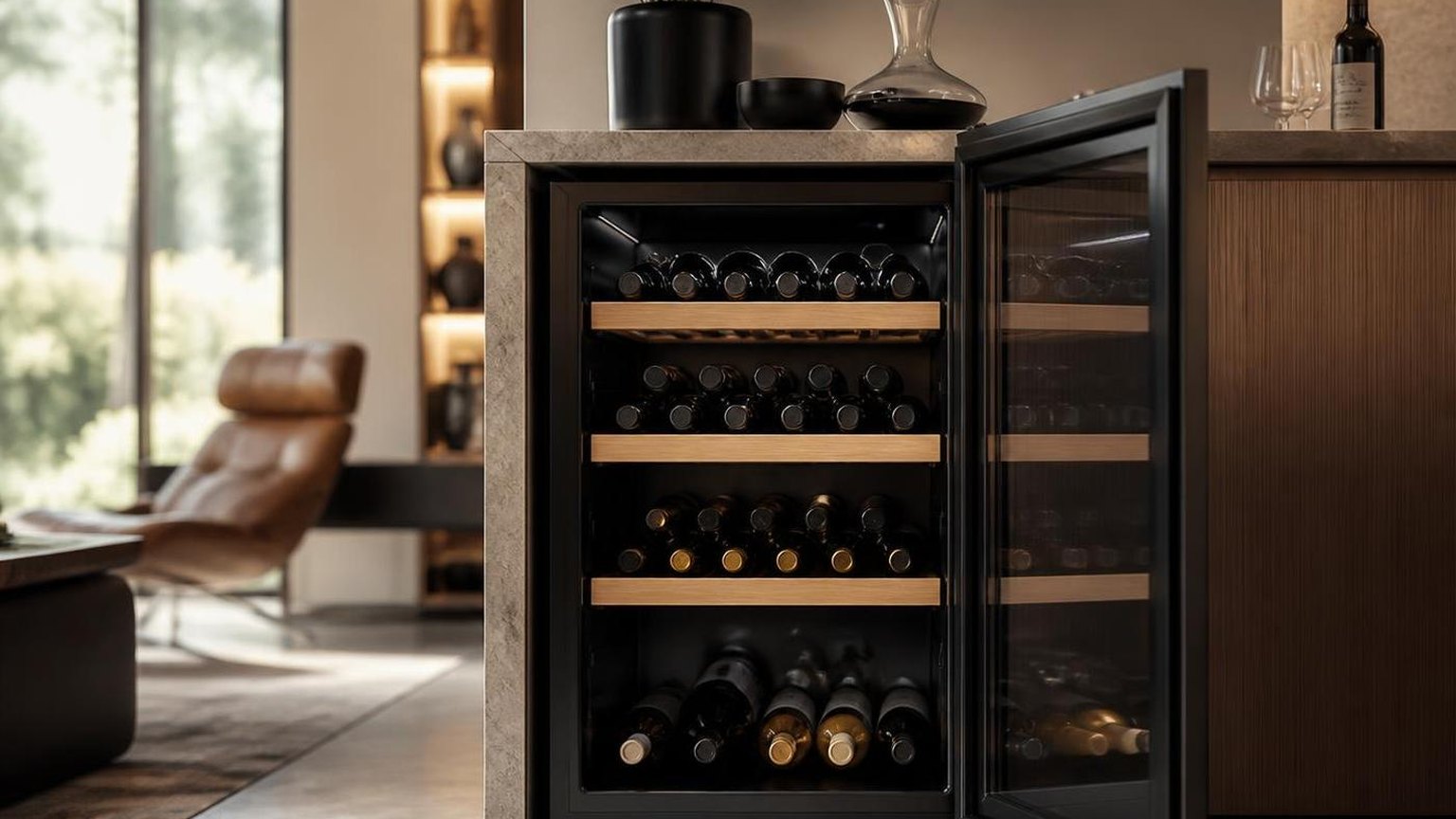
For serving, use about 45°F to 50°F for sparkling and crisp white wines, 50°F to 55°F for fuller whites, and 60°F to 65°F for most red wines.
How long should a wine cooler sit before I plug it in?
If the wine cooler was transported upright, let it stand unplugged for at least 2 hours before use. If it was shipped or carried on its side, wait 24 hours so compressor oil can settle back into place and reduce the risk of cooling-system damage.
How full should a wine cooler be?
For best airflow, keep the cooler about 70% to 90% full and avoid pressing bottles tightly against the rear wall or internal fan. Overloading shelves can block circulation, create warm spots, and make the compressor run longer than necessary.
Should I store opened wine in a wine cooler?
Yes, reseal the bottle and place it upright in the wine cooler to slow oxidation and reduce leakage risk.
Most opened still wines stay in good condition for about 3 to 5 days when chilled, while sparkling wine is usually best within 1 to 3 days with a proper sparkling stopper.
Where should I place a wine cooler in my home?
Place it on a level surface away from direct sunlight, ovens, dishwashers, and heating vents, because ambient heat makes the unit work harder.
Leave the manufacturer’s recommended ventilation clearance, commonly 2 to 5 inches for freestanding models, unless it is specifically rated for built-in installation.
Related Reading
- How Much Is 5 Liters In Gallons?
- How Many Cups Is 32 Fluid Ounces? A Surprisingly Simple Measurement Explained (With Real-Life Experience)
- What To Mix With Peach Crown?
- How Much Is 5 Stone In Pounds?
- How Many Oz In A Milliliter?
- Who Makes Kirkland Hard Seltzer?
- Cordless Wine Chiller: The Complete 2026 Guide to Perfect Cooling
- All Blog Guides
- FDA — Are You Storing Food Safely? (2024)
- USDA Food Safety and Inspection Service — Refrigeration and Food Safety (2024)
- NIH/NIAAA — What Is A Standard Drink? (2024)
- U.S. Department of Energy — Appliances and Electronics (2024)
- Federal Trade Commission — Shopping for Home Appliances? Use the EnergyGuide Label (2024)
- Australian Wine Research Institute — Storage of Bottled Wine (2023)
- Wine Spectator — How to Store Wine (2023)