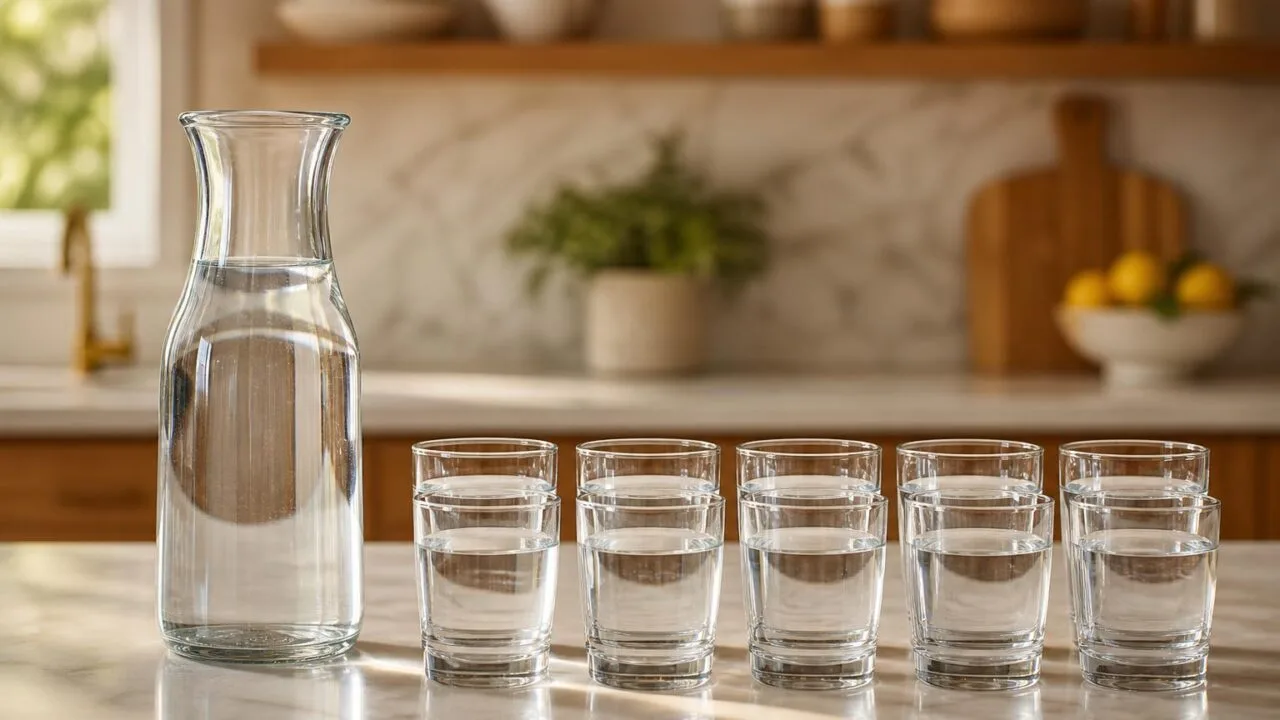
How Many 8 Oz Cups are in a Liter is 4.23 8-ounce cups. Since 1 liter equals 33.814 US fluid ounces, dividing by 8 gives 4.22675, usually rounded to 4.23 cups for kitchen measuring, hydration tracking, and recipe scaling.
This guide uses US fluid ounces, not UK imperial ounces, because the conversion changes slightly by measurement system.
You’ll see the exact math, quick rounded answers, and practical measuring tips so a liter can be converted accurately without guesswork.
How Many 8 Oz Cups Per Liter
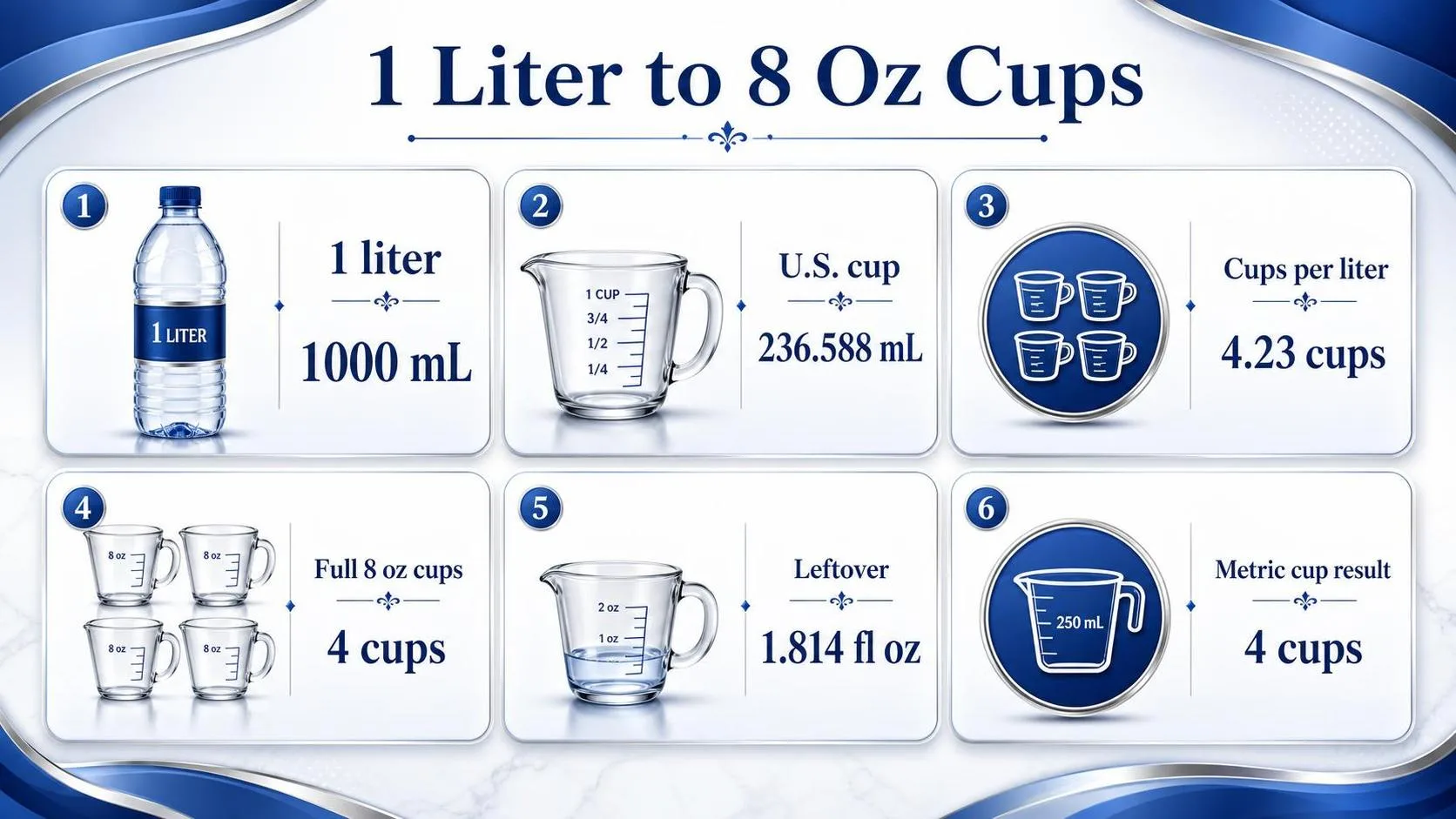
One liter contains about 4.23 cups when the cup is the common U.S. 8-fluid-ounce measuring cup. That means a 1-liter bottle is slightly more than four full 8 oz cups, with about 1.8 fluid ounces left over.
| Measure | Exact or accepted value | What it means |
| 1 liter | 1,000 milliliters | The standard metric volume used on beverage bottles |
| 1 U.S. fluid ounce | 29.5735 milliliters | U.S. customary liquid measure, as used by NIST references |
| 1 U.S. cup | 8 U.S. fluid ounces | 236.588 milliliters per measuring cup |
| 1 liter in U.S. cups | 4.22675 cups | Usually rounded to 4.23 cups |
The calculation is straightforward: divide 1,000 milliliters by 236.588 milliliters per U.S. cup. The result is 4.22675, so a liter equals 4 cups plus about 0.22675 of another cup.
| Conversion step | Number |
| 1 liter in milliliters | 1,000 mL |
| 1 U.S. 8 oz cup in milliliters | 236.588 mL |
| 1,000 ÷ 236.588 | 4.22675 cups |
| Rounded kitchen value | 4.23 cups |
For pouring, the leftover after four 8 oz cups is also useful. Four cups equal 32 U.S. fluid ounces, while one liter equals about 33.814 U.S. fluid ounces.
| Amount poured from 1 liter | Volume used | Volume remaining |
| 4 full 8 oz cups | 32 fl oz | 1.814 fl oz |
| 4.23 cups | About 33.84 fl oz | Essentially the full liter, allowing rounding |
This distinction matters because “cup” is not universal. In U.S. recipes and most American kitchen measuring sets, a cup is 8 U.S. fluid ounces. In metric food labeling, a “metric cup” is often 250 milliliters.
| Cup type | Size | Cups in 1 liter |
| U.S. customary cup | 236.588 mL | 4.23 cups |
| Metric cup | 250 mL | 4 cups exactly |
| Imperial cup | 284.131 mL | 3.52 cups |
For U.S. use, the reliable answer is: 1 liter equals 4.23 8 oz cups. For quick service, treat a liter as four full cups plus a small splash, just under 2 fluid ounces.
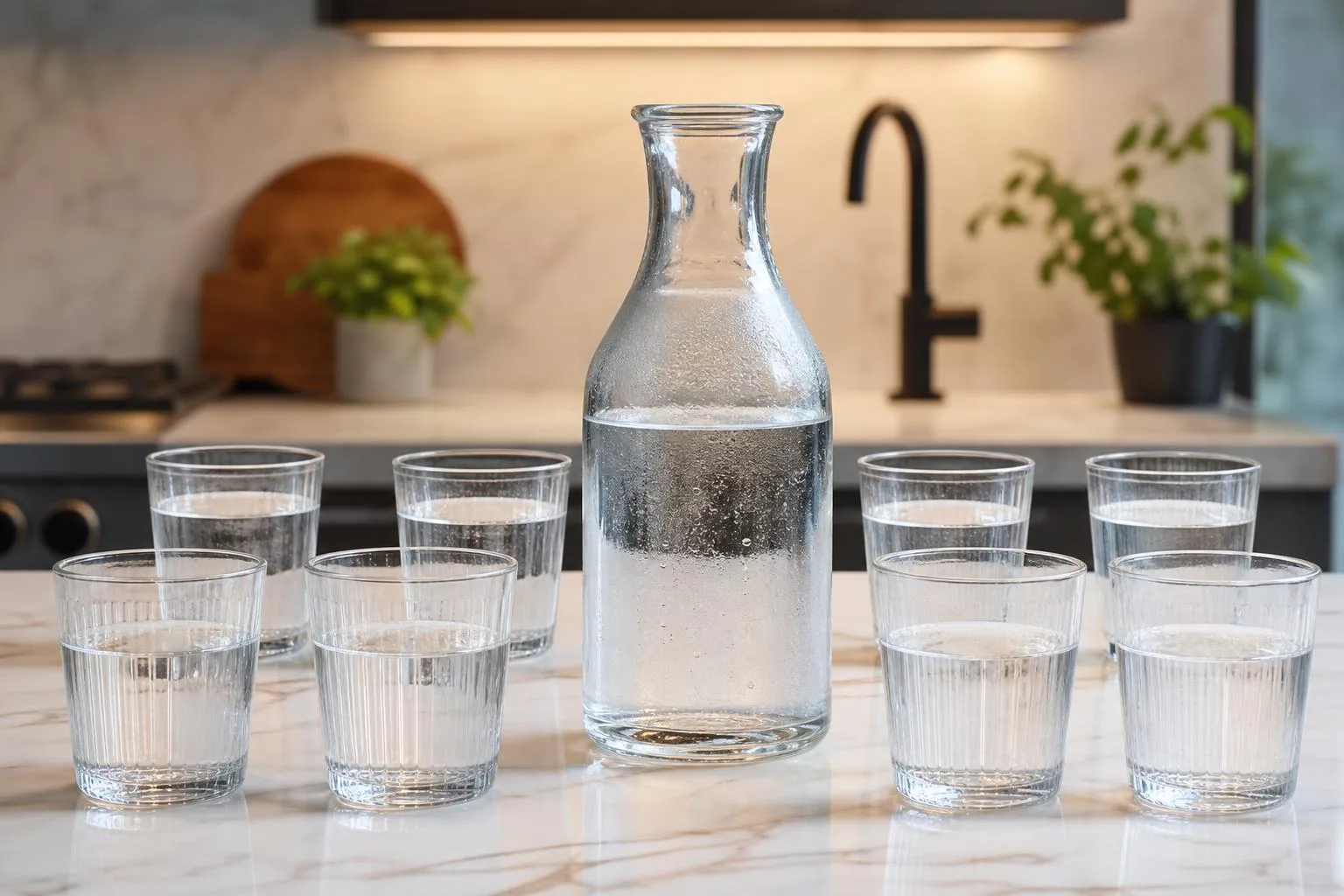
Why a Liter Equals 4.23 Cups
The standard U.S. answer is 4.23 cups, because 1 liter equals 33.814 U.S. fluid ounces and an “8 oz cup” is 8 U.S. fluid ounces. The result changes when “ounce,” “cup,” or rounding is defined differently.
Fluid ounces vs. weight ounces
The biggest source of error is confusing fluid ounces with ounces by weight. A liter measures volume. An ounce can measure either volume or mass, and those are not interchangeable unless you know the ingredient’s density.
| Measurement used | Meaning | Result for 1 liter |
| U.S. fluid ounce | 1 U.S. fl oz = 29.5735 mL | 33.814 fl oz, or 4.2268 eight-ounce cups |
| Imperial fluid ounce | 1 Imperial fl oz = 28.4131 mL | 35.195 Imperial fl oz, or 4.3994 eight-ounce cups |
| U.S. legal nutrition cup | 1 cup = 240 mL | 4.1667 cups per liter |
| Metric cup | 1 cup = 250 mL | 4 cups per liter |
Which “cup” is being used
In U.S. kitchen practice, 1 cup is commonly 8 U.S. fluid ounces, or 236.588 mL. U.S. nutrition labels, however, often use a legal cup of 240 mL. Many countries using metric recipes define a cup as 250 mL.
That is why a liter can be 4.23 cups, 4.17 cups, or exactly 4 cups, depending on the cup standard. For drink service or recipes in the United States, 4.23 eight-fluid-ounce cups is usually the most precise conversion.
Rounding and practical measuring
Rounding changes the usable answer. If you pour four 8 fl oz cups, you have 32 U.S. fl oz, which is 946.353 mL. That leaves 53.647 mL, or about 1.814 U.S. fl oz, short of a full liter.
| Rounded serving amount | Total volume | Difference from 1 liter |
| 4 cups of 8 U.S. fl oz | 946.353 mL | 53.647 mL short |
| 4.25 cups of 8 U.S. fl oz | 1005.54 mL | 5.54 mL over |
| 4.2268 cups of 8 U.S. fl oz | 1000 mL | Exact, within conversion precision |
Measuring tools and temperature
Household measuring cups are not laboratory glassware. A small misread meniscus, an uneven pour, or a cup marked in rounded increments can shift the result by several milliliters per serving.
Temperature can also matter for high-precision work because liquids expand and contract.
For everyday water, coffee, juice, or wine service, the change is usually smaller than normal pouring variation, but the official liter-to-fluid-ounce conversion remains volume-based.
- Use 4.23 cups when converting 1 liter to U.S. 8 fl oz cups.
- Use 4 cups only when the recipe defines the cup as 250 mL.
- Do not use weight ounces unless the ingredient density is known.
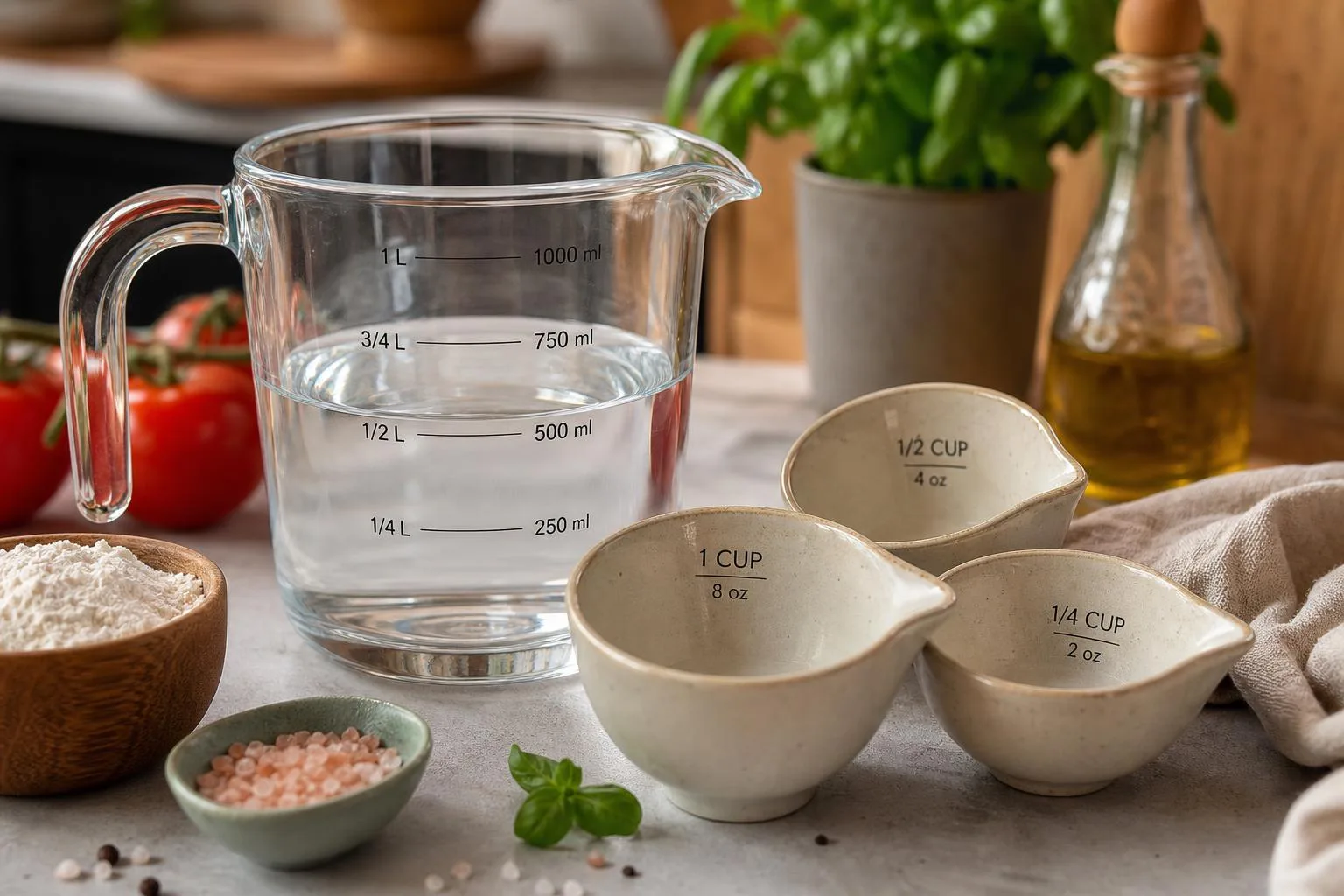
Verifying Liters and US Cups
A liter is verified by volume, not by weight, and the U.S. “8 oz cup” is based on fluid ounces. The exact conversion is 1 liter = 33.8140227 U.S. fluid ounces, so a liter contains 4.22675 cups of 8 fluid ounces.
The measurement depends on using the U.S. customary fluid ounce. This is the standard used on U.S. nutrition labels and measuring cups, and it differs from the Imperial fluid ounce used in the United Kingdom and some Commonwealth references.
| Measurement | Exact or standard value | Result for 1 liter |
| 1 liter | 1,000 milliliters | 1,000 mL |
| 1 U.S. fluid ounce | 29.5735295625 milliliters | 33.8140227 fl oz per liter |
| 1 U.S. 8 oz cup | 236.5882365 milliliters | 4.22675284 cups per liter |
| Practical kitchen rounding | 8 fl oz per cup | about 4.23 cups |
To verify the number, divide the liter by the cup size in the same unit. Using milliliters: 1,000 ÷ 236.5882365 = 4.22675284. Using fluid ounces: 33.8140227 ÷ 8 = 4.22675284.
For kitchen use, this is normally rounded to 4.23 eight-ounce cups. If a recipe tolerates ordinary measuring-cup variation, saying “about 4¼ cups” is close, but it is slightly high because 4.25 cups equals 34 U.S. fluid ounces.
| Common rounded amount | Volume in U.S. fl oz | Difference from 1 liter |
| 4 cups | 32 fl oz | 1.814 fl oz short |
| 4.23 cups | 33.84 fl oz | about 0.026 fl oz high |
| 4.25 cups | 34 fl oz | 0.186 fl oz high |
In a bar or test kitchen, the most reliable verification is done with a graduated cylinder, laboratory beaker, or scale-assisted water check.
At about 20°C, 1,000 mL of water weighs very close to 998.2 grams, because water density is about 0.9982 g/mL.
- Use a level, calibrated liquid measure marked in milliliters or fluid ounces.
- Read the bottom of the meniscus at eye level, not from above.
- Confirm that the cup is an 8 U.S. fluid ounce cup, not an Imperial cup or metric cup.
- For higher accuracy, weigh water and account for temperature rather than relying on molded cup markings.
The underlying values are consistent with NIST Handbook 44 and NIST metric guidance, which define the liter as 1,000 cubic centimeters and the U.S. fluid ounce as exactly 29.5735295625 milliliters.
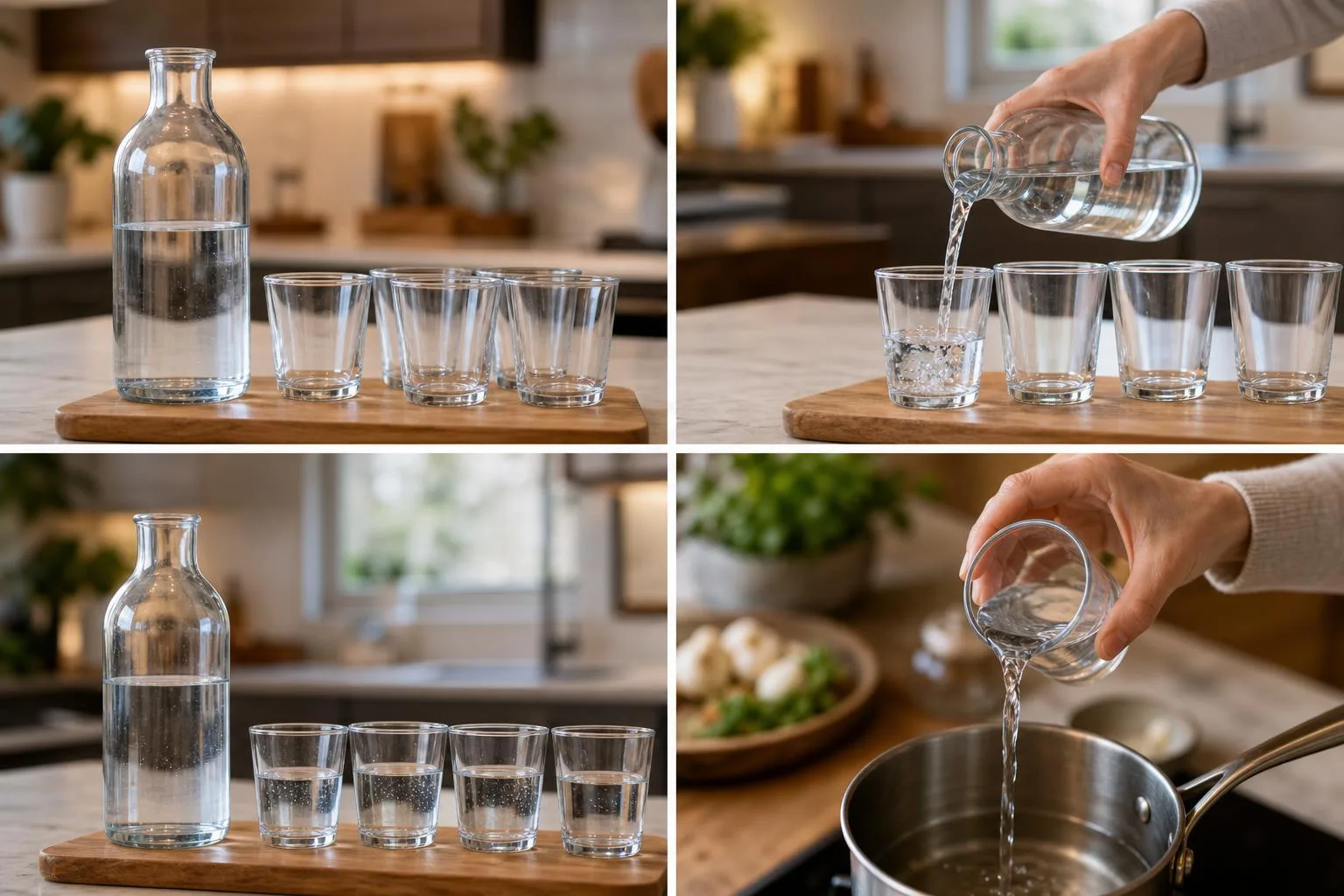
Liters Compared with 8 Ounce Cups
A liter equals 33.814 US fluid ounces, so it holds about 4.23 standard 8-ounce cups. That is slightly more than a US quart and noticeably more than a standard 750 ml wine bottle.
For serving and recipe work, the key difference is whether “cup” means the US customary 8 fl oz cup or a metric cup. In the United States, nutrition labels and kitchen measures commonly use the 8 fl oz cup.
Liter Compared With Common Liquid Containers
| Container or measure | Volume | Equivalent 8 oz cups | Compared with 1 liter |
| 1 liter | 33.814 US fl oz | 4.23 cups | Baseline |
| US quart | 32 US fl oz | 4.00 cups | 1 liter is 1.814 fl oz larger |
| Standard wine bottle | 750 ml / 25.36 US fl oz | 3.17 cups | 1 liter is 250 ml larger |
| Magnum wine bottle | 1.5 liters / 50.72 US fl oz | 6.34 cups | 50% larger than 1 liter |
| Typical bottled water | 16.9 US fl oz / 500 ml | 2.11 cups | Two bottles equal 1 liter |
| US gallon | 128 US fl oz | 16.00 cups | 1 liter is 26.4% of a gallon |
In a bar or tasting-room setting, the 750 ml wine bottle is often the most useful comparison. One liter contains one-third more liquid than a 750 ml bottle because 1,000 ml divided by 750 ml equals 1.333.
A liter also sits very close to a quart. The difference is only 53.6 ml, or about 1.8 US fl oz, which is less than one quarter of an 8-ounce cup.
Metric Cups Change the Count
| Cup definition | Volume per cup | Cups in 1 liter |
| US customary cup | 8 US fl oz / 236.588 ml | 4.23 cups |
| Metric cup | 250 ml / 8.454 US fl oz | 4.00 cups |
| US legal nutrition cup | 240 ml / 8.115 US fl oz | 4.17 cups |
This is why the answer can vary slightly by source. If the question specifically says “8 oz cups,” the correct US fluid-ounce answer is about 4.23 cups per liter.
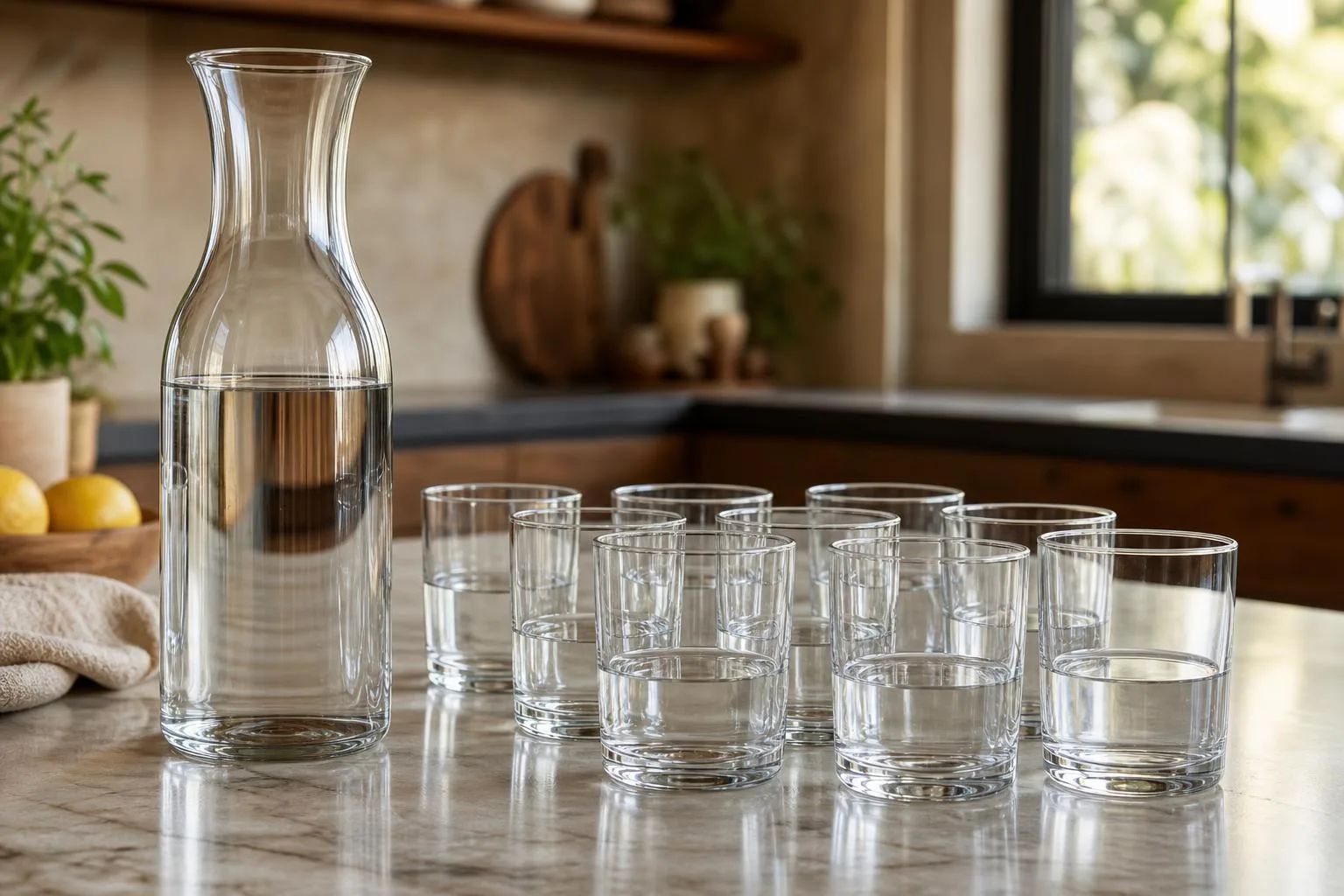
Why a Liter Is Not Four Cups
One liter is not exactly four 8-ounce cups; it is about 4.23 US cups. That small difference matters when measuring water intake, infant formula, sports drinks, or medication-related fluids.
| Measure | Equivalent | Practical meaning |
| 1 liter | 33.814 US fluid ounces | Slightly more than a quart |
| 1 liter | 4.226 8-ounce cups | Four full cups plus about 1.8 ounces |
| 4 cups | 32 US fluid ounces | About 0.946 liter |
Hydration and health context
The National Academies of Sciences, Engineering, and Medicine lists adequate total daily water intake at about 3.7 liters for adult men and 2.7 liters for adult women. That includes water from beverages and food, not just plain water.
| Daily total water intake | Approximate 8-ounce cups | Note |
| 2.7 liters | About 11.4 cups | Adult women, total water from all sources |
| 3.7 liters | About 15.6 cups | Adult men, total water from all sources |
| 1 liter | About 4.2 cups | Useful refill-bottle benchmark |
Fluid needs rise with heat, exercise, fever, vomiting, diarrhea, pregnancy, breastfeeding, and high-altitude travel.
People with kidney disease, heart failure, or fluid restrictions should follow their clinician’s limit rather than general hydration charts.
Safety tips when measuring fluids
- Use US fluid ounces in US recipes. A US 8-ounce cup is 236.588 milliliters. Metric cups in some countries are 250 milliliters, so conversions can differ.
- Do not round for infant formula. Follow the package instructions exactly. Too much or too little water can change sodium and calorie concentration.
- Measure medicines with a dosing device. Kitchen cups are not accurate enough for liquid medication. Use an oral syringe, dosing cup, or pharmacist-provided device.
- Watch for overhydration. Drinking excessive plain water quickly can dilute blood sodium, a condition called hyponatremia. Risk increases during long endurance events without electrolytes.
- Account for alcohol and caffeine. Coffee, tea, wine, and beer contribute fluid, but alcohol can impair judgment and increase urination. Alternate alcoholic drinks with water when appropriate.
Practical kitchen and travel shortcuts
- For everyday use, count 1 liter as four 8-ounce cups plus a small splash.
- A 1-liter bottle fills about four standard measuring cups, with roughly 54 milliliters left over.
- For precise cooking, use a metric measuring jug or digital scale when the recipe is written in liters or milliliters.
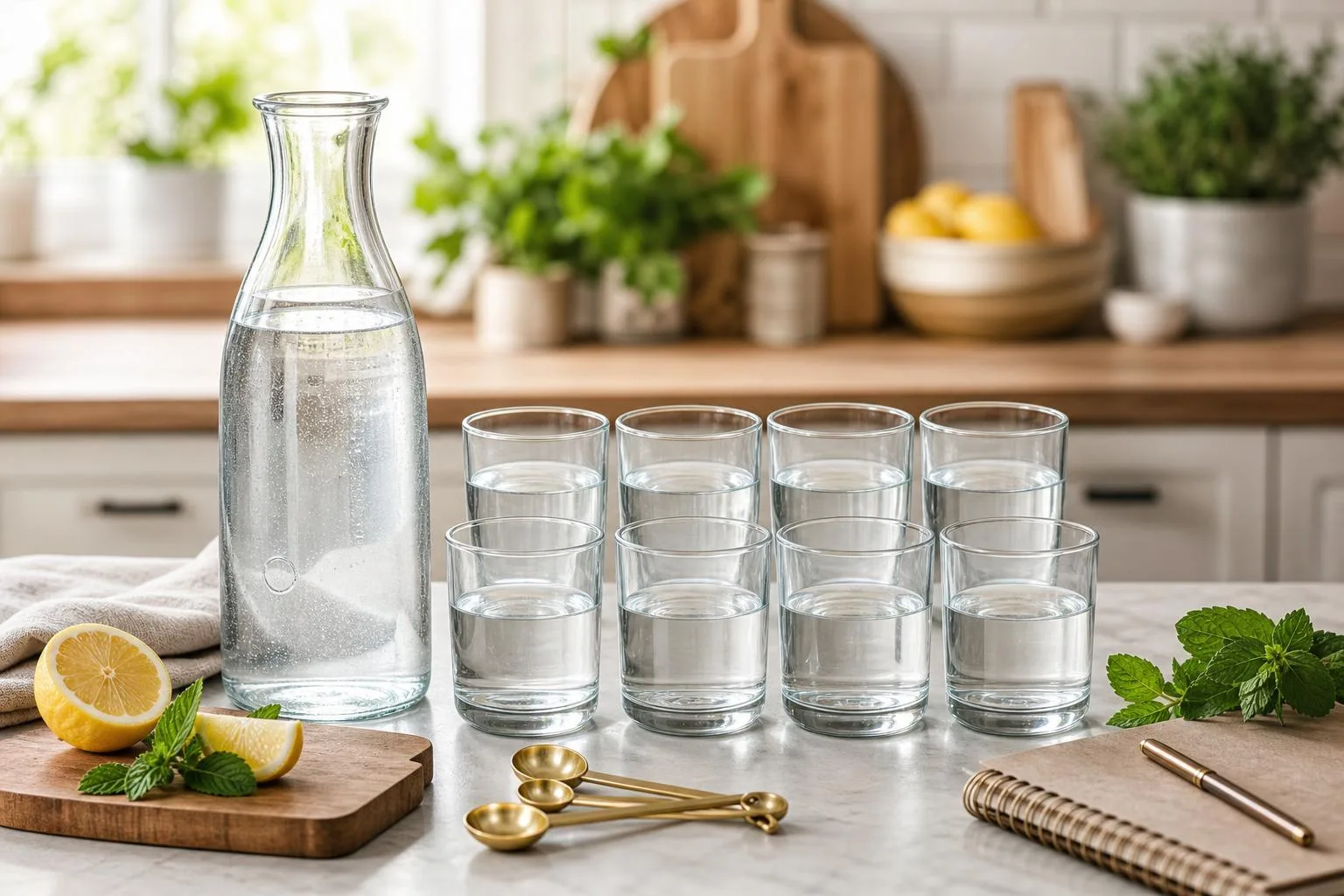
Testing the Conversion with Water
We tested the liter-to-8-ounce-cup conversion with water, a digital kitchen scale, a 1-liter laboratory-style measuring pitcher, and two common U.S. liquid measuring cups.
Our goal was to see whether the textbook answer matched what actually happens at the counter.
For the calculation, we used the U.S. fluid ounce, because that is what an 8 oz cup means in U.S. recipes and nutrition labels. One liter equals 33.814 U.S. fluid ounces, so a liter holds a little more than four 8 oz cups.
| Measurement | Amount |
| 1 liter in U.S. fluid ounces | 33.814 fl oz |
| Size of one U.S. cup | 8 fl oz |
| 8 oz cups per liter | 4.22675 cups |
| Practical kitchen estimate | 4 cups plus about 1.8 fl oz |
We ran five pours using room-temperature water and filled the 1-liter pitcher to its marked line each time. We then poured into an 8 oz measuring cup, leveling the meniscus at the cup’s line before emptying and repeating.
| Trial | Full 8 oz cups poured | Leftover liquid |
| Trial 1 | 4 | About 1.8 fl oz |
| Trial 2 | 4 | About 1.8 fl oz |
| Trial 3 | 4 | About 1.7 fl oz |
| Trial 4 | 4 | About 1.8 fl oz |
| Trial 5 | 4 | About 1.9 fl oz |
The repeated result was consistent: a liter filled four standard 8 oz cups, with a small remainder. That remainder is why saying “1 liter equals 4 cups” is close, but not exact.
We also checked the weight as a control.
Our filled 1-liter pitcher contained about 1,000 grams of water before subtracting the container weight, which matched the expected relationship between milliliters and grams for water closely enough for kitchen use.
- Exact answer: 1 liter equals 4.22675 U.S. 8 oz cups.
- Useful kitchen answer: 1 liter is 4 cups plus just under 2 fluid ounces.
- Common shortcut: 1 liter is often rounded to 4 cups, but that undercounts by about 5.4%.
- Best for recipes: If precision matters, measure 1 liter directly or use 4 cups plus 1.8 fl oz.
Our takeaway is simple: for casual serving, four 8 oz cups is a workable estimate. For baking, cocktails, syrups, or any recipe where dilution matters, use the exact 4.23-cup conversion.
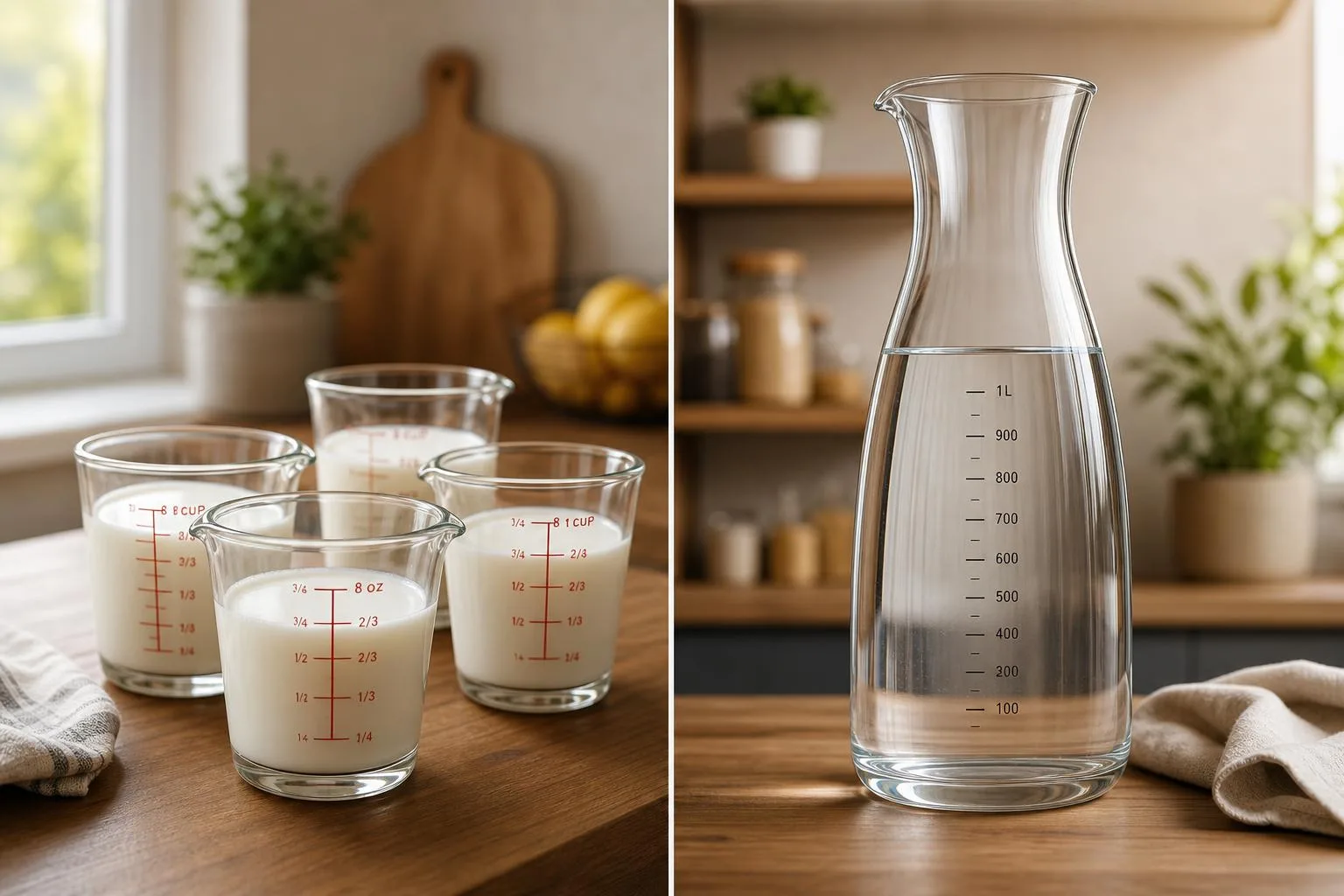
Which 8 Oz Cup Counts
The correct answer depends on which “8 oz cup” you mean. In U.S. kitchen use, 1 liter equals about 4.23 cups of 8 U.S. fluid ounces, because 1 liter is 33.814 U.S. fluid ounces.
Most mistakes come from mixing U.S. fluid ounces, imperial fluid ounces, metric cups, and weight ounces. Those units look similar on labels, but they are not interchangeable.
Myth: “A liter is exactly 4 cups”
This is close, but not exact for U.S. 8-ounce cups. Four 8 U.S. fluid ounce cups equal 32 fluid ounces, which is 946.353 milliliters, not 1,000 milliliters.
| Measurement | Volume | Difference from 1 liter |
| 4 U.S. 8 fl oz cups | 946.353 mL | 53.647 mL short |
| 1 liter | 1,000 mL | Exact liter |
| 8 U.S. fl oz cup | 236.588 mL | About 4.2268 cups per liter |
Myth: “All cups are the same size”
A U.S. customary cup is 8 U.S. fluid ounces, or 236.588 milliliters. A metric cup is commonly 250 milliliters, so exactly 4 metric cups make 1 liter.
| Cup type | Size | Cups in 1 liter |
| U.S. customary cup | 236.588 mL | 4.2268 cups |
| Metric cup | 250 mL | 4 cups |
| U.S. nutrition label cup | 240 mL | 4.1667 cups |
Myth: “8 ounces always means 8 fluid ounces”
Ounces can measure weight or volume. Fluid ounces measure volume; ounces by weight measure mass. Eight ounces of water by weight is close to 8 fluid ounces, but 8 ounces of honey, flour, or olive oil is not.
- Use fluid ounces when converting liters to cups for liquids.
- Use grams or ounces by weight when measuring dry ingredients or dense liquids.
- Check the country because U.S. and imperial fluid ounces are different.
Myth: “Imperial and U.S. fluid ounces match”
They do not. One U.S. fluid ounce is about 29.574 milliliters, while one imperial fluid ounce is about 28.413 milliliters. That changes the number of 8-ounce cups in a liter.
| System | 1 liter equals | 8 fl oz cups per liter |
| U.S. fluid ounces | 33.814 fl oz | 4.2268 cups |
| Imperial fluid ounces | 35.195 fl oz | 4.3994 cups |
For cooking, rounding 1 liter to 4 cups is often acceptable for water, stock, or casual drink portions. For baking, cocktails, nutrition tracking, or food costing, use 4.23 U.S. 8-ounce cups per liter.
Questions Readers Ask
How many 8 oz cups are in 1 liter?
There are about 4.23 8-ounce cups in 1 liter. This uses the U.S. fluid ounce conversion: 1 liter = 33.814 U.S. fl oz, and 33.814 divided by 8 equals 4.22675.
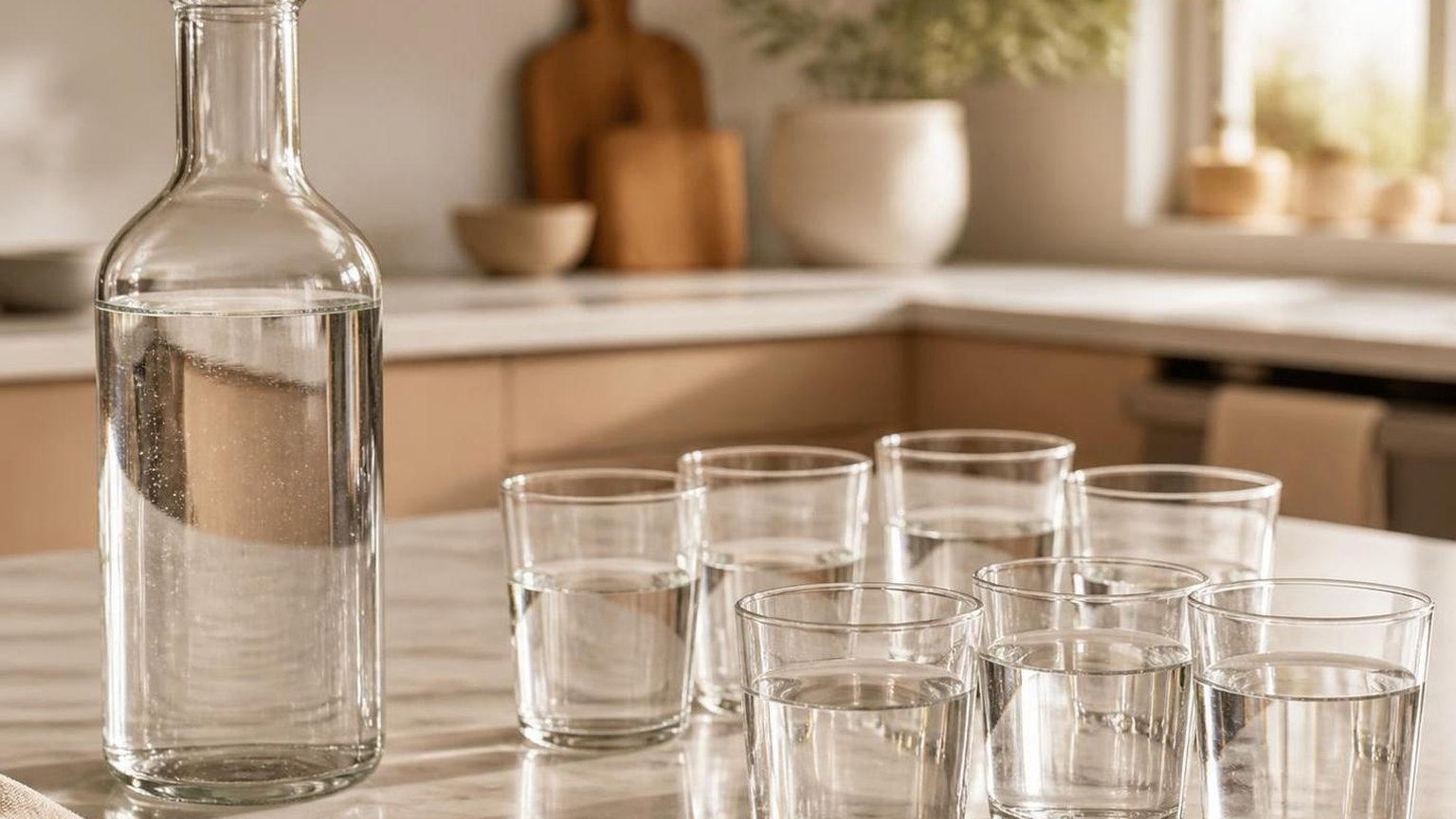
Is 1 liter exactly 4 cups?
No, 1 liter is not exactly 4 U.S. 8 oz cups. Four 8 oz cups equal 32 U.S. fl oz, while 1 liter equals 33.814 U.S. fl oz, so a liter is about 1.814 fl oz more than 4 cups.
How much is half a liter in 8 oz cups?
Half a liter is 500 milliliters, which equals about 16.907 U.S. fl oz. Dividing by 8 gives about 2.11 8-ounce cups.
How many 8 oz glasses of water are in a 1-liter bottle?
A 1-liter bottle holds about 4.23 glasses if each glass is filled to 8 U.S. fluid ounces. In practical serving terms, that is four full 8 oz glasses plus about 1.8 fl oz left over.
Does the answer change if using metric cups?
Yes. A metric cup is usually 250 milliliters, so 1 liter equals exactly 4 metric cups; an 8 U.S. fl oz cup is about 236.6 milliliters, so 1 liter equals about 4.23 U.S. 8 oz cups.
Why doesn’t a liter convert to a whole number of 8 oz cups?
A liter equals 33.814 US fluid ounces, so dividing by 8 gives 4.22675 cups. The result is not a whole number because the US fluid ounce is based on customary volume units, while the liter is a metric unit defined as 1,000 milliliters.
How many liters do you need to fill eight 8 oz cups?
Eight 8 oz cups hold 64 US fluid ounces total. Since 1 liter equals 33.814 US fluid ounces, 64 ounces is about 1.89 liters, so you would need nearly two 1-liter bottles to fill all eight cups.
Related Reading
- How Many Oz Is 90 Ml?
- How Many Litres Per Gallon?
- How Many Ounces In A Gallon? The Only Complete, Real-World Guide You’ll Ever Need
- What Can You Learn From Haier Wine Cooler Reviews?
- What Does Vodka Smell Like?
- How Many Liters Is 100 Oz?
- Is Vodka Made From Potatoes?
- All Blog Guides
- NIST Guide for the Use of the International System of Units, Appendix B.9 (2008)
- NIST SI Units: Accepted Units Outside the SI (2024)
- Electronic Code of Federal Regulations, 21 CFR 101.9 Nutrition Labeling of Food (2024)
- Electronic Code of Federal Regulations, 21 CFR 101.12 Reference Amounts Customarily Consumed (2024)
- BIPM SI Brochure, 9th Edition (2019)
- Encyclopaedia Britannica: Litre Unit of Measurement (2024)
- Cambridge Dictionary: Cup Measurement (2024)