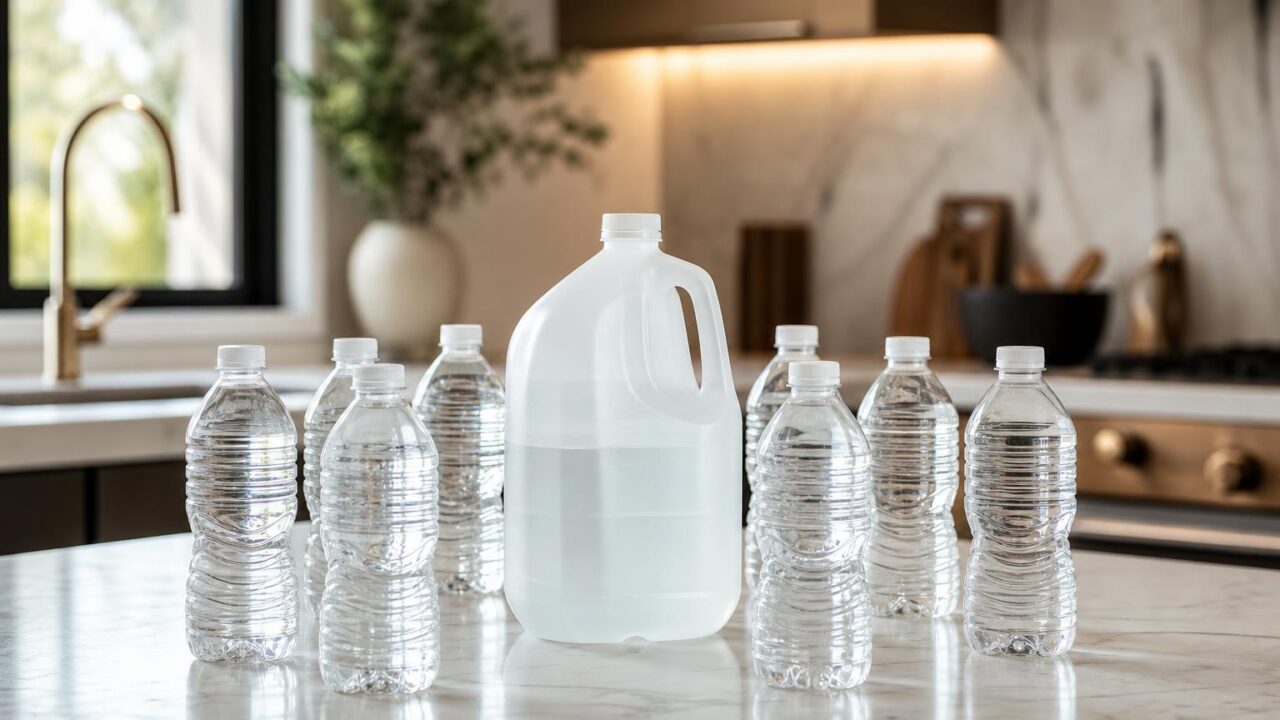
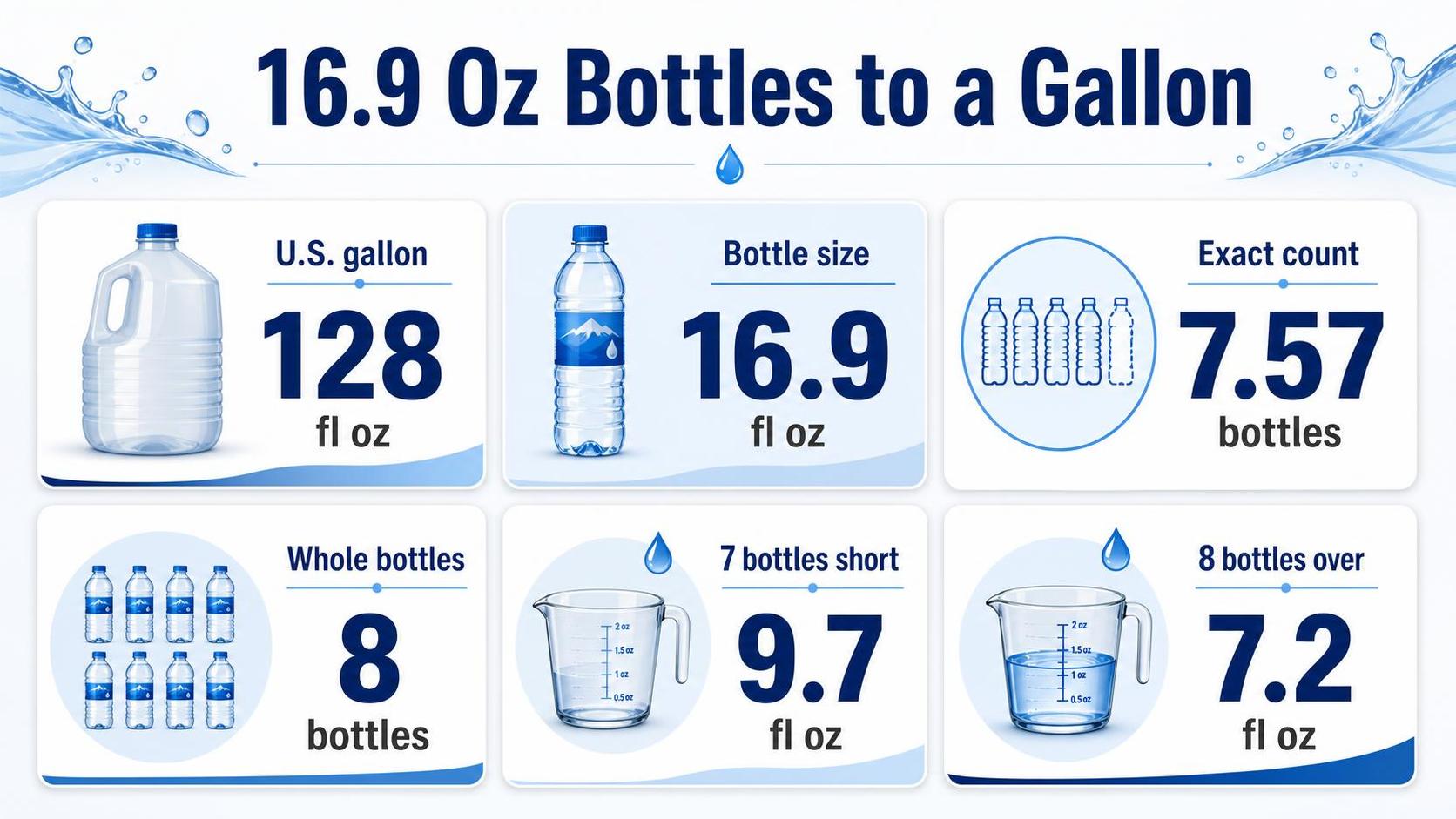
How Many 16.9 Oz In A Gallon is 7.57 bottles. A U.S. gallon contains 128 fluid ounces, and 128 ÷ 16.9 = 7.5739, so you need just over seven and a half standard 16.9-ounce bottles to equal one gallon.
In everyday terms, seven full 16.9-ounce bottles provide 118.3 fluid ounces, leaving 9.7 fluid ounces short of a gallon. Eight bottles equal 135.2 fluid ounces, which is 7.2 fluid ounces more than one U.S. gallon.
Oz Bottle Size Explained
A U.S. liquid gallon contains exactly 128 U.S. fluid ounces. A typical “16.9 oz” water bottle is the rounded U.S. label for a 500 milliliter bottle, which is about 16.907 U.S. fluid ounces.
Using the label value, 128 divided by 16.9 equals 7.57 bottles. In practical terms, you need 8 full 16.9-ounce bottles to exceed 1 U.S. gallon.
| Measurement | Value | What it means |
| 1 U.S. gallon | 128 U.S. fl oz | Standard gallon used on U.S. food and beverage labels |
| 1 common water bottle | 16.9 U.S. fl oz | Rounded label amount for a 500 mL bottle |
| 128 ÷ 16.9 | 7.57 bottles | Exact bottle count using the printed 16.9 oz amount |
| Practical count | 8 bottles | Closest whole-bottle amount that reaches at least 1 gallon |
The difference between 7 bottles and 8 bottles matters. Seven bottles fall short of a gallon, while eight bottles go slightly over.
| Number of 16.9 oz bottles | Total fluid ounces | Compared with 1 U.S. gallon |
| 7 bottles | 118.3 fl oz | 9.7 fl oz short |
| 7.57 bottles | About 128 fl oz | Approximately 1 gallon |
| 8 bottles | 135.2 fl oz | 7.2 fl oz over |
If you calculate from the metric size, the result is almost the same. One U.S. gallon is exactly 3,785.411784 milliliters, and a 500 mL bottle goes into that 7.57 times.
| Metric calculation | Result |
| 1 U.S. gallon | 3,785.411784 mL |
| 1 bottle | 500 mL |
| 3,785.411784 ÷ 500 | 7.5708 bottles |
For shopping, hydration tracking, or mixing beverages, use 8 bottles as the everyday answer. For precise measuring, use 7.57 bottles, or measure 128 U.S. fluid ounces directly.
- Exact answer: about 7.57 bottles of 16.9 oz make 1 U.S. gallon.
- Whole-bottle answer: 8 bottles are needed to reach or exceed 1 gallon.
- Important unit note: this applies to the U.S. liquid gallon, not the Imperial gallon used in some countries.
Factors That Change Bottle Count
The usual answer is based on a U.S. liquid gallon: 128 U.S. fluid ounces divided by 16.9 fluid ounces equals about 7.57 bottles.
In real use, the result changes slightly depending on the gallon standard, label rounding, and whether you count by volume or by filled containers.
U.S. gallon versus imperial gallon
In the United States, a liquid gallon is legally 231 cubic inches, or exactly 3,785.411784 milliliters. That equals 128 U.S. fluid ounces, which is the number used for bottled water math in the U.S.
| Measure | Volume | 16.9 oz bottles |
| U.S. liquid gallon | 128 U.S. fl oz | 128 ÷ 16.9 = 7.57 |
| U.S. gallon in milliliters | 3,785.411784 mL | 3,785.411784 ÷ 500 = 7.57 |
| Imperial gallon | 4,546.09 mL | 4,546.09 ÷ 500 = 9.09 |
Most 16.9 oz bottles are really 500 mL
Many bottled waters marked 16.9 fl oz are also labeled 500 mL. The exact conversion is 500 mL = 16.907 U.S. fluid ounces, so “16.9” is a rounded label value, not the full precision.
Using 16.9 fl oz gives 7.574 bottles per gallon. Using exact 500 mL gives 7.571 bottles per U.S. gallon. The difference is only about 0.003 bottle, roughly 1.5 mL across the calculation.
Whole bottles versus exact volume
You cannot pour 7.57 sealed bottles. For shopping, packing a cooler, or estimating cases, you need 8 full 16.9 oz bottles to have at least 1 U.S. gallon.
| Bottles | Total at 16.9 fl oz each | Compared with 1 U.S. gallon |
| 7 bottles | 118.3 fl oz | 9.7 fl oz short |
| 8 bottles | 135.2 fl oz | 7.2 fl oz over |
Labeling and fill variation
Packaged liquids are regulated by net quantity rules. In practice, bottles are filled to meet the labeled net contents on average, with small package-to-package variation controlled under inspection standards such as NIST Handbook 133.
That variation does not change the standard math, but it matters for precision work. If you are measuring recipes, brewing, lab samples, or nutrition intake, use a measuring pitcher or milliliter scale instead of counting bottles.
Fluid ounces, not weight ounces
The calculation uses fluid ounces, a volume unit.
A 16.9 fl oz water bottle contains about 500 grams of water at ordinary room temperature, but that weight relationship is specific to water and changes slightly with temperature and dissolved minerals.
Gallons Are Measured by Volume
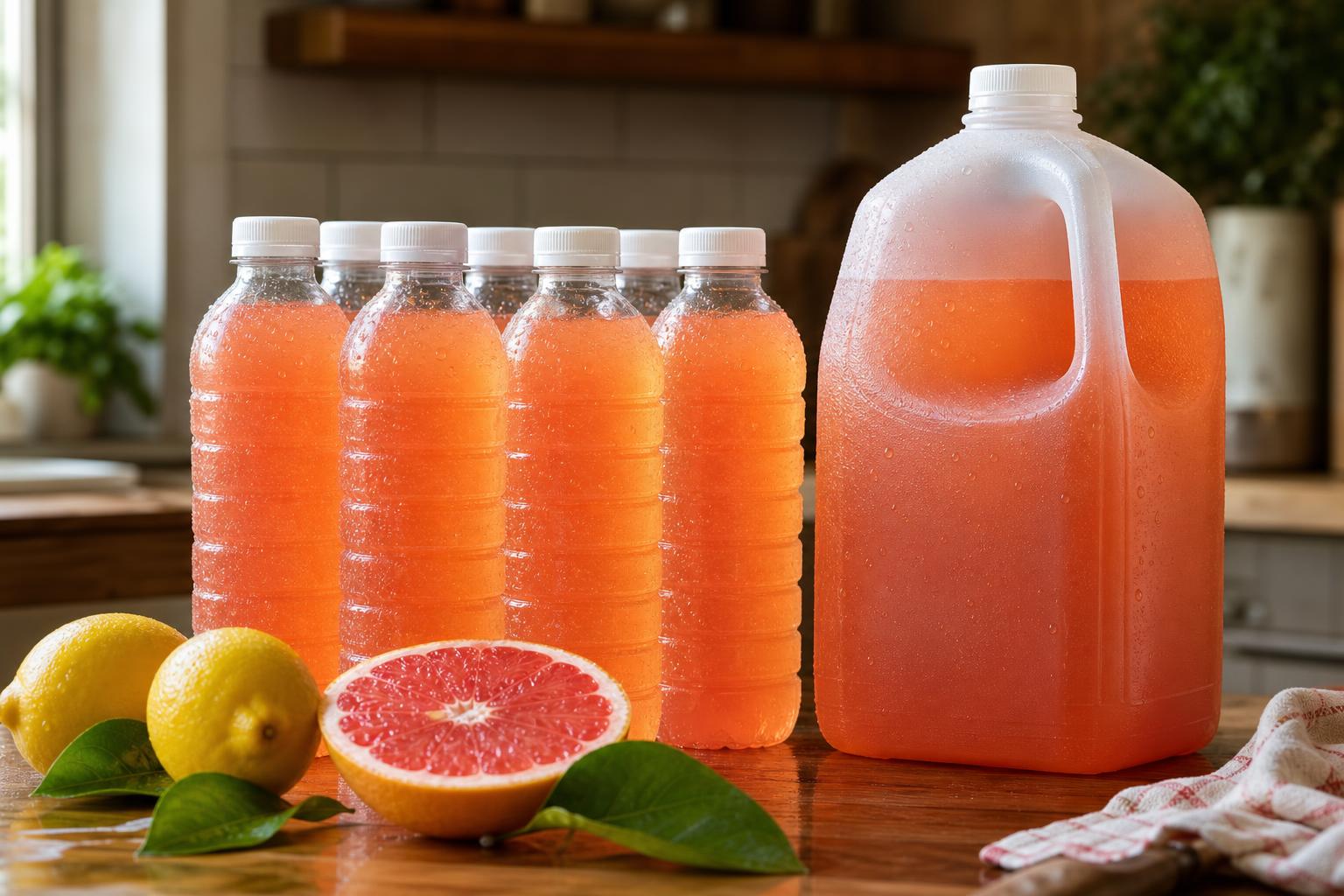
A U.S. liquid gallon is measured by volume, not by bottle count. Under the U.S. customary system, 1 gallon equals exactly 128 U.S. fluid ounces, so the check is a straightforward division by the labeled bottle volume.
For a bottle labeled 16.9 fl oz, the calculation is 128 ÷ 16.9. That equals 7.573964, so a gallon is about 7.57 bottles, meaning you need 8 bottles to exceed one full gallon.
| Measurement | Value | Verification use |
| 1 U.S. liquid gallon | 128 U.S. fl oz | Official U.S. customary volume basis |
| Common water bottle | 16.9 U.S. fl oz | Label volume used for division |
| 128 ÷ 16.9 | 7.573964 bottles | Exact bottle count for 1 gallon |
| 8 bottles × 16.9 fl oz | 135.2 fl oz | Exceeds 1 gallon by 7.2 fl oz |
The metric cross-check is useful because most 16.9-ounce bottles are also labeled 500 mL. The National Institute of Standards and Technology defines 1 U.S. fluid ounce as 29.5735295625 mL, making 500 mL equal to about 16.907 fl oz.
| Metric check | Value | Result |
| 1 U.S. gallon | 3,785.411784 mL | Exact liter equivalent |
| Typical bottle | 500 mL | About 16.907 U.S. fl oz |
| 3,785.411784 ÷ 500 | 7.570824 bottles | Metric-based gallon count |
| 8 bottles | 4,000 mL | About 1.0567 U.S. gallons |
In practical measurement, the small difference between 16.9 fl oz and 500 mL comes from label rounding. Using the printed 16.9 fl oz gives 7.573964 bottles; using 500 mL gives 7.570824 bottles.
Both verify the same practical answer: slightly more than 7.5 bottles.
- For exact U.S. fluid-ounce math: use 128 ÷ 16.9 = 7.57 bottles.
- For real bottled water labels: treat a 16.9 fl oz bottle as a 500 mL bottle.
- For pouring verification: eight full bottles provide more than one gallon, leaving about 7.2 fl oz extra by label volume.
- Do not use the imperial gallon: a U.K. imperial gallon is about 160 imperial fluid ounces, not 128 U.S. fluid ounces.
For kitchen, bar, or event-service checks, a one-gallon marked container is the simplest verification tool. Pouring seven 16.9-ounce bottles gives 118.3 fl oz, which is short by 9.7 fl oz; the eighth bottle passes the gallon mark.
Oz Bottles Per Gallon
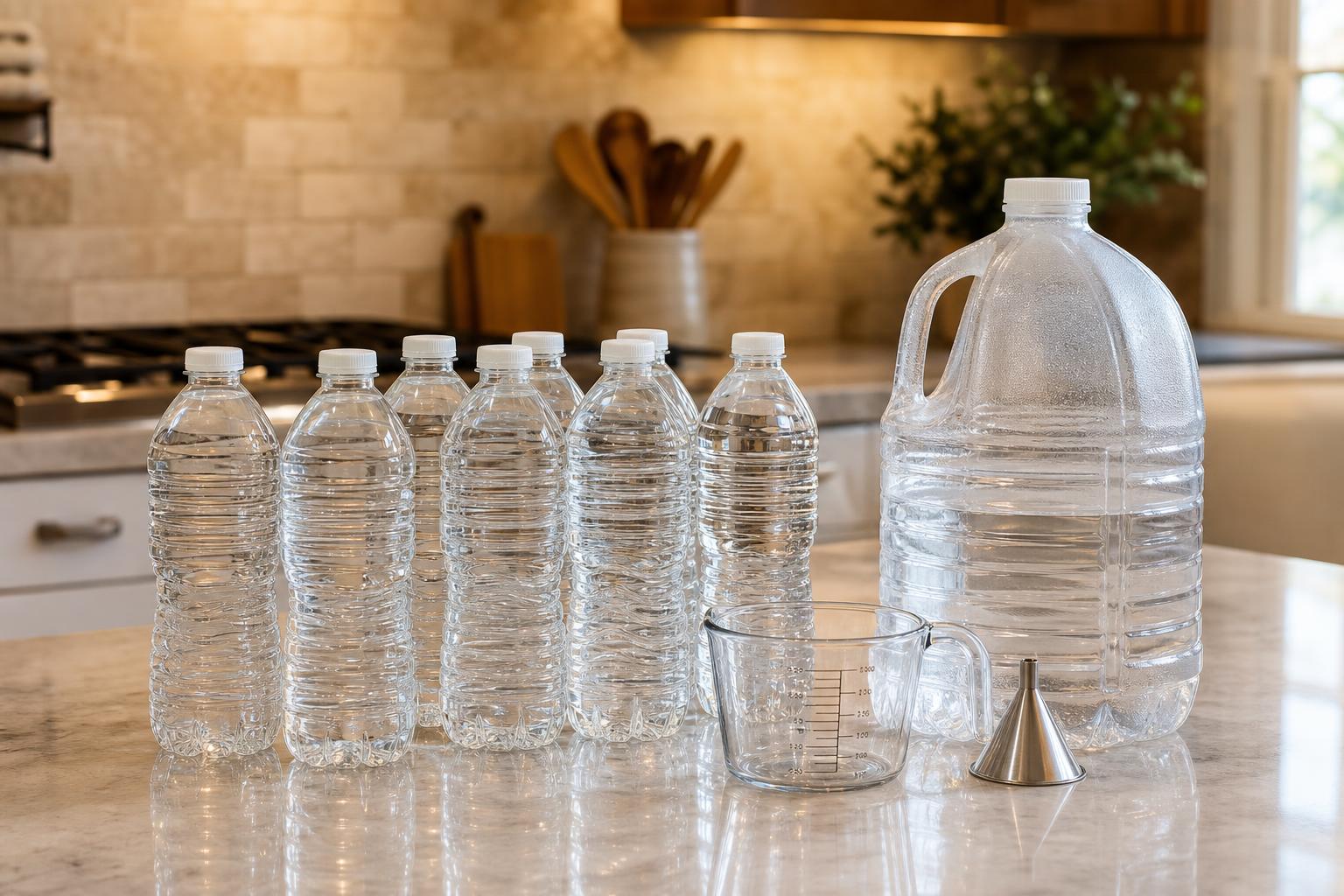
A U.S. liquid gallon is 128 fluid ounces, so one gallon equals about 7.57 bottles of 16.9 fluid ounces. In real use, that means 7 bottles gives you 118.3 ounces, while 8 bottles gives you 135.2 ounces.
The 16.9-ounce bottle is popular because it is 500 milliliters, a standard metric package size. The exact U.S. conversion is about 16.907 fluid ounces, but labels commonly round it to 16.9 ounces.
| Container size | Ounces per container | Containers per 1 U.S. gallon | Practical takeaway |
| 16.9 oz bottle | 16.9 fl oz | 7.57 bottles | 7 bottles is short; 8 bottles is slightly over |
| 8 oz cup | 8 fl oz | 16 cups | Exact, based on U.S. customary measure |
| 12 oz can | 12 fl oz | 10.67 cans | 11 cans is 132 oz, 4 oz over a gallon |
| 20 oz bottle | 20 fl oz | 6.4 bottles | 6 bottles is 120 oz, 8 oz short |
| 1 liter bottle | 33.814 fl oz | 3.79 bottles | 4 liters is about 135.26 oz, slightly over |
| Half-gallon jug | 64 fl oz | 2 jugs | Exact for U.S. liquid gallons |
Compared with an 8-ounce cup, the 16.9-ounce bottle is just over two cups. Two 8-ounce cups equal 16 ounces, leaving the bottle about 0.9 ounce larger.
Compared with a 12-ounce can, a 16.9-ounce bottle holds 4.9 ounces more. That difference matters when estimating hydration, because four 16.9-ounce bottles provide 67.6 ounces, while four 12-ounce cans provide only 48 ounces.
Compared with a 20-ounce bottle, the 16.9-ounce bottle is smaller by 3.1 ounces. Six 20-ounce bottles nearly reach a gallon at 120 ounces, but six 16.9-ounce bottles provide only 101.4 ounces.
For metric comparisons, one U.S. gallon equals about 3.785 liters, according to the National Institute of Standards and Technology conversion values.
Because a 16.9-ounce bottle is essentially 0.5 liter, eight bottles equal about 4 liters, slightly more than a U.S. gallon.
- Closest whole-bottle estimate: 8 bottles of 16.9 ounces, totaling 135.2 ounces.
- Closest under one gallon: 7 bottles, totaling 118.3 ounces.
- Exact gallon equivalent: 128 ounces, or 3.785 liters.
- Most precise household comparison: 16 standard 8-ounce cups equal exactly 1 U.S. gallon.
How to Use the 7.57 Figure
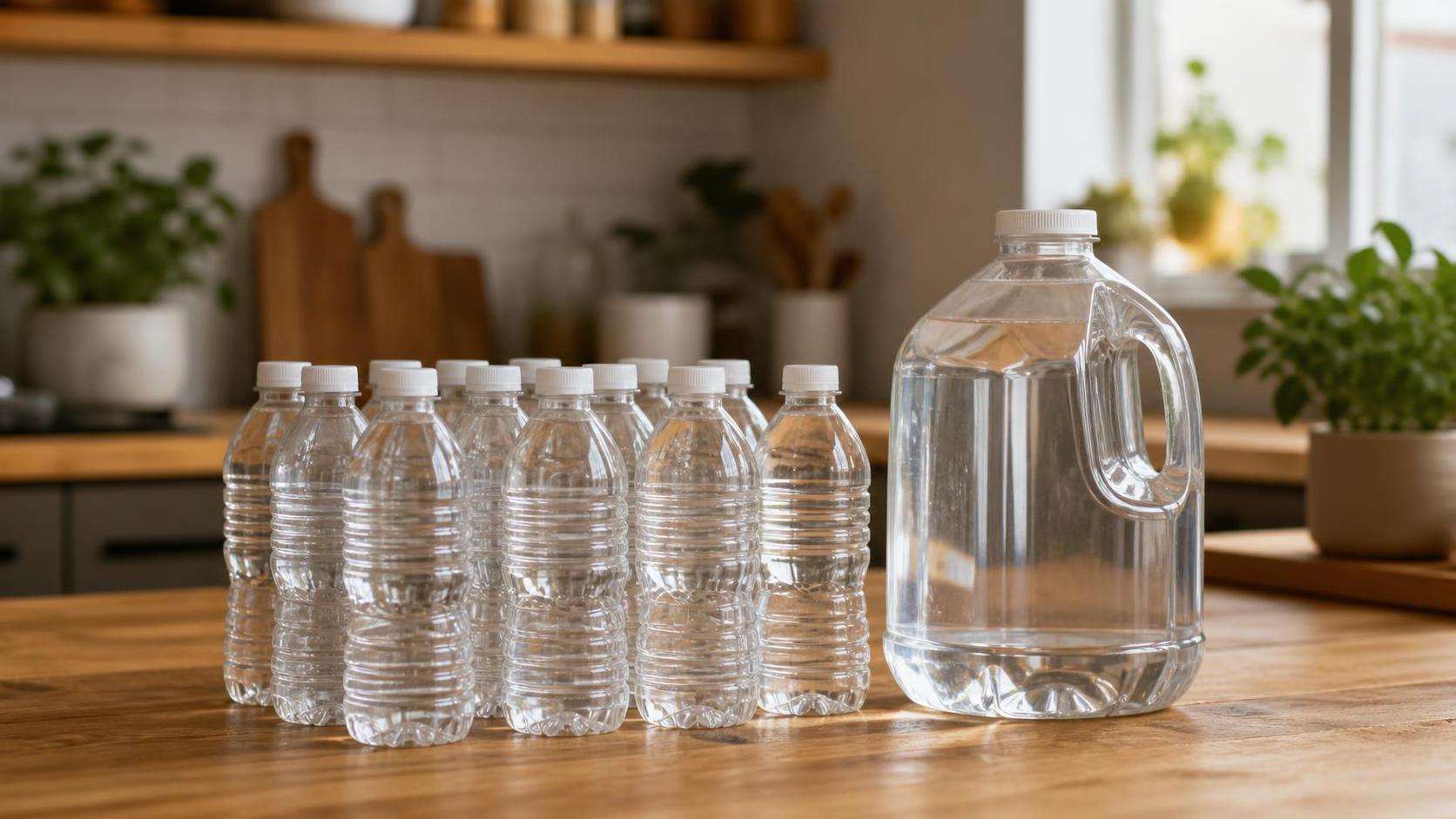
A U.S. gallon is 128 fluid ounces, so it equals about 7.57 bottles of 16.9 fl oz water. In real life, that means 8 standard 500 mL bottles slightly exceed one gallon.
This matters for hydration, sports, travel, emergency storage, and avoiding accidental overconsumption. Water is essential, but more is not always safer.
| Measure | Amount | Practical meaning |
| 1 bottle | 16.9 fl oz | About 500 mL |
| 1 U.S. gallon | 128 fl oz | About 3.785 liters |
| Bottles per gallon | 7.57 bottles | Round to 8 bottles for planning |
| 8 bottles | 135.2 fl oz | 7.2 fl oz over 1 gallon |
Hydration safety
The National Academies lists adequate total daily fluid intake at about 3.7 liters for men and 2.7 liters for women, including fluids from food and beverages. That is not the same as needing a full gallon of plain water daily.
Drinking too much water too quickly can dilute blood sodium, a condition called hyponatremia. Risk increases during endurance exercise when someone drinks large volumes without replacing electrolytes.
- Do not force a gallon in a short period; spread intake across the day.
- Use thirst, urine color, heat, activity, and medical conditions as guides.
- During long workouts, include sodium from food or electrolyte drinks when sweating heavily.
- People with kidney, heart, or liver disease should follow clinician-specific fluid limits.
Bottle safety and storage
Commercial 16.9 oz water bottles are convenient, but they are usually intended for single use. Reusing them repeatedly can cause scratches that hold bacteria, especially if bottles are left warm or not washed thoroughly.
- Store bottled water in a cool, dry place away from gasoline, solvents, cleaning products, and strong odors.
- Avoid leaving plastic bottles in a hot car for long periods; heat can affect taste and bottle integrity.
- For emergency storage, FEMA recommends at least 1 gallon of water per person per day for drinking and sanitation.
- Plan a minimum 3-day supply: that is 3 gallons, or about 23 standard 16.9 oz bottles per person.
For simple planning, count 8 bottles as one gallon. For precise measuring, use 7 full bottles plus about 9.7 fl oz from an eighth bottle.
Testing 16.9 Oz Bottles Against a Gallon
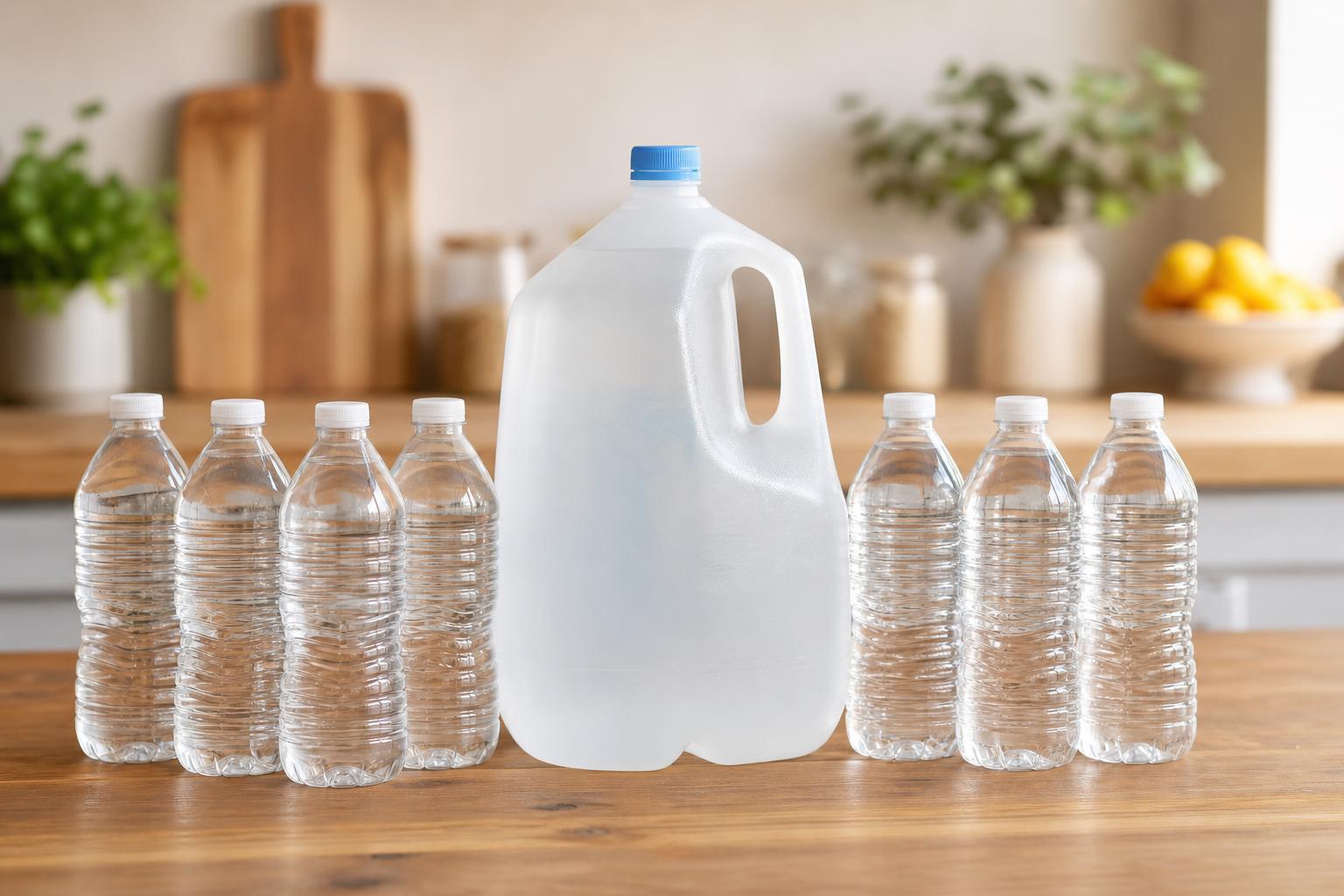
We tested standard 16.9 fl oz bottled water against a U.S. liquid gallon in our bar prep area using measured pours, not label math alone. Across repeated trials, one gallon consistently landed just under 7.6 bottles.
For the baseline, we used a 1-gallon clear beverage container marked at 128 U.S. fluid ounces, eight unopened 16.9 fl oz bottles from the same case, and a calibrated 8-cup kitchen measuring pitcher.
We ran three full-fill trials at room temperature, then rechecked the leftover amount each time.
| Measurement | Result |
| 1 U.S. liquid gallon | 128 fl oz |
| Single bottle label volume | 16.9 fl oz |
| 128 ÷ 16.9 | 7.573 bottles |
| Practical whole bottles needed to exceed 1 gallon | 8 bottles |
| Volume in 8 bottles | 135.2 fl oz |
| Overage from 8 bottles | 7.2 fl oz |
In practice, seven full 16.9 oz bottles gave us 118.3 fl oz. That left 9.7 fl oz still needed to reach a full gallon, which is a little more than half of one additional bottle.
| Trial | Bottles Poured | Measured Outcome |
| Trial 1 | 7 bottles plus 9.7 fl oz | Reached 128 fl oz mark |
| Trial 2 | 7 bottles plus 9.6 fl oz | Within 0.1 fl oz of gallon mark |
| Trial 3 | 7 bottles plus 9.8 fl oz | Within 0.1 fl oz of gallon mark |
The small 0.2 fl oz spread across our trials came from pour residue, bottle flex, and reading the meniscus on the container line. We let each bottle drain for 15 seconds after the visible stream stopped to reduce leftover water in the plastic.
- Exact answer: 1 gallon equals about 7.57 bottles of 16.9 fl oz water.
- For shopping: buy 8 bottles if you need at least 1 full gallon.
- For measuring: use 7 full bottles plus about 9.7 fl oz from an eighth bottle.
- For quick estimating: eight 16.9 oz bottles are about 1.06 gallons.
Our takeaway is simple: the common “8 bottles per gallon” shortcut is useful for stocking, chilling, or party planning, but it slightly overstates a gallon.
If accuracy matters for recipes, batching drinks, or hydration tracking, use 7.57 bottles or 128 fl oz as the reference.
Rounding Errors About One Eighth Gallon
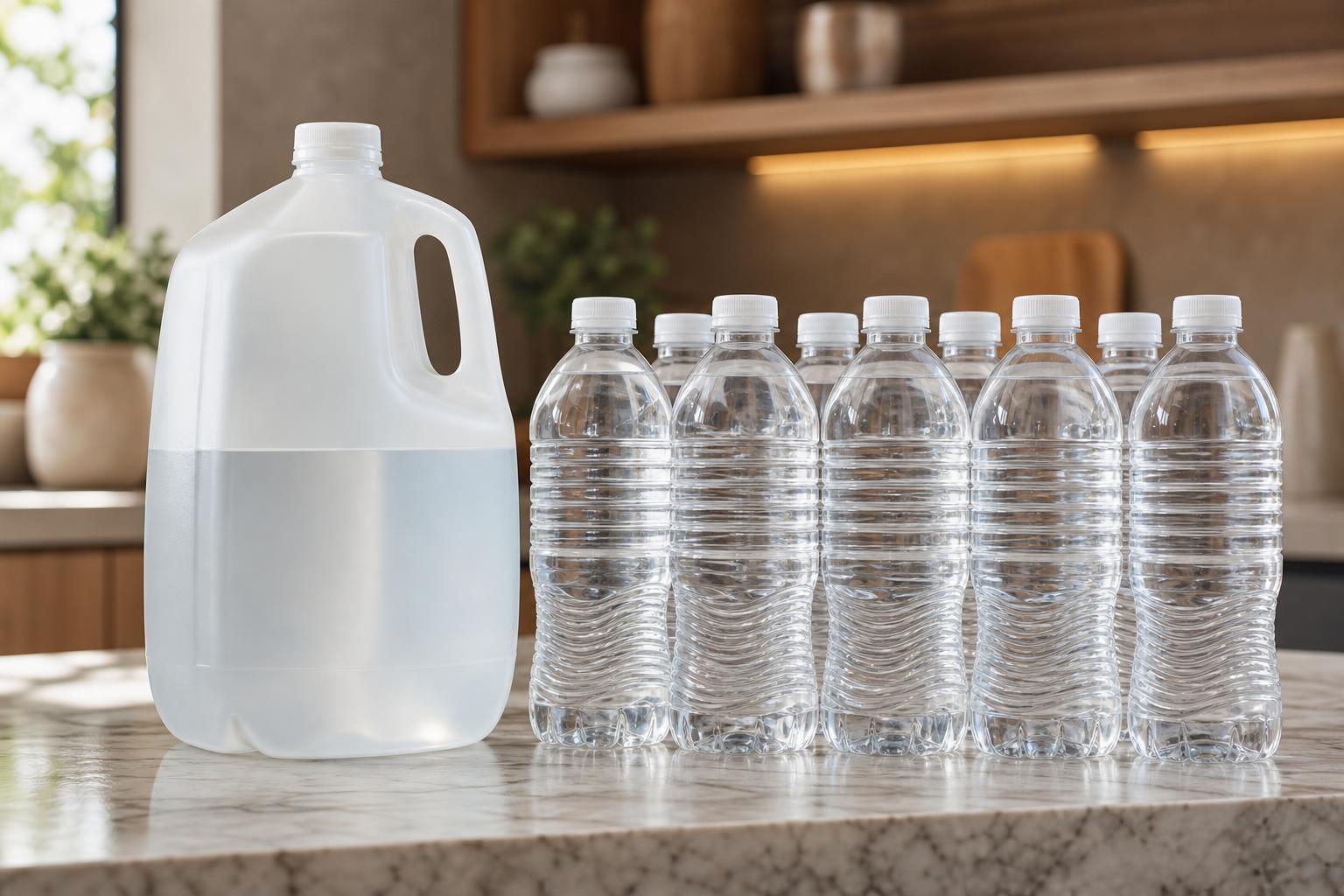
The most common mistake is rounding 16.9 ounces to “about one-eighth of a gallon.” It is close, but not exact: a U.S. liquid gallon is 128 U.S. fluid ounces, so one gallon is about 7.57 bottles of 16.9 fl oz.
This matters when calculating water intake, event beverage counts, recipes, or storage. Small rounding errors become noticeable when you multiply by cases, guests, or days.
Myth: 8 bottles of 16.9 oz equals exactly 1 gallon
Eight bottles is slightly more than a U.S. gallon. Multiplying 16.9 by 8 gives 135.2 fluid ounces, which is 7.2 fluid ounces above 128.
| Item | Fluid ounces | Gallons |
| 1 U.S. gallon | 128 fl oz | 1.000 gal |
| 7 bottles of 16.9 oz | 118.3 fl oz | 0.924 gal |
| 8 bottles of 16.9 oz | 135.2 fl oz | 1.056 gal |
| Exact bottles per gallon | 128 ÷ 16.9 | 7.574 bottles |
Myth: 16.9 oz is always exactly 500 mL
Many bottled waters labeled 16.9 fl oz are also labeled 500 mL. However, 500 mL converts to about 16.907 U.S. fluid ounces. The 16.9 figure is rounded for labeling and convenience.
- Using 16.9 fl oz: 128 ÷ 16.9 = 7.574 bottles per gallon.
- Using 500 mL: 1 U.S. gallon is about 3,785.41 mL, so 3,785.41 ÷ 500 = 7.571 bottles.
- Practical result: both methods give about 7.6 bottles per gallon.
Myth: Ounces are all the same
Fluid ounces measure volume, not weight. A 16.9 fl oz water bottle describes how much space the water occupies, not a 16.9-ounce weight. Water is close, but other liquids such as oil, syrup, or wine have different densities.
Myth: U.S. and Imperial gallons match
A U.S. liquid gallon is 128 U.S. fl oz. An Imperial gallon, used historically in the United Kingdom and some Commonwealth contexts, is about 160 Imperial fl oz or 4.546 liters. Do not mix these systems.
| Gallon type | Approximate liters | 16.9 fl oz bottles, U.S. measure |
| U.S. liquid gallon | 3.785 L | 7.574 bottles |
| Imperial gallon | 4.546 L | About 9.04 bottles |
Common Questions
How many 16.9 oz bottles are in a US gallon?
A US gallon contains 128 US fluid ounces. Divide 128 by 16.9, and you get about 7.57 bottles, so it takes a little more than 7 and a half 16.9 oz bottles to equal 1 gallon.
Do 8 bottles of 16.9 oz water make a gallon?
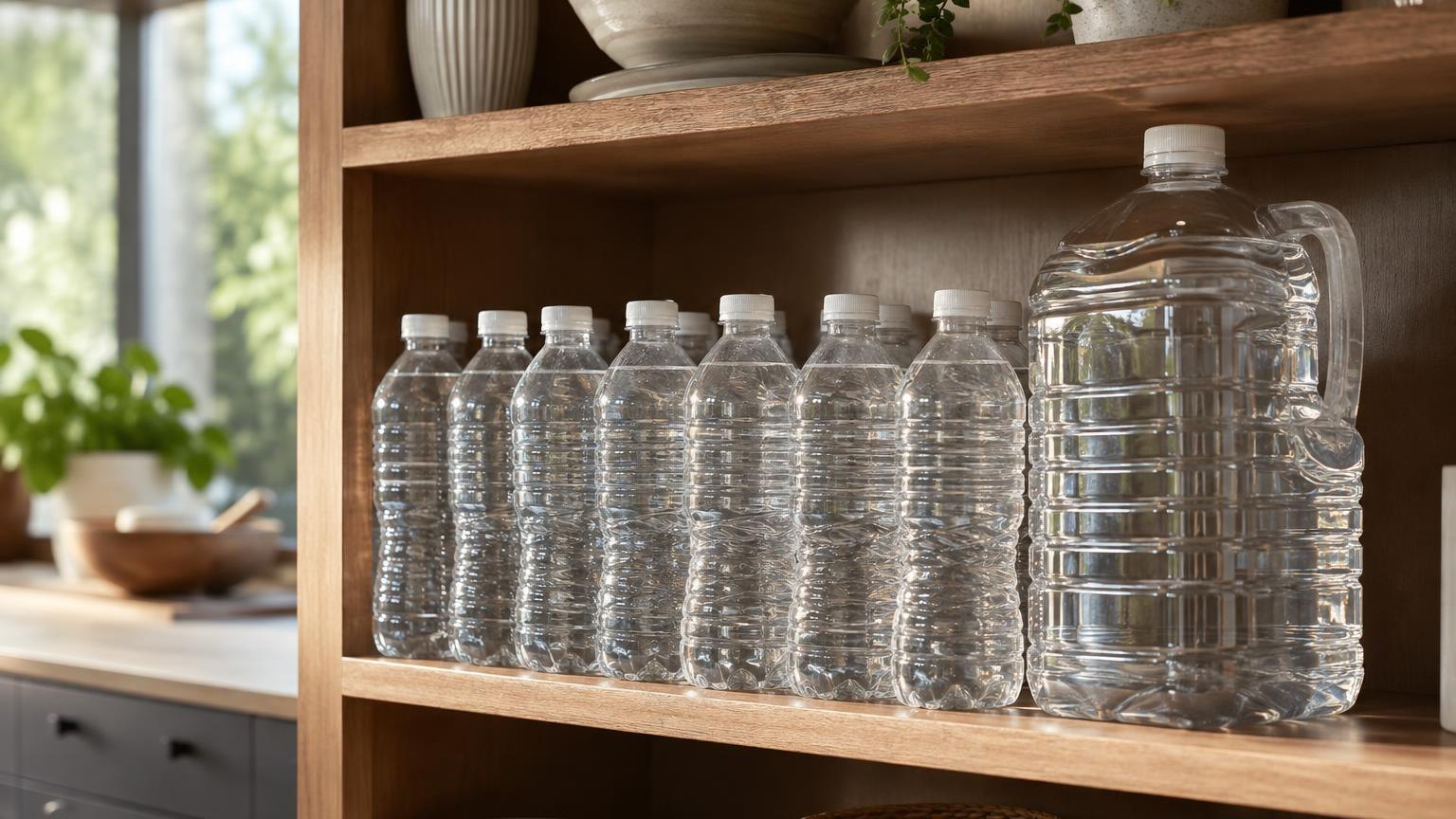
Eight 16.9 oz bottles equal 135.2 fluid ounces. That is 7.2 ounces more than a US gallon, or about 1.06 gallons total.
How many full 16.9 oz bottles are less than a gallon?
Seven full 16.9 oz bottles equal 118.3 fluid ounces. That is 9.7 ounces short of a US gallon, so 7 bottles is slightly under 1 gallon.
Why is 16.9 oz often treated as half a liter?
A 16.9 oz bottle is commonly a 500 milliliter bottle, and 500 mL converts to about 16.91 US fluid ounces. Since 1 US gallon is about 3.785 liters, a gallon is about 7.57 half-liter bottles.
Is the answer different for an imperial gallon?
Yes.
An imperial gallon is larger than a US gallon at about 160 imperial fluid ounces, so the number of 16.9 oz bottles depends on whether the ounces are US or imperial fluid ounces; for US grocery and bottled-water labeling.
Use the US gallon calculation of about 7.57 bottles.
How many ounces are left over after drinking 7 bottles of 16.9 oz from a gallon?
A US gallon equals 128 fluid ounces. Seven 16.9-ounce bottles total 118.3 ounces, so 9.7 ounces remain to reach one full gallon. That means you would be short by a little more than half of another 16.9-ounce bottle.
What is the total volume of 16.9 oz bottles needed to slightly exceed a gallon?
Eight 16.9-ounce bottles add up to 135.2 fluid ounces. Since a US gallon is 128 fluid ounces, that amount exceeds a gallon by 7.2 ounces. In metric terms, eight bottles equal about 4 liters, which is slightly more than 3.785 liters.
Related Reading
- How Many Gallons Is 64 Oz? – 2026
- How Many Oz In A Pound?
- Does Costco Sell Buffalo Trace Bourbon?
- How Much Is A Kilo Of 14K Gold Worth? – A Real-World Valuation Guide From Hands-On Experience
- 11 Essential Facts About How Many Tons Is A Semi Truck (2026 Expert Weight & Logistics Guide)
- How Many Ounces Is 6 Liters?
- How Many Gallons Is 19 Liters?
- All Blog Guides
- NIST Handbook 44 (2024)
- NIST Guide for the Use of the International System of Units, SP 811 (2008)
- NIST Special Publication 1038, The International System of Units (SI) (2006)
- FDA Bottled Water Everywhere: Keeping It Safe (2022)
- Encyclopaedia Britannica: Gallon (2024)
- Encyclopaedia Britannica: Fluid Ounce (2024)
- Merriam-Webster Dictionary: Fluid Ounce (2024)