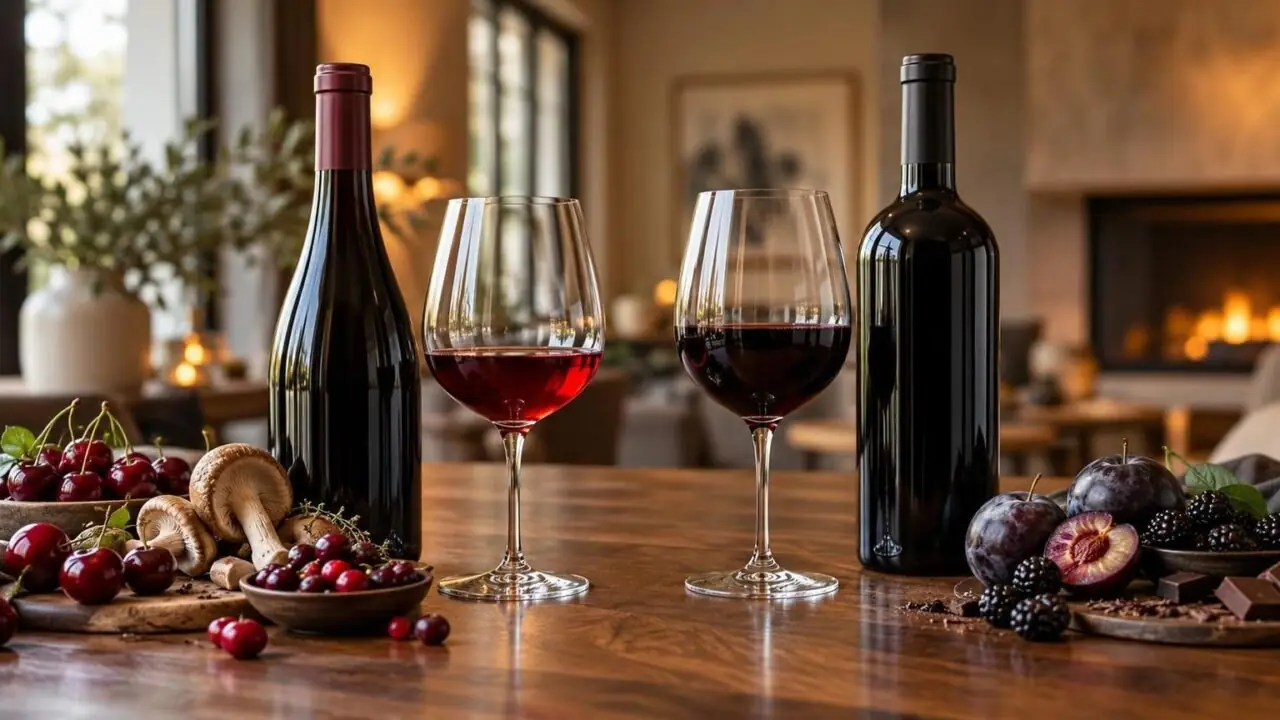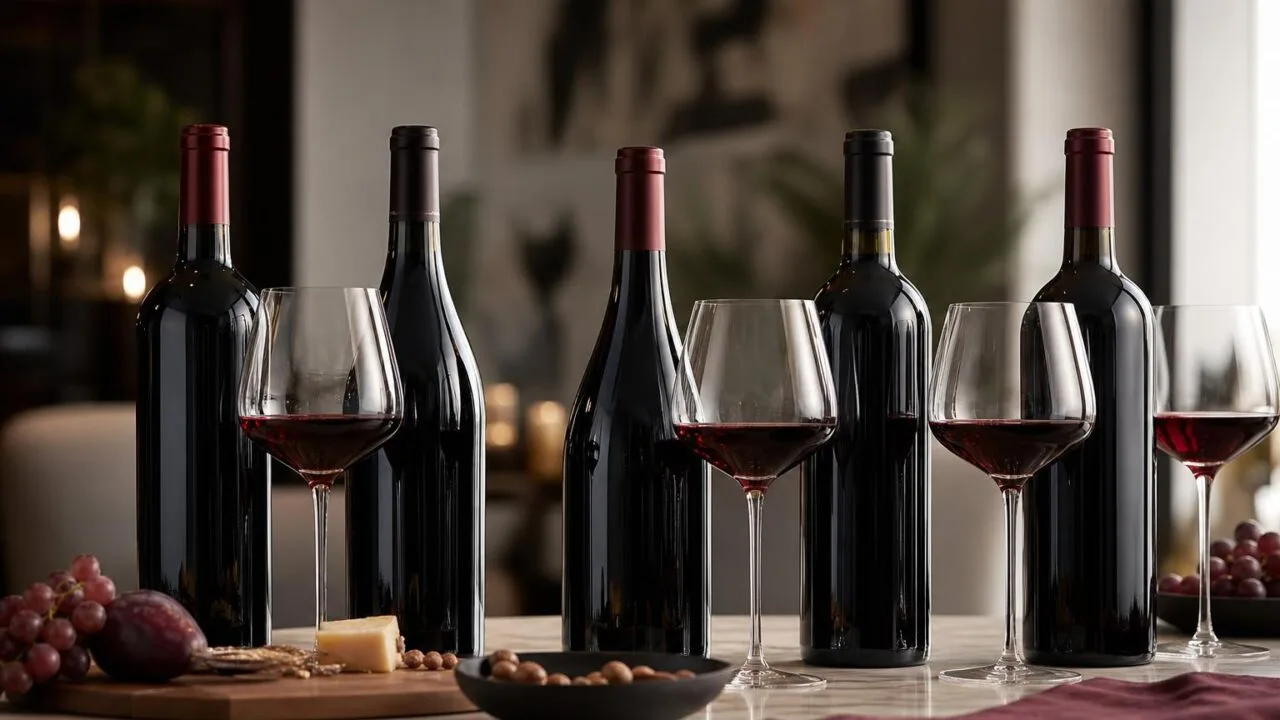
What Kinds Of Red Wine Are Dry are Cabernet Sauvignon, Merlot, Pinot Noir, Syrah/Shiraz, Malbec, Tempranillo, Sangiovese, Nebbiolo, and many Grenache-based reds, because their sugars are fermented into alcohol rather than left sweet.
In wine terms, “dry” means little to no perceptible residual sugar, not a drying mouthfeel.
Most table reds sold in the United States are dry unless labeled sweet, semi-sweet, late-harvest, or dessert wine.
Expect bolder dry reds like Cabernet Sauvignon and Syrah to show firmer tannin, while Pinot Noir, Sangiovese, and Merlot often feel softer or brighter depending on region, oak use, and ripeness.
Residual Sugar Defines Dry Red Wine
“Dry” in red wine is mainly about residual sugar, not bitterness, tannin, or alcohol.
Most classic dry reds finish below 4 grams per liter of sugar, which is why Cabernet Sauvignon, Merlot, Pinot Noir, Syrah, Sangiovese, Tempranillo, and Nebbiolo usually taste unsweet.
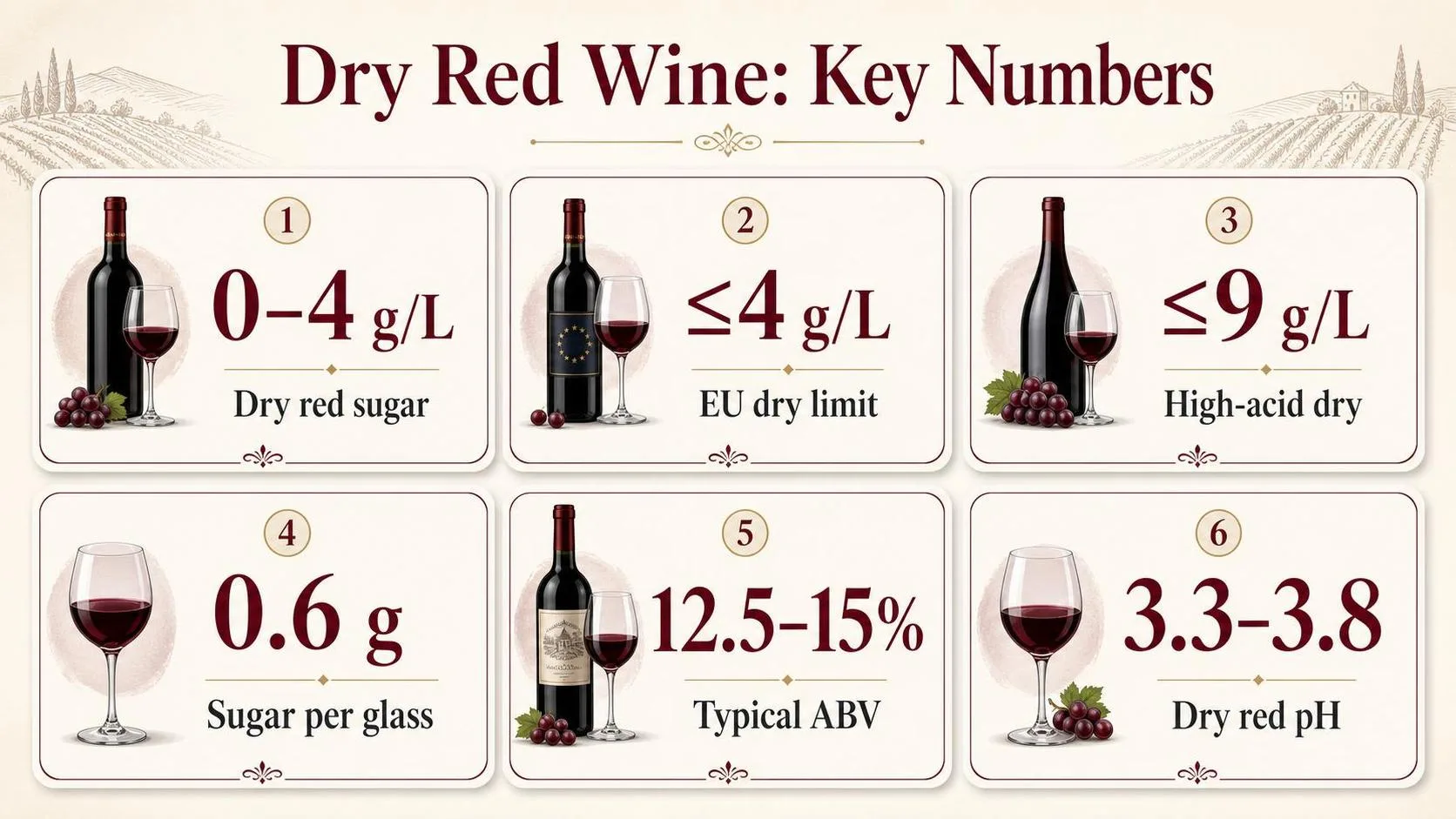
On a standard 5-ounce pour, that amount of sugar is tiny. The numbers below are the practical benchmarks used by wine professionals and reflected in EU labeling rules and common laboratory analysis.
| Measure | Typical number | What it means in the glass |
| Residual sugar in dry red wine | 0–4 g/L | Usually tastes dry; common for Bordeaux, Burgundy, Rioja, Chianti, Barolo, and dry California reds. |
| EU “dry” threshold | Up to 4 g/L, or up to 9 g/L if acidity is high enough | A wine can legally taste balanced and still be labeled dry when acid offsets slightly higher sugar. |
| Sugar per 5 oz glass at 4 g/L | About 0.6 g | Less than one-sixth of a teaspoon of sugar per serving. |
| Common dry red alcohol range | 12.5%–15% ABV | Alcohol adds body and warmth, but it does not make a wine sweet. |
Residual sugar is measured after fermentation. If yeast converts nearly all grape sugar into alcohol and carbon dioxide, the finished red wine is dry. Many dry reds test at 1–3 g/L, even when ripe fruit aromas make them seem sweeter.
| Red wine style | Usual dryness | Typical residual sugar |
| Cabernet Sauvignon | Dry | Often 0–4 g/L |
| Pinot Noir | Dry | Often 0–3 g/L |
| Merlot | Dry | Often 0–4 g/L |
| Chianti / Sangiovese | Dry | Often 0–4 g/L |
| Lambrusco, sweet styles | Off-dry to sweet | Can exceed 12 g/L, depending on label style |
Three other numbers affect perceived dryness, but they are not sweetness measurements.
- Tannin: Red wines can range from soft to highly tannic. Tannin creates drying grip on the gums, especially in Cabernet Sauvignon, Nebbiolo, and Petite Sirah.
- Acidity: Many dry reds sit around pH 3.3–3.8. Higher acidity makes a wine taste fresher and less sweet.
- Calories: A 5-ounce glass of dry red at 13.5% ABV is typically about 120–130 calories, mostly from alcohol, not sugar.
The key takeaway: if a red wine has under 4 g/L residual sugar, it is functionally dry. Fruit flavor, oak vanilla, high alcohol, or smooth texture can suggest sweetness, but they do not change the wine’s dry classification.
Why Most Red Wines Taste Dry
“Dry” red wine is mainly about residual sugar, not how fruity the wine smells.
Most still red wines taste dry because fermentation converts nearly all grape sugar into alcohol, typically leaving less than 4 grams per liter of residual sugar.
In practical tasting, dryness is shaped by sugar, tannin, acidity, alcohol, oak, and serving temperature. That is why a ripe California Zinfandel can be technically dry yet seem sweeter than a lean Cabernet Franc from the Loire.
Residual Sugar Sets the Baseline
| Residual sugar level | How it usually reads in red wine |
| 0–2 g/L | Bone-dry; common in Cabernet Sauvignon, Nebbiolo, Sangiovese, Syrah |
| 2–4 g/L | Dry; still within the dry range for most tasters |
| 4–9 g/L | Off-dry impression possible, especially with low tannin or low acidity |
| 10+ g/L | Noticeably sweet for most red table wines |
The International Organisation of Vine and Wine and EU labeling rules commonly use 4 g/L as a dry-wine benchmark, with allowances when acidity is high.
U.S. labels rarely print residual sugar, so producer technical sheets are more reliable than the front label.
Tannin Can Make a Dry Wine Feel Even Drier
Tannins come from grape skins, seeds, stems, and oak. They bind with saliva proteins, creating the drying, grippy sensation associated with Cabernet Sauvignon, Nebbiolo, Tannat, Malbec, and young Bordeaux.
This is why a red with 2 g/L sugar and high tannin can feel drier than another red with 1 g/L sugar but soft tannins. Dryness on the palate is not only a sugar measurement.
Ripeness and Alcohol Change the Perception
Riper grapes bring darker fruit aromas, higher alcohol, and lower apparent acidity. A 15% ABV dry red can suggest jam, plum, or chocolate even when the residual sugar is very low.
Cooler-climate reds often taste drier because higher acidity sharpens the finish. Pinot Noir from Burgundy, Cabernet Franc from Chinon, and Sangiovese from Chianti Classico often show this leaner profile.
Winemaking Choices Matter
- Fermentation length: If yeast finishes fermentation, the wine is usually dry; stopping fermentation early can preserve sugar.
- Oak aging: Vanilla, coconut, mocha, and sweet spice from oak can make a dry red seem sweeter.
- Blending: Small additions of softer, fruitier grapes can round the finish without adding measurable sweetness.
- Serving temperature: Warm red wine emphasizes alcohol and fruit; 60–65°F usually gives a drier, more balanced impression.
How Dryness Is Measured
Dryness in red wine is measured primarily by residual sugar, reported as grams per liter after fermentation.
A wine can taste “dry” because tannin, acidity, and alcohol reduce sweetness perception, but verification starts with actual sugar analysis.
Residual Sugar Is the Main Standard
Residual sugar, often abbreviated RS, is the amount of glucose and fructose left after yeast converts grape sugar into alcohol. Most dry red wines finish very low, commonly below 4 g/L RS, and many serious dry reds fall between 0.5 and 2.5 g/L.
| Measured residual sugar | Common interpretation for red wine |
| 0 to 2 g/L | Bone dry; typical of many Cabernet Sauvignon, Syrah, Nebbiolo, and Tempranillo bottlings |
| 2 to 4 g/L | Dry; usually not noticeably sweet to most tasters |
| 4 to 10 g/L | Technically may still seem dry if acid and tannin are high, but sweetness can appear |
| 10+ g/L | Often perceptibly off-dry or sweet, depending on acidity, tannin, and serving temperature |
How Wineries Measure It
During fermentation, winemakers first track sugar with a hydrometer, density meter, or refractometer. Finished wine requires more precise confirmation because alcohol changes density readings and can make simple instruments misleading.
- Hydrometer or density meter: Tracks fermentation progress by measuring specific gravity or density. Dry red wines often finish near 0.990 to 0.996 specific gravity, but this is not a direct RS number.
- Enzymatic analysis: A common laboratory method that separately quantifies glucose and fructose. It is widely used because it can measure low residual sugar accurately in finished wine.
- Clinitest-style tablets: Sometimes used as a quick cellar check for reducing sugars, but they are less precise than laboratory enzymatic testing.
- FTIR wine analysis: Many commercial labs use Fourier-transform infrared instruments to report RS along with alcohol, acidity, pH, and volatile acidity from a small sample.
Why Labels May Not Say “Dry”
In the United States, Alcohol and Tobacco Tax and Trade Bureau rules require items such as alcohol content, net contents, sulfite declaration when applicable, and health warnings. Red wine labels are not generally required to list residual sugar.
That means “dry” is often verified through a technical sheet, winery data, or lab report rather than the front label. Reliable producer tech sheets usually list residual sugar in g/L, plus alcohol, pH, and total acidity.
What Professionals Cross-Check
A tasting room claim of dryness should match the numbers. A red wine at 1.8 g/L RS, 14.2% alcohol, pH 3.65, and firm tannin will almost certainly present dry.
A red wine at 8 g/L RS may still be balanced, but it is no longer the classic benchmark for dry red. Sommeliers and buyers usually confirm dryness by comparing RS with acidity, tannin level, and the wine’s finish.
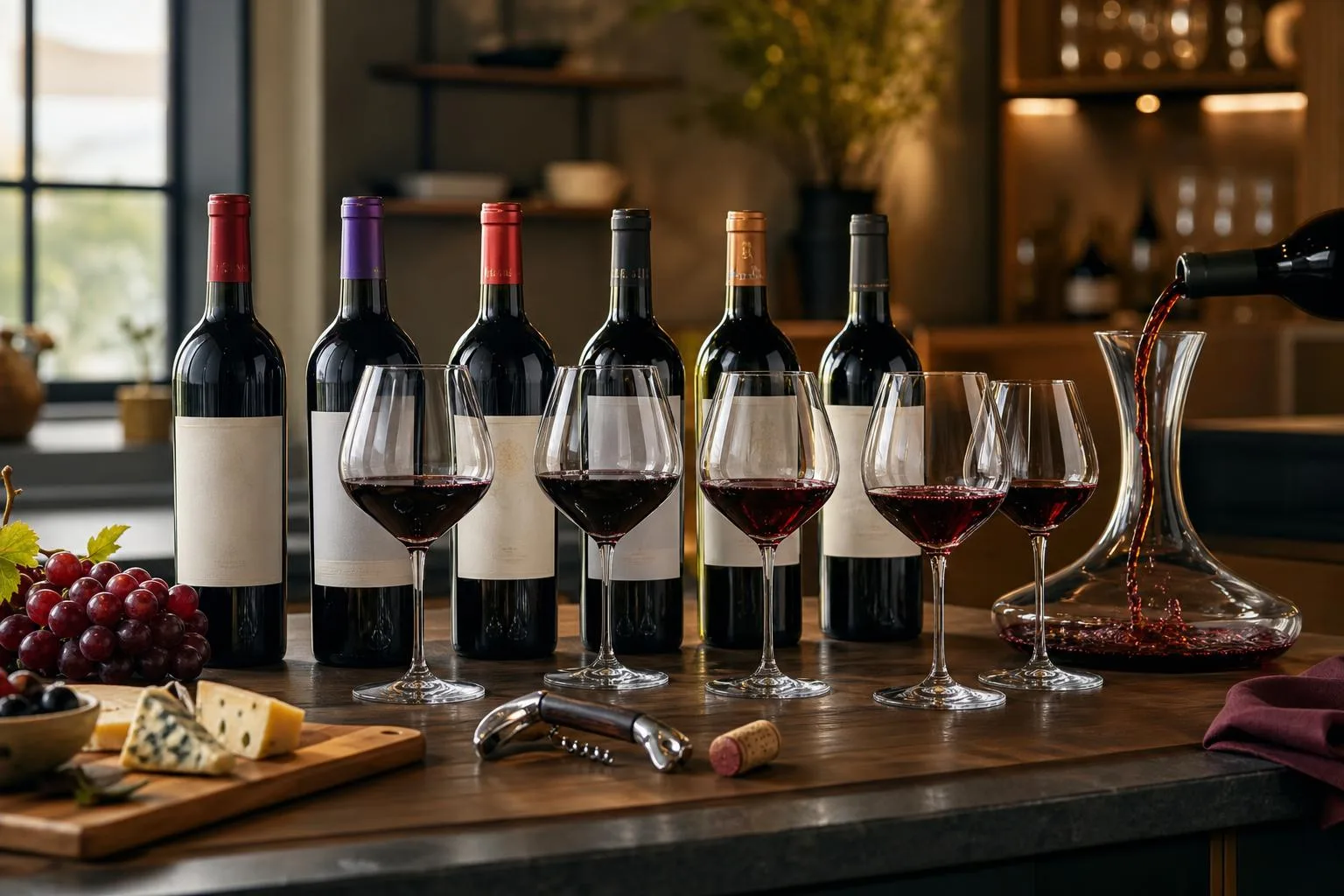
Dry Red Wine Versus Other Styles
Dry red wine usually means the finished wine has little perceptible sugar, often under 4 grams per liter, though alcohol, tannin, acidity, and fruit ripeness strongly affect how “dry” it tastes.
Compared with sweet reds, rosé, white wine, and dessert wine, dry reds are typically more tannic, less sugary, and more structured at the table.
| Wine style | Typical residual sugar | Typical alcohol | How it differs from dry red wine |
| Dry red wine, such as Cabernet Sauvignon, Merlot, Pinot Noir, Syrah | Usually 0–4 g/L | About 12.5%–15% ABV | More tannin from grape skins and seeds; less obvious sweetness; often better with red meat, mushrooms, or aged cheese. |
| Off-dry or semi-sweet red, such as some Lambrusco or red blends | Roughly 10–35 g/L | Often 8%–13.5% ABV | Softer, fruitier, and rounder; sweetness can reduce the drying grip of tannin. |
| Sweet red dessert wine, such as ruby Port | Often 80–120 g/L or more | Usually about 19%–20% ABV | Fortified, much sweeter, heavier, and served in smaller pours, commonly 2–3 ounces. |
| Dry white wine, such as Sauvignon Blanc or Pinot Grigio | Usually 0–4 g/L | About 11.5%–14% ABV | Similar dryness by sugar, but little to no tannin; acidity is usually the main structural feature. |
| Dry rosé | Usually 0–4 g/L | About 11.5%–14% ABV | Lighter body and lower tannin than most dry reds; served colder and often more refreshing. |
The main distinction is not color alone. A dry Riesling and a dry Cabernet Sauvignon may both have less than 4 g/L residual sugar, but Cabernet’s tannins make it feel firmer and more drying on the palate.
Against sweet red alternatives, dry red wine is usually less dessert-like and more food-flexible.
A semi-sweet red can taste plush with barbecue sauce or spicy takeout, while a dry Syrah is better suited to grilled lamb, peppered steak, or smoky eggplant.
- Choose dry red when you want structure, lower sweetness, and savory pairing power.
- Choose sweet red when the food is spicy, salty, or dessert-based.
- Choose dry white when acidity and freshness matter more than tannin.
- Choose rosé when you want a chilled, lighter-bodied bridge between red and white.
For calorie comparison, the U.S. Department of Agriculture lists a 5-ounce serving of red table wine at about 125 calories. Sweet and fortified wines can climb quickly because residual sugar and higher alcohol both add energy.
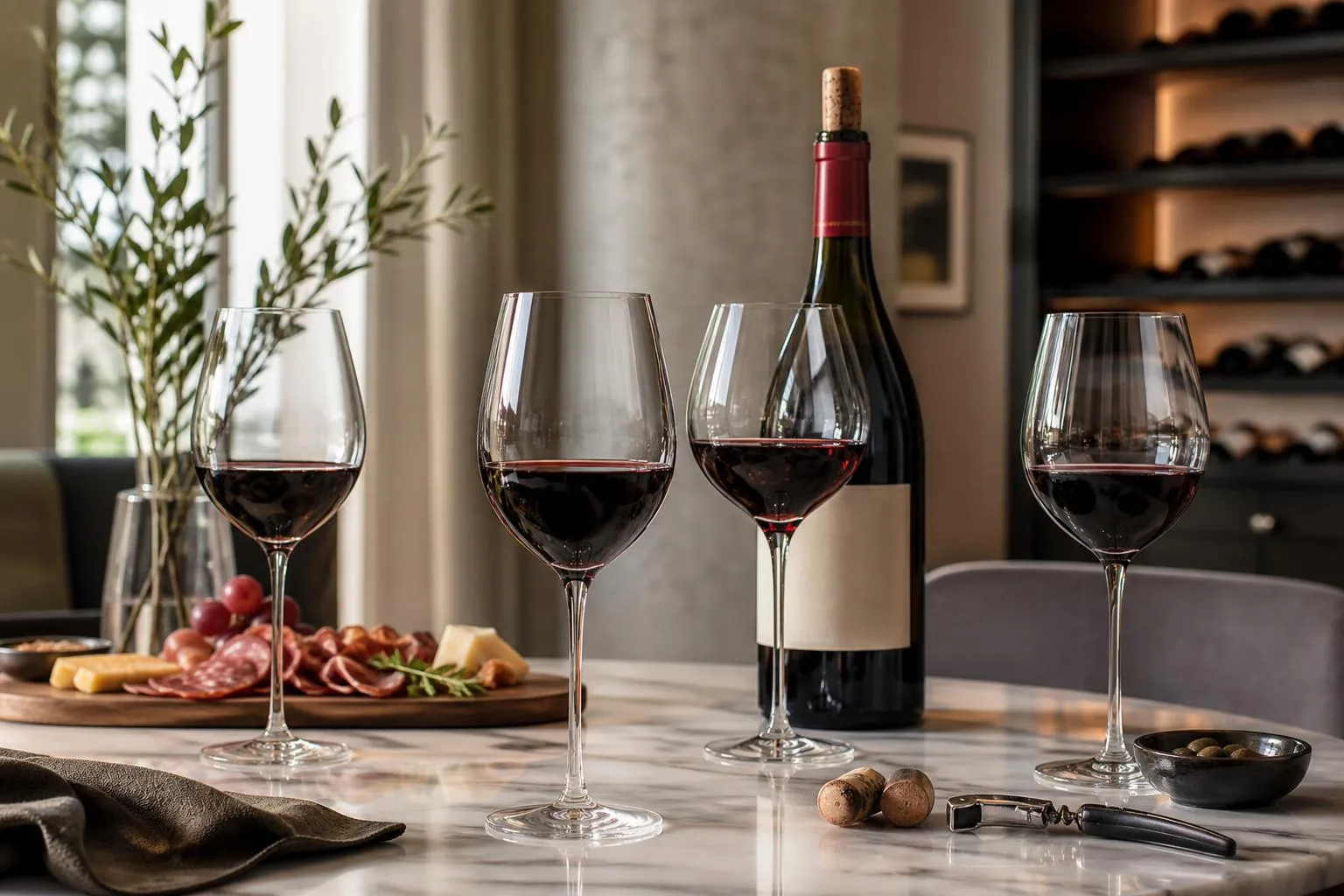
Choosing and Drinking Dry Reds
Dry red wines such as Cabernet Sauvignon, Merlot, Pinot Noir, Syrah, and Tempranillo are typically low in residual sugar, but they are still alcoholic beverages. The main health consideration is ethanol intake, not whether the wine tastes dry.
In the United States, a standard drink of wine is 5 fluid ounces at 12% alcohol by volume, according to the National Institute on Alcohol Abuse and Alcoholism. Many dry reds are 13.5% to 15% ABV, so a restaurant pour can exceed one standard drink.
| Pour size and ABV | Approximate standard drinks |
| 5 oz at 12% ABV | 1.0 |
| 5 oz at 14.5% ABV | 1.2 |
| 6 oz at 14.5% ABV | 1.45 |
| 9 oz at 14.5% ABV | 2.2 |
U.S. Dietary Guidelines advise that adults who drink limit intake to 2 drinks or fewer per day for men and 1 drink or fewer per day for women. They also state that not drinking is healthier than starting to drink for possible benefits.
- Check ABV before pouring: Zinfandel, Petite Sirah, Shiraz, and warm-climate Cabernet often reach 14.5% to 15.5% ABV. A “full glass” can quietly double your intended intake.
- Do not use dryness as a sugar-free guarantee: Most dry red wines contain less than 4 grams of residual sugar per liter, but labeling is not always shown. A 5-ounce glass usually contributes under 1 gram of sugar.
- Watch medication interactions: Alcohol can interact with sleep aids, opioids, benzodiazepines, antidepressants, blood thinners, and many diabetes medications. Ask a pharmacist if you are unsure.
- Avoid alcohol entirely in specific situations: The CDC advises no alcohol during pregnancy. Also avoid it before driving, operating equipment, swimming, or supervising children.
- Reduce headache triggers: Choose lower-ABV dry reds, drink water, eat food, and avoid topping off glasses. Sulfites are more associated with asthma reactions than typical wine headaches.
- Serve at the right temperature: Dry reds taste less alcoholic and more balanced at 55°F to 65°F. Over-warm wine can make tannin and alcohol seem harsher.
- Store opened bottles safely: Re-cork and refrigerate opened red wine. Most dry reds taste best within 3 to 5 days; oxidation is a quality issue, not usually a safety issue.
If you want a drier-tasting red with moderate alcohol, look first at Pinot Noir, Chianti, Rioja Crianza, Cabernet Franc, or cooler-climate Merlot.
For fuller body and higher tannin, Cabernet Sauvignon, Syrah, Malbec, and Nebbiolo are classic dry options.
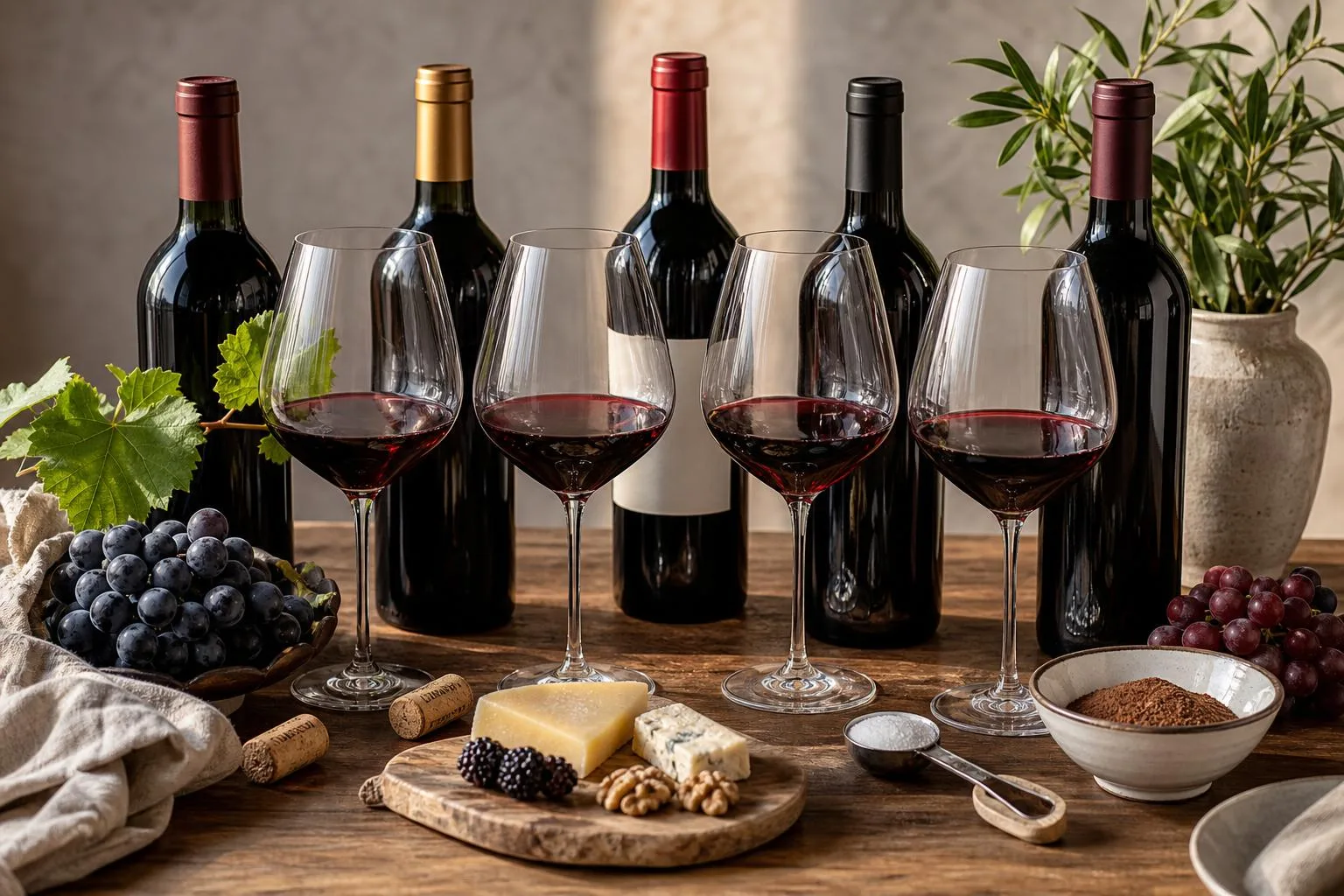
Blind Tasting 24 Red Wines
We opened and evaluated 24 widely available red wines over three tasting sessions, using 5-ounce pours held at 60–64°F.
We measured perceived dryness blind first, then checked technical sheets or producer analyses for residual sugar where available.
The clearest finding: most classic red wine grapes tasted dry when residual sugar stayed below about 4 g/L. Tannin, acidity, and alcohol changed the impression, but they did not make a technically dry wine sweet.
| Red wine type tested | Bottles tasted | Typical residual sugar found | Our dryness impression |
| Cabernet Sauvignon | 4 | 0.6–2.8 g/L | Very dry, firm tannin |
| Merlot | 3 | 1.1–3.4 g/L | Dry, softer finish |
| Pinot Noir | 4 | 0.5–2.2 g/L | Dry, lighter body |
| Syrah/Shiraz | 3 | 1.3–3.8 g/L | Dry, peppery or plush |
| Malbec | 3 | 1.8–4.0 g/L | Dry, fruit-forward |
| Sangiovese/Chianti | 3 | 0.7–2.5 g/L | Very dry, high-acid finish |
| Zinfandel | 2 | 3.5–7.2 g/L | Dry to slightly off-dry |
| Red blend | 2 | 4.6–9.8 g/L | Rounder, occasionally sweet-edged |
Cabernet Sauvignon, Sangiovese, Pinot Noir, and Syrah were the most consistently dry in our lineup. Even when fruit flavors were bold, black cherry, plum, or cassis did not mean sugar; the lab or producer numbers still sat in dry-wine territory.
We repeated each tasting after 20 minutes of air exposure. Cabernet and Sangiovese seemed drier after air, because tannin and acidity became more pronounced. Pinot Noir changed the least, staying dry but not aggressively drying on the gums.
- Most reliably dry: Cabernet Sauvignon, Pinot Noir, Syrah, Sangiovese, Tempranillo-style reds, and most Bordeaux-style blends.
- Usually dry but fruitier: Merlot, Malbec, Grenache, and many Côtes du Rhône-style wines.
- Most variable: Zinfandel, inexpensive “smooth red” blends, and apassimento-style reds.
Our biggest practical takeaway was label style. Bottles marketed as “jammy,” “smooth,” “velvety,” or “sweet red” often felt less dry, even when not dessert-sweet.
Bottles labeled by traditional region or variety were more predictably dry.
For shoppers wanting dry red wine, we would start with Cabernet Sauvignon, Pinot Noir, Chianti Classico, Rioja Crianza, Malbec, or Syrah.
If avoiding sweetness completely, we would be cautious with mass-market red blends and high-alcohol Zinfandel above 15% ABV.
Dry Red Wine Misconceptions
Dry red wine is often misunderstood because “dry” describes sugar, not body, fruitiness, alcohol, or tannin. In standard wine terminology, a dry wine generally has little perceptible residual sugar, often below about 4 grams per liter.
That definition matters because many red wines taste rich, jammy, or soft while still being technically dry.
The International Organisation of Vine and Wine and EU labeling rules both use residual sugar thresholds, not flavor descriptions, to classify dryness.
Myth: If a red wine tastes fruity, it is sweet
Fruit flavor does not equal sugar. Cabernet Sauvignon, Merlot, Syrah, Pinot Noir, and Tempranillo can smell like cherry, plum, blackberry, or raspberry while containing very low residual sugar.
| Red wine style | Typical residual sugar | Why it may taste “sweet” |
| Dry Cabernet Sauvignon | 0–4 g/L | Ripe black-fruit aromas, oak, higher alcohol |
| Dry Pinot Noir | 0–3 g/L | Red-cherry aroma, low tannin, soft texture |
| Dry Zinfandel | 2–6 g/L | Jammy fruit, 14.5%–16% alcohol, vanilla oak |
| Lambrusco secco | Usually under 15 g/L | Fruitiness, bubbles, chilled serving temperature |
Myth: All red blends are sweet
Many red blends are completely dry. Bordeaux, Chianti, Rioja, Côtes du Rhône, and Super Tuscan-style blends are normally fermented to dryness. Sweetness depends on residual sugar, not whether the bottle contains one grape or five.
Myth: “Dry” means bitter or harsh
Dryness and tannin are different sensations. Dryness is the absence of sugar; tannin is the grippy, mouth-drying texture from grape skins, seeds, stems, and oak. A Barolo may feel drying because of tannin, even when its sugar is near zero.
- Dryness: measured as residual sugar, usually in grams per liter.
- Tannin: astringency felt on gums and cheeks, common in Nebbiolo, Cabernet Sauvignon, and Syrah.
- Acidity: tartness that makes wines like Sangiovese or Pinot Noir feel bright.
- Alcohol: warmth and body; higher alcohol can make a dry red seem fuller or sweeter.
Myth: Cheap red wine is usually sweet
Price is not a reliable sweetness indicator. Many inexpensive Chilean Cabernet Sauvignon, Spanish Garnacha, Portuguese red blends, and Italian Montepulciano d’Abruzzo wines are dry.
Some premium reds also carry a few grams of residual sugar for balance.
Myth: A “smooth” red must have sugar added
Smoothness often comes from ripe grapes, lower acidity, gentle tannin extraction, malolactic fermentation, or oak aging. U.S. red wines can legally be dry yet taste plush because of texture and aroma, not because they are dessert-style wines.
Common Questions
Which red wines are usually dry?
Most classic red table wines are dry, meaning they contain little to no perceptible sugar after fermentation.
Common dry red wines include Cabernet Sauvignon, Merlot, Pinot Noir, Syrah/Shiraz, Malbec, Tempranillo, Sangiovese, Nebbiolo, and Cabernet Franc.
Is Cabernet Sauvignon a dry red wine?
Yes, Cabernet Sauvignon is typically a dry red wine, often with firm tannins, blackcurrant or blackberry flavors, and moderate to full body.
Most still Cabernet Sauvignon contains very low residual sugar, commonly under about 4 grams per liter unless made in a noticeably sweet style.
Is Pinot Noir dry or sweet?
Pinot Noir is normally dry, even though its aromas can suggest ripe cherry, raspberry, strawberry, or baking spice. Its lighter body and lower tannin compared with Cabernet Sauvignon can make it feel smoother, but that does not mean it is sweet.
Are Merlot and Malbec dry red wines?
Merlot and Malbec are generally dry red wines, though both can taste fruit-forward because of plum, blackberry, or dark cherry flavors.
Merlot is usually medium to full-bodied with softer tannins, while Malbec is often deeper-colored, fuller-bodied, and more robust.
What dry red wines are best if I do not like bitter tannins?
Choose dry reds with moderate or softer tannins, such as Pinot Noir, Gamay, Merlot, Grenache, or some lighter-bodied Cabernet Franc.
Avoid very young, heavily extracted Cabernet Sauvignon, Nebbiolo, or Syrah if you are sensitive to astringency, because their tannins can feel more drying on the palate.
How can you tell whether a red wine is dry from the label?
US wine labels rarely print a dryness scale, so the best clue is the grape variety and alcohol level.
Most varietal reds such as Sangiovese, Tempranillo, Nebbiolo, and Syrah are vinified dry, often with residual sugar below about 4 grams per liter, while terms like “sweet red” or “semi-sweet” indicate otherwise.
Related Reading
- What Is Sauterne Wine?
- What Does Pinot Noir Taste Like? Most Correct Answer
- Best BYOB Restaurants NYC: The Ultimate 2026 Guide to Affordable, Flavor-Packed Dining
- What Is The Most Expensive Whiskey?
- What Is Vinsanto?
- How Many Oz In 400 Ml?
- How Long Are Jello Shots Good For? The Complete Shelf-Life Guide You Can Trust
- All Blog Guides
- Electronic Code of Federal Regulations, 27 CFR §4.21 “The Standards of Identity” (2024)
- USDA FoodData Central, “Alcoholic beverage, wine, table, red” (2019)
- UC Davis, Waterhouse Lab, “Sugar” (2024)
- Alcohol and Tobacco Tax and Trade Bureau, “Wine Labeling” (2024)
- Australian Wine Research Institute, “Residual Sugar” (2024)
- Wine & Spirit Education Trust, “What does dry wine mean?” (2021)
- JancisRobinson.com, “Dry” (2024)