How Much Is 1/4 Oz In Tbsp is 0.5 tbsp when you mean a US fluid ounce. That equals 1 1/2 teaspoons, since 1 tablespoon is 0.5 fluid ounce and 1 fluid ounce is 2 tablespoons in US kitchen measurement.
The answer changes if “oz” means weight, because dry ounces convert to tablespoons only after you know the ingredient’s density.
A quarter ounce of salt, flour, herbs, or syrup will not occupy the same tablespoon volume, so this guide separates fluid-ounce conversions from ingredient-specific dry measurements.
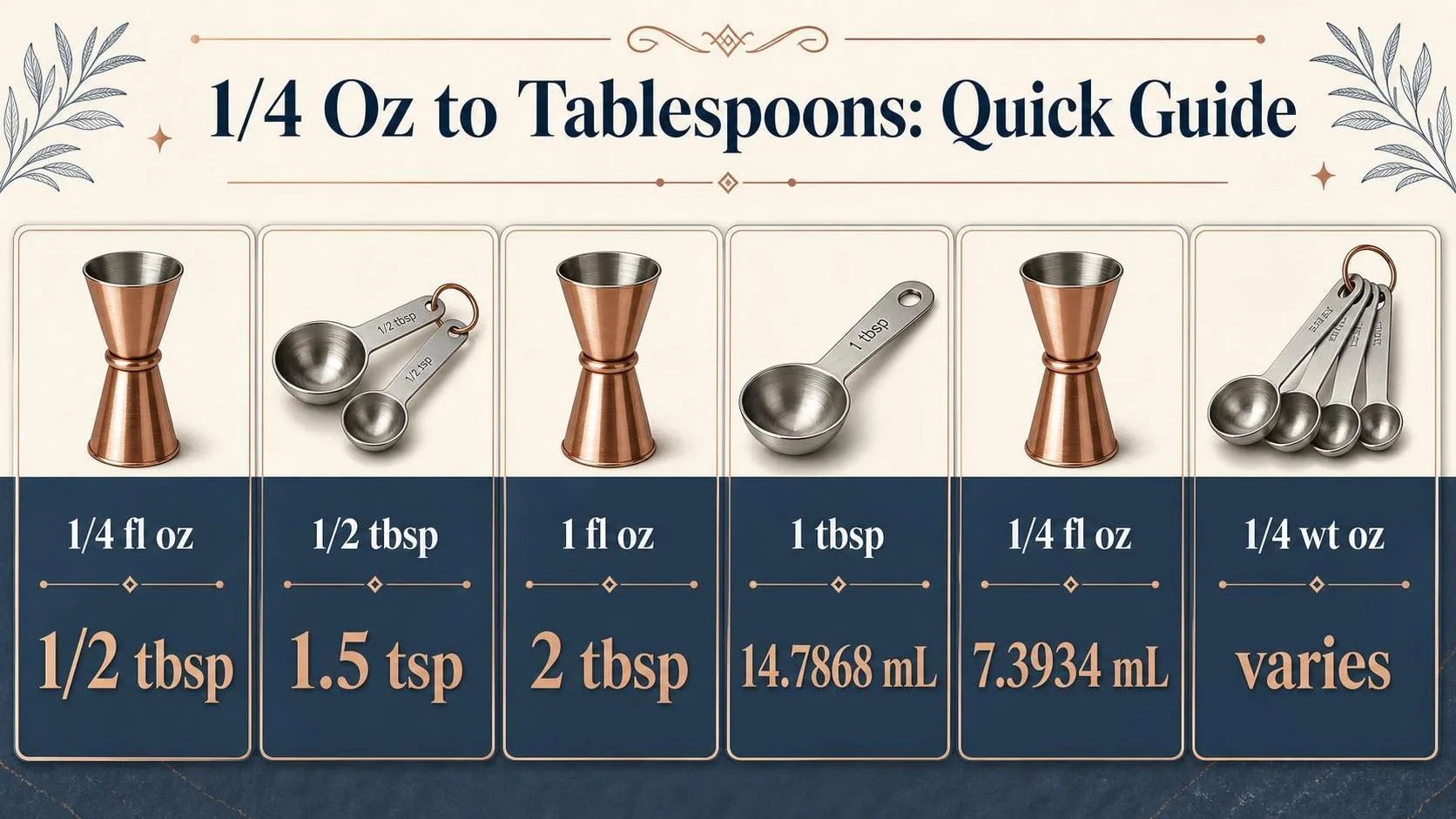
/4 Fluid Ounce Equals 1/2 Tablespoon
In U.S. kitchen measurements, 1/4 fluid ounce equals 1/2 tablespoon. That is the clean conversion when “oz” means volume, as it does on most liquid measuring cups, cocktail jiggers, and bar recipes.
The confusion starts because “ounce” can mean two different things: fluid ounce for volume or avoirdupois ounce for weight. Tablespoons measure volume, so the direct conversion only works for fluid ounces.
| Measurement | U.S. equivalent |
| 1 tablespoon | 1/2 U.S. fluid ounce |
| 1 fluid ounce | 2 tablespoons |
| 1/4 fluid ounce | 1/2 tablespoon |
| 1/2 tablespoon | 1 1/2 teaspoons |
| 1 U.S. tablespoon | 14.7868 milliliters |
| 1/4 U.S. fluid ounce | 7.3934 milliliters |
For liquids, the math is simple: 1 U.S. fluid ounce contains 2 tablespoons. Divide that by 4, and 1/4 fluid ounce is 0.5 tablespoon, also written as 1/2 tbsp.
If you are measuring for drinks, this is a very small pour. A standard U.S. jigger is commonly 1 1/2 fluid ounces, so 1/4 fluid ounce is one-sixth of that amount.
| Bar measure | Fluid ounces | Tablespoons |
| 1 dash, typical range | About 1/32 to 1/8 fl oz | About 1/16 to 1/4 tbsp |
| 1 bar spoon, common U.S. | About 1/8 fl oz | About 1/4 tbsp |
| 1/4 fl oz | 0.25 fl oz | 1/2 tbsp |
| 1/2 fl oz | 0.5 fl oz | 1 tbsp |
| 1 jigger | 1.5 fl oz | 3 tbsp |
For dry ingredients, 1/4 ounce by weight is not automatically 1/2 tablespoon. The tablespoon amount depends on density. A quarter ounce of kosher salt, powdered sugar, flour, and cocoa will each occupy a different volume.
| Ingredient | Approximate weight per U.S. tablespoon | Approximate tablespoons in 1/4 oz by weight |
| Water | 14.8 g | 0.48 tbsp |
| All-purpose flour | About 7.8 g | About 0.91 tbsp |
| Granulated sugar | About 12.5 g | About 0.57 tbsp |
| Table salt | About 18 g | About 0.39 tbsp |
The practical answer: if the recipe says 1/4 fl oz, use 1/2 tablespoon or 1 1/2 teaspoons. If it says 1/4 oz by weight, use a scale for accuracy.
Fluid Ounces Versus Weight Ounces
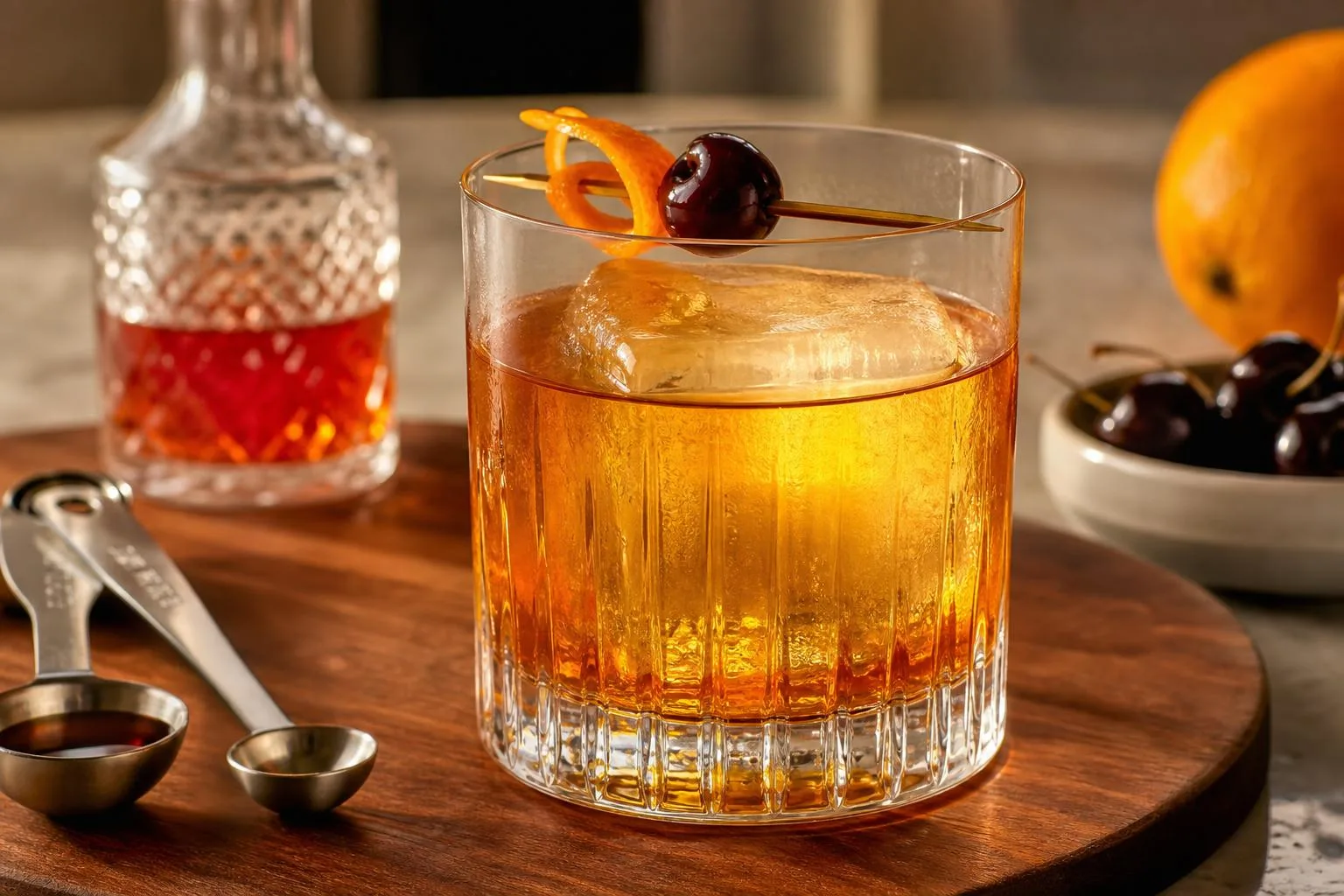
The answer depends on whether the “oz” means fluid ounces or weight ounces. If it is 1/4 US fluid ounce, the conversion is exact: 1/2 US tablespoon.
If it is 1/4 ounce by weight, tablespoons vary by ingredient because a tablespoon measures volume, not mass.
Fluid ounces versus weight ounces
In US kitchen measurement, 1 fluid ounce equals 2 tablespoons. That makes 1/4 fluid ounce equal to 0.5 tablespoon, or 1 1/2 teaspoons, because 1 tablespoon equals 3 teaspoons.
| Measurement given | Correct tablespoon result | Why |
| 1/4 US fluid ounce | 1/2 tablespoon | US volume conversion: 1 fl oz = 2 tbsp |
| 1/4 ounce by weight | Depends on ingredient | Weight must be converted using density |
| 1/4 imperial fluid ounce | About 0.48 US tablespoon | Imperial fl oz is about 28.41 mL, while 1 US tbsp is about 14.79 mL |
Ingredient density
A weight ounce is 28.35 grams, so 1/4 ounce is about 7.09 grams. The tablespoon amount changes because 7.09 grams of honey, flour, salt, and oil occupy different volumes.
| Ingredient | Approximate grams per US tablespoon | 1/4 oz by weight equals about |
| Water | 14.8 g | 0.48 tbsp |
| Olive oil | 13.5 g | 0.53 tbsp |
| Honey | 21 g | 0.34 tbsp |
| All-purpose flour | 7.8 g | 0.91 tbsp |
| Table salt | 18 g | 0.39 tbsp |
How the ingredient is handled
Dry ingredients can shift noticeably depending on how they are scooped. Flour is the classic example: a spooned-and-leveled tablespoon is lighter than a packed or dipped tablespoon.
- Packing: Brown sugar, chopped herbs, and grated cheese can weigh more per tablespoon when pressed down.
- Grind size: Fine salt fits more tightly than coarse kosher salt, so the same tablespoon can contain different weights.
- Air gaps: Powdered ingredients such as cocoa or flour may settle during storage, increasing weight per tablespoon.
- Viscosity: Sticky liquids such as honey or syrup cling to the spoon, so scraping affects the final amount.
Spoon standard and measuring precision
A US tablespoon is about 14.79 mL. In nutrition labeling, the tablespoon is usually rounded to 15 mL, which is close but not identical.
| Unit | Volume | Effect on 1/4 fl oz |
| US tablespoon | 14.79 mL | Exactly 0.5 tbsp |
| Metric tablespoon | 15 mL | About 0.49 tbsp |
| Imperial tablespoon | 17.76 mL | About 0.40 tbsp |
For cooking, 1/2 tablespoon is usually fine when the recipe means fluid ounces. For baking, cocktails, supplements, or concentrated ingredients, weighing 7.09 grams or using milliliters gives a more reliable result.
Verifying the 1/4 Oz Conversion
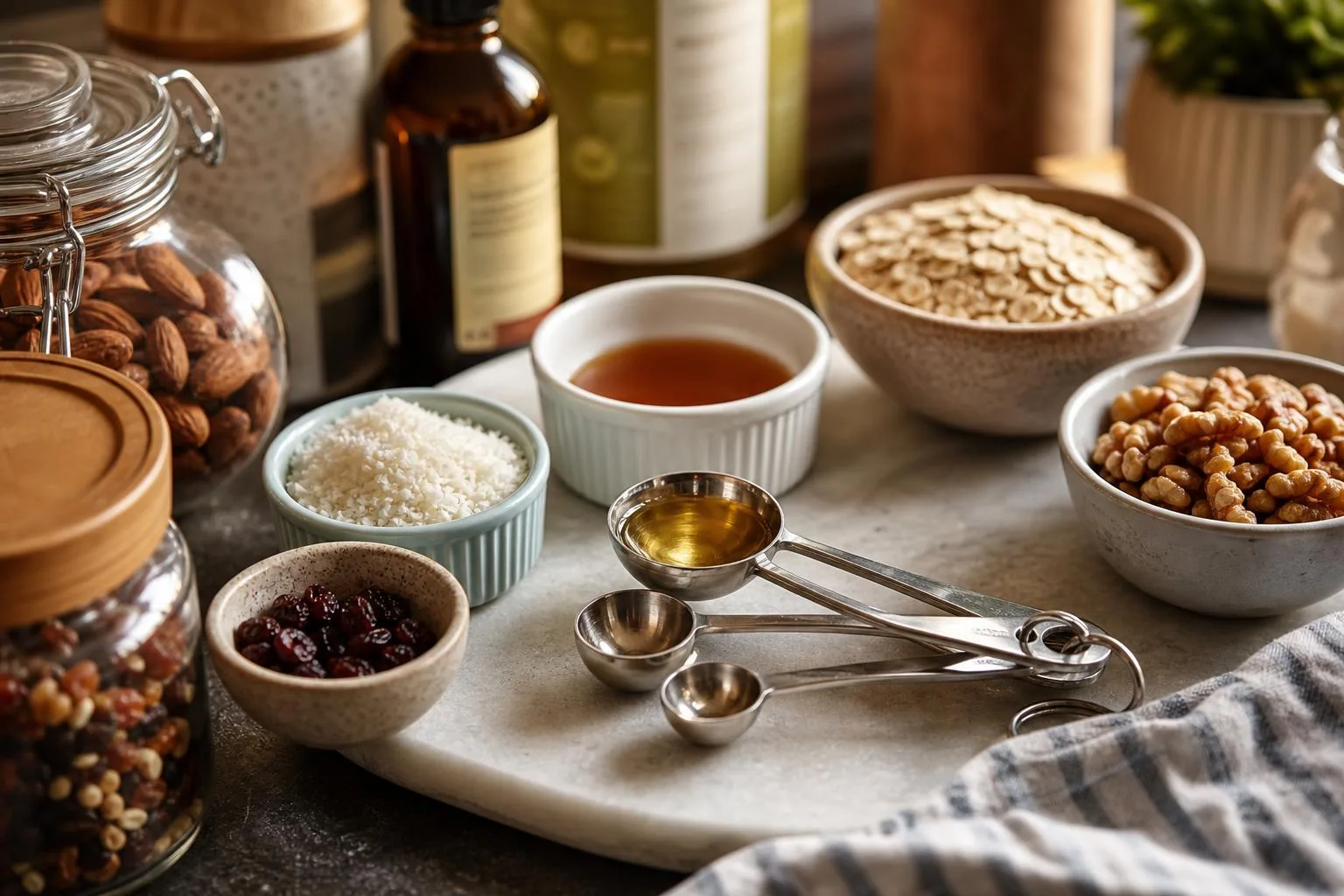
In U.S. kitchen measurement, 1/4 fluid ounce equals 1/2 tablespoon. This is a volume conversion, not a weight conversion, and it is verified from the U.S. customary relationship that 1 fluid ounce equals 2 tablespoons.
The key check is whether the ounce means fluid ounce or ounce by weight. Recipes for liquids usually mean fluid ounces, while dry ingredients may use avoirdupois ounces, where tablespoons vary by ingredient density.
| Measurement | U.S. equivalent | Metric equivalent |
| 1 U.S. fluid ounce | 2 tablespoons | 29.5735 milliliters |
| 1/4 U.S. fluid ounce | 1/2 tablespoon | 7.3934 milliliters |
| 1 tablespoon | 3 teaspoons | 14.7868 milliliters |
| 1/2 tablespoon | 1 1/2 teaspoons | 7.3934 milliliters |
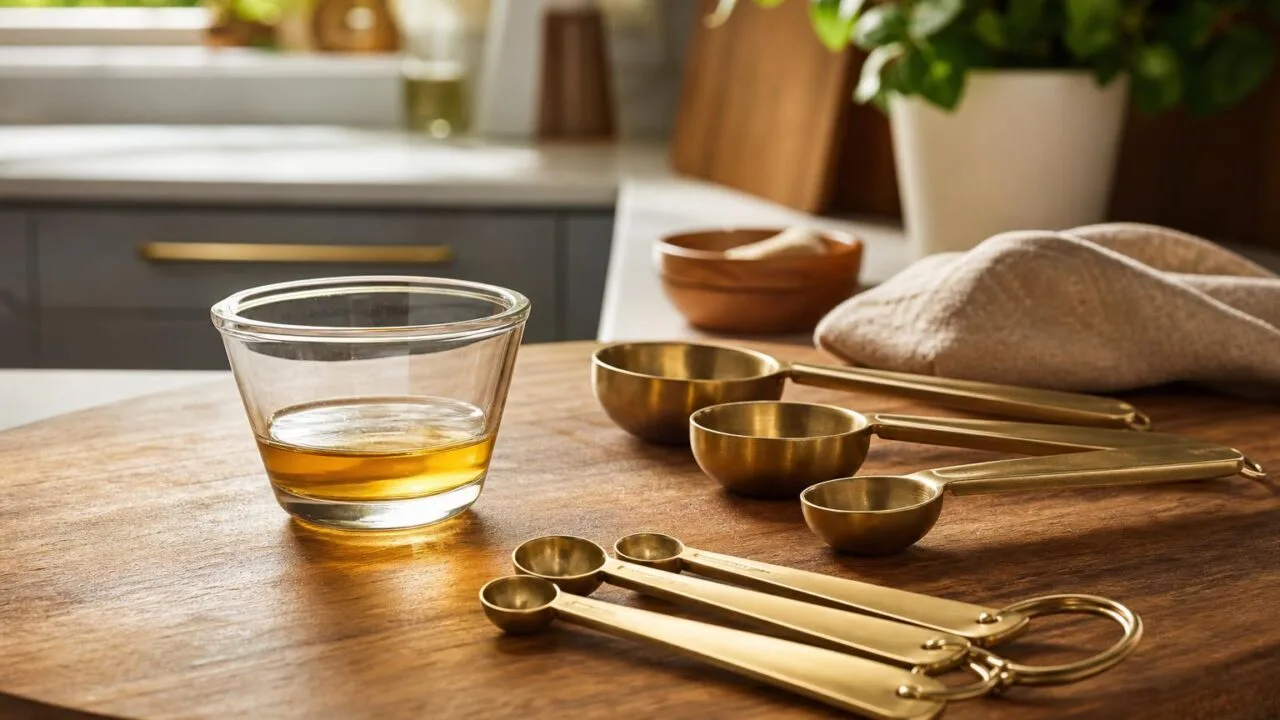
To measure 1/4 fluid ounce accurately, use a measuring spoon marked 1/2 tablespoon or measure 1 1/2 level teaspoons. For liquids such as water, wine, vanilla extract, or vinegar, this gives the correct U.S. volume.
- Use U.S. measuring spoons, not Australian tablespoons, which are commonly 20 milliliters.
- Fill the spoon to the rim without doming or underfilling.
- Check liquid level at eye height when using a small graduated cup or syringe.
- For sticky liquids, lightly oil the spoon first if the recipe allows, then scrape fully.
Verification is easiest with metric volume. Since 1 U.S. tablespoon is 14.7868 milliliters, half of that is 7.3934 milliliters. That matches 1/4 of a U.S. fluid ounce: 29.5735 divided by 4 equals 7.3934.
| Ingredient type | Does 1/4 oz equal 1/2 tbsp? | Why |
| Water, wine, juice, vinegar | Yes, if fluid ounce | Measured by volume |
| Oil, syrup, cream | Yes, if fluid ounce | Volume remains 7.3934 mL |
| Flour, sugar, salt, spices | Not necessarily | Weight-to-volume depends on density and packing |
For dry ingredients listed as 1/4 ounce by weight, a digital scale is the reliable tool. One-quarter avoirdupois ounce equals 7.087 grams, but the tablespoon amount can change significantly between powdered sugar, kosher salt, and dried herbs.
For best accuracy, weigh dry ingredients to 0.1 gram when possible. For liquids, a 5 to 10 milliliter oral syringe or a narrow graduated jigger can verify the target volume more precisely than a wide measuring cup.
How 1/4 Fluid Ounce Converts
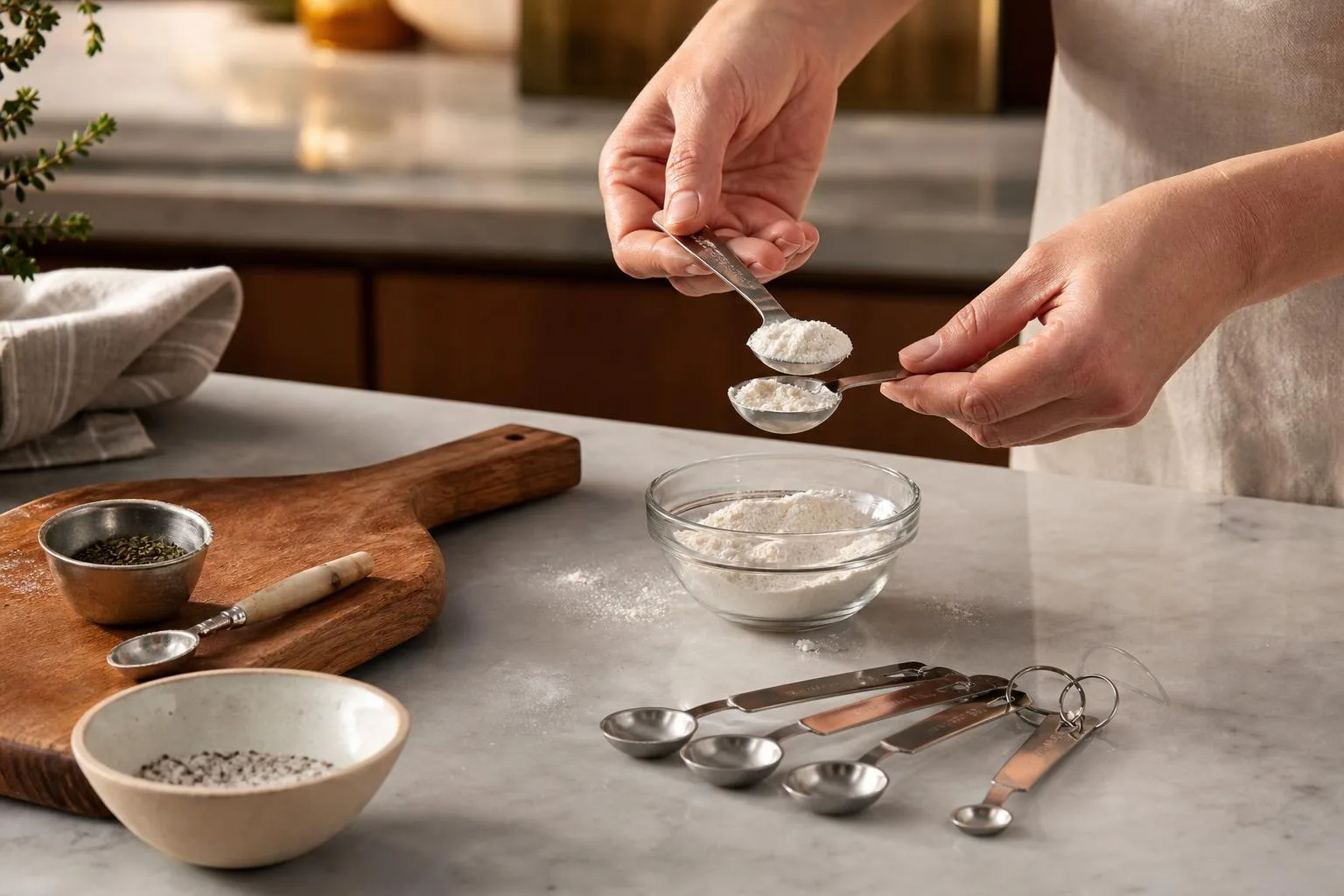
A U.S. 1/4 fluid ounce equals 1/2 tablespoon, because 1 U.S. fluid ounce is exactly 2 tablespoons. In kitchen terms, that is also 1 1/2 teaspoons or about 7.39 milliliters.
This conversion applies to liquid volume, such as vanilla extract, lemon juice, bitters, simple syrup, or olive oil. If the recipe means weight ounces, the tablespoon amount changes by ingredient density.
| Measurement | Equivalent to 1/4 U.S. fl oz | Best use |
| Tablespoons | 1/2 tbsp | Small liquid additions in cooking or cocktails |
| Teaspoons | 1 1/2 tsp | Most precise common spoon measure |
| Milliliters | 7.39 mL | Metric recipes and bar measurements |
| Cups | 1/32 cup | Usually too small to measure accurately by cup |
| U.S. fluid ounce | 0.25 fl oz | Liquid volume reference |
Compared with a full tablespoon, 1/4 fluid ounce is exactly half as much. Compared with a teaspoon, it is 50% more than 1 teaspoon, since 1 tablespoon contains 3 teaspoons.
| Common amount | Tablespoons | Teaspoons | Milliliters |
| 1/8 fl oz | 1/4 tbsp | 3/4 tsp | 3.70 mL |
| 1/4 fl oz | 1/2 tbsp | 1 1/2 tsp | 7.39 mL |
| 1/2 fl oz | 1 tbsp | 3 tsp | 14.79 mL |
| 1 fl oz | 2 tbsp | 6 tsp | 29.57 mL |
For bartending, 1/4 ounce is a common small pour, especially for modifiers like absinthe, grenadine, liqueurs, or rich syrup. A standard U.S. jigger often marks 1/4 oz, 1/2 oz, 3/4 oz, 1 oz, and 1 1/2 oz.
For baking, teaspoons are usually easier than tablespoons at this size. Measuring 1 1/2 teaspoons is typically more accurate than trying to eyeball half of a tablespoon, especially for strong ingredients like almond extract or peppermint extract.
Dry ingredients need caution. A 1/4 ounce by weight equals about 7.09 grams, but that does not automatically equal 1/2 tablespoon. For example, 1/2 tablespoon of kosher salt, flour, cocoa powder, and honey will all weigh different amounts.
- Use 1/2 tablespoon when the recipe specifies 1/4 fluid ounce.
- Use 1 1/2 teaspoons when measuring with standard kitchen spoons.
- Use 7.39 mL for metric accuracy.
- Use a scale when the recipe lists 1/4 ounce by weight.
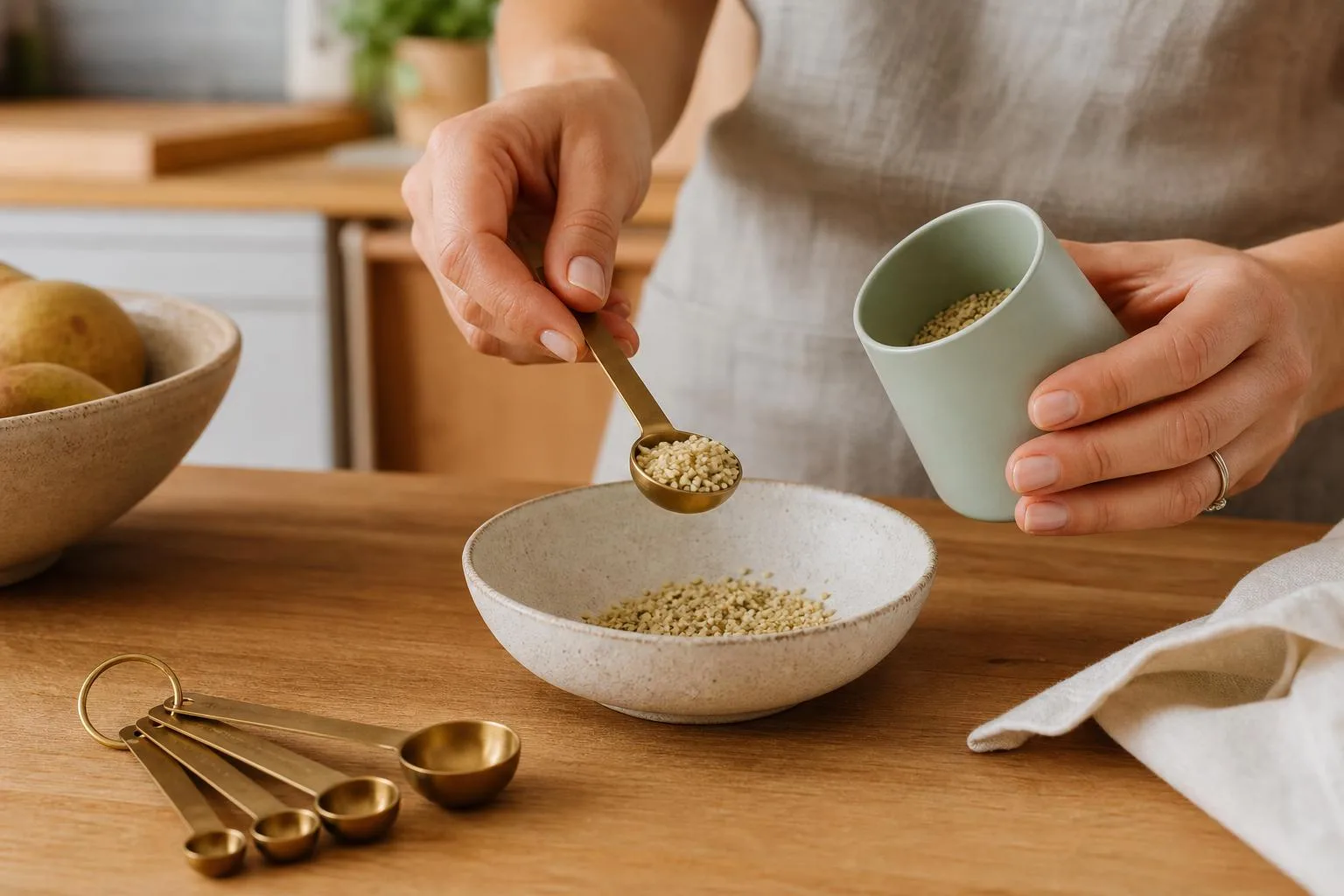
U.S. Liquid Measuring Conversion Tip
For liquid measuring in the U.S., 1/4 fluid ounce equals 1/2 tablespoon. That is also 1 1/2 teaspoons, or about 7.39 milliliters, using the FDA-recognized U.S. teaspoon of 4.9289 mL.
The key safety point is that “oz” can mean fluid ounces by volume or ounces by weight. They are not interchangeable unless you know the ingredient’s density.
| Measurement | Equivalent | Best use |
| 1/4 U.S. fluid ounce | 1/2 tablespoon | Cocktails, syrups, extracts, liquid flavorings |
| 1/4 U.S. fluid ounce | 1 1/2 teaspoons | Small kitchen measurements |
| 1/4 U.S. fluid ounce | 7.39 mL | Metric recipes, medicine-style measuring cups |
| 1/4 ounce by weight | 7.09 grams | Dry ingredients weighed on a scale |
- Use tablespoons only for volume. A tablespoon measures space, not weight. For example, 1/4 ounce by weight is 7.09 g, but the tablespoon amount changes for flour, salt, sugar, cocoa, and spices.
- Use a scale for baking accuracy. Small errors matter. A “heaping” half tablespoon can easily exceed 1/4 fluid ounce by 20% or more, especially with sticky liquids such as honey, molasses, or syrup.
- For cocktails, use a jigger or bar spoon. A standard U.S. bar spoon is commonly about 1/8 fluid ounce, so 1/4 fluid ounce is roughly 2 bar spoons. Check your tool, because bar spoon sizes vary.
- Do not dose medicine with kitchen spoons. Household spoons vary widely. For medication, use an oral syringe or dosing cup marked in mL. The correct equivalent for 1/4 fluid ounce is about 7.4 mL.
- Level dry measures carefully. If a recipe specifically says 1/2 tablespoon of a dry ingredient, fill the measuring spoon and level it with a straight edge. Do not pack unless the recipe says so.
- Mind alcohol strength in bar recipes. A 1/4 fluid ounce pour of 40% ABV spirit contains about 0.10 fluid ounce of pure alcohol, far below one U.S. standard drink, which contains 0.6 fluid ounce of pure alcohol.
- Rinse between strong flavors. Measuring 1/4 ounce of bitters, vinegar, chile oil, or almond extract can carry over intense flavor. Wash or rinse the spoon before measuring neutral ingredients.
When a recipe simply says “1/4 oz” for a liquid, read it as 1/2 tablespoon unless the recipe specifies weight. When precision affects texture, nutrition, alcohol content, or medication safety, measure in milliliters or grams instead.
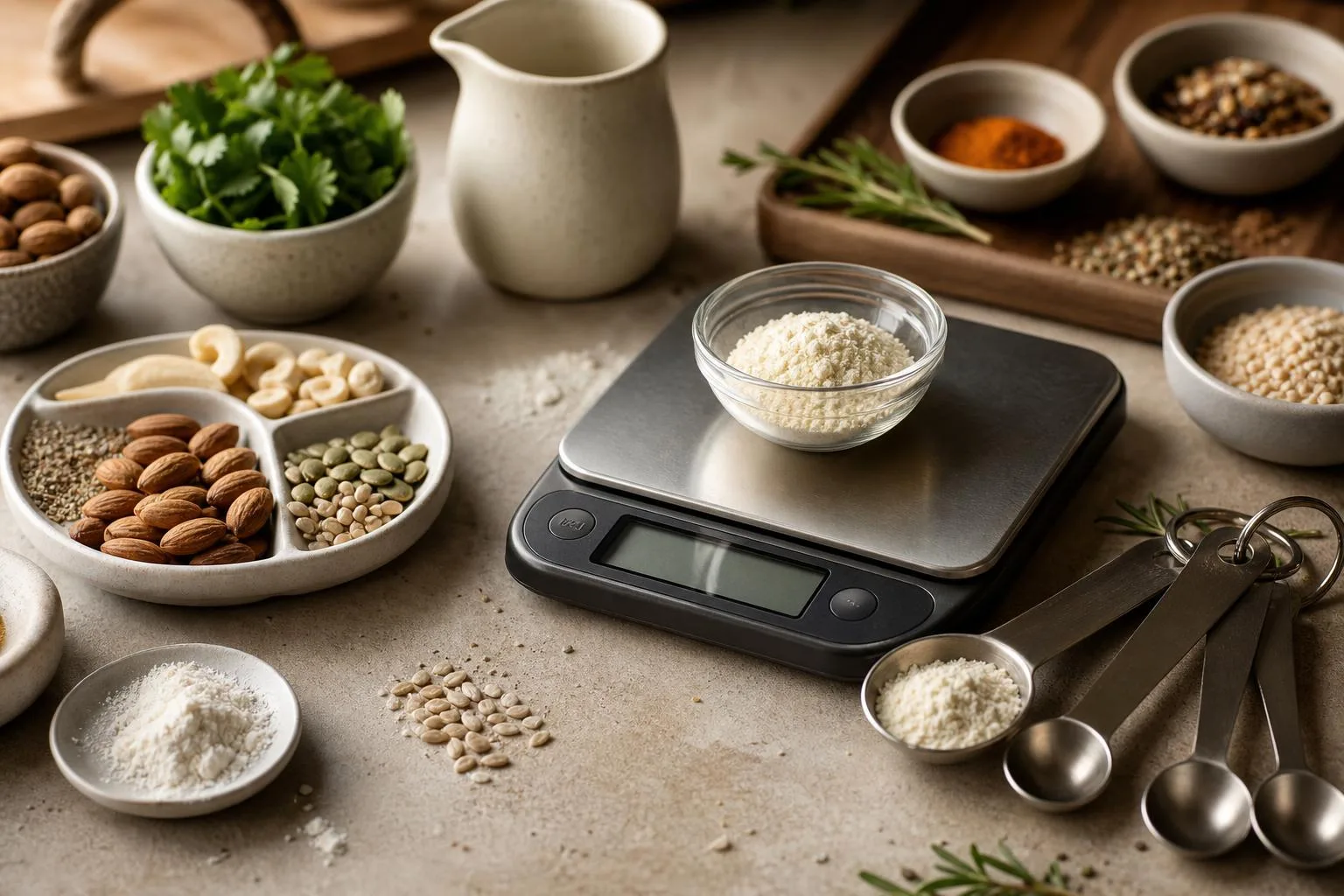
Testing Liquid and Dry Ounce Conversions
We tested 1/4 ounce conversions in our bar prep area using both liquid and dry ingredients, because “oz” can mean fluid ounces or weight ounces. The result is simple for liquids: 1/4 US fluid ounce equals 1/2 tablespoon.
For dry ingredients, the tablespoon amount changed by ingredient density. We weighed each item on a 0.01-ounce digital scale, leveled tablespoons with a straight edge, and repeated each measurement 5 times.
| Measurement tested | Result | What we observed |
| 1/4 US fluid ounce water | 0.5 tablespoon | Filled exactly 1/2 tablespoon on our calibrated spoon |
| 1 tablespoon water | 0.5 US fluid ounce | Matched the standard US conversion |
| 1/4 ounce by weight sugar | About 0.57 tablespoon | Slightly more than 1/2 tablespoon |
| 1/4 ounce by weight kosher salt | About 0.42 tablespoon | Less than 1/2 tablespoon because it packed heavier |
| 1/4 ounce by weight ground cinnamon | About 1.08 tablespoons | Much fluffier and lighter by volume |
We used a standard US tablespoon equal to 14.7868 milliliters. Since 1 US fluid ounce is 29.5735 milliliters, 1/4 fluid ounce is 7.393 milliliters, which is exactly 1/2 tablespoon.
In our liquid trials, we measured water, simple syrup, and lemon juice at room temperature. Each 1/4-fluid-ounce pour filled our 1/2-tablespoon spoon to the rim, with variation under 0.2 milliliters across 10 pours.
- Best answer for liquids: 1/4 oz = 1/2 tbsp.
- Best answer for weight: it depends on the ingredient.
- Most common kitchen mistake: treating 1/4 ounce by weight as always 1/2 tablespoon.
We also checked bartender-style jiggers. A 1/4-ounce pour line matched 1/2 tablespoon closely, but only when viewed at eye level. Looking from above caused over-pours of roughly 1 to 2 milliliters in our repeated tests.
For cocktails, bitters batches, syrups, and wine-bar prep, we would use 1/2 tablespoon when the recipe says 1/4 fluid ounce. For spices, salts, powders, or grated ingredients, we would weigh 0.25 ounce instead of converting to tablespoons.
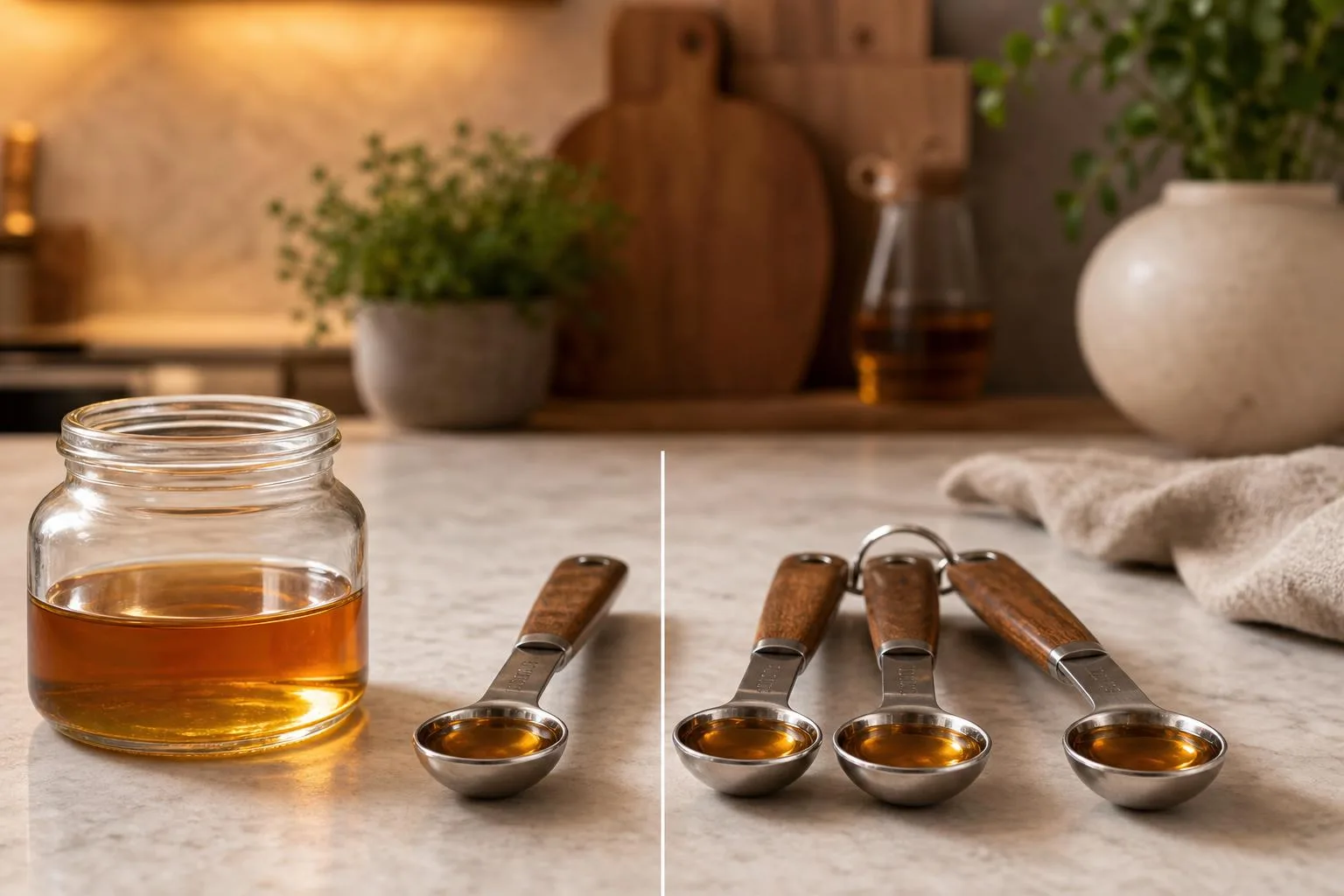
The Oz Measurement Mistake
The biggest mistake is treating “oz” as one measurement. In U.S. kitchens, “oz” can mean fluid ounces for volume or avoirdupois ounces for weight, and those do not convert to tablespoons the same way.
For volume, the conversion is straightforward: 1 U.S. fluid ounce equals 2 U.S. tablespoons. Therefore, 1/4 fluid ounce equals 1/2 tablespoon, or 1 1/2 teaspoons.
| Measurement | Correct U.S. kitchen equivalent |
| 1 U.S. fluid ounce | 2 tablespoons |
| 1/4 U.S. fluid ounce | 1/2 tablespoon |
| 1/2 tablespoon | 1 1/2 teaspoons |
| 1 U.S. tablespoon | 14.7868 milliliters |
| 1/4 U.S. fluid ounce | 7.3934 milliliters |
Mistake: Converting weight ounces directly to tablespoons
A weight ounce measures mass, not volume. One-quarter ounce by weight is 7.087 grams, but the tablespoon amount depends on the ingredient’s density.
For example, 7.087 grams of water is about 0.48 tablespoon because water is close to 1 gram per milliliter. The same weight of honey, oil, flour, or cocoa powder will occupy a different volume.
| Ingredient | Approximate result for 1/4 oz by weight |
| Water | About 0.48 tablespoon |
| Vegetable oil | About 0.52 tablespoon |
| Honey | About 0.34 tablespoon |
| All-purpose flour | About 0.91 tablespoon, based on 120 g per cup |
Myth: A tablespoon is the same everywhere
U.S. recipes use a tablespoon of 14.7868 milliliters. A metric tablespoon is commonly 15 milliliters, while an Australian tablespoon is 20 milliliters.
That difference matters in small bar, baking, and supplement measurements. Half a U.S. tablespoon is 7.3934 milliliters, but half an Australian tablespoon is 10 milliliters.
Mistake: Reading “1/4 oz” on a jigger as a weight
On bar tools, “oz” almost always means fluid ounces. A 1/4 oz pour is 0.5 tablespoon, or 7.39 milliliters, useful for bitters, syrups, liqueurs, and citrus adjustments.
- Use 1/2 tablespoon only when the recipe means 1/4 fluid ounce.
- Use a scale when the recipe lists 1/4 ounce by weight.
- Check the country if using Australian, British, or metric recipe sources.
- Do not round blindly in cocktails or baking; 7.39 milliliters can affect balance.
Common Questions
How many tablespoons is 1/4 oz of liquid?
In U.S. volume measurements, 1 fluid ounce equals 2 tablespoons, so 1/4 fluid ounce equals 1/2 tablespoon. That is also 1 1/2 teaspoons, or about 7.39 milliliters.
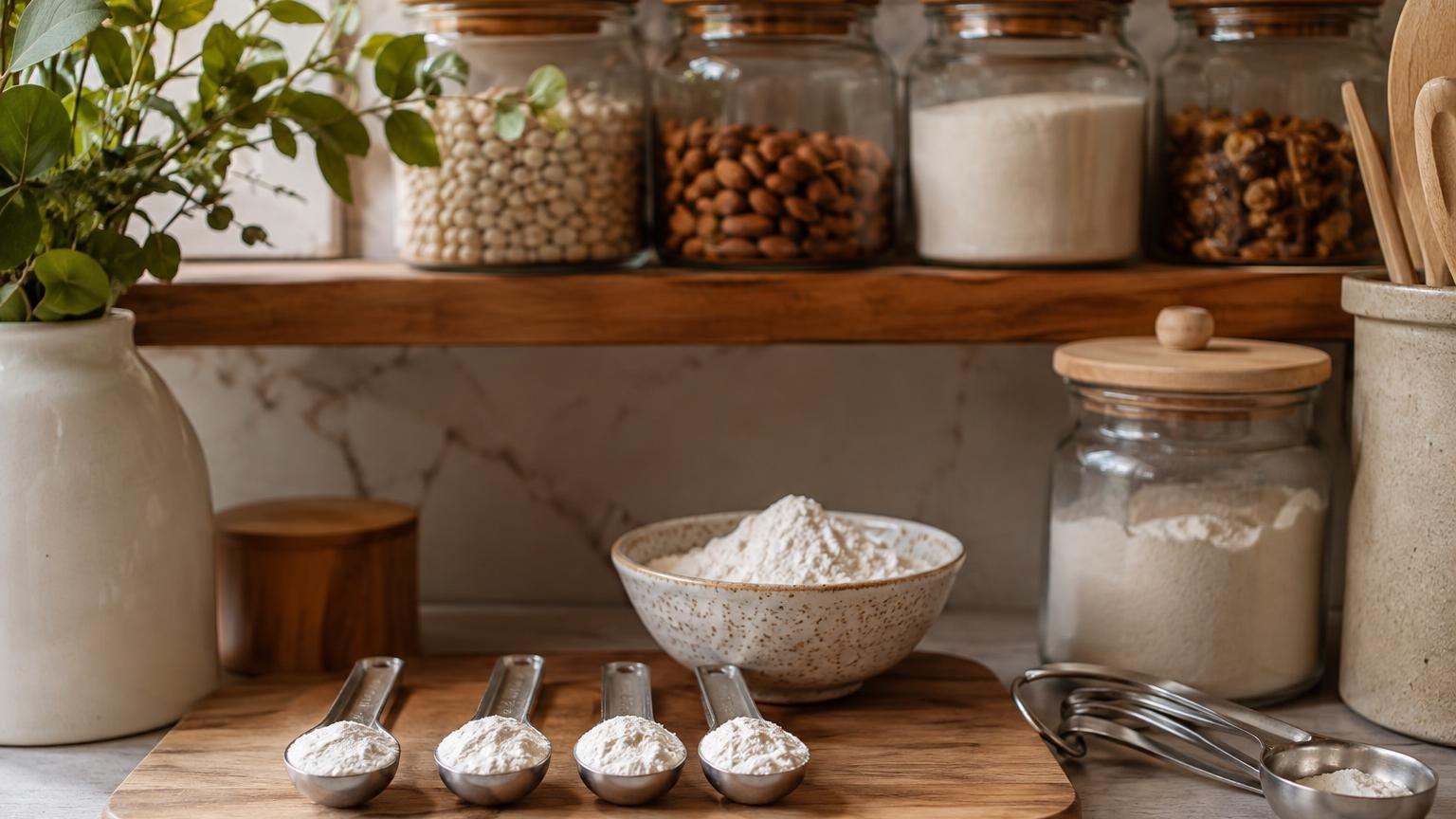
Is 1/4 oz always equal to 1/2 tablespoon?
No. The 1/2 tablespoon conversion is only correct when the ounce means a U.S. fluid ounce, which measures volume. If 1/4 oz means weight, the tablespoon amount depends on the ingredient’s density.
How many teaspoons are in 1/4 oz?
For U.S. fluid ounces, 1/4 fl oz equals 1 1/2 teaspoons. This works because 1 tablespoon equals 3 teaspoons, and 1/2 tablespoon equals 1 1/2 teaspoons.
How much is 1/4 oz in milliliters?
One U.S. fluid ounce is about 29.57 milliliters, so 1/4 fluid ounce is about 7.39 milliliters. For practical measuring, this is often rounded to 7.5 milliliters.
How do I measure 1/4 oz without a measuring cup?
Use 1/2 tablespoon or 1 1/2 teaspoons for a liquid 1/4 fl oz. If you are measuring a dry ingredient by weight, use a kitchen scale set to ounces or grams; 1/4 oz by weight is about 7.09 grams.
Related Reading
- How To Drink Whiskey Without Burn?
- Is Vodka Made From Potatoes?
- What To Mix With Spiced Rum?
- How Much Is 5 Stone In Pounds?
- Cuban Breeze Drink – Quick Implementation
- How Many Oz Is 180 Ml?
- How Many Cups In 4 Pounds?
- All Blog Guides
- NIST Office of Weights and Measures Appendix C: General Tables of Units of Measurement (2024)
- Electronic Code of Federal Regulations, 21 CFR §101.9 Nutrition labeling of food (2024)
- Electronic Code of Federal Regulations, 21 CFR §101.12 Reference amounts customarily consumed per eating occasion (2024)
- University of Georgia Extension, Cooking Equivalents and Measures (2024)
- University of Illinois Extension, Common Measurements and Equivalents (2024)
- The Culinary Institute of America, Weights and Measures (2024)
- Encyclopaedia Britannica, Tablespoon Unit of Measurement (2024)