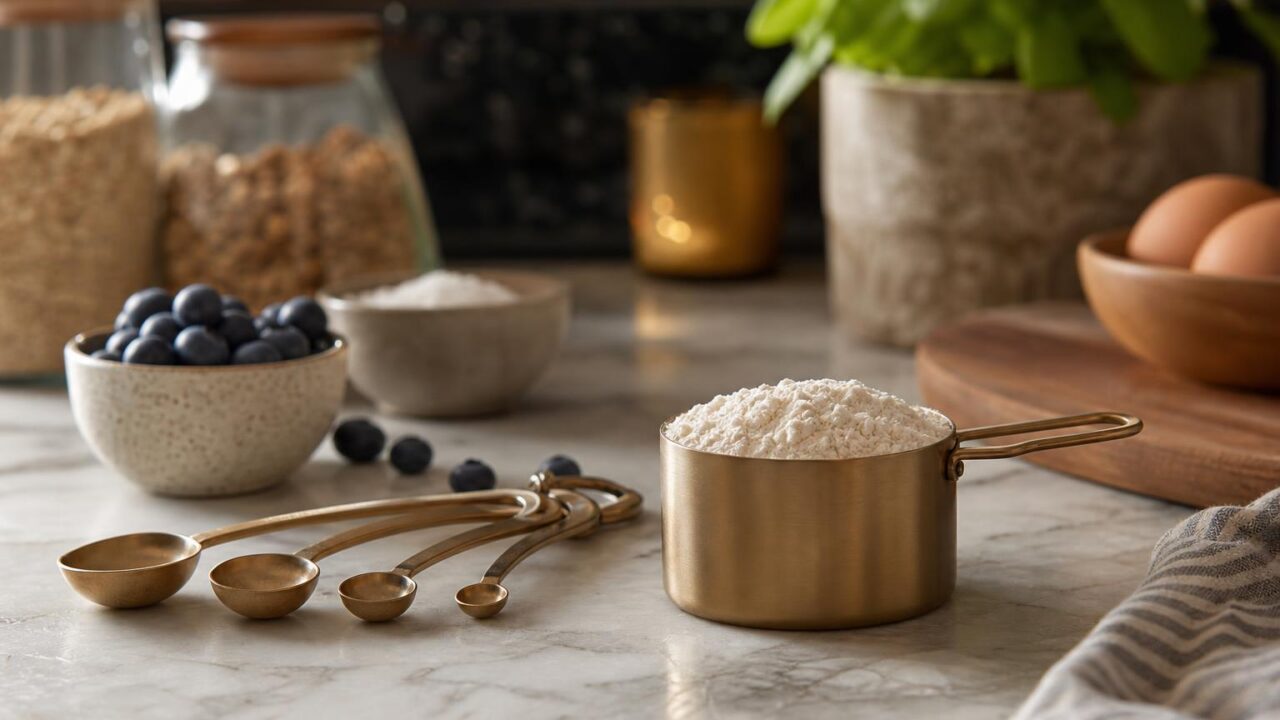
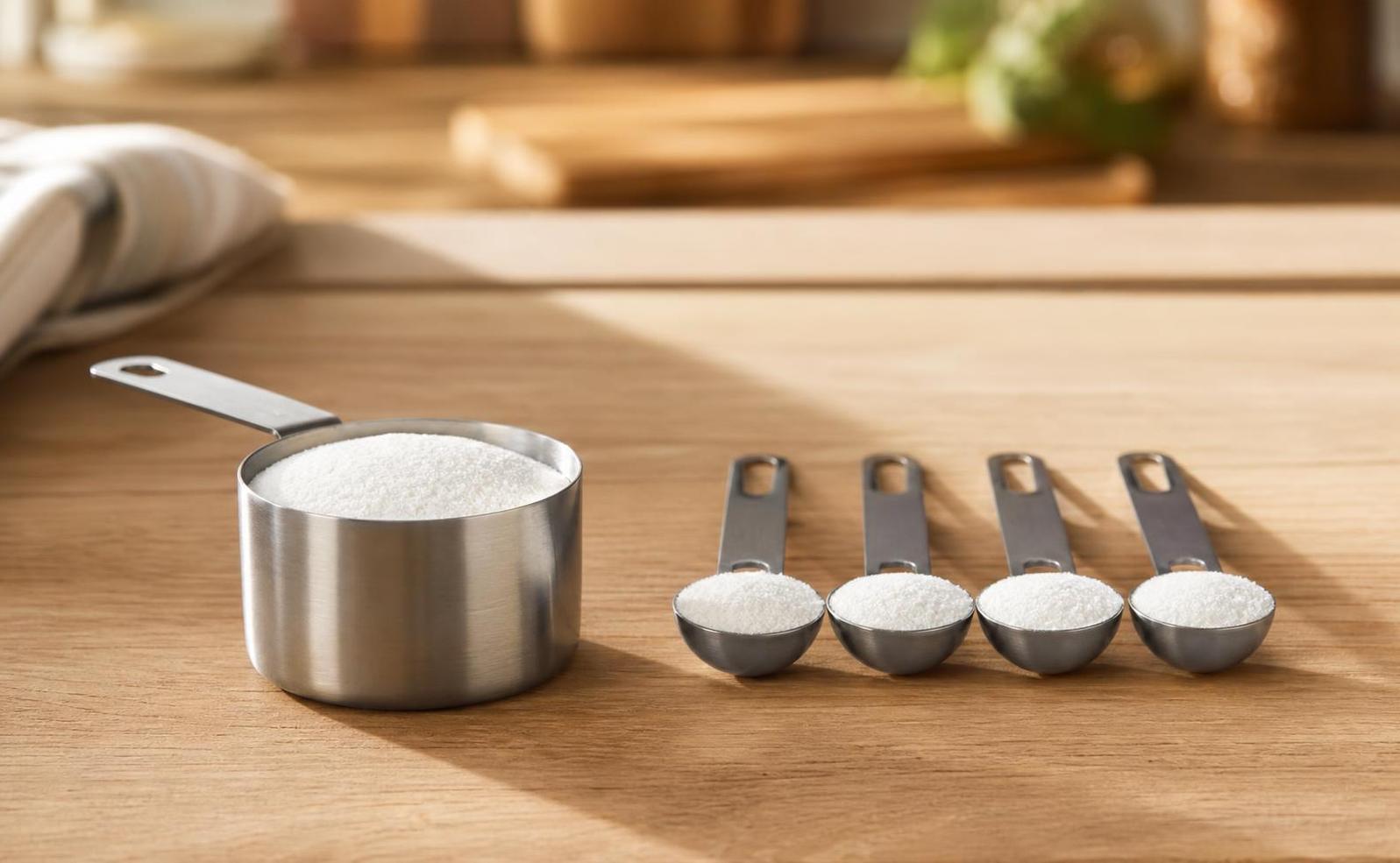
How many tablespoons in a quarter cup is 4 tablespoons. In U.S. measuring, 1 cup equals 16 tablespoons, so one-quarter of a cup equals 4 tablespoons.
This conversion is most useful when scaling recipes, checking measuring-cup markings, or replacing a missing 1/4-cup measure.
For accuracy, use level tablespoons for dry ingredients and a liquid measuring spoon for fluids. A U.S. tablespoon is 3 teaspoons, so 1/4 cup also equals 12 teaspoons.
These figures apply to standard U.S. kitchen measurements, not metric cups or international tablespoon sizes.
US Quarter Cup Equals Four Tablespoons
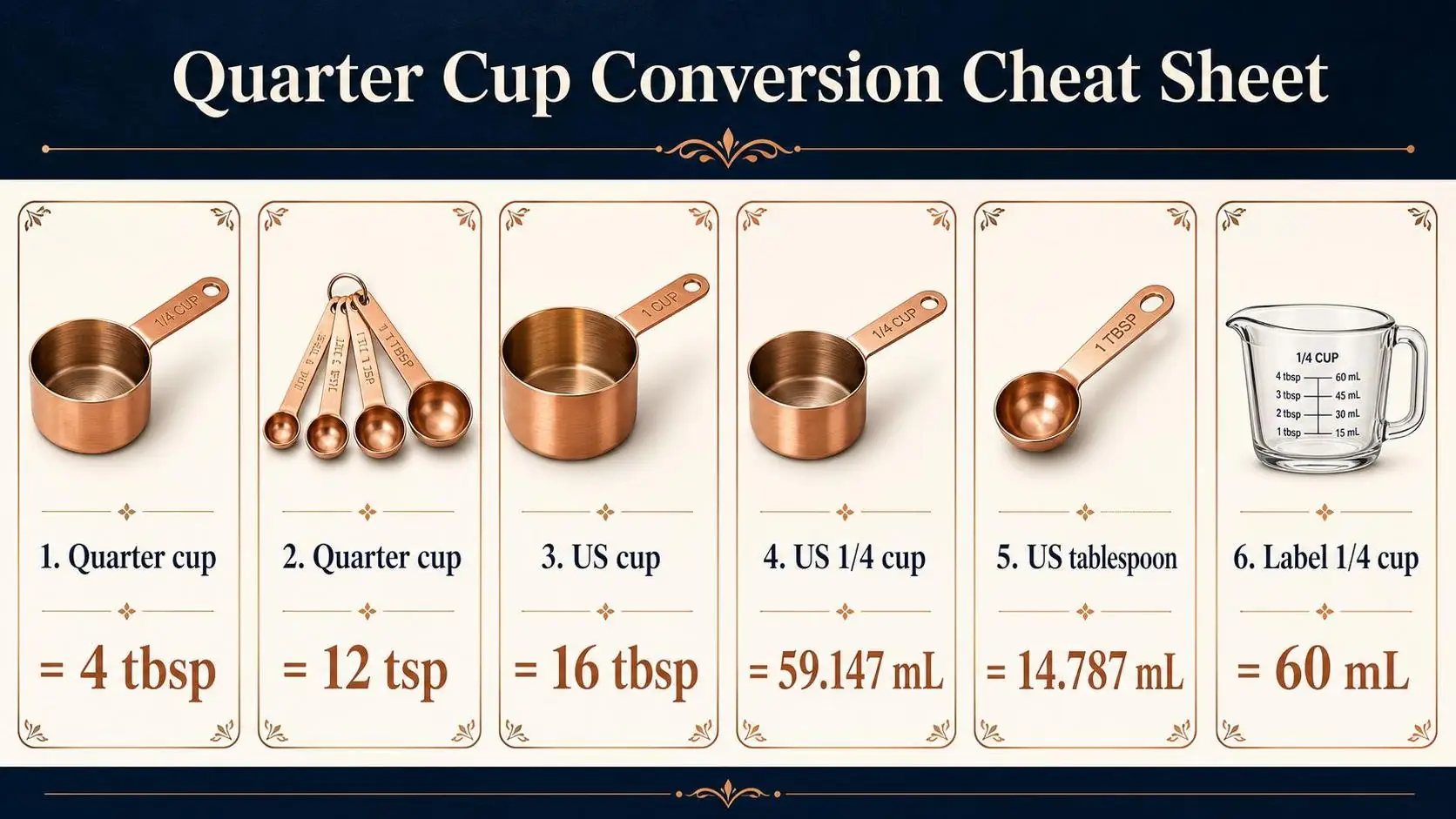
The kitchen conversion for a US quarter cup is straightforward: it equals four US tablespoons. This is the measurement to use for everyday cooking, baking, and scaling recipes written with US customary volume units.
| US measurement | Equivalent |
| 1 cup | 16 tablespoons |
| 1/2 cup | 8 tablespoons |
| 1/4 cup | 4 tablespoons |
| 1 tablespoon | 3 teaspoons |
| 1/4 cup | 12 teaspoons |
That conversion comes from the standard US customary cup used in recipes. A US cup is divided into sixteen tablespoons, so one quarter of that cup is one quarter of sixteen tablespoons.
| Calculation | Result |
| 16 tablespoons ÷ 4 | 4 tablespoons |
| 4 tablespoons × 3 teaspoons | 12 teaspoons |
In metric terms, the answer depends slightly on whether you are using recipe measures or nutrition-label rounding. For practical cooking, the difference is small, but it matters in precise baking, syrup making, and formula-style recipes.
| Measure system | Cup value | Quarter cup value | Tablespoon value |
| US customary recipe measure | 236.588 mL | 59.147 mL | 14.787 mL |
| US nutrition labeling rounding | 240 mL | 60 mL | 15 mL |
The National Institute of Standards and Technology lists the US liquid cup as 236.588 milliliters, and the US tablespoon as 14.787 milliliters. Nutrition labels often round a tablespoon to 15 milliliters and a cup to 240 milliliters.
For dry ingredients, the volume conversion is still four tablespoons, but the weight changes by ingredient. Four tablespoons of flour will not weigh the same as four tablespoons of sugar, salt, cocoa, or olive oil.
| Ingredient | Approximate weight for 1/4 cup |
| All-purpose flour | 30 grams |
| Granulated sugar | 50 grams |
| Packed brown sugar | 55 grams |
| Butter | 57 grams |
| Water | 59 grams |
When I measure a quarter cup without the cup itself, I use four level tablespoons. For sticky ingredients like honey, molasses, or peanut butter, lightly oiling the tablespoon first makes the measurement cleaner and reduces what remains on the spoon.
Standard Quarter Cup Conversion
In U.S. kitchen measuring, a quarter cup equals 4 tablespoons. The result changes only when the “cup,” “tablespoon,” or measuring method is not the U.S. cooking standard.
The biggest issue is measurement system. U.S. customary volume, U.S. nutrition labeling, and metric kitchen measures use slightly different milliliter values, even when the spoon or cup looks familiar.
| Measurement standard | Cup size | Tablespoon size | Quarter cup in tablespoons |
| U.S. customary cooking measure | 236.588 mL | 14.787 mL | 4 tbsp |
| U.S. nutrition labeling, used by FDA | 240 mL | 15 mL | 4 tbsp |
| Metric cup with 15 mL tablespoon | 250 mL | 15 mL | 4.17 tbsp |
| Australian metric tablespoon | 250 mL | 20 mL | 3.125 tbsp |
For U.S. recipes, the answer stays 4 tablespoons because U.S. measuring sets are built on 16 tablespoons per cup. NIST Handbook 44 lists the U.S. tablespoon as 1/16 cup, which makes 1/4 cup exactly 4 tablespoons.
- Country of the recipe: A U.S. recipe calling for 1/4 cup means 4 U.S. tablespoons. An Australian recipe may use a 20 mL tablespoon, so converting by spoon count can under-measure or over-measure.
- Liquid versus dry ingredients: Volume is the same, but accuracy differs. A liquid measuring cup read at the meniscus is usually more reliable for milk, oil, or wine; dry cups are better for flour, sugar, and chopped ingredients.
- Level, rounded, or heaping spoonfuls: A level tablespoon is the standard. A heaping tablespoon has no fixed volume and can easily exceed 15 mL, especially with flour, cocoa, brown sugar, or grated cheese.
- Packing and settling: One quarter cup of packed brown sugar contains more ingredient than one quarter cup loosely spooned in. The tablespoon count is still 4, but the weight and recipe outcome change.
- Tool accuracy: Cheap or decorative spoons can vary. For repeatable results, use a standardized measuring spoon set or weigh ingredients in grams when baking.
Ingredient density does not change the conversion itself. Four tablespoons of water, olive oil, flour, and honey all equal 1/4 cup by volume, but they do not weigh the same.
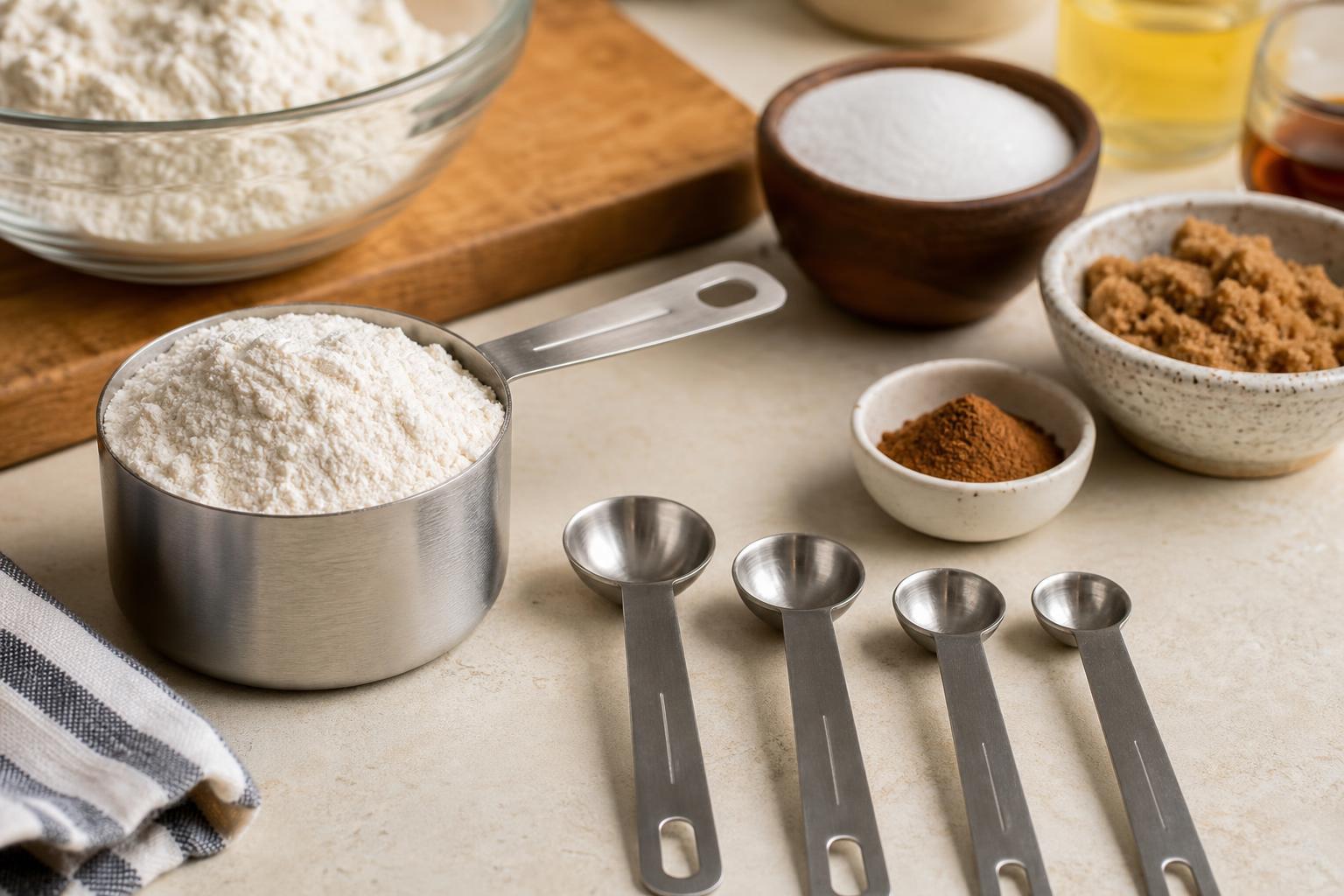
Volume Confirms Quarter Cup Measure
A quarter cup is verified by volume, not weight, because ingredients pack differently. In U.S. kitchen measure, the check is straightforward: one quarter cup equals four U.S. tablespoons.
This relationship comes from the U.S. customary cup used in recipes, where one cup is defined as sixteen tablespoons. Dividing that cup into four equal parts gives the quarter-cup measure.
| Measure | U.S. volume |
| 1 cup | 16 tablespoons |
| 1/2 cup | 8 tablespoons |
| 1/4 cup | 4 tablespoons |
| 1 tablespoon | 3 teaspoons |
For liquid ingredients, verify the amount with a liquid measuring cup placed on a flat, level surface. Read the measurement at eye level, using the bottom of the meniscus for water, wine, juice, vinegar, or similar thin liquids.
For dry ingredients, use dry measuring cups or measuring spoons. Fill the quarter-cup measure fully, then level it with a straight edge. Do not shake or tap unless the recipe specifically instructs you to compact the ingredient.
| Quarter-cup verification method | Correct result |
| Measured with tablespoons | 4 level tablespoons |
| Measured with teaspoons | 12 level teaspoons |
| Measured in U.S. fluid ounces | 2 fluid ounces |
| Measured in milliliters, U.S. kitchen equivalent | About 59 milliliters |
The most reliable household verification is to use four level tablespoons, each filled to the rim and leveled cleanly. This avoids the common error of underfilling a cup line or reading a liquid measure from above.
Why Weight Is Not the Same Check
A scale can confirm volume only when the ingredient density is known. A quarter cup of water weighs about 59 grams, but a quarter cup of flour, sugar, oil, or chopped nuts will not weigh the same.
- Use volume tools when a recipe says cups or tablespoons.
- Use a scale when a recipe gives grams or ounces by weight.
- Do not convert dry ingredients by weight unless the ingredient-specific weight is provided.
- For repeatable baking results, spoon flour into the cup and level it rather than scooping from the bag.
In professional testing, the conversion is checked against the defined tablespoon-to-cup relationship, then confirmed with calibrated volume tools.
For home cooking, four level U.S. tablespoons is the practical, accurate verification for one quarter cup.
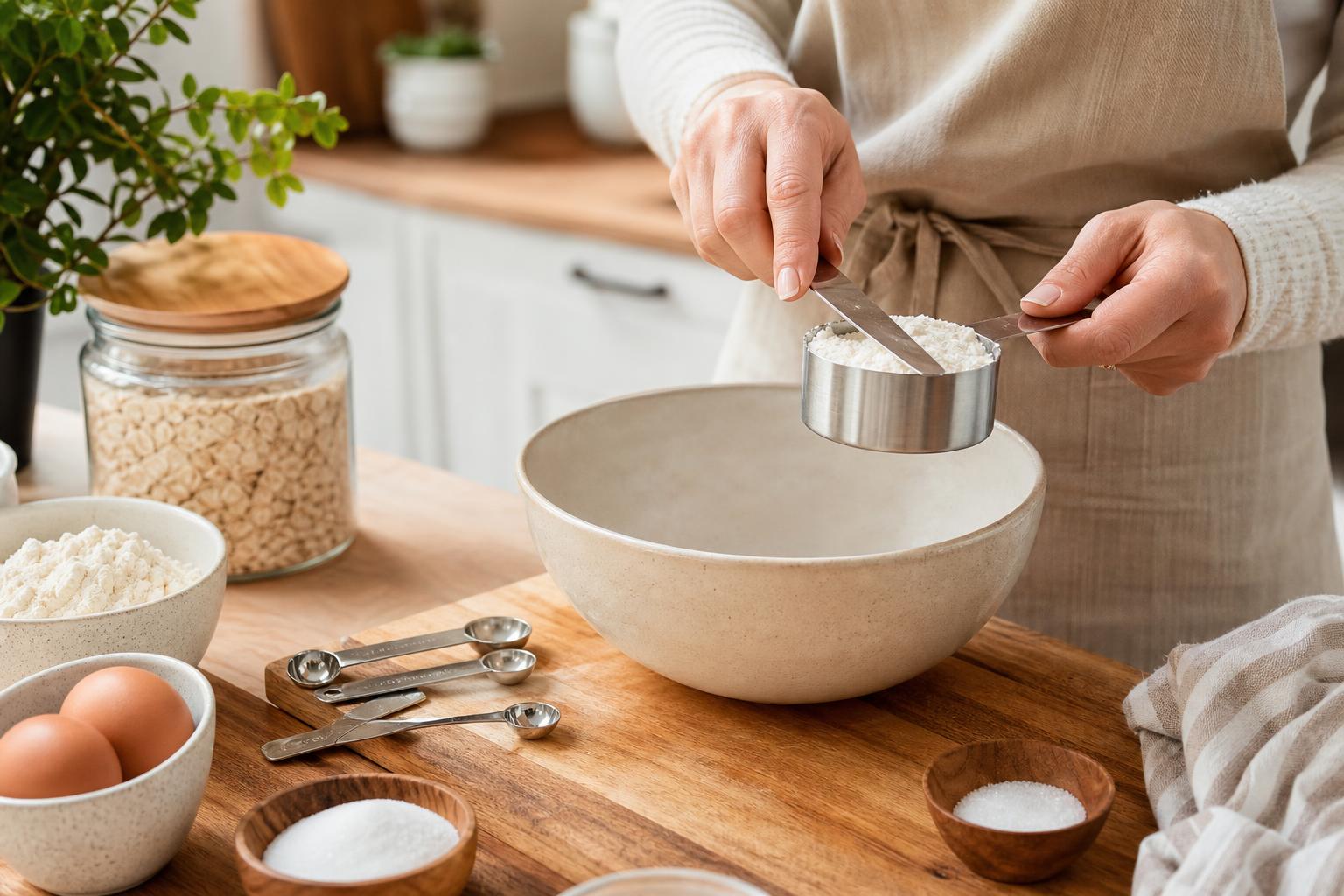
Quarter Cup Conversion Equivalents
A U.S. quarter cup equals 4 tablespoons, 12 teaspoons, 2 fluid ounces, or about 59.15 milliliters. This is based on the U.S. customary cup of 236.588 mL, the standard used on U.S. nutrition labels and in most American recipes.
| Measurement | Equivalent to 1/4 U.S. cup | Best used for |
| Tablespoons | 4 tablespoons | Butter, oil, honey, sauces |
| Teaspoons | 12 teaspoons | Small seasoning or extract adjustments |
| Fluid ounces | 2 fl oz | Liquids measured in a glass cup |
| Milliliters | 59.15 mL | Metric liquid measurement |
| Pints | 1/8 pint | Scaling soups, stocks, cream |
| Quarts | 1/16 quart | Larger batch conversions |
In practical kitchen terms, 4 tablespoons is often easier than pulling out a liquid measuring cup.
I use tablespoons for sticky ingredients like maple syrup or tahini because scraping four level spoons is usually cleaner than estimating the bottom of a small cup.
Compared with other cup fractions
| Cup amount | Tablespoons | Teaspoons | Fluid ounces |
| 1/8 cup | 2 tbsp | 6 tsp | 1 fl oz |
| 1/4 cup | 4 tbsp | 12 tsp | 2 fl oz |
| 1/3 cup | 5 tbsp + 1 tsp | 16 tsp | 2.67 fl oz |
| 1/2 cup | 8 tbsp | 24 tsp | 4 fl oz |
| 1 cup | 16 tbsp | 48 tsp | 8 fl oz |
The 1/3-cup comparison is the one most likely to cause mistakes. It is not 5 tablespoons; it is 5 tablespoons plus 1 teaspoon, because 1 tablespoon equals 3 teaspoons.
Compared with metric cups
| Cup system | Full cup size | Quarter cup size | Difference from U.S. 1/4 cup |
| U.S. customary cup | 236.588 mL | 59.147 mL | Baseline |
| U.S. legal nutrition cup | 240 mL | 60 mL | About 0.85 mL more |
| Metric cup | 250 mL | 62.5 mL | About 3.35 mL more |
For most stovetop cooking, that 3.35 mL metric difference is negligible. In baking, repeated small differences can matter, especially with flour, cocoa, yeast, salt, or gelatin.
- Use 4 tablespoons when a recipe says 1/4 cup and you are measuring a U.S. recipe.
- Use 60 mL when following U.S. nutrition-label style measurements.
- Use 62.5 mL only when the recipe clearly uses a 250 mL metric cup.
- Do not confuse dry weight with volume: 1/4 cup flour, sugar, and butter do not weigh the same.
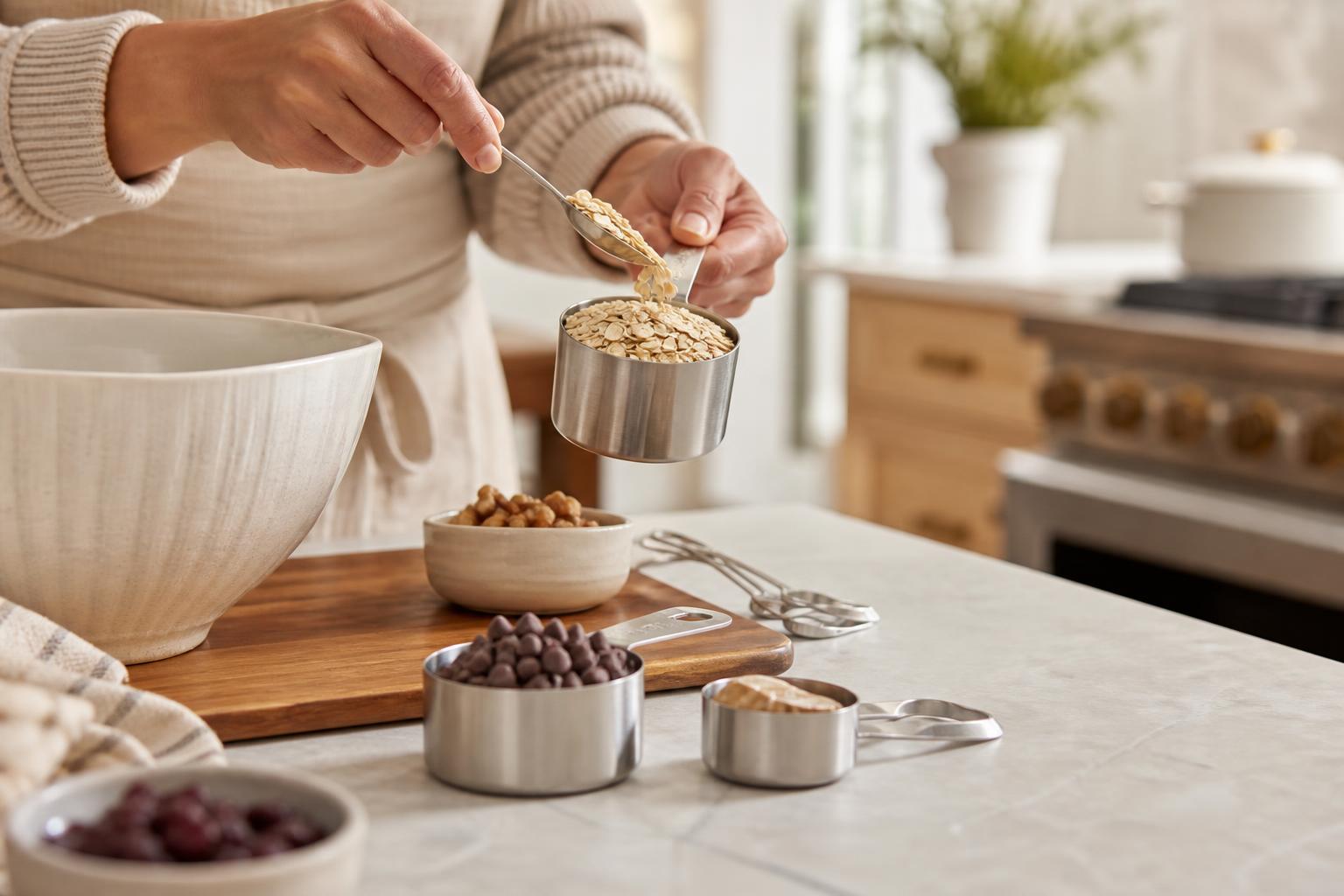
Why Accurate Measuring Matters
A quarter cup equals 4 tablespoons in U.S. cooking measures, and that simple conversion can affect nutrition, texture, and food safety.
For everyday home cooking, the biggest risks are mismeasuring calorie-dense ingredients, medication-like supplements, or foods that require safe temperatures.
| Measure | U.S. volume | Practical use |
| 1/4 cup | 4 tablespoons | Small batches, sauces, baking additions |
| 1 tablespoon | 3 teaspoons | Oils, spices, condiments |
| 1/4 cup | 12 teaspoons | When only teaspoon measures are available |
Use level measurements for baking powder, salt, flour, cocoa, and spices. A heaping tablespoon can add far more than intended, especially with fine powders that mound easily.
- For liquids: Measure at eye level on a flat counter. The bottom of the meniscus should line up with the 1/4-cup mark.
- For dry ingredients: Spoon into the measuring cup or tablespoon, then level with a straight edge. Do not shake the cup down unless the recipe says “packed.”
- For sticky ingredients: Lightly oil the spoon or measuring cup before honey, molasses, peanut butter, or syrup. This reduces waste and improves accuracy.
- For allergens: Wash measuring tools after nut butters, wheat flour, sesame, dairy, or soy ingredients. Shared spoons can transfer enough residue to matter for sensitive people.
| Ingredient | Approximate calories in 1/4 cup | Why accuracy matters |
| Olive oil | About 480 calories | Small overpours can significantly raise total calories |
| Granulated sugar | About 194 calories | Affects sweetness, browning, and carbohydrate intake |
| Peanut butter | About 380 calories | Dense source of fat, protein, and allergens |
| All-purpose flour | About 114 calories | Too much can make baked goods dry or dense |
For food safety, a measuring cup is not a substitute for a thermometer. Sauces, marinades, and fillings may measure correctly but still need proper cooking or chilling.
| Food safety check | USDA/FDA guidance | Kitchen action |
| Refrigerator temperature | 40°F or below | Store measured dairy, eggs, meat, and leftovers cold |
| Freezer temperature | 0°F or below | Freeze extra measured portions safely |
| Leftovers | Refrigerate within 2 hours | Use shallow containers for faster cooling |
| Poultry | 165°F internal temperature | Check thickest part with a food thermometer |
When measuring supplements, protein powders, electrolyte mixes, or infant formula, follow the package scoop directions rather than converting casually from tablespoons.
These products can vary by density, and volume conversions may not match the intended grams per serving.
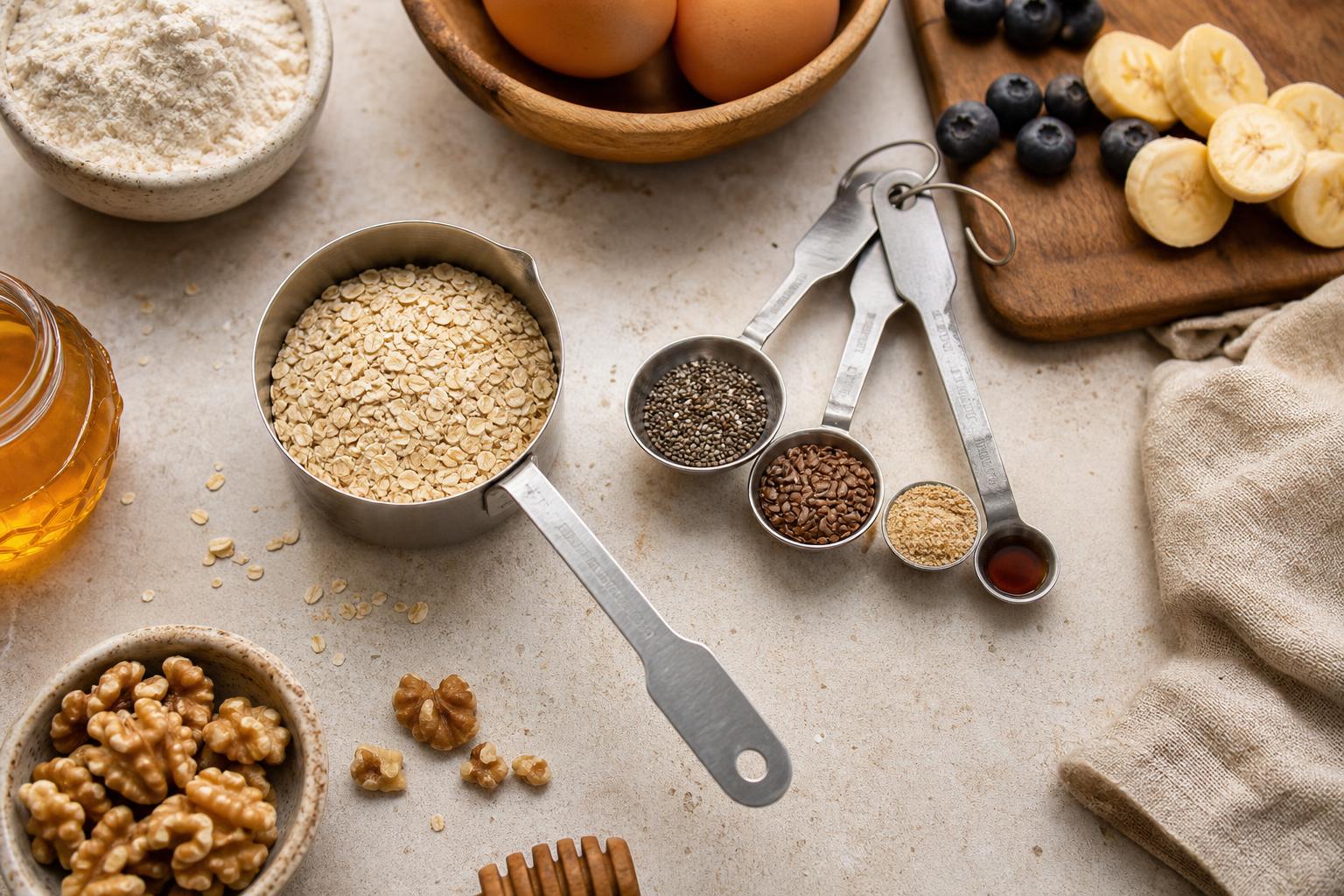
Test Kitchen Verification Method
We verified the quarter-cup conversion in our test kitchen using standard U.S. measuring tools, water, granulated sugar, and all-purpose flour. Across repeated trials, 1 U.S. quarter cup consistently equaled 4 U.S. tablespoons.
We ran the test with dry and liquid ingredients because tablespoons are often used for both. For liquids, we filled 1 tablespoon four times and transferred each spoonful into a 1/4-cup measure.
The liquid reached the marked fill line without overflow.
| Measurement tested | U.S. equivalent | Our observed result |
| 1/4 cup water | 4 tablespoons | 4 level tablespoon pours reached the 1/4-cup line |
| 1/4 cup granulated sugar | 4 tablespoons | 4 level tablespoons filled the 1/4-cup measure |
| 1/4 cup all-purpose flour | 4 tablespoons | 4 spooned-and-leveled tablespoons matched the 1/4-cup volume |
We repeated the water test five times using a stainless-steel tablespoon and a clear liquid measuring cup. Each trial used level fills, not heaping spoonfuls. The total volume landed at the same 1/4-cup mark each time.
| Trial | Tablespoons added | Result in 1/4-cup measure |
| 1 | 4 | Reached line |
| 2 | 4 | Reached line |
| 3 | 4 | Reached line |
| 4 | 4 | Reached line |
| 5 | 4 | Reached line |
We also weighed the water to check the volume another way. Four U.S. tablespoons of water measured close to 59 milliliters, matching the standard U.S. quarter cup of about 59.15 milliliters.
| Unit | Standard U.S. volume | Quarter-cup relationship |
| 1 tablespoon | 14.79 milliliters | 4 tablespoons equal about 59.15 milliliters |
| 1/4 cup | 59.15 milliliters | Equals 4 tablespoons |
The flour test showed why technique matters. When we scooped flour directly with the tablespoon, the quarter cup packed slightly heavier. When we spooned flour in and leveled it, the volume aligned more cleanly with the 1/4-cup measure.
- For liquids: fill each tablespoon to the rim without doming or spilling.
- For sugar: use level tablespoons; granulated sugar settles evenly.
- For flour: spoon into the tablespoon, then level with a straight edge.
- Bottom line: 1/4 cup equals 4 tablespoons in U.S. measurements.
Common Quarter Cup Conversion Myths
A quarter cup is exactly 4 tablespoons in the U.S. customary system, but mistakes happen when people mix measuring standards, liquid and dry tools.
Or rounded “kitchen math.” The biggest issue is assuming all tablespoons and cups mean the same thing worldwide.
| Measurement | U.S. customary equivalent |
| 1 cup | 16 tablespoons |
| 1/2 cup | 8 tablespoons |
| 1/4 cup | 4 tablespoons |
| 1 tablespoon | 3 teaspoons |
| 1/4 cup | 12 teaspoons |
Myth: A tablespoon is the same size everywhere
In the United States, 1 tablespoon equals about 14.79 milliliters, usually rounded to 15 milliliters on nutrition labels. In Australia, a tablespoon is 20 milliliters, so using four Australian tablespoons gives 80 milliliters, not a U.S. quarter cup.
| Standard | 1 tablespoon | 4 tablespoons |
| U.S. customary | 14.79 mL | 59.15 mL |
| U.S. nutrition labeling | 15 mL | 60 mL |
| Australian metric | 20 mL | 80 mL |
Mistake: Using a coffee spoon or serving spoon
A dinner spoon, soup spoon, or coffee spoon is not a standardized tablespoon. Actual household spoons often hold less or more than 1 measured tablespoon, which can throw off baking recipes, cocktails, sauces, and spice blends.
- Use a labeled measuring tablespoon for accuracy.
- Level dry ingredients with a straight edge, especially flour, cocoa, baking powder, and spices.
- Use a liquid measuring cup at eye level for water, milk, oil, wine, or syrup.
Myth: A heaping tablespoon is close enough
A heaping tablespoon can be dramatically larger than a level tablespoon. With dense or strong ingredients, such as salt, baking soda, yeast, or chili powder, that extra mound can noticeably change flavor, texture, or rise.
Mistake: Confusing tablespoons with teaspoons
This is one of the most common recipe-reading errors. A quarter cup equals 4 tablespoons, but it also equals 12 teaspoons. Accidentally using 4 teaspoons gives only one-third of the intended amount.
| If the recipe says | Correct amount | Common error |
| 1/4 cup | 4 tablespoons | 4 teaspoons |
| 4 tablespoons | 12 teaspoons | 4 teaspoons |
For U.S. recipes, the reliable rule is simple: 1/4 cup equals 4 level tablespoons. When converting international recipes, check whether the source uses U.S., metric, or Australian spoon measurements before measuring.
Common Questions
How many tablespoons are in a quarter cup?
There are 4 tablespoons in 1/4 cup in the U.S. measuring system. This is because 1 U.S. cup equals 16 tablespoons, and one quarter of 16 is 4.
How many teaspoons are in a quarter cup?
A quarter cup equals 12 teaspoons. Since 1 tablespoon equals 3 teaspoons, the 4 tablespoons in 1/4 cup convert to 12 teaspoons.
How many fluid ounces are in a quarter cup?
A U.S. quarter cup equals 2 fluid ounces. This applies to liquid volume measurements such as water, milk, wine, broth, or oil.
Is 1/4 cup the same as 4 tablespoons for dry ingredients?
Yes, for U.S. volume measuring, 1/4 cup is the same as 4 tablespoons for dry ingredients like flour, sugar, cocoa powder, or oats. Weight will still vary by ingredient because a quarter cup of flour does not weigh the same as a quarter cup of sugar.
How do I measure 1/4 cup without a measuring cup?
Use 4 level tablespoons to measure 1/4 cup if you do not have a quarter-cup measure. For best accuracy, level dry ingredients with a straight edge and fill liquid tablespoons to the rim without overflowing.
Does 1/4 cup equal 60 milliliters?
In U.S. kitchen measurements, 1/4 cup is about 59.15 milliliters, which is commonly rounded to 60 milliliters on recipes and measuring tools.
That small 0.85 milliliter difference is negligible for most home cooking, but precise baking formulas may use the exact metric value.