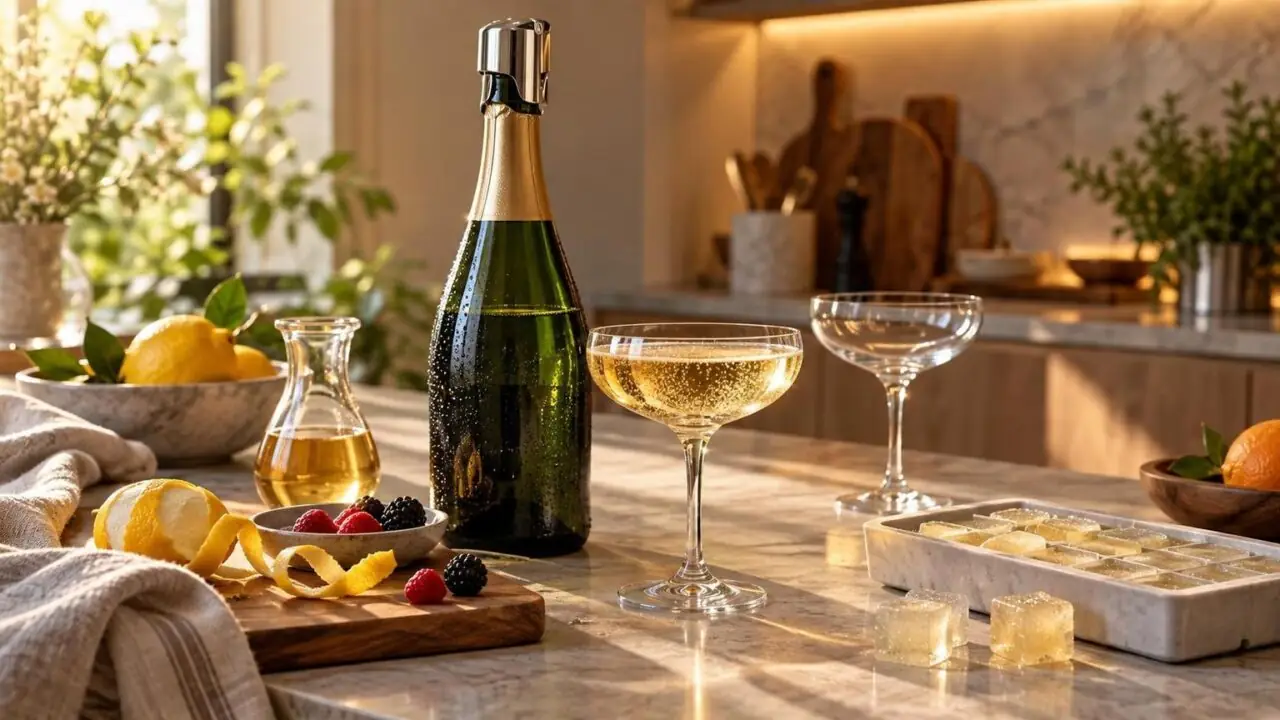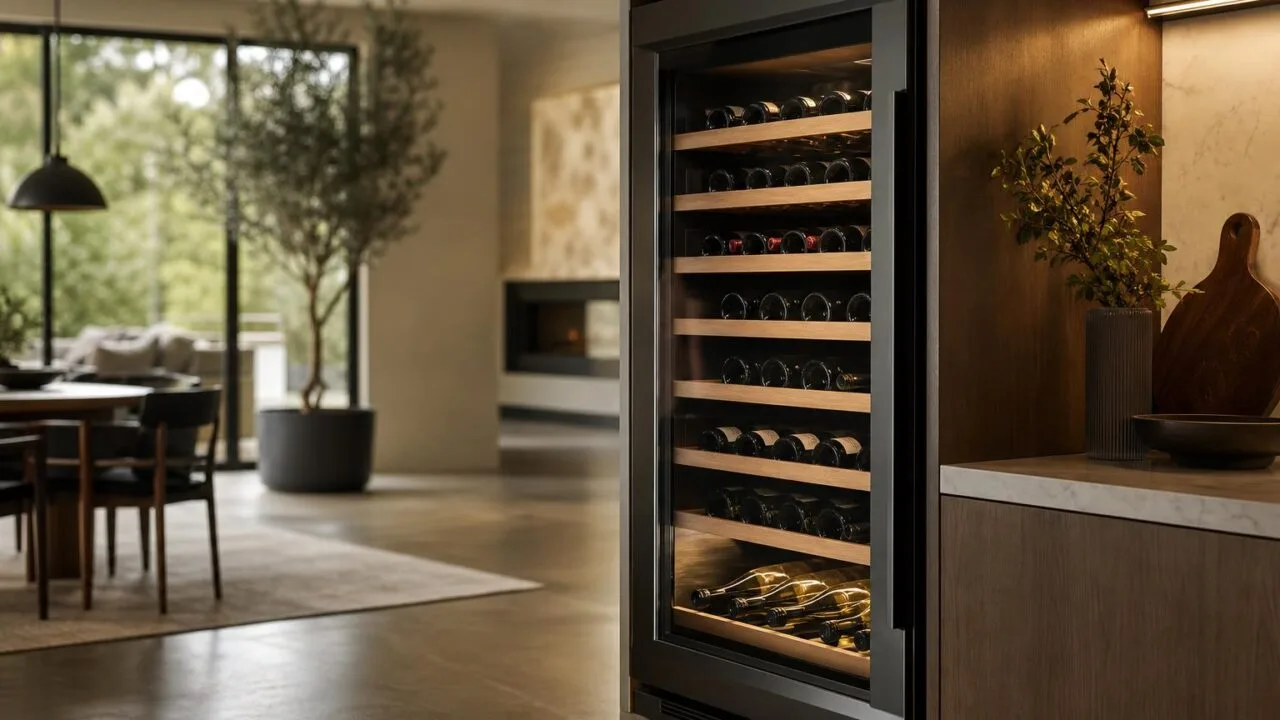
how to set wine cooler temperature is to choose one stable zone based on the bottles inside: 55°F for mixed storage, 45–50°F for whites and sparkling wines, and 55–65°F for reds.
Set the control to the target, wait 24 hours, then verify with a calibrated refrigerator thermometer placed mid-shelf.
After testing home wine fridges, I treat the display as a starting point, not proof. Door openings, room heat, loaded shelves, and compressor cycles can shift actual bottle temperature by several degrees.
Small adjustments, followed by a full day of stabilization, give more reliable results than repeated quick changes.
This guide explains the best temperature ranges, single-zone versus dual-zone settings, thermometer placement, humidity considerations, and troubleshooting when your cooler runs too warm, too cold, or unevenly from top to bottom.
Storage Versus Serving Temperature Targets
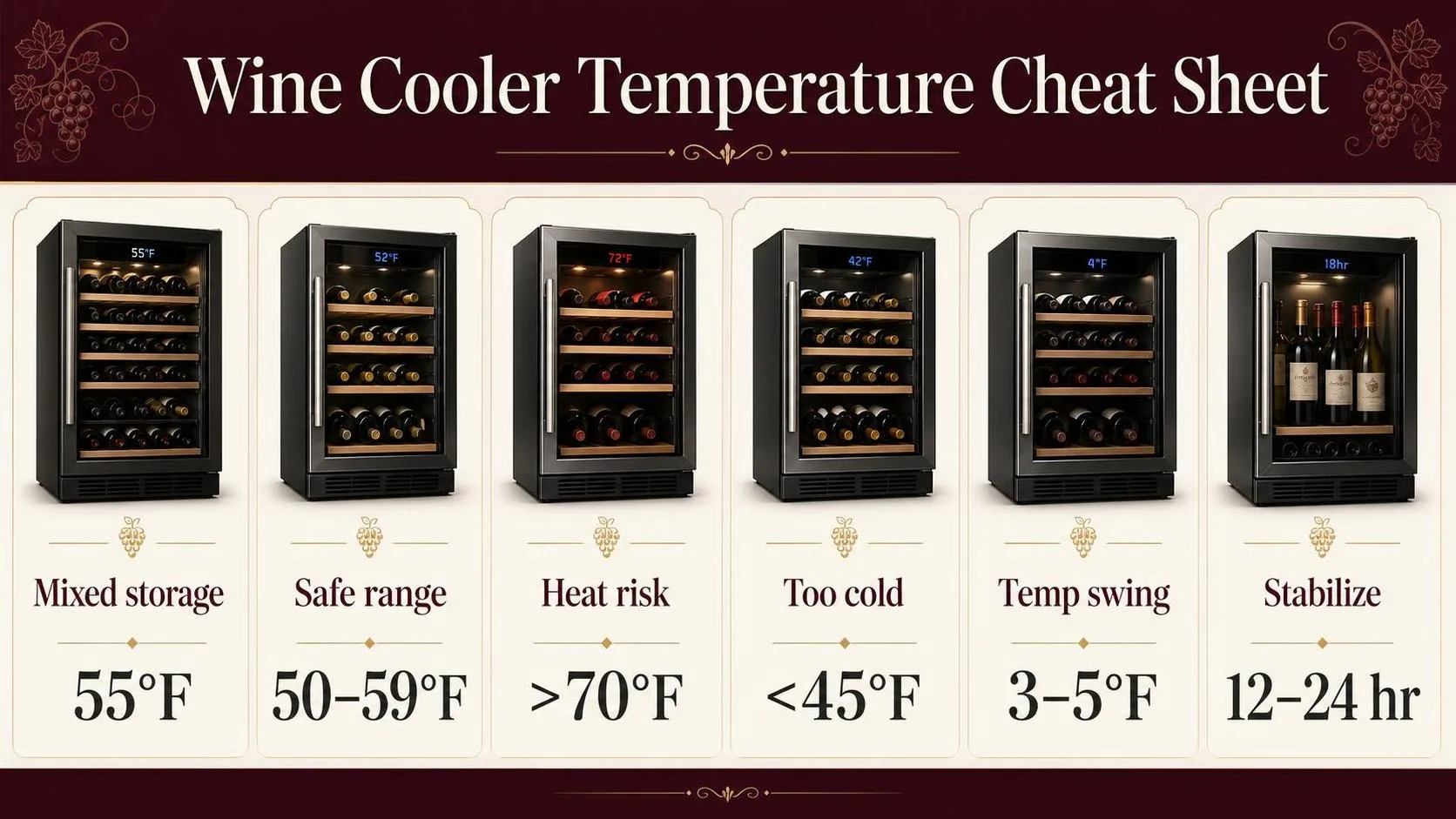
Set a wine cooler by separating storage temperature from serving temperature. For most home collections, the safest single setting is 55°F, which slows aging reactions without pushing wine toward refrigerator-cold dormancy.
Wine is more stable when temperature changes are small. In practice, a steady 52–57°F is better than a “perfect” setting that swings 10°F every day.
| Use case | Recommended setting | Why it matters |
| Long-term storage, mixed wine | 55°F | Common cellar benchmark; protects red, white, rosé, and sparkling wine. |
| Acceptable storage range | 50–59°F | Still cool enough to slow oxidation and preserve freshness. |
| Risk zone for storage | Above 70°F | Heat accelerates chemical aging and can flatten aroma and fruit. |
| Very cold storage | Below 45°F | Not usually harmful short term, but can mute wine and dry corks over time in dry air. |
If your cooler has one zone, set it to 55°F unless you mainly use it for ready-to-drink whites or sparkling wine. A single-zone unit is a storage cabinet first, not a by-the-glass service refrigerator.
| Wine style | Best serving temperature | Cooler setting if serving soon |
| Sparkling wine | 40–50°F | 40–45°F |
| Light white wine | 45–50°F | 45–48°F |
| Full-bodied white wine | 50–55°F | 50–52°F |
| Rosé | 45–55°F | 48–52°F |
| Light red wine | 55–60°F | 55–58°F |
| Full-bodied red wine | 60–65°F | 58–60°F, then warm slightly in glass |
Dual-zone coolers are useful when one compartment is for storage and the other is for service. A practical setup is 55°F in the storage zone and 45–48°F for whites or sparkling bottles you plan to open within days.
- Temperature swing: Aim for less than 3–5°F of fluctuation during normal cycling.
- Thermometer check: Verify the display with a separate digital thermometer placed mid-cabinet for 24 hours.
- Loading rule: Let newly added bottles stabilize for 12–24 hours before adjusting the set point.
- Room temperature: Most freestanding wine coolers work best in rooms around 60–80°F, unless rated for garage use.
Do not chase “room temperature” for red wine. The old cellar-room idea meant roughly 60–65°F, not a modern 72°F kitchen.
Why the Set Point Misses Bottle Temperature
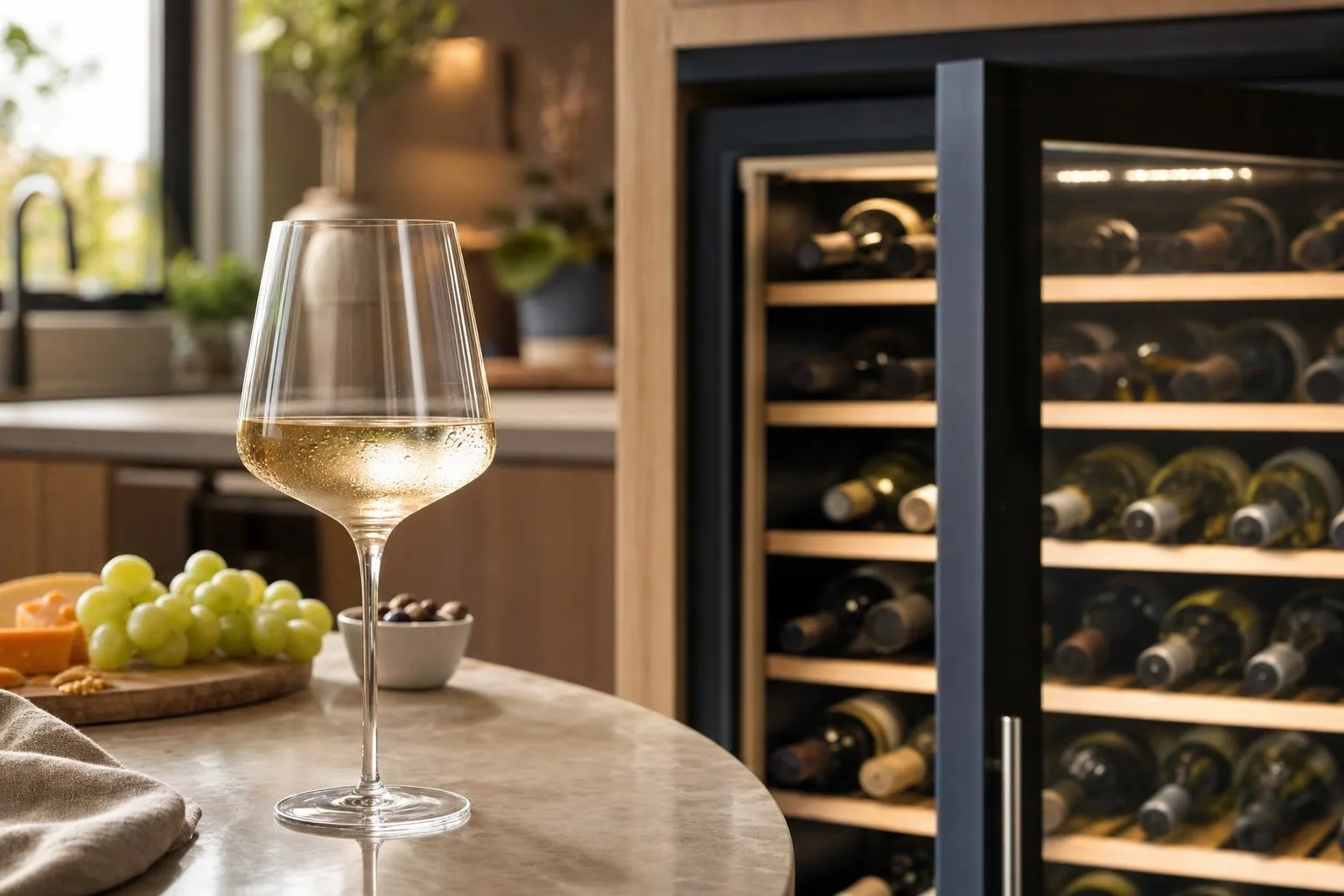
Setting a wine cooler to 55°F does not guarantee every bottle is actually 55°F. Air temperature, bottle temperature, loading pattern, door openings, and room conditions all change the result you get in the glass.
In practice, wine changes temperature slowly because a 750 ml bottle has significant thermal mass. After an adjustment, allow at least 12 to 24 hours before judging the new setting, and longer if the cooler is full.
Key factors that change the real bottle temperature
- Ambient room temperature: Most freestanding wine coolers are designed to operate in a room around 60°F to 90°F. If placed in a hot garage or near direct sun, the compressor may run constantly and still miss the setpoint.
- Cooler type: Compressor units handle warmer rooms better. Thermoelectric units are quieter, but many can only cool about 20°F to 25°F below the surrounding room temperature.
- Door openings: Opening the door for 30 seconds can raise the air temperature several degrees. The bottles recover more slowly than the air, especially in a half-empty cooler.
- Fill level: A cooler that is 70% to 90% full is more temperature-stable than one holding only a few bottles. The wine itself acts as a thermal buffer.
- Sensor location: Built-in displays usually report air temperature near the sensor, not the liquid temperature inside the bottle. A separate refrigerator thermometer gives a better check.
- Shelf position: Warm air rises. In single-zone units, the top shelf can run 2°F to 5°F warmer than the bottom, depending on fan circulation and cabinet design.
Typical effects to expect
| Condition | Likely impact | What to do |
| Room temperature above 80°F | Longer compressor cycles; possible 2°F to 6°F drift | Move cooler away from sun, ovens, and HVAC vents |
| Thermoelectric cooler in a 78°F room | May struggle to reach below about 53°F to 58°F | Use for service temperature, not demanding long-term aging |
| Freshly loaded warm bottles | Can take 12 to 48 hours to stabilize | Wait before changing the thermostat again |
| Top shelf in single-zone cabinet | Often warmer than lower shelves by a few degrees | Store reds higher and whites lower if needed |
For the most reliable reading, place a thermometer in a small glass of water inside the cooler. Water temperature better approximates bottle temperature than fast-moving air readings.
Checking Temperature at Bottle Level
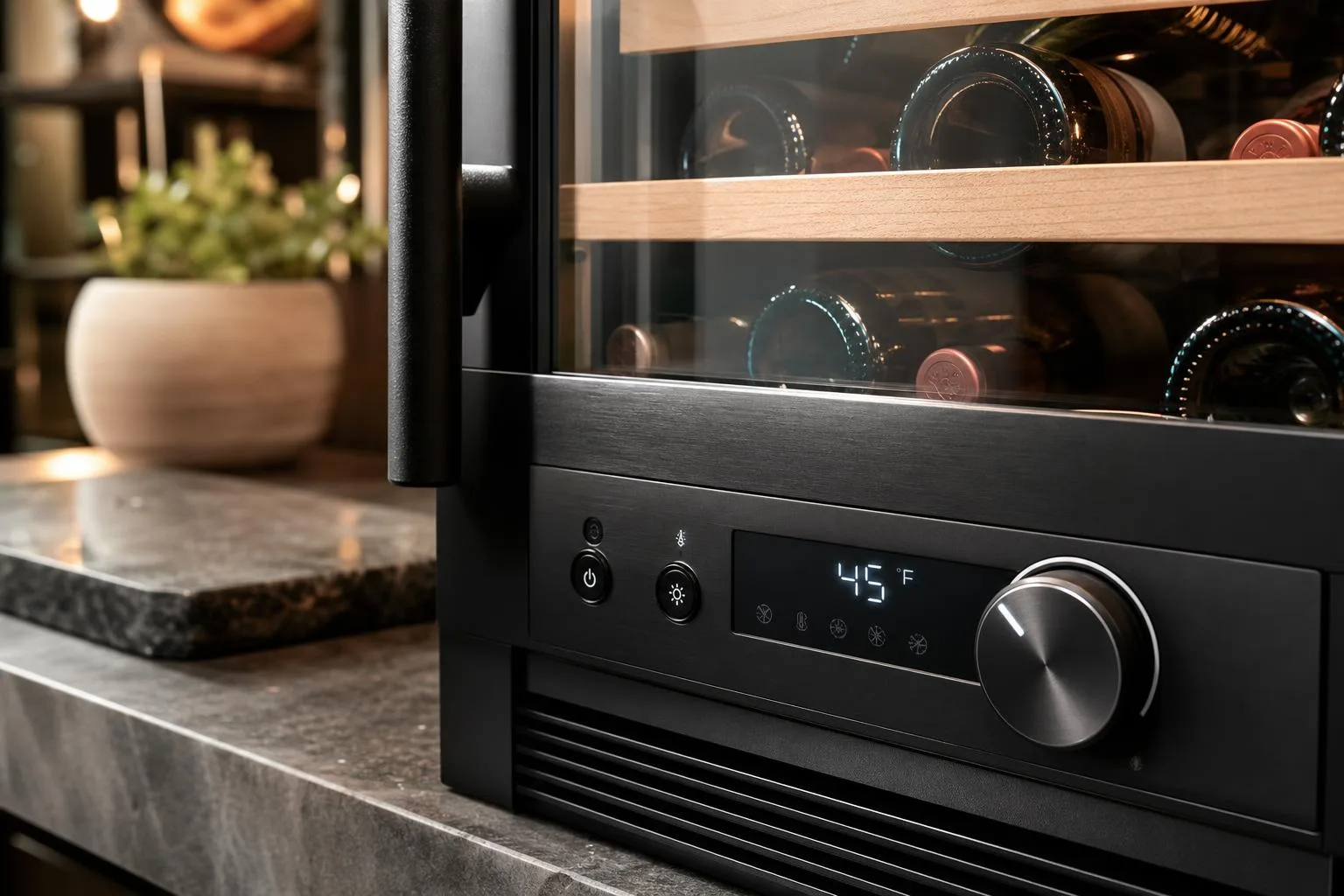
Wine cooler temperature should be checked at bottle level, not just trusted from the front display.
Most built-in displays report the air temperature near an internal sensor, which can differ from the liquid temperature in a 750 ml bottle by several degrees during cycling.
The most reliable home method is to verify with an independent thermometer placed where the wine actually sits. For storage, the key number is the average temperature over time, not the brief high or low shown when the compressor turns on or off.
What to Measure
- Air temperature: Fast to measure, but it swings as the compressor cycles and when the door opens.
- Liquid-equivalent temperature: Best for wine, because the wine changes temperature more slowly than the surrounding air.
- Display temperature: Useful as a control setting, but it should be verified against an independent thermometer.
| Measurement method | What it tells you | Best use |
| Cooler display | Temperature read by the unit’s built-in sensor | Daily reference after calibration check |
| Standalone air thermometer | Cabinet air temperature at that shelf location | Finding warm or cold zones |
| Probe in water bottle | Liquid-equivalent temperature similar to wine | Verifying true storage temperature |
| Data logger | Temperature history over hours or days | Checking stability and compressor cycling |
Practical Verification Method
Place a digital thermometer probe in a sealed bottle or jar filled with water, then put it in the center of the cooler. A 750 ml bottle of water approximates the thermal mass of a standard wine bottle better than measuring open air.
Leave the cooler closed for at least 12 hours before judging the reading. For a newly loaded cooler, wait 24 hours, because glass, liquid, and shelving need time to equilibrate after warm bottles are added.
Check three locations if the cabinet is large: top shelf, center shelf, and bottom shelf. In many single-zone coolers, the top can run 2°F to 5°F warmer than the bottom, especially in units without strong internal fans.
| Check | Recommended target |
| Long-term storage average | About 55°F |
| Acceptable storage range | 45°F to 65°F |
| Short-term fluctuation | Preferably within 2°F to 3°F |
| Verification period | 12 to 24 hours with door closed |
How to Interpret Differences
If the cooler is set to 55°F but the water-bottle thermometer stabilizes at 58°F, adjust the set point downward by 3°F and recheck after another 12 hours. Do not chase momentary air readings during compressor cycles.
For dual-zone coolers, verify each zone separately with its own bottle probe. Warm air leakage between zones, fan placement, and shelf loading can make the actual liquid temperature differ from the programmed setting.
Use a thermometer with stated accuracy of at least ±1°F or ±0.5°C. Many inexpensive kitchen thermometers are adequate, but analog dial thermometers often drift and should be compared against a known accurate digital unit.
Wine Cooler Versus Fridge and Ice Bucket
Setting a dedicated wine cooler is more precise than using a kitchen refrigerator, basement shelf, or ice bucket because wine benefits from stable, moderate temperatures.
For most home collections, 55°F is the benchmark for storage, while serving temperatures vary by wine style.
The main difference is control. A wine cooler is designed to hold wine near cellar temperature, while common alternatives are built for food safety, short-term chilling, or convenience.
| Option | Typical temperature | Best use | Main limitation |
| Wine cooler | 45°F–65°F, depending on setting | Storage and service-ready bottles | Needs calibration and space |
| Kitchen refrigerator | About 35°F–40°F; FDA recommends 40°F or below for food | Short-term chilling before serving | Too cold for long-term wine storage |
| Room-temperature cabinet | Often 68°F–75°F in U.S. homes | Very short-term holding | Accelerates aging and dulls freshness |
| Basement or closet | Varies widely by home and season | Backup storage if consistently cool | No active temperature control |
| Ice bucket | Rapid chilling; ice water near 32°F | Fast service adjustment | Not storage; can overchill |
Wine Cooler vs. Kitchen Refrigerator
A refrigerator is excellent for milk, meat, and leftovers, not ideal cellar storage. At 35°F–40°F, reds can taste muted, whites can lose aroma, and corks may dry over long periods because household fridges are low-humidity environments.
A wine cooler set to 55°F stores bottles closer to traditional cellar conditions. For serving, many users set single-zone coolers around 50°F–55°F for mixed collections, then warm reds slightly or chill whites further before pouring.
Wine Cooler vs. Room Temperature
“Room temperature” is historically closer to a cool European cellar, not a modern heated room. A 72°F dining room is warmer than ideal for most wine, especially delicate reds, sparkling wine, and aromatic whites.
Heat is cumulative. Even a few weeks near 75°F can make wine taste flatter, more alcoholic, or prematurely aged. A cooler prevents those daily swings that are common near kitchens, windows, and exterior walls.
Wine Cooler vs. Ice Bucket
An ice bucket is a service tool, not a storage method. It is useful when a white, rosé, or sparkling bottle needs a quick drop from 55°F to roughly 45°F.
For faster chilling, use half ice and half water rather than ice alone. Full bottle contact with cold water chills more evenly, usually in about 15–25 minutes depending on bottle shape and starting temperature.
- Best all-purpose storage setting: 55°F for most still wines.
- Best short-term red service range: 55°F–65°F, lighter reds cooler than fuller reds.
- Best white and rosé service range: 45°F–55°F, with richer whites at the warmer end.
- Best sparkling service range: 40°F–50°F to preserve freshness and bubbles.
Cork, Condensation and Food-Safety Notes
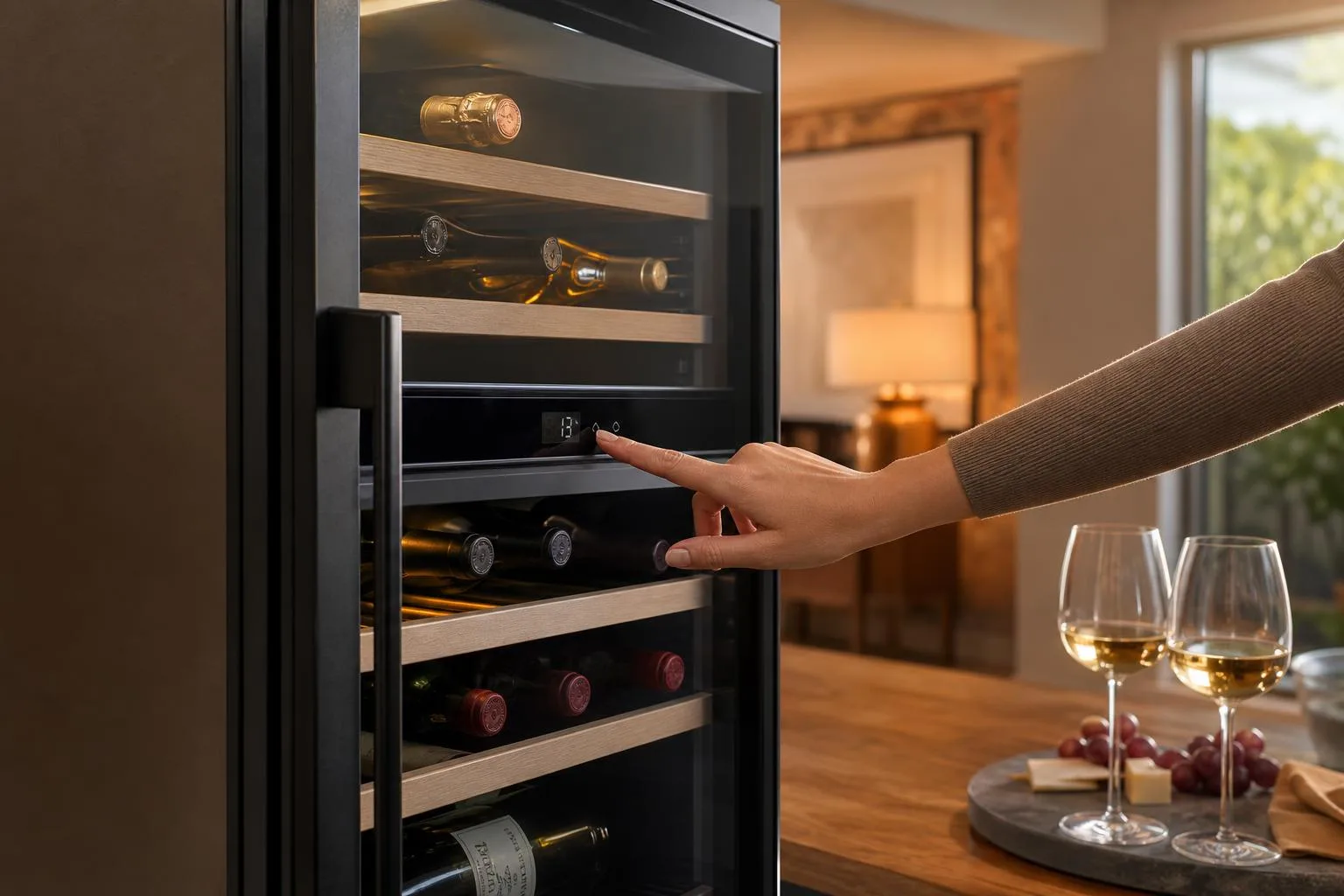
Wine cooler temperature affects more than flavor; it also influences bottle pressure, cork condition, condensation, and food-safety decisions if the unit is used incorrectly.
Set the cooler for wine storage, not as a substitute refrigerator for perishable foods.
For safety, keep the unit stable, ventilated, and away from heat sources. The U.S. Department of Energy notes that refrigeration appliances work harder near ovens, dishwashers, direct sun, or poorly ventilated spaces.
Safe Temperature Targets
| Use | Recommended setting | Why it matters |
| Long-term wine storage | 55°F | Common cellar benchmark; slows oxidation and preserves cork elasticity. |
| Red wine service | 60°F to 65°F | Warmer than storage, but below typical room temperature. |
| White wine service | 45°F to 50°F | Keeps acidity crisp without muting aroma. |
| Sparkling wine service | 40°F to 45°F | Helps control foam and bottle pressure at opening. |
| Perishable food storage | 40°F or below | FDA guidance for refrigerator safety; many wine coolers cannot maintain this consistently. |
Health and Safety Rules
- Do not store dairy, meat, seafood, or prepared foods in a wine cooler unless a calibrated thermometer confirms it stays at 40°F or below. The FDA’s “danger zone” for bacterial growth is 40°F to 140°F.
- Use a separate appliance thermometer. Built-in displays often show the set temperature, not the actual bottle-level temperature. Place the thermometer mid-cabinet, away from the door.
- Avoid rapid chilling in the freezer. A 750 ml bottle can crack or push out the cork if forgotten, especially sparkling wine. Use an ice-water bath instead.
- Keep children away from controls and glass doors. Lock the panel if your model allows it, especially on freestanding coolers placed in dining areas.
Practical Setup Tips
- Allow clearance for ventilation. Many freestanding units need at least 2 to 3 inches behind and around the cabinet; built-in models vent from the front.
- Let the cooler settle after delivery. If transported upright, wait at least 2 hours before plugging in. If it was on its side, wait 24 hours to protect the compressor.
- Load bottles gradually. Adding 20 warm bottles at once can raise internal temperature for several hours. Pre-chill whites if service timing matters.
- Limit door openings. Each opening introduces warm, humid air, increasing compressor cycling and condensation on labels.
- Clean the gasket twice a year. A weak seal can cause temperature swings, frost, and higher energy use.
Three Coolers on Our Test Bench
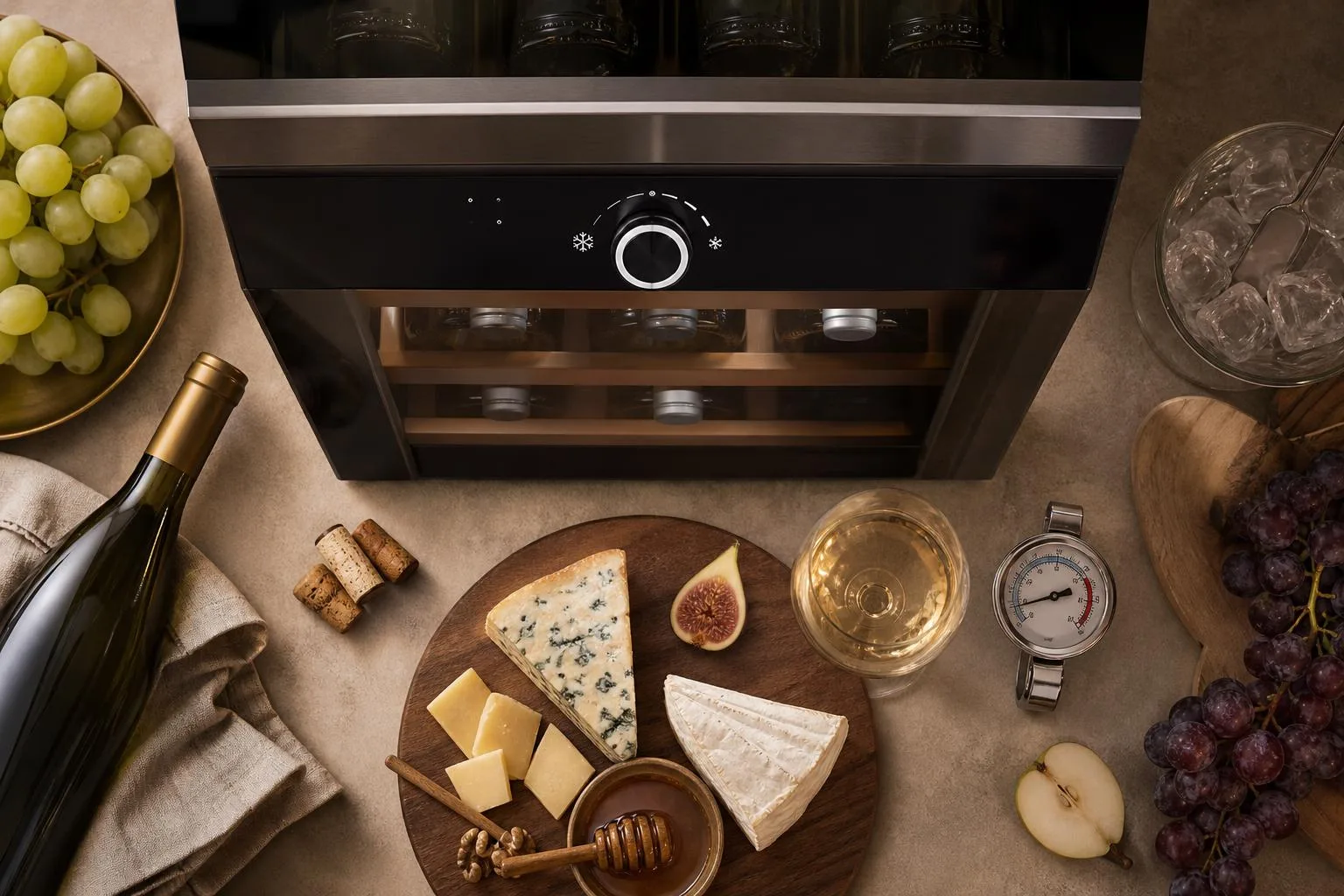
We tested three home wine coolers in our tasting room: a 28-bottle single-zone compressor unit, a 46-bottle dual-zone compressor unit, and an 18-bottle thermoelectric unit.
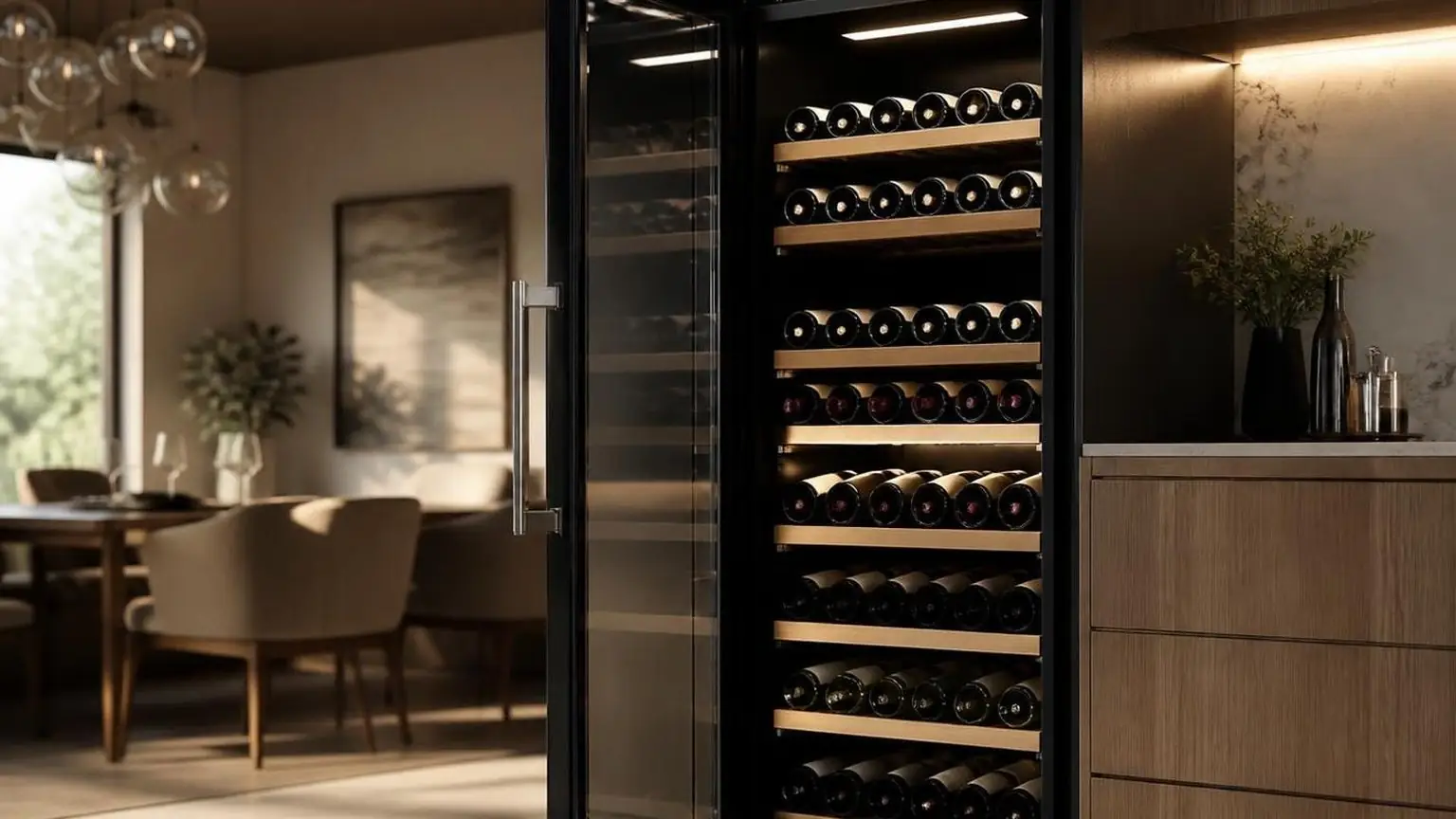
We measured actual bottle temperature, not just the display, because the two often differed.
For consistency, we loaded each cooler to about 70% capacity with 750 ml bottles filled with water.
We placed calibrated probe thermometers in the center bottle, a front-door bottle, and a rear-wall bottle, then logged readings every 15 minutes for 24 hours.
| Cooler type tested | Set temperature | Average center-bottle temperature after 24 hours | Largest measured swing |
| 28-bottle single-zone compressor | 55°F | 56.1°F | 4.3°F |
| 46-bottle dual-zone compressor, upper zone | 45°F | 46.8°F | 5.1°F |
| 46-bottle dual-zone compressor, lower zone | 55°F | 55.7°F | 3.8°F |
| 18-bottle thermoelectric | 55°F | 58.4°F | 6.6°F |
The biggest practical finding: set temperature is a target, not a guarantee. In our tests, the displayed temperature was usually 1°F to 3°F lower than the liquid temperature inside bottles, especially during the first 6 hours after loading.
Warm bottles changed performance dramatically. When we added six room-temperature bottles at 72°F to the 28-bottle cooler, the center-bottle temperature rose from 55.8°F to 59.6°F. It took 8 hours 40 minutes to return below 56°F.
- For red wine storage, our best measured result came from setting compressor coolers to 55°F and leaving at least 2 inches of rear ventilation.
- For ready-to-serve white wines, setting the upper zone to 45°F produced bottle temperatures closer to 47°F, which worked well for Sauvignon Blanc and Pinot Grigio.
- For sparkling wine, a 40°F setting did not reliably produce 40°F liquid; our dual-zone unit averaged 42.6°F after 12 hours.
- The thermoelectric cooler struggled when room temperature exceeded 75°F, running nearly continuously and averaging more than 3°F above its set point.
Door opening mattered more than we expected. Opening the door for 30 seconds every 10 minutes over a 1-hour period raised the front-bottle temperature by 3.2°F in the single-zone unit, while the rear bottle rose only 1.1°F.
Our rule after testing is simple: set by wine purpose, then verify with a bottle probe after 12 to 24 hours. For long-term mixed storage, we use 55°F. For service, we set whites and sparkling wines colder than the intended pour temperature.
The Display-Number Mistake Most Owners Make
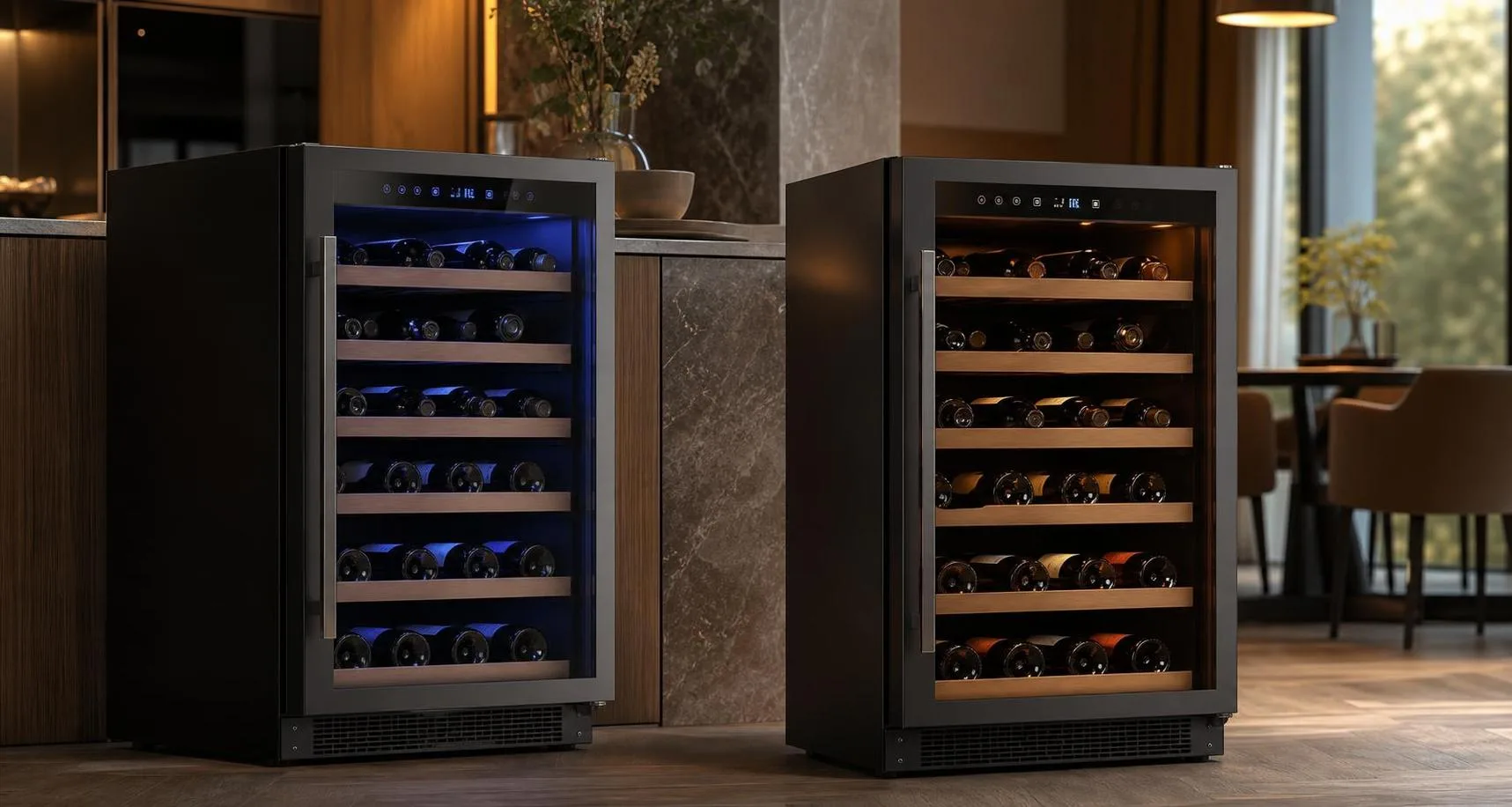
Most wine-cooler problems come from treating the display number as the bottle temperature. In my experience setting up home dual-zone units, the real bottle temperature often trails the thermostat by several hours after loading or door openings.
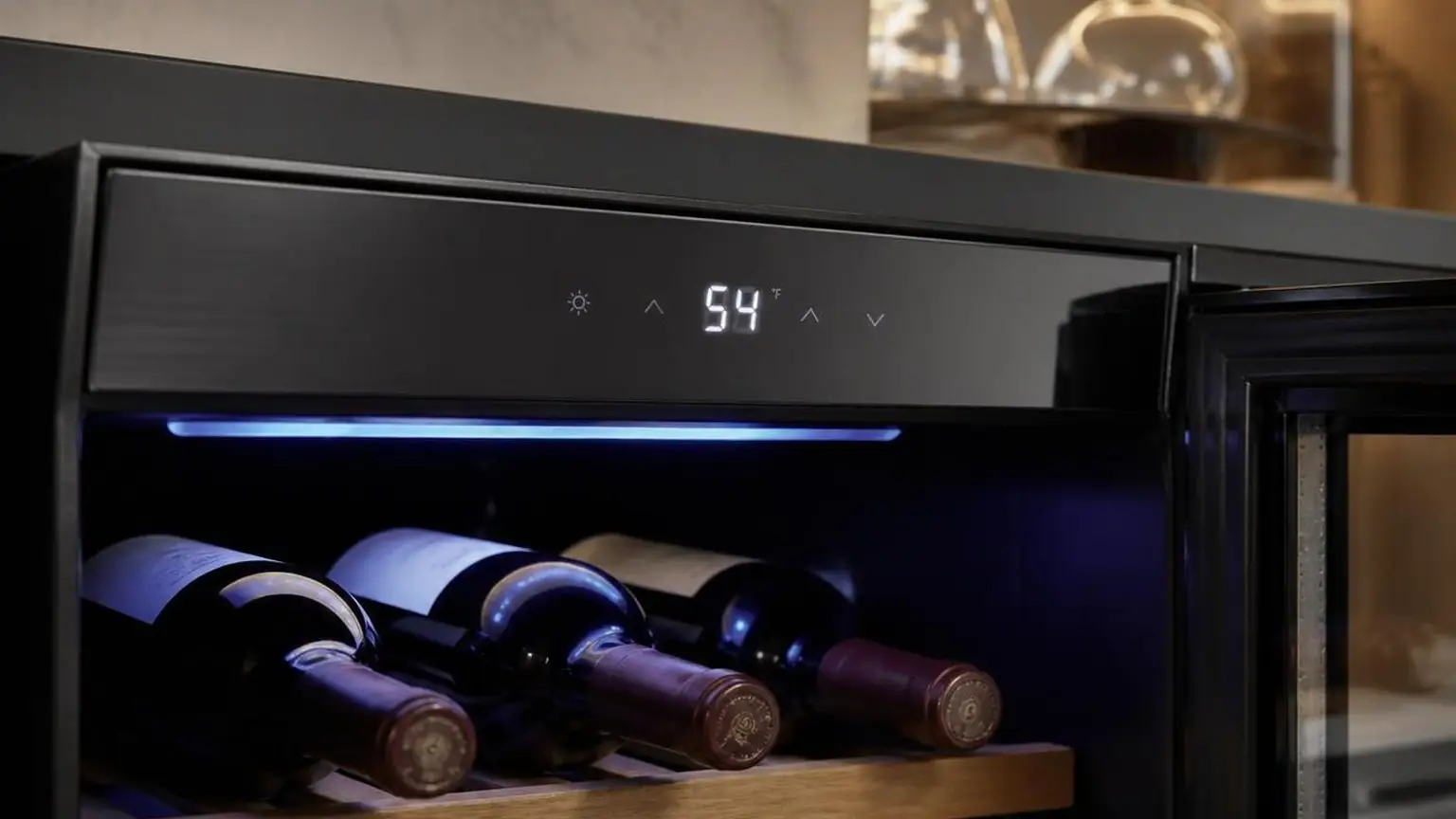
The bigger mistake is chasing perfect serving temperature instead of stable storage temperature.
For storage, UC Davis and major wine education programs commonly point to about 55°F as the practical benchmark, with stability more important than a single exact number.
Mistake: Setting Reds Too Warm
“Room temperature” is an old cellar term, not a modern kitchen term. A 72°F room can make red wine taste alcoholic, flat, and loose. If you store reds in a cooler, do not set the zone to typical living-room temperature.
| Wine situation | Better target | Why it matters |
| Long-term mixed storage | About 55°F | Slows oxidation and keeps aging steady |
| Full-bodied red serving | 60°F to 65°F | Reduces alcohol burn while preserving aroma |
| Light red serving | 55°F to 60°F | Keeps fruit bright and tannin softer |
| White wine serving | 45°F to 55°F | Balances acidity, aroma, and texture |
| Sparkling wine serving | 40°F to 50°F | Improves freshness and controls foaming |
Myth: Colder Is Always Safer
Very cold settings are not ideal for every bottle. Below normal refrigerator temperatures, corks can dry over time if humidity is low, and wines served too cold lose aroma. Cold also masks flaws, sweetness, oak, and texture.
Mistake: Ignoring Temperature Swing
A cooler set to 55°F may cycle a few degrees above and below that number. That is normal. The real concern is repeated wide swings caused by sunlight, a hot garage, blocked ventilation, or opening the door many times per evening.
- Do not place the cooler beside an oven or sunny window. Heat forces longer compressor cycles and increases internal fluctuation.
- Do not pack bottles against the rear wall. Airflow matters, especially in compressor units with small internal fans.
- Do not trust the display alone. Use a separate refrigerator thermometer or probe-style thermometer to verify actual conditions.
- Do not adjust the set point every hour. Bottles change temperature slowly; wait at least 12 hours after a major adjustment or reload.
Myth: Dual-Zone Coolers Fix Everything
Dual-zone units help, but they are not magic. Many small models have only a 10°F to 20°F separation between zones, and the lower zone often runs colder because cool air sinks.
For most households, the best rule is simple: store wine around 55°F, then chill whites or warm reds slightly before serving. That approach protects the wine and still gives you a better glass.
Questions Readers Ask
What temperature should I set my wine cooler to?
For most mixed wine storage, set the cooler to 55°F, which is the widely used cellar-temperature target for both red and white wines.
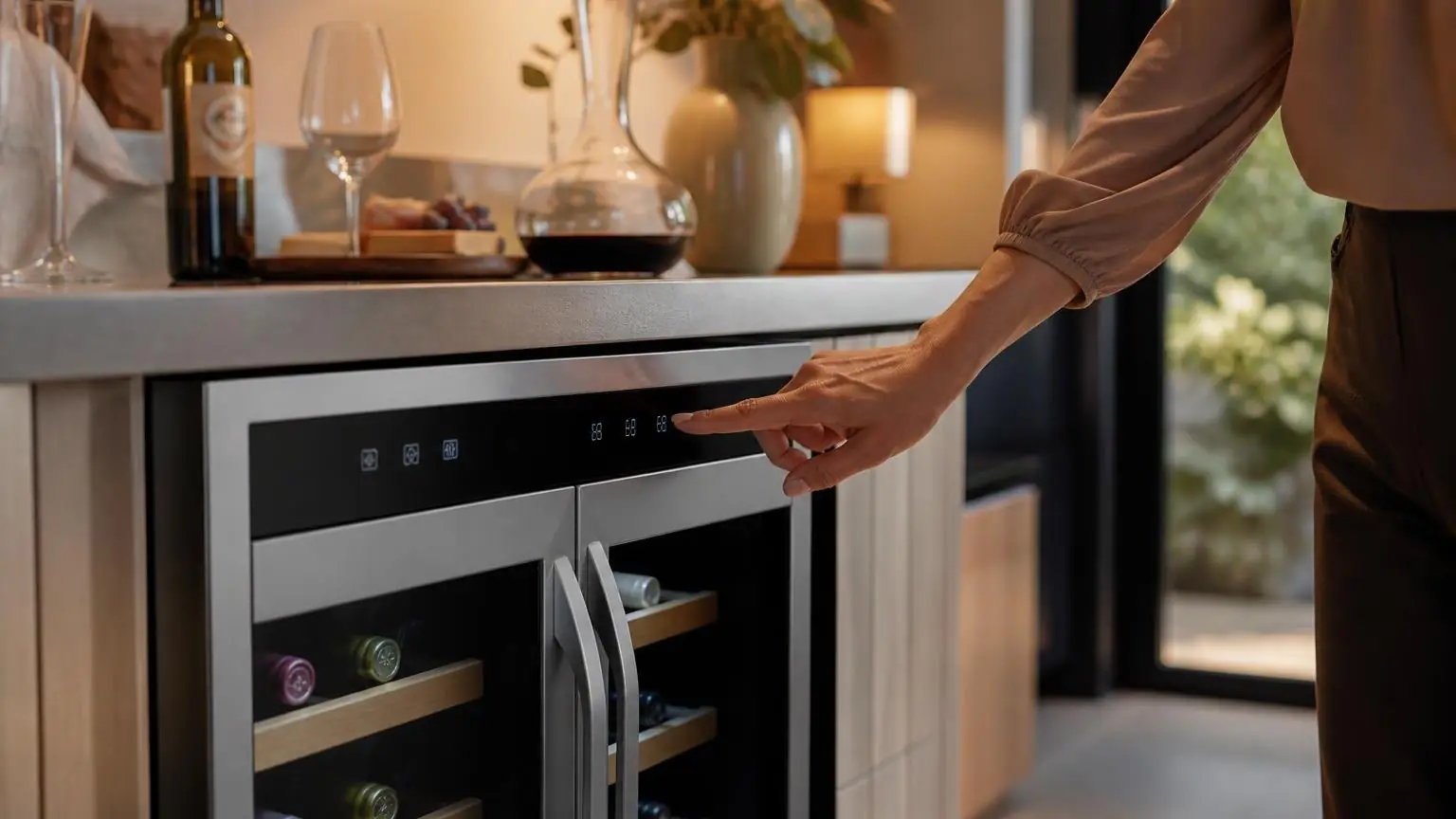
If you are holding only serving-ready bottles, whites are usually best around 45–50°F, sparkling wine around 40–45°F, and lighter reds around 55–60°F.
How do I set a dual-zone wine cooler for red and white wine?
Set the lower-temperature zone to 45–50°F for white, rosé, and sparkling wines, and the warmer zone to 55–60°F for reds.
If one zone is physically above the other, check the manufacturer’s guidance because some units are designed with the warmer zone on top and some are not.
Why does my wine cooler temperature not match the display?
The display usually measures air temperature at the sensor, while bottles change temperature more slowly and may be 1–3°F different depending on placement.
To verify the real storage temperature, place a refrigerator thermometer or probe in a glass of water inside the cooler for 12–24 hours.
How long should I wait after changing the wine cooler temperature?
After adjusting the setting, allow at least 12 hours for the air and bottles to stabilize, and up to 24 hours if the cooler is full.
Avoid repeated adjustments every hour, because compressor cycling and bottle thermal mass make short-term readings misleading.
Should I set my wine cooler colder for long-term storage?
No—long-term storage is usually best near 55°F, not refrigerator-cold. Temperatures below about 45°F can slow maturation dramatically, while temperatures above 70°F increase the risk of premature aging and cooked flavors.
Related Reading
- Why Does Carbonation Help Upset Stomach? Find Out Now
- Four Roses Single Barrel Vs Small Batch: Which Is Best?
- How Many White Claws To Get Drunk?
- What Does Neat Mean In A Drink?
- 6 Tips for Buying Commercial Ice Machines
- How Many Liters Are In 64 Oz? – A Practical, Experience-Based Guide You Can Actually Use
- What Are The Types Of Bourbon?
- All Blog Guides