
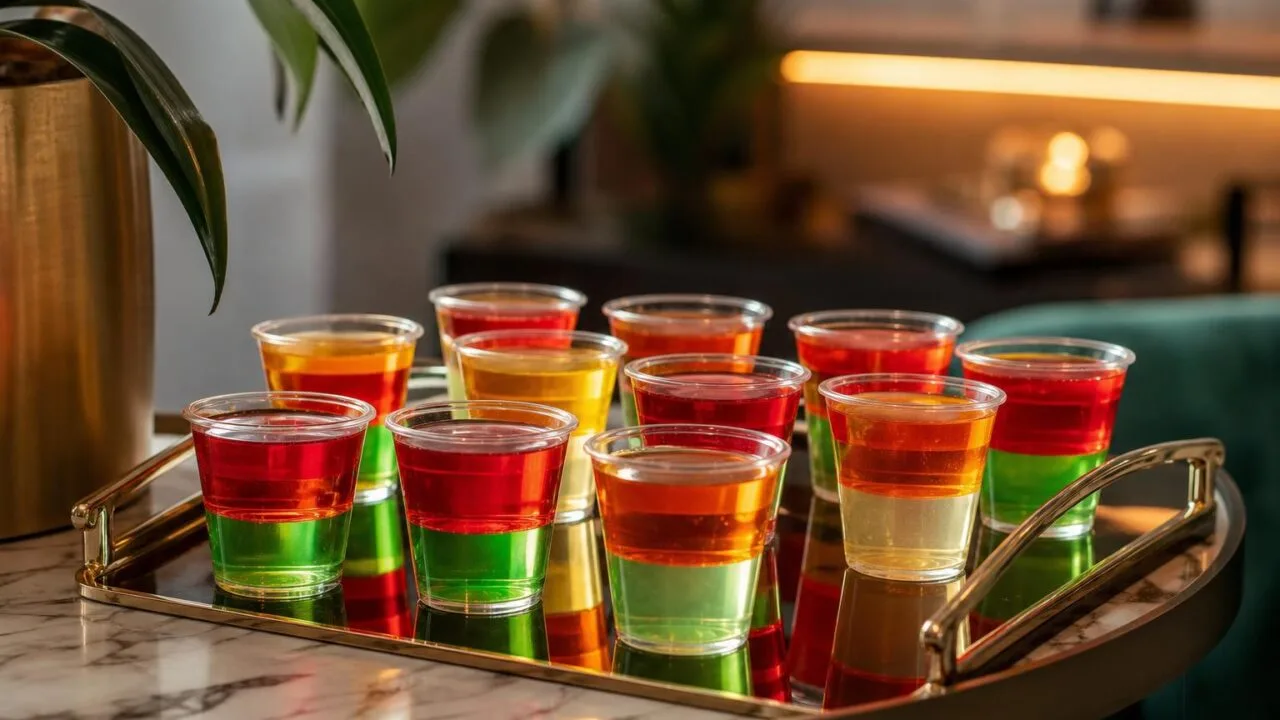
How Long Are Jello Shots Good For is best answered with one practical rule: they stay at their best for about 7 to 10 days in the refrigerator when covered, made with clean utensils, and kept consistently cold.
Alcohol can slow spoilage, but it does not make them shelf stable or safe at room temperature.
Texture usually changes before safety does: the gelatin can weep, shrink, or turn rubbery, and fruit-based add-ins spoil faster than plain recipes.
For parties, I recommend making jello shots 1 to 3 days ahead for the best flavor, firmness, and appearance, then discarding any batch that smells off or looks watery.
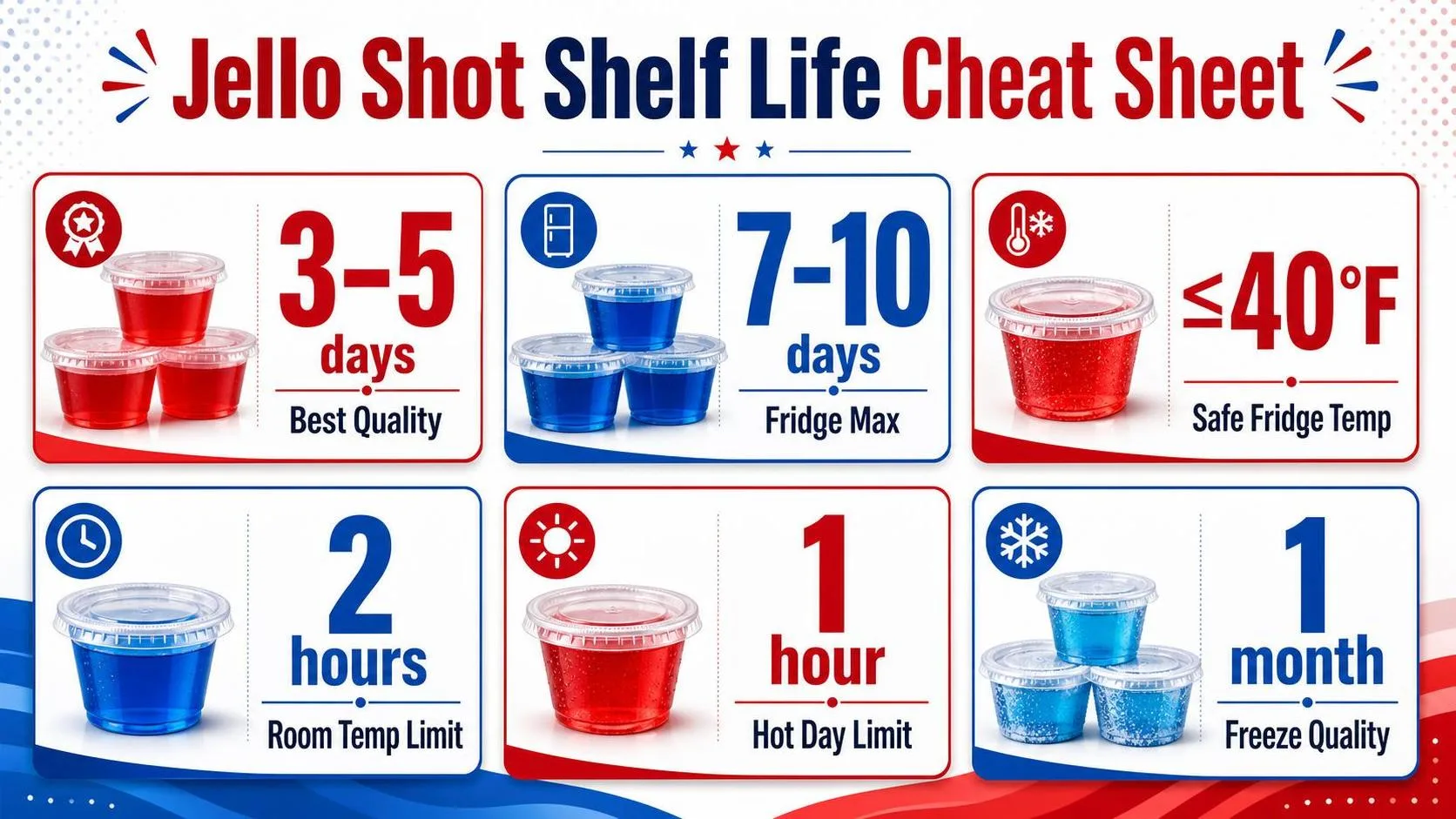
Jello Shot Shelf Life Timeline
The shelf-life number most people want is simple: standard Jello shots are usually best within 3 to 5 days, and they are often still acceptable up to 7 to 10 days if kept covered at 40°F or colder.
The shorter “best” window is about texture and flavor, not just safety.
The biggest variables are refrigerator temperature, alcohol level, and add-ins. Liquor does not make Jello shots shelf-stable, and once dairy, fresh fruit, or whipped topping enters the recipe, the clock moves faster.
| Jello shot type | Best quality window | Upper limit if refrigerated at 40°F or below |
| Plain gelatin, water, liquor | 3 to 5 days | 7 to 10 days |
| Gelatin with low alcohol or mostly juice | 2 to 4 days | 5 to 7 days |
| Shots with fresh fruit mixed in | 1 to 3 days | 3 to 5 days |
| Shots with dairy, cream liqueur, or whipped topping | 1 to 2 days | 3 to 4 days |
| Frozen for storage | Best within 1 month | Up to 2 months, but texture often suffers |
The temperature number that matters most is 40°F. That is the USDA’s refrigerator safety threshold for perishable foods. If your fridge runs at 43°F to 45°F, expect a noticeably shorter life than the table shows.
For parties, use the USDA’s “2-hour rule.” Do not leave Jello shots out longer than 2 hours at normal room temperature, or 1 hour if the room or outdoor setup is above 90°F.
Alcohol percentage matters, but not as much as people assume. Most recipes use about 1 cup of liquor for a 3-ounce box of gelatin and 1 cup of boiling water. That usually lands far below a level that reliably preserves the dessert.
- If the shots smell sour or alcoholic in a harsh, unpleasant way, discard them.
- If liquid is separating heavily, quality has dropped even if they are not unsafe.
- If mold appears, or fruit pieces look dull or slimy, throw out the whole batch.
- If using plastic cups with lids, keeping them covered can buy you an extra day of good texture.
In practice, make basic Jello shots 1 day ahead for the best set and cleanest flavor. If you need a hard cutoff, 7 days refrigerated is a sensible maximum for most standard recipes, and less for anything creamy or fruit-heavy.
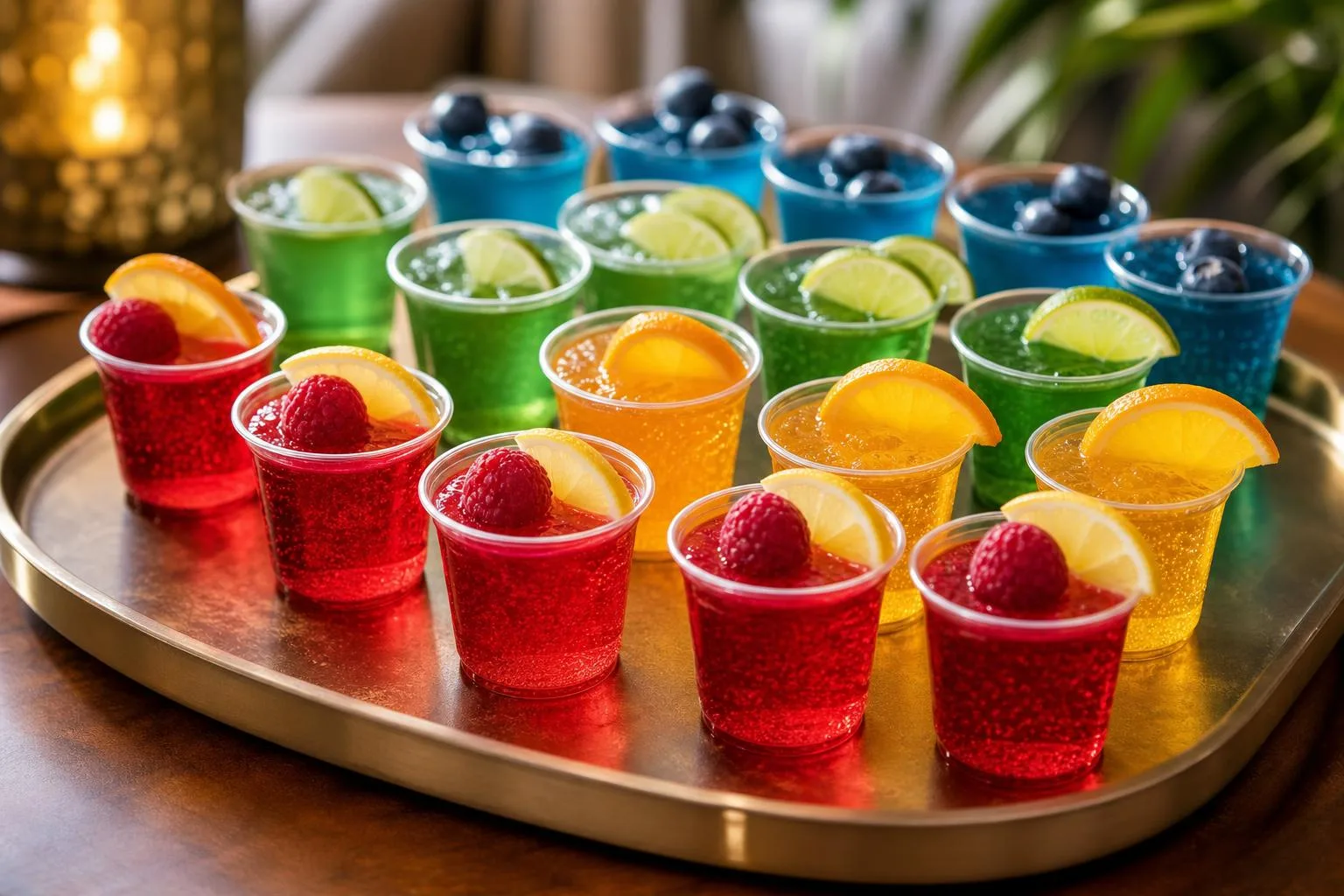
Factors That Change Jello Shot Longevity
How long Jello shots stay safe and pleasant to eat depends on more than a single “use by” number. Refrigeration temperature, alcohol level, ingredients, and handling all change how quickly texture, flavor, and microbial risk shift.
A shot kept at 38°F will usually hold up better than one stored at 44°F. Small differences matter because prepared gelatin desserts are high in water, and bacteria grow fastest once food spends time above 40°F.
| Factor | What changes | Typical effect on quality/safety |
| Refrigerator temperature | 34 to 40°F is the target range | Colder storage slows spoilage; above 40°F shortens safe holding time |
| Time at room temperature | Over 2 hours above 40°F, or 1 hour above 90°F | Food safety risk rises enough that leftovers should be discarded |
| Alcohol content | Usually 10% to 20% ABV in the finished shot | Alcohol may slow firming and slightly lower water activity, but it does not make the shot shelf-stable |
| Dairy or fruit additions | Cream, condensed milk, fresh juice, or fruit pieces | Shorter quality window and higher spoilage risk than plain gelatin, water, and liquor |
| Container and lid | Covered 1 to 2 oz cups vs. open tray | Covered cups reduce odor pickup, drying, and contamination |
Temperature is the biggest variable. Standard food-safety guidance treats refrigerated perishables as safest at 40°F or below, and the “2-hour rule” applies once Jello shots sit out for serving.
Alcohol changes the set. Gelatin weakens when too much liquor replaces water, so many recipes cap the alcohol portion at about one-third to one-half of the liquid. A softer set can leak, separate, or turn rubbery faster during storage.
Ingredients matter just as much. Plain gelatin made with boiling water and distilled spirits generally lasts longer than shots containing dairy, coconut milk, fresh berries, or citrus segments, which introduce more spoilage organisms and enzymes.
Acid can also affect texture. Pineapple, kiwi, papaya, and fresh ginger contain proteolytic enzymes that can prevent gelatin from setting unless the fruit is cooked or canned first; a weak set tends to break down sooner in the refrigerator.
- Use sealed cups or tightly wrapped trays to limit odor absorption and moisture loss.
- Label the prep date; quality usually declines before safety becomes obvious by smell alone.
- Discard any shots with liquid pooling, mold, fizzing, or a sour odor.
- If serving outdoors or at a party, replenish from the fridge in small batches rather than leaving the full tray out.
In practice, the best results come from plain, covered shots stored at 34 to 38°F and served cold. The farther the recipe moves toward dairy, fresh fruit, warmer storage, or longer counter time, the shorter the usable window becomes.
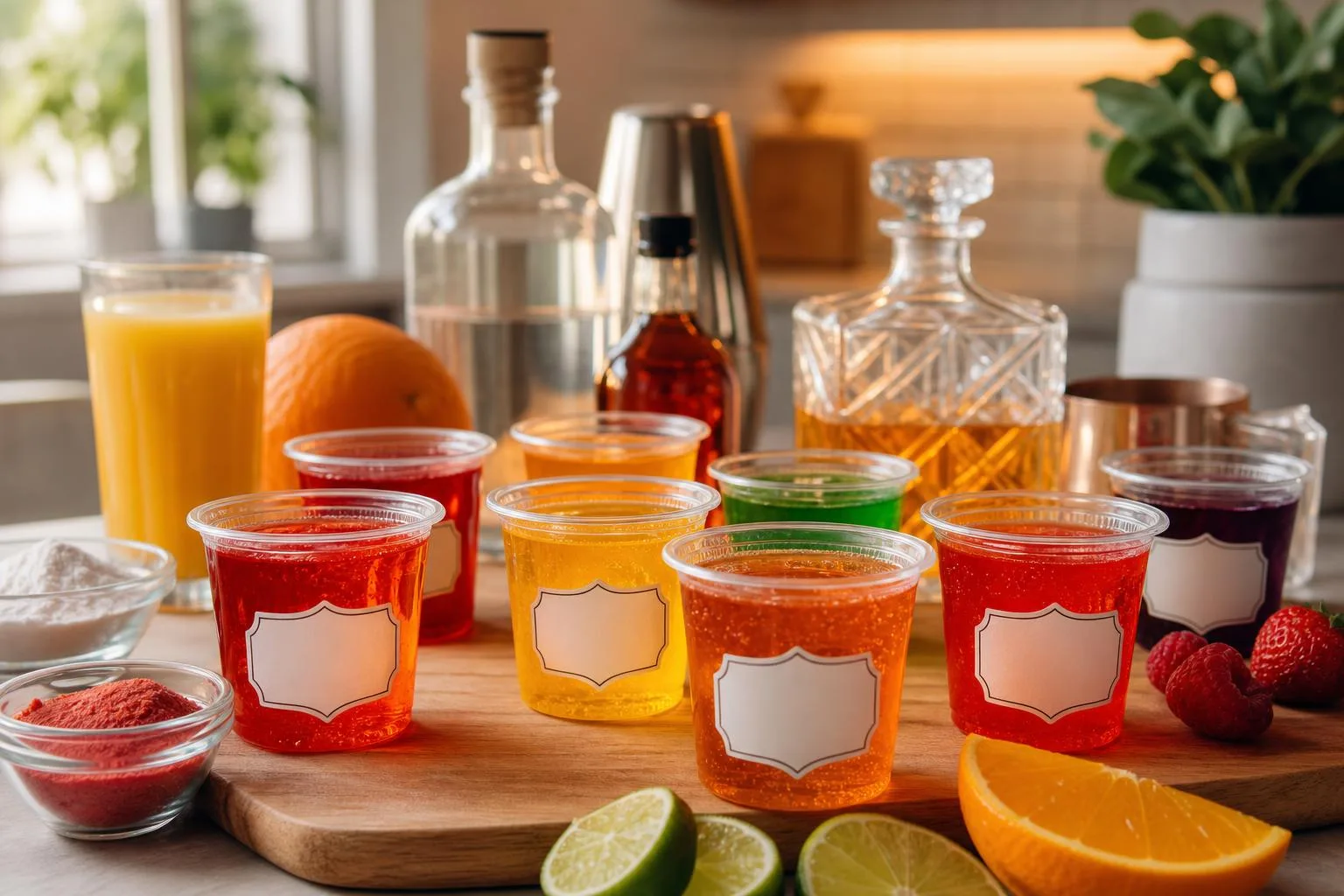
How Jello Shot Shelf Life Is Checked
Jello shot shelf life is verified with the same controls used for other refrigerated, ready-to-eat foods: time, temperature, packaging, and visible quality changes.
In practice, the safest benchmark is refrigeration at or below 40°F (4°C), with disposal if the cups sat above that temperature for too long.
The key measurement is temperature. The U.S. Food and Drug Administration defines 40°F to 140°F as the “danger zone,” where bacteria can grow rapidly.
For that reason, prepared gelatin cups should be stored in the refrigerator promptly and should not remain at room temperature for more than 2 hours total.
Time is the second control. Most homemade jello shots are considered best within 3 to 5 days when covered and refrigerated.
They may still look acceptable after that, but texture and flavor usually decline first, and spoilage risk increases if fruit, dairy, or low-alcohol additions were used.
| Factor checked | What to verify | Useful threshold |
| Storage temperature | Refrigerator thermometer reading | 40°F (4°C) or lower |
| Room-temperature exposure | Total time during serving or transport | No more than 2 hours |
| Alcohol level | Recipe balance | High alcohol slows setting but does not make it shelf-stable |
| Seal/cover | Lids or tight wrap on each cup | Needed to reduce contamination and drying |
| Texture | Firm, evenly set gel | Discard if watery, separated, or slimy |
| Odor | Neutral or expected fruity smell | Discard if sour, yeasty, or off |
Verification also includes sensory checks. A fresh jello shot should be glossy, evenly colored, and springy.
Pools of liquid on top, shrinking away from the cup, graininess, mold spots, or a fermented smell are practical signs that the batch has degraded and should be thrown out.
Packaging matters because oxygen and kitchen odors affect quality. Individual lidded cups hold up better than an uncovered tray.
If shots were made with cut fruit, whipped topping, cream liqueur, or coconut milk, the shorter end of the 3-to-5-day range is the safer standard.
- Use a refrigerator thermometer, not a dial guess.
- Label the batch with the prep date and time.
- Discard any batch left in a warm car or on a counter beyond 2 hours.
- When in doubt, use appearance and odor as a final check, then err on the side of safety.
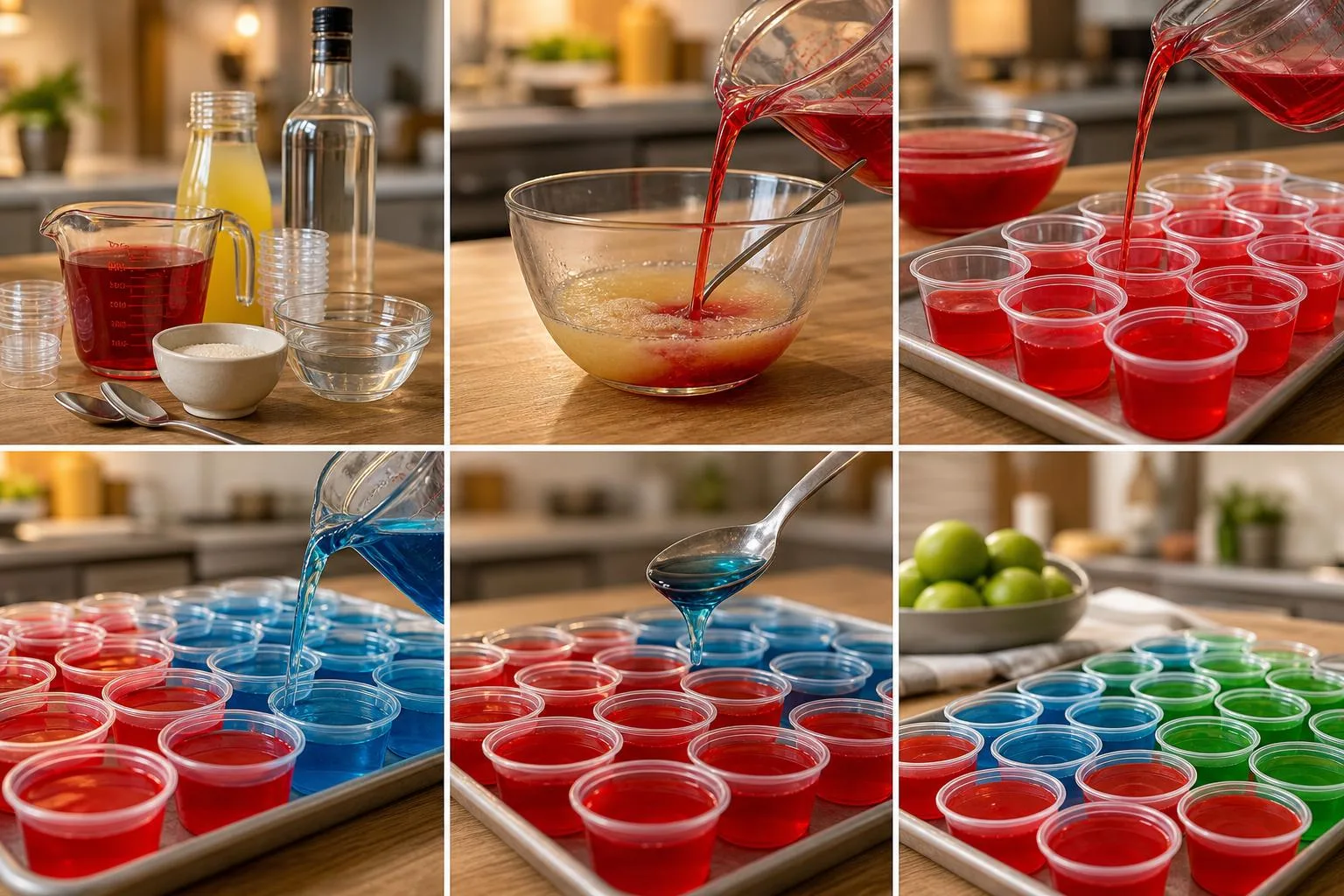
Jello Shots vs Other Make-Ahead Drinks
Jello shots sit in the middle of the make-ahead drink spectrum: more perishable than sealed bottled cocktails, but usually more stable than fresh citrus punches or dairy-based shots.
The limiting factors are refrigeration, exposed surface area, added fruit or dairy, and alcohol content.
Plain gelatin shots made with boiling water, flavored gelatin, and 80-proof vodka are best within 3 to 5 days refrigerated at 40°F or below.
They may remain safe a little longer if handled cleanly, but texture and flavor decline as gelatin weeps liquid and absorbs refrigerator odors.
| Option | Typical refrigerated quality window | Main reason it lasts or spoils |
| Plain jello shots | 3 to 5 days | Gelatin holds water, but texture weakens and cups can pick up odors |
| Jello shots with fresh fruit | 1 to 3 days | Fruit adds enzymes, surface microbes, and extra water |
| Jello shots with whipped cream or dairy | 1 to 2 days | Dairy is highly perishable and separates easily |
| Pre-batched margarita or sour mix cocktail | 1 to 2 days with fresh citrus | Citrus oxidizes and flavor flattens quickly |
| Spirit-only batched cocktail | Several weeks if sealed and chilled | High alcohol and no juice, dairy, or gelatin |
| Unopened commercial ready-to-drink cocktail | Often months; follow label date | Factory sealing, preservatives, pasteurization, or carbonation may help |
Compared with fresh cocktails, jello shots are convenient because they are portioned in advance and do not require shaking, ice, or last-minute dilution.
For a party, they are generally safer to make the day before rather than the same morning if you want a firm set.
Compared with spirit-only batched drinks, they are less durable.
A stirred Manhattan-style batch made only with whiskey, vermouth, and bitters can hold much longer in a clean sealed bottle, while gelatin shots are exposed in small cups and depend on a hydrated gel structure.
- Best make-ahead choice: plain jello shots, prepared 24 to 48 hours before serving.
- Shortest shelf life: jello shots topped with whipped cream, cream liqueur foam, or cut fruit.
- Longest shelf life: sealed, spirit-forward batched cocktails without juice, dairy, eggs, or fruit.
- Worst room-temperature option: any gelatin shot left out more than 2 hours, or 1 hour above 90°F, following USDA perishable-food guidance.
Freezing does not make jello shots a better long-term alternative. Gelatin can become grainy or watery after thawing, and alcohol lowers the freezing point, so many shots never freeze solid in a home freezer.
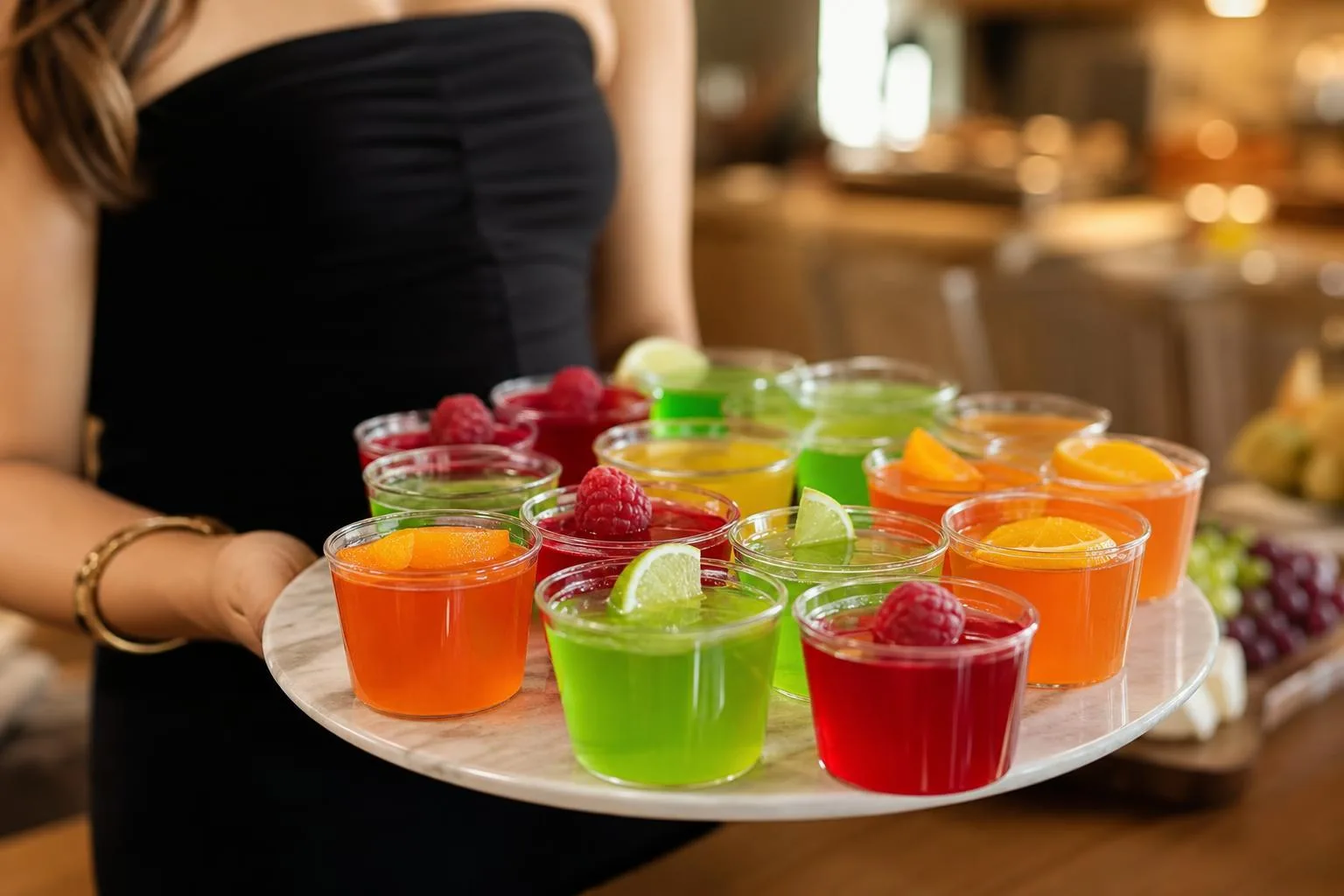
Jello Shot Safety Depends on Ingredients
Jello shots are only as safe as their most perishable ingredient. Plain gelatin, sugar, and liquor are relatively stable, but water, juice, dairy, fruit, and handling introduce spoilage and food-safety risks.
For best quality, keep jello shots refrigerated at 40°F or below and covered tightly. The USDA’s “2-hour rule” applies: discard perishable foods left at room temperature for more than 2 hours, or 1 hour above 90°F.
| Situation | Practical limit | Why it matters |
| Refrigerated, covered, vodka-based | 3 to 5 days | Best texture and flavor; lower contamination risk |
| Made with dairy, cream liqueur, or fresh fruit | 1 to 3 days | Higher spoilage risk from proteins, sugars, and fruit enzymes |
| At room temperature | Maximum 2 hours | USDA food-safety guidance for perishable foods |
| Outdoors above 90°F | Maximum 1 hour | Warm conditions speed bacterial growth and melting |
| Frozen | Not recommended | Gelatin weeps, separates, and turns grainy after thawing |
Signs jello shots should be thrown out
- Sour, yeasty, or “off” smell: Alcohol can mask spoilage, so any unusual odor is a clear warning sign.
- Visible mold or bubbles: Mold, fizzing, or unexpected gas pockets indicate contamination or fermentation.
- Watery separation: A little condensation is normal, but pooling liquid plus weak texture suggests breakdown.
- Cloudiness or discoloration: Color changes are especially concerning in shots made with juice, fruit, or dairy.
- Unknown storage time: If you cannot confirm when they were made, discard them rather than guessing.
Safer prep and storage habits
- Use clean cups, lids, measuring tools, and a sanitized work surface before mixing.
- Chill the tray promptly after pouring; do not let shots sit out while batching other party food.
- Store in a shallow container or single layer so they cool evenly.
- Keep them covered to limit refrigerator odors, drying, and cross-contamination.
- Label the container with the prep date and alcohol type.
- Serve in small batches and refill from the refrigerator instead of leaving the full tray out.
Jello shots also make it easy to underestimate alcohol intake. A common 1-ounce shot made with half 80-proof vodka contains about 0.2 standard drinks, while larger or stronger recipes can add up quickly.
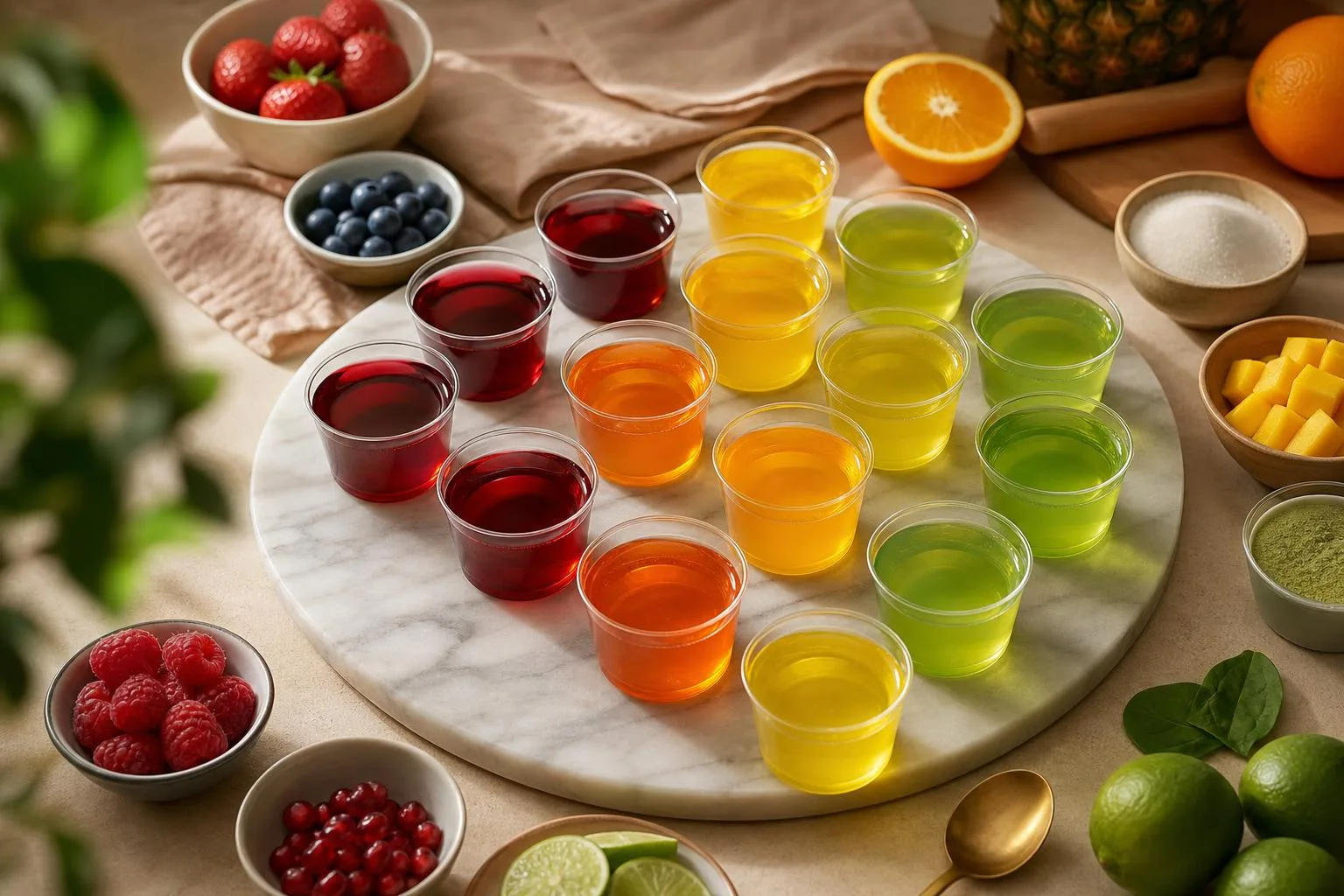
Our 14-Day Jello Shot Test
We tested 6 batches of standard 1-ounce jello shots over 14 days to separate “safe-looking” from “still good to serve.” Our best quality window was 3 to 5 days refrigerated, with noticeable texture and aroma decline after day 7.
Each batch used one 3-ounce box of flavored gelatin, 1 cup boiling water, 1/2 cup cold water, and 1/2 cup 80-proof vodka.
We portioned the mix into 16 lidded 1-ounce plastic cups and held them at 37°F in a refrigerator verified with a probe thermometer.
| Storage time | What we measured | Serving verdict |
| 24 hours | Firm set, clean fruit aroma, no liquid pooling | Best texture |
| 3 days | Still firm; slight condensation under lids | Excellent for parties |
| 5 days | Minor surface moisture; flavor still bright | Good if kept covered |
| 7 days | More syrup at bottom; softer bite | Usable, but not ideal |
| 10 days | Duller aroma; rubbery edges on some cups | We would not serve guests |
| 14 days | Separated liquid, stale refrigerator odor in 2 trials | Discard |
We repeated the test with cups left uncovered for 48 hours. Those shots picked up onion and citrus odors from the refrigerator and formed a dry, tacky top layer. Covered cups stayed cleaner and lost less moisture.
We also tested a stronger version using 3/4 cup vodka and 1/4 cup cold water. It set more loosely and tasted harsher by day 5. More alcohol did not make the shots feel fresher; it mainly weakened the gel structure.
- We found the most reliable make-ahead timing was 24 to 72 hours before serving.
- For quality, we would cap service at 5 days when stored at or below 40°F.
- We would discard any cup with mold, fizzing, sour odor, heavy separation, or a sticky leaking lid.
- We would not store jello shots at room temperature for more than 2 hours during service.
Our takeaway: refrigerated, covered jello shots can last about a week, but they are at their best within 3 to 5 days. For a bar or party setting, we would prep them two days ahead, label the tray date, and keep them cold until serving.
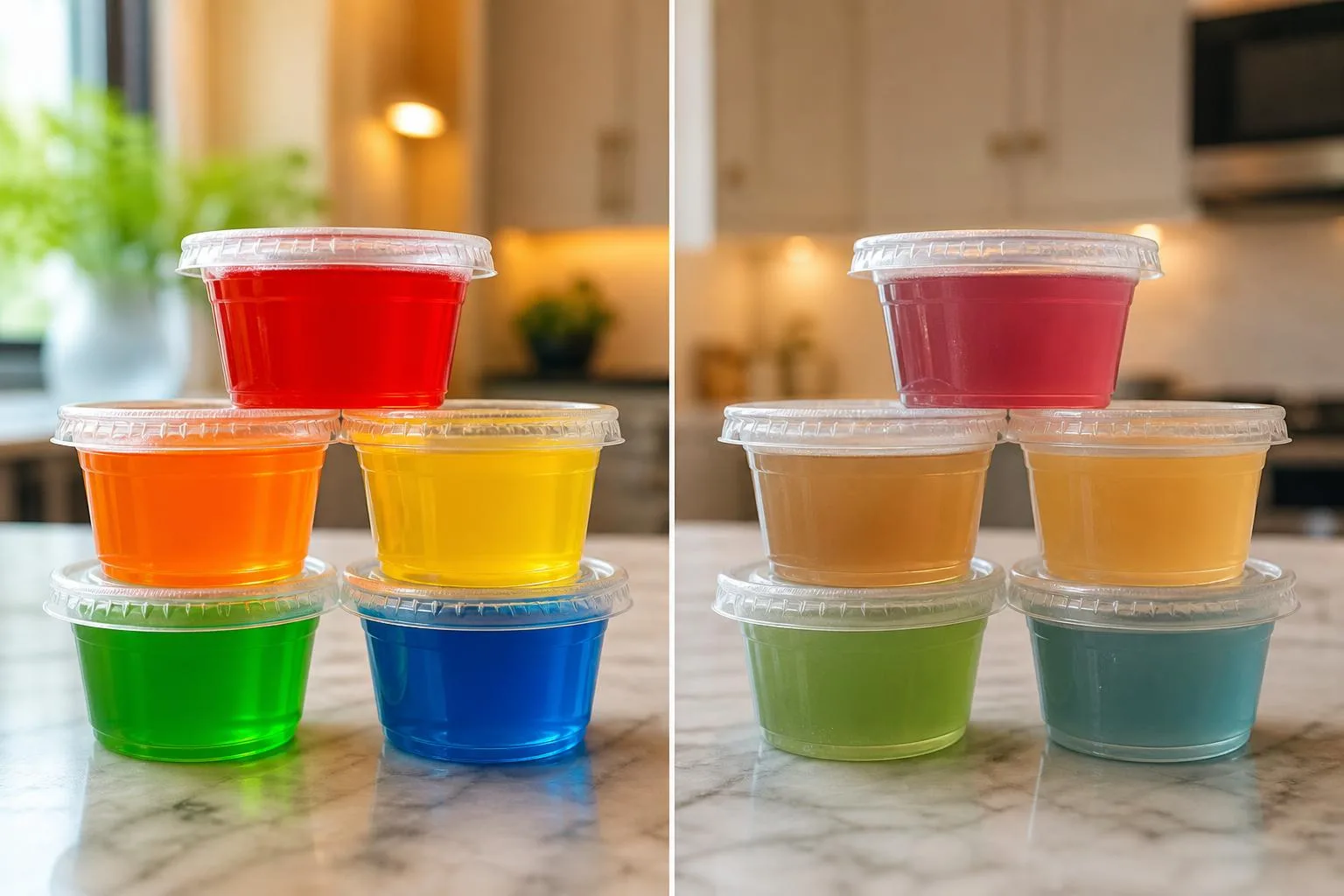
Why Alcohol Does Not Preserve Jello Shots
Jello shots are not shelf-stable just because they contain alcohol. The gelatin, water, sugar, and handling conditions matter more than most people realize, especially once cups are filled and opened at a party.
For best quality and safety, treat them like a refrigerated prepared dessert with alcohol, not like a bottle of liquor.
Myth: Alcohol preserves jello shots indefinitely
Most jello shots are far below the alcohol level needed for preservation. A typical batch made with vodka, flavored gelatin, and water often lands near beer-strength alcohol, not spirit-strength.
| Item | Typical alcohol by volume | Food-safety takeaway |
| Vodka in the bottle | 40% | High alcohol, but diluted during mixing |
| Typical jello shot | 8% to 15% | Not strong enough to prevent spoilage |
| Many beers | 4% to 8% | Still requires normal food handling once mixed with perishable ingredients |
Myth: If they smell fine, they are safe
Spoilage signs can be subtle. Sour odor, watery separation, mold, bubbling, or a slimy surface are obvious discard signals, but harmful bacteria do not always create a noticeable smell or taste.
Mistake: Leaving them out all afternoon
The USDA’s general rule for perishable foods is to avoid leaving them in the temperature danger zone for extended periods. Jello shots sitting on a warm counter, patio table, or buffet should not be treated casually.
| Condition | Maximum time before discarding | Why it matters |
| Room temperature below 90°F | 2 hours | Bacteria can multiply quickly in prepared foods |
| Outdoor heat above 90°F | 1 hour | Warm conditions shorten the safe serving window |
| Refrigerated at 40°F or below | 3 to 5 days for best quality | Texture and flavor decline even when kept cold |
Mistake: Making them too far ahead
Jello shots may remain usable for several days when refrigerated, but they taste best within the first few days. After that, gelatin can weep, fruit flavors dull, and the alcohol can taste sharper.
- Do not freeze them for storage. Freezing damages the gelatin network, often leaving a watery, grainy texture after thawing.
- Do not add fresh pineapple, kiwi, papaya, or mango without cooking first. Their enzymes can prevent gelatin from setting properly.
- Do not store uncovered shots. Lids or tight wrapping reduce odor absorption, evaporation, and cross-contamination in the refrigerator.
- Do not reuse cups from a served tray. Once handled by guests, partially warmed, or exposed, leftovers should be discarded rather than returned to storage.
Questions Readers Ask
How long are Jello shots good for in the refrigerator?
Jello shots are best within 3 to 5 days when stored covered in the refrigerator at 40°F or below.
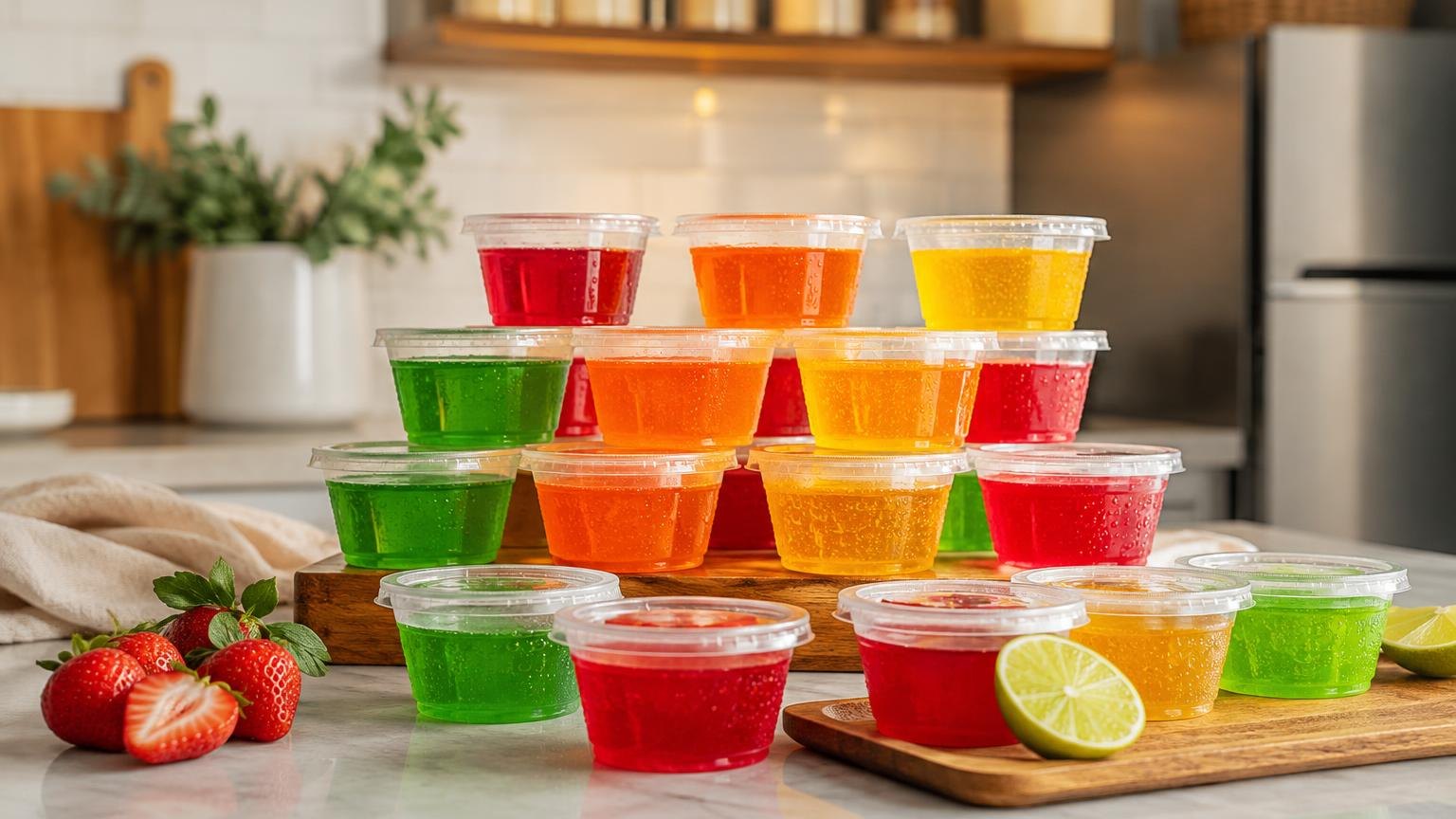
They may still be safe a little longer if kept cold, but texture and flavor usually decline as the gelatin tightens, alcohol aroma fades, and the surface dries out.
Can Jello shots go bad?
Yes. Discard Jello shots if you see mold, cloudy liquid separation, a sour or rotten smell, or a slimy surface; alcohol in a typical Jello shot is not strong enough to make it shelf-stable.
Most recipes contain water, gelatin, and mixers, so they should be treated like a refrigerated prepared food.
How far in advance can I make Jello shots for a party?
For best results, make Jello shots 1 to 2 days before serving so they have time to set while still tasting fresh. Standard 1- to 2-ounce shots usually set in about 2 to 4 hours, but overnight chilling gives the most reliable texture.
Do Jello shots need to stay refrigerated?
Yes, keep Jello shots refrigerated until serving and do not leave them out for more than 2 hours, or more than 1 hour if the room or outdoor temperature is above 90°F.
This follows USDA food-safety guidance for perishable foods held in the temperature danger zone.
Can you freeze Jello shots to make them last longer?
Freezing is not recommended because gelatin can become watery, grainy, or rubbery after thawing. While freezing may extend storage time, it usually damages the texture enough that refrigerated storage for 3 to 5 days is the better option.
Does the alcohol content change how long Jello shots stay safe and set properly?
Yes. Most recipes set and hold best when alcohol stays around one-third of the total liquid, because higher proof can weaken the gelatin network and cause faster texture breakdown.
Shots made with roughly 10% to 15% ABV in the finished mix are typically more stable than stronger versions during refrigerated storage.
Related Reading
- How Many Ml in 1 Oz? – 2026
- How Much Is 1.7 Oz In Ml? The Ultimate Conversion Guide With Real-World Experience (2026 Update)
- How To Get A Cork Out?
- What To Mix With Pink Lemonade Vodka?
- How Much Sugar Is In Whiskey?
- How Much Is 3 Oz In Ml? – The Ultimate, Experience-Based Conversion Guide (2026 Update)
- How Many Drops are In 1 ML? The Drops to Ml
- All Blog Guides
- FDA Food Code (2022)
- USDA FSIS Leftovers and Food Safety (2024)
- FDA Are You Storing Food Safely? (2024)
- CDC About Four Steps to Food Safety (2024)
- Clemson Cooperative Extension Food Storage Guide (2023)
- USDA FSIS The Big Thaw — Safe Defrosting Methods (2024)
- National Center for Home Food Preservation Gelatin Desserts (2018)





