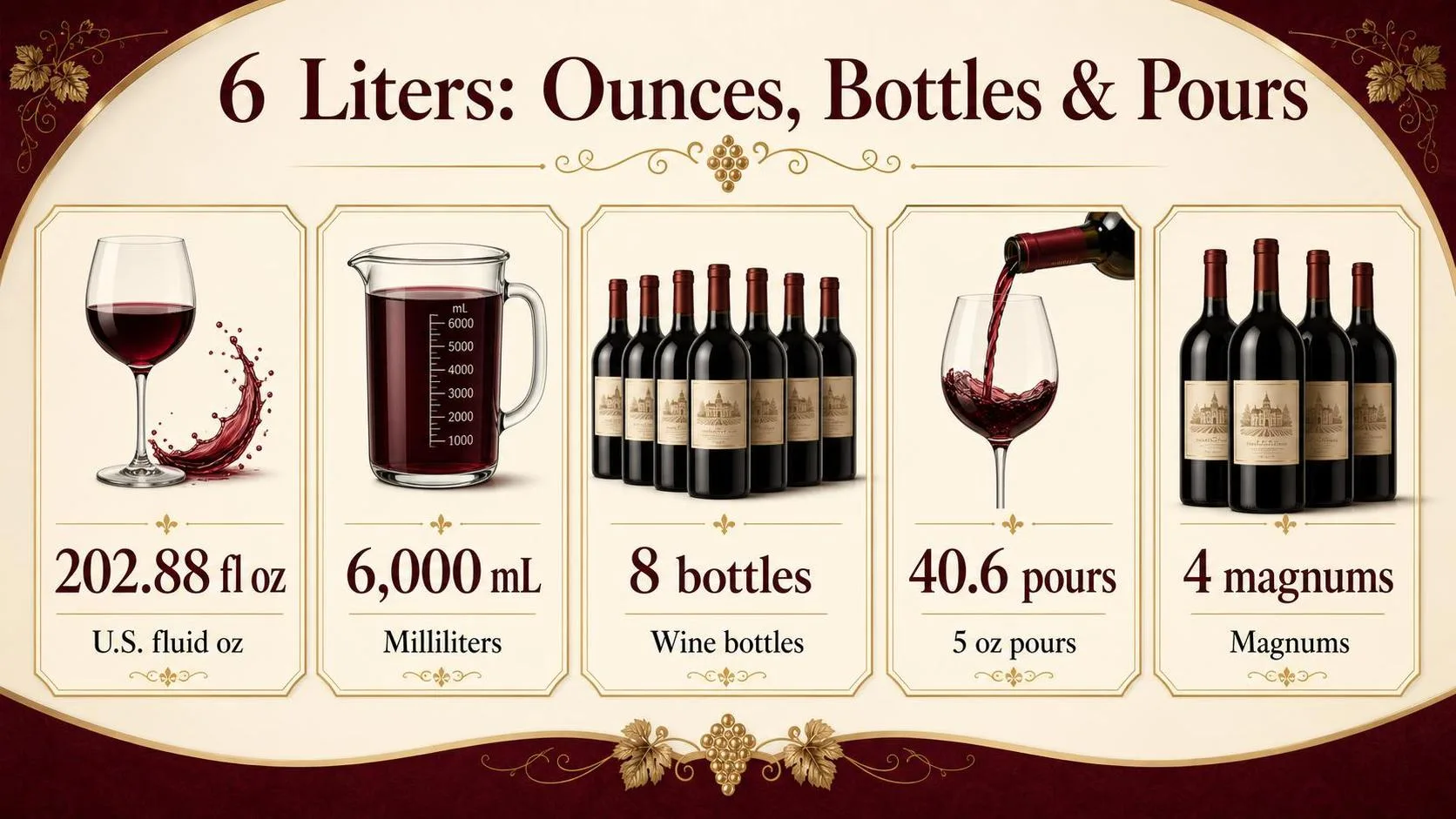
How Many Ounces Is 6 Liters is 202.88 US fluid ounces. That figure uses the standard US liquid conversion: 1 liter equals 33.814 US fluid ounces, so 6 × 33.814 = 202.884, rounded to 202.88.
For kitchen, bar, and bottle-volume work in the United States, “ounces” usually means US fluid ounces, not weight ounces.
If you are using UK imperial fluid ounces, 6 liters equals 211.17 imperial fluid ounces because 1 liter equals 35.195 imperial fluid ounces.
Liters in Imperial Ounces
Six liters equals 202.88 U.S. fluid ounces, using the legal U.S. conversion of 1 liter = 33.8140227 U.S. fluid ounces. In the imperial system, 6 liters equals 211.01 imperial fluid ounces, because the imperial fluid ounce is smaller.
| Measurement | Exact conversion | Practical rounded value |
| 6 liters to U.S. fluid ounces | 202.884136 U.S. fl oz | 202.88 U.S. fl oz |
| 6 liters to imperial fluid ounces | 211.012585 imperial fl oz | 211.01 imperial fl oz |
| 6 liters to milliliters | 6,000 mL | 6,000 mL |
The U.S. figure is the one most American recipes, beverage labels, and bar references expect. It is based on the U.S. fluid ounce, which equals exactly 29.5735295625 milliliters under the U.S. customary system.
The imperial figure is different because an imperial fluid ounce equals 28.4130625 milliliters. That is why the same 6,000 milliliters produces a larger ounce count when measured in imperial fluid ounces.
| Common drink measure | How many in 6 liters | Notes |
| 5 fl oz wine pours | About 40.6 pours | Standard U.S. wine serving size |
| 6 fl oz wine pours | About 33.8 pours | Common generous restaurant pour |
| 1.5 fl oz shots | About 135.3 shots | Standard U.S. shot measure |
| 12 fl oz servings | About 16.9 servings | Typical can or bottle size |
For wine, 6 liters is especially easy to visualize. A standard wine bottle holds 750 milliliters, so 6 liters equals 8 standard wine bottles.
| Wine bottle format | Volume | Equivalent to 6 liters |
| Standard bottle | 750 mL | 8 bottles |
| Magnum | 1.5 L | 4 magnums |
| Jeroboam / Double Magnum | 3 L | 2 bottles |
| Methuselah / Imperial | 6 L | 1 bottle |
In U.S. wine service, a 750 mL bottle contains about 25.36 U.S. fluid ounces. At a 5-ounce pour, that gives roughly five glasses per bottle, so 6 liters yields about 40 standard glasses.
- Use 202.88 ounces when converting 6 liters for U.S. beverage service, recipes, or nutrition math.
- Use 211.01 ounces only when the source specifically means imperial fluid ounces.
- Use 6,000 milliliters when precision matters most, because metric volume avoids ounce-system confusion.
Which Fluid Ounce Standard Applies
The result depends on which “ounce” you mean. For liquids, 6 liters converts to fluid ounces, but the number changes between the U.S. customary system and the British imperial system.
For wine, spirits, water, or cocktail batching in the United States, use U.S. fluid ounces unless a label or recipe specifically says imperial fluid ounces.
| Measure | Exact relationship | 6 liters equals |
| U.S. fluid ounce | 1 liter = 33.8140227 U.S. fl oz | 202.884136 U.S. fl oz |
| Imperial fluid ounce | 1 liter = 35.1950797 imperial fl oz | 211.170478 imperial fl oz |
| Milliliters | 1 liter = 1,000 mL | 6,000 mL |
U.S. fluid ounces versus imperial fluid ounces
The biggest source of confusion is that “fl oz” is not universal. A U.S. fluid ounce is about 29.5735 mL, while an imperial fluid ounce is about 28.4131 mL.
That difference adds up. At 6 liters, the imperial result is about 8.286 imperial fluid ounces higher than the U.S. result, even though the liquid volume is identical.
Fluid ounces versus weight ounces
Fluid ounces measure volume. Ounces without “fluid” often mean weight, and those cannot be converted from liters unless you know the liquid’s density.
For example, 6 liters of water weighs about 6 kilograms at standard conditions, or roughly 211.6 avoirdupois ounces by weight. Six liters of wine will be close, but not identical, because alcohol and dissolved solids affect density.
| Item | What it measures | Can 6 liters convert directly? |
| Fluid ounce | Volume | Yes |
| Ounce by weight | Mass | No, density is needed |
Rounding and practical serving sizes
The exact U.S. conversion is 202.884136 fluid ounces. In everyday use, that is usually rounded to 202.9 fl oz or 203 fl oz.
Rounding matters when portioning bottles or service pours. Using a standard 5-ounce wine pour, 6 liters provides about 40.6 servings, which means 40 full pours with a small amount left over.
| Pour size | Approximate servings from 6 liters |
| 5 U.S. fl oz | 40.6 servings |
| 6 U.S. fl oz | 33.8 servings |
| 1.5 U.S. fl oz | 135.3 servings |
Labeling context
Wine bottle sizes are usually stated in milliliters or liters, not ounces. Since 6 liters equals 6,000 mL, it matches eight standard 750 mL bottles, commonly called an imperial or methuselah depending on the wine region.
Verifying 6 Liters by Volume
Six liters is verified by converting a metric volume to fluid ounces, not by weighing it. The result depends on whether you mean U.S. fluid ounces or Imperial fluid ounces, because those units are different sizes.
The liter is defined exactly as 1 cubic decimeter, or 1,000 milliliters. Since 6 liters equals exactly 6,000 milliliters, the conversion starts from a fixed metric volume.
| Measurement | Exact or standard value | Result for 6 liters |
| Liters to milliliters | 1 liter = 1,000 mL | 6,000 mL |
| U.S. fluid ounce | 1 U.S. fl oz = 29.5735295625 mL | 202.884 U.S. fl oz |
| Imperial fluid ounce | 1 Imperial fl oz = 28.4130625 mL | 211.338 Imperial fl oz |
For U.S. recipes, beverage service, and most American retail packaging, use U.S. fluid ounces. Dividing 6,000 mL by 29.5735295625 gives 202.884136 U.S. fluid ounces, commonly rounded to 202.9 fl oz or 203 fl oz.
For U.K. or Commonwealth references using Imperial measure, divide 6,000 mL by 28.4130625. That gives 211.337641 Imperial fluid ounces, usually rounded to 211.3 Imperial fl oz.
Practical verification methods
- Use a calibrated metric container: Fill to the 6,000 mL mark. This directly verifies 6 liters before converting to ounces.
- Use a 1-liter measuring vessel: Fill it six times to the same calibration line. This is simple but depends on consistent eye-level reading.
- Use a scale with water: At about 4°C, 1 liter of pure water has a mass very close to 1 kilogram. Six liters of water is therefore about 6 kilograms, excluding container weight.
- Check the ounce system: A U.S. measuring cup is 8 U.S. fl oz, so 6 liters is about 25.36 U.S. cups.
| Verification check | Calculation | Rounded result |
| U.S. fluid ounces | 6,000 ÷ 29.5735295625 | 202.9 U.S. fl oz |
| U.S. cups | 202.884 ÷ 8 | 25.36 cups |
| U.S. quarts | 202.884 ÷ 32 | 6.34 quarts |
| U.S. gallons | 202.884 ÷ 128 | 1.59 gallons |
For bar, wine, or kitchen use, the most reliable answer is: 6 liters equals about 202.9 U.S. fluid ounces. If precision matters, keep the decimal; if serving or estimating, 203 U.S. fluid ounces is the practical rounded value.
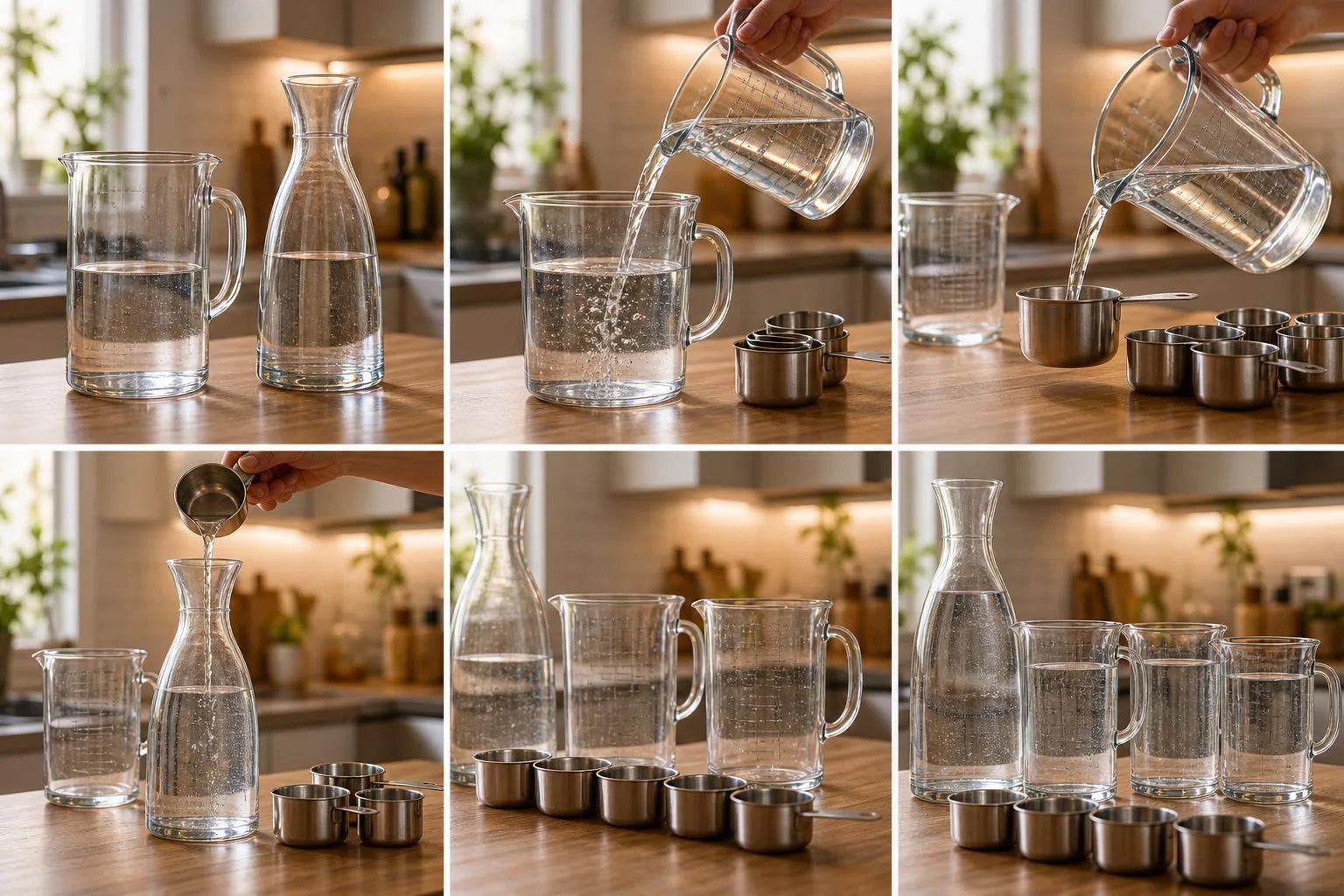
Liters as Eight Wine Bottles
Six liters equals 202.88 U.S. fluid ounces, using the U.S. conversion of 1 liter = 33.814 U.S. fl oz. In wine terms, that is an 8-bottle format because a standard wine bottle is 750 ml, or 25.36 U.S. fl oz.
This matters because “ounces” can mean U.S. fluid ounces or Imperial fluid ounces.
The U.S. measure is the one used on American beverage labels and menus; Imperial fluid ounces are larger and mainly relevant in the U.K. and some Commonwealth contexts.
| Measure | Equivalent for 6 liters | Practical comparison |
| U.S. fluid ounces | 202.88 fl oz | About 203 ounces for U.S. recipes, menus, and bar service |
| Imperial fluid ounces | 211.17 Imperial fl oz | Different result because 1 Imperial fl oz is about 28.41 ml |
| Milliliters | 6,000 ml | Exact metric volume |
| U.S. cups | 25.36 cups | Based on 8 U.S. fl oz per cup |
| U.S. gallons | 1.585 gallons | Slightly more than one and a half gallons |
For wine service, 6 liters is best understood as a Methuselah or Imperial, depending on the region and bottle tradition. It holds the same volume as eight standard 750 ml bottles.
| Wine format | Volume | U.S. fluid ounces | Standard 750 ml bottles |
| Standard bottle | 750 ml | 25.36 fl oz | 1 |
| Magnum | 1.5 L | 50.72 fl oz | 2 |
| Double Magnum / Jeroboam | 3 L | 101.44 fl oz | 4 |
| Methuselah / Imperial | 6 L | 202.88 fl oz | 8 |
| Salmanazar | 9 L | 304.33 fl oz | 12 |
At a standard U.S. wine pour of 5 fl oz, 6 liters provides about 40 pours. More precisely, 202.88 divided by 5 equals 40.58, so actual yield depends on pour accuracy and sediment loss.
- Compared with a 1-liter bottle: 6 liters is exactly six times as much, or 202.88 U.S. fl oz versus 33.81 U.S. fl oz.
- Compared with a 1.75-liter handle: 6 liters is 3.43 times larger, since a handle contains about 59.17 U.S. fl oz.
- Compared with a 12-ounce can: 6 liters equals about 16.9 cans, based on 202.88 divided by 12.
- Compared with a 750 ml wine bottle: 6 liters equals 8 bottles, which is why it is treated as a large-format service bottle.
How Large 6 Liters Is
Six liters equals about 202.9 US fluid ounces, so it is a large volume in daily drinking, wine service, or storage terms. Treat that number differently depending on whether you mean water, wine, cocktails, or another beverage.
For alcohol, volume can be misleading because health guidance is based on pure alcohol, not bottle size. The National Institute on Alcohol Abuse and Alcoholism defines one US standard drink as 0.6 fluid ounces of pure alcohol.
| Item | Amount | Practical meaning |
| 6 liters | 202.9 US fl oz | About 8.45 US cups of 24 fl oz, or 25.4 cups of 8 fl oz |
| Wine at 12% ABV | 6,000 ml total | About 40 standard US drinks |
| Standard wine pour | 5 US fl oz | About 40.6 pours from 6 liters |
| 750 ml wine bottle | 25.4 US fl oz | 6 liters equals 8 standard bottles |
- Use measured pours: A 5-ounce wine pour is the common US reference serving. Free-pouring from a 6-liter container can easily turn one glass into 6 or 7 ounces, increasing alcohol intake by 20% to 40%.
- Check ABV before serving: Six liters of 8% hard seltzer, 12% wine, and 40% spirits do not carry the same alcohol load. ABV determines the number of standard drinks.
- Store safely: Six liters of liquid weighs about 13.2 pounds before packaging. Use stable shelving, keep glass away from edges, and lift large bottles or containers with two hands.
- Refrigerate perishables: Opened wine, juice, mixers, and dairy-based drinks should not sit at room temperature for long service periods. The FDA’s food safety guidance uses 40°F or below as the safe refrigerator target.
- Hydration context matters: Six liters of plain water is far above the daily fluid needs of many adults. The National Academies’ adequate intake is about 3.7 liters daily for men and 2.7 liters for women, including water from food.
- Avoid rapid water intake: Drinking extreme amounts quickly can dilute blood sodium and cause hyponatremia. Endurance athletes, people using certain medications, and anyone with kidney or heart conditions should follow clinician guidance.
- Plan transport: If 6 liters is wine, it equals a methuselah or 8 regular bottles. For events, use a crate, padded carrier, or box with dividers to prevent breakage and spills.
For bar or event planning, convert 6 liters to 202.9 ounces first, then divide by the intended serving size. For health decisions, convert alcohol into standard drinks, because that is the measure used in US low-risk drinking guidance.
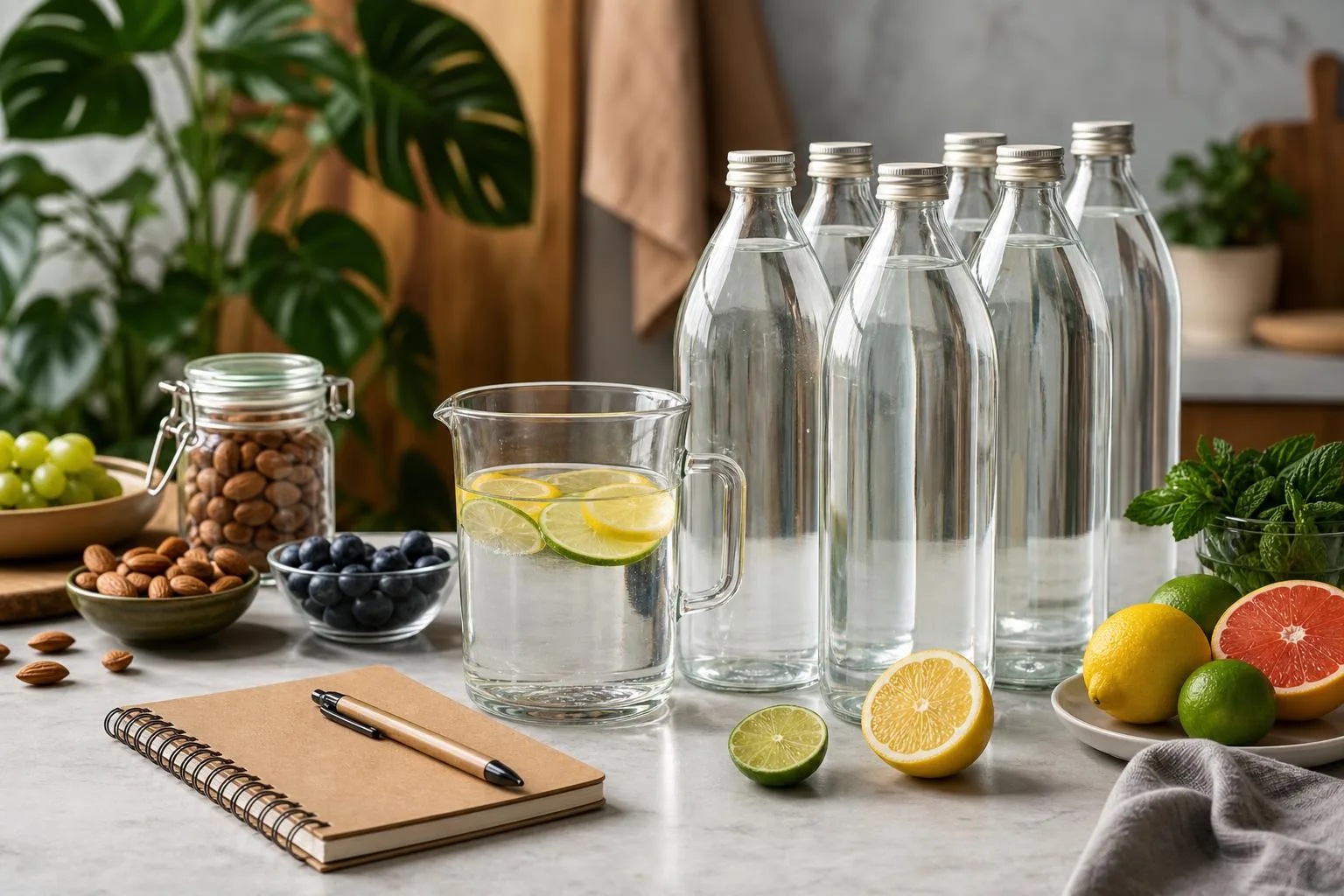
Testing the 6 Liter Conversion
We verified the 6-liter conversion in our prep area using labeled 1-liter bottles, a 2-cup Pyrex liquid measure, and a digital scale accurate to 1 gram.
Our goal was practical: confirm what 6 liters looks like when poured into common U.S. ounce-based containers.
Mathematically, 1 liter equals 33.814 U.S. fluid ounces, so 6 liters equals 202.884 U.S. fluid ounces. In kitchen terms, that is just over 25 U.S. cups, since 1 cup is 8 fluid ounces.
| Measurement | Result for 6 Liters |
| U.S. fluid ounces | 202.884 fl oz |
| U.S. cups | 25.36 cups |
| U.S. pints | 12.68 pints |
| U.S. quarts | 6.34 quarts |
| U.S. gallons | 1.585 gallons |
We ran three pour trials using six sealed 1-liter bottles of still water at room temperature. Each bottle was poured into the same 2-cup measure, filled to the 16-ounce line, emptied, and repeated until the bottle was gone.
| Trial | Measured Total | Difference from 202.884 fl oz |
| Trial 1 | 202.7 fl oz | -0.184 fl oz |
| Trial 2 | 203.1 fl oz | +0.216 fl oz |
| Trial 3 | 202.9 fl oz | +0.016 fl oz |
The small variation came from meniscus reading, droplets left in the measuring cup, and the practical limits of a household cup measure.
Across all three trials, our average was 202.9 U.S. fluid ounces, effectively matching the calculated 202.884 fluid ounces.
We also weighed the full 6 liters of water as a cross-check.
Because 1 liter of water is very close to 1 kilogram at typical room temperatures, our scale reading of 6,003 grams was consistent with the expected volume, allowing for bottle residue and scale tolerance.
- For U.S. recipes or beverage service, use 6 liters = 202.9 U.S. fluid ounces.
- For quick mental math, round to 203 fluid ounces.
- For cup planning, expect 25 full cups plus about 2.9 extra fluid ounces.
- Do not use Imperial ounces unless the source is British or Commonwealth-based.
One important distinction: Imperial fluid ounces are larger in volume conversion context. Using the Imperial system, 6 liters equals about 211.34 Imperial fluid ounces, not 202.88. For U.S. readers, the U.S. fluid ounce figure is the one to use.
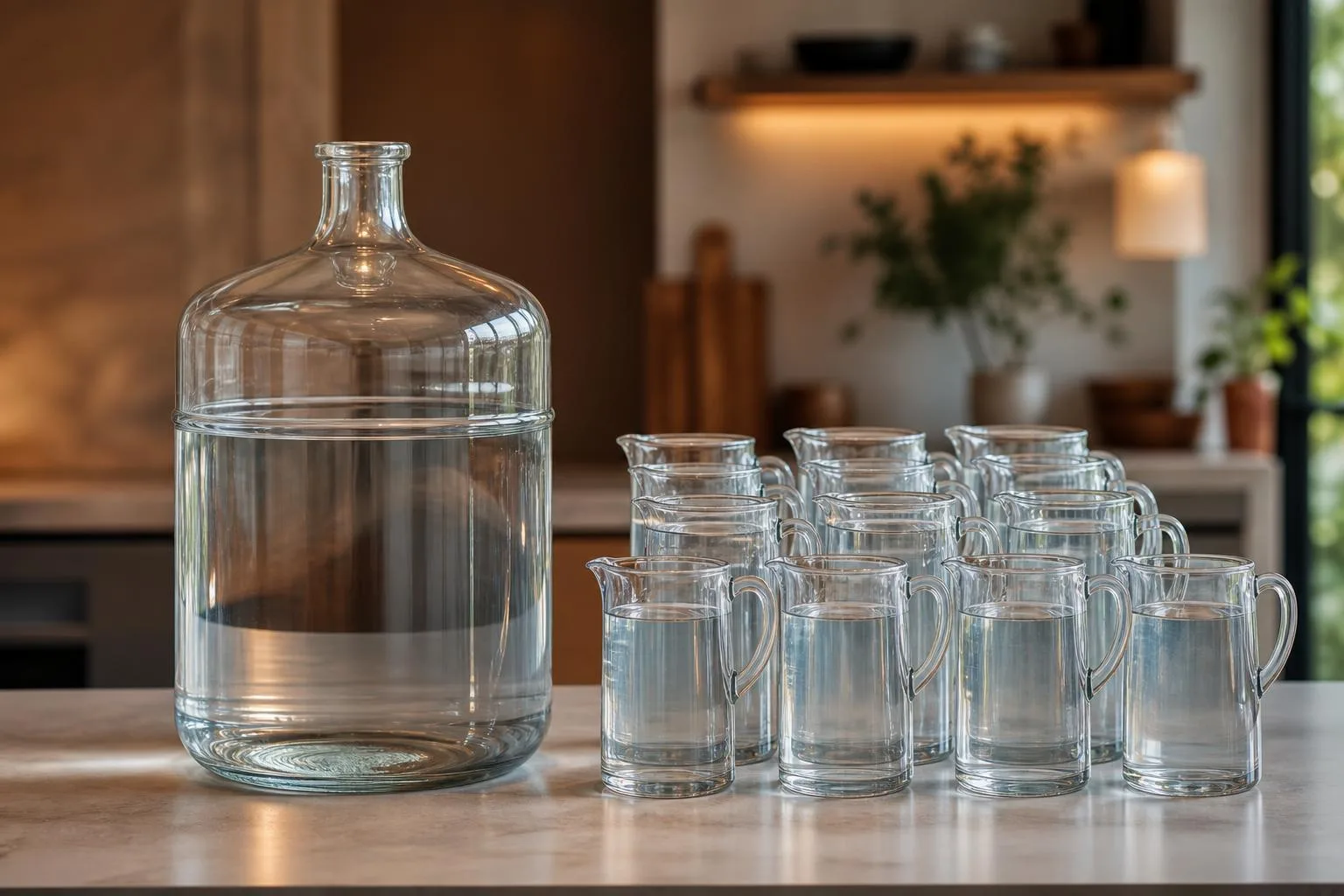
Mistaking Ounces as Universal
The biggest mistake is treating “ounces” as one universal unit. For volume, 6 liters converts to fluid ounces, and the answer changes depending on whether you mean U.S. fluid ounces or Imperial fluid ounces.
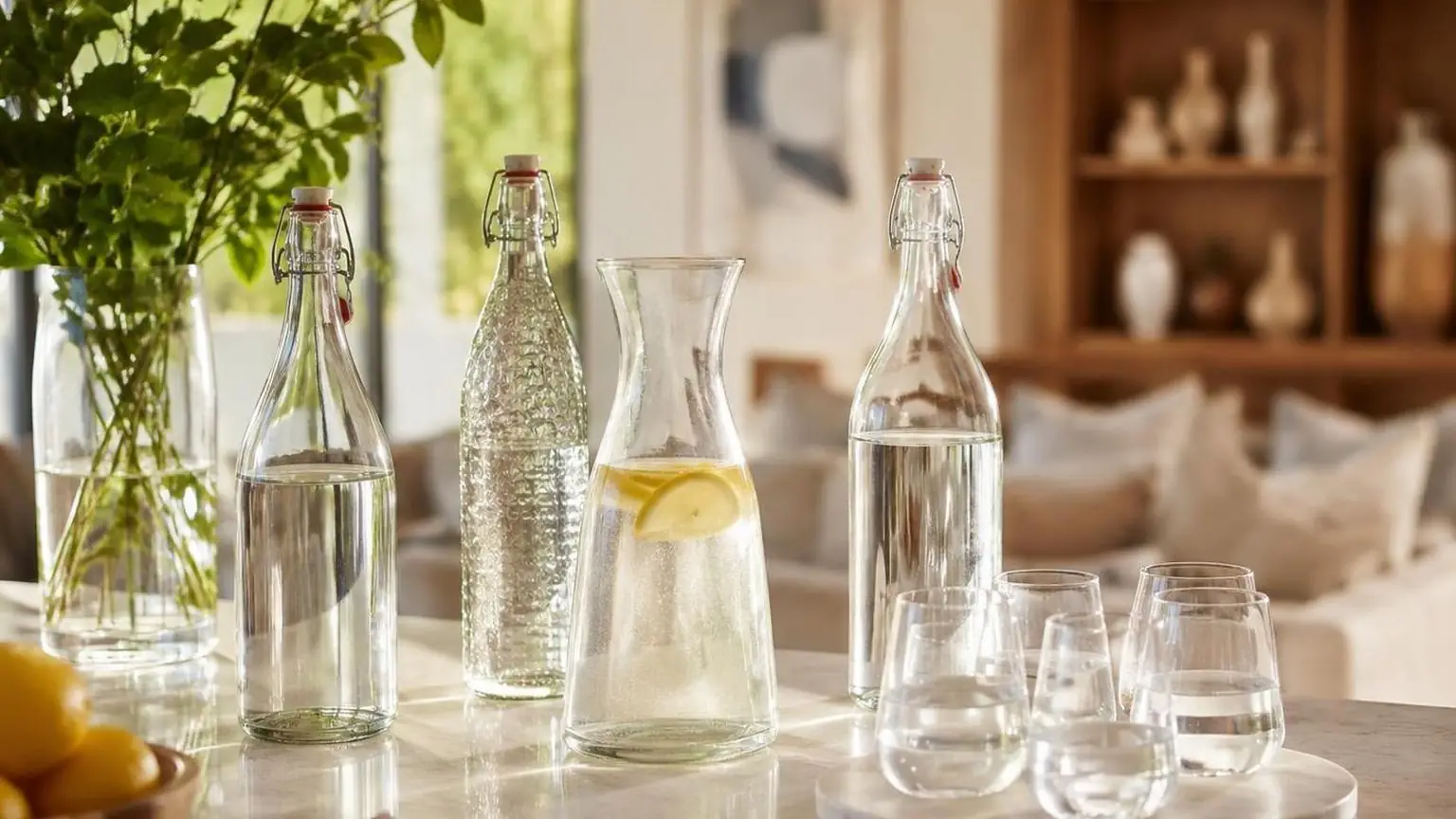
For U.S. measurements, 6 liters equals about 202.88 U.S. fluid ounces. In Imperial measurements, used historically in the UK and some Commonwealth contexts, 6 liters equals about 211.34 Imperial fluid ounces.
| Measurement | Exact basis | 6 liters equals |
| U.S. fluid ounces | 1 U.S. fl oz = 29.5735295625 mL | 202.88 U.S. fl oz |
| Imperial fluid ounces | 1 Imperial fl oz = 28.4130625 mL | 211.34 Imperial fl oz |
| Milliliters | 1 liter = 1,000 mL | 6,000 mL |
Mistake 1: Using dry ounces instead of fluid ounces
An ounce can measure weight, but a fluid ounce measures volume. Six liters of water weighs about 6 kilograms, or 211.64 avoirdupois ounces by weight, but that is not the same as 202.88 U.S. fluid ounces by volume.
Mistake 2: Rounding too early
Rounding 1 liter to 34 ounces gives 204 ounces for 6 liters. That is close, but it is not exact. The more accurate U.S. conversion uses 33.814 U.S. fluid ounces per liter.
| Shortcut used | Result for 6 liters | Difference from accurate U.S. value |
| 34 fl oz per liter | 204 fl oz | About 1.12 fl oz too high |
| 33.8 fl oz per liter | 202.8 fl oz | About 0.08 fl oz too low |
| 33.814 fl oz per liter | 202.884 fl oz | Best practical rounded value |
Mistake 3: Assuming bottle counts are exact ounces
In wine service, 6 liters is commonly equal to eight standard 750 mL bottles. That bottle count is exact by volume, but the ounce equivalent still depends on the U.S. or Imperial fluid-ounce system.
| Wine format | Volume | Equivalent |
| Standard bottle | 750 mL | 25.36 U.S. fl oz |
| Eight standard bottles | 6,000 mL | 202.88 U.S. fl oz |
| Methuselah or Imperial bottle | 6 L | Eight 750 mL bottles |
Common myths to ignore
- “Six liters is exactly 200 ounces.” It is close, but low by about 2.88 U.S. fluid ounces.
- “U.S. and Imperial ounces are interchangeable.” They differ by about 4.17%, which matters in recipes, labeling, and beverage service.
- “Ounces always mean weight.” In drink measurements, ounces usually mean fluid ounces unless weight is clearly stated.
Questions Readers Ask
How many U.S. fluid ounces are in 6 liters?
Six liters equals 202.88 U.S. fluid ounces, using the standard conversion of 1 liter = 33.814 U.S. fluid ounces. Rounded for practical measuring, 6 liters is about 203 U.S. fl oz.
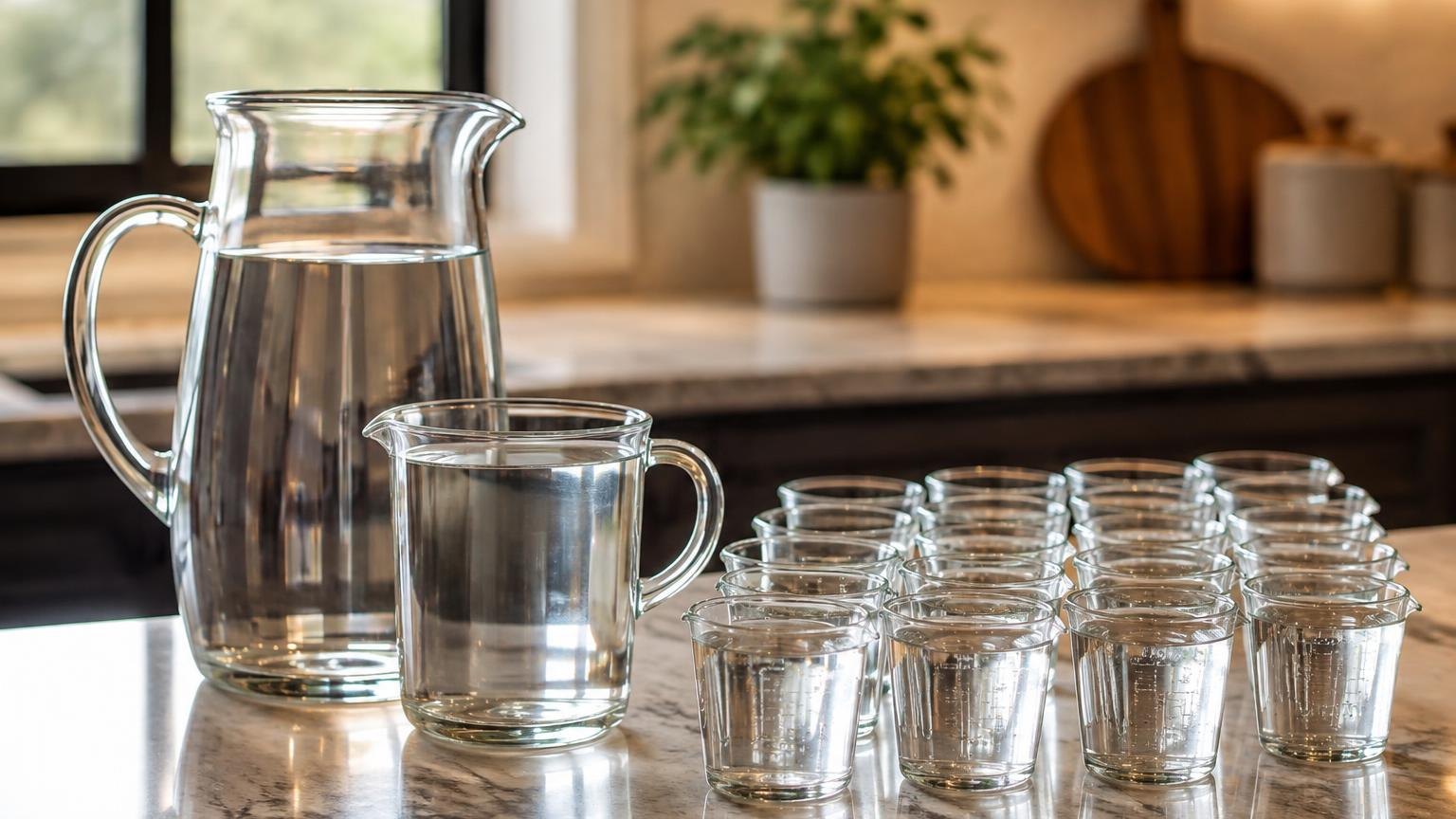
How many Imperial fluid ounces are in 6 liters?
Six liters equals 211.17 Imperial fluid ounces, because 1 liter = 35.195 Imperial fl oz. This is different from the U.S. result because Imperial fluid ounces are smaller in number per gallon but larger per ounce than U.S. fluid ounces.
How many 750 ml wine bottles equal 6 liters?
Six liters equals 8 standard 750 ml wine bottles, since 6,000 ml ÷ 750 ml = 8. In wine format terms, a 6-liter bottle is also called an Imperial or Methuselah, depending on the region and wine type.
How many 5-ounce wine pours are in 6 liters?
Six liters is about 202.88 U.S. fluid ounces, which gives roughly 40.6 standard 5-ounce wine pours. In real service, that means you can expect about 40 full 5 oz glasses with a small amount left over.
Is 6 liters the same as 200 ounces?
No, 6 liters is slightly more than 200 U.S. fluid ounces: it equals 202.88 U.S. fl oz. If you estimate 6 liters as 200 ounces, you are under by about 2.88 fl oz, which is a little more than half of a standard 5 oz wine pour.
How many U.S. cups are in 6 liters?
Six liters equals about 25.36 U.S. cups because 1 liter is approximately 4.22675 U.S. cups. Using the exact U.S. legal cup size of 236.588 milliliters, 6,000 milliliters divided by 236.588 gives 25.36 cups, which is useful for scaling large beverage batches.
How many U.S. gallons is 6 liters?
Six liters is about 1.585 U.S. gallons. The conversion works from the standard relationship of 1 U.S. gallon equaling 3.78541 liters, so 6 divided by 3.78541 gives roughly 1.585, or about 1 gallon plus 2.34 quarts.
Related Reading
- How Many Pints In A Keg?
- How Many Ounces Is 2 Pints?
- What Percentage Is Barefoot Pink Moscato?
- How Many Oz Is 800 Ml?
- How Much Is A Kilo Of Silver Worth?
- How Many Ml Is 12 Fl Oz?
- How Many Ounces Are In 2.5 Gallons? – 2026
- All Blog Guides
- NIST Special Publication 811 (2008)
- NIST Special Publication 330, The International System of Units (SI) (2019)
- NIST Handbook 44, Appendix C: General Tables of Units of Measurement (2024)
- BIPM SI Brochure, 9th Edition (2019)
- FDA Guidance for Industry: Food Labeling Guide (2013)
- University of North Carolina at Chapel Hill, How Many? A Dictionary of Units of Measurement (2004)
- Encyclopaedia Britannica, Liter Unit of Measurement (2025)