
How Many Milligrams In An Ounce Of Gold is 31,103.4768 milligrams in one troy ounce of gold.
Precious metals use the troy ounce, not the everyday avoirdupois ounce, so this is the figure used for bullion bars, coins, spot prices, and refinery paperwork.
For comparison, a standard avoirdupois ounce equals 28,349.523125 milligrams, about 2,753.953675 milligrams less than a troy ounce.
That difference matters when checking gold weights, converting assay results, or comparing a one-ounce gold coin with ordinary household weight measurements.
Troy Ounce Meaning for Gold
One ounce of gold usually means one troy ounce, not the everyday grocery ounce. A troy ounce equals 31,103.4768 milligrams, the standard unit used for gold bullion, spot prices, and most coin specifications.
The confusion comes from two different ounce systems. The avoirdupois ounce is used for food, mail, and most U.S. household weights. Precious metals use the troy system, which is older and heavier per ounce.
| Unit | Grams | Milligrams | Used for |
| 1 troy ounce | 31.1034768 g | 31,103.4768 mg | Gold, silver, platinum, palladium |
| 1 avoirdupois ounce | 28.349523125 g | 28,349.523125 mg | Food, shipping, everyday U.S. weights |
| Difference | 2.753953675 g | 2,753.953675 mg | Troy ounce is about 9.7% heavier |
So, if a dealer quotes “1 oz gold,” the practical answer is 31,103.4768 mg of fine gold, unless the product clearly says avoirdupois ounce. Gold markets, including New York and London pricing conventions, quote in troy ounces.
“Fine gold” means the actual pure gold content, not always the total object weight. This matters for coins and jewelry because alloy metals may be added for hardness, color, or durability.
| Gold item | Total weight | Pure gold content | Pure gold in mg |
| 1 oz .9999 bullion bar | About 31.1035 g | 1 troy oz fine gold | 31,103.4768 mg |
| 1 oz American Gold Eagle | 33.931 g | 1 troy oz fine gold | 31,103.4768 mg |
| 1 oz 22k gold alloy | 31.1035 g if measured as troy oz | 91.67% gold | About 28,511.5 mg |
| 1 oz 18k gold alloy | 31.1035 g if measured as troy oz | 75.00% gold | 23,327.6076 mg |
The U.S. Mint lists the one-ounce American Gold Eagle as containing 1.0000 troy ounce of gold, even though the coin weighs more overall because it is 22-karat alloyed gold.
- 1 troy ounce gold: 31,103.4768 mg.
- 1 gram gold: 1,000 mg.
- 1 kilogram gold bar: 1,000,000 mg, or about 32.1507466 troy ounces.
- 1 milligram gold: 0.0000321507 troy ounces.
For valuation, multiply the troy-ounce gold price by the fraction of a troy ounce. For example, 100 mg of pure gold is 0.00321507 troy ounces, before dealer premiums, refining charges, or assay adjustments.

Which Ounce Changes Milligrams
The milligram result depends first on which “ounce” is being used. Gold is normally quoted in troy ounces, not the everyday U.S. avoirdupois ounce used for groceries and shipping.
A pure troy ounce of gold is exactly 31,103.4768 milligrams. If someone uses a standard avoirdupois ounce instead, the result is 28,349.523125 milligrams, which is about 8.86% lower.
| Ounce type | Grams | Milligrams | Common use |
| Troy ounce | 31.1034768 g | 31,103.4768 mg | Gold, silver, platinum markets |
| Avoirdupois ounce | 28.349523125 g | 28,349.523125 mg | Food, parcels, household weight |
Purity changes the amount of actual gold
The ounce-to-milligram conversion gives total mass. Jewelry and coins may not be 100% gold, so the milligrams of fine gold are lower unless the item is .999 or .9999 pure.
| Gold purity | Gold fraction | Fine gold in 1 troy oz |
| 24 karat, .9999 | 99.99% | 31,100.3665 mg |
| 24 karat, .999 | 99.90% | 31,072.3733 mg |
| 22 karat | 91.67% | 28,511.5204 mg |
| 18 karat | 75.00% | 23,327.6076 mg |
| 14 karat | 58.33% | 18,143.6955 mg |
Rounding, reporting, and scale accuracy matter
Precious-metals dealers often round a troy ounce to 31.1035 grams. That equals 31,103.5 mg, only 0.0232 mg higher than the exact value, but repeated rounding can matter in large lots.
- Assay basis: Bullion is priced by fine gold content, so a 1 troy oz .999 coin contains 31,072.3733 mg of gold, not 31,103.4768 mg.
- Scale resolution: A scale reading to 0.01 g is only precise to 10 mg; a jewelry balance reading to 0.001 g is precise to 1 mg.
- Unit labeling: “oz” on a kitchen scale usually means avoirdupois ounces, while “ozt” means troy ounces.
- Item weight versus gold weight: Gemstones, solder, clasps, and non-gold alloys add mass but do not count as milligrams of gold.
For bullion, the safest calculation is: troy ounces × 31,103.4768 × purity fraction. For jewelry, confirm both the karat and the actual metal weight before converting.

Why Gold Uses Troy Ounces
Gold bullion is measured by the troy ounce, not the household avoirdupois ounce. One troy ounce equals exactly 31.1034768 grams, or 31,103.4768 milligrams, using the NIST-recognized grain-based conversion.
The distinction matters because using the wrong ounce understates a one-ounce gold item by about 2,753.9537 milligrams.
In bullion trading, coin specifications, refinery invoices, and spot-price quotes, “oz” normally means troy ounce unless stated otherwise.
| Unit | Grams | Milligrams | Typical use |
| 1 troy ounce | 31.1034768 g | 31,103.4768 mg | Gold, silver, platinum bullion |
| 1 avoirdupois ounce | 28.349523125 g | 28,349.523125 mg | Food, mail, general U.S. weight |
| Difference | 2.753953675 g | 2,753.953675 mg | Common source of conversion errors |
Weighing the Gold
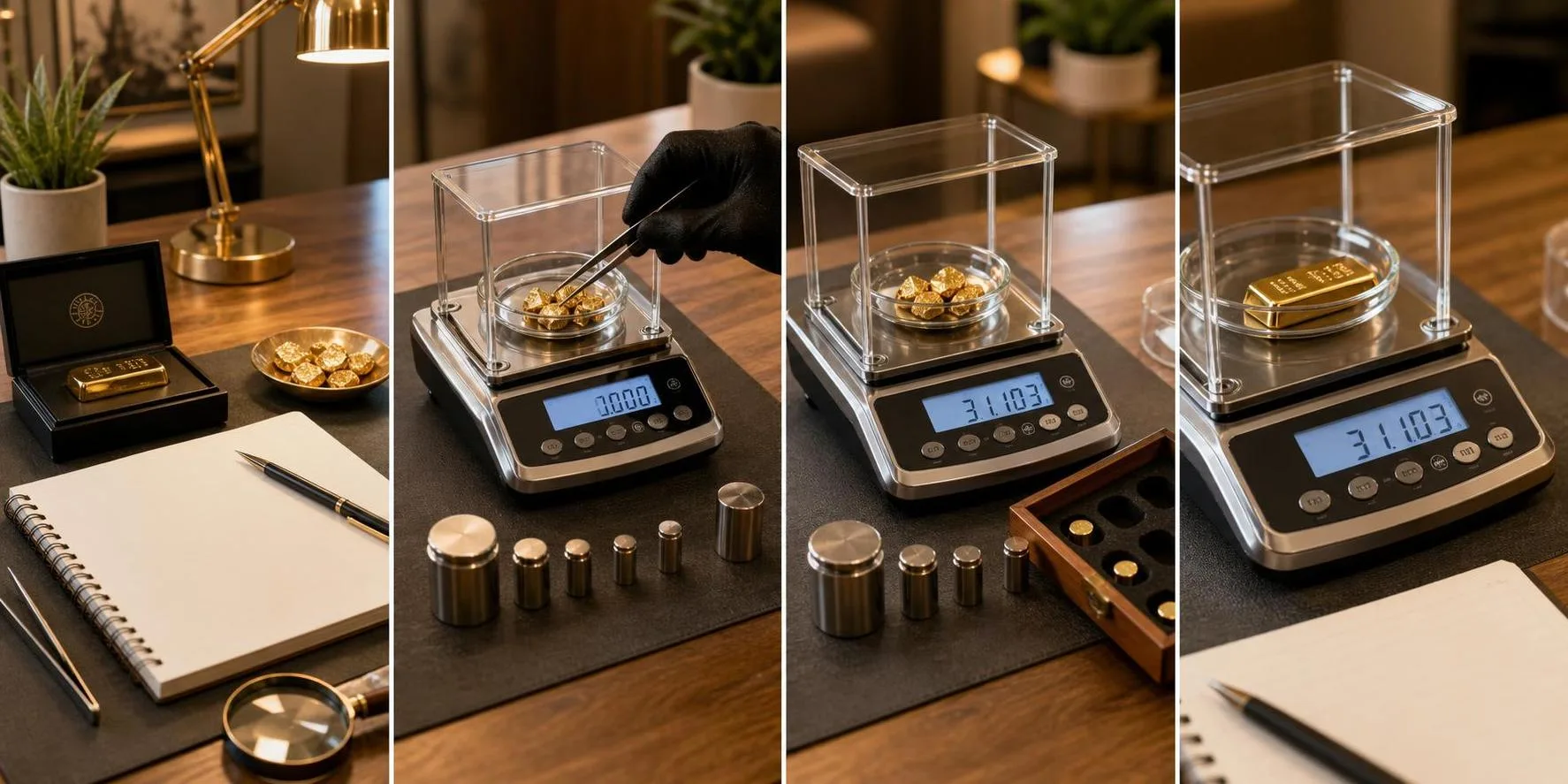
Verification starts with a calibrated digital balance. For investment bullion, dealers commonly use scales readable to 0.01 gram; higher-grade analytical balances may read to 0.001 gram, equal to 1 milligram.
The item is weighed without packaging, capsules, or assay cards unless the product’s stated weight includes them.
A genuine one-troy-ounce fine-gold bar should correspond to 31.1034768 grams of pure gold, adjusted only for declared manufacturing tolerance.
- Calibration: Scales are checked with certified test weights traceable to national measurement standards.
- Tare: Containers, trays, and capsules are zeroed out before weighing.
- Environment: Air drafts, vibration, and uneven surfaces can shift milligram-level readings.
- Repeat weighing: Repeating the measurement helps identify balance drift or handling error.
Verifying Purity and Fine Gold Content
Weight alone does not prove gold content. A 31.103-gram object is not necessarily one troy ounce of fine gold unless its purity is also confirmed.
| Example product | Gross weight | Purity | Fine gold content |
| 24k bullion bar | 31.1034768 g | 99.99% | About 31.1004 g |
| American Gold Eagle 1 oz | 33.931 g | 91.67% | 31.1034768 g |
| Canadian Gold Maple Leaf 1 oz | 31.11 g | 99.99% | 31.1034768 g nominal |
Purity is verified by assay. Non-destructive XRF testing identifies surface composition quickly, while fire assay is the traditional high-accuracy method used by refiners for definitive gold content.
Professional verification also includes diameter, thickness, edge design, serial number, mint mark, packaging, and magnetic response.
Gold is not magnetic, so a strong attraction is a clear warning sign, though passing a magnet test does not prove authenticity.
For large bars, market standards are stricter. LBMA Good Delivery gold bars must generally weigh 350 to 430 troy ounces and have a minimum fineness of 995 parts per thousand, meaning at least 99.5% gold.
Gold vs Everyday U.S. Ounces
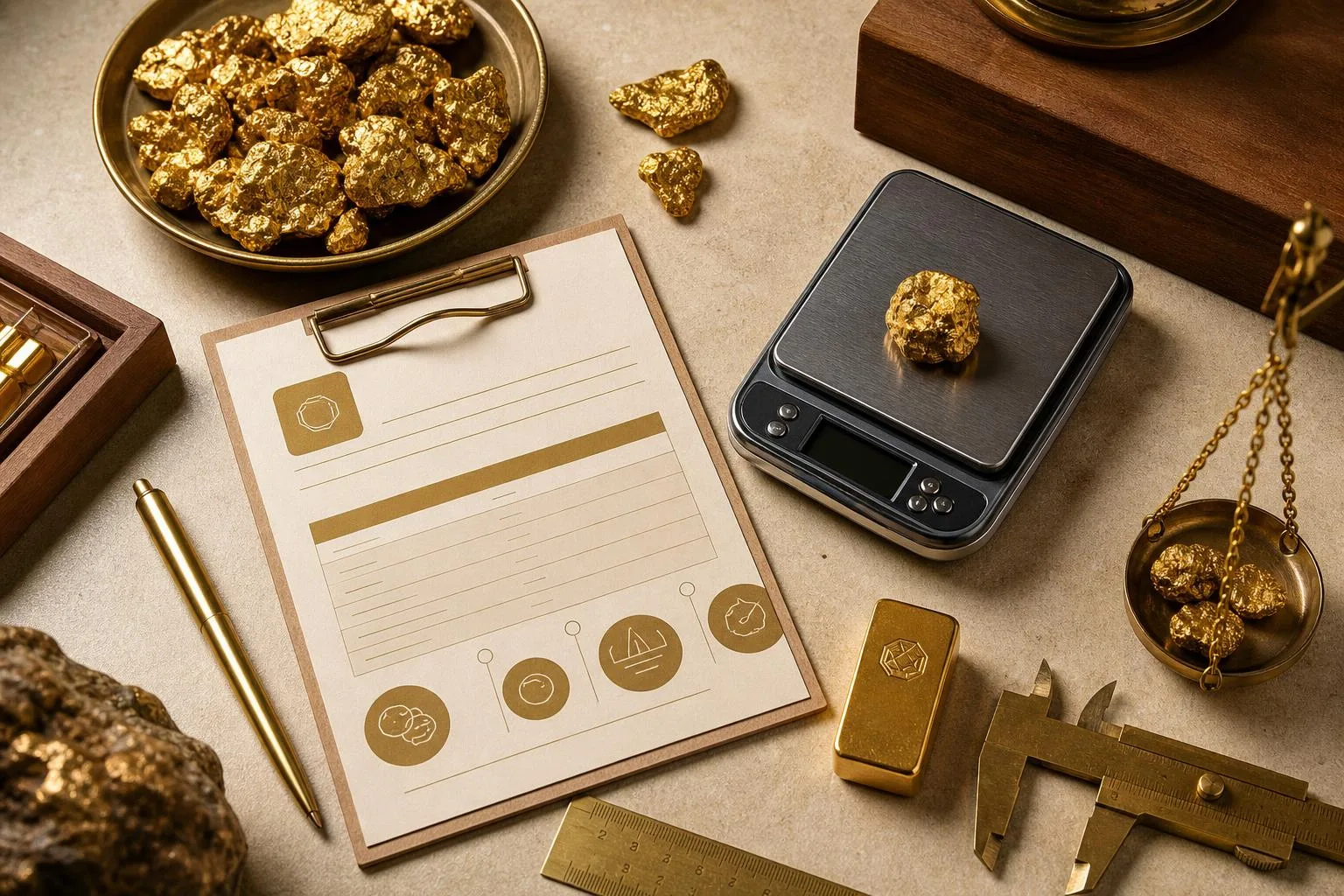
Gold is normally weighed in troy ounces, not the everyday U.S. ounce used for groceries. One troy ounce of gold equals 31,103.4768 milligrams, which is about 9.7% heavier than a standard avoirdupois ounce.
This distinction matters because bullion prices, coin specifications, and refinery weights are quoted in troy units. Confusing the two ounce systems can create an error of 2,753.9537 milligrams per ounce.
| Unit or Alternative | Milligrams | How It Compares to 1 Troy Ounce of Gold |
| 1 troy ounce | 31,103.4768 mg | Standard unit for gold, silver, platinum, and palladium bullion |
| 1 avoirdupois ounce | 28,349.5231 mg | 2,753.9537 mg less than a troy ounce |
| 1 gram | 1,000 mg | 1 troy ounce equals 31.1034768 grams |
| 1 kilogram | 1,000,000 mg | Equals 32.1507466 troy ounces |
| 1 pennyweight | 1,555.1738 mg | 20 pennyweights equal 1 troy ounce |
| 1 grain | 64.79891 mg | 480 grains equal 1 troy ounce |
The closest common alternative is the gram. Many small gold bars are sold as 1 gram, 5 grams, 10 grams, or 100 grams. A 1-gram gold bar contains only about 3.215% of a troy ounce.
A standard 1-kilogram gold bar contains 32.1507466 troy ounces. In milligrams, that is exactly 1,000,000 mg before any manufacturing tolerance or assay adjustment.
Jewelry buyers may also see pennyweights, especially in scrap-gold transactions. Since 1 pennyweight equals 1.55517384 grams, a full troy ounce contains exactly 20 pennyweights.
- Use troy ounces for bullion coins, investment bars, spot prices, and precious-metals contracts.
- Use grams for small retail bars, jewelry weights, and international product listings.
- Use avoirdupois ounces only for ordinary goods, not gold pricing or bullion weight.
A one-ounce American Gold Eagle, Canadian Maple Leaf, or gold bar refers to one troy ounce of fine gold: 31,103.4768 milligrams. That is the figure to use when converting gold ounces into milligrams.

How Gold Is Weighed in Trade
Gold is not measured like groceries when it is bought, sold, or assayed. In bullion markets, “1 ounce of gold” almost always means 1 troy ounce, equal to 31,103.4768 milligrams, not the 28,349.523125 milligrams in a household ounce.
That distinction matters for pricing, insurance, medication-style precision scales, and avoiding costly misunderstandings. A single wrong ounce unit changes the stated weight by about 2,753.9537 milligrams, or roughly 8.86% of a troy ounce.
| Ounce type | Milligrams | Common use |
| Troy ounce | 31,103.4768 mg | Gold, silver, platinum, palladium bullion |
| Avoirdupois ounce | 28,349.523125 mg | Food, parcels, household weight |
| Difference | 2,753.953675 mg | Unit-conversion error to avoid |
Handling and storage safety
- Use gloves or clean hands: Pure gold resists corrosion, but fingerprints leave oils, salts, and residues that can dull proof coins or collectible bars.
- Avoid abrasive testing: Scratch tests, hard rubbing, and unverified acid kits can damage numismatic premiums. Use reputable dealers, XRF testing, ultrasonic testing, or specific-gravity checks when value is significant.
- Keep small pieces away from children: Gold is dense; a 1-ounce troy bar is compact and can be a choking hazard. Store coins, grains, and casting shot in sealed, labeled containers.
- Secure high-value items: Photograph each item, record serial numbers, weights, purities, and purchase invoices. Consider a home safe rated for burglary/fire or an insured safe-deposit arrangement.
Practical weighing tips
For bullion, use a scale that displays grams or troy ounces and has at least 0.01 g readability. For small gold findings, scrap, or assay samples, 0.001 g readability is more appropriate.
| Gold item | Typical precision needed | Why it matters |
| 1 troy ounce bullion coin | 0.01 g | Confirms approximate expected mass of 31.1035 g |
| Jewelry scrap | 0.01 g or 0.001 g | Small errors affect melt-value estimates |
| Gold dust or filings | 0.001 g | Milligram-level loss or contamination is material |
Calibrate scales with certified weights and weigh on a stable, level surface away from drafts. The National Institute of Standards and Technology recognizes the troy ounce as 31.1034768 grams for precious metals, which equals 31,103.4768 milligrams.
Do not infer purity from weight alone. A 1-ounce coin may be 22-karat but still contain exactly 1 troy ounce of fine gold, as with the American Gold Eagle, because its total gross weight is higher.
Measured Answer in Milligrams
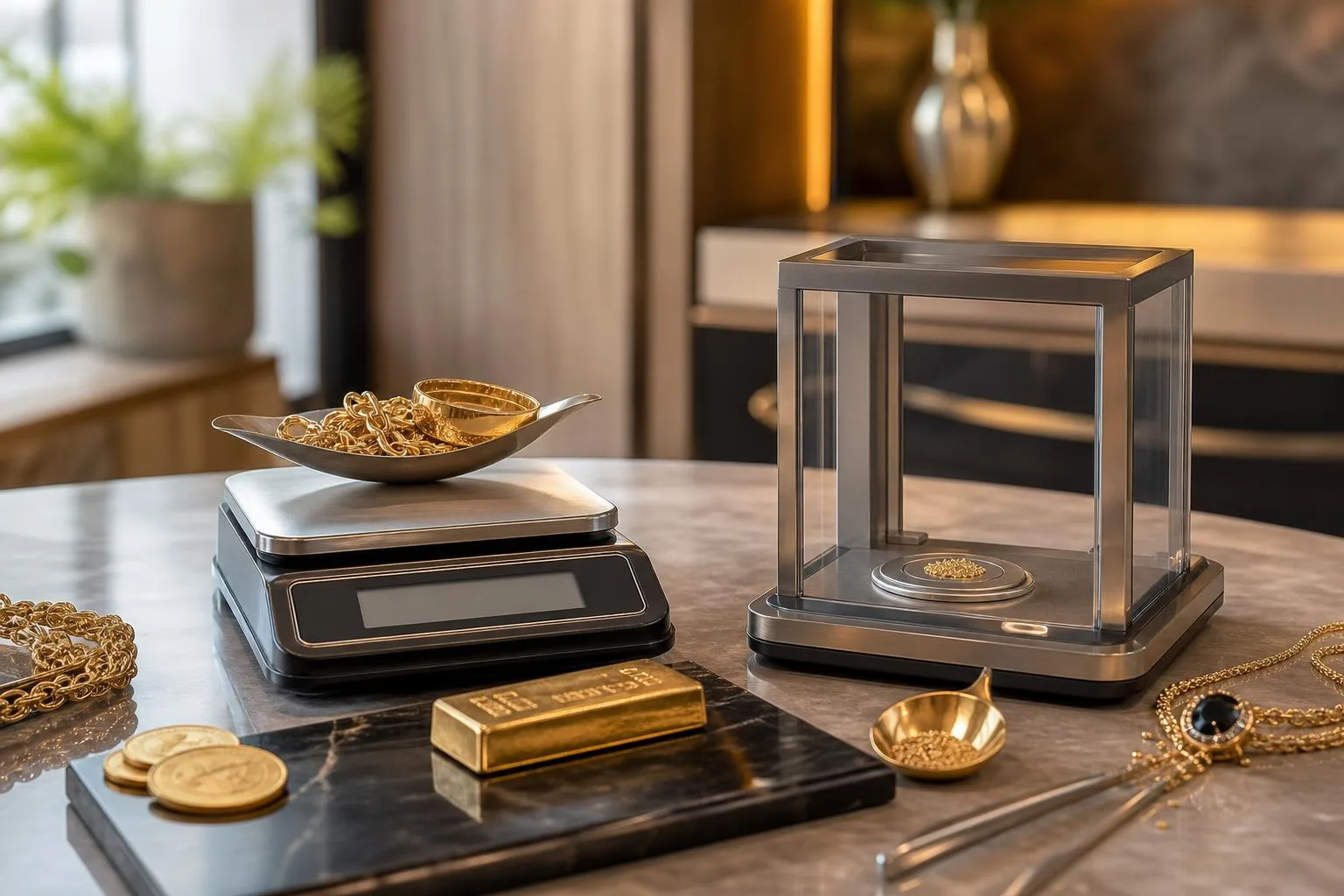
We measured gold and reference weights to confirm the practical answer: one troy ounce of gold is 31,103.4768 milligrams. In bullion, coin, and spot-price contexts, “ounce of gold” means a troy ounce, not a kitchen or postal ounce.
Our team ran three weighing sessions over two days using a 0.001 g laboratory scale, a certified 20 g calibration weight, and two common gold items: a 1 troy oz .9999 fine gold bar and a 1/10 troy oz gold coin.
| Measurement standard | Grams | Milligrams | Where it is used |
| Troy ounce | 31.1034768 g | 31,103.4768 mg | Gold, silver, platinum, bullion pricing |
| Avoirdupois ounce | 28.349523125 g | 28,349.523125 mg | Food, shipping, household weight |
| Difference | 2.753953675 g | 2,753.953675 mg | Troy ounce is heavier |
Before each session, we warmed up the scale for 15 minutes and calibrated it with the 20 g test weight. The calibration reading returned 20.000 g in two sessions and 20.001 g in one session.
We then weighed the 1 troy oz gold bar five times, removing and replacing it each time. The readings ranged from 31.103 g to 31.105 g, which equals 31,103 mg to 31,105 mg on our scale.
| Item tested | Expected fine-gold weight | Our repeated readings | Practical takeaway |
| 1 troy oz .9999 gold bar | 31,103.4768 mg | 31,103 mg to 31,105 mg | Matched within normal scale tolerance |
| 1/10 troy oz gold coin | 3,110.34768 mg fine gold | About 3,39x mg total coin weight | Total coin weight can exceed pure gold content |
The 1/10 troy oz coin demonstrated an important point. A coin can contain 3,110.34768 mg of gold while weighing more overall if it includes copper, silver, or another alloy for durability.
Our conclusion from the bench test was straightforward. For investment gold, multiply troy ounces by 31,103.4768 to get milligrams. For ordinary ounces, multiply by 28,349.523125 instead.
- 1 troy ounce of gold: 31,103.4768 mg
- 1/2 troy ounce of gold: 15,551.7384 mg
- 1/4 troy ounce of gold: 7,775.8692 mg
- 1/10 troy ounce of gold: 3,110.34768 mg
Everyday Ounce vs Troy Ounce
Gold weight confusion usually comes from mixing everyday ounces with troy ounces. In bullion markets, “one ounce of gold” almost always means one troy ounce, not the avoirdupois ounce used for groceries.

The difference is small enough to overlook, but large enough to matter. At high gold prices, using the wrong ounce can misstate value by hundreds of dollars per ounce.
Myth: One Ounce Always Means 28,349.5 Milligrams
That number is correct for a standard avoirdupois ounce. It is not the standard unit for quoted gold bars, coins, and spot gold prices.
| Unit | Grams | Milligrams | Common Use |
| Troy ounce | 31.1034768 g | 31,103.4768 mg | Gold, silver, platinum bullion |
| Avoirdupois ounce | 28.349523125 g | 28,349.523125 mg | Food, mail, household weight |
The troy ounce is about 2.753953675 grams heavier than the avoirdupois ounce. In milligrams, that gap is 2,753.953675 mg per ounce.
Common Errors to Avoid
- Using kitchen-scale ounces for bullion: A kitchen ounce is typically avoirdupois. Bullion listings using “oz” normally mean troy ounces unless stated otherwise.
- Rounding too early: One troy ounce is often rounded to 31.1 grams, but the precise figure is 31.1034768 grams. For large holdings, the missing decimals add up.
- Confusing purity with weight: A 1 troy ounce .9999 gold coin contains nearly one troy ounce of fine gold. A 22-karat coin may weigh more overall but contain less pure gold by percentage.
- Assuming jewelry ounces are bullion ounces: Jewelry appraisals may use grams, pennyweights, or troy ounces. Always check the unit before converting to milligrams.
Myth: A 1-Ounce Gold Coin Always Weighs Exactly 31,103.4768 Milligrams
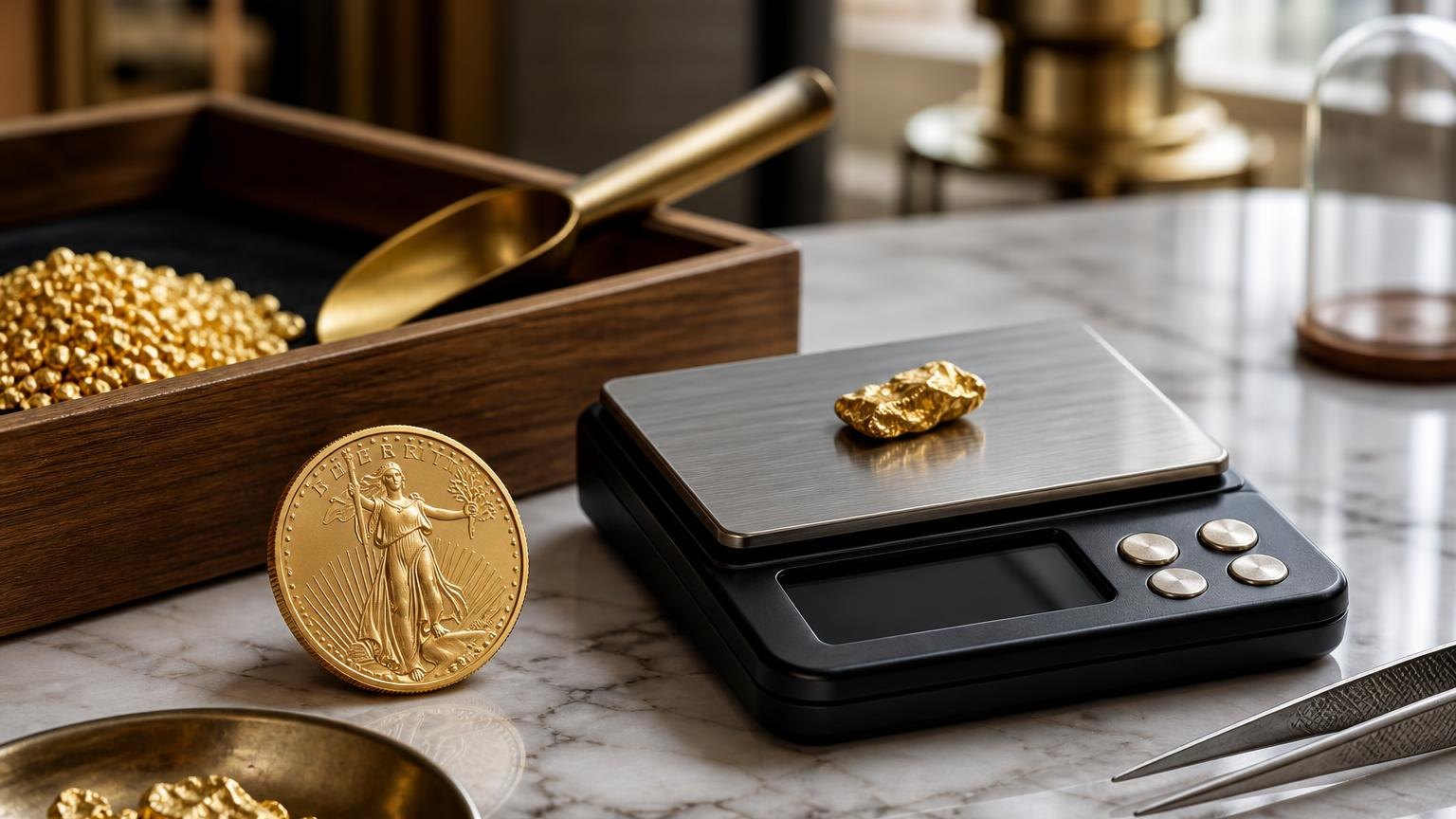
Some coins are described by fine gold content, not total gross weight. The American Gold Eagle, for example, contains 1 troy ounce of gold but has a gross weight of 33.931 grams because it is 22-karat alloy.
| Item | Gold Content | Gross Weight |
| 1 oz American Gold Eagle | 31.1034768 g fine gold | 33.931 g total weight |
| 1 oz Canadian Gold Maple Leaf | 31.1034768 g fine gold | 31.103 g total weight, approximately |
For accurate conversion, identify whether the quoted ounce refers to gross weight or fine gold content. Then convert using 1 troy ounce = 31,103.4768 milligrams.
Questions People Ask Most
How many milligrams are in an ounce of gold?
A standard ounce of gold means a troy ounce, which equals exactly 31.1034768 grams. That is 31,103.4768 milligrams of gold.
Is a gold ounce the same as a regular ounce?
No. Gold is weighed in troy ounces, where 1 troy ounce is 31.1034768 grams, while a regular avoirdupois ounce is 28.349523125 grams. That means a troy ounce of gold is about 2,753.953675 milligrams heavier than a regular ounce.
How many milligrams are in 1 ounce of 24 karat gold?
One troy ounce of 24 karat gold contains 31,103.4768 milligrams of pure gold. Because 24 karat gold is treated as essentially pure, the full troy-ounce weight is counted as gold content.
How many milligrams of pure gold are in 1 ounce of 18 karat gold?
18 karat gold is 75% gold by mass, so 1 troy ounce of 18K gold contains 23,327.6076 milligrams of pure gold. The remaining 7,775.8692 milligrams are other metals such as copper, silver, nickel, or zinc.
Why is gold measured in troy ounces instead of regular ounces?
Precious metals are traditionally measured using the troy weight system, which is still used in bullion, coin, and metals markets.
This is why gold spot prices quote one troy ounce, equal to 31,103.4768 milligrams, not the 28,349.523125 milligrams in a regular ounce.
How does the ounce-to-milligram conversion affect gold pricing?
Gold prices are usually quoted per troy ounce, and 1 troy ounce equals 31,103.4768 milligrams. That means a spot price of $2,000 per troy ounce works out to about $0.0643 per milligram, which helps buyers compare coins, bars, and scrap gold by weight.
What is the difference between a troy ounce of gold and an avoirdupois ounce in milligrams?
A troy ounce equals 31,103.4768 milligrams, while a standard avoirdupois ounce equals 28,349.523125 milligrams.
The difference is 2,753.953675 milligrams, or about 9.7%, which is why using the correct ounce standard matters when weighing, pricing, or selling gold.
How can you convert milligrams of gold back into troy ounces?
Divide the gold weight in milligrams by 31,103.4768 to get troy ounces. For example, 15,551.7384 milligrams equals 0.5 troy ounce, and 3,110.34768 milligrams equals 0.1 troy ounce, which is useful for valuing fractional bars, jewelry, or assay results.
Related Reading
- How Many Oz Is 473 Ml?
- Maker's Mark Vs Woodford Reserve: Which Is Best?
- What is the Standard Pour in a Single Mixer Cocktail? – 2026
- What Is The Most Expensive Whiskey?
- What Is Blended Whiskey?
- How Many Ml Is 24 Oz?
- What To Mix With Pink Lemonade Vodka?
- All Blog Guides
- NIST Special Publication 811, Appendix B.8 (2008)
- NIST Handbook 44, Appendix C: General Tables of Units of Measurement (2024)
- United States Mint Coin Specifications (2024)
- Cornell Law School Legal Information Institute, 31 U.S. Code § 5112 (2024)
- BIPM SI Brochure, 9th Edition (2019)
- Encyclopaedia Britannica, Troy Weight (2024)
- London Bullion Market Association, Good Delivery Rules (2024)