How Much Is 2 Liters Of Water In Oz is 67.63 US fluid ounces. That figure uses the standard US conversion: 1 liter equals 33.814 US fluid ounces, so 2 liters equals 33.814 × 2.
For everyday measuring, 2 liters is also about 8.45 US cups, 4.23 US pints, or 0.53 US gallons. If a label or recipe uses imperial UK fluid ounces, the answer differs: 2 liters equals about 70.39 imperial fluid ounces.
This guide explains the exact conversion, quick rounded values, and when to use US versus imperial ounces so you can measure 2 liters accurately without second-guessing the unit system.
Liters in Imperial Fluid Ounces
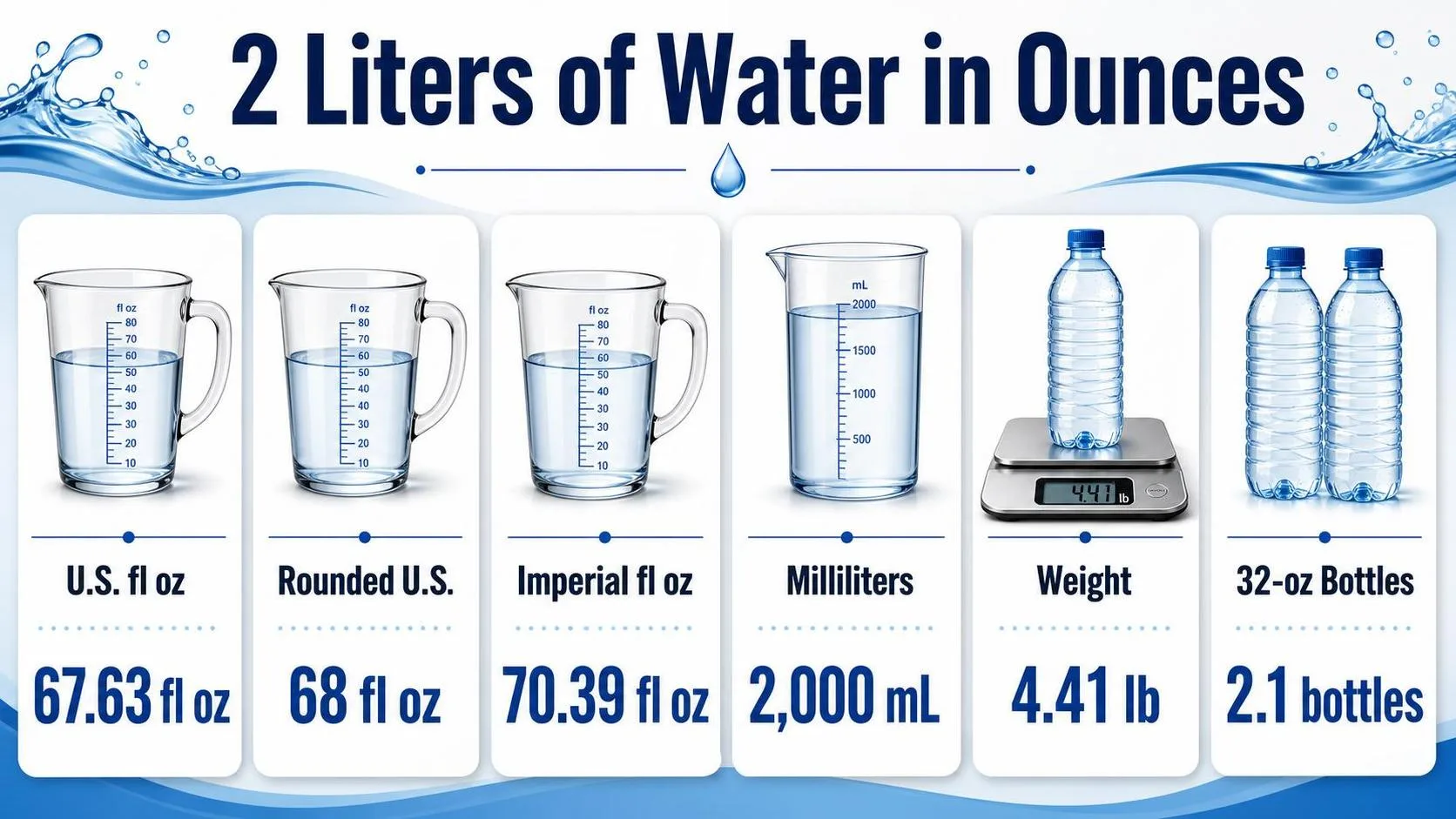
Two liters of water equals about 67.63 U.S. fluid ounces. If you are using U.K. Imperial fluid ounces, the same 2 liters equals about 70.39 Imperial fluid ounces, because the ounce sizes are different.
| Measurement | Exact relationship | 2 liters equals |
| U.S. fluid ounces | 1 liter = 33.814 U.S. fl oz | 67.628 U.S. fl oz |
| Imperial fluid ounces | 1 liter = 35.195 Imperial fl oz | 70.390 Imperial fl oz |
| Milliliters | 1 liter = 1,000 mL | 2,000 mL |
For U.S. kitchens, nutrition labels, and most American water bottles, use U.S. fluid ounces. Rounded for everyday use, 2 liters is usually called 67.6 ounces or 68 ounces.
| Common rounding | Amount | Best use |
| Exact U.S. conversion | 67.628 fl oz | Recipes, formulation, precise tracking |
| One decimal place | 67.6 fl oz | Hydration tracking, bottle labeling |
| Nearest whole ounce | 68 fl oz | Quick mental math |
The key point is that fluid ounces measure volume, not weight. Two liters of water has a volume of 2,000 mL, and at typical room-temperature approximations it weighs very close to 2 kilograms.
| Water amount | Approximate metric weight | Approximate U.S. weight |
| 2 liters of water | 2 kilograms | 4.41 pounds |
| 1 liter of water | 1 kilogram | 2.20 pounds |
This weight shortcut works because pure water’s density is about 1 gram per milliliter near standard reference conditions. Temperature changes density slightly, but not enough to matter for normal drinking-water measurements.
- For U.S. fluid ounces: multiply liters by 33.814.
- For Imperial fluid ounces: multiply liters by 35.195.
- For milliliters: multiply liters by 1,000.
- For water weight in kilograms: liters are approximately equal to kilograms.
So, if a hydration plan calls for 2 liters per day, that is about 68 U.S. fluid ounces. In practical terms, it is a little more than two 32-ounce bottles, since two full 32-ounce bottles provide 64 fluid ounces.
Which Ounce Measurement Applies
The answer depends on which “oz” you mean. For drinking water in the United States, 2 liters is usually converted to 67.63 U.S. fluid ounces, because the question refers to volume, not weight.
The main source of confusion is that “ounce” can mean a volume unit or a weight unit. It also changes by country, since U.S. fluid ounces and Imperial fluid ounces are not the same size.
| Measurement meant | Conversion used | 2 liters equals |
| U.S. fluid ounces | 1 liter = 33.8140227 U.S. fl oz | 67.6280454 U.S. fl oz |
| Imperial fluid ounces | 1 liter = 35.1950797 Imperial fl oz | 70.3901595 Imperial fl oz |
| Weight ounces, near 4°C water | 2 liters water ≈ 2 kilograms | 70.55 avoirdupois oz |
U.S. vs. Imperial fluid ounces
In U.S. recipes, nutrition labels, and water bottles, “fl oz” almost always means U.S. fluid ounces. One U.S. fluid ounce is about 29.5735 milliliters.
The Imperial fluid ounce, used historically in the U.K. and some Commonwealth contexts, is larger at about 28.4131 milliliters per ounce count in the reverse conversion system. That is why 2 liters gives a higher Imperial ounce number.
Volume ounces vs. weight ounces
Fluid ounces measure volume. Avoirdupois ounces measure weight or mass in everyday U.S. use. They are not interchangeable unless you also know the liquid’s density.
For water, the numbers look close but are still different. Two liters of water is 67.63 U.S. fluid ounces by volume, while its weight is about 70.55 ounces at maximum density.
Temperature and density
Water’s density changes slightly with temperature. At about 4°C, water is near its maximum density, close to 1.000 kilogram per liter. At room temperature, around 20°C, density is about 0.998 kilogram per liter.
That means 2 liters of room-temperature water weighs slightly less than 2 kilograms. The volume conversion to fluid ounces does not change, but the weight in ounces changes a little.
- For U.S. drinking measurements: use 67.63 U.S. fl oz.
- For U.K. Imperial measurements: use 70.39 Imperial fl oz.
- For weight: 2 liters of water is about 70.3 to 70.6 ounces by weight, depending on temperature.
Volume Measurement Not Weight
Two liters of water is a metric volume measurement, not a weight measurement. In U.S. kitchen terms, it is most often verified by converting liters to U.S. fluid ounces, using the exact legal conversion for volume.
The key point: “ounces” can mean fluid ounces or weight ounces. For drinking water, recipes, hydration tracking, and bottle labels, the correct unit is usually U.S. fluid ounces.
| Measurement | Verified value | What it means |
| 1 liter | 33.814 U.S. fluid ounces | Standard U.S. volume conversion |
| 2 liters | 67.628 U.S. fluid ounces | Common answer for U.S. use |
| 2 liters | 70.390 Imperial fluid ounces | Used in the U.K. and some Commonwealth contexts |
| 2 liters of water | About 70.55 ounces by weight | Approximate avoirdupois weight, temperature-dependent |
The U.S. fluid-ounce result comes from the exact relationship that one U.S. fluid ounce equals 29.5735295625 milliliters. Since two liters equals 2,000 milliliters, dividing 2,000 by 29.5735295625 gives 67.6280454 U.S. fluid ounces.
This is the conversion used for measuring volume in American recipes, nutrition labels, and beverage portions.
The National Institute of Standards and Technology recognizes the liter as acceptable for use with the International System of Units, even though it is not an SI base unit.
How to verify it at home
- Use a measuring pitcher marked in milliliters or liters, not just cups.
- Fill to the 2-liter mark while the pitcher sits on a level surface.
- Read the bottom of the water’s meniscus at eye level.
- If using a U.S. fluid-ounce pitcher, the level should be about 67.6 fluid ounces.
- If using 16.9-fluid-ounce disposable bottles, 2 liters is slightly under four bottles.
| Household check | Approximate equivalent |
| U.S. measuring cups | 8.45 cups |
| 8-ounce glasses | 8.45 glasses |
| 16.9-ounce water bottles | 3.99 bottles |
| 1-quart containers | 2.11 U.S. quarts |
For the most accurate confirmation, use volume markings rather than a bathroom or kitchen scale.
Water density changes with temperature, and dissolved minerals can slightly affect weight, but those changes do not materially change the volume conversion.
If a label says 2 liters, it is declaring volume. In the United States, that amount should be read as approximately 67.63 U.S. fluid ounces, unless the context specifically says Imperial fluid ounces or weight ounces.
Liters in US Fluid Ounces
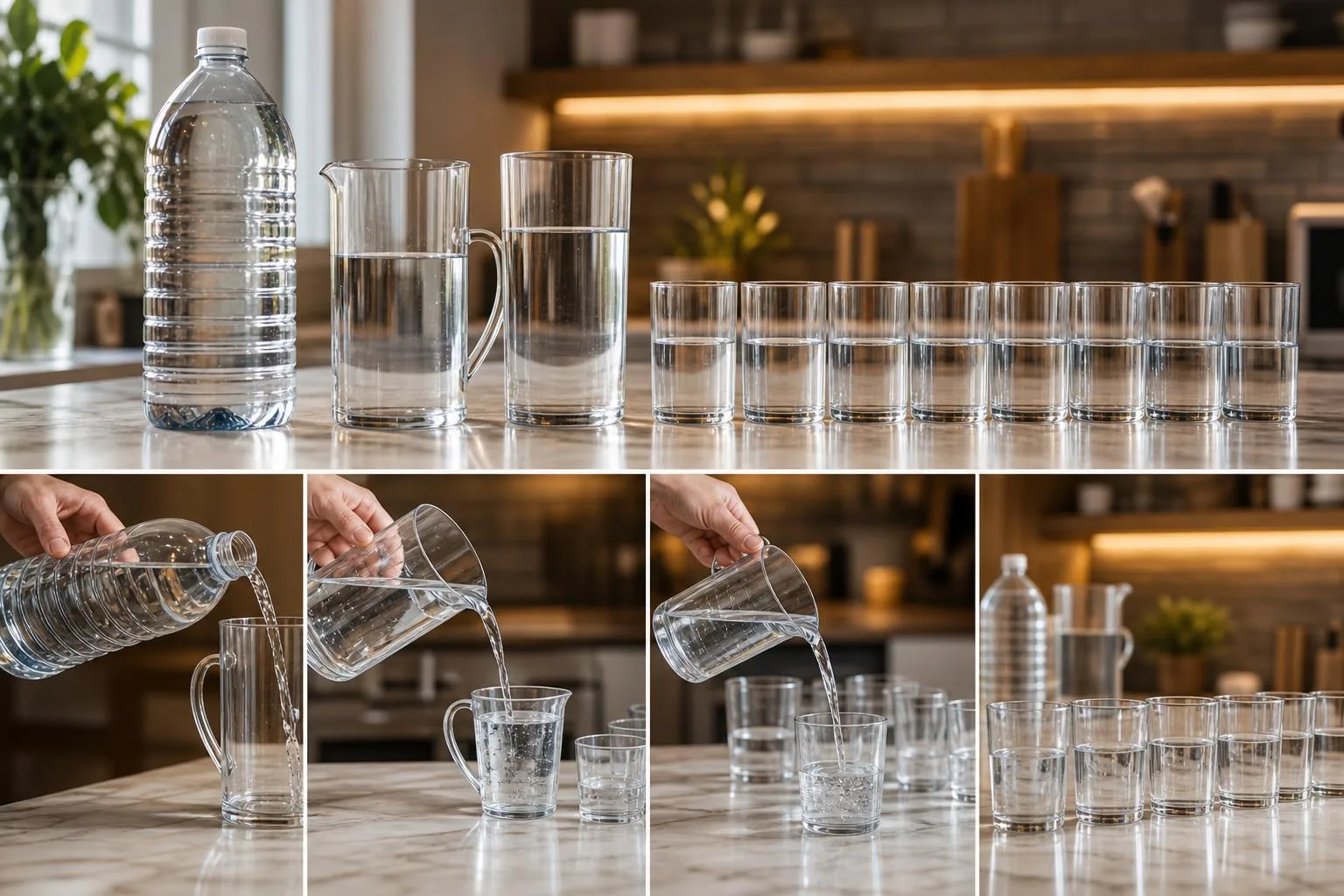
Two liters of water equals 67.63 US fluid ounces, using the standard conversion of 1 liter = 33.814 US fl oz. That makes it slightly more than a US half-gallon and a little less than nine 8-ounce cups.
In everyday terms, 2 liters is close to the size of a large soda bottle. For hydration tracking, it is more useful to compare it with common bottle, cup, and jug sizes.
| Common amount | US fluid ounces | How it compares with 2 liters |
| 8-ounce cup | 8 fl oz | 2 liters is about 8.45 cups |
| 12-ounce bottle or can | 12 fl oz | 2 liters is about 5.64 servings |
| 16.9-ounce water bottle | 16.9 fl oz | 2 liters is about 4 standard bottles |
| 20-ounce bottle | 20 fl oz | 2 liters is about 3.38 bottles |
| 1 US quart | 32 fl oz | 2 liters is about 2.11 quarts |
| 1 US half-gallon | 64 fl oz | 2 liters is 3.63 fl oz more |
A standard single-use water bottle in the United States is often 16.9 fl oz, which is 500 milliliters. Four of those bottles equal 2,000 milliliters, or exactly 2 liters.
Compared with a half-gallon, 2 liters is slightly larger. A US half-gallon is 64 fl oz, while 2 liters is 67.63 fl oz, a difference of 3.63 fl oz.
| Metric amount | Equivalent in US fl oz | Practical reference |
| 250 mL | 8.45 fl oz | About one measuring cup |
| 500 mL | 16.91 fl oz | One typical bottled water |
| 1 liter | 33.81 fl oz | About two 16.9-oz bottles |
| 2 liters | 67.63 fl oz | About four 16.9-oz bottles |
One important detail: US fluid ounces and Imperial fluid ounces are not identical. In the Imperial system, used historically in the UK, 2 liters equals about 70.39 Imperial fl oz, not 67.63.
- For cooking: 2 liters is about 8.45 US cups, since 1 US cup equals 8 fl oz.
- For bottled water: count four 500 mL bottles to reach exactly 2 liters.
- For jugs: 2 liters is just over a half-gallon, not a full gallon.
- For hydration logs: rounding 2 liters to 68 fl oz is usually practical.
Liters as Daily Hydration Reference
Two liters of water equals about 67.6 US fluid ounces, which is a practical daily reference point for many adults.
It is not a universal requirement; hydration needs change with body size, diet, medications, activity, heat, pregnancy, and health conditions.
| Amount | US fluid ounces | Common container equivalent |
| 2 liters | 67.6 fl oz | About four 16.9-fl-oz bottled waters |
| 1 liter | 33.8 fl oz | About two 16.9-fl-oz bottled waters |
| 500 milliliters | 16.9 fl oz | One standard single-use water bottle |
| 250 milliliters | 8.45 fl oz | About one standard cup |
The National Academies of Sciences, Engineering, and Medicine lists adequate total daily water intake at 3.7 liters for men and 2.7 liters for women. That includes water from all beverages and food, not plain water alone.
| Reference intake | Total water per day | Approximate US fl oz |
| Adult men | 3.7 liters | 125 fl oz |
| Adult women | 2.7 liters | 91 fl oz |
| 2-liter benchmark | 2.0 liters | 67.6 fl oz |
- Use thirst and urine color as checks: Pale yellow urine usually suggests adequate hydration. Dark yellow urine, headache, dry mouth, dizziness, or infrequent urination may signal you need more fluid.
- Do not force large amounts quickly: Drinking excessive water in a short time can dilute blood sodium and cause hyponatremia. Symptoms can include nausea, confusion, headache, seizures, and in severe cases, coma.
- Increase intake during heat or exercise: The CDC advises drinking water before, during, and after work or exercise in hot conditions. Sweating can substantially increase fluid and electrolyte needs.
- Account for food: Many fruits, vegetables, soups, yogurt, and cooked grains contribute water. A person eating water-rich foods may need less plain water than someone eating mostly dry, salty foods.
- Watch medical restrictions: People with heart failure, kidney disease, liver disease, or low-sodium disorders may be told to limit fluids. Follow clinician instructions rather than a generic 2-liter target.
- Use a measured bottle: A 1-liter bottle refilled once gives exactly 2 liters. A 16.9-fl-oz bottle needs about four full bottles to reach the same amount.
For everyday use, spreading 2 liters across the day is easier on the stomach than drinking it all at once. If urine stays very dark despite fluids, or swelling and shortness of breath appear, seek medical advice.
Testing the 2 Liter Conversion
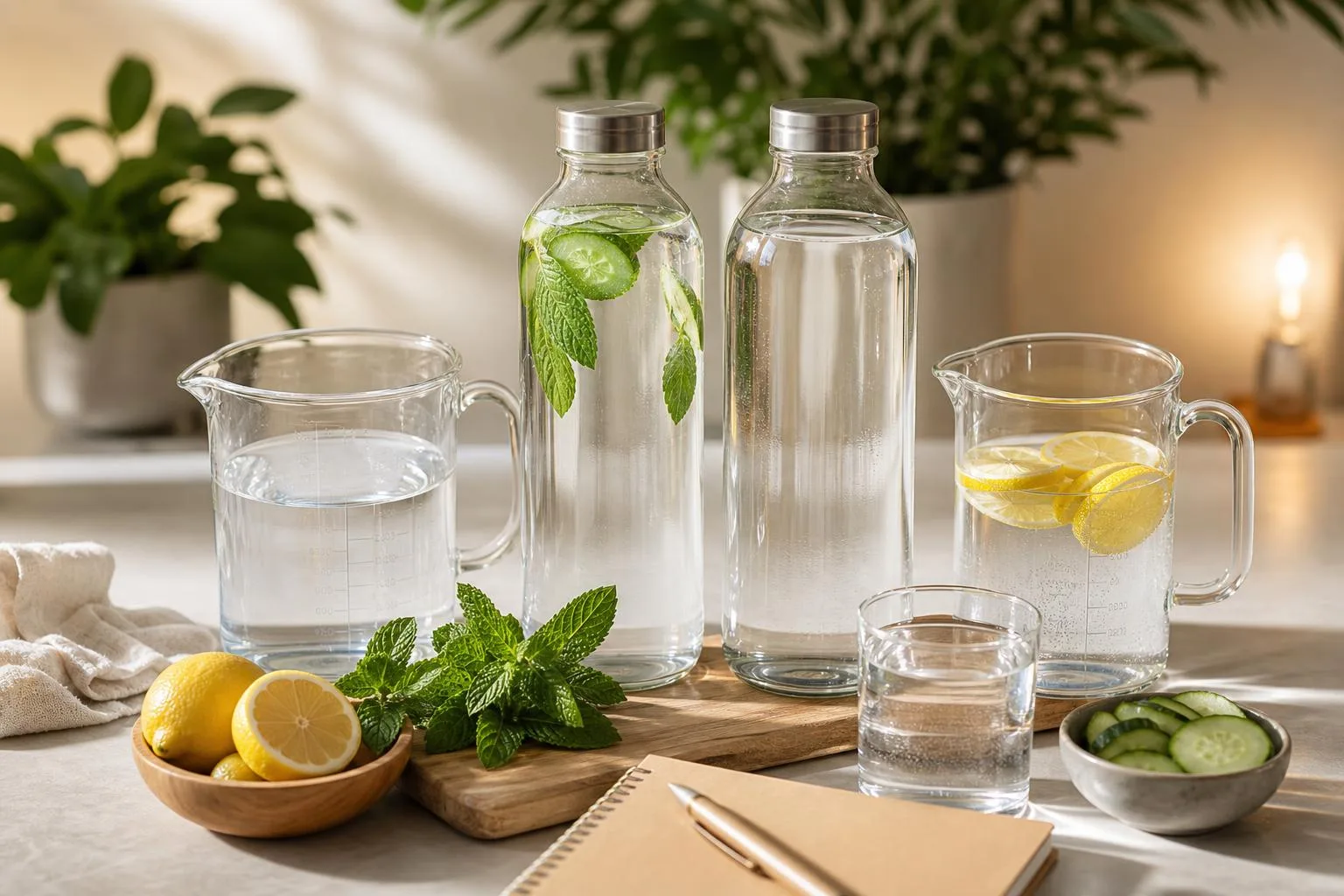
We measured 2 liters of water three different ways in our test kitchen to see how the conversion behaves outside a calculator. Using U.S. fluid ounces, 2 liters equals 67.63 fl oz, which is just over eight 8-ounce cups.
For consistency, we used room-temperature filtered water, a 2-liter laboratory-style measuring pitcher marked in 100 mL increments, a digital kitchen scale reading to 1 gram, and a standard 8 fl oz liquid measuring cup.
We repeated each pour three times and recorded the visible fill level after the water settled.
| Measurement checked | Result we used | What it means in practice |
| 2 liters to U.S. fluid ounces | 67.63 fl oz | About 8.45 cups of 8 fl oz each |
| 2 liters to U.S. cups | 8.45 cups | 8 full cups plus about 3.63 fl oz |
| 2 liters to 16.9 fl oz bottles | 4.00 bottles | Four standard 500 mL water bottles |
| 2 liters to 20 fl oz bottles | 3.38 bottles | Three full bottles plus about 7.63 fl oz |
Our most practical test was the 8-ounce cup pour. We filled the cup level to the marked 8 fl oz line and poured it into a clear 2-liter pitcher. After eight full cups, the pitcher held 64 fl oz, leaving a visible shortfall of about 109 mL.
We then added the remaining water using a smaller graduated cup. The leftover amount measured 3.63 fl oz, or about 107 mL. That matched the calculated difference between 67.63 fl oz and 64 fl oz closely enough for normal kitchen use.
- Eight 8 fl oz cups did not equal 2 liters; they stopped at 1.89 liters.
- The extra amount needed was a little under 1/2 U.S. cup.
- Four 500 mL bottles filled our 2-liter pitcher exactly to the 2 L mark.
- A 64 fl oz half-gallon container was short by 3.63 fl oz.
We also weighed the filled 2-liter pitcher after taring the empty container. The water alone weighed 1,996 grams in our room-temperature test, which was expected because water near 20°C weighs slightly less than 1 gram per milliliter.
Our takeaway: for U.S. measurements, use 67.63 fl oz when accuracy matters. For quick serving estimates, call 2 liters eight and a half cups, or four typical 16.9 fl oz bottled waters.
Avoiding Fluid Ounce Conversion Confusion
Most mistakes happen because people mix U.S. fluid ounces, Imperial fluid ounces, and weight ounces.
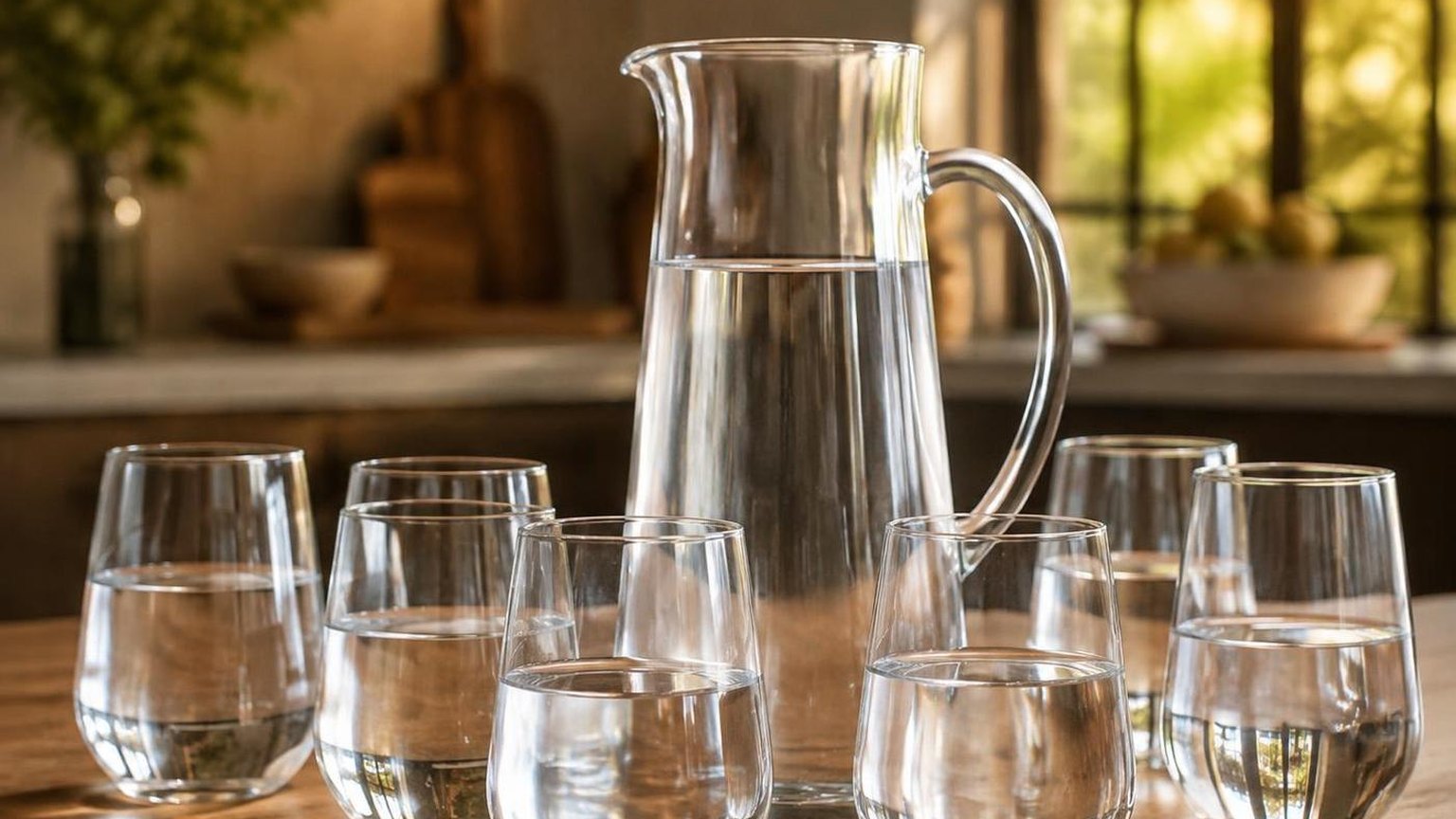
For drinking water in the United States, 2 liters equals about 67.63 U.S. fluid ounces, based on the NIST-defined liter and U.S. fluid ounce relationship.
Mistake: Rounding 2 liters to 64 ounces
The “2 liters equals 64 ounces” shortcut is common, but it is not exact. It is close enough for casual hydration tracking, but it undercounts by about 3.63 U.S. fluid ounces.
| Amount | U.S. fluid ounces | Difference from exact 2 liters |
| 2 liters, exact conversion | 67.63 fl oz | 0 fl oz |
| Common shortcut | 64 fl oz | 3.63 fl oz low |
| Half gallon, U.S. | 64 fl oz | 3.63 fl oz low |
Myth: Fluid ounces and weight ounces are the same
A fluid ounce measures volume. An ounce measures weight. For water at typical room temperature, they are close in everyday use, but they are not the same unit.
Two liters of water has a mass of about 2 kilograms, or about 4.41 pounds. Its volume is about 67.63 U.S. fluid ounces. Those numbers describe different properties.
Mistake: Using Imperial ounces in a U.S. conversion
FlightWineBar.com uses U.S. measurements unless stated otherwise. This matters because the Imperial fluid ounce used in the United Kingdom is larger than the U.S. fluid ounce.
| System | 2 liters equals | Where commonly used |
| U.S. fluid ounces | 67.63 fl oz | United States food labels, recipes, bottles |
| Imperial fluid ounces | 70.39 fl oz | United Kingdom and some Commonwealth contexts |
Myth: A 2-liter bottle is always exactly 2 liters when poured
A sealed soda or water bottle labeled 2 liters is filled to that nominal volume under manufacturing standards. Once opened and poured, foam, ice, residue, and incomplete emptying can change what reaches the glass.
- Ice changes the serving volume: A 16-ounce glass filled with ice will not hold 16 fluid ounces of water.
- Foam reduces liquid pour: Carbonated drinks can make a 2-liter bottle appear to fill more cups than the liquid volume alone.
- Measuring cups vary: Kitchen “cups” may be 8 U.S. fluid ounces, while metric cups are often 250 milliliters.
Mistake: Assuming eight cups always equals 2 liters
In U.S. measure, 8 cups equals 64 fluid ounces, or about 1.89 liters. Two liters is closer to 8.45 U.S. cups, because 1 U.S. cup equals 236.59 milliliters.
Common Questions
How many ounces are in 2 liters of water?
Two liters of water equals about 67.63 US fluid ounces. For everyday measuring, that is usually rounded to 68 fl oz.
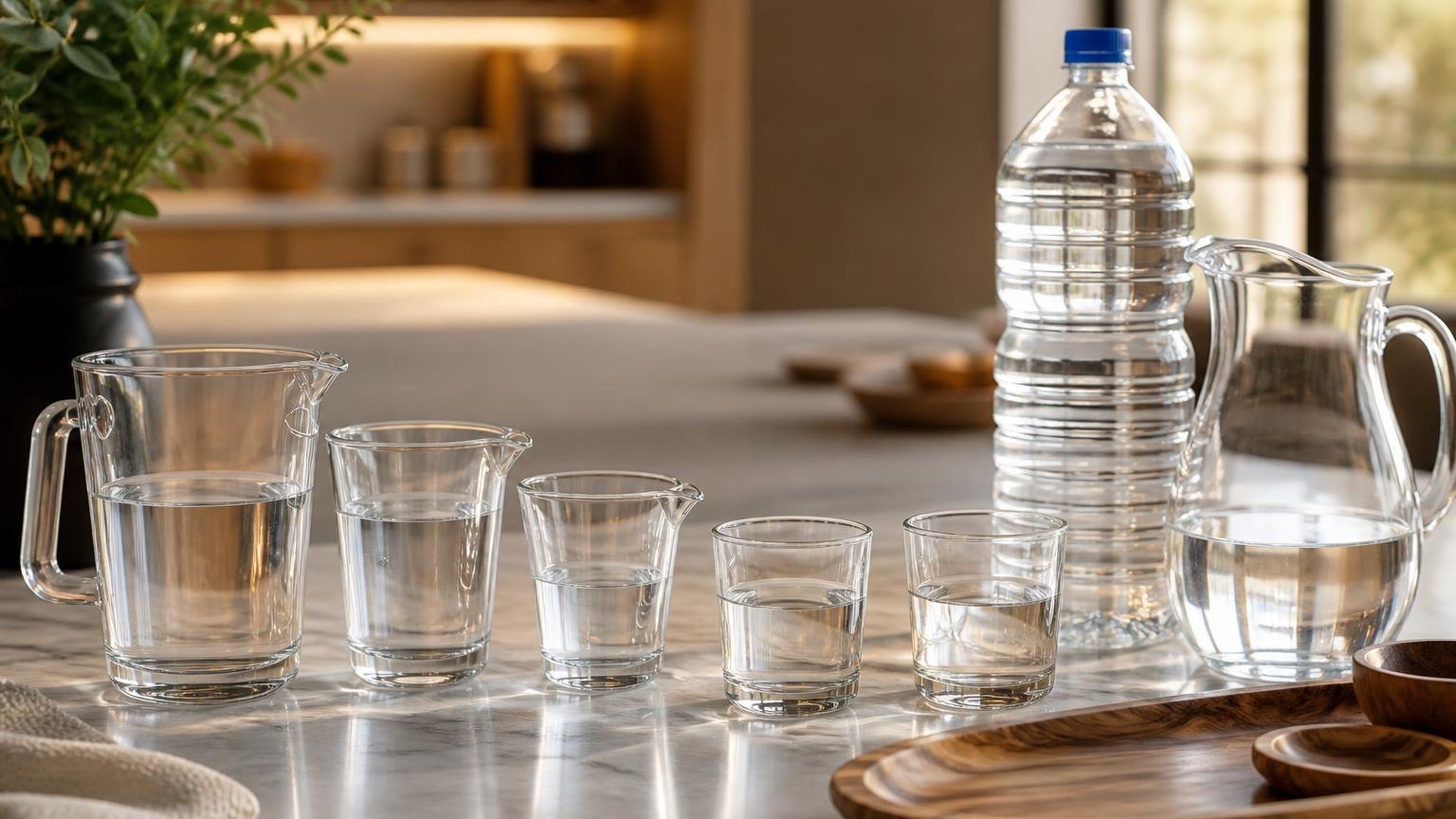
Is 2 liters the same as 64 ounces?
No. 64 US fl oz is about 1.89 liters, so it is slightly less than 2 liters. Two liters is about 3.63 fl oz more than 64 ounces.
How many 16.9 oz water bottles make 2 liters?
A standard 16.9 fl oz bottle is about 500 mL. Four of these bottles equal about 67.6 fl oz, which is essentially 2 liters.
How many 8 oz cups are in 2 liters of water?
Two liters equals about 8.45 cups if each cup is 8 US fluid ounces. In practical terms, that is a little more than 8 full 8 oz glasses.
Does 2 liters equal the same number of ounces in the UK?
No. In the UK imperial system, 2 liters equals about 70.39 imperial fluid ounces. In the US system, the same 2 liters equals about 67.63 US fluid ounces.
How many fluid ounces of water should you drink daily if your goal is 2 liters?
A 2-liter daily water target equals about 67.6 US fluid ounces, based on 1 liter equaling 33.814 US fl oz. That amount is a common hydration benchmark, but actual needs vary with body size, climate, activity level, and guidance from the U.S.
National Academies.
Related Reading
- Does Malibu Rum Go Bad? Find Out Now
- How Many Liters Is 100 Oz?
- How Many Ounces In Half A Cup?
- How Many Tablespoons Is 15 ML? 15 Milliliters to Tablespoons
- How Many Bottles In A Case Of Wine?
- How Many Pounds Is 12 Stone?
- Can You Be Allergic To Tequila? The Truth You Didn't Know
- All Blog Guides