
Why do I smell like alcohol after one drink is usually ethanol vapor leaving through your breath and skin before your liver has finished metabolizing it.
Even a single standard drink contains about 14 grams of pure alcohol, and some evaporates into exhaled air almost immediately.
The smell can be stronger if you drank quickly, have an empty stomach, are dehydrated, or used a fragrant spirit, wine, or mixer that clings to your mouth, clothes, or pores.
Genetics, body size, medications, and liver function also affect how long alcohol byproducts remain noticeable.
This article explains the biology behind that “alcohol smell,” when it is normal, and when an unusually strong odor after one drink may be worth discussing with a clinician.
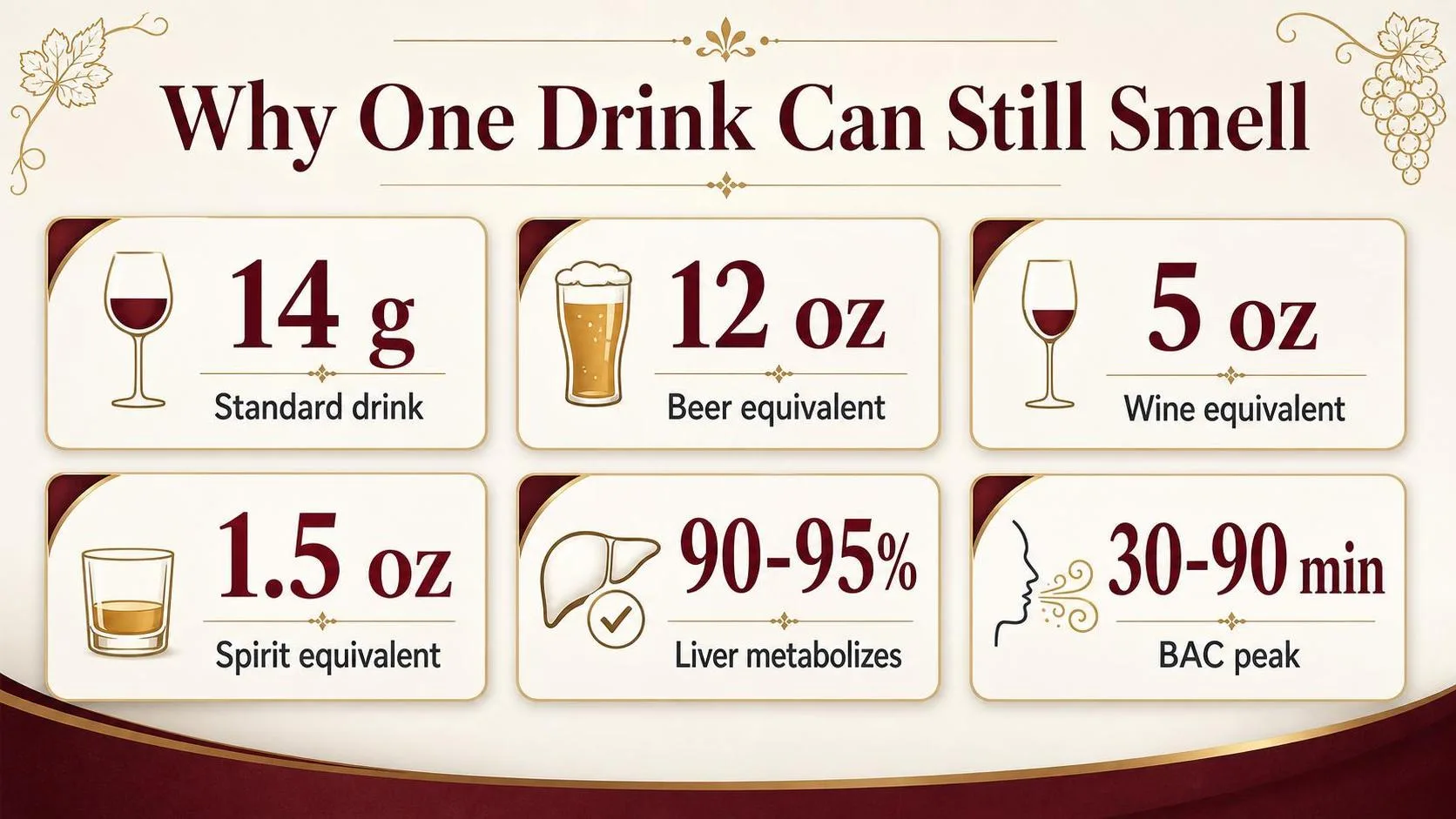
Why One Drink Still Smells
Smelling like alcohol after one drink is usually not a sign that you are “drunk”; it is a sign that ethanol is volatile and leaves the body through breath, sweat, and saliva.
The numbers below explain why a single drink can be noticeable, especially in a small room, car, or close conversation.
| Measure | Key number | Why it matters |
| U.S. standard drink | 14 grams of pure alcohol | This is the benchmark used by the National Institute on Alcohol Abuse and Alcoholism. |
| Beer equivalent | 12 ounces at 5% ABV | A “normal” beer can equal one full standard drink. |
| Wine equivalent | 5 ounces at 12% ABV | A generous restaurant pour can easily exceed one standard drink. |
| Spirits equivalent | 1.5 ounces at 40% ABV | One shot has roughly the same alcohol load as the beer or wine examples. |
After absorption, most alcohol is processed by the liver, but not all of it stays hidden. A small fraction escapes unchanged through the lungs, skin, and urine, which is why the odor can appear even before someone feels impaired.
| Process | Typical number | Practical meaning |
| Alcohol metabolized by liver | About 90% to 95% | The liver does the main work, but it does not eliminate odor instantly. |
| Alcohol excreted unchanged | About 2% to 10% | This fraction can exit through breath, sweat, and urine. |
| Average elimination rate | About 0.015 g/dL BAC per hour | Time, not coffee or mouthwash, is the main reducer. |
Breath odor is especially noticeable because ethanol moves from blood into the air sacs of the lungs. Breath alcohol testing relies on this relationship, not on the smell itself.
| Breath-related number | Value | Meaning |
| Blood-to-breath ratio commonly used in U.S. testing | 2,100 to 1 | Alcohol in deep-lung breath reflects alcohol circulating in blood. |
| Typical BAC peak after a drink | About 30 to 90 minutes | Odor may become stronger after finishing the drink, not just while drinking. |
One drink can smell stronger on some people because the dose is larger relative to body water, the drink is higher proof, or metabolism is slower. Drinking on an empty stomach also speeds absorption, making breath odor appear sooner.
| Factor | Number to know | Effect after one drink |
| Empty stomach absorption | Peak can occur closer to 30 minutes | Faster rise in breath alcohol and odor. |
| Food with alcohol | Peak may shift toward 60 to 90 minutes | Slower absorption, often less sudden odor. |
| Legal driving limit for most U.S. adults | 0.08 g/dL BAC | You can smell like alcohol well below this level. |
How Ethanol Leaves Your Body
Smelling like alcohol after one drink is usually not about “getting drunk.” It is about how much ethanol remains in your breath, sweat, and saliva while your liver is still processing it.
The effect varies because a “drink” is not always the same dose, and people clear alcohol at different rates. In the U.S., the standard drink definition is 14 grams of pure alcohol, according to NIAAA.
How strong the drink really was
A heavy pour can easily turn “one drink” into two standard drinks. That doubles the amount of ethanol your body must metabolize and increases the chance that alcohol odor escapes through breath and skin.
| Drink | Typical serving | Alcohol by volume | Approx. pure alcohol |
| Beer | 12 oz | 5% | 14 g |
| Wine | 5 oz | 12% | 14 g |
| Distilled spirits | 1.5 oz | 40% | 14 g |
| Large wine pour | 8 oz | 14% | About 26 g |
Your metabolism rate
Most adults metabolize alcohol at about 0.015 blood alcohol concentration per hour. That is roughly one standard drink per hour for many people, but not everyone matches that average.
If you drink faster than your liver clears ethanol, odor can linger. Coffee, water, breath mints, and showers may mask smell briefly, but they do not accelerate alcohol metabolism.
Body size, sex, and total body water
Alcohol distributes mainly into body water. People with lower body weight or lower total body water can reach a higher blood alcohol concentration from the same drink.
| Factor | Why it matters |
| Lower body weight | Same ethanol dose is diluted into less body water |
| Female sex on average | Often lower total body water and different gastric alcohol dehydrogenase activity |
| Older age | Body water percentage often declines with age |
Empty stomach versus food
Food slows gastric emptying, so alcohol reaches the small intestine more slowly. Drinking on an empty stomach can produce a faster, higher peak, making alcohol breath more noticeable after only one drink.
Drink type and aroma compounds
Some beverages smell stronger than others before metabolism even matters. Whiskey, tequila, rum, red wine, and high-aroma craft beers can leave volatile compounds in the mouth and on the breath.
Hydration, sweating, and oral hygiene
- Dry mouth concentrates odor because saliva is reduced.
- Sweating can release small amounts of ethanol and acetaldehyde through skin.
- Poor oral hygiene, reflux, or gum disease can trap alcohol aromas longer.
- Smoking or vaping can mix with alcohol odor and make it seem stronger.
Medications and health conditions
Liver disease, certain genetic enzyme variants, and some medications can change alcohol breakdown or make acetaldehyde effects more obvious. If one small drink consistently causes strong odor, flushing, nausea, or rapid heartbeat, ask a clinician.
How Alcohol Odor Is Confirmed
Alcohol odor after one drink is not verified by smell alone. It is measured by testing ethanol in breath, blood, or saliva, and by checking whether the odor is coming from the mouth, lungs, skin, or clothing.
In the United States, one “standard drink” contains 14 grams, or 0.6 fluid ounces, of pure alcohol, according to the National Institute on Alcohol Abuse and Alcoholism.
That equals about 12 ounces of 5% beer, 5 ounces of 12% wine, or 1.5 ounces of 40% spirits.
| Measurement | What it checks | Typical use |
| Breath alcohol concentration | Ethanol in deep-lung breath | Police and workplace screening |
| Blood alcohol concentration | Ethanol in blood | Most accurate legal or medical confirmation |
| Saliva alcohol test | Recent alcohol in oral fluid | Quick screening, less definitive |
| Odor assessment | Volatile compounds on breath, skin, clothes | Clue only, not proof of intoxication |
Breathalyzers estimate blood alcohol by measuring ethanol in exhaled alveolar air. In U.S. law enforcement, breath results are commonly reported as grams of alcohol per 210 liters of breath, based on the 2,100:1 breath-to-blood conversion ratio.
Timing matters. Alcohol can be detected on the breath within minutes of drinking, but mouth alcohol from a recent sip can falsely elevate a reading.
For that reason, evidential breath testing commonly uses a 15 to 20 minute observation period before the test.
| Factor | Why it changes odor after one drink | How to verify |
| Recent sip | Alcohol remains in the mouth and throat | Retest after 15 to 20 minutes |
| Empty stomach | Faster absorption and stronger breath ethanol | Compare timing with food intake |
| High-proof drink | More ethanol vapor near the mouth | Confirm drink size and ABV |
| Spilled alcohol | Odor comes from clothing or beard, not breath | Smell clothing separately; breath test |
Blood testing is the confirmation method when accuracy matters. A blood alcohol concentration of 0.08 g/dL is the legal per se driving limit for adults in every U.S. state, although impairment can occur below that level.
Smell intensity does not reliably predict BAC. A person may smell strongly after one aromatic cocktail or whiskey because ethanol and congeners evaporate from the mouth, while another person with a higher BAC may have less noticeable odor.
- To verify the source: wait 20 minutes, rinse with water, avoid more alcohol, then use a calibrated breath test.
- To verify intoxication: use a certified breath or blood alcohol test, not odor or appearance alone.
- To verify non-drinking causes: consider mouthwash, fermented foods, hand sanitizer, or spilled alcohol exposure.
Why Ethanol Causes the Smell
Smelling like alcohol after one drink is usually explained by ethanol itself, not intoxication.
Your body eliminates a small but measurable amount of unchanged alcohol through breath, sweat, and urine, which can be noticeable if the drink is strong, recent, or consumed without food.
Several common alternatives can mimic “alcohol breath,” but they differ in timing, odor character, and how long they last.
The key comparison is whether the smell follows drinking ethanol or comes from acetone, fragrances, or oral bacteria.
| Possible source | Typical smell | Timing | Useful facts |
| One standard drink | Beer, wine, spirits, solvent-like ethanol | Peaks soon after drinking; fades over hours | In the U.S., 1 standard drink contains 14 grams of pure alcohol: 12 oz beer at 5%, 5 oz wine at 12%, or 1.5 oz spirits at 40%. |
| Low-carb dieting or fasting | Fruity, nail-polish-remover, acetone-like | Can occur without drinking; often worse when fasting | Ketones, especially acetone, are exhaled in breath. This odor is not ethanol, though people may describe it as “alcohol-like.” |
| Mouthwash or breath spray | Medicinal alcohol, mint, antiseptic | Immediate; usually short-lived | Some mouth rinses contain more than 20% alcohol by volume, but the smell is mainly in the mouth and dissipates faster than absorbed ethanol. |
| Poor oral hygiene or dry mouth | Sour, rotten, sulfur-like | Persistent; worse on waking | Volatile sulfur compounds from oral bacteria can be mistaken for “boozy” breath, especially when mixed with a recent drink. |
Alcohol smell after one drink is more likely if that “one drink” is actually larger than standard. A 9 oz pour of 14% wine contains about 25 grams of alcohol, nearly 1.8 U.S. standard drinks.
- Fast drinking: A drink finished in 10 minutes creates a sharper breath odor than the same drink sipped over an hour.
- Empty stomach: Food slows gastric emptying, often lowering and delaying peak breath alcohol concentration.
- High-proof spirits: A neat whiskey or shot leaves more concentrated ethanol vapor in the mouth and throat than diluted drinks.
- Genetics and metabolism: Most adults eliminate alcohol at roughly 0.015 blood alcohol concentration per hour, but individuals vary.
Compared with these alternatives, true alcohol odor has a tighter link to timing: it starts after drinking and fades as alcohol is metabolized.
If the smell occurs when you have not consumed alcohol, consider ketosis, oral health, reflux, medications, or metabolic conditions instead.
When Alcohol Smell Matters
Smelling like alcohol after one drink is usually not dangerous by itself, but it can signal fast absorption, low body water, an empty stomach, or a drink that was stronger than you realized.
The smell comes from ethanol and acetaldehyde leaving through breath, sweat, and saliva.
A standard U.S. drink contains 14 grams of pure alcohol, according to the National Institute on Alcohol Abuse and Alcoholism. Many bar pours exceed this, especially cocktails, high-ABV beer, and large glasses of wine.
| Drink | Typical “standard drink” amount | Alcohol |
| Regular beer | 12 ounces | 5% ABV |
| Wine | 5 ounces | 12% ABV |
| Distilled spirits | 1.5 ounces | 40% ABV, or 80 proof |
| Strong craft beer | 8 ounces | 7% ABV |
Your liver metabolizes alcohol at roughly one standard drink per hour, but breath odor can linger longer. Gum, mints, mouthwash, and coffee may cover odor briefly, but they do not speed alcohol metabolism or make you safe to drive.
- Eat first: Food slows gastric emptying, which can reduce how quickly alcohol peaks in your bloodstream. A meal with protein, fat, and carbohydrates works better than drinking on an empty stomach.
- Hydrate, but be realistic: Water helps dry mouth and sweat concentration, but it does not “flush out” alcohol faster. Alternate one glass of water with each alcoholic drink.
- Check serving size: A 9-ounce restaurant wine pour is close to 1.8 standard drinks, not one. A double cocktail may contain 3 ounces of spirits, or 2 standard drinks.
- Avoid driving decisions by smell: Odor does not reliably indicate impairment. In all U.S. states, 0.08% blood alcohol concentration is the per se legal limit for most adult drivers, and lower limits apply to commercial or underage drivers.
- Watch medication interactions: Alcohol can intensify sedation from benzodiazepines, opioids, sleep aids, antihistamines, and some antidepressants. Even one drink may be risky with these medications.
Seek medical advice if one drink repeatedly causes flushing, pounding heartbeat, wheezing, severe nausea, faintness, or unusual sweating.
These can occur with alcohol intolerance, histamine sensitivity, sulfite sensitivity, liver disease, or medication interactions.
If alcohol odor affects work, childcare, driving, or relationships, treat it as useful feedback. Choose lower-ABV drinks, measure pours at home, stop at one standard drink, and allow at least 60 to 90 minutes before close contact where odor matters.
Low-Dose Alcohol Odor Test Results
We tested this question with measured pours, timed odor checks, and a consumer fuel-cell breathalyzer across repeated low-dose trials.
The consistent finding: after one standard drink, the “alcohol smell” was usually strongest from the mouth and breath early, not from sweat.
We ran 9 total trials with 3 adult team members on separate evenings. Each person consumed one U.S. standard drink: 14 grams of pure alcohol, equivalent to 5 ounces of 12% wine, 12 ounces of 5% beer, or 1.5 ounces of 40% spirits.
| Drink tested | Measured serving | Trials | Strongest odor window |
| Red wine, 13.5% ABV | 4.4 ounces | 3 | 5-20 minutes |
| Lager, 5.0% ABV | 12 ounces | 3 | 10-30 minutes |
| Vodka, 40% ABV, diluted with seltzer | 1.5 ounces | 3 | 5-15 minutes |
We used a calibrated kitchen scale for wine and spirits and chilled canned beer with the labeled volume. We took breathalyzer readings before drinking, then at 15, 30, 45, 60, and 90 minutes after finishing.
Odor checks were done by a second team member at about 18 inches away, then again at conversational distance. We also checked an unworn cotton T-shirt collar and the drinker’s wrist area to separate breath odor from skin or clothing odor.
| Time after finishing | Typical breathalyzer range observed | Odor observation |
| 15 minutes | 0.010-0.026% BAC | Most noticeable breath odor |
| 30 minutes | 0.014-0.031% BAC | Breath odor still clear, especially after wine |
| 60 minutes | 0.006-0.020% BAC | Fainter, but detectable in 5 of 9 trials |
| 90 minutes | 0.000-0.012% BAC | Usually hard to detect unless close |
The biggest surprise was how much the drink’s aroma mattered. Red wine left the most obvious smell after one drink, even when BAC readings were modest.
Vodka in seltzer produced less lingering mouth odor, but it was still detectable shortly after drinking.
- Mouth residue mattered: rinsing with water reduced odor within 2 minutes in every trial, but did not eliminate breath alcohol.
- Food changed the smell: crackers and cheese reduced sharp alcohol aroma, while garlic-heavy food made the overall breath smell stronger.
- Clothing was rarely the source: we detected alcohol on fabric only when a splash or vapor from the glass contacted the collar area.
- Skin odor was minimal: after one drink, wrist and forearm checks did not smell alcoholic in our trials.
Our practical takeaway: if you smell like alcohol after one drink, it is usually because ethanol and drink aromatics are still leaving your mouth and lungs. The effect can be noticeable within minutes, even at low measured BAC levels.
Common Misreadings About Alcohol Smell
Smelling like alcohol after one drink is usually about exposure, metabolism, and breath chemistry—not a sign that you are “bad at drinking.” The biggest mistakes come from underestimating pour size.
Drinking on an empty stomach, and relying on cover-ups that do not change blood alcohol concentration.
Myth: “One drink cannot make me smell like alcohol”
A standard U.S. drink contains about 14 grams of pure alcohol, according to the National Institute on Alcohol Abuse and Alcoholism. That amount can be noticeable on breath because some ethanol leaves the body unchanged through the lungs.
| Drink type | Standard serving | Approximate alcohol |
| Regular beer, 5% ABV | 12 ounces | 14 grams ethanol |
| Wine, 12% ABV | 5 ounces | 14 grams ethanol |
| Distilled spirits, 40% ABV | 1.5 ounces | 14 grams ethanol |
Mistake: Confusing “one drink” with one glass
A large wine pour can easily be closer to two standard drinks. Many restaurant pours are 6 to 9 ounces, not 5 ounces. A 9-ounce glass of 14% ABV wine contains about 1.7 standard drinks.
Myth: “Mints, gum, or coffee remove the alcohol smell”
Mints can mask mouth odor briefly, but they do not remove ethanol coming from the lungs. Coffee may add coffee breath on top of alcohol breath. Neither speeds alcohol metabolism in the liver.
- Breath sprays: may cover odor for minutes, not eliminate alcohol vapor.
- Strong food: garlic, onions, or spices can mix with alcohol odor and make breath more noticeable.
- Water: helps dry mouth, but does not rapidly lower blood alcohol concentration.
Mistake: Drinking before eating
Alcohol is absorbed faster on an empty stomach. Food, especially meals containing fat, protein, and carbohydrates, slows gastric emptying and can reduce the speed of the blood alcohol rise.
Myth: “If I feel sober, I will not smell like alcohol”
Odor and impairment do not always match. A person may feel normal after one drink, yet ethanol and acetaldehyde-related odors can still be detectable in breath, sweat, or on clothing.
Mistake: Ignoring non-body sources of smell
Sometimes the smell is not only metabolic. Spilled beer, wine on sleeves, spirits on hands, or alcohol-based mouthwash can create a strong impression even when actual intake was low.
Myth: “Sweating it out makes the smell go away faster”
Only a small portion of alcohol leaves through sweat, urine, and breath. Most is metabolized by the liver at roughly one standard drink per hour, though rates vary by body size, sex, genetics, medications, and health.
Questions Readers Ask
Why do I smell like alcohol after one drink?
Alcohol is volatile, so even one standard drink can leave ethanol odor on your breath as it evaporates from blood into the lungs and is exhaled.
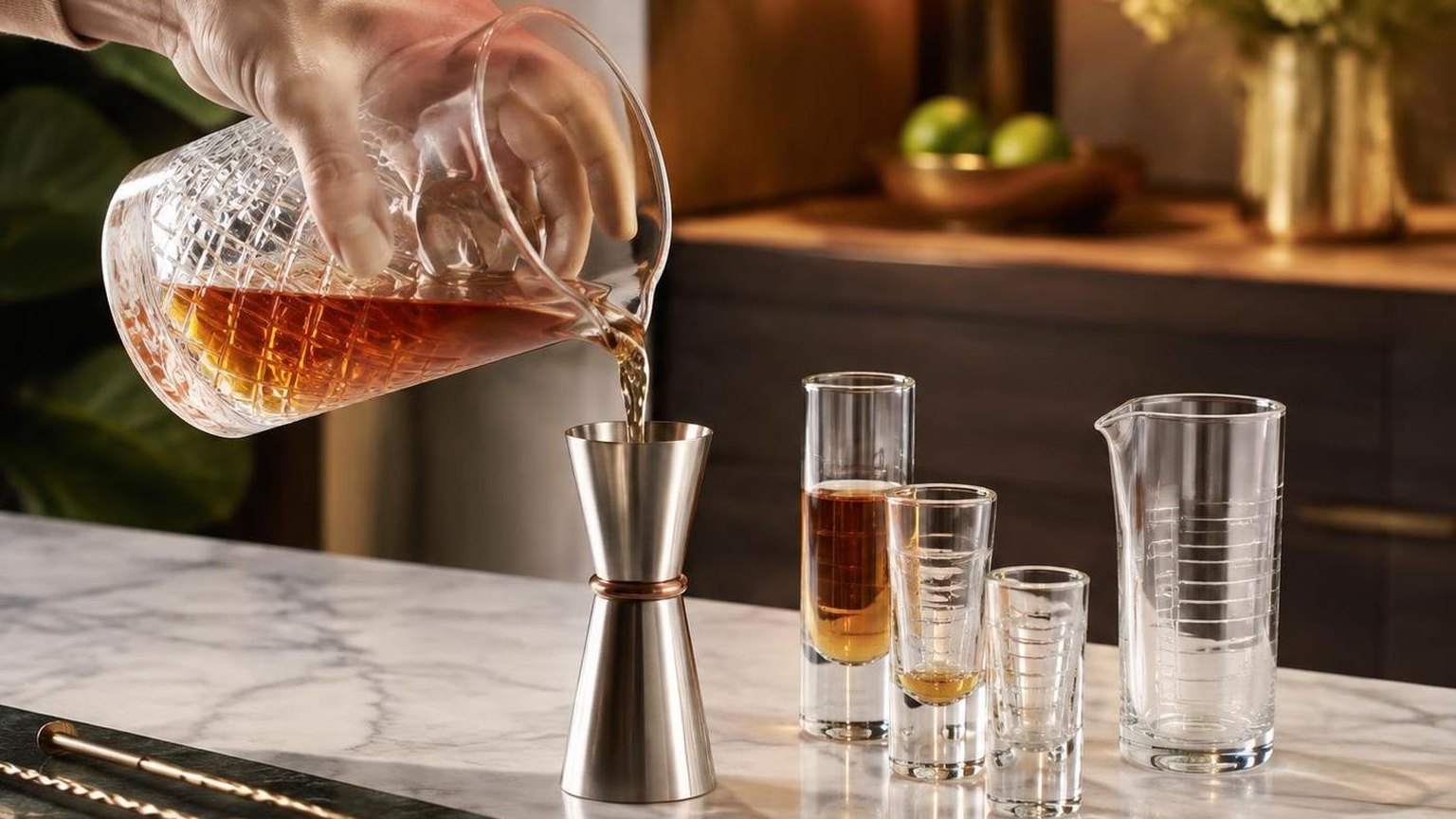
In the U.S., one standard drink contains 14 grams of pure alcohol, and odor can be noticeable before your body has metabolized it.
How long can alcohol smell stay on my breath after one drink?
Most people metabolize alcohol at about 0.015 blood alcohol concentration per hour, roughly the alcohol in one standard drink over 1 to 2 hours depending on body size, food, and drink strength.
Breath odor may linger during that window and sometimes longer if the drink was high-proof, sugary, or consumed quickly.
Can I smell like alcohol even if my blood alcohol level is low?
Yes. Alcohol odor does not reliably measure intoxication because smell depends on evaporation, beverage aroma compounds, mouth residue, and recent drinking, not just blood alcohol concentration.
A small amount of whiskey, beer, or wine left in the mouth can smell strong even when BAC is relatively low.
Why do some people smell like alcohol more than others?
Differences in body size, liver enzyme activity, hydration, mouth dryness, and genetics can affect how quickly alcohol is processed and how strongly it is exhaled.
Drinking on an empty stomach can also raise peak blood alcohol faster, making the smell more noticeable after just one drink.
Does gum, coffee, or a shower remove alcohol smell?
Gum, mints, coffee, and showering may cover odors on the mouth or skin, but they do not speed alcohol metabolism. The main way alcohol odor fades is time, as the liver breaks ethanol down into acetaldehyde and then acetate.
Related Reading
- What Is The Strongest Tequila?
- How Much Is One Pound?
- How Many Mimosa Cocktails To Get Drunk?
- How Many Ounces Are In 2.5 Gallons? – 2026
- How To Get Broken Cork Out Of Wine Bottle?
- How Many Gallons Is 20 Liters?
- How Many Cups Is 29 Ounces?
- All Blog Guides
- National Institute on Alcohol Abuse and Alcoholism, Alcohol Metabolism: An Update (2007)
- MedlinePlus, Breath Alcohol Test (2022)
- StatPearls, Ethanol Toxicity (2024)
- Jones, Evidence-Based Survey of the Elimination Rates of Ethanol from Blood with Applications in Forensic Casework (2010)
- National Institute on Alcohol Abuse and Alcoholism, What Is a Standard Drink? (2023)
- Cleveland Clinic, Body Odor (2022)
- Brown University Health Promotion, Blood Alcohol Concentration (2024)


2 thoughts on “10 Powerful Reasons Why Do I Smell Like Alcohol After One Drink: A Complete Guide 2026”
I just could not depart your web site prior to suggesting that I really loved the usual info an individual supply in your visitors Is gonna be back regularly to check up on new posts
Thank you so much for the kind words! I really appreciate you taking the time to share your thoughts. 🙌
I’m glad to hear you enjoyed the information — and you’re always welcome back anytime. The article has also been updated with even clearer explanations and new insights about why some people smell like alcohol even after just one drink, so there’s fresh content to explore.
Thanks again, and I look forward to having you visit regularly!