
Why Does Wine Make Me Sleepy is answered by alcohol’s depressant effect on the brain: it boosts GABA signaling, slows alertness, and can make relaxation feel like sudden drowsiness.
Wine also raises blood alcohol concentration faster when sipped on an empty stomach or after a long day.
The sleepy feeling is real, but it is not the same as restorative sleep.
Research from the National Institute on Alcohol Abuse and Alcoholism links alcohol to shorter REM sleep, more awakenings, and poorer sleep quality, especially after moderate to heavy intake.
Why Wine Causes Sleepiness
Wine makes many people sleepy because alcohol is a sedative at first, then a sleep disruptor as blood alcohol concentration falls.
The effect depends less on “red versus white” and more on dose, timing, body size, food, and your usual tolerance.
Here are the key numbers that explain what is happening after a glass or two.
| Number | What it means | Why it matters for sleepiness |
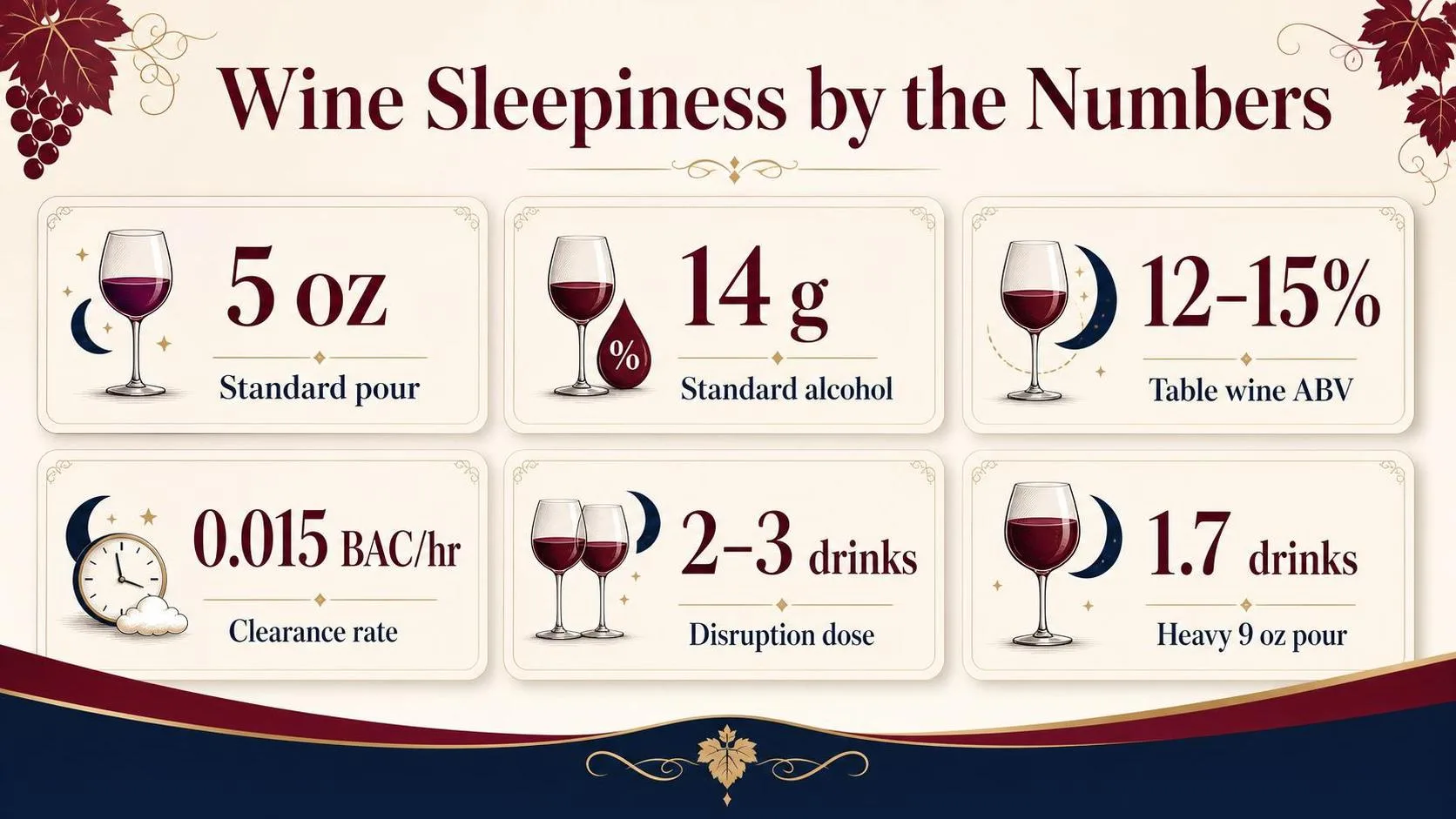
| 5 ounces at 12% ABV | One U.S. standard drink, according to NIAAA | A typical restaurant pour can equal one full alcohol dose |
| 14 grams alcohol | Alcohol in one U.S. standard drink | This is enough to cause measurable sedation in many adults |
| 12% to 15% ABV | Common range for many table wines | A 5-ounce glass of 15% wine contains about 17.5 grams alcohol |
| 0.015 BAC per hour | Average alcohol clearance rate often cited in clinical and forensic settings | If you drink close to bedtime, alcohol may still be active during sleep |
| 2 to 3 drinks | A dose range often linked with stronger sleep disruption | You may fall asleep faster but wake more often later |
A standard wine serving is smaller than many people pour at home. A 9-ounce glass of 14% ABV wine contains about 1.7 U.S. standard drinks, not one.
Alcohol initially increases GABA activity, the brain’s main calming signal. That is one reason wine can make your eyelids heavy within 30 to 60 minutes, especially if you drink after a long day or with a carbohydrate-heavy meal.
The problem comes later. As alcohol is metabolized, the sedating effect fades and the body rebounds toward lighter, more fragmented sleep.
Studies summarized by the Sleep Foundation and NIAAA note that alcohol can reduce REM sleep, especially in the first half of the night.
- One glass: may cause relaxation and mild drowsiness, particularly in smaller adults or infrequent drinkers.
- Two glasses: more likely to shorten sleep-onset time but increase wake-ups later.
- Three or more glasses: more likely to worsen snoring, reflux, night sweats, and next-day fatigue.
Timing matters. If your body clears roughly one standard drink per hour, two generous glasses can still be affecting your nervous system three to four hours later.
Food changes the curve, not the chemistry. Drinking wine with dinner slows absorption and may reduce a sudden sleepy hit, but it does not make alcohol disappear faster. Your liver still has to process the same grams of ethanol.
Why Wine Affects People Differently
Wine does not make everyone sleepy in the same way. The effect depends on dose, timing, body size, food, sleep debt, medications, and how quickly your body clears alcohol.
Alcohol is a central nervous system depressant, but its sedating effect is strongest while blood alcohol concentration is rising.
Later in the night, it can fragment sleep and reduce REM sleep, according to the National Institute on Alcohol Abuse and Alcoholism.
How Much Alcohol Is in the Glass
In the United States, one standard drink contains 14 grams, or 0.6 fluid ounces, of pure alcohol. For wine, that usually means 5 ounces at 12% ABV, not a large restaurant pour.
| Wine pour | Approximate alcohol | Sleepiness relevance |
| 5 oz wine at 12% ABV | 1 standard drink | Common threshold for noticeable relaxation |
| 6 oz wine at 14.5% ABV | About 1.45 standard drinks | More sedation than many people expect |
| 9 oz “heavy pour” at 14.5% ABV | About 2.17 standard drinks | Higher risk of drowsiness and disrupted sleep |
Higher-ABV reds, fortified wines, and generous pours increase the dose quickly. A single large glass of Cabernet Sauvignon can deliver more alcohol than two measured 5-ounce glasses of lower-ABV wine.
Timing, Food, and Absorption
Drinking on an empty stomach raises blood alcohol faster, so sleepiness can arrive sooner. Food slows gastric emptying and alcohol absorption, which often blunts the sudden “heavy eyelids” feeling.
Timing matters too. If wine is consumed within 1 to 3 hours of bedtime, it may help you fall asleep faster but worsen second-half sleep quality as alcohol is metabolized.
Your Body and Baseline Fatigue
- Body size and sex: Smaller body water volume generally produces a higher blood alcohol concentration from the same drink. Women, on average, reach higher concentrations than men after equivalent alcohol doses.
- Sleep debt: If you slept 5 hours the night before, wine may expose existing fatigue rather than create it from nothing.
- Age: Alcohol sensitivity often increases with age because lean body mass and total body water tend to decline.
- Tolerance: Regular drinkers may feel less immediate sedation, but tolerance does not prevent alcohol-related sleep disruption.
Medications and Health Factors
Wine can intensify drowsiness from antihistamines, benzodiazepines, opioids, sleep medications, some antidepressants, and muscle relaxants. Combining alcohol with sedatives can impair breathing, coordination, and judgment.
Snoring, sleep apnea, reflux, dehydration, and low blood sugar can also change the result. Alcohol relaxes upper-airway muscles, which can worsen obstructive sleep apnea and leave you feeling more exhausted the next day.
How Wine Sleepiness Is Studied
Wine-related sleepiness is verified by measuring alcohol exposure, timing, and sleep physiology—not by guessing from how “relaxed” you feel.
In research, the strongest evidence comes from pairing blood alcohol concentration with overnight sleep testing and next-day alertness measures.
The first measurement is dose. In the United States, the National Institute on Alcohol Abuse and Alcoholism defines one standard drink as 14 grams of pure alcohol, equal to 5 fluid ounces of 12% ABV wine.
| Measure | What it verifies | Typical number used |
| Standard wine serving | Alcohol dose consumed | 5 fl oz at 12% ABV = 14 g ethanol |
| Blood alcohol concentration | Alcohol level in the body | 0.08 g/dL is the U.S. legal driving limit |
| Breath alcohol test | Estimated BAC from exhaled air | Commonly reported as g/210 L breath |
| Polysomnography | Brain and body sleep stages | EEG, eye movement, muscle tone, breathing |
| Actigraphy | Sleep-wake movement pattern | Usually worn for 7-14 nights |
Blood or breath alcohol testing confirms whether sleepiness is plausibly alcohol-related. Peak BAC usually occurs about 30-90 minutes after drinking, depending on food, body size, sex, drinking speed, and alcohol concentration.
Researchers then compare sleep after alcohol with sleep after no alcohol. The gold standard is polysomnography, which records EEG brain waves, eye movements, chin muscle tone, oxygen saturation, heart rate, and breathing throughout the night.
- Sleep latency: alcohol often shortens the time needed to fall asleep, which is why wine can feel sedating.
- REM sleep: alcohol commonly suppresses REM sleep in the first half of the night.
- Wake after sleep onset: awakenings often increase later as alcohol is metabolized.
- Breathing: alcohol can worsen snoring and obstructive sleep apnea by relaxing upper-airway muscles.
Subjective sleepiness is measured separately because feeling sleepy and sleeping well are not the same. Common tools include the Karolinska Sleepiness Scale, scored from 1 to 9, and the Epworth Sleepiness Scale, scored from 0 to 24.
Daytime impairment can be verified with performance tests. The Psychomotor Vigilance Test measures reaction time lapses, often using a 10-minute version in sleep research. Slower responses after evening alcohol support a measurable carryover effect.
At home, the most practical verification is a two-week comparison. Track wine amount, ABV, drinking time, bedtime, awakenings, snoring, resting heart rate, and next-day sleepiness.
Wearables are less precise than polysomnography, but trends across repeated nights can be useful.
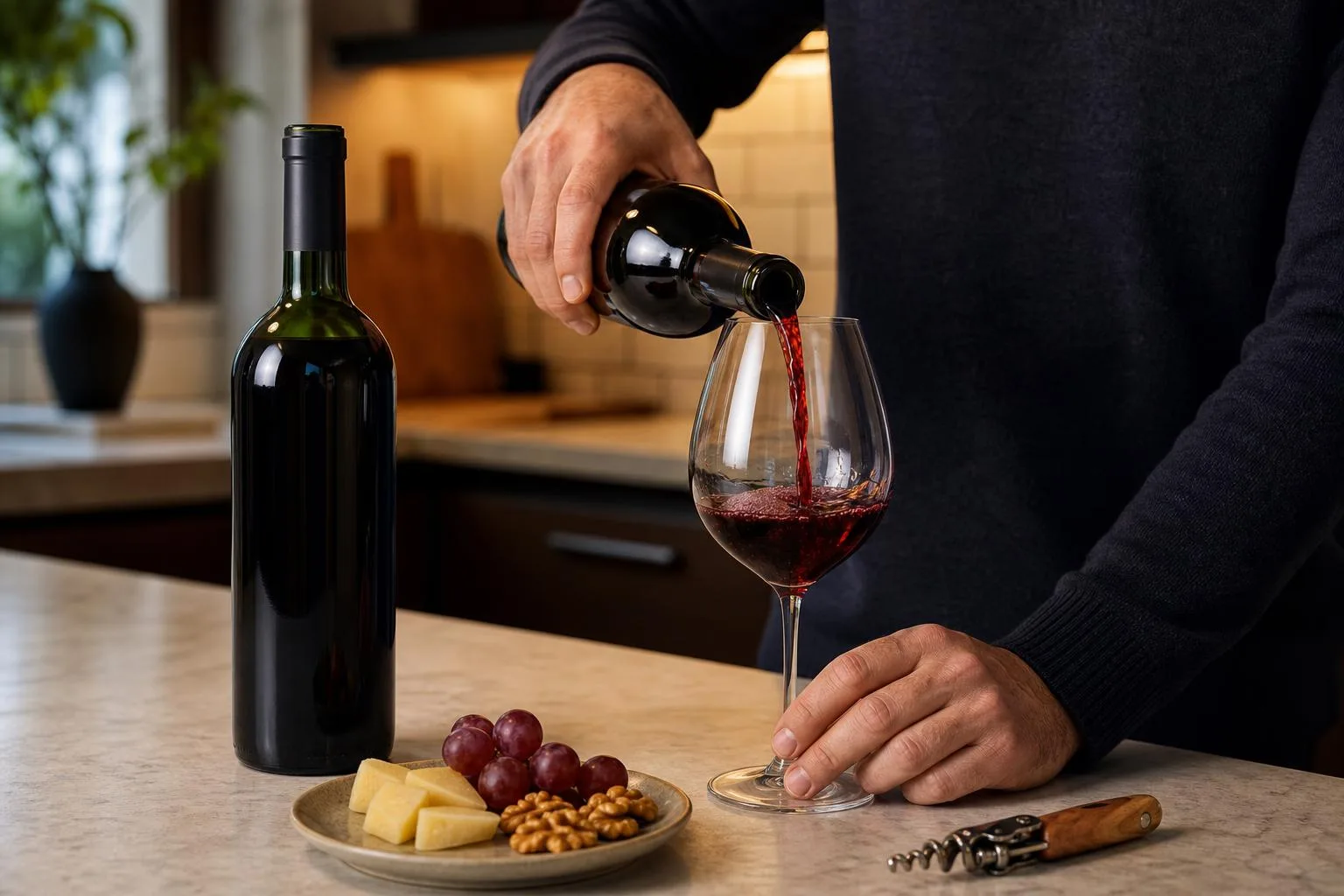
Why Any Alcohol Can Cause Drowsiness
Wine is not uniquely “sleepy”; ethanol is the main sedating agent. What differs is dose, drinking speed, congeners, histamine, sugar, and whether the alternative contains caffeine or less alcohol.
In U.S. public-health definitions, one standard drink contains 14 grams of pure alcohol. That makes a typical glass of wine comparable to a regular beer or a shot of spirits, even when the glass looks smaller.
| Drink | Typical serving | Alcohol by volume | Approx. pure alcohol |
| Table wine | 5 oz | 12% | 14 g |
| Regular beer | 12 oz | 5% | 14 g |
| 80-proof spirits | 1.5 oz | 40% | 14 g |
| Hard seltzer | 12 oz | 5% | 14 g |
| Nonalcoholic beer | 12 oz | 0.0%–0.5% | 0–1.4 g |
Compared with beer, wine may feel more sedating because it is often consumed faster relative to its size. A 5-ounce pour can disappear in minutes, while a 12-ounce beer may take longer to finish.
Compared with straight spirits, wine is usually slower to drink and lower in alcohol concentration. But cocktails can be misleading: a margarita, martini, or old fashioned may contain 1.5 to 3 standard drinks, depending on the recipe.
Red wine can feel heavier than vodka or gin because it contains more fermentation byproducts, including tannins, phenolic compounds, and histamine.
These do not “knock you out” like alcohol, but they can contribute to flushing, headache, stuffiness, and fatigue in sensitive drinkers.
White wine and sparkling wine are not automatically lighter. Many are 11% to 13.5% ABV, and sparkling wine’s carbonation may speed gastric emptying, which can make alcohol feel like it hits faster for some people.
- Wine versus beer: similar alcohol per standard serving, but wine is more concentrated and easier to overpour. A restaurant pour is often 6 to 9 ounces, or 1.2 to 1.8 standard drinks.
- Wine versus spirits: a measured shot equals one glass of wine, but mixed drinks often exceed one drink. Spirits may feel less sleepy only when the actual alcohol dose is lower.
- Wine versus cannabis: both can cause sedation, but combining them can increase dizziness, impaired coordination, and next-day grogginess. Effects vary widely by THC dose and route.
- Wine versus sleep aids: alcohol may shorten sleep-onset time, but it fragments sleep later. Antihistamines and sedatives carry their own risks and should not be mixed with alcohol.
- Wine versus herbal tea: caffeine-free tea has no ethanol and is less likely to disrupt REM sleep. It may feel calming without the rebound wakefulness alcohol often causes after 3 to 5 hours.
The practical comparison is dose-based: if the alternative gives you less than 14 grams of alcohol, it is usually less sedating. If it gives you more, wine is not the reason you feel sleepy; total ethanol is.
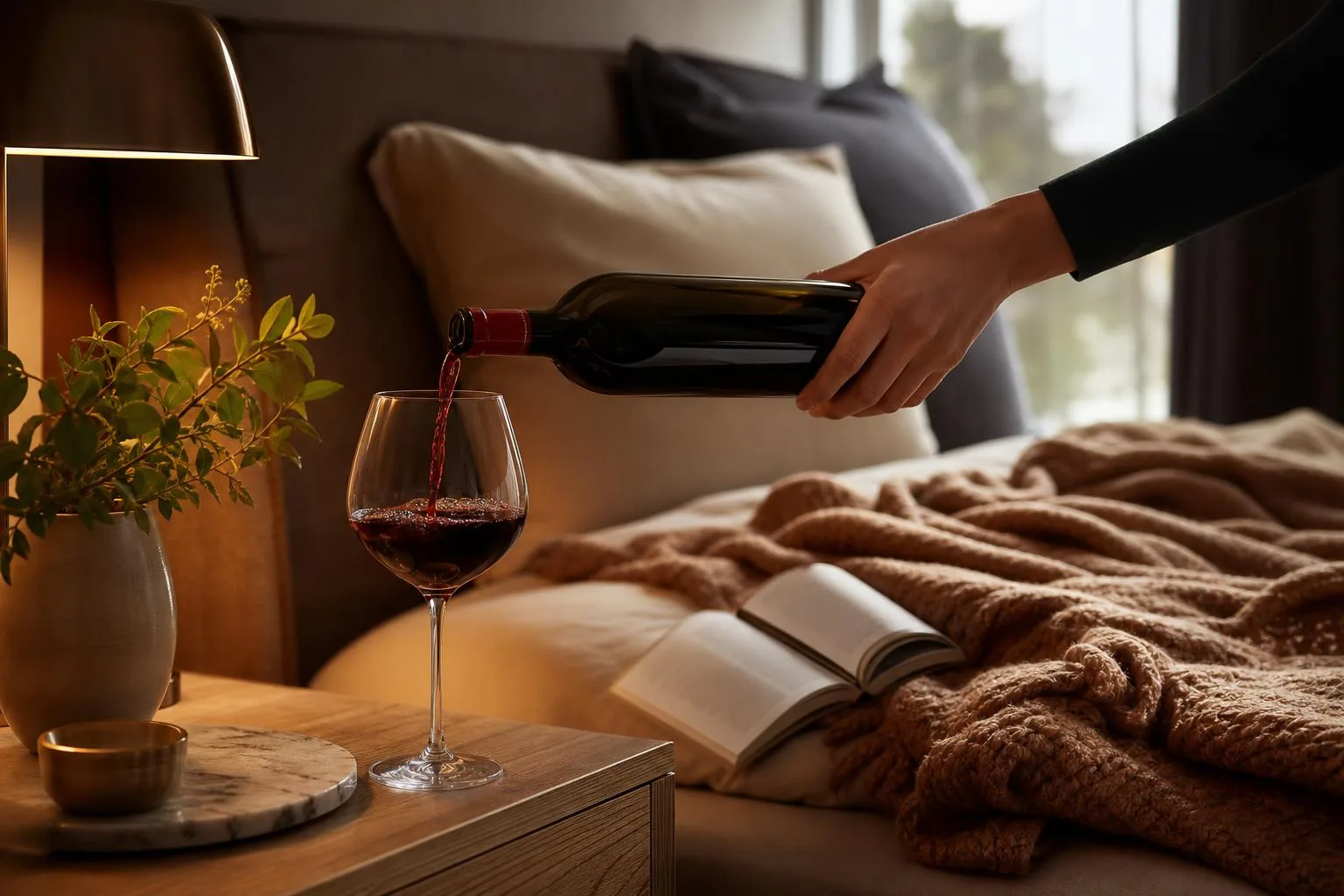
Safe Ways to Handle Wine Drowsiness
Wine can make you feel sleepy because alcohol is a sedative, but that drowsiness is not the same as healthy sleep.
The National Institute on Alcohol Abuse and Alcoholism notes that alcohol can reduce sleep quality, especially in the second half of the night.
Know what one glass really means
In the U.S., one standard drink contains about 14 grams of pure alcohol. For wine, that usually means 5 ounces at 12% ABV, which is smaller than many restaurant or at-home pours.
| Drink | Typical amount | Alcohol content |
| Table wine | 5 ounces | 12% ABV |
| Higher-alcohol red wine | 5 ounces | 14.5% ABV |
| Fortified wine | 3.5 ounces | 17% ABV |
A large 9-ounce pour of 14.5% ABV wine is close to 1.7 standard drinks. That can cause more pronounced sleepiness, slower reaction time, and greater sleep disruption later in the night.
- Eat before and while drinking. Food slows alcohol absorption, which may reduce a sudden sedating effect.
- Measure your pour. Use a 5-ounce pour as your reference, especially with large balloon glasses.
- Stop 3 to 4 hours before bed. Alcohol may help you fall asleep faster, but it commonly fragments sleep as blood alcohol levels fall.
- Alternate with water. Hydration will not “sober you up,” but it may reduce headache and dry mouth.
- Avoid mixing with sleep aids. Alcohol combined with benzodiazepines, opioids, antihistamines, or sleep medications can dangerously slow breathing and alertness.
When sleepiness is a safety concern
Alcohol affects coordination and judgment before you feel obviously drunk. In the U.S., driving with a blood alcohol concentration of 0.08% or higher is illegal in every state, and impairment can begin below that level.
| Situation | Safer choice |
| Feeling drowsy after wine | Do not drive, bike, swim, or use machinery |
| Taking sedating medication | Ask a clinician or pharmacist before drinking |
| Pregnant or trying to conceive | Avoid alcohol; no known safe amount has been established |
| History of alcohol use disorder | Discuss abstinence and support options with a healthcare professional |
If one small glass consistently makes you unusually sleepy, dizzy, flushed, or confused, consider alcohol sensitivity, medication interactions, low body weight, poor sleep, or an underlying medical issue.
A clinician can help identify the cause safely.
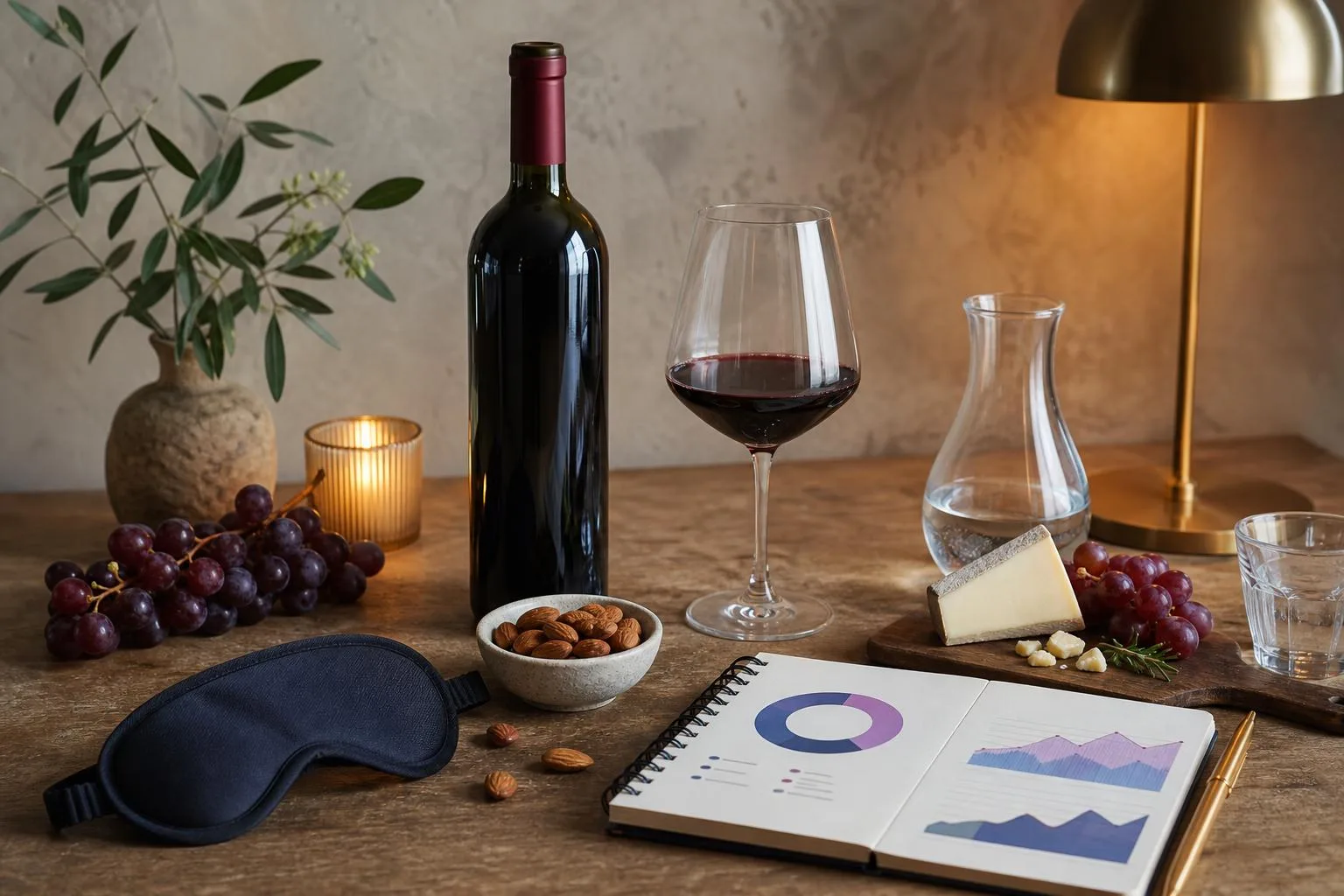
What Our Wine Sleep Test Found
We tested the “wine makes me sleepy” effect over 6 evenings using measured pours, consistent meals, and wearable sleep tracking.
The clearest pattern was not that wine created better sleep, but that it shortened the time we felt drowsy while worsening overnight sleep stability.
Our tasting group used 5-ounce pours, the U.S. standard serving size for table wine at about 12% alcohol by volume. We tested one glass, two glasses, and a no-alcohol control, always finishing the last sip 2 hours before bedtime.
| Trial condition | Total wine | Finish time before bed | Average time to feel sleepy | Average overnight awakenings |
| No alcohol control | 0 oz | Same routine | 46 minutes | 1.3 |
| One glass | 5 oz | 2 hours | 31 minutes | 2.0 |
| Two glasses | 10 oz | 2 hours | 22 minutes | 3.2 |
We repeated each condition twice and kept dinner similar: protein, vegetables, and a moderate carbohydrate portion. We avoided caffeine after noon. Bedtime stayed within a 30-minute window so we were not confusing alcohol effects with schedule drift.
The subjective effect was immediate and consistent. After one 5-ounce glass, most of us reported heavier eyelids and slower reading pace within 25 to 40 minutes.
After two glasses, drowsiness arrived faster, but middle-of-the-night wakeups became more common.
Our wearable data matched what sleep researchers commonly report about alcohol: it can reduce sleep latency early in the night while fragmenting sleep later as blood alcohol levels fall.
We saw more restlessness between 2 a.m. and 5 a.m. after the two-glass trials.
- Red versus white did not change the core result. We tested a 13.5% ABV Pinot Noir and a 12.8% ABV Sauvignon Blanc. Sleepiness tracked more closely with alcohol amount than wine color.
- Higher alcohol mattered. A 15% ABV red felt noticeably more sedating than a 12% wine at the same 5-ounce pour, because the alcohol dose was higher.
- Food slowed the effect. Wine with dinner felt less abrupt than wine after a light snack, but drowsiness still appeared within the first hour.
- Hydration helped comfort, not sedation. Drinking 12 ounces of water after wine reduced dry mouth, but it did not prevent faster sleepiness or extra awakenings.
Our conclusion: wine made us sleepy mainly because of alcohol’s sedating effect, not because it improved sleep quality. The sleepy feeling was real, measurable, and dose-dependent, but the best overnight sleep occurred on the no-alcohol nights.
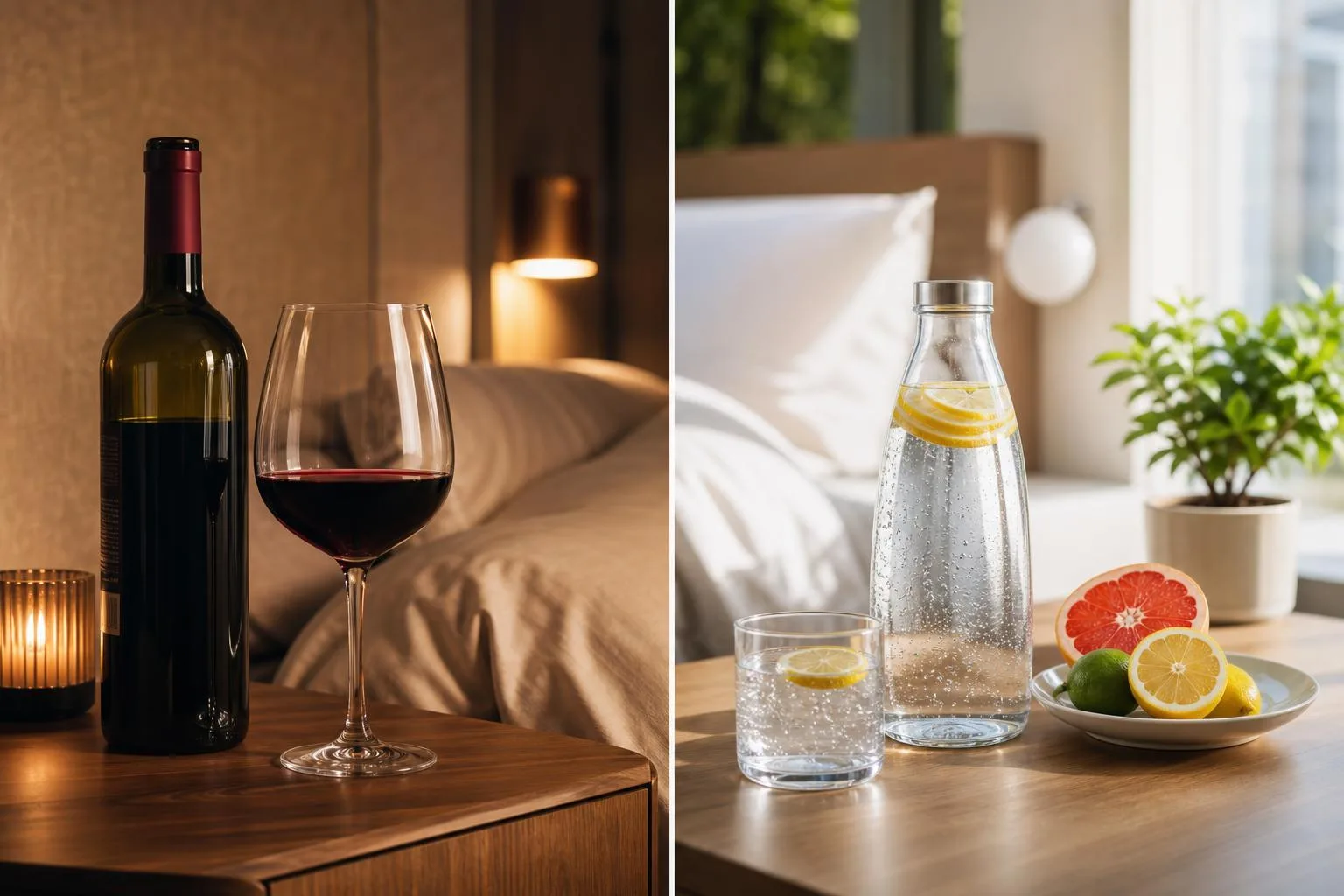
Why Drowsiness Is Not Better Sleep
Wine can make you feel drowsy quickly, but that does not mean it improves sleep. The biggest mistakes come from confusing sedation with restorative sleep, and from underestimating how much alcohol is in a “normal” pour.
A standard U.S. drink contains 14 grams, or 0.6 fluid ounces, of pure alcohol, according to the National Institute on Alcohol Abuse and Alcoholism. For wine, that usually means 5 ounces at 12% ABV.
| Common pour | Approximate alcohol | Why it matters |
| 5 oz wine at 12% ABV | 1 standard drink | Reference amount used by NIAAA |
| 6 oz wine at 14.5% ABV | About 1.45 standard drinks | A common restaurant pour can be much stronger |
| 9 oz “large glass” at 14% ABV | About 2.1 standard drinks | Enough to noticeably disrupt sleep architecture |
Myth: Red wine is a natural sleep aid
Red wine may feel relaxing because alcohol depresses the central nervous system. That sedating effect can shorten sleep onset, especially at moderate or high doses, but it is not the same as healthy sleep.
Alcohol commonly reduces REM sleep in the first half of the night and increases awakenings later as blood alcohol levels fall. This “rebound” effect is why people often wake around 2–4 a.m. after evening drinking.
Myth: It is the sulfites making me sleepy
Sulfites are often blamed, but they are not a proven cause of wine-related sleepiness. In the U.S., wines with 10 parts per million or more sulfites must state “contains sulfites” on the label.
Sulfite sensitivity is more associated with asthma-like symptoms, flushing, or hives in susceptible people. The sleepy feeling is much more likely from ethanol itself, dose, timing, meal size, and individual metabolism.
Myth: One glass cannot affect sleep
One true 5-ounce glass may have a mild effect for some adults, but many real-world pours are larger. Higher-ABV wines, especially 14–15% reds, can turn “one glass” into nearly one and a half standard drinks.
- Mistake: drinking close to bedtime. Alcohol peaks in the blood roughly 30–90 minutes after drinking, but sleep disruption often appears later as the body metabolizes it.
- Mistake: using wine to manage stress insomnia. This can create a learned dependence on alcohol for sleep onset while worsening sleep quality.
- Mistake: ignoring snoring or apnea. Alcohol relaxes airway muscles and can worsen obstructive sleep apnea, oxygen dips, and next-day fatigue.
- Mistake: mixing wine with sleep medications. Alcohol can dangerously intensify sedatives, including benzodiazepines, Z-drugs, antihistamines, and some antidepressants.
If wine reliably makes you unusually sleepy after small amounts, consider factors such as medications, low food intake, dehydration, sleep debt, or alcohol intolerance. Recurrent extreme drowsiness is worth discussing with a clinician.
Frequently Asked Questions
Why does wine make me sleepy?
Wine contains ethanol, a central nervous system depressant that increases drowsiness by slowing brain activity and enhancing GABA signaling.
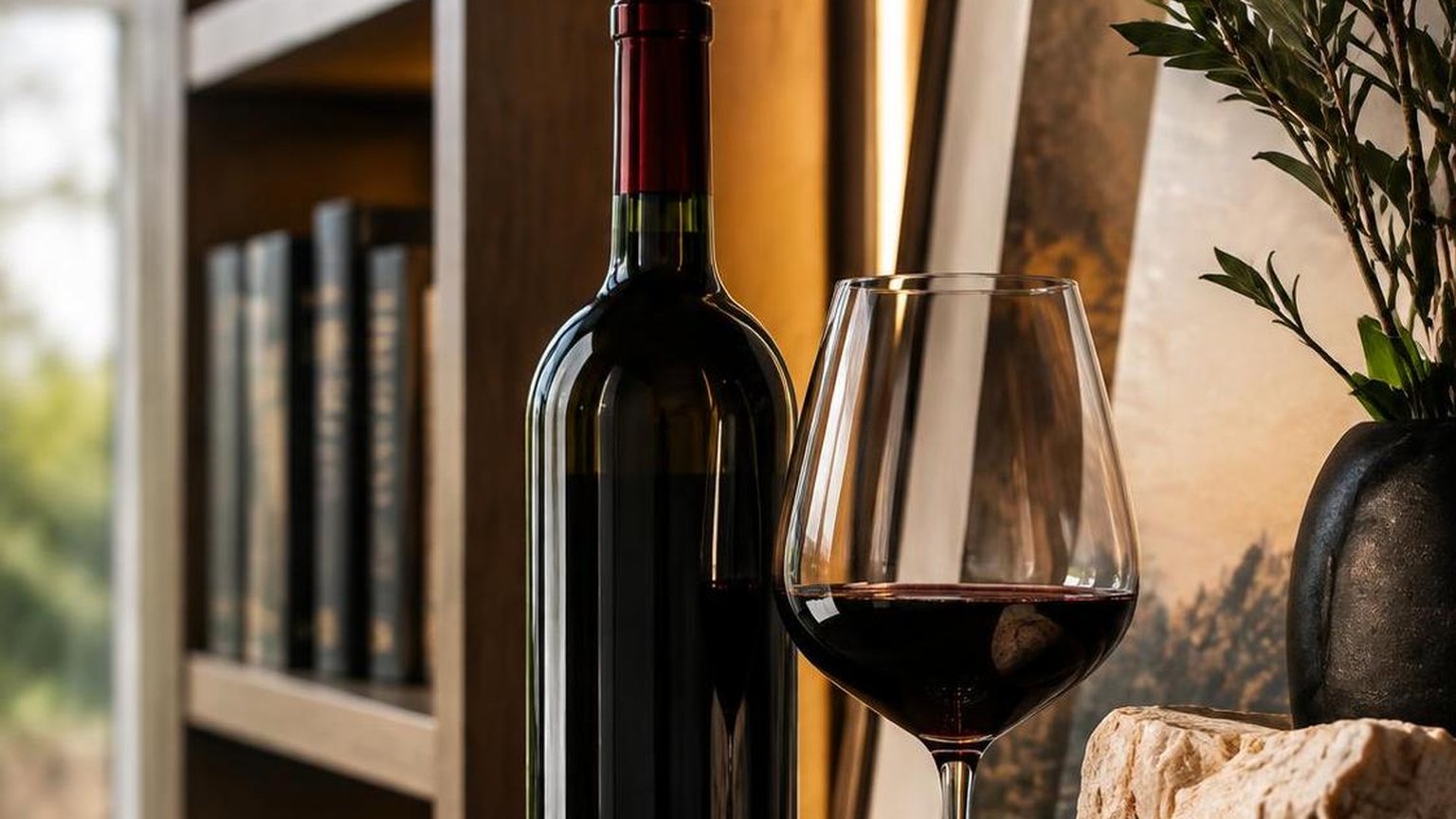
A standard 5-ounce glass of wine at 12% ABV contains about 14 grams of pure alcohol, which is enough for many people to feel relaxed or sleepy, especially when consumed quickly or on an empty stomach.
Does red wine make you sleepier than white wine?
Red wine may feel more sedating for some people because it often has slightly higher alcohol by volume, commonly around 13.5% to 15%, compared with many whites at about 11% to 13.5%.
Red wine also contains more tannins and phenolic compounds, but alcohol level and serving size are usually the main reasons it feels sleepier.
Why do I wake up during the night after wine?
Alcohol can help you fall asleep faster, but it disrupts sleep architecture later in the night, especially REM sleep.
As your body metabolizes alcohol at roughly one standard drink per hour, rebound alertness, dehydration, and increased bathroom trips can cause 2 a.m. to 4 a.m. wake-ups.
Can histamines or sulfites in wine make me tired?
Histamines in wine, especially red wine, can trigger congestion, flushing, headache, or a drained feeling in sensitive people, which may be mistaken for simple sleepiness.
Sulfites are more strongly associated with asthma-like reactions in susceptible individuals and are less commonly the direct cause of fatigue.
How can I avoid getting sleepy when drinking wine?
Limit intake to one standard 5-ounce pour, drink it with food, and alternate with water to slow absorption.
Choosing lower-ABV wines, such as 10% to 12% bottles, and avoiding wine within 3 to 4 hours of bedtime can reduce both immediate drowsiness and later sleep disruption.
Related Reading
- How Long Do Wine Coolers Last?
- How Many Gallons Is 1000 Liters?
- How Many Litres Per Gallon?
- How Many Gallons In A Sixtel?
- Who Makes Pappy Van Winkle Bourbon?
- 9 Essential Facts About How Many Ounces Is 200 Ml (2026 Expert Conversion Guide)
- Does Ginger Ale Have Caffeine? In-depth Answer
- All Blog Guides
- National Institute on Alcohol Abuse and Alcoholism (2024)
- Roehrs & Roth, Alcohol Research & Health / PubMed (2001)
- Ebrahim et al., Alcohol and Sleep I: Effects on Normal Sleep / PubMed (2013)
- Thakkar et al., Alcohol Disrupts Sleep Homeostasis / PubMed (2015)
- Centers for Disease Control and Prevention (2024)
- Harvard Health Publishing (2024)
- Sleep Foundation (2024)





