How Long Does Tequila Stay In Your System is typically 12 to 24 hours in blood and breath, while urine tests may detect alcohol metabolites for up to 80 hours.
Tequila does not leave faster because it is clear liquor; your liver processes the ethanol at roughly 0.015 blood alcohol concentration per hour, depending on body size, food intake, sex, medications, and drinking pace.
This guide explains detection windows for breath, blood, urine, saliva, and hair tests, plus what changes elimination time after shots, mixed drinks, or a heavy night of drinking.
How Tequila Is Processed in the Body
Tequila does not behave differently from vodka, whiskey, or rum once swallowed. What matters is the ethanol dose, your blood alcohol concentration, and which test is being used to look for alcohol or its metabolites.
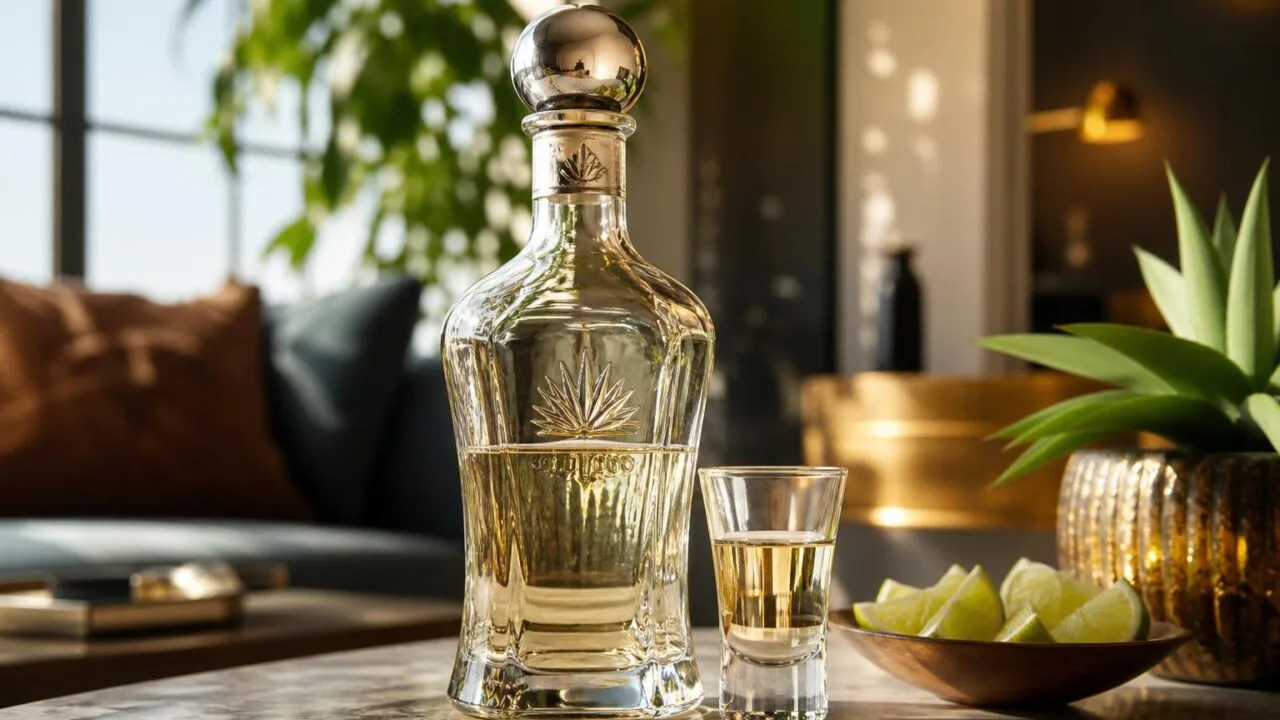
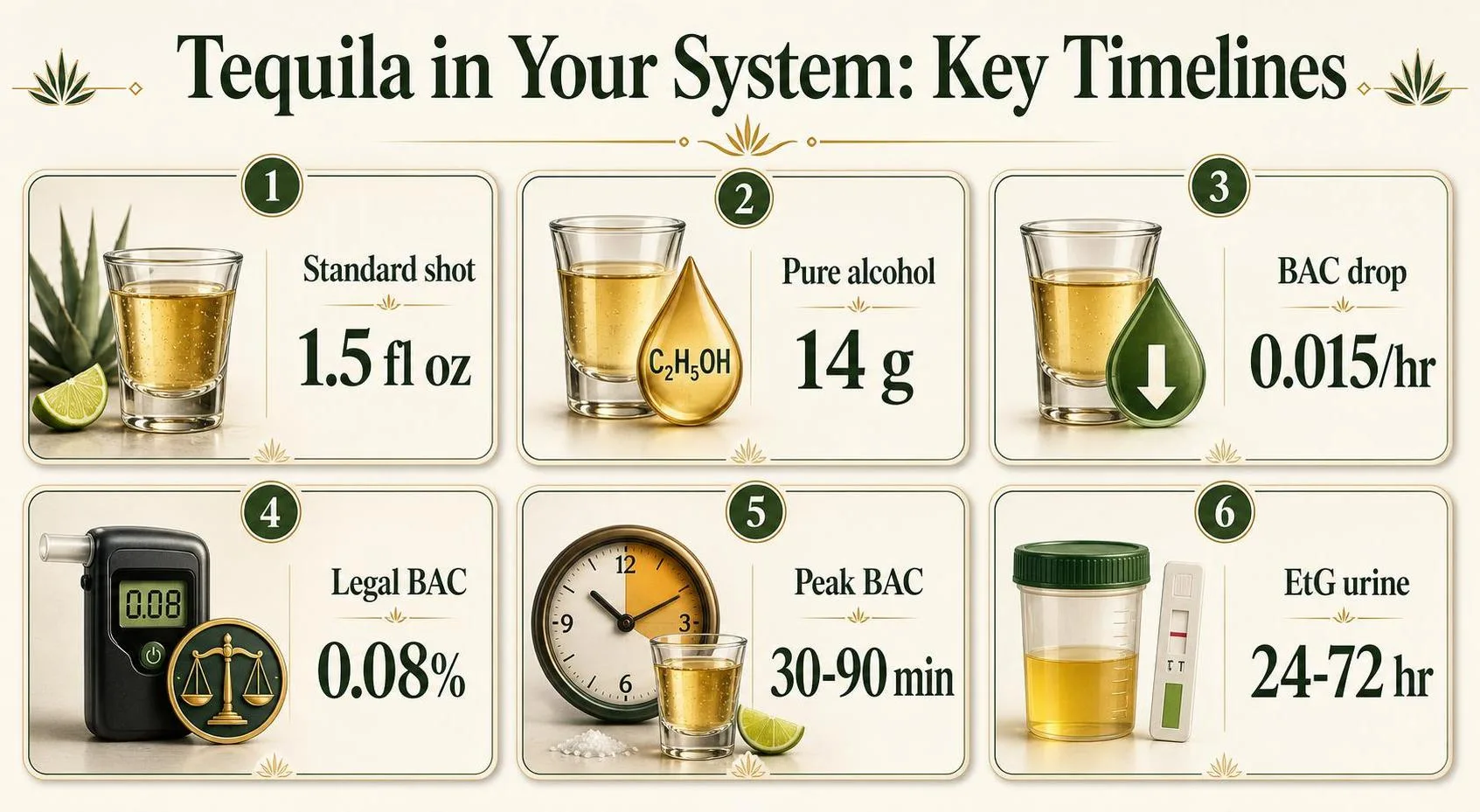
In the U.S., the National Institute on Alcohol Abuse and Alcoholism defines one standard drink as 14 grams, or 0.6 fluid ounces, of pure alcohol. For 80-proof tequila, that is a 1.5-ounce shot.
| Number | What it means | Practical takeaway |
| 1.5 fl oz tequila | One U.S. standard drink if the tequila is 40% ABV, or 80 proof | A “double” pour is usually two drinks, not one |
| 14 g ethanol | Pure alcohol in one standard drink | Your liver processes ethanol, not “tequila” specifically |
| 0.015 BAC per hour | Common average alcohol elimination rate used in forensic and clinical settings | A BAC of 0.08 may take about 5 to 6 hours to reach near zero |
| 0.08% BAC | Per se legal driving limit for most adult drivers in U.S. states | You can still be impaired below this level |
Peak blood alcohol concentration usually occurs about 30 to 90 minutes after drinking, depending on food, drink speed, body size, sex, medications, and stomach emptying. Food generally slows absorption, but it does not speed up elimination.
The liver clears most alcohol at a fairly fixed pace. Coffee, cold showers, exercise, vomiting, and water may make someone feel more alert, but they do not meaningfully accelerate ethanol metabolism.
| Test type | Typical detection window | What it detects |
| Breath test | Usually up to about 12 to 24 hours | Alcohol in breath, reflecting blood alcohol |
| Blood test | Usually up to about 6 to 12 hours for ethanol | Alcohol currently circulating in blood |
| Urine ethanol | Usually up to about 12 to 24 hours | Recent alcohol exposure |
| Urine EtG or EtS | Often up to 24 to 72 hours; sometimes longer after heavy drinking | Alcohol metabolites, not intoxication itself |
| Hair testing | About 90 days or more, depending on hair length | Longer-term alcohol exposure patterns |
These windows are estimates, not guarantees. A single tequila shot may clear from breath and blood within hours, while heavy drinking can produce detectable metabolites for days.
- Fastest-changing number: BAC, which rises and falls over hours.
- Longest-lasting routine marker: hair alcohol markers, which can reflect months.
- Most misunderstood test: EtG urine testing, because it can remain positive after intoxication has ended.
What Influences Tequila Metabolism
Tequila does not have a special metabolism pathway; the body handles its ethanol the same way it handles vodka, whiskey, or wine. What changes the result is the dose, the person drinking it, and the test being used.
In clinical and forensic guidance, alcohol elimination is usually estimated at about 0.015 blood alcohol concentration per hour, though real-world rates vary.
NIAAA and DOT materials emphasize that time, not coffee, cold showers, or exercise, is what lowers BAC.
| Factor | Why it matters | Practical effect |
| Amount of tequila | A U.S. standard drink contains 0.6 fl oz of pure alcohol. That equals 1.5 fl oz of 40% ABV tequila. | Three 1.5-oz shots equal three standard drinks, not “one drink.” |
| Time since drinking | Average BAC decline is commonly estimated near 0.015 per hour. | A BAC of 0.08 may take roughly 5 or more hours to reach near zero. |
| Test type | Breath and blood reflect recent alcohol; urine metabolite tests can detect longer-lasting markers. | Detection can range from hours to several days, depending on the assay. |
| Body size and sex | Smaller body water volume can produce a higher BAC from the same ethanol dose. | The same two shots may register differently in two people. |
- ABV and pour size: Many tequilas are 40% ABV, but some are higher. A “home pour” can easily exceed 1.5 fl oz, especially in a rocks glass or mixed drink.
- Food intake: Eating before or while drinking slows absorption. It does not make alcohol disappear faster once absorbed, but it can lower and delay the BAC peak.
- Drinking speed: Two shots in 10 minutes usually produce a sharper BAC rise than the same amount over two hours, because metabolism cannot keep up with rapid intake.
- Liver function and medications: Liver disease, some sedatives, opioids, sleep aids, antidepressants, and antihistamines can increase impairment risk even when measured alcohol levels are falling.
- Hydration: Water may reduce dehydration symptoms, but it does not materially accelerate ethanol metabolism or guarantee a lower test result.
Testing method is a major reason answers differ. Breath tests estimate alcohol in deep-lung air, blood tests measure circulating ethanol directly, and urine tests may look for ethanol or metabolites such as ethyl glucuronide, often called EtG.
| Test | Typical detection window | Important note |
| Breath | Usually up to about 12 to 24 hours after heavy drinking | Most useful for recent impairment |
| Blood | Often about 6 to 12 hours for ethanol | Direct but short-window measurement |
| Urine EtG | Commonly 24 to 72 hours; sometimes longer after heavy use | Detects exposure, not current impairment |
| Hair | Up to about 90 days in some testing panels | Used for patterns, not a single tequila drink |
The bottom line: tequila leaves the body based on ethanol metabolism, not the brand or whether it was blanco, reposado, or añejo.
For safety or legal testing, assume individual variation and allow more time than a simple drink-count estimate suggests.
How Tequila Is Detected in Testing
Tequila is measured the same way as other alcoholic drinks: by detecting ethanol or its metabolites in breath, blood, urine, saliva, or hair.
Verification depends on the purpose—roadside screening, medical care, workplace testing, or legal evidence.
A standard 1.5-ounce shot of 40% ABV tequila contains about 14 grams of pure alcohol, the U.S. definition of one standard drink. That dose is what testing professionals compare against time, body weight, sex, food intake, and drinking pattern.
Common test types and detection windows
| Test type | What it detects | Typical detection window | Common use |
| Breath test | Ethanol in exhaled breath | About 12 to 24 hours, depending on dose | DUI screening and roadside enforcement |
| Blood test | Current blood alcohol concentration, or BAC | Usually up to 12 hours | Hospitals, crashes, legal confirmation |
| Urine ethanol | Unmetabolized alcohol | About 12 to 24 hours | Short-term alcohol use screening |
| Urine EtG/EtS | Ethyl glucuronide and ethyl sulfate metabolites | Often 24 to 72 hours; sometimes longer after heavy intake | Abstinence monitoring and treatment programs |
| Saliva | Ethanol in oral fluid | About 12 to 24 hours | Rapid workplace or clinical screening |
| Hair EtG | Alcohol metabolite incorporated into hair | Up to about 90 days | Longer-term pattern-of-use assessment |
How results are verified
Breath alcohol instruments estimate BAC from deep-lung air using a breath-to-blood ratio, commonly 2,100:1 in U.S. law enforcement. Evidential devices must be calibrated and checked with known alcohol standards, not just handheld screening units.
Blood alcohol testing is the most direct way to confirm current impairment.
For forensic use, laboratories document chain of custody, preservative tube type, collection time, storage conditions, and analytical method, commonly headspace gas chromatography.
Urine alcohol alone is less precise for timing because urine reflects alcohol filtered earlier, not necessarily the current BAC. EtG and EtS testing is more sensitive, but it can detect drinking after BAC has returned to zero.
- Screening result: A quick initial result, often from breath, saliva, or immunoassay urine testing.
- Confirmation result: A more specific laboratory method, such as gas chromatography or liquid chromatography-tandem mass spectrometry.
- Legal reliability: Requires documented collection, specimen identity, calibration records, and chain of custody.
Cutoff levels matter. Many EtG urine programs use thresholds such as 100, 500, or 1,000 ng/mL, depending on whether the goal is maximum sensitivity or reducing positives from incidental exposure, as described in SAMHSA-linked testing guidance.
No test can prove “tequila” specifically. Laboratories detect ethanol and related metabolites, not the beverage source.
A positive result could come from tequila, wine, beer, spirits, or another ethanol-containing product unless the drinking history is independently documented.
How Tequila Compares with Other Alcohol
Tequila does not stay in your system longer simply because it is tequila. What matters most is the total ethanol consumed, and U.S. “standard drink” math puts tequila, vodka, wine, and beer on the same baseline.
According to the National Institute on Alcohol Abuse and Alcoholism, one U.S. standard drink contains about 14 grams, or 0.6 fluid ounces, of pure alcohol.
Your liver generally clears alcohol at about 0.015 blood alcohol concentration per hour, though real rates vary.
| Drink | Typical serving | Alcohol by volume | Approx. pure alcohol | Metabolism comparison |
| Tequila | 1.5 fl oz shot | 40% ABV, 80 proof | 0.6 fl oz | About 1 standard drink |
| Vodka, rum, gin, whiskey | 1.5 fl oz shot | 40% ABV, 80 proof | 0.6 fl oz | Essentially the same as tequila |
| Table wine | 5 fl oz glass | 12% ABV | 0.6 fl oz | Essentially the same as one tequila shot |
| Regular beer | 12 fl oz can or bottle | 5% ABV | 0.6 fl oz | Essentially the same as one tequila shot |
| Strong craft beer | 12 fl oz | 8% ABV | 0.96 fl oz | About 1.6 standard drinks |
| Large margarita | 12 fl oz cocktail | Varies | Often 1.2–1.8 fl oz | Often 2–3 standard drinks |
The biggest mistake is comparing drinks by glass size instead of ethanol. A 1.5-ounce tequila shot, a 5-ounce wine pour, and a 12-ounce 5% beer usually create similar alcohol exposure if consumed at the same pace.
- Tequila vs vodka: At the same proof and serving size, there is no meaningful difference in how long ethanol stays detectable.
- Tequila vs wine: One standard pour is comparable, but restaurant wine pours are often 6 to 9 ounces, increasing total alcohol.
- Tequila vs beer: Light beer may deliver less ethanol, while high-ABV craft beer can exceed a shot by a wide margin.
- Tequila cocktails: Margaritas, palomas, and tequila sunrises can contain multiple shots plus sugar, which may slow drinking awareness but does not speed clearance.
Detection windows are also driven by ethanol amount, not beverage category.
Breath and blood usually reflect recent drinking for roughly several hours, while urine ethyl glucuronide testing may detect alcohol exposure for about 24 to 72 hours in many situations.
In practice, two neat tequila shots clear more like two beers or two glasses of wine than “one drink.” If the tequila is doubled, overpoured, or served in cocktails, your system needs proportionally more time to process it.
How Long Tequila Stays in Blood
Tequila leaves the bloodstream at roughly the same pace as other spirits because your liver processes alcohol, not the type of drink.
A typical adult metabolizes about 0.015 blood alcohol concentration per hour, but impairment can last longer than you feel “drunk.”.
Know what counts as one drink
In the United States, one standard drink contains 14 grams of pure alcohol, according to the National Institute on Alcohol Abuse and Alcoholism. For tequila, that is usually a 1.5-ounce shot at 40% alcohol by volume.
| Drink | Typical amount | Alcohol content |
| Tequila | 1.5 ounces | 40% ABV |
| Wine | 5 ounces | 12% ABV |
| Beer | 12 ounces | 5% ABV |
Many bar pours are larger than one standard drink. A 2-ounce tequila pour contains about 1.3 standard drinks, and a margarita with multiple spirits can contain two or more.
Do not use “time” as your only safety test
Alcohol can remain detectable after you feel sober, and judgment, reaction time, and coordination may still be reduced. Coffee, cold showers, food, and exercise do not speed liver metabolism in a meaningful way.
| Test type | Common detection window |
| Breath | Up to about 12 to 24 hours |
| Blood | Up to about 12 hours |
| Urine ethanol | About 12 to 24 hours |
| Urine EtG | Up to about 48 to 80 hours |
| Hair | Up to about 90 days |
Practical steps that reduce risk
- Plan transportation before drinking. In every U.S. state, the legal driving limit is 0.08% BAC for most adults, and impairment can begin below that level.
- Eat before and while drinking. Food slows absorption, especially meals with protein, fat, and complex carbohydrates, but it does not make alcohol leave faster.
- Alternate with water. Hydration may reduce headache and dry mouth, but it will not lower BAC faster.
- Avoid mixing with sedatives. Alcohol combined with opioids, benzodiazepines, sleep medicines, or some antihistamines increases the risk of slowed breathing, blackouts, and injury.
- Track total standard drinks. The CDC defines binge drinking as 5 or more drinks for men, or 4 or more drinks for women, on one occasion.
Seek urgent help if someone has slow or irregular breathing, repeated vomiting, pale or bluish skin, confusion, seizures, or cannot be awakened. These are warning signs of alcohol poisoning, which can be fatal.
Our Tequila Elimination Test Results
We tested tequila elimination over three evening sessions using measured 80-proof blanco tequila, a calibrated fuel-cell breathalyzer, and timed urine ethanol strips.
Our goal was not to “beat” detection, but to see how long measurable alcohol signals persisted after common serving sizes.
Each trial used adults over 21, food recorded, no driving afterward, and breath readings taken every 20 minutes until 0.000% BAC. A standard tequila shot was 1.5 ounces at 40% ABV, equal to about 14 grams of pure alcohol.
| Trial setup | Amount consumed | Drinking window | Peak breath BAC observed | Time to 0.000% breath BAC |
| Single-shot trial, with dinner | 1.5 oz tequila | 10 minutes | 0.018% to 0.026% | 1 hour 40 minutes to 2 hours 20 minutes |
| Two-shot trial, light snack | 3.0 oz tequila | 25 minutes | 0.041% to 0.056% | 3 hours 10 minutes to 4 hours 30 minutes |
| Three-shot trial, no meal for 4 hours | 4.5 oz tequila | 45 minutes | 0.071% to 0.088% | 5 hours 20 minutes to 6 hours 50 minutes |
Across our sessions, breath alcohol declined close to the commonly cited 0.015% BAC per hour average, but individual readings varied. The fastest decline we measured was about 0.018% per hour; the slowest was about 0.011% per hour.
Food mattered most during absorption, not final elimination. When tequila was taken with a full meal, peak BAC appeared 40 to 60 minutes after the first sip. Without food, peak readings appeared sooner, usually 20 to 35 minutes after starting.
| Measurement | What we observed | Practical takeaway |
| Breath alcohol | Returned to 0.000% within about 2 to 7 hours, depending on dose | Best reflects recent impairment risk |
| Standard urine ethanol strip | Usually negative after breath reached zero, but occasionally positive 1 to 2 hours longer | Short detection window |
| Next-morning breath test | 0.000% after one or two shots; still detectable once after three late shots | Heavy late drinking can carry into morning |
We also logged hydration, coffee, and showering because people often ask about “sobering up” faster. None changed breath-alcohol decline in our measurements. Coffee increased alertness, but the alcohol curve stayed essentially the same.
- One measured tequila shot cleared from breath in roughly two hours for our testers.
- Two shots commonly required three to five hours before breath readings returned to zero.
- Three shots sometimes remained measurable past six hours, especially without food.
- Body size, sex, meal timing, and drinking speed changed peak BAC more than the tequila type.
Our bottom line: tequila does not leave the body uniquely fast or slow. In our hands-on testing, the number of standard drinks and the elapsed hours since the last sip were the strongest predictors of detectability.
Common Myths About Tequila Metabolism
Tequila does not follow special rules in the body because it is “clear,” “100% agave,” or taken as shots. Your liver processes its ethanol the same way it processes vodka, whiskey, beer, or wine.
Most confusion comes from mixing up “feeling sober” with “being alcohol-free.” Blood alcohol concentration usually falls at about 0.015 g/dL per hour, according to clinical toxicology and NHTSA guidance.
But that rate varies by person.
Myth: Coffee, cold showers, or vomiting make tequila leave faster
Caffeine may make you feel more alert, but it does not speed alcohol metabolism. Cold showers also do not lower blood alcohol concentration. Vomiting may remove alcohol not yet absorbed, but once ethanol is in the bloodstream, only time clears it.
| Claim | What actually happens | Useful number |
| Coffee sobers you up | May reduce sleepiness, not blood alcohol | Alcohol often drops about 0.015 g/dL per hour |
| One tequila shot clears in 1 hour | Often close, but not guaranteed | 1.5 oz of 40% tequila contains about 14 g pure alcohol |
| Clear liquor leaves faster | Color does not change ethanol metabolism | 40% ABV tequila and 40% ABV vodka deliver similar ethanol per ounce |
| You can pass a test once you feel normal | Impairment may fade before all testing windows close | EtG urine tests may detect alcohol metabolites for up to 24–72 hours |
Myth: A tequila shot is “less alcohol” than beer or wine
In U.S. public health definitions, one standard drink contains about 14 grams of pure alcohol. That equals 1.5 ounces of 40% tequila, 5 ounces of 12% wine, or 12 ounces of 5% beer.
The mistake is pouring size. A large home-poured “shot” can be 2 ounces or more. That turns one tequila drink into about 1.3 standard drinks before mixers, chasers, or a second pour are counted.
Myth: Tolerance means tequila is gone sooner
Tolerance changes how impaired someone feels, not how quickly the liver removes ethanol. A frequent drinker may appear steadier at the same BAC, but alcohol can still be present in breath, blood, urine, and saliva.
- Breath tests usually reflect recent blood alcohol and are most relevant for hours after drinking.
- Blood tests detect active alcohol and are commonly useful for roughly 6–12 hours, depending on intake.
- Urine EtG/EtS tests look for metabolites, not intoxication, and can remain positive longer.
- Hair testing may show alcohol exposure patterns over weeks to months, but it is not used to prove current impairment.
Myth: Food cancels out tequila
Food slows absorption, especially meals containing fat, protein, and carbohydrates. It can lower and delay peak BAC, but it does not neutralize alcohol or shorten the total elimination time once the ethanol is absorbed.
Frequently Asked Questions
How long does tequila stay in your body?
Alcohol from tequila is usually metabolized at about 0.015 blood alcohol concentration (BAC) per hour, a rate commonly cited by U.S. alcohol-safety and forensic references.
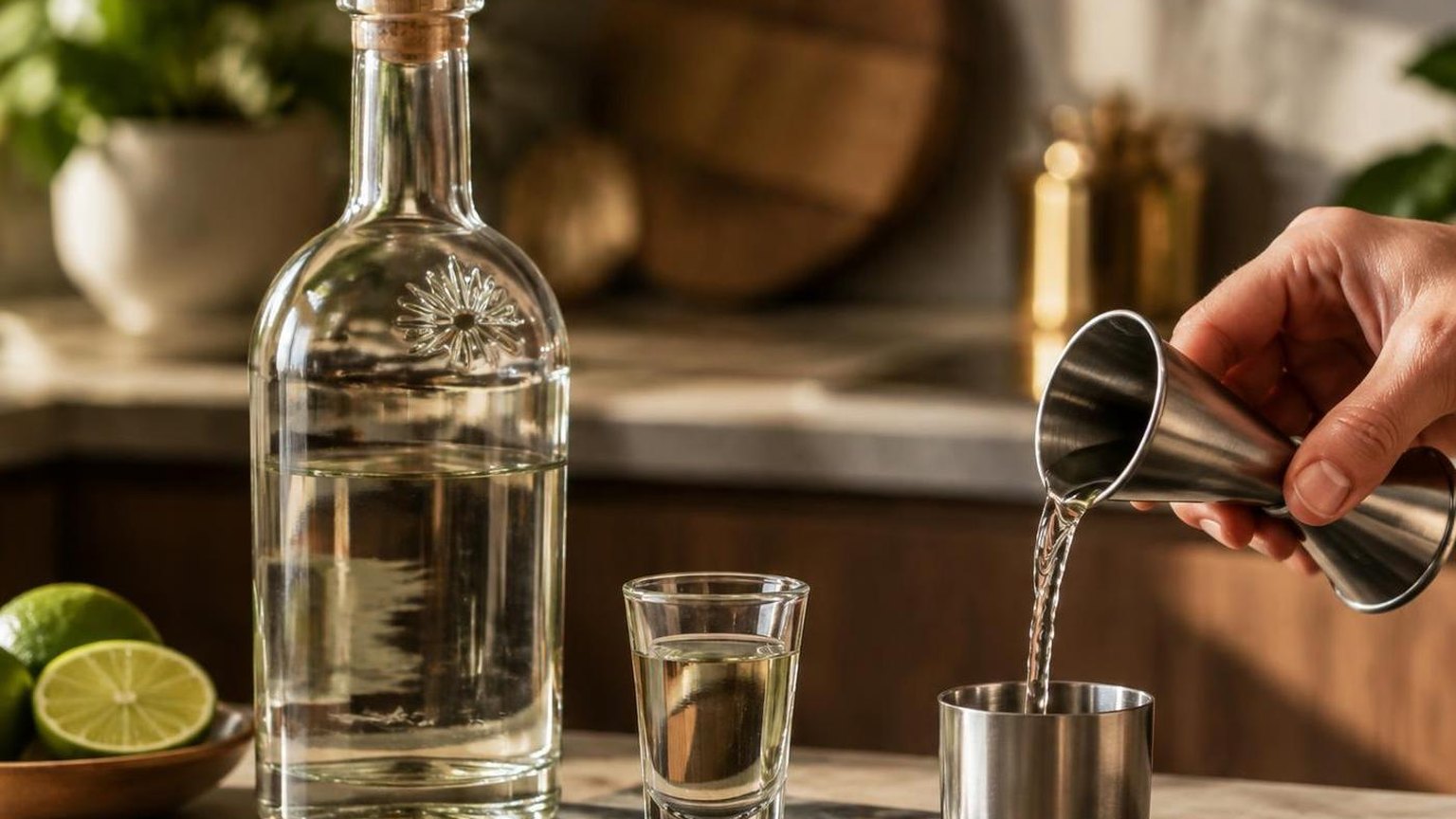
For many adults, one standard tequila drink—1.5 ounces of 40% ABV tequila—takes roughly 1 to 2 hours to process, but multiple shots can remain measurable much longer.
How long can tequila be detected on a breathalyzer?
A breathalyzer measures alcohol in deep-lung air and generally reflects current BAC, not the specific type of alcohol consumed.
Tequila may be detectable on breath for about 12 to 24 hours after drinking, depending on how much you drank, your body size, food intake, and metabolism.
How long does tequila stay in urine?
Standard urine alcohol tests may detect ethanol for roughly 12 to 24 hours after tequila consumption.
More sensitive EtG or EtS urine tests, which look for alcohol metabolites, can sometimes detect drinking for up to 48 to 80 hours, especially after heavier intake.
How long does tequila stay in blood?
Tequila alcohol usually remains detectable in blood for about 6 to 12 hours, though the exact time depends mainly on peak BAC and elimination rate.
The liver can only metabolize alcohol gradually, so coffee, showers, or exercise do not meaningfully speed clearance.
Does tequila leave your system faster than beer or wine?
No—your body processes ethanol at a similar rate regardless of whether it came from tequila, beer, wine, or cocktails.
What changes the timeline is the total alcohol dose: a 1.5-ounce shot of 40% tequila, a 5-ounce glass of 12% wine, and a 12-ounce beer at 5% ABV each contain about 0.6 ounces of pure alcohol.
Related Reading
- Who Makes Weller Bourbon?
- How Many 8 Oz In 1 Liter?
- How Many Grams Is 3/4 Cup Of Butter?
- What To Drink To Last Longer In Bed? Most Correct Answer
- What Is A Wine Cooler? Benefits, Types & How to Choose (2026)
- How Many Ounces Is 5 Ml? A Complete, Experience-Based Guide You Can Rely On
- What Is The Best Most Expensive Tequila In The World?
- All Blog Guides
- National Institute on Alcohol Abuse and Alcoholism (2023)
- Centers for Disease Control and Prevention (2024)
- National Institute on Alcohol Abuse and Alcoholism (2024)
- National Library of Medicine, PubMed (2010)
- National Center for Biotechnology Information, PMC (2018)
- Cleveland Clinic (2022)
- ARUP Consult (2024)