how long can alcohol stay in your blood system is up to 12 hours in blood after the last drink, although impairment usually fades sooner.
Most adults metabolize about 0.015 blood alcohol concentration per hour, according to National Institute on Alcohol Abuse and Alcoholism guidance.
That means a 0.08 BAC may take roughly 5 to 6 hours to clear after drinking stops. Timing varies with body size, sex, food intake, liver function, medication use, and how quickly alcohol was consumed.
Blood testing detects recent alcohol more directly than breath or urine screening, but it does not prove current safety to drive, work, or make medical decisions. If symptoms are severe, treat it as urgent.
How Alcohol Enters and Leaves Blood
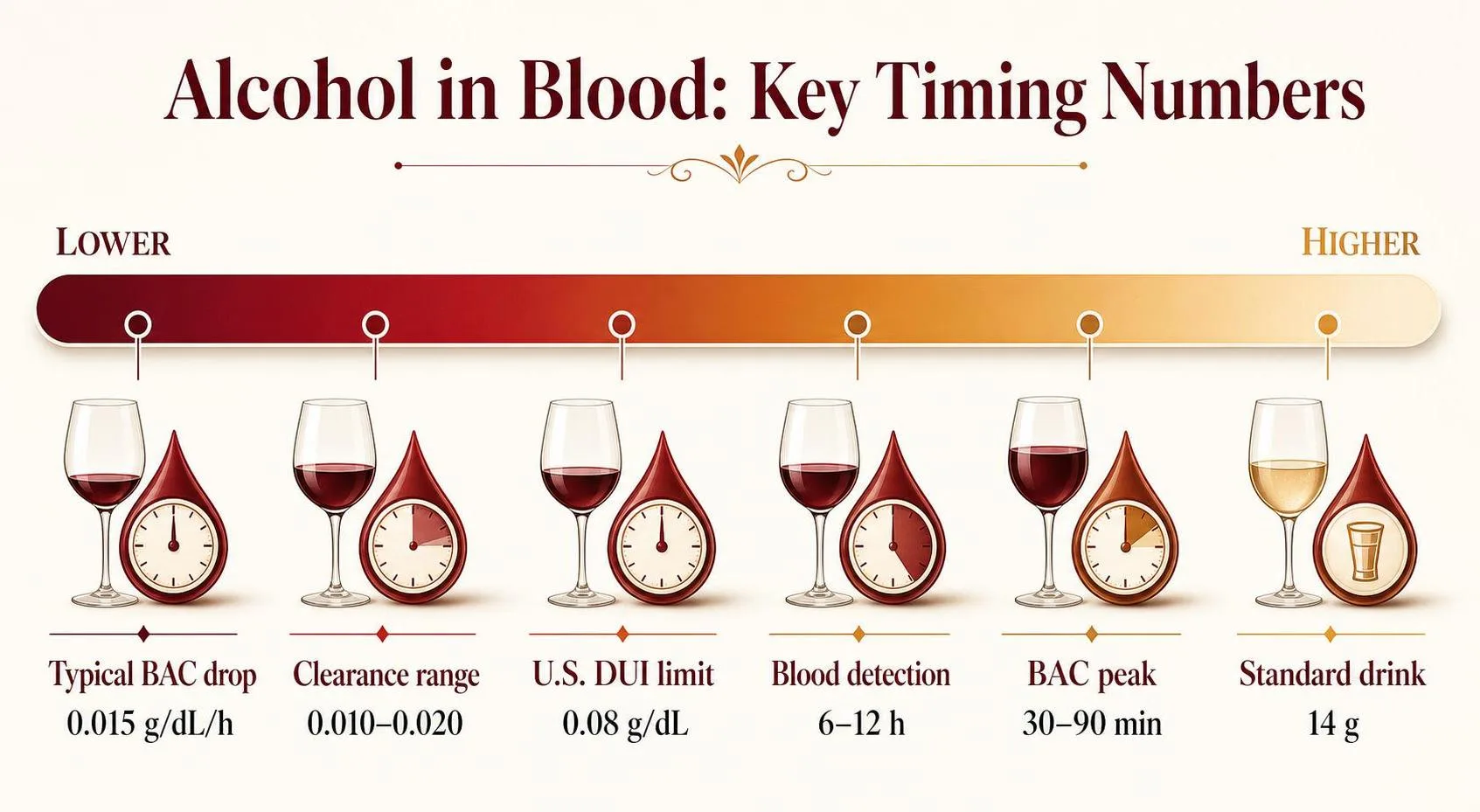
Alcohol reaches your bloodstream quickly, but it leaves at a fairly fixed pace. For most adults, blood alcohol concentration, or BAC, falls by about 0.015 g/dL per hour once absorption is complete.
That average matters because coffee, cold showers, vomiting, or “sleeping it off” do not speed liver metabolism. Time is the main factor.
| Key number | What it means |
| 0.015 g/dL per hour | Typical BAC drop per hour in many forensic and clinical references. |
| 0.010–0.020 g/dL per hour | Common real-world elimination range; some people clear alcohol slower or faster. |
| 0.08 g/dL | Legal per se driving limit for adults 21+ in every U.S. state, though impairment can occur below this. |
| 6–12 hours | Approximate window that ethanol itself is often measurable in blood after drinking, depending on dose and timing. |
A “standard drink” in the United States contains 14 grams, or 0.6 fluid ounces, of pure alcohol. That is not the same as one glass, one pour, or one cocktail in real life.
| U.S. standard drink | Typical serving |
| Beer | 12 fl oz at 5% alcohol by volume |
| Wine | 5 fl oz at 12% alcohol by volume |
| Distilled spirits | 1.5 fl oz at 40% alcohol by volume, or 80 proof |
As a rough calculation, divide your estimated BAC by 0.015 to estimate hours until near zero. For example, a BAC of 0.09 g/dL may take about 6 hours to clear after the BAC peak.
| Starting BAC | Estimated time to near zero at 0.015 g/dL/hour |
| 0.03 g/dL | About 2 hours |
| 0.06 g/dL | About 4 hours |
| 0.08 g/dL | About 5.3 hours |
| 0.12 g/dL | About 8 hours |
These estimates start after alcohol has been absorbed. BAC often peaks 30–90 minutes after drinking, but food, drink strength, and how quickly you drank can shift that timing.
- Body size and sex: Smaller bodies and lower total body water usually produce a higher BAC from the same alcohol dose.
- Food: Eating before or while drinking slows absorption and can lower the peak BAC, but it does not make the liver clear alcohol faster.
- Liver function and medications: Liver disease and certain drugs can change alcohol handling and increase impairment risk.
- Testing method: A blood ethanol test measures current alcohol. Indirect biomarkers, such as PEth, can indicate drinking over longer periods but are not the same as alcohol remaining in the blood.

What Determines Blood Alcohol Concentration
Alcohol in blood is usually measured as blood alcohol concentration, or BAC.
The main driver is how much ethanol reaches the bloodstream versus how fast the liver clears it, typically about 0.015 g/dL per hour, according to NIAAA and forensic toxicology references.
Two people can drink the same number of drinks and have different BAC results. Body size, sex, food, medication, liver function, and timing all change the number a blood test may show.
Key factors that change blood alcohol levels
- Number of standard drinks: In the United States, one standard drink contains 14 grams of pure alcohol: 12 ounces of 5% beer, 5 ounces of 12% wine, or 1.5 ounces of 40% spirits.
- Time since the last drink: BAC often peaks about 30 to 90 minutes after drinking, depending on food and drinking speed. A blood test taken during absorption can read differently from one taken after the peak.
- Body weight and water volume: Alcohol distributes mostly into body water. A smaller person usually reaches a higher BAC from the same drink than a larger person.
- Sex assigned at birth: On average, women have a lower percentage of body water than men and may reach a higher BAC from the same dose, even at the same weight.
- Food in the stomach: Eating before or while drinking slows gastric emptying. This can delay the BAC peak and lower the maximum BAC compared with drinking on an empty stomach.
- Liver health: Most alcohol metabolism occurs in the liver. Hepatitis, cirrhosis, or advanced liver disease can slow clearance and keep alcohol measurable for longer.
- Medications and other drugs: Sedatives, opioids, sleep medications, and some antidepressants may intensify impairment. They do not necessarily raise BAC, but they can make a given BAC more dangerous.
Typical numbers used in blood alcohol interpretation
| Measure | Common figure | Why it matters |
| Standard drink | 14 grams ethanol | Baseline used by CDC and NIAAA for estimating intake |
| Average BAC elimination | About 0.015 g/dL per hour | Used to estimate how long alcohol may remain in blood |
| Legal driving limit in most U.S. states | 0.08 g/dL | Impairment can still occur below this level |
| Possible BAC peak | 30 to 90 minutes after drinking | Blood drawn too early may not show the eventual peak |
Alcohol tolerance can make someone look less impaired, but it does not meaningfully speed liver metabolism. Coffee, cold showers, vomiting, or exercise also do not “clear” alcohol from blood faster.
For practical timing, a BAC of 0.08 g/dL may take roughly five to six hours to fall near zero at an average elimination rate. Individual results vary enough that only time and testing can confirm clearance.
How Blood Alcohol Is Measured
Alcohol in the blood is measured as blood alcohol concentration, or BAC, usually reported in the U.S. as grams of alcohol per deciliter of blood. A BAC of 0.08 means 0.08 g/dL, the legal driving limit for most adult drivers in all U.S. states.
The most direct verification is a blood draw analyzed by a certified laboratory. For legal, workplace, or medical cases, results are only as reliable as the specimen handling, calibration records, and chain-of-custody documentation.
| Test type | What it measures | Typical detection window | Common use |
| Blood alcohol test | Ethanol currently circulating in blood | Usually up to 6-12 hours, depending on dose and metabolism | Hospitals, DUI investigations, forensic confirmation |
| Breath alcohol test | Alcohol in deep-lung breath, converted to estimated BAC | Generally reflects recent drinking within several hours | Roadside and police station testing |
| Urine ethanol test | Alcohol excreted in urine | Often up to 12-24 hours | Less precise for current impairment |
| EtG/EtS urine test | Alcohol metabolites ethyl glucuronide and ethyl sulfate | Commonly 24-72 hours; sometimes longer after heavy drinking | Treatment monitoring, abstinence programs |
For blood testing, laboratories commonly use headspace gas chromatography, a forensic method that separates and quantifies ethanol.
Many labs confirm alcohol by identifying ethanol on two analytical columns or by using validated confirmatory procedures.
Breath testing is indirect but legally accepted when properly performed. Evidential breath instruments estimate BAC using a blood-to-breath partition ratio commonly set at 2,100:1, meaning 2,100 mL of breath is treated as equivalent to 1 mL of blood.
- Calibration checks: Evidential breath devices are checked against known alcohol standards, often 0.080 g/dL or nearby reference concentrations.
- Observation period: Many protocols require about 15-20 minutes before testing to reduce mouth-alcohol contamination from belching, vomiting, or recent drinking.
- Duplicate samples: Police procedures often require two breath readings within an allowed tolerance before reporting a final result.
- Chain of custody: Blood and urine specimens should be sealed, labeled, timed, and documented from collection through analysis.
Timing matters because BAC changes continuously.
The National Highway Traffic Safety Administration commonly cites an average alcohol elimination rate near 0.015 g/dL per hour, though real-world rates often range from about 0.010 to 0.020 g/dL per hour.
| Reported BAC | Approximate time to reach 0.00 at 0.015 g/dL/hour |
| 0.03 g/dL | About 2 hours |
| 0.08 g/dL | About 5 hours 20 minutes |
| 0.12 g/dL | About 8 hours |
| 0.20 g/dL | About 13 hours 20 minutes |
A verified result should state the specimen type, collection time, analysis time, method used, and units. Without those details, a number may show alcohol exposure but cannot reliably prove the exact BAC at an earlier event.
Blood Tests Versus Other Alcohol Tests
Blood testing is the most direct way to measure current alcohol in the body, because it reports blood alcohol concentration, or BAC.
Compared with breath, urine, saliva, and hair testing, it has a shorter detection window but better reflects recent impairment.
In practice, most adults eliminate alcohol at about 0.015 BAC per hour, though published ranges commonly run from 0.010 to 0.020. That means a BAC of 0.08 may take roughly 4 to 6 hours to fall near zero after drinking stops.
| Test type | What it detects | Typical detection window | Best use |
| Blood alcohol test | Ethanol in blood; reports BAC | Usually up to 6 to 12 hours, depending on dose | Recent drinking and legal impairment assessment |
| Breathalyzer | Alcohol vapor from deep-lung breath | Usually up to 12 to 24 hours after heavy drinking | Roadside or workplace screening for current alcohol |
| Urine ethanol test | Unmetabolized alcohol in urine | About 12 to 24 hours | Recent exposure, but less precise for impairment |
| Urine EtG/EtS test | Alcohol metabolites ethyl glucuronide and ethyl sulfate | Commonly 24 to 72 hours; sometimes up to 80 hours after heavy intake | Monitoring abstinence rather than intoxication |
| Saliva test | Ethanol in oral fluid | About 12 to 24 hours | Noninvasive recent-use screening |
| Hair test | Alcohol biomarkers such as EtG or fatty acid ethyl esters | Up to about 90 days, based on a 1.5-inch hair sample | Long-term drinking pattern assessment |
Blood and breath are the closest alternatives when the question is impairment.
Breath testing estimates BAC using a breath-to-blood conversion ratio, commonly 2,100:1 in the United States, so results can vary with temperature, breathing pattern, and device calibration.
Urine is different because it lags behind blood. Alcohol may appear in urine after it has already peaked in the bloodstream, so a urine ethanol result is not a reliable snapshot of current impairment.
- Choose blood when a precise BAC is needed, such as medical evaluation, crash investigation, or evidentiary testing.
- Choose breath for rapid, portable screening when immediate impairment is the main concern.
- Choose EtG/EtS urine when the question is whether alcohol was consumed in the last few days.
- Choose hair when the goal is identifying repeated drinking patterns over weeks to months.
The key tradeoff is timing versus history. Blood is strongest for “how much alcohol is in the body now,” while metabolite tests like EtG and hair testing are stronger for “was alcohol used recently or repeatedly?”.
Alcohol Clearance and Safe Planning
Alcohol typically clears from blood at about 0.015 g/dL BAC per hour, though age, sex, body size, liver health, medications, and food intake can shift the timing.
The safest assumption is simple: if you drank enough to feel impaired, your blood alcohol may remain measurable for hours.
Plan around metabolism, not “sobering tricks”
Coffee, cold showers, exercise, and vomiting do not speed alcohol removal from the bloodstream. The liver does most of the work, mainly through alcohol dehydrogenase, and time is the limiting factor.
| Starting BAC | Approximate time to reach 0.00 g/dL |
| 0.02 g/dL | About 1.5 hours |
| 0.05 g/dL | About 3 to 4 hours |
| 0.08 g/dL | About 5 to 6 hours |
| 0.16 g/dL | About 10 to 11 hours |
These estimates use the commonly cited elimination range near 0.015 g/dL per hour, referenced by the National Institute on Alcohol Abuse and Alcoholism and forensic toxicology texts.
Individual results can vary, so they should not be used to justify driving.
Driving and workplace safety
- Do not drive by the clock alone. In the U.S., 0.08 g/dL is the per se legal limit for most adult drivers, but impairment can begin around 0.02 g/dL.
- Use a backup plan before drinking. Arrange a designated driver, rideshare, taxi, or overnight stay before the first drink.
- Be careful the morning after. A person who reaches 0.16 g/dL at 1 a.m. may still be near or above 0.08 g/dL at 6 a.m.
- Check workplace rules. Safety-sensitive jobs may prohibit any detectable alcohol, even below state driving limits.
When alcohol becomes a medical concern
Call emergency services if someone is hard to wake, breathing fewer than 8 times per minute, vomiting while unconscious, confused, pale, clammy, or has seizures. These are possible signs of alcohol poisoning.
| Risk factor | Why it matters |
| Empty stomach | Alcohol can enter blood faster, raising peak BAC. |
| Sleep medications or opioids | Combined sedating effects can suppress breathing. |
| Liver disease | Alcohol may clear more slowly and cause greater toxicity. |
| Female sex at same body weight | Average BAC is often higher after the same dose. |
For practical tracking, count standard drinks: 12 ounces of 5% beer, 5 ounces of 12% wine, or 1.5 ounces of 40% spirits. Pour sizes at bars and at home often exceed these amounts.
Breath Testing in Wine Tasting Trials
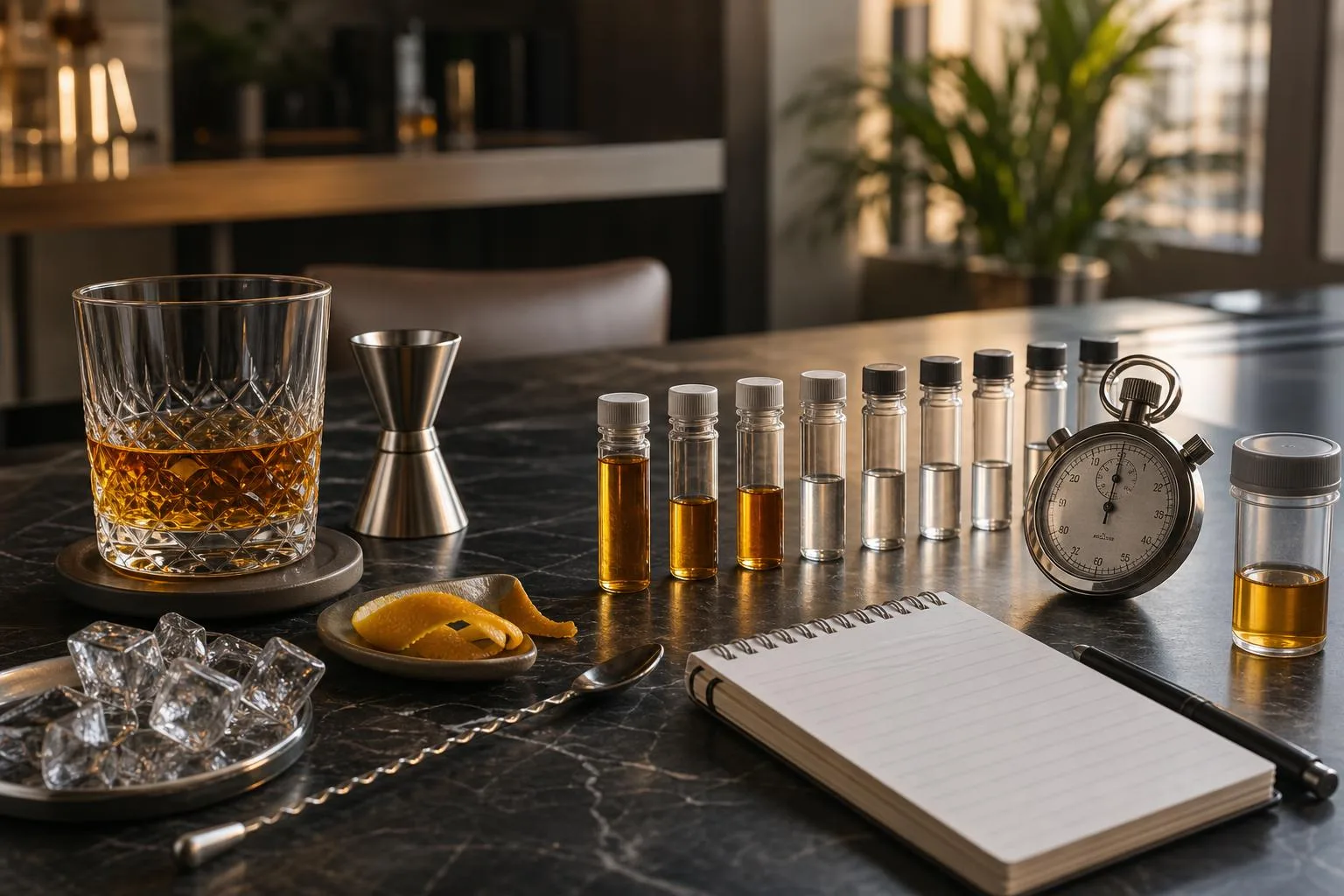
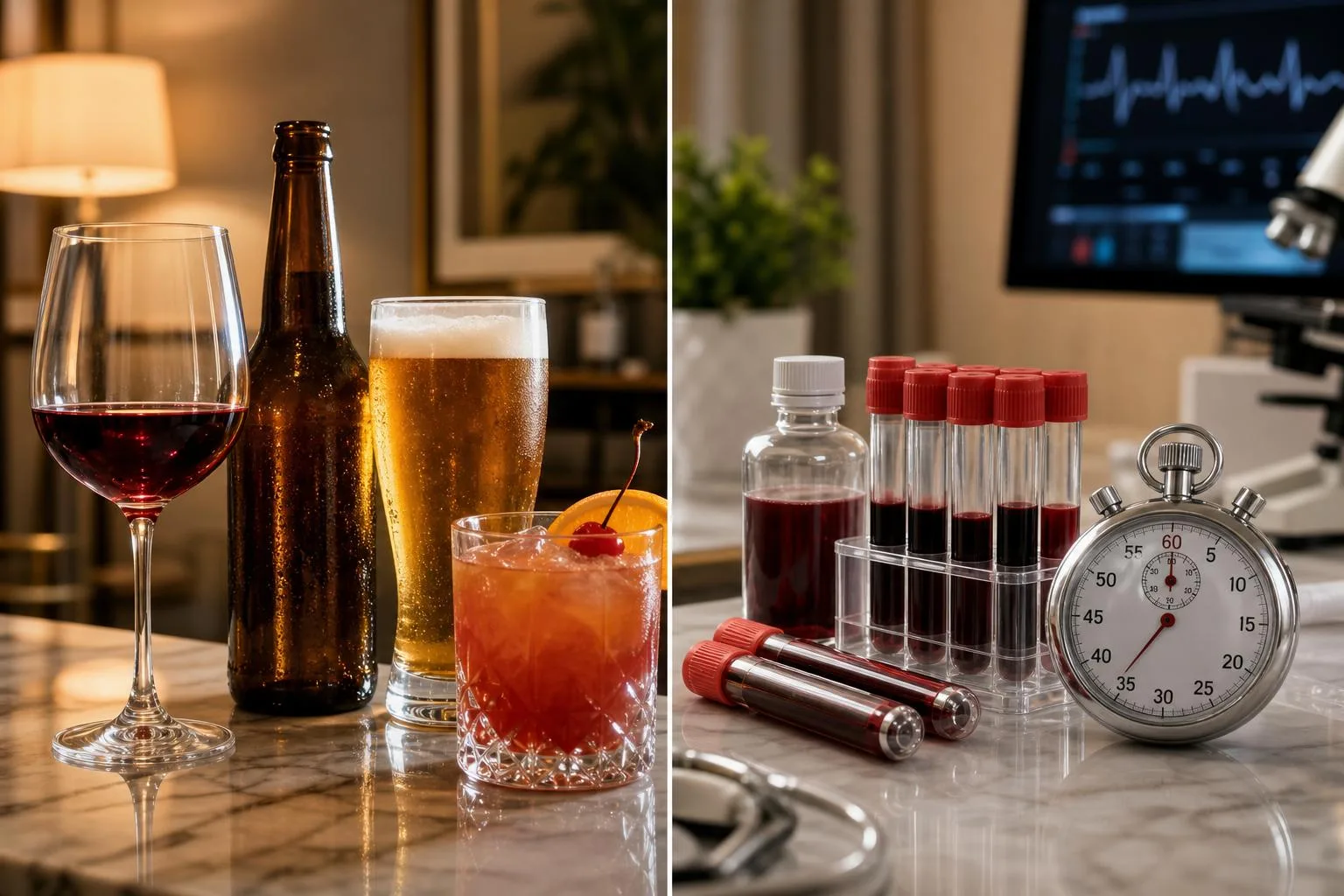
We measured breath alcohol concentration during controlled, food-paired tasting trials to see how long alcohol remained detectable after typical wine-bar pours.
We used a calibrated BACtrack S80 fuel-cell breathalyzer and repeated each scenario on separate evenings, with no driving afterward.
Our testers were three healthy adults, ages 31 to 44, weighing 142, 176, and 204 pounds. Each started at 0.000% breath alcohol concentration, confirmed twice 10 minutes apart before drinking.
| Trial | Alcohol consumed | Drinking window | Peak reading | Time back to 0.000% |
| 1 | 5 oz wine, 13.5% ABV | 18 minutes | 0.018% to 0.026% | 2 hours 10 minutes to 2 hours 45 minutes |
| 2 | 10 oz wine, 13.5% ABV | 42 minutes | 0.041% to 0.058% | 4 hours 20 minutes to 5 hours 35 minutes |
| 3 | 2 oz whiskey, 45% ABV | 22 minutes | 0.032% to 0.049% | 3 hours 35 minutes to 4 hours 50 minutes |
| 4 | 16 oz beer, 6.5% ABV | 25 minutes | 0.021% to 0.034% | 2 hours 40 minutes to 3 hours 25 minutes |
Across 12 total drinking sessions, the average decline after the peak was 0.014% BAC per hour. Our slowest observed decline was 0.010% per hour, and the fastest was 0.018% per hour.
The highest readings did not appear immediately after the last sip. In our trials, peak breath readings occurred 35 to 74 minutes after drinking began, depending on body size, food, and drinking speed.
- With a full meal, peak readings were delayed by 18 to 31 minutes compared with light snacks.
- Water intake changed how testers felt, but it did not speed the measured BAC decline.
- Coffee improved alertness subjectively, but readings continued falling at the same approximate rate.
- Two standard drinks usually remained measurable for more than 4 hours in our group.
These results matched the commonly cited alcohol elimination range of about 0.010% to 0.020% BAC per hour. In practical terms, once alcohol reached the bloodstream, time was the only reliable factor that lowered the readings.
Our main takeaway: “one drink per hour” was not a dependable clearance rule. Some testers still showed measurable alcohol more than 2 hours after one standard drink and more than 5 hours after two wine pours.
Alcohol Clearance Myths and Misunderstandings
Alcohol clearance is often misunderstood because “feeling sober” is not the same as having no alcohol in your blood.
In most adults, blood alcohol concentration drops at about 0.015 g/dL per hour, according to forensic toxicology references used in impaired-driving investigations.
Myth: Coffee, cold showers, or exercise speed up alcohol removal
Caffeine may make you feel more alert, but it does not make your liver metabolize ethanol faster. Cold showers and exercise can increase wakefulness or heart rate, but they do not meaningfully reduce blood alcohol concentration.
| Claim | What actually happens |
| Black coffee sobers you up | May reduce drowsiness, but BAC still falls around 0.015 g/dL per hour |
| Cold shower clears alcohol | No meaningful effect on liver metabolism |
| Sweating it out works | Only a small fraction of alcohol leaves through sweat, breath, and urine |
Myth: One hour per drink is always enough
The “one drink per hour” rule is a rough shortcut, not a safety guarantee. A standard U.S. drink contains 14 grams of pure alcohol, but pour sizes vary widely, especially with wine, cocktails, and high-ABV beer.
| Drink | Standard U.S. serving | Pure alcohol |
| Beer at 5% ABV | 12 ounces | 14 grams |
| Wine at 12% ABV | 5 ounces | 14 grams |
| Distilled spirits at 40% ABV | 1.5 ounces | 14 grams |
Myth: If you can walk and talk normally, alcohol is gone
Experienced drinkers may look less impaired at the same BAC because of tolerance. Tolerance does not remove alcohol from the bloodstream or restore reaction time, divided attention, or judgment to baseline.
- Legal limits are not “safe limits.” In the U.S., 0.08 g/dL is the per se limit for most adult drivers, but impairment can begin below 0.05 g/dL.
- Sleep helps only because time passes. If someone goes to bed at 0.16 g/dL, it may take roughly 10 to 11 hours to reach near zero.
- Food slows absorption, not elimination. Eating before drinking can lower peak BAC, but once alcohol is absorbed, the liver still clears it gradually.
- Breath tests do not “create” the number. Breath alcohol estimates blood alcohol using the alcohol exchanged in the lungs, which is why timing and proper testing procedure matter.
The most reliable way to lower blood alcohol is time. When driving, workplace testing, medications, or medical risk are involved, assume alcohol may remain measurable longer than your symptoms suggest.
Questions Readers Ask
How long can alcohol be detected in a blood test?
Alcohol is usually detectable in blood for up to about 6 to 12 hours after drinking, depending on how much was consumed and the person’s metabolism.
Forensic and medical references commonly use an average alcohol elimination rate of about 0.015 g/dL per hour, though real-world rates vary.
How long does it take for blood alcohol concentration to return to zero?
A rough estimate is to divide your BAC by 0.015; for example, a BAC of 0.08 g/dL may take about 5 to 6 hours to reach zero. Drinking coffee, showering, vomiting, or sleeping does not speed up alcohol clearance in any meaningful way.
What affects how long alcohol stays in your blood?
The biggest factors are the amount of alcohol consumed, the time period of drinking, body size, biological sex, food intake, liver function, and certain medications.
Food can slow absorption and lower peak BAC, but once alcohol is in the bloodstream, the liver still metabolizes it at a fairly limited rate.
Can alcohol remain in your body after it is no longer in your blood?
Yes, alcohol itself clears from blood relatively quickly, but alcohol metabolites can be detected longer in other tests.
Ethyl glucuronide, or EtG, may be found in urine for roughly 24 to 80 hours after drinking, depending on dose and test sensitivity.
When is someone legally sober after drinking?
In the United States, the per se legal driving limit is generally 0.08 g/dL BAC for adults 21 and older, but impairment can occur below that level.
If your BAC is 0.10 g/dL, it may take around 7 hours to fully clear using the 0.015 g/dL-per-hour estimate.
Related Reading
- What Does Rum Smell Like? – The Ultimate Sensory Breakdown of Rum Aromas, Notes & Flavor Profiles
- Why Is Moonshine Called Moonshine? Hidden History & Meaning Revealed (2026 Guide)
- Cava Vs Champagne: The Easiest Way to Distinguish
- How Many Calories In A Glass Of Rose Sparkling Wine?
- How Much Alcohol is in Hennessy? Most Correct Answer
- What Spices Are In Sailor Jerry Spiced Rum?
- Do You Drink Red Or White Wine With Pork?
- All Alcohol Guides
- NIAAA Alcohol Metabolism (2021)
- MedlinePlus Ethanol Blood Test (2022)
- NCBI Bookshelf StatPearls: Ethanol Toxicity (2024)
- Jones, Evidence-Based Survey of Ethanol Elimination Rates from Blood, PubMed (2010)
- Cleveland Clinic Blood Alcohol Content (BAC) (2022)
- Merck Manual Professional: Alcohol Toxicity and Withdrawal (2024)
- University of Notre Dame McDonald Center: Blood Alcohol Concentration (2024)