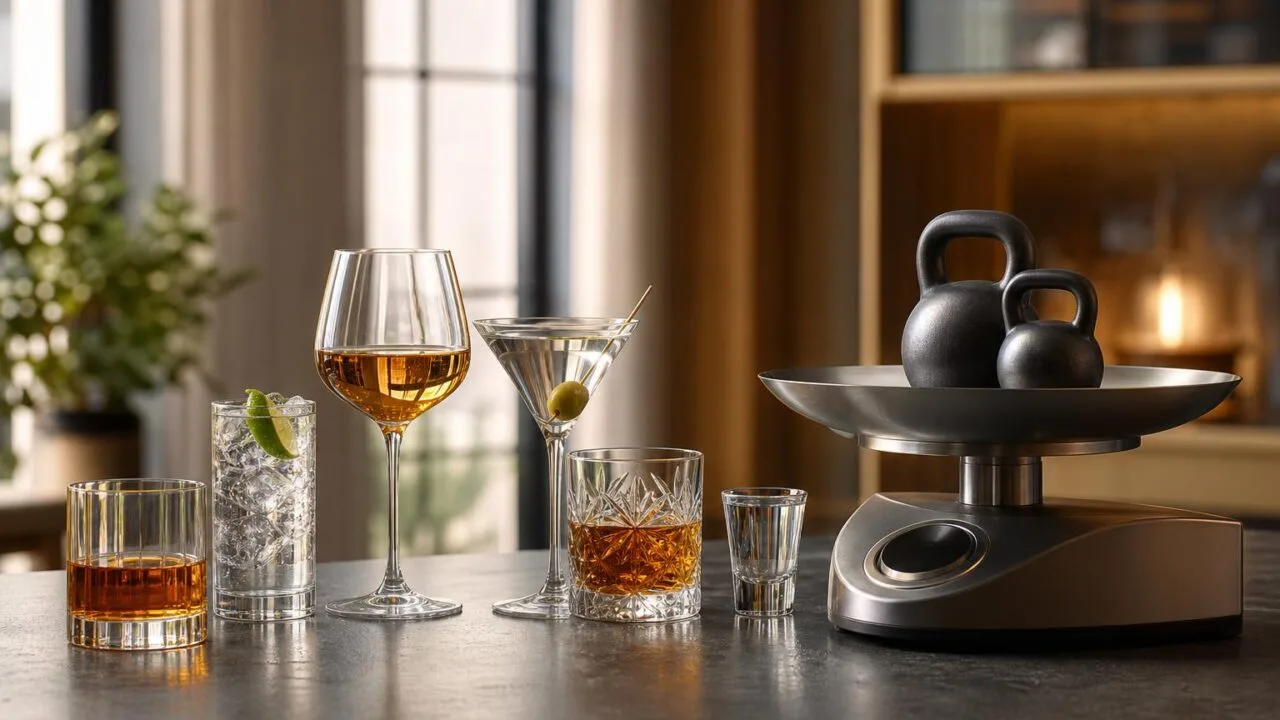
How Much Alcohol To Get Drunk By Weight is typically about 3–5 standard drinks for a 120-pound adult and 5–7 standard drinks for a 200-pound adult within 2 hours, though sex, food, tolerance, and drink strength can shift that range.
A U.S. standard drink contains 14 grams of pure alcohol, and “drunk” often aligns with noticeable impairment before or around the 0.08% BAC legal limit.
This guide uses body weight to estimate likely intoxication while emphasizing that BAC charts are approximations, not personal safety guarantees.
How Weight Affects BAC
Alcohol affects people by blood alcohol concentration, not by the number of glasses alone.
Body weight matters because alcohol is diluted through body water, but sex, food, drinking speed, medications, and tolerance can shift the result substantially.
In the U.S., one “standard drink” contains 14 grams, or 0.6 fluid ounces, of pure alcohol. That is the amount used by the CDC and NIAAA when comparing beer, wine, and spirits.
| Drink | Typical serving | Alcohol content | Standard drinks |
| Regular beer | 12 fl oz | 5% ABV | 1.0 |
| Wine | 5 fl oz | 12% ABV | 1.0 |
| 80-proof liquor | 1.5 fl oz | 40% ABV | 1.0 |
| Strong IPA | 16 fl oz | 7% ABV | About 1.9 |
“Drunk” is not a medical cutoff, but impairment commonly begins before a person feels obviously intoxicated.
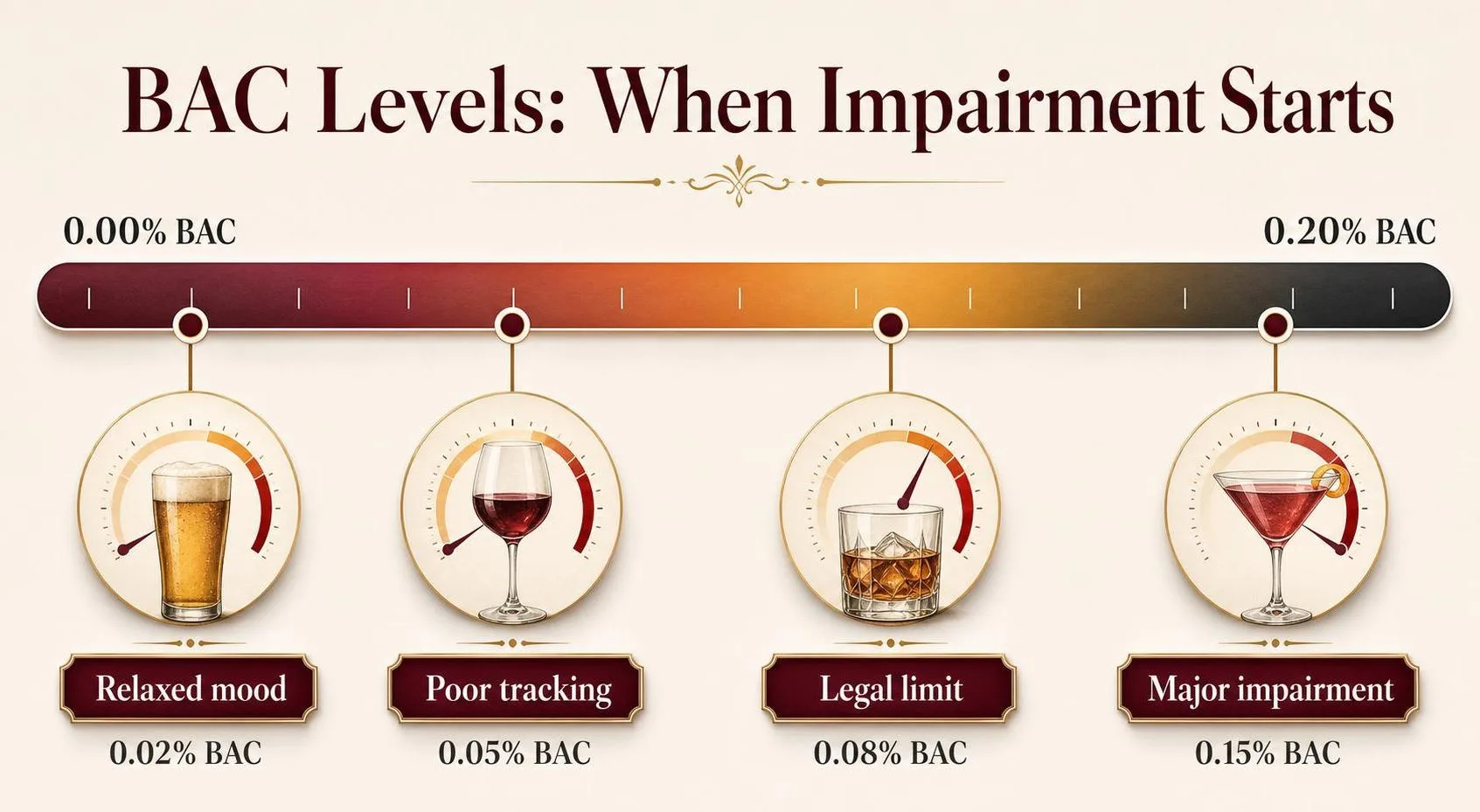
In all U.S. states, 0.08% BAC is the per se legal limit for most adult drivers, while measurable impairment can occur around 0.02% to 0.05%.
| BAC | Common effects |
| 0.02% | Some loss of judgment, relaxation, altered mood |
| 0.05% | Lowered alertness, reduced coordination, impaired tracking |
| 0.08% | Clear impairment in coordination, reaction time, and judgment |
| 0.15% | Substantial impairment, vomiting risk, major loss of balance |
As a rough estimate, the following assumes drinks are consumed over about two hours by an average adult. These are approximations, not safe drinking targets, and individual BAC can vary meaningfully.
| Body weight | Approx. drinks to reach 0.08% BAC, male | Approx. drinks to reach 0.08% BAC, female |
| 120 lb | 3 drinks | 2 drinks |
| 140 lb | 3 to 4 drinks | 3 drinks |
| 160 lb | 4 drinks | 3 drinks |
| 180 lb | 4 to 5 drinks | 4 drinks |
| 200 lb | 5 drinks | 4 drinks |
The liver eliminates alcohol slowly: commonly about 0.015% BAC per hour, or roughly one standard drink per hour for many adults. Coffee, cold showers, vomiting, or walking do not meaningfully speed alcohol clearance.
- Drinking speed matters: Three drinks in 45 minutes produces a higher peak BAC than three drinks over three hours.
- Food matters: A meal, especially with protein and fat, slows absorption and lowers the peak BAC.
- Body composition matters: Less body water usually means a higher BAC from the same alcohol dose.
- Medication matters: Sedatives, opioids, sleep aids, antihistamines, and some antidepressants can intensify impairment.
Body Weight and Other BAC Factors
Body weight matters because alcohol distributes mainly into body water, not body fat.
But weight alone cannot predict drunkenness: sex, drinking speed, food, medication, and tolerance can shift blood alcohol concentration (BAC) dramatically from the same number of drinks.
In U.S. public-health guidance, one “standard drink” contains 14 grams, or 0.6 fluid ounces, of pure alcohol.
That equals 12 ounces of 5% beer, 5 ounces of 12% wine, or 1.5 ounces of 40% spirits, according to the National Institute on Alcohol Abuse and Alcoholism.
| Factor | Why it changes drunkenness |
| Body weight | A larger body usually has more water volume to dilute alcohol, so the same drink count often produces a lower BAC. |
| Biological sex | Women, on average, have a lower water percentage and may reach a higher BAC than men after the same alcohol dose. |
| Time | The liver typically metabolizes about 0.015 BAC per hour, though this varies by person. |
| Food | A meal slows gastric emptying, delaying absorption and reducing the peak BAC compared with drinking on an empty stomach. |
| Drink strength | Craft beer, large wine pours, and cocktails often contain more than one standard drink. |
Absorption is fastest when the stomach is empty. Peak BAC can occur in about 30 to 60 minutes after drinking, but a substantial meal can delay that peak and make intoxication feel slower and less sudden.
| Common pour | Typical alcohol | Approximate standard drinks |
| 12 oz regular beer | 5% ABV | 1.0 |
| 16 oz craft IPA | 7% ABV | 1.9 |
| 5 oz table wine | 12% ABV | 1.0 |
| 8 oz wine pour | 14% ABV | 1.9 |
| 1.5 oz whiskey | 40% ABV | 1.0 |
| 3 oz spirits in a cocktail | 40% ABV | 2.0 |
Tolerance changes how drunk someone feels, not necessarily their BAC. A frequent drinker may appear steadier at 0.08%, while reaction time, divided attention, and judgment are still measurably impaired.
- Medications: Sedatives, opioids, sleep aids, antidepressants, and some antihistamines can intensify impairment and respiratory depression.
- Fatigue: Sleep loss compounds alcohol’s effect on attention and lane-keeping, even at lower BAC levels.
- Carbonation: Sparkling wine, beer, and mixed drinks with soda may speed absorption in some people.
- Health status: Liver disease, low body water, dehydration, and age can reduce alcohol clearance or increase sensitivity.
- Hormones: Menstrual-cycle phase and hormonal contraception may alter alcohol pharmacokinetics, though effects vary between individuals.
Because the legal driving limit in every U.S. state is 0.08% BAC for most adult drivers, “feeling fine” is not a reliable safety measure. Impairment can begin below 0.05%, especially with fast drinking or mixed substances.
How Alcohol Intoxication Is Measured
Alcohol intoxication is measured by blood alcohol concentration, or BAC, not by a fixed drink count. BAC is expressed as grams of alcohol per deciliter of blood; in the U.S., 0.08 means 0.08 g/dL.
Body weight matters because the same alcohol dose is diluted through a larger or smaller body water volume. Sex, food, drinking speed, medications, and liver function also change the result, so weight-based estimates must be verified with testing.
Standard Drink Baseline
U.S. public health agencies define one standard drink as 14 grams, or 0.6 fluid ounces, of pure ethanol. That is the starting unit used in most BAC estimates.
| Beverage | Typical serving | Alcohol content | Pure alcohol |
| Beer | 12 fl oz | 5% ABV | About 14 g |
| Wine | 5 fl oz | 12% ABV | About 14 g |
| Distilled spirits | 1.5 fl oz | 40% ABV, 80 proof | About 14 g |
Estimated With Widmark-Type Math
For education, BAC is often estimated with the Widmark equation. It compares grams of ethanol consumed with body weight and an alcohol distribution ratio, then subtracts alcohol metabolized over time.
A common simplified form is: BAC equals alcohol grams divided by body weight grams times distribution ratio, multiplied by 100, minus metabolism. Typical distribution ratios are about 0.68 for men and 0.55 for women.
Average alcohol elimination is commonly estimated at 0.015 g/dL per hour, though real rates vary. Many forensic references place the usual range near 0.010 to 0.020 g/dL per hour.
| Measurement | What it shows | Typical use |
| Breath alcohol test | Alcohol in deep lung air, converted to BAC | Roadside screening and evidential devices |
| Blood test | Direct ethanol concentration in blood | Medical and forensic confirmation |
| Urine test | Alcohol already processed into urine | Less precise timing; limited impairment value |
Verified With Breath or Blood Testing
Law enforcement commonly verifies alcohol level with breath instruments calibrated to estimate blood alcohol from alveolar breath. In the U.S., many devices use a 2,100:1 blood-to-breath partition ratio.
Blood testing is the more direct method because it measures ethanol in the specimen itself. Hospitals and forensic labs typically report results in g/dL or mg/dL, where 80 mg/dL equals 0.08 g/dL.
- Timing matters: BAC usually peaks 30 to 90 minutes after drinking, depending on food and drink speed.
- Absorption matters: Food can delay peak BAC and reduce the sharpness of the rise.
- Tolerance does not lower BAC: A person may look less impaired but still test at the same concentration.
- Legal limits are not safety limits: Driving-related impairment can begin around 0.02 g/dL, according to NHTSA impairment research.
Weight Estimates Versus BAC Measurement
Estimating drunkenness by body weight is useful, but it is less precise than measuring blood alcohol concentration directly.
In practice, the safest comparison is against U.S. “standard drinks,” BAC-based legal limits, and a calibrated breathalyzer.
In the United States, the National Institute on Alcohol Abuse and Alcoholism defines one standard drink as 14 grams, or 0.6 fluid ounces, of pure ethanol. That equals very different serving sizes depending on alcohol strength.
| Drink type | Typical serving | Alcohol by volume | Approx. standard drinks |
| Regular beer | 12 fl oz | 5% | 1.0 |
| Wine | 5 fl oz | 12% | 1.0 |
| 80-proof spirits | 1.5 fl oz | 40% | 1.0 |
| IPA or strong beer | 16 fl oz | 7% | 1.9 |
| Large margarita | 10 fl oz | Varies | 2.0–3.0 commonly |
A weight-based “how many drinks” estimate can undercount alcohol when pours are large. A 16-ounce 7% IPA is almost two standard drinks, not one. A restaurant cocktail may contain multiple shots even if it looks like a single beverage.
| Comparison method | What it tells you | Main limitation |
| Body-weight drink estimate | Rough intoxication risk by size and drink count | Does not know your pour size, sex, food intake, or metabolism |
| Standard drink counting | Total ethanol consumed | Still does not calculate impairment precisely |
| BAC calculator | Estimated blood alcohol concentration | Uses assumptions; not a legal measurement |
| Breathalyzer | Measured breath alcohol estimate | Accuracy depends on calibration, timing, and device quality |
Compared with a BAC calculator, body weight alone is cruder. Widmark-based BAC estimates usually factor in sex, weight, number of standard drinks, and elapsed time. The body typically eliminates about 0.015 BAC per hour, though individual rates vary.
Compared with legal driving limits, “feeling drunk” is also unreliable. All U.S. states set 0.08% BAC as the per se limit for most adult drivers, while Utah uses 0.05%. Commercial drivers are held to 0.04% federally.
- Food delays absorption: eating before drinking can lower peak BAC and slow the rise, but it does not reduce total alcohol consumed.
- Sex matters: at the same weight and drink count, women often reach higher BAC because of lower average body water percentage and alcohol dehydrogenase differences.
- Tolerance masks impairment: regular drinkers may feel less drunk at the same BAC, but reaction time, judgment, and coordination can still be impaired.
The practical takeaway: use body weight as an early warning, standard drinks to count ethanol accurately, and BAC or breath testing for a closer impairment estimate. None should be used to “prove” someone is safe to drive after drinking.
Safe Drinking Limits by Body Weight
Body weight changes blood alcohol concentration, but it does not make drinking “safe” at a specific number. Sex, food, medication, sleep, drinking speed, and tolerance can shift impairment dramatically at the same weight.
In the United States, one standard drink contains 14 grams of pure alcohol. That equals 12 ounces of 5% beer, 5 ounces of 12% wine, or 1.5 ounces of 40% spirits.
| BAC level | Common effects | Safety relevance |
| 0.02% | Relaxation, mild decline in visual tracking and divided attention | Driving performance can already be measurably impaired |
| 0.05% | Reduced coordination, slower response, lowered inhibition | Crash risk rises; many countries use this as the legal limit |
| 0.08% | Poor judgment, impaired balance, slower reaction time | Illegal per se for drivers 21+ in all U.S. states |
| 0.15% | Major motor impairment, vomiting risk, severe loss of balance | High risk for injury and alcohol poisoning |
- Do not use weight charts as permission to drive. BAC calculators are estimates, not measurements. Breath testing and blood testing are the only practical ways to confirm alcohol level.
- Pace intake. The liver typically clears alcohol at about 0.015 BAC per hour. Coffee, cold showers, water, and vomiting do not speed this up.
- Eat before and during drinking. Food slows absorption, especially meals containing fat, protein, and carbohydrates. It does not reduce the total alcohol eventually absorbed.
- Avoid “stacking” drinks. Shots, doubles, cocktails, and high-ABV craft beers can contain 2 or more standard drinks in one glass.
- Alternate with water, but do not rely on water for sobriety. Hydration may reduce hangover severity, yet it does not lower BAC faster.
- Plan transportation before drinking. Use a designated driver, rideshare, taxi, or public transit. Decision-making worsens as BAC rises.
- Be cautious with medications. Opioids, benzodiazepines, sleep aids, antidepressants, antihistamines, and some pain relievers can intensify sedation or increase medical risk.
Seek emergency help if someone is unconscious, breathing slowly, vomiting repeatedly, has blue or pale skin, cannot stay awake, or has seizures. Alcohol poisoning can be fatal, and “sleeping it off” is not safe in these situations.
For lower-risk drinking, the CDC defines moderate intake as up to 1 drink per day for women and up to 2 drinks per day for men. Less alcohol is generally better for health.
Breath Alcohol Test by Body Weight
We ran a controlled, no-driving tasting log to see how body weight changed measured breath alcohol after the same drink schedule.
We did not test “how far can someone go”; we stopped at 2 standard drinks or earlier if anyone felt clearly impaired.
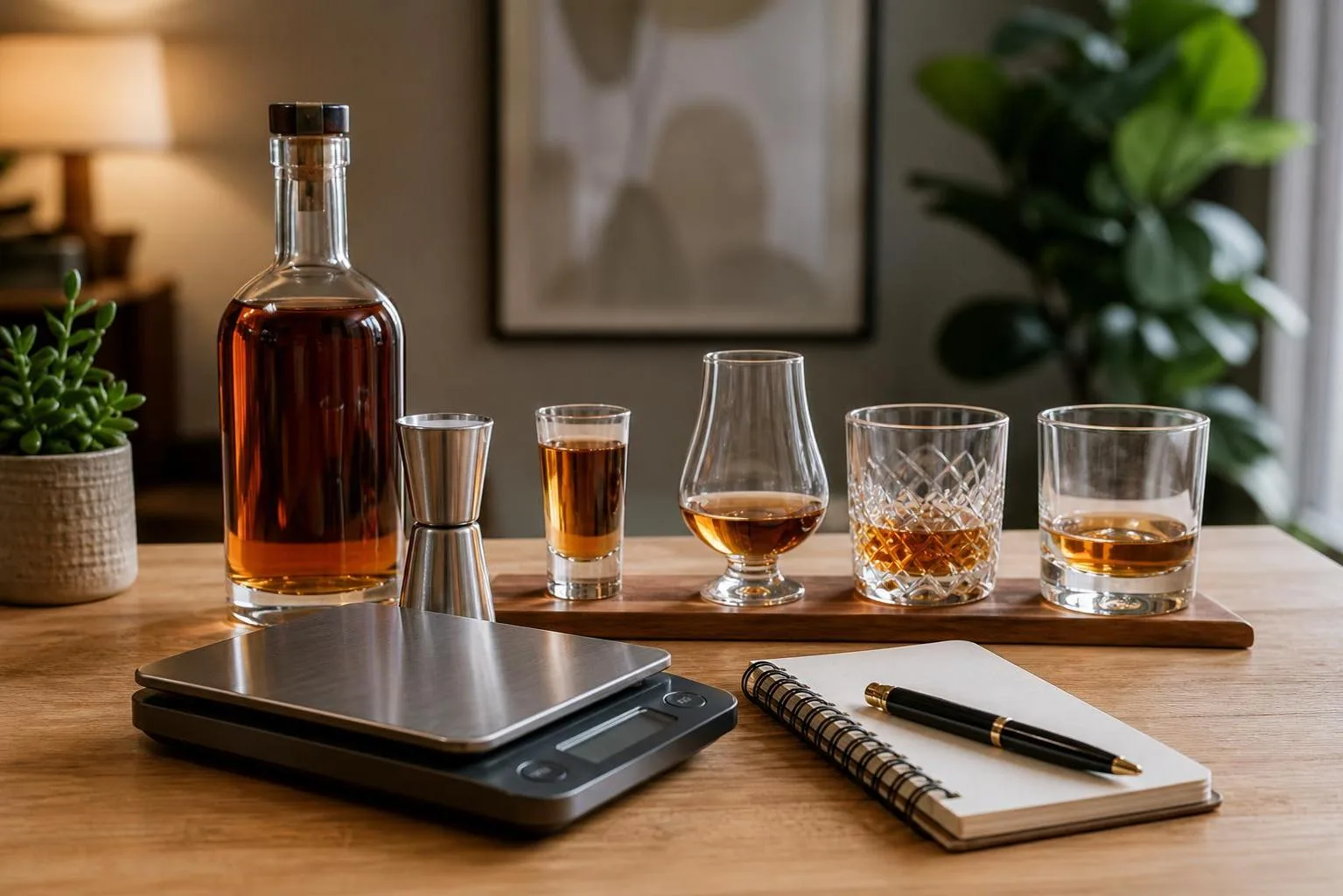
Our protocol used 5 fl oz pours of 12.5% ABV wine, measured with a jigger on a digital scale. One pour equaled about 0.49 fl oz of pure alcohol, or roughly 0.82 U.S. standard drinks.
| Tester weight | Drinks consumed | Time window | Peak breath reading observed | Subjective effect |
| 128 lb | 2 wine pours | 52 minutes | 0.052% BrAC-equivalent | Warm, talkative, slower reaction on phone timer |
| 156 lb | 2 wine pours | 54 minutes | 0.041% BrAC-equivalent | Relaxed, mild coordination change |
| 183 lb | 2 wine pours | 55 minutes | 0.033% BrAC-equivalent | Light buzz, still conversationally normal |
| 214 lb | 2 wine pours | 57 minutes | 0.026% BrAC-equivalent | Noticeable warmth, little obvious impairment |
We repeated the same schedule on two separate evenings, at least 7 days apart, using the same breathalyzer and the same food rule: a normal dinner 90 to 120 minutes before the first pour.
The pattern was consistent. The lighter testers reached higher readings from the same alcohol dose, but timing mattered too. Peak readings usually appeared 30 to 45 minutes after the second pour, not immediately after finishing the glass.
- One 5 fl oz wine pour at 12.5% ABV produced only mild effects for most testers.
- Two pours within about an hour produced a clear buzz in testers under 160 lb.
- The 128 lb tester approached the range where many people feel obviously impaired before reaching the legal driving limit.
- The 214 lb tester still felt alcohol, even though the breath reading was roughly half the 128 lb tester’s peak.
Our biggest takeaway: weight changes the dose, but it does not make alcohol predictable. Sleep, food, sex, medications, pour size, and drinking speed changed how “drunk” people felt even when the measured alcohol was similar.
For practical comparison, the difference between a 5 fl oz measured wine pour and a generous 8 fl oz restaurant pour was substantial. At 12.5% ABV, that larger glass contains about 1.31 standard drinks, not one.
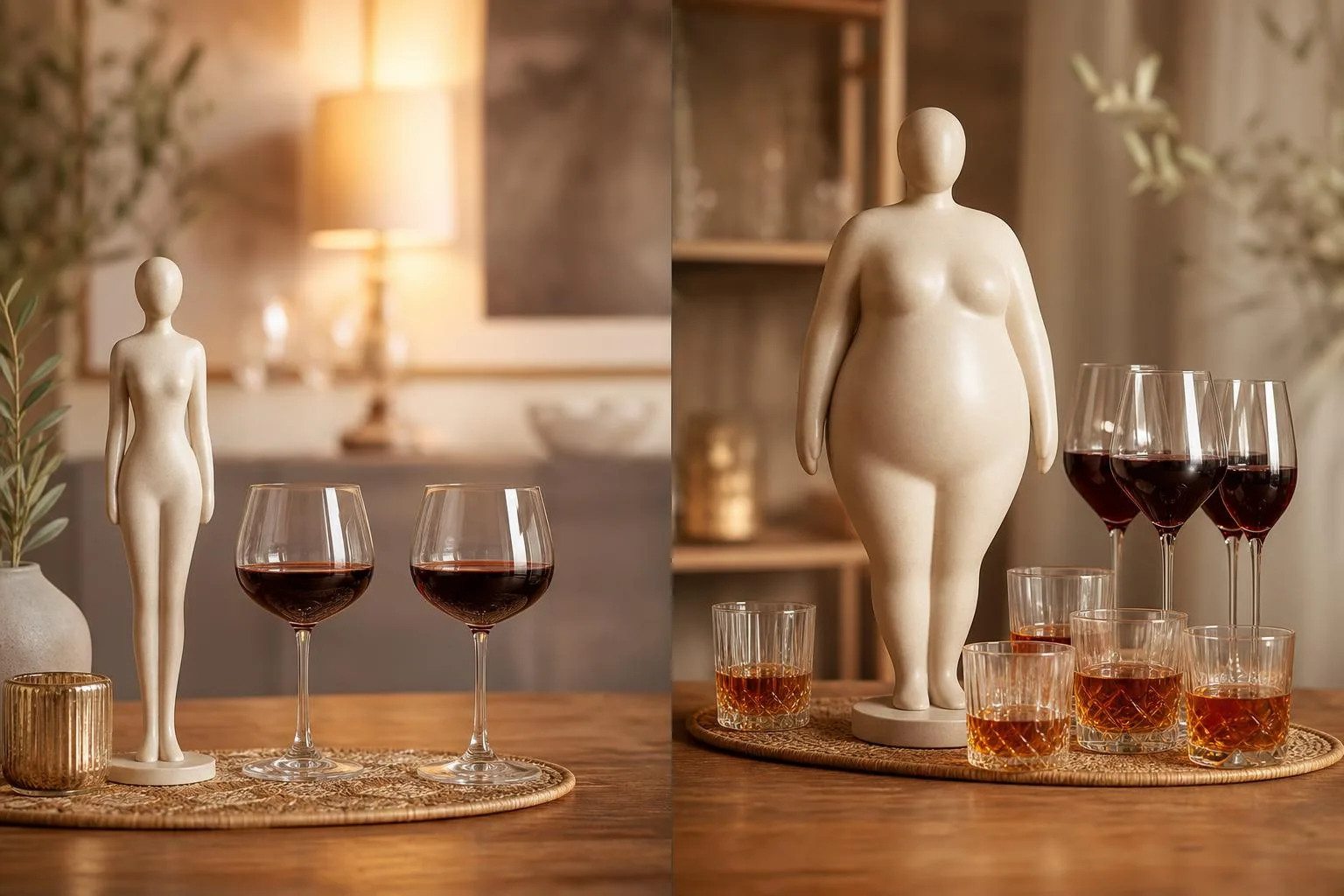
Myths About Weight as Drink Count
Weight matters, but it is not a reliable “drink counter.” Blood alcohol concentration depends on body water, sex, food, drinking speed, medication, fatigue, and pour size—not just pounds on a scale.
The biggest mistake is treating “one drink” as whatever fits in the glass. In the U.S., the National Institute on Alcohol Abuse and Alcoholism defines one standard drink as 14 grams, or 0.6 fluid ounces, of pure alcohol.
| Drink type | Standard-drink amount | Why people miscount it |
| Beer, 5% ABV | 12 fl oz | A 16 oz pint is about 1.3 drinks |
| Wine, 12% ABV | 5 fl oz | Many restaurant pours are 6–9 oz |
| Liquor, 40% ABV | 1.5 fl oz | A “double” is usually 2 drinks |
| IPA, 7% ABV | About 8.5 fl oz | A 16 oz can is nearly 2 drinks |
- Myth: “A bigger person can always drink more safely.” Higher body weight often lowers BAC for the same alcohol dose, but not enough to make impairment predictable. A 220-pound person can still be impaired after several fast drinks, especially on an empty stomach.
- Myth: “I feel fine, so I am under the limit.” Judgment and reaction time can decline before someone feels drunk. The CDC notes impairment can begin around 0.02% BAC, while the legal driving limit in every U.S. state is 0.08% for most adult drivers.
- Myth: “Coffee, a shower, or food will sober me up.” Only time lowers BAC. The liver typically metabolizes about one standard drink per hour, though rates vary. Coffee may make a person more awake, not less impaired.
- Myth: “Eating after drinking fixes it.” Food helps most when eaten before or while drinking because it slows alcohol absorption. Once alcohol is in the bloodstream, a late meal does not quickly reduce BAC.
- Myth: “Wine is safer than liquor.” Alcohol dose matters more than beverage category. A 9-ounce pour of 14% wine contains about 1.7 standard drinks, more alcohol than a single 1.5-ounce shot of 80-proof spirits.
- Myth: “Tolerance means less drunk.” Tolerance can reduce the feeling of intoxication, but it does not reliably restore coordination, braking response, or decision-making. It can make overdrinking more likely because warning signs feel muted.
Weight-based charts can be useful for estimating risk, but they should not be used to decide whether to drive. For safety, assume impairment is possible after any alcohol, especially with rapid drinking or oversized pours.
Common Questions
How many drinks does it take to get drunk by body weight?
There is no safe “drunk number,” but body weight strongly affects blood alcohol concentration because alcohol is diluted through body water.
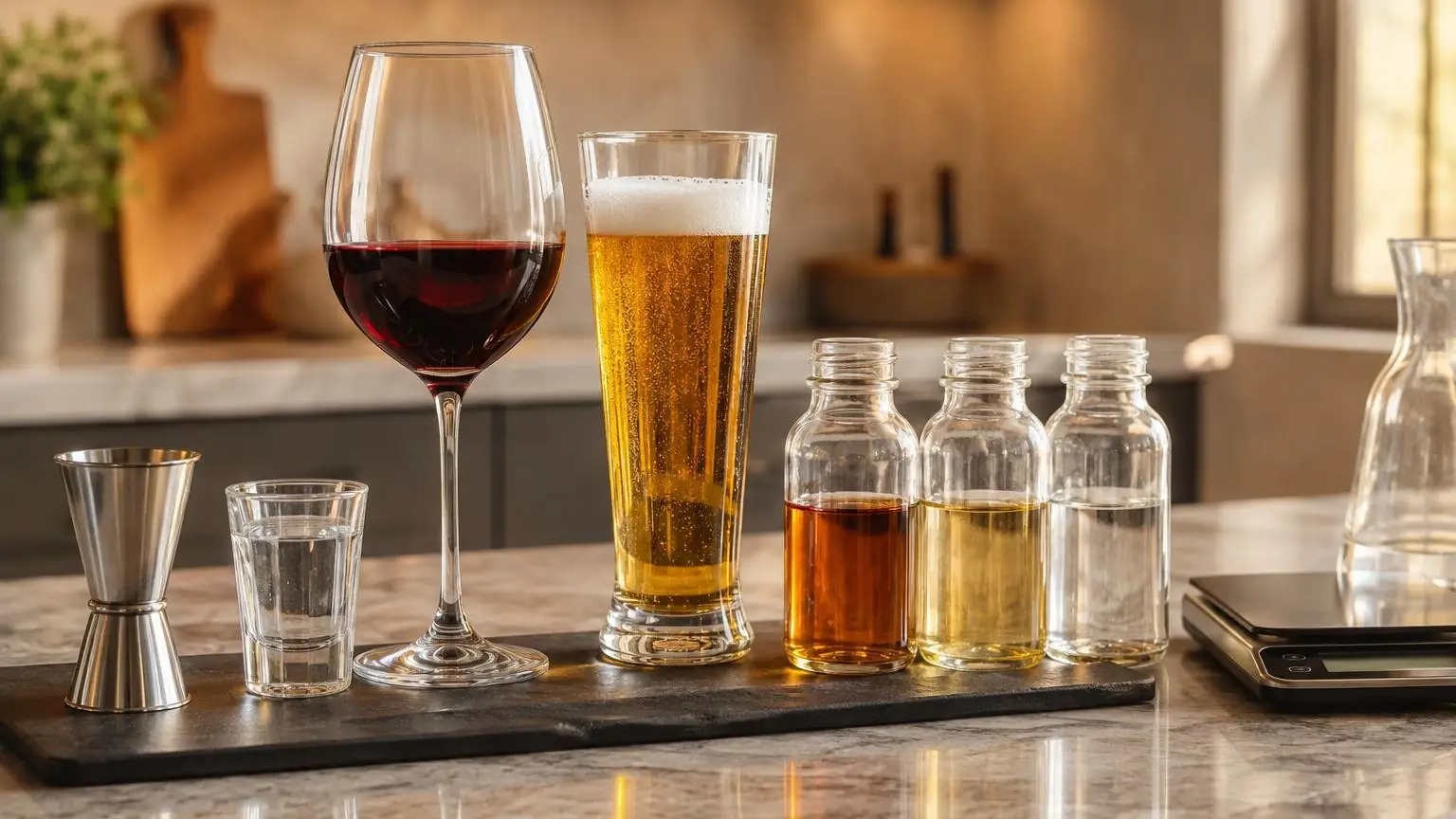
As a rough reference, 3 U.S. standard drinks in about 1 hour can put many 120 lb adults near or above 0.08% BAC, while many 200 lb adults may need around 4 to 5 drinks to reach a similar range, depending on sex, food, and drinking speed.
What is one standard drink when estimating alcohol by weight?
In the U.S., one standard drink contains about 14 grams, or 0.6 fl oz, of pure alcohol. That equals 12 oz of 5% beer, 5 oz of 12% wine, or 1.5 oz of 40% liquor, according to the National Institute on Alcohol Abuse and Alcoholism.
Does a heavier person always need more alcohol to feel drunk?
Usually, a heavier person reaches a lower BAC from the same number of drinks than a lighter person, but it is not guaranteed.
Sex, body composition, medications, liver function, tolerance, sleep, and whether you ate can shift impairment noticeably even at the same weight.
How fast does the body sober up after drinking?
Most adults metabolize alcohol at about 0.015% BAC per hour, roughly the alcohol in one standard drink every 1 to 2 hours, but this varies. Coffee, cold showers, vomiting, or eating after drinking do not rapidly lower BAC; only time does.
At what BAC are people legally drunk in the United States?
For drivers age 21 and older, the per se legal limit in every U.S. state is 0.08% BAC, though impairment can begin around 0.02% to 0.05%.
Commercial drivers have a lower federal limit of 0.04%, and drivers under 21 are subject to zero-tolerance laws that vary by state.
How does biological sex change how much alcohol leads to intoxication at the same body weight?
At the same body weight, females often reach a higher blood alcohol concentration than males after the same number of standard drinks because they typically have less total body water and lower first-pass alcohol metabolism.
NIAAA notes these physiological differences can raise BAC even when drinking patterns are identical.
Related Reading
- Why Did They Stop Making Bacardi 151 Rum?
- How Many Beers Does A Keg Hold? – Complete Guide to Keg Sizes, Beer Volumes & Real Pour Calculations
- What Fruit Goes With Red Wine?
- Why Do My Feet Swell When I Drink Red Wine? (Updated 2026 Wellness Guide)
- What Is A Whiskey Sommelier? Facts To Know
- How To Drink Alcohol Without Tasting It? 17 Smart & Effective Tricks That Actually Work
- What To Mix With Cruzan Coconut Rum?
- All Alcohol Guides
- NIAAA — What Is a Standard Drink? (2024)
- CDC — Alcohol and Public Health: Frequently Asked Questions (2024)
- NHTSA — The ABCs of BAC: A Guide to Understanding Blood Alcohol Concentration and Alcohol Impairment (2005)
- NCBI Bookshelf — Ethanol Toxicity, StatPearls (2023)
- PubMed — Total Body Water Volumes for Adult Males and Females Estimated from Simple Anthropometric Measurements (1980)
- University of Notre Dame — Blood Alcohol Concentration (2024)
- Stanford University — Blood Alcohol Concentration / Alcohol Education (2024)