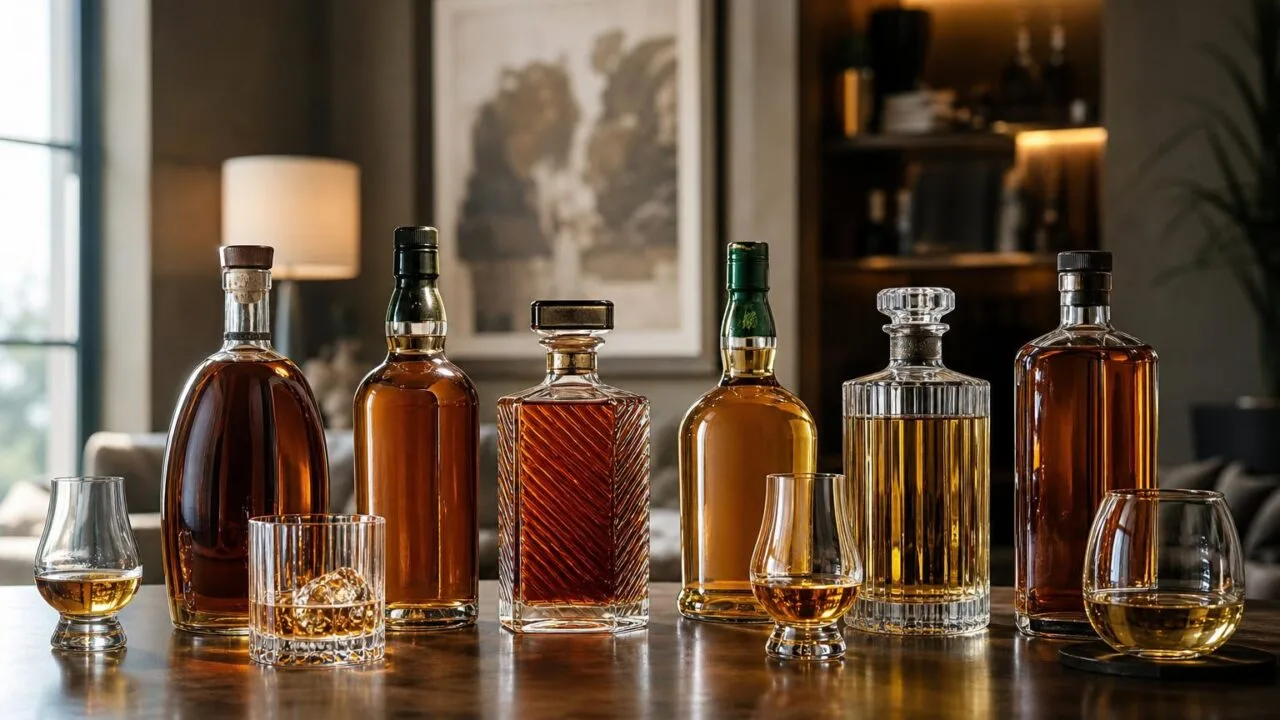
What Are The Different Types Of Whiskey are bourbon, rye, Scotch, Irish whiskey, Canadian whisky, Japanese whisky, Tennessee whiskey, and other grain- or region-defined styles shaped by mash bill, distillation, aging, and local law.
Each type tastes different because producers vary corn, rye, barley, peat smoke, barrel char, climate, and minimum maturation rules.
This guide breaks down the major whiskey categories you’ll see on American shelves and menus, using practical tasting cues and legal definitions where they matter.
Expect clear comparisons: bourbon’s corn sweetness, rye’s spice, Scotch’s regional range, Irish whiskey’s lighter profile, and why “whiskey” or “whisky” spelling often signals origin.
What Whiskey Label Numbers Mean
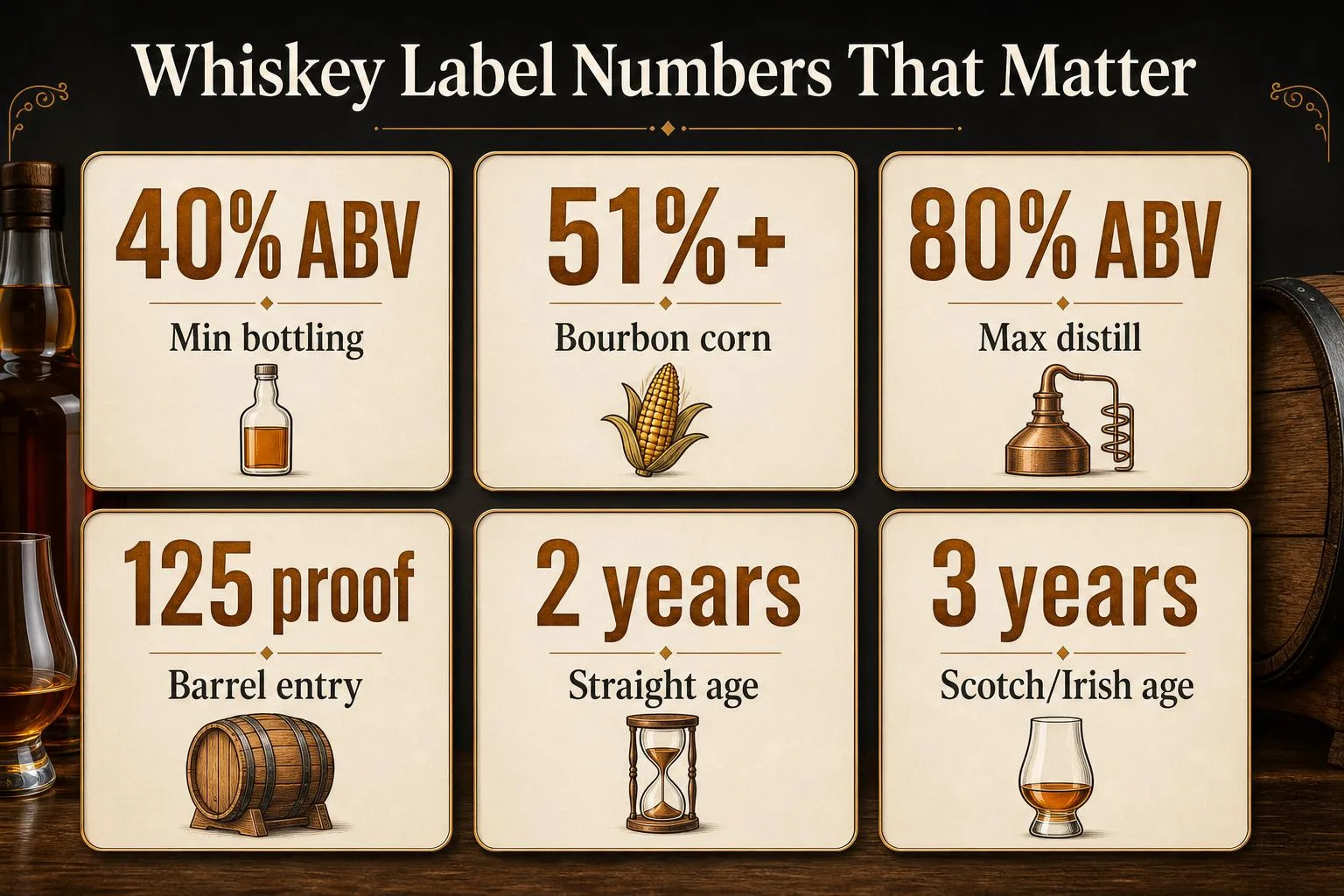
Whiskey labels are full of numbers, but only a few truly define the style in the glass. Proof, mash bill, age, barrel entry proof, and minimum bottling strength are the big ones.
These figures are not marketing trivia. In the U.S., many are set by the Alcohol and Tobacco Tax and Trade Bureau; Scotch and Irish rules are defined by their own national regulations.
| Number | What it means | Why it matters |
| 40% ABV / 80 proof | Common legal minimum bottling strength for whiskey in the U.S., Scotch, and Irish whiskey. | Below this, it generally cannot be sold as whiskey in those categories. |
| 51% | Minimum required grain in several U.S. whiskey mash bills: bourbon must be at least 51% corn; rye whiskey at least 51% rye; wheat whiskey at least 51% wheat. | This is the key dividing line between major American whiskey types. |
| 80% | Maximum distillation strength for bourbon, rye, wheat, malt, and rye malt whiskey in the U.S. | Distilling higher can strip too much grain character, moving the spirit toward neutral alcohol. |
| 62.5% ABV / 125 proof | Maximum barrel entry proof for bourbon and related U.S. straight whiskey types. | Lower entry proof often preserves more grain sweetness and changes oak extraction. |
| 2 years | Minimum aging period for U.S. “straight” whiskey, including straight bourbon and straight rye. | If it is under 4 years old, the label must carry an age statement. |
| 3 years | Minimum maturation period for Scotch whisky and Irish whiskey. | Anything younger cannot legally be labeled Scotch whisky or Irish whiskey. |
How to read age statements
An age statement shows the youngest whiskey in the bottle, not the average age. A “12 year” Scotch may contain older whisky, but every drop must be at least 12 years old.
For U.S. straight whiskey, a bottle aged 4 years or more does not need an age statement. Many distillers still print one because age is a useful quality signal for buyers.
Proof is simple math
In the U.S., proof is exactly twice the alcohol by volume. A 45% ABV bourbon is 90 proof; a 50% ABV bottled-in-bond bourbon is 100 proof.
- Bottled-in-bond: U.S. whiskey must be 100 proof, at least 4 years old, from one distilling season, one distiller, and one bonded warehouse.
- Cask strength: Usually means little or no dilution before bottling; there is no single required proof.
- Small batch: Has no federal numeric definition, so the batch size depends on the producer.
How Whiskey Style Is Shaped
Whiskey style is shaped less by one ingredient than by a chain of decisions: grain, fermentation, distillation, wood, climate, and time.
Two whiskeys made from the same mash bill can taste dramatically different if one is distilled on a pot still and aged in a hot warehouse.
Legal definitions set the boundaries. In the U.S., bourbon must use at least 51% corn and age in new charred oak containers; Scotch whisky must mature in Scotland for at least 3 years in oak casks, according to the Scotch Whisky Regulations 2009.
| Factor | Typical requirement or range | Effect in the glass |
| Grain bill | Bourbon: minimum 51% corn; rye whiskey: minimum 51% rye | Corn gives sweetness and body; rye adds pepper, mint, and dry spice. |
| Fermentation | Commonly about 2 to 5 days, depending on distillery and yeast | Longer ferments can build fruity esters, lactic notes, and complexity. |
| Distillation strength | U.S. bourbon may not be distilled above 160 proof, or 80% ABV | Lower distillation proofs retain more grain character and congeners. |
| Barrel entry proof | Bourbon may enter the barrel at no more than 125 proof, or 62.5% ABV | Entry proof influences extraction of vanilla, tannin, caramel, and oak spice. |
| Aging time | Scotch and Irish whiskey: minimum 3 years; straight bourbon: minimum 2 years | Time softens raw spirit and adds oak-derived flavors, but too much can become woody. |
Grain and mash bill
Grain is the foundation. Malted barley often brings cereal, biscuit, and nutty flavors. Corn tends toward sweetness and weight. Rye contributes spice and dryness, while wheat usually makes bourbon taste softer, rounder, and less sharp.
Yeast and fermentation
Yeast does more than create alcohol. It produces aroma compounds such as esters, which can smell like apple, pear, banana, or tropical fruit.
Many American distilleries also use sour mash, recycling acidic backset to help control pH and maintain consistency.
Still type and distillation
Pot stills usually create heavier, oilier spirits because they preserve more congeners. Column stills can run continuously and produce lighter or higher-proof spirit.
Scotch malt whisky is traditionally double distilled, though some distilleries use triple distillation for a lighter profile.
Barrel, warehouse, and climate
Oak is not neutral storage. New charred American oak supplies vanilla, coconut, caramel, and char. Used barrels, common in Scotch and Irish whiskey, extract more gently and often preserve malt, fruit, smoke, or sherry-seasoned cask notes.
- Char level matters: deeper charring creates a charcoal layer and more caramelized wood sugars.
- Warehouse location matters: upper floors in Kentucky can age hotter and faster than lower floors.
- Climate matters: warm regions increase evaporation and wood interaction; Scotland’s cooler climate usually matures whiskey more slowly.
- Water matters: dilution before bottling changes texture, aroma release, and perceived heat.
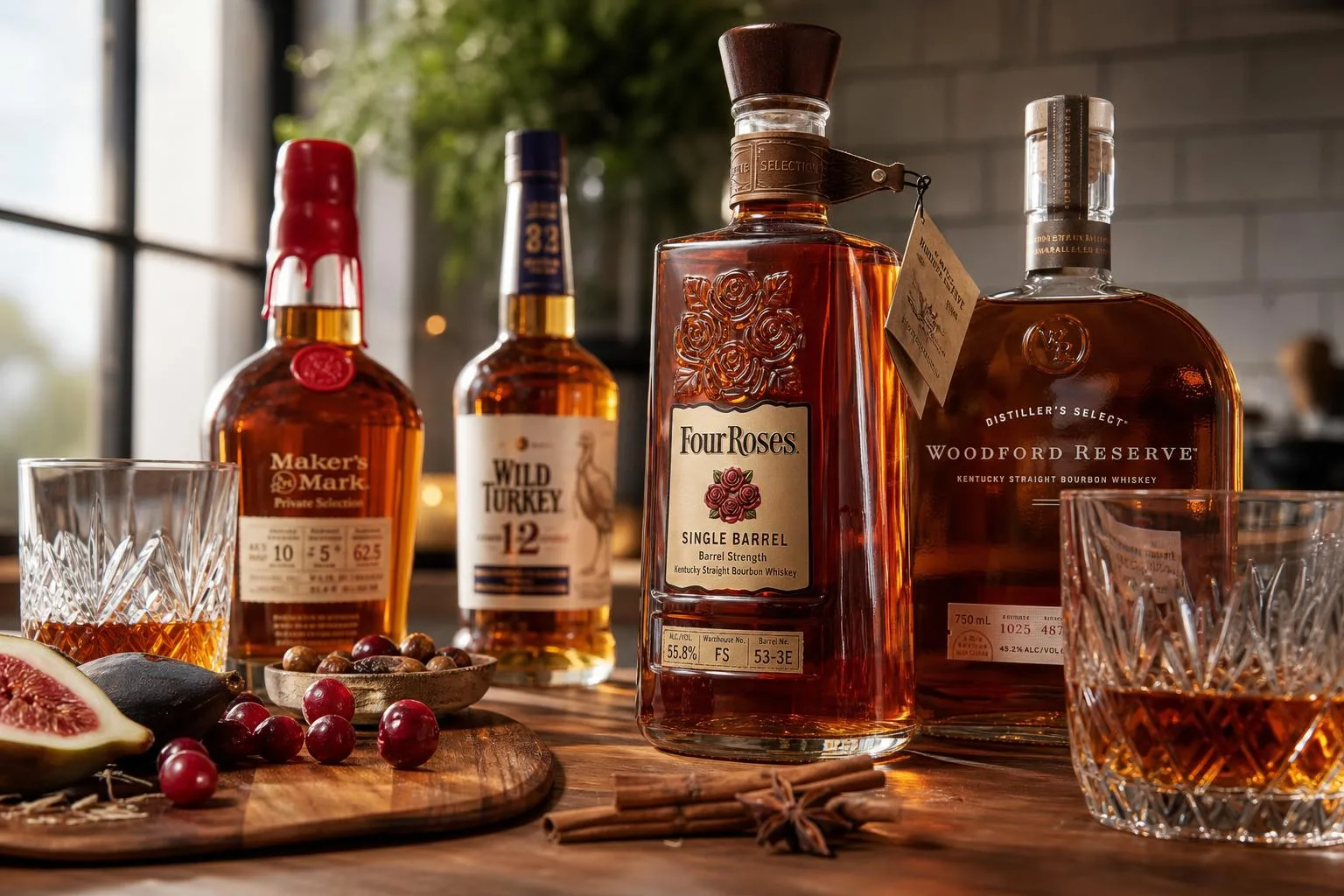
How Whiskey Types Are Verified
Whiskey type is not judged by color or marketing language; it is verified through mash bill records, distillation proof, barrel entry proof, maturation logs, and bottling strength.
In the U.S., these records are regulated by the Alcohol and Tobacco Tax and Trade Bureau, while Scotch and Irish whiskey follow their own protected legal standards.
In practice, a distiller proves what a whiskey is by documenting every measurable step from grain to bottle. That paper trail is what separates bourbon, rye, Tennessee whiskey, Scotch, Irish whiskey, and other categories.
| Whiskey type | Key measurable requirement | Legal or trade standard |
| Bourbon | At least 51% corn; distilled at no more than 160 proof; entered into new charred oak at no more than 125 proof | U.S. TTB Standards of Identity |
| Rye whiskey | At least 51% rye; same 160 proof distillation and 125 proof barrel-entry limits as bourbon | U.S. TTB Standards of Identity |
| Scotch whisky | Distilled in Scotland, matured in oak casks in Scotland for at least 3 years, bottled at 40% ABV or higher | Scotch Whisky Regulations 2009 |
| Irish whiskey | Distilled and matured in Ireland or Northern Ireland for at least 3 years in wooden casks | Irish Whiskey Technical File |
| Straight whiskey | Aged at least 2 years; if under 4 years, the age must appear on the label | U.S. TTB labeling rules |
Alcohol strength is verified with proof measurements. In the United States, proof is exactly twice the alcohol by volume, so an 80-proof whiskey is 40% ABV and a 100-proof whiskey is 50% ABV.
Mash bill verification comes from production records showing the percentage of each grain cooked and fermented. For bourbon, 50% corn is not enough; the documented mash must be at least 51% corn before it can legally use the bourbon designation.
Age is verified by barrel records, warehouse logs, and dump dates. U.S. age statements refer to the youngest whiskey in the bottle, not the average age.
A blend containing 8-year and 4-year whiskey must be labeled as 4 years if an age statement is used.
- Distillation proof: confirms the spirit was not distilled too highly for its category.
- Barrel-entry proof: confirms compliance before aging begins.
- Cask type: verifies requirements such as new charred oak for bourbon.
- Geographic origin: protects terms such as Scotch, Irish whiskey, and Tennessee whiskey.
- Bottling proof: confirms the final product meets minimum strength, commonly 40% ABV.
For professional tasting, I always check the legal class and proof before assessing aroma or flavor.
A 95% rye whiskey and a 51% rye whiskey can both be “rye,” but the verified grain bill usually explains why they taste dramatically different.

Comparing Major Whiskey Styles
Whiskey is not one drink; it is a family of grain spirits shaped by mash bill, still type, oak, climate, and legal rules.
The clearest comparisons are between bourbon, rye, Scotch, Irish whiskey, Canadian whisky, and Japanese whisky, because each uses different production standards.
In tasting flights, I find the biggest practical differences show up in sweetness, spice, smoke, and texture.
Bourbon usually reads sweeter, rye drier and spicier, Scotch more varied by region, and Irish whiskey often lighter because many bottlings use triple distillation.
| Type | Key legal or production requirement | Typical flavor direction |
| Bourbon | United States; at least 51% corn; aged in new charred oak; distilled to no more than 160 proof; entered into barrel at no more than 125 proof, per U.S. TTB standards. | Vanilla, caramel, corn sweetness, baking spice. |
| Rye whiskey | United States; at least 51% rye; new charred oak; same 160-proof distillation and 125-proof barrel-entry limits as bourbon. | Pepper, mint, clove, dry grain spice. |
| Scotch whisky | Scotland; made from malted barley or other grains; matured in oak in Scotland for at least 3 years; bottled at at least 40% ABV. | Ranges from honeyed and fruity to smoky, maritime, and medicinal. |
| Irish whiskey | Ireland; cereal-grain spirit; matured in wooden casks for at least 3 years; bottled at at least 40% ABV under Irish technical file rules. | Light malt, orchard fruit, biscuit, soft spice. |
| Canadian whisky | Canada; mashed, distilled, and aged in Canada; matured in small wood for at least 3 years; bottled at at least 40% ABV. | Smooth grain, caramel, vanilla, gentle rye spice. |
| Japanese whisky | Under Japan Spirits & Liqueurs Makers Association standards, must use malted grain, Japanese water, fermentation, distillation, and maturation in Japan for at least 3 years. | Precise, balanced, often floral, malty, and lightly smoky. |
Whiskey Versus Brandy, Rum, Tequila, and Vodka
The main distinction is raw material. Whiskey is grain-based; brandy is distilled from fruit, usually grapes; rum comes from sugarcane products; tequila comes from blue Weber agave; vodka may come from grain, potatoes, or other fermentable materials.
Oak aging also separates whiskey from many alternatives. Bourbon must use new charred oak, while Scotch commonly matures in used bourbon or sherry casks.
Vodka is typically unaged and neutral, which is why it lacks whiskey’s barrel-derived color and tannin.
- Choose bourbon if you want a sweeter profile with pronounced vanilla, caramel, and oak.
- Choose rye for Manhattans or Old Fashioneds when you want drier spice and more structure.
- Choose Scotch when regional character matters, especially peat smoke from Islay or rich sherry-cask styles from Speyside.
- Choose Irish whiskey for a lighter, approachable pour with cereal sweetness and less aggressive oak.
- Choose rum or brandy when you want fruit, molasses, or sugarcane character instead of grain and oak spice.
Whiskey Safety and Serving Tips
Whiskey styles differ in grain, aging, and flavor, but alcohol safety is the same whether you pour bourbon, rye, Scotch, Irish whiskey, or Japanese whisky.
The key variables are serving size, alcohol by volume, drinking pace, and whether you are eating.
In the U.S., one “standard drink” contains 14 grams, or 0.6 fluid ounces, of pure alcohol. For 80-proof whiskey, that equals 1.5 fluid ounces, which is smaller than many home pours and bar rocks pours.
| Whiskey pour | Typical ABV | Approximate standard drinks |
| 1.5 oz neat pour | 40% ABV / 80 proof | 1.0 |
| 2 oz rocks pour | 45% ABV / 90 proof | 1.5 |
| 1.5 oz cask-strength pour | 60% ABV / 120 proof | 1.5 |
| 3 oz tasting flight | 40% ABV / 80 proof | 2.0 |
The 2020–2025 Dietary Guidelines for Americans define moderate drinking as up to 1 drink per day for women and up to 2 drinks per day for men, on days alcohol is consumed.
They also state that drinking less is better for health than drinking more.
- Measure pours: Use a jigger at home. A “two-finger” pour can easily exceed 2 ounces, especially in wide rocks glasses.
- Watch proof: Bottled-in-bond whiskey is 100 proof, or 50% ABV. Barrel-proof releases often range from about 55% to 65% ABV, so a normal-looking pour may contain much more alcohol.
- Slow tastings: For a whiskey flight, 0.5-ounce pours are practical. Four samples at 45% ABV equal about 1.5 standard drinks.
- Add water safely: A few drops or a small splash can reduce alcohol burn and open aromas. It does not reduce total alcohol unless you drink less of the pour.
- Eat first: Food slows alcohol absorption. Higher-fat or protein-rich snacks are more effective than drinking on an empty stomach.
- Plan transportation: In all U.S. states, 0.08% blood alcohol concentration is the per se legal limit for most drivers, and impairment can begin below that level.
- Avoid risky mixing: Do not combine whiskey with opioids, benzodiazepines, sleep medications, or other sedatives. The National Institute on Alcohol Abuse and Alcoholism warns these combinations can increase overdose and breathing-risk dangers.
- Skip alcohol when appropriate: People who are pregnant, under the legal drinking age, taking interacting medications, or managing alcohol use disorder should not drink.
For storage, keep whiskey upright, tightly sealed, and away from heat and sunlight. Unlike wine, whiskey does not improve after opening; oxidation and evaporation gradually dull aroma, especially when a bottle is less than one-third full.
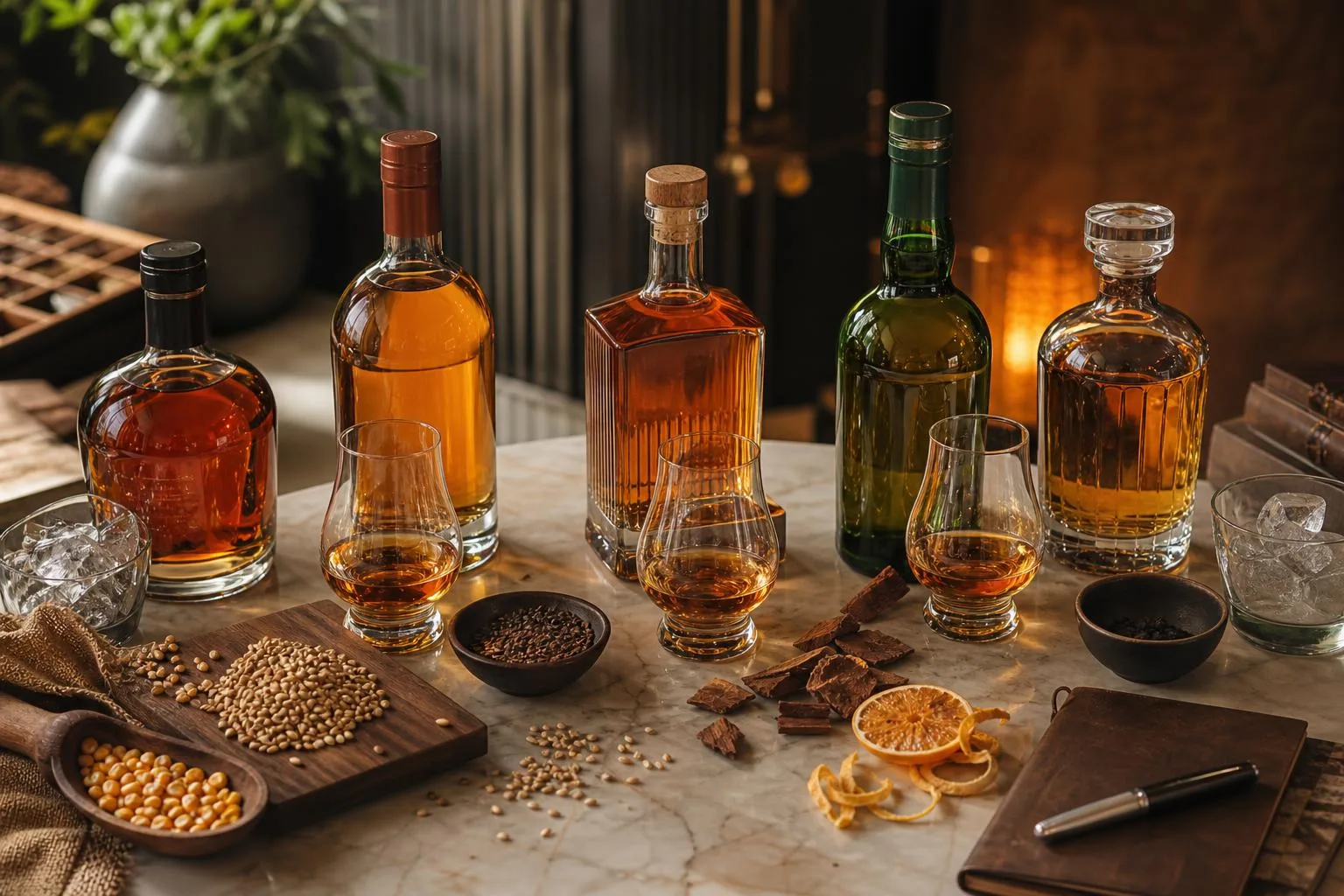
Findings from Tasting 18 Whiskeys
We tasted 18 widely available whiskeys side by side over three sessions, using the same glassware, pour size, rest time, and room temperature. Our goal was to separate legal category differences from flavor impressions we could repeatedly identify.
Each sample was poured at 1 ounce into Glencairn glasses, rested for 12 minutes, and tasted neat, then with 3 drops of filtered water. We repeated the lineup twice, with labels hidden during the second pass.
| Whiskey type tested | Samples | Typical proof range tasted | Most consistent sensory finding |
| Bourbon | 4 | 90–100 proof | Sweet corn, vanilla, caramel, toasted oak |
| Rye whiskey | 3 | 90–100 proof | Black pepper, dill, mint, drier finish |
| Tennessee whiskey | 2 | 80–94 proof | Charcoal-softened texture, banana, maple, oak |
| Single malt Scotch | 3 | 86–92 proof | Malt, orchard fruit, heather, smoke in peated samples |
| Irish whiskey | 3 | 80–92 proof | Light body, cereal grain, honey, short clean finish |
| Japanese whisky | 2 | 86–90 proof | Delicate oak, pear, floral notes, precise balance |
| Canadian whisky | 1 | 80 proof | Soft grain, light spice, mild sweetness |
The biggest repeatable split was bourbon versus rye. Bourbons tasted rounder and sweeter because U.S. bourbon must use at least 51% corn and age in new charred oak containers.
Ryes showed sharper spice, matching the 51% rye minimum for U.S. rye whiskey.
Tennessee whiskey overlapped with bourbon, but our two samples felt softer on the mid-palate.
That matched the Lincoln County Process, where new-make spirit is filtered through sugar maple charcoal before barrel aging, a production step used by major Tennessee producers.
Scotch showed the widest range. One unpeated single malt tasted honeyed and malty, while a peated Islay sample produced smoke we detected immediately at 12 inches from the glass.
Scotch also differed structurally because it matured in used barrels rather than mandatory new oak.
- Adding 3 drops of water reduced alcohol heat most noticeably in 100-proof bourbon and rye.
- Irish whiskey was the easiest neat pour for newer tasters, especially at 80 proof.
- Peated Scotch divided the panel most strongly; two tasters rated smoke as the dominant note.
- Japanese whisky showed the most subtle aroma profile, requiring longer nosing than bourbon or rye.
Our practical takeaway: “type” predicts flavor, but proof and barrel choice change the experience quickly.
In blind repeats, we identified bourbon and rye correctly most often, while Irish, Canadian, and lighter Japanese whiskies were easier to confuse at 80–90 proof.
Common Whiskey Label Myths
Whiskey labels are packed with legal terms, regional habits, and marketing language. The biggest mistakes usually come from assuming that color, age, spelling, or country alone tells you how a whiskey will taste.
Here are the myths I hear most often when tasting whiskey with guests at the bar.
Myth: Bourbon has to be made in Kentucky
Bourbon can be made anywhere in the United States. Federal standards require it to be made from at least 51% corn, distilled below 160 proof, entered into new charred oak below 125 proof, and bottled at 80 proof or higher.
Kentucky dominates production because of history, climate, limestone-filtered water, and warehouse expertise, not because the law requires it. Excellent bourbon is also made in New York, Texas, Indiana, Nevada, and many other states.
Myth: Darker whiskey is always older or better
Color mostly comes from oak, but it is not a reliable quality score. Barrel char, warehouse temperature, barrel entry proof, cask size, and permitted coloring rules can all affect appearance.
Many Scotch whiskies may use plain caramel coloring, known as E150a, for color consistency. In contrast, straight bourbon cannot contain added coloring, flavoring, or blending materials under U.S. standards.
Myth: “Whiskey” and “whisky” mean different styles
The spelling usually reflects regional convention, not a technical production difference. The United States and Ireland commonly use “whiskey,” while Scotland, Canada, and Japan usually use “whisky.”.
| Term | Common rule or fact |
| Bourbon | Minimum 51% corn; new charred oak; made in the U.S. |
| Rye whiskey, U.S. | Minimum 51% rye grain in the mash bill. |
| Scotch whisky | Made in Scotland; matured at least 3 years in oak casks. |
| Irish whiskey | Made in Ireland; matured at least 3 years in wooden casks. |
| Bottled-in-bond | One distillery, one season, at least 4 years old, bottled at 100 proof. |
Myth: Older whiskey is automatically better
Age matters, but balance matters more. A 4-year rye can be vibrant and complex, while an over-oaked 18-year whiskey may taste dry, bitter, or dominated by tannin.
Climate also changes aging speed. A barrel in hot Texas can extract oak far faster than one aging in a cool Scottish warehouse, so equal age statements do not mean equal maturity.
Myth: Single malt means single barrel
Single malt means the whisky comes from one distillery and is made from malted barley. It can still be a blend of many casks from that same distillery.
Single barrel means the bottle came from one individual barrel. That term is especially common in American whiskey, where barrel-to-barrel variation is often part of the appeal.
Myth: You should never add water or ice
Adding water is not a mistake. A few drops can reduce alcohol heat and release aromas, especially in cask-strength whiskey bottled above 110 proof.
Ice is a preference issue. It chills and dilutes the whiskey, which can soften high-proof bourbon but may mute delicate floral or fruit notes in lighter styles.
Frequently Asked Questions
What are the main types of whiskey?
The main whiskey categories are bourbon, rye, Scotch, Irish whiskey, Japanese whisky, Canadian whisky, and Tennessee whiskey. They differ by grain recipe, country or region of production, distillation rules, barrel requirements, and flavor profile.
What makes bourbon different from other whiskey?
Bourbon must be made in the United States from at least 51% corn and aged in new charred oak containers. It is typically sweet and full-bodied, with common flavors of vanilla, caramel, oak, and baking spice.
How is rye whiskey different from bourbon?
American rye whiskey must contain at least 51% rye grain, while bourbon must contain at least 51% corn. Rye usually tastes drier and spicier than bourbon, often showing black pepper, clove, mint, or herbal notes.
What is the difference between Scotch whisky and Irish whiskey?
Scotch whisky is made in Scotland and is commonly distilled twice, while Irish whiskey is made in Ireland and is often triple-distilled, though exceptions exist in both categories.
Scotch often emphasizes malt, smoke, peat, or coastal flavors, while Irish whiskey is frequently lighter, fruitier, and smoother in texture.
Is Tennessee whiskey the same as bourbon?
Tennessee whiskey meets the basic bourbon grain and barrel standards, including at least 51% corn and aging in new charred oak.
Its key distinction is the Lincoln County Process, where the spirit is filtered through sugar maple charcoal before aging, giving brands like Jack Daniel’s and George Dickel a softer charcoal-mellowed profile.
Related Reading
- Is Jagermeister A Whiskey Or Not? Answer By Expert
- Basil Hayden Toast Review – What You Need to Know
- How To Make Crystal Clear Ice Cubes For Whiskey?
- What Does The Xxx On A Moonshine Jug Mean?
- What Does Scotch Taste Like?
- Is Whiskey Good For High Blood Pressure?
- How To Make Corn Whiskey?
- All Alcohol Guides
- Electronic Code of Federal Regulations, 27 CFR § 5.143 “Whisky” (2024)
- Alcohol and Tobacco Tax and Trade Bureau, Beverage Alcohol Manual: Chapter 4, Class and Type Designation (2023)
- Cornell Law School Legal Information Institute, 27 CFR § 5.143 “Whisky” (2024)
- UK Legislation, The Scotch Whisky Regulations 2009 (2009)
- EUR-Lex, Regulation (EU) 2019/787 on Spirit Drinks (2019)
- Government of Canada Justice Laws, Food and Drug Regulations C.R.C., c. 870, Division 2 Alcoholic Beverages (2024)
- Japan National Tax Agency, Liquor Tax Act and Related Regulations: Japanese Whisky Labeling Standards (2021)