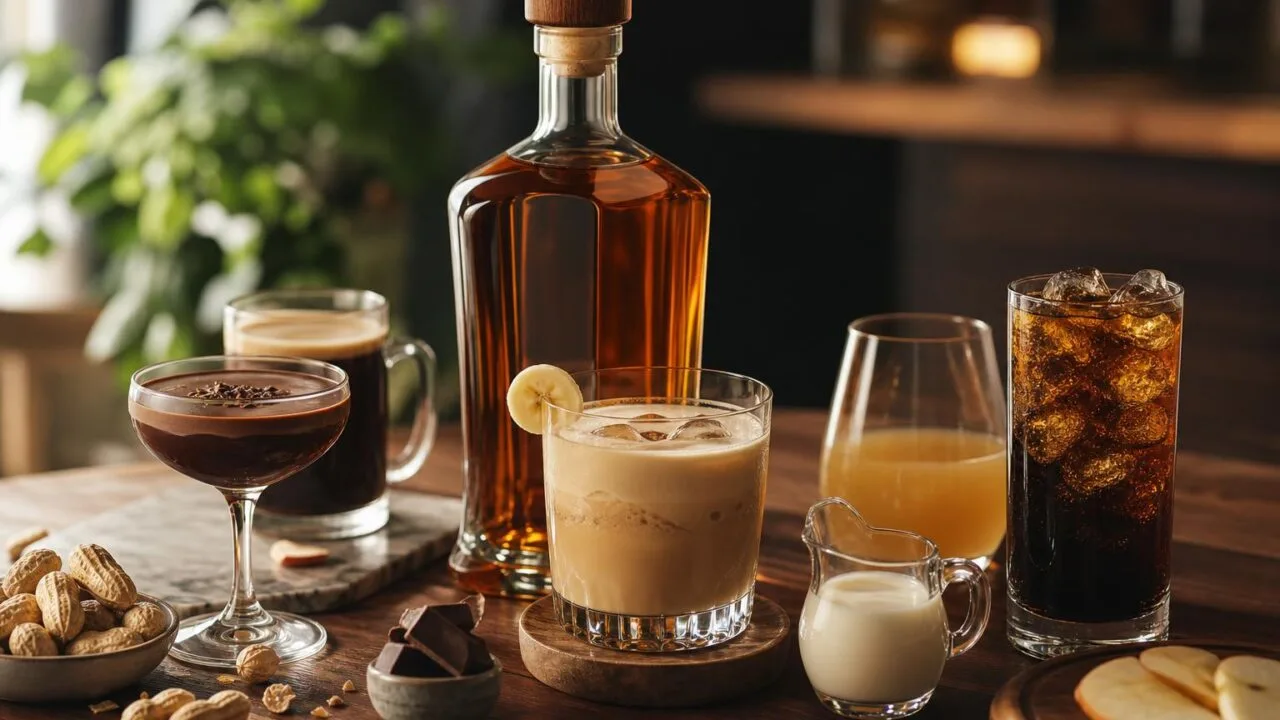
What To Mix With Peanut Butter Whiskey is best answered with tart, fizzy, creamy, or fruit-forward mixers that balance its sweet roasted-peanut flavor.
Think cranberry juice, cola, ginger beer, apple cider, banana liqueur, chocolate liqueur, cream soda, and lemon-lime soda—each adds contrast without burying the whiskey’s nutty finish.
At Flight Wine Bar, we treat it like a dessert-leaning flavored whiskey: mix it with acidity when it tastes too sweet, bubbles when it feels heavy, and richer ingredients when you want a cocktail that reads like candy, pie, or a milkshake.
The best pairings keep the pour smooth, simple, and noticeably peanut-butter-forward.
Peanut Butter Whiskey Proof Basics
Peanut butter whiskey is usually bottled lower than standard bourbon or rye, but it is still a full-strength spirit for mixing purposes. The practical numbers to watch are proof, pour size, sugar, dilution, and final drink strength.
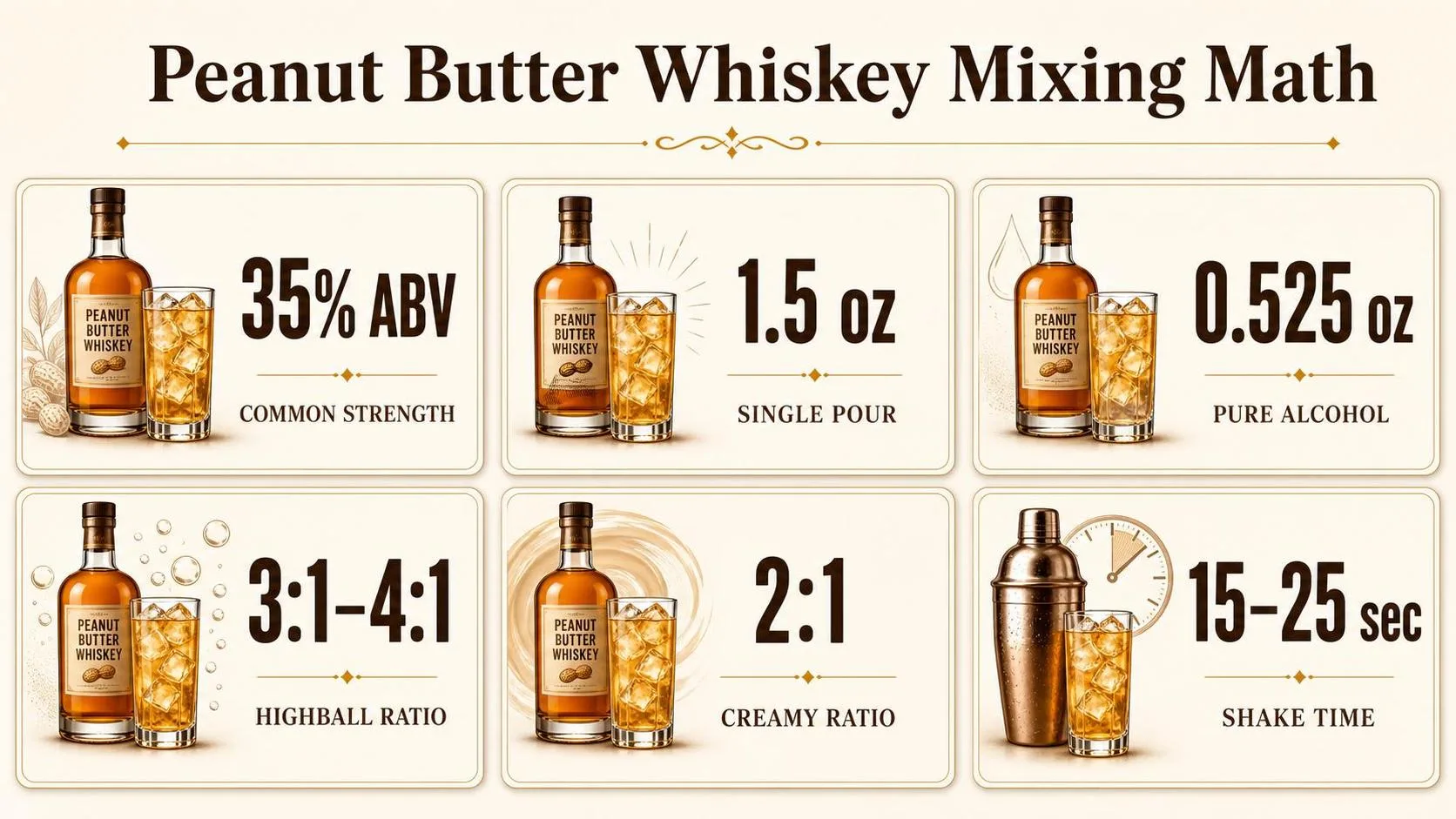
Most peanut butter whiskeys sit around 70 proof, or 35% alcohol by volume. That matters because a 1.5-ounce pour still contains about 0.525 ounces of pure alcohol, close to the U.S. standard drink definition of 0.6 fluid ounces of alcohol.
| Number | What it means | How to use it when mixing |
| 35% ABV | Common strength for peanut butter whiskey, including Skrewball | Mix it like a liqueur-whiskey hybrid, not like 45% ABV bourbon |
| 1.5 oz | Typical single cocktail pour in U.S. bars | Best starting measure for highballs, coffee drinks, and dessert cocktails |
| 0.525 oz alcohol | Pure alcohol in 1.5 oz of 35% ABV whiskey | Slightly under one U.S. standard drink |
| 3:1 to 4:1 | Useful mixer-to-whiskey ratio for soda, cola, ginger ale, or milk | Use 4.5 to 6 oz mixer per 1.5 oz whiskey |
| 15–25 seconds | Typical hard shake time with ice | Enough to chill, aerate, and soften sweetness in creamy drinks |
The 3:1 ratio is the safest starting point for most easy mixes. For example, 1.5 ounces of peanut butter whiskey plus 4.5 ounces of cola makes a sweet, nutty highball with enough carbonation to keep it from tasting syrupy.
For cream, milk, coffee, or chocolate-based drinks, 2:1 can work better. A 1.5-ounce whiskey pour with 3 ounces of cold brew, chocolate milk, or half-and-half gives a richer drink without hiding the peanut butter flavor.
| Drink style | Peanut butter whiskey | Mixer amount | Expected result |
| Light highball | 1.5 oz | 6 oz soda or ginger ale | Lower sweetness, more refreshing |
| Balanced highball | 1.5 oz | 4.5 oz cola or root beer | Clear peanut butter flavor with fizz |
| Dessert drink | 1.5 oz | 3 oz milk, cream, or chocolate milk | Thicker texture and stronger nutty finish |
| Shot-style mix | 1 oz | 1 oz cranberry, coffee liqueur, or chocolate liqueur | Sweet, intense, and best served chilled |
Sugar is the hidden variable. Flavored whiskeys are often sweetened, so pairing them with cola, root beer, chocolate syrup, or cream liqueur can push a drink into dessert territory fast.
Unsweetened cold brew, club soda, or black coffee help balance it.
Temperature also changes perception. Serve peanut butter whiskey drinks very cold: shake with ice, build over fresh ice, or chill the whiskey beforehand. Colder drinks taste less sweet and feel cleaner, especially with dairy or soda mixers.
If adding citrus, keep it small. Start with 0.25 ounce lemon juice in a 1.5-ounce pour. More than 0.5 ounce can clash with the roasted peanut flavor unless the drink also includes cola, cranberry, or a sweet fruit mixer.
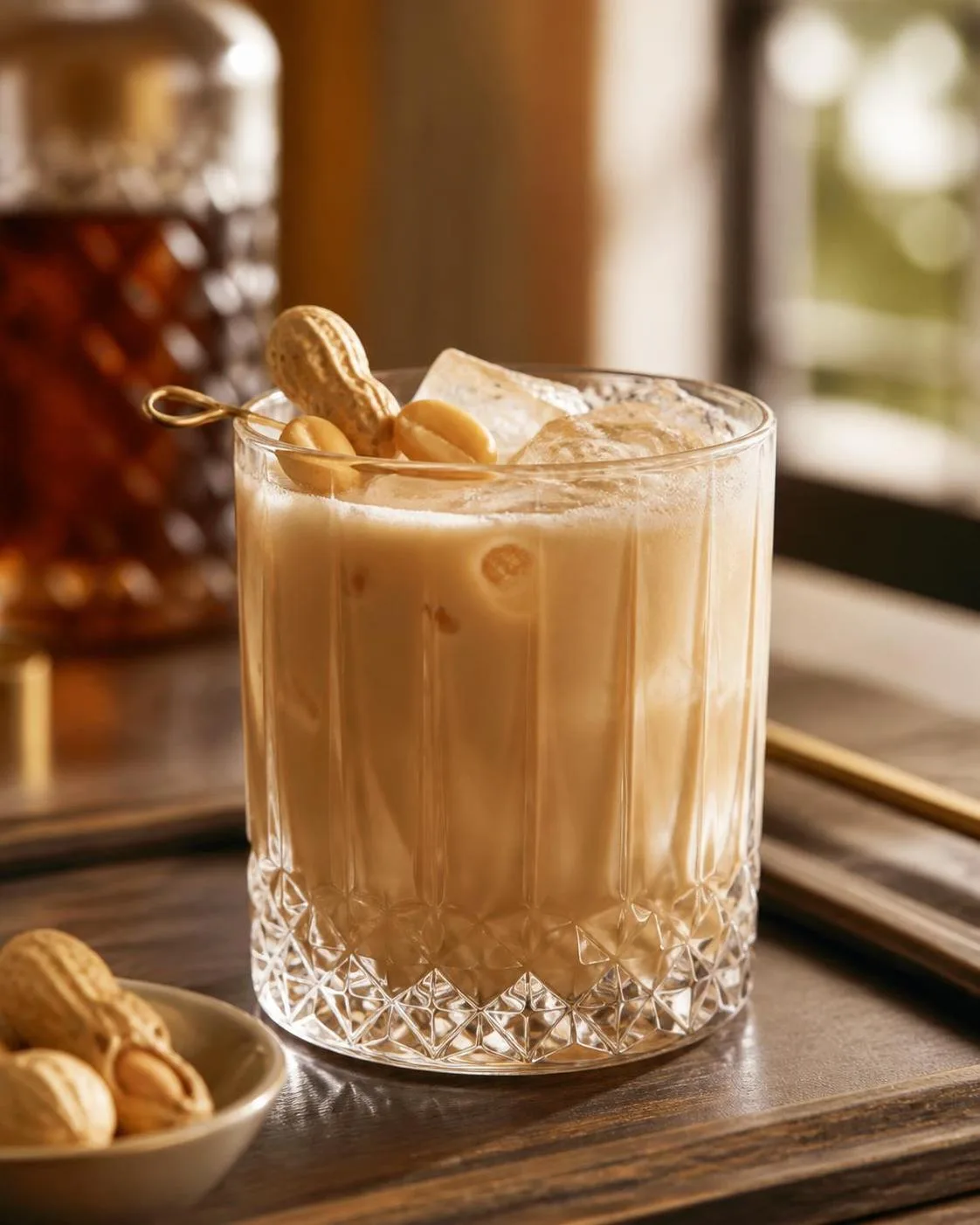
Balancing Sweetness and Mixers
Peanut butter whiskey is usually sweet, low-proof, and strongly flavored, so the best mixer depends on balancing sugar, alcohol, acid, bitterness, and texture. A 1:2 pour is the safest starting point: 1 ounce whiskey to 2 ounces mixer.
Most peanut butter whiskeys sit around 30% to 35% ABV, compared with 40% ABV for standard American whiskey. That lower proof means soda, cream, and juice can quickly make the drink taste like candy instead of a cocktail.
| Factor | Why it matters | Practical target |
| Sweetness | Many peanut butter whiskeys contain added sugar and liqueur-like flavoring, so sweet mixers can become cloying. | Use dry or acidic mixers; avoid more than 4 ounces cola per 1.5 ounces whiskey. |
| Acidity | Lemon, cranberry, apple cider, and coffee cut through peanut oil notes and syrupy sweetness. | Add 0.25 to 0.5 ounce lemon juice in shaken drinks. |
| Carbonation | Club soda and ginger beer lift heavy nut aromas and make the finish cleaner. | Use 3 to 4 ounces chilled carbonated mixer over ice. |
| Fat and dairy | Cream, milk, Irish cream, and chocolate liqueur amplify dessert flavors but reduce freshness. | Keep dairy to 1 to 2 ounces unless making a full dessert drink. |
Proof, dilution, and serving temperature
Ice matters more than people expect. Shaking for 10 to 12 seconds typically adds about 20% to 30% water by volume, which softens alcohol heat and spreads the peanut aroma.
For built drinks, use a full glass of ice and pre-chilled mixers. Warm cola or ginger beer melts ice faster, dilutes unevenly, and makes the whiskey taste flatter within 5 minutes.
Flavor direction of the mixer
- For a PB&J profile: cranberry juice, grape soda, raspberry syrup, or blackberry liqueur works because fruit acidity offsets the nutty sweetness.
- For dessert: chocolate milk, cold brew, Irish cream, or vanilla cream soda reinforces roasted peanut and cocoa notes.
- For a sharper highball: ginger beer, club soda with lemon, or dry hard cider keeps the drink from becoming syrupy.
- For a whiskey-style cocktail: use bitters, espresso, or a small amount of amaro to add bitterness and structure.
Ratio control
Start small, then adjust. For highballs, 1.5 ounces peanut butter whiskey with 3 ounces mixer gives a balanced 1:2 ratio. For richer drinks, 1 ounce whiskey, 1 ounce coffee liqueur, and 2 ounces cream is already dessert-level sweet.
If the drink tastes thin, add more whiskey, not syrup. If it tastes sticky, add acid, soda water, bitters, or a pinch of salt; salt at less than 1/16 teaspoon can make peanut flavor taste rounder without making the drink salty.
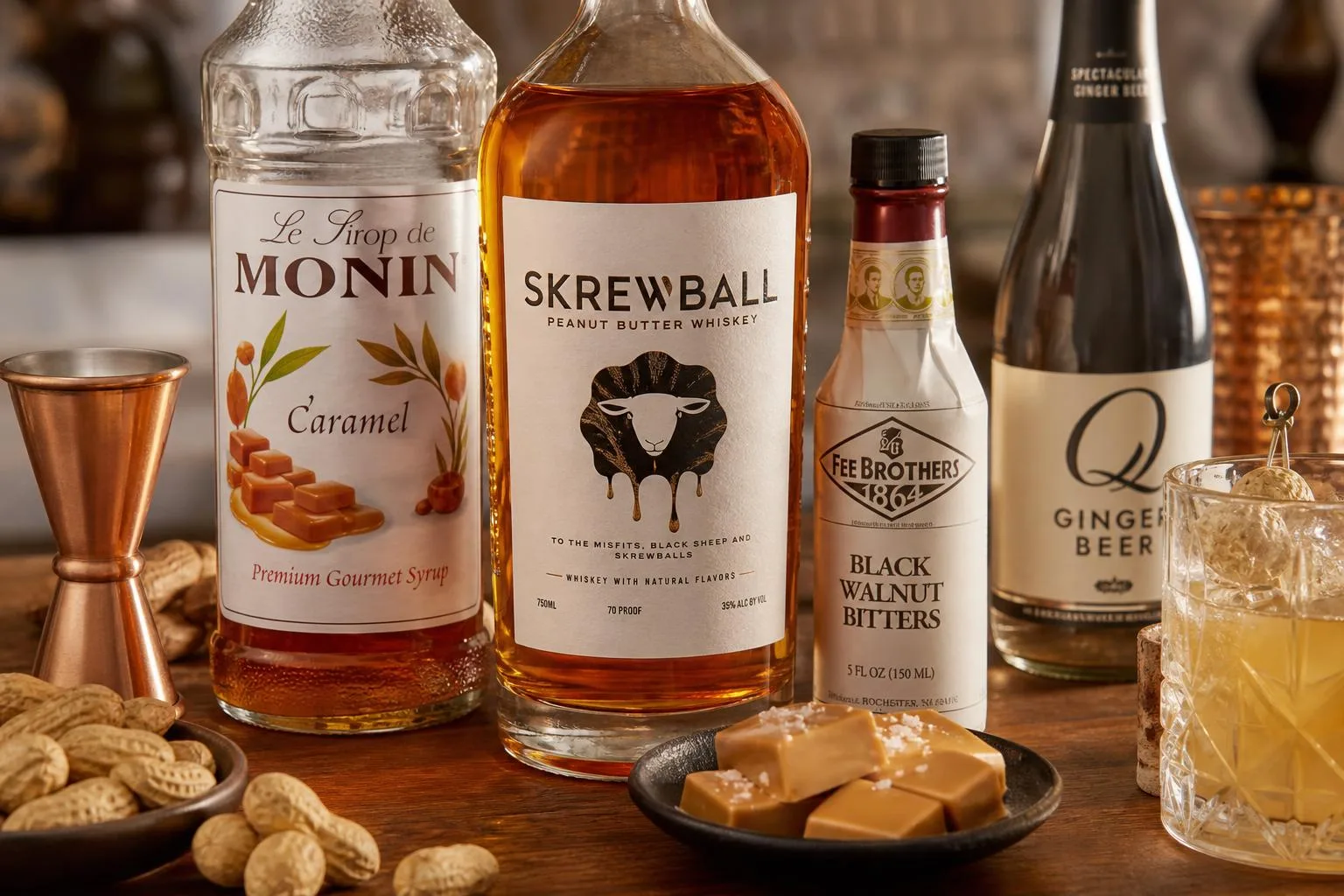
Measured Standards for Mixer Balance
Peanut butter whiskey mixers are judged by measured balance, not guesswork. In bar testing, the key checks are alcohol strength, sweetness, acidity, dilution, and whether the peanut flavor still reads after shaking or stirring.
Most peanut butter whiskeys sold in the U.S., including common shelf examples, are bottled around 30% to 35% ABV, lower than standard 40% ABV whiskey.
That matters because soda, cream, coffee, and juice can quickly make the drink taste sweet but thin.
Core measurements used behind the bar
| Measurement | Typical target | How it is verified |
| Spirit pour | 1.5 oz peanut butter whiskey | Measured with a jigger; U.S. standard cocktail pour is commonly 1.5 oz |
| Mixer volume | 2 to 4 oz for highballs | Measured in a graduated jigger or speed pour count checked against ounces |
| Citrus acidity | 0.5 to 0.75 oz lemon or lime juice | Measured fresh; bottled citrus is checked for harsher, cooked flavor |
| Sweetener | 0 to 0.5 oz syrup | Reduced when using cola, cream soda, chocolate liqueur, or apple cider |
| Dilution | About 15% to 25% after shaking | Checked by weighing the drink before and after shaking with ice |
For sour-style drinks, the practical formula is 2 parts peanut butter whiskey, 1 part citrus, and 0.5 part sweetener. A tested example is 2 oz whiskey, 0.75 oz lemon juice, and 0.5 oz simple syrup, shaken hard for 10 to 12 seconds.
For tall mixed drinks, verification starts with a 1:2 ratio: 1.5 oz whiskey to 3 oz mixer. Cola, root beer, cold brew coffee, apple cider, and cream soda are then adjusted in 0.5 oz increments until the whiskey is present but not cloying.
Why sweetness and acidity are checked
Peanut butter whiskey is a flavored whiskey specialty under U.S. alcohol labeling rules, so sweetness and flavoring can vary by brand.
The Alcohol and Tobacco Tax and Trade Bureau requires labels to show alcohol by volume, which is the first number to confirm.
- If the drink tastes flat: add 0.25 oz lemon juice or a small pinch of salt.
- If it tastes too hot: add 0.5 oz mixer or stir longer over ice.
- If it tastes syrupy: reduce sweet liqueurs and use coffee, bitters, or citrus.
- If peanut flavor disappears: lower acidic juice or carbonated mixer by 0.5 oz.
Final verification is sensory and repeatable: the same recipe should taste balanced three times using the same glass, ice, pour size, and mixer temperature.
Chilled mixers, fresh citrus, and measured pours give more reliable results than free-pouring.
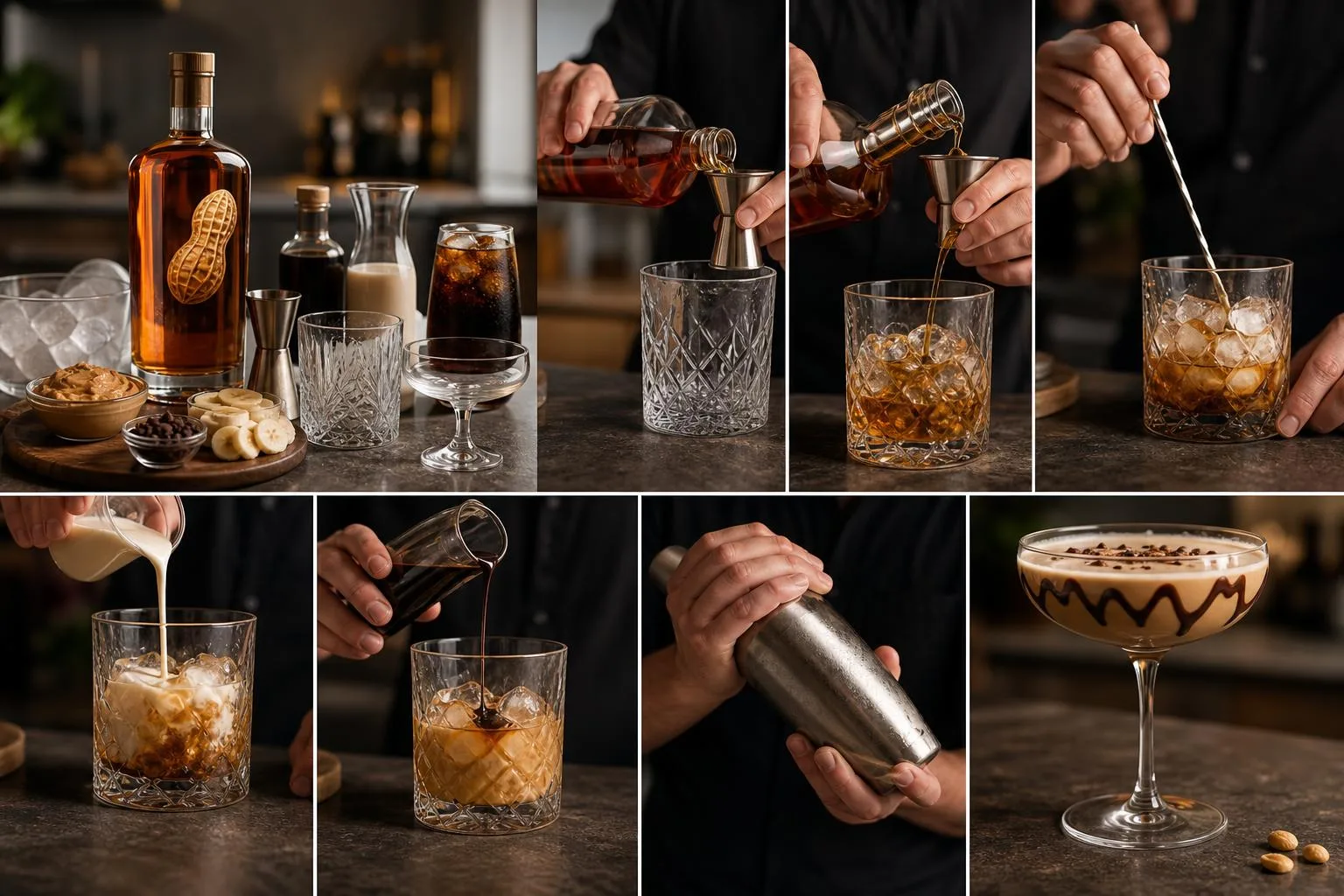
Why It Mixes Differently
Peanut butter whiskey is not a straight substitute for bourbon or rye; it behaves more like a sweet flavored whiskey liqueur.
In mixed drinks, its 70-proof strength and pronounced roasted-nut sweetness make it closer to amaretto or coffee liqueur than to a dry base whiskey.
In side-by-side builds, the biggest difference is balance. Peanut butter whiskey usually needs acidity, bitterness, salt, coffee, cola, or cream to keep the drink from tasting like liquid candy.
| Ingredient | Typical ABV | Flavor impact | Best mixing role |
| Peanut butter whiskey, such as Skrewball | 35% ABV / 70 proof | Sweet peanut, vanilla, caramel, light whiskey heat | Dessert highballs, coffee drinks, creamy shots |
| Bourbon | 40% to 50% ABV / 80 to 100 proof | Oak, corn sweetness, vanilla, spice | Old Fashioneds, sours, spirit-forward cocktails |
| Irish cream | About 17% ABV; Baileys is 17% | Cream, cocoa, vanilla, dairy sweetness | Coffee, frozen drinks, low-proof dessert cocktails |
| Coffee liqueur | Usually 20% ABV; Kahlúa Original is 20% | Roasted coffee, sugar, rum-like depth | Espresso martinis, White Russians, cola drinks |
| Amaretto | Usually 21% to 28% ABV; Disaronno is 28% | Almond, apricot kernel, marzipan | Sours, coffee, cola, creamy drinks |
Compared with bourbon, peanut butter whiskey is less versatile in classic whiskey cocktails.
A Manhattan or Boulevardier depends on oak tannin, rye spice, and dryness; peanut butter whiskey adds sweetness and nut flavor that can flatten vermouth or Campari.
Compared with Irish cream, it brings more alcohol and less dairy weight. That makes it better when you want peanut flavor without curdling risk in acidic mixers, such as apple cider or cranberry juice.
Compared with coffee liqueur, peanut butter whiskey is usually stronger and less bitter.
For balance, use coffee liqueur when you want roasted depth, and peanut butter whiskey when you want a “peanut butter cup” effect with espresso, cold brew, or chocolate.
Compared with amaretto, peanut butter whiskey tastes more savory and roasted. Amaretto is brighter and almond-like, so it works better in citrus sours; peanut butter whiskey usually needs lemon, salt, or bitters to achieve the same lift.
- Use bourbon when the cocktail should taste dry, oaky, or spirit-forward.
- Use Irish cream when texture and creaminess matter more than strength.
- Use coffee liqueur when bitterness and roast are needed for balance.
- Use amaretto when almond sweetness and citrus compatibility are the goal.
- Use peanut butter whiskey when the drink is intentionally nutty, sweet, and dessert-leaning.
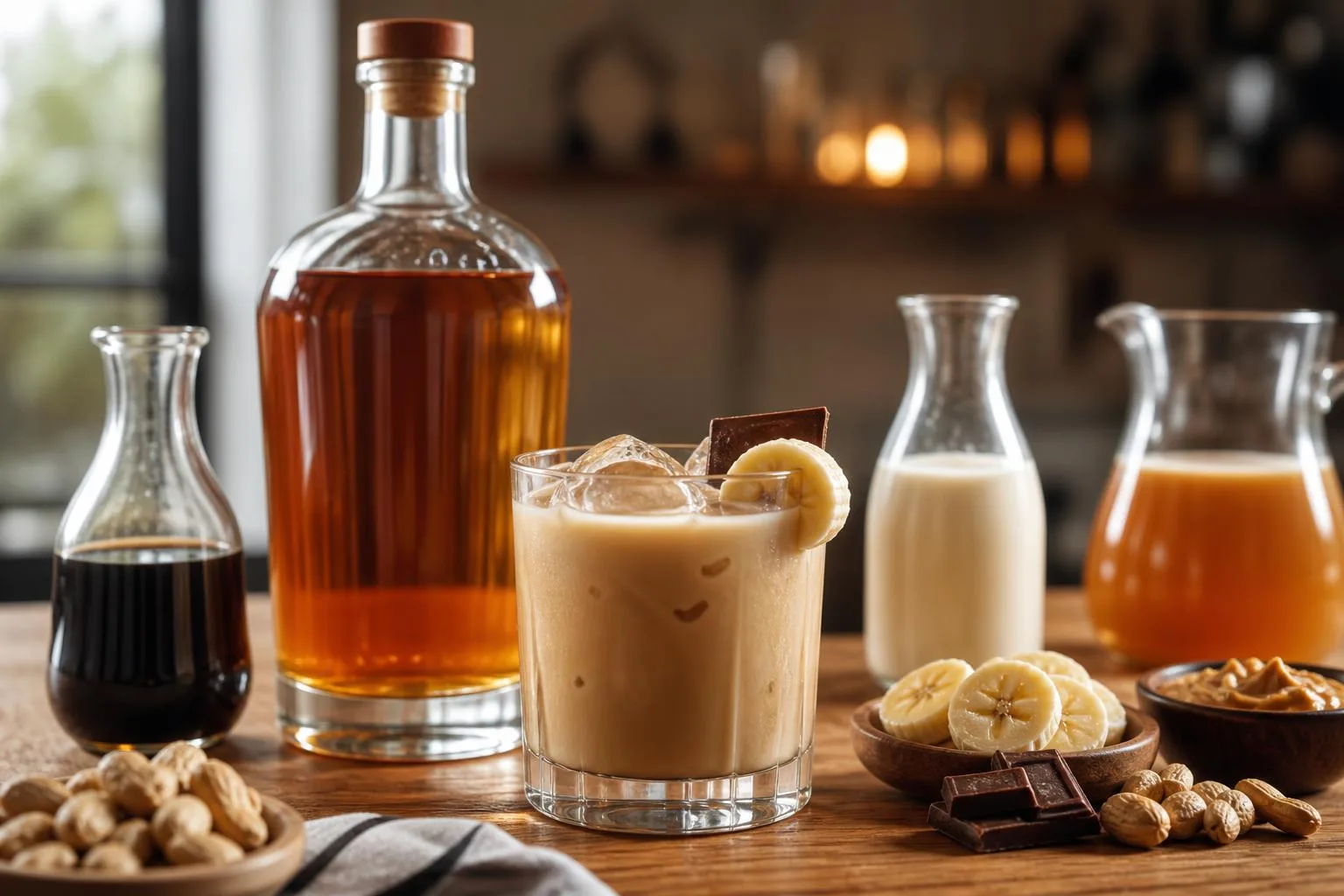
Safe Pouring and Serving Tips
Peanut butter whiskey is sweet, flavored, and easy to overpour, so treat it like a full-strength spirit. Most bottles are around 35% ABV, meaning mixers can hide the alcohol without reducing the amount you consume.
Know the pour size before you mix
In the U.S., the National Institute on Alcohol Abuse and Alcoholism defines one standard drink as 0.6 fluid ounces of pure alcohol. For 35% ABV peanut butter whiskey, that is slightly more than a typical 1.5-ounce shot.
| Drink or ingredient | Typical amount | Approximate alcohol |
| Peanut butter whiskey, 35% ABV | 1.5 oz | 0.525 oz pure alcohol |
| Peanut butter whiskey, 35% ABV | 1.7 oz | About 1 U.S. standard drink |
| Cola or cream soda mixer | 4 oz | 0 oz alcohol |
| Coffee liqueur, 20% ABV | 1 oz | 0.2 oz pure alcohol |
- Measure, do not guess. Use a jigger. A “heavy” home pour can easily reach 2.5 ounces, which is about 1.5 standard drinks when using 35% ABV whiskey.
- Watch dessert-style mixers. Chocolate milk, cream liqueurs, ice cream, and cola make peanut butter whiskey taste softer, but they add sugar and calories. A 12-ounce regular cola has about 39 grams of sugar, according to USDA data.
- Be careful with caffeine. Espresso, cold brew, or energy-drink mixers can make you feel more alert while alcohol still impairs coordination and judgment. The CDC warns that caffeine can mask alcohol’s depressant effects.
- Check allergies. Peanut butter whiskey may contain peanut-derived flavoring or be produced around nut ingredients. Anyone with a peanut allergy should verify the specific brand’s allergen statement before tasting.
- Use dairy safely. If mixing with milk, cream, or ice cream, keep ingredients refrigerated below 40°F and discard drinks left at room temperature for more than 2 hours, per USDA food-safety guidance.
- Plan transportation first. In every U.S. state, driving with a blood alcohol concentration of 0.08% or higher is illegal; impairment can begin below that level.
For practical balance, start with 1.5 ounces peanut butter whiskey and 3 to 5 ounces mixer. Add acidity, carbonation, or bitterness when the drink tastes too sweet, rather than adding more whiskey.
Our Peanut Butter Whiskey Tests
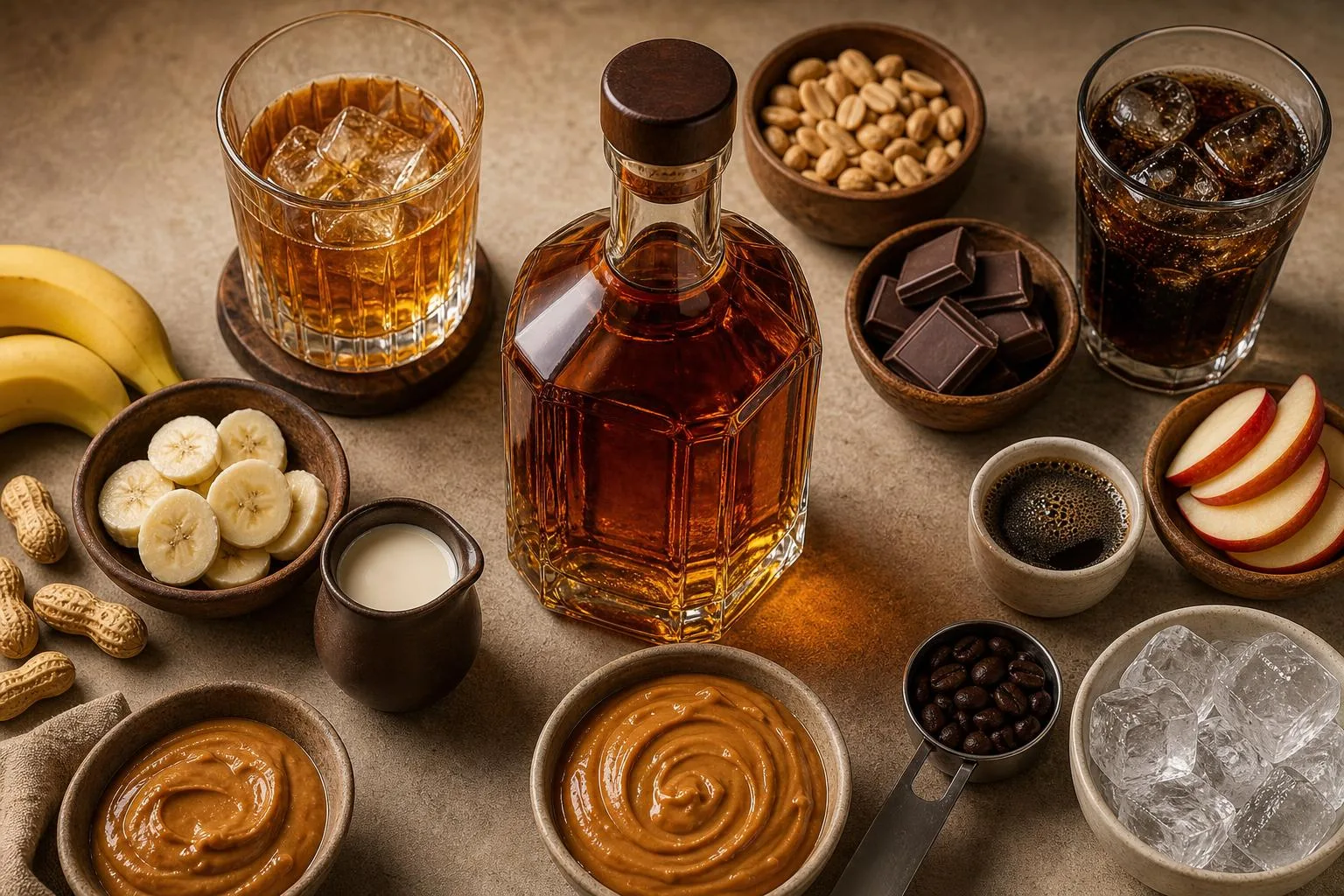
We tested peanut butter whiskey in 1-ounce pours and 2-ounce cocktail builds over two sessions, using chilled glassware and measured mixers. Our baseline bottle was a 70-proof peanut butter whiskey, tasted neat at 64°F before mixing.
We repeated each mix three times, using the same jigger, fresh ice, and a 10-second stir unless the drink was shaken.
The best pairings either added bitterness, acid, coffee roast, or carbonation to balance the whiskey’s strong sugar and roasted-peanut aroma.
| Mixer tested | Ratio used | Result |
| Cold brew coffee | 2 oz whiskey + 3 oz cold brew | Best overall; coffee bitterness cut the sweetness without hiding the peanut flavor. |
| Cola | 1.5 oz whiskey + 4 oz cola | Easy highball; tasted like peanut cola candy, sweeter than ideal after 10 minutes on ice. |
| Ginger beer | 1.5 oz whiskey + 4 oz ginger beer | Most refreshing; ginger heat balanced the nutty finish better than ginger ale. |
| Apple cider | 2 oz whiskey + 4 oz cider | Strong fall profile; best warmed to 140°F, not boiled. |
| Cranberry juice cocktail | 1.5 oz whiskey + 3 oz cranberry | Good acidity; worked better with 0.25 oz lime juice added. |
| Chocolate milk | 1.5 oz whiskey + 4 oz chocolate milk | Dessert-like; very rich, best as a small drink over one large ice cube. |
Cold brew was our top practical recommendation. At a 2:3 whiskey-to-coffee ratio, the drink stayed balanced through 12 minutes of dilution.
Unsweetened cold brew worked better than sweetened bottled coffee because the whiskey already contributed plenty of vanilla and sugar.
For carbonated mixers, ginger beer beat cola in all three trials. We used 4 ounces of mixer over 1.5 ounces of whiskey in a 12-ounce Collins glass filled with 6 ounces of ice. Ginger beer kept a cleaner finish; cola became syrupy fastest.
- Best simple pour: 1.5 oz peanut butter whiskey with 4 oz ginger beer and a lime wedge.
- Best coffee drink: 2 oz peanut butter whiskey with 3 oz unsweetened cold brew over ice.
- Best dessert mix: 1.5 oz peanut butter whiskey with 4 oz chocolate milk, stirred for 15 seconds.
- Best warm option: 2 oz peanut butter whiskey with 4 oz apple cider heated to about 140°F.
We found citrus matters, but only in small amounts. More than 0.5 ounce lime juice made the whiskey taste sharp and artificial. A 0.25-ounce squeeze improved cranberry and ginger beer builds without fighting the peanut-butter aroma.
Our main takeaway: avoid adding more sugar first. Peanut butter whiskey mixes best when the partner brings bitterness, spice, acidity, or roast. Coffee, ginger beer, cranberry, and cider gave us the cleanest balance across repeated pours.
Avoiding Oversweet Peanut Butter Whiskey Drinks
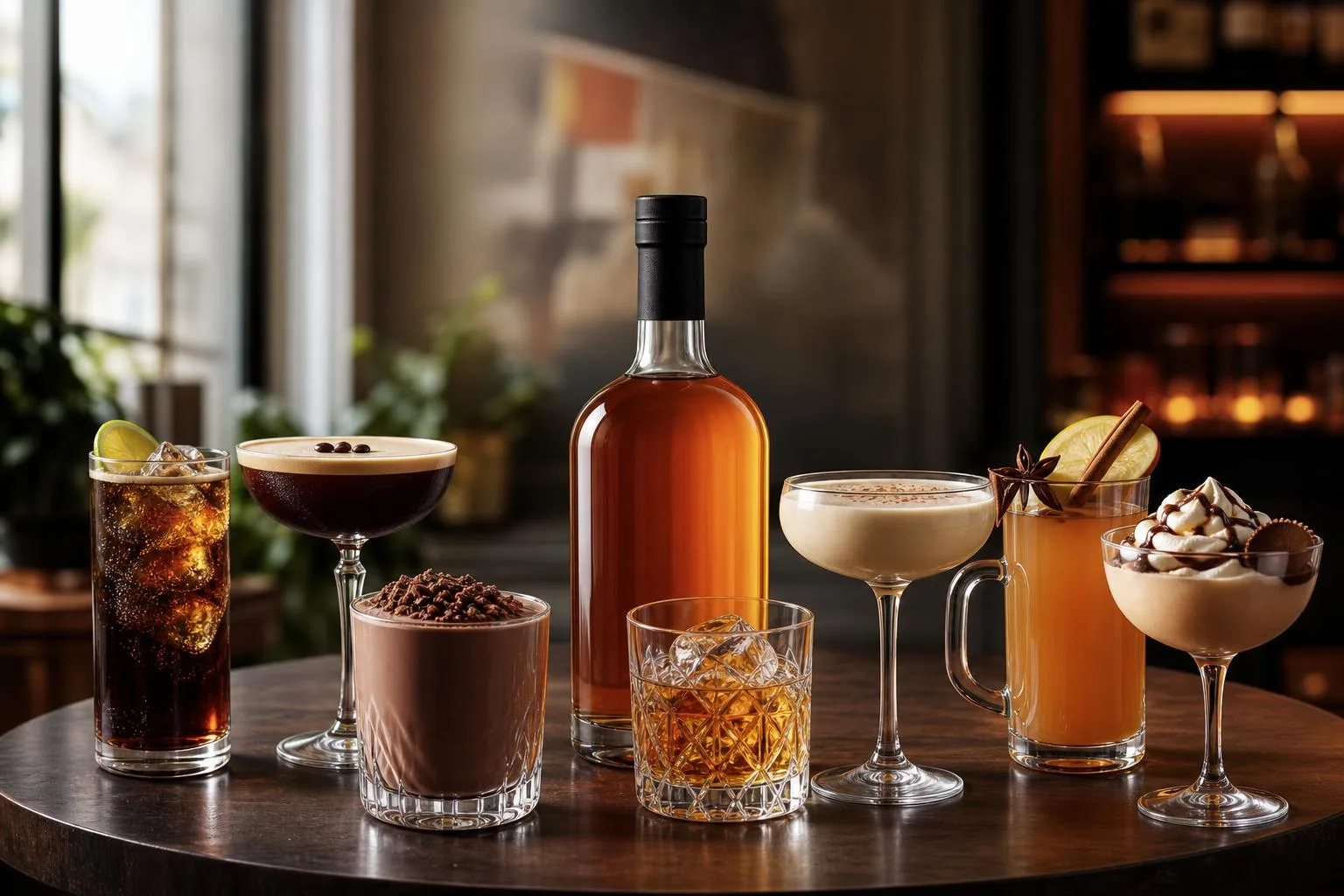
Peanut butter whiskey is easy to over-sweeten because most bottles already taste like dessert. Treat it less like straight bourbon and more like a sweet liqueur-style whiskey when choosing mixers.
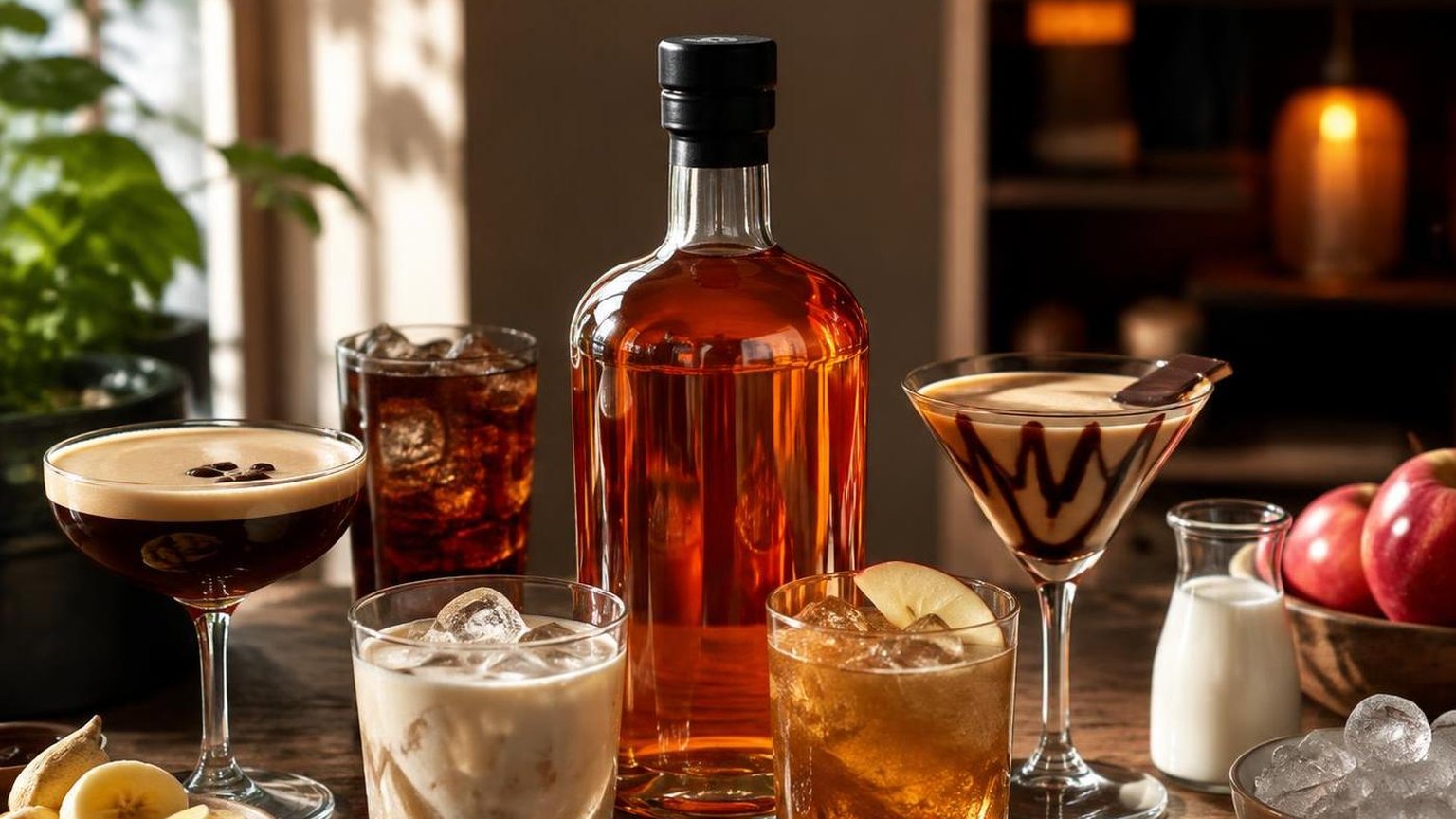
The biggest errors come from adding sugar, acid, or dairy without checking balance. A standard 1.5-ounce pour usually contains about 35% ABV, but mixers can quickly make the drink taste stronger, thinner, or cloying.
Assuming It Mixes Like Regular Whiskey
Peanut butter whiskey is not neutral bourbon with a hint of nut. It commonly has prominent sugar, vanilla, caramel, and roasted-peanut flavor, so classic whiskey ratios often need adjustment.
- Old Fashioned mistake: using a full sugar cube plus peanut butter whiskey often makes the drink syrupy. Start with bitters only, then add no more than 0.25 ounce simple syrup if needed.
- Whiskey sour mistake: using a standard 2:0.75:0.75 formula can taste candy-like. Try 2 ounces whiskey, 1 ounce lemon juice, and 0.25 ounce syrup.
- Highball mistake: pairing it with very sweet cola can bury the peanut flavor. Club soda or dry ginger beer gives more contrast.
Believing Dairy Is Always the Best Mixer
Milk, cream, and ice cream work, but they are not automatically better. The USDA lists whole milk at about 12 grams of sugar per cup from lactose, before adding whiskey or syrups.
| Mixer | Approx. sugar per 8 oz | Best use |
| Whole milk | 12 g | Creamy dessert drinks |
| Cola | 26 g | Sweet highballs |
| Unsweetened cold brew | 0 g | Balanced coffee cocktails |
| Club soda | 0 g | Lighter, drier serves |
Thinking Citrus Will Curdle Every Drink
Citrus does not ruin peanut butter whiskey. Lemon and orange can sharpen the finish, especially with soda or tea. The problem is mixing citrus directly with milk or cream, where acid can curdle dairy proteins.
- Use lemon with iced tea, ginger beer, or soda water.
- Avoid lemon juice in cream-based shots unless using it sparingly and serving immediately.
- Orange bitters or orange peel give citrus aroma without adding much acid.
Ignoring Alcohol Dilution
A 1.5-ounce shot of 35% ABV peanut butter whiskey contains about 0.525 ounces of pure alcohol. Add 4 ounces of mixer and the drink drops to roughly 9.5% ABV before ice melt.
That dilution is useful, not a flaw. It lets coffee, banana, chocolate, apple cider, or ginger flavors support the whiskey instead of turning it into a sticky, one-note shot.
Frequently Asked Questions
What soda mixes best with peanut butter whiskey?
Cola, cream soda, and root beer are the most reliable soda mixers because their vanilla, caramel, and spice notes match the sweet roasted-peanut flavor.
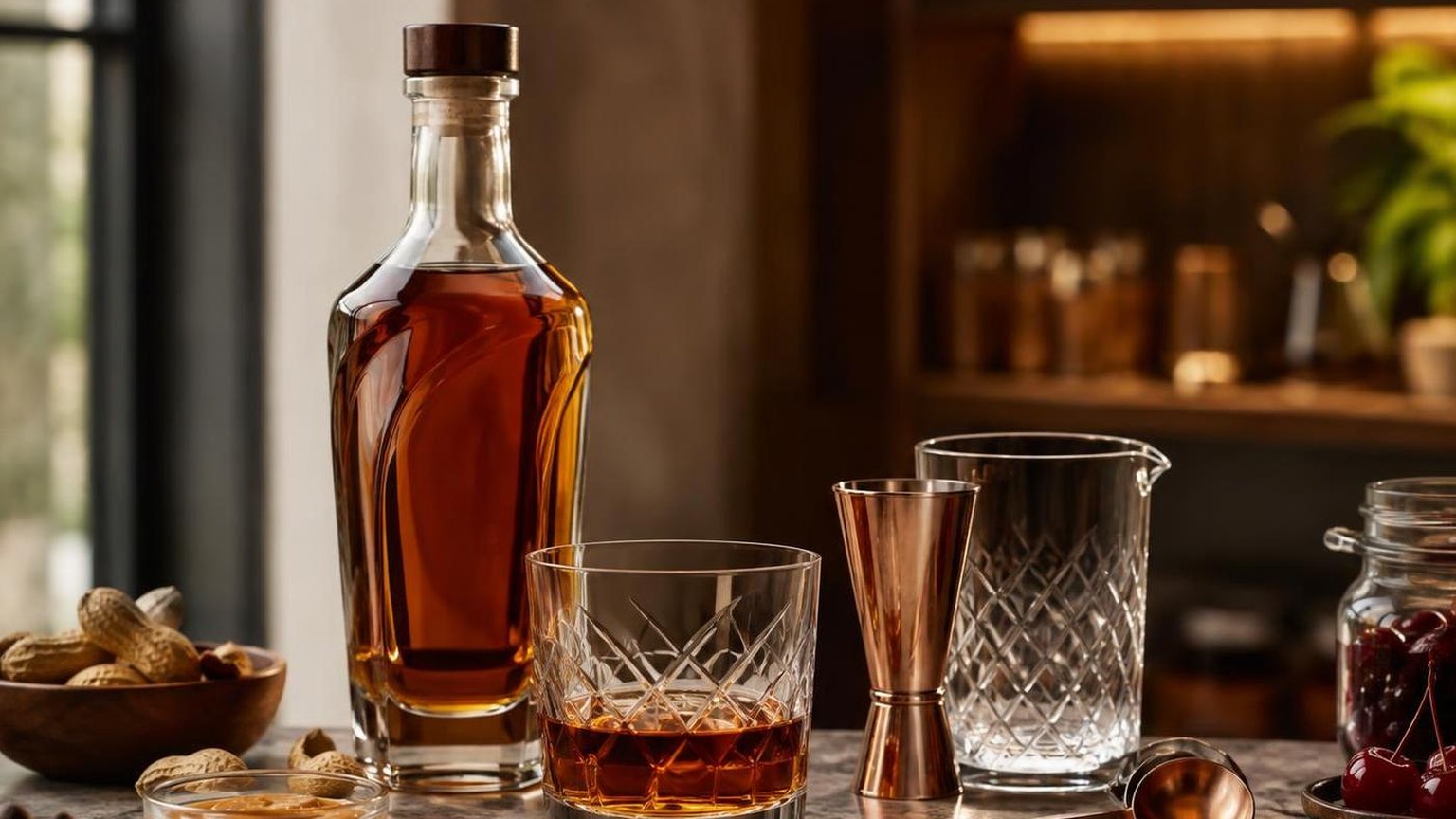
Use about 2 ounces peanut butter whiskey to 4–6 ounces chilled soda over ice, then add a squeeze of lemon if the drink tastes too sweet.
Can you mix peanut butter whiskey with coffee?
Yes, peanut butter whiskey works well in hot coffee, cold brew, and espresso-based drinks because coffee’s bitterness balances the whiskey’s sweetness.
Start with 1–1.5 ounces in 6–8 ounces of coffee, and add cream or half-and-half if you want a peanut-butter-cup style drink.
What fruit juice goes with peanut butter whiskey?
Grape juice and cranberry juice are the best fits because they echo the classic peanut butter and jelly flavor while adding needed acidity.
Mix 1.5 ounces peanut butter whiskey with 3–4 ounces juice, or use half cranberry and half club soda for a lighter, less sugary highball.
Does peanut butter whiskey mix with milk or cream?
Yes, dairy turns peanut butter whiskey into a dessert-style cocktail similar to a milkshake or creamy liqueur drink.
Combine 1.5–2 ounces peanut butter whiskey with 3–5 ounces milk, chocolate milk, or cream over ice, but keep it cold and serve immediately for the best texture.
What can I mix with peanut butter whiskey for a less sweet drink?
Use club soda, unsweetened iced tea, black coffee, or a squeeze of fresh lemon to cut the sugar and make the peanut flavor feel drier.
A practical build is 2 ounces peanut butter whiskey, 4 ounces club soda, and 0.25–0.5 ounce lemon juice over plenty of ice.
Related Reading
- How Many Oz Are In 1.5 Liters?
- How Many Ml Is 12 Fl Oz?
- Where To Buy A Wine Cooler?
- How Much Is 64 Oz In Liters?
- Who Makes Kirkland Tennessee Whiskey?
- How Many Gallons Is 38 Liters?
- What Is The Oldest Whiskey In The World?
- All Blog Guides
- CDC Alcohol Use and Your Health (2024)
- NIAAA What Is a Standard Drink? (2023)
- FDA Food Allergies (2024)
- USDA FoodData Central: Peanut Butter, Smooth Style, with Salt (2019)
- Harvard T.H. Chan School of Public Health: Peanuts (2024)
- Skrewball Whiskey Recipes (2025)
- Liquor.com: Peanut Butter Whiskey Cocktails (2023)