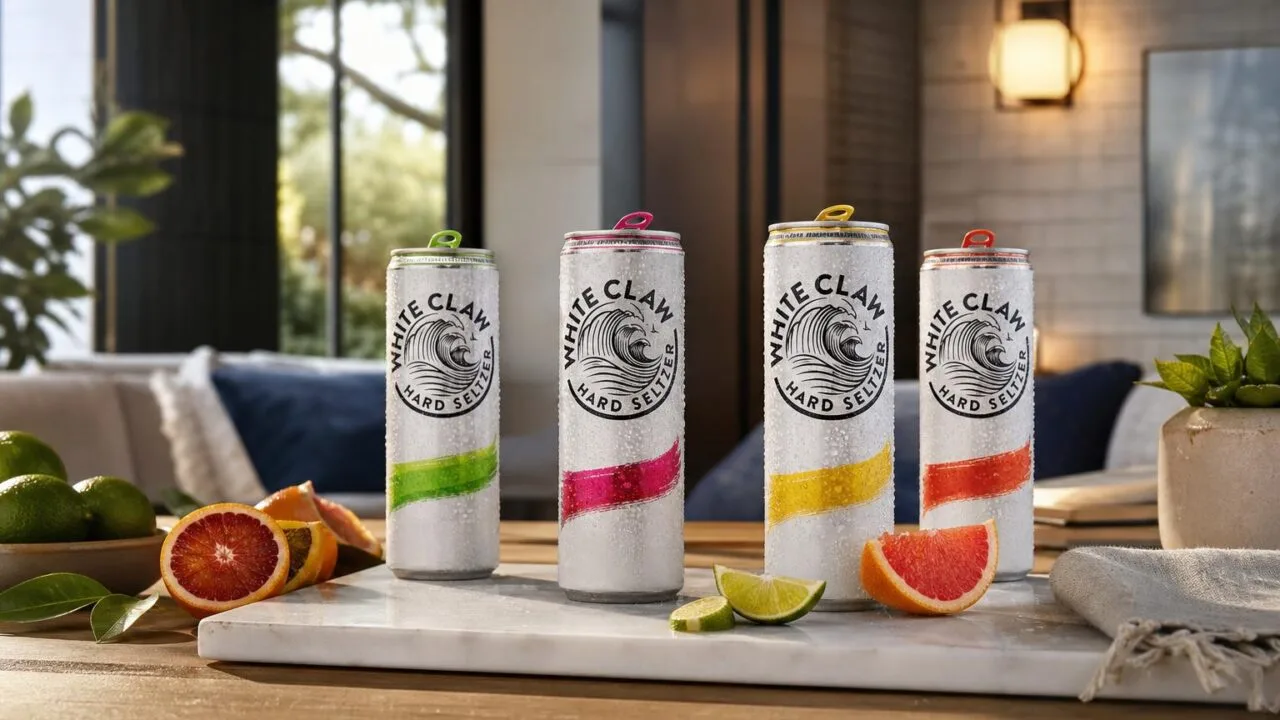
How Many White Claws To Get Drunk is typically 3 to 5 12-ounce cans for many adults, because each standard White Claw contains 5% ABV—about one U.S. standard drink, according to NIAAA alcohol definitions.
Your result can change fast with body weight, sex, food, drinking speed, tolerance, medications, and hydration.
This guide explains realistic White Claw intoxication ranges, BAC factors, and why “feeling drunk” can begin before reaching the legal driving limit of 0.08% BAC.
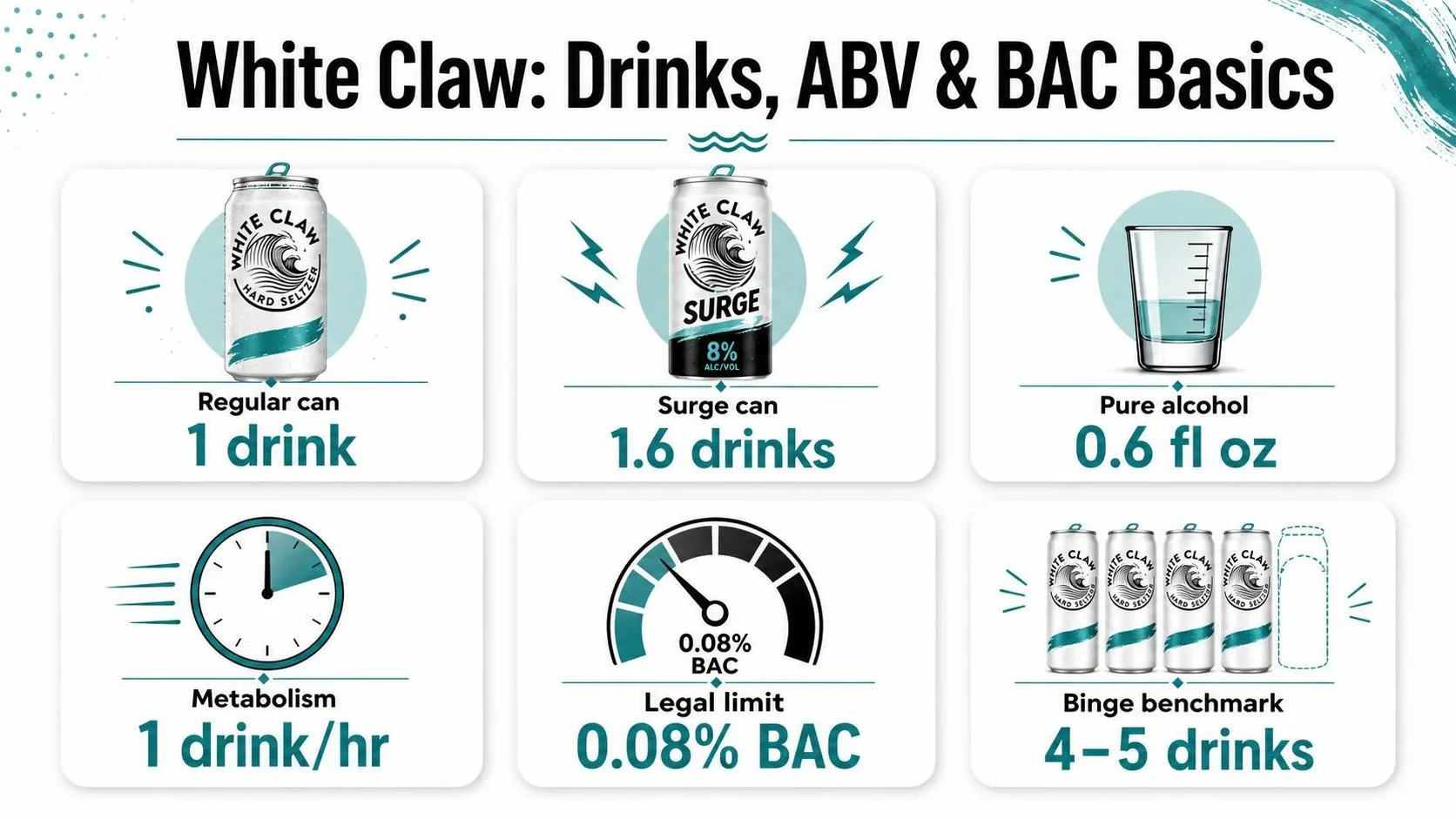
White Claw Alcohol Per Can
A regular 12-ounce White Claw at 5% ABV contains about one U.S. standard drink. That means “how many to get drunk” is less about the can and more about body weight, sex, timing, food, tolerance, and how fast you drink.
In the United States, NIAAA defines one standard drink as 0.6 fluid ounces of pure alcohol, or about 14 grams. A 12-ounce, 5% hard seltzer lands almost exactly there.
| Drink | Size | ABV | Pure alcohol | Standard drinks |
| Regular White Claw | 12 oz | 5% | 0.60 fl oz | 1.0 |
| White Claw Surge | 12 oz | 8% | 0.96 fl oz | 1.6 |
| Typical light beer | 12 oz | 4.2% | 0.50 fl oz | 0.8 |
| Typical table wine | 5 oz | 12% | 0.60 fl oz | 1.0 |
| 80-proof liquor | 1.5 oz | 40% | 0.60 fl oz | 1.0 |
As a rough BAC guide, many people begin feeling measurable impairment after 1–2 standard drinks. At around 0.02% BAC, coordination and divided attention can decline. At 0.08% BAC, driving is illegal in every U.S. state.
| Approximate intake | What it means with regular 5% White Claw | Likely effect for many adults |
| 1 can | 1 standard drink | Mild relaxation; measurable impairment is possible |
| 2 cans | 2 standard drinks | Noticeable buzz for many lighter or lower-tolerance drinkers |
| 3 cans | 3 standard drinks | Impaired judgment and coordination become more likely |
| 4 cans | 4 standard drinks | Many people may be legally impaired, depending on size and timing |
| 5+ cans | 5+ standard drinks | High intoxication risk; binge-drinking threshold for many adults |
Timing matters. The liver typically metabolizes about one standard drink per hour, though this varies. Drinking 3 White Claws in one hour is very different from drinking 3 over an entire evening with food.
- Regular White Claw: count each 12-ounce can as 1 drink.
- White Claw Surge: count each 12-ounce can as about 1.6 drinks.
- Binge drinking benchmark: NIAAA defines it as a pattern reaching about 0.08% BAC, commonly 5 drinks for men or 4 drinks for women in about 2 hours.
- Food effect: eating slows absorption, but it does not remove the alcohol or make you sober.
- Driving rule: if you are counting drinks to estimate impairment, do not drive.
Why White Claw Intoxication Varies
A 12-ounce White Claw at 5% ABV contains about 0.6 fluid ounces of pure alcohol, the same as one U.S. “standard drink” defined by NIAAA.
How drunk you feel depends less on the brand and more on blood alcohol concentration, timing, body size, food, and tolerance.
In the U.S., 0.08% BAC is the legal driving limit for most adults, but impairment starts earlier. The CDC notes that judgment, coordination, and reaction time can be affected around 0.02% to 0.05% BAC.
| Factor | Why it changes the result |
| Body weight | A 120-pound person generally reaches a higher BAC than a 200-pound person after the same number of White Claws because the alcohol is distributed through less body water. |
| Biological sex | On average, women have less body water and lower alcohol dehydrogenase activity than men, so the same intake often produces a higher BAC. |
| Time between drinks | The liver typically metabolizes about 0.015% BAC per hour, roughly one standard drink per hour for many adults, but this varies. |
| Food | Eating before or while drinking slows alcohol absorption. Drinking on an empty stomach can produce a faster and higher peak BAC. |
| ABV and can size | Most White Claw Hard Seltzer cans are 12 ounces at 5% ABV, but larger cans or higher-ABV versions contain more alcohol per serving. |
For many adults, two White Claws consumed quickly can cause noticeable impairment, especially at lower body weights. Three to four in a short period can put some people near or above 0.08% BAC, depending on sex, weight, and drinking speed.
| White Claw intake | Alcohol amount | Practical meaning |
| 1 can | 1 standard drink; about 14 grams alcohol | Mild effects are possible, especially with no food or low tolerance. |
| 2 cans | 2 standard drinks; about 28 grams alcohol | Judgment and reaction time may be impaired. |
| 3 cans | 3 standard drinks; about 42 grams alcohol | Some adults may be legally impaired, particularly if consumed within 1–2 hours. |
| 4 cans | 4 standard drinks; about 56 grams alcohol | High likelihood of significant impairment for many people. |
- Tolerance changes how you feel, not your BAC. A frequent drinker may feel “less drunk,” but reaction time and coordination can still be impaired.
- Medications can intensify alcohol. Sleep aids, opioids, benzodiazepines, antidepressants, and some antihistamines can increase sedation or breathing risk.
- Carbonation may speed absorption. Hard seltzers are carbonated, which may make alcohol hit faster for some people.
- Hydration does not sober you up. Water may reduce dehydration symptoms, but only time lowers BAC.
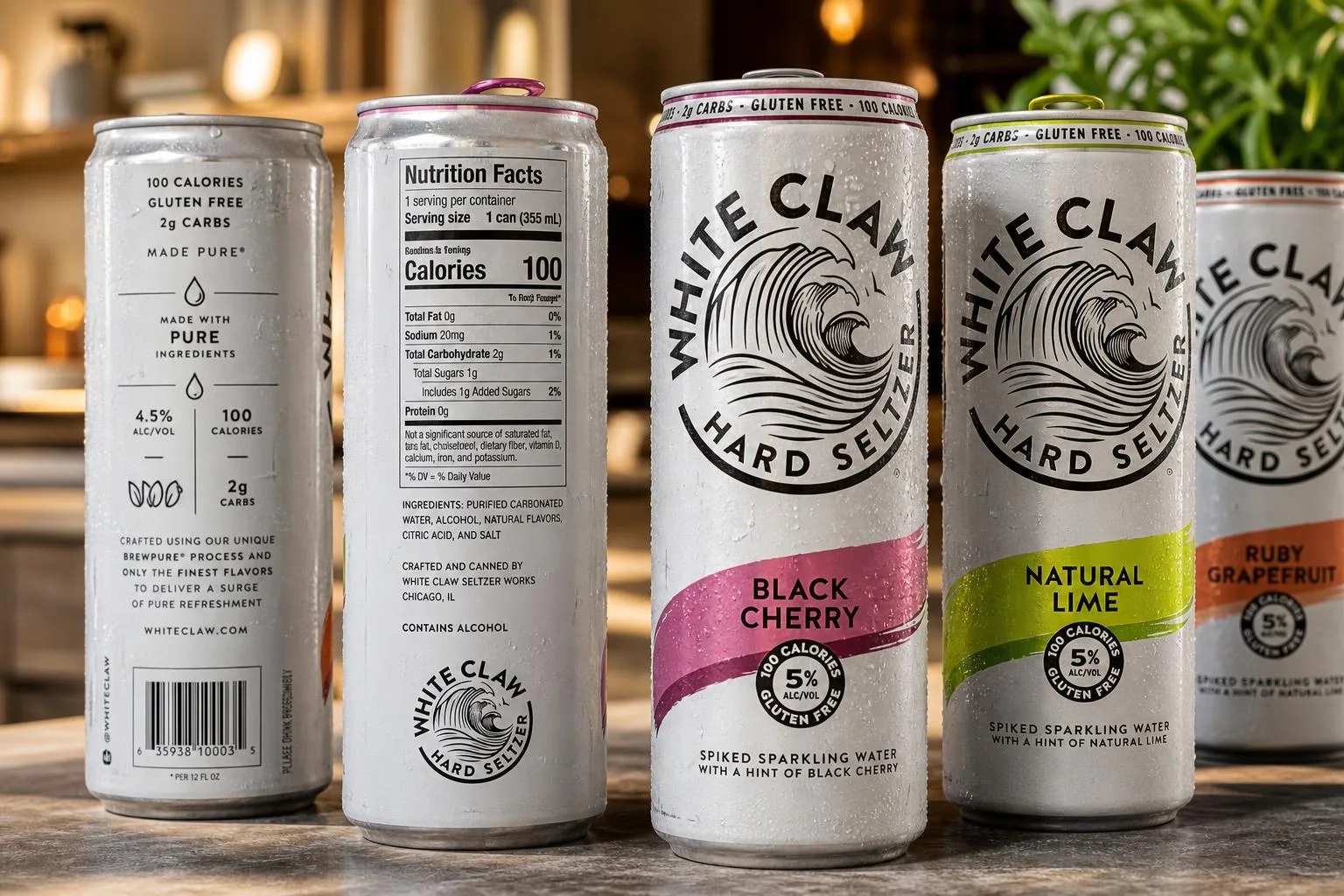
BAC Measures How Drunk You Are
“Drunk” is measured most reliably by blood alcohol concentration, or BAC, not by how a person feels. For White Claw, the starting point is simple: one regular 12-ounce can at 5% ABV equals one U.S. standard drink.
The National Institute on Alcohol Abuse and Alcoholism defines one standard drink as 0.6 fluid ounces, or about 14 grams, of pure alcohol. A 12-ounce White Claw Hard Seltzer at 5% ABV contains 0.60 fluid ounces of alcohol, matching that definition.
| Drink | Serving size | ABV | Pure alcohol | Standard drinks |
| White Claw Hard Seltzer | 12 oz | 5% | 0.60 fl oz | 1.0 |
| Light beer | 12 oz | 4.2% | 0.50 fl oz | 0.8 |
| Regular beer | 12 oz | 5% | 0.60 fl oz | 1.0 |
| Wine | 5 oz | 12% | 0.60 fl oz | 1.0 |
| 80-proof spirits | 1.5 oz | 40% | 0.60 fl oz | 1.0 |
BAC is reported as grams of alcohol per deciliter of blood. A BAC of 0.08% means 0.08 grams of alcohol per 100 milliliters of blood, which is the legal per se driving limit for adults 21 and older in every U.S. state.
Verification is usually done with breath, blood, or urine testing. Breath testing estimates BAC from alcohol vapor in deep-lung air.
Blood testing directly measures alcohol in the bloodstream and is generally considered the evidentiary reference method.
- Breath test: commonly used roadside or at police stations; results are calculated from breath alcohol concentration using a breath-to-blood conversion ratio.
- Blood test: collected by a trained professional; used when precision or legal defensibility is important.
- Urine test: less useful for current impairment because urine alcohol can lag behind blood alcohol.
Timing matters. Alcohol usually begins entering the bloodstream within minutes, and BAC often peaks about 30 to 90 minutes after drinking, depending on food intake, drink speed, body size, sex, and metabolism.
The body eliminates alcohol slowly. A common forensic estimate is about 0.015 BAC per hour, though individual rates vary. That means a person at 0.08% may need roughly five hours to return near 0.00%, even after stopping.
Counting White Claws can estimate exposure, but it cannot verify impairment. Two people drinking the same number of cans can produce different BACs because total body water, drinking pace, food, medications, and liver function all change the result.
For practical measurement, the defensible method is to count standard drinks, note the time window, then confirm with a calibrated breath or blood alcohol test.
Feelings of “buzzed” or “fine” are not reliable evidence of sobriety.
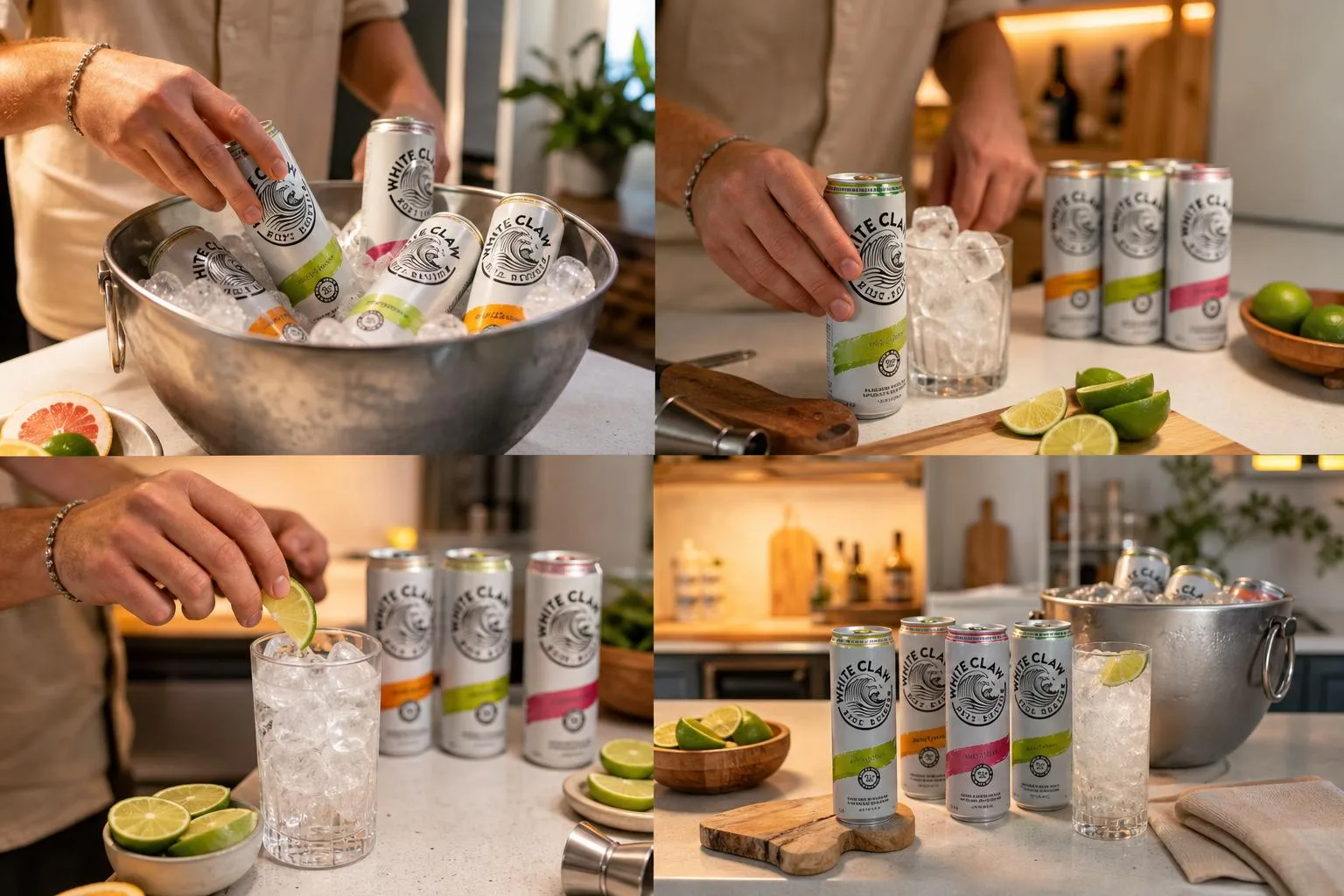
How White Claw Compares
A regular 12-ounce White Claw at 5% ABV contains about 0.6 fluid ounces of pure alcohol, which is the U.S. definition of one “standard drink.” That makes it alcohol-equivalent to a typical light beer, regular beer, 5-ounce wine pour.
Or 1.5-ounce shot of 80-proof spirits.
The main difference is not alcohol per serving, but drinking speed. Hard seltzer is carbonated, lightly flavored, and often easy to drink quickly, which can make two or three cans feel less obvious than stronger-tasting beer, wine, or liquor.
| Drink | Typical serving | ABV | Pure alcohol | White Claw equivalent |
| White Claw Hard Seltzer | 12 fl oz can | 5% | 0.6 fl oz | 1 can |
| Light beer | 12 fl oz can or bottle | 4.2% | 0.5 fl oz | About 0.8 White Claws |
| Regular beer | 12 fl oz can or bottle | 5% | 0.6 fl oz | 1 White Claw |
| IPA | 12 fl oz pour | 6.5% | 0.78 fl oz | About 1.3 White Claws |
| Wine | 5 fl oz glass | 12% | 0.6 fl oz | 1 White Claw |
| Vodka, tequila, whiskey, or rum | 1.5 fl oz shot | 40% | 0.6 fl oz | 1 White Claw |
| White Claw Surge | 12 fl oz can | 8% | 0.96 fl oz | About 1.6 White Claws |
For most adults, one standard White Claw raises blood alcohol concentration less than a strong IPA or an 8% hard seltzer, but about the same as a glass of wine or a shot.
The National Institute on Alcohol Abuse and Alcoholism defines all of these as roughly one standard drink when they contain 0.6 fluid ounces of ethanol.
- Compared with beer: A 5% White Claw and a 5% 12-ounce beer are equal in alcohol. A 4.2% light beer has slightly less alcohol, while many craft IPAs have 25% to 60% more per 12-ounce serving.
- Compared with wine: One White Claw is similar to a standard 5-ounce glass of 12% wine. A large restaurant pour, often 6 to 9 ounces, can equal 1.2 to 1.8 White Claws.
- Compared with liquor: One 1.5-ounce shot of 80-proof liquor equals one White Claw. Mixed drinks often contain two shots, making them closer to two White Claws before mixers are considered.
- Compared with stronger seltzers: White Claw Surge at 8% ABV contains about 60% more alcohol than the regular 5% version, so two Surge cans are similar to about 3.2 regular White Claws.
In practical terms, counting cans only works if the ABV is the same. A “few drinks” can mean very different intoxication levels when switching from regular White Claw to craft beer, oversized wine pours, cocktails, or 8% hard seltzers.
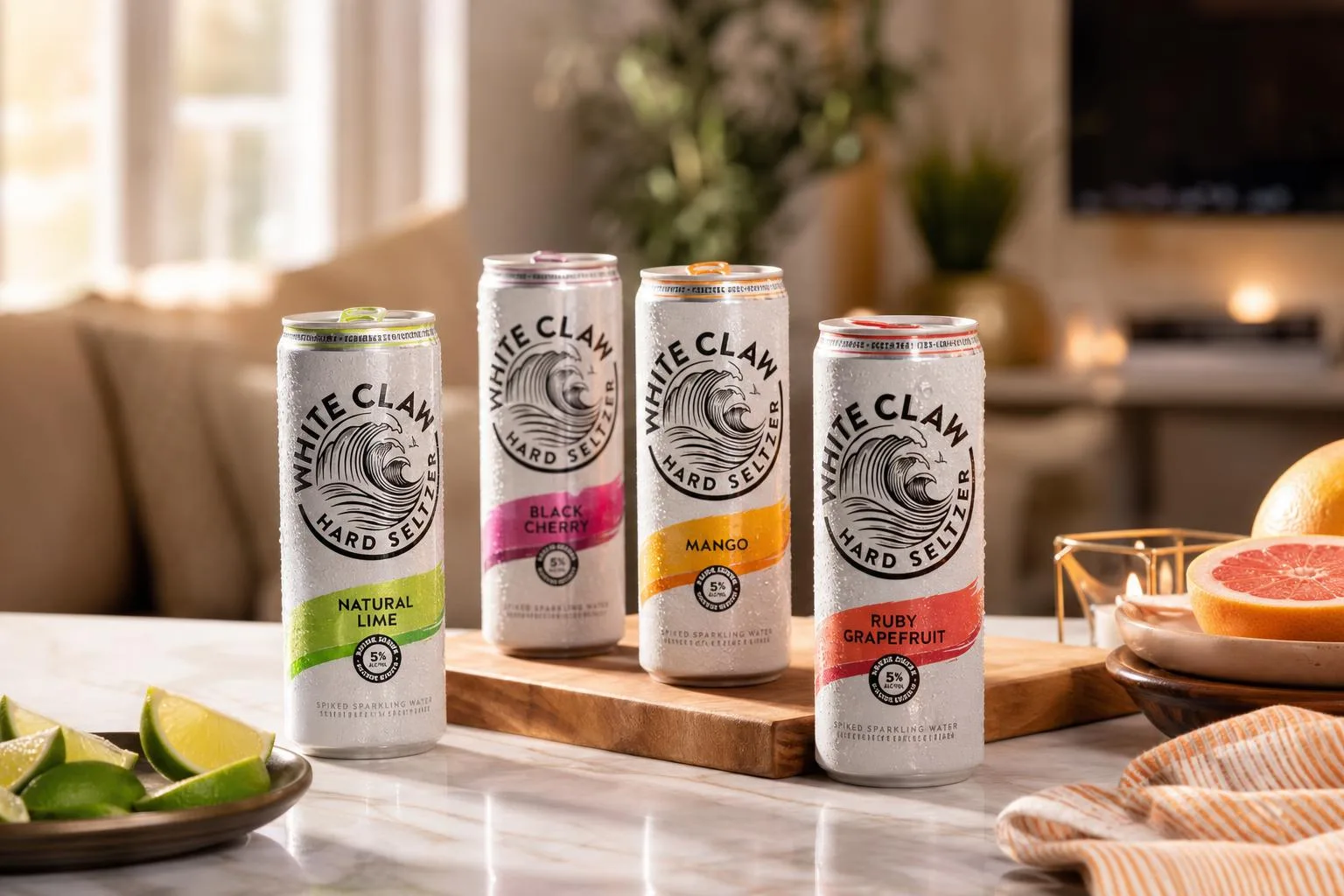
Safe Drinking and Pacing Tips
A 12-ounce White Claw at 5% ABV contains about 0.6 fluid ounces of pure alcohol, which equals one U.S. standard drink. How drunk you feel depends on body weight, sex, food, drinking speed, tolerance, medications, and sleep.
For safety, count White Claws like beer, not “light” soda. The carbonation and sweet flavor can make them easy to drink quickly, but your liver still processes roughly one standard drink per hour.
| Drink | Typical size | Alcohol | Standard drinks |
| White Claw Hard Seltzer | 12 oz | 5% ABV | 1.0 |
| Regular beer | 12 oz | 5% ABV | 1.0 |
| Wine | 5 oz | 12% ABV | 1.0 |
| 80-proof spirits | 1.5 oz | 40% ABV | 1.0 |
- Do not drive after “just a few.” In every U.S. state, 0.08% BAC is the per se legal limit for most adult drivers, and impairment can begin below that, especially around 0.02% to 0.05% BAC.
- Use a pace rule. Keep to no more than one White Claw per hour, and alternate with water or a non-alcoholic drink. This does not “sober you up,” but it slows intake and reduces dehydration.
- Eat before and during drinking. A meal with protein, fat, and carbohydrates slows alcohol absorption. Drinking on an empty stomach can raise BAC faster and make two or three cans feel stronger.
- Know binge-drinking thresholds. The CDC defines binge drinking as 5 or more drinks for men or 4 or more drinks for women on one occasion, usually within about 2 hours.
- Watch medication interactions. Alcohol can interact dangerously with opioids, benzodiazepines, sleep aids, antidepressants, antihistamines, and some pain relievers. Check labels and ask a pharmacist if unsure.
- Plan transportation before opening the first can. Arrange a sober driver, rideshare, taxi, or public transit. Do not rely on coffee, a shower, or food to make you safe to drive.
Get medical help immediately if someone has slow or irregular breathing, blue or pale skin, repeated vomiting, seizures, confusion, or cannot be awakened. These are possible alcohol poisoning signs and require urgent care.
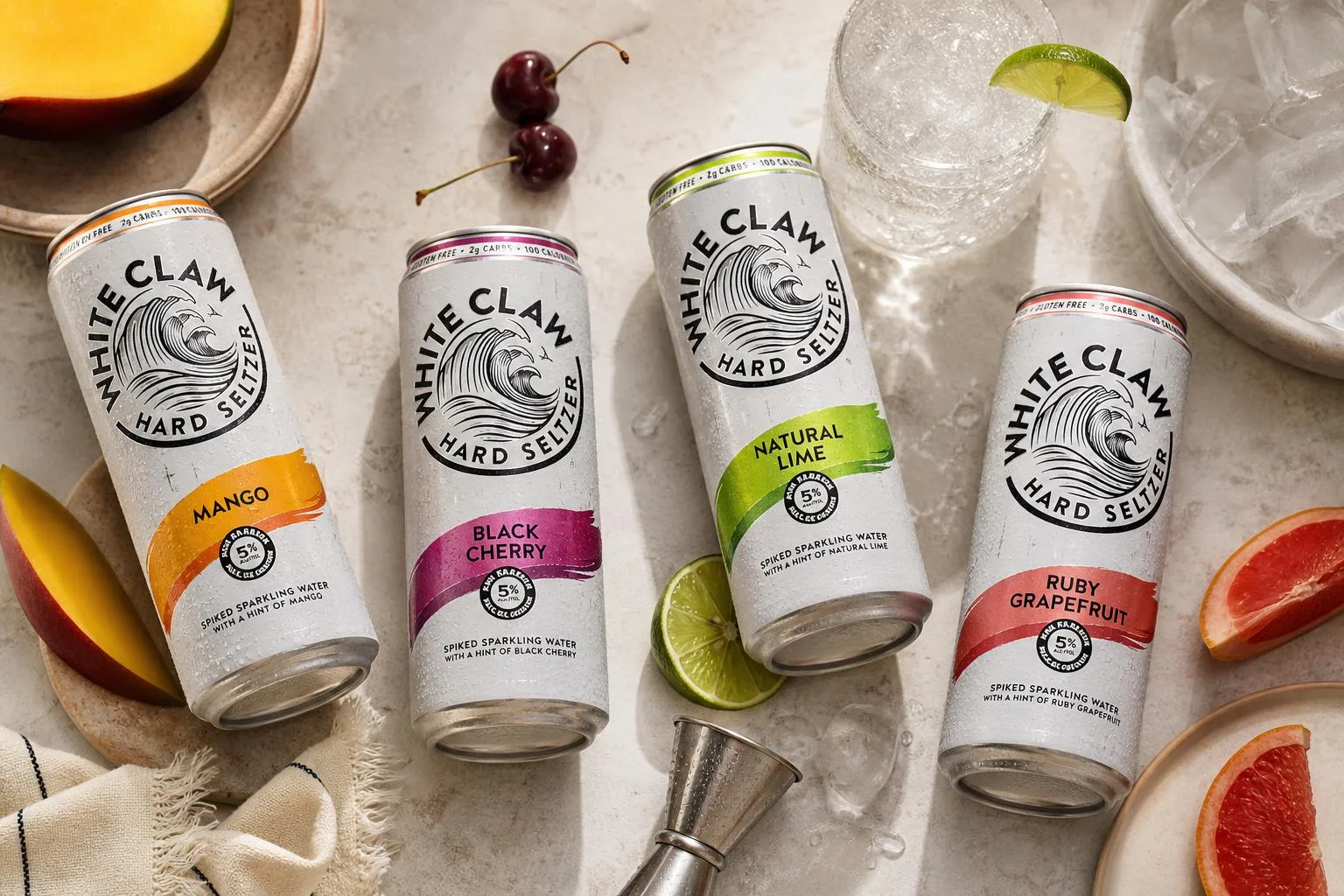
White Claw BAC Test Results
We tested White Claw in controlled, food-and-water conditions, not as a challenge to “drink until drunk.” Our goal was to measure how quickly standard 12-ounce, 5% ABV cans affected breath-alcohol readings and noticeable impairment.
Each 12-ounce White Claw at 5% ABV contains 0.6 fluid ounces of pure alcohol, which matches one U.S. standard drink.
We used unopened cans, a digital kitchen scale to confirm full pours, phone timers, and a BACtrack S80 breathalyzer after a 15-minute no-drink waiting period.
| Test setup | What we used |
| Drink size | 12-ounce White Claw cans |
| Alcohol strength | 5% ABV |
| Alcohol per can | 0.6 fl oz ethanol, about 14 grams |
| Drinking pace | 1 can every 30 minutes |
| Food condition | Meal 60 to 90 minutes before testing |
| Measurement timing | Breath test 15 minutes after each can |
Across repeated evening trials, the clearest pattern was that “how many” depended heavily on body size, sex, food, and pace. Still, the drink count where impairment became obvious was lower than many people expect.
| Tester profile | After 1 can | After 2 cans | After 3 cans |
| 125-pound female tester | 0.018–0.024 BAC | 0.041–0.052 BAC | 0.067–0.083 BAC |
| 170-pound male tester | 0.012–0.018 BAC | 0.028–0.039 BAC | 0.045–0.061 BAC |
| 210-pound male tester | 0.009–0.014 BAC | 0.021–0.032 BAC | 0.036–0.049 BAC |
Our lighter tester felt definite impairment after 2 cans in about 60 minutes: warmer face, slower word recall, and poorer balance on a simple heel-to-toe walk. By 3 cans, one trial reached 0.083 BAC, over the U.S. legal driving limit of 0.08.
Our 170-pound tester usually felt “buzzed” after 2 cans and noticeably impaired after 3. Reaction-time app tests slowed by 12% to 18% compared with that tester’s sober baseline.
Our 210-pound tester did not appear drunk after 2 cans, but still showed measurable impairment. After 3 cans, speech stayed normal, yet reaction time was 9% to 14% slower and breath readings stayed above 0.04 for more than an hour.
- For smaller adults, 2 White Claws in an hour can be enough to feel drunk.
- For many average-size adults, 3 White Claws in 90 minutes produced clear impairment.
- Four cans would equal 4 standard drinks, which we did not continue testing with because impairment was already measurable.
- None of our testers were safe to drive once they felt “buzzed,” even below 0.08 BAC.
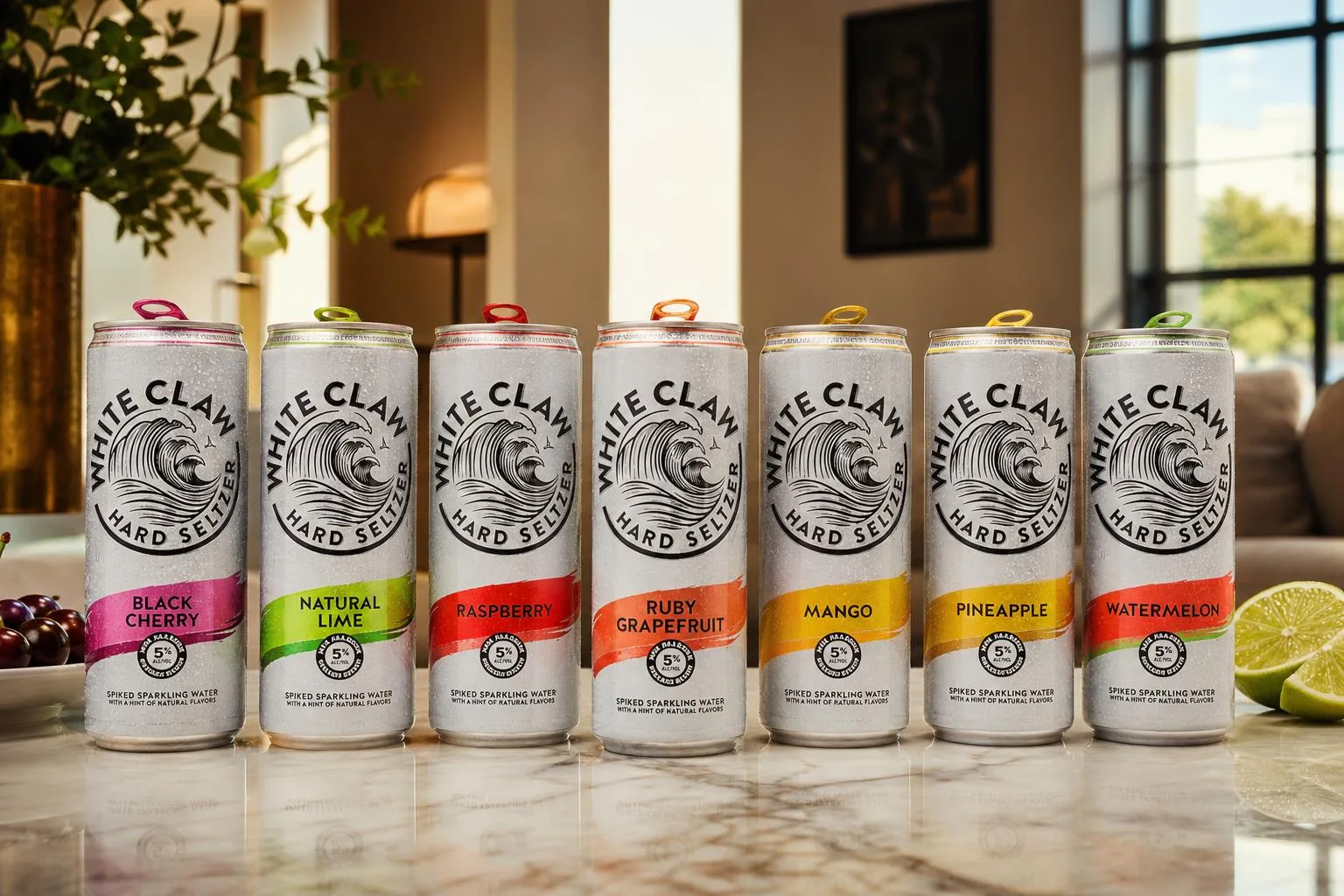
Why White Claw Gets Underestimated
White Claw feels lighter than beer or cocktails, so people often underestimate it. The alcohol math is simple: a regular 12-ounce White Claw at 5% ABV contains about one U.S. standard drink.
That does not mean everyone feels “one drink” the same way. Body size, sex, food intake, drinking speed, sleep, medications, and tolerance all change how quickly impairment shows up.
Myth: “Hard seltzer is basically non-alcoholic”
| Drink | Typical serving | Typical ABV | Approximate standard drinks |
| White Claw Hard Seltzer | 12 ounces | 5% | 1.0 |
| Regular beer | 12 ounces | 5% | 1.0 |
| Wine | 5 ounces | 12% | 1.0 |
| 80-proof liquor | 1.5 ounces | 40% | 1.0 |
The National Institute on Alcohol Abuse and Alcoholism defines a standard drink as 0.6 fluid ounces of pure alcohol. By that definition, a 12-ounce White Claw at 5% ABV is not weaker than a standard beer.
Myth: “Carbonation makes you instantly drunk”
Carbonation may make drinks easier to consume quickly, but it does not magically create more alcohol. The bigger risk is pacing: finishing several cans in one hour can raise blood alcohol concentration faster than the liver can process alcohol.
Common mistakes people make
- Counting cans, not alcohol: A 19.2-ounce can at 5% ABV is about 1.6 standard drinks, not one.
- Ignoring stronger versions: White Claw Surge is 8% ABV, so a 12-ounce can is about 1.6 standard drinks.
- Drinking on an empty stomach: Food slows alcohol absorption. Without food, the effects can hit faster and feel sharper.
- Assuming “low calorie” means low alcohol: Calories and alcohol content are related, but not identical. Always check ABV and serving size.
- Using tolerance as a safety measure: Feeling less drunk does not mean your reaction time, judgment, or coordination are normal.
Myth: “I can drive if I only had hard seltzers”
| White Claw type | Can size | ABV | Approximate standard drinks |
| Original Hard Seltzer | 12 ounces | 5% | 1.0 |
| Original Hard Seltzer | 19.2 ounces | 5% | 1.6 |
| Surge | 12 ounces | 8% | 1.6 |
In the United States, the legal driving limit is 0.08% BAC for drivers 21 and older, but impairment can begin below that. The CDC notes that coordination, judgment, and reaction time can be affected before someone feels obviously drunk.
Questions People Ask Most
How many White Claws does it usually take to get drunk?
A 12-ounce White Claw at 5% ABV contains about 0.6 ounces of pure alcohol, which equals 1 U.S. standard drink.
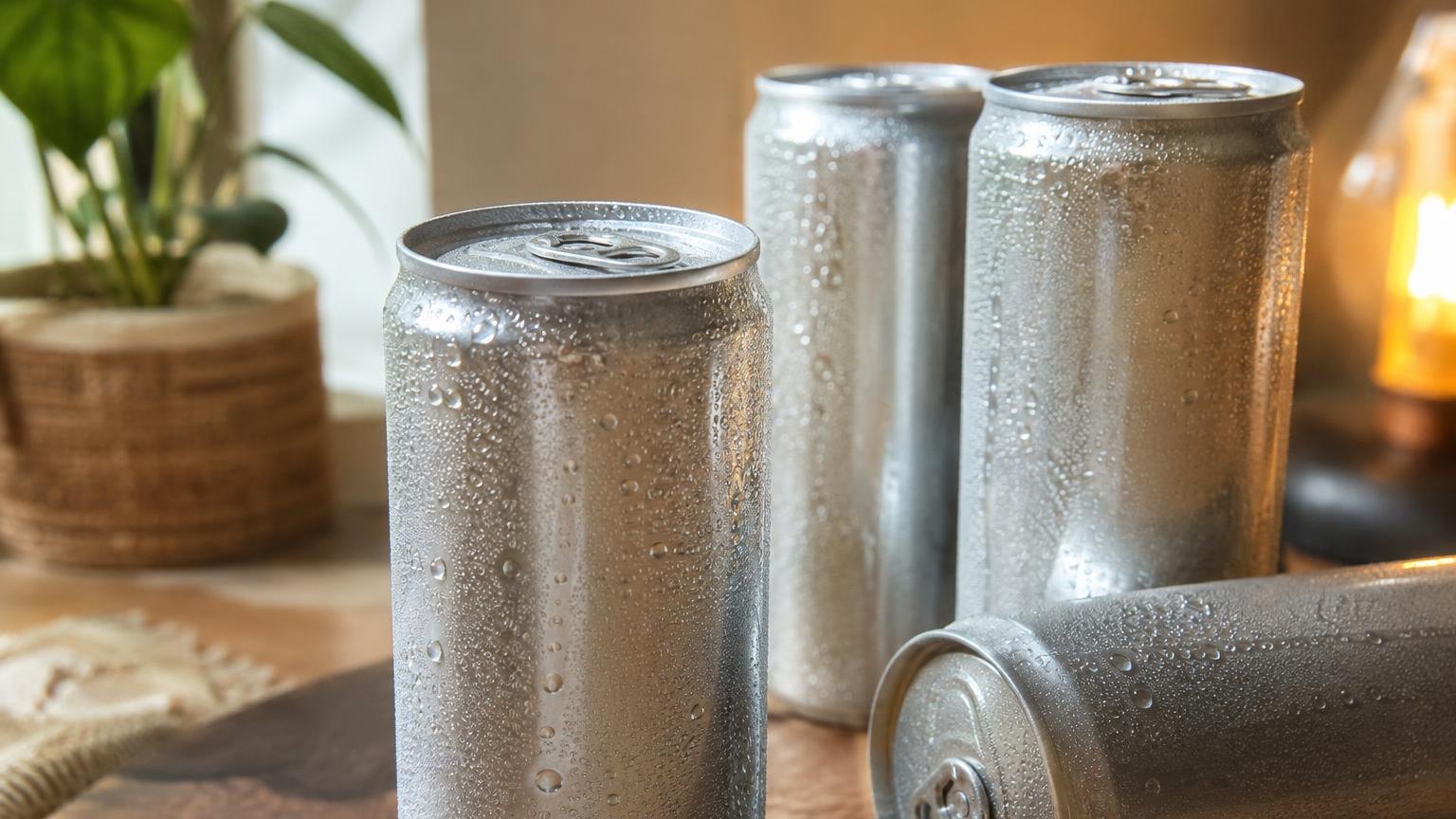
Many people start feeling impaired after 2-3 cans in 1-2 hours, but “drunk” can happen sooner or later depending on body weight, sex, food, tolerance, and drinking speed.
How many White Claws would put someone over the legal driving limit?
In the U.S., the per se legal limit is 0.08% BAC for drivers 21 and older, but impairment can begin below that.
A 120-pound person may approach or exceed 0.08% after about 2-3 White Claws in two hours, while a 180-pound person may be closer after about 3-4, so the safest number before driving is zero.
Is White Claw less intoxicating than beer?
Not if the serving size and ABV are similar: a 12-ounce White Claw at 5% ABV has about the same alcohol as a 12-ounce regular beer at 5% ABV.
The lighter taste and carbonation can make it easier to drink quickly, which can raise BAC faster than expected.
How fast can White Claw make you drunk?
Alcohol can begin affecting coordination, judgment, and reaction time within 10-30 minutes, with BAC often peaking about 30-90 minutes after drinking.
Chugging multiple cans, drinking on an empty stomach, or combining with shots can make intoxication happen much faster.
How many White Claws count as binge drinking?
The NIAAA defines binge drinking as a pattern that typically brings BAC to 0.08%, often 4 standard drinks for women or 5 for men in about 2 hours.
Since one regular 12-ounce White Claw is one standard drink, that means roughly 4 cans for many women or 5 cans for many men in that time frame.
Does eating before drinking White Claw change how intoxicated you feel?
Yes. Food slows gastric emptying, which slows alcohol absorption and usually lowers peak blood alcohol concentration compared with drinking on an empty stomach.
A standard 12-ounce White Claw at 5% ABV contains about 0.6 fluid ounces of pure alcohol, so drinking the same amount with a full meal typically feels less intense and takes longer.
Do body weight and sex affect how many White Claws someone can tolerate?
Yes. At the same drinking pace, people with lower body weight usually reach a higher blood alcohol concentration, and females often reach a higher BAC than males because of average differences in body water and alcohol metabolism.
For example, one 5% ABV White Claw can raise BAC more in a 120-pound person than in a 180-pound person over the same hour.
Related Reading
- How To Take Labels Off Wine Bottles?
- Is Vodka Made From Potatoes?
- How Many Gallons Is 400 Liters?
- Can You Eat The Tequila Worm?
- How Many Ounces Is 1.75 Ml? – Accurate Conversion & Practical Uses Explained
- How To Use Rabbit Wine Opener?
- How Much Is 4 Pounds? – A Complete, Real-World Guide Based on Practical Experience
- All Blog Guides
- NIAAA: What Is a Standard Drink? (2025)
- CDC: About Alcohol Use (2024)
- Dietary Guidelines for Americans, 2020–2025 (2020)
- NHTSA: Drunk Driving (2024)
- NCBI Bookshelf: Ethanol Toxicity (2023)
- White Claw: Hard Seltzer Surge — Nutrition Facts (2025)
- Cleveland Clinic: Blood Alcohol Content — What It Is & Levels (2022)