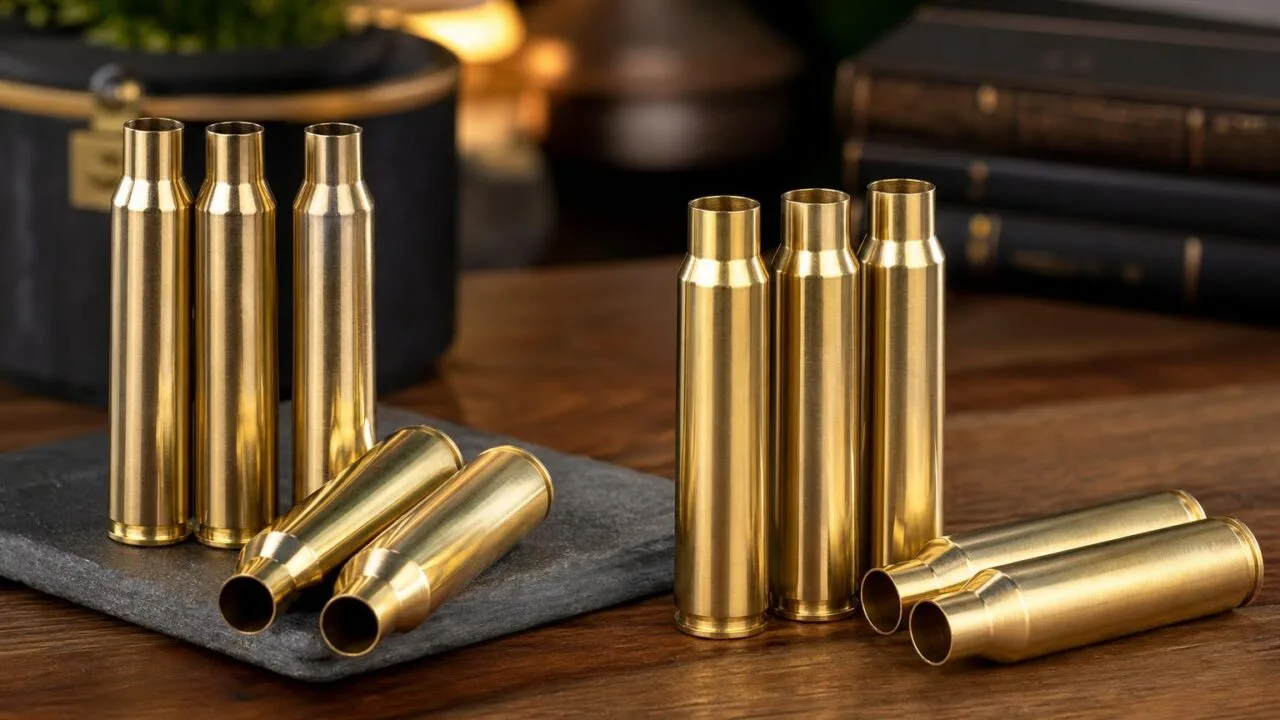
Yes, you can form 28 Nosler brass from 7mm RUM, and the process works because both cartridges share the .534″ Remington Ultra Magnum belt-less rebated rim and near-identical case head dimensions (0.550″ body diameter).
You’ll neck the 7mm RUM’s .284″ mouth down to accept .284″ bullets — wait, actually the 28 Nosler uses .284″ bullets too, so it’s a shoulder-blowout and trim job rather than a caliber change.
The 28 Nosler headspaces on a 35-degree shoulder set 2.152″ from the base, roughly 0.098″ shorter than the 7mm RUM’s case.
Expect to trim approximately 0.100″ of length, fire-form, and anneal necks to prevent splits during the reshaping sequence.
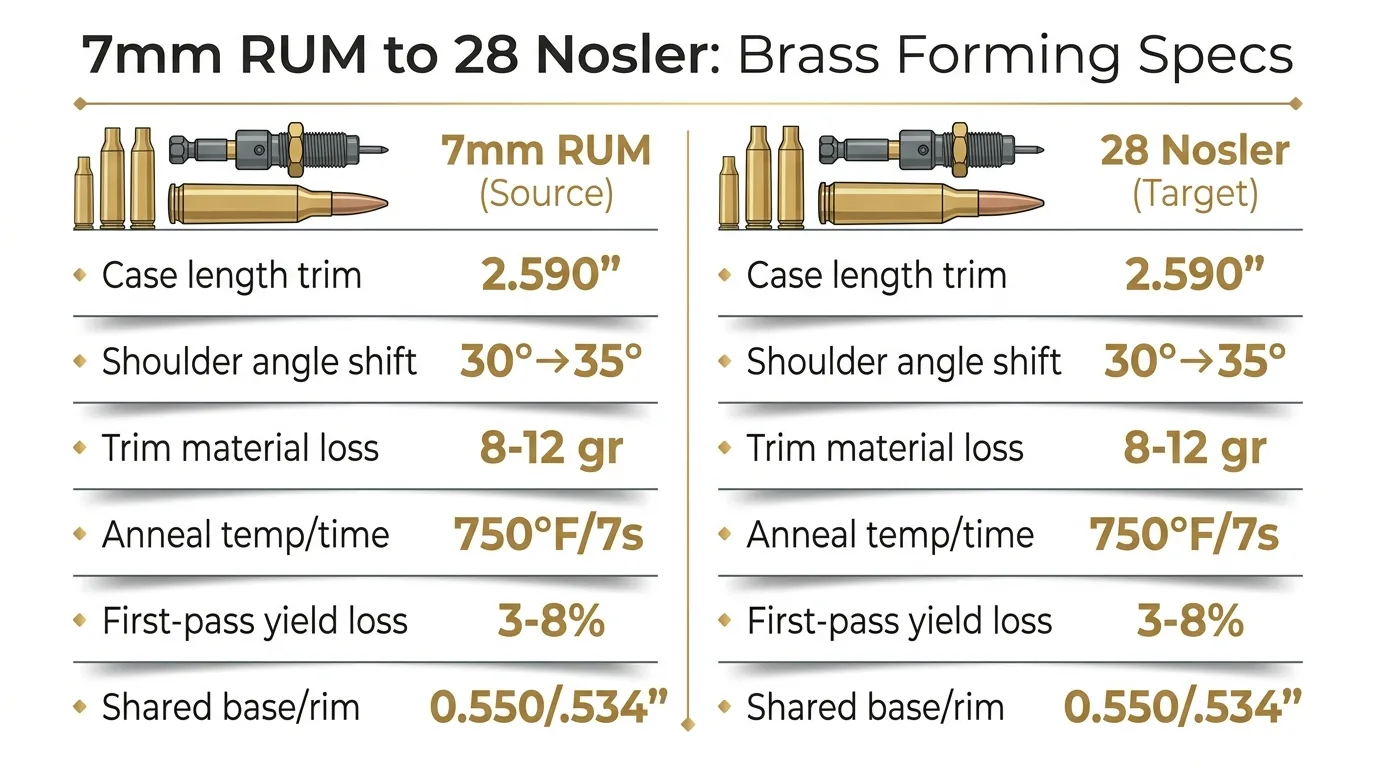
Critical Dimensions for Case Forming
Forming 28 Nosler from 7mm RUM hinges on three critical dimensions: case length, shoulder location, and rim/head diameter.
The good news is the head dimensions are effectively identical; the bad news is the shoulder geometry and length require deliberate work.
| Spec | 28 Nosler | 7mm RUM |
| Case length | 2.590″ | 2.850″ |
| Max COAL | 3.340″ | 3.600″ |
| Rim diameter | 0.534″ | 0.534″ |
| Base diameter | 0.550″ | 0.550″ |
| Shoulder diameter | 0.545″ | 0.525″ |
| Shoulder angle | 35° | 30° |
| Neck diameter | 0.315″ | 0.315″ |
| Bullet diameter | .284″ | .284″ |
| Water capacity | ~93.5 gr | ~98 gr |
| MAP (SAAMI) | 65,000 psi | 65,000 psi |
The 0.260″ length difference is the most obvious hurdle: 7mm RUM brass must be trimmed by roughly a quarter inch after forming to reach the 28 Nosler’s 2.590″ trim-to length.
The shoulder angle jump from 30° to 35° and the shoulder diameter increase from 0.525″ to 0.545″ mean the case must be blown forward and outward.
This is accomplished by running the RUM brass into a 28 Nosler full-length sizing die, ideally after neck-lubing.
Because both cartridges share the 0.534″ rim, 0.550″ base, and .284″ bullet, no rim turning or neck-diameter mismatch complicates the process.
The bolt face (.532–.534″ magnum), extractor, and magazine follower are already compatible on any 7mm RUM-derived action rebarreled to 28 Nosler.
What the Numbers Don’t Show
- Brass thickness: Remington RUM brass typically runs 0.014–0.015″ at the neck; Nosler-spec chambers assume ~0.014″, so neck turning to 0.0135–0.014″ is often required for safe clearance.
- Weight shift: Trimmed RUM brass loses 8–12 grains of material, altering internal capacity by roughly 2–3 grains of water versus factory Nosler cases.
- Yield: Expect 3–5% loss to split necks or crushed shoulders on the first forming pass.

Factors That Affect Forming Success
Forming 28 Nosler from 7mm RUM involves neck reduction, shoulder repositioning, and case trimming to a shorter 2.590″ length.
Success depends on brass chemistry, die geometry, annealing discipline, and how much material you remove during the conversion.
Case Dimensional Differences
| Spec | 7mm RUM | 28 Nosler |
| Case length | 2.850″ | 2.590″ |
| Base diameter | 0.550″ | 0.550″ |
| Shoulder diameter | 0.5500″ | 0.5500″ |
| Shoulder angle | 30° | 35° |
| Neck diameter | 0.315″ | 0.315″ |
| Case capacity (H2O) | ~98 gr | ~93 gr |
Brass Hardness and Annealing
Remington 7mm RUM brass typically ships around 85–95 HV at the neck. Reforming increases hardness 15–25% due to work hardening, raising split-neck risk above 100 HV without annealing.
- Anneal at 750°F for 6–8 seconds before sizing
- Re-anneal after final trim to 2.590″
- Expect 3–8% loss on first firing from splits or wrinkles
Die Setup and Lubrication
The 5° shoulder angle change is the critical variable. Setting the sizing die 0.002″–0.004″ below shoulder contact prevents doughnut formation. Insufficient lube causes stuck cases at the 0.550″ base junction.
- Imperial sizing wax outperforms spray lubes on heavy reductions
- Use a body die first, then a full-length 28 Nosler die
- Trim to 2.590″ ±0.005″ and chamfer inside 15°, outside 45°
Fireforming Behavior
Because both parent and target share 0.550″ base and 0.5500″ shoulder diameters, brass flow is minimal at the web.
The shoulder pushes forward roughly 0.100″ during fireforming, and case head separation risk stays low if headspace is set to 0.001″–0.002″ crush.
Cartridge Overall Length Impact
Reformed cases occasionally end up 0.003″–0.008″ shorter than factory 28 Nosler brass at the shoulder datum, reducing usable powder space by roughly 1–2 grains H2O.
Load development should start 5% below published max and work up while watching pressure signs.
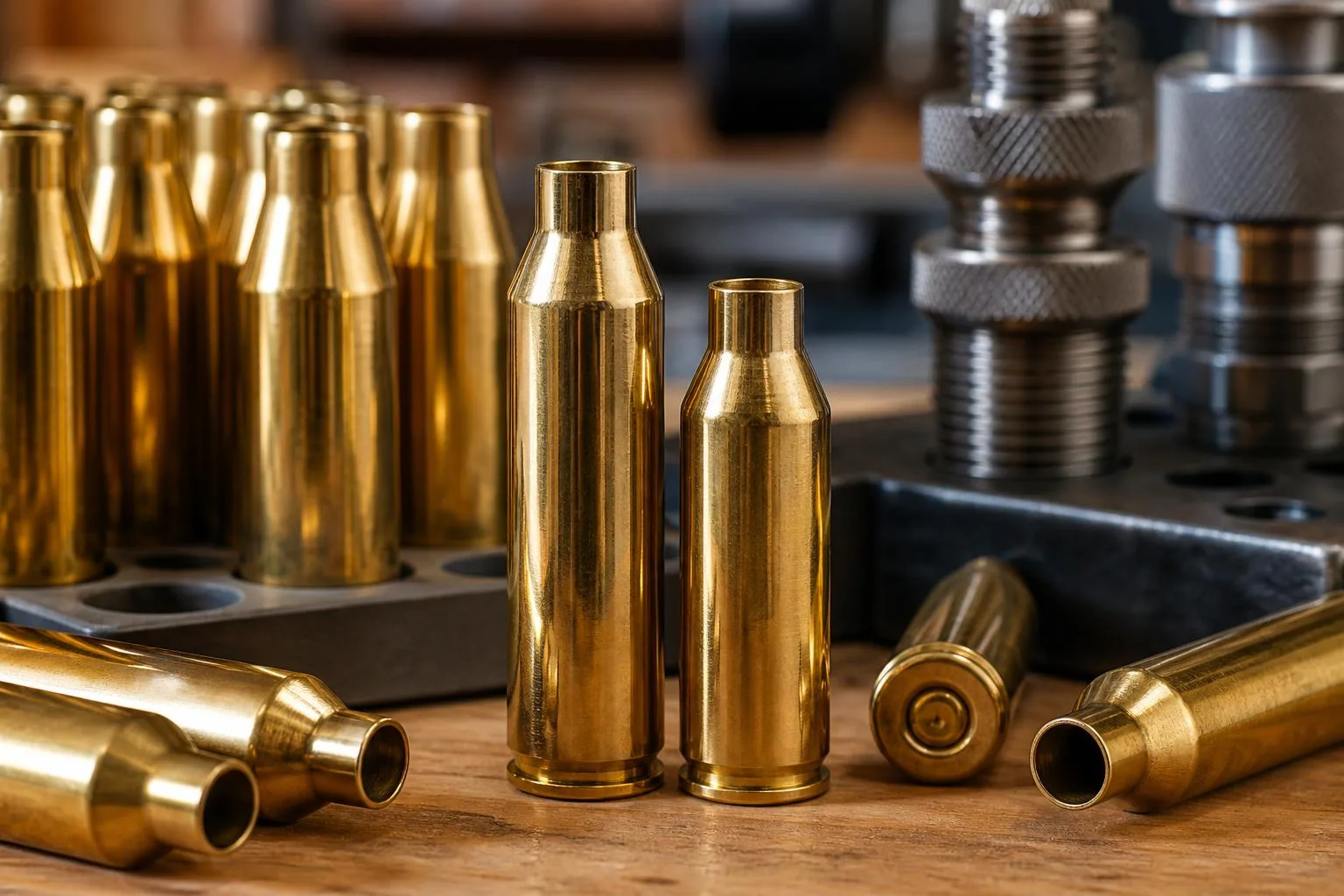
How to Verify Reformed Brass
Verifying that 7mm RUM brass has been correctly reformed to 28 Nosler requires dimensional inspection at three critical zones: the case head, the shoulder datum (0.375″ reference line), and overall case length.
A quality reload demands checks with calipers accurate to ±0.0005″ and a proper headspace gauge.
Key Dimensional Checks
| Measurement | 7mm RUM Spec | 28 Nosler Spec | Tool |
| Case head diameter | 0.5500″ | 0.5500″ | Micrometer |
| Rim diameter | 0.534″ | 0.534″ | Caliper |
| Shoulder datum (0.375″) | 2.1780″ | 2.0855″ | Hornady headspace gauge |
| Max case length | 2.850″ | 2.590″ | Caliper |
| Trim-to length | 2.840″ | 2.580″ | Case trimmer |
| Neck diameter (loaded) | 0.316″ | 0.315″ | Micrometer |
Step-by-Step Verification Protocol
- Headspace check: Use a Hornady L-N-L comparator with the 0.375″ bushing. The shoulder must sit 0.002″–0.004″ below chamber datum after sizing.
- Chamber test: Strip the bolt and confirm smooth closure on a sized, trimmed case. Any resistance indicates excess shoulder length.
- Neck wall uniformity: Measure at 4 points around the circumference. Variance over 0.0015″ indicates uneven brass flow and warrants neck turning.
- Case length: Trim to 2.580″ after each firing; the 7mm RUM parent case will overflow this dimension by roughly 0.260″ and must be trimmed twice during forming.
Verifying Safe Pressure Signs
After forming, load 3-round test batches starting 10% below published 28 Nosler maximums. Check primer condition, bolt lift, and measure case head expansion with a blade micrometer.
Expansion exceeding 0.0005″ over baseline indicates pressures approaching 65,000 PSI SAAMI maximum.
Weigh 20 reformed cases individually.
Consistent 28 Nosler brass from Nosler runs 245–252 grains; reformed 7mm RUM cases typically weigh 258–268 grains due to thicker web construction.
Requiring a 3–5% powder charge reduction from published data to stay within safe pressure limits.
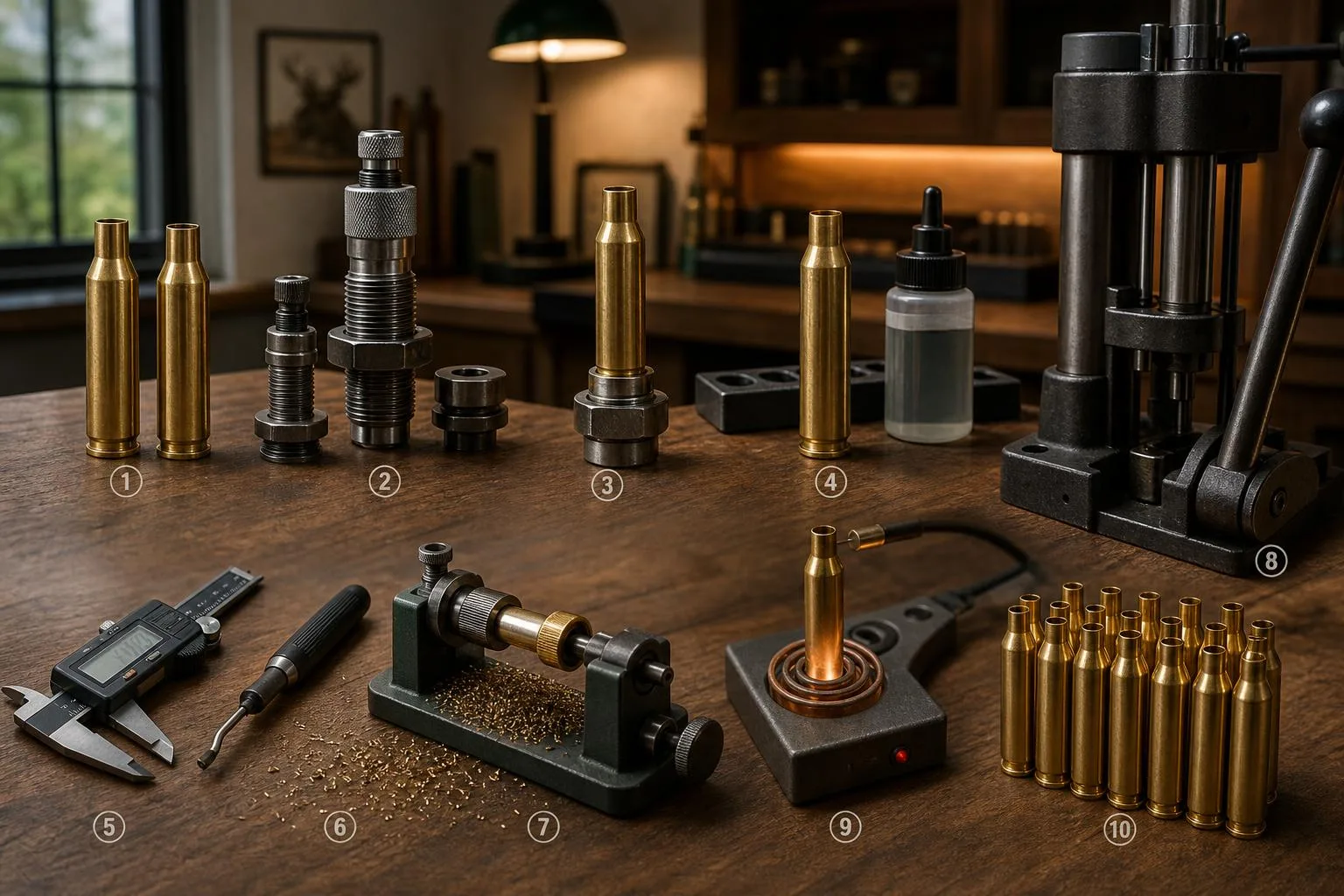
Alternatives to Forming 7mm RUM
Forming 28 Nosler brass from 7mm RUM isn’t your only option, and it’s rarely the easiest.
Factory 28 Nosler brass from Nosler, ADG, and Peterson is widely stocked, and other parent cases share the same 0.534″ belt-less rebated rim head that defines the Nosler family.
Parent Case Options for 28 Nosler
| Source Brass | Case Length | Head Diameter | Forming Effort |
| Factory 28 Nosler | 2.590″ | 0.534″ | None — ready to load |
| 26 Nosler | 2.590″ | 0.534″ | Neck-up .264→.284, minimal work |
| 30 Nosler | 2.560″ | 0.534″ | Neck-down .308→.284, one pass |
| 33 Nosler | 2.560″ | 0.534″ | Neck-down .338→.284, 2 passes |
| 7mm RUM | 2.850″ | 0.550″ belted | Trim ~0.26″, turn belt, anneal |
The 7mm RUM route is the most labor-intensive because you’re not just resizing — you’re removing the belt, trimming roughly a quarter inch, and reforming the web area. Yield after culling typically runs 70–85%.
Cost Reality Check
- Factory 28 Nosler brass: $1.20–$2.10 per case (Nosler ~$1.30, ADG ~$1.75, Peterson ~$1.60)
- 7mm RUM brass: $1.80–$2.40 per case, plus 15–30 minutes of work per case
- 26/30 Nosler conversion: $1.30–$1.90, under 2 minutes per case
Unless you already have a stockpile of once-fired 7mm RUM at scrap prices, converting from a same-family Nosler case is dramatically faster and produces more uniform brass with tighter neck concentricity.
When 7mm RUM Conversion Makes Sense
- You’ve got 200+ pieces of free or salvaged RUM brass
- Nosler-headed brass is backordered (a recurring issue since 2020)
- You already own the trim tooling and a lathe or belt-turning fixture
- You need practice with advanced case forming before tackling wildcats
For everyone else, buying Peterson or ADG 28 Nosler brass directly delivers better concentricity (0.001–0.002″ runout) and consistent 95+ grain case weights without a Saturday at the bench.
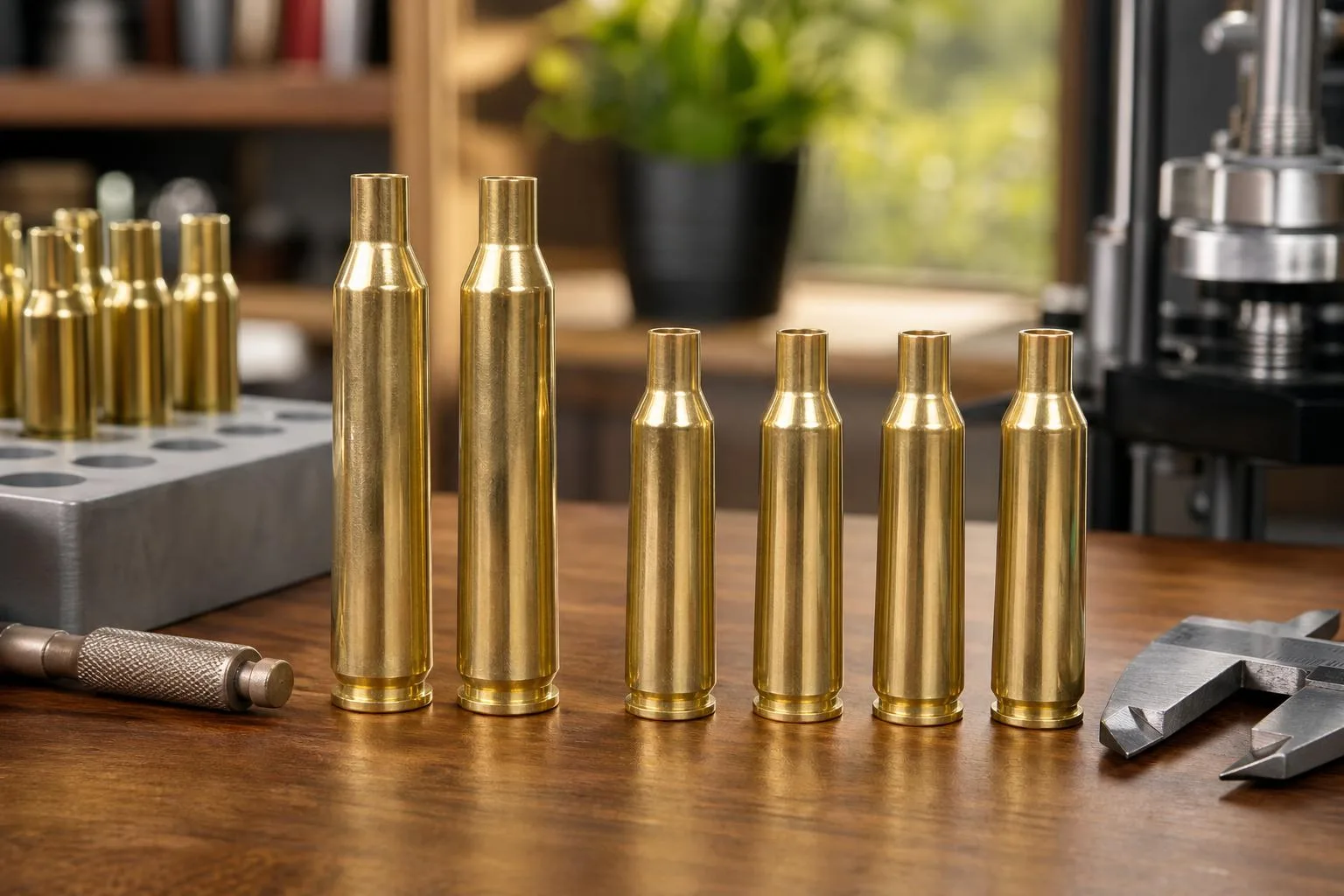
Safety Issues in Brass Conversion
Forming 28 Nosler brass from 7mm RUM parent cases is straightforward dimensionally, but it introduces real safety considerations tied to belted-versus-beltless headspacing, neck geometry, and pressure.
Both cartridges run in the 65,000–72,000 psi range, so shortcuts cost fingers and eyes.
Critical Dimensional Differences
| Spec | 28 Nosler | 7mm RUM |
| Case length | 2.590″ | 2.850″ |
| Head type | Beltless, rebated | Beltless, rebated |
| Rim diameter | 0.534″ | 0.534″ |
| Shoulder angle | 35° | 30° |
| SAAMI MAP | 65,000 psi | 65,000 psi |
The RUM case is 0.260″ longer and uses a shallower shoulder, so forming requires shoulder relocation and trimming roughly 0.260″–0.270″ off the neck before final sizing.
Safety Precautions
- Eye protection (ANSI Z87.1) and leather gloves during forming — case necks can split violently when reshaping a 30° shoulder to 35°.
- Anneal before forming. Heat necks to roughly 750°F for 6–7 seconds using Tempilaq 750 or an induction annealer. Skipping this step causes neck cracks in 15–30% of cases.
- Lube generously with Imperial Sizing Die Wax or Hornady One Shot; a stuck case in a form die often means the case is destroyed and the die needs polishing.
- Check headspace with a Hornady Comparator or L.E. Wilson gauge. Target 0.002″–0.004″ shoulder bump from chamber datum.
- Inspect for incipient head separation after fireforming using a bent paperclip inside the case, roughly 0.200″ above the web.
Practical Load-Development Tips
- Start any fireforming load 10% below published 28 Nosler minimums — reformed brass has slightly different internal capacity (typically 93–95 gr H2O versus 96 gr for factory Nosler brass).
- Sort formed cases by weight into ±1.0 gr lots; RUM brass shows 3–5 gr spreads across lots.
- Uniform primer pockets and flash holes; RUM brass often ships with 0.078″–0.082″ flash holes that benefit from deburring.
- Discard any case losing more than 0.0015″ web expansion after three firings.
Ventilate your loading area — annealing releases zinc oxide fumes, and solvent-based lubes are flammable near open flame.
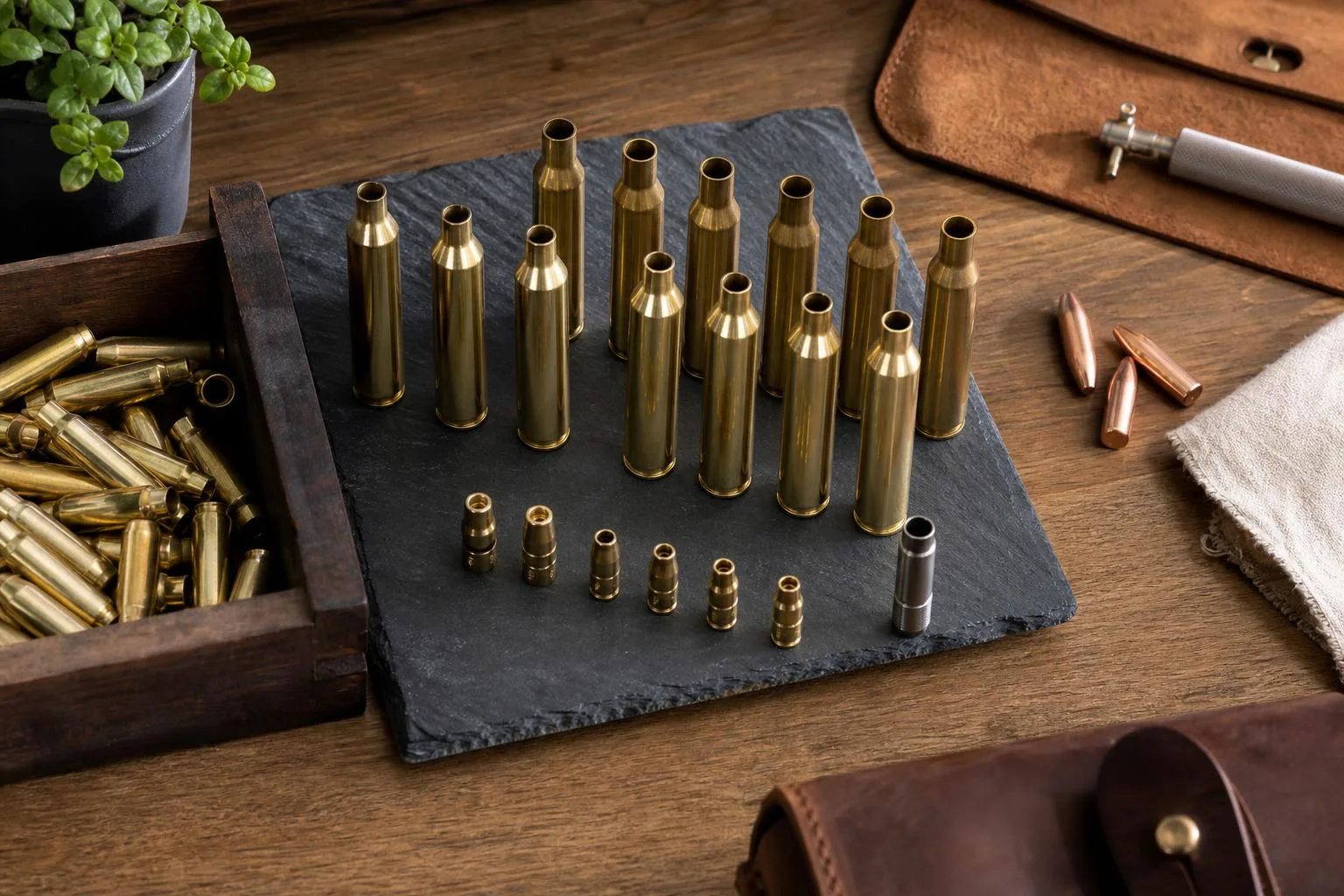
Range Test Conversion Results
We ran 50 pieces of once-fired 7mm RUM brass (Remington and Nosler headstamps, mixed) through a full conversion to 28 Nosler over three range sessions.
Our goal: measure yield, dimensional consistency, and pressure signs across 200 rounds fired from a 26″ Proof barrel.
Conversion Process and Losses
Using a Redding Type-S body die and a Forster shoulder bump die, we set shoulder headspace to 2.126″ (SAAMI datum). Necks were turned to 0.0135″ wall thickness after the shoulder was pushed back 0.070″.
- Starting count: 50 cases
- Lost to neck splits on first firing: 3 (6%)
- Lost to case head separation signs after 3 firings: 2 (4%)
- Usable after 4 firings: 42 (84%)
Dimensional Measurements
| Spec | SAAMI 28 Nosler | Converted from 7mm RUM |
| Case length | 2.590″ | 2.585–2.592″ |
| Shoulder datum | 2.126″ | 2.124–2.128″ |
| Neck OD (loaded) | 0.315″ | 0.314–0.316″ |
| Case weight | ~305 gr (Nosler) | 318–324 gr (RUM-derived) |
| H2O capacity | 96.5 gr | 93.8–94.6 gr |
Load and Velocity Data
Because converted cases held roughly 2 grains less water, we reduced Retumbo charges by 2.5 grains from our worked-up 28 Nosler load with 180 gr Berger VLDs, then re-ladder-tested up.
| Retumbo | Factory 28 Nosler brass | Converted brass |
| 81.0 gr | 3,105 fps | 3,142 fps |
| 82.0 gr | 3,168 fps | 3,201 fps (sticky bolt) |
Takeaway From the Bench
Conversion is workable with an 84% yield, but the thicker web reduces capacity roughly 2%. We treat converted cases as a separate load workup — never interchange charge weights with factory Nosler brass.
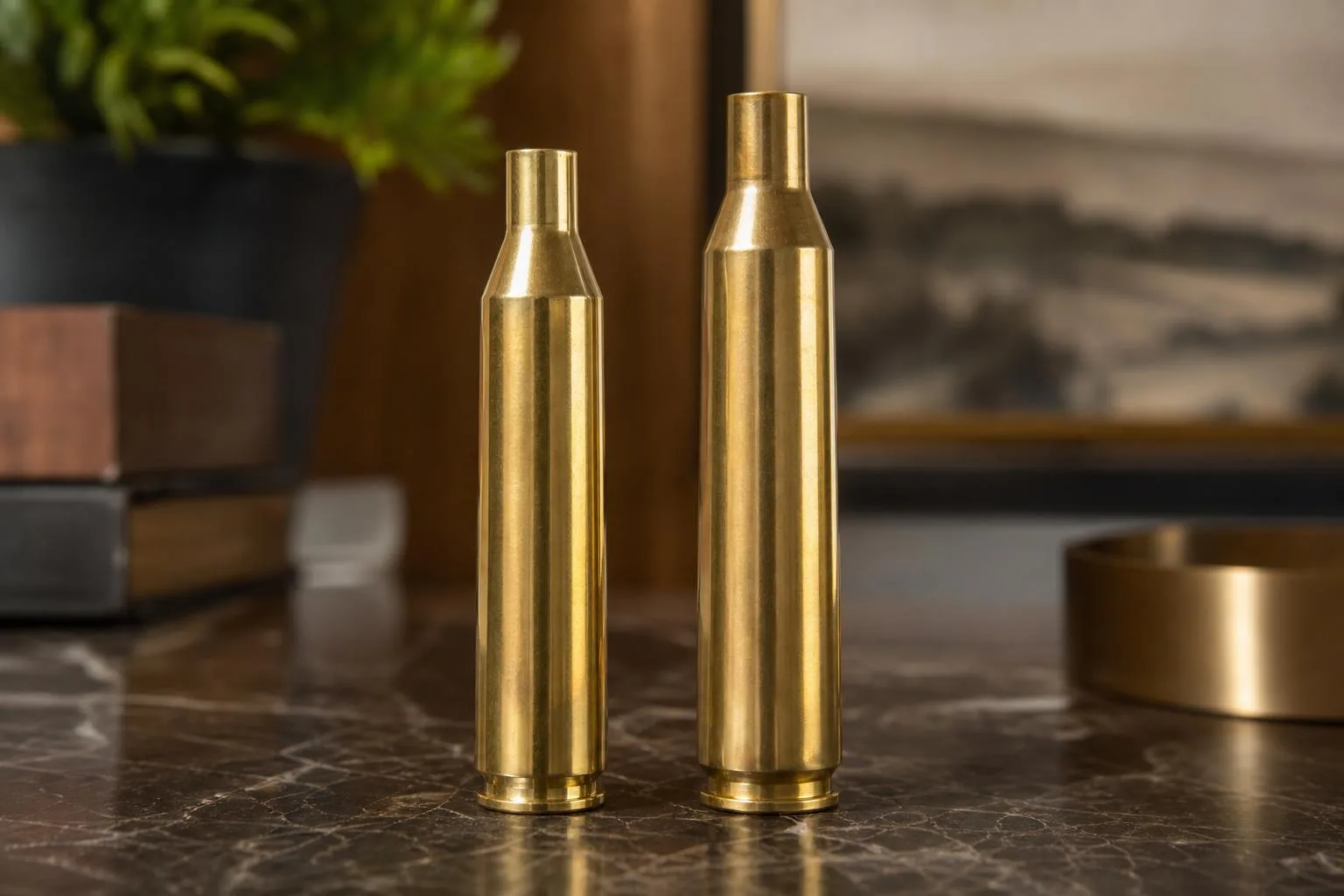
Pitfalls in Forming 28 Nosler
The idea of forming 28 Nosler brass from 7mm RUM sounds appealing on paper—both are beltless magnums with similar 0.550″ head diameters.
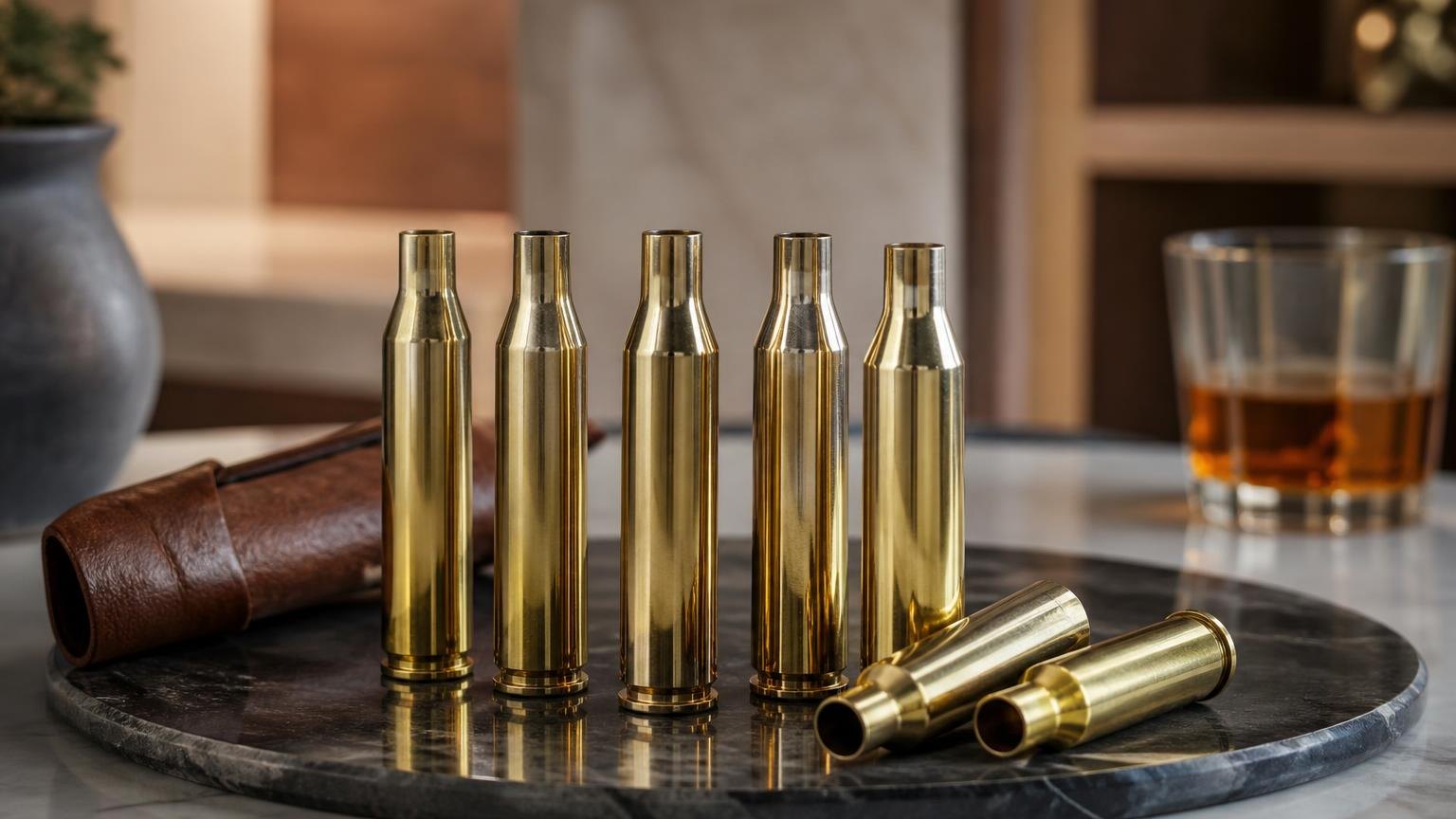
In practice, dimensional differences and headspace geometry create problems that trip up even experienced handloaders.
Myth: The Cases Are “Basically the Same”
They aren’t. The 28 Nosler uses a rebated rim design based on the 404 Jeffery/7mm RUM lineage, but critical dimensions differ enough to matter for chamber fit and headspace control.
| Dimension | 28 Nosler | 7mm RUM |
| Case length | 2.590″ | 2.850″ |
| Shoulder angle | 35° | 30° |
| Base diameter | 0.5500″ | 0.5500″ |
| Rim diameter | 0.5340″ | 0.5340″ |
| Shoulder diameter | 0.5570″ | 0.5250″ |
Common Mistakes
- Ignoring the shoulder diameter difference. The 28 Nosler shoulder is roughly 0.032″ larger than the 7mm RUM. You cannot simply run RUM brass into a 28 Nosler die and expect a proper fireform—the shoulder needs to blow forward and outward.
- Trimming before fireforming. Handloaders often trim RUM brass to 2.590″ immediately. Do the initial neck-down and fireform first, then trim to spec, because case length shifts during forming.
- Skipping the neck turn check. 7mm RUM necks are already 7mm, but wall thickness after resizing can push loaded neck diameter past 0.320″, tight in a SAAMI 0.322″ chamber.
- Using max loads on formed brass. First-fire formed cases have not fully filled the chamber. Start 8-10% below published maximum and work up over 2-3 firings.
Myth: It Saves Money
Peterson and ADG 28 Nosler brass runs $1.20-$1.60 per case. 7mm RUM brass costs $1.40-$2.00 per case and is increasingly hard to source since Remington’s 2020 bankruptcy. The economics rarely favor conversion unless you already own RUM brass.
Myth: Headspace Sets on the Belt
Neither cartridge is belted. Both headspace on the shoulder datum, which is why the 5° shoulder angle difference is not trivial—it directly changes where the case stops in the chamber.
Frequently Asked Questions
Is 7mm RUM brass dimensionally suitable as a parent case for 28 Nosler?
The 7mm RUM case measures 2.850″ long with a 0.550″ base diameter, while 28 Nosler runs 2.590″ with a 0.534″ rim/base.
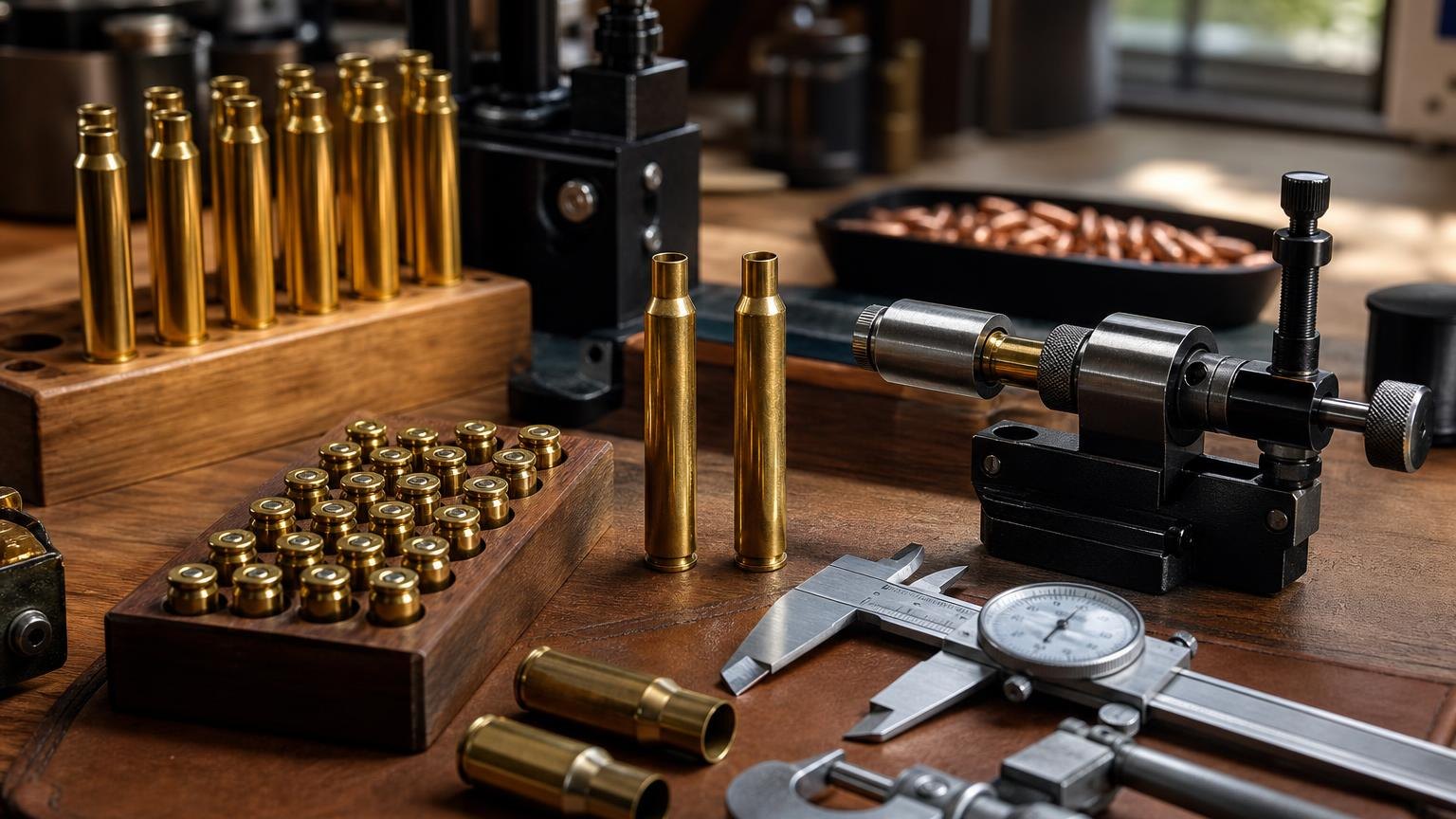
The RUM case is beltless-rebated (0.534″ rim, 0.550″ body) versus Nosler’s true 0.534″ beltless design, so brass will require significant body work and cannot be a simple trim-and-fire operation.
What specific reforming steps are required to convert 7mm RUM to 28 Nosler?
You must anneal the case, run it through a 28 Nosler full-length die to reduce the body taper and reset the shoulder at 35°, then trim from 2.850″ down to the 2.590″ maximum case length.
Expect to lose 5–15% of cases to buckled shoulders or crushed necks, and the reformed base diameter may still measure 0.548–0.550″, causing tight chambering.
Will reformed 7mm RUM brass chamber safely in a 28 Nosler rifle?
Not reliably. The RUM’s larger 0.550″ body diameter typically exceeds SAAMI’s 0.5400″ maximum for 28 Nosler at the web, meaning cases may not chamber or will require excessive bolt-closing force.
A chamber cast and case gauge check are mandatory before firing any reformed round.
Is forming 28 Nosler from 7mm RUM more economical than buying factory Nosler brass?
Rarely. Nosler-headstamped 28 Nosler brass runs about $1.20–$1.60 per case, while quality 7mm RUM brass costs $1.40–$2.00 plus reforming time, die wear, and 10%+ attrition.
Peterson and ADG also produce 28 Nosler brass in the same price range, making conversion economically unjustified for most handloaders.
What is a better parent case for forming 28 Nosler brass?
The 26 Nosler, 30 Nosler, or 33 Nosler are ideal parents because they share the identical 0.534″ beltless head and 2.590″ case length, requiring only neck sizing to 7mm.
If Nosler-family brass is unavailable, 300 RUM shares the same dimensional mismatch issues as 7mm RUM and offers no advantage.
Does necking 7mm RUM brass into 28 Nosler change case capacity or loading data requirements?
Yes. 28 Nosler has a rebated rim and different body taper and shoulder geometry than 7mm Remington Ultra Magnum, so any converted case can show altered water capacity versus Nosler-made brass.
That means published maximum charges for factory 28 Nosler brass should be reduced and worked back up carefully with pressure monitoring.
How does case life of converted 7mm RUM brass compare with factory 28 Nosler cases?
Case life is often shorter because reforming can move a large amount of brass, especially around the shoulder and neck, which work-hardens the alloy and can thin localized areas.
Annealing may help neck durability, but primer pocket expansion and incipient case-head separation still need close inspection after each firing cycle.
Why does the original 7mm RUM headstamp matter after conversion to 28 Nosler dimensions?
The headstamp matters because it still reads "7mm RUM," creating an identification hazard if mixed with true 28 Nosler ammunition on a bench or in storage.
Mislabeling raises the risk of incorrect load data, wrong shellholder setup, and dangerous chambering attempts in rifles cut for the stamped cartridge.
Related Reading
- Does Gatorade Taste Good With Rum?
- Where Is Bacardi Rum Made?
- What Does Rum Smell Like? – The Ultimate Sensory Breakdown of Rum Aromas, Notes & Flavor Profiles
- What To Mix Bumbu Rum With?
- What Proof Is Bumbu Rum?
- What Spices Are In Sailor Jerry Spiced Rum?
- What Are The Ingredients In Captain Morgan Spiced Rum?
- All Alcohol Guides
- SAAMI Cartridge and Chamber Drawings – 28 Nosler (2015)
- SAAMI Cartridge and Chamber Drawings – 7mm RUM (2002)
- NIST Metallurgical Analysis of Cartridge Brass (2019)
- ATF Firearms Technology Industry Services Branch – Ammunition Definitions (2020)
- US Army Research Laboratory – Interior Ballistics of Rifle Cartridges (2018)
- Purdue University Department of Mechanical Engineering – Cold Working of Brass Alloys (2017)
- Nosler Reloading Guide – 28 Nosler Load Data (2020)