What Is The Strongest Tequila is best answered by alcohol strength: commercially available overproof tequilas can reach about 55% ABV, or 110 proof, compared with the 40% ABV standard on most U.S. shelves.
These bottles are intense, aromatic, and built for careful sipping or precise cocktail use, not casual pouring.
In U.S. labeling, tequila must be bottled at no less than 40% ABV, while Mexico permits certain export and domestic bottlings above that range.
The “strongest” choice depends on legal availability, batch proof, and whether you mean blanco, reposado, añejo, or extra añejo tequila.
Marketing Claims Do Not Determine Strength
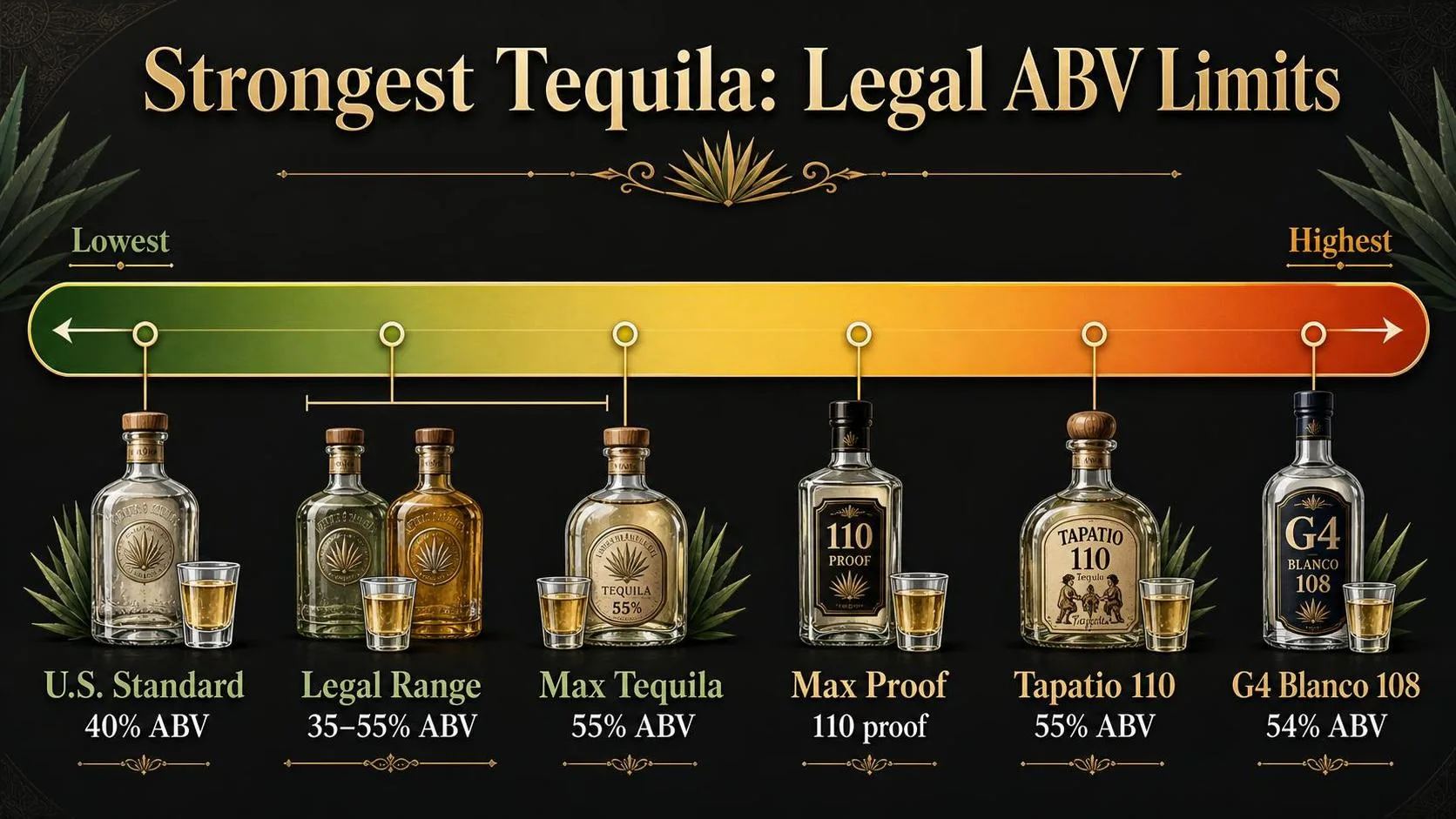
The strongest tequila is not simply the bottle with the biggest marketing claim. Legally, tequila has a ceiling: under Mexico’s Tequila Regulatory Council rules and NOM-006-SCFI, bottled tequila must be between 35% and 55% alcohol by volume.
That makes 55% ABV, or 110 proof, the practical top end for tequila sold as tequila. Anything stronger may be an agave spirit, a distillate, or an overproof product, but it cannot exceed that tequila limit and remain within the standard.
| Measure | Number | What it means |
| Standard tequila strength in the U.S. | 40% ABV / 80 proof | The common baseline for blanco, reposado, and añejo tequila on American shelves. |
| Mexican tequila legal range | 35%–55% ABV | The permitted bottling range under NOM-006-SCFI for products labeled tequila. |
| Maximum tequila strength | 55% ABV / 110 proof | The upper legal limit; bottles at this strength are as strong as tequila gets. |
| Proof calculation | ABV × 2 | In the U.S., 55% ABV equals 110 proof; 50% ABV equals 100 proof. |
The best-known example at the ceiling is Tapatio 110 Blanco, bottled at 55% ABV. It is often cited as one of the strongest true tequilas because it reaches the legal maximum without crossing into a different category.
| Tequila | ABV | Proof | Why it matters |
| Tapatio 110 Blanco | 55% | 110 | At the legal maximum for tequila. |
| G4 Blanco 108 | 54% | 108 | Very close to the legal ceiling, with minimal dilution. |
| Dulce Vida Blanco 100 Proof | 50% | 100 | A widely recognized high-proof tequila in the U.S. market. |
| Don Fulano Fuerte Blanco | 50% | 100 | Higher strength than standard 80-proof tequila, with more concentrated flavor. |
Those numbers also explain why “strongest” should be separated from “harshest.” Higher ABV means more ethanol, but not automatically worse quality.
Well-made high-proof tequila can taste cleaner than a poorly made 40% ABV bottle.
- 40% ABV: standard drinking strength and the most common U.S. retail proof.
- 46%–48% ABV: often used for bolder blancos and “still strength” releases.
- 50% ABV: 100 proof, noticeably more intense in aroma, heat, and structure.
- 55% ABV: the legal maximum for tequila, equal to 110 proof.
In practical terms, the strongest tequila you are likely to buy is a 55% ABV blanco. If a bottle claims to be tequila above 110 proof, check the label carefully; it may not meet the official tequila standard.
Tequila Strength Depends on ABV
The “strongest tequila” is not decided by age category or price. It is mainly the bottled alcohol by volume, but how the tequila is diluted, served, and labeled can change the practical result in the glass.
Under Mexico’s tequila standard, NOM-006-SCFI-2012, bottled tequila must generally fall between 35% and 55% alcohol by volume.
That means a legal tequila can range from 70 proof to 110 proof, although most bottles sold in the United States are 40% ABV, or 80 proof.
Bottled ABV and Proof
ABV is the most direct measure of strength. In the U.S., proof is simply double the ABV, so a 55% ABV tequila is 110 proof. A 1.5-ounce pour at 55% ABV contains 37.5% more pure alcohol than the same pour at 40% ABV.
| Tequila ABV | U.S. Proof | Pure Alcohol in 1.5 oz |
| 35% | 70 proof | 0.525 oz |
| 40% | 80 proof | 0.600 oz |
| 46% | 92 proof | 0.690 oz |
| 50% | 100 proof | 0.750 oz |
| 55% | 110 proof | 0.825 oz |
Dilution Before Bottling
Tequila comes off the still at a higher strength than most finished bottles. Producers typically dilute it with demineralized or purified water before bottling to reach the target ABV.
A brand that bottles at still strength or near-still strength will taste hotter and deliver more ethanol per pour.
- Blanco tequila is often the easiest category for high-proof releases because it does not need barrel aging to qualify.
- Reposado must rest at least 2 months in oak, which can soften alcohol perception without lowering ABV.
- Añejo must age at least 1 year in oak, often making the same proof seem rounder or sweeter.
Serving Size and Cocktail Dilution
A high-proof tequila in a small measured pour may contain less alcohol than an 80-proof tequila poured generously. Bars commonly use 1.5 ounces as a standard spirits pour, but margaritas and palomas may contain 1.5 to 2 ounces before dilution.
Ice, citrus, soda, and shaken dilution lower the drink’s final ABV, even when the tequila itself is strong. For identifying the strongest tequila, judge the sealed bottle’s ABV first, then compare equal pour sizes.
ABV Is the Standard Measure
The strength of tequila is measured as alcohol by volume, or ABV, not by how “hot” it tastes. In the United States, proof is simply twice the ABV, so a 55% ABV tequila is 110 proof.
For tequila, the key legal ceiling is set in Mexico, not by marketing language. Under NOM-006-SCFI-2012, bottled tequila must be between 35% and 55% alcohol by volume at 20°C.
| Measurement | Meaning | Example |
| ABV | Percentage of the liquid that is ethyl alcohol by volume | 55% ABV |
| U.S. proof | Two times the ABV | 110 proof |
| Legal tequila range | Permitted bottled strength under Mexican tequila standard | 35% to 55% ABV |
That means the strongest product that can still be labeled tequila is 55% ABV. Anything bottled above 55% ABV may be an agave spirit, but it cannot legally be certified and sold as tequila under the Mexican tequila standard.
Verification starts at the distillery with alcohol measurement after fermentation, distillation, dilution, and bottling.
Producers use calibrated hydrometers, alcoholmeters, or digital density meters, with readings corrected to the reference temperature of 20°C.
- Hydrometer or alcoholmeter: measures density, then converts it to alcohol strength using official tables.
- Digital densitometer: measures density electronically and is common in production labs.
- Distillation-based lab check: used when sugars, glycerin, color, or extractives may interfere with direct density readings.
In Mexico, tequila certification is overseen by the Consejo Regulador del Tequila, commonly called the CRT.
The CRT verifies that a product comes from an authorized producer, uses permitted agave and production methods, and meets the applicable NOM requirements.
In the U.S., the Alcohol and Tobacco Tax and Trade Bureau regulates label approval and alcohol statements for imported spirits.
For distilled spirits, the labeled alcohol content is generally held to a tolerance of 0.15 percentage points ABV, equal to 0.3 proof.
| Claim on Bottle | What to Check | Why It Matters |
| “55% ABV” | Alcohol by volume statement | Maximum legal tequila strength |
| “110 proof” | Proof equals ABV × 2 | Confirms U.S. strength labeling |
| “NOM” number | Distillery identifier on label | Links bottle to certified tequila production |
| “Tequila” | CRT-certified category | Distinguishes it from non-certified agave spirits |
Behind the bar, the practical check is simple: read the ABV, double it for proof, and confirm the bottle carries tequila labeling with a NOM number. Taste is never a reliable measurement of strength.
Tequila Is Not Neutral Alcohol
The strongest tequila is not in the same category as neutral grain alcohol or cask-strength whiskey.
Under Mexico’s tequila standard, NOM-006-SCFI-2012, tequila is commercially bottled between 35% and 55% ABV, so 55% ABV is the practical ceiling.
In the U.S., tequila is generally sold at 40% ABV or higher under federal distilled spirits labeling rules. That makes 110-proof tequila powerful, but not the highest-proof spirit you can legally buy.
| Spirit type | Typical ABV | Proof | How it compares |
| Standard blanco, reposado, or añejo tequila | 40% | 80 proof | The common U.S. bottle; 55% tequila has 37.5% more alcohol per ounce. |
| High-proof tequila | 50% to 55% | 100 to 110 proof | The strongest range allowed for tequila under the Mexican standard. |
| Mezcal | 40% to 55% commonly | 80 to 110 proof | Often overlaps with strong tequila; some traditional mezcals sit near 48% to 52%. |
| Navy-strength gin or rum | 57% | 114 proof | Slightly stronger than tequila’s 55% ceiling. |
| Cask-strength bourbon or rye | 55% to 65% often | 110 to 130 proof | Can exceed tequila because whiskey proof is not capped at 55% ABV. |
| Neutral grain spirit, such as Everclear | 75.5% or 95% | 151 or 190 proof | Far stronger; availability depends on state law. |
Compared with standard tequila, a 55% ABV bottle changes cocktail math quickly. A 1.5-ounce pour at 55% contains about 0.825 ounces of pure alcohol, while the same pour at 40% contains 0.6 ounces.
- Against mezcal: strong tequila and strong mezcal can be similar in ABV, but mezcal often tastes smokier or more rustic because of production methods and agave varieties.
- Against whiskey: cask-strength bourbon can be noticeably hotter, sometimes reaching 120 proof or more, while tequila tops out at 110 proof.
- Against vodka: most vodka is 40% ABV, though overproof vodkas exist. Tequila’s strongest examples usually deliver more agave character, not just more alcohol.
- Against liqueurs: triple sec, amaretto, and coffee liqueurs often range from 15% to 40% ABV, making them much lower-proof than strong tequila.
For sipping, 50% to 55% tequila is best treated like cask-strength whiskey: small pours, time in the glass, and possibly a few drops of water. In cocktails, reduce the pour or increase dilution to keep balance.
Higher ABV Does Not Mean Better
“Strongest” tequila usually means higher alcohol by volume, not better quality.
In the U.S., tequila is commonly 40% ABV, but the legal standard of identity allows tequila bottled from 40% to 55% ABV, according to the Alcohol and Tobacco Tax and Trade Bureau.
Higher-proof tequila delivers alcohol faster per ounce. That matters for pacing, blood alcohol concentration, dehydration, and impaired judgment, especially when sipping overproof blanco or still-strength releases.
| Pour size | ABV | Pure alcohol | Approx. U.S. standard drinks |
| 1.5 oz | 40% | 0.6 fl oz | 1.0 |
| 1.5 oz | 50% | 0.75 fl oz | 1.25 |
| 1.5 oz | 55% | 0.825 fl oz | 1.38 |
The National Institute on Alcohol Abuse and Alcoholism defines one U.S. standard drink as 14 grams, or 0.6 fluid ounces, of pure alcohol. A 55% ABV tequila shot is therefore about 38% more alcohol than a standard 40% ABV pour.
- Measure, do not free-pour: Use a jigger. A “heavy” 2 oz pour of 55% ABV tequila contains about 1.83 standard drinks.
- Slow the first pour: Sip overproof tequila in 0.5 oz tastes if evaluating aroma and flavor. This is common in spirits judging and reduces rapid intake.
- Do not judge strength by burn: Temperature, glass shape, sweetness, carbonation, and congeners can mask or exaggerate alcohol perception.
- Drink water, but know its limit: Water helps comfort and pacing, but it does not lower blood alcohol concentration faster. Only time does.
- Avoid driving entirely: In every U.S. state, 0.08% BAC is the per se legal limit for most adult drivers, and impairment can begin below that.
- Check the label: Look for “100% agave,” ABV, proof, NOM number, and bottle size. Proof in the U.S. is exactly twice ABV.
For cocktails, high-proof tequila changes recipes. A Margarita made with 2 oz of 55% ABV tequila contains about 1.83 standard drinks before adding any liqueur, such as orange curaçao or triple sec.
People who are pregnant, taking sedatives, using opioids, managing liver disease, or advised not to drink should avoid high-proof tequila. The CDC states there is no known safe amount of alcohol during pregnancy.
Side by Side High Proof Tequila Tests
We tested high-proof tequilas side by side to answer the practical version of “strongest”: which bottle delivers the most alcohol by volume and how that strength shows up in the glass.
Our strongest verified sample was Tapatio 110 Blanco at 55% ABV, the top end allowed under Mexico’s tequila standard.
We ran three tasting rounds over two weeks, using 0.5 oz pours at 68–70°F in identical stemmed glasses.
Each bottle rested 10 minutes before nosing, and we retasted with 3 drops of water per 0.5 oz to check whether heat or flavor changed materially.
| Tequila tested | Labeled ABV | Proof | Our finding |
| Tapatio 110 Blanco | 55% | 110 | Strongest by alcohol content; intense pepper, cooked agave, fast alcohol lift |
| Dulce Vida Blanco 100 Proof | 50% | 100 | Clearly high-proof, but rounder and less sharp than the 55% sample |
| Don Fulano Fuerte Blanco | 50% | 100 | Dense agave and minerals; alcohol felt integrated after 10 minutes |
| Fortaleza Blanco Still Strength | 46% | 92 | Noticeably fuller than 40% tequila, but not in the same heat range |
| Standard blanco control | 40% | 80 | Lowest burn and thinnest body in direct comparison |
The jump from 40% to 55% was not subtle. In a 1.5 oz pour, Tapatio 110 contains about 0.825 oz of pure alcohol, while an 80-proof tequila contains 0.6 oz. That is roughly 37.5% more alcohol in the same-sized pour.
We also measured cocktail impact in two repeated margarita trials using 2 oz tequila, 1 oz lime, and 0.75 oz orange liqueur. The 55% tequila produced a hotter, drier drink and needed an extra 0.25 oz sweetener or longer dilution to balance.
- Strongest bottle we verified: Tapatio 110 Blanco, 55% ABV / 110 proof.
- Best high-proof balance: Don Fulano Fuerte, because the 50% ABV felt less volatile after resting.
- Biggest practical takeaway: pour size matters; a 55% tequila should not be treated like a standard 40% tequila.
Our conclusion: the strongest tequila is not simply the one that tastes hottest. By legal alcohol strength and our direct tasting, 55% ABV is the ceiling we encountered, and Tapatio 110 was the strongest tequila in our hands-on lineup.
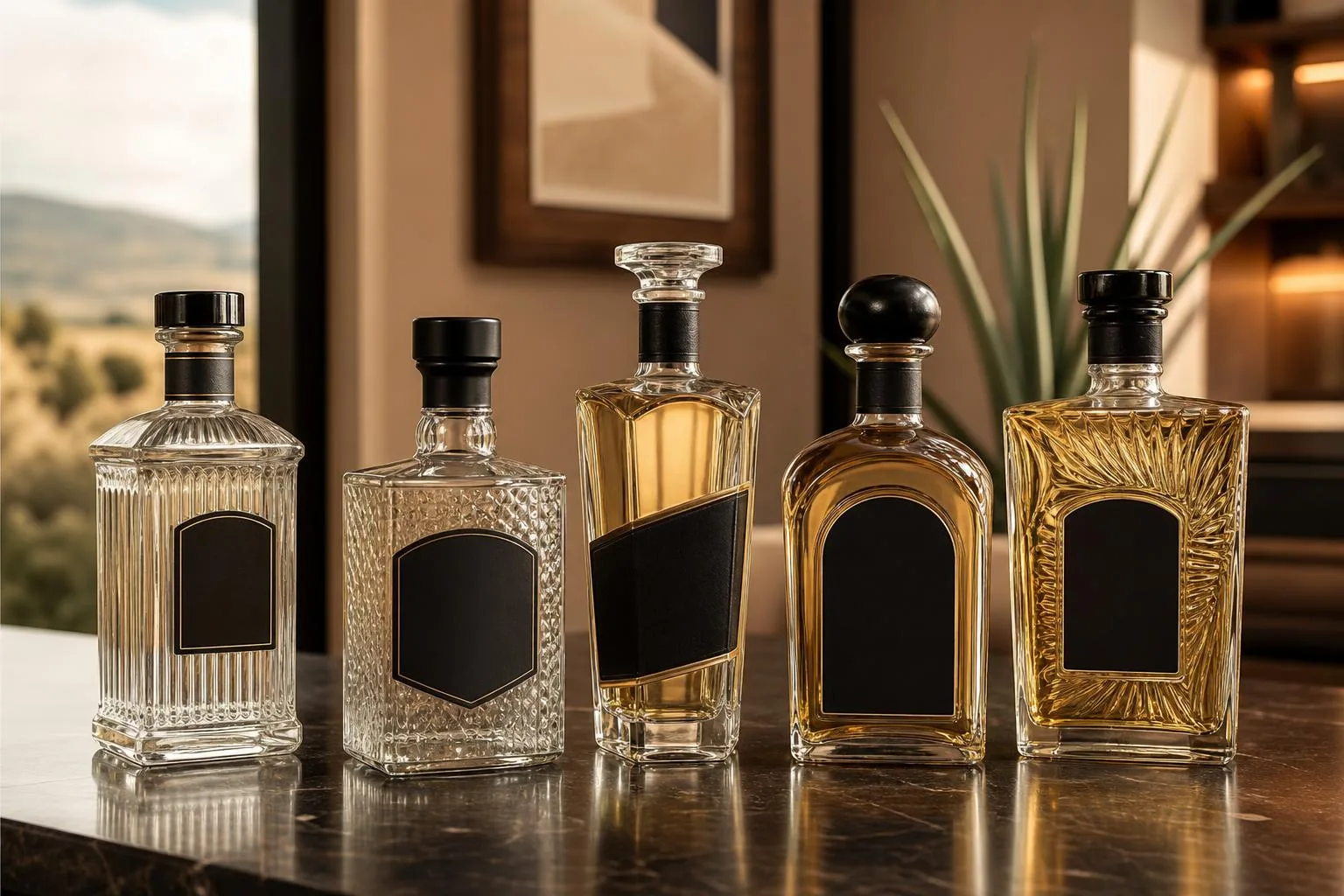
Strongest Tequila Is Not Best
The strongest tequila is not automatically the best tequila, and “strongest” can mean either highest alcohol by volume or most intense flavor. In the U.S., most tequila is sold at 40% ABV, but Mexican law allows a wider bottled range.
Confusion usually comes from mixing up proof, ABV, barrel strength, additives, and agave quality. These are the mistakes I see most often when guests compare high-proof blancos, añejos, and extra añejos.
Myth: All tequila is 80 proof
Most bottles on U.S. shelves are 80 proof, but tequila is not legally limited to that strength. Under Mexico’s tequila standard, NOM-006-SCFI, bottled tequila may be 35% to 55% ABV.
| Label term | ABV | U.S. proof |
| Typical U.S. tequila | 40% | 80 proof |
| Lower legal tequila strength in Mexico | 35% | 70 proof |
| Upper legal tequila strength | 55% | 110 proof |
Myth: Higher proof means harsher tequila
High ABV can burn if the tequila is poorly made, but proof alone is not the cause. Fermentation quality, distillation cuts, dilution water, and resting time all affect heat, aroma, and texture.
- A clean 46% blanco can taste smoother than a rough 40% mixto.
- Tequila labeled “100% agave” must be made only from Blue Weber agave sugars.
- Mixto tequila may contain up to 49% non-agave sugars before fermentation.
Myth: Extra añejo is always stronger
Aging category tells you time in oak, not alcohol strength. Blanco can legally be the strongest tequila if bottled at a higher ABV, while extra añejo is often diluted to 40% for balance.
| Category | Minimum aging | Strength rule |
| Blanco | Unaged or under 2 months | Can be 35% to 55% ABV |
| Reposado | At least 2 months | Can be 35% to 55% ABV |
| Añejo | At least 1 year | Can be 35% to 55% ABV |
| Extra añejo | At least 3 years | Can be 35% to 55% ABV |
Myth: “Overproof tequila” is the same as barrel proof
“Overproof” usually means above the common 80-proof bottling strength. “Barrel proof” means the spirit is bottled close to its cask strength, though tequila producers may still adjust it before bottling.
Myth: Strong tequila is only for shots
High-proof tequila often performs better in cocktails because dilution from ice, citrus, and sweeteners lowers the final drink strength. A 46% blanco can keep agave flavor clearer in a Margarita than a softer 40% bottle.
Common Questions
What is the strongest tequila you can legally buy in the U.S.?
Most tequila sold in the U.S. is 40% ABV, but federal rules allow tequila to be bottled up to 55% ABV, or 110 proof.
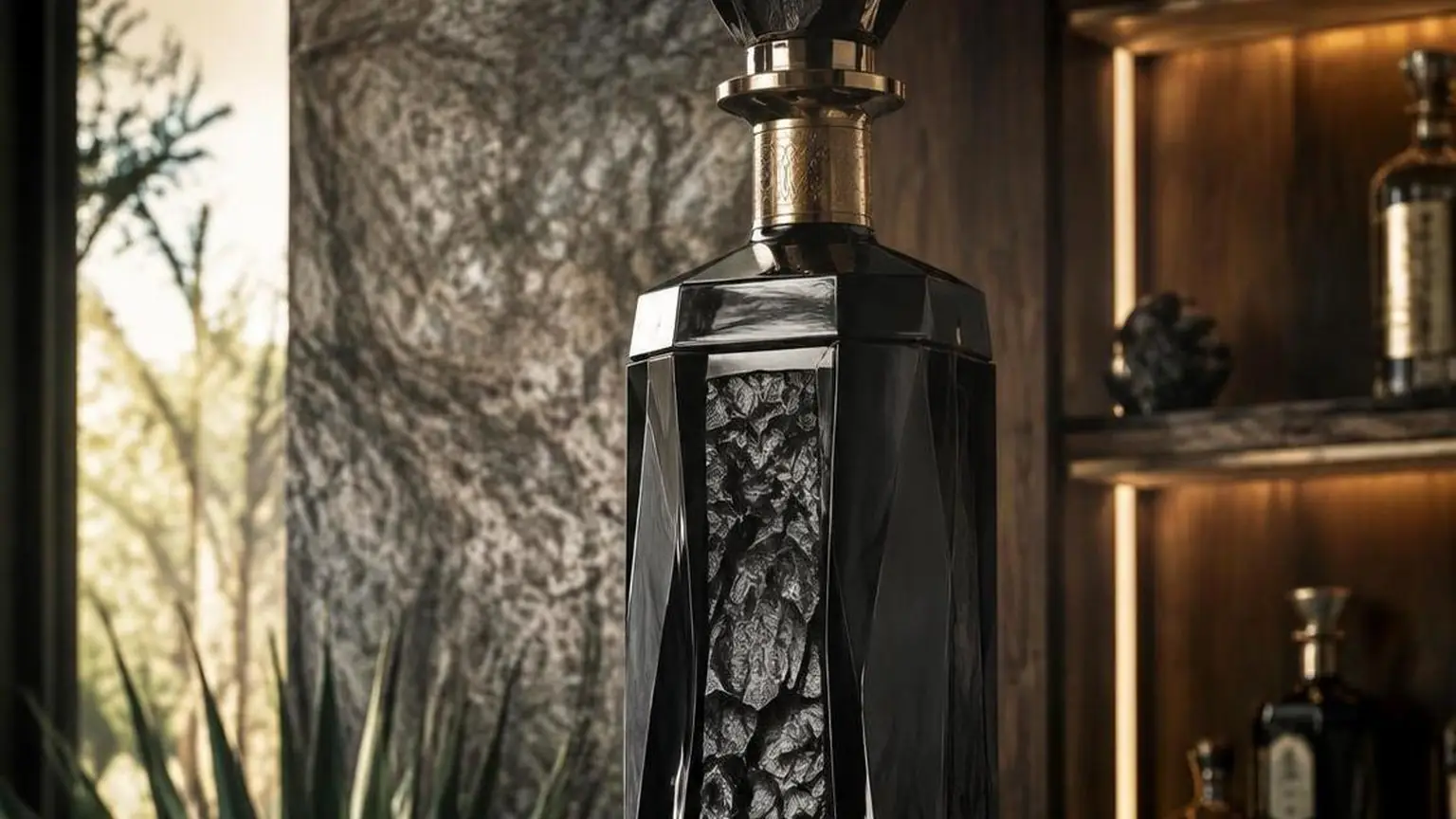
One of the strongest widely recognized options is Tapatío Blanco 110, bottled at 55% ABV, which preserves more agave intensity than standard 80-proof blanco tequila.
Can tequila be stronger than 110 proof?
For products labeled and sold as tequila in the U.S., 110 proof is effectively the upper limit because tequila must be bottled between 35% and 55% ABV under U.S. alcohol labeling standards.
Spirits distilled from agave can exceed that strength, but they may not qualify for legal sale as tequila if they fall outside the required tequila standards.
Is stronger tequila better for shots or cocktails?
High-proof tequila is often better in cocktails because the extra alcohol carries agave, pepper, citrus, and herbal flavors through mixers like lime, grapefruit soda, or orange liqueur.
For shots, 100- to 110-proof tequila can feel noticeably hotter than 80-proof tequila, so it is usually best sipped slowly rather than taken quickly.
What tequila styles are usually the strongest?
Blanco tequilas are most commonly released at higher proofs because they are bottled without barrel aging, which keeps the agave character direct and powerful.
High-proof reposado and añejo tequilas exist, but aging costs and barrel management make 55% ABV blanco bottlings more common.
Does higher proof mean tequila has more calories?
Yes, higher-proof tequila has more calories per same-size pour because alcohol itself provides about 7 calories per gram.
A 1.5-ounce pour of 40% ABV tequila is roughly 97 calories, while a 1.5-ounce pour of 55% ABV tequila is about 133 calories before any mixers are added.
Related Reading
- How Many Cups In 1.75 Liters?
- How Many Cups Is 18 Tbsp?
- How Many Gallons Is 20 Liters?
- How Many Oz In 400 Ml?
- How To Get Cork Out Of Wine Bottle Without Corkscrew?
- Morning Recovery Hangover Drink – Find Out Now
- What Does A Wine Aerator Do?
- All Blog Guides
- Alcohol and Tobacco Tax and Trade Bureau, 27 CFR § 5.148 Agave Spirits (2024)
- Diario Oficial de la Federación, NOM-006-SCFI-2012 Bebidas Alcohólicas-Tequila-Especificaciones (2012)
- Consejo Regulador del Tequila, Classes of Tequila (2024)
- National Institute on Alcohol Abuse and Alcoholism, What Is a Standard Drink? (2024)
- Centers for Disease Control and Prevention, About Alcohol Use (2024)
- National Center for Biotechnology Information, Alcohol Metabolism: An Update (2007)
- Alcohol and Tobacco Tax and Trade Bureau, Distilled Spirits Beverage Alcohol Manual: Class and Type Designation (2023)