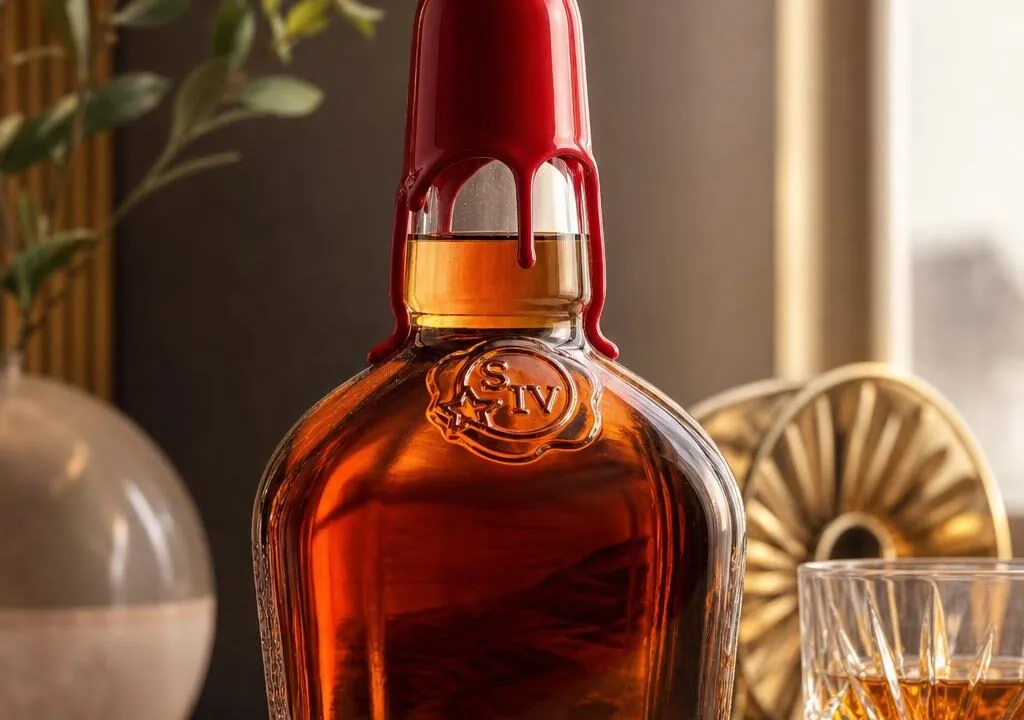
How Long Is Maker’S Mark Bourbon Aged is about 6 to 7 years.
Maker’s Mark carries no formal age statement because the distillery bottles by flavor maturity, not a fixed calendar target, using barrel rotation and tasting to decide when each batch is ready.
That approach still meets bourbon law: it is aged in new, charred oak and, if under 4 years, would need an age statement.
In practice, Maker’s Mark matures well beyond that threshold, developing its softer wheat-bourbon profile before bottling at 90 proof.
Why Maker’s Mark Has No Age Statement
Maker’s Mark does not print an age statement because it bottles by taste, not by a fixed birthday.
In practice, standard Maker’s Mark Bourbon is commonly understood to mature for about six years, depending on how each barrel develops in the warehouse.
That approach still sits inside firm U.S. bourbon rules.
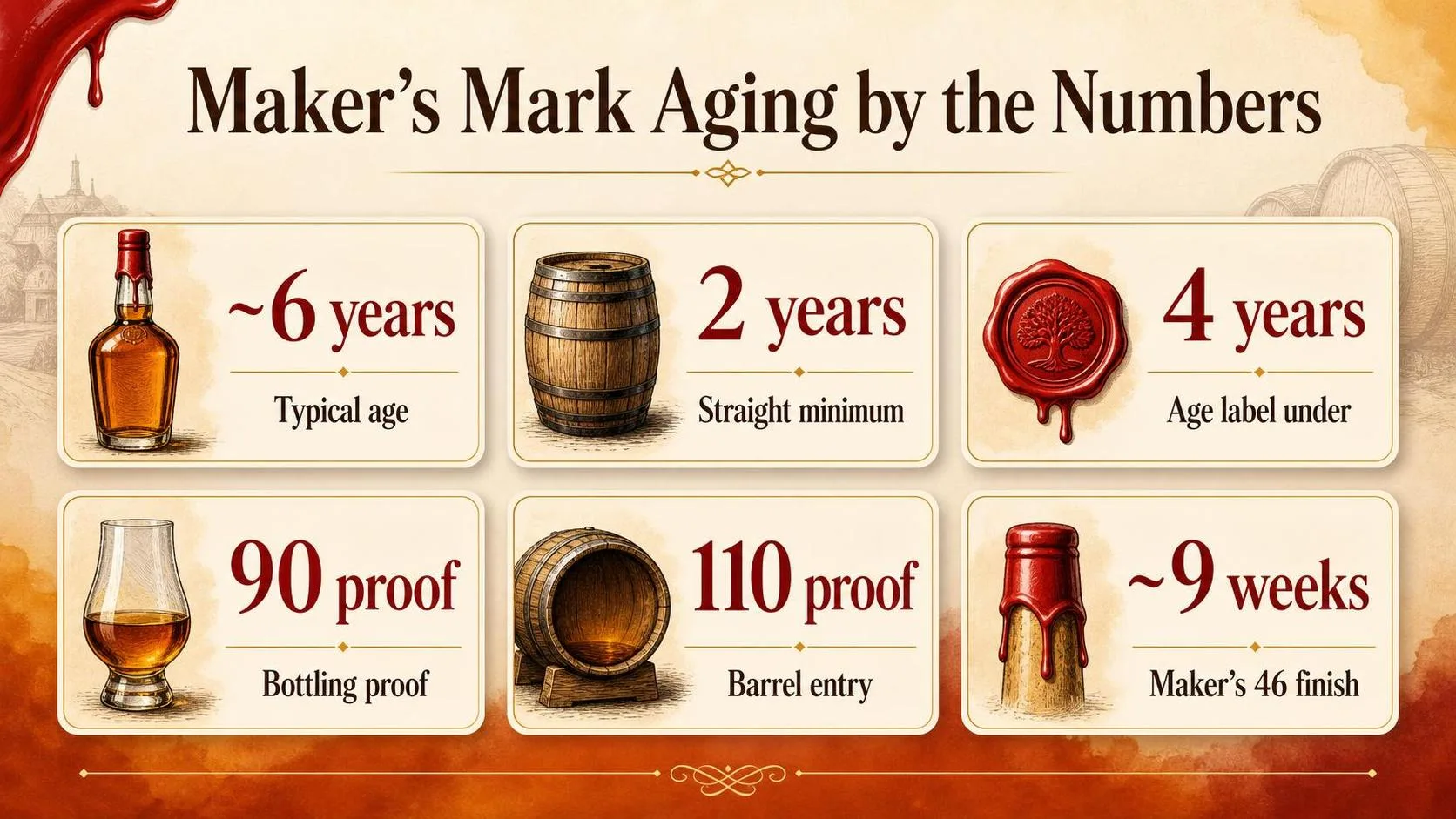
The Alcohol and Tobacco Tax and Trade Bureau requires “straight bourbon” to be aged at least two years in new charred oak, and any straight bourbon under four years old must state its age.
| Number | What it means for Maker’s Mark |
| About 6 years | Typical maturation window often cited for standard Maker’s Mark, though barrels are selected by flavor rather than bottled on an exact age. |
| 2 years minimum | Federal minimum aging time for a whiskey labeled “straight bourbon.” |
| 4 years | If straight bourbon is younger than this, U.S. rules require an age statement on the label. |
| 90 proof / 45% ABV | Standard Maker’s Mark bottling strength in the U.S. |
| 110 barrel-entry proof | Maker’s Mark fills barrels at a relatively low entry proof, a production choice associated with a softer, less tannic profile. |
The absence of an age statement is not a sign that the bourbon is “young.” It means Maker’s Mark is old enough to qualify without disclosing age, and the distillery relies on sensory consistency across batches.
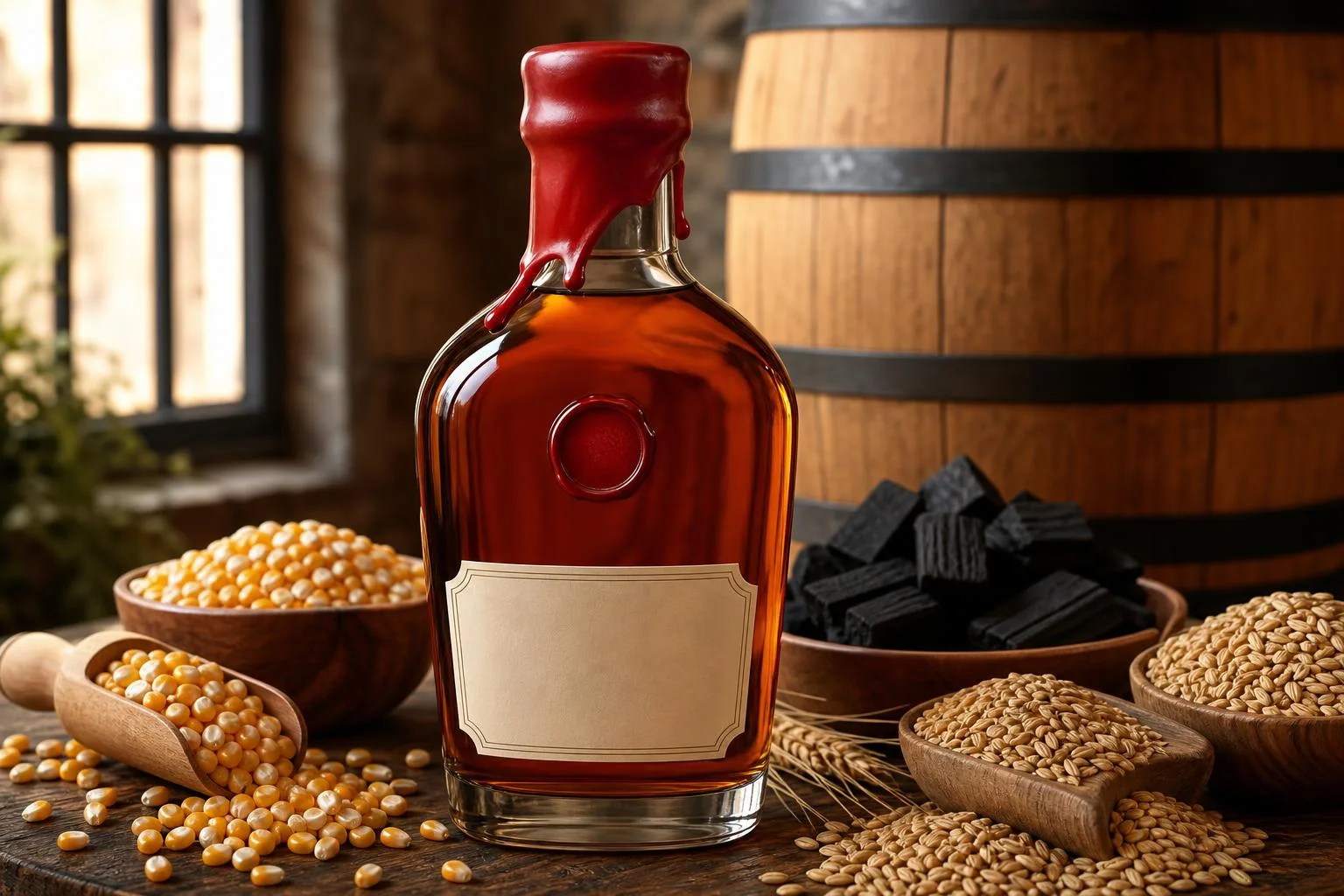
Maker’s Mark also uses a wheated bourbon mash bill, which changes how the aging reads in the glass. The recipe is 70% corn, 16% soft red winter wheat, and 14% malted barley, replacing rye with wheat for a rounder profile.
| Mash bill component | Percentage | Flavor role |
| Corn | 70% | Sweetness and bourbon’s required grain base. |
| Soft red winter wheat | 16% | Softer texture, less peppery spice than rye. |
| Malted barley | 14% | Fermentation support and light cereal notes. |
For Maker’s Mark 46, the base bourbon is fully matured first, then finished with seared French oak staves.
The finishing period is roughly nine additional weeks in a limestone cellar, adding baking spice, vanilla, and deeper oak without turning it into a much older bourbon.
Taste Determines Maker’s Mark Aging
Maker’s Mark does not use a fixed age statement because barrels are pulled when the flavor matches the house profile, not when a calendar date arrives.
In practice, the standard bourbon is commonly around 6 years old, but the final decision is based on maturity, aroma, and taste.
Several production choices make Maker’s Mark mature differently from a typical rye-recipe Kentucky bourbon.
The most important variables are barrel entry proof, warehouse heat exposure, barrel rotation, mash bill, and the brand’s sensory standards.
| Factor | Specific Maker’s Mark detail | Effect on aging |
| Barrel entry proof | 110 proof, lower than the legal bourbon maximum of 125 proof | Extracts oak compounds differently and generally supports a softer, less tannic profile |
| Mash bill | 70% corn, 16% soft red winter wheat, 14% malted barley | Wheat replaces rye, reducing peppery spice and emphasizing round sweetness |
| Barrel type | New, charred American white oak, as required for bourbon | Adds vanilla, caramel, toast, color, and oak structure during maturation |
| Bottling proof | 90 proof for standard Maker’s Mark | Proofing after maturation shapes texture and perceived sweetness |
Warehouse position is especially important in Kentucky. Barrels stored high in a rickhouse experience more heat, which increases expansion into the wood and accelerates extraction. Lower floors stay cooler and usually mature more slowly.
Maker’s Mark is known for rotating barrels during aging. This reduces the gap between hot upper-floor barrels and cooler lower-floor barrels, helping create a more consistent flavor before barrels are selected for dumping.
- Temperature swings: Kentucky summers and winters push whiskey in and out of the oak, driving color and flavor development.
- Evaporation: The “angel’s share” concentrates remaining whiskey over time, changing proof, aroma, and mouthfeel.
- Oak extraction: Longer contact increases vanilla, caramel, spice, tannin, and drying oak notes.
- Oxidation: Slow oxygen exposure softens harsher edges and helps integrate grain, oak, and alcohol.
Federal rules also frame the result. Bourbon must be aged in new charred oak, and “straight bourbon” must be aged at least 2 years. If a straight bourbon is younger than 4 years, it must carry an age statement.
Because Maker’s Mark is sold without an age statement, the whiskey must be at least 4 years old under U.S. labeling rules. The brand’s typical older maturation window is a flavor choice, not a legal requirement.
How Maker’s Mark Aging Is Determined
Maker’s Mark does not publish a fixed age statement because barrels are dumped when they match the distillery’s flavor target, not when they hit a calendar birthday.
In practice, its standard bourbon is commonly described by the brand as maturing for about 6 years, with variation by barrel.
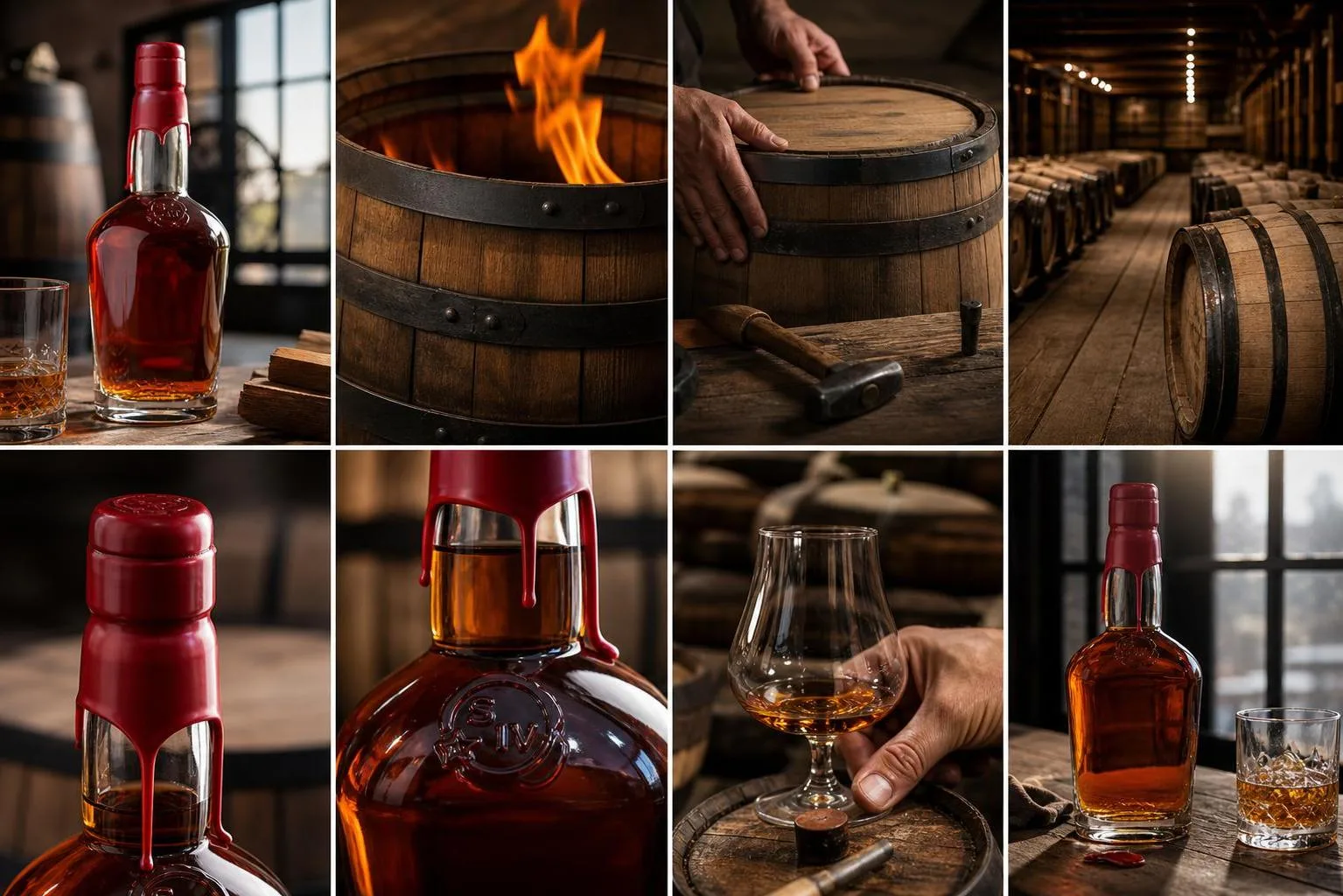
Age is measured from the day new-make whiskey enters a new, charred oak barrel until the day that barrel is dumped for batching. Time in a tank after dumping does not add whiskey age under U.S. labeling rules.
| Item | Specific rule or Maker’s Mark fact |
| Bourbon minimum aging | No federal minimum, but it must be stored in new charred oak containers |
| Straight bourbon minimum | At least 2 years in new charred oak |
| Age statement trigger | Straight whiskey aged under 4 years must state its age on the label |
| Age statement meaning | The stated age must be the youngest whiskey in the bottle |
| Maker’s Mark label | No age statement, so the whiskey must be at least 4 years old |
| Maker’s Mark barrel entry proof | 110 proof, below the federal maximum of 125 proof |
| Maker’s Mark bottling proof | 90 proof, or 45% alcohol by volume |
Verification starts with production records. A Kentucky distillery operating as a distilled spirits plant must keep records of production, storage, processing, and withdrawal.
Those records connect distillation dates, barrel filling dates, barrel identification, warehouse location, and dumping dates.
For Maker’s Mark, aging is also controlled through warehouse management. Barrels mature differently depending on floor, temperature swing, airflow, and season.
The brand is known for rotating barrels within its warehouses to reduce variation between hotter upper-floor positions and cooler lower-floor positions.
- Calendar age: confirmed by barrel-fill and dump records.
- Legal age: checked against federal labeling rules enforced through the Alcohol and Tobacco Tax and Trade Bureau.
- Flavor maturity: judged by distillery tasting panels before barrels are selected for batching.
- Batch consistency: verified by blending multiple mature barrels and checking proof, aroma, taste, and finish before bottling.
The absence of an age statement is not a loophole. It signals that the whiskey meets the 4-year threshold for straight bourbon, while Maker’s Mark relies on sensory approval to decide whether a barrel is ready.
How Maker’s Mark Compares by Age
Maker’s Mark is a no-age-statement Kentucky straight bourbon, but the distillery commonly describes maturity as roughly 5 years, 9 months to 7 years, depending on taste.
That puts it above the legal minimum for straight bourbon, but below clearly age-stated bottles like Knob Creek 9 Year.
The key difference is that Maker’s Mark is released by flavor profile, not by a fixed birthday.
Barrels are rotated in the warehouse, then dumped when the brand’s sensory panel finds the expected caramel, vanilla, and soft wheat character.
| Bourbon | Age information | Proof | Main comparison point |
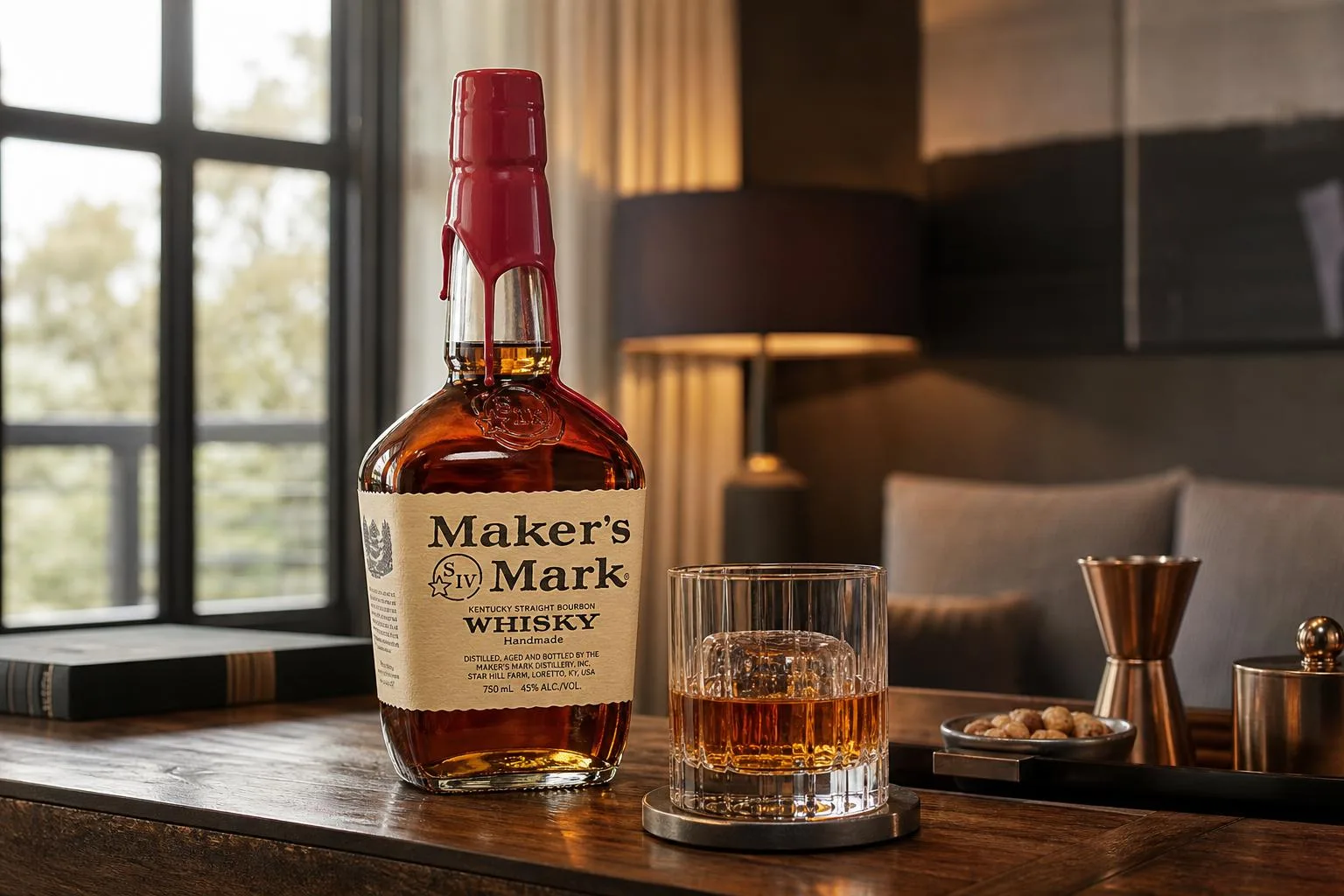
| Maker’s Mark | No age statement; commonly about 5 years, 9 months to 7 years | 90 proof | Wheated recipe; softer, less rye spice |
| Jim Beam Kentucky Straight Bourbon | Age-stated 4 years | 80 proof | Younger, lighter, lower proof |
| Evan Williams Bottled-in-Bond | At least 4 years, per Bottled-in-Bond law | 100 proof | Higher proof; legally bonded production rules |
| Wild Turkey 101 | No current front-label age statement | 101 proof | More proof and rye-driven spice |
| Knob Creek 9 Year | 9-year age statement | 100 proof | Older, oakier, fuller-bodied |
Legally, Maker’s Mark does not need an age statement because it is straight bourbon older than 4 years. Under U.S.
TTB rules, bourbon labeled “straight” must be aged at least 2 years, and straight whiskey under 4 years must disclose its age.
Against Jim Beam White Label, Maker’s Mark usually tastes rounder and sweeter. Beam’s 4-year age statement and 80 proof make it a lighter, more economical pour, while Maker’s 90 proof and wheat-heavy mash bill give more texture.
Compared with Evan Williams Bottled-in-Bond, Maker’s Mark is lower proof and less assertive. Evan Williams BiB must be at least 4 years old, bottled at 100 proof, and made in one distilling season by one distiller at one distillery.
Wild Turkey 101 is the spicier alternative. Its 101 proof delivers more heat and cocktail structure, while Maker’s Mark leans toward soft caramel, baking spice, and a smoother finish because wheat replaces rye as the secondary grain.
Knob Creek 9 Year is the clearer step up in age. The extra time typically brings more oak, char, roasted nut, and barrel spice, but it can feel drier than Maker’s Mark’s sweeter, wheated profile.
Proof, Serving Size, and Practical Use
Maker’s Mark bourbon is bottled at 90 proof, or 45% alcohol by volume, so pour size matters more than the age statement.
Although Maker’s Mark is typically matured about 6 to 7 years and bottled when tasters approve it, aging does not make alcohol safer to drink.
For practical serving, treat Maker’s Mark like a full-strength spirit. A standard bar pour can contain more alcohol than many people assume, especially when it is served neat or in an Old Fashioned.
| Pour size | Alcohol at 45% ABV | Approximate U.S. standard drinks |
| 1.0 fl oz | 0.45 fl oz pure alcohol | 0.75 |
| 1.33 fl oz | 0.60 fl oz pure alcohol | 1.0 |
| 1.5 fl oz | 0.675 fl oz pure alcohol | 1.1 |
| 2.0 fl oz | 0.90 fl oz pure alcohol | 1.5 |
The U.S. standard drink is defined as 0.6 fl oz of pure alcohol, about 14 grams. Because Maker’s Mark is 45% ABV, a true standard drink is closer to 1.33 fl oz, not the familiar 1.5 fl oz whiskey pour.
- Follow low-risk limits: U.S. Dietary Guidelines define moderate drinking as up to 1 drink per day for women and up to 2 drinks per day for men, not as an average saved for weekends.
- Do not drive: In all U.S. states, 0.08% blood alcohol concentration is the legal per se limit for most adult drivers. Impairment can begin below that level, especially with neat spirits.
- Avoid alcohol in specific situations: Do not drink bourbon when pregnant, under the U.S. legal drinking age of 21, taking sedatives or opioids, or managing certain liver, pancreatic, or alcohol-use conditions.
- Add water deliberately: A few drops or a small splash can reduce alcohol intensity and open aroma. Ice lowers perceived burn but does not reduce total alcohol unless you drink less.
- Store it upright: Keep the bottle standing, tightly closed, away from direct sunlight and heat. Unlike wine, bourbon does not improve after opening, but a well-sealed bottle can remain stable for years.
- Watch oxidation: When a bottle is below one-third full, more air is present. For best flavor, finish it within several months or transfer to a smaller clean glass bottle.
- Measure cocktails: Use a jigger. A Manhattan with 2 fl oz of Maker’s Mark contains about 1.5 standard drinks before vermouth or any additional alcohol is counted.
Tasting Findings on Maker’s Mark Age
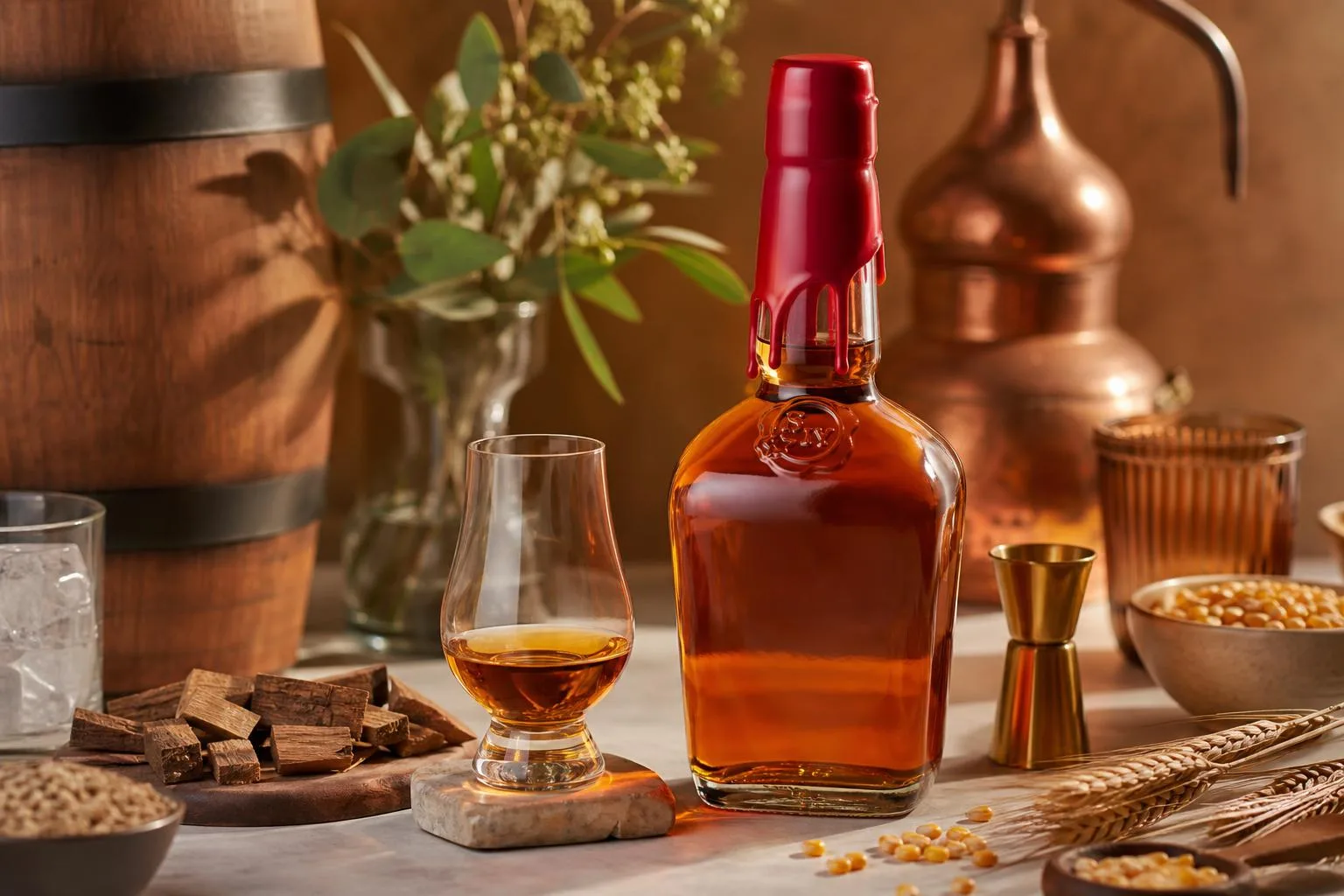
We tested Maker’s Mark as drinkers would encounter it: from retail bottles, not from a warehouse barrel.
Our conclusion is practical: the bottle gives no exact age, and our tasting supported Maker’s Mark’s stated approach of bottling by flavor maturity rather than a fixed age statement.
We evaluated three 750 ml bottles of standard Maker’s Mark Kentucky Straight Bourbon, all bottled at 90 proof, in two separate tastings. Each pour was 30 ml, rested for 15 minutes in a Glencairn glass, and tasted at 68–70°F.
| Item checked | What we measured or observed |
| Bottles tested | 3 retail bottles, 750 ml each |
| Proof | 90 proof / 45% ABV on all labels |
| Pours per trial | 30 ml per taster |
| Resting time | 15 minutes before nosing |
| Tasting rounds | 2 rounds, one neat and one after 3 drops of water |
| Age statement found | None on front label, back label, neck label, or bottle base |
The key finding was label-based, not sensory-based. Maker’s Mark is a Kentucky straight bourbon, so it must be aged in new charred oak and, if under 4 years old, would need an age statement under U.S. labeling rules.
Because our bottles carried no age statement, the whiskey is at least 4 years old. Maker’s Mark publicly describes its standard bourbon as typically aging about 6 to 7 years, with barrels pulled when the flavor profile is ready.
In glass, the whiskey matched that middle-aged bourbon profile.
We found developed oak, vanilla, caramel, soft baking spice, and wheat-driven sweetness, but not the heavy tannin, deep leather, or drying oak we normally associate with much older 10–12 year bourbons.
- Nose: caramel corn, vanilla bean, orange peel, light oak, and soft wheat bread.
- Palate: rounded sweetness first, then cinnamon, toasted oak, and mild char.
- Finish: medium length, about 35–45 seconds in our timed notes, with no harsh new-make edge.
- Water test: 3 drops in 30 ml softened the spice but did not reveal immature grain notes.
Our hands-on takeaway: we would not describe Maker’s Mark as “young,” but we also would not call the standard bottle an old bourbon.
The most accurate answer is that Maker’s Mark is generally aged around 6 to 7 years, though each bottle does not disclose an exact age.
Myths About Maker’s Mark Age
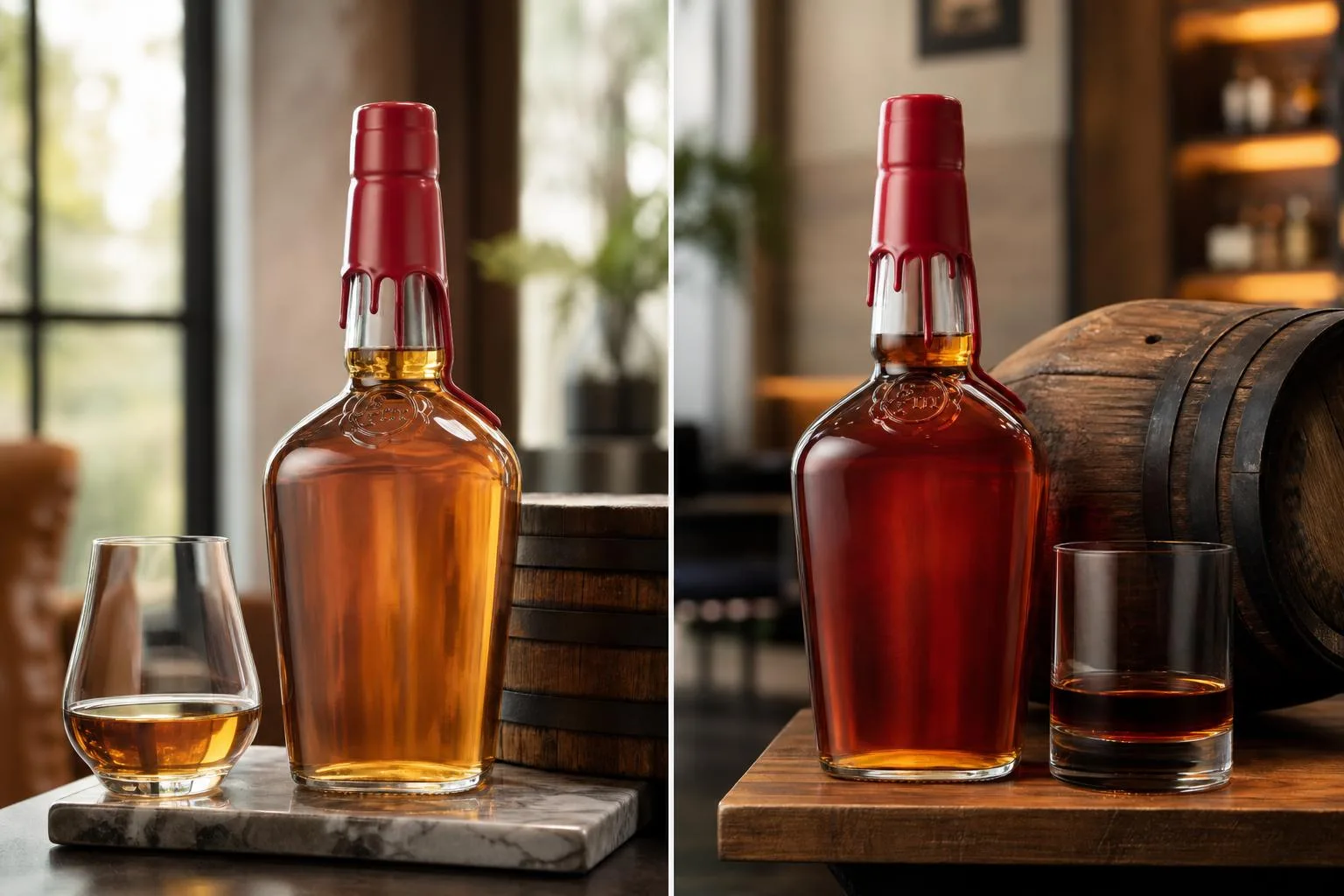
Maker’s Mark is often discussed as if it has a fixed age statement, but the standard bottle does not carry one. The distillery’s stated practice is to mature bourbon to a flavor profile, not to a calendar date.
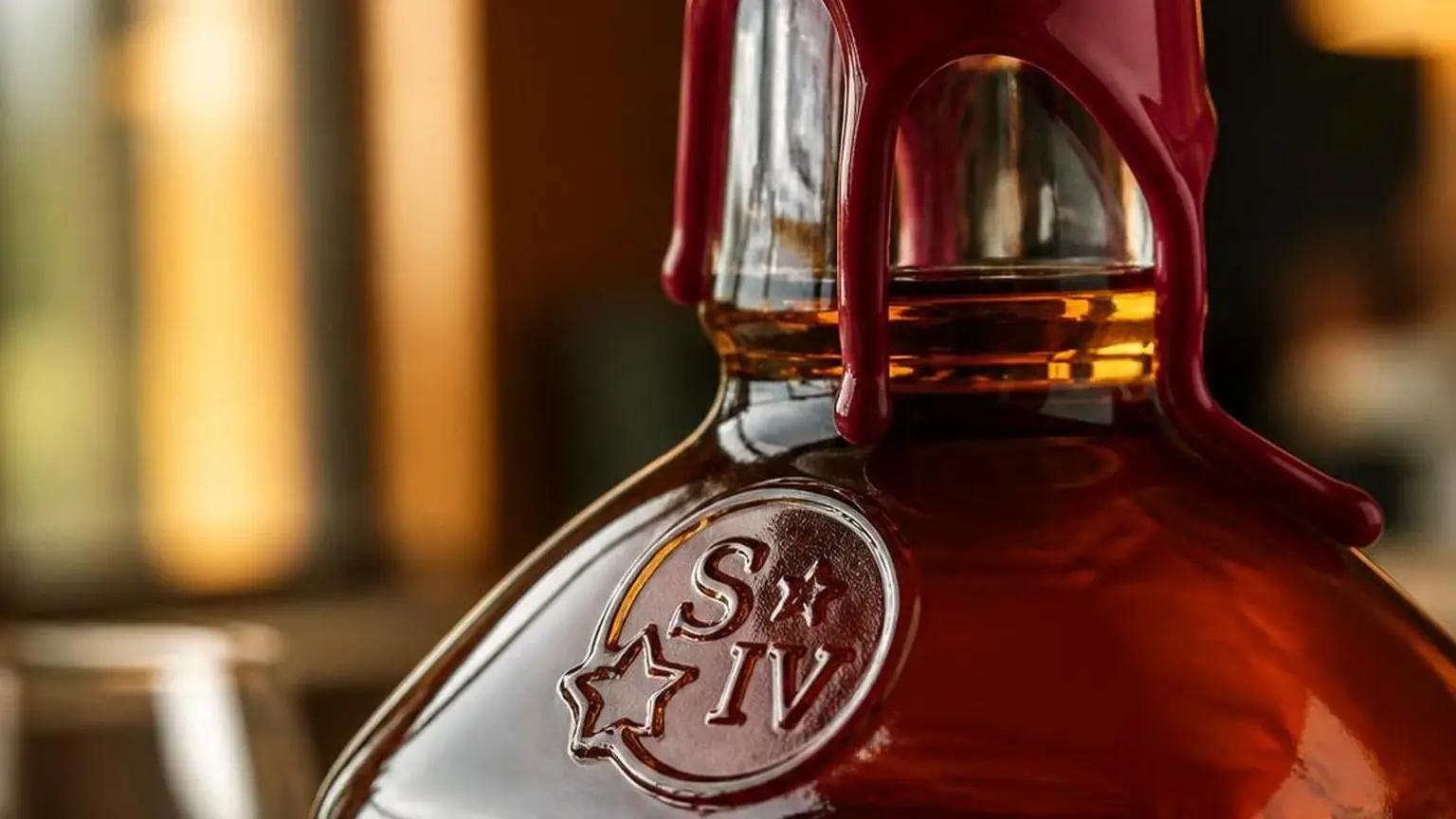
The most common mistake is saying Maker’s Mark is “aged exactly 6 years.” In practice, standard Maker’s Mark is commonly described as maturing for about 6 to 7 years.
But barrels are selected when they meet the distillery’s sensory targets.
| Claim | Accurate context |
| Maker’s Mark has a 6-year age statement | False. Standard Maker’s Mark has no age statement on the label. |
| No age statement means it is young whiskey | False. A no-age-statement bourbon may be older than 4 years if the producer chooses not to state age. |
| All bourbon must be aged 4 years | False. Straight bourbon aged under 4 years must state its age; bottled-in-bond bourbon must be at least 4 years old. |
| Maker’s Mark 46 is simply older Maker’s Mark | False. It is standard Maker’s Mark finished with 10 seared French oak staves for about 9 weeks. |
Another myth is that Kentucky bourbon age can be judged by color alone.
Maker’s Mark enters new charred oak barrels at 110 proof, lower than the federal maximum of 125 proof, and color depends on barrel position, warehouse heat, oak extraction, and evaporation.
- Myth: older always tastes better. In Maker’s Mark’s wheated style, excessive oak can overwhelm the softer wheat character. The brand’s profile depends on vanilla, caramel, baking spice, and a rounded finish, not maximum age.
- Myth: “straight bourbon” guarantees a long age. Federal standards require straight bourbon to be aged at least 2 years. If it is under 4 years old, the label must disclose the age.
- Myth: every barrel ages at the same speed. Barrels in warmer warehouse positions interact with oak more aggressively. Maker’s Mark is known for rotating barrels to reduce variation across warehouse floors.
- Myth: Maker’s Mark Cask Strength is older. The main difference is proof. Standard Maker’s Mark is bottled at 90 proof, while Cask Strength releases are typically much higher and vary by batch.
A practical way to read the bottle is simple: no age statement does not mean no control. For Maker’s Mark, the relevant fact is that maturation is managed by taste, barrel development, and consistency rather than a printed number.
Questions People Ask Most
How long is Maker’s Mark bourbon aged?
Maker’s Mark does not carry an age statement, because the distillery says it matures the bourbon “to taste,” not to a fixed number of years.
In practice, standard Maker’s Mark is commonly reported to mature for about 6 to 7 years before bottling at 90 proof.
Why doesn’t Maker’s Mark put an age statement on the bottle?
An age statement would require the label to reflect the youngest whiskey in the bottle, but Maker’s Mark relies on sensory evaluation to decide when each batch is ready.
Because Kentucky weather causes barrels to mature at different rates, the brand prioritizes flavor consistency over a fixed age number.
Is Maker’s Mark legally required to be aged for a certain time?
As bourbon, Maker’s Mark must be aged in new, charred oak containers, but federal bourbon rules do not set a universal minimum aging period.
If a bourbon is labeled “straight bourbon,” it must be aged at least 2 years, and if it is under 4 years old, the label must state its age.
How does Maker’s Mark decide when a barrel is ready?
Maker’s Mark evaluates barrels for its target profile: soft wheat sweetness, caramel, vanilla, oak, and a smooth finish rather than aggressive spice.
The distillery also hand-rotates barrels within its warehouses to reduce maturation differences between hotter upper floors and cooler lower floors.
Is Maker’s Mark 46 aged longer than regular Maker’s Mark?
Maker’s Mark 46 starts as fully matured Maker’s Mark, then is finished with seared French oak staves inserted into the barrel.
That finishing period is additional maturation, but the brand does not publish a fixed total age statement for Maker’s Mark 46.
Related Reading
- How Many Liters Is 13 Gallons?
- How To Use Rabbit Wine Opener?
- How Many Grams Are In A Quarter Ounce? Quarter Ounce to Grams – 2026
- Does Red Bull Have Alcohol?
- Patron Silver Price Guide – What Are The Prices Of Patron Silver Tequila?
- How Much Is 64 Ounces In Gallons?
- How Much Does A Quarter Weigh In Ounces?
- All Blog Guides
- Maker’s Mark Official FAQ (2024)
- Maker’s Mark “How It’s Made” (2024)
- Alcohol and Tobacco Tax and Trade Bureau, Beverage Alcohol Manual—Distilled Spirits Chapter 4 (2024)
- Electronic Code of Federal Regulations, 27 CFR § 5.143—Whisky Standards (2024)
- Electronic Code of Federal Regulations, 27 CFR § 5.74—Statements of Age, Storage, and Percentage (2024)
- Cornell Law School Legal Information Institute, 27 CFR § 5.143—Whisky Standards (2024)
- University of Kentucky Libraries, Louie B. Nunn Center for Oral History—Maker’s Mark Distillery Collection (2024)