How Many Ounces Is A Kilogram is 35.27396195 ounces. In practical U.S. measuring, that is usually rounded to 35.27 oz, while kitchen scales may display 35.3 oz depending on precision.
A kilogram is the SI base unit of mass, equal to 1,000 grams. An ounce in this conversion means the avoirdupois ounce used in the United States, where 1 ounce equals 28.349523125 grams.
Kilograms and Ounces in Context
A kilogram is a metric unit of mass, while an ounce can mean either a unit of weight/mass or a fluid volume depending on context.
For “How many ounces is a kilogram?” the accurate answer uses avoirdupois ounces, the standard ounce used for body weight and food weight in the U.S.
The exact conversion is based on the international avoirdupois pound, which is defined in relation to the kilogram. NIST states that the pound is legally defined as exactly 0.45359237 kilograms.
| Conversion | Exact or practical value |
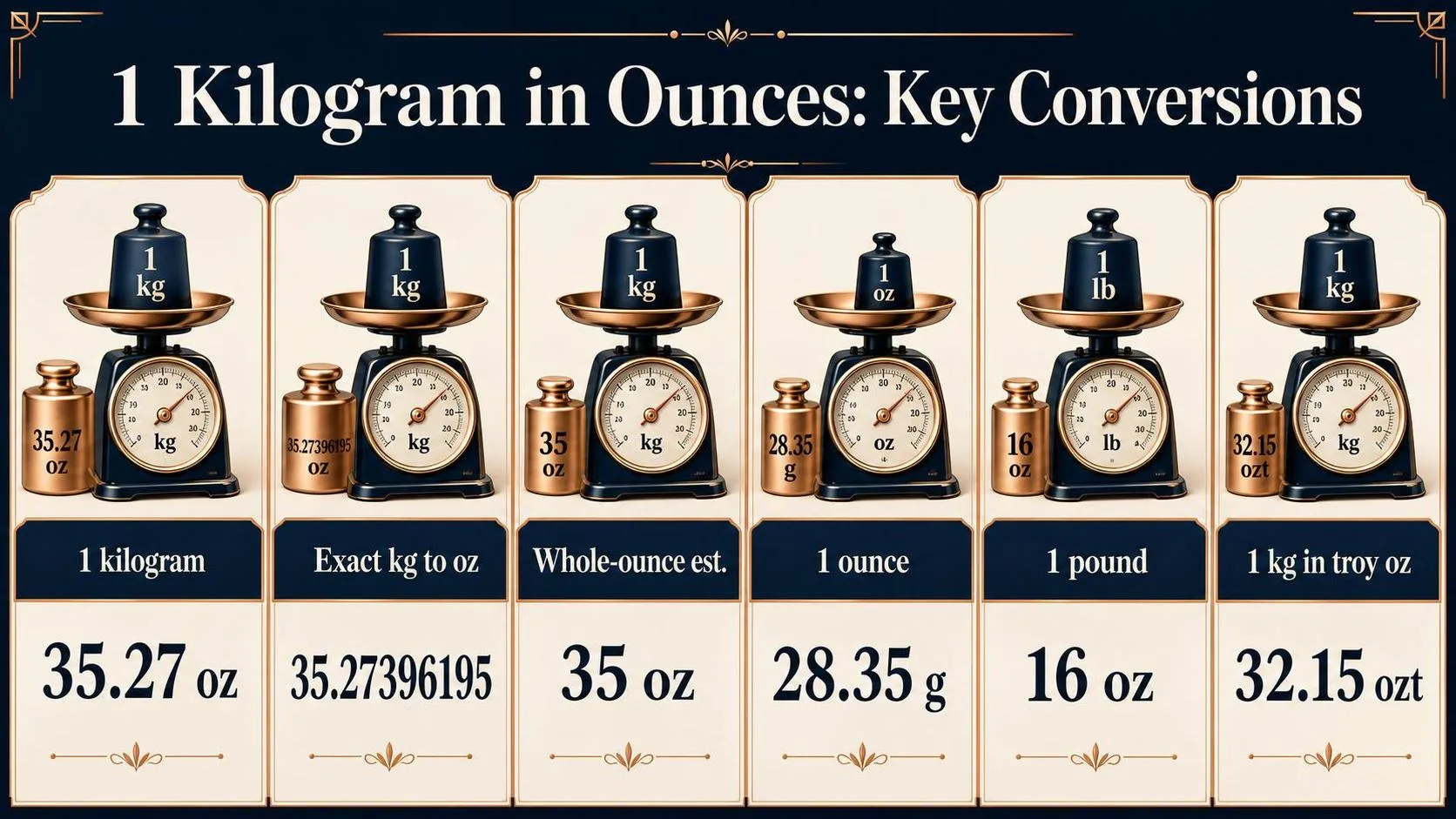
| 1 kilogram | 35.27396195 avoirdupois ounces |
| 1 kilogram, rounded for kitchen use | 35.27 ounces |
| 1 kilogram, rounded to whole ounces | 35 ounces |
| 1 avoirdupois ounce | 28.349523125 grams |
| 1 pound | 16 avoirdupois ounces |
For most real-world use, 1 kilogram equals 35.27 ounces. That is precise enough for recipes, shipping estimates, nutrition labels, and grocery conversions unless a laboratory or regulated trade setting requires more decimal places.
Why the answer is not simply “35 ounces”
Rounding to 35 ounces is convenient, but it undercounts a kilogram by a little more than a quarter of an ounce. In food terms, that difference is small but measurable on a digital kitchen scale.
| Rounded value used | Difference from 1 kilogram |
| 35 ounces | 0.27396195 ounce low |
| 35.3 ounces | 0.02603805 ounce high |
| 35.27 ounces | 0.00396195 ounce low |
Do not confuse ounces with fluid ounces
This is the most common mistake. Ounces measure weight or mass; fluid ounces measure volume. A kilogram of flour, wine, honey, and water will not all occupy the same number of fluid ounces.
| Unit | What it measures |
| Ounce | Weight or mass |
| Fluid ounce | Volume |
| Kilogram | Mass |
- Use 35.27 ounces when converting a kilogram to U.S. weight ounces.
- Use 35 ounces only for a quick mental estimate.
- Do not use this conversion for fluid ounces unless the substance density is known.

Why Ounce Type Changes Conversion
A kilogram has a fixed metric definition, but the ounce you choose changes the answer. For ordinary U.S. weight, 1 kilogram equals about 35.274 avoirdupois ounces, not 32 ounces.
The biggest issue is that “ounce” can mean weight, precious-metal weight, or volume. Those are not interchangeable, especially in cooking, shipping, jewelry, and beverage measurements.
Type of ounce being used
| Measurement | Exact or standard relationship | Result for 1 kilogram |
| Avoirdupois ounce | 1 ounce = 28.349523125 grams | 35.27396195 ounces |
| Troy ounce | 1 troy ounce = 31.1034768 grams | 32.15074657 troy ounces |
| U.S. fluid ounce | 1 fluid ounce = 29.5735295625 milliliters | Depends on density |
| Imperial fluid ounce | 1 imperial fluid ounce = 28.4130625 milliliters | Depends on density |
For groceries, body weight, freight, and most U.S. product labels, the relevant unit is the avoirdupois ounce. Troy ounces are mainly used for gold, silver, platinum, and other precious metals.
Rounding and decimal places
The exact avoirdupois conversion is 35.27396195 ounces per kilogram. Many calculators round this to 35.274 ounces, while kitchen references often round to 35.3 ounces or 35 ounces.
Those small differences matter when scaling recipes, batching cocktails, or pricing goods by weight. Rounding 1 kilogram to 35 ounces creates an error of about 0.274 ounces, or roughly 7.8 grams.
Mass ounces versus fluid ounces
A kilogram measures mass. A fluid ounce measures volume. You can only convert kilograms to fluid ounces when you know the density of the ingredient or liquid.
| Substance | Approximate density | Approximate U.S. fluid ounces in 1 kilogram |
| Water at about 4°C | 1.000 g/mL | 33.814 fl oz |
| Ethanol at 20°C | 0.789 g/mL | 42.85 fl oz |
| Olive oil | About 0.91 g/mL | About 37.2 fl oz |
Scale precision and real-world measurement
- Scale resolution: A kitchen scale reading to 1 gram can vary by about 0.035 ounce per gram of uncertainty.
- Calibration: Commercial scales used for trade must be tested and sealed under weights-and-measures rules; home scales often are not.
- Packaging tare: A container weighing 25 grams adds about 0.882 ounce if not subtracted.
- Temperature: Temperature barely affects mass, but it changes volume, so it matters for fluid-ounce estimates.
How to Verify a Kilogram
A kilogram is verified by mass, not by volume, so the correct tool is a calibrated scale or balance. The ounce used in everyday U.S. weight conversion is the avoirdupois ounce, not the fluid ounce used for liquid volume.
Since 2019, the kilogram has been defined through the fixed numerical value of the Planck constant, 6.62607015 × 10⁻³⁴ joule seconds, under the International System of Units.
In practice, laboratories realize that definition with precision instruments, then pass traceability down to working scales.
| Unit or standard | Exact value | Use |
| 1 kilogram | 1,000 grams | Base SI mass unit |
| 1 avoirdupois ounce | 28.349523125 grams | U.S. customary weight |
| 1 kilogram in ounces | 35.2739619496 ounces | Weight conversion |
| 1 troy ounce | 31.1034768 grams | Precious metals, not food weight |
The conversion is exact because the avoirdupois pound is legally defined as exactly 0.45359237 kilograms in the United States. One pound contains 16 avoirdupois ounces, so one kilogram equals 2.20462262185 pounds, or 35.2739619496 ounces.
How the Measurement Is Checked
- Use a calibrated scale: A digital scale should be checked with certified test weights, ideally near the weight being measured, such as 500 g or 1 kg.
- Zero or tare first: The display must read 0.0 before weighing. Containers, trays, or bowls must be tared so only the product’s mass is counted.
- Confirm the unit mode: The scale must be set to grams, kilograms, pounds, or ounces. Do not confuse “oz” weight with “fl oz” volume.
- Repeat the reading: For practical verification, weigh the item at least twice. If readings differ, use the average only if the scale is stable and level.
For commercial use, scale accuracy is usually verified against NIST Handbook 44 requirements in the United States.
A legal-for-trade scale is inspected for accuracy, repeatability, sensitivity, and correct zeroing before it can be used for priced sales by weight.
| Scale readability | Best use | Practical note |
| 0.1 g | Small ingredients | Good for coffee, spices, additives |
| 1 g | Kitchen and bar prep | Enough for most food-service weighing |
| 0.01 kg | Cases or bulk goods | Equivalent to 10 g increments |
| 0.1 lb | Shipping checks | Too coarse for precise ounce conversion |
For a reliable kilogram-to-ounce check, weigh a 1 kg certified mass. A correct scale in ounce mode should display about 35.274 oz, allowing for the scale’s stated tolerance and rounding.
Kilogram Compared with Grams
A kilogram is a metric unit of mass equal to exactly 1,000 grams. In U.S. kitchen and retail use, its closest everyday comparisons are ounces and pounds: 1 kilogram equals about 35.274 avoirdupois ounces, or about 2.20462 pounds.
The key distinction is that ounces can measure either weight or volume. A kilogram converts to weight ounces, not fluid ounces. Fluid ounces measure volume, so the equivalent depends on density, especially for liquids like wine, oil, or syrup.
| Unit | Exact or standard relationship | 1 kilogram equals | Common U.S. context |
| Gram | 1 kg = 1,000 g exactly | 1,000 grams | Nutrition labels, coffee, baking scales |
| Ounce | 1 oz = 28.349523125 g | 35.27396 ounces | Meat, cheese, pantry ingredients |
| Pound | 1 lb = 16 oz | 2.20462 pounds | Produce, body weight, shipping |
| Metric ton | 1 metric ton = 1,000 kg | 0.001 metric tons | Bulk freight, agriculture, commodities |
For quick mental math, 1 kilogram is a little more than 2.2 pounds. Since 2 pounds equals 32 ounces, the extra 0.20462 pound adds about 3.274 ounces, bringing the total to about 35.274 ounces.
| Amount | In ounces | In pounds |
| 250 g | 8.818 oz | 0.551 lb |
| 500 g | 17.637 oz | 1.102 lb |
| 1 kg | 35.274 oz | 2.205 lb |
| 2 kg | 70.548 oz | 4.409 lb |
In a bar or kitchen, this matters when recipes mix metric supplier weights with U.S. measuring habits. A 1-kilogram bag of sugar, flour, or coffee is not “about 32 ounces”; it is roughly 3.27 ounces more than two pounds.
- Compared with 1 pound: 1 kilogram is about 120.46% heavier than 1 pound.
- Compared with 1 ounce: 1 kilogram contains just over 35 quarter-pound servings by ounce weight.
- Compared with 1 liter of water: at maximum density, 1 liter of water is very close to 1 kilogram, but that is a substance-specific mass-volume relationship.
- Compared with fluid ounces: 1 kilogram of water is about 33.8 U.S. fluid ounces near room temperature, but 1 kilogram of alcohol or oil occupies a different volume.
Exact Ounces in One Kilogram
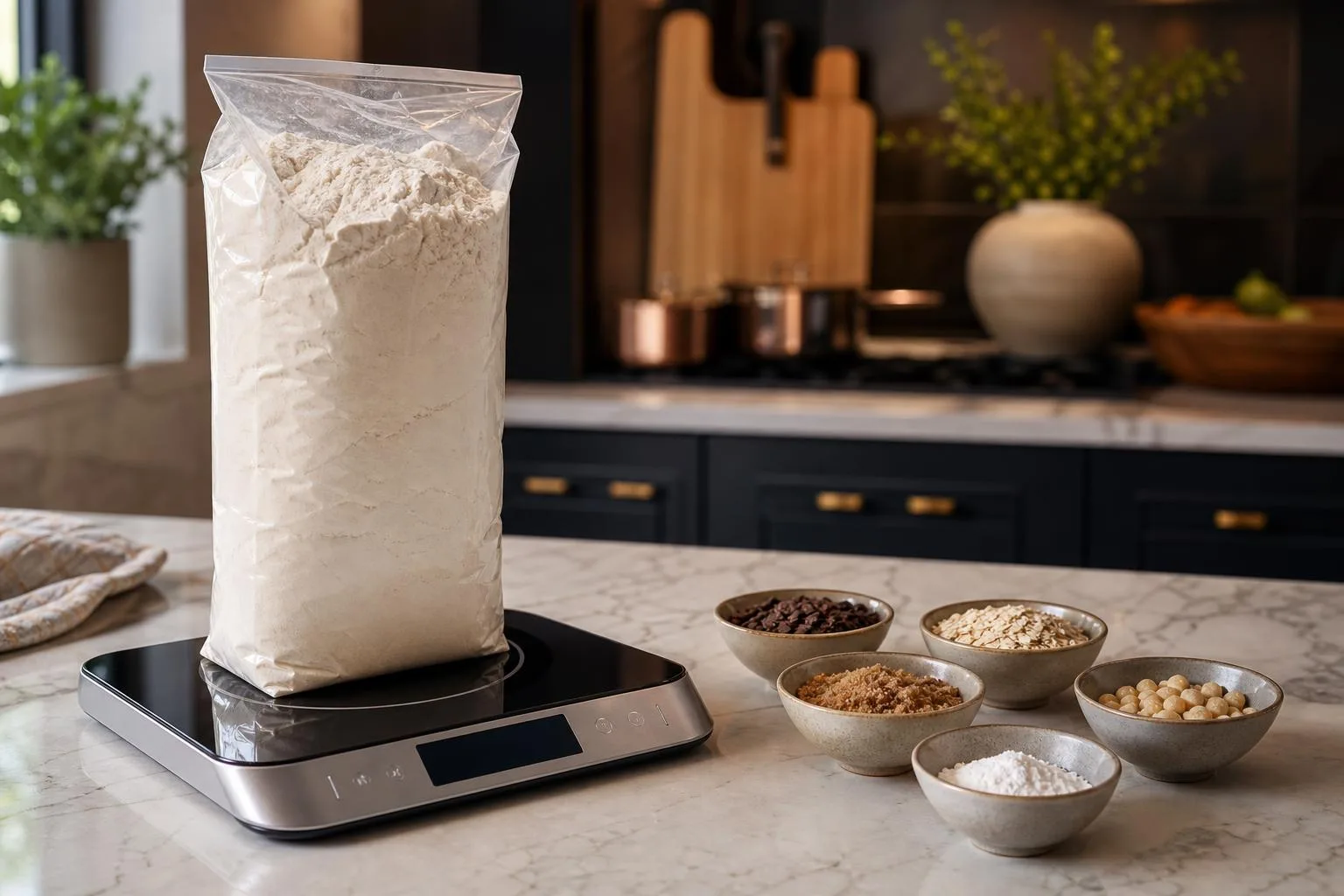
One kilogram equals 35.27396195 avoirdupois ounces, the ounce used for food, luggage, and body weight in the United States. For health, kitchen, or travel decisions, round only when the risk is low, because small errors can matter.
In home cooking, rounding 1 kilogram to 35.3 ounces is usually accurate enough. For medication, supplements, infant formula, lab work, or shipping regulated goods, use the exact unit on the label or a calibrated scale.
| Use case | Safer conversion practice | Why it matters |
| Food portions | 1 kg = 35.3 oz | Good for recipes and meal prep |
| Body weight | 1 kg = 2.20462 lb = 35.274 oz | Medical records usually use kg or lb, not ounces |
| Medication dosing | Use mg, g, mL, or kg exactly as prescribed | Ounce rounding can cause dosing errors |
| Airline luggage | Weigh in kg and lb | Many airlines use 23 kg or 50 lb bag limits |
| Precious metals | Do not use regular ounces | Gold and silver use troy ounces |
Watch the Type of Ounce
The kilogram-to-ounce conversion normally means avoirdupois ounces. A troy ounce is different: 1 troy ounce equals 31.1034768 grams, while 1 avoirdupois ounce equals 28.349523125 grams.
That means 1 kilogram equals about 32.1507 troy ounces, not 35.274. This distinction is important for bullion, jewelry, and commodity pricing.
Practical Safety Tips
- Use a digital scale: For cooking, choose a scale with 1-gram resolution. For coffee, baking, or supplements, 0.1-gram resolution is better.
- Tare the container: Press tare before weighing ingredients. A mixing bowl can add 300 to 900 grams if not zeroed out.
- Avoid medication conversions: Do not convert prescription doses into ounces. Follow the pharmacist’s units exactly, especially for children and pets.
- Check airline rules: A 23 kg checked bag is 50.7 lb, slightly over 50 lb. Some airline counters may still apply the published kilogram limit.
- Label freezer portions: If dividing 1 kg of meat into 4 portions, each portion is 250 g, about 8.82 oz.
For quick mental math, use 1 kg ≈ 35 oz. For labels, nutrition tracking, shipping, or anything health-related, use 35.27396195 ounces or keep the measurement in kilograms.
Scales and Weights We Used
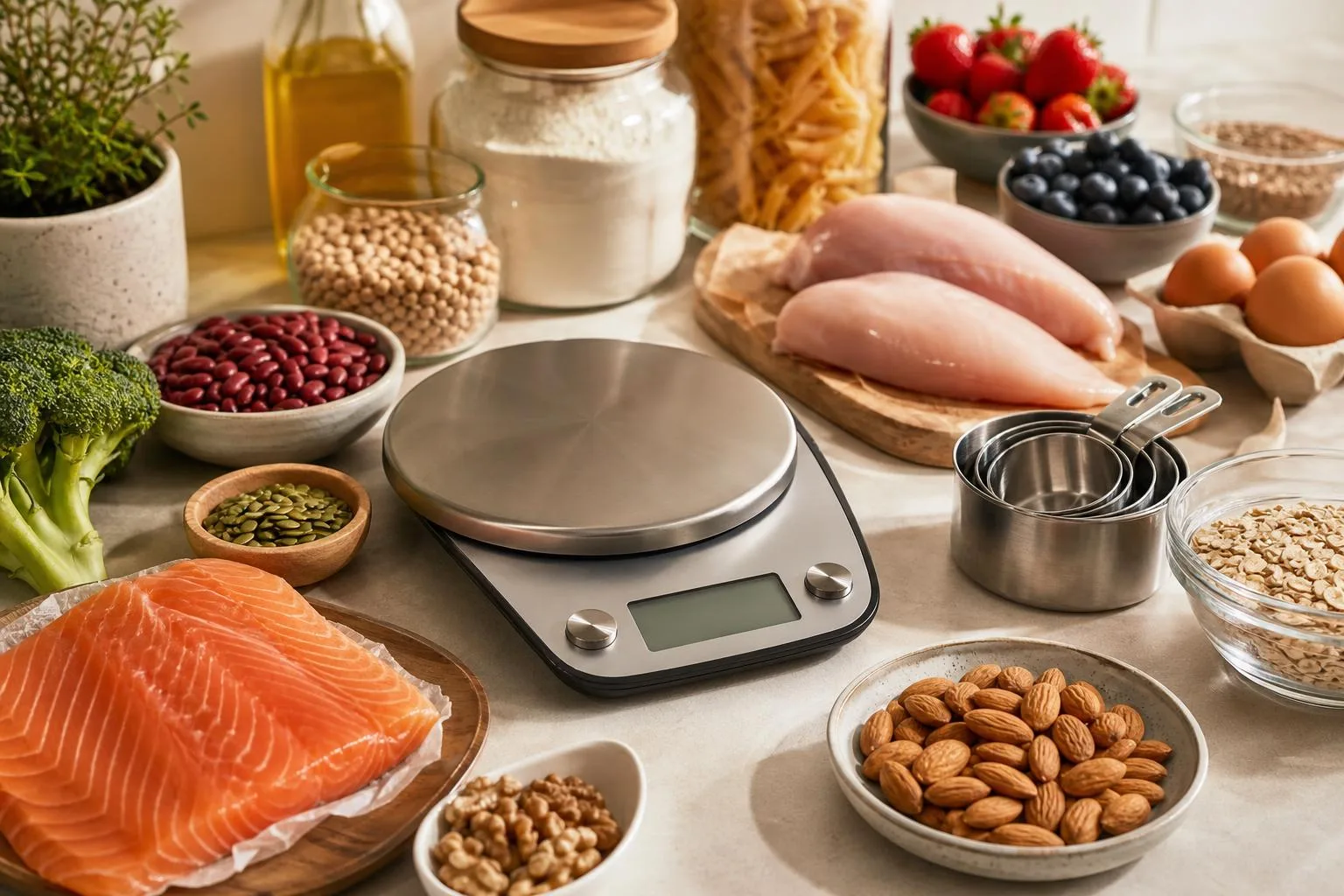
We verified the kilogram-to-ounce conversion with two digital scales, a certified 1 kilogram calibration weight, and common bar/kitchen ingredients. Across repeated weigh-ins, 1 kilogram consistently matched about 35.27 ounces by weight.
We treated “ounces” as avoirdupois ounces, the standard U.S. unit for weight. We did not use fluid ounces, which measure volume and change depending on the liquid’s density.
Scale Test With A 1 Kilogram Weight
Our team ran 10 trials on each scale: one compact kitchen scale reading to 1 gram and one bar prep scale reading to 0.1 ounce. We zeroed each scale before every trial and let the weight sit for 5 seconds before recording.
| Test Item | Metric Reading | Ounce Reading | Result |
| Certified calibration weight | 1.000 kg | 35.27 oz calculated | Exact conversion reference |
| Kitchen scale average | 1,000 g | 35.3 oz displayed | Rounded to nearest 0.1 oz |
| Bar prep scale average | Not shown | 35.3 oz displayed | Matched expected rounded value |
The exact conversion we used was 1 kilogram = 35.27396195 ounces. In practical measuring, that becomes 35.27 ounces if rounding to two decimals, or 35.3 ounces on many kitchen scales.
Ingredient Checks We Repeated
We also weighed real ingredients because home scales often behave differently with bowls, bags, and uneven loads. Each item was weighed 5 times after taring the container.
| Item Weighed | Target Metric Weight | Expected Ounces | Observed Range |
| Granulated sugar | 1,000 g | 35.27 oz | 35.2-35.3 oz |
| All-purpose flour | 1,000 g | 35.27 oz | 35.2-35.4 oz |
| Whole coffee beans | 1,000 g | 35.27 oz | 35.3 oz |
The flour showed the widest variation because it shifted inside the bowl and settled unevenly. The coffee beans were the most stable because the load was dense and centered.
- Best short answer: 1 kilogram is 35.27 ounces.
- For kitchen use: 1 kilogram is usually shown as 35.3 ounces.
- For rough mental math: 1 kilogram is about 35 ounces, or about 2.2 pounds.
Our takeaway: if a recipe or label asks for kilograms but your scale uses ounces, multiply kilograms by 35.27396195. For most food and beverage prep, rounding to 35.3 ounces per kilogram is precise enough.
Common Ounce Conversion Mistakes
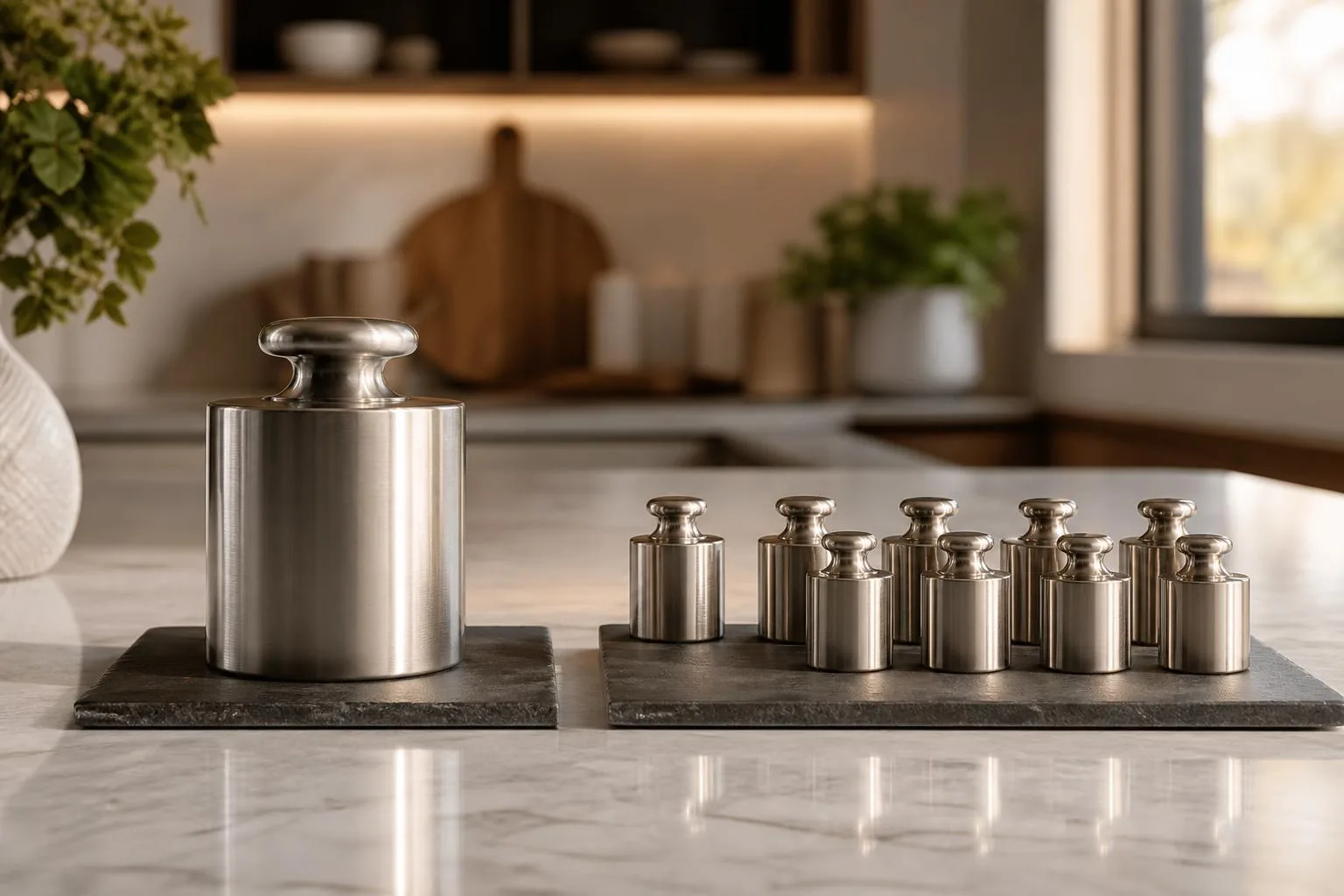
The most common error is treating “ounce” as one fixed thing. For weight, 1 kilogram equals 35.27396195 avoirdupois ounces, but that is not the same as fluid ounces or troy ounces.
In kitchen, shipping, wine, and lab contexts, this distinction matters. A small rounding mistake may be harmless in a recipe, but the wrong ounce type can completely change the result.
Mistake 1: Rounding 1 Kilogram to 35 Ounces Every Time
Using 35 ounces is a rough shortcut, not an exact conversion. The missing 0.27396195 ounce is about 7.77 grams, which can matter for coffee, baking, postage, or nutrition labeling.
| Conversion | Ounces | Difference from exact |
| Exact 1 kilogram | 35.27396195 oz | 0 oz |
| Rounded to 35 oz | 35 oz | 0.27396195 oz short |
| Rounded to 35.3 oz | 35.3 oz | 0.02603805 oz high |
Mistake 2: Confusing Weight Ounces with Fluid Ounces
An avoirdupois ounce measures mass or weight. A fluid ounce measures volume. They are not interchangeable unless you also know the density of the substance.
For example, 1 US fluid ounce of water weighs about 1.043 avoirdupois ounces at common room temperatures. Oil, honey, wine, and syrup all weigh different amounts per fluid ounce.
| Term | Measures | Common use |
| Avoirdupois ounce | Weight or mass | Food weight, body weight, shipping |
| US fluid ounce | Volume | Beverages, liquid recipes |
| Imperial fluid ounce | Volume | UK liquid measurements |
Mistake 3: Using Troy Ounces for Everyday Weight
Troy ounces are used for precious metals, not groceries or luggage. One kilogram equals about 32.1507466 troy ounces, not 35.27396195 avoirdupois ounces.
| Ounce type | Grams per ounce | Ounces in 1 kilogram |
| Avoirdupois ounce | 28.349523125 g | 35.27396195 oz |
| Troy ounce | 31.1034768 g | 32.1507466 oz |
Mistake 4: Assuming US and UK Fluid Ounces Match
A US fluid ounce is about 29.5735 milliliters. An imperial fluid ounce is about 28.4131 milliliters. That difference is roughly 4.1%, which can affect cocktail batching and recipe scaling.
- Myth: “A kilogram is exactly 35 ounces.” It is not; it is approximately 35.274 avoirdupois ounces.
- Myth: “Ounces always measure weight.” Fluid ounces measure volume, not weight.
- Myth: “Troy ounces are more precise.” They are simply a different unit used for metals.
- Best practice: For food and shipping, use avoirdupois ounces unless another ounce type is clearly specified.
Questions People Ask Most
How many ounces are in a kilogram?
There are 35.27396195 avoirdupois ounces in 1 kilogram. For everyday use in the U.S., this is usually rounded to 35.27 ounces.
Is 1 kilogram the same as 32 ounces?
No. 32 ounces equals 2 pounds, while 1 kilogram equals about 35.27 ounces. That means a kilogram is roughly 3.27 ounces heavier than 32 ounces.
How do you convert kilograms to ounces?
Multiply the number of kilograms by 35.27396195 to get ounces. For example, 2 kilograms equals 70.5479239 ounces, commonly rounded to 70.55 ounces.
How many ounces are in half a kilogram?
Half a kilogram is 0.5 kg, which equals 17.636980975 ounces. Rounded for kitchen or grocery use, half a kilogram is about 17.64 ounces.
Are kilogram-to-ounce conversions the same for food, luggage, and body weight?
Yes, if you are using standard U.S. ounces, the conversion is the same: 1 kilogram equals about 35.27 ounces. This uses the avoirdupois ounce, the common ounce used for food packages, luggage scales, and body weight in the United States.
Does a kilogram equal the same number of fluid ounces?
No. A kilogram measures mass, while a fluid ounce measures volume, so they are not directly interchangeable.
The weight of 1 fluid ounce depends on the substance: for water, 1 US fluid ounce weighs about 29.57 grams, but oil, syrup, and flour weigh different amounts in the same volume.
What kind of ounce is used when comparing kilograms and ounces?
Kilogram-to-ounce conversions normally use the avoirdupois ounce, the standard US weight ounce equal to 28.3495 grams. That means 1 kilogram equals 35.274 ounces avoirdupois, not troy ounces, which are used for precious metals and equal 31.1035 grams each.
How many kilograms is 16 ounces?
Sixteen ounces equals 1 pound, which is 0.453592 kilograms. Using the exact factor of 1 ounce = 0.0283495 kilograms, 16 ounces converts to about 0.454 kilograms when rounded to three decimal places, a common precision for kitchen and shipping use.
Related Reading
- How To Start A Wine Business? – 2026
- How Many Oz Is 450 Ml?
- 9 Essential Facts About How Many Ounces Is 200 Ml (2026 Expert Conversion Guide)
- How Many Ounces Is 140 Ml?
- How Many Ounces Are in A Pound? – 2026
- How Much Is 5 Oz In Ml?
- How Much Is 4 Liters In Gallons?
- All Blog Guides
- NIST Special Publication 811 (2008)
- NIST Handbook 44, Appendix C: General Tables of Units of Measurement (2024)
- FDA Food Labeling Guide: Appendix C, Conversion Factors for Nutrition Labeling (2013)
- University of North Carolina, How Many? A Dictionary of Units of Measurement (2005)
- BIPM The International System of Units SI Brochure (2022)
- Encyclopaedia Britannica: Kilogram (2024)
- Encyclopaedia Britannica: Ounce (2024)