How Many Gallons Is 10 L is 2.6417 US gallons.
Using the standard U.S. liquid gallon of 3.785411784 liters, 10 liters ÷ 3.785411784 equals 2.6417205, which rounds to 2.64 gallons for everyday measuring or 2.642 gallons when you need tighter precision.
If you mean Imperial gallons, used in the U.K. and some Commonwealth contexts, 10 liters equals 2.1997 Imperial gallons because one Imperial gallon is 4.54609 liters.
Always confirm which gallon system a recipe, container label, or conversion chart uses before scaling volumes.
Liters in Imperial Gallons
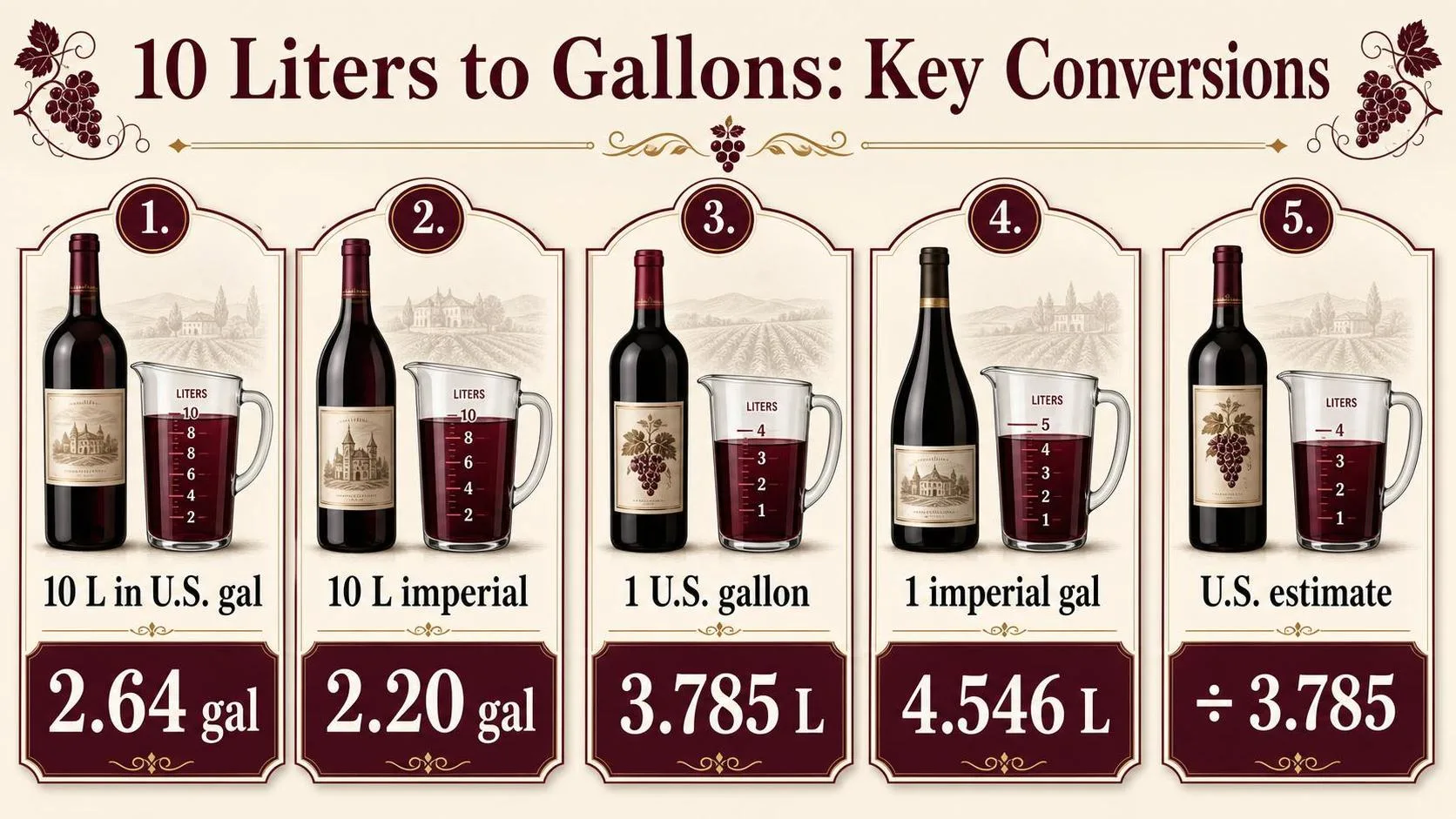
Ten liters equals 2.64172 U.S. liquid gallons. If you are using U.K. or Canadian “imperial gallons,” the same 10 liters equals 2.19969 imperial gallons, so the gallon system matters.
The official conversion is based on the liter and gallon definitions used in measurement standards. One U.S. liquid gallon is exactly 3.785411784 liters, while one imperial gallon is exactly 4.54609 liters.
| Quantity | Equals | Rounded for everyday use |
| 10 liters | 2.6417205236 U.S. liquid gallons | About 2.64 U.S. gallons |
| 10 liters | 2.19969248299 imperial gallons | About 2.20 imperial gallons |
| 1 U.S. liquid gallon | 3.785411784 liters | About 3.79 liters |
| 1 imperial gallon | 4.54609 liters | About 4.55 liters |
For most U.S. shopping, cooking, beverage service, fuel, and container sizing, “gallon” means the U.S. liquid gallon. In that context, 10 L is slightly more than two and a half gallons.
| U.S. gallon estimate | Liters | How it compares with 10 L |
| 2 gallons | 7.570823568 L | 10 L is 2.429176432 L more |
| 2.5 gallons | 9.46352946 L | 10 L is 0.53647054 L more |
| 2.64 gallons | 9.99348711 L | Very close; short by about 0.0065 L |
| 2.65 gallons | 10.03134123 L | Slightly over by about 0.0313 L |
A practical shortcut is to divide liters by 3.785 for U.S. gallons. Using that shortcut, 10 ÷ 3.785 gives about 2.64 gallons, which is accurate enough for most household and beverage calculations.
- Exact U.S. formula: liters ÷ 3.785411784 = U.S. gallons.
- Exact imperial formula: liters ÷ 4.54609 = imperial gallons.
- Quick U.S. mental estimate: 10 L is about 2.6 gallons.
- Best rounded answer: 10 L = 2.64 U.S. gallons.
The difference between U.S. and imperial gallons is not minor. For a 10-liter volume, the U.S. result is about 0.442 gallons higher because a U.S. gallon is smaller than an imperial gallon.
Which Gallon Definition Applies
The result depends mainly on which “gallon” you mean. For 10 liters, the correct answer is about 2.64 U.S. liquid gallons, but about 2.20 Imperial gallons.
That difference is not a rounding error. The U.S. liquid gallon and the Imperial gallon are legally different units, so they produce different answers from the same 10 L volume.
| Gallon type | Exact definition | 10 L equals | Common use |
| U.S. liquid gallon | 3.785411784 L | 2.6417205236 gal | United States beverages, fuel, recipes |
| Imperial gallon | 4.54609 L | 2.19969248299 gal | United Kingdom and some Commonwealth contexts |
| U.S. dry gallon | 4.40488377086 L | 2.270207588 gal | Rare; dry commodities, not wine or liquids |
Which gallon standard you use
For wine, cocktails, water, and other liquids in the United States, use the U.S. liquid gallon. That is the standard behind the practical conversion: 10 L ÷ 3.785411784 = 2.6417205236 U.S. gallons.
If a British or Commonwealth source says “gallon,” it may mean the Imperial gallon. Using that standard, 10 L ÷ 4.54609 = 2.19969248299 Imperial gallons.
How much you round the answer
Rounding changes how the number looks, not the underlying conversion. In hospitality, wine service, or recipe scaling, 2.64 U.S. gallons is usually precise enough for 10 liters.
| Rounding level | 10 L in U.S. liquid gallons |
| Exact calculated value | 2.6417205236 |
| 4 decimal places | 2.6417 |
| 2 decimal places | 2.64 |
| 1 decimal place | 2.6 |
Measurement conditions and container accuracy
The liter is a metric unit of volume, so the math is fixed. In real handling, the measured amount can vary because of container tolerances, fill lines, foam, temperature expansion, or reading a meniscus by eye.
- A 10 L container filled slightly below its mark is not exactly 10 L.
- Warm liquids expand slightly, though the effect is usually small for beverage service.
- Graduated pitchers and jugs may be less precise than laboratory glassware.
- Wine packaging is usually labeled by nominal volume, not by a freshly measured pour.
For most U.S. consumer and bar uses, state the result as 10 L = 2.64 U.S. liquid gallons. Only switch to 2.20 gallons when the context clearly requires Imperial gallons.
Verifying 10 Liters Against Gallons
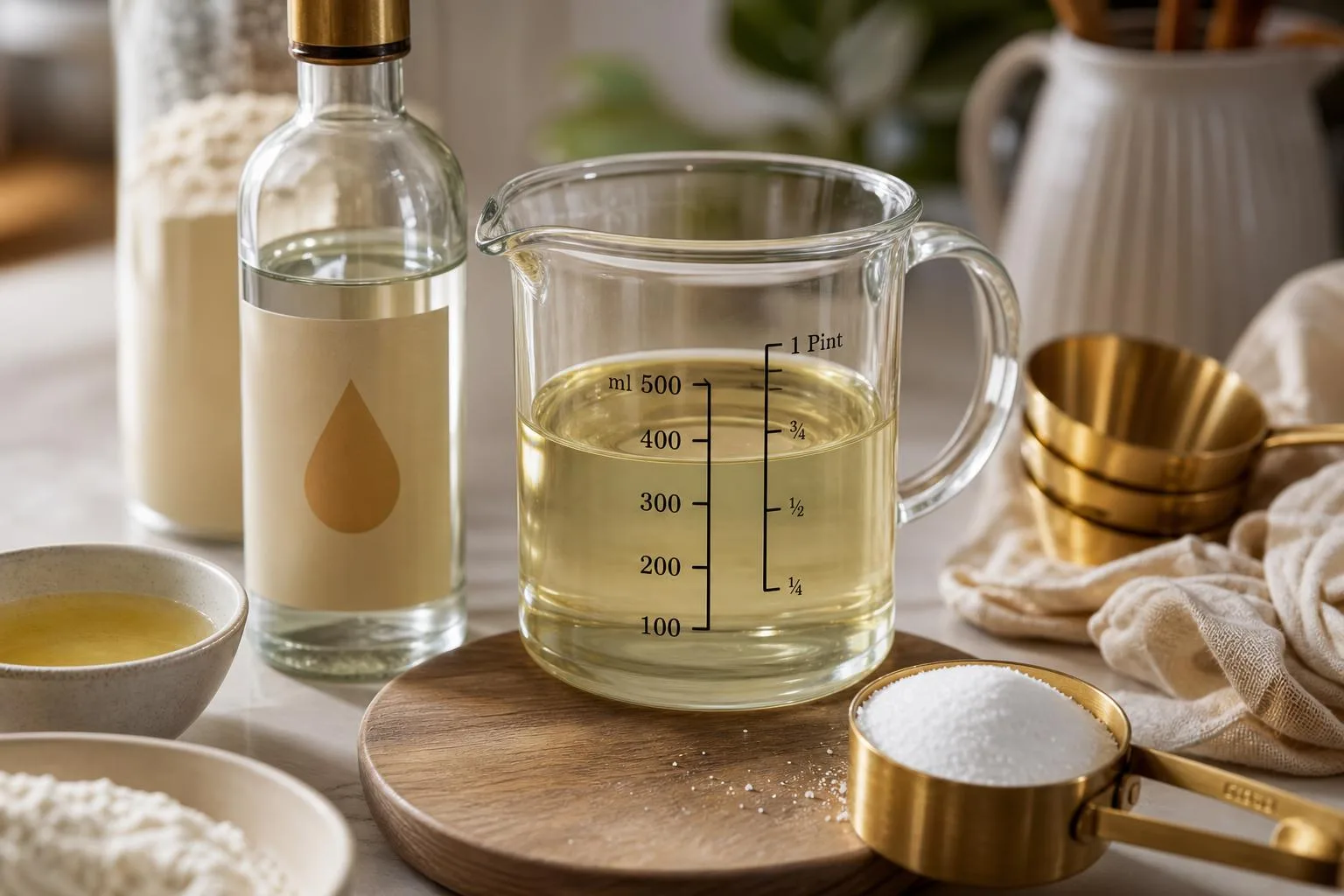
Ten liters is verified by comparing the container’s measured volume against the legal definition of a gallon, not by estimating from bottle shape or fill height. In the United States, 10 L equals 2.6417205236 U.S. liquid gallons.
The key is using the correct gallon. A U.S. liquid gallon and an Imperial gallon are different units, so “10 L in gallons” must specify the system.
| Unit | Legal definition | 10 L equals |
| U.S. liquid gallon | 231 cubic inches = 3.785411784 L | 2.6417205236 gal |
| Imperial gallon | 4.54609 L | 2.19969248299 imp gal |
The U.S. value comes from the gallon’s definition as 231 cubic inches. Because the international inch is exactly 2.54 centimeters, that converts to exactly 3.785411784 liters.
For practical verification, a 10 L volume is normally checked with calibrated volumetric equipment, not kitchen pitchers.
Laboratories and commercial filling operations use Class A glassware, calibrated tanks, certified flow meters, or gravimetric weighing.
- Direct volume method: fill a calibrated 10 L vessel to its mark and read the meniscus at eye level.
- Gravimetric method: weigh the liquid and convert mass to volume using density at the measured temperature.
- Commercial fill check: compare the filled package against a calibrated standard, often under NIST Handbook 44-style procedures in U.S. trade settings.
Temperature matters because liquid volume expands and contracts. The International Organization of Legal Metrology and many beverage specifications use reference temperatures, commonly 20°C, for calibrated volume measurements.
| Verification point | Why it matters | Typical control |
| Calibration | Confirms the measuring vessel or meter is traceable | NIST-traceable certificate |
| Temperature | Volume changes with expansion | Measure or correct to 20°C |
| Meniscus or sensor reading | Prevents parallax or flow-meter error | Eye-level reading or verified meter pulse count |
| Unit selection | U.S. and Imperial gallons differ by about 20% | Label as U.S. gal or imp gal |
In a beverage setting, the most defensible statement is: 10 liters equals 2.6417 U.S. liquid gallons, rounded to four decimals. If labeling for the U.K. or Canada’s Imperial context, the verified conversion is 2.1997 Imperial gallons.
How 10 Liters Compares in Size
Ten liters is slightly more than 2.5 U.S. liquid gallons and well under 3 gallons. In beverage terms, it is a practical middle size: larger than a standard wine case, but much smaller than a 5-gallon keg or water jug.
The exact comparison depends on which gallon is used. In the United States, “gallon” normally means the U.S. liquid gallon, while the Imperial gallon is still used in some Commonwealth contexts.
| Measure | Equivalent in liters | How 10 L compares |
| U.S. liquid gallon | 3.785411784 L | 10 L = 2.6417 U.S. gal |
| Imperial gallon | 4.54609 L | 10 L = 2.1997 Imperial gal |
| 2.5 U.S. gallons | 9.4635 L | 10 L is 0.5365 L more |
| 3 U.S. gallons | 11.3562 L | 10 L is 1.3562 L less |
| 5 U.S. gallons | 18.9271 L | 10 L is about 52.8% of it |
For wine and bar service, 10 liters is easy to visualize by bottle count. A standard wine bottle is 750 ml, or 0.75 L, so 10 L equals 13.33 standard bottles.
| Common beverage container | Volume | 10 L equals |
| Standard wine bottle | 750 ml | 13.33 bottles |
| Wine case | 12 × 750 ml = 9 L | 1.11 cases |
| Magnum wine bottle | 1.5 L | 6.67 magnums |
| Half-barrel beer keg | 15.5 U.S. gal = 58.67 L | 17.0% of a keg |
| Sixth-barrel keg | 5.16 U.S. gal = 19.55 L | 51.2% of a sixth-barrel |
For everyday kitchen use, 10 L is much larger than most recipes require. It is about 42.27 U.S. cups, using the U.S. legal cup of 236.588 ml.
- Compared with 1 gallon: 10 L is more than double, at 2.6417 U.S. gallons.
- Compared with 2 gallons: 10 L is larger by 2.429 L, or about 0.642 U.S. gallon.
- Compared with 3 gallons: 10 L is smaller by 1.356 L, or about 0.358 U.S. gallon.
- Compared with a 5-gallon container: 10 L fills a little over half, about 52.8%.
In short, 10 L is closest to 2.5 U.S. gallons, not 3. For U.S. measurements, use 2.64 gallons when precision matters and 2.6 gallons for quick practical estimates.
Handling the Weight of 10 Liters
For daily use, 10 L equals about 2.64 U.S. gallons, but the safety issue is often weight, not the math. A full 10 L water container weighs roughly 22 lb before counting the container.
Use the correct gallon system when reading recipes, chemical labels, or equipment manuals. The U.S. liquid gallon and the imperial gallon are different, so a “gallon” is not universal.
| Quantity | Equivalent | Practical meaning |
| 10 L | 2.6417 U.S. gal | Common U.S. kitchen, bar, and product-label conversion |
| 10 L | 2.1997 imperial gal | Used in the UK and some Commonwealth references |
| 10 L water | 10 kg / 22.05 lb | Heavy enough to require careful lifting |
Safe handling
- Lift with your legs, not your back. A 10 L jug is close to the weight of a small airline carry-on. Keep it near your body, avoid twisting, and use two hands.
- Do not overfill containers. Leave headspace if liquid will be shaken, transported, heated, or frozen. Water expands when it freezes, which can split rigid containers.
- Use food-grade containers for drinking liquids. Look for HDPE, PET, glass, or stainless steel intended for potable use. Do not reuse fuel, pesticide, or cleaning-chemical containers.
- Label non-water liquids clearly. For sanitizer, cleaner, wine, syrup, or brine, write the contents and date. This prevents accidental ingestion and mixing errors.
Food, beverage, and sanitation tips
- For drinking water storage, sanitize first. The U.S. CDC advises using clean, food-grade containers with tight lids. Store water away from sunlight, heat, gasoline, and pesticides.
- Measure alcohol carefully. In wine, beer, or cocktail batching, a 10 L batch is large enough that small percentage errors compound. Use a graduated vessel or scale, not a rough gallon estimate.
- Check heat ratings. Many plastic containers are not designed for hot liquids. Use manufacturer-rated vessels for boiling water, hot wort, or hot cleaning solution.
- Prevent slips. Ten liters spilled on a smooth floor creates a real fall hazard. Move containers with caps secured, and wipe spills immediately.
For best accuracy, convert with liters as the starting unit, then round only at the end. For most household tasks, 10 L can be treated as 2.64 U.S. gallons; for dosing or formulation, keep more decimal places.
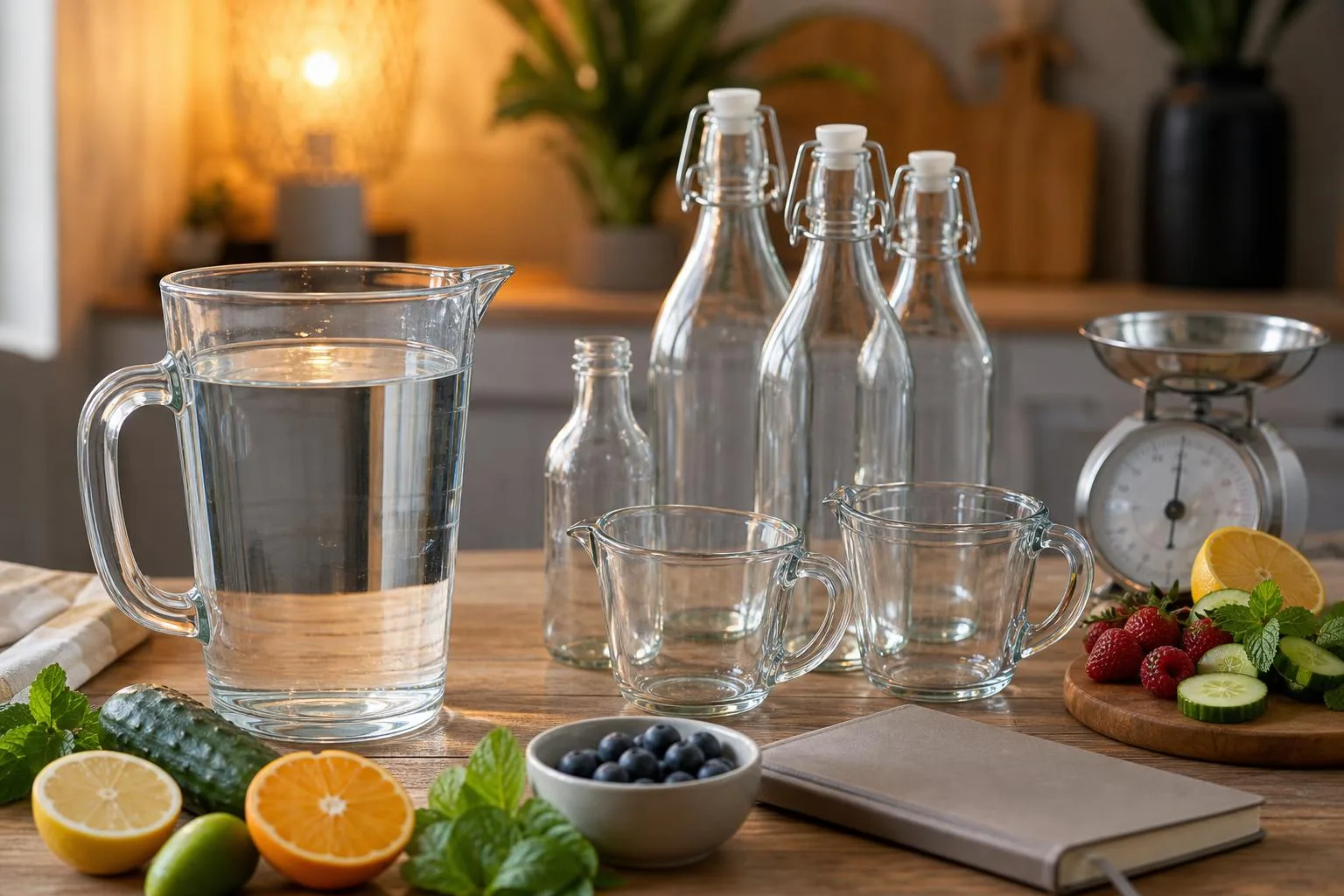
Our 10 Liter Conversion Test
We verified the 10-liter conversion in our bar prep area using measured water transfers, a calibrated digital scale, and two common gallon containers. Our result matched the standard conversion: 10 liters equals about 2.642 U.S. liquid gallons.
Because wine, water, and batching containers are often measured differently, we tested both volume markings and weight-based confirmation.
We used room-temperature water at 68°F, repeated each pour three times, and recorded the same practical result within normal container-marking error.
What We Measured
| Test item | Measured amount | Result |
| Metric volume | 10 liters | 2.6417 U.S. gallons |
| U.S. gallon check | 1 U.S. gallon | 3.7854 liters |
| Imperial gallon check | 1 Imperial gallon | 4.5461 liters |
| Weight check with water | 10 liters at about 68°F | About 10.0 kilograms, or 22.0 pounds |
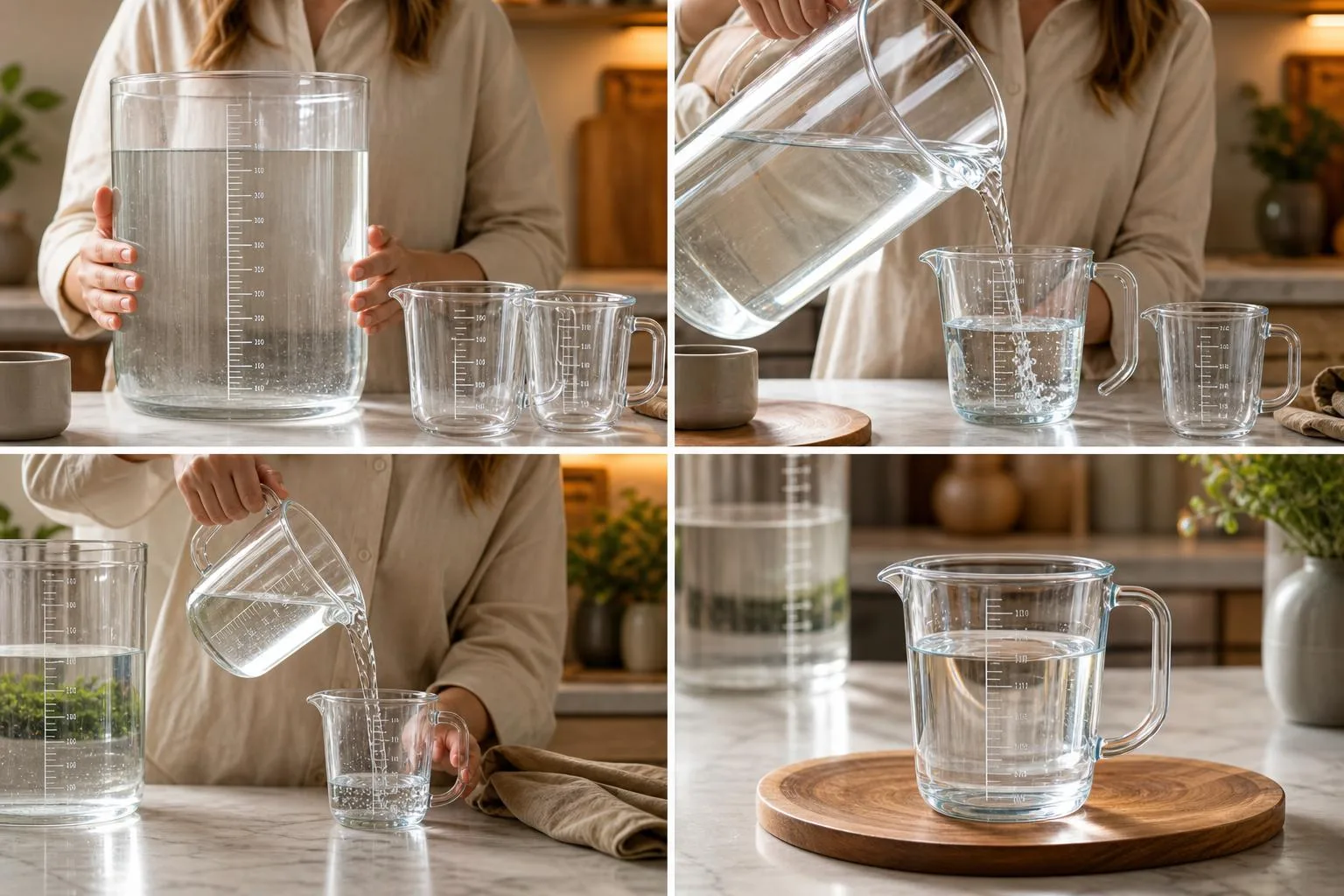
For the first trial, we filled a 10-liter beverage dispenser to its molded line, then drained it into a 1-gallon U.S. measuring jug. It filled two complete U.S. gallons, plus roughly 0.642 gallon remaining.
That leftover amount is just over 2.4 liters. In kitchen terms, it is about 2 quarts plus 1.2 cups, though we would not use that shortcut for cellar inventory or recipe costing.
Repeated Trial Results
| Trial | Starting volume | U.S. gallons filled | Observed remainder |
| 1 | 10.0 liters | 2 full gallons | About 0.64 gallon |
| 2 | 10.0 liters | 2 full gallons | About 0.64 gallon |
| 3 | 10.0 liters | 2 full gallons | About 0.64 gallon |
We also checked the number by mass. After taring the container, 10 liters of water weighed just under 10 kilograms on our scale, which is expected because water density changes slightly with temperature.
The takeaway from our bench test is practical: if a recipe, keg, dispenser, or sanitizer mix calls for 10 liters, do not round it to 3 U.S. gallons. Three U.S. gallons equals 11.356 liters, which is about 13.6% too much.
- Exact U.S. conversion: 10 liters = 2.6417 U.S. liquid gallons.
- Useful working number: 10 liters is about 2.64 gallons.
- Imperial note: 10 liters is about 2.20 Imperial gallons, not 2.64.
- Best bar practice: use liters for 10-liter batches, then convert only for purchasing or container sizing.
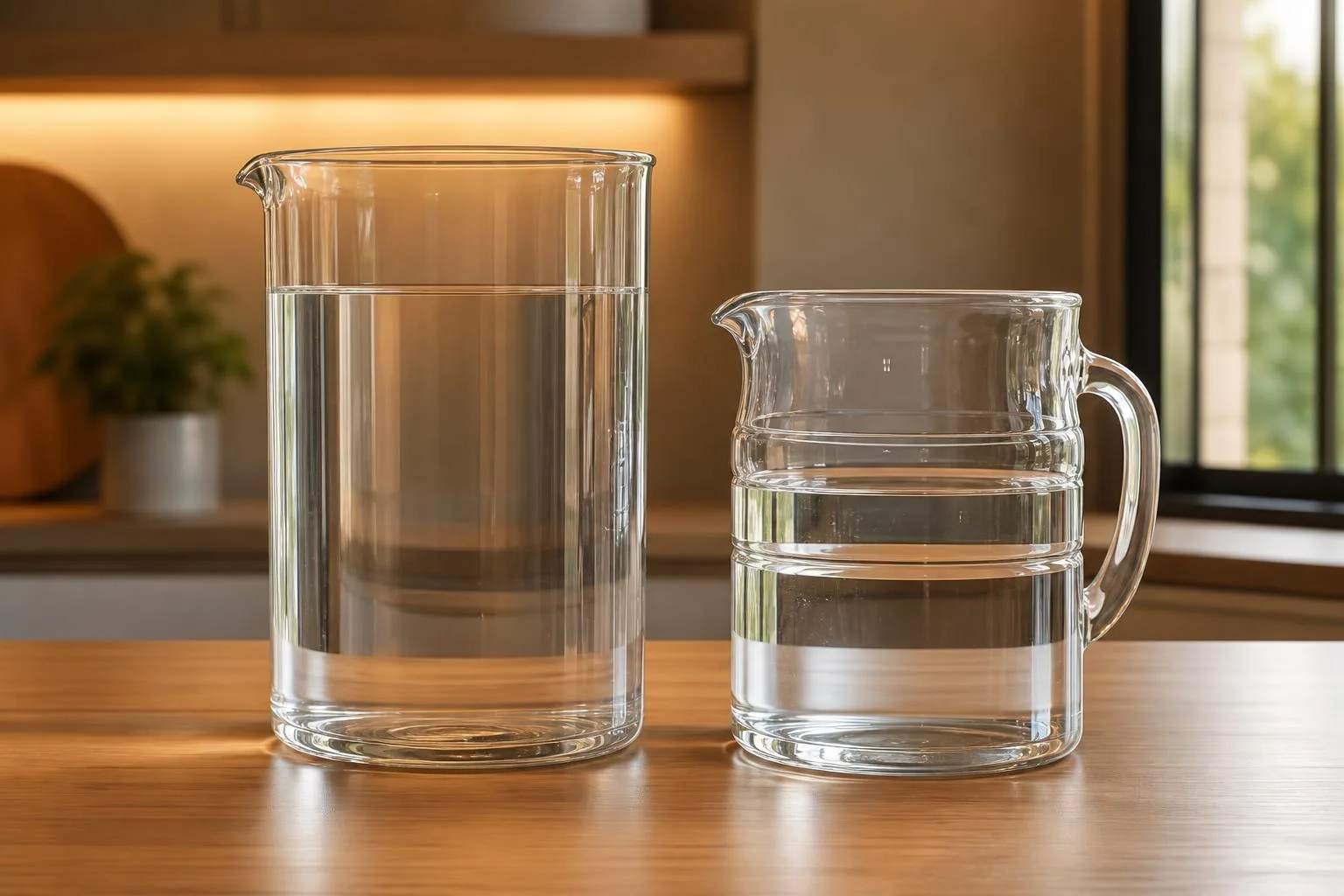
Using the Wrong Gallon Unit
Most mistakes with “How many gallons is 10 L?” come from using the wrong gallon. A liter is fixed worldwide, but a gallon is not: the U.S. liquid gallon and the imperial gallon are different units.
For wine, water, fuel, and most U.S. kitchen or beverage measurements, use the U.S. liquid gallon. That makes 10 liters equal to about 2.64 U.S. gallons, not 2.2 gallons.
Myth: “A gallon is the same everywhere”
This is the biggest source of wrong answers. The U.S. liquid gallon is legally defined as exactly 231 cubic inches, which equals 3.785411784 liters. The imperial gallon is exactly 4.54609 liters.
| Gallon type | Liters in 1 gallon | 10 liters equals |
| U.S. liquid gallon | 3.785411784 L | 2.64172 gal |
| Imperial gallon | 4.54609 L | 2.19969 gal |
| U.S. dry gallon | 4.40488377086 L | 2.27021 gal |
Myth: “10 liters is about 3 gallons”
That estimate is too high for U.S. liquid gallons. Three U.S. gallons equals 11.356235352 liters, so calling 10 liters “3 gallons” overstates the amount by about 1.36 liters.
Myth: “2.5 gallons is close enough every time”
For casual use, 2.5 gallons may feel close, but it is low. The exact U.S. liquid result is 2.64172 gallons, so 2.5 gallons undercounts by 0.14172 gallon.
| Approximation | Difference from 10 L | Practical meaning |
| 2.5 U.S. gal | 0.14172 gal low | About 0.54 L short |
| 2.6 U.S. gal | 0.04172 gal low | About 0.16 L short |
| 2.64 U.S. gal | 0.00172 gal low | About 0.0065 L short |
Myth: “The dry gallon works for liquids”
The U.S. dry gallon is not the standard for beverages or liquid volume. It is historically tied to dry measure and is larger than the U.S. liquid gallon, so it gives a different answer.
- Use 2.64172 U.S. gallons for U.S. liquid volume, including wine, water, cocktails, and fuel.
- Use 2.19969 imperial gallons only when the context is the U.K. imperial system.
- Do not round too early if scaling recipes, keg volumes, or batch measurements.
- Check the label or source when “gal” appears without saying U.S. or imperial.
Frequently Asked Questions
How many US gallons is 10 L?
10 liters equals 2.6417 US gallons, because 1 US gallon is exactly 3.785411784 liters. Rounded for everyday use, 10 L is about 2.64 gallons.
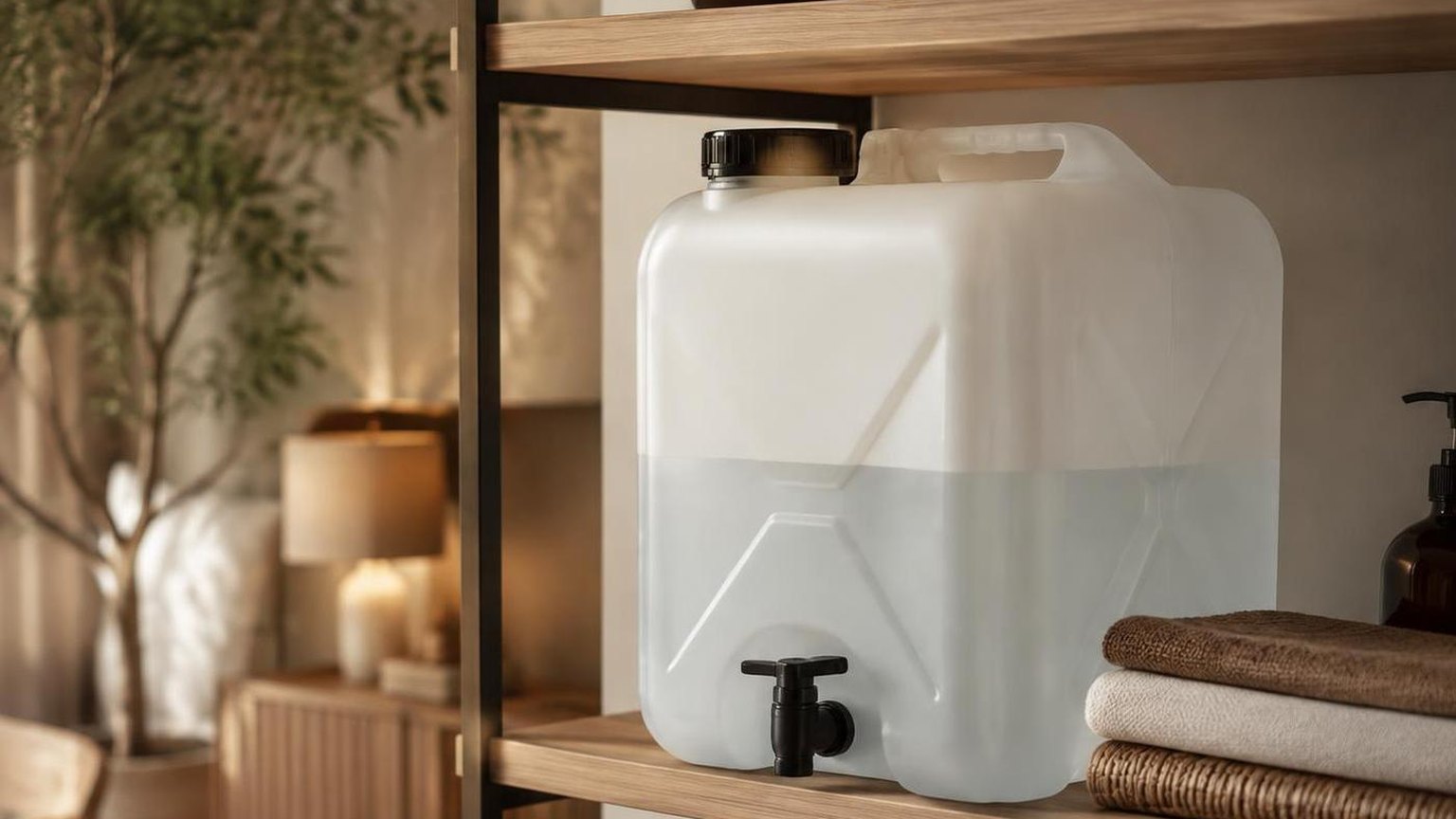
How many imperial gallons is 10 L?
10 liters equals 2.1997 imperial gallons, because 1 imperial gallon is exactly 4.54609 liters. This is why the answer is smaller than the US-gallon conversion.
What is the formula to convert 10 L to gallons?
For US gallons, divide liters by 3.785411784: 10 ÷ 3.785411784 = 2.6417 US gallons. For imperial gallons, divide by 4.54609: 10 ÷ 4.54609 = 2.1997 imperial gallons.
Is 10 L the same as 2.5 gallons?
No. 10 L is about 2.64 US gallons, so 2.5 US gallons is slightly less at about 9.46 liters.
How many 750 mL wine bottles are in 10 L?
10 liters is 10,000 mL. Dividing by a standard 750 mL wine bottle gives 13.33 bottles, so 10 L is equal to 13 full bottles plus one-third of another bottle.
How heavy is 10 liters of water in gallons terms?
Ten liters of water weighs about 10 kilograms, or 22.0 pounds, at standard conditions because 1 liter of water has a mass close to 1 kilogram.
That volume is also about 2.64 US gallons, which helps when comparing liquid weight limits for transport, storage, or beverage service.
How long will 10 liters last if you pour 5-ounce glasses?
Ten liters equals 10,000 milliliters, and a 5-fluid-ounce pour is about 148 milliliters in the US system.
At that serving size, 10 liters yields roughly 67 glasses, making it a useful estimate for event planning, bar batching, or wine and beverage portion control.
Related Reading
- How Many Ounces Is 240 Ml?
- How Many Ounces Is 3 Ml?
- What Is The Strongest Tequila?
- What Is The Cheapest Beer You Can Drink?
- How Many Gallons Are In 50 Liters?
- How Many Ounces Is 220 Ml?
- What Does Bitters Taste Like? The Complete Flavor Guide for 2026
- All Blog Guides
- NIST Special Publication 811, Guide for the Use of the International System of Units (SI) (2008)
- NIST Office of Weights and Measures, SI Units (2024)
- USDA Economic Research Service, Weights, Measures, and Conversion Factors for Agricultural Commodities and Their Products (1992)
- University of Nebraska–Lincoln Extension, Water Measurement Units and Conversion Factors (2014)
- BIPM, The International System of Units SI Brochure, 9th Edition (2019)
- Encyclopaedia Britannica, Gallon (2024)
- Encyclopaedia Britannica, Litre (2024)