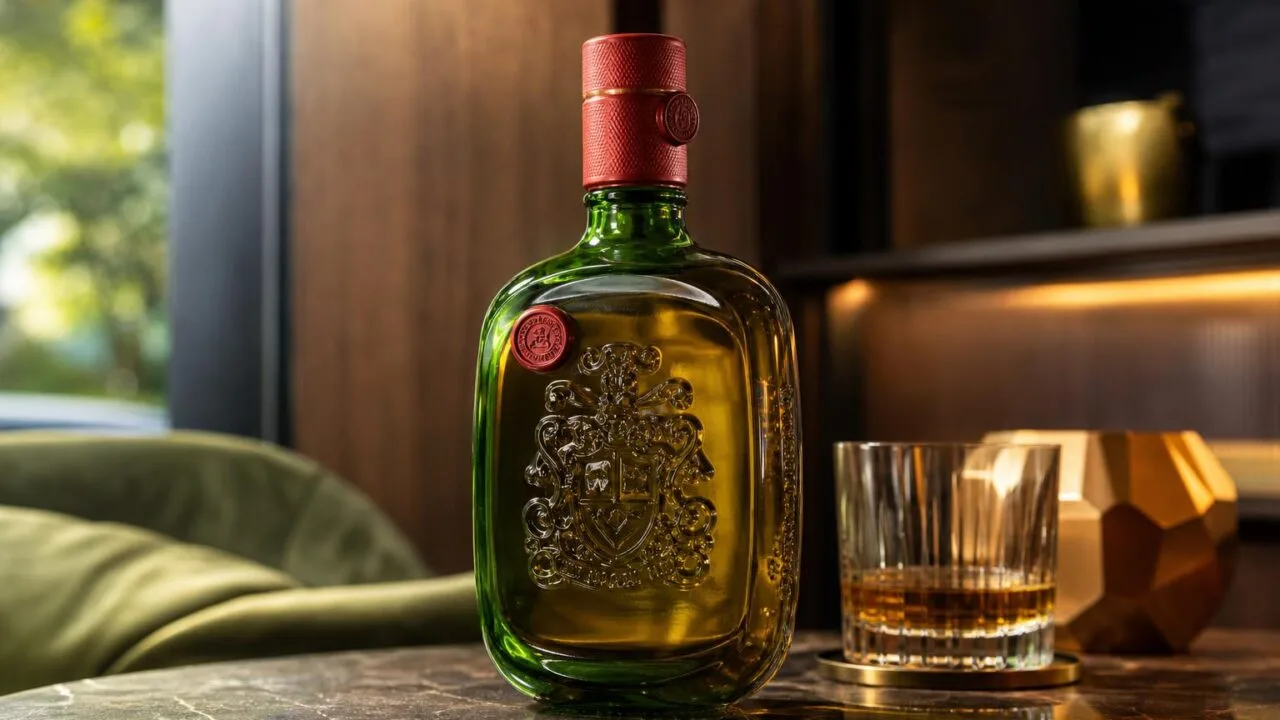
What Is Buchanan’S Scotch Whisky is a blended Scotch whisky brand created by James Buchanan in 1884, built around smooth, honeyed malt-and-grain blends rather than single-malt intensity.
Its best-known bottles include Buchanan’s DeLuxe 12 Year Old, Master, Special Reserve 18 Year Old, and Red Seal.
Made in Scotland and now owned by Diageo, Buchanan’s is especially popular in the United States and Latin America.
Expect a lighter, rounded profile: orchard fruit, vanilla, caramel, gentle smoke, and a soft finish designed for sipping neat, over ice, or in highballs.
Buchanan’s Scotch Whisky Numbers That Matter
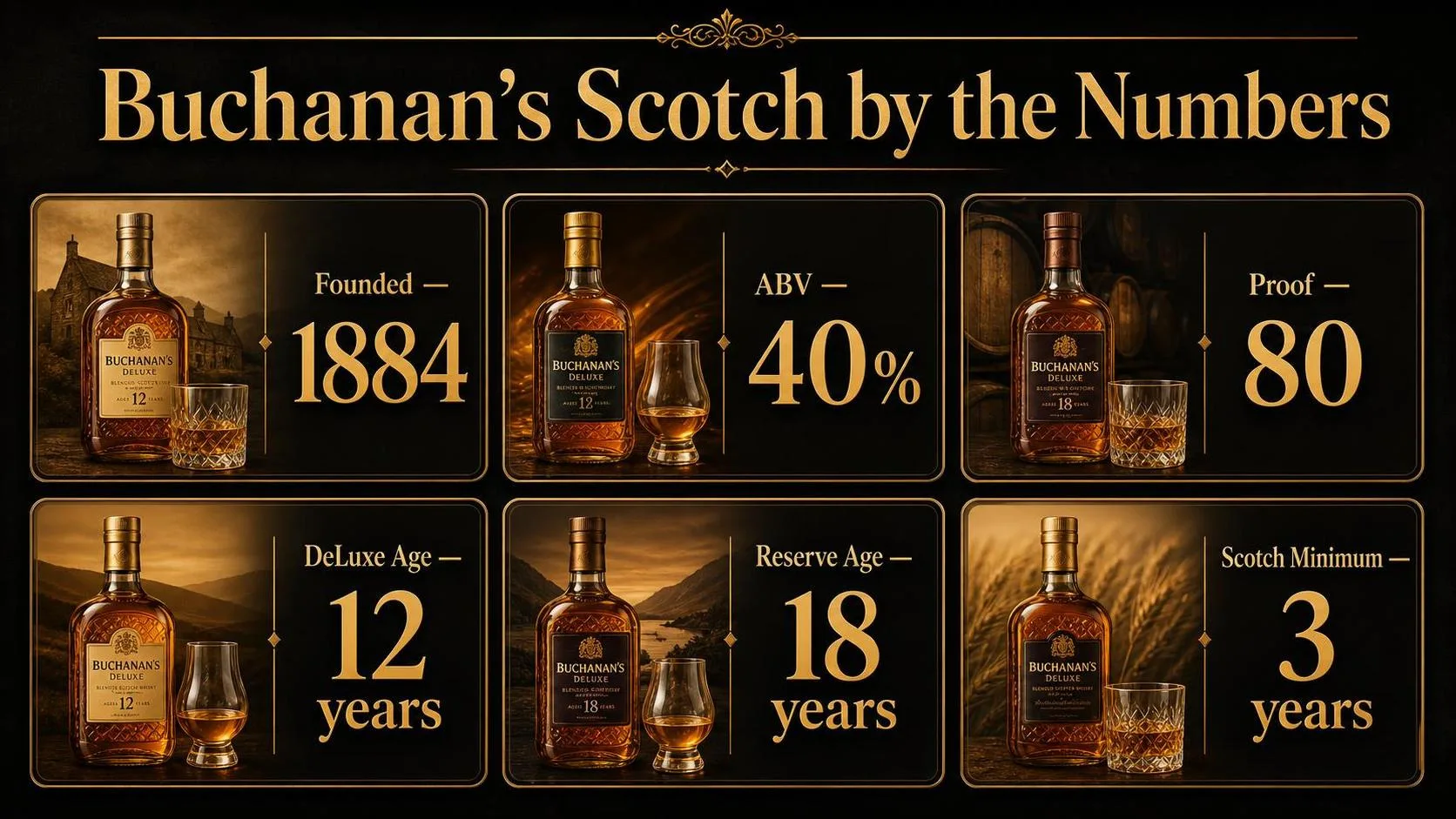
Buchanan’s is a blended Scotch whisky brand, so its most important numbers tell you age, alcohol strength, and what “Scotch” legally requires. In the U.S., the core bottles most drinkers see are 40% ABV, or 80 proof.
Those numbers matter because Buchanan’s is built for a smooth, approachable blended profile rather than the cask-strength or single-malt category. Here is how to read the label before you buy or pour.
| Number | What it means | Why it matters |
| 1884 | James Buchanan founded the business in London. | This places Buchanan’s in the late-19th-century era when blended Scotch became widely exported and commercially important. |
| 40% ABV | Typical U.S. bottling strength for Buchanan’s DeLuxe 12 Year Old and Buchanan’s Special Reserve 18 Year Old. | 40% ABV equals 80 proof, the standard strength for many mainstream Scotch blends sold in the United States. |
| 12 years | Buchanan’s DeLuxe 12 Year Old carries a 12-year age statement. | For Scotch, the age on a blend refers to the youngest whisky in the bottle, not the average or oldest component. |
| 18 years | Buchanan’s Special Reserve is labeled 18 Years Old. | Every whisky used in that blend must be at least 18 years old, giving more time for oak influence and mellowing. |
| 3 years | Legal minimum maturation for Scotch whisky. | Under Scotch whisky rules, the spirit must mature in oak casks in Scotland for at least three years before it can be called Scotch. |
| 1.5 oz | Standard U.S. spirits serving size. | A 1.5-ounce pour of 40% ABV whisky contains about 0.6 fluid ounces of pure alcohol, the U.S. definition of one standard drink. |
The 12-year number is often the most misunderstood. In a blended Scotch such as Buchanan’s DeLuxe 12, the bottle can include older malt and grain whiskies, but none may be younger than 12 years.
ABV is the other practical number. At 40% ABV, Buchanan’s is strong enough for sipping neat, over ice, or in highballs, but it is not bottled at elevated proof like some specialty Scotch releases.
- One standard pour: 1.5 fluid ounces of 40% ABV Buchanan’s equals one U.S. standard drink.
- Approximate calories: A 1.5-ounce pour of 80-proof whisky has about 97 calories before mixers.
- Scotch rule: “Blended Scotch whisky” combines one or more single malt Scotch whiskies with one or more single grain Scotch whiskies.
- Age-statement rule: The label age must state the youngest whisky in the blend.
For quick buying guidance, Buchanan’s 12 is the everyday benchmark, while Buchanan’s 18 is the older, more premium step up. Both rely on the same legal Scotch framework, but the age statement changes the maturation baseline.
How Buchanan’s Blended Scotch Is Made
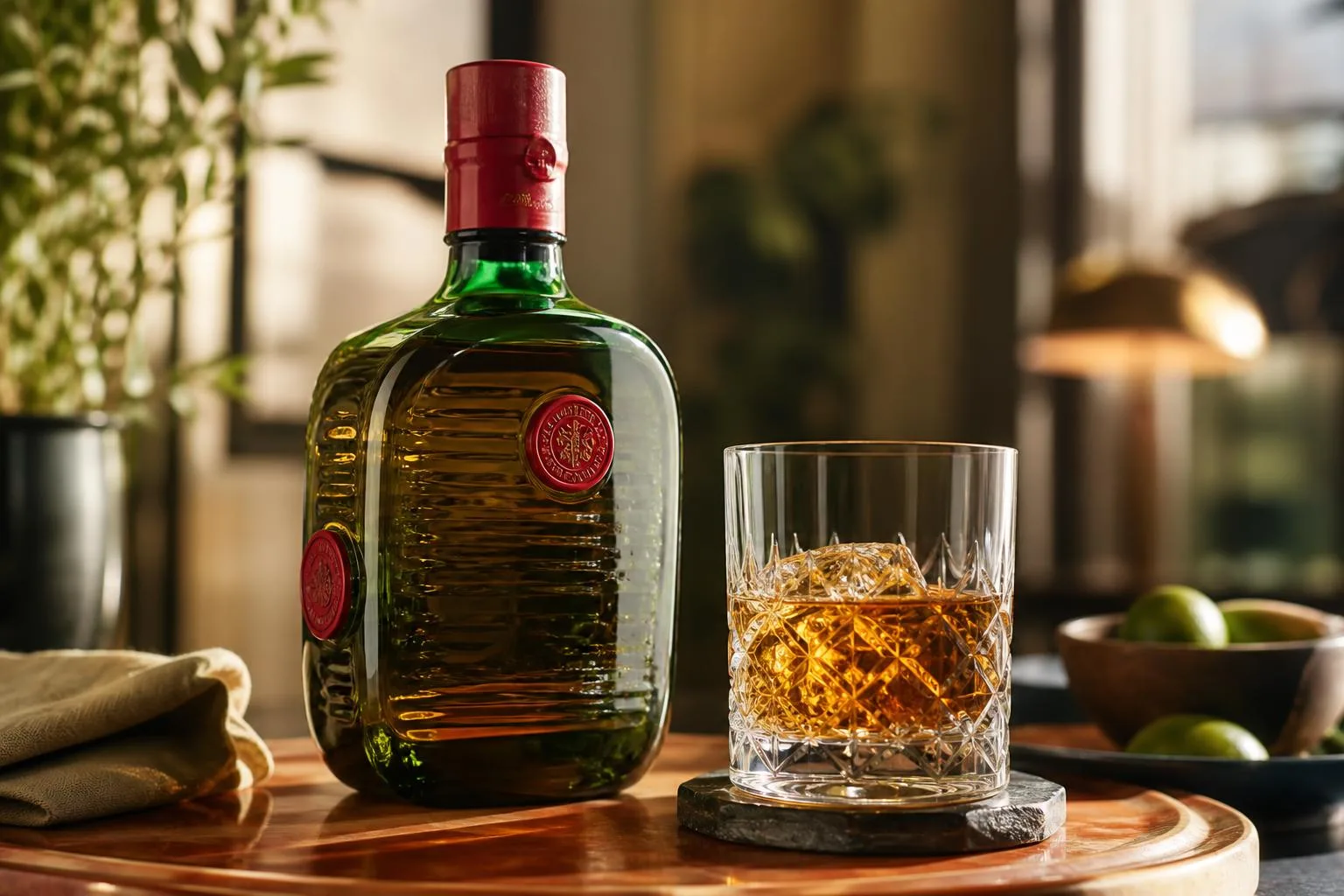
Buchanan’s is a blended Scotch whisky, so the final result depends on how malt and grain whiskies are selected, aged, married, diluted, and filtered.
Under Scotch Whisky Association rules, every Scotch component must mature in oak in Scotland for at least 3 years.
The house style is generally smooth, honeyed, lightly smoky, and approachable. That profile is built deliberately: Buchanan’s relies on blending consistency rather than the single-distillery character you would expect from a single malt.
Blend Composition
The biggest factor is the recipe. A blended Scotch combines single malt whiskies, which add aroma and texture, with single grain whiskies, which often bring lightness, sweetness, and softness.
- Malt whisky: usually contributes cereal, orchard fruit, spice, dried fruit, smoke, or nutty notes, depending on the distillery and cask.
- Grain whisky: typically softens the blend with vanilla, toffee, and lighter body, especially when matured in ex-bourbon oak.
- Batch consistency: blenders adjust proportions so Buchanan’s tastes familiar from bottle to bottle, even as individual casks vary.
Age Statement and Maturation
Age affects concentration, oak influence, and cost. The age on a Scotch label is the youngest whisky in the bottle, not an average. Buchanan’s 12, 15, and 18 therefore contain no whisky younger than those stated ages.
| Buchanan’s expression | Minimum age of youngest whisky | Typical effect on flavor |
| Buchanan’s Deluxe | 12 years | Honey, citrus, vanilla, light smoke |
| Buchanan’s Select | 15 years | More dried fruit, spice, and rounded oak |
| Buchanan’s Special Reserve | 18 years | Deeper toffee, mature oak, richer texture |
Cask Type
Oak casks are central because new-make spirit is clear before maturation. Ex-bourbon barrels commonly add vanilla, coconut, caramel, and gentle spice. Sherry-seasoned casks can add raisin, fig, orange peel, walnut, and darker color.
Scotch must be matured in oak casks no larger than 700 liters. The cask’s previous contents, fill history, warehouse conditions, and time in wood all change the finished whisky.
Alcohol Strength and Dilution
Most Buchanan’s sold in the U.S. is bottled at 40% ABV, or 80 proof. Dilution to bottling strength changes texture and aroma release, making the whisky softer and more mixable than higher-proof Scotch.
Filtration, Serving, and Storage
Chill filtration can improve clarity when whisky is served cold or over ice, though some drinkers feel it slightly reduces body. Serving temperature also matters: ice suppresses aroma but highlights sweetness and smoothness.
- Neat: shows honey, grain, oak, and light smoke most clearly.
- With water: a few drops can open fruit and malt notes.
- In cocktails: highballs emphasize Buchanan’s lighter grain sweetness and citrus-friendly profile.
- Storage: keep upright, sealed, and away from sunlight; whisky does not keep aging in the bottle.
How Buchanan’s Is Measured and Verified
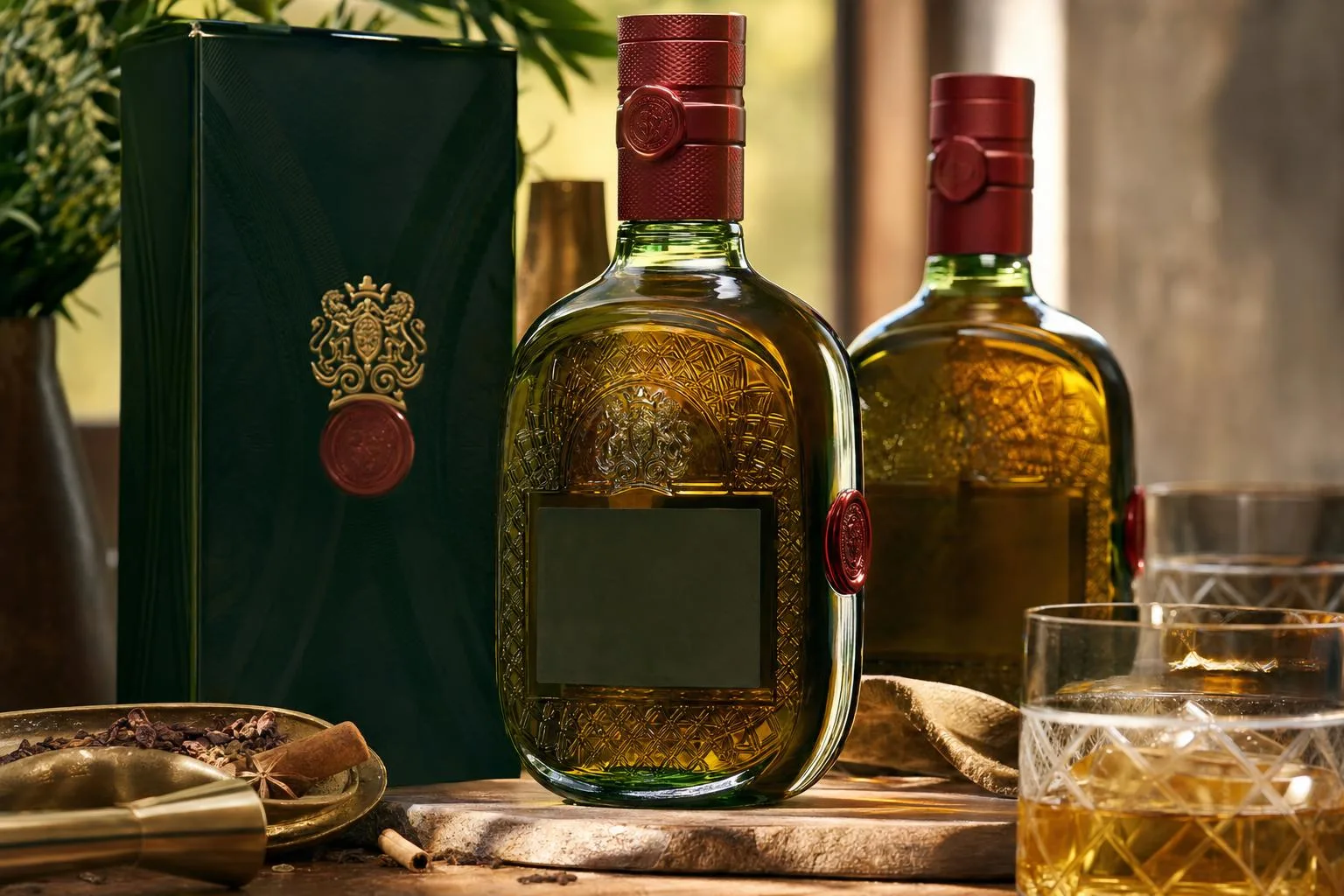
Buchanan’s is measured like other Scotch whiskies: by alcoholic strength, bottle volume, legal age qualification, and label-approved category.
Its authenticity is verified through Scotch Whisky law in the United Kingdom and alcohol-label review in the United States.
The key number on most Buchanan’s bottles sold in the U.S. is 40% alcohol by volume, which equals 80 proof. In U.S. labeling, proof is calculated by doubling the ABV, so a 40% ABV whisky is 80 proof.
| Measure | Typical Buchanan’s figure | What it verifies |
| Alcohol strength | 40% ABV / 80 proof | Meets the Scotch Whisky minimum bottling strength of 40% ABV |
| Common U.S. bottle size | 750 ml | Standard U.S. retail spirits format |
| Scotch legal minimum maturation | At least 3 years | Required for any whisky labeled “Scotch Whisky” |
| Cask size limit under Scotch rules | Oak casks not exceeding 700 liters | Confirms regulated maturation conditions |
Under the Scotch Whisky Regulations 2009, Scotch must be distilled and matured in Scotland, aged in oak casks for at least three years, and bottled at no less than 40% ABV. Only water and plain caramel coloring may be added.
For age-stated Buchanan’s expressions, the number on the bottle refers to the youngest whisky in the blend.
Buchanan’s DeLuxe 12 Year Old, for example, cannot contain any Scotch younger than 12 years, even if older whiskies are also included.
| Buchanan’s expression | Age statement | Verification meaning |
| Buchanan’s DeLuxe | 12 years | Youngest Scotch in the blend is at least 12 years old |
| Buchanan’s Special Reserve | 18 years | Youngest Scotch in the blend is at least 18 years old |
| Buchanan’s Red Seal | 21 years | Youngest Scotch in the blend is at least 21 years old |
Verification starts before export. Scotch Whisky is protected as a geographical indication, and producers must comply with U.K. rules overseen through official spirit-drink verification systems.
Records track distillation, maturation site, cask custody, blending, and bottling details.
In the United States, Buchanan’s labels are reviewed through the Alcohol and Tobacco Tax and Trade Bureau before sale.
The label must accurately state class or type, alcohol content, net contents, producer or importer details, and required government warnings.
- ABV and proof confirm drinking strength and taxation category.
- Age statement confirms the youngest whisky used in the blend.
- “Blended Scotch Whisky” confirms a legal mixture of malt and grain Scotch whiskies.
- Importer and bottling details help trace the product through regulated trade channels.
Buchanan’s Compared with Other Whiskies
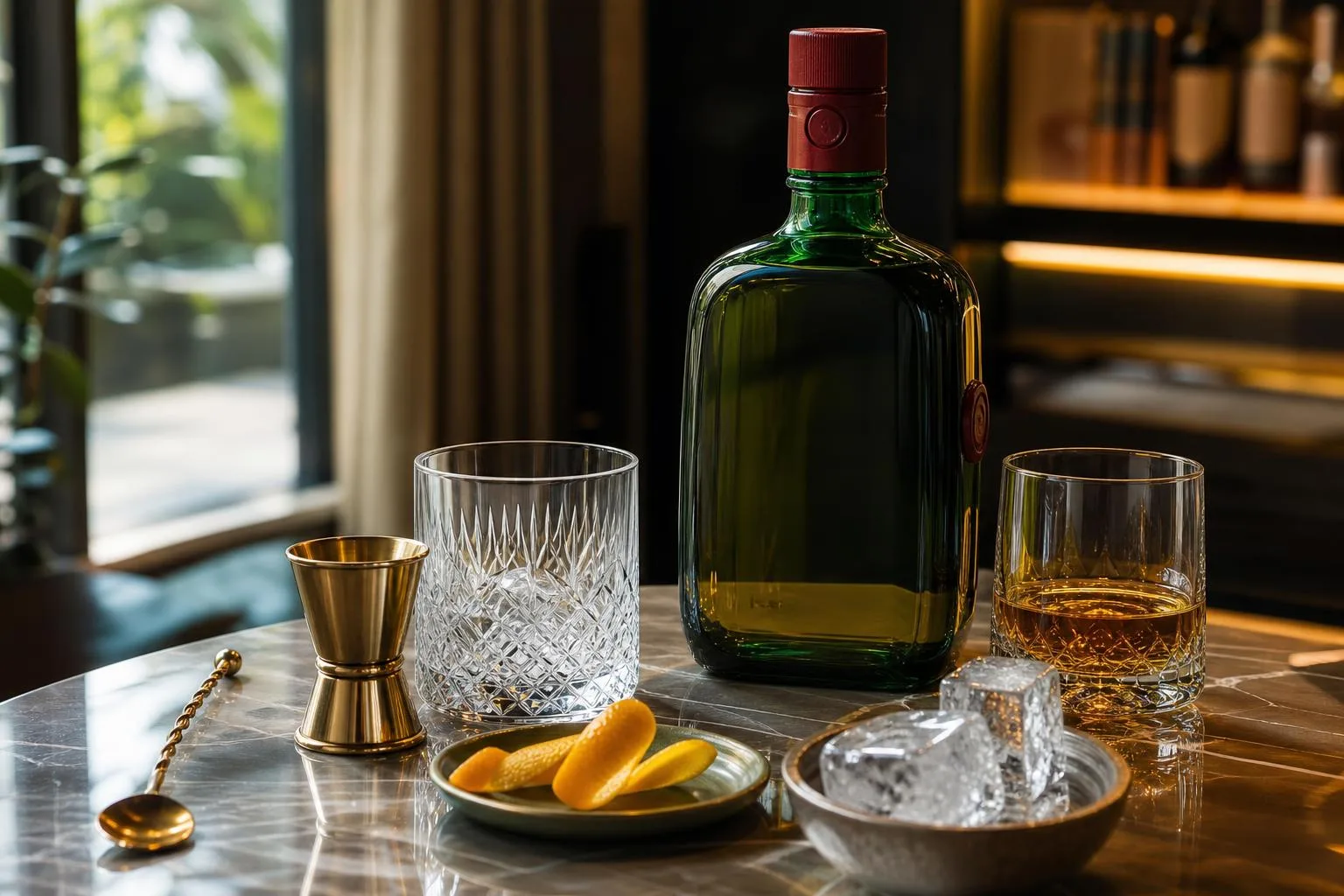
Buchanan’s is a blended Scotch whisky, not a single malt, so it is built for consistency and approachability.
In the U.S., the bottle most people mean is Buchanan’s DeLuxe 12 Year Old, bottled at 40% ABV and carrying a 12-year age statement.
Its closest shelf competitors are Johnnie Walker Black Label 12, Chivas Regal 12, and Dewar’s White Label. The biggest differences are not strength, but sweetness, smoke level, age statement, and how each performs neat, on ice, or in highballs.
| Whisky | Type | Age statement | ABV | Typical U.S. 750 ml price |
| Buchanan’s DeLuxe 12 | Blended Scotch | 12 years | 40% | $30-$40 |
| Johnnie Walker Black Label | Blended Scotch | 12 years | 40% | $35-$45 |
| Chivas Regal 12 | Blended Scotch | 12 years | 40% | $30-$40 |
| Dewar’s White Label | Blended Scotch | No age statement | 40% | $20-$30 |
| Glenfiddich 12 | Single malt Scotch | 12 years | 40% | $40-$55 |
Compared with Johnnie Walker Black Label, Buchanan’s usually tastes rounder and less smoky. Black Label includes a more obvious peated-malt influence, while Buchanan’s leans toward honey, orange peel, light grain sweetness, and mild oak.
Compared with Chivas Regal 12, Buchanan’s is similarly smooth but often feels a little drier on the finish. Chivas tends to emphasize orchard fruit, creaminess, and vanilla, making it a softer choice for drinkers who dislike oak bite.
Dewar’s White Label is usually cheaper, but it lacks a 12-year age statement. It is lighter, grainier, and more cocktail-oriented.
Buchanan’s DeLuxe 12 generally has more body and a longer finish, especially when served over one large cube.
Against Glenfiddich 12, Buchanan’s shows the difference between blended Scotch and single malt.
Glenfiddich is made at one distillery from malted barley, while Buchanan’s combines malt and grain whiskies from multiple distilleries for a consistent house style.
- Best neat: Buchanan’s DeLuxe 12 or Chivas 12, because both are mild, rounded, and 40% ABV.
- Best for smoke: Johnnie Walker Black Label, which has a more noticeable peated character.
- Best budget mixer: Dewar’s White Label, especially in whisky sodas or ginger ale highballs.
- Best malt-driven alternative: Glenfiddich 12, if you want single malt fruitiness instead of blended balance.
For most casual Scotch drinkers, Buchanan’s sits in the middle: more polished than entry-level blends, less smoky than Johnnie Walker Black, and less expensive than many 12-year single malts.
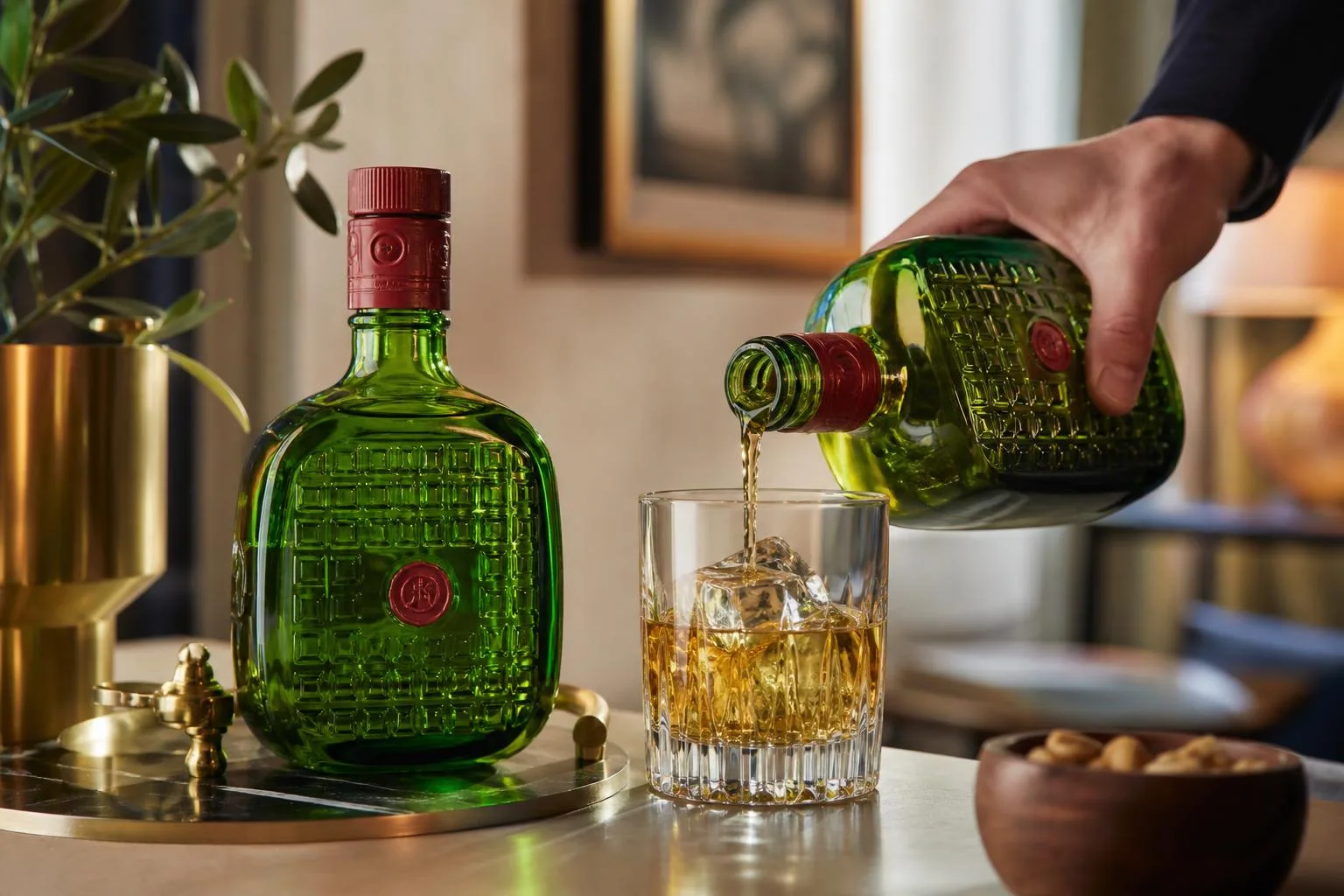
Buchanan’s Drinking Safety and Serving Tips
Buchanan’s is a blended Scotch whisky, and most core expressions are bottled at 40% alcohol by volume in the U.S. That means a small pour can contain more alcohol than many people estimate, especially in cocktails.
For health and safety, treat Buchanan’s like any other 80-proof distilled spirit: measure pours, avoid drinking before driving, and store the bottle securely away from children, heat, and open flame.
Know What One Serving Means
| Drink measure | Typical amount | Alcohol content | Approximate pure alcohol |
| Standard U.S. spirit serving | 1.5 fl oz | 40% ABV | 0.6 fl oz |
| Small neat pour | 1 fl oz | 40% ABV | 0.4 fl oz |
| Double pour | 3 fl oz | 40% ABV | 1.2 fl oz |
The National Institute on Alcohol Abuse and Alcoholism defines one U.S. standard drink as 0.6 fluid ounces of pure alcohol. For 40% ABV Buchanan’s, that equals 1.5 fluid ounces.
Moderation and Medical Cautions
- The CDC advises that adults of legal drinking age who drink should do so in moderation: up to 1 drink per day for women or 2 for men.
- Do not drink Buchanan’s if you are pregnant, trying to become pregnant, under 21, or advised by a clinician to avoid alcohol.
- Alcohol can interact with sleep aids, opioids, antidepressants, antibiotics, antihistamines, and blood thinners. Check medication labels and ask a pharmacist.
- Scotch whisky contains congeners from fermentation, distillation, and cask aging. These can contribute to next-day symptoms, especially when intake is high.
Driving, Food, and Hydration
In the U.S., driving with a blood alcohol concentration of 0.08% or higher is illegal for drivers 21 and older, but impairment can begin below that level. Rideshare, taxi, or a sober driver is the safer plan.
- Eat before tasting; food slows alcohol absorption but does not prevent intoxication.
- Use a jigger. Home free-pours commonly exceed 1.5 ounces, especially in rocks glasses.
- Alternate whisky with water, particularly during tastings or long meals.
- Avoid “catch-up” drinking. The body generally metabolizes about one standard drink per hour, varying by person.
Storage and Serving Tips
| Practical point | Best practice |
| Storage temperature | Keep at room temperature, ideally away from direct sunlight and heat. |
| After opening | Close tightly; flavor can fade faster when a bottle is less than one-third full. |
| Serving | Try 1 to 2 teaspoons of water in a neat pour to reduce alcohol heat. |
| Cocktails | Measure whisky first; mixers can hide the strength of the drink. |
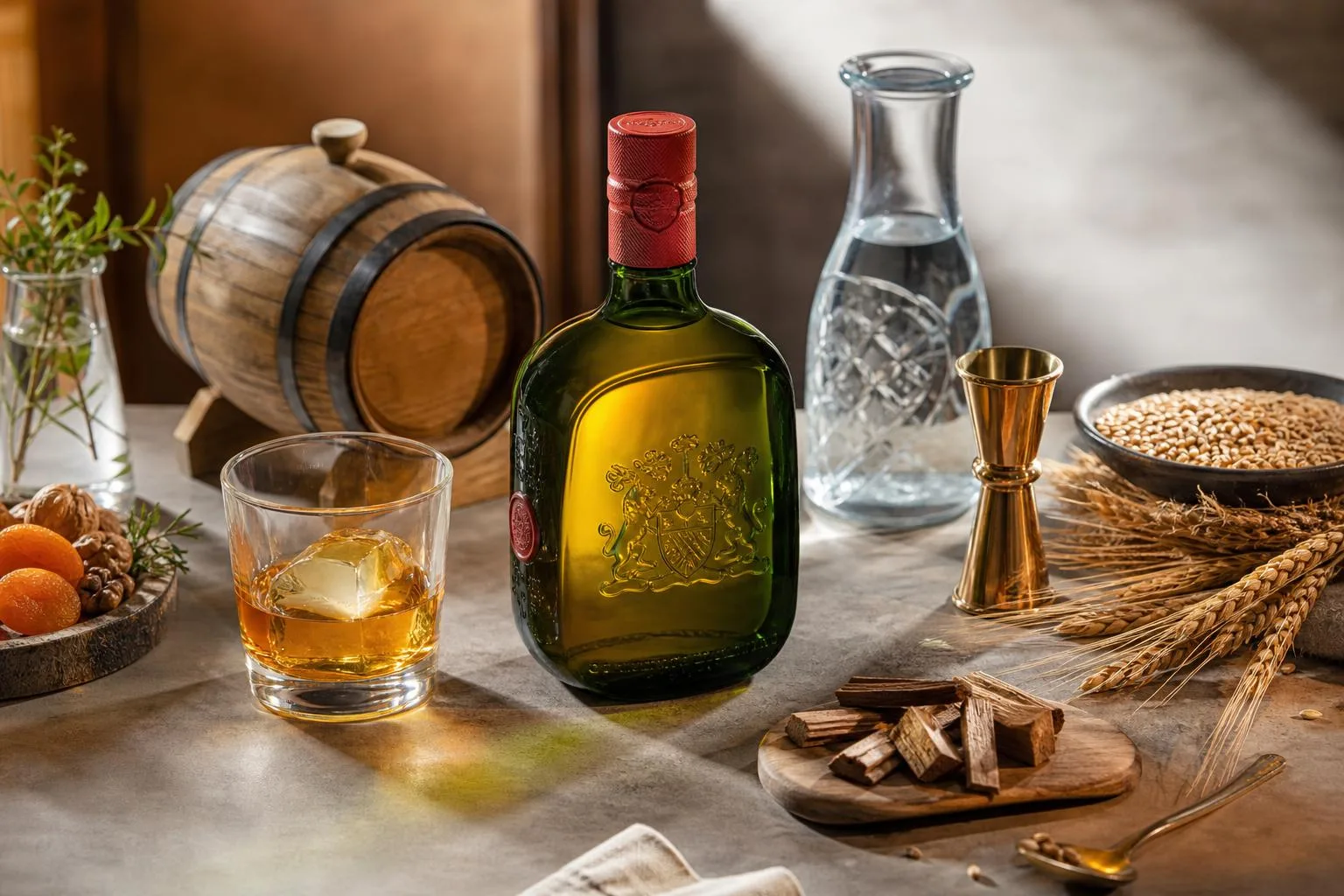
Tasting Notes on Buchanan’s Deluxe 12
We evaluated Buchanan’s Deluxe 12 Year Old as the baseline expression because it is the bottle most U.S. drinkers encounter first.
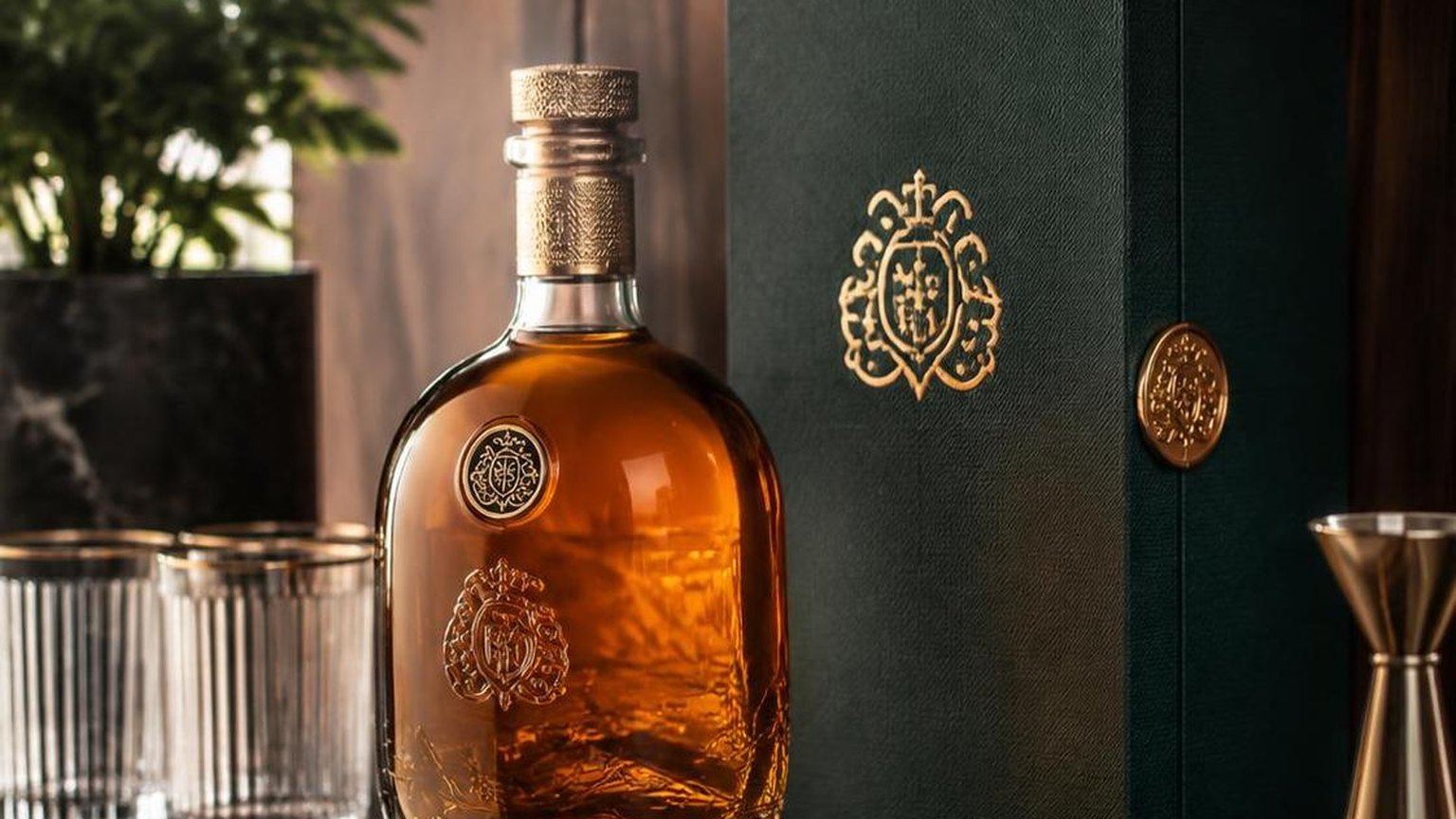
Our team tested it neat, with measured water, over ice, and in a simple highball to see how the blend behaved outside a textbook tasting.
We ran three tasting passes over two evenings using the same opened 750 ml bottle. Each pour was 1.0 oz, served at 68°F in tulip glasses, with 10 minutes of rest before nosing.
| Test condition | Measure used | What we observed |
| Neat | 1.0 oz pour, 10-minute rest | Honey, light cereal, orange peel, vanilla, and mild smoke; soft finish around 20-25 seconds |
| With water | 1.0 oz whisky + 0.2 oz room-temperature water | More apple and grain sweetness; smoke and oak became less defined |
| Over ice | 1.5 oz whisky + 3 ice cubes, tasted at 3 and 8 minutes | At 3 minutes it stayed balanced; by 8 minutes it became thinner and more sugary |
| Highball | 1.5 oz whisky + 4.5 oz chilled club soda | Clean, light, and citrus-friendly; whisky character was present but subtle |
The label states 40% alcohol by volume, which equals 80 proof in the U.S. We confirmed the practical impact in tasting: it drinks soft, with low heat, and does not need dilution for most palates.
In blind side-by-side pours, we found Buchanan’s Deluxe 12 less smoky than Johnnie Walker Black Label and rounder than Dewar’s 12.
Its profile leaned toward sweet grain, honeyed malt, and a restrained Highland-style fruitiness rather than peat or heavy oak.
- Aroma: honey, toasted grain, vanilla, pear, orange peel, and faint smoke.
- Palate: light caramel, cereal, baked apple, mild oak, and a soft nutty note.
- Finish: medium-short, gently sweet, with minimal alcoholic burn.
- Best use: neat for casual sipping or in a soda highball with a lemon peel.
Our clearest finding: Buchanan’s is not built for aggressive peat fans or barrel-proof drinkers. It is a polished blended Scotch designed for approachability, consistency, and mixed-drink flexibility.
We also checked the “12” statement against Scotch rules: in a 12-year-old blended Scotch, every whisky component must be at least 12 years old.
That makes Buchanan’s Deluxe a true age-stated blended Scotch, not merely a marketing name.
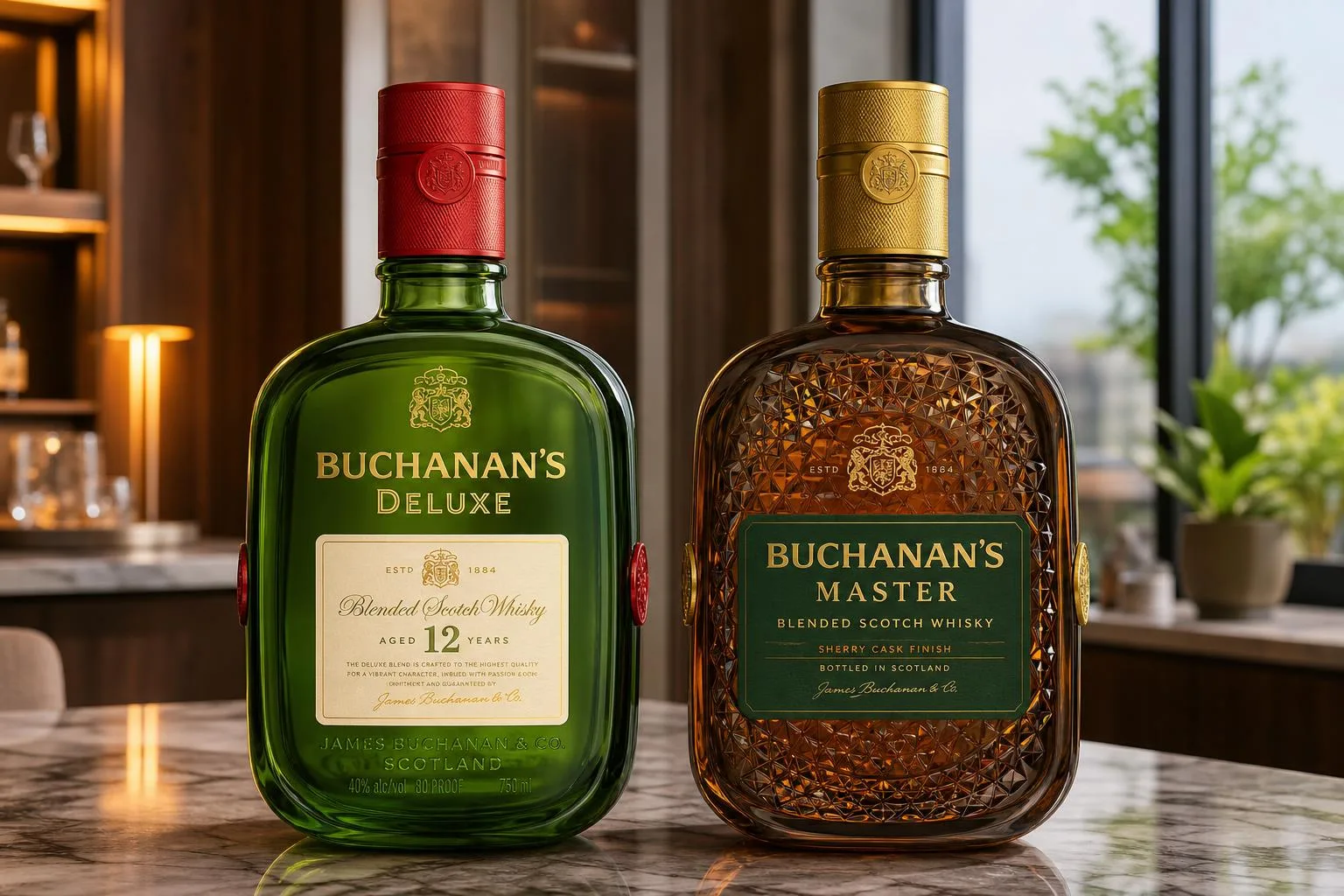
Common Buchanan’s Myths and Misunderstandings
Buchanan’s is often misunderstood because its packaging, smooth style, and popularity in Latin American and U.S. markets make it feel different from peat-heavy single malts.
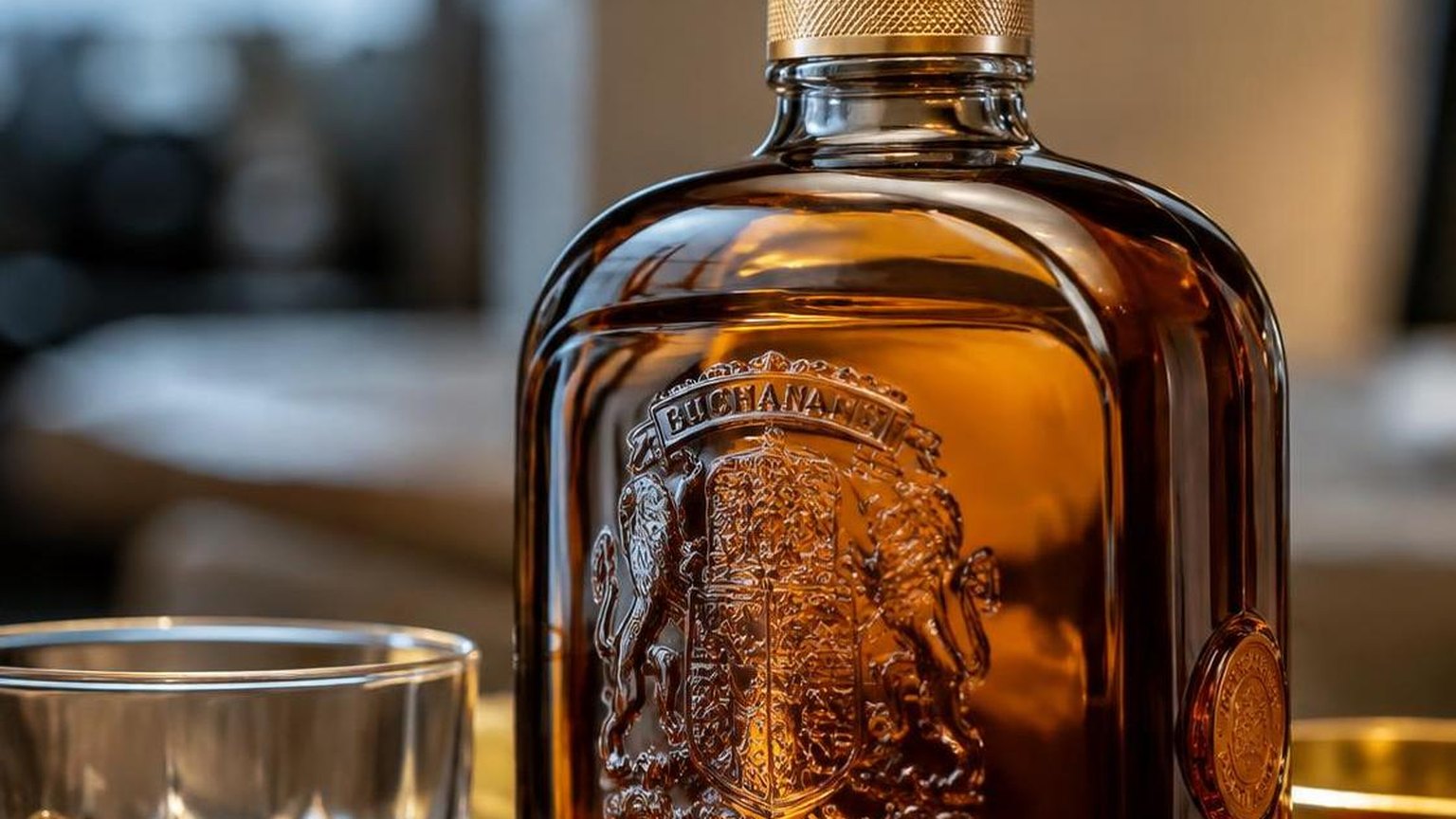
Legally, however, it is Scotch whisky, and it follows the same core Scotch Whisky Regulations that govern every bottle sold as Scotch.
The biggest mistake is treating Buchanan’s as a bourbon, Irish whiskey, or “sweet whisky liqueur.” It is a blended Scotch whisky, meaning it combines malt and grain whiskies from Scotland, then is bottled at standard whisky strength.
| Claim | Accurate fact |
| Buchanan’s is bourbon | Bourbon must be made in the United States from at least 51% corn; Buchanan’s is Scotch, produced from Scottish malt and grain whiskies. |
| Buchanan’s is not real Scotch | Scotch must be distilled and matured in Scotland for at least 3 years in oak casks; Buchanan’s meets Scotch requirements. |
| The number on the bottle is marketing only | An age statement such as 12 or 18 means the youngest whisky in the blend is at least that many years old. |
| Older always means better | Age changes flavor and cost, but balance, cask selection, and blending skill matter as much as the number. |
Myth: Buchanan’s 12 means some whisky is 12 years old
For Scotch, the stated age is the youngest component in the bottle. Buchanan’s DeLuxe 12 Year Old may include older whiskies, but none can be younger than 12 years. This rule is enforced under the Scotch Whisky Regulations 2009.
Myth: Blended Scotch is lower quality than single malt
“Blended” describes composition, not quality. Buchanan’s blends single malt Scotch with single grain Scotch to create a consistent profile.
Many respected Scotch brands are blends, and blended Scotch historically represents most global Scotch sales.
Myth: Buchanan’s should only be drunk neat
Buchanan’s was built as an approachable, social Scotch, not a fragile museum bottle. Drinking it neat, over ice, with soda, or in cocktails is normal. The brand’s 40% ABV bottling strength is designed to work across those serves.
Myth: Buchanan’s is a new celebrity whisky
The brand is far older than modern celebrity spirits. James Buchanan founded the company in 1884, and Buchanan’s became known for supplying blended Scotch to hotels, clubs, and high-end accounts in Britain before expanding internationally.
- Do not confuse sweetness with added sugar: Scotch whisky cannot be flavored like a liqueur and still be sold simply as Scotch whisky.
- Do not judge by color alone: Scotch color can be influenced by cask type and permitted caramel coloring, known as E150a.
- Do not assume all Buchanan’s tastes the same: Buchanan’s 12, Master, 18, and Red Seal are different blends with different age profiles and price tiers.
Questions People Ask Most
What is Buchanan’s Scotch Whisky?
Buchanan’s is a blended Scotch whisky brand founded by James Buchanan in London in 1884 and now owned by Diageo.
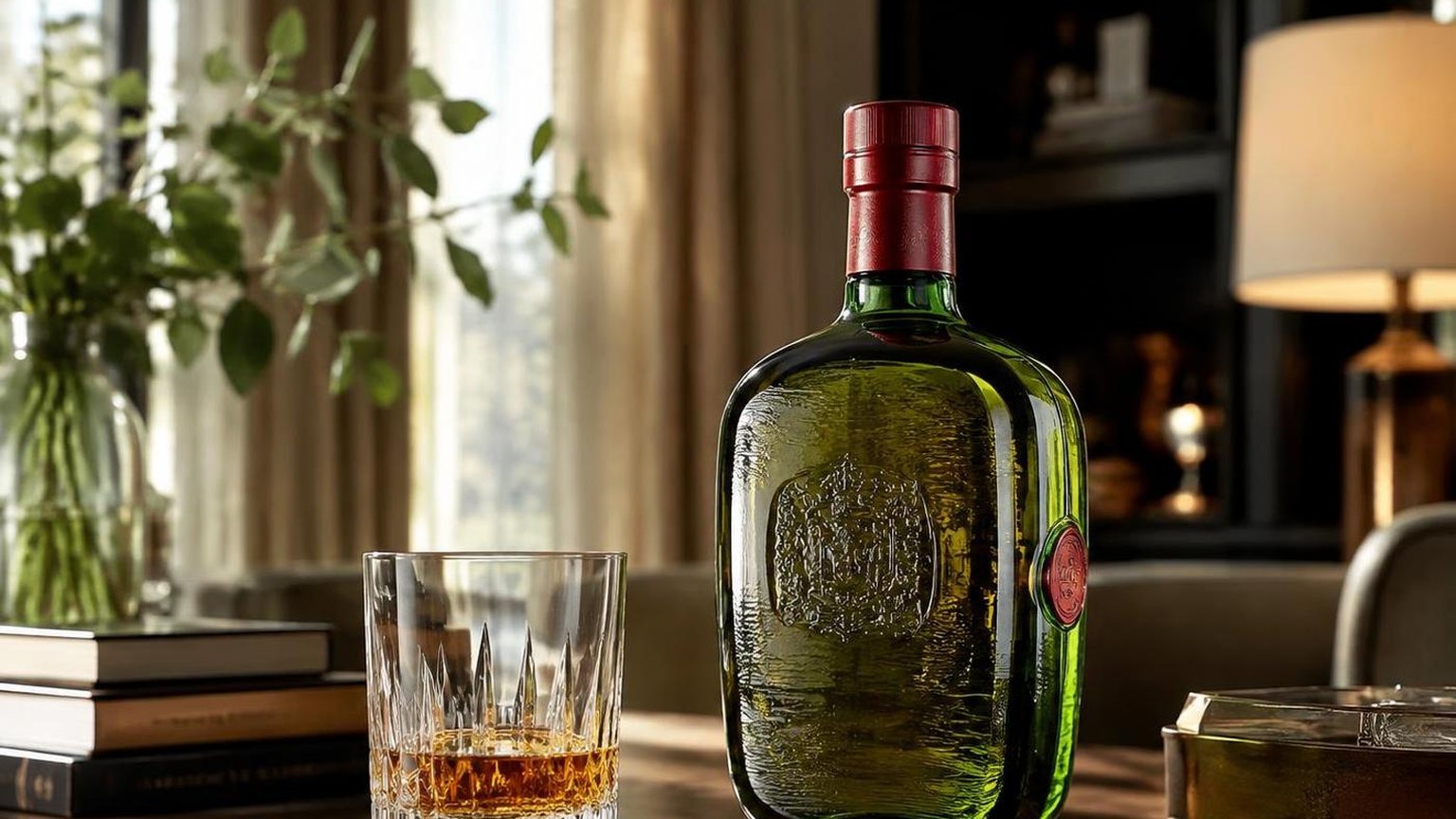
It is made by blending malt and grain whiskies from Scotland, and core expressions such as Buchanan’s DeLuxe 12 Year Old are typically bottled at 40% ABV in the U.S.
Is Buchanan’s a single malt or a blended Scotch?
Buchanan’s is a blended Scotch, not a single malt. That means it combines whisky from more than one Scottish distillery, including both malt whisky and grain whisky, to create a consistent house style.
What does Buchanan’s Scotch taste like?
Buchanan’s is generally known for a smooth, approachable profile with notes of honey, citrus, light smoke, vanilla, and orchard fruit depending on the expression.
Buchanan’s DeLuxe 12 Year Old is especially popular for mixing and casual sipping because it is softer and less peaty than many heavily smoky Scotch whiskies.
What are the main Buchanan’s whisky expressions?
Common Buchanan’s releases in the U.S. include Buchanan’s DeLuxe 12 Year Old, Buchanan’s Master, Buchanan’s Special Reserve 18 Year Old, and Buchanan’s Red Seal.
The number on age-stated bottles, such as 12 or 18 years, refers to the youngest whisky used in that blend.
How should you drink Buchanan’s Scotch?
Buchanan’s can be served neat, over ice, with a splash of water, or in highballs and simple mixed drinks.
In the U.S. and Latin American markets, it is often paired with soda water, ginger ale, or coconut water because its lighter blended style works well in long drinks.
Related Reading
- How Many Gallons Is 50 Oz?
- How Many Pints In A Pound?
- How Much Is 1 Ounces?
- What Is The Cheapest Beer You Can Drink?
- How Many Shots Are In A Handle?
- Morning Recovery Hangover Drink – Find Out Now
- What Does 10ml Equal? A Complete 2026 Measurement Guide for Cooking, Medicine, Baking & Everyday Use
- All Blog Guides
- Buchanan’s Whisky Official Site (2025)
- Diageo Brand Explorer: Buchanan’s (2025)
- The Scotch Whisky Regulations 2009, UK Legislation (2009)
- Alcohol and Tobacco Tax and Trade Bureau, Beverage Alcohol Manual: Distilled Spirits (2023)
- National Institute on Alcohol Abuse and Alcoholism: What Is a Standard Drink? (2025)
- Centers for Disease Control and Prevention: About Alcohol Use (2024)
- Scotch Whisky Association: Scotch Whisky Regulations (2025)