An alcohol that tastes like black licorice is ouzo, a Greek spirit flavored with anise. Other examples include sambuca, pastis, arak, and absinthe.
Their shared licorice-like character usually comes from anise or related botanicals rather than licorice root, but sweetness, herbal complexity, and alcohol strength vary considerably among styles.
For a sweeter option, consider sambuca; for a drier, more herbal profile, explore absinthe. Ouzo, pastis, and arak are commonly diluted with water, which can turn them cloudy as aromatic oils leave solution.
This guide compares their flavors, ingredients, and serving styles so you can choose with confidence.
Why Anise Spirits Taste Like Black Licorice
The flavor connection between anise spirits and black licorice candy traces to a single organic compound: anethole.
This aromatic molecule dominates both star anise and the licorice plant, creating an almost identical taste perception despite the plants being botanically unrelated.
Anethole: The Key Compound
Anethole (trans-1-methoxy-4-(1-propenyl)benzene) constitutes 80–90% of star anise essential oil and 70–90% of anise seed oil. Its molecular weight is 148.20 g/mol.
The compound activates TRPA1 receptors on the tongue, producing a characteristic sweet, herbaceous sensation.
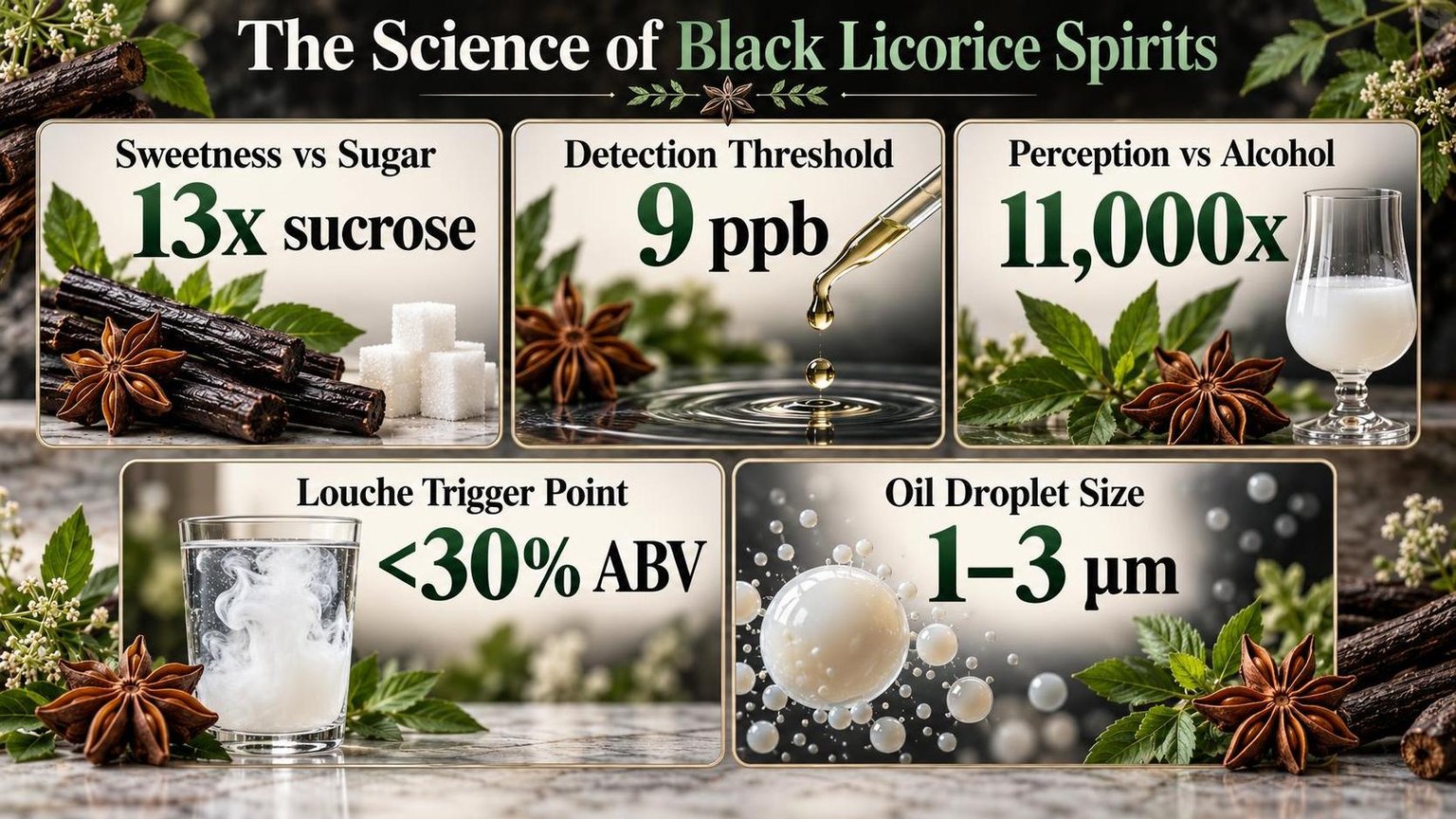
Anethole is roughly 13 times sweeter than sucrose by weight. This inherent sweetness explains why anise-flavored spirits often taste sweet even before sugar is added during production.
Botanical Sources Used in Spirits
Distillers source anethole from three primary plants. Each contributes a slightly different flavor profile despite sharing the same dominant compound.
| Botanical Source | Anethole Content | Primary Spirits | Secondary Flavor Notes |
| Star anise (Illicium verum) | 80–90% of essential oil | Pastis, sambuca | Warm, slightly woody |
| Green anise (Pimpinella anisum) | 70–90% of essential oil | Ouzo, arak, absinthe | Lighter, herbaceous |
| Fennel (Foeniculum vulgare) | 50–75% of essential oil | Pastis, some absinthes | Vegetal, slightly bitter |
True licorice root (Glycyrrhiza glabra) contains glycyrrhizin rather than anethole as its primary flavor compound.
Glycyrrhizin is 30–50 times sweeter than sucrose but produces a similar taste profile, which is why consumers perceive the flavors as interchangeable.
The Louche Effect: Visual Proof of Anethole
Anethole is soluble in ethanol but nearly insoluble in water. When water is added to anise spirits, dissolved anethole molecules precipitate into microscopic droplets approximately 1–3 micrometers in diameter.
These droplets scatter light through the Mie scattering mechanism, turning the liquid milky white.
This ouzo effect occurs reliably when dilution drops the alcohol concentration below roughly 30% ABV. The louche serves as visible confirmation that anethole is present in significant concentration.
Why the Flavor Feels So Intense
Human olfactory receptors detect anethole at extremely low thresholds—as little as 9 parts per billion in water. This exceptional sensitivity means trace amounts create a powerful flavor impression.
By comparison, the detection threshold for ethanol is approximately 100 parts per million, making anethole roughly 11,000 times more perceptible.
The compound also has a relatively low boiling point of 234°C (453°F), which allows it to volatilize readily at drinking temperature.
Anethole vapor reaches the olfactory epithelium retronasally, amplifying the perceived licorice taste with every sip.
These combined properties—extreme sweetness, ultra-low detection thresholds, and high volatility—explain why even mildly anise-flavored spirits immediately register as “black licorice” to most drinkers.
Sambuca and Ouzo Compared for Licorice Flavor
Sambuca and ouzo both deliver intense licorice flavor, yet they originate from different traditions and use distinct botanical foundations. Understanding their differences helps you choose the right anise spirit for cocktails, sipping, or cooking.
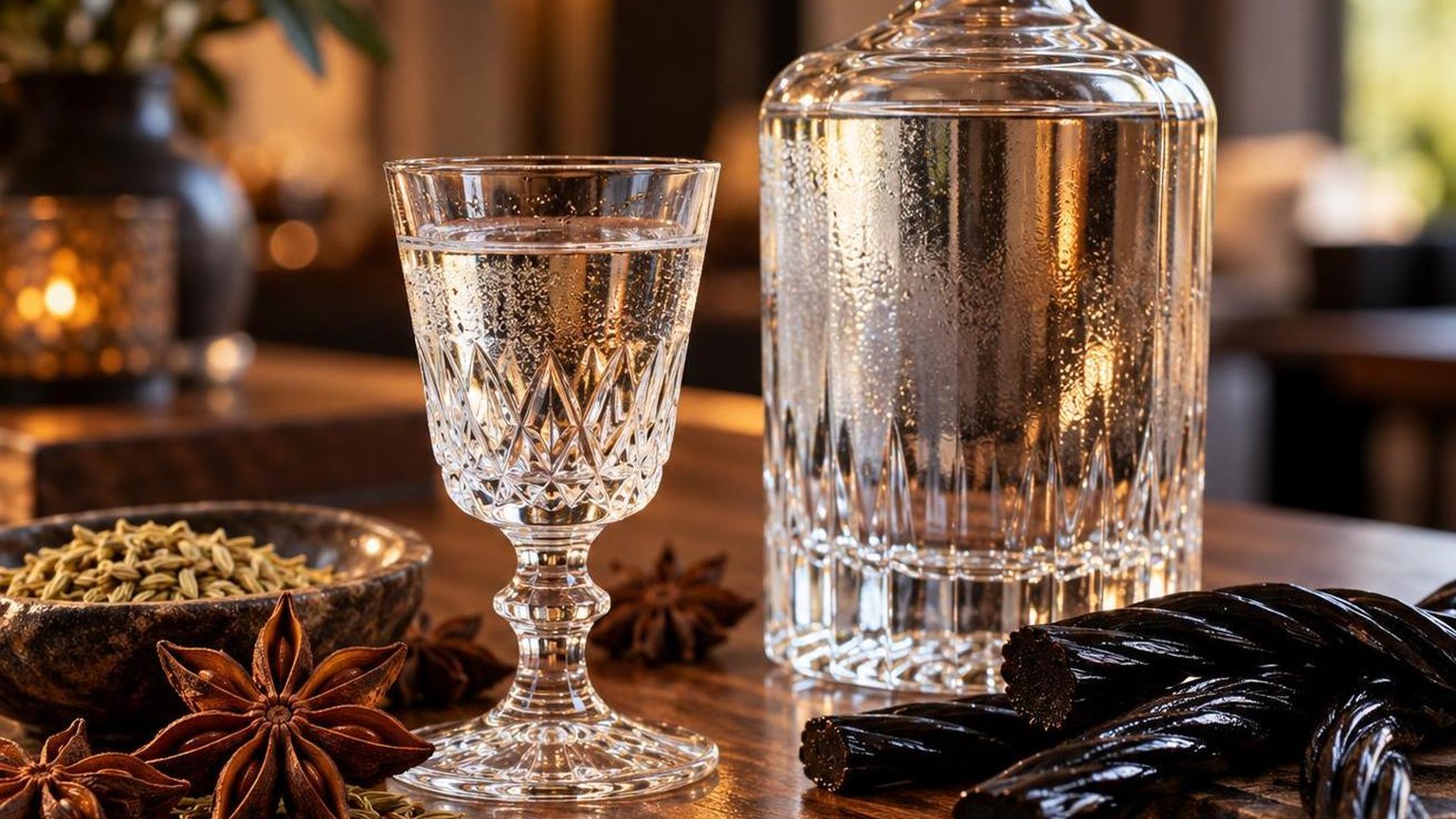
Base Spirit and Production
Sambuca is an Italian liqueur distilled from a neutral spirit base with star anise (Illicium verum) and green anise (Pimpinella anisum) as primary botanicals. Elder flowers often appear as a secondary flavoring agent.
Ouzo is a Greek spirit produced by distilling a grape-must base or grain alcohol with anise seed. EU Regulation 110/2008 mandates that ouzo must be produced in Greece and contain at least 20% distilled anise-flavored alcohol.
Key Differences at a Glance
| Attribute | Sambuca | Ouzo |
| Country of origin | Italy | Greece |
| Primary anise source | Star anise + green anise | Anise seed |
| ABV range | 38–42% | 37.5–50% |
| Sugar content | 350 g/L minimum (EU regulation) | Typically 40–80 g/L |
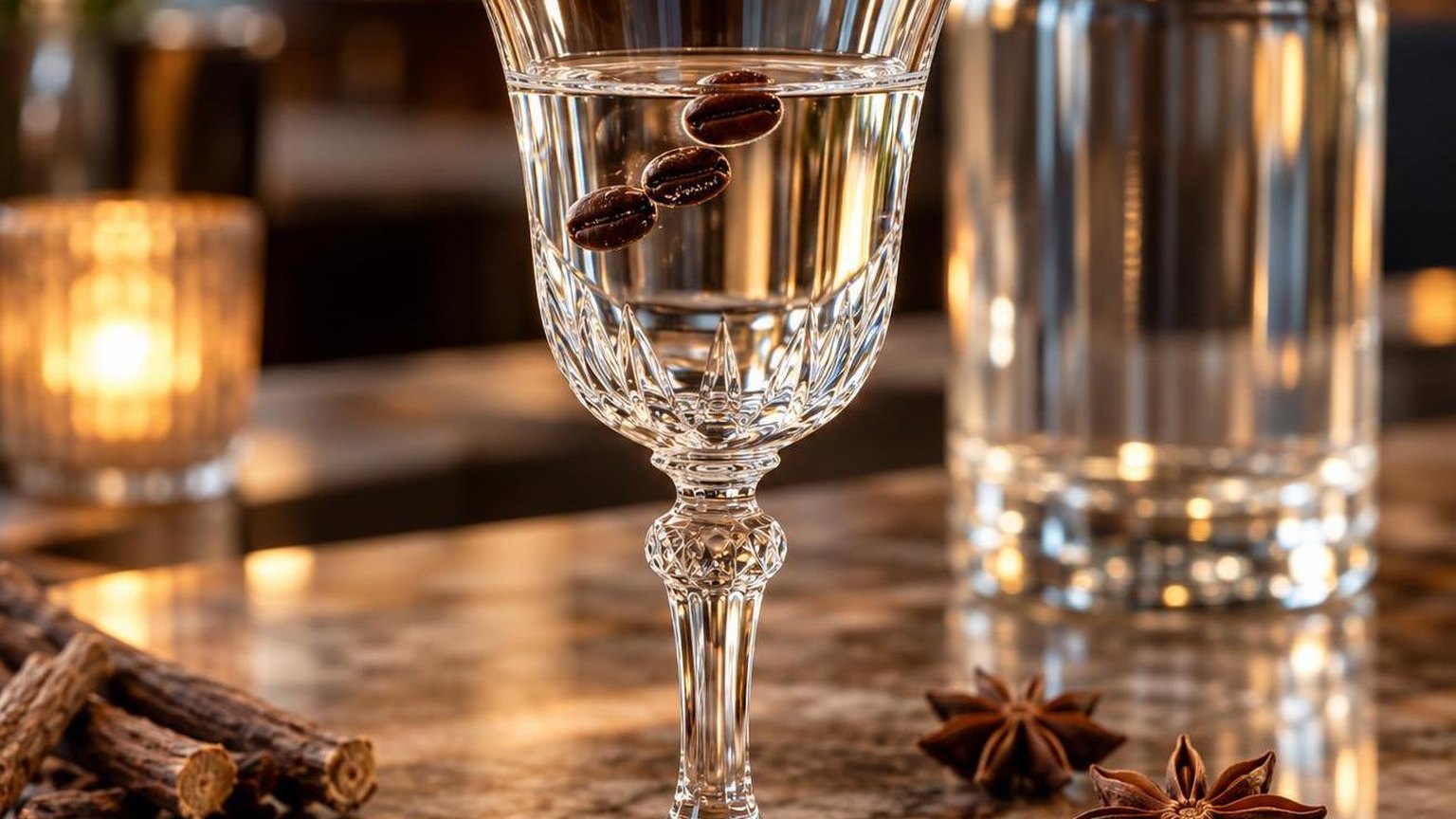
| Typical serving | Neat, with coffee beans (“con la mosca”) | Diluted with cold water |
| Louche effect | Mild | Pronounced milky-white |
| Calories per 30 mL shot | ~100 kcal | ~65 kcal |
Flavor Profile Breakdown
Sambuca’s high sugar content creates a thick, syrupy mouthfeel with a candy-sweet licorice finish. Molinari Sambuca Extra, Italy’s top-selling brand, contains 42% ABV and emphasizes a pronounced sweetness that softens the anise bite.
Ouzo tastes drier and more herbaceous. Brands like Plomari Ouzo (40% ABV) layer fennel, coriander, and mastic alongside anise, producing a complex, less sugar-forward licorice character.
The Louche Effect
Both spirits turn cloudy when water is added. This “ouzo effect” occurs because anethole — the organic compound responsible for anise flavor — is soluble in alcohol but not in water.
Ouzo’s louche is denser because producers optimize the anethole concentration for water-diluted service.
Anethole Content
Anethole constitutes roughly 80–90% of anise essential oil. Both spirits rely on it for their licorice taste, but sambuca’s star anise source delivers a slightly sweeter anethole profile compared to ouzo’s seed-derived version.
Which Delivers Stronger Licorice Flavor?
- Neat sipping: Sambuca tastes more intensely of licorice due to its higher sugar amplifying perceived sweetness.
- Diluted with water: Ouzo’s herbal complexity becomes more apparent, offering a layered licorice experience.
- In cocktails: Sambuca integrates more smoothly into sweet builds; ouzo works better in savory or citrus-forward drinks.
Choosing between them depends on context. Sambuca suits dessert pairings and after-dinner service. Ouzo pairs better with salty foods like feta, olives, and grilled octopus — the classic Greek meze tradition.
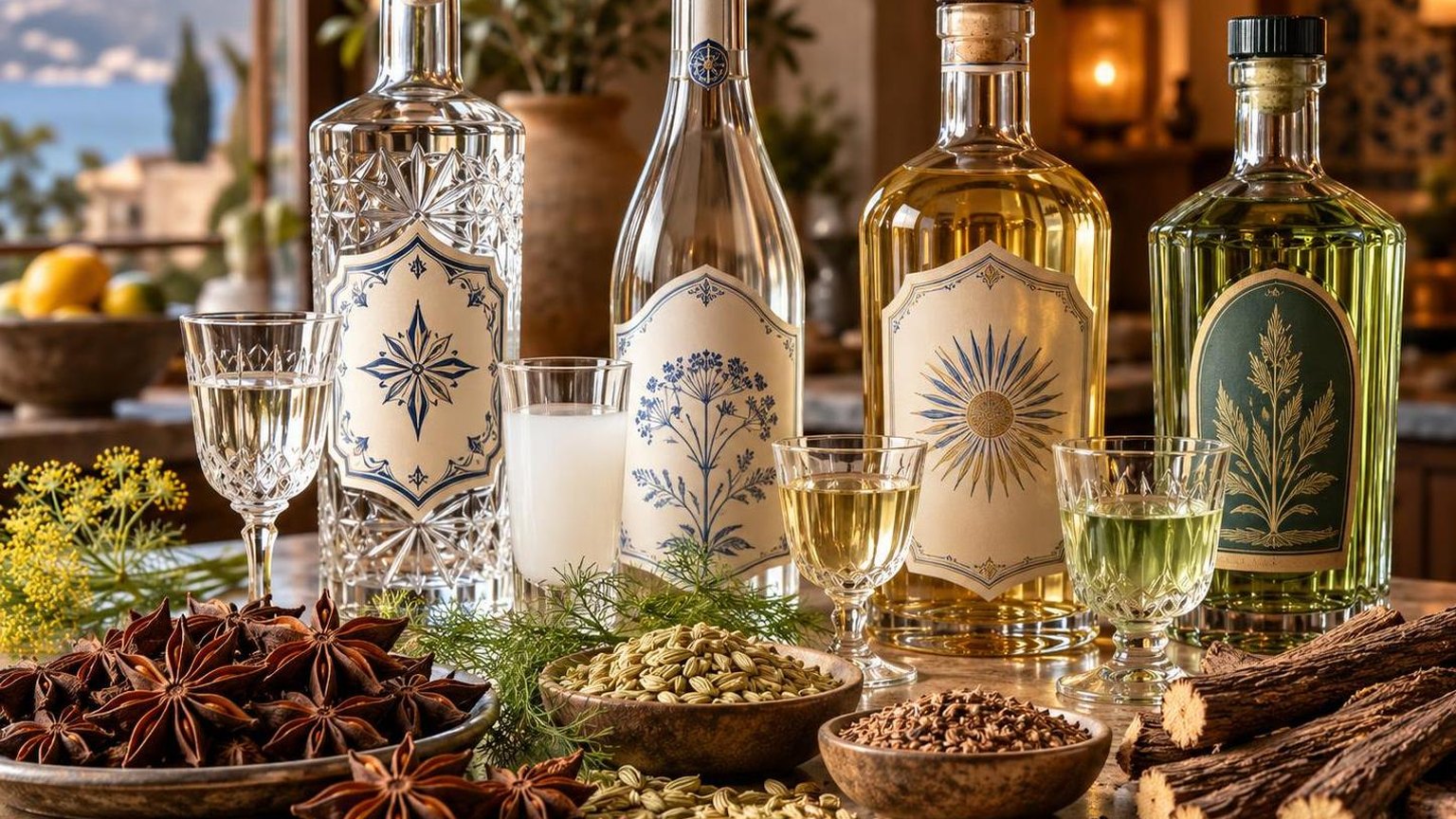
Absinthe and Pastis Beyond the Licorice Taste
Absinthe and pastis both deliver bold anise flavor, but their origins, ingredients, and legal histories differ dramatically. Understanding these distinctions helps explain why each spirit occupies a unique place among licorice-flavored alcohols.
Absinthe: The Green Fairy’s Complex Profile
Traditional absinthe contains a trinity of botanicals: grand wormwood (Artemisia absinthium), green anise, and Florence fennel. Most quality absinthes incorporate 10–15 additional herbs including hyssop, melissa, and star anise.
Absinthe typically ranges from 45% to 74% ABV, making it one of the strongest spirits commercially available.
The United States banned absinthe in 1912 and did not lift the restriction until 2007, when the TTB permitted brands containing fewer than 10 parts per million of thujone.
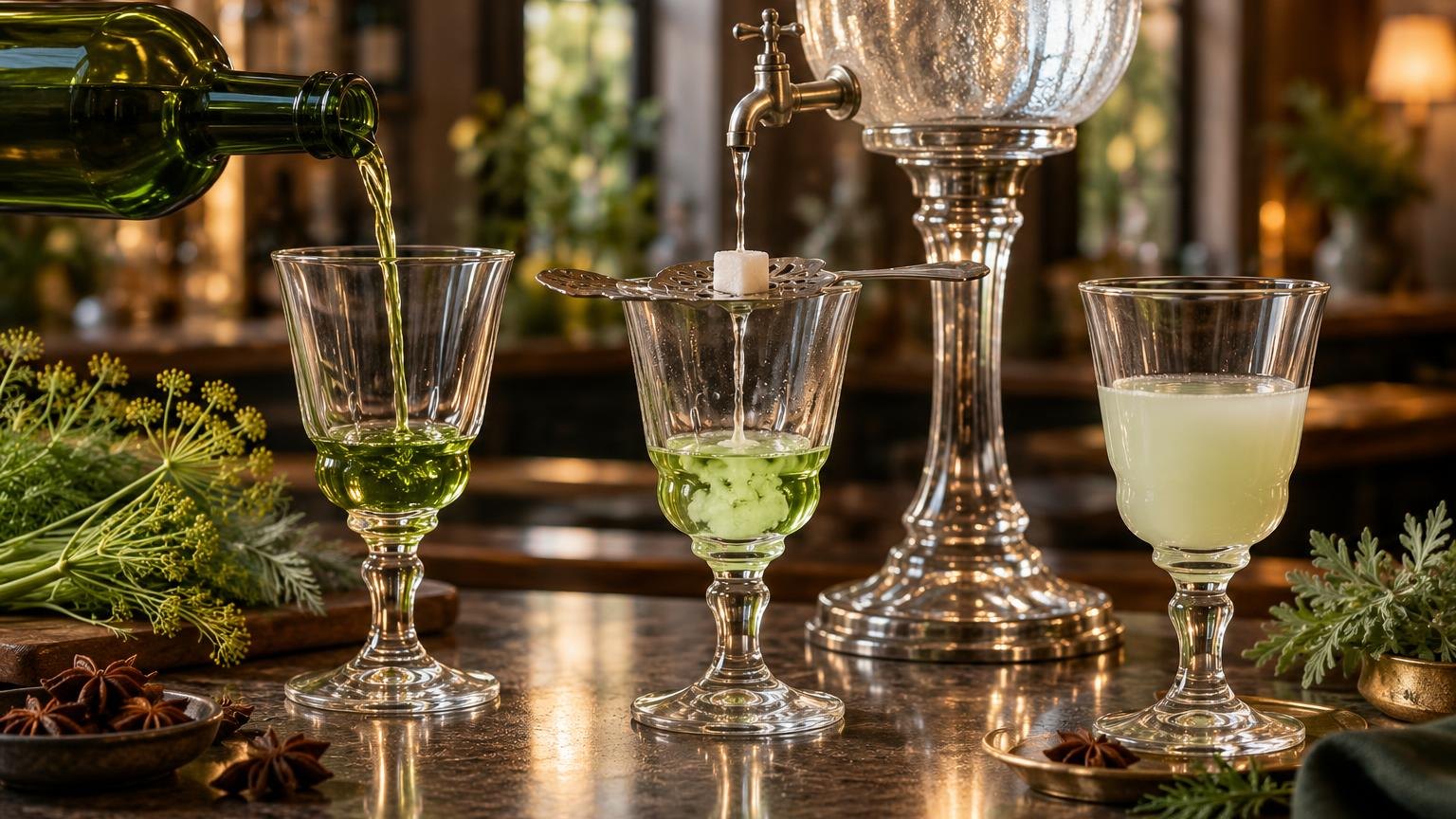
The louche effect—the milky clouding when water is added—occurs because essential oils from anise and fennel are soluble in alcohol but not in water.
Diluting at a 3:1 to 5:1 water-to-absinthe ratio releases aromatic compounds and softens the spirit’s intensity.
Pastis: France’s Post-Ban Solution
When France banned absinthe in 1915, Paul Ricard introduced pastis in 1932 as a legal anise-flavored alternative. Pastis contains no wormwood, which kept it compliant with French law.
Pastis must meet specific legal standards under French regulations. It requires a minimum of 2 grams of anethole per liter and must contain licorice root extract—a distinction from absinthe, which relies on anise and fennel instead.
Standard pastis sits at 40–45% ABV. Pastis de Marseille, a protected designation, must contain exactly 45% ABV and at least 2 grams of anethole per liter.
Key Differences at a Glance
| Attribute | Absinthe | Pastis |
| Primary botanicals | Wormwood, green anise, fennel | Star anise, licorice root |
| Typical ABV | 45–74% | 40–45% |
| Sugar content | Generally unsweetened | Up to 100 g/L permitted |
| Licorice root required | No | Yes |
| Wormwood present | Yes | No |
| Country of origin | Switzerland (late 1700s) | France (1932) |
| Serving method | Cold water drip over sugar cube | Diluted 5:1 with cold water |
Flavor Nuances Worth Noting
- Absinthe delivers herbal bitterness from wormwood that pastis lacks entirely.
- Pastis tastes sweeter and rounder due to added sugar and mandatory licorice root.
- High-quality Swiss la Bleue absinthe emphasizes floral and minty notes over dominant anise.
- Henri Bardouin pastis uses over 65 Provençal herbs and spices, creating a more complex profile than standard Ricard.
Pernod Ricard, the world’s second-largest spirits company with €12.1 billion in net sales for FY 2023, produces both Pernod absinthe and Ricard pastis—the best-selling pastis globally at roughly 40 million liters sold annually in France alone.
Rakı and Arak for Dry Anise Flavor
Rakı and arak deliver the most intensely dry black licorice flavor of any spirit category.
Both are unsweetened anise-distilled spirits that turn milky white when mixed with water—a phenomenon called the louche effect caused by anethole becoming insoluble in diluted alcohol.
Rakı: Turkey’s National Spirit
Turkish rakı is double-distilled from grape-derived suma and redistilled with aniseed. Yeni Rakı, the best-selling brand since 1944, holds roughly 80% of Turkey’s domestic rakı market.
Standard rakı bottlings sit at 45% ABV (90 proof). Premium expressions like Efe Rakı Triple Distilled reach 47.5% ABV, adding a third distillation for smoother texture.
Traditional service calls for mixing one part rakı with two parts cold water in a tall glass called a kadeh. Ice is added after water to prevent crystallization of the anethole compounds.
| Brand | ABV | Distillations | Flavor Profile |
| Yeni Rakı | 45% | 2 | Sharp anise, slight grape sweetness |
| Tekirdağ Rakı | 45% | 2 | Rounded anise, herbal finish |
| Efe Rakı Triple | 47.5% | 3 | Clean anise, silky mouthfeel |
| Kulüp Rakı | 48% | 2 | Intense anise, peppery heat |
Arak: The Levantine Original
Arak predates rakı by centuries and remains the preferred spirit across Lebanon, Syria, Jordan, and Israel. Lebanese arak is typically triple-distilled from fermented grape juice with green aniseed added during the final distillation.
Most quality arak bottlings range from 50% to 53% ABV—notably stronger than Turkish rakı. Premium Lebanese producers age their arak in clay amphoras for up to 12 months before bottling.
The traditional ratio is one part arak to two parts water, served in small glasses called kaasaat. Arak pairs specifically with mezza dishes—the anise compounds cut through tahini and olive oil.
- Château Ksara Arak-el-Meezyane: 53% ABV, triple-distilled, considered among Lebanon’s finest commercial araks
- El Massaya Arak: 53% ABV, produced in the Bekaa Valley using indigenous Obeidi grapes
- Brun Arak: 50% ABV, aged in terracotta jars, balanced herbal and anise notes
- Arak Razzouk: 50% ABV, one of the oldest continuously produced araks, dating to 1870
Key Differences Between Rakı and Arak
Arak generally tastes drier and more herbaceous than rakı because Lebanese producers use green aniseed rather than dried. Rakı carries faint residual grape sweetness from its suma base.
Both spirits contain zero added sugar, distinguishing them sharply from sweetened competitors like sambuca (350 g/L sugar) and anisette (100+ g/L sugar).
For drinkers seeking pure black licorice flavor without sweetness, rakı and arak remain unmatched.
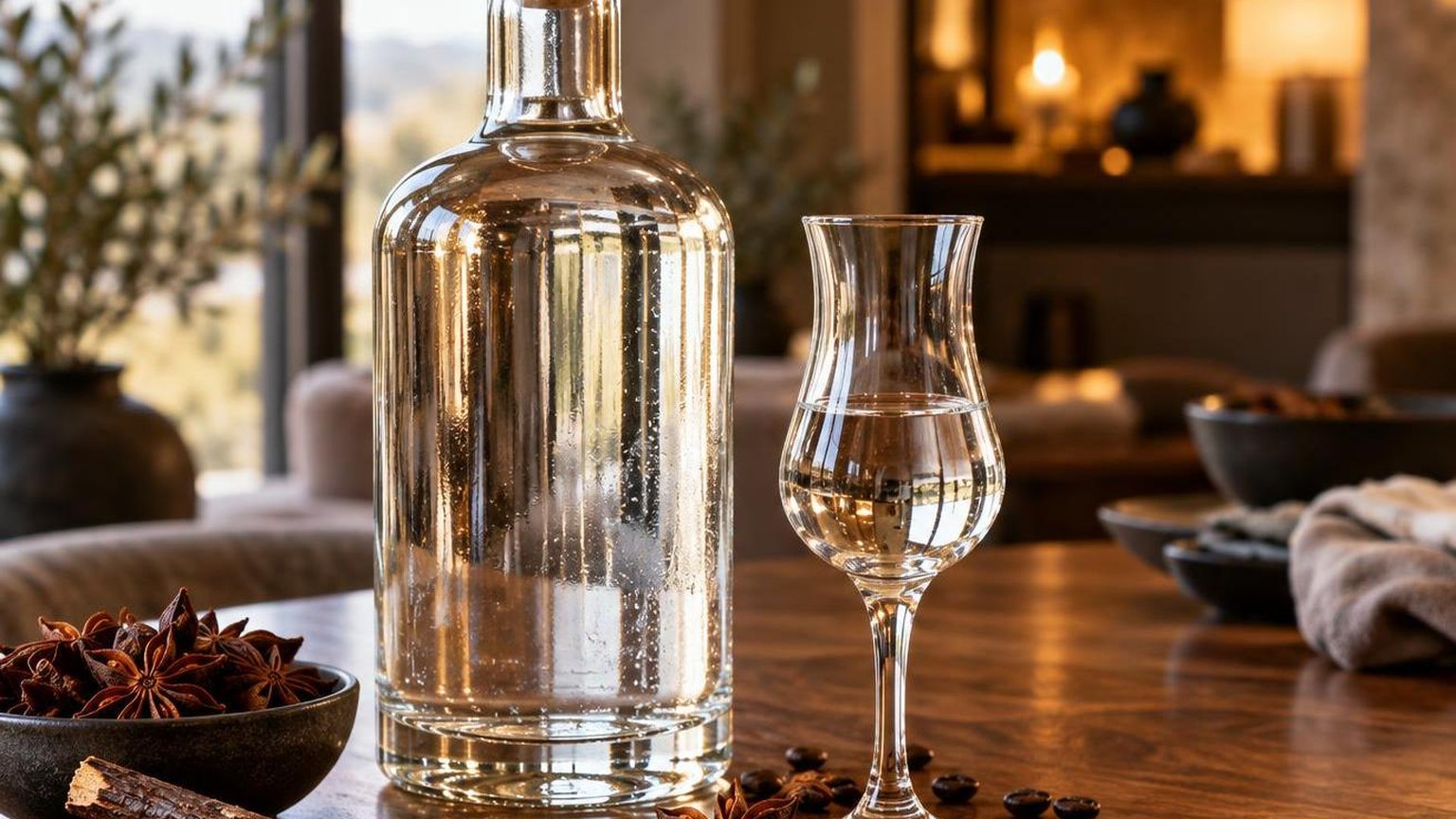
How to Serve Licorice Flavored Spirits
Anise-flavored spirits demand specific serving techniques that unlock their full aromatic potential. Temperature, dilution ratio, and glassware each directly affect the louche effect, aroma release, and overall drinking experience.
Optimal Serving Temperatures
Temperature dramatically changes how anethole—the compound responsible for the licorice flavor—behaves in solution. Serving too warm mutes the louche; too cold dulls the aromatics.
| Spirit | Ideal Serving Temp | Water Ratio | Louche Effect |
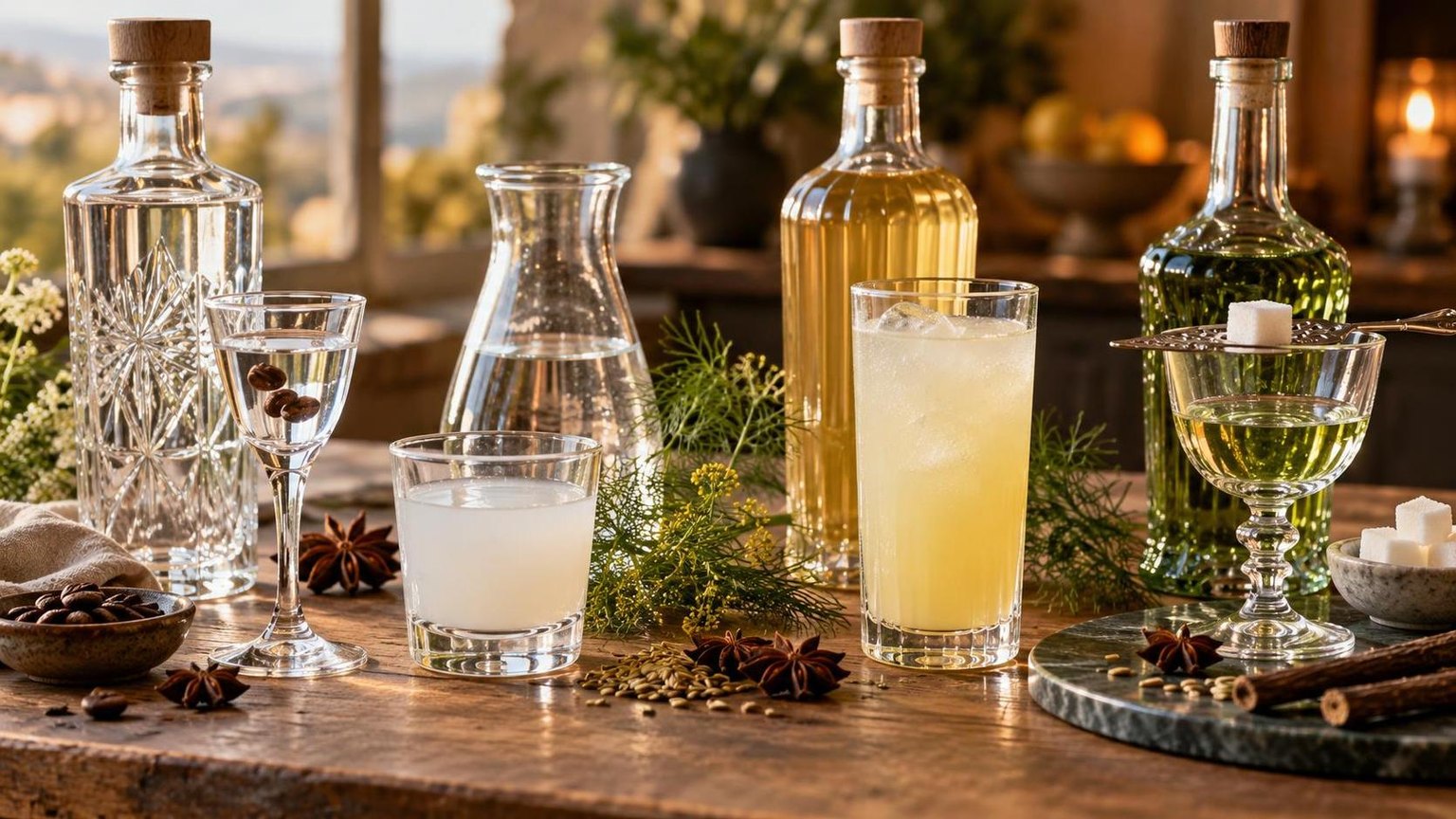
| Absinthe (65–72% ABV) | 2–4 °C water added | 3:1 to 5:1 water to spirit | Strong milky white-green |
| Pastis (40–45% ABV) | Ice-cold water, 4–6 °C | 5:1 to 7:1 water to spirit | Opaque golden yellow |
| Ouzo (37.5–46% ABV) | Chilled, 6–8 °C | 1:1 to 2:1 water to spirit | Bright white cloud |
| Sambuca (38–42% ABV) | Neat or on ice, 0–4 °C | Typically none | Minimal unless water added |
| Arak (40–63% ABV) | Ice-cold water, 4–6 °C | 2:1 to 3:1 water to spirit | Dense white |
The Louche Ritual
Pour 30–45 ml of spirit into a glass first. Add ice-cold water slowly in a thin stream.
The anethole, soluble in alcohol but insoluble in water, precipitates into microscopic droplets that scatter light and create the signature cloudy transformation.
For absinthe, the traditional French method uses a slotted spoon holding a sugar cube over the glass. Cold water drips through the sugar at roughly 1 drop per second. The full preparation takes 3–5 minutes for a single serving.
Glassware Recommendations
- Absinthe: Pontarlier reservoir glass (marks the 30 ml dose line at the bulge)
- Pastis: Tall narrow tumbler, 250–300 ml capacity, to accommodate the high water ratio
- Ouzo: Small narrow glass called a “kanata,” typically 150–200 ml
- Sambuca: Snifter or small rocks glass for neat pours; a cordial glass for “con la mosca” (with 3 coffee beans)
- Arak: Small tumbler, freshly poured each round—arak oxidizes quickly once diluted
Common Serving Mistakes
Never pour water before the spirit. Adding spirit to water prevents a proper louche and produces an uneven, thin mouthfeel. Always spirit first, water second.
Avoid adding ice directly to undiluted arak or ouzo. Pure ice contact causes anethole to crystallize in uneven clumps rather than forming a smooth emulsion. Add water first, then ice.
Do not store opened pastis in direct sunlight. UV exposure degrades the essential oils within weeks, flattening the anise character.
A sealed bottle stored at room temperature in a dark cabinet keeps its flavor profile for 18–24 months after opening.
When serving sambuca “con la mosca,” use exactly 3 roasted coffee beans representing health, happiness, and prosperity. Light the surface briefly—no more than 10 seconds—to warm the oils before extinguishing and sipping.
Common Questions
What alcohol tastes like black licorice?
The most recognized licorice-flavored spirits are absinthe, pastis (such as Ricard and Pernod), ouzo, sambuca, and arak.
All of these contain anethole, the organic compound found in anise seed and star anise that produces the distinctive sweet, herbaceous licorice flavor.
Turkish rakı and Colombian aguardiente also belong to this family, each with regional variations in proof and sweetness.
Why do so many spirits taste like black licorice?
Anethole, the primary flavor compound in anise, star anise, and fennel, has been used in distillation across the Mediterranean and Middle East for centuries because these botanicals grew abundantly in the region.
The compound is highly soluble in ethanol, making it easy to extract during distillation or maceration. This shared botanical heritage explains why countries from Greece to Lebanon to France each developed their own anise-based national spirit.
What is the difference between absinthe, pastis, and ouzo?
Absinthe is distilled with grand wormwood (Artemisia absinthium), green anise, and fennel, typically bottled at 55–72% ABV, and originated in Switzerland around 1792.
Pastis emerged in France after absinthe was banned in 1915, uses star anise and licorice root without wormwood, and sits at 40–45% ABV.
Ouzo is a Greek spirit made by distilling grape pomace or grain alcohol with anise seed, regulated by EU law to be produced exclusively in Greece at a minimum of 37.5% ABV.
Does Jägermeister taste like black licorice?
Jägermeister contains 56 botanicals including star anise and licorice root, which contribute a noticeable licorice undertone, though the dominant flavor profile leans toward bittersweet herbs, citrus peel, and ginger.
At 35% ABV, it is technically a digestif bitter (Kräuterlikör), not an anise spirit. Served ice-cold at −18°C as commonly recommended, the licorice note becomes subtler while the herbal bitterness sharpens.
Why do anise spirits turn cloudy when you add water?
This phenomenon, called the louche effect (or “ouzo effect” in colloidal science), occurs because anethole is soluble in alcohol but nearly insoluble in water.
When water is added, the anethole molecules come out of solution and form microscopic droplets that scatter light, creating a milky, opalescent appearance.
The effect typically begins when the alcohol concentration drops below roughly 30%, and the resulting emulsion is stable as long as it remains undisturbed.
Which licorice-flavored liqueur is sweetest and best for cocktails?
Sambuca, particularly the Italian white (Molinari or Luxardo) varieties, contains approximately 350 grams of sugar per liter, making it significantly sweeter than ouzo or pastis.
This high sugar content and 38–42% ABV make it versatile in cocktails like the Sambuca Sour or as a float in espresso-based drinks.
Anisette, such as Marie Brizard, is even sweeter and lower in proof (25% ABV), functioning more as a modifier than a base spirit.
Is there actual licorice root in licorice-flavored alcohol?
Some spirits use real licorice root (Glycyrrhiza glabra) — pastis is required by French regulation to contain a minimum amount of licorice alongside anise — but most rely primarily on anise seed or star anise for their flavor.
The two plants are botanically unrelated: licorice is a legume, while anise is in the carrot family (Apiaceae), yet both produce compounds that taste remarkably similar to the human palate.
Glycyrrhizin from licorice root is about 30–50 times sweeter than sucrose, so when present, it contributes body and sweetness beyond what anise alone provides.
Keep Exploring
- Breweries Near Sandusky Ohio Worth Visiting
- The Cigar Accessories You Need In 2026
- How Early Can You Buy Alcohol in Michigan?
- Who Makes Kirkland Prosecco?
- How Many Oz In A Pound?
- How Many Lbs In An Ounce?
- What Are Coasters Used For? 17 Practical Uses Explained (2026 Guide)
- How Much Is A Pound In Weight?
- Morning Recovery Hangover Drink – Find Out Now
- All Blog Guides
- TTB – Alcohol and Tobacco Tax and Trade Bureau: Distilled Spirits Standards of Identity (2023)
- FDA – Code of Federal Regulations Title 21: Food Additives Permitted for Direct Addition, Including Anethole (2024)
- National Center for Biotechnology Information – PubChem Compound Summary: Anethole (2024)
- National Institutes of Health – Trans-Anethole Toxicological Profile, NTP (2023)
- University of California Davis – Waterhouse Lab: Wine & Spirits Flavor Compounds (2023)
- Encyclopaedia Britannica – Absinthe: History, Ingredients & Ban (2024)
- MasterClass – Guide to Anise-Flavored Liqueurs: Pastis, Ouzo, Sambuca & Arak (2023)