
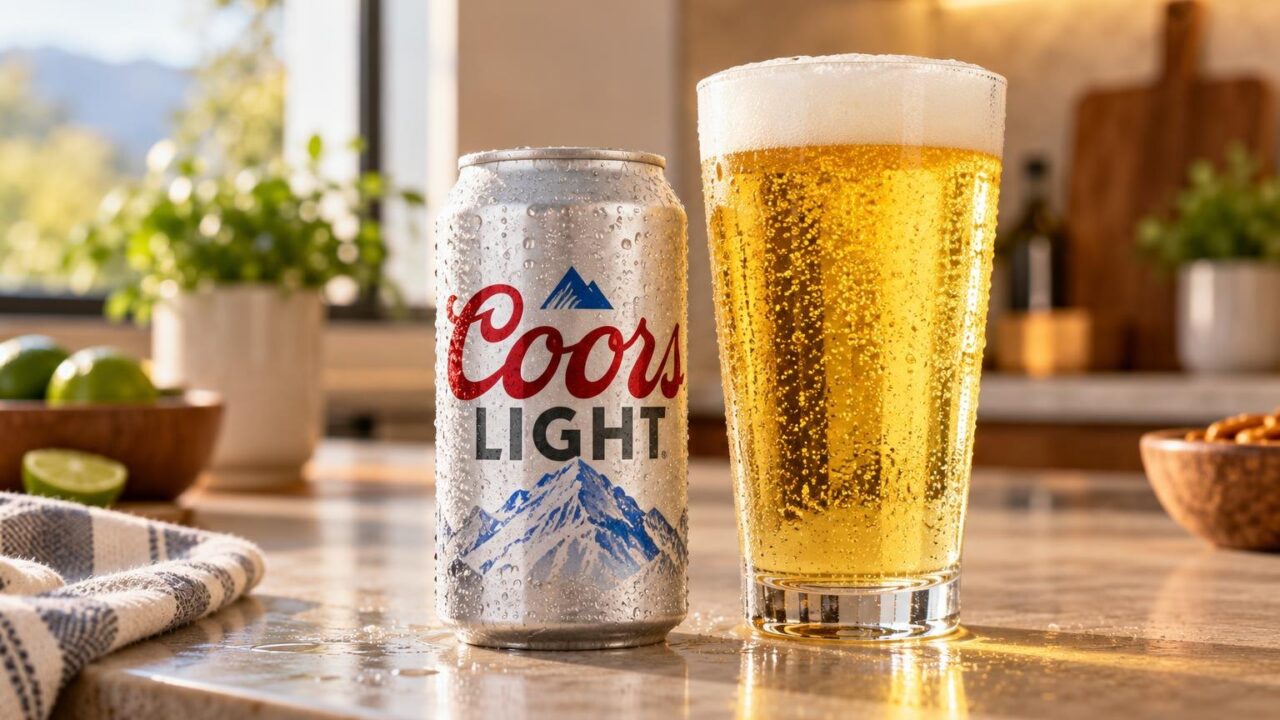
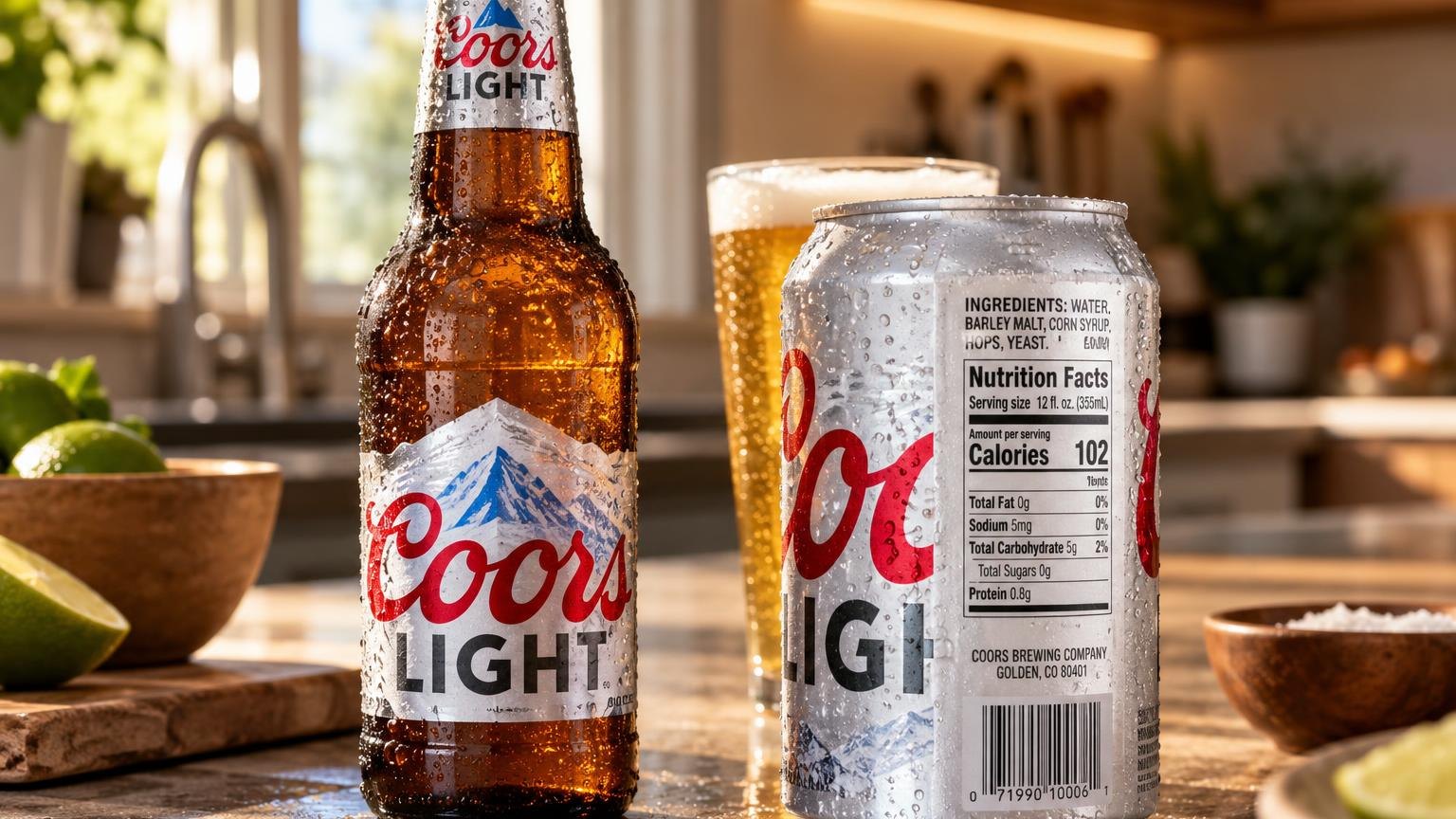
Coors Light has 5 grams of carbs per 12-ounce serving, making it one of the lowest-carb mainstream beers available in the United States. That figure comes directly from Molson Coors Beverage Company’s published nutritional data.
For context, a regular Coors Banquet contains 11.7 grams of carbohydrates per 12-ounce can — more than double.
Understanding how many carbs does Coors Light have matters if you’re counting macros, following a low-carb diet, or simply comparing options at the bar.
This article breaks down the full nutritional profile, compares it against competitors like Miller Lite and Bud Light, and explains what keeps the carb count low.
Coors Light Carb Count Per Serving
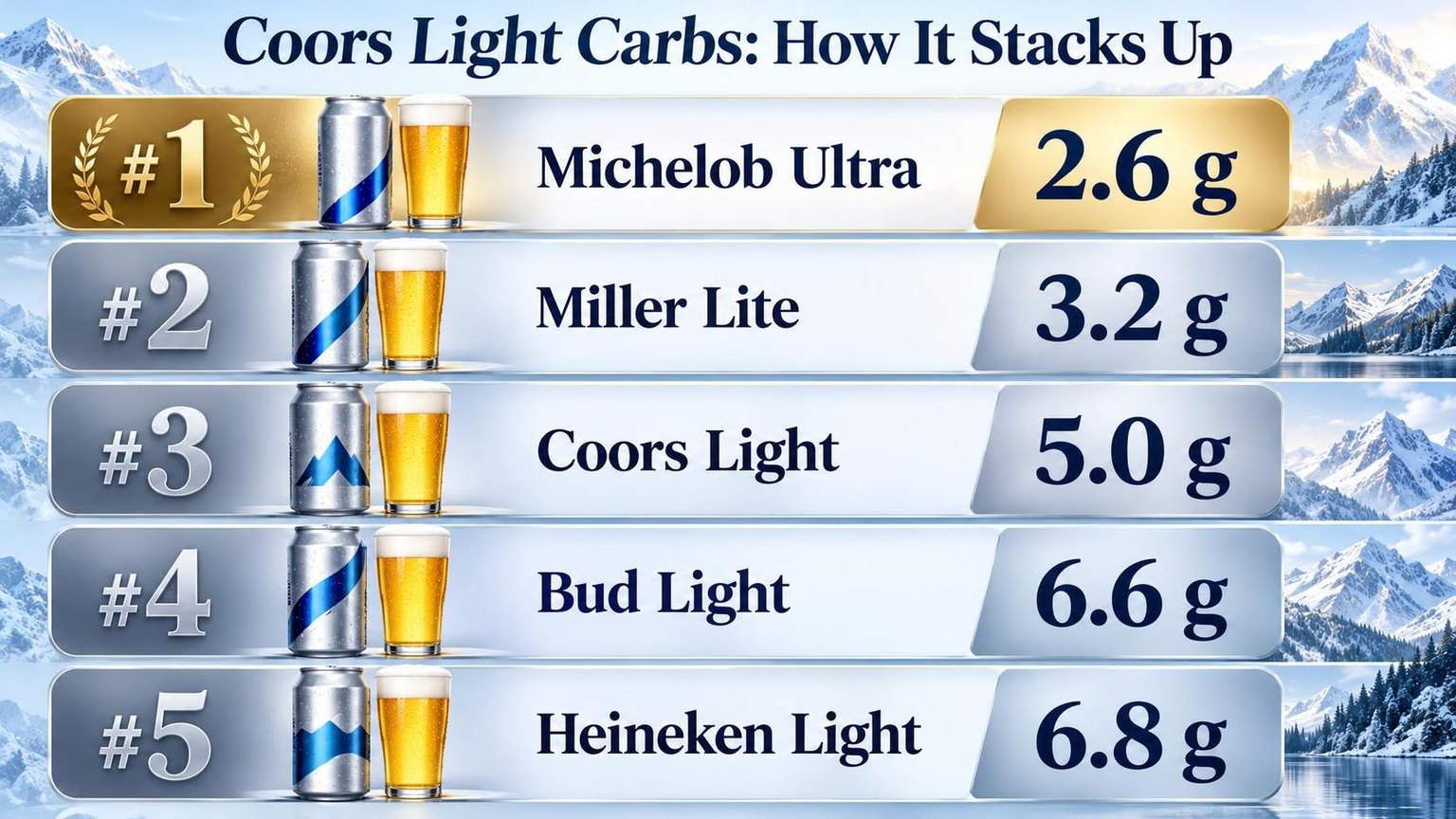
A standard 12 fl oz serving of Coors Light contains 5.0 grams of carbohydrates. This places it among the lower-carb options in the mainstream American light beer category, sitting below Bud Light’s 6.6 grams and Miller Lite’s 3.2 grams.
Coors Light’s full nutritional profile per 12 fl oz (355 mL) serving breaks down as follows:
| Nutrient | Amount per 12 fl oz |
| Calories | 102 |
| Total Carbohydrates | 5.0 g |
| Protein | 0.7 g |
| Fat | 0 g |
| Alcohol by Volume (ABV) | 4.2% |
Those 5.0 grams of carbs come entirely from residual sugars and unfermented grain starches left after brewing. Coors Light contains zero dietary fiber.
Carbs Across Different Serving Sizes
Coors Light is sold in several container formats. Carb counts scale proportionally with volume, which matters for accurate tracking.
| Serving Size | Volume | Carbohydrates | Calories |
| Standard can/bottle | 12 fl oz | 5.0 g | 102 |
| Tall boy can | 16 fl oz | 6.7 g | 136 |
| Pint (draft) | 16 fl oz | 6.7 g | 136 |
| Large can | 24 fl oz | 10.0 g | 204 |
| Pitcher (approx.) | 60 fl oz | 25.0 g | 510 |
A single 24 oz can delivers double the carbs of a standard bottle. Drinkers tracking macros should note that bar pours often exceed 16 oz when including foam settling.
How Coors Light Compares to Other Light Beers
Carb counts vary significantly across light beer brands. The differences can add up over multiple servings during a session.
| Beer (12 fl oz) | Carbs (g) | Calories | ABV |
| Michelob Ultra | 2.6 | 95 | 4.2% |
| Miller Lite | 3.2 | 96 | 4.2% |
| Corona Premier | 2.6 | 90 | 4.0% |
| Coors Light | 5.0 | 102 | 4.2% |
| Bud Light | 6.6 | 110 | 4.2% |
| Natural Light | 3.2 | 95 | 4.2% |
| Busch Light | 3.2 | 95 | 4.1% |
Coors Light sits in the middle tier for carbs among major light beers. Michelob Ultra and Corona Premier offer nearly half the carbohydrates per serving.
Why Carb Content Matters for Specific Diets
On a standard ketogenic diet limiting intake to 20–50 grams of carbs daily, a single 12 oz Coors Light consumes 10–25% of that allowance. Two cans reach 10 grams.
For diabetics monitoring glycemic load, Coors Light’s carbs are simple residual sugars that absorb quickly.
The American Diabetes Association notes that alcohol can also lower blood sugar unpredictably when combined with insulin or sulfonylureas.
Calorie-conscious drinkers prioritizing low carbs over absolute calorie count should note that alcohol itself contributes 7 calories per gram. In Coors Light, roughly 70 of its 102 calories come from alcohol, not carbohydrates.
How Coors Light Compares to Rivals
Coors Light holds 5.0 grams of carbohydrates per 12-ounce serving, placing it in the middle tier of American light lagers.
Understanding where it ranks against direct competitors helps calorie-conscious drinkers make informed choices at the bar or grocery store.
Carb-by-Carb Comparison Table
The following table compares Coors Light against its closest domestic and imported light beer rivals using standard 12-ounce (355 mL) servings.
| Beer | Carbs (g) | Calories | ABV (%) |
| Michelob Ultra | 2.6 | 95 | 4.2 |
| Miller Lite | 3.2 | 96 | 4.2 |
| Corona Premier | 2.6 | 90 | 4.0 |
| Bud Light | 6.6 | 110 | 4.2 |
| Coors Light | 5.0 | 102 | 4.2 |
| Natural Light | 3.2 | 95 | 4.2 |
| Busch Light | 3.2 | 95 | 4.1 |
| Heineken Light | 6.8 | 99 | 3.3 |
Key Takeaways from the Data
Coors Light sits roughly in the middle of the light beer spectrum. It carries 2.4 grams more carbs than Michelob Ultra but 1.6 grams fewer than Bud Light.
- Lowest-carb option: Michelob Ultra and Corona Premier tie at 2.6 g, making them the go-to picks for strict low-carb dieters.
- Closest rival: Miller Lite, brewed by the same parent company (Molson Coors), undercuts Coors Light by 1.8 g of carbs and 6 calories per serving.
- Highest-carb light beer listed: Heineken Light at 6.8 g, despite having a lower ABV of just 3.3%.
- Budget segment: Natural Light and Busch Light both match Miller Lite at 3.2 g of carbs while costing less per unit.
Why the Carb Differences Matter
A gap of 2–4 grams per beer seems minor in isolation. Over a session of four to six beers, those grams compound into meaningful differences.
Drinking five Coors Lights adds 25 g of carbs. The same session with Michelob Ultra totals just 13 g — a 12-gram swing equivalent to roughly one slice of white bread.
For keto dieters limiting daily net carbs to 20–50 g, that difference determines whether a second or third beer fits within their macros.
Flavor and Body Trade-Offs
Lower carbohydrate content generally correlates with a thinner mouthfeel. Michelob Ultra and Corona Premier taste noticeably lighter-bodied than Coors Light.
Coors Light’s 5.0 g of carbs contribute to a slightly fuller texture that many drinkers prefer. The residual sugars from its barley malt base add subtle sweetness that ultra-low-carb beers sacrifice.
Choosing between these options ultimately depends on whether you prioritize strict macro targets or a more rounded drinking experience. Coors Light offers a functional middle ground — moderate carbs, 102 calories, and 4.2% ABV.
Why Coors Light Is Lower Carb
Coors Light achieves its 5 grams of carbohydrates per 12 oz serving through deliberate brewing choices that distinguish it from regular beers averaging 10–15 grams.
The process centers on extended fermentation and specific enzyme use that convert more starches into fermentable sugars.
Extended Fermentation
Coors Light undergoes a longer, colder fermentation than standard lagers. This extended lagering period gives yeast more time to consume residual sugars that would otherwise remain as carbohydrates in the finished beer.
Standard lager fermentation typically runs 2–4 weeks. Light beer production can extend this timeline, allowing yeast to attenuate further and reduce the final gravity — the measure of remaining sugars after fermentation.
Enzyme-Assisted Brewing
Brewers use exogenous enzymes like amyloglucosidase (glucoamylase) to break down complex dextrins that normal brewer’s yeast cannot ferment. These dextrins contribute body and carbohydrates in regular beer.
By converting these long-chain sugars into simple fermentable glucose, the yeast consumes what would have been leftover carbohydrate content. This is the single most impactful technique in light beer production.
Thinner Grain Bill
Coors Light starts with less total malt per batch compared to Coors Banquet. Fewer fermentable inputs mean fewer residual carbohydrates, fewer calories, and a lighter body in the finished product.
Coors Banquet, brewed with a fuller grain bill, contains approximately 11.7 grams of carbs per 12 oz serving. The difference of roughly 6.7 grams traces directly back to grain quantity and enzymatic processing.
Carb Comparison Across Popular Beers
| Beer (12 oz) | Carbs (g) | Calories | ABV (%) |
| Coors Light | 5.0 | 102 | 4.2 |
| Bud Light | 6.6 | 110 | 4.2 |
| Miller Lite | 3.2 | 96 | 4.2 |
| Michelob Ultra | 2.6 | 95 | 4.2 |
| Coors Banquet | 11.7 | 147 | 5.0 |
| Budweiser | 10.6 | 145 | 5.0 |
Coors Light sits in the middle of the light beer spectrum — lower than Bud Light’s 6.6 grams but higher than Miller Lite’s 3.2 grams and Michelob Ultra’s 2.6 grams.
Water-to-Grain Ratio
A higher water-to-grain ratio dilutes the overall wort concentration. Combined with enzymatic conversion, this produces a beer with high attenuation — meaning yeast fermented a larger percentage of available sugars.
Coors Light’s final attenuation rate exceeds 80%, compared to roughly 75% for a typical American lager. That additional 5+ percentage points of attenuation translates directly into fewer residual carbohydrates per serving.
Key Factors Summarized
- Exogenous enzymes break down normally unfermentable dextrins
- Extended cold lagering increases yeast sugar consumption
- Reduced malt bill limits total available carbohydrates
- Higher water-to-grain ratio lowers wort density
- Higher attenuation leaves fewer residual sugars
These techniques work in combination. No single step alone would drop carbs from Coors Banquet’s 11.7 grams to Coors Light’s 5.0 grams — it requires the full process working together.
Coors Light in a Low Carb Diet
Coors Light contains 5 grams of carbohydrates per 12-ounce serving, positioning it as a viable option for carb-conscious drinkers. Many low-carb diet frameworks allow moderate alcohol consumption when carbs are tracked precisely.
Carb Budget Compatibility
Standard ketogenic diets restrict daily carbs to 20–50 grams. A single Coors Light uses 10–25% of that allowance, depending on your specific threshold.
The Atkins Phase 1 (Induction) limits intake to 20 grams of net carbs daily. Two Coors Lights would consume half that budget, leaving minimal room for nutrient-dense vegetables and other whole foods.
How Coors Light Compares to Other Low-Carb Beers
Choosing the lowest-carb option matters when every gram counts. Here is how Coors Light stacks up against common competitors per 12-ounce serving:
| Beer | Calories | Carbs (g) | ABV (%) |
| Michelob Ultra | 95 | 2.6 | 4.2 |
| Corona Premier | 90 | 2.6 | 4.0 |
| Miller Lite | 96 | 3.2 | 4.2 |
| Coors Light | 102 | 5.0 | 4.2 |
| Bud Light | 110 | 6.6 | 4.2 |
| Corona Extra | 148 | 13.9 | 4.6 |
Coors Light sits in the middle tier. Michelob Ultra and Corona Premier deliver nearly half the carbs at comparable alcohol content, making them leaner choices for strict keto adherents.
Practical Strategies for Inclusion
- Track every serving. Log each 12-ounce Coors Light as 5 g carbs and 102 calories in your food diary or app to maintain accuracy.
- Limit to one or two. Staying at 5–10 g of beer carbs preserves room for vegetables, nuts, and other nutrient-rich foods within a 20–50 g daily target.
- Avoid sugary mixers and chasers. A single ounce of margarita mix can add 7–10 g of carbs, instantly exceeding what the beer itself contributes.
- Eat protein before drinking. Consuming 20–30 g of protein prior to alcohol slows absorption and helps stabilize blood sugar response.
- Hydrate between beers. Alcohol is a diuretic. Alternating with water reduces overconsumption and supports ketone production, which alcohol temporarily pauses.
The Metabolic Consideration
Alcohol halts fat oxidation while the liver prioritizes metabolizing ethanol. Research published in the American Journal of Clinical Nutrition found that fat metabolism decreased by approximately 73% after two drinks.
This means even a low-carb beer like Coors Light can stall weight loss beyond its carbohydrate content alone. The 5 grams of carbs may fit your macro budget, but the metabolic pause extends the impact.
For occasional consumption, Coors Light remains a reasonable low-carb beer. For aggressive fat-loss phases, even its modest 5-gram count warrants careful consideration against your daily priorities.
Carb Differences Across Coors Light Sizes
Coors Light contains 5 grams of carbohydrates per 12 fl oz serving. The total carb count scales proportionally with container size, meaning larger formats deliver more carbs even though the beer’s formula stays identical.
Carbs by Container Size
Coors Light is sold in multiple package sizes across the United States. The carbohydrate content increases in direct proportion to volume.
| Container Size | Total Carbs (g) | Calories | ABV |
| 7 fl oz (Pony Bottle) | 2.9 | 58 | 4.2% |
| 12 fl oz (Standard Can/Bottle) | 5.0 | 102 | 4.2% |
| 16 fl oz (Tallboy Can) | 6.7 | 136 | 4.2% |
| 24 fl oz (King Can) | 10.0 | 204 | 4.2% |
| 25 fl oz (Large Can) | 10.4 | 213 | 4.2% |
A single 24 oz King Can equals two standard 12 oz servings. That doubles the carb intake to 10 grams in one sitting.
Draft Pours and On-Premise Servings
Bars and restaurants typically pour Coors Light in 16 oz pint glasses or 20 oz imperial pints. Knowing the serving size matters for accurate carb tracking.
| Draft Pour Size | Total Carbs (g) | Calories |
| 10 fl oz (Small Glass) | 4.2 | 85 |
| 16 fl oz (US Pint) | 6.7 | 136 |
| 20 fl oz (Imperial Pint) | 8.3 | 170 |
An imperial pint contains 66% more carbs than a standard 12 oz bottle. Consumers watching carb intake should confirm the glass size before ordering.
Why Size Matters for Carb-Conscious Drinkers
Coors Light’s 5 grams per 12 oz is among the lowest carb counts in mainstream American lagers. Choosing smaller formats keeps that advantage intact.
- Stick with 12 oz cans to stay at the labeled 5 grams of carbs per serving.
- Avoid tallboys on keto diets — the extra 1.7 grams per can adds up across multiple drinks.
- Track King Cans as two servings since nutrition labels on 24 oz cans still reference the 12 oz standard.
- Ask your bartender about pour size — a 20 oz draft delivers nearly the same carbs as two 7 oz pony bottles combined.
Molson Coors lists all nutritional data based on the 12 fl oz reference serving. Anything larger requires manual multiplication to get accurate totals.
The 7 oz pony bottle is the lowest-carb option at just 2.9 grams. It suits occasions where portion control matters more than volume.
Regardless of container, Coors Light maintains a fixed 4.2% ABV and the same carb-per-ounce ratio of approximately 0.42 grams. The only variable that changes your carb intake is how much you pour.
Questions People Ask Most
How many carbs does Coors Light have per 12 oz can?
A standard 12 oz serving of Coors Light contains 5 grams of carbohydrates. This places it among the lower-carb options in the mainstream American light beer category, sitting below Bud Light’s 6.6 g and Miller Lite’s 3.2 g.
Is Coors Light keto-friendly?
At 5 g of carbs per 12 oz serving, Coors Light can fit within a strict ketogenic diet’s typical 20–50 g daily carb limit if consumption is kept to one or two cans.
However, alcohol temporarily halts fat oxidation, so even low-carb beers can slow ketosis progress regardless of their carb count.
How does Coors Light’s carb count compare to Michelob Ultra?
Michelob Ultra contains 2.6 g of carbs per 12 oz serving, nearly half the 5 g found in Coors Light. Michelob Ultra also has fewer calories at 95 compared to Coors Light’s 102, making it the lower-carb choice between the two.
Where do the carbs in Coors Light come from?
The carbohydrates in Coors Light are residual sugars and dextrins left over after fermentation of its barley malt and corn adjunct grain bill.
During brewing, yeast converts most of the grain starches into alcohol and CO₂, but a small portion of complex sugars remains unfermented, accounting for the 5 g per serving.
Does Coors Light have more carbs than regular Coors Banquet?
No. Coors Banquet contains approximately 11.7 g of carbs per 12 oz serving — more than double the 5 g in Coors Light. Coors Banquet also has a higher ABV at 5.0% versus 4.2% and 147 calories compared to Coors Light’s 102 calories.
How many carbs are in a 16 oz tallboy or 24 oz can of Coors Light?
A 16 oz tallboy of Coors Light contains roughly 6.7 g of carbs, and a 24 oz can contains approximately 10 g, scaled proportionally from the 5 g per 12 oz base figure.
Checking the larger format is important because many drinkers underestimate carb intake by mentally defaulting to the standard 12 oz nutritional data.
Related Guides
- Miller High Life Alcohol Content and Beer Strength
- 9 Essential Facts About How Many Beers In A 5 Gallon Keg (2026 Expert Draft & Serving Guide)
- What is Draft Beer? All Information Easiest To Understand
- What Is Craft Cider? Basic Information You Must Know
- Alcohol Content of Coors Banquet Beer
- How Many Beers In A Pitcher? What You Need to Know
- How Big Is A Keg Of Beer?
- All Alcohol Guides
- USDA FoodData Central (2024)
- National Institutes of Health – Rethinking Drinking (2024)
- Dietary Guidelines for Americans, USDA & HHS (2020)
- TTB Alcohol and Tobacco Tax and Trade Bureau – Beverage Alcohol Labeling (2024)
- Harvard T.H. Chan School of Public Health – Alcohol: Balancing Risks and Benefits (2024)
- Coors Light Official Nutrition Information, Molson Coors (2024)
- CalorieKing – Coors Light Nutritional Data (2024)