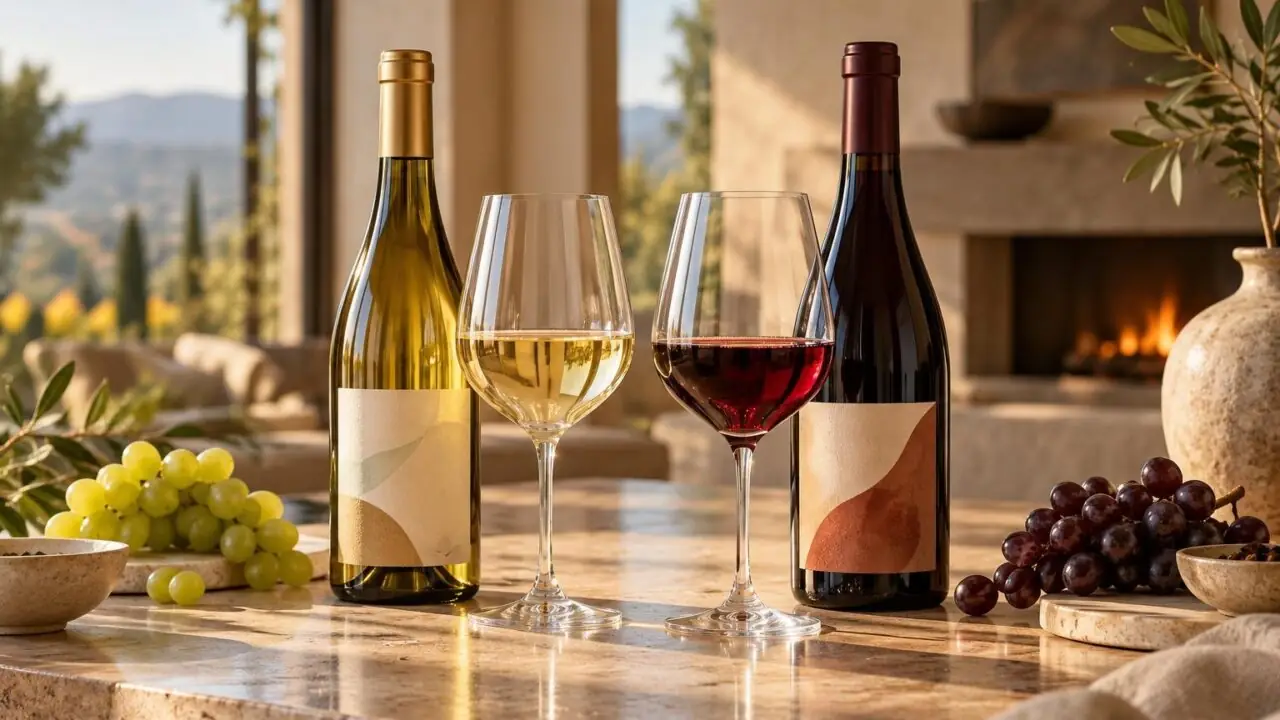
The difference between pinot grigio and pinot noir is that Pinot Grigio usually makes crisp white wine with citrus and pear flavors, while Pinot Noir usually makes lighter-bodied red wine with cherry flavors and noticeable tannins.
Both belong to the Pinot family but offer distinct drinking experiences.
Pinot Grigio’s refreshing acidity suits seafood and light salads; Pinot Noir’s red-fruit character complements salmon, mushrooms, and roast poultry.
Neither grape guarantees sweetness, strength, or quality: region and winemaking matter. This guide compares their flavors, texture, serving temperatures, and food pairings so you can choose a bottle confidently.
Pinot Grigio and Pinot Noir Grape Origins
Pinot Grigio and Pinot Noir share a direct genetic relationship — Pinot Grigio is a clonal mutation of Pinot Noir. Both trace their lineage to Burgundy, France, where Pinot Noir has been cultivated since at least the 1st century AD.
The Mutation Connection
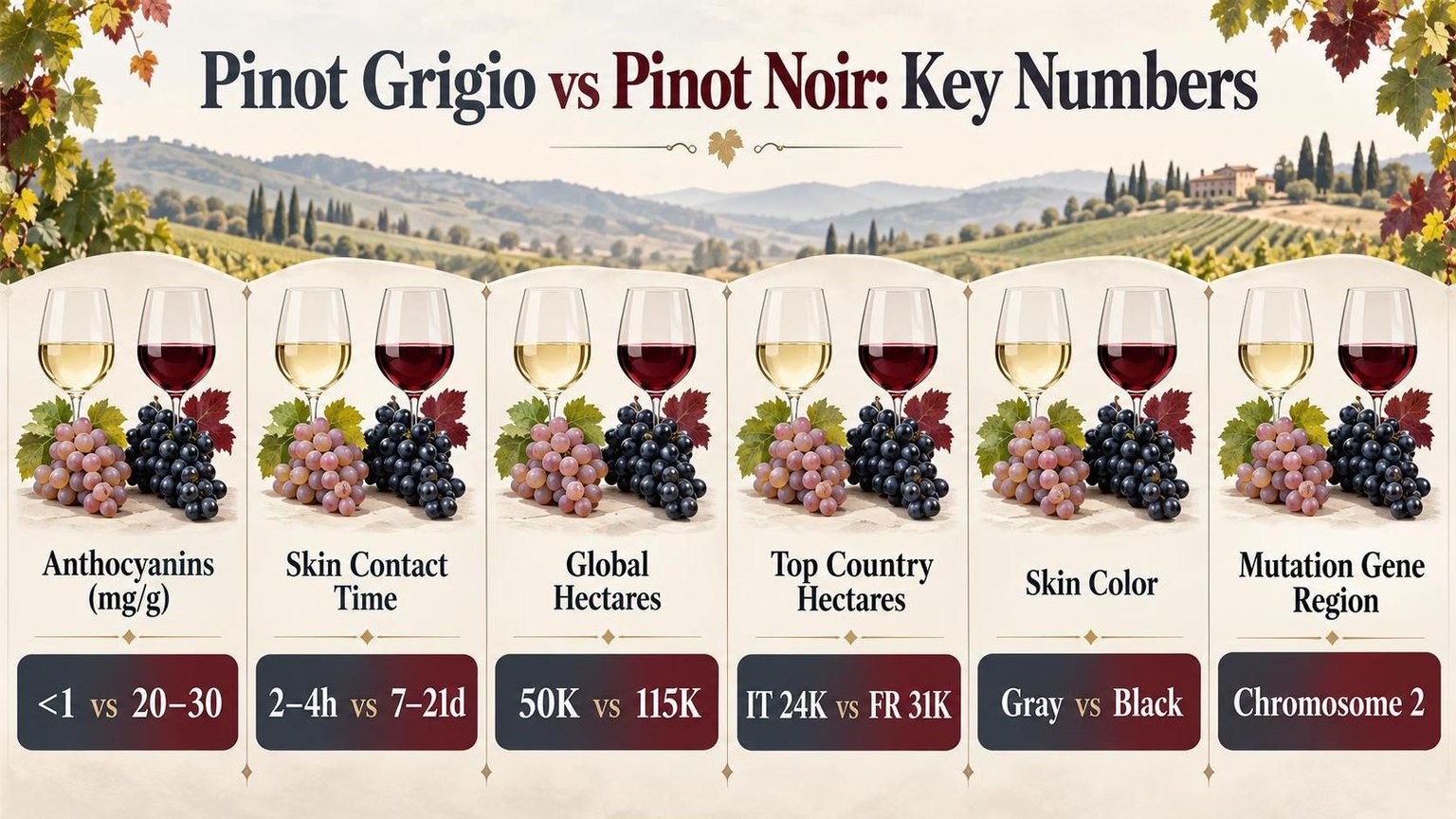
Pinot Noir’s dark-skinned berries occasionally produce mutant vines with grayish-pink skins. This color shift results from a genetic mutation affecting the VvMYBA genes responsible for anthocyanin production in grape skin cells.
DNA profiling confirms Pinot Grigio is genetically identical to Pinot Noir at almost every locus except the genes controlling skin pigmentation. The mutation was first documented in Burgundy during the Middle Ages.
Historical Timeline
| Period | Pinot Noir | Pinot Grigio |
| 1st century AD | Cultivated by Romans in Burgundy | Not yet identified |
| 13th–14th century | Documented by Cistercian monks in Burgundy | Mutation first observed in Burgundy |
| 1711 | Well-established across France | Brought to Germany as Ruländer by merchant Johann Seger Ruland |
| 19th century | Planted in New World regions | Established in northeastern Italy (Alto Adige, Friuli) |
| 1970s–1980s | Oregon’s Willamette Valley emerges | Italian Pinot Grigio exports boom in the US market |
Geographic Spread and Key Regions
Pinot Noir occupies approximately 115,000 hectares worldwide. France leads with roughly 31,000 hectares, followed by Germany at around 11,500 hectares and the United States with approximately 18,000 hectares.
Pinot Grigio covers an estimated 50,000+ hectares globally. Italy plants about 24,000 hectares — predominantly in Trentino-Alto Adige, Veneto, and Friuli-Venezia Giulia. Australia and the US are growing markets.
Why the Names Differ by Country
- France: Pinot Gris (gray) and Pinot Noir (black) — named by skin color in French
- Italy: Pinot Grigio — Italian translation of “gray Pinot,” popularized in the 20th century
- Germany: Grauburgunder or Ruländer for Pinot Gris; Spätburgunder for Pinot Noir
- Alsace: Pinot Gris was historically labeled Tokay d’Alsace until EU regulations prohibited the name in 2007
Despite their shared DNA, terroir and winemaking push these grapes in completely opposite directions — one toward crisp white wines, the other toward complex reds with aging potential.
Why Their Wine Colors Differ
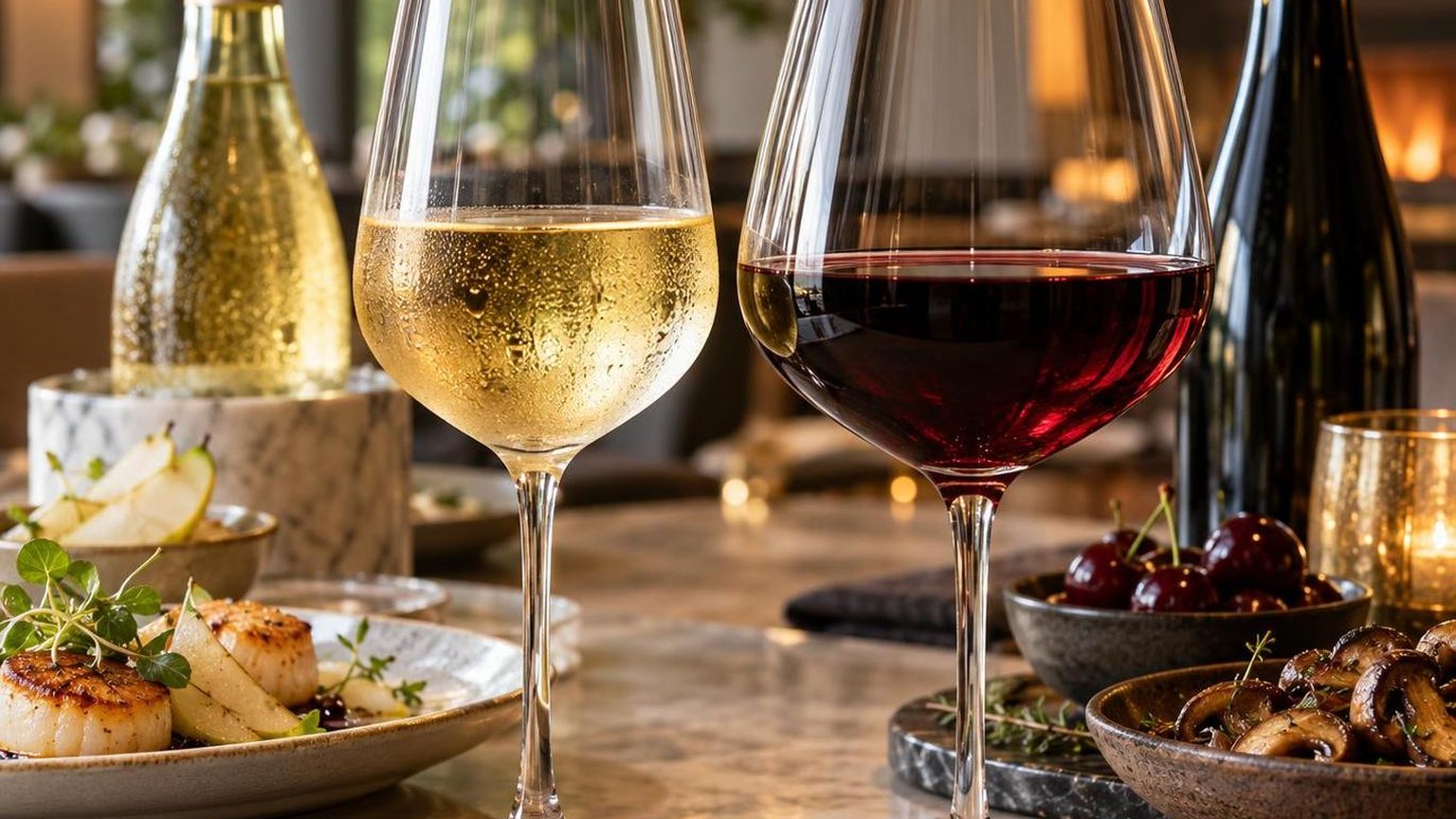
Pinot Grigio and Pinot Noir are genetic siblings—both mutations of the same Vitis vinifera vine—yet they produce wines on opposite ends of the color spectrum.
The difference comes down to anthocyanin concentration in the grape skins and winemaking technique.
Skin Pigmentation at the Source
Anthocyanins are the water-soluble pigments responsible for red, purple, and blue hues in grape skins. Pinot Noir skins contain roughly 20–30 mg of anthocyanins per gram of skin. Pinot Grigio skins carry only trace amounts.
Pinot Grigio’s grayish-pink skin results from a partial genetic mutation that deactivated most anthocyanin production.
Researchers at the Fondazione Edmund Mach in Italy identified a specific region on chromosome 2 responsible for this color shift.
How Winemaking Amplifies the Difference
Skin contact duration is the critical variable. Pinot Noir ferments on its skins for 7–21 days, extracting deep ruby-to-garnet color. Pinot Grigio juice is typically pressed off skins within 2–4 hours.
| Factor | Pinot Grigio | Pinot Noir |
| Skin color | Grayish-pink | Dark blue-black |
| Anthocyanin content (mg/g skin) | Trace (<1) | 20–30 |
| Typical skin contact time | 2–4 hours | 7–21 days |
| Resulting wine color | Straw-yellow to pale gold | Ruby to garnet |
| Fermentation temperature | 12–16 °C (54–61 °F) | 26–32 °C (79–90 °F) |
Higher fermentation temperatures used for Pinot Noir further accelerate anthocyanin extraction. Cooler temperatures for Pinot Grigio preserve freshness and prevent unwanted color pickup.
The Exception: Ramato-Style Pinot Grigio
In Friuli-Venezia Giulia, some producers make “ramato” (copper-colored) Pinot Grigio by extending skin contact to 24–72 hours. This traditional method pulls enough residual pigment to produce a distinctive salmon-orange hue.
Ramato demonstrates that Pinot Grigio skins do carry some pigment. Standard commercial production simply removes it before it transfers to the juice.
The white-wine appearance of most Pinot Grigio is a winemaking choice, not purely a biological inevitability.
- Genetic origin: A single mutation on chromosome 2 reduced anthocyanin synthesis in Pinot Grigio
- Skin contact: Hours versus weeks determines final wine color
- Temperature control: Cooler fermentation suppresses color extraction in Pinot Grigio
- Ramato proof: Extended maceration reveals hidden pigment in Pinot Grigio skins
Pinot Grigio Versus Pinot Noir Flavors
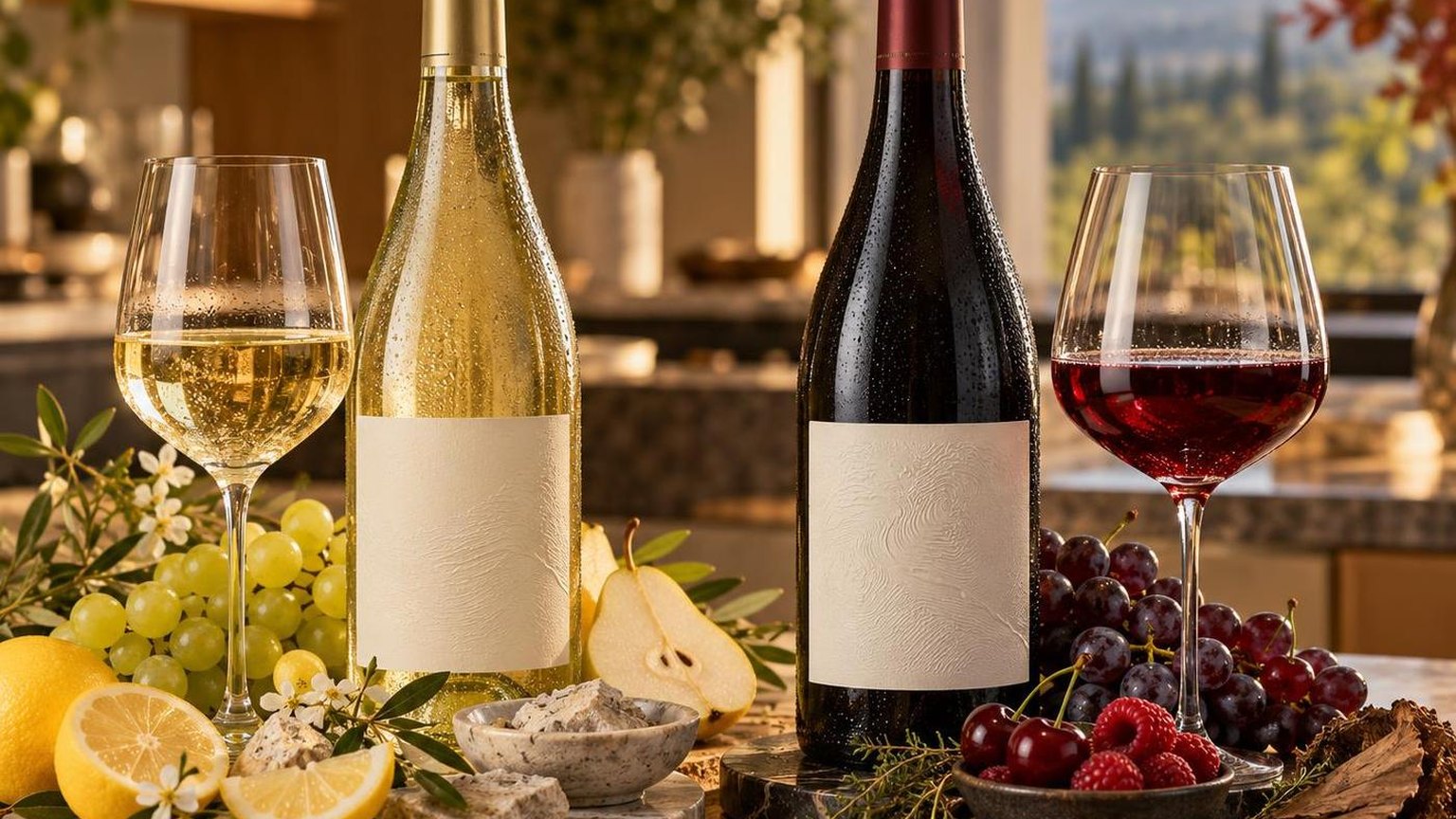
Pinot Grigio and Pinot Noir share a genetic parent—both are mutations of the Pinot grape family—yet produce dramatically different flavor profiles. One delivers crisp, light white wines; the other yields complex, medium-bodied reds.
Pinot Grigio Flavor Profile
Italian-style Pinot Grigio ferments in stainless steel at 12–15°C, preserving bright acidity and lean fruit character. Typical alcohol ranges from 11.5% to 13% ABV.
- Primary fruit notes: Green apple, lemon, lime, white pear
- Secondary notes: Honeysuckle, almond, wet stone minerality
- Alsatian style (Pinot Gris): Richer flavors of baked apple, ginger, honey, and beeswax due to extended skin contact and sometimes residual sugar up to 15 g/L
The wine’s body stays light to medium, with total acidity typically measuring 5.5–7.5 g/L tartaric acid equivalent.
Pinot Noir Flavor Profile
Pinot Noir ferments at 28–32°C with skin contact lasting 10–21 days. This extraction builds tannin structure and color depth. Alcohol typically falls between 12% and 14.5% ABV.
- Primary fruit notes: Red cherry, raspberry, strawberry, cranberry
- Secondary notes: Mushroom, damp earth, violet, clove
- Oak-aged additions: Vanilla, baking spice, cedar, smoke—especially after 10–16 months in French oak barrels
Aged Burgundy Pinot Noir develops tertiary flavors of truffle, leather, and dried leaves after 5–10 years of bottle aging.
Side-by-Side Comparison
| Attribute | Pinot Grigio | Pinot Noir |
| Color | Pale straw to light gold | Light ruby to medium garnet |
| Body | Light to medium | Medium |
| Typical ABV | 11.5–13% | 12–14.5% |
| Serving temp | 7–10°C (45–50°F) | 14–16°C (57–61°F) |
| Tannin level | Negligible | Low to moderate |
| Acidity | High (5.5–7.5 g/L) | Medium-high (5.0–6.5 g/L) |
| Dominant flavors | Citrus, green apple, pear | Red cherry, raspberry, earth |
| Aging potential | 1–3 years | 5–20 years (Burgundy) |
These flavor differences stem from winemaking technique as much as grape biology. Skin contact duration alone separates a 2-hour Pinot Grigio press from a 14-day Pinot Noir maceration.
Food pairing follows flavor intensity. Pinot Grigio matches shellfish, light salads, and fresh cheeses. Pinot Noir pairs with roasted duck, wild mushroom dishes, and aged Gruyère.
How Acidity Body and Tannins Compare
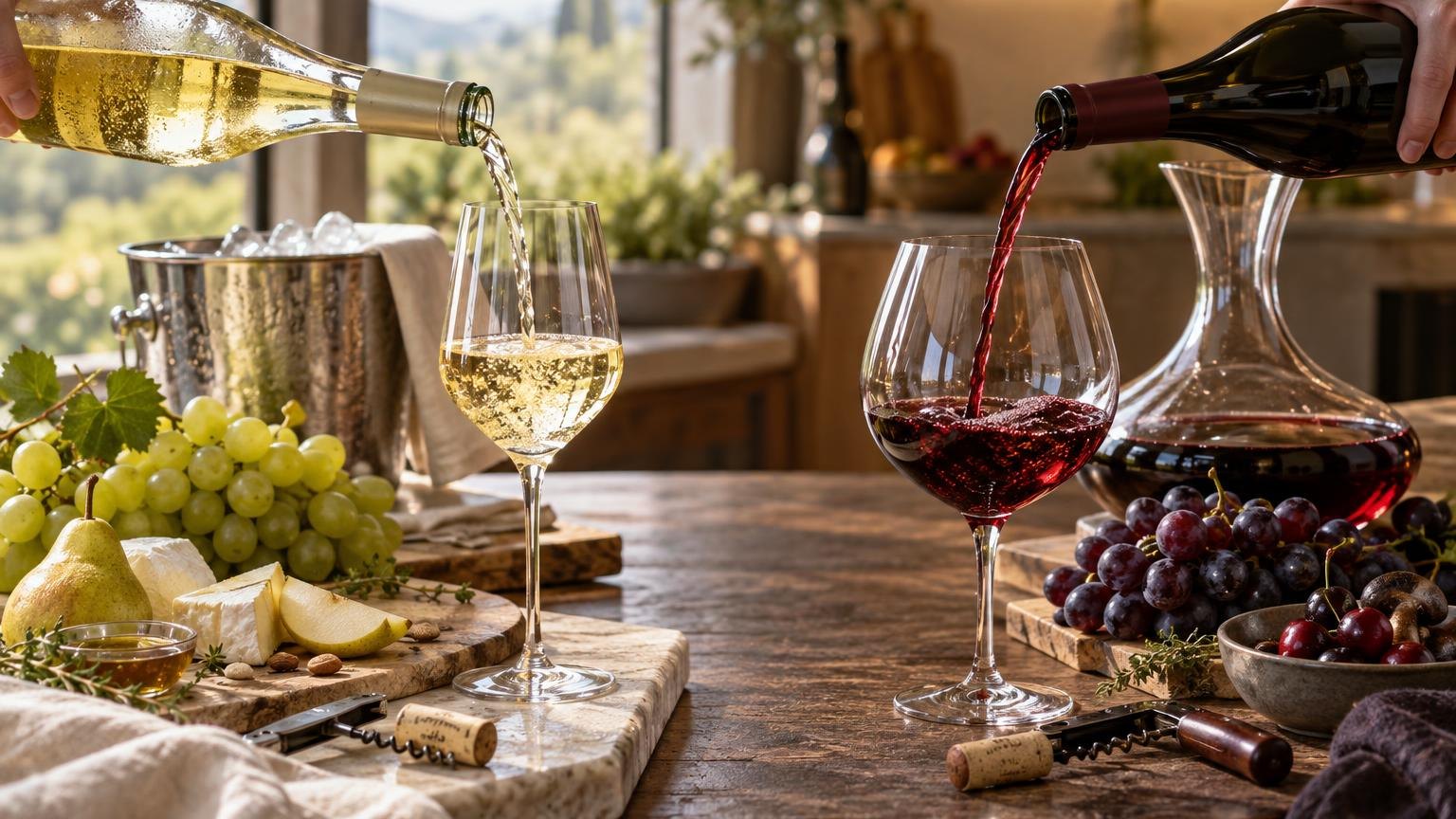
Acidity, body, and tannins define the structural backbone of any wine. Pinot Grigio and Pinot Noir diverge sharply across all three metrics, despite sharing a genetic parent vine.
Acidity Levels
Pinot Grigio typically registers a pH between 3.0 and 3.3, placing it among the higher-acidity white wines. That crisp, mouthwatering tartness drives its reputation as a refreshing aperitif.
Pinot Noir falls in a pH range of roughly 3.4 to 3.6. It remains one of the more acidic red varieties, but its total acidity still sits measurably lower than Pinot Grigio’s.
| Attribute | Pinot Grigio | Pinot Noir |
| Typical pH | 3.0–3.3 | 3.4–3.6 |
| Total Acidity (g/L) | 5.5–7.5 | 5.0–6.5 |
| Body | Light | Light to medium |
| Tannin Level | Negligible | Low to moderate |
| Alcohol Range | 11.5–13% | 12–14.5% |
Body and Weight on the Palate
Pinot Grigio is classified as a light-bodied wine. Minimal skin contact during pressing limits phenolic extraction, keeping viscosity low and the texture lean.
Pinot Noir occupies the lighter end of red wines, typically rated light to medium-bodied. Extended maceration adds glycerol and phenolics that give it a silkier, slightly weightier mouthfeel than Pinot Grigio.
Tannin Structure
Tannins are polyphenolic compounds extracted primarily from grape skins, seeds, and stems. They create the drying, astringent sensation on your gums and tongue.
Pinot Grigio contains negligible tannins. Juice is separated from skins almost immediately—often within two to four hours—so phenolic pickup is minimal.
Pinot Noir develops low to moderate tannins during fermentation, with skin contact lasting seven to twenty-one days. Its thin skins produce fewer tannins than Cabernet Sauvignon or Syrah, contributing to its characteristic smoothness.
- Pinot Grigio tannins: near zero, contributing to a clean, crisp finish with no astringency.
- Pinot Noir tannins: fine-grained and silky, averaging roughly 250–450 mg/L of total phenolics compared to 1,500+ mg/L in Cabernet Sauvignon.
- Practical impact: Pinot Noir pairs with fatty proteins like duck or salmon because its tannins cut richness; Pinot Grigio’s acidity performs the same role for lighter dishes like raw shellfish.
These structural differences make the two wines complementary rather than competitive on any well-planned wine list.
Food Pairings for Each Pinot Style
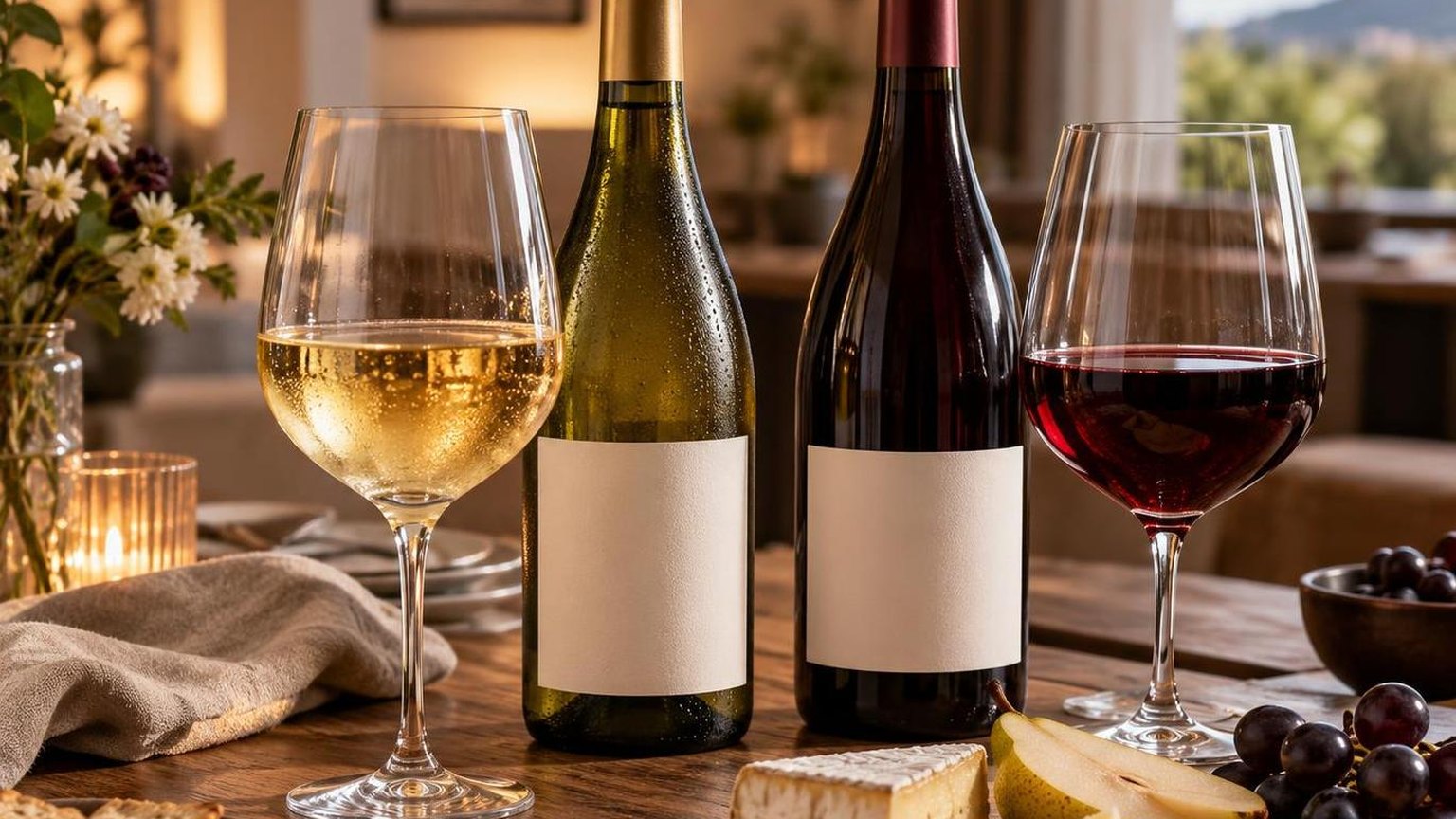
Pinot Grigio and Pinot Noir sit at opposite ends of the pairing spectrum. One thrives with delicate, lighter dishes; the other anchors richer, earthier plates. Matching the wine’s weight to the food’s intensity is the governing principle.
Pinot Grigio Pairings
Pinot Grigio’s crisp acidity (typically 5.5–7.5 g/L total acidity) and light body make it a natural partner for seafood, raw preparations, and dishes with citrus or herb-forward profiles.
- Raw shellfish: Oysters, littleneck clams, ceviche — the wine’s minerality mirrors briny flavors
- Grilled white fish: Branzino, sole, or halibut with lemon and capers
- Light salads: Caprese, shaved fennel with arugula, or goat cheese compositions
- Vegetable risotto: Asparagus or spring pea risotto without heavy cream finishes
- Fresh cheeses: Mozzarella di bufala, ricotta, or young chèvre (aged under 30 days)
Pinot Noir Pairings
Pinot Noir’s moderate tannins, red-fruit profile, and typical alcohol range of 12–14.5% ABV give it versatility across poultry, game, mushroom dishes, and medium-weight meats.
- Roast duck: Classic Burgundian pairing — the wine’s acidity cuts through rendered fat
- Wild mushroom dishes: Chanterelle tarts, truffle pasta, or porcini-crusted proteins
- Salmon and tuna: One of few reds that pairs with fatty fish, thanks to low tannin levels
- Grilled lamb chops: Herb-crusted preparations with rosemary or thyme
- Aged cheeses: Gruyère (aged 6+ months), Comté, or Brie de Meaux
Side-by-Side Pairing Comparison
| Category | Pinot Grigio | Pinot Noir |
| Protein weight | Delicate (fish, shellfish) | Medium (poultry, game, pork) |
| Ideal serving temp | 7–10 °C (45–50 °F) | 14–16 °C (57–61 °F) |
| Sauce style | Citrus, herb butter, vinaigrette | Pan jus, reduction, mushroom-based |
| Cheese match | Fresh, soft (under 60 days aged) | Semi-hard to aged (3–12 months) |
| Cuisine affinity | Japanese, Italian coastal, Thai | French, Pacific Northwest, Korean |
One reliable guideline: if the dish would benefit from a squeeze of lemon, reach for Pinot Grigio. If it would benefit from a sprinkle of black pepper, choose Pinot Noir.
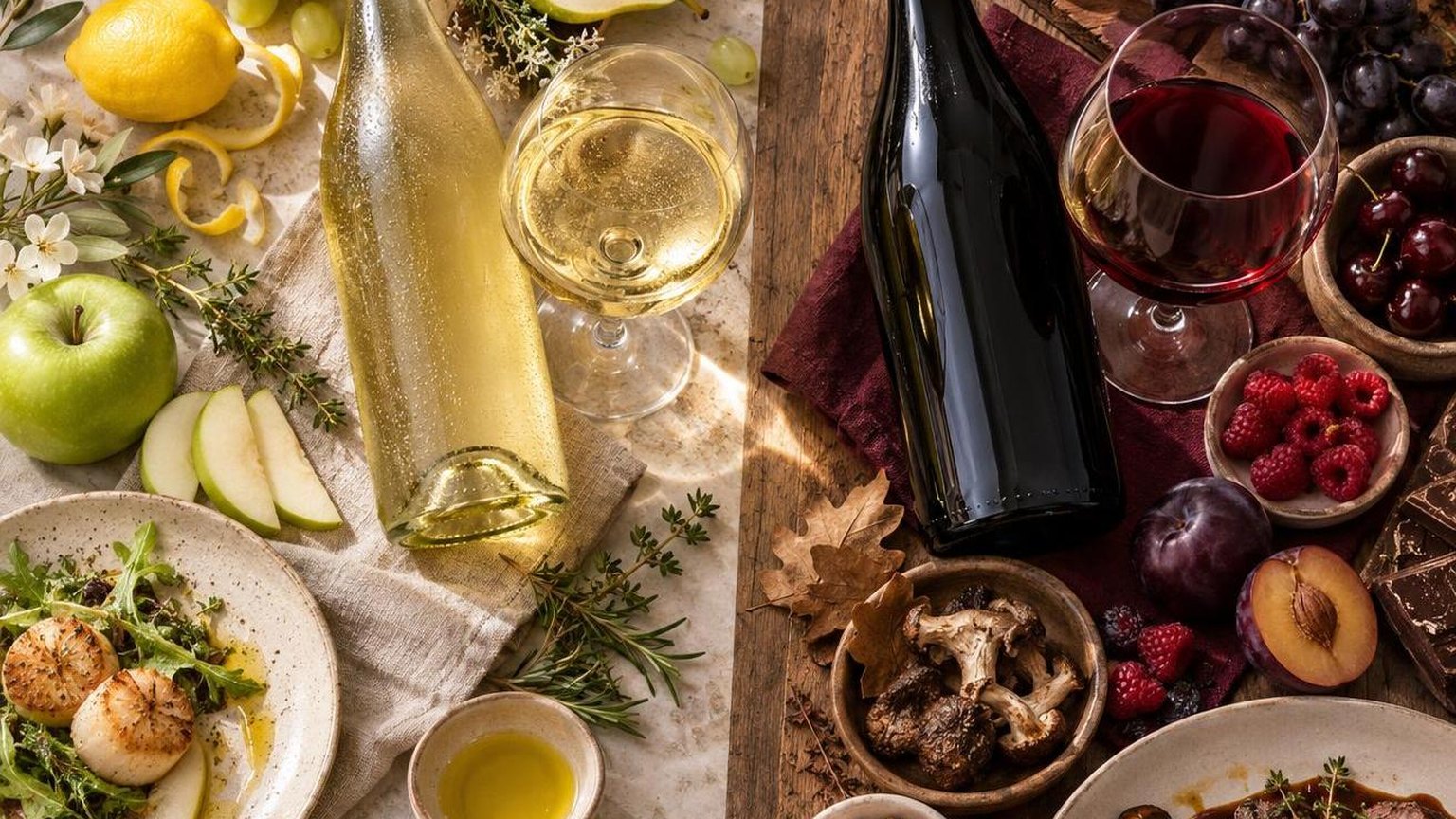
Serving Temperatures for Both Pinot Wines
Serving temperature directly affects how a wine’s aromas, acidity, and tannins present on the palate.
Pinot Grigio and Pinot Noir require fundamentally different temperature ranges because one is a white wine and the other a red, each with distinct structural components that respond differently to cold and warmth.
| Factor | Pinot Grigio | Pinot Noir |
| Ideal serving range | 7–10 °C (45–50 °F) | 14–17 °C (57–63 °F) |
| Refrigeration time (from room temp) | 2–2.5 hours | 30–45 minutes |
| Ice-bucket chill time | 20–25 minutes | 10–15 minutes |
| Too-cold threshold | Below 4 °C (39 °F) | Below 12 °C (54 °F) |
| Too-warm threshold | Above 13 °C (55 °F) | Above 19 °C (66 °F) |
Why Pinot Grigio Needs Colder Service
Cooler temperatures between 7–10 °C preserve Pinot Grigio’s crisp acidity and delicate citrus and green-apple aromatics. Serving it too warm mutes freshness and makes the wine taste flat and flabby.
Below 4 °C, however, the cold suppresses virtually all aromatic compounds. A Pinot Grigio pulled straight from a 3 °C refrigerator benefits from sitting in the glass for 3–5 minutes before the first sip.
Why Pinot Noir Demands Slightly Cool—Not Room Temperature
“Room temperature” is an outdated guideline originating from 18th-century European châteaux kept at roughly 15–16 °C. Modern room temperature averages 21–22 °C, which is too warm for Pinot Noir.
At 14–17 °C, Pinot Noir’s light-to-medium tannin structure stays silky rather than astringent. Its signature red-fruit and earthy aromatics volatilize at the right rate, reaching the nose without the alcohol burn that emerges above 19 °C.
Practical Tips for Both
- Use a wine thermometer—strip or infrared models cost under $10 and eliminate guesswork.
- For Pinot Grigio, remove from the refrigerator 5 minutes before pouring; for Pinot Noir, place in the refrigerator 30 minutes before service.
- A half-filled ice bucket (50% ice, 50% water) chills wine roughly four times faster than a refrigerator.
- Stemmed glasses help both wines stay at target temperature longer by keeping hand heat away from the bowl.
Hitting these temperature windows costs nothing yet transforms the drinking experience. Precision here reveals exactly why these two Pinot siblings, despite sharing a genetic origin, demand entirely separate handling at the table.
Questions People Ask Most
What is the main difference between Pinot Grigio and Pinot Noir?
Pinot Grigio is a white wine (technically made from a grayish-pink skinned grape) that produces light, crisp, dry wines, while Pinot Noir is a red wine grape yielding medium-bodied reds with silky tannins.
Both are genetic mutations of the same Vitis vinifera family—Pinot Grigio arose as a clonal mutation of Pinot Noir, which is why they share the word “Pinot,” meaning “pine cone” in French.
A reference to their tightly clustered cone-shaped bunches.
How do the flavor profiles of Pinot Grigio and Pinot Noir compare?
Pinot Grigio typically delivers notes of green apple, lemon, lime, honeydew, and white pear, with bracing acidity and minimal oak influence.
Pinot Noir expresses red cherry, raspberry, strawberry, earth, and mushroom, often with subtle spice and vanilla when barrel-aged in French oak for 10–16 months.
Are Pinot Grigio and Pinot Noir grown in the same regions?
They overlap in a few regions but dominate different ones.
Pinot Grigio thrives in northeastern Italy’s Trentino-Alto Adige and Friuli-Venezia Giulia (which together produce over 85% of Italy’s Pinot Grigio), while Pinot Noir reaches its highest expression in Burgundy, France.
Where Grand Cru bottles from Romanée-Conti or Musigny can exceed $1,000.
Oregon’s Willamette Valley grows both, but is far more acclaimed for its Pinot Noir.
What are the ideal serving temperatures for each wine?
Pinot Grigio should be served chilled at 7–10°C (45–50°F) to preserve its bright acidity and citrus aromatics.
Pinot Noir is best at 13–16°C (55–60°F)—slightly below room temperature—so its complex aromatic compounds volatilize properly without the alcohol becoming too prominent.
Which wine has higher alcohol content, Pinot Grigio or Pinot Noir?
They are relatively close, but Pinot Noir generally runs slightly higher at 12–14.5% ABV compared to Pinot Grigio’s typical 11.5–13% ABV.
Italian Pinot Grigio from Delle Venezie DOC frequently sits at 12–12.5%, while a Burgundy Premier Cru Pinot Noir often reaches 13–13.5%.
What foods pair best with Pinot Grigio versus Pinot Noir?
Pinot Grigio’s lean acidity and neutral profile make it an ideal match for raw oysters, ceviche, caprese salad, and light seafood pastas like linguine alle vongole.
Pinot Noir’s earthy, red-fruit character pairs with roast duck, grilled salmon, mushroom risotto.
And aged Gruyère—its moderate tannin level (roughly 25–30 on the tannin index versus 50+ for Cabernet Sauvignon) avoids overpowering delicate proteins.
How do the price ranges of Pinot Grigio and Pinot Noir typically differ?
Entry-level Pinot Grigio is generally more affordable, with reliable Italian bottles like Santa Margherita retailing around $20–$24 and everyday Delle Venezie DOC options available for $8–$12.
Quality Pinot Noir commands a premium due to its thin-skinned grape’s susceptibility to rot, lower yields (often 2–3 tons per acre for premium sites).
And labor-intensive winemaking—decent Oregon or New Zealand Pinot Noir starts at $18–$25, while village-level Burgundy rarely drops below $30–$45.
- How To Store Wine At Home? 8 Tips for Storing Wine
- How To Make Wine Cooler: Easy Recipes, DIY Coolers & Expert Tips (2026 Guide)
- How Long Does Wine Last Unopened?
- The Alcohol Content of Wine in Biblical Times
- What Does Port Taste Like? Most Correct Answer
- All Alcohol Guides
- UC Davis Department of Viticulture & Enology (2023)
- USDA FoodData Central – Wine Nutrient Comparison (2024)
- National Institutes of Health – Resveratrol Fact Sheet (2023)
- Cornell University College of Agriculture – Pinot Grape Varieties (2023)
- Wine Folly – Pinot Grigio vs Pinot Gris (2022)
- Wine Spectator – Beginner's Guide to Pinot Noir (2023)
- Decanter – Pinot Grigio Grape Variety Guide (2023)
- Oregon State University Extension – Pinot Noir in the Willamette Valley (2023)