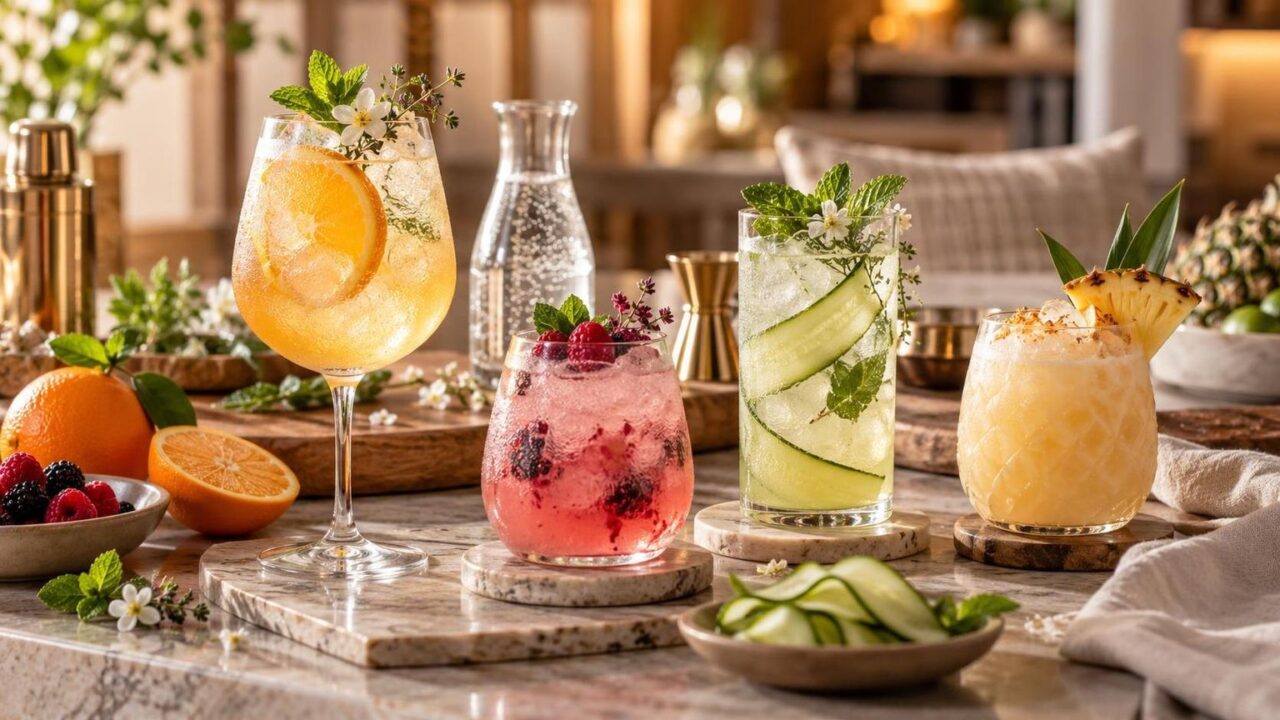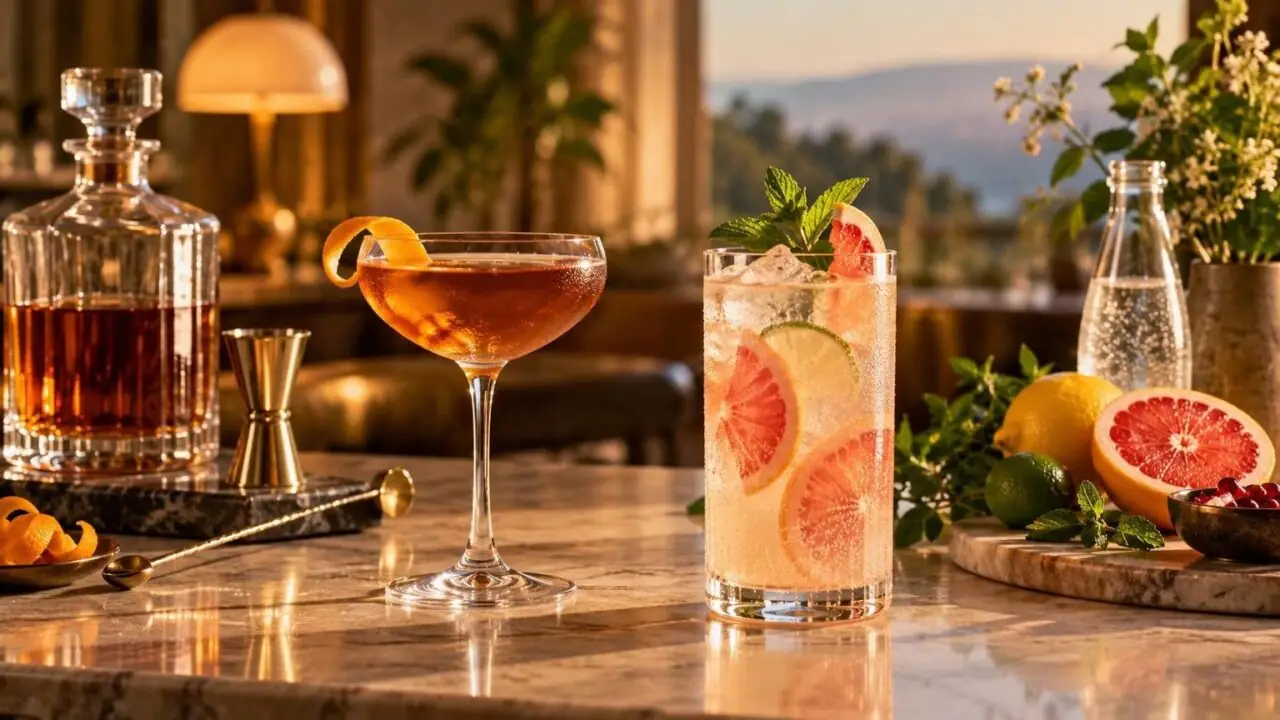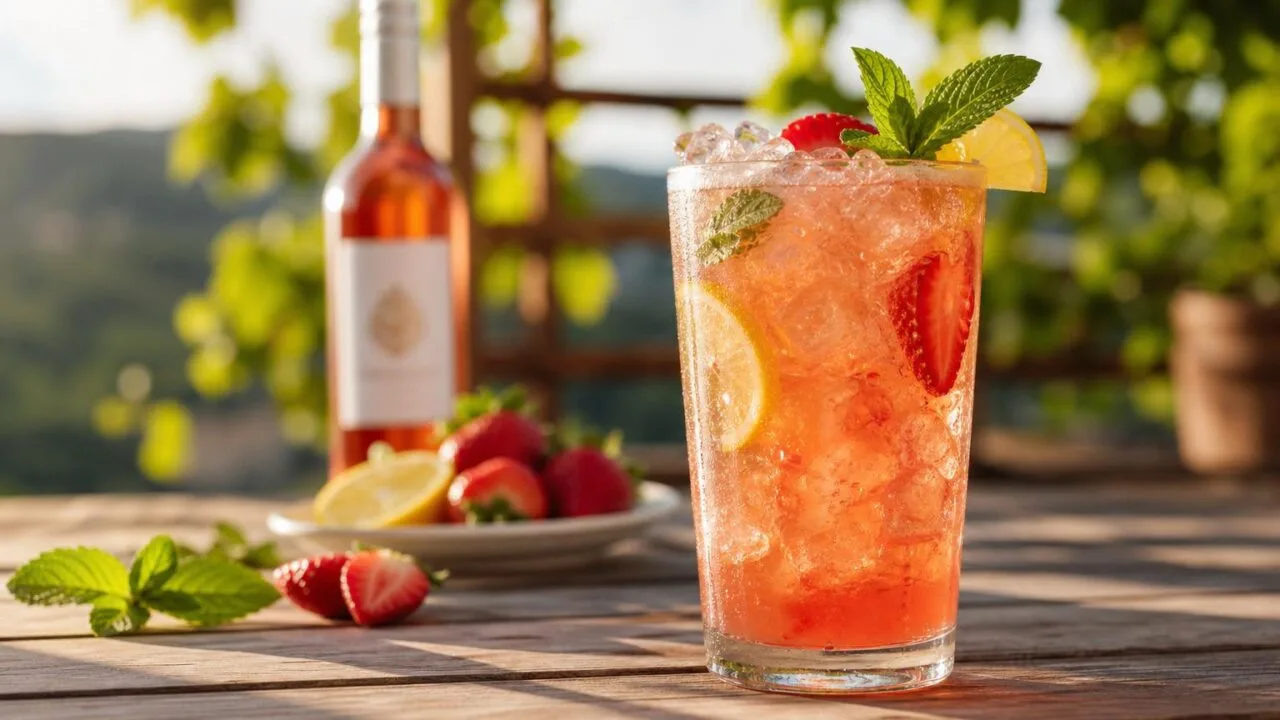
In short: To make a wine cooler drink, mix 4 parts white or rosé wine with 1 part fruit juice and 1 part club soda over ice. Finish with fresh fruit and herbs.
To make a DIY wine cooler container, line an insulated box with foil or use an ice-and-salt bath. Bottles chill from room temperature to 50°F (10°C) in roughly 8 minutes — faster than a refrigerator.
This guide covers both meanings — the drink and the cooling container — with recipes, ratios, troubleshooting, and food pairings.
Wine coolers are having a quiet comeback. The 1980s bottled versions made the category famous, but home bartenders rediscovered them as low-ABV, fruit-forward summer drinks.
According to Wine Spectator, lighter-style wine cocktails have steadily grown in U.S. on-premise menus since 2020. At the same time, “wine cooler” still means a chilling appliance or insulated container — and home cooks search for both.
This guide handles both versions: the homemade wine cooler drink with classic, hard, and sparkling variations, plus the DIY wine cooler container for chilling bottles fast at picnics and dinners.
What Is a Wine Cooler? Two Meanings, One Goal
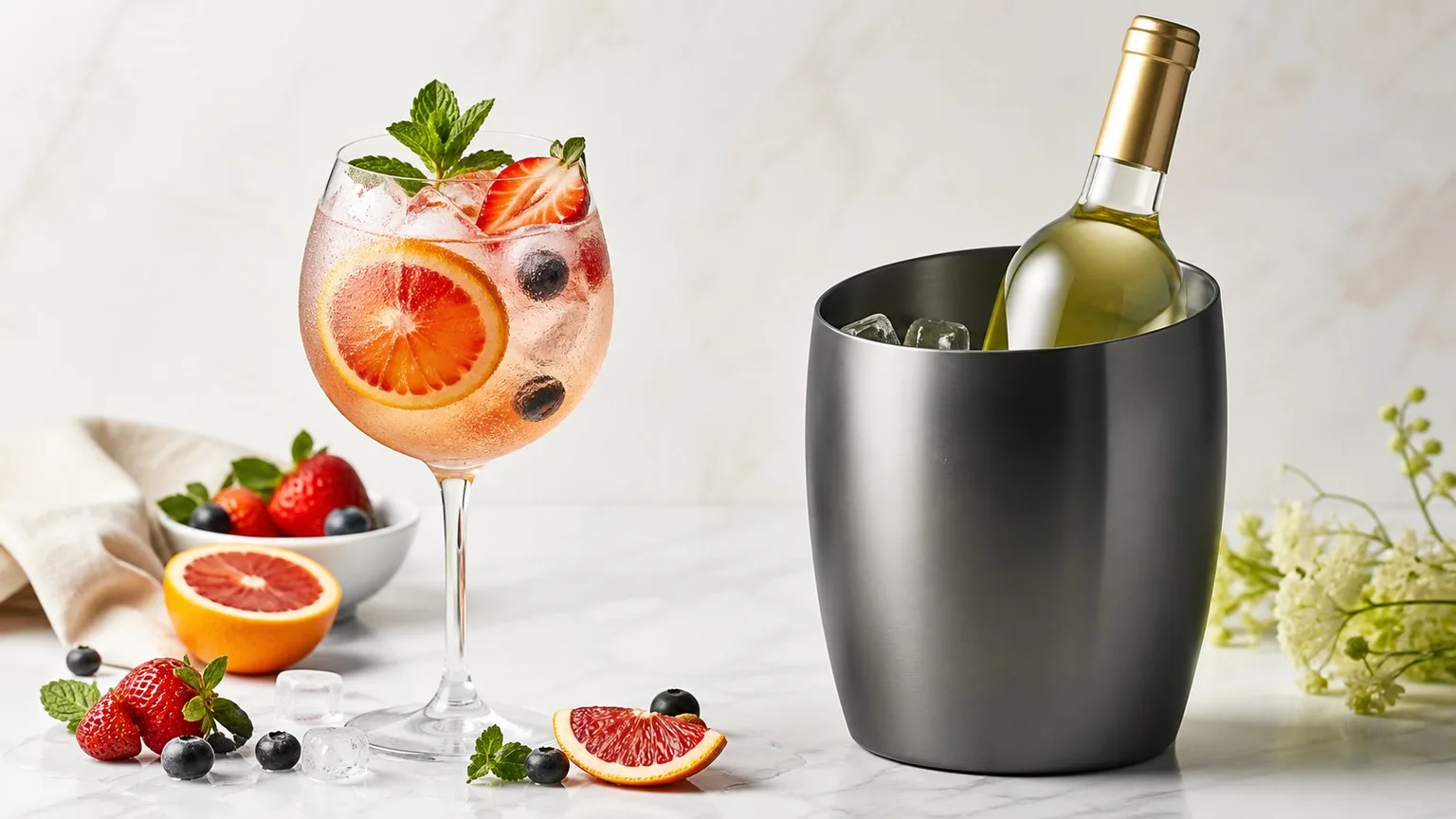
The term “wine cooler” has two valid uses, and both aim at the same thing: keeping wine cold and easy to drink in warm weather.
- Wine Cooler (Drink)
- A chilled beverage built from wine, fruit juice, carbonation, sweetener, and optional spirits. Typically 4–7% ABV, fruity, and served over ice. Light, refreshing, and crowd-friendly.
- Wine Cooler (Container or Appliance)
- An insulated bucket, box, or compact electric unit that holds bottles at serving temperature. For long-term storage, a dedicated unit is best — see our guide on how to use a wine cooler.
Both versions trace back to the same problem: warm wine tastes flat. Decanter notes that white and rosé wines lose their crisp acidity above 55°F (13°C), which is why every wine-forward cocktail is built ice-cold.
Why Make a Homemade Wine Cooler?
- Fresher fruit and lower sugar than bottled brands
- Tunable ABV — from light spritzers to hard versions
- Cheaper per glass than bar cocktails
- Customizable for dietary needs and party size
- Doubles as a gateway recipe for sangria, spritzers, and punches
Essential Ingredients and Tools
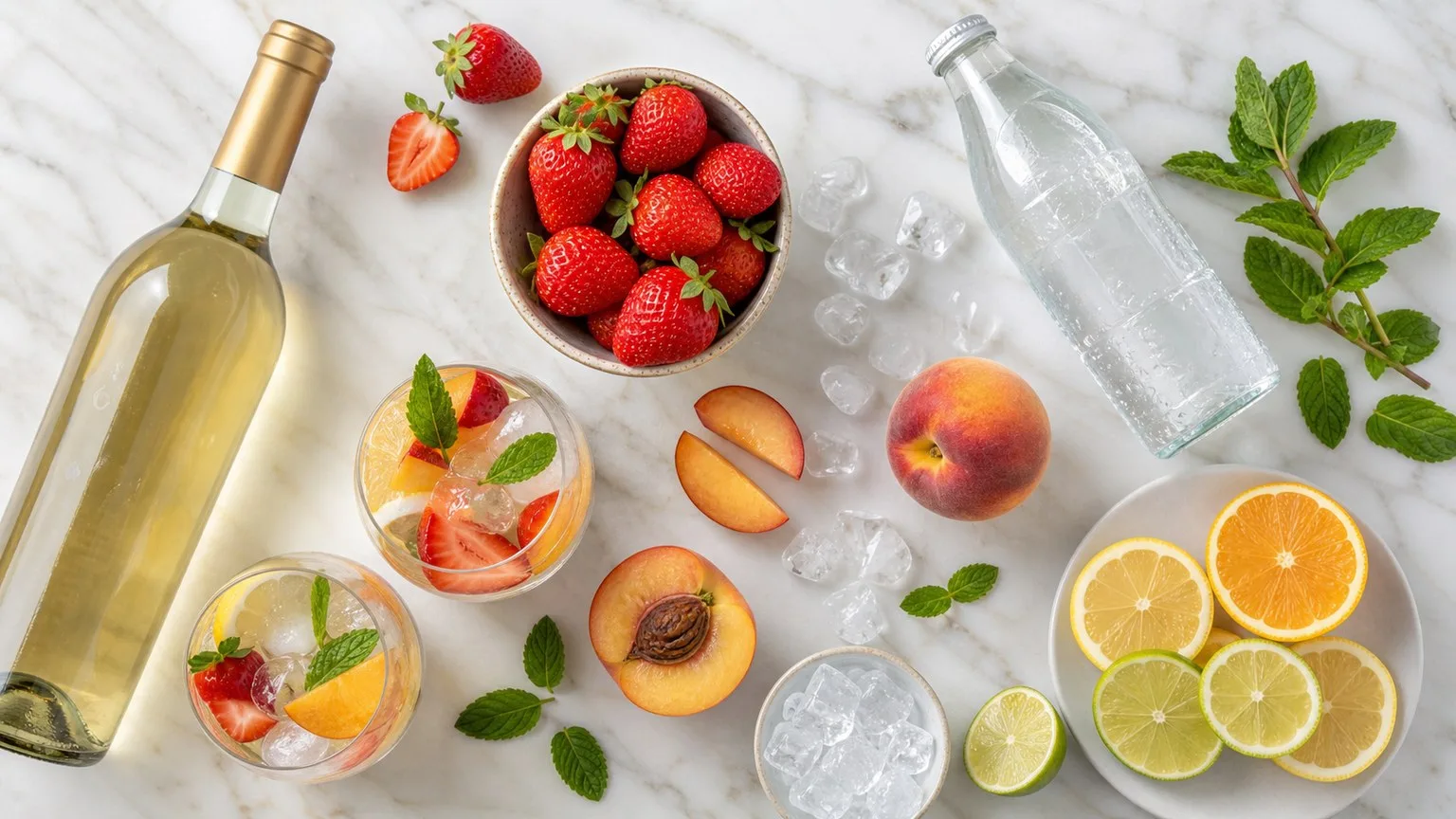
Most wine coolers use five categories of ingredients. The ratio matters more than any single brand.
Wine Base — Choose by Style
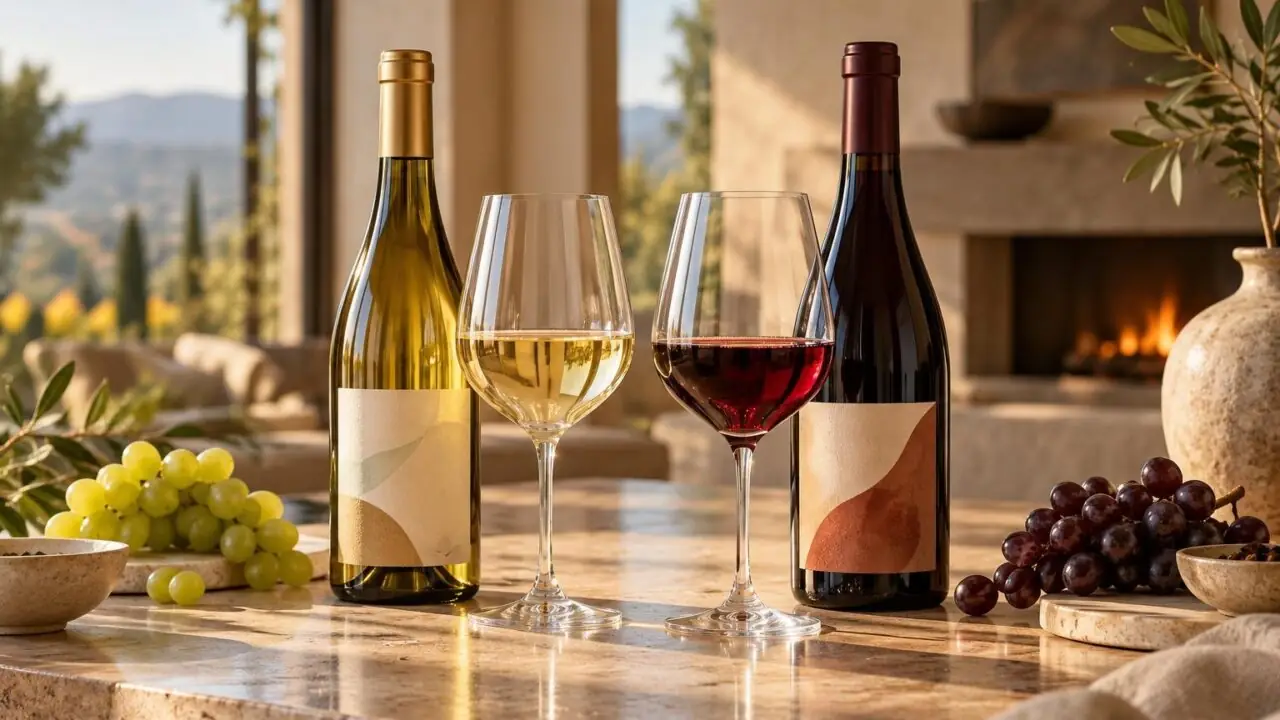
- White wine — Pinot Grigio, Sauvignon Blanc, dry Riesling. Crisp and citrus-friendly.
- Rosé — Provence-style or off-dry. Best all-purpose base. See how long rosé wine lasts in the fridge if you’re prepping ahead.
- Sparkling — Cava, Prosecco, or dry sparkling rosé for spritzers.
- Light red — Beaujolais or chilled Pinot Noir for berry-forward versions.
- Sweet wine — Moscato or off-dry Riesling if your fruit is tart.
Juice, Carbonation, and Sweetener
- Juice: orange, pineapple, cranberry, white grape, peach, pomegranate.
- Carbonation: club soda, ginger ale, lemon-lime soda, tonic.
- Sweetener: simple syrup, honey, agave, or muddled fruit.
- Fresh fruit and herbs: strawberries, peaches, citrus wheels, mint, basil, rosemary.
Tools You Need
Minimal kit: a pitcher, a long stirrer, a paring knife, a cutting board, and ice. Optional but helpful: a jigger for measured ratios, a citrus juicer, and a beverage dispenser for parties.
Homemade batches also dodge the 6–8 g of added sugar per serving found in mainstream brands like Seagram’s Escapes, letting you substitute 1–2 oz of fresh-squeezed citrus or a half teaspoon of honey instead.
Cost matters too: a 750 mL bottle of decent table wine ($8–$12) yields four 6-oz coolers at roughly $2–$3 each, versus $1.50–$2.00 per single-serve bottle that uses lower-quality base wine.
Controlling dilution is another advantage. Pre-made coolers ship at a fixed carbonation level (typically 2.5–3.0 volumes CO₂), which goes flat within minutes of opening.
When you build your own, adding soda water at the glass stage keeps fizz intact through the last sip. You can also swap still wine for pétillant-naturel (pét-nat) to get softer, built-in effervescence without any soda at all.
For larger gatherings, scaling a single recipe to a 3-quart pitcher serves 8–10 guests and takes under five minutes of active prep — a practical edge over opening and pouring a dozen individual bottles.
The Basic Wine Cooler Ratio (Memorize This)
Most homemade wine coolers follow one master ratio. Adjust to taste.
| Component | Parts | Notes |
|---|---|---|
| Wine | 4 | Chilled, dry preferred |
| Fruit juice | 1 | Fresh or quality bottled |
| Soda or sparkling water | 1 | Add last to keep fizz |
| Sweetener | To taste | Skip if juice is sweet |
| Ice and garnish | Generous | Fill glass before pour |
For a single tall glass: 4 oz wine + 1 oz juice + 1 oz soda + ice. Scale up for pitchers without changing the ratio.
How To Make a Wine Cooler Drink: 4 Recipes
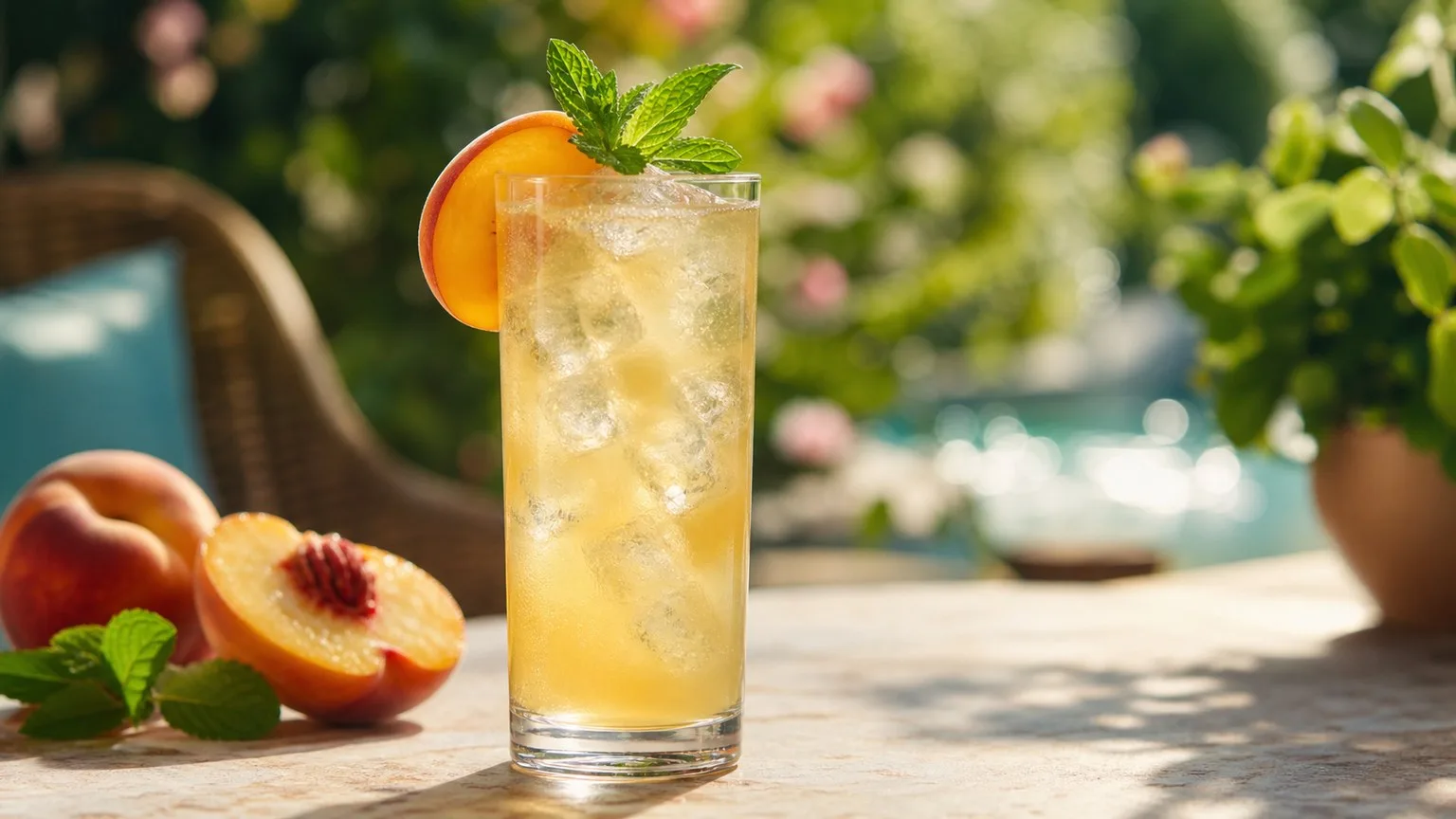
1. Classic Wine Cooler (Light, ~5% ABV)
Ingredients: 4 oz dry white wine, 1 oz orange juice, 1 oz lemon-lime soda, 1 tsp simple syrup, ice, lemon wheel, mint sprig.
- Chill everything first. Wine, juice, and soda all from the fridge.
- Fill a tall glass with ice. Cold glass slows dilution.
- Pour wine, then juice, then syrup. Stir gently.
- Top with soda last. Don’t stir again — protect the carbonation.
- Garnish with a lemon wheel and mint. Serve immediately.
2. Hard Wine Cooler (~8–12% ABV)
Ingredients: 4 oz rosé, 1 oz vodka or white rum, 1 oz cranberry juice, 1 oz club soda, ice, lime wedge.
Build over ice in the same order: spirit, wine, juice, then top with soda. The added spirit pushes ABV closer to a standard cocktail.
3. Sparkling Wine Cooler (Spritzer Style)
Ingredients: 4 oz Prosecco or Cava, 1 oz peach nectar, 0.5 oz elderflower syrup, ice, fresh peach slice.
Build directly in a wine glass. Sparkling base means you skip the soda — gentle stir, garnish, serve.
4. Fruit-Forward Slush Wine Cooler
Ingredients: 1.5 cups frozen mixed berries, 1.5 cups chilled rosé, 0.5 cup white grape juice, 1 tbsp simple syrup, optional 1 oz vodka.
Blend until smooth, scoop into chilled glasses, top with mint. Best made just before serving — it separates after 10 minutes.
Scaling to a full pitcher (serves 6) means 24 oz wine, 6 oz juice, and 6 oz soda—roughly one 750 ml bottle of wine per pitcher with room for ice displacement.
Pour the soda in last, directly down the side of the pitcher, not the center, to preserve carbonation for 15–20 minutes longer.
If you’re batching for a party of 20, mix wine and juice in advance and refrigerate up to 4 hours, but add soda and ice only at serve time; pre-mixed carbonation goes flat within 30 minutes in an open vessel.
The 4:1:1 ratio assumes a dry wine at 11–13% ABV, which lands the finished drink near 5–6% ABV. Swap in a sweeter Moscato (5–7% ABV) and the drink drops below 4% ABV—adjust by cutting the juice portion in half to avoid a cloying result.
Off-dry Riesling at 9–10% ABV sits between the two extremes and needs no sweetener at all.
Temperature matters more than most recipes acknowledge. Wine, juice, and glassware should all be at or below 40°F (4°C) before building. A warm pour over ice creates a 25–30% dilution rate in the first two minutes, thinning flavor noticeably.
Pre-chilling cuts that dilution rate roughly in half, keeping the ratio intact through the drinking window.
How To Make a DIY Wine Cooler Container
The container version is for chilling and holding bottles cold during a meal or party. Three approaches work, ranked from fastest to slowest.
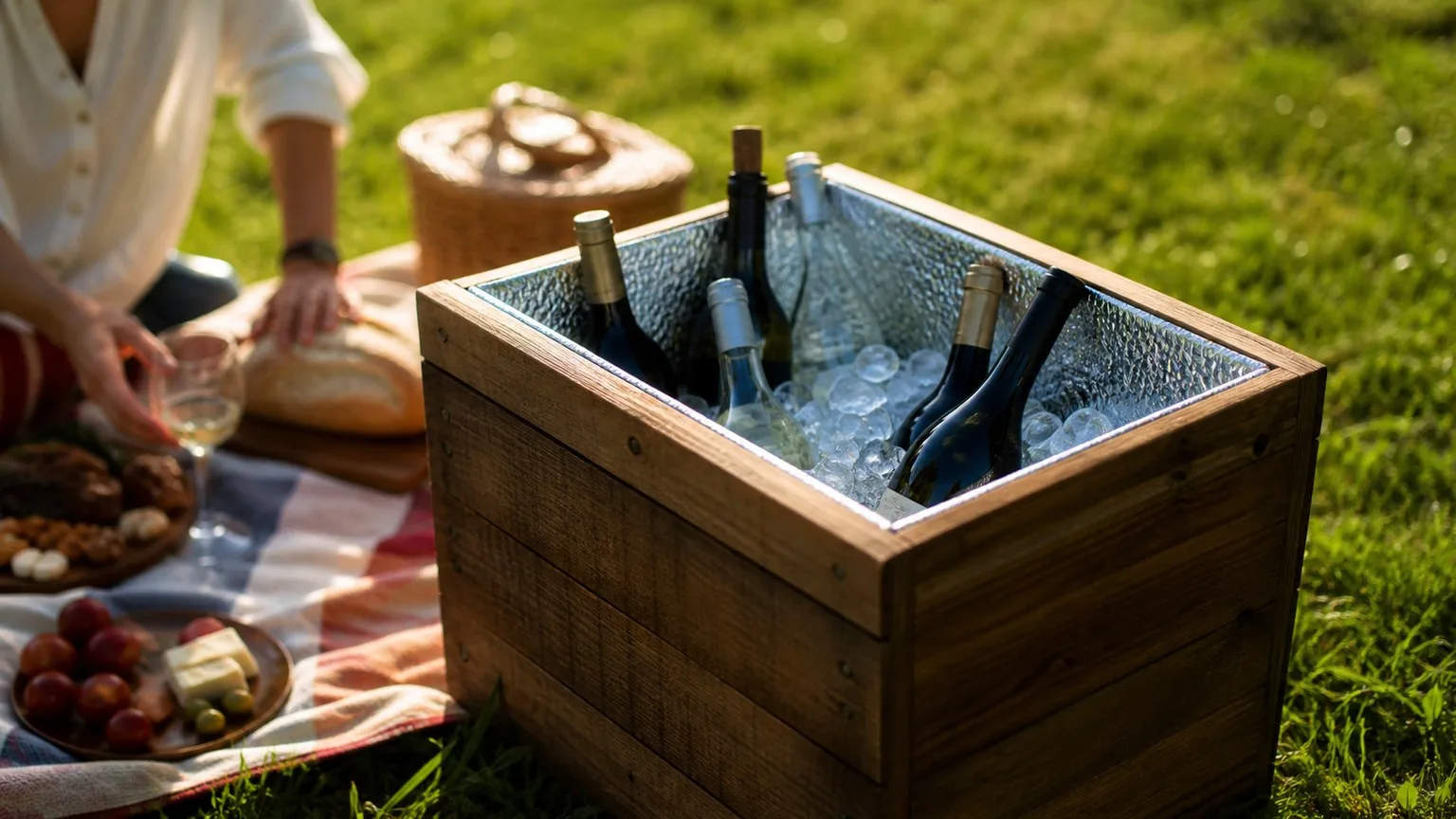
Method 1: Ice and Salt Bath (Fastest)
- Fill a bucket with ice and cold water — 50/50 by volume.
- Add 2 tablespoons of table salt per liter of water.
- Submerge the bottle, leaving the neck exposed.
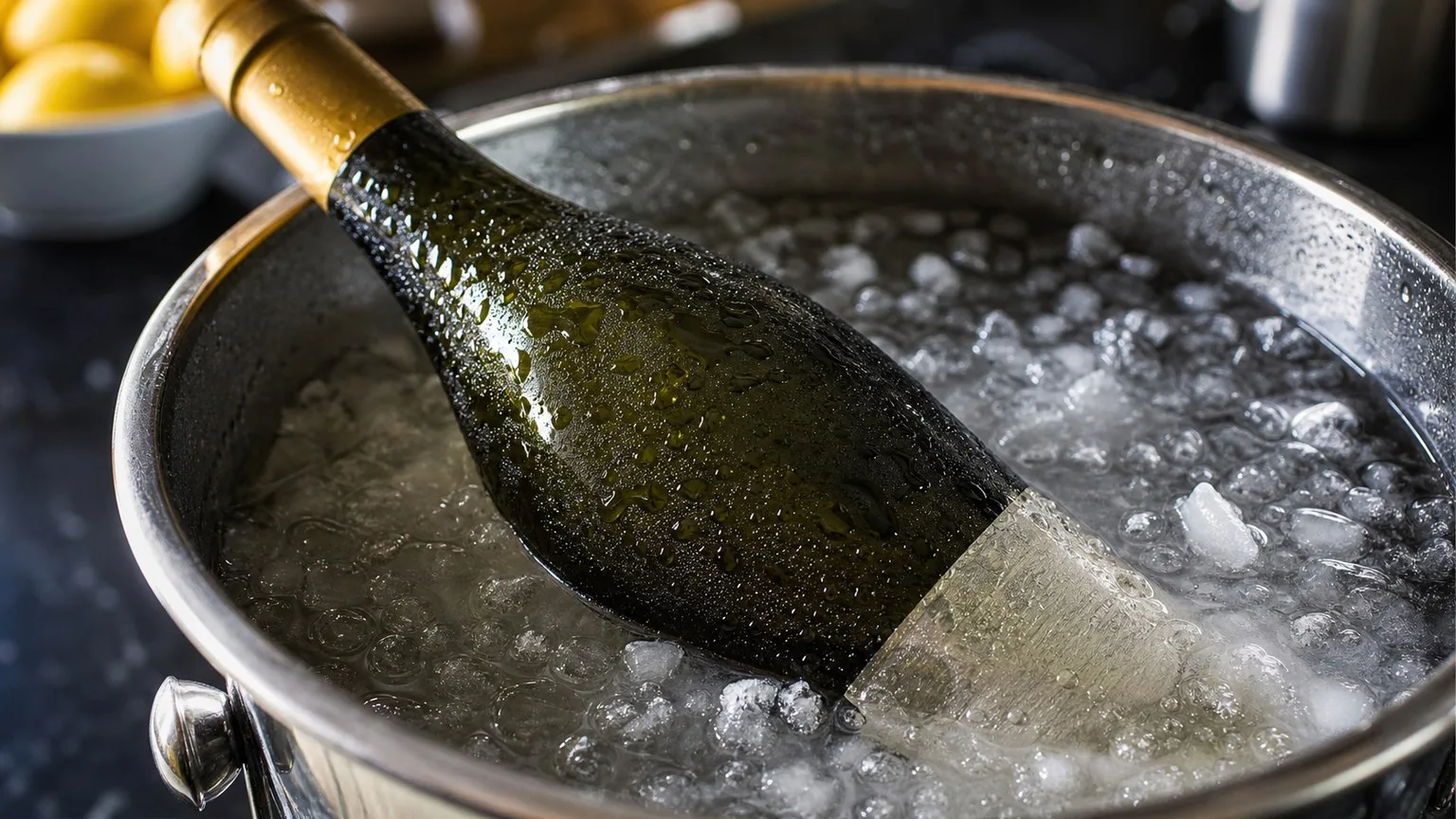
- Wait 6–10 minutes for white or rosé, 4–6 minutes for sparkling.
Salt lowers the freezing point of the water, so the bath drops below 32°F (0°C) without freezing solid. Cornell food scientists at the Cornell College of Agriculture and Life Sciences have documented similar rapid-chill physics for beverages.
Method 2: Insulated Foam Box (Best for Parties)
- Line a foam cooler with reflective foil to slow heat exchange.
- Fill the bottom with crushed ice.
- Stand bottles upright; pack ice around them up to the neck.
- Close the lid between pours. Drain melted water hourly.
This holds 6–12 bottles at serving temperature for 4–6 hours. For long-term storage instead of single-event chilling, see where to put a freestanding wine cooler.
Method 3: Frozen Bottle Wrap (No Ice On Hand)
Wrap the bottle in a cold, wet towel and place it in the freezer. White or rosé reaches 50°F (10°C) in roughly 15 minutes. Set a timer — frozen wine ruins both texture and aroma.
Line a foam cooler with reflective emergency blanket (Mylar side facing inward) to cut radiant heat transfer by up to 97%. Layer 3–4 inches of crushed ice on the bottom, nestle bottles horizontally, then cover with another ice layer.
A standard 28-quart foam box holds 6 standard 750 mL bottles comfortably. Expect ice retention of 8–12 hours outdoors in 85°F ambient shade.
Method 3: Terracotta Pot Cooler (No Ice Needed). Nest a small unglazed terracotta pot inside a larger one, pack wet sand between them, and drape a damp cloth over the top.
Evaporative cooling drops the interior 10–15°F below ambient temperature — enough to hold a pre-chilled white at 50–55°F for 2–3 hours in dry climates below 40% humidity. Above 60% humidity, performance drops sharply; switch to ice methods instead.
Line a foam cooler with reflective aluminum foil, shiny side inward, to bounce radiant heat away from the bottles. Layer 3–4 inches of crushed ice on the bottom, nestle bottles horizontally, then pack ice around and over them.
A standard 28-quart foam box holds 6 standard 750 mL bottles with adequate ice coverage. Expect interior temperatures to stay between 38–45°F (3–7°C) for 4–5 hours outdoors in 85°F ambient heat, longer in shade.
Drain meltwater every 90 minutes and top off with fresh ice to prevent bottles sitting in a lukewarm bath.
Method 3: Wet Towel Wrap (No Ice Available). Soak a cotton kitchen towel in cold water, wring it until damp but not dripping, and wrap it tightly around the bottle. Place it in front of a fan or in a breezy spot.
Evaporative cooling pulls the bottle temperature down roughly 8–12°F within 20 minutes. This method works best in dry climates where humidity stays below 40%; in humid conditions above 70%, evaporation slows dramatically and results are marginal.
Re-wet the towel every 15 minutes for continued cooling.
Serving Temperature Cheat Sheet
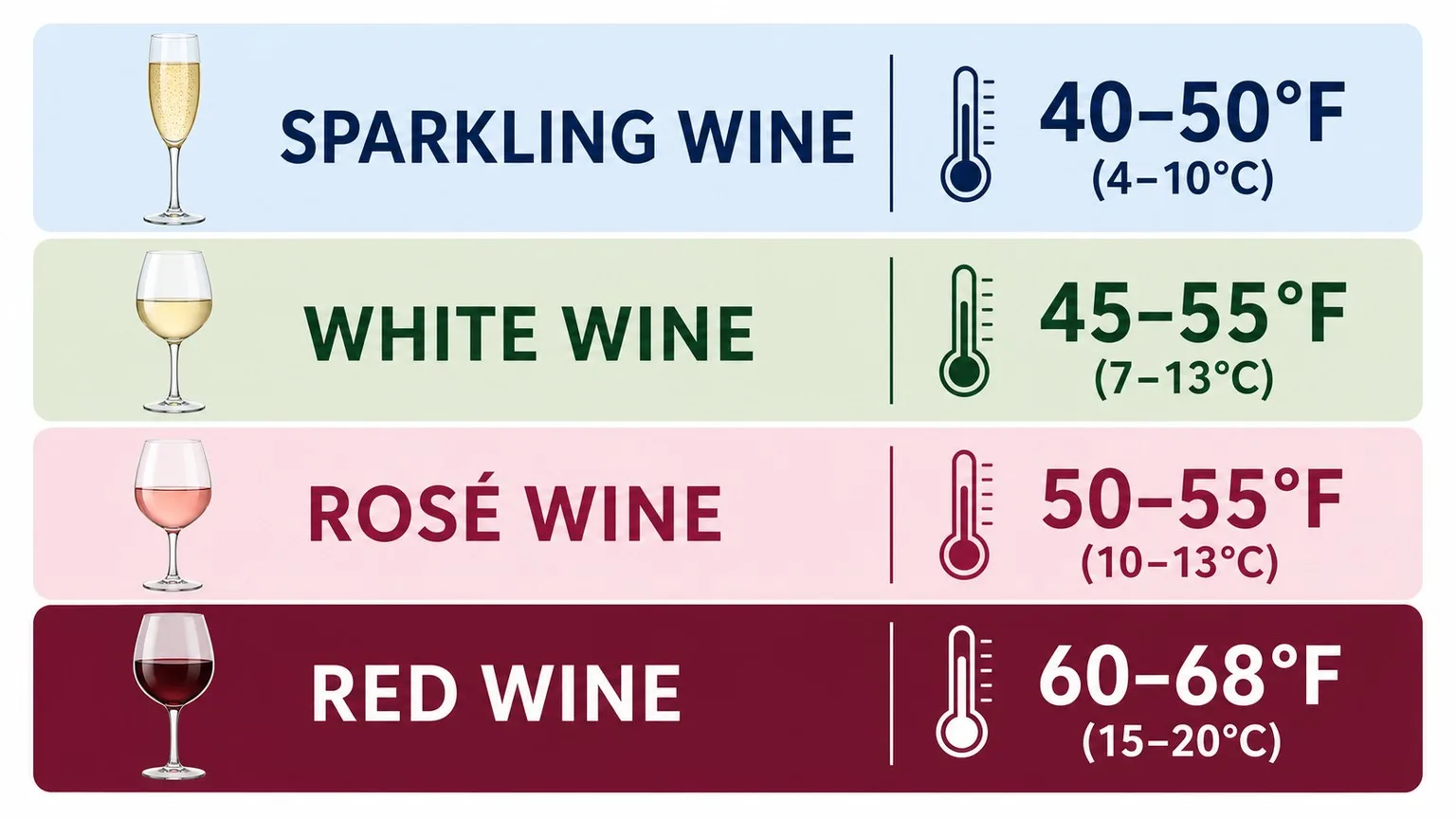
Wine Folly publishes one of the most-cited serving temperature ranges. Use it to set your target before chilling.
| Wine Style | Serving Temperature | Time From Room Temp (Ice Bath) |
|---|---|---|
| Sparkling | 40–45°F (4–7°C) | 4–6 minutes |
| Light white / Rosé | 45–50°F (7–10°C) | 6–8 minutes |
| Full white (Chardonnay) | 50–55°F (10–13°C) | 5–7 minutes |
| Light red (Pinot Noir) | 55–60°F (13–16°C) | 3–5 minutes |
Flavor Variations and Customization
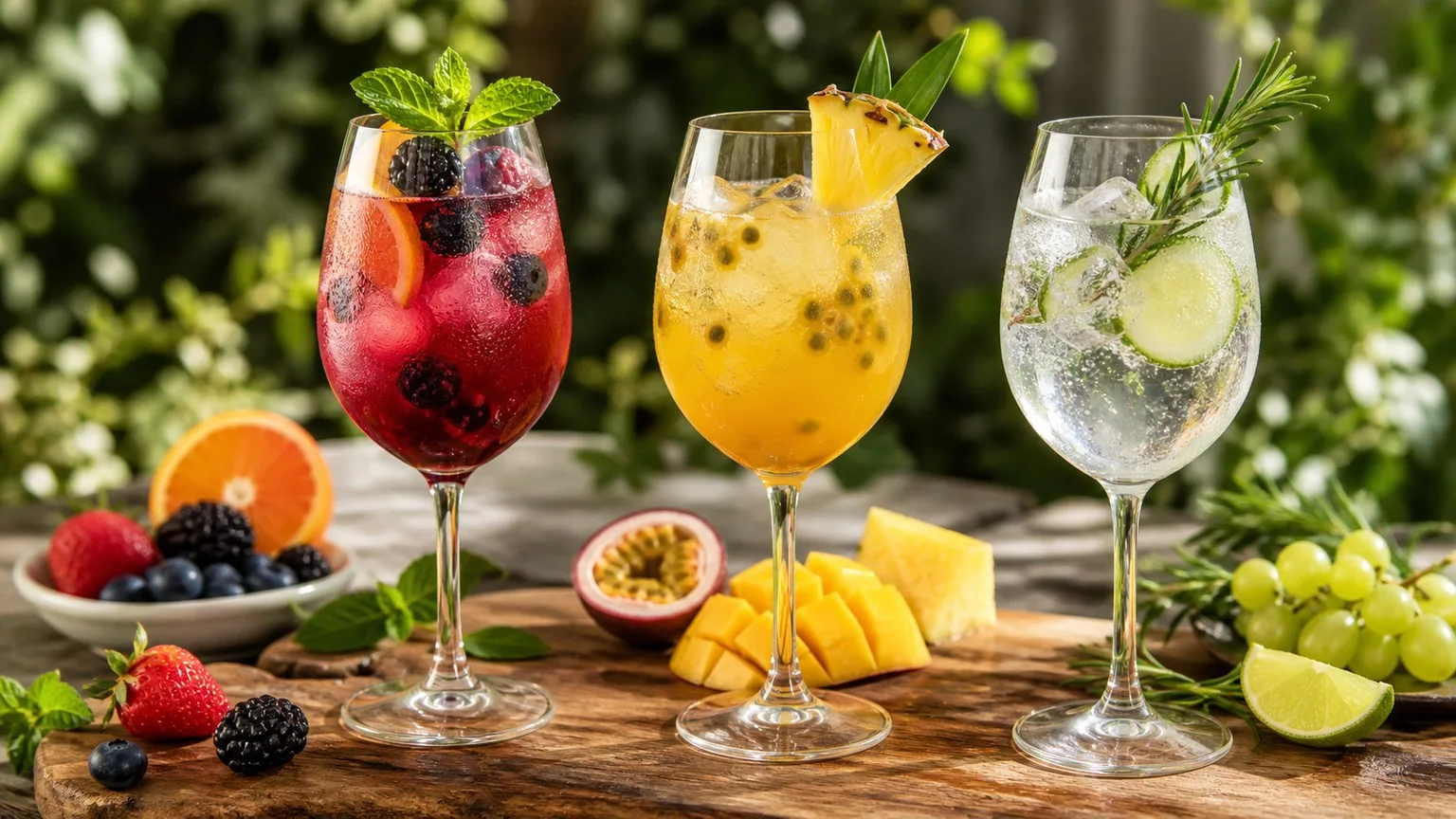
Build by Flavor Family
- Citrus: orange juice, grapefruit, lemon-lime soda, lime wheel.
- Berry: cranberry, raspberry juice, fresh strawberries, mint.
- Tropical: pineapple, mango, ginger ale, basil.
- Herbal: peach nectar, rosemary, thyme, elderflower syrup.
- Spicy: ginger beer, sliced jalapeño, cucumber.
Non-Alcoholic Wine Cooler
Swap the wine for a quality dealcoholized white or rosé. Keep the rest of the recipe identical. The acidity from juice and the tannin from herbal garnish replace the structure usually provided by alcohol.
Batch Pitcher (Serves 8–10)
Multiply the master ratio: one bottle (750 ml) of wine, 6 oz juice, 6 oz soda, 1 cup mixed sliced fruit, and ice. Add the soda only at the moment of serving so the pitcher stays fizzy.
For larger gatherings, see our planning guide on how many bottles of wine for 50 guests.
Food Pairings and Serving Tips
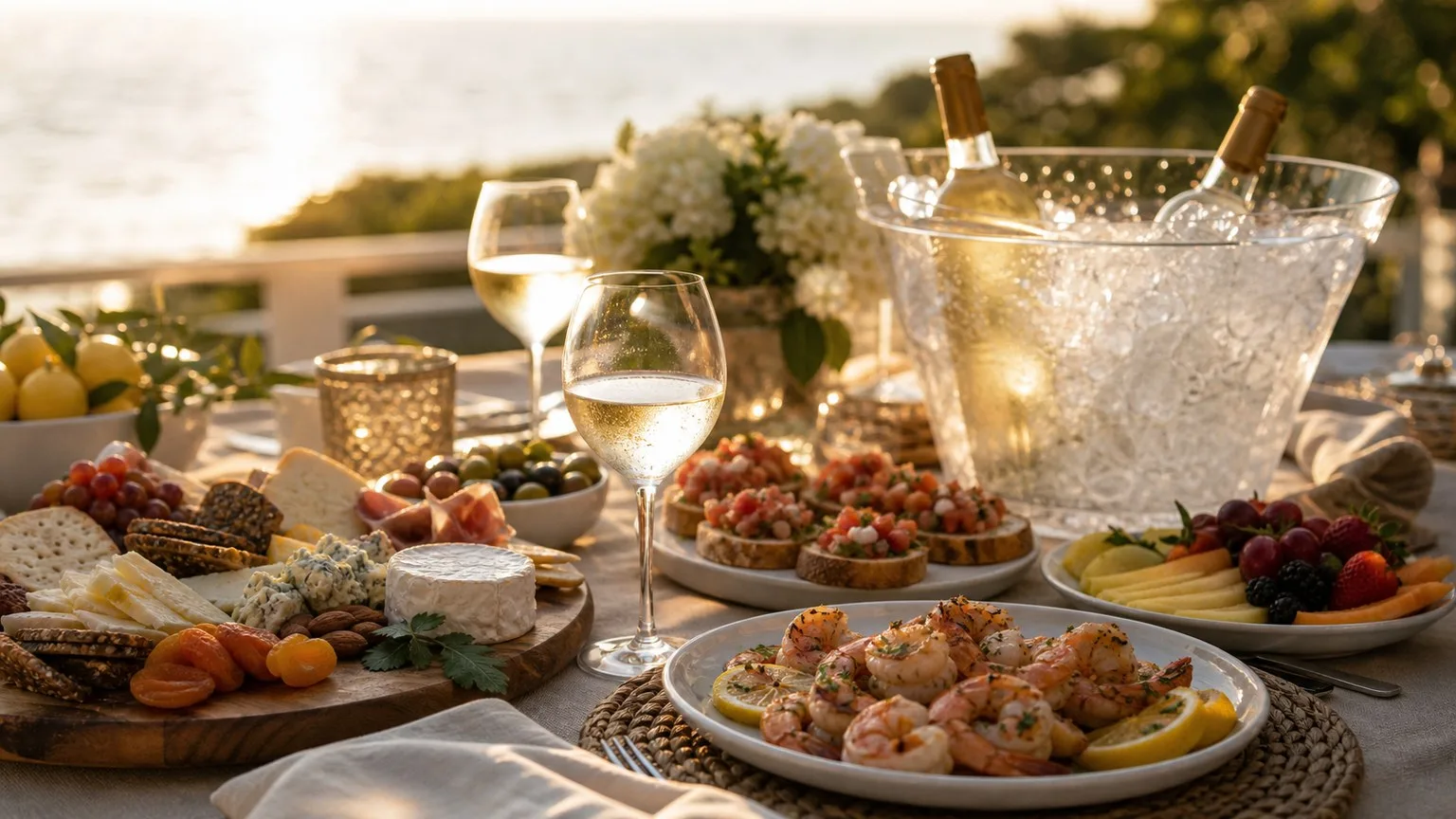
- Citrus coolers with grilled chicken, fish tacos, or ceviche.
- Berry coolers with charcuterie boards, brie, and goat cheese.
- Tropical coolers with spicy Thai or Vietnamese dishes.
- Sparkling coolers with brunch — eggs benedict, smoked salmon, fresh fruit.
- Slush versions as a stand-alone dessert after a heavy meal.
Want a non-cooler alternative for the same gathering? A homemade option like our homemade wine from grapes guide gives you the base wine to build with.
Storage and Troubleshooting
How Long Does a Homemade Wine Cooler Last?
Refrigerated in a sealed pitcher, a finished wine cooler keeps for up to 3 days. Carbonation will fade after 24 hours, so top up with fresh soda before serving leftovers.
Pre-mixed wine and juice (without soda) keeps longer — up to 5 days sealed and chilled.
Common Problems and Fixes
- Too sweet: add a squeeze of lemon or a splash of dry sparkling water.
- Too tart: stir in 1 teaspoon of simple syrup at a time.
- Flat: the soda was added too early — top up with a fresh splash.
- Watery: the ice melted before serving — pour over fresh ice.
- Off-tasting wine: use a fresher bottle. Cooked or oxidized wine ruins the drink.
For an honest read on how many drinks add up, see how many wine coolers to get drunk before planning a party.
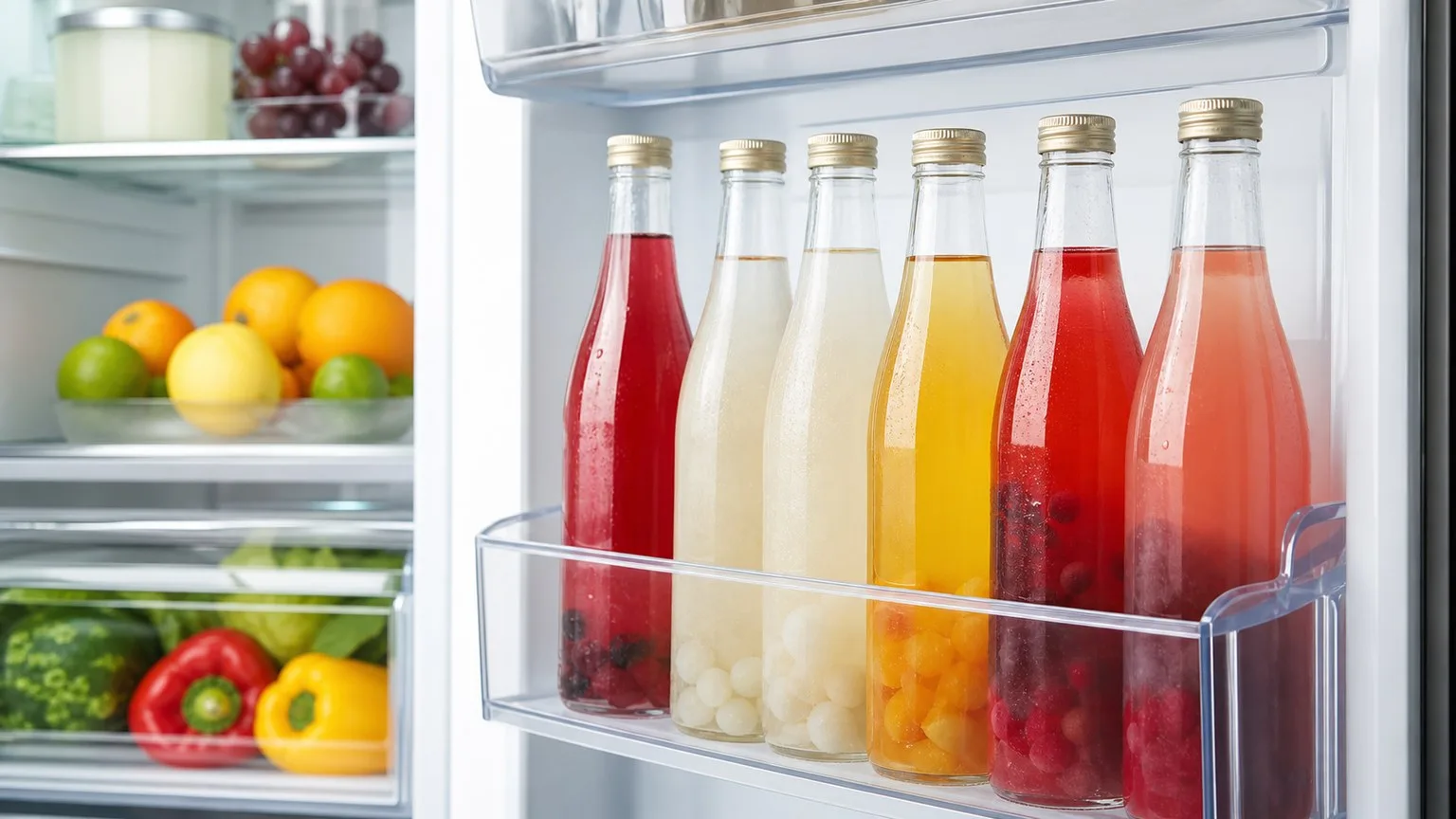
Fruit garnishes left in the pitcher longer than 8–10 hours begin to break down, releasing bitter compounds from citrus pith and turning berries mushy. Remove all cut fruit before storing overnight.
If the wine cooler develops a vinegary edge after 48 hours, the wine’s residual sugar has begun fermenting with ambient yeast — discard the batch rather than trying to salvage it, as acetic acid formation is irreversible at that stage.
Altitude affects carbonation retention: above 5,000 feet, dissolved CO₂ escapes roughly 30 % faster due to lower atmospheric pressure.
At elevation, add sparkling water no more than 60 seconds before serving and use narrower glasses to reduce surface area and slow gas loss.
Glass pitchers outperform plastic for storage because polycarbonate and PET allow micro-permeation of oxygen at a rate of 0.05–0.1 cc per container per day, enough to dull fresh fruit flavors within 36 hours.
Discard the batch once it passes 72 hours refrigerated; bacterial growth accelerates above that window, especially if dairy-based mixers like cream liqueurs were used.
Glass pitchers outperform plastic—BPA-free polycarbonate absorbs fruit acids and can impart a metallic off-note after two storage cycles.
If reusing leftover base the next day, re-chill it to 35–38 °F before adding fresh carbonation; warm liquid loses CO₂ 40% faster than cold.
Keep the refrigerator at 40°F (4°C) or colder, and store the pitcher on a rear shelf, not in the warmer door. Discard a batch left at room temperature for more than 2 hours, or 1 hour above 90°F (32°C).
Remove citrus wheels after 8–12 hours; prolonged peel contact can contribute harsh bitterness. Add berries and delicate herbs only at serving because bruised fruit softens and basil or mint darkens.
If the drink becomes cloudy or develops fizz without added carbonation, discard it—those changes can signal fermentation or contamination.
When freezing, leave 1 inch of headspace in a freezer-safe plastic container; never freeze a glass pitcher, which may crack as liquid expands. Thaw overnight in the refrigerator, then stir.
Label with the preparation date and use within 1 month for flavor.
Questions People Ask Most
What is the basic wine cooler ratio?
The standard ratio is 4 parts wine, 1 part fruit juice, and 1 part soda or sparkling water, sweetened to taste and served over ice. Scale up for pitchers without changing the ratio.
What is the best wine for a homemade wine cooler?
Dry whites like Pinot Grigio or Sauvignon Blanc and dry rosés are the most flexible bases. Sparkling wine works for spritzer-style coolers. Light reds like Beaujolais work for berry-forward versions. Avoid heavy oaked or tannic reds.
How fast can I chill wine in an ice and salt bath?
White or rosé chills from room temperature to 50°F (10°C) in 6–8 minutes in a 50/50 ice-water bath with 2 tablespoons of salt per liter. Sparkling wine chills faster, around 4–6 minutes.
Do wine coolers go bad?
Yes. Mixed wine coolers contain juice and lose carbonation within 24 hours. Refrigerate sealed for up to 3 days and discard if the smell or taste is off. Pre-mixed wine and juice without soda keep up to 5 days.
What is the difference between sangria and a wine cooler?
Sangria is wine soaked with chopped fruit and sometimes brandy, served with the fruit included and no soda. A wine cooler is lighter and bubbly, built drink-by-drink with juice and soda over ice. Sangria takes hours to chill; a wine cooler takes minutes.
Can I make a wine cooler with sparkling wine?
Yes. Sparkling wine coolers skip the added soda — the wine itself supplies the bubbles. Stir gently, garnish, and serve immediately to protect the carbonation.
Final Word: Make It Yours
Whether you build the drink or build the container, “wine cooler” is really one idea: keep wine cold, light, and easy to share.
Memorize the 4-1-1 ratio, learn the ice-and-salt bath, and pick your favorite fruit family. After that, every variation is just a swap of base wine and garnish.
At Flight Wine Bar, we mix and chill these every summer for staff testing and event prep. The same recipes scale from a single tall glass to a 10-person picnic — only the volume changes.