
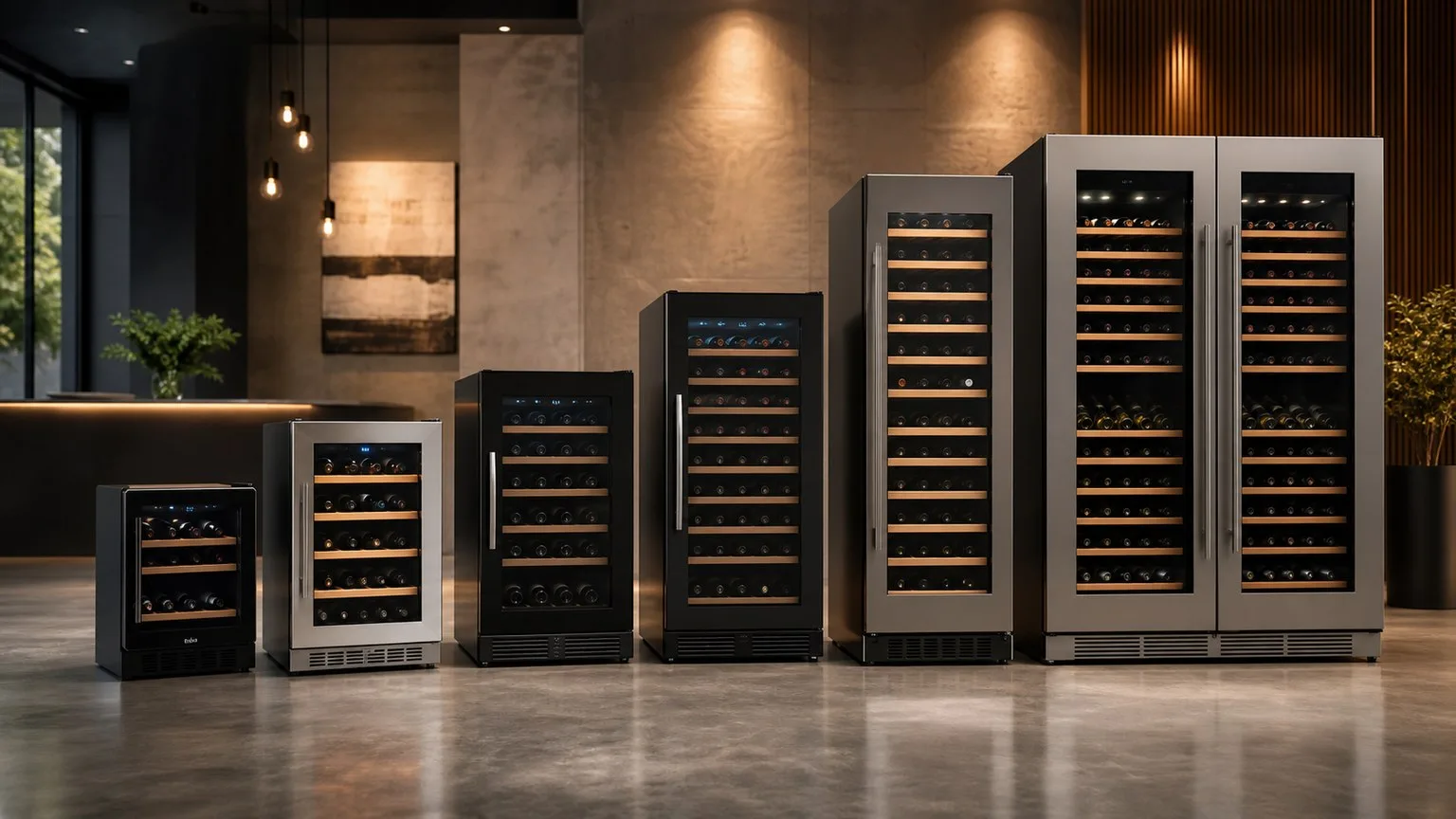
Summary: Wine coolers cost between $90 and $15,000+ in 2026, depending on size, cooling technology, and features.
Most home buyers spend $250–$1,000: small thermoelectric units run $100–$350 (6–20 bottles), mid-size compressor models $350–$900 (24–48 bottles), and large built-ins $900–$2,800 (50–150 bottles).
Smart and luxury cabinets reach $2,500–$10,000+.
If you love wine—whether casually or seriously—you have probably wondered: how much is wine coolers, and how much do they cost based on size, technology, and features? It is a fair question because the category is huge.
Prices in 2026 span a wide range, from a $100 countertop chiller to a $10,000 built-in cellar cabinet, with most home buyers landing somewhere in the middle.
This guide walks through every price tier so you can match a wine cooler to your space, your collection, and your budget. We’ll cover small, medium, large, built-in, dual-zone, smart, luxury, and commercial models, plus operating costs and brand pricing.
What Determines Wine Cooler Prices?
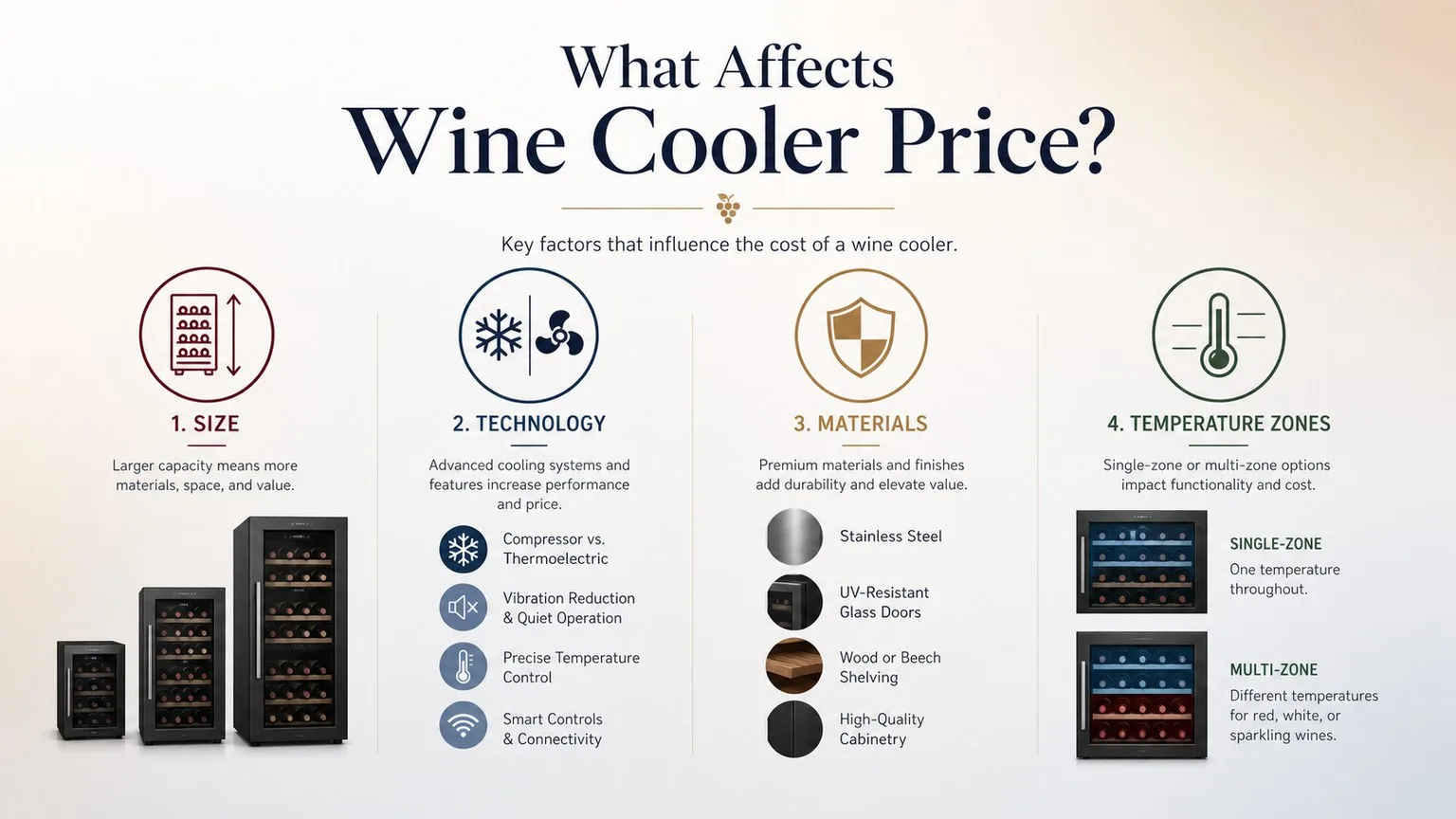
To understand how much wine coolers cost, you need to know what drives the price. Prices vary substantially based on these factors:
- Size and capacity (6 bottles to 400+)
- Cooling technology (thermoelectric vs. compressor)
- Build quality and materials (plastic interiors vs. stainless and hardwood)
- Temperature zones (single, dual, or triple zone)
- Noise level and vibration control
- Energy efficiency (look for ENERGY STAR-rated models)
- Aesthetics (glass doors, LED lighting, shelving)
- Installation type (freestanding, built-in, undercounter)
- Smart features (Wi-Fi, app control, sensors)
A six-bottle countertop fridge can be $90–$120, while a dual-zone, stainless, restaurant-grade unit can exceed $3,000. If you want help comparing brands at each tier, our Top 12 Best Wine Cooler Brands guide breaks down which manufacturers earn their price.
How Much Do Small Wine Coolers Cost? (6–20 Bottles)
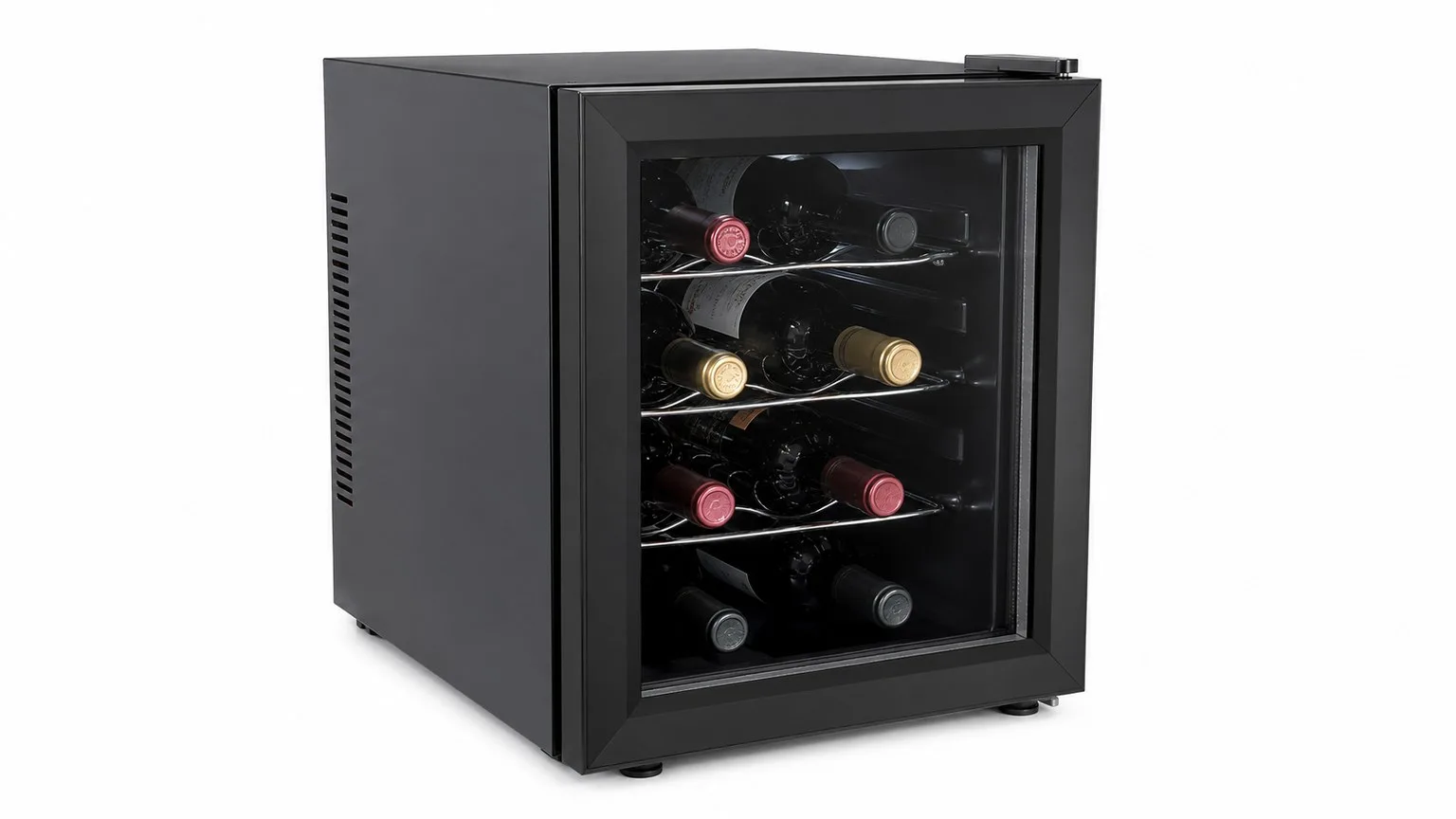
If you’re starting your wine journey or only keep a few bottles on hand, a small wine cooler is the practical pick. These hold 6 to 20 bottles, fit kitchens, home bars, offices, or apartments, and are the cheapest way to get proper serving temperatures.
Price Range:
💲 $100–$350
Typical Features:
- Single temperature zone
- Thermoelectric cooling (very quiet)
- LED interior lighting
- Compact footprint
- Basic digital temperature controls
Best For:
- Beginners and casual wine drinkers
- Apartments and small kitchens
- Home offices or game rooms
Pros & Cons:
- Pros: Most affordable, near-silent, easy to place anywhere.
- Cons: Limited capacity, not ideal for long-term aging, struggles in hot rooms.
Average Cost Breakdown:
| Capacity | Typical Price |
|---|---|
| 6 bottles | $100–$150 |
| 12 bottles | $150–$220 |
| 18 bottles | $200–$300 |
| 20 bottles | $250–$350 |
Want specific picks at this tier? See our 6 Best 12 Bottle Wine Coolers and Top 9 Best 18 Bottle Wine Coolers roundups, or browse 7 small wine fridge options for tight spaces.
How Much Is Wine Coolers in Medium Size? (24–48 Bottles)
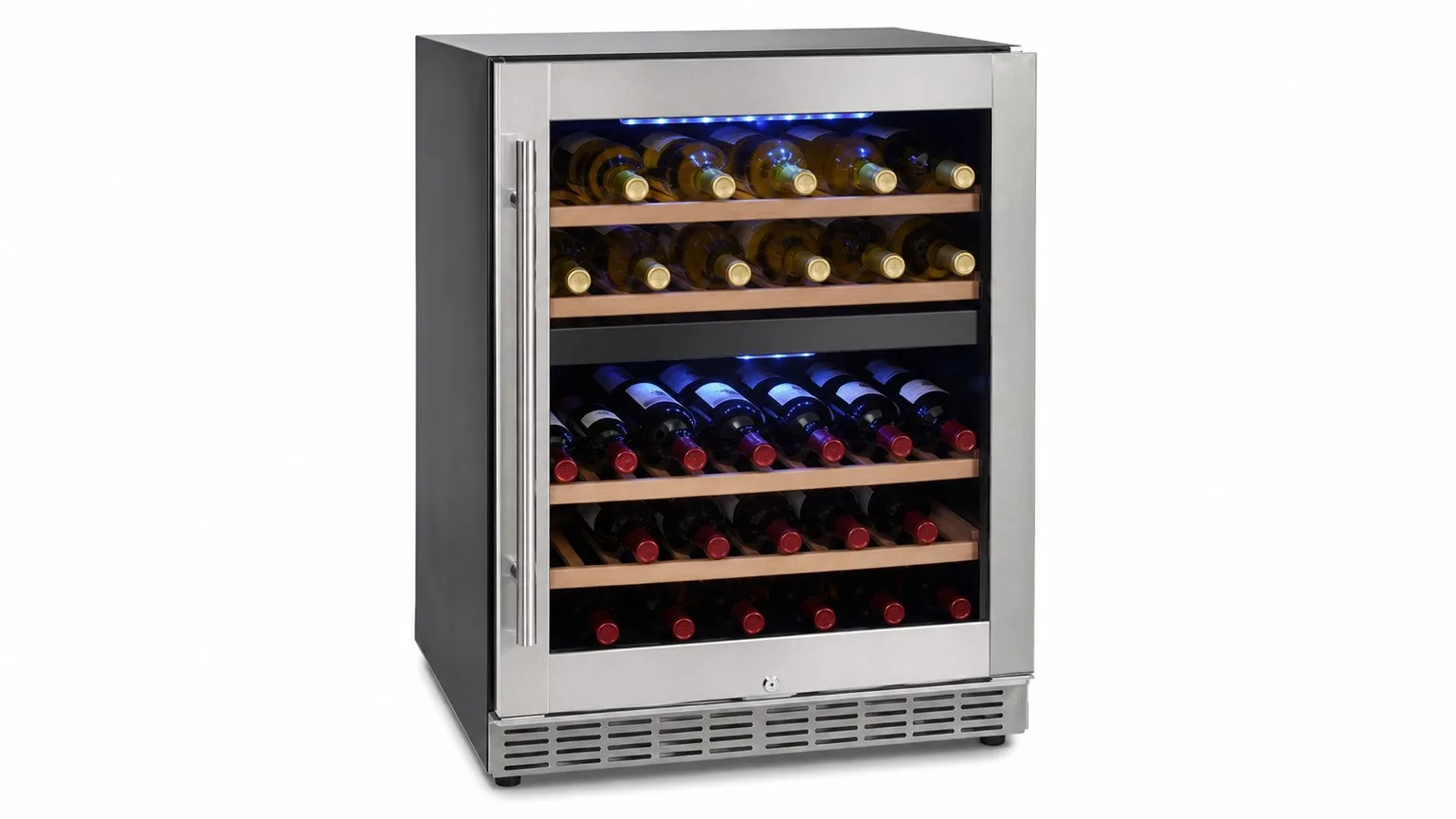
Medium-sized wine coolers are the most popular tier among regular wine drinkers. They offer larger capacity, better temperature control, and stronger cooling performance than small units.
Price Range:
💲 $350–$900
Typical Features:
- Compressor cooling (more stable for long-term aging)
- Single or dual-zone models
- UV-protective glass doors
- Adjustable wooden shelves
- Better humidity control
Best For:
- Growing wine collections
- Households that drink both reds and whites
- Dedicated bar or wine corners
Pros & Cons:
- Pros: Suitable for both serving and aging, premium design options, better cooling tech.
- Cons: Louder than thermoelectric models, heavier, costs more upfront.
Average Cost Breakdown:
| Capacity | Typical Price |
|---|---|
| 24 bottles | $350–$500 |
| 32 bottles | $450–$650 |
| 36 bottles | $550–$750 |
| 48 bottles | $700–$900 |
Looking at this tier, our Top 10 Best 24 Bottle Wine Coolers and the Wine Enthusiast 32-Bottle Cooler review are good places to compare specific units before you buy.
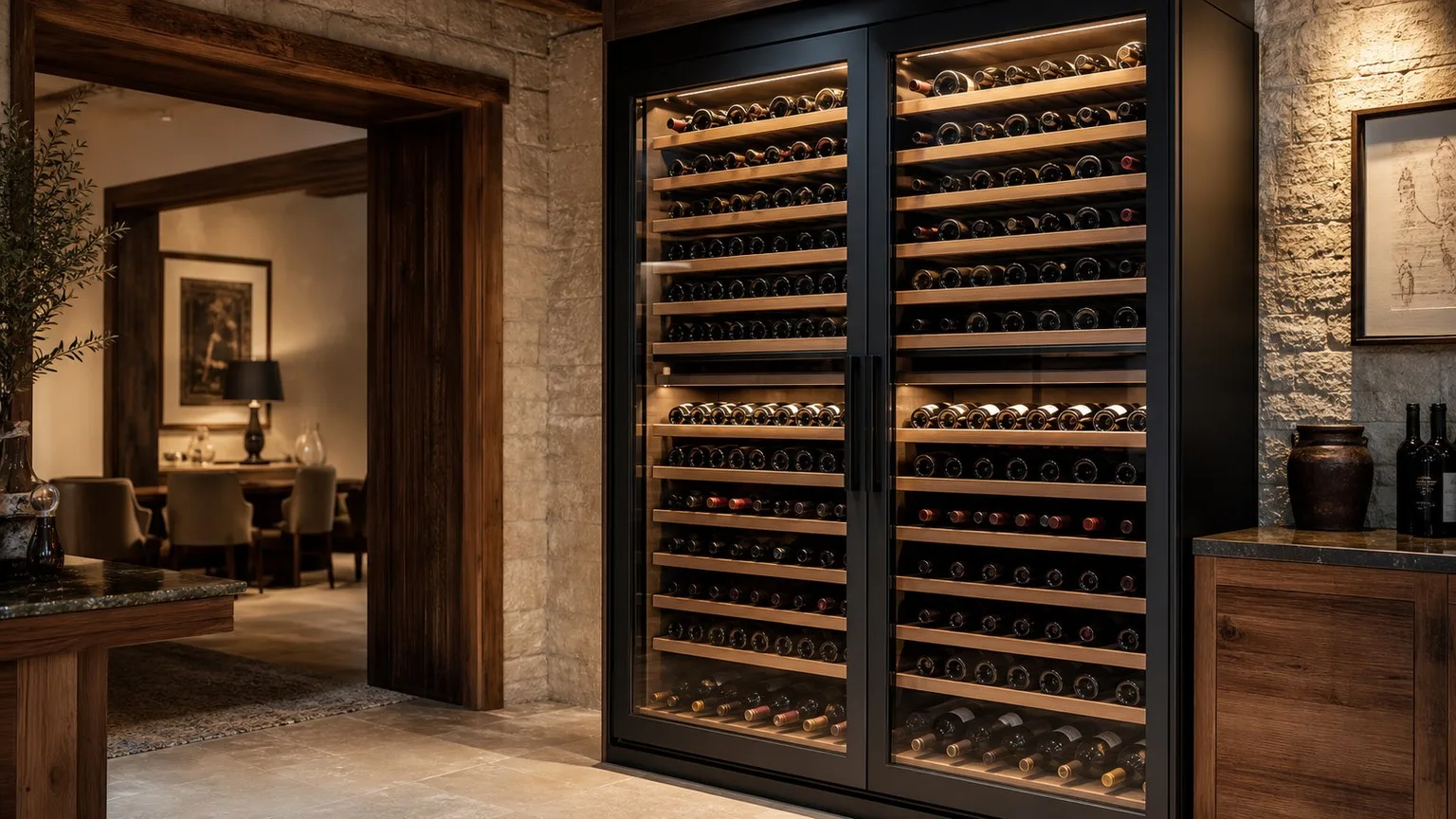
How Much Do Large Wine Coolers Cost? (50–150 Bottles)
Now we’re entering serious collector territory. Large wine coolers are designed for enthusiasts who want to age wines, store multiple varietals, and keep a deep selection ready for entertaining.
Price Range:
💲 $900–$2,500
Typical Features:
- Advanced compressor systems
- Dual or triple temperature zones
- True humidity control
- Premium insulated glass
- High-end wooden shelving and vibration dampening
- Lockable doors and digital touch controls
Best For:
- Wine collectors and enthusiasts
- Home bars and entertainers
- Long-term aging
Pros & Cons:
- Pros: Excellent temperature stability, professional-grade storage, large capacity for growing collections.
- Cons: Higher upfront cost, requires more floor space, heavier to install.
Average Cost Breakdown:
| Capacity | Typical Price |
|---|---|
| 50 bottles | $900–$1,200 |
| 80 bottles | $1,200–$1,600 |
| 100 bottles | $1,500–$2,000 |
| 150 bottles | $1,800–$2,500 |
For options at this size, see our Top 7 Best Wine Fridge Cabinet picks—they cover the 80–150 bottle range that most serious collectors target.
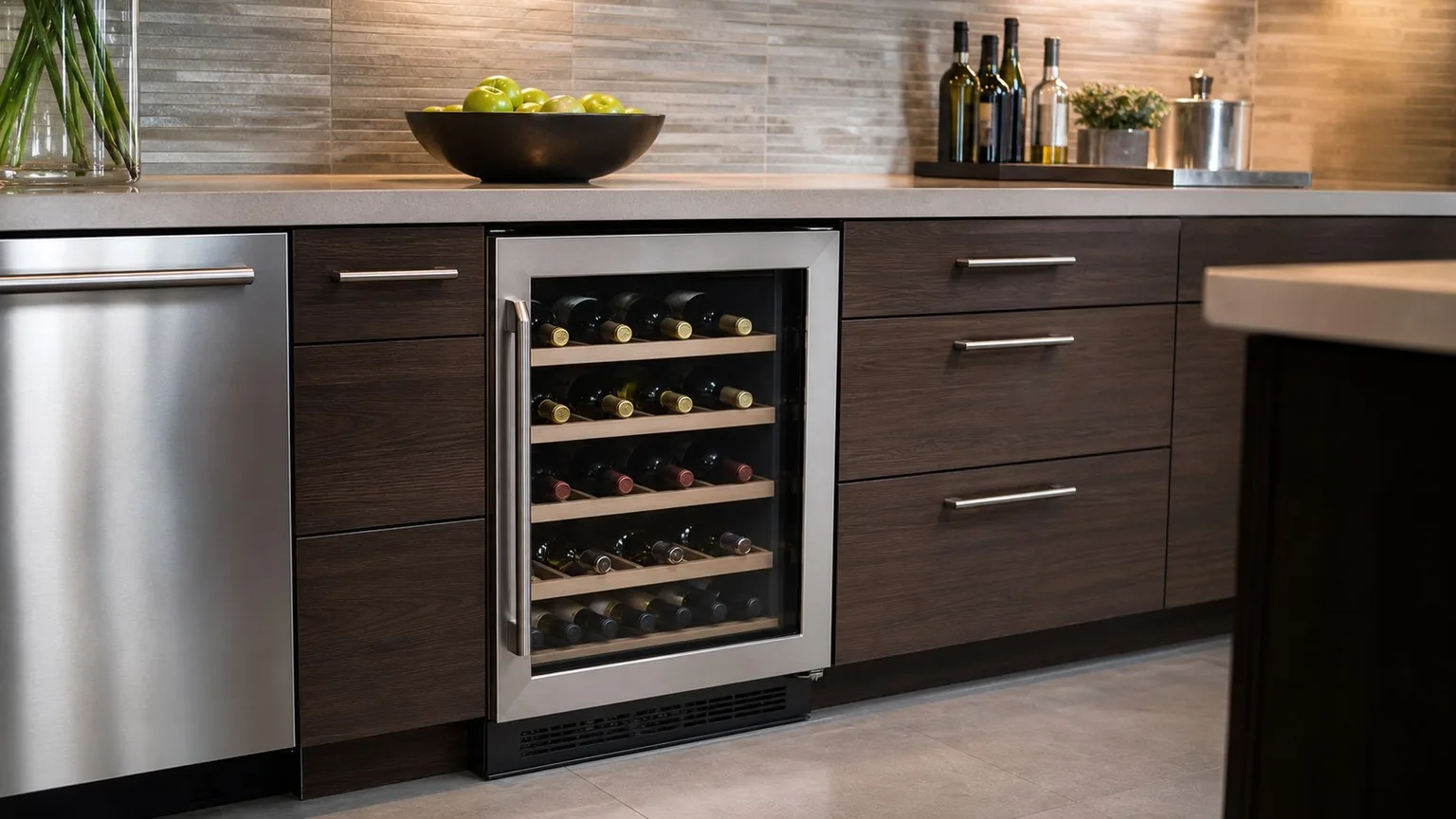
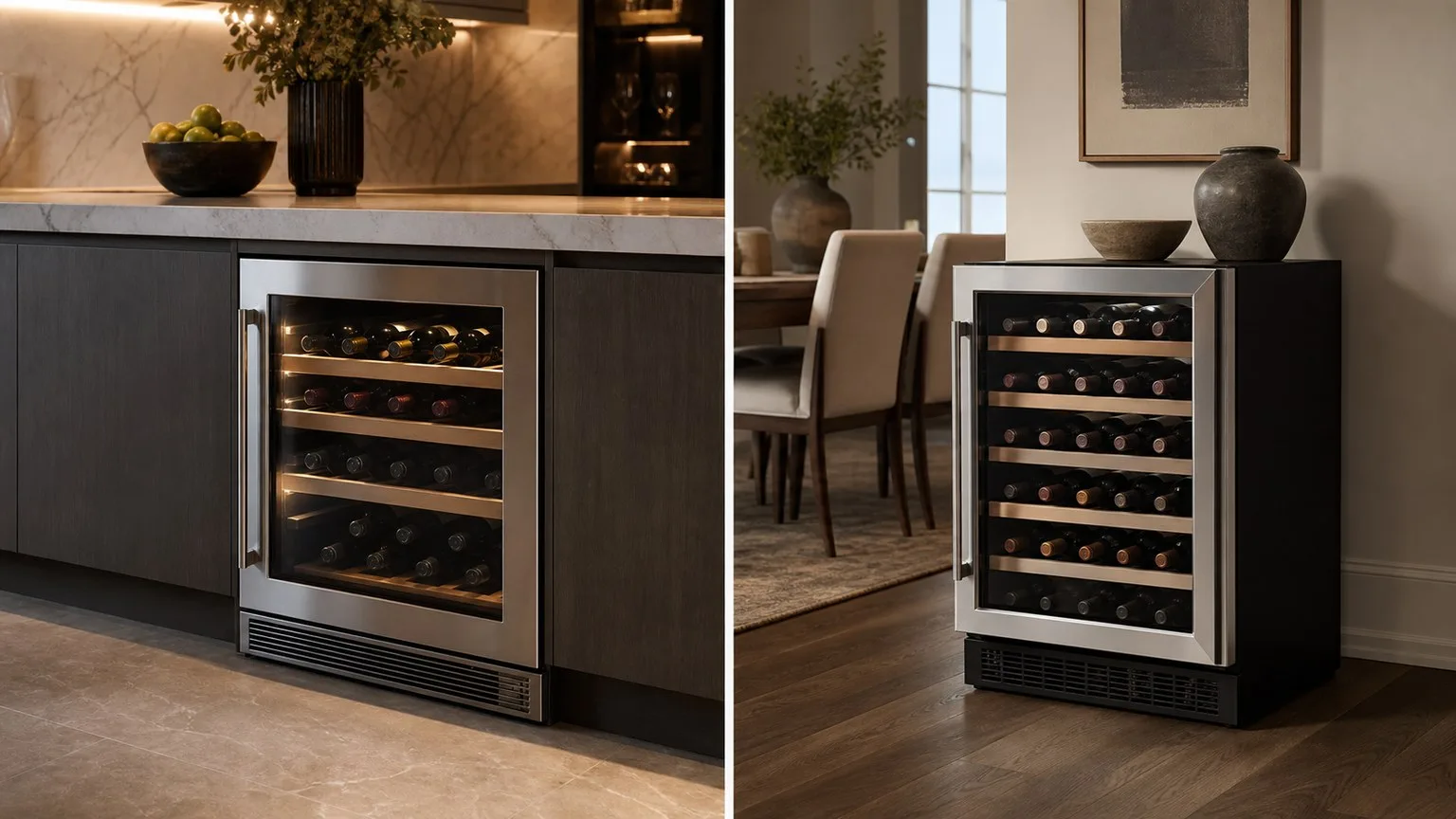
How Much Is Built-In Wine Coolers? (Undercounter Models)
Built-in or undercounter wine coolers are designed to fit flush into kitchen cabinets or home bars. They use front-venting systems so cabinetry stays clean and the unit doesn’t need rear airflow space.
Price Range:
💲 $700–$2,800
Typical Features:
- Front ventilation
- Dual temperature zones
- Heavy-duty compressors
- Quiet operation
- Full-extension shelves
- Seamless stainless-steel doors
Who Should Buy Built-In Models:
- People remodeling kitchens
- Homeowners building bars
- Wine collectors who want a premium look
For kitchen design inspiration, see KitchenAid’s design gallery, or browse our 10 Best Under Counter Wine Fridges for built-in options that fit a 24-inch cabinet opening.
How Much Do Dual-Zone Wine Coolers Cost?
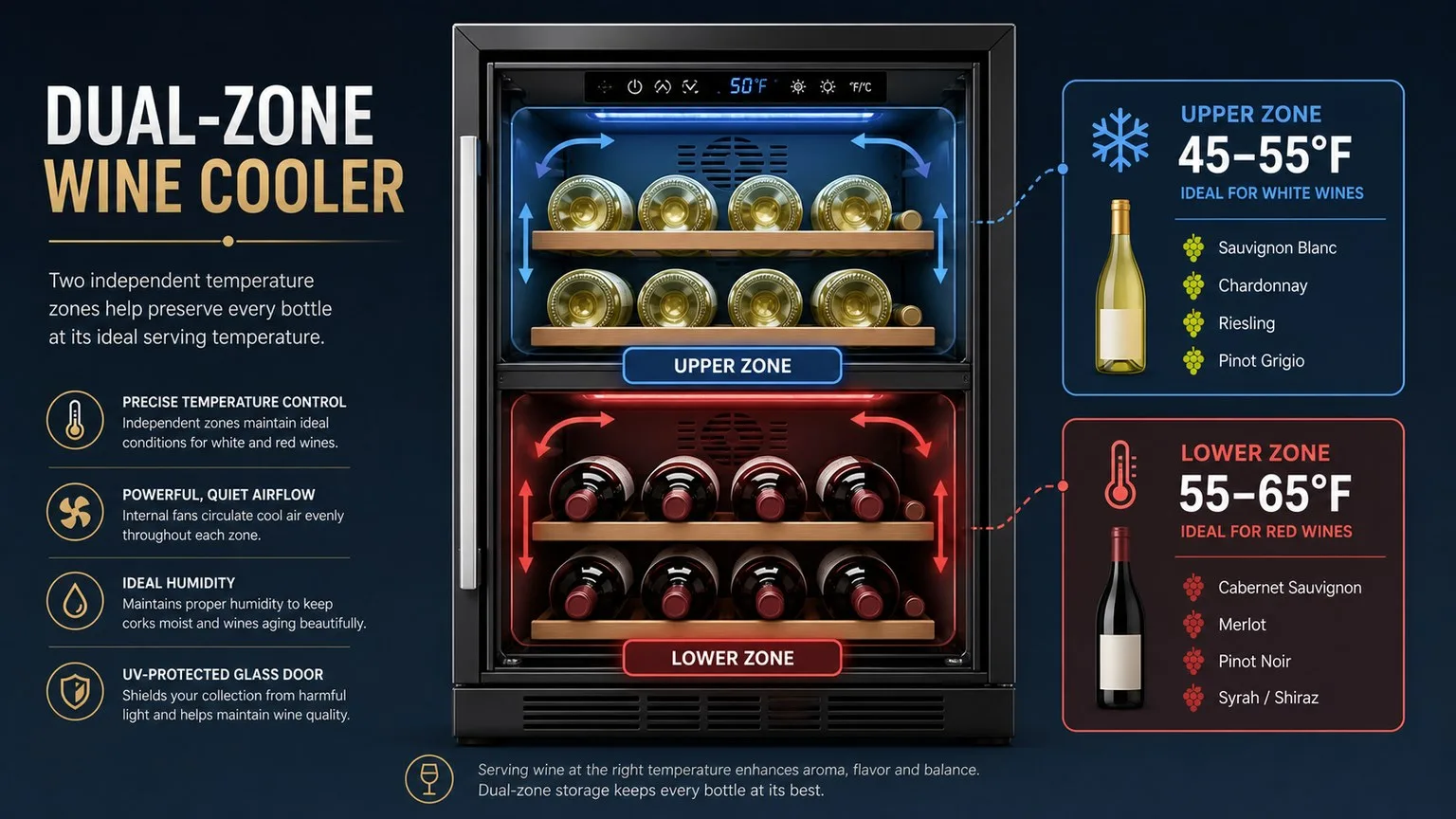
Dual-zone wine coolers let you store red and white wines at separate temperatures. They’ve grown popular for households that want both serving and aging conditions in one appliance.
Price Range:
💲 $500–$3,200
Pricing varies by whether you choose a compact, mid-size, or large model.
Why Dual-Zone Costs More:
Dual-zone systems require two temperature controls, independent airflow, additional sensors, more insulation, and stronger compressors—each adds to the cost.
Best For:
- People who drink both red and white wine
- Households that entertain often
- Collectors who store age-worthy bottles
Pros & Cons:
- Pros: Perfect for multi-type collections, highly flexible, eliminates need for two appliances.
- Cons: More expensive, slightly louder due to extra cooling components.
Average Cost Breakdown:
| Capacity | Typical Price |
|---|---|
| 18–24 bottles | $500–$700 |
| 32–40 bottles | $700–$1,200 |
| 50–80 bottles | $1,200–$2,000 |
| 100+ bottles | $1,800–$3,200 |
Per Wine Folly’s serving temperature guide, reds show best between 60–68°F and whites between 45–55°F—dual-zone is the only single-appliance way to hold both ranges. For specific models, see our Top 6 Best Dual Zone Wine Coolers.
How Much Do Thermoelectric Wine Coolers Cost?
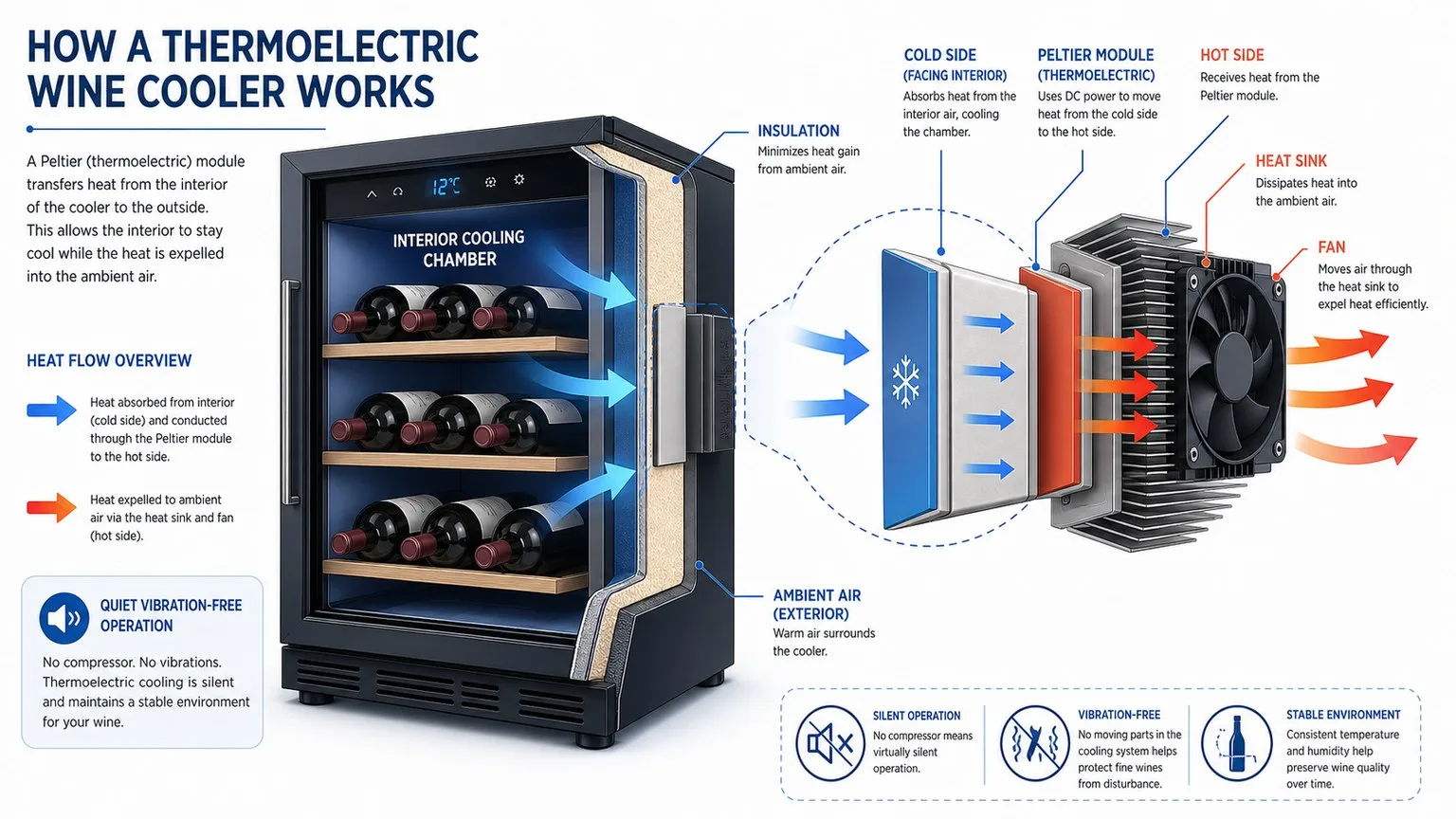
Thermoelectric wine coolers are popular for small spaces because they’re very quiet and use minimal energy. They’re ideal when you want convenience without compressor noise or vibration.
Price Range:
💲 $100–$350
These coolers tend to be smaller because thermoelectric tech isn’t as powerful as compressors. They work best in cool, climate-controlled rooms.
Typical Features:
- Ultra-quiet operation
- No vibration
- Low electricity use
- Simple temperature control
Pros & Cons:
- Pros: Whisper-quiet, affordable, lightweight, no mechanical vibration to disturb sediment.
- Cons: Struggles in hot rooms, limited bottle capacity, less cooling power overall.
Average Cost Breakdown:
| Capacity | Typical Price |
|---|---|
| 6 bottles | $100–$140 |
| 8 bottles | $120–$170 |
| 12 bottles | $150–$220 |
| 18 bottles | $220–$350 |
Compact thermoelectric units like the best Koolatron wine coolers are the easiest entry point if you want to try wine storage without a big upfront commitment.
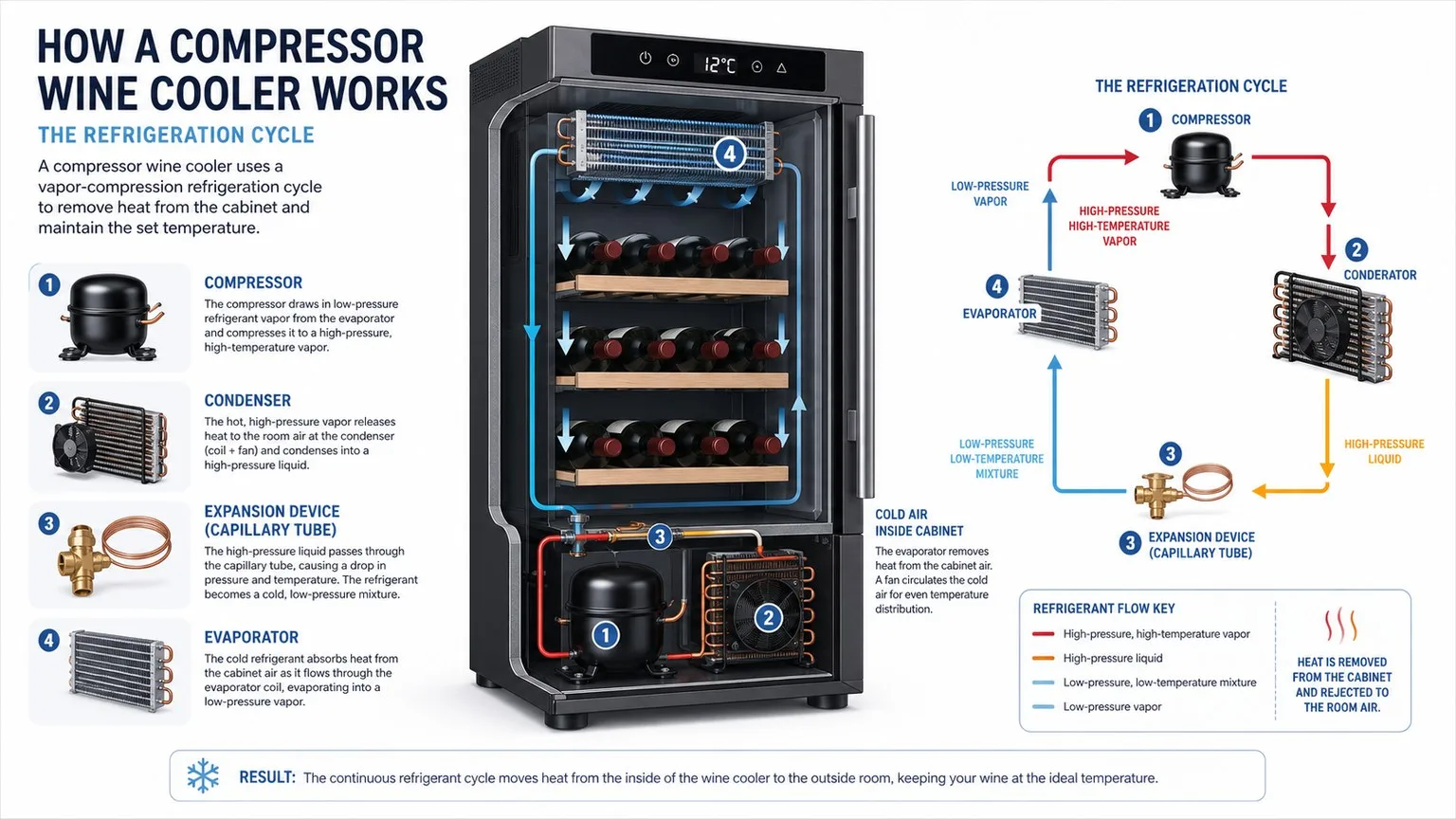
How Much Do Compressor Wine Coolers Cost?
Compressor wine coolers use the same powerful technology found in standard refrigerators. They provide strong, stable cooling and reach lower temperatures even in warm environments.
Price Range:
💲 $350–$4,000+
Because compressors are more powerful, you’ll find them in medium, large, and built-in models.
Typical Features:
- Excellent temperature stability
- Large bottle capacity
- Dual or triple zones
- Long lifespan
- Professional-grade humidity control
Pros & Cons:
- Pros: Handles large collections, performs in any room temperature, ideal for long-term aging.
- Cons: Louder than thermoelectric, higher price, heavier appliance.
Average Cost Breakdown:
| Type | Typical Price |
|---|---|
| Freestanding compressor | $350–$1,200 |
| Built-in undercounter | $700–$2,800 |
| Professional cellar-style | $2,000–$4,000+ |
If you’re serious about wine, compressor models are the better long-term investment. Brands like EdgeStar and Vissani are commonly recommended at the mid-tier compressor level.
How Much Is Wine Coolers for Freestanding Models?
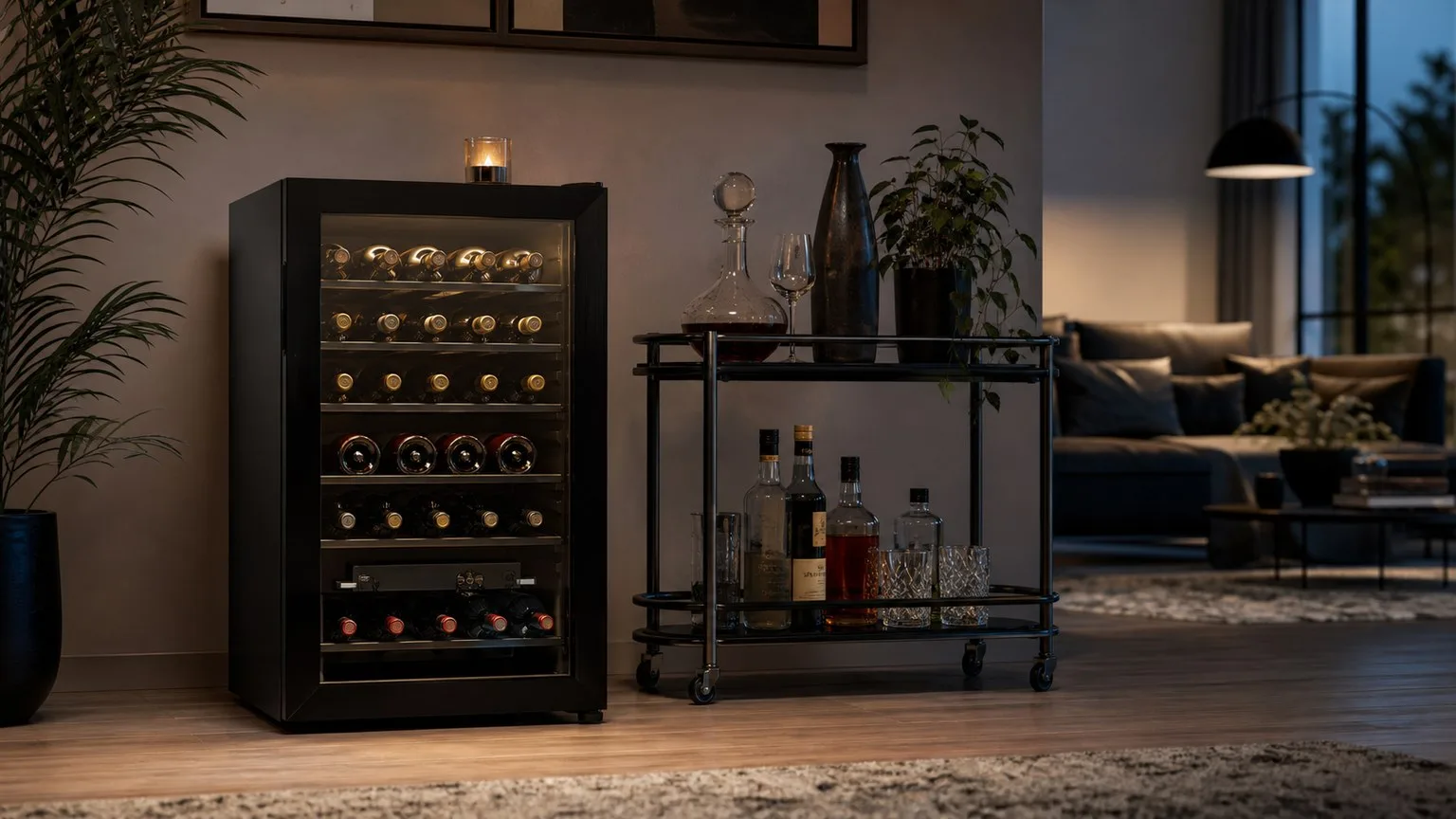
Freestanding wine coolers are the most flexible option. You can place them anywhere with proper rear ventilation, and they come in every size from 6-bottle countertop to 100-bottle towers.
Price Range:
💲 $100–$2,000
Best Features:
- Flexible placement
- Wide range of designs
- Both thermoelectric and compressor options
- Popular with renters
- Easy to move when needed
Pros & Cons:
- Pros: Most affordable category, biggest variety, no installation required.
- Cons: Cannot be flush-fitted into cabinets, needs rear clearance for ventilation.
Average Cost Breakdown:
| Size | Typical Price |
|---|---|
| Small (6–20 bottles) | $100–$350 |
| Medium (24–48 bottles) | $350–$900 |
| Large (50–100 bottles) | $900–$2,000 |
For travel-friendly or apartment-friendly options, see our 10 Best Portable Wine Cooler picks and the 5 Best NewAir Wine Coolers.
How Much Do Built-In vs. Freestanding Wine Coolers Cost?
If you’re debating between built-in and freestanding, here’s how the prices compare side by side.
Cost Comparison Overview:
| Type | Price Range |
|---|---|
| Freestanding | $100–$2,000 |
| Built-in | $700–$2,800 |
Why Built-In Coolers Cost More:
- Front ventilation system
- Premium compressors
- Designed to match cabinet aesthetics
- Better insulation
- More durable construction
Which Should You Choose?
- Choose freestanding if you want flexibility, lower cost, and easy relocation.
- Choose built-in if you’re renovating or want a seamless cabinetry look.
How Much Is Wine Coolers With Smart Features?
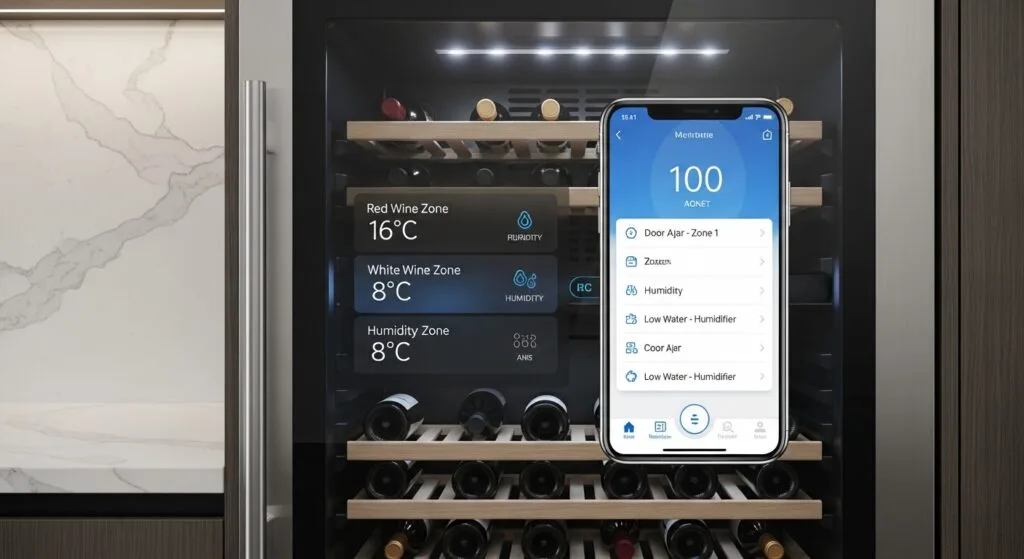
Smart wine coolers represent the newest trend in storage, offering app control, temperature alerts, and inventory tracking for modern homeowners.
Price Range:
💲 $1,000–$4,500
Popular Smart Features:
- Wi-Fi app control
- Temperature monitoring alerts
- Humidity sensors
- Door-open alarms
- Inventory tracking
- Voice assistant integration
These systems help protect expensive collections with real-time data—useful when you’re storing investment-grade bottles.
Pros & Cons:
- Pros: Great for collectors, highest level of monitoring, long-term protection.
- Cons: Expensive, requires reliable Wi-Fi, overkill for casual drinkers.
Cost Breakdown:
| Feature Level | Typical Cost |
|---|---|
| Basic smart features | $1,000–$1,800 |
| High-end smart tech | $2,000–$4,500 |
If smart features matter to you, premium brands like Marvel and Vinotemp integrate the most useful monitoring tools.
How Much Do Luxury Wine Coolers Cost?
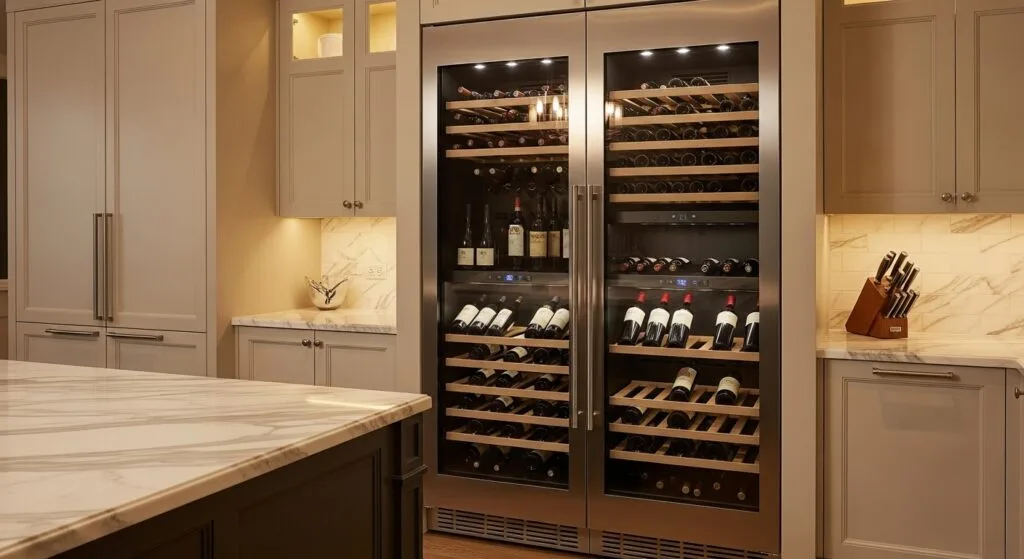
Luxury wine coolers are designed for serious collectors, high-end kitchens, and homeowners who want professional storage that doubles as a visual statement. They combine advanced cooling with premium materials and elegant craftsmanship.
Price Range:
💲 $2,500–$10,000+
Why Luxury Units Cost More:
Luxury wine coolers offer features rarely found in standard models, such as:
- Furniture-grade wood interiors
- Triple-layer UV-resistant glass doors
- Silent, low-vibration compressors
- Multi-zone cooling (sometimes three zones)
- Touchscreen control panels
- Integrated humidity regulation
- Full-extension hardwood shelves
- Stainless-steel or aluminum interiors
- Soft-close doors and premium LED lighting
These coolers aren’t just appliances—they’re centerpiece features in upscale homes, custom bars, and luxury cellars.
Best For:
- Serious wine collectors
- High-end home bar owners
- Premium kitchen renovations
- Storing investment-grade bottles
Average Cost Breakdown:
| Luxury Category | Typical Price Range |
|---|---|
| Designer undercounter models | $2,500–$4,500 |
| Top-tier freestanding units | $3,000–$6,000 |
| Commercial-grade wine cabinets | $5,000–$10,000+ |
People choose luxury models because they pair fine-furniture beauty with the precision of professional cooling engineering. The 5 Best Wine Enthusiast wine coolers sit at the entry point of this tier.
How Much Is Wine Coolers for Commercial and Restaurant Use?
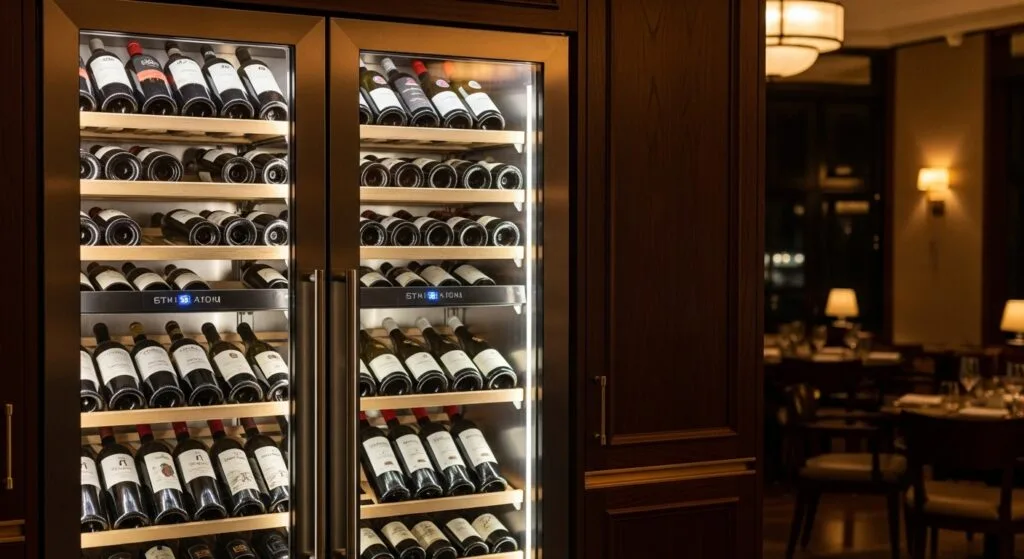
Commercial wine coolers are designed for bars, restaurants, wineries, hotels, and catering services. They’re engineered to handle heavy use, repeated door openings, warm environments, and constant temperature demand.
Price Range:
💲 $1,500–$15,000+
Common Commercial Features:
- Heavy-duty compressors
- Strong internal airflow
- Thick insulation and reinforced doors
- Locking mechanisms
- Fast cooling recovery times
- Larger capacities (100–400+ bottles)
- NSF-rated components
Where They’re Used Most:
- Wine bars and upscale restaurants
- Boutique hotels and event venues
- Tasting rooms and winery retail shops
Average Cost Breakdown:
| Commercial Cooler Type | Typical Price |
|---|---|
| Bar-top wine chillers | $1,500–$3,000 |
| Underbar chillers | $2,000–$4,000 |
| Large dual-zone units | $3,500–$8,000 |
| Commercial wine cabinets | $6,000–$15,000+ |
If you run a wine-serving business, a commercial-grade cooler ensures the reliability and performance a residential unit can’t match over heavy daily use.
How Much Do Countertop Wine Coolers Cost?
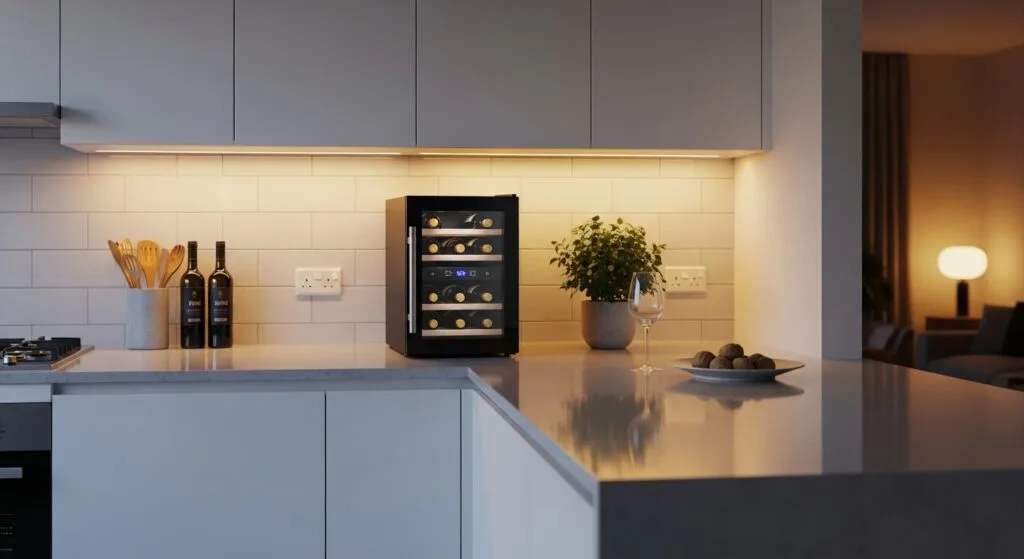
Countertop wine coolers are compact units designed to sit on kitchen counters, bars, or office tables. They’re the right pick when floor space is limited.
Price Range:
💲 $90–$250
Typical Features:
- Small footprint
- Thermoelectric cooling
- LED touch controls
- Lightweight construction
- Available in 6, 8, or 12-bottle sizes
Best For:
- Apartment residents and dorm rooms
- Small kitchens and offices
- Occasional wine drinkers
Average Cost Breakdown:
| Bottle Capacity | Typical Price |
|---|---|
| 6 bottles | $90–$140 |
| 8 bottles | $110–$170 |
| 12 bottles | $150–$250 |
These are budget-friendly and convenient for everyday users.
How Much Is Wine Coolers Based on Brand?
Different brands carry different price expectations based on reliability, technology, and reputation. Here’s a snapshot of typical 2026 ranges:
Popular Wine Cooler Brands and Pricing:
| Brand | Price Range | Notes |
|---|---|---|
| NutriChef | $100–$350 | Budget-friendly, compact units |
| Ivation | $150–$600 | Thermoelectric & small compressor coolers |
| Wine Enthusiast | $300–$3,000 | Mid to high-end, excellent build quality |
| Kalamera | $400–$1,500 | Strong in built-in models |
| EdgeStar | $300–$2,000 | Known for reliable compressor units |
| NewAir | $200–$1,800 | Popular midrange coolers |
| EuroCave | $3,000–$10,000+ | Luxury, professional-grade |
| Allavino | $1,000–$6,000 | Premium cabinetry-style cooling |
| Whynter | $200–$700 | Reliable midrange coolers |
Brand plays a major role in price—premium names bring higher quality and longer lifespans. For deeper brand-by-brand reviews, see our Top 12 Best Wine Cooler Brands guide.
How Much Is Wine Coolers to Operate Per Year? (Energy Cost)
Wine coolers don’t only cost money upfront—they also use electricity. Annual operating cost varies by size, technology, and usage habits.
Typical Yearly Operating Cost:
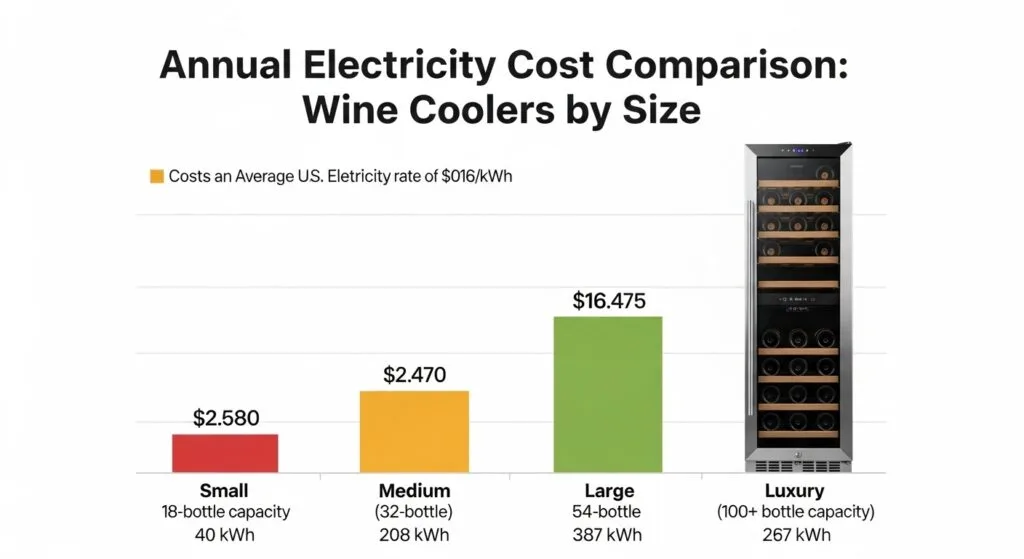
💲 $15–$75 per year for most home models, based on the U.S. EIA average residential electricity rate of about $0.15/kWh.
Factors Affecting Energy Cost:
- Cooler size and capacity
- Compressor vs. thermoelectric technology
- Frequency of door openings
- Ambient room temperature
- LED vs. older lighting
- ENERGY STAR certification
Energy Usage Breakdown:
| Cooler Type | Yearly Cost |
|---|---|
| Small thermoelectric | $15–$25 |
| Medium compressor | $25–$40 |
| Large compressor | $40–$75 |
| Luxury multi-zone | $60–$100 |
Modern wine coolers are surprisingly efficient thanks to better insulation and digital temperature control. For setup tips that lower running costs, see our complete guide on setting wine cooler temperature.
Frequently Asked Questions About Wine Cooler Pricing
1. How much is wine coolers on average?
The average homeowner spends $250 to $1,000, depending on size and features. Most people end up in the 24-bottle to 48-bottle range.
2. How much do wine coolers cost at the low end?
Budget models start around $90–$150, usually thermoelectric and compact (6–12 bottles).
3. Are expensive wine coolers worth it?
Yes—if you store expensive bottles, age wines for years, or need dual zones, advanced cooling and humidity control are essential to protect your investment.
4. Do wine coolers add value to your home?
Built-in models and high-end designs can improve home value and appeal to buyers, especially in upscale kitchens and finished basements.
5. Should I get thermoelectric or compressor?
Choose thermoelectric for quiet, small spaces with stable room temperatures. Choose compressor for long-term storage, larger collections, or rooms that get warm.
6. Is it cheaper to buy a wine cooler or build a wine cellar?
A wine cooler is far cheaper—a custom wine cellar can cost $10,000 to $100,000+ once you factor in insulation, vapor barriers, and a dedicated cooling unit.
7. How much do dual-zone wine coolers cost?
Expect to pay $500 to $3,200 depending on size. Most home buyers in this category land between $700 and $1,500.
Final Answer: How Much Is Wine Coolers?
After exploring every category—from small countertop units to massive commercial cabinets—the answer becomes clear:
✨ Wine coolers cost anywhere from $90 to over $15,000, depending on size, technology, features, and brand.
Here’s the simplified breakdown:
- Small (6–20 bottles): $100–$350
- Medium (24–48 bottles): $350–$900
- Large (50–150 bottles): $900–$2,500
- Built-in models: $700–$2,800
- Smart wine coolers: $1,000–$4,500
- Luxury wine coolers: $2,500–$10,000+
- Commercial models: $1,500–$15,000+
Wine coolers offer better preservation, consistent temperature control, and a stylish way to display a collection—and there’s a price point for every budget and lifestyle.
Conclusion
You now have a complete picture of how much is wine coolers across every category, technology, and size in 2026. Whether you’re a beginner with a few bottles or a collector building a premium cellar, there’s a wine cooler priced for your needs.
Match the unit to your space, storage goals, and budget, and you’ll end up with an appliance that protects your wine and looks great in your home.
According to Wine Spectator and other industry experts, proper temperature control is the single biggest factor in long-term wine quality—so the right cooler is rarely a wasted spend.
Related Reading
Explore more on Flight Wine Bar:
- How To Use Wine Cooler — A Complete Real-World Guide
- How To Set Wine Cooler Temperature (Complete Expert Guide)
- What Temperature Wine Cooler — 9 Powerful Insights for Perfect Wine Storage
- Top 12 Best Wine Cooler Brands
- Top 6 Best Dual Zone Wine Coolers
Budget models under $300 lose roughly 2–3 °F consistency at ambient temperatures above 85 °F, so garage placement demands a unit rated for extended-range operation—expect to pay $400–$600 for that spec.
Compressor coolers draw 80–120 watts on average; over 10 years, electricity adds $250–$450 to total ownership cost, a factor most buyers overlook when comparing sticker prices.
If your collection exceeds 50 bottles, a dual-zone unit priced in the $500–$900 range delivers the best cost-per-bottle value while separating reds at 55 °F from whites at 45 °F.
Resale data from AJ Madison shows well-maintained built-in coolers retain 40–60 % of their purchase price after five years—making them one of the few kitchen appliances that hold meaningful value.
Before purchasing, measure the exact cutout depth; freestanding units need 3–5 inches of rear clearance for ventilation, while front-venting built-ins need zero.
Missing this step is the number-one reason for compressor overheating and early failure within the first 18 months of ownership.
Frequently Asked Questions
What is the average price of a bottled wine cooler?
A standard 4-pack of bottled wine coolers like Seagram's Escapes or Bartles & Jaymes costs $4–$7. Individual bottles at convenience stores typically run $1.50–$2.50 depending on brand and region.
Are wine coolers cheaper than beer or hard seltzer?
Wine coolers are comparably priced. A 12-pack of Seagram's runs $10–$15, similar to White Claw or Truly. Per-ounce alcohol content is lower at 3.2–5% ABV, making the cost-per-alcohol slightly higher.
Why do wine cooler prices vary so much by state?
State excise taxes on wine-based versus malt-based beverages differ significantly. States like Tennessee charge $1.21 per gallon on wine versus $0.08 on beer, directly affecting shelf prices of wine-based coolers.
Premium brands like Mighty Swell or JaM Cellars Sweet Crush range $10–$13 per 6-pack, roughly double the per-unit cost of budget options like Seagram's Escapes at $5–$7 per 4-pack.





2 thoughts on “How Much Is Wine Coolers? 2026 Pricing Guide for Every Budget”
Thanks for your write-up on this weblog. From my experience, many times softening way up a photograph may possibly provide the professional photographer with a little bit of an imaginative flare. Many times however, that soft clouds isn’t what exactly you had planned and can in many cases spoil a normally good picture, especially if you consider enlarging them.
Thanks for sharing your thoughts! Softening a photo can definitely add a creative touch, but you’re right — when it’s unplanned, it can also affect the overall quality, especially if the image needs to be enlarged.
We’ve just updated the article on How Much Is Wine Coolers to make the information clearer and more complete, focusing on current pricing, types, and buying tips. Hopefully, the refreshed content gives you a better and more helpful overview.
Appreciate you stopping by and contributing to the discussion!