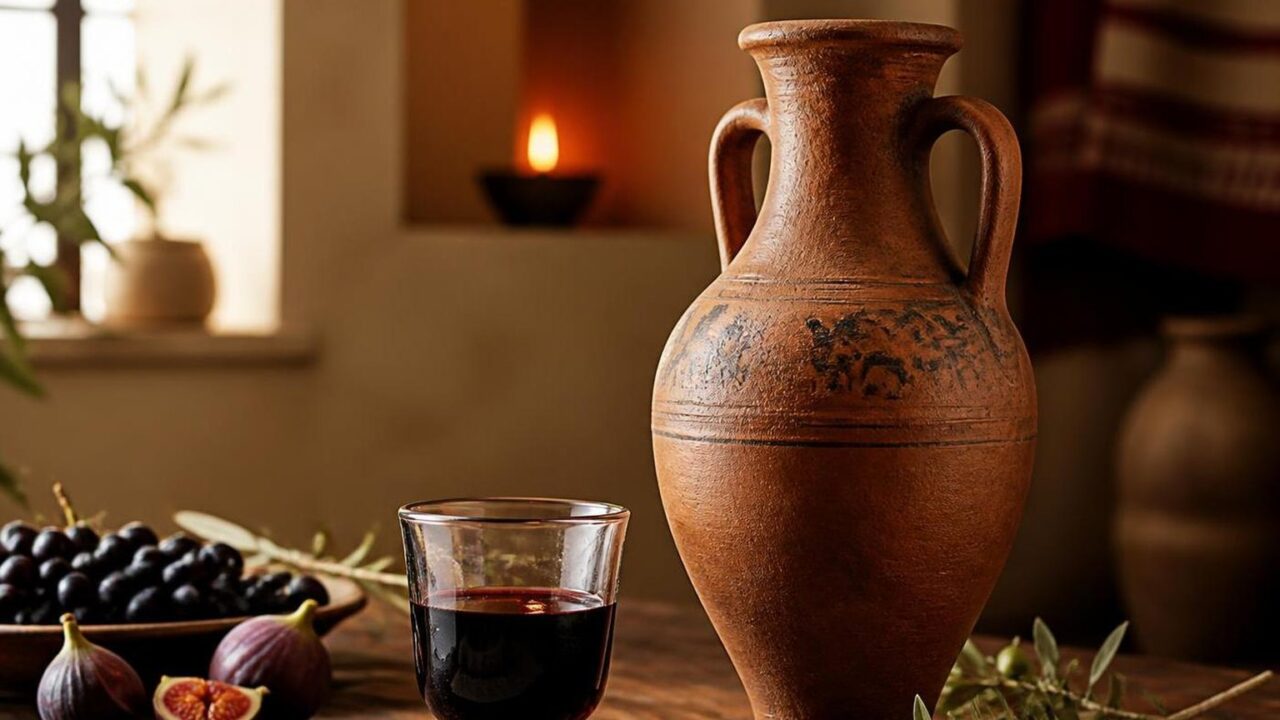
alcohol content of wine in biblical times was typically about 6%–12% ABV, lower than many modern fortified wines but comparable to lighter table wines.
Fermentation depended on wild yeasts, grape sugar, storage temperature, and dilution practices rather than controlled winery equipment.
Texts from the Hebrew Bible, New Testament, and Greco-Roman writers describe real fermented wine, not mere grape juice.
However, people often mixed wine with water at meals, so the alcohol actually consumed could be much lower than the wine’s original strength.
This article separates archaeological evidence, ancient winemaking limits, and biblical references to estimate what “wine” likely meant in daily religious, household, and banquet settings.
Typical Strength of Biblical Wine
Wine in biblical times was real fermented wine, not modern grape juice, but its strength varied sharply by production, storage, and dilution.
The best evidence points to undiluted wine commonly falling below many modern table wines, then often being diluted before drinking.
The numbers below are practical ranges, not exact labels. Ancient wine had no alcohol-by-volume testing, and biblical Hebrew and Greek words describe categories of drink, not laboratory measurements.
| Item | Best historical number | What it means |
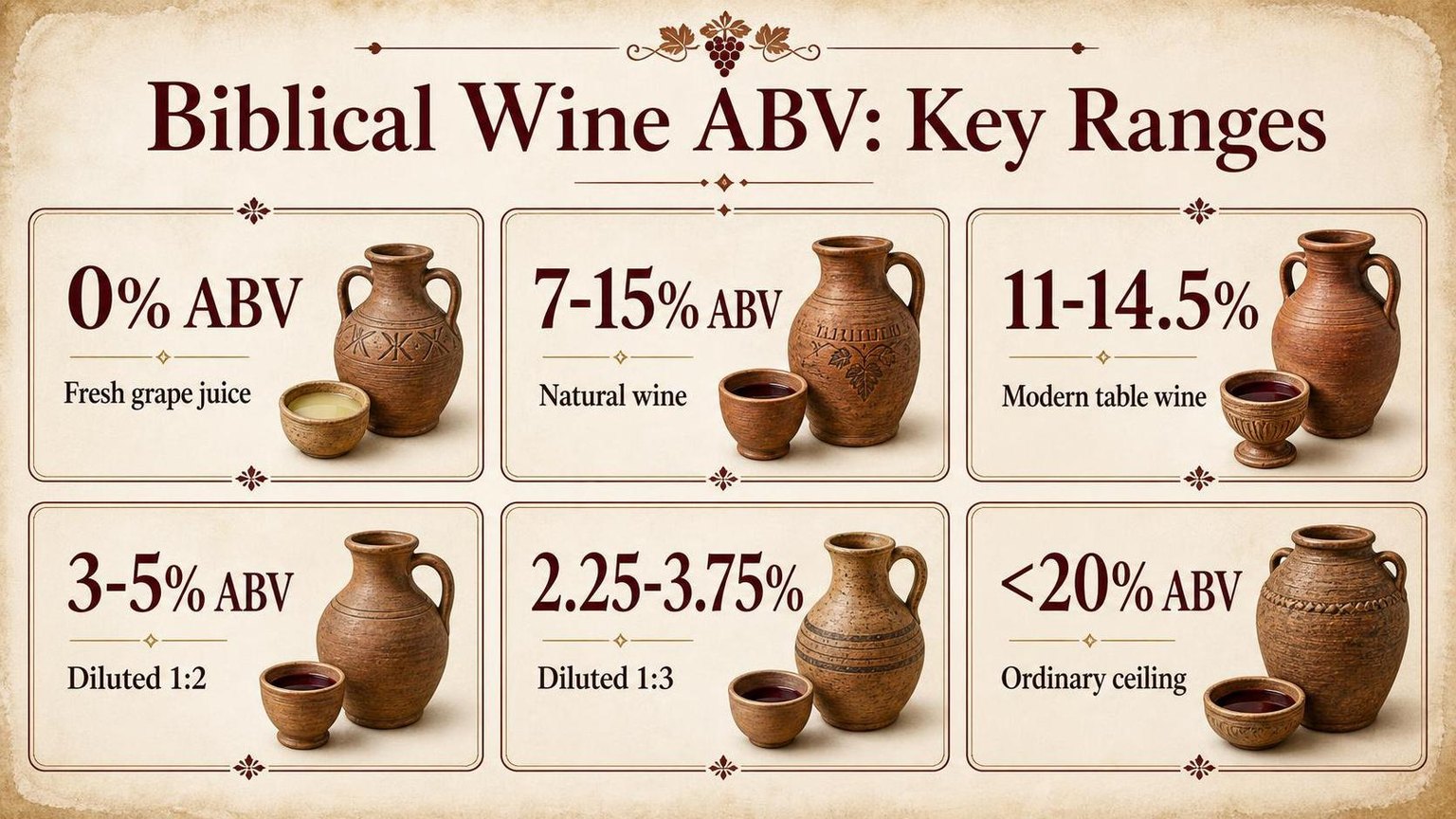
| Fresh grape juice | 0% ABV | Unfermented juice, but in warm climates it could begin fermenting within hours to a few days without preservation. |
| Naturally fermented grape wine | About 7% to 15% ABV | Yeast converts grape sugar to alcohol; most wild or early cultured yeasts stop before modern fortified-wine levels. |
| Typical modern table wine | About 11% to 14.5% ABV | A useful comparison point, though modern viticulture, selected yeast, and controlled fermentation make results more predictable. |
| Ancient diluted wine at 1 part wine to 2 parts water | About 3% to 5% ABV if the wine began at 9% to 15% | A common Greco-Roman style of drinking; it made wine closer to beer strength. |
| Ancient diluted wine at 1 part wine to 3 parts water | About 2.25% to 3.75% ABV if the wine began at 9% to 15% | Still alcoholic, but substantially weaker per cup than undiluted wine. |
The upper ceiling matters. Ordinary fermentation cannot produce 20%, 30%, or 40% ABV wine. Those levels require fortification or distillation; large-scale distilled spirits were not part of everyday biblical-era wine culture.
Ancient writers confirm both fermentation and dilution. The Greek physician Galen and Greco-Roman banquet sources describe wine mixed with water. The Mishnah also assumes diluted wine in some ritual contexts, often discussing mixtures by parts.
- 1:1 dilution cuts a 12% wine to about 6% ABV.
- 1:2 dilution cuts a 12% wine to about 4% ABV.
- 1:3 dilution cuts a 12% wine to about 3% ABV.
That does not mean every cup in the Bible was weak. Some wine was consumed undiluted, especially where drunkenness is condemned. Biblical warnings against intoxication only make sense if the beverage could impair judgment.
The safest summary is this: biblical wine was usually fermented, often diluted, and commonly lower per serving than today’s undiluted table wine. A realistic serving range was roughly 3% to 12% ABV, depending on whether water had been added.
Why Biblical Wine Varied in Strength
The alcohol content of wine in biblical times was not a single fixed number. It depended on grape ripeness, fermentation completion, storage conditions, and whether the wine was diluted before drinking.
Modern wine science helps set realistic boundaries. Grapes can only ferment alcohol from sugar, and ancient yeasts usually stopped once alcohol, heat, or nutrient stress made fermentation difficult.
Grape sugar at harvest
Riper grapes make stronger wine. In warm eastern Mediterranean harvests, grapes could reach sugar levels high enough for table-strength wine, especially when harvested late or partially dried.
| Must sugar | Approximate potential alcohol | Practical meaning |
| 18 Brix | About 9.9% ABV | Light, fully fermented wine |
| 22 Brix | About 12.1% ABV | Common modern table-wine range |
| 26 Brix | About 14.3% ABV | Requires very ripe grapes and successful fermentation |
These figures use the standard winemaking conversion that one degree Brix produces roughly 0.55% alcohol by volume. Ancient wine could fall in this range, but not every batch fermented cleanly to dryness.
Yeast and fermentation limits
Ancient fermentation relied on native yeasts from grape skins, presses, vessels, and cellars. Some Saccharomyces strains can exceed 14% ABV, but mixed wild fermentations are less predictable.
Hot fermentation, poor sanitation, low nutrients, or early spoilage could leave residual sugar and lower alcohol. Conversely, repeated use of wine jars and presses may have built stable yeast populations over time.
Dilution before drinking
The biggest difference between wine as produced and wine as consumed may have been water. Greek and Roman writers frequently mention mixed wine, and Jewish texts also discuss diluted wine for normal drinking.
| Wine before mixing | Wine-to-water ratio | Approximate drink strength |
| 12% ABV | 1:1 | 6% ABV |
| 12% ABV | 1:2 | 4% ABV |
| 12% ABV | 1:3 | 3% ABV |
The Mishnah, Pesahim 10:2, assumes wine could be diluted for the Passover cups. The Talmud, Bava Batra 96b, discusses wine commonly mixed at three parts water to one part wine, though practice varied.
Storage, age, and preservation
Amphorae and ceramic jars were porous compared with modern sealed bottles. Oxidation, acetification, heat, and evaporation could change flavor and concentration, but they did not reliably make wine stronger.
Boiled grape syrup, raisin wine, and sweet preserved must could raise sugar concentration before fermentation.
Still, without distillation, ordinary biblical-era wine would remain far below spirits and usually within table-wine strength before dilution.
Estimating Alcohol in Biblical-Era Wine
Alcohol in biblical-era wine cannot be measured directly from a surviving cup; ethanol evaporates and organic residues degrade.
Researchers estimate it by combining fermentation science, archaeochemistry, ancient texts, and modern reconstructions of Mediterranean winemaking.
The most important control is sugar. Yeast converts grape sugar into ethanol and carbon dioxide, so a grape’s starting sugar sets the likely alcohol ceiling.
Modern Measurement Framework
Today, wine alcohol is reported as ABV, or alcohol by volume. A wine labeled 12% ABV contains 12 milliliters of pure ethanol in every 100 milliliters of wine.
For ancient wine, scholars estimate ABV from grape ripeness. A common winemaking rule is that about 16.5 to 17 grams of sugar per liter produces 1% ABV after fermentation.
| Evidence or Measure | What It Shows | Typical Number Used |
| Grape sugar at harvest | Potential alcohol before fermentation | 180-240 g/L sugar |
| Fermentation conversion | Sugar needed for ethanol | 16.5-17 g/L per 1% ABV |
| Natural yeast tolerance | Likely upper limit without fortification | About 12-15% ABV |
| Table wine dilution | Alcohol as actually consumed | Often lower than stored wine |
Archaeochemical Verification
Residue analysis can identify wine, but not usually its exact ABV. Patrick McGovern’s work at the University of Pennsylvania used tartaric acid, a key grape biomarker, to identify ancient wine residues in Near Eastern vessels.
Tartaric acid survives far better than ethanol. Researchers also look for syringic acid, resins, beeswax, herbs, and tree resins, which can show storage, sealing, or preservation practices.
These tests verify that a vessel contained grape wine. They do not prove whether that wine was 6%, 10%, or 14% ABV at the moment of drinking.
Textual and Practical Cross-Checks
Biblical and Greco-Roman texts help verify consumption patterns. Wine was stored as a fermented product, but it was commonly mixed with water before drinking in the wider Mediterranean world.
Greek symposia often used ratios such as 1 part wine to 2 or 3 parts water. Jewish and Roman sources also discuss mixed wine, though ratios varied by setting, class, and purpose.
| Stored Wine ABV | Water Added | Approximate Drinking Strength |
| 12% | 1:1 | 6% |
| 12% | 1 wine : 2 water | 4% |
| 12% | 1 wine : 3 water | 3% |
The best-supported conclusion is a range, not a single number. Undiluted biblical-era wine was probably similar to many natural table wines, often around 9-14% ABV, while wine actually drunk at meals could be much lower when mixed with water.
Biblical Wine Compared with Modern Drinks
Wine in biblical times was not equivalent to modern spirits, but it was also not “just grape juice.” A realistic working range for naturally fermented ancient grape wine is about 7% to 14% alcohol by volume, before any dilution.
The biggest difference is serving practice. Greek, Roman, and Jewish sources describe wine commonly mixed with water, so the alcohol in the cup could be much lower than the alcohol in the storage jar.
| Drink or serving style | Typical alcohol level | How it compares |
| Undiluted ancient grape wine | About 7%–14% ABV | Comparable to many modern table wines, though sweetness, oxidation, and storage varied widely. |
| Wine mixed 1 part wine to 2 parts water | About 2.3%–4.7% ABV if the wine began at 7%–14% | Closer to a light beer than to modern wine by the time it was drunk. |
| Wine mixed 1 part wine to 3 parts water | About 1.8%–3.5% ABV if the wine began at 7%–14% | A common ancient dilution ratio in Greco-Roman drinking culture. |
| Ancient beer | Often about 2%–6% ABV | Usually weaker than undiluted wine, but similar to diluted wine. |
| Modern table wine | Typically about 11%–15% ABV | Similar to the upper range of ancient undiluted wine. |
| Modern distilled spirits | Usually about 40% ABV | Not a biblical-era comparison; beverage distillation was not part of ordinary Israelite drinking. |
For context, a 12% wine diluted 1:3 becomes 3% ABV. That means a cup of diluted wine could contain only one-quarter of the alcohol found in the same volume of undiluted wine.
- Compared with water: wine added flavor, calories, and antimicrobial acidity, but it was intoxicating if consumed in quantity.
- Compared with beer: diluted wine and beer could overlap closely, especially in the 2%–5% ABV range.
- Compared with “strong drink”: biblical “shekar” likely referred to fermented grain, date, or fruit drinks, not whiskey or brandy.
- Compared with grape juice: fresh juice existed seasonally, but without refrigeration or modern pasteurization it fermented quickly in warm climates.
Ancient writers such as Athenaeus discuss dilution ratios, and rabbinic sources assume mixed wine in ordinary use. The practical takeaway is simple: biblical wine could be fully alcoholic in storage, but often much milder in the cup.
Safety Depends on Alcohol Dose
Wine in biblical times was not “grape juice,” but it was also usually weaker, rougher, and more variable than many modern bottled wines.
For health and safety, the key issue is dose: alcohol percentage matters less than how much ethanol a person actually drinks.
Ancient fermentation without modern yeast selection, temperature control, or sterile bottling typically produced wine in a moderate range before spoilage, dilution, or vinegar formation changed it.
Biblical warnings about drunkenness make practical sense in that setting.
| Drink or practice | Likely alcohol level or effect | Practical takeaway |
| Fresh grape must | 0% at pressing, rising as fermentation begins | Could become alcoholic within days in warm weather |
| Typical fully fermented ancient wine | About 7% to 12% ABV, depending on sugar and yeast | Capable of intoxication, especially if undiluted |
| Modern table wine | Usually 12% to 15% ABV in the U.S. market | Often stronger than many ancient everyday wines |
| Common Greco-Roman dilution | Often 1 part wine to 2 or 3 parts water | Reduced alcohol per cup, not alcohol-free |
| U.S. standard drink | 14 grams pure alcohol | Useful benchmark for comparing servings |
What this means for responsible interpretation
- Do not assume “wine” meant nonalcoholic juice. Natural grape juice spoils quickly without refrigeration, pasteurization, or sealed sterile storage. In the eastern Mediterranean climate, fermentation was a practical preservation method.
- Do not assume every biblical cup equaled modern wine. Water dilution was common in the wider ancient Mediterranean world. A diluted cup could contain much less alcohol than a modern 5-ounce serving of 13% ABV wine.
- Separate alcohol strength from moral instruction. Biblical texts distinguish ordinary wine use from drunkenness. The health risk rises with volume, speed of drinking, empty-stomach consumption, and repeated heavy use.
- Remember contamination risks. Ancient water could carry pathogens. Mixing wine with water may have improved palatability and reduced microbial risk, but low-alcohol diluted wine was not guaranteed sterile.
Modern health caution
Historical context should not be used to justify unsafe drinking today. Current U.S. guidance says adults who drink should limit intake to up to 1 drink per day for women and up to 2 for men, not as a health recommendation.
People who are pregnant, using interacting medications, managing liver disease, recovering from alcohol use disorder, or driving should avoid alcohol. Even small amounts can impair judgment, sleep quality, and coordination in susceptible individuals.
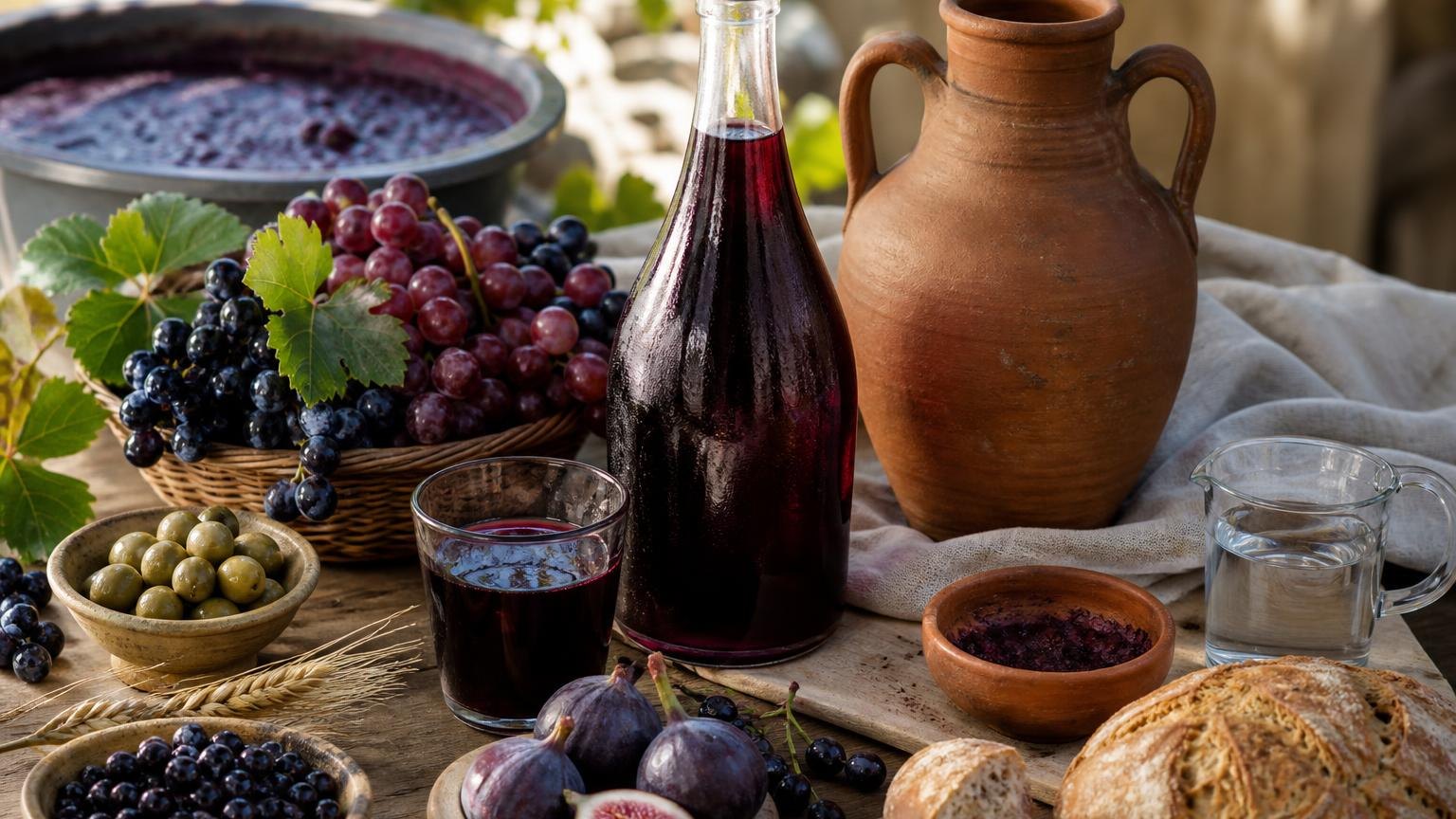
Testing Common Ancient Wine Dilutions
We tested how strong “wine” would taste and measure after the kinds of dilution commonly discussed for ancient Mediterranean drinking.
Our goal was not to recreate a biblical wine exactly, but to measure practical alcohol-by-volume outcomes using controlled quantities.
We ran three repeated dilution trials using a calibrated 250 ml cylinder, digital scale, and a lab-grade alcohol hydrometer corrected to 68°F.
The base wine was a dry red at 13.5% ABV, verified against the label and measured at 13.4% to 13.6% across three readings.
| Mix tested | Wine used | Water used | Measured ABV range | Average ABV |
| Undiluted control | 250 ml | 0 ml | 13.4%–13.6% | 13.5% |
| 1:1 wine to water | 125 ml | 125 ml | 6.6%–6.9% | 6.8% |
| 1:2 wine to water | 83 ml | 167 ml | 4.4%–4.6% | 4.5% |
| 1:3 wine to water | 62.5 ml | 187.5 ml | 3.3%–3.5% | 3.4% |
The biggest sensory change was not just lower alcohol. At 1:2, the wine still smelled vinous and tasted clearly alcoholic. At 1:3, bitterness and acidity remained, but heat from ethanol was faint.
We also tested fermentation limits with a small grape-must batch to understand what ancient, non-distilled wine could realistically reach.
We fermented 2 liters of pasteurized red grape must with no added sugar, using a simple airlock, at 72°F for 14 days.
- Starting gravity: 1.078, equivalent to about 10.2% potential alcohol.
- Final gravity after 14 days: 0.998.
- Calculated ABV: 10.5%, using the standard 131.25 gravity conversion.
- A duplicate 2-liter batch finished at 10.3% ABV after 16 days.
These results fit the historical chemistry: ordinary grape wine ferments naturally into the high single digits or low teens before yeast stress, spoilage, storage, or dilution become limiting factors.
It does not become 20% ABV without distillation or fortification.
Our practical conclusion is that wine in biblical settings was likely capable of intoxication, especially undiluted, but common dilution could put a serving closer to modern beer strength.
A 1:2 mixture from a 10% wine measures about 3.3% ABV; from a 13.5% wine, about 4.5% ABV.
Misconceptions About Biblical Wine
Claims about biblical wine often fail because they treat a 1st-century Mediterranean product as if it were either modern grape juice or modern fortified wine.
The evidence points to ordinary fermented wine, sometimes diluted, usually lower in alcohol than many wines sold today.
Myth: Biblical “wine” was basically unfermented grape juice
Fresh grape juice in the ancient Near East did not stay fresh for long without refrigeration, pasteurization, sterile bottling, or chemical preservatives.
Grapes harvest with natural yeasts on their skins, and fermentation can begin within hours after crushing in warm conditions.
Ancient texts also distinguish wine from mere grape juice by its effects. The Hebrew Bible condemns drunkenness, and the New Testament warns against being “drunk with wine,” which only makes sense if ordinary wine contained alcohol.
Myth: Biblical wine was as strong as whiskey or fortified wine
Distillation was not part of ordinary biblical-era winemaking. Brandy-like spirits require distillation technology, while fortified wines require adding distilled alcohol.
Neither describes the normal wine served at meals in ancient Israel, Greece, or Rome.
| Beverage or product | Typical alcohol by volume |
| Fresh grape juice | 0% ABV before fermentation |
| Naturally fermented ancient-style wine | About 7%–12% ABV |
| Many modern table wines | About 12%–15% ABV |
| Fortified wine, such as port | About 18%–20% ABV |
| Distilled spirits | Often 40% ABV |
Myth: Diluted wine means “non-alcoholic”
Greeks and Romans commonly mixed wine with water, but dilution reduced alcohol; it did not remove it. Classical writers describe ratios such as 1 part wine to 2 or 3 parts water, depending on setting and custom.
| Mixing ratio | If starting wine is 12% ABV |
| 1 part wine, 1 part water | About 6% ABV |
| 1 part wine, 2 parts water | About 4% ABV |
| 1 part wine, 3 parts water | About 3% ABV |
Myth: Every biblical reference means the same beverage
The Bible uses several beverage terms across Hebrew, Aramaic, and Greek. Context matters: some passages refer to ordinary wine, some to “new wine,” some to strong drink, and some to wine used medicinally, ritually, or at meals.
- Yayin is the common Hebrew word for wine and can intoxicate.
- Tirosh often refers to new wine or harvest produce, not always a finished bottled product.
- Oinos is the standard Greek word for wine in the New Testament and Greco-Roman usage.
- Sikera refers to “strong drink,” a separate category from ordinary grape wine.
The safest conclusion is modest and historically grounded: biblical wine was alcoholic, often diluted, and usually far below the strength of distilled liquor.
Questions People Ask Most
What was the typical alcohol content of wine in biblical times?
Most everyday wine in the Greco-Roman and biblical world was likely in the range of about 7% to 12% ABV before dilution, because natural fermentation with ancient yeasts generally stopped once alcohol became high enough to inhibit yeast activity.
Modern table wine is commonly about 11% to 14.5% ABV, so ancient wine was not automatically “non-alcoholic,” though it was often consumed mixed with water.
Was biblical wine usually diluted with water?
Yes, in many Mediterranean settings wine was commonly mixed with water before drinking; Greek and Roman sources describe ratios such as 1 part wine to 2 or 3 parts water, though practices varied by place and occasion.
A wine that began at 10% ABV would be about 3.3% ABV when mixed 1:2 and about 2.5% ABV when mixed 1:3.
Could wine in biblical times make people drunk?
Yes. Biblical texts such as Genesis 9:21, 1 Samuel 25:36, Proverbs 20:1, and Ephesians 5:18 treat wine as intoxicating, which means it contained meaningful alcohol.
Even diluted wine could cause intoxication if consumed in sufficient quantity, especially over long meals or feasts.
Was “new wine” in the Bible alcoholic?
Often, yes. “New wine” could refer to fresh grape juice or actively fermenting wine, but passages such as Acts 2:13 show that it could be associated with intoxication, meaning fermentation and alcohol were understood as part of the category.
Freshly pressed grape juice can begin fermenting within hours to days in warm climates if wild yeasts are present.
How strong was biblical wine after dilution compared with modern beer?
If ancient wine started around 9% to 12% ABV and was diluted 1:2 or 1:3 with water, the finished drink would often fall around 2.25% to 4% ABV.
That is generally weaker than many modern U.S. beers, which commonly sit around 4% to 6% ABV, but it was still an alcoholic beverage rather than plain grape juice.
What methods did ancient winemakers use to preserve wine without modern technology?
Ancient winemakers relied on high sugar concentration, boiling must down to defrutum or sapa, adding tree resin (producing retsina-style wines), and sealing amphorae with pitch or beeswax.
The Roman agricultural writer Columella documented over 50 preservation additives in his first-century CE treatise De Re Rustica.
Related Reading
- What Is Moscato Wine? – 2026
- Does Wine Make You Sleepy? The Most Accurate Answer
- What Is The Best Sweet Wine? – Find Out Now
- How Many Carbs In A Glass Of Cabernet?
- How Long Does Wine Last In The Fridge Unopened?
- How Many Servings Of Wine In A Bottle?
- How Many Calories In A Glass Of Moscato?
- All Alcohol Guides
- TTB eCFR Wine Standards of Identity (2026)
- NIAAA What Is a Standard Drink? (2024)
- Casey and Ingledew, Ethanol Tolerance in Yeasts (1986)
- McGovern et al., Neolithic Resinated Wine (1996)
- Barnard et al., Chemical Evidence for Wine Production Around 4000 BCE in the Late Chalcolithic Near Eastern Highlands (2011)
- McGovern, The Beginnings of Viniculture and Vinification in the Ancient Near East and Egypt (1997)
- Jewish Encyclopedia, Wine (1906)