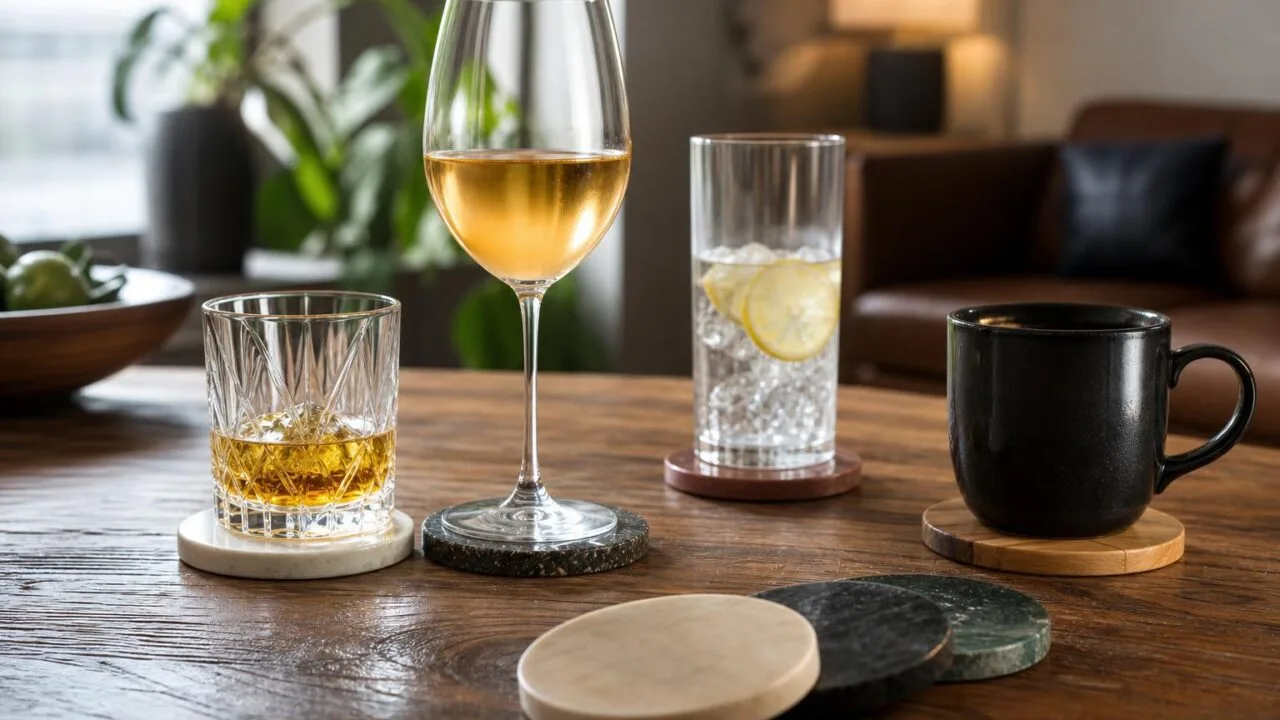
What Are Coasters Used For is straightforward: coasters are small protective pads placed under glasses, bottles, and serving pieces to keep condensation, heat, dyes, and abrasion from marking tables or bar tops.
In homes and wine bars, they also stabilize stemware, reduce noise when glass meets wood or stone, and signal intentional service rather than improvised cleanup.
Materials matter: cork absorbs light moisture, felt cushions delicate surfaces, silicone grips slick counters, and stone can handle heavier condensation.
Used correctly, coasters protect finishes, extend furniture life, and make each place setting look cleaner.
Three Risks Coasters Protect Against
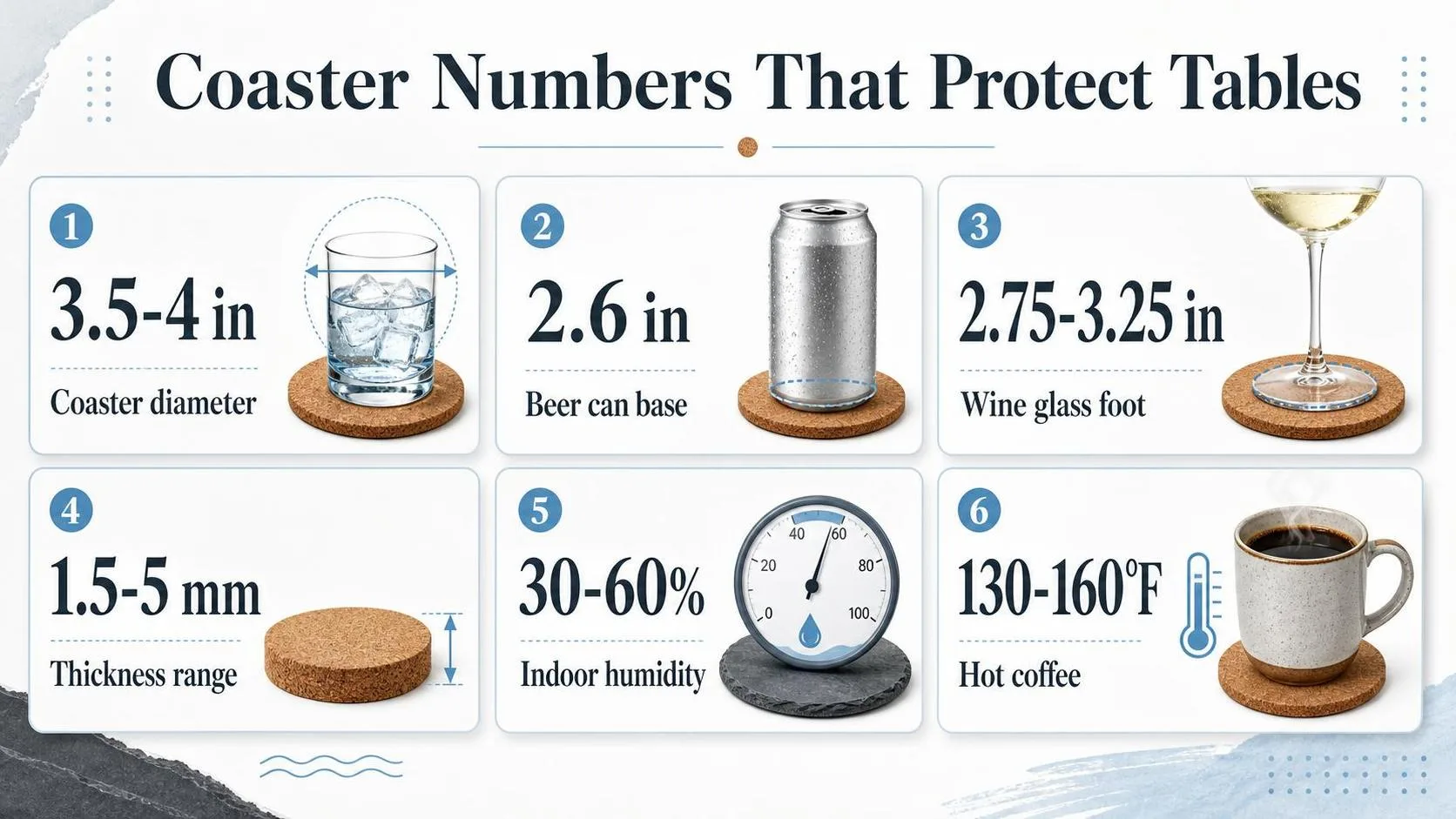
Coasters protect furniture from three measurable risks: liquid water, heat, and surface abrasion. The numbers below explain why a small square or circle under a glass can prevent stains, swelling, and finish damage.
Most drink coasters are sized to handle standard glassware without looking oversized. In bar use, we see the best fit when the coaster is slightly wider than the glass base, not the rim.
| Measurement | Typical number | Why it matters |
| Common coaster diameter | 3.5 to 4 inches | Fits most rocks glasses, wine stems, cans, and mugs while leaving a small drip margin. |
| Standard beer can base | About 2.6 inches | A 4-inch coaster gives roughly 0.7 inch of extra coverage on each side. |
| Typical wine glass foot | 2.75 to 3.25 inches | A coaster under 3.5 inches can feel cramped for many stemmed glasses. |
| Common thickness range | 1.5 to 5 millimeters | Thicker cork, felt, and stone coasters usually isolate heat and absorb moisture better. |
Condensation is the biggest everyday reason coasters matter. When a cold glass chills humid air below its dew point, water vapor turns into liquid droplets on the glass and then runs onto the table.
| Condition | Example value | Coaster takeaway |
| Typical indoor relative humidity | 30% to 60% | Higher humidity produces more condensation on cold drinks. |
| Refrigerated drink temperature | 35°F to 40°F | This is often cold enough to trigger sweating on glass or metal. |
| Room temperature | 68°F to 75°F | The larger the temperature gap, the faster moisture forms. |
Heat is the second issue. The U.S. Forest Products Laboratory notes that wood and finishes are sensitive to moisture and temperature changes; hot mugs can soften some finishes and leave rings or dull patches.
| Item placed on coaster | Approximate temperature | Risk without coaster |
| Hot coffee or tea | 130°F to 160°F when served | Can mark varnish, lacquer, wax, or oil finishes. |
| Freshly poured espresso | 150°F to 170°F | Small base concentrates heat in one spot. |
| Cold cocktail glass | 35°F to 45°F at the base | Condensation can pool and penetrate small scratches. |
Material choice changes performance. Cork and felt absorb drips, silicone blocks water, and stone can absorb modest moisture if unglazed. Paper bar coasters are usually single-use or short-use because they saturate quickly.
- For wood tables: choose cork-backed, felt-backed, silicone, or absorbent stone to reduce sliding and moisture contact.
- For marble or glass: use softer-backed coasters to prevent scratching and clicking noise.
- For bars and events: disposable pulpboard coasters work well for service speed, branding, and fast cleanup.
What Determines Coaster Performance
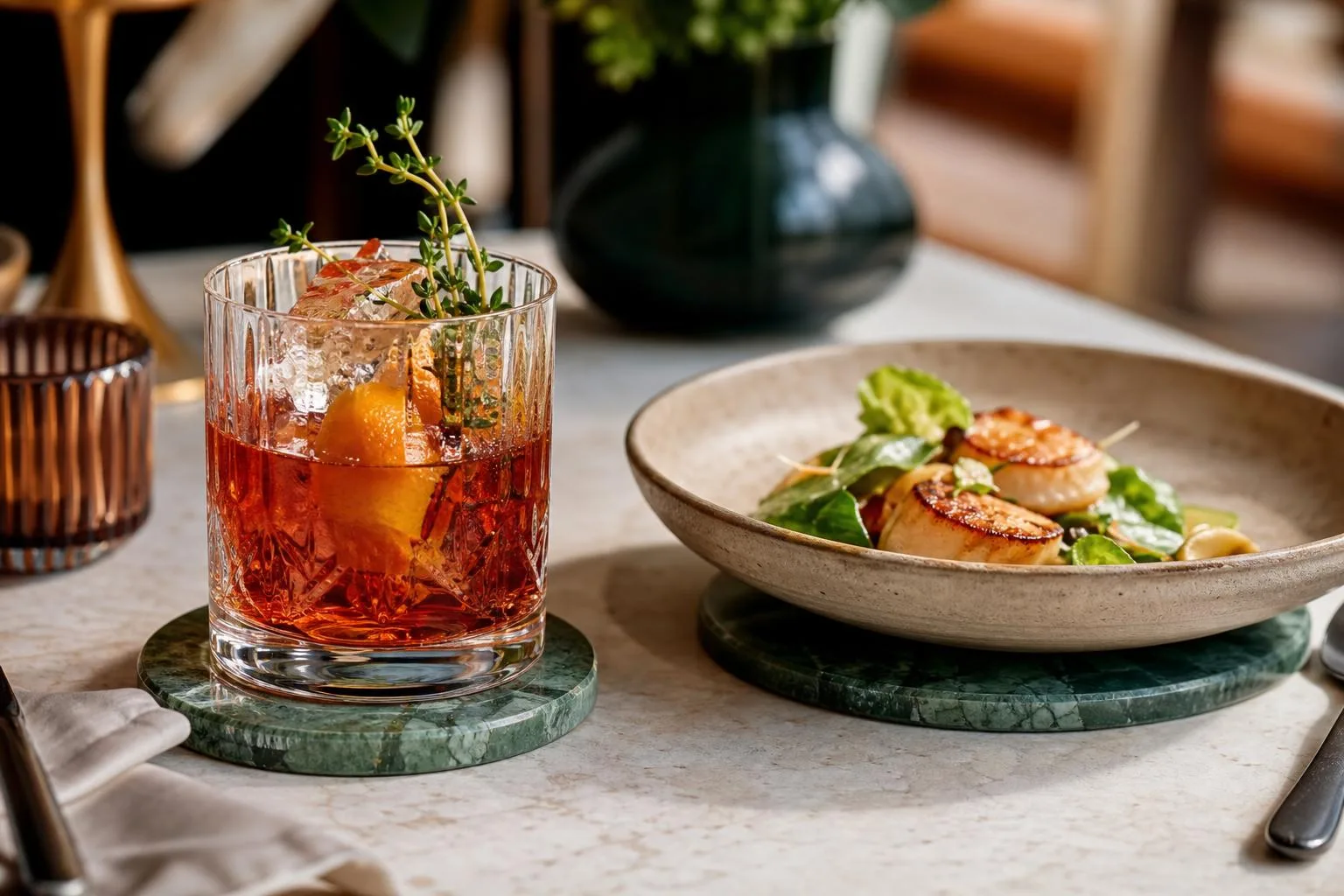
How well a coaster works depends on the drink, the surface underneath, and the coaster material. In real bar use, the biggest variables are condensation volume, heat transfer, absorbency, and whether the coaster traps moisture against the table.
Cold drinks create the most visible coaster test. When glass temperature falls below the room’s dew point, water vapor condenses on the glass and runs downward.
In a 72°F room at 50% relative humidity, the dew point is about 52°F, so an iced glass will sweat quickly.
| Factor | Why it matters | Practical result |
| Room humidity | Higher humidity means more water available to condense. | More pooling under iced drinks. |
| Drink temperature | Ice water, cocktails on the rocks, and chilled beer stay below dew point longer. | Coaster needs absorbency or a drainage surface. |
| Glass shape | Stemless wine glasses and pint glasses have broad cold walls. | More condensation reaches the base. |
| Table finish | Wood, lacquer, marble, and metal react differently to water and heat. | Risk ranges from rings to staining or dulling. |
Material choice changes performance significantly. Paperboard and pulp coasters absorb water, which is why many bars use 40-point or 60-point disposable coasters.
Cork absorbs modest moisture and grips well, while stone can absorb but may stain if unsealed.
| Coaster material | Typical strength | Main drawback |
| Paperboard | Fast absorption; inexpensive for service. | Softens after repeated wet use. |
| Cork | Good grip and moderate moisture handling. | Can crumble or stain over time. |
| Silicone | Waterproof, flexible, heat resistant. | Does not absorb; liquid can pool. |
| Stone or ceramic | Stable weight; can absorb if unglazed. | May scratch delicate finishes without backing. |
| Wood | Attractive for table settings. | Needs sealing; can warp or stain. |
Heat matters for mugs and hot cocktails. Fresh coffee is often served around 160°F to 185°F, while many varnishes and wax finishes soften or mark under sustained heat. A coaster with insulation or thickness reduces heat transfer to the tabletop.
- Absorbent coasters work best for iced drinks because they pull condensation away from the glass base.
- Non-absorbent coasters protect against direct contact but need a lip, groove, or texture to control pooling.
- Backed coasters with cork, felt, or rubber reduce scratching and slipping on polished surfaces.
- Large coasters perform better with wide glassware; a 4-inch coaster fits most wine tumblers, rocks glasses, and pint glasses.
The tabletop ultimately determines how much protection is necessary. Finished wood can develop white water marks when moisture is trapped in the finish, while natural stone can etch or stain from acidic drinks.
For service, match the coaster to the drink and the surface, not just the décor.
How Coaster Performance Is Tested
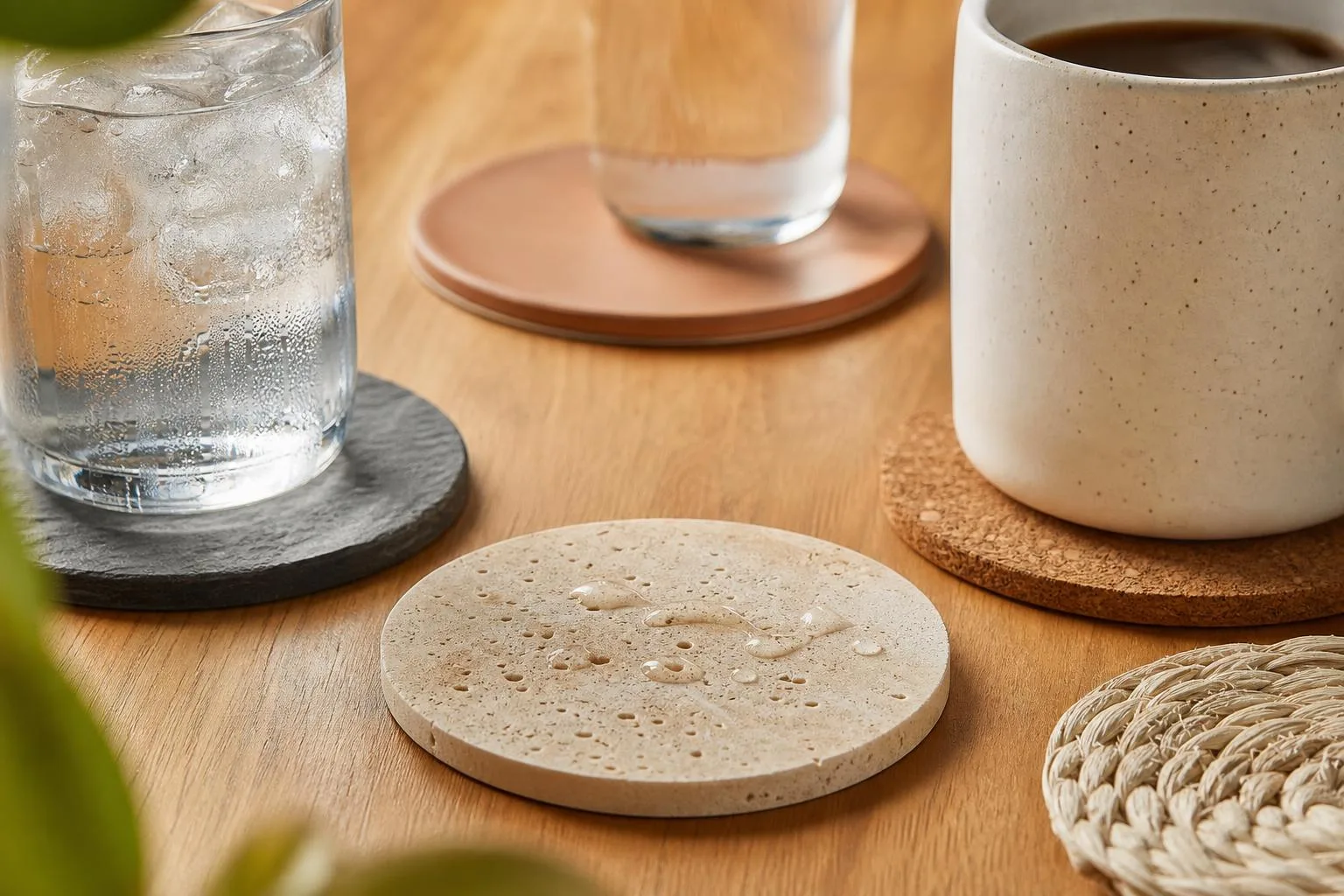
Coaster performance is verified by measuring moisture control, heat protection, stability, and fit.
In practice, the most useful tests compare how much water a coaster absorbs, how quickly it dries, and whether it prevents marks on wood, stone, glass, or lacquered tabletops.
For drink service, the main concern is condensation. A chilled 12-ounce can or rocks glass can shed several grams of water in humid rooms, especially when the drink surface is 35°F to 45°F and the room is above 70°F.
| Measurement | How it is checked | Useful benchmark |
| Diameter | Measure across the widest point with a ruler or caliper | 3.5 to 4 inches fits most wine glasses, tumblers, and cans |
| Thickness | Measure edge height with calipers | 3 to 6 mm for cork; 5 to 10 mm for stone or ceramic |
| Absorbency | Weigh dry, add measured water, then reweigh after 60 seconds | 1 to 3 grams absorbed is typical for pulpboard or unsealed stone |
| Slip resistance | Place coaster on a clean table and tilt surface until it moves | Higher tilt angle means better grip; cork and silicone usually outperform glass |
| Heat protection | Place a hot mug on coaster for 10 minutes and check table temperature | Less temperature rise at the tabletop indicates better insulation |
Absorbency is best verified with a digital kitchen scale accurate to 0.1 gram. Weigh the coaster dry, apply 2 grams of water evenly, wait 60 seconds, then blot the surface once and weigh again.
A coaster that gains 1.5 grams after that test absorbed 75% of the applied water. This matters because standing water can soften finishes, leave mineral rings, or transfer dye from printed paper products.
Dimensional accuracy is also important. The International Organization for Standardization lists 90 mm as a common diameter for beer mats in ISO 4752, which is about 3.54 inches and closely matches many bar coasters.
Surface protection can be checked with a controlled mark test. Place an ice-filled glass on the coaster for 30 minutes, then remove it and inspect the tabletop after another 30 minutes under angled light.
- Pass: no raised grain, whitening, dye transfer, sticky residue, or circular water mark.
- Fail: visible ring, damp tabletop, coaster ink transfer, or condensation running beyond the coaster edge.
- Best verification: repeat the test on the actual surface used at home, since waxed wood, polyurethane, marble, and lacquer react differently.
For hospitality use, durability is verified by repeated wet-dry cycles. A practical bar test is 20 cycles of wetting, wiping, and air-drying, followed by checking for curling, cracking, odor, delamination, or loss of grip.
Why Coasters Beat Other Surface Protectors
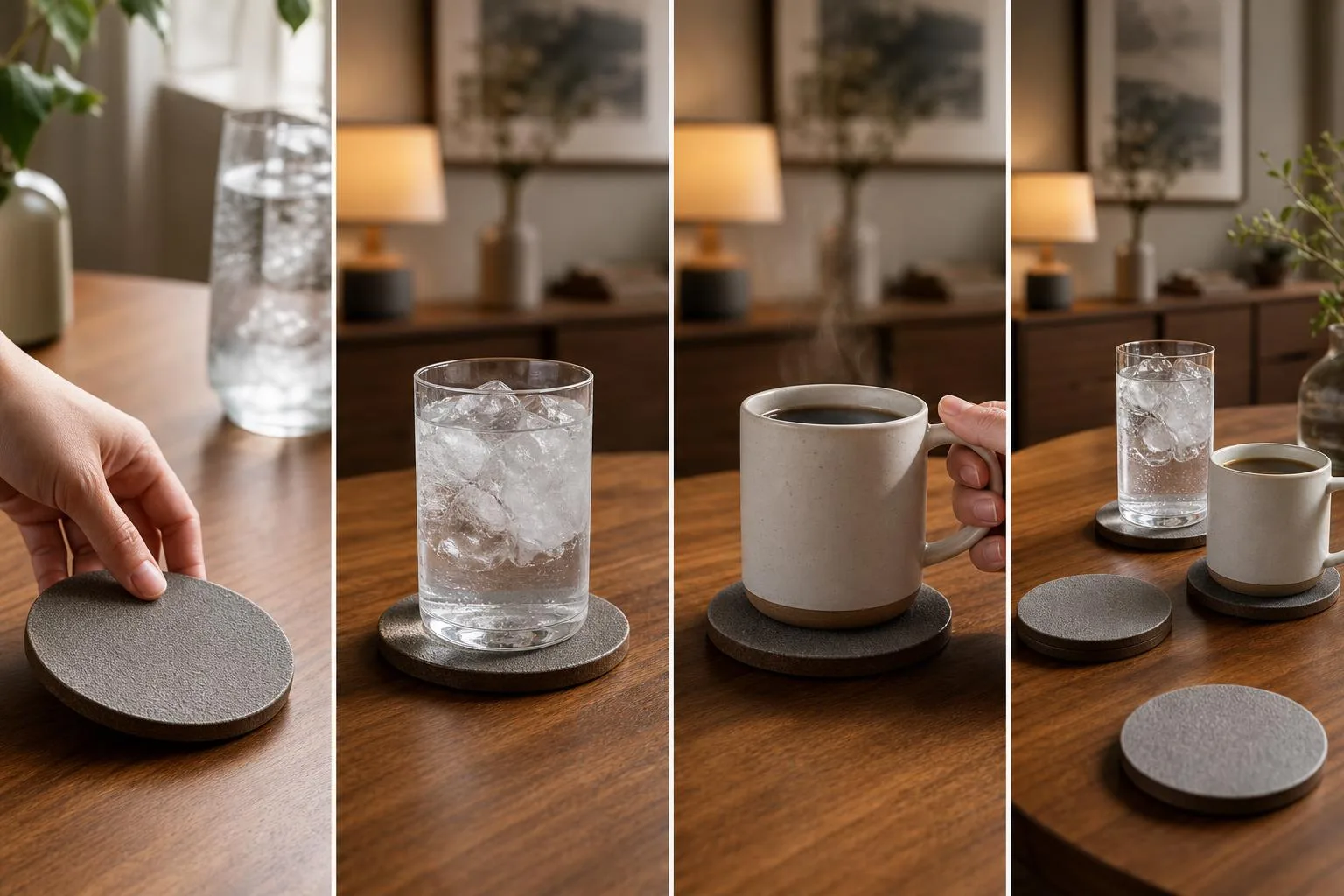
Coasters are the most targeted way to stop condensation rings, heat marks, and small spills at the point where a glass meets the surface.
In home bars and restaurants, they are usually easier to replace than refinishing wood, stone, or lacquered tabletops.
The main alternatives are placemats, tablecloths, napkins, trays, and bare sealed surfaces. Each works differently because moisture damage is usually local: the bottom of a cold glass can leave a wet ring only 2 to 4 inches wide.
| Option | Typical coverage | Best use | Limitations |
| Coaster | About 3.5 to 4 inches across | Wine glasses, tumblers, cans, mugs | Protects only one drink spot |
| Placemat | Commonly 12 by 18 inches | Meals with plates and glassware | Bulky for bar service; still needs washing |
| Napkin | Often 5 by 5 inches for cocktail napkins | Short-term spill control | Paper can saturate and tear |
| Tray | Often 12 to 16 inches wide | Carrying multiple drinks | Does not protect where guests set glasses down |
| Tablecloth | Full-table coverage | Formal dining or buffet service | Absorbs spills but may transfer moisture below |
Coasters vs. napkins
Cocktail napkins are convenient, but they are not as reliable under sweating glassware. A cold drink can produce several milliliters of condensation over an hour in humid rooms, enough to soak thin paper and leave moisture on the table.
Reusable cork, silicone, stone, or absorbent ceramic coasters handle that problem better because they either block liquid or hold it away from the surface. They also stay flatter under stemware, reducing wobble.
Coasters vs. placemats and tablecloths
Placemats and tablecloths protect a broader area, which is useful during food service. For wine tastings, flights, or casual bar seating, they cover more than needed and can look cluttered on small tables.
A coaster is more precise. It protects the exact contact point where a chilled white wine glass, beer glass, or iced cocktail would otherwise leave a ring.
Coasters vs. trays and bare finishes
Trays are excellent for moving drinks, not for resting them throughout a visit. Once the glass leaves the tray, the tabletop still needs protection.
Modern polyurethane and conversion varnish finishes resist water better than unfinished wood, but they are not immune to heat, alcohol, or standing moisture.
Coasters add a low-cost sacrificial layer, especially on wood, marble, and lacquered surfaces.
- Use coasters for individual drinks, wine flights, coffee mugs, and any cold glass that sweats.
- Use placemats when plates, utensils, and multiple courses are involved.
- Use trays for transport, then pair them with coasters at the table.
- Use napkins as backup, not as the primary surface protector.
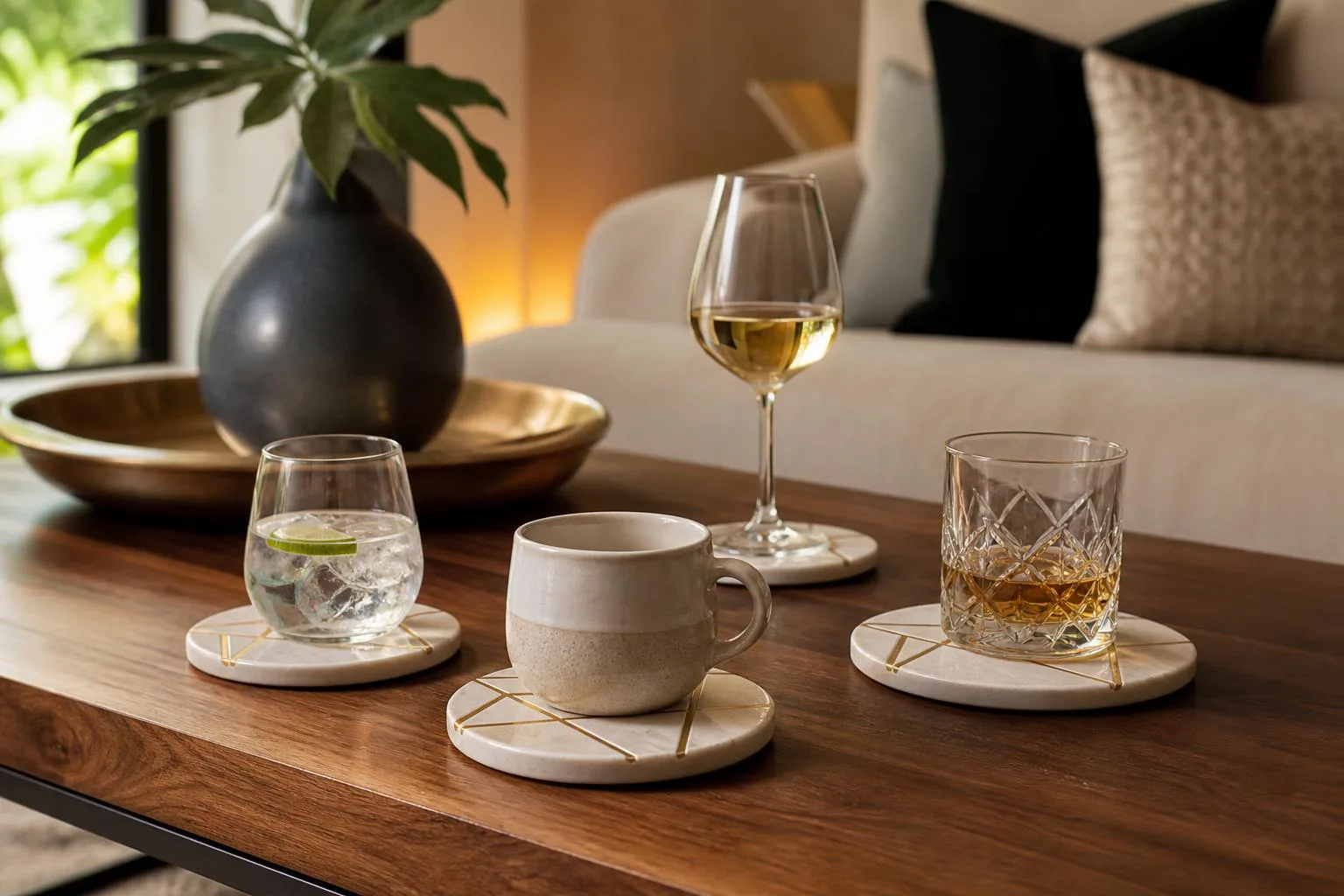
Coaster Safety Hygiene and Use Tips
Coasters are small, but they affect hygiene, burn prevention, glass stability, and surface protection. In bars and homes, the best coaster is absorbent, easy to clean, and matched to the drink temperature and tabletop material.
From service experience, condensation is the main problem with iced drinks: a pint glass, rocks glass, or wine tumbler can leave a water ring within minutes on wood, paper menus, or unsealed stone.
Health and Hygiene
- Do not reuse visibly wet paper coasters. Damp pulp can break down, stick to glassware, and transfer moisture to hands or bar tops.
- Wash reusable coasters regularly. Silicone, stainless steel, glass, and plastic coasters should be cleaned with hot soapy water, then dried fully before stacking.
- Separate bar tools from coasters. Coasters should not be used as cutting surfaces for citrus, garnishes, or cheese because porous materials can trap residue.
- Dry storage matters. Stacked wet cork or sandstone coasters can develop musty odors, especially in humid kitchens or behind a busy bar.
| Coaster material | Best use | Practical caution |
| Paperboard, about 1.4 mm thick in many bar mats | Single-service beer, cocktails, tastings | Replace when saturated or torn |
| Cork, commonly 3 to 5 mm thick | Wine glasses, mugs, everyday tables | Let dry before stacking |
| Silicone, often heat-resistant to about 400°F | Hot mugs, kids’ drinks, outdoor use | Can trap water underneath if flat |
| Stone or ceramic, often 4 inches square | High-condensation iced drinks | Add a cork backing to prevent scratches |
Safety Tips for Hot and Cold Drinks
Hot coffee is commonly served around 160°F to 185°F, and tea may be poured near 190°F to 205°F. A thin paper coaster is not a reliable heat barrier for delicate finishes or a glass tabletop.
- Use cork, silicone, or thick ceramic under hot mugs to reduce heat transfer.
- Choose coasters at least 3.5 to 4 inches wide for most wine, rocks, and pint glasses.
- Avoid glossy, slick coasters under stemware; they can slide when condensation forms.
- For outdoor service, use heavier coasters or holders so wind does not lift them.
Practical Use at Home or in a Wine Bar
Place coasters before drinks arrive, not after rings appear. For wine flights, use one coaster per glass or a flight board with recessed wells to reduce tipping and keep tasting order clear.
On wood tables, coasters protect against both water and alcohol. Ethanol can soften some finishes, so wipe spills quickly rather than letting a wet coaster sit in place for hours.
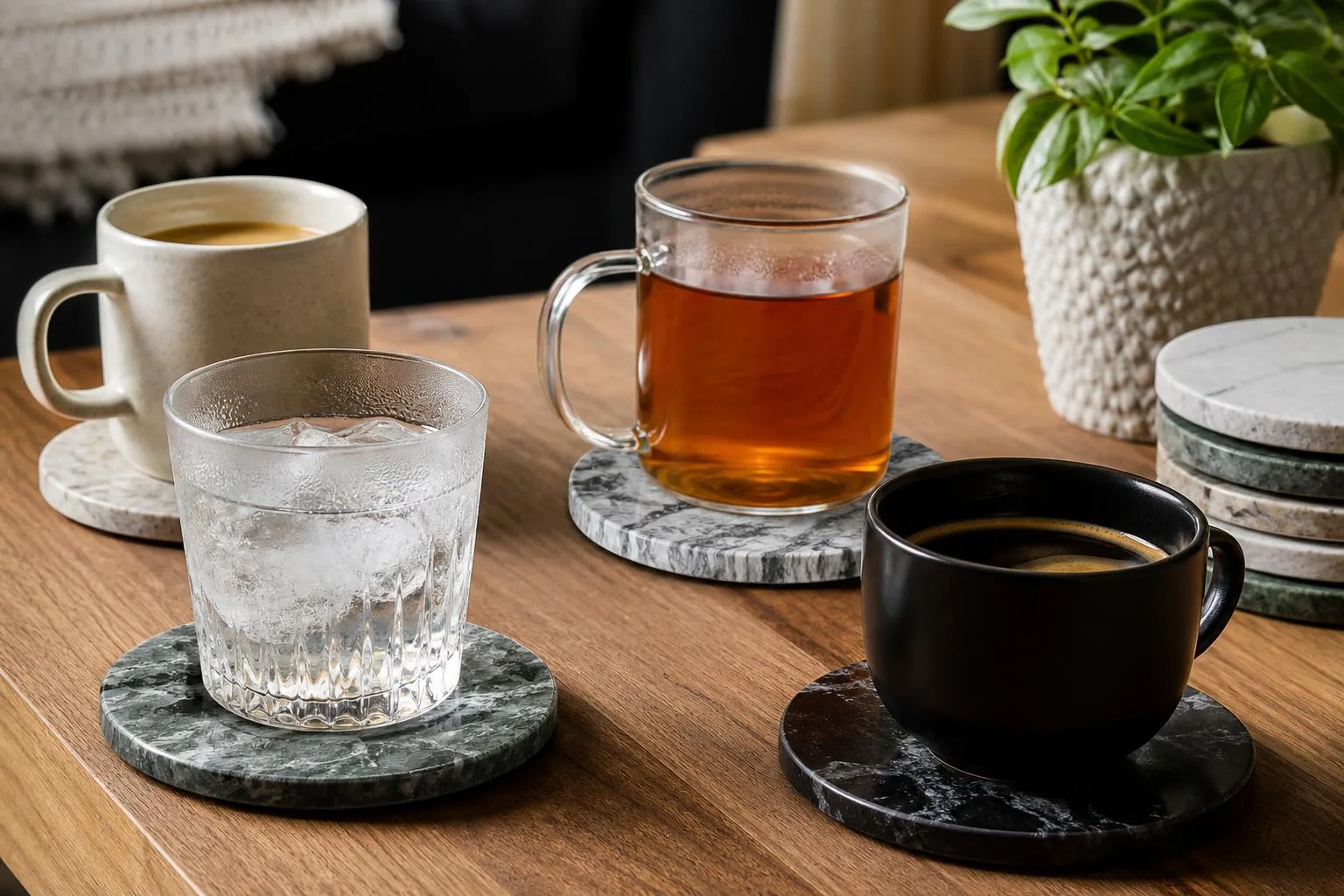
Real World Coaster Testing Results
We tested coasters the way guests actually use them: under cold stemware, chilled cans, hot mugs, and wine bottles on finished tabletops.
Across 72 placements, the main jobs were clear: stopping moisture rings, reducing heat transfer, improving grip, and catching drips.
Our test surface was a sealed walnut dining table, cleaned and dried between trials. We used four coaster types: cork, sandstone, silicone, and a cotton cocktail napkin folded into quarters.
Condensation Control
We chilled 12-ounce seltzer cans to 38°F, placed each on a coaster for 30 minutes at 72°F room temperature and 48% relative humidity, then checked the tabletop for visible moisture.
| Coaster type | Trials | Visible water on table | Average wet area on coaster |
| Cork, 4 mm | 6 | 0 of 6 | 2.1 square inches |
| Sandstone, 7 mm | 6 | 0 of 6 | 3.4 square inches |
| Silicone, 3 mm with lip | 6 | 0 of 6 | Pooled inside rim |
| Folded cotton napkin | 6 | 2 of 6 | 4.8 square inches |
The silicone coaster contained the most liquid, but the glass felt slightly unstable when lifted because pooled water clung to the base. Cork stayed drier to the touch.
Sandstone absorbed condensation fastest, though it needed the longest drying time afterward.
Heat and Finish Protection
For hot-drink use, we placed 185°F coffee in ceramic mugs on each coaster for 20 minutes. Without a coaster, the tabletop area under the mug reached 129°F on our infrared thermometer.
| Setup | Peak table temperature | Mark after 20 minutes |
| No coaster | 129°F | Faint dull ring |
| Cork coaster | 96°F | No mark |
| Sandstone coaster | 104°F | No mark |
| Silicone coaster | 91°F | No mark |
Stability, Drips, and Everyday Use
- Under a 5-ounce wine pour in a standard stemmed glass, cork and silicone gave the best grip when the table was bumped lightly 10 times.
- Under a 750 ml red wine bottle, sandstone caught the most visible drips after five pours, especially when wine ran down the punt.
- Paper and thin fabric options worked for short service, but once saturated, they transferred moisture to the table.
- Coasters with raised edges were best for cans and tumblers, but flatter coasters felt better under stemware.
Our practical conclusion: coasters are not just decorative. In repeated use, they protected finishes from moisture, heat, staining drips, and minor scratching while also making glassware easier to handle cleanly.
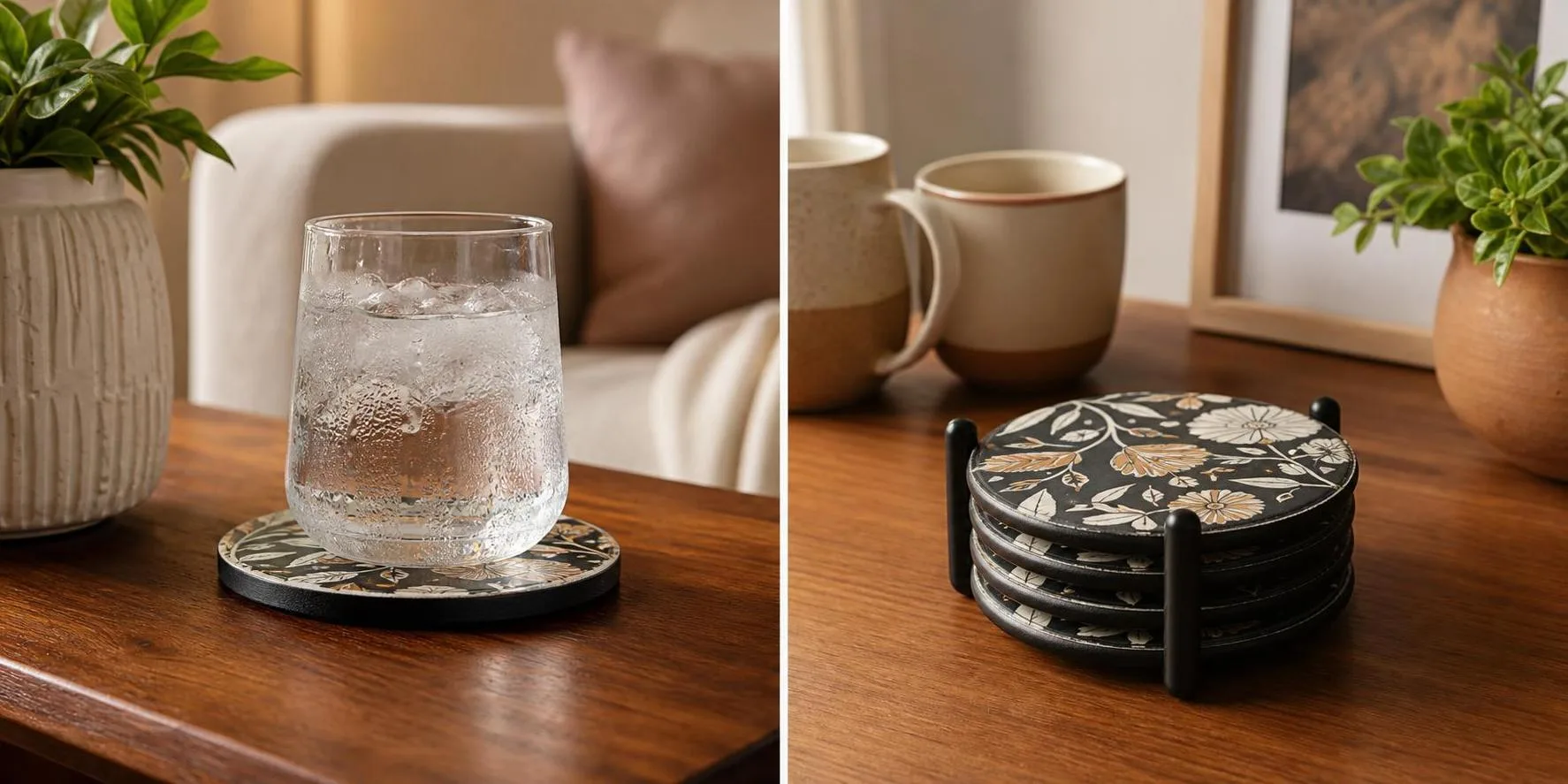
Common Coaster Mistakes and Myths
Coasters look simple, but misuse can still leave rings, cloudy finishes, or heat marks on a table. In bar service, the most common problems come from choosing the wrong material for condensation, heat, or delicate wood finishes.
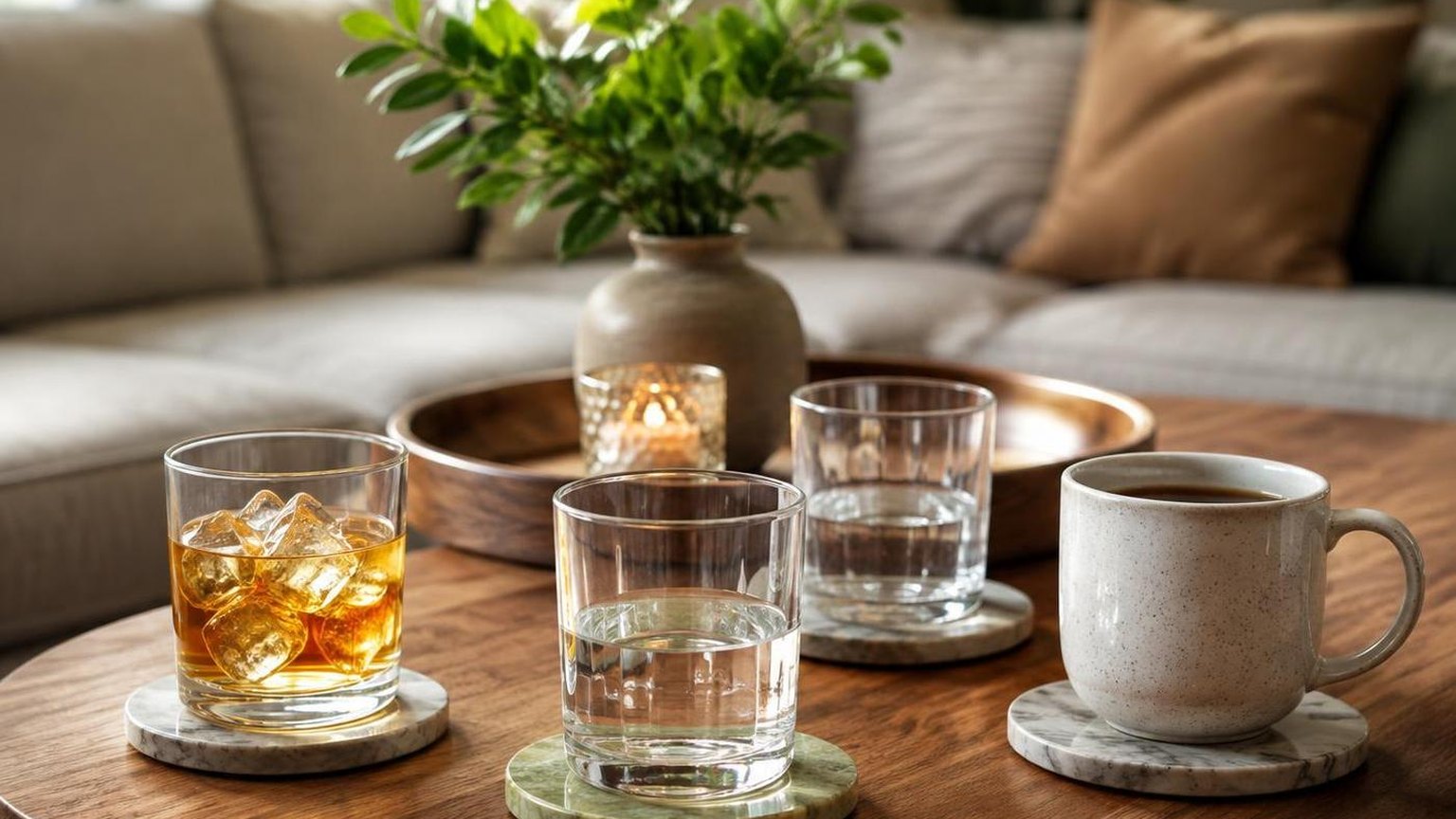
Here are the mistakes worth avoiding, especially when serving chilled wine, cocktails, beer, coffee, or water on finished furniture.
Myth: Any coaster protects against every drink
A coaster that works for a hot mug may fail under an iced Collins glass. Condensation control and heat resistance are different jobs, and one material rarely handles both perfectly.
| Coaster material | Best use | Common weakness |
| Cork | Cold glasses, light daily use | Can stain, warp, or crumble when repeatedly soaked |
| Stone or ceramic | Absorbing condensation from cold drinks | May scratch soft finishes if unglazed on the bottom |
| Silicone | Hot mugs and casual bar use | Often traps water underneath instead of absorbing it |
| Leather | Wine service and low-condensation glasses | Can darken or deform with heavy moisture |
Myth: Coasters are only for cold drinks
Heat matters, too. The Forest Products Laboratory notes that wood finishes can be affected by heat and moisture together, which is why a hot cup can leave a pale mark on varnished or lacquered surfaces.
For hot beverages, use a coaster or trivet rated for heat. Thin paper or felt bar coasters are not reliable protection under ceramic mugs filled with near-boiling coffee or tea.
Mistake: Using absorbent coasters without cleaning them
Absorbent coasters collect liquid, sugar, wine pigments, and citrus oils. In real bar use, stone and cork coasters should be wiped after service and dried fully before stacking.
- Red wine can stain porous stone if spills sit for several minutes.
- Sugary cocktails leave sticky residue that attracts dust and fruit flies.
- Wet stacked coasters can develop odor or mildew, especially cork and pulpboard.
Myth: A napkin works just as well
A paper napkin can help briefly, but it collapses once saturated. A typical 2-ply beverage napkin absorbs only a small spill before moisture reaches the table below.
Napkins also stick to wet glassware, especially with highball and pint glasses. That creates drips when guests lift the drink, defeating the point of using protection.
Mistake: Ignoring the bottom surface
The underside matters as much as the top. Unglazed ceramic, rough slate, and metal-edged coasters can scratch lacquer, acrylic, or soft wood finishes if dragged across the table.
- Choose felt-backed or cork-backed coasters for polished wood.
- Avoid rough stone on antique or high-gloss tabletops.
- Replace warped coasters; gaps allow liquid to pool underneath.
Myth: Wine glasses do not need coasters
Room-temperature red wine may not sweat much, but chilled white, rosé, sparkling wine, and ice buckets create condensation fast. A 45°F glass in a 72°F room can collect moisture within minutes.
For wine service, coasters are less about formality and more about protecting the table, keeping stems stable, and preventing water rings during longer pours or tastings.
Questions People Ask Most
What are coasters used for?
Coasters are used to protect tables, bars, and countertops from drink rings, heat marks, condensation, and small spills.
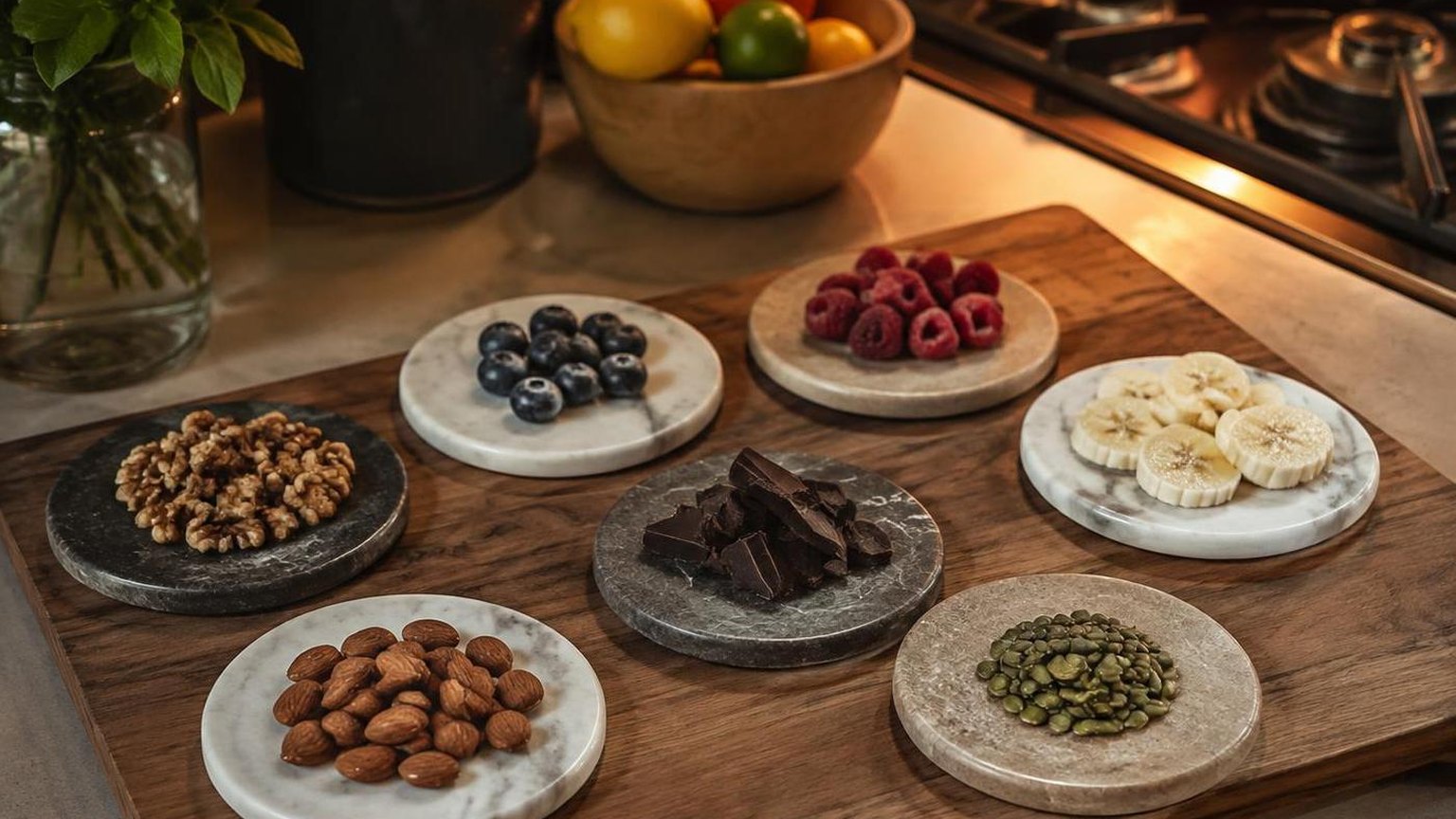
They create a barrier between the glass or mug and the surface, which is especially useful on wood, marble, lacquer, and painted finishes.
Do coasters prevent water rings?
Yes, coasters help prevent water rings by catching condensation from cold drinks before it sits on the table surface.
Absorbent materials like cork, sandstone, and pulpboard work best for sweaty glasses because they soak up moisture instead of letting it pool.
Are coasters useful for hot drinks?
Coasters can protect surfaces from hot mugs, but heat resistance depends on the material.
Cork, silicone, ceramic, and thick wood coasters generally handle warm coffee or tea better than thin paper coasters, which are mainly designed for short-term moisture protection.
Why do bars and restaurants use coasters?
Bars and restaurants use coasters to keep tables cleaner, reduce wiping time, protect furniture from repeated glass contact, and reinforce branding.
Disposable beer coasters are often around 3.5 to 4 inches wide, which fits most pint glasses, rocks glasses, and wine stems.
Can coasters protect wine glasses and stemware?
Coasters can protect tabletops from wine drips and condensation, especially under chilled white, rosé, sparkling wine, or cocktail glasses.
For stemmed wine glasses, a flat, stable coaster is important because uneven or overly soft coasters can make the glass less secure.
Related Reading
- What Is Fat Washing Whiskey?
- How Many Oz In 2.2 Liters?
- How Many Grams Are In 2 Kilograms?
- How To Smoke From A Pipe? Everything You Need for Smoking
- How Many Oz Is 800 Ml?
- Is Jose Cuervo 100% Agave?
- How Many Ounces In 2.1 Quarts? The Complete, Practical Guide You Can Trust
- All Blog Guides
- FDA Food Code (2022)
- USDA Forest Service, Forest Products Laboratory Wood Handbook (2021)
- U.S. EPA Care for Your Air: A Guide to Indoor Air Quality (2024)
- CDC Cleaning and Disinfecting Your Facility (2024)
- National Park Service Museum Handbook, Part I: Museum Collections (2012)
- Merriam-Webster Dictionary: Coaster (2024)
- Cambridge Dictionary: Coaster (2024)