
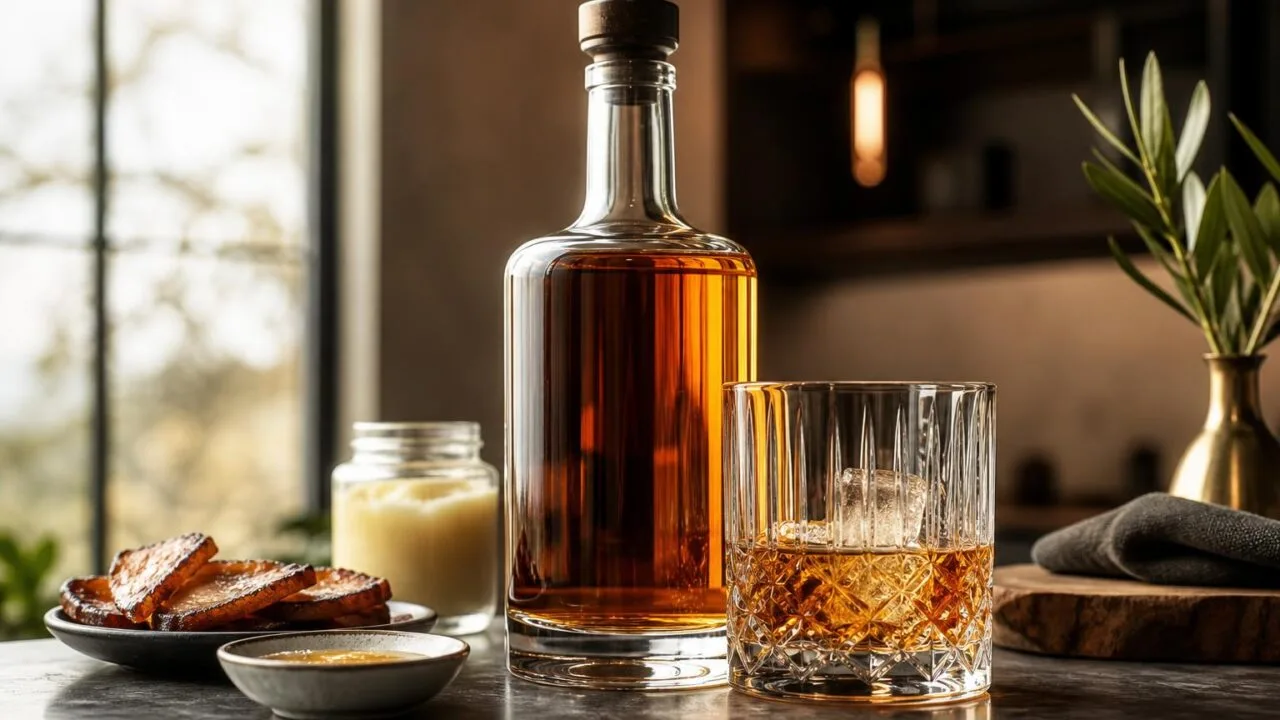
What Is Fat Washing Whiskey is a bartending technique that infuses whiskey with flavorful fat, then chills and removes the solidified fat to leave aroma, texture, and savory richness behind.
Bartenders commonly use bacon fat, browned butter, duck fat, coconut oil, or sesame oil.
The method became widely known after Benton’s Old Fashioned at PDT in New York, where bourbon was infused with smoky bacon fat. Done correctly, fat washing adds roundness without greasiness because the liquid is strained after freezing.
This article explains how it works, safe ratios, timing, and which fats pair best with different whiskey styles.
Ratios Temperature and Time
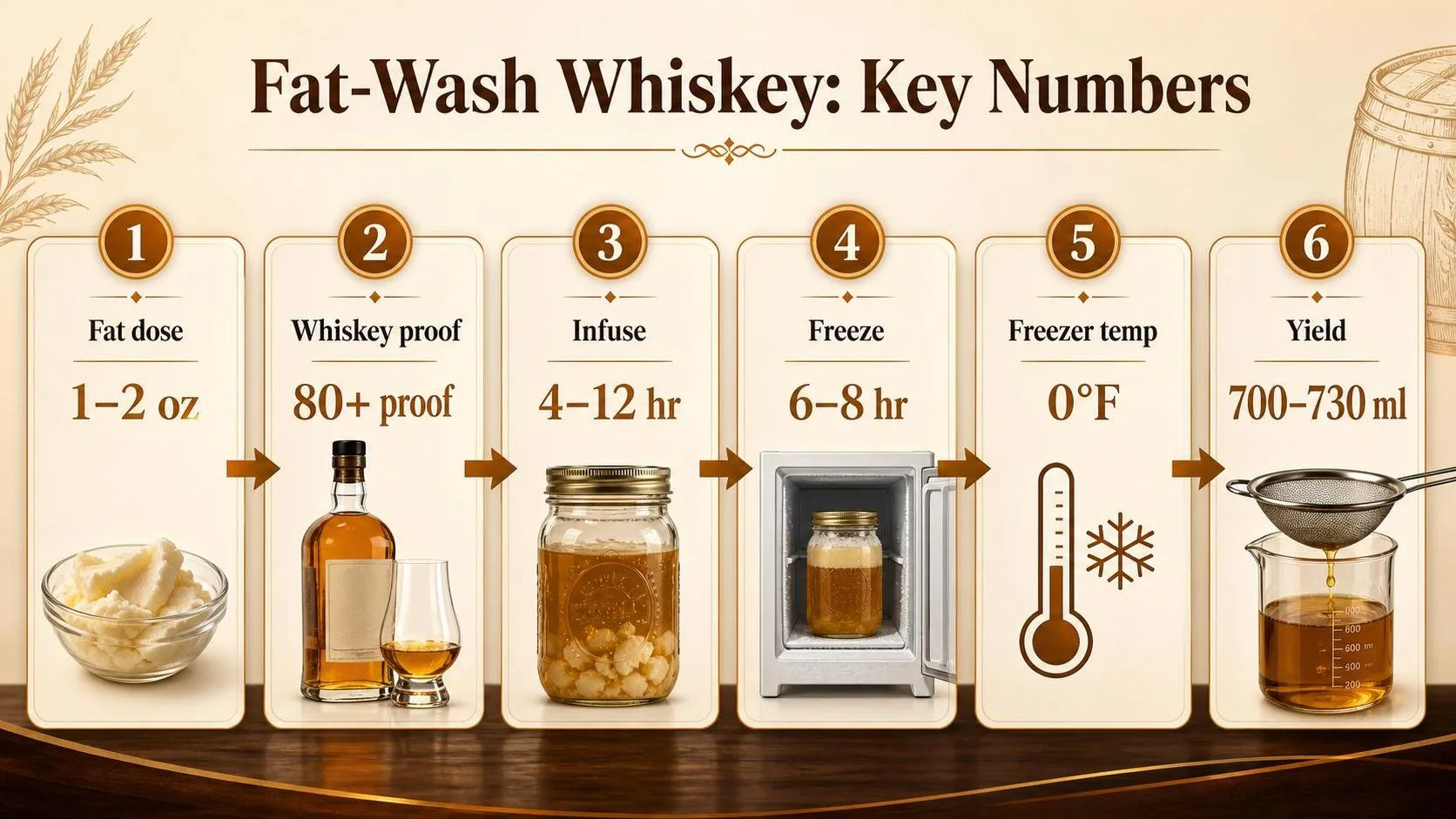
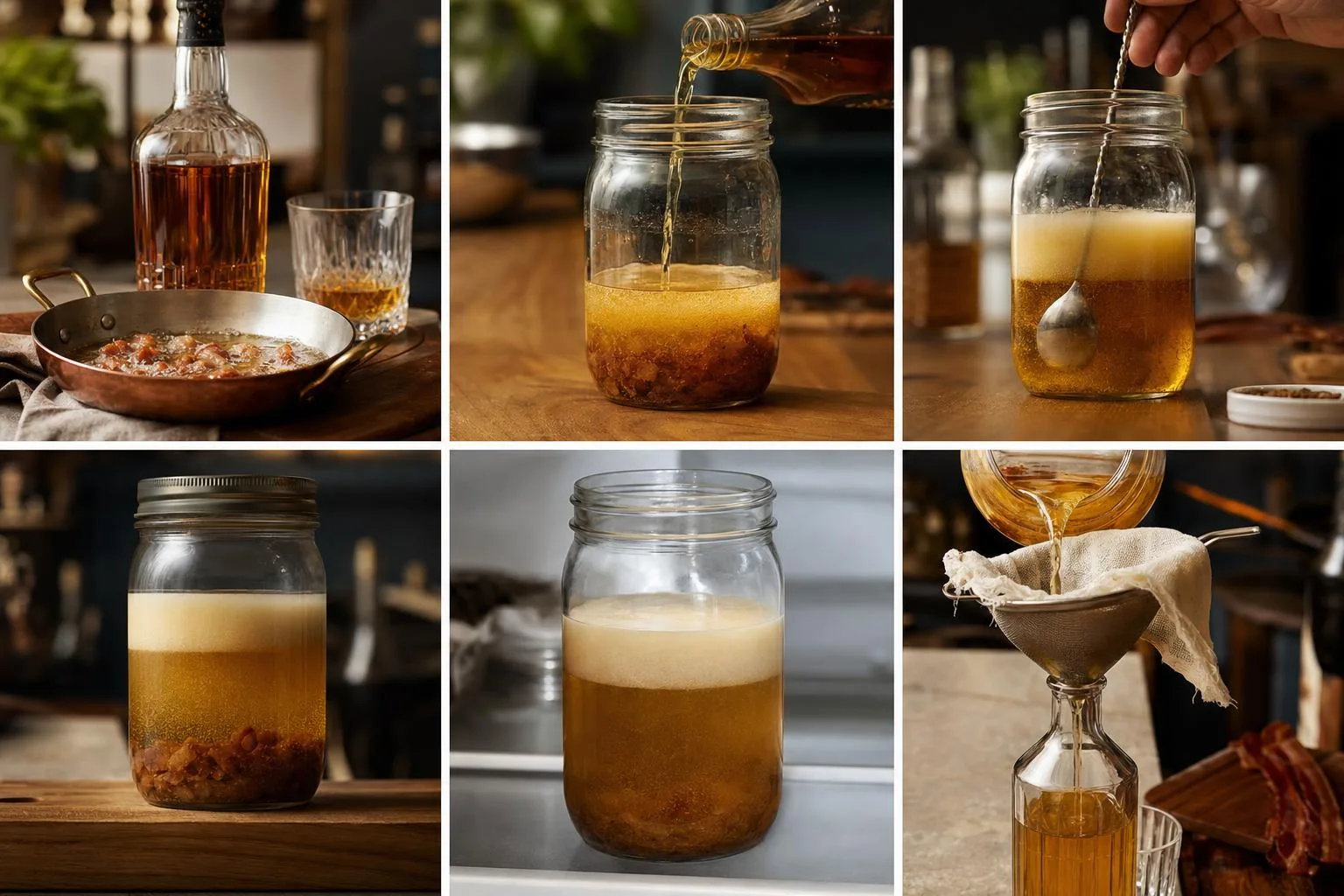
Fat washing whiskey is mostly a game of ratios, temperature, and time. The goal is to transfer fat-soluble aroma compounds into the alcohol, then chill the mixture until the fat solidifies and can be removed cleanly.
For a standard 750 ml bottle of whiskey, bartenders usually start with a modest fat dose. Too much fat can mute oak, grain, and proof-driven structure rather than simply adding texture.
| Ingredient | Starting ratio for 750 ml whiskey | Typical effect |
| Bacon fat | 1 oz / 30 ml rendered fat | Smoke, salt impression, savory aroma |
| Brown butter | 2 oz / 60 ml melted butter | Nutty, round, slightly creamy finish |
| Coconut oil | 1.5 oz / 45 ml oil | Tropical aroma, softer mouthfeel |
| Duck fat | 1 oz / 30 ml rendered fat | Rich, savory, slightly gamey depth |
Use whiskey at 40% ABV or higher. Ethanol carries hydrophobic aroma compounds that water alone cannot dissolve well, which is why full-strength whiskey works better than a pre-diluted cocktail base.
| Step | Useful number | Why it matters |
| Warm fat before mixing | Just melted, not frying-hot | Liquid fat disperses better through whiskey |
| Infusion time | 4 to 12 hours | Long enough for flavor transfer without dulling the spirit |
| Freezer temperature | 0°F / -18°C | Solidifies most fats for easier removal |
| Freeze time | 6 to 8 hours, or overnight | Creates a firm fat cap that strains cleanly |
| Fine straining | 2 passes recommended | Removes waxy particles and haze |
Food safety is the number that matters most with animal fats. The FDA Food Code defines the main temperature danger zone for time/temperature control foods as 41°F to 135°F, where bacterial growth is a concern.
- Do not leave bacon, butter, or duck-fat infusions at room temperature for extended service periods.
- After mixing, move the jar to the refrigerator or freezer as soon as practical.
- Keep the finished fat-washed whiskey refrigerated if any uncertainty remains about filtration or handling.
Expect some volume loss. After freezing and straining, a 750 ml bottle commonly yields about 700 to 730 ml, depending on the fat used and how aggressively you filter.
Factors That Shape Fat-Washed Whiskey
Fat washing whiskey is controlled by fat type, whiskey proof, contact time, temperature, and filtration. Small changes matter: a half ounce too much bacon fat can push a drink from savory to greasy, while poor chilling leaves haze and slick texture.
The goal is aroma transfer, not visible fat in the glass. Alcohol pulls fat-soluble flavor compounds from butter, oils, or rendered meat fat; freezing then solidifies the fat so it can be removed cleanly.
| Variable | Practical range | Effect on whiskey |
| Fat amount | 1 to 2 ounces fat per 750 ml whiskey | Subtle at 1 ounce; richer aroma and heavier mouthfeel near 2 ounces |
| Whiskey proof | 80 to 100 proof | Higher proof extracts flavor faster and holds bolder aromas |
| Room-temperature steep | 2 to 6 hours | Shorter for delicate butter; longer for bacon, duck fat, or coconut oil |
| Freezer time | 4 to 12 hours | Hardens the fat cap for cleaner separation |
| Filtration | 1 to 3 passes | More passes reduce haze and oily texture |
Fat choice
Butter gives whiskey browned dairy, caramel, and pastry notes, especially if browned to about 250°F to 300°F before mixing.
Bacon fat brings smoke, salt, and cured-meat aroma, but it can dominate quickly because rendered bacon fat carries intense volatile compounds.
Coconut oil works well with bourbon and rye because its lauric-fat profile gives a clean tropical aroma. Olive oil is harder to balance; peppery extra-virgin oils can clash with oak tannin and make the finish seem bitter.
Whiskey style and proof
Bourbon usually handles fat washing best because corn sweetness, vanillin, and charred-oak notes pair naturally with butter, bacon, or pecan oil. Rye can be excellent with duck fat or sesame oil, but its spice makes over-extraction more noticeable.
A 100-proof whiskey extracts faster than an 80-proof bottle because it contains 25% more alcohol by volume. That extra alcohol can intensify aroma, but it can also make smoky or salty fats seem sharper.
Temperature, time, and filtration
Warm liquid fat mixes more evenly, but it should not be hot enough to cook off whiskey aroma. In practice, melted fat around 100°F to 130°F is sufficient for butter, bacon fat, and coconut oil.
After steeping, freeze the mixture until the fat forms a firm cap. Strain through a fine mesh sieve first, then use a coffee filter. Professional bars often filter twice because even tiny droplets can create a greasy ring in a chilled cocktail.
- Use unsalted fats when possible: salt does not freeze out and can make the whiskey taste flat.
- Avoid burnt solids: blackened milk solids or scorched bacon bits add acrid bitterness.
- Record ratios: 1.5 ounces fat per 750 ml is a reliable starting point for testing.
How to Measure Fat Washing
Fat-washed whiskey is measured by weight, temperature, time, and filtration loss—not by guesswork. In a working bar program, verification means the finished spirit is clear, stable when chilled, and consistent in aroma, texture, and yield.
The most reliable method starts with a gram scale. Whiskey and fat should be weighed before infusion, after separation, and after final filtration. This confirms how much liquid was lost to the fat layer, filter media, and handling.
| Control Point | Typical Working Range | What It Verifies |
| Whiskey volume | 750 ml bottle, about 25.4 fl oz | Baseline batch size |
| Rendered fat added | 30–90 g per 750 ml | Flavor intensity and mouthfeel |
| Warm infusion time | 2–6 hours | Extraction of fat-soluble aromas |
| Freezer separation | 8–24 hours at 0°F to -10°F | Solid fat cap formation |
| Final filtration | Coffee filter, fine mesh, or 5–20 micron filter | Removal of visible fat solids |
Temperature matters because most culinary fats separate cleanly only after solidifying. Butterfat begins firming below about 95°F, bacon fat around 80°F to 100°F depending on composition, and coconut oil near 76°F.
Freezing gives a hard cap that can be lifted off.
Clarity is the first visual test. Hold the whiskey against a white background in a clear glass. It should look bright, not cloudy, with no floating droplets, waxy film, or ring of grease on the surface after five minutes.
A cold-stability check is more useful than room-temperature inspection. Refrigerate a 1 oz sample for 24 hours, then inspect it. If haze, flecks, or an oily cap appear, the batch needs another freeze-and-filter cycle.
- Weight check: record starting whiskey weight and finished weight; a 3% to 8% loss is common in small bar batches.
- Aroma check: the fat note should be clear but not rancid, sour, soapy, or burnt.
- Texture check: the whiskey should feel rounder, not greasy or coating like oil.
- Service check: shake or stir the cocktail with ice; no slick should collect on the tin, mixing glass, or coupe.
Alcohol by volume is usually assumed unchanged for menu purposes, but the exact ABV can shift slightly because small amounts of water, fat-soluble compounds, and alcohol are exchanged.
Commercial producers verify ABV by distillation and densitometry; bars usually verify by process control.
For repeatability, label each batch with whiskey proof, fat type, fat grams, infusion time, freezer time, filter type, finished yield, and tasting notes.
If one variable changes, the texture and aroma can change noticeably, even when the same whiskey is used.
Fat Washing Versus Syrups and Infusions
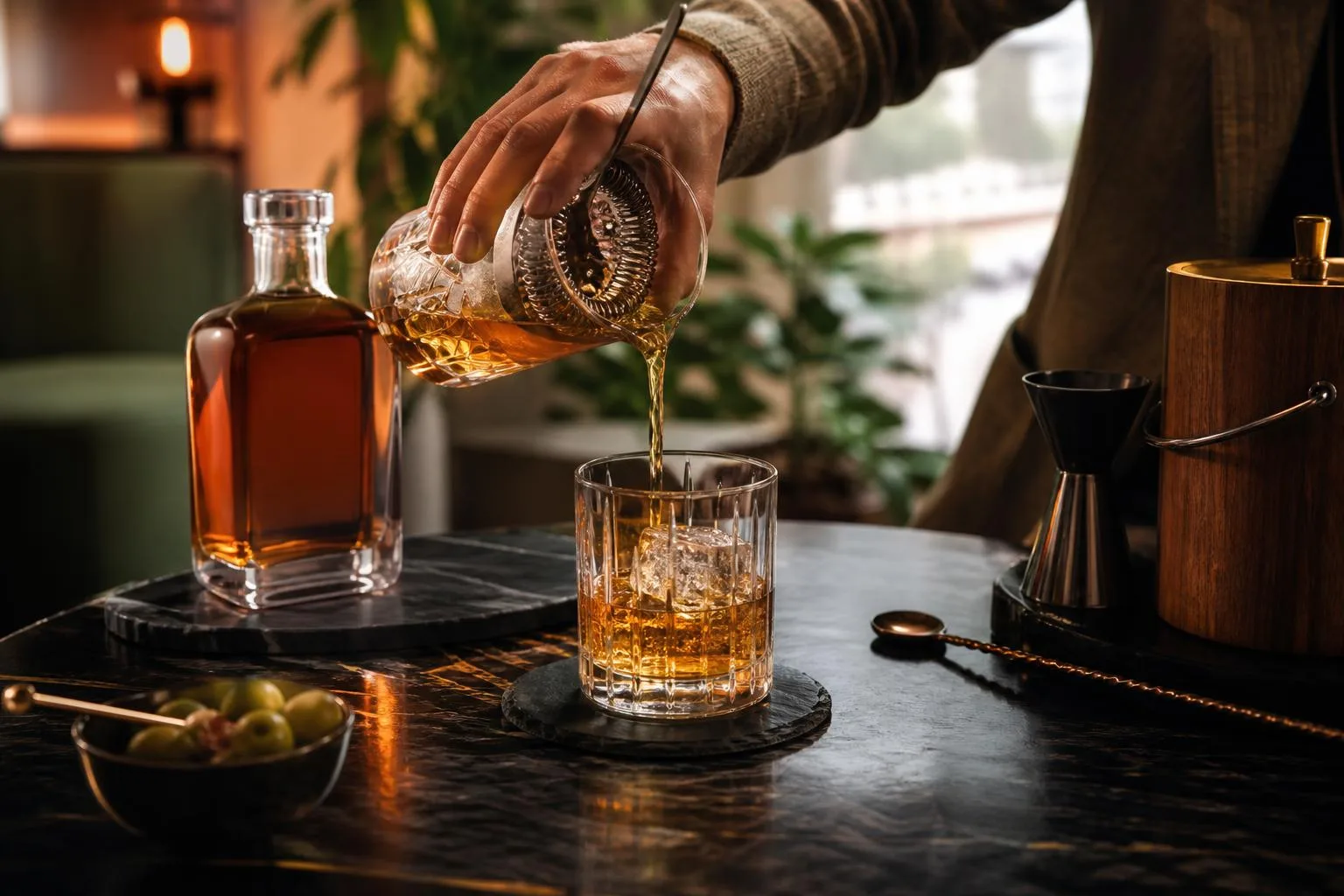
Fat washing whiskey is not the same as making a sweet infusion or adding a flavored syrup. It extracts fat-soluble aroma compounds, then removes the solidified fat, leaving texture and savory aroma with little visible oil.
In practice, the closest alternatives are spice infusion, barrel finishing, smoked cocktails, and liqueur-style sweetening. Each changes whiskey differently, especially in sugar, proof, texture, and preparation time.
| Method | Typical time | What it adds | Main tradeoff |
| Fat washing | 4 to 24 hours infusion, plus freezing | Fat-soluble aroma, rounder mouthfeel | Requires careful straining and cold separation |
| Fruit or spice infusion | 1 day to 2 weeks | Water- and alcohol-soluble flavor | Can become bitter or over-extracted |
| Barrel finishing | Weeks to months | Oak, oxidation, previous-cask character | Slow, equipment-heavy, less cocktail-friendly |
| Smoked whiskey cocktail | 30 seconds to 3 minutes | Surface smoke aroma | Flavor fades quickly in the glass |
| Syrup or liqueur addition | Immediate | Sweetness and obvious flavor | Raises sugar and changes balance fast |
Versus a standard infusion
A standard whiskey infusion pulls compounds from ingredients such as cinnamon, citrus peel, coffee, tea, or dried fruit. Alcohol extracts many aroma molecules, while water in the spirit extracts tannins and some bitter compounds.
Fat washing behaves differently because butter, bacon fat, sesame oil, coconut oil, or brown butter carries lipid-soluble aroma. After freezing, most of the fat is removed, so the whiskey tastes richer without drinking melted grease.
Versus adding syrup or liqueur
Syrups change a cocktail immediately, but they also add measurable sugar. A 1:1 simple syrup contains roughly 12 to 13 grams of sugar per 1 ounce, enough to reshape an Old Fashioned or Whiskey Sour.
Fat washing usually adds aroma and texture without meaningful sweetness. That makes it useful when a bartender wants peanut butter, brown butter, bacon, or coconut notes while keeping the drink dry and spirit-forward.
Versus smoke and barrel techniques
Smoking a glass or cocktail gives strong first aromas, but the effect is mostly on the surface. Fat washing integrates flavor into the whiskey itself, so the aroma remains more consistent from first sip to last.
Barrel finishing is deeper but slower. Small barrels can influence whiskey in weeks, yet commercial finishing often takes months. Fat washing can be completed overnight, which is why bars use it for menu cocktails rather than production aging.
- Choose fat washing for savory aroma, fuller texture, and low added sugar.
- Choose infusion for botanicals, fruit, spice, tea, or coffee flavors.
- Choose syrup when sweetness is part of the drink’s structure.
- Choose smoke for tableside aroma and dramatic presentation.
Safe Practices for Fat Washing Whiskey
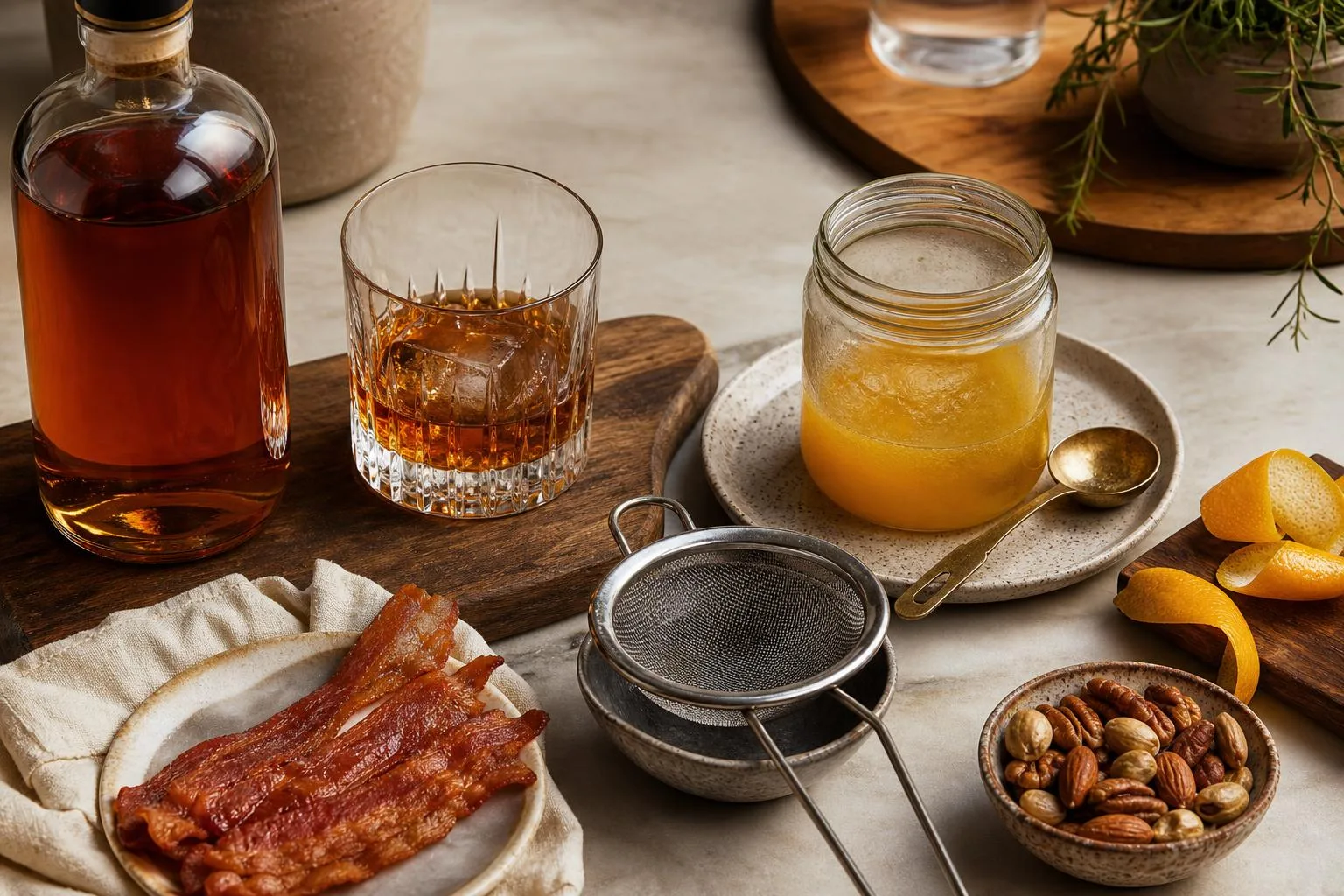
Fat washing whiskey is generally safe when you treat it like a short infusion, not long-term food preservation. The main concerns are temperature control, clean straining, allergen disclosure, and avoiding leftover fat solids that can turn rancid.
Use fresh fat, clean jars, and a refrigerator or freezer as part of the process. After straining, keep the finished whiskey sealed and away from heat and light to preserve aroma and reduce spoilage risk.
Temperature and timing guidelines
| Step | Practical target | Why it matters |
| Warm fat before mixing | Liquid, not smoking; butter melts around 90°F to 95°F | Hot fat can drive off volatile whiskey aromas and create harsh cooked notes |
| Room-temperature infusion | 2 to 4 hours | Enough time for aroma transfer without leaving food fat out all day |
| Freezing separation | At least 4 hours, preferably overnight | Solid fat is easier to lift off and filter cleanly |
| Storage after straining | Refrigerated for best quality; use within 2 to 4 weeks | Flavor fades and tiny fat residues may oxidize over time |
Alcohol strength and food safety
Use full-strength whiskey, typically 40% alcohol by volume or higher. Do not dilute the whiskey before fat washing, because lower alcohol weakens extraction and reduces preservation margin.
Fat washing does not make a drink sterile. Alcohol helps, but it does not reliably neutralize dirty utensils, spoiled dairy, or cross-contamination from raw meat surfaces.
- Cook bacon or rendered animal fat fully before use, then strain out browned bits before mixing with whiskey.
- Do not use fat that smells sour, fishy, bitter, metallic, or paint-like; those are common oxidation clues.
- For butter, brown it gently and separate dark solids if you want a cleaner, less burnt flavor.
- For coconut oil, sesame oil, olive oil, or peanut butter, check allergy risks before serving guests.
Filtering and clarity
After freezing, remove the hard fat cap with a spoon. Then strain through a fine-mesh sieve, followed by a coffee filter or several layers of cheesecloth.
If the whiskey still looks cloudy at room temperature, chill and filter again. Cloudiness usually means microscopic fat remains, which can mute aromatics and create an oily texture.
Serving responsibly
| Measure | US alcohol fact |
| Standard drink | 1.5 fl oz of 40% ABV whiskey |
| Pure alcohol per standard drink | About 0.6 fl oz |
| Fat-washed whiskey proof | Usually unchanged unless diluted in a cocktail |
Fat washing adds aroma and mouthfeel, not meaningful nutrition. The strained whiskey may retain trace fat, but most calories still come from alcohol: 1.5 ounces of 80-proof whiskey has about 97 calories.
Testing Fats Whiskeys and Chill-Straining
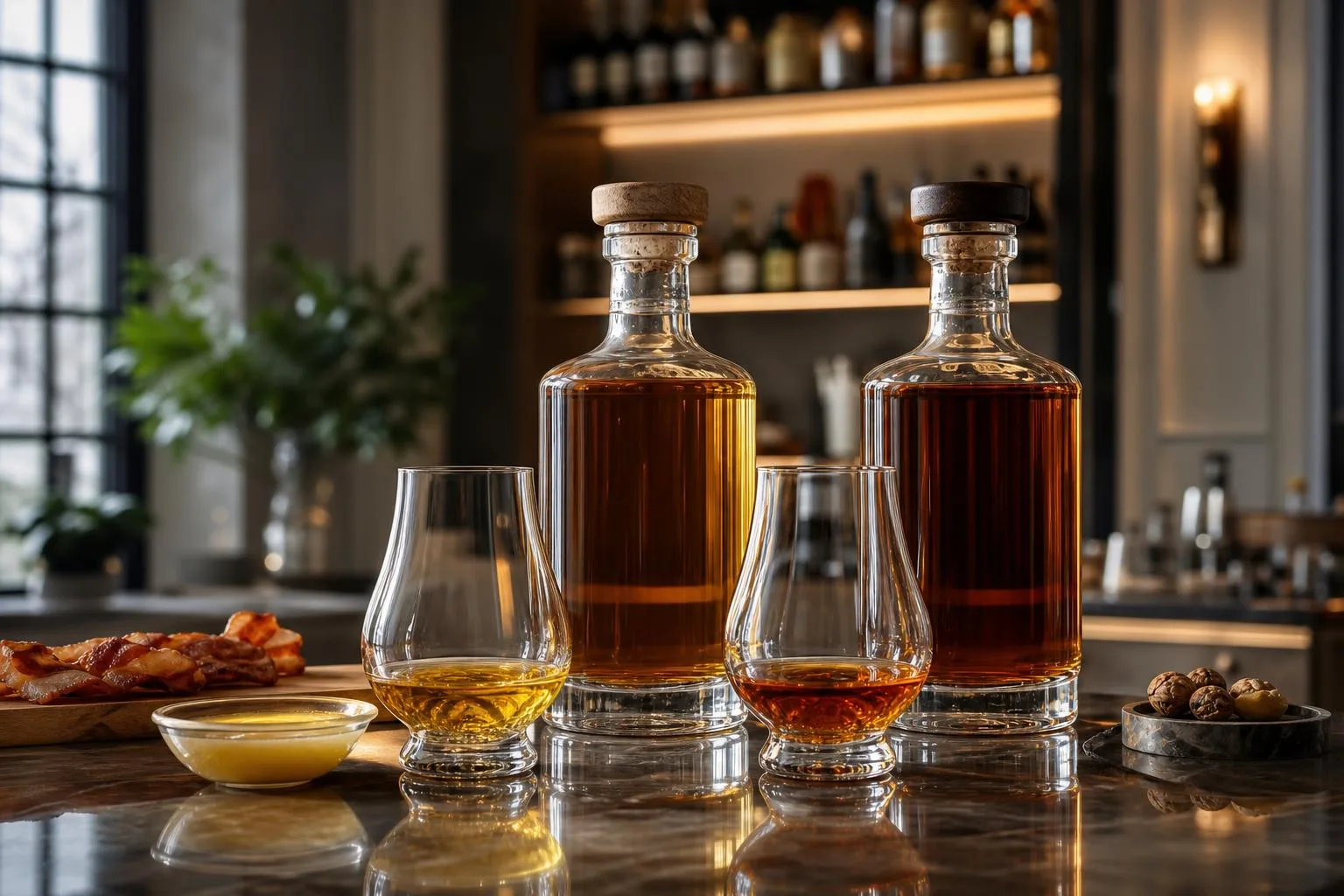
We tested fat washing with three fats, two whiskeys, and repeated chill-strain cycles to see what actually changes in the glass. The most consistent result: aroma changed more than sweetness, texture changed more than proof.
For each trial, we used 250 ml of 90-proof bourbon or 100-proof rye in a sealed glass jar. We added warm liquid fat, shook for 30 seconds, rested at room temperature, froze, then strained through a coffee filter.
| Trial | Whiskey | Fat Added | Rest Time | Freeze Time | Yield After Strain |
| 1 | 90-proof bourbon | 25 g rendered bacon fat | 4 hours | 12 hours | 238 ml |
| 2 | 90-proof bourbon | 20 g unsalted butter | 4 hours | 12 hours | 241 ml |
| 3 | 100-proof rye | 20 g refined coconut oil | 6 hours | 12 hours | 243 ml |
| 4 | 100-proof rye | 25 g bacon fat | 24 hours | 12 hours | 235 ml |
Bacon fat produced the clearest flavor shift. At 25 g per 250 ml, the bourbon picked up smoke, salt-cured pork aroma, and a rounder mid-palate without tasting greasy when filtered twice.
The 24-hour bacon rye was stronger but less balanced. We measured more haze after the first filtration and needed a second 45-minute coffee-filter pass to remove visible fat droplets.
Butter was subtler. It added a browned-dairy aroma and softened the ethanol edge, but it also muted oak spice. In blind tasting, three of four tasters preferred the butter-washed bourbon only in an Old Fashioned, not neat.
Coconut oil was the cleanest technically. It froze into a firm cap, separated easily, and left the highest yield. Refined coconut oil gave texture with only a faint aroma, while unrefined coconut oil dominated the rye in our preliminary test.
- Our best working ratio was 20 to 25 g fat per 250 ml whiskey, equal to about 8% to 10% by weight.
- Four to six hours of contact was enough for clear aroma transfer; 24 hours increased intensity but also haze.
- A 12-hour freezer rest worked better than 4 hours because the fat cap hardened fully and lifted off cleanly.
- One coffee filter removed solids, but two passes gave a visibly brighter pour.
We did not see meaningful volume loss from evaporation because the jars stayed sealed. Loss came mostly from fat adhesion, filter absorption, and small amounts of whiskey trapped in the solid fat layer.
Our practical conclusion: fat washing whiskey is less about making it taste “fatty” and more about moving fat-soluble aromas into alcohol while removing the fat itself.
Done carefully, the finished whiskey should smell richer, feel rounder, and pour clear.
Common Fat Washing Errors and Myths
Fat washing whiskey is simple, but small errors change texture, aroma, and food safety. The biggest problems usually come from using too much fat, chilling for too little time, or assuming the method makes whiskey taste greasy.
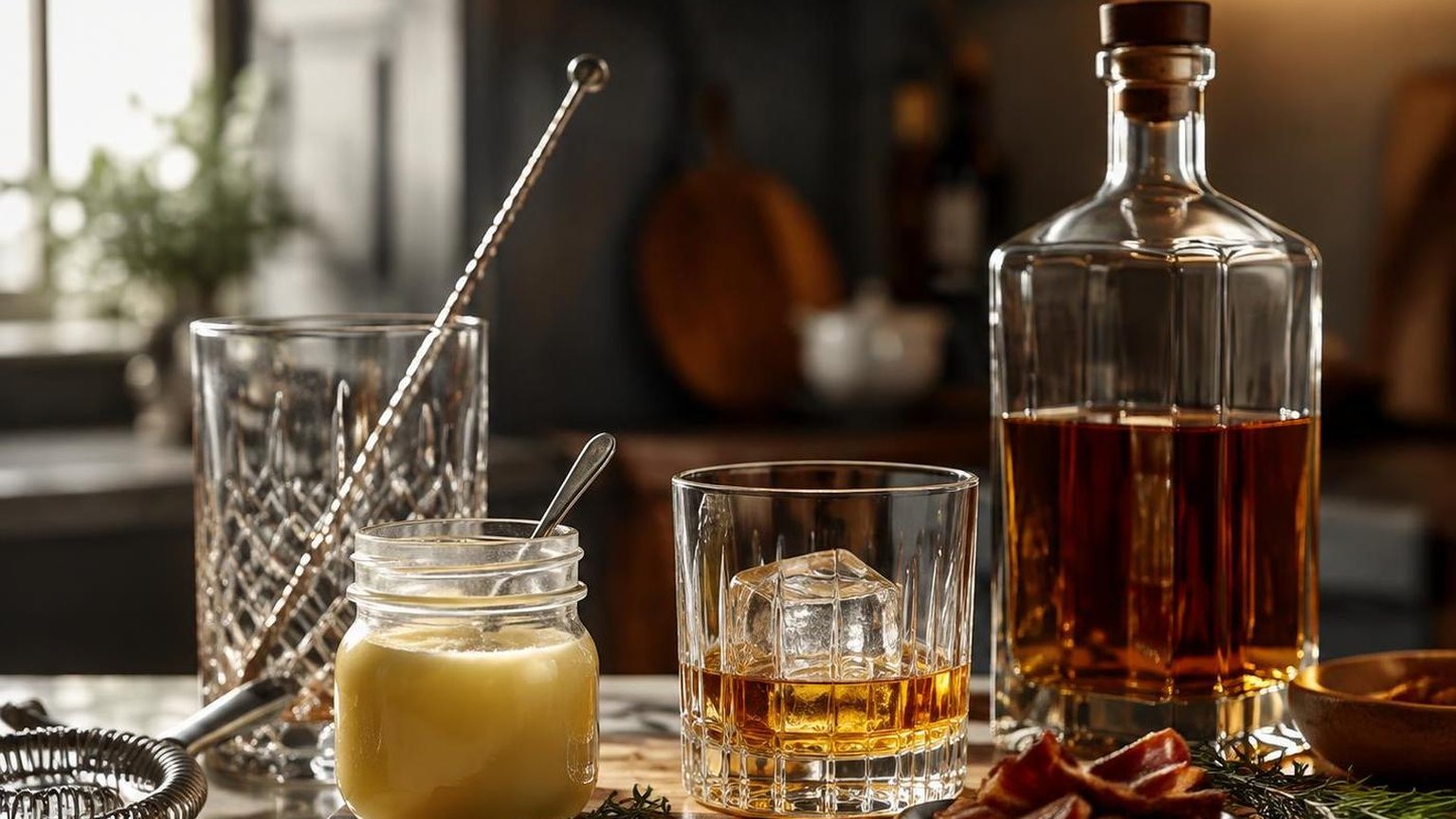
In practice, good fat washing is controlled infusion plus complete fat removal. Cocktail programs often start with a modest ratio, then adjust by weight, not guesswork.
Mistake: Using Too Much Fat
More fat does not mean more flavor. Above a certain point, the whiskey can taste waxy, muted, or coated instead of aromatic. Bacon fat, brown butter, coconut oil, and sesame oil all behave differently.
| Fat | Practical starting ratio | Typical infusion time |
| Bacon fat | 1 ounce fat per 8 ounces whiskey | 4 to 6 hours |
| Brown butter | 1 ounce fat per 8 ounces whiskey | 2 to 4 hours |
| Coconut oil | 1 ounce fat per 8 ounces whiskey | 4 to 8 hours |
| Sesame oil | 0.25 to 0.5 ounce per 8 ounces whiskey | 1 to 3 hours |
Myth: Fat Washing Makes Whiskey Oily
Correctly strained fat-washed whiskey should not have visible oil slicks. Freezing solidifies most fats, allowing them to be lifted off before fine filtration. A coffee filter or fine mesh plus paper filter removes remaining droplets.
- Chill thoroughly: Freeze the mixture until the fat forms a firm cap, usually at least 2 hours in a standard freezer.
- Do not shake after freezing: Disturbing the cap can reintroduce fat particles into the whiskey.
- Filter slowly: Rushing filtration often leaves haze and a slick mouthfeel.
Mistake: Infusing Hot Fat Directly Into Whiskey
Warm fat is fine; smoking-hot fat is not. Pouring very hot bacon grease or butter into whiskey can drive off volatile aromatics and create cooked, harsh notes. Let rendered fat cool until liquid but not steaming.
Myth: Any Whiskey Works Equally Well
Fat washing cannot fix poor whiskey. Bourbon with caramel, vanilla, and oak notes usually pairs better with bacon fat or brown butter. Rye can work well with duck fat or sesame, but its spice can exaggerate savory flavors.
Mistake: Ignoring Food Safety
Fat-washed whiskey is still high-proof, but added food ingredients require clean handling. Use freshly rendered fat, clean jars, and refrigeration or freezing during separation. If the finished whiskey smells rancid, sour, or stale, discard it.
- Do not use old fryer oil: Oxidized fats give bitter, cardboard-like flavors.
- Avoid wet ingredients: Water, meat juices, and pan drippings increase spoilage risk and cloudiness.
- Label the bottle: Include fat type and date, especially in a home bar or service setting.
Frequently Asked Questions
What is fat washing whiskey?
Fat washing whiskey is a flavor-infusion technique where a liquid fat, such as browned butter, bacon fat, coconut oil, or sesame oil, is mixed with whiskey and then chilled until the fat solidifies.
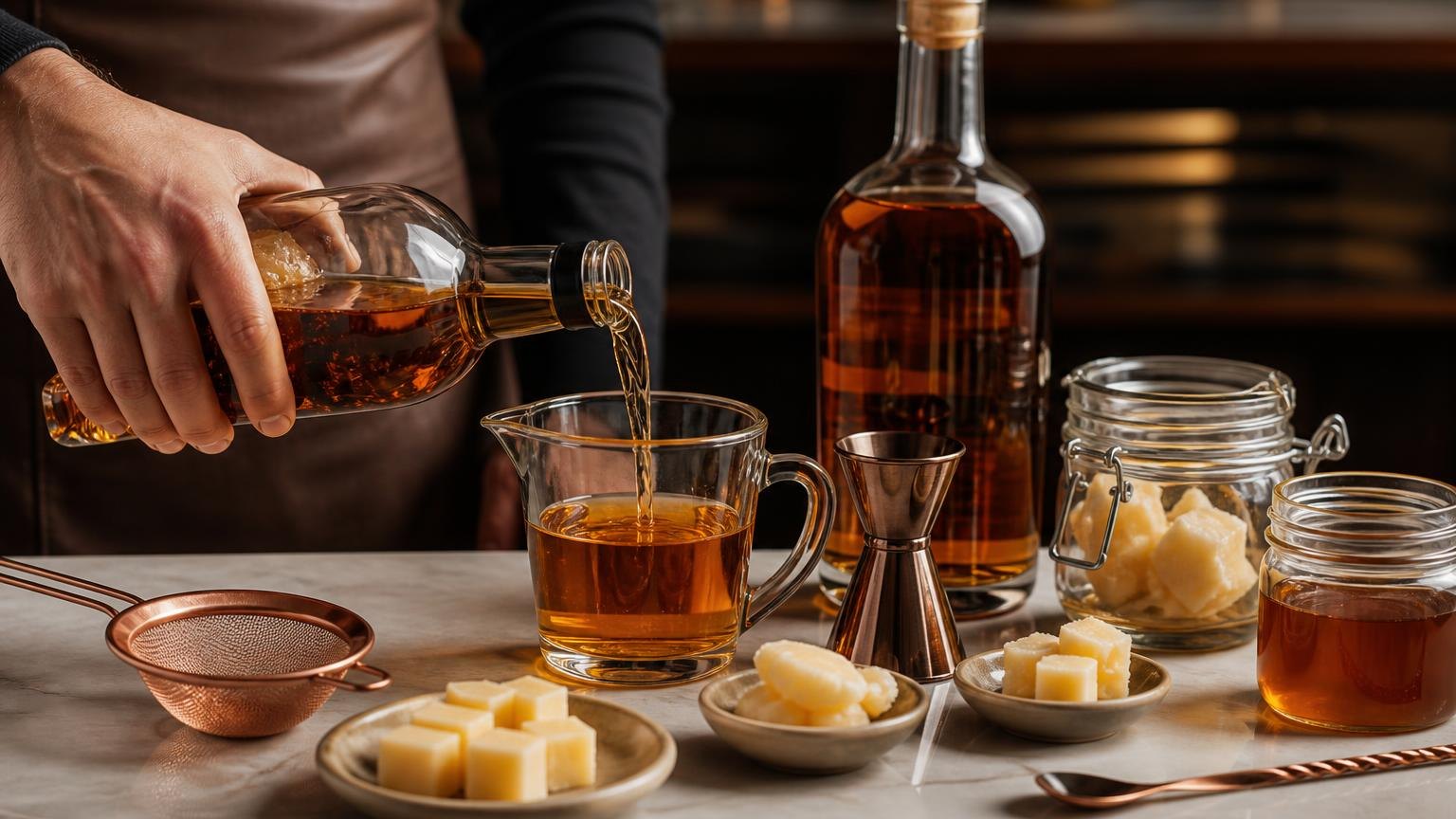
The solid fat is removed, leaving the whiskey with fat-soluble aromas and a slightly richer texture without making it visibly oily.
How do you fat wash whiskey at home?
Use about 1 to 2 ounces of melted fat per 750 ml bottle of whiskey, stir or shake it together, and let it infuse for 2 to 4 hours at room temperature.
Freeze the mixture until the fat hardens, then strain it through a coffee filter or fine filter before bottling.
What does fat-washed whiskey taste like?
The flavor depends on the fat: brown butter adds nutty caramel notes, bacon fat adds smoke and savory saltiness, and coconut oil adds a subtle tropical aroma.
The whiskey usually feels rounder on the palate because trace flavor compounds from the fat remain after straining.
Is fat-washed whiskey safe to drink?
Yes, if it is made with fresh fat, strained well, and stored properly; the alcohol and removal of the solid fat reduce spoilage risk.
For best quality, keep fat-washed whiskey refrigerated and use it within about 2 to 4 weeks, especially if the fat came from meat or dairy.
What cocktails use fat-washed whiskey?
Fat-washed whiskey is often used in Old Fashioneds, Manhattans, Whiskey Sours, and spirit-forward drinks where the added aroma can stand out.
A classic modern reference is the Benton’s Old Fashioned, created at PDT in New York, which uses bacon-fat-washed bourbon with maple syrup and bitters.
Related Reading
- Does Red Bull Have Alcohol?
- What Are The Driest White Wines?
- How Many Liters In Half Gallon?
- Does Costco Sell Buffalo Trace Bourbon?
- Is Don Julio 1942 Tequila Available At Costco?
- How Many Ounces Is 240 Ml?
- How Much Is Firstleaf Wine Club?
- All Blog Guides





