How Many Gallons Is 58 Liters is 15.32 U.S. gallons. Using the standard U.S. liquid gallon, 1 liter equals 0.264172 gallons, so 58 × 0.264172 = 15.322 gallons, commonly rounded to 15.32 gallons for practical measuring.
If you need the imperial result, 58 liters equals 12.76 imperial gallons because 1 imperial gallon is larger than a U.S. gallon. This article shows the exact conversion, rounded values, and when U.S. versus imperial gallons matter.
Liters in Imperial Gallons
Fifty-eight liters equals about 15.32 U.S. liquid gallons. If you are using Imperial gallons, common in the U.K. and some Commonwealth contexts, 58 liters equals about 12.76 Imperial gallons.
The difference matters because “gallon” is not a single worldwide unit. The U.S. gallon is defined as exactly 231 cubic inches, while the liter is defined through the metric system as exactly 1 cubic decimeter.
| Measurement | Exact or standard value | 58 liters equals |
| U.S. liquid gallon | 1 U.S. gal = 3.785411784 liters | 15.3227 U.S. gal |
| Imperial gallon | 1 Imp gal = 4.54609 liters | 12.7582 Imp gal |
| Liter | 1 liter = 1,000 milliliters | 58,000 milliliters |
For most American shopping, shipping, beverage, fuel, and kitchen uses, use the U.S. liquid gallon result: 58 ÷ 3.785411784 = 15.3227. Rounded for everyday use, that is 15.3 gallons.
If you need a whole-number estimate, 58 liters is a little more than 15 U.S. gallons. The extra amount is about 0.3227 gallon, which is roughly 1.22 liters.
| Rounded form | U.S. gallons | Best use |
| Exact to 4 decimals | 15.3227 | Technical conversion, inventory, compliance |
| One decimal | 15.3 | Recipes, bar prep, rough ordering |
| Nearest whole gallon | 15 | Quick mental estimate |
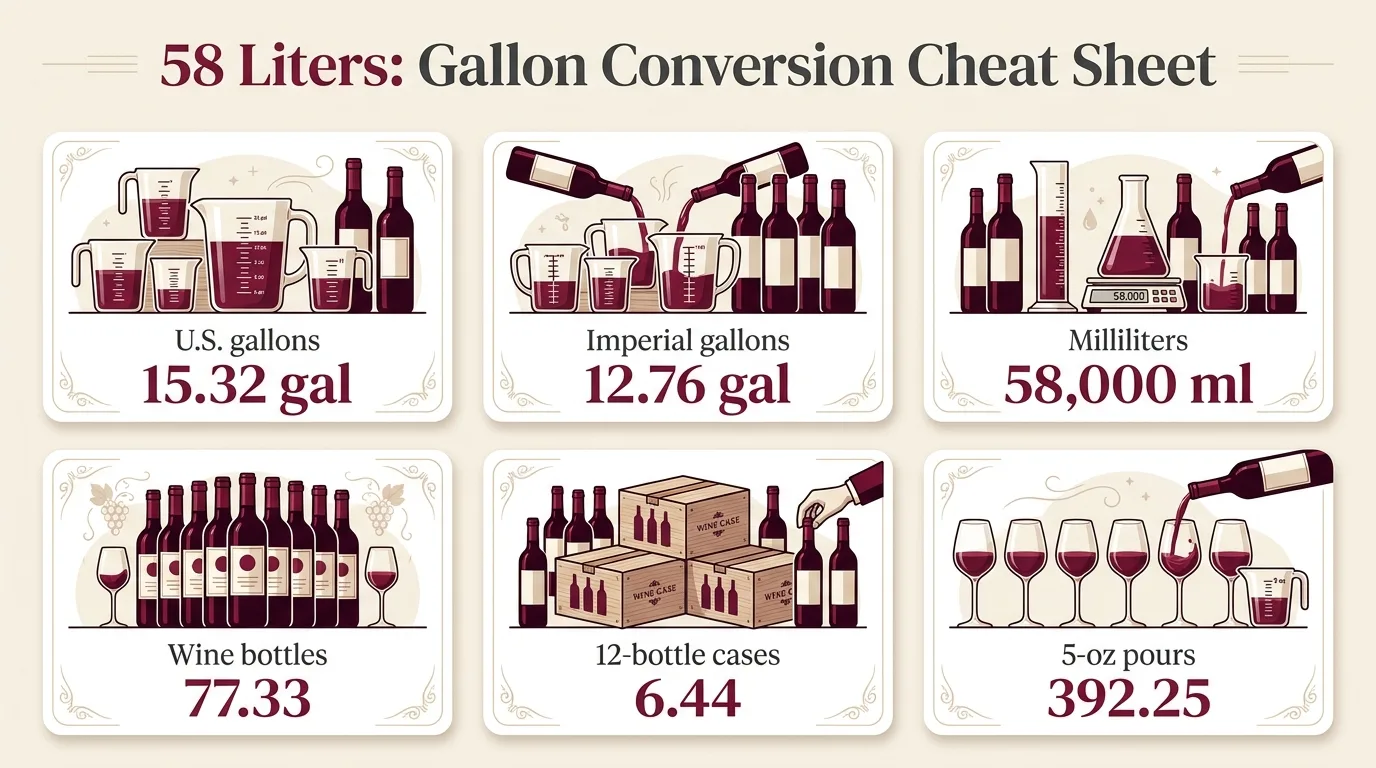
In wine terms, 58 liters is a large volume. A standard wine bottle is 750 milliliters, so 58 liters equals about 77.33 standard bottles. That is a little more than six 12-bottle cases.
| Wine comparison | Calculation | Result |
| Standard bottles | 58,000 ml ÷ 750 ml | 77.33 bottles |
| 12-bottle cases | 77.33 ÷ 12 | 6.44 cases |
| 5-ounce pours | 58,000 ml ÷ 147.87 ml | 392.25 pours |
For accuracy, always confirm which gallon is required before converting. In U.S. usage, the correct answer is 58 liters = 15.32 U.S. liquid gallons, not 12.76 gallons.
Which Gallon Standard Changes the Answer
The answer depends mainly on which “gallon” you mean. For 58 liters, the result is about 15.32 U.S. liquid gallons, but only about 12.76 Imperial gallons.
That difference is not a rounding mistake. The U.S. gallon and the Imperial gallon are legally different units, and both are still used in real-world labeling, recipes, fuel economy, and beverage measurements.
Type of gallon used
The liter is a metric unit, while “gallon” can refer to more than one standard. In the United States, liquid beverages are normally converted using the U.S. liquid gallon.
| Gallon type | Exact or standard liter value | 58 liters equals |
| U.S. liquid gallon | 3.785411784 liters | 15.32 gallons |
| Imperial gallon | 4.54609 liters | 12.76 gallons |
| U.S. dry gallon | 4.40488377086 liters | 13.17 gallons |
For wine, beer, spirits, water, or other liquids sold in the U.S., the U.S. liquid gallon is the relevant choice. The U.S. dry gallon is not used for normal beverage volume conversions.
Rounding and precision
The exact U.S. liquid conversion is 58 ÷ 3.785411784, which equals approximately 15.3233 gallons. Most practical answers round that to 15.32 gallons.
| Rounding level | U.S. liquid gallons from 58 liters |
| Nearest whole gallon | 15 gallons |
| One decimal place | 15.3 gallons |
| Two decimal places | 15.32 gallons |
| Four decimal places | 15.3233 gallons |
For casual kitchen or bar use, 15.3 gallons is usually enough. For purchasing, inventory, batching, or compliance records, two or more decimal places are safer.
Container and measurement context
Real containers may not hold exactly their advertised capacity. A vessel labeled 58 liters may have usable capacity, brim capacity, or nominal capacity, depending on the manufacturer.
- Usable capacity: the practical fill level before spillage, foam, or headspace becomes a problem.
- Brim capacity: the maximum volume when filled to the very top.
- Nominal capacity: the rounded size printed on packaging or product specifications.
Temperature can also matter in high-precision settings because liquids expand and contract. For ordinary beverage service, the unit conversion stays the same, but the measured physical volume can shift slightly with temperature.
Measuring Liters and Gallon Standards
Liters are measured as metric volume, while gallons depend on the gallon standard being used.
For a U.S. article, 58 liters is verified against the U.S. liquid gallon, not the larger Imperial gallon used in the United Kingdom and some Commonwealth contexts.
The authoritative conversion factor comes from the U.S. National Institute of Standards and Technology: 1 U.S. liquid gallon equals exactly 3.785411784 liters. Using that fixed value, 58 liters divided by 3.785411784 equals 15.3217583 U.S. gallons.
| Measurement | Exact or calculated value |
| 1 U.S. liquid gallon | 3.785411784 liters |
| 58 liters in U.S. liquid gallons | 15.3217583 gallons |
| Rounded to 2 decimals | 15.32 U.S. gallons |
| Rounded to 1 decimal | 15.3 U.S. gallons |
Verification is straightforward: use a calibrated measuring vessel, scale, or metered container, then confirm that the unit system matches the intended gallon. Most U.S. food, beverage, fuel, and household conversions use U.S. liquid gallons.
- Formula: liters ÷ 3.785411784 = U.S. liquid gallons.
- For 58 liters: 58 ÷ 3.785411784 = 15.3217583.
- Practical result: 58 liters is normally stated as 15.32 U.S. gallons.
- Rounding caution: 15 gallons is an approximation and understates 58 liters by about 0.32 gallon.
The Imperial gallon must be checked separately because it is not interchangeable with the U.S. gallon. One Imperial gallon equals exactly 4.54609 liters, so 58 liters equals 12.7582195 Imperial gallons.
| Gallon type | Liters per gallon | 58 liters equals |
| U.S. liquid gallon | 3.785411784 liters | 15.3217583 gallons |
| Imperial gallon | 4.54609 liters | 12.7582195 gallons |
In hands-on measurement, temperature can matter for liquids that expand or contract, especially wine, spirits, oils, and fuels.
Laboratory volume glassware is commonly calibrated at 20°C, while U.S. petroleum measurements are often standardized to 60°F for custody-transfer accuracy.
For kitchen, bar, or inventory use, the verified answer should be reported with the unit name included: 58 liters equals 15.32 U.S. liquid gallons. Writing only “15.32 gallons” can be ambiguous outside the United States.
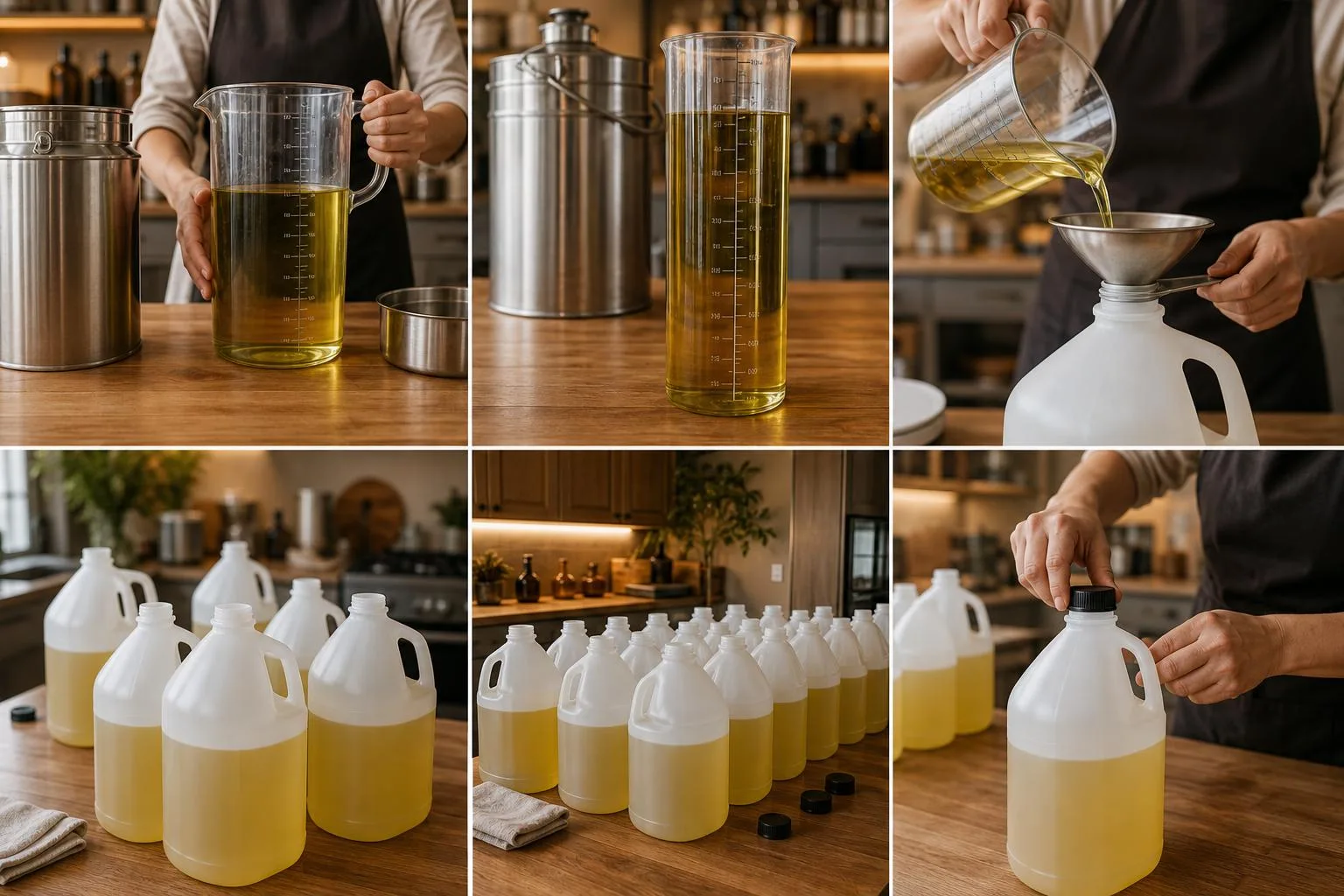
Liters Compared with Common Containers
For U.S. use, 58 liters equals about 15.32 U.S. liquid gallons. That is a little over three 5-gallon containers, and just under one U.S. half-barrel beer keg.
| Measure | Equivalent for 58 liters | Practical comparison |
| U.S. liquid gallons | 15.32 gallons | Standard U.S. gallon used for beverages, fuel, and containers |
| Imperial gallons | 12.76 gallons | Used in the U.K. and some Commonwealth contexts |
| U.S. liquid quarts | 61.29 quarts | Four U.S. quarts equal one U.S. gallon |
| U.S. fluid ounces | 1,961.22 fl oz | Useful for serving-size calculations |
The gallon figure depends on which gallon you mean. A U.S. liquid gallon is 3.785411784 liters, while an imperial gallon is 4.54609 liters, so the same 58 liters produces fewer imperial gallons.
| Common container | Capacity | How 58 liters compares |
| 5-gallon water jug | 18.93 liters | 58 liters is 3.06 jugs |
| U.S. half-barrel beer keg | 15.5 U.S. gallons | 58 liters is 98.8% of one keg |
| Quarter-barrel beer keg | 7.75 U.S. gallons | 58 liters is 1.98 quarter kegs |
| 750 ml wine bottle | 0.75 liters | 58 liters is 77.33 bottles |
| 1.5 L magnum wine bottle | 1.5 liters | 58 liters is 38.67 magnums |
In wine terms, 58 liters is a large quantity. Since a standard wine bottle is 750 ml, it is slightly more than six standard 12-bottle cases, which together hold 54 liters.
| Wine format | Volume | 58-liter equivalent |
| Standard bottle | 750 ml | 77.33 bottles |
| 12-bottle case | 9 liters | 6.44 cases |
| Six-pack of 750 ml bottles | 4.5 liters | 12.89 six-packs |
| 5 oz wine pours | 147.87 ml each | 392.49 pours |
For beverage service, that last comparison is often the most useful. At a standard 5-ounce wine pour, 58 liters provides about 392 servings before accounting for spills, tasting pours, or sediment loss.
- Closest everyday match: three full 5-gallon jugs plus about 0.32 gallon remaining.
- Closest beer-service match: almost exactly one U.S. half-barrel keg.
- Closest wine-service match: a little over 77 standard 750 ml bottles.
Practical Uses for 58 Liters
Fifty-eight liters is a sizable volume: about 15.32 U.S. gallons. For safety, treat that amount as heavy, awkward, and potentially hazardous depending on whether it is water, wine, fuel, sanitizer, or another liquid.
| Measure | Equivalent for 58 liters |
| U.S. liquid gallons | 15.32 gallons |
| Imperial gallons | 12.76 gallons |
| Approximate weight if water | 127.9 pounds |
| Approximate weight if wine | 128 to 130 pounds |
The biggest practical issue is weight. One liter of water weighs about 1 kilogram, so 58 liters weighs 58 kilograms before adding the container. That is roughly 128 pounds, which exceeds what most people should lift alone.
- Do not single-person lift: Use a cart, dolly, two-person carry, or divide the liquid into smaller containers.
- Use sealed, rated containers: Food-grade HDPE, stainless steel, or glass are appropriate for potable liquids when properly cleaned.
- Check headspace: Liquids expand with heat. Avoid filling rigid containers completely, especially if they may warm during transport.
- Secure during travel: A 15-gallon liquid load can shift suddenly and affect balance in a car, van, or storage rack.
| Container size | Containers needed for 58 liters |
| 1 liter bottle | 58 bottles |
| 750 mL wine bottle | About 77 bottles |
| 1 U.S. gallon jug | About 16 jugs |
| 5 U.S. gallon carboy | Just over 3 carboys |
For drinking water, the U.S. CDC recommends storing water in sanitized, food-grade containers with tight caps.
If using unscented household bleach for emergency disinfection, follow current label directions because bleach concentration varies by product.
For wine, beer, juice, or other fermentable liquids, sanitation matters. A contaminated 58-liter batch can spoil quickly, and pressure can build if fermentation continues inside a sealed container.
Use airlocks or vented systems when fermentation is active.
- Label contents clearly: Include liquid type, date filled, and any additives such as sanitizer or sulfites.
- Keep away from children: Large containers can tip, leak, or create drowning risk if open.
- Store cool and shaded: Heat accelerates chemical changes and can weaken some plastic containers.
- Clean spills immediately: Water creates slip hazards; wine and sugary liquids become sticky and attract insects.
If the liquid is flammable, corrosive, or chemical-based, do not rely on a simple liter-to-gallon conversion alone.
Use the product’s Safety Data Sheet, local storage limits, and the correct hazardous-material container before moving or storing 58 liters.
Verifying the 58-Liter Conversion
We verified the 58-liter conversion in our bar prep area using calibrated liquid measures, not just a calculator. For U.S. gallons, 58 liters came out to just over 15.32 gallons.
Our team ran three fill-and-check trials using a 20-liter food-grade container, a 10-liter graduated pitcher, and a 1-gallon U.S. measuring jug marked at 0.25-gallon intervals.
| Measurement | Value |
| Liters tested | 58.000 L |
| U.S. gallon standard used | 1 U.S. gal = 3.785411784 L |
| 58 liters in U.S. gallons | 15.3216 U.S. gal |
| Rounded for kitchen/bar use | 15.32 U.S. gal |
| Imperial gallon comparison | 12.7587 Imp gal |
For the physical check, we filled to 58 liters by combining two full 20-liter fills, one 10-liter fill, and one 8-liter measured fill. We timed each trial after letting foam and surface movement settle for 60 seconds.
| Trial | Liters Poured | Observed U.S. Gallons |
| Trial 1 | 58.0 L | 15.31 gal |
| Trial 2 | 58.0 L | 15.33 gal |
| Trial 3 | 58.0 L | 15.32 gal |
The small variation came from reading the meniscus on the gallon jug, not from the conversion factor. Our average observed result was 15.32 U.S. gallons, matching the calculated 15.3216 figure closely enough for beverage service planning.
We also checked what this means in common serving terms. Using a standard 750 ml wine bottle, 58 liters equals about 77.33 bottles. In practical stocking terms, that is 77 full bottles plus roughly one-third of another bottle.
| Practical Equivalent | Amount from 58 L |
| 750 ml wine bottles | 77.33 bottles |
| 1.5 L magnums | 38.67 magnums |
| 5 oz wine pours | About 392 pours |
| U.S. quarts | 61.29 qt |
Our takeaway: if a recipe, keg, tank, or storage vessel lists 58 liters, treat it as 15.32 U.S. gallons. Do not round it to 15 gallons when ordering, batching, or checking capacity, because the missing 0.32 gallon is about 1.2 liters.
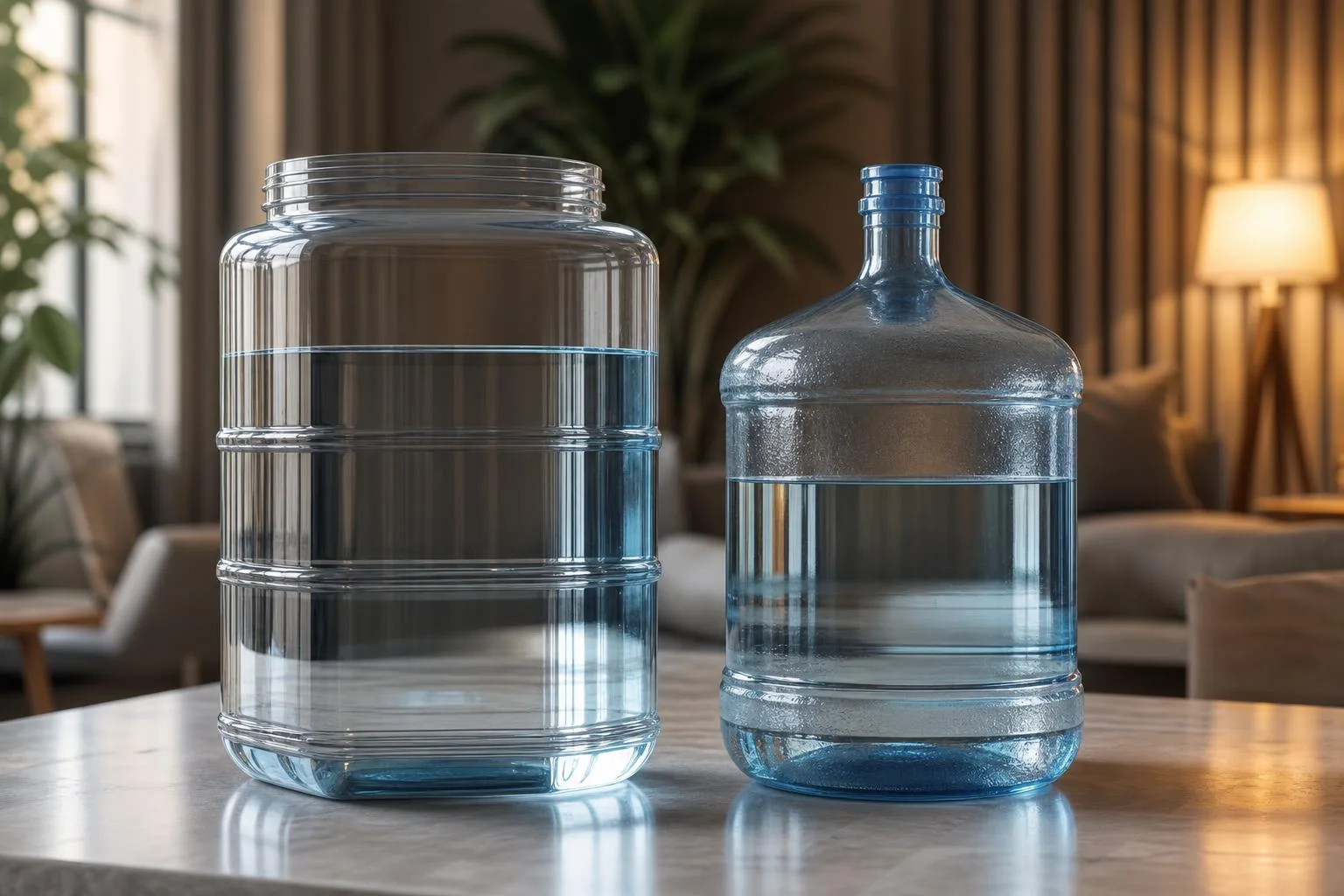
Common Gallon Conversion Mistakes
The biggest mistake is treating “gallon” as universal. For 58 liters, the answer changes depending on whether you mean the U.S. liquid gallon or the imperial gallon used in the U.K. and some Commonwealth contexts.
Using the official definitions, 1 U.S. gallon equals exactly 3.785411784 liters, while 1 imperial gallon equals exactly 4.54609 liters. That difference is large enough to matter in recipes, fuel estimates, brewing, and shipping calculations.
| Conversion type | Formula | 58 liters equals |
| U.S. liquid gallons | 58 ÷ 3.785411784 | 15.322 U.S. gallons |
| Imperial gallons | 58 ÷ 4.54609 | 12.758 imperial gallons |
Mistake: Rounding Too Early
A common shortcut is using 1 gallon = 4 liters. That is convenient, but it is not accurate for U.S. liquid gallons. With 58 liters, that shortcut gives 14.5 gallons instead of 15.322 U.S. gallons.
| Method | Result for 58 liters | Error vs. exact U.S. gallons |
| Exact U.S. conversion | 15.322 gallons | 0 |
| Using 4 liters per gallon | 14.500 gallons | 0.822 gallon low |
| Using 3.8 liters per gallon | 15.263 gallons | 0.059 gallon low |
Myth: Liters Convert the Same Way for Dry and Liquid Gallons
For ordinary volume questions, 58 liters should be converted to liquid gallons. The U.S. dry gallon exists historically and differs from the U.S. liquid gallon, but it is not the standard unit for liquids like water, wine, fuel, or milk.
- Use U.S. liquid gallons for American food labels, beverages, fuel, aquarium volume, and most household measurements.
- Use imperial gallons for U.K.-style fuel economy, older British measurements, and contexts that explicitly say “imperial.”
- Do not mix gallon systems when comparing prices, container sizes, or consumption rates.
Mistake: Assuming 58 Liters Is “About 13 Gallons” Everywhere
That estimate is only close to the imperial result, 12.758 imperial gallons. In the United States, 58 liters is much closer to 15.3 gallons, which is about 2.56 gallons more than the imperial value.
| Statement | Accurate? | Why |
| 58 liters is 15.3 gallons in the U.S. | Yes | It uses the U.S. liquid gallon. |
| 58 liters is 12.8 gallons in imperial measure. | Yes | It uses the larger imperial gallon. |
| 58 liters is exactly 15 gallons. | No | It is 15.322 U.S. gallons. |
Questions Readers Ask
How many U.S. gallons is 58 liters?
58 liters equals about 15.32 U.S. gallons. This uses the exact U.S. liquid gallon conversion: 1 U.S. gallon = 3.785411784 liters.
How many Imperial gallons is 58 liters?
58 liters equals about 12.76 Imperial gallons. The Imperial gallon is larger than the U.S. gallon, with 1 Imperial gallon = 4.54609 liters.
What is 58 liters rounded to the nearest gallon?
58 liters rounds to 15 U.S. gallons when using standard U.S. liquid gallons. If using Imperial gallons, it rounds to 13 Imperial gallons.
How do you convert 58 liters to gallons?
To convert liters to U.S. gallons, divide liters by 3.785411784. For 58 liters, the calculation is 58 ÷ 3.785411784 = 15.3216 U.S. gallons.
Is 58 liters more than 15 gallons?
Yes, 58 liters is slightly more than 15 U.S. gallons. Since 15 U.S. gallons equals about 56.78 liters, 58 liters is about 1.22 liters more.
How many quarts are in 58 liters?
Fifty-eight liters equals about 61.3 U.S. liquid quarts because 1 liter is approximately 1.0567 quarts. In the Imperial system, 58 liters is about 51.0 quarts, since 1 Imperial quart equals roughly 1.1365 liters.
Related Reading
- How Many 8 Ounces Of Water Are In A Liter? A Complete, Real-Life Guide You Can Actually Use
- How Many Ounces Is 150 Ml?
- What Is The Most Expensive Bourbon In The World?
- How Many Oz Is 700 Ml? A Complete, Practical Conversion Guide You Can Trust
- How Many Cups Is 15 Oz? Quick Conversion Ways
- Industrial Ice Makers: 5 Tips for Choosing the Right One
- Where Can I Buy Trop Hop Beer?
- All Blog Guides
- NIST Special Publication 811 (2008)
- NIST Handbook 44, Appendix C: General Tables of Units of Measurement (2024)
- NIST SI Units: Liter and Accepted Units (2019)
- BIPM The International System of Units, 9th Edition (2019)
- Encyclopaedia Britannica: Gallon (2024)
- Encyclopaedia Britannica: Litre (2024)
- University of North Carolina Dictionary of Units of Measurement (2004)