calories in taylor port wine are about 90 calories per 2 fl oz serving. That estimate fits Taylor Port’s sweet, fortified style, where residual sugar and higher alcohol both raise energy density compared with dry table wine.
This article explains serving-size math, calories per ounce, bottle estimates, and why pours at home often exceed the small dessert-wine serving used on labels.
Use the numbers to compare Taylor Port with other fortified wines and to track intake more accurately.
Taylor Port calories per serving
Taylor Port is a fortified sweet red wine, so its calories come from two places: alcohol and residual sugar. That combination makes it noticeably more calorie-dense than a dry table wine, even in a small pour.
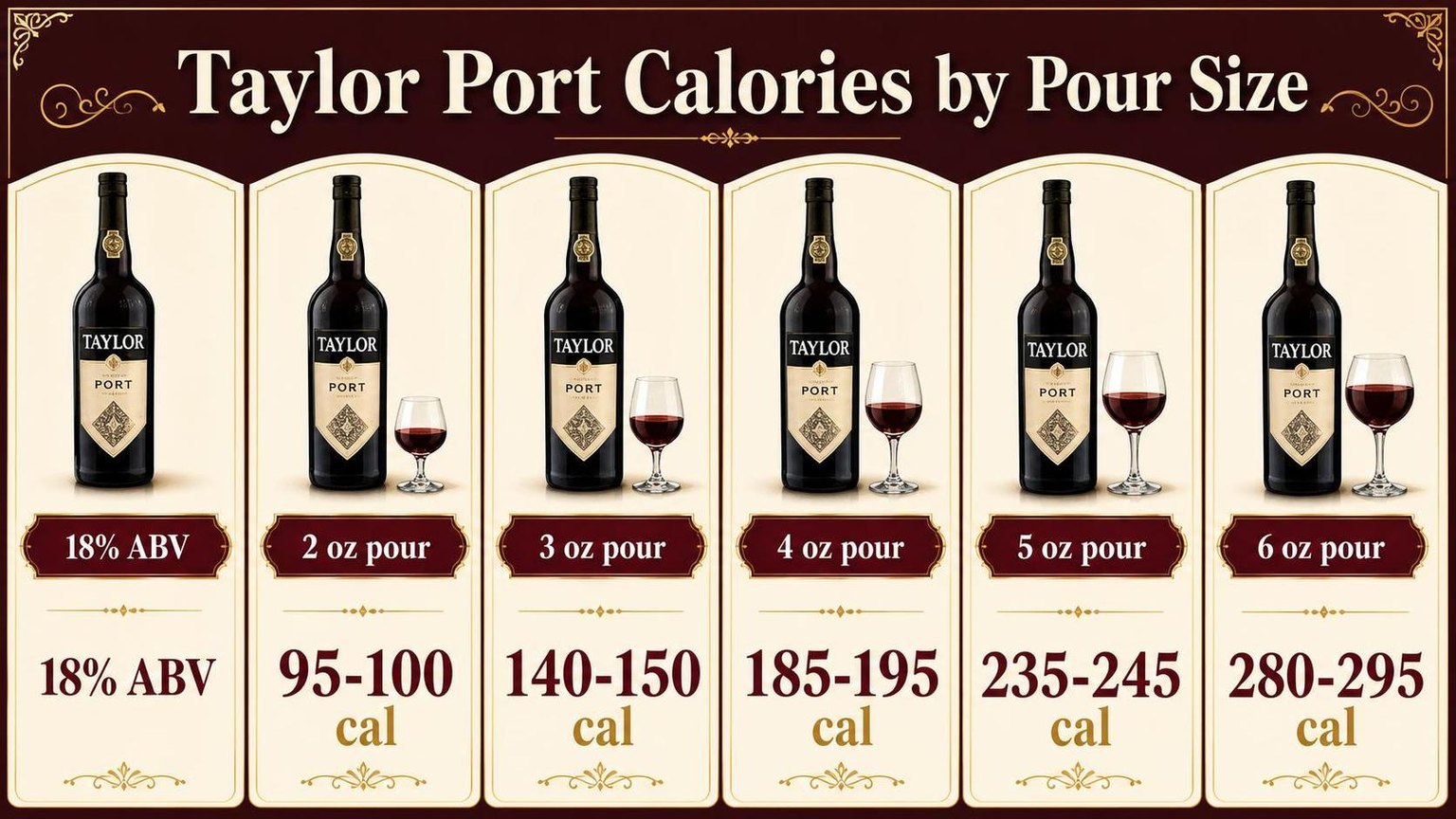
For a practical estimate, a standard Taylor Port serving lands around 140 to 150 calories per 3-ounce glass. A larger 5-ounce pour pushes it close to 240 calories, which matters because port is often poured generously at home.
Taylor Port is commonly sold at 18% alcohol by volume, which is typical for American port-style wines. Alcohol alone supplies most of the energy, while the wine’s sweetness adds the rest.
| Taylor Port serving | Approximate calories | Why it changes |
| 2 ounces | 95 to 100 calories | Small dessert-wine pour with less total alcohol and sugar |
| 3 ounces | 140 to 150 calories | Common port serving size in restaurants and tasting pours |
| 5 ounces | 235 to 245 calories | Full wine-glass pour; much higher because port is fortified |
Those ranges are consistent with how fortified wines are calculated. Pure alcohol contains 7 calories per gram, and sugar contributes 4 calories per gram, so sweeter, stronger wines rise quickly in total calories.
If you want the cleanest real-world takeaway, use the 3-ounce estimate. It reflects how port is traditionally served after dinner and avoids understating calories by using an unrealistically tiny splash.
| Drink type | Serving size | Approximate calories |
| Taylor Port | 3 ounces | 140 to 150 |
| Dry red table wine | 5 ounces | 120 to 125 |
| Ruby or tawny port, typical | 3 ounces | 135 to 155 |
| Sweet dessert wine, non-fortified | 3 ounces | 110 to 140 |
The comparison shows why Taylor Port feels rich in both flavor and calories. A smaller pour can still equal or exceed the calories in a larger serving of regular red wine.
Pour size is the biggest variable at home. Many people free-pour port into a standard wine glass, and that can easily reach 4 to 5 ounces without looking excessive.
| Home pour size | Approximate calories | Practical note |
| 2.5 ounces | 120 to 125 | Closer to a measured dessert pour |
| 4 ounces | 185 to 195 | Common generous after-dinner glass |
| 6 ounces | 280 to 295 | Large pour; roughly two standard port servings |
For tracking, count Taylor Port as about 145 calories per 3 ounces. If your glass is larger than a true dessert pour, adjust upward fast, because fortified sweet wines concentrate calories more than most drinkers expect.
Calories in Taylor Port by ounce
Taylor Port is a calorie-dense fortified wine. A practical working figure is about 65 calories per ounce, based on a commonly cited 130 calories per 2-ounce serving for Taylor Port at roughly 18% ABV.
That number is higher than standard table wine because Port carries more alcohol and more residual sugar. Both raise calorie count, so even a small pour adds up quickly.
Using the 130-calorie, 2-ounce serving as the base, the ounce-by-ounce math is straightforward. The table below converts that serving into common pour sizes.
| Pour size | Calories |
| 1 ounce | 65 |
| 1.5 ounces | 97.5 |
| 2 ounces | 130 |
| 2.5 ounces | 162.5 |
| 3 ounces | 195 |
| 5 ounces | 325 |
In real drinking terms, a traditional dessert-wine pour is often 2 ounces. That keeps Taylor Port near 130 calories. A larger after-dinner glass at 3 ounces pushes the total to 195 calories.
Alcohol explains a large share of those calories. At 18% ABV, 1 ounce of Taylor Port contains about 0.18 ounces of pure alcohol, which works out to roughly 29 calories from alcohol alone.
The remainder comes mostly from sugar. If 1 ounce totals about 65 calories, then roughly 36 calories per ounce come from non-alcohol sources, primarily residual sugar.
| Per 1 ounce of Taylor Port | Approximate calories |
| From alcohol | 29 |
| From sugar and other compounds | 36 |
| Total | 65 |
That profile makes Taylor Port notably richer than dry red wine. A typical dry red often lands around 24 to 25 calories per ounce, while Taylor Port sits near 65 calories per ounce.
| Wine style | Calories per ounce |
| Taylor Port | 65 |
| Typical dry red wine | 24-25 |
If you are tracking intake closely, measure the pour instead of estimating by glass shape. With Taylor Port, each extra ounce adds about 65 more calories, which is the simplest rule to remember.
Sugar alcohol and calorie breakdown
Taylor Port gets most of its calories from two sources: ethanol and residual sugar. Because it is a fortified dessert wine, the alcohol share is higher than in table wine, and the sugar share is higher than in dry red wine.
The key math starts with alcohol by volume. Taylor Port is typically bottled at 18% ABV, so a standard 3.5-ounce dessert-wine pour contains about 14.7 grams of alcohol, which supplies about 103 calories before sugar is counted.
That alcohol number is fixed by ABV and pour size. Sugar then pushes the total higher, which is why port-style wines land well above the calorie count of a 5-ounce dry wine pour.
| Measure | Amount in a 3.5 oz pour | Calorie effect |
| Serving size | 3.5 fl oz (103.5 mL) | Base pour used on many fortified wine labels |
| Alcohol by volume | 18% | Determines ethanol calories |
| Alcohol volume | 18.6 mL | Converted from 103.5 mL × 0.18 |
| Alcohol weight | 14.7 g | Using ethanol density of 0.789 g/mL |
| Calories from alcohol | About 103 kcal | 14.7 g × 7 kcal per gram |
Sugar calories are added on top. Carbohydrate contributes 4 calories per gram, so every 5 grams of residual sugar adds about 20 calories to the glass.
If a 3.5-ounce pour totals 140 to 160 calories, the sugar portion usually falls into a narrow band. After subtracting the 103 alcohol calories, the remaining 37 to 57 calories imply roughly 9 to 14 grams of sugar.
| Total calories per 3.5 oz | Calories from alcohol | Calories left for sugar | Estimated sugar |
| 140 | 103 | 37 | 9.3 g |
| 150 | 103 | 47 | 11.8 g |
| 160 | 103 | 57 | 14.3 g |
That range fits how port drinks in the glass. It tastes sweet because fermentation is stopped early and grape spirit is added, preserving natural grape sugar while raising alcohol.
For context, a 5-ounce dry red at 12.5% ABV contains about 98 calories from alcohol and usually only 1 to 4 grams of carbs. Taylor Port compresses similar alcohol calories into a smaller pour, then adds significantly more sugar.
| Wine style | Typical pour | Alcohol calories | Sugar/carbs |
| Taylor Port | 3.5 oz | About 103 | Roughly 9 to 14 g sugar if total is 140 to 160 kcal |
| Dry red table wine | 5 oz | About 98 | Usually 1 to 4 g carbs |
For calorie tracking, use the smaller port serving. One generous 6-ounce pour would deliver about 176 alcohol calories at 18% ABV before sugar, making the glass much heavier than it looks.
Taylor Port versus regular wine calories
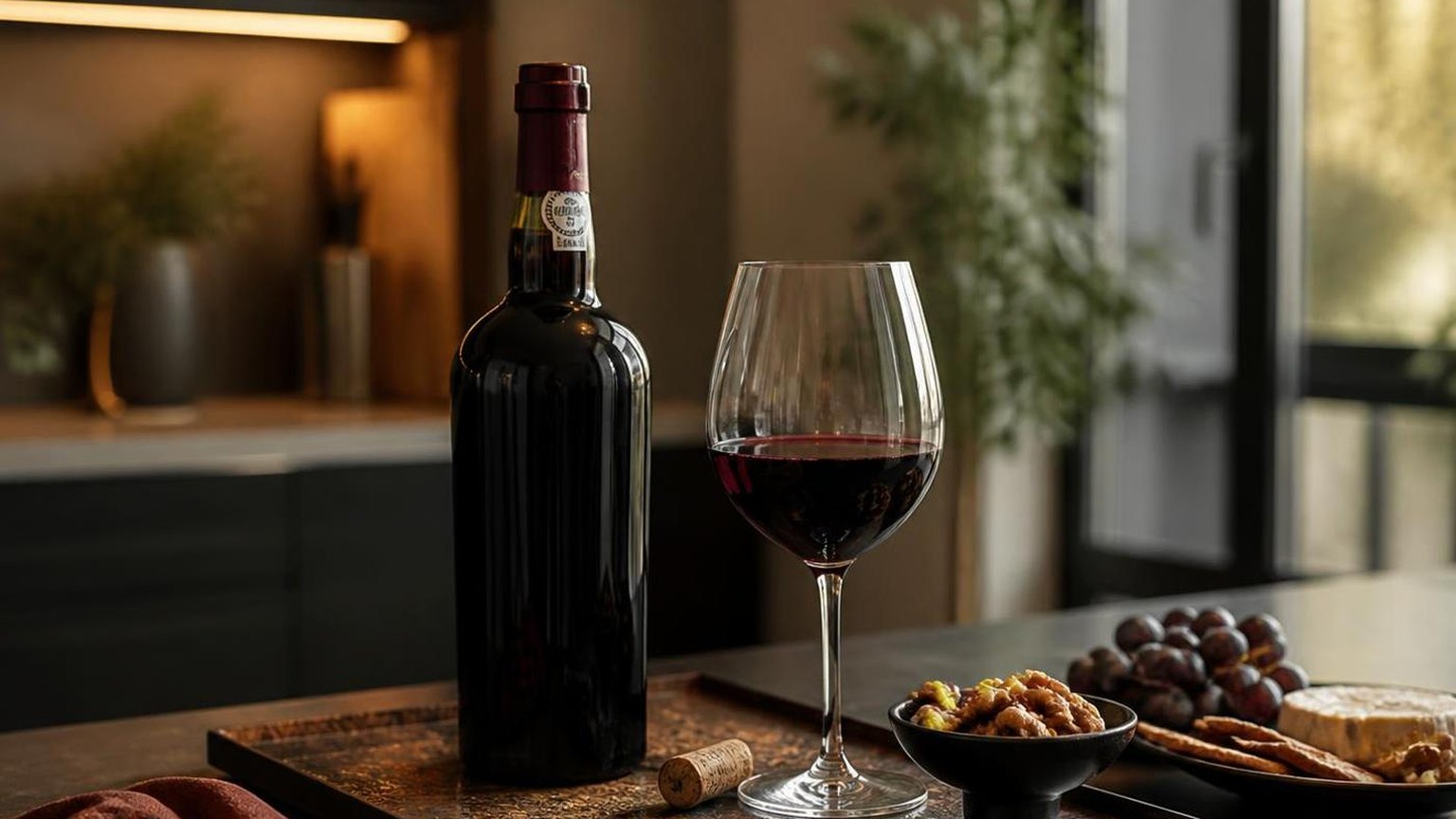
Taylor Port is more calorie-dense than regular table wine. The main reasons are higher alcohol and more residual sugar, with Taylor Port bottled at about 18% ABV while most red and white table wines fall closer to 12% to 14% ABV.
That higher concentration changes the math fast. A smaller Taylor Port pour can match or exceed the calories in a larger glass of regular wine.
For a practical comparison, use serving sizes people actually drink. Port is usually poured at 3 ounces, while regular wine is typically poured at 5 ounces.
| Wine type | Typical serving | ABV | Calories |
| Taylor Port | 3 oz | 18% | About 160 |
| Regular red wine | 5 oz | 12% to 14% | About 125 |
| Regular white wine | 5 oz | 11.5% to 13.5% | About 121 |
| Sweet dessert wine | 3.5 oz | 14% to 16% | About 165 |
The table shows why Taylor Port feels “small but rich.” Even at only 3 ounces, it can run roughly 35 to 39 more calories than a standard 5-ounce glass of dry red or white wine.
Per ounce, the gap is clearer. Taylor Port works out to about 53 calories per ounce. A typical dry red sits near 25 calories per ounce, and a typical dry white near 24 calories per ounce.
| Wine type | Calories per ounce |
| Taylor Port | About 53 |
| Regular red wine | About 25 |
| Regular white wine | About 24 |
Alcohol alone carries 7 calories per gram, so fortified wine starts with a higher calorie floor. Port also keeps more grape sugar after fermentation, which adds more energy than dry table wine.
In real use, two modest 3-ounce pours of Taylor Port can reach about 320 calories. Two standard 5-ounce glasses of dry white wine would be about 242 calories, and two dry reds about 250 calories.
- Choose a 2-ounce pour if you want the flavor with fewer calories.
- Do not compare port to a 5-ounce table-wine glass without adjusting serving size.
- Expect the biggest calorie jump from fortified, sweet styles, not from dry table wines.
If you are tracking intake closely, treat Taylor Port more like a dessert wine than a regular wine. The pour is smaller, but the calories are concentrated.
How serving size changes calories
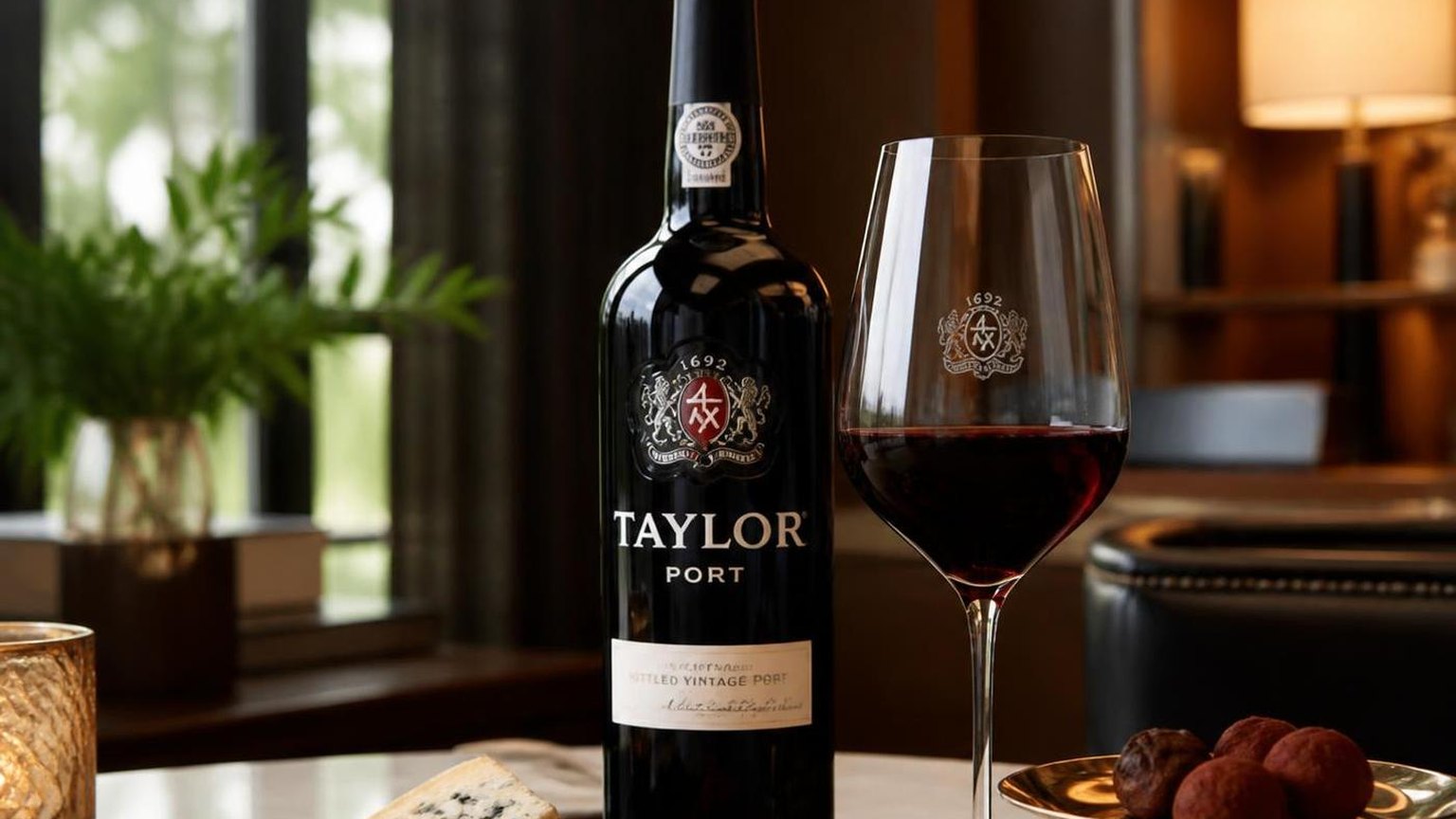
Serving size is the fastest way to change calories in Taylor Port wine. Port is fortified and sweet, so even small pours carry more energy than the same volume of dry table wine.
Calories rise almost exactly in proportion to the ounces poured. If one glass is twice as large, the calorie total is roughly twice as high.
Using a typical Taylor Port-style profile of 20% alcohol by volume and about 10 grams of sugar in a 3-ounce serving, a 3-ounce pour lands near 138 calories. That total comes from alcohol and sugar, the two main calorie sources in port.
Alcohol supplies 7 calories per gram. Carbohydrate, including residual sugar, supplies 4 calories per gram. In a sweet fortified wine, alcohol usually contributes most of the calories, but sugar still adds a meaningful share.
| Serving size | Approx. alcohol | Approx. sugar | Estimated calories |
| 1.5 oz | 7.0 g | 5 g | 69 |
| 2 oz | 9.3 g | 6.7 g | 92 |
| 3 oz | 14.0 g | 10 g | 138 |
| 4 oz | 18.6 g | 13.3 g | 184 |
| 5 oz | 23.3 g | 16.7 g | 230 |
The jump from 3 ounces to 5 ounces matters. That larger pour adds about 92 calories, which is close to a full extra small serving of port.
A standard table-wine pour in the US is often 5 ounces, but port is commonly served at 2 to 3 ounces. The smaller pour reflects the wine’s higher alcohol, usually around 18% to 20% ABV, and its richer sweetness.
If you pour Taylor Port into a wide red-wine glass, it is easy to overserve without noticing. A “generous” glass can move from 3 ounces to 4 or 5 ounces quickly, pushing the calorie count from roughly 138 to 184 or 230.
| Pour style | Typical volume | Estimated calories |
| Tasting pour | 1.5 oz | 69 |
| Traditional port serving | 2.5 to 3 oz | 115 to 138 |
| Heavy home pour | 4 oz | 184 |
| Full table-wine pour | 5 oz | 230 |
The practical takeaway is simple. Measure Taylor Port by ounces, not by glass shape, because glassware hides volume and calories.
- Choose a 2-ounce pour if you want the lightest realistic serving.
- Use a jigger or marked stemware at home.
- Expect calories to scale directly with each added ounce.
For most drinkers, portion control matters more than tiny differences between port brands. With Taylor Port, the serving size is what moves the calorie total fastest.
Lower calorie ways to pour Taylor Port
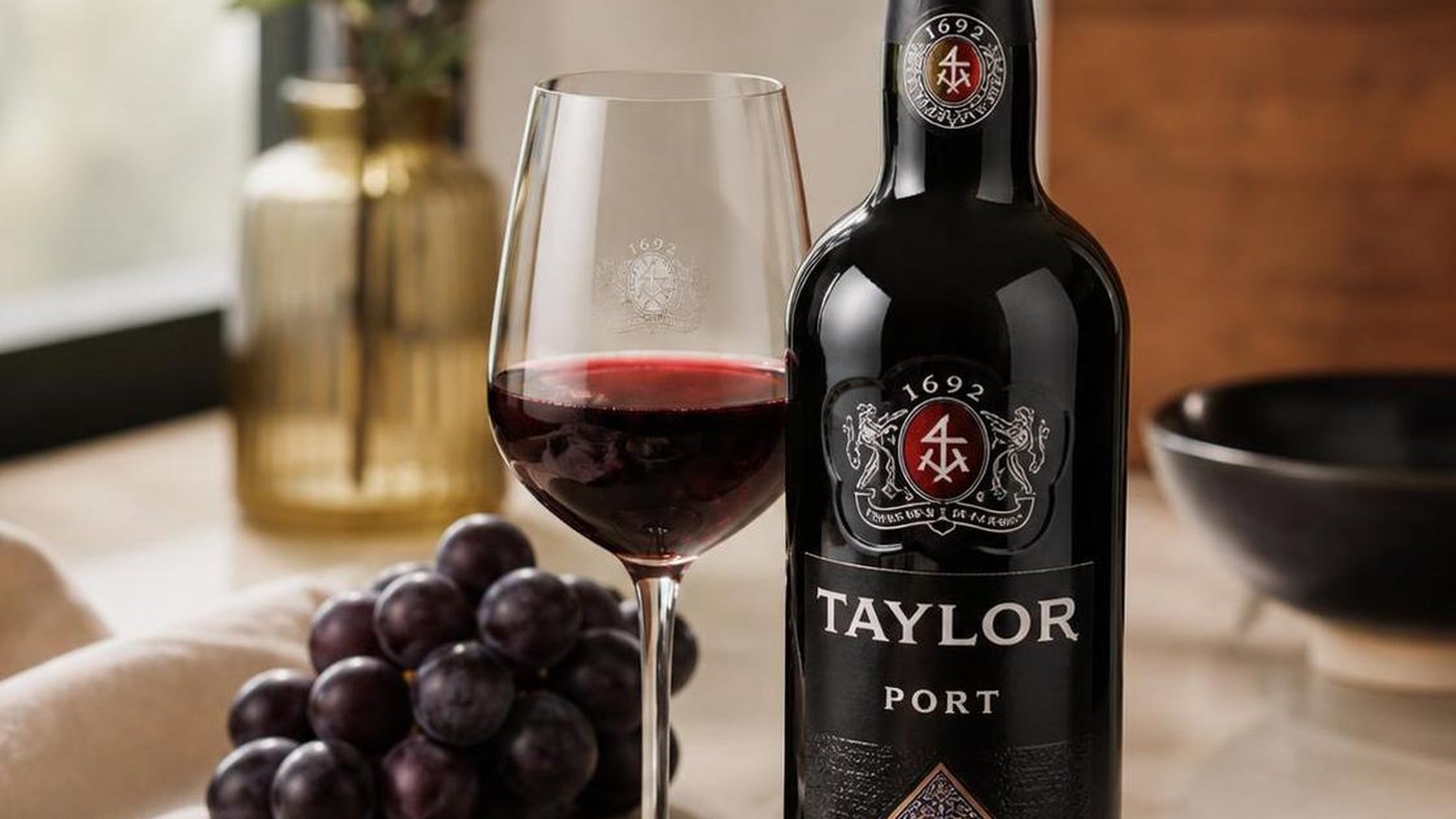
Taylor Port is a sweet fortified wine, so calories climb fast when the pour gets generous. A smaller glass, a measured pour, and smarter pairings cut intake without changing the wine itself.
Port is usually served in smaller amounts than table wine because it is higher in alcohol and sugar. That makes portion control the cleanest way to lower calories while keeping the same flavor profile.
A practical benchmark is this: an 18% ABV port delivers about 88 calories from alcohol alone in a 3-ounce pour. Residual sugar adds more, so most 3-ounce servings land closer to about 130 to 140 calories.
| Pour size | Estimated calories | Why it helps |
| 2 oz | About 85 to 95 | Gives the aroma and sweetness of Port with the lightest standard serving |
| 2.5 oz | About 105 to 115 | Feels more generous but still stays well below a 3-ounce dessert pour |
| 3 oz | About 130 to 140 | Common Port serving size; a useful reference point |
| 5 oz | About 220 to 235 | Table-wine sized pour; easiest way to overshoot calories |
The first move is to stop pouring Taylor Port into a regular wine glass. A small dessert-wine glass makes a 2- to 3-ounce serving look intentional instead of skimpy.
Measuring matters because free-pouring usually adds more than people think. An extra ounce of Port can add roughly 40 to 50 calories, depending on sweetness and alcohol.
- Use a jigger or measuring cup for the first few pours. Visual estimates improve after repetition.
- Choose a 2-ounce after-dinner pour instead of a 5-ounce wine-style glass. That can save roughly 125 to 145 calories.
- Serve Taylor Port slightly cool, around 55 to 60 degrees Fahrenheit. Cooler service slows sipping and can reduce refill speed.
- Pair with strong-flavored foods like blue cheese or dark chocolate. Intense pairings make a smaller pour feel complete.
- Skip mixers like cream, cola, or sugary cocktail ingredients. They add calories faster than the Port itself.
If you want the same ritual with fewer total calories, split one 3-ounce pour into two 1.5-ounce servings over the evening. You keep the taste experience but add a pause between glasses.
| Swap | Calories avoided |
| 5 oz pour instead of 3 oz | About 80 to 95 more calories |
| 3 oz pour instead of 2 oz | About 35 to 45 more calories |
| Two 2 oz pours instead of one 5 oz pour | About 30 to 45 fewer calories |
The simplest lower-calorie strategy is a measured 2-ounce pour in a small glass. That keeps Taylor Port in the range of a modest dessert serving instead of drifting into full-glass calorie territory.
Frequently Asked Questions
How many calories are in Taylor Port wine?
Taylor Port is typically around 160 to 170 calories per 3-ounce serving. A 5-ounce glass is usually closer to 265 to 285 calories because Port is both sweeter and higher in alcohol than standard table wine.
Why is Taylor Port higher in calories than regular red wine?
Taylor Port has more residual sugar and a higher alcohol content, usually around 18% to 20% ABV. Those two factors raise calorie density well above a standard 5-ounce red wine, which often lands near 120 to 130 calories.
How many carbs are in a serving of Taylor Port?
A 3-ounce serving of Port commonly contains about 12 to 14 grams of carbohydrates, mostly from sugar left in the wine after fermentation stops. That carb load is one reason the calorie count climbs quickly even in a small pour.
What serving size should I use when counting calories in Taylor Port?
Use 3 ounces as the most practical reference because Port is traditionally poured in smaller servings than table wine. If you pour 6 ounces, double the estimate and expect roughly 320 to 340 calories.
Is Taylor Port one of the most calorie-dense wines?
Yes. Among common wine styles sold in the U.S., Port ranks near the high end for calories per ounce because it is fortified and sweet, so Taylor Port will usually contain substantially more calories than dry red, dry white, or sparkling wine.
Does Taylor Port wine contain more sugar than dry red wines?
Taylor Port contains approximately 14–16 grams of sugar per 5-ounce serving, compared to under 1 gram in most dry red wines.
This residual sugar accounts for a significant portion of the wine's calorie content, as each gram of sugar contributes roughly 4 calories.
How does the alcohol content in Taylor Port affect its calorie count?
Taylor Port has an alcohol content of 18% ABV, considerably higher than table wines averaging 12–14% ABV.
Since alcohol delivers approximately 7 calories per gram—nearly double that of sugar—this elevated alcohol level is a primary driver of the wine's higher calorie density.
How many calories would I consume drinking a full bottle of Taylor Port?
A standard 750 mL bottle of Taylor Port contains roughly 5 servings of 5 ounces each.
At approximately 180–200 calories per serving, consuming an entire bottle would total around 900–1,000 calories, equivalent to nearly half the average adult's daily recommended intake.
Related Reading
- How Much Alcohol In Wine Cooler? A Complete 2026 Guide to ABV, Strength & Safety
- How Long Can You Keep Wine Unopened?
- Does Wine Have to Be Refrigerated After Opening?
- How Many Fluid Ounces In A Bottle Of Wine?
- Is Drinking a Whole Bottle of Wine Bad for You?
- How Many Carbs In A Glass Of Cabernet?
- Where Is The Expiration Date On Wine Bottles? Find Out Now
- All Alcohol Guides