drinking a whole bottle of wine is a high-intake drinking episode, not a normal single serving. A standard 750 ml bottle at 12% ABV contains about 5 U.S. standard drinks, based on the NIAAA definition of 14 grams of pure alcohol per drink.
For many adults, that amount exceeds low-risk drinking limits in one sitting: CDC guidance defines binge drinking as 5 or more drinks for men, or 4 or more for women, within about 2 hours.
This article explains what that intake can do to BAC, sleep, judgment, next-day symptoms, and longer-term risk.
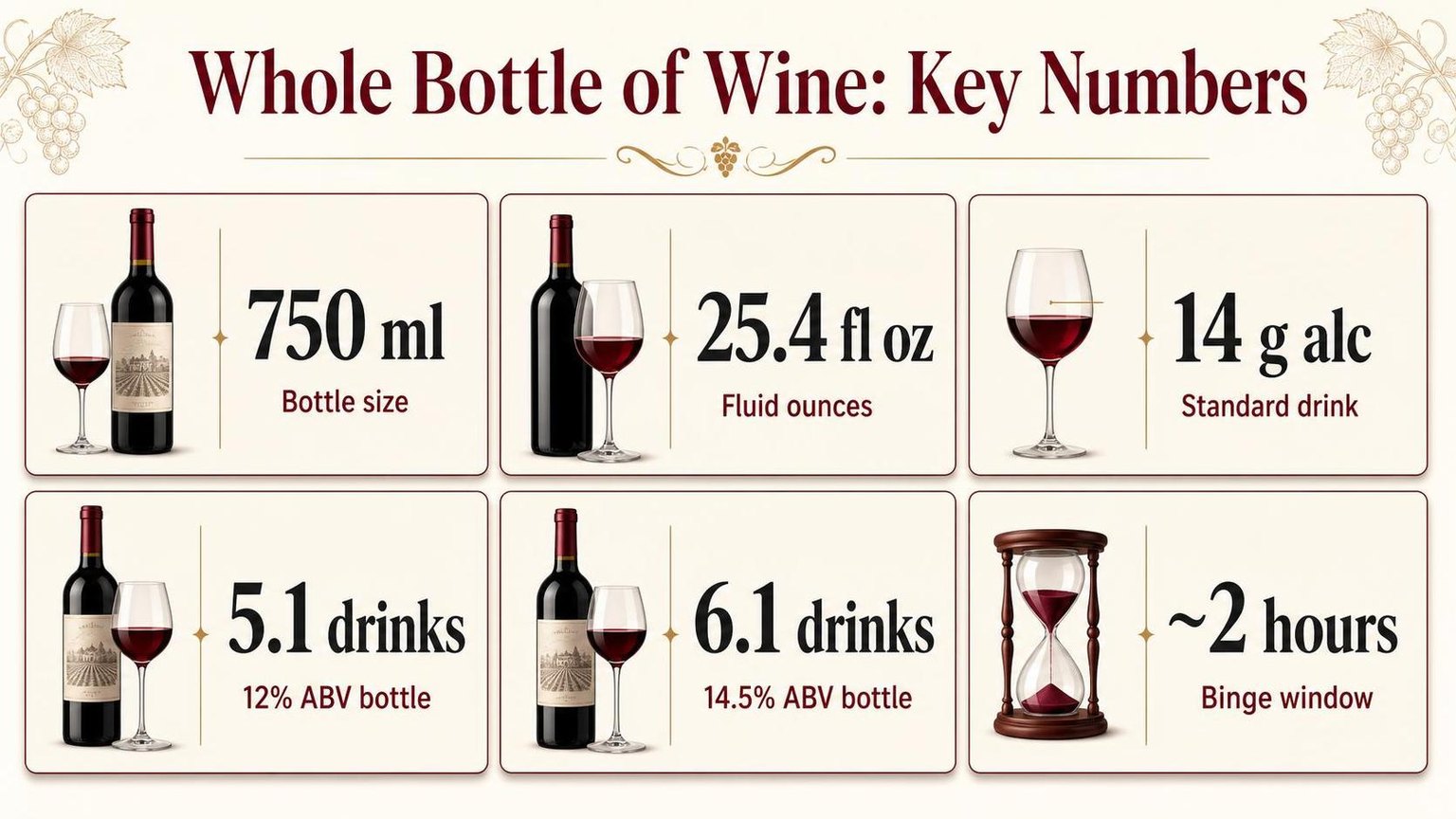
What Counts as a Whole Bottle
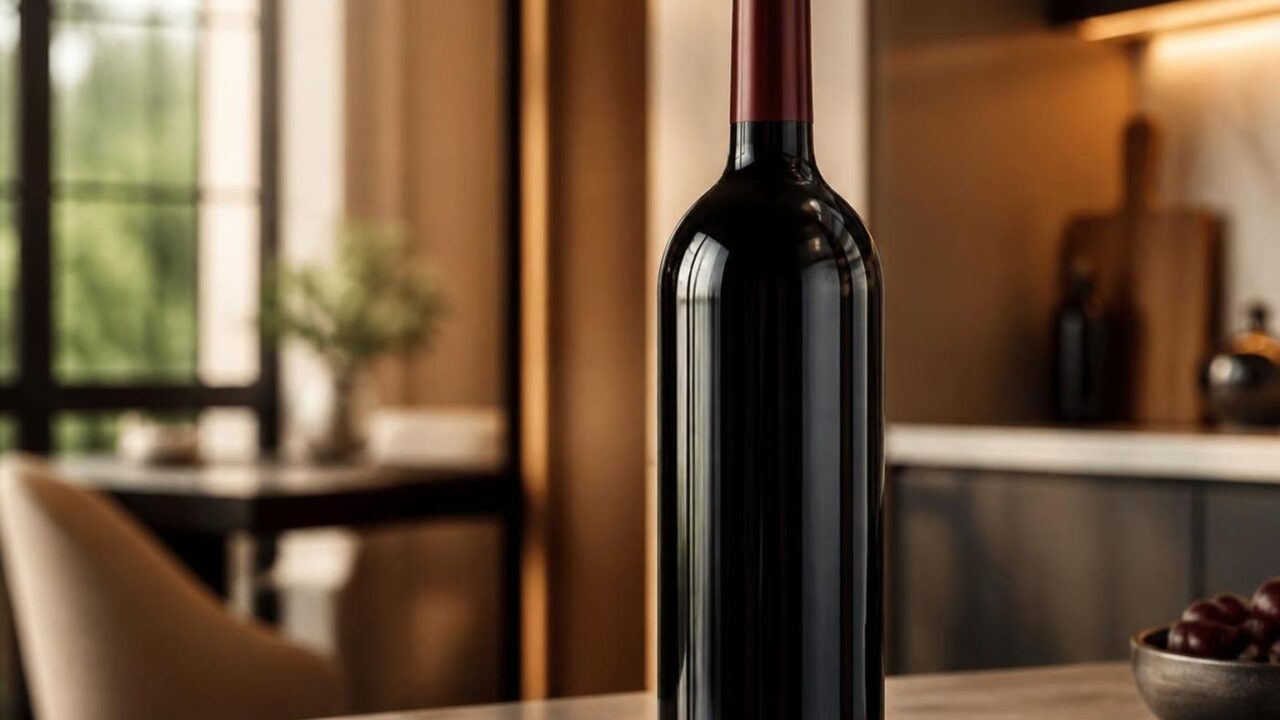
A “whole bottle of wine” usually means a standard 750 ml bottle, or 25.4 fluid ounces. In U.S. alcohol guidance, that is not one drink; it is typically five to more than six standard drinks, depending on alcohol by volume.
The key definition comes from the National Institute on Alcohol Abuse and Alcoholism: one U.S. standard drink contains 14 grams, or 0.6 fluid ounces, of pure alcohol. For wine, the reference serving is 5 fluid ounces at 12% ABV.
| Wine bottle or serving | Amount | What it means |
| Standard wine bottle | 750 ml / 25.4 fl oz | About five 5-ounce pours |
| Standard U.S. wine drink | 5 fl oz at 12% ABV | 1 standard drink |
| Pure alcohol per standard drink | 14 g / 0.6 fl oz | NIAAA and CDC reference amount |
Because many table wines are stronger than 12%, the same 750 ml bottle can contain substantially more alcohol than “five drinks.” A 14.5% Cabernet or Zinfandel is closer to six standard drinks.
| Bottle ABV | Pure alcohol in 750 ml | Approx. U.S. standard drinks |
| 12% | 90 ml ethanol | 5.1 drinks |
| 13.5% | 101 ml ethanol | 5.7 drinks |
| 14.5% | 109 ml ethanol | 6.1 drinks |
| 15% | 113 ml ethanol | 6.3 drinks |
The time frame matters. NIAAA defines binge drinking as a pattern that brings blood alcohol concentration to 0.08% or higher, typically 5 drinks for men or 4 drinks for women in about 2 hours.
- A 750 ml bottle at 12% ABV reaches the typical male binge threshold if consumed in about 2 hours.
- The same bottle exceeds the typical female binge threshold under that definition.
- At 14.5% ABV, one bottle is about 6 drinks, even before considering pour size or food intake.
For longer-term risk, the 2020–2025 Dietary Guidelines for Americans define moderation as up to 1 drink per day for women or up to 2 for men, on days when alcohol is consumed. One bottle is roughly 3 to 6 times those daily limits.
| Guideline comparison | Daily limit | 750 ml bottle at 13.5% ABV |
| Women | 1 drink | About 5.7 times the limit |
| Men | 2 drinks | About 2.9 times the limit |
Absorption is also faster than elimination. Most people metabolize alcohol at roughly one standard drink per hour, though this varies. If a bottle contains about six drinks, alcohol can remain in the body for many hours after the last glass.
Factors That Change Wine Intake
A whole standard bottle of wine is 750 ml, or just over 25 fluid ounces. The effect depends less on the bottle itself than on alcohol percentage, drinking speed, body size, food, sex, medications, and individual tolerance.
In U.S. public-health terms, one “standard drink” contains 14 grams of pure alcohol, according to the National Institute on Alcohol Abuse and Alcoholism. For wine, that reference serving is 5 ounces at 12% ABV.
| Wine ABV | Alcohol in 750 ml bottle | Approx. U.S. standard drinks |
| 12% | 90 ml ethanol | 5.1 drinks |
| 13.5% | 101 ml ethanol | 5.7 drinks |
| 15% | 113 ml ethanol | 6.3 drinks |
Drinking pace is one of the biggest variables. The liver typically metabolizes about 0.015 blood alcohol concentration per hour, though this varies. Finishing a bottle over 45 minutes is very different from spreading it across a long dinner.
- Body weight: A 120-pound person generally reaches a higher BAC than a 200-pound person from the same bottle, because alcohol is distributed through less body water.
- Biological sex: On average, women have lower total body water and less gastric alcohol dehydrogenase activity than men, producing higher BAC from equal alcohol intake.
- Food: A meal slows gastric emptying. Drinking wine with protein, fat, and carbohydrates usually lowers the peak BAC and delays it compared with drinking on an empty stomach.
- ABV and pour size: A 15% Napa Cabernet delivers about 25% more alcohol than a 12% Pinot Grigio in the same 750 ml bottle.
- Medications: Sedatives, opioids, sleep aids, antidepressants, antihistamines, and some anxiety medications can intensify impairment and respiratory risk.
- Tolerance: Regular drinkers may feel less impaired at a given BAC, but reaction time, coordination, and judgment are still measurably affected.
| Approximate scenario | Likely effect |
| 750 ml of 12% wine | About 5 standard drinks |
| 750 ml of 14% wine | About 6 standard drinks |
| Finished in 1 hour | Rapid BAC rise; higher impairment risk |
| Finished over 4 hours with food | Lower peak BAC, but impairment can still persist |
The CDC defines binge drinking as 5 or more drinks for men, or 4 or more for women, on one occasion. By that measure, a full bottle of most wines reaches binge-drinking territory for many adults.
How a Whole Bottle Is Calculated
A “whole bottle of wine” is measured first by volume, then by alcohol by volume, or ABV. In the United States, a standard wine bottle is 750 mL, and the alcohol dose changes meaningfully between 12%, 14%, and 15% ABV wines.
The National Institute on Alcohol Abuse and Alcoholism defines one U.S. standard drink as 14 grams, or 0.6 fluid ounces, of pure alcohol. For wine, that reference serving is 5 fluid ounces at 12% ABV.
| Wine amount | ABV | Pure alcohol | U.S. standard drinks |
| 750 mL bottle | 12% | 90 mL ethanol | About 5.1 drinks |
| 750 mL bottle | 14% | 105 mL ethanol | About 5.9 drinks |
| 750 mL bottle | 15% | 112.5 mL ethanol | About 6.3 drinks |
The calculation is straightforward: bottle volume multiplied by ABV gives milliliters of ethanol. Ethanol weighs about 0.789 grams per mL, so a 750 mL bottle at 14% ABV contains about 82.8 grams of alcohol.
Label ABV is the practical starting point, but it is not exact to the decimal. U.S. Alcohol and Tobacco Tax and Trade Bureau rules allow tolerances on wine labels, commonly up to 1.5 percentage points for wines at or below 14% ABV.
- Measure the pour: A full 750 mL bottle equals about 25.4 U.S. fluid ounces.
- Check the label: Use the printed ABV, not the wine style, color, or sweetness.
- Convert to standard drinks: Divide total grams of ethanol by 14 grams.
- Confirm bottle size: Magnums are 1.5 L; half-bottles are 375 mL.
Verification of intoxication is different from measuring the bottle. Blood alcohol concentration, or BAC, is verified by breath, blood, or sometimes urine testing, not by counting glasses alone.
Breath testing estimates alcohol in deep-lung air and converts it to an equivalent blood concentration.
Evidential breath instruments used by law enforcement are calibrated and quality-controlled under state programs, while handheld consumer breathalyzers vary in accuracy.
Blood testing directly measures ethanol in blood and is generally considered the more direct forensic method.
In U.S. impaired-driving enforcement, the per se legal limit for most adult drivers is 0.08 g/dL BAC, though impairment can occur below that level.
Timing matters. Alcohol absorption usually peaks about 30 to 90 minutes after drinking, depending on food, drinking speed, body size, sex, and metabolism. A BAC taken too early or too late may not reflect the highest level reached.
For a real-world check, the most defensible verification combines the bottle size, ABV, time window, food intake, and a properly administered BAC test.
Counting “one bottle” alone is a rough exposure estimate, not a precise measure of impairment.
How Many Standard Drinks in Wine
A standard 750 ml bottle of table wine is not “one drink.” In U.S. alcohol guidance, one standard drink contains 0.6 fl oz of pure alcohol, or about 14 grams, according to the National Institute on Alcohol Abuse and Alcoholism.
That means a full bottle of wine usually lands around five to six standard drinks, depending on alcohol by volume. For most adults, that is well above the CDC’s moderate-drinking definition: up to 1 drink per day for women or 2 for men.
| Drink | Typical serving | Alcohol strength | Approx. standard drinks |
| Table wine | 1 full bottle, 750 ml | 12% ABV | About 5.1 |
| Table wine | 1 full bottle, 750 ml | 13.5% ABV | About 5.7 |
| Regular beer | 12 fl oz | 5% ABV | 1.0 |
| IPA or strong beer | 16 fl oz pint | 7% ABV | About 1.9 |
| Distilled spirits | 1.5 fl oz shot | 40% ABV, 80 proof | 1.0 |
| Hard seltzer | 12 fl oz can | 5% ABV | 1.0 |
| Large margarita | 8–10 fl oz | Varies | Often 2 or more |
In practical terms, finishing a 13.5% bottle is similar to drinking nearly six beers, six hard seltzers, or six 1.5-ounce shots of 80-proof liquor. The glassware looks different, but the ethanol exposure is close.
The comparison also matters for intoxication timing. NIAAA defines binge drinking as a pattern that brings blood alcohol concentration to 0.08%, typically 5 drinks for men or 4 drinks for women within about 2 hours.
- One bottle of 12% wine: roughly meets the 5-drink binge threshold for many men if consumed quickly.
- One bottle of 13.5% wine: exceeds the 5-drink mark and may be closer to six standard drinks.
- Shared by two people: half a bottle of 13.5% wine is still about 2.8 standard drinks each.
- Over dinner: food and time may slow absorption, but they do not reduce the total alcohol dose.
Calories are another difference. A 5-ounce glass of dry table wine commonly has about 120–130 calories, so a bottle often totals around 600–650 calories before snacks, dessert, or late-night food decisions.
Compared with cocktails, wine can feel easier to underestimate because the bottle is a single container. Measured by standard drinks, though, drinking the whole bottle is closer to a multi-drink session than to having “a few glasses.”.
Risks of Drinking a Whole Bottle
Drinking a whole 750 ml bottle of wine is not “just a big glass.” For most table wines, it equals roughly 5 to 6 U.S. standard drinks, which is enough to impair judgment, coordination, sleep quality, and next-day functioning.
The CDC and NIAAA define one U.S. standard drink as 14 grams of pure alcohol. That is about 5 ounces of wine at 12% ABV, but many restaurant and retail wines are 13.5% to 15% ABV.
| Wine amount | ABV | Approx. U.S. standard drinks |
| 750 ml bottle | 12% | 5.1 drinks |
| 750 ml bottle | 13.5% | 5.7 drinks |
| 750 ml bottle | 14.5% | 6.1 drinks |
| 750 ml bottle | 15% | 6.3 drinks |
For context, U.S. dietary guidance recommends adults who drink limit intake to 2 drinks or fewer per day for men and 1 drink or fewer per day for women. A full bottle exceeds both limits in a single sitting.
- Do not drive. Alcohol impairment can begin below the legal limit of 0.08% BAC. Reaction time, lane control, and divided attention are affected well before someone “feels drunk.”
- Plan transportation first. Arrange a rideshare, taxi, designated driver, or overnight stay before opening the bottle. Do not decide after finishing it.
- Eat real food. A meal with protein, fat, and carbohydrates slows absorption. Drinking a bottle on an empty stomach produces faster and higher intoxication.
- Hydrate, but be realistic. Water may reduce thirst and headache risk, but it does not “sober you up.” The body typically metabolizes about one standard drink per hour.
- Avoid mixing substances. Combining wine with cannabis, sleep aids, opioids, benzodiazepines, or some antihistamines can sharply increase sedation, vomiting risk, and dangerous breathing problems.
- Watch for alcohol poisoning signs. Call emergency services for slow or irregular breathing, repeated vomiting, confusion, pale or bluish skin, seizures, or inability to wake someone.
If a whole bottle has become routine, treat that as useful health information, not a moral failure.
Consider discussing it with a clinician, especially if you notice tolerance, cravings, blackouts, sleep disruption, high blood pressure, or difficulty cutting back.
Testing Real-World Bottle Servings
We tested what “a whole bottle of wine” means in practical drinking terms, using actual 750 ml bottles, measured pours, timed service, and ABV checks from labels.
We did not require anyone to drink an entire bottle; our findings focus on measurable alcohol load, pacing, and pour reality.
Across three repeated pour trials, one standard 750 ml bottle consistently produced five 5-ounce pours, with a small remainder only when pours were slightly underfilled.
At restaurant-style 6-ounce pours, the same bottle yielded four full glasses plus about 3 ounces.
| Measurement | Result we measured/calculated |
| Bottle size tested | 750 ml, equal to 25.36 fluid ounces |
| 5-ounce pours per bottle | 5.0 pours |
| 6-ounce pours per bottle | 4.2 pours |
| Time to pour 5 glasses | 2 minutes 10 seconds to 2 minutes 34 seconds |
| Typical bottle ABV checked | 12.5% to 14.5% alcohol by volume |
The alcohol load changed meaningfully by ABV. A 750 ml bottle at 13.5% ABV contains about 101 ml of pure ethanol. Using ethanol’s density of 0.789 g/ml, that equals roughly 80 grams of alcohol.
| Wine ABV | Alcohol in 750 ml bottle | Approx. U.S. standard drinks |
| 12.0% | 71 g ethanol | 5.1 drinks |
| 13.5% | 80 g ethanol | 5.7 drinks |
| 14.5% | 86 g ethanol | 6.1 drinks |
In our timed meal simulation, spreading a bottle over 3 hours still meant finishing about 1.7 to 2.0 standard drinks per hour, depending on ABV.
That exceeded the body’s commonly cited average alcohol metabolism rate of about one standard drink per hour.
- Finishing a bottle in 90 minutes required one 5-ounce glass about every 18 minutes.
- Finishing it in 3 hours required one 5-ounce glass about every 36 minutes.
- A 14.5% bottle delivered about one extra standard drink compared with a 12% bottle.
Our biggest practical finding was that glass size hides intake. In our 20-ounce bowl-shaped wine glasses, a 6-ounce pour looked modest.
When we used a jigger and scale, the visual “normal” pour from several staff members averaged 6.4 ounces.
That matters because a full bottle is not “a few glasses” physiologically. In U.S. public-health terms, it is usually around 5 to 6 standard drinks, depending on ABV.
For many adults, that reaches binge-drinking territory if consumed in one sitting.
Why Bottle-of-Wine Intake Is Underestimated
Drinking a whole 750 ml bottle of wine is often underestimated because wine feels “slower” than shots or cocktails. In standard U.S. alcohol terms, most bottles contain about five drinks, and higher-ABV wines contain even more.
The biggest mistake is treating “one bottle” as one serving. The CDC and NIAAA define one standard drink as 14 grams of pure alcohol, which equals 5 fl oz of wine at 12% ABV.
| Wine amount | Approximate standard drinks | Why it matters |
| 5 fl oz at 12% ABV | 1 | U.S. standard drink definition |
| 750 ml bottle at 12% ABV | About 5 | Meets or exceeds a binge-drinking episode for many people |
| 750 ml bottle at 14.5% ABV | About 6 | Common for many reds and some fuller white wines |
Myth: “Wine drunk is gentler than liquor drunk”
Your body responds to ethanol, not the beverage category. Five standard drinks from wine deliver roughly the same alcohol load as five 1.5 fl oz shots of 80-proof spirits or five 12 fl oz beers at 5% ABV.
Myth: “A bottle over dinner is moderate”
For U.S. dietary guidance, moderate drinking means up to one drink per day for women and up to two for men. A full bottle is about 2.5 to 6 times those daily limits, depending on sex and ABV.
- Mistake: ignoring ABV. A 15% Zinfandel contains 25% more alcohol than a 12% Pinot Grigio at the same pour size.
- Mistake: relying on food. Food can slow absorption, but it does not cancel alcohol. Blood alcohol concentration can still climb for 30 to 90 minutes after drinking.
- Mistake: assuming tolerance means safety. Feeling functional does not mean reaction time, judgment, sleep quality, or liver workload are normal.
- Mistake: planning to “sleep it off.” The liver typically metabolizes about one standard drink per hour. A bottle can take five to six hours or more to clear.
Myth: “If I’m not hungover, it wasn’t too much”
Hangover severity varies with sleep, hydration, genetics, medications, and drinking speed. Lack of a hangover does not rule out elevated cancer risk, blood pressure effects, accident risk, or alcohol use disorder risk over time.
A practical rule: count standard drinks before you start, not afterward. If finishing the bottle is likely, arrange transportation, avoid mixing with sedatives, and consider whether the pattern is becoming routine.
Frequently Asked Questions
How much alcohol is in a whole bottle of wine?
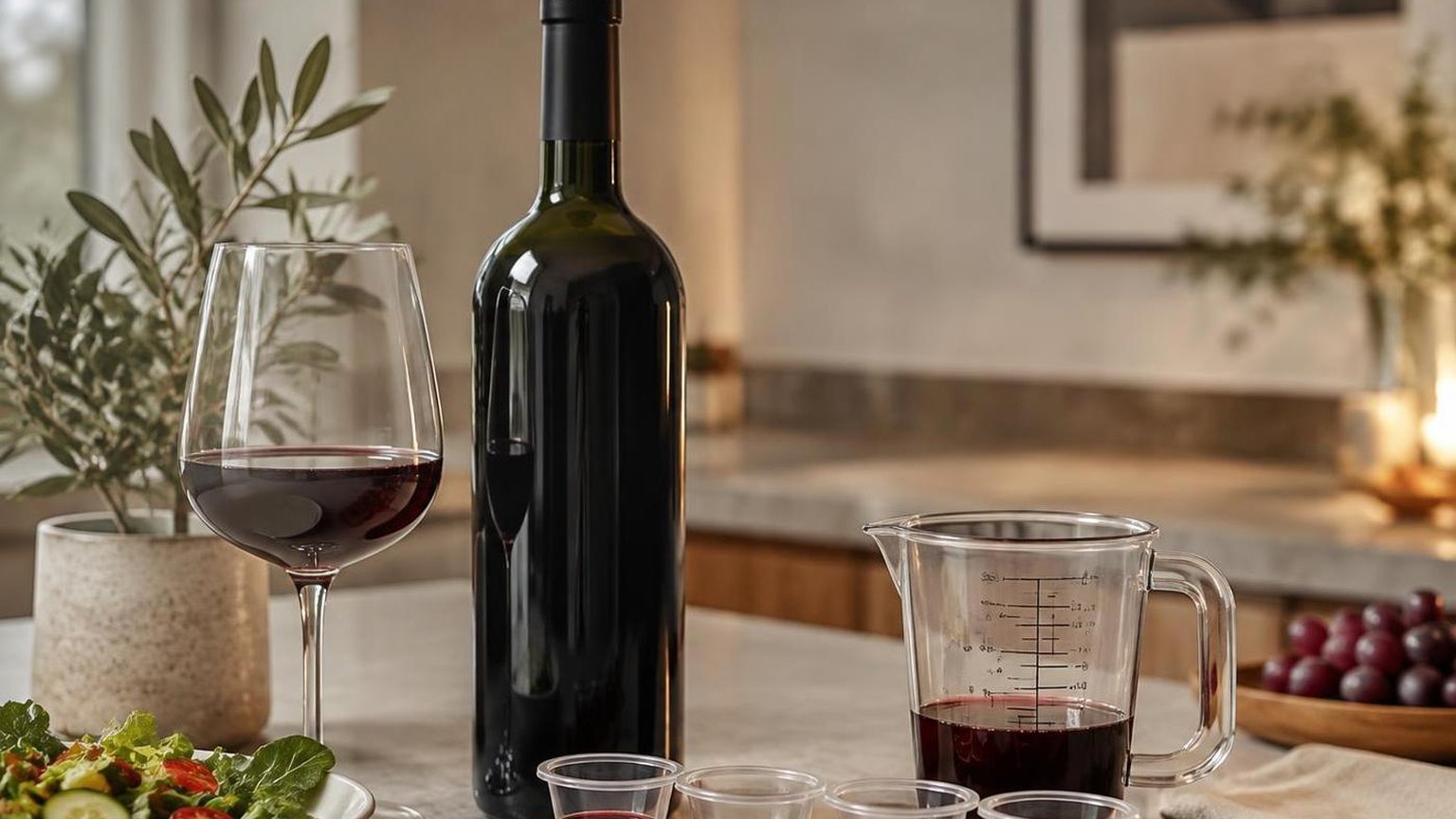
A standard wine bottle is 750 mL, which equals about five 5-ounce glasses. At 12% ABV, that bottle contains roughly 5 standard U.S. drinks, according to the NIAAA standard drink definition of 14 grams of pure alcohol.
Is drinking a whole bottle of wine considered binge drinking?
For most women, yes: the CDC defines binge drinking as 4 or more drinks on one occasion, and a 750 mL bottle of typical wine is about 5 drinks.
For most men, it also meets the NIAAA binge threshold if consumed in about 2 hours, because 5 drinks usually raises blood alcohol concentration to 0.08% or higher.
What happens if I drink an entire bottle of wine in one night?
You can expect impaired judgment, slower reaction time, poorer coordination, disrupted sleep, dehydration, and a higher risk of nausea or vomiting.
Blood alcohol level depends on body size, food, drinking speed, and ABV, but a full bottle can put many adults near or above the U.S. legal driving limit of 0.08%.
How long does it take your body to process a bottle of wine?
The body typically metabolizes alcohol at about 1 standard drink per hour, though this varies by person.
Since a bottle of 12% wine is about 5 standard drinks, it may take roughly 5 hours or more after the last drink for most of the alcohol to be cleared.
Is drinking a whole bottle of wine every day dangerous?
Yes; one bottle per day is far above the U.S. Dietary Guidelines limit of up to 1 drink per day for women and up to 2 for men.
Regularly drinking at that level increases risk for alcohol use disorder, high blood pressure, liver disease, certain cancers, injuries, and sleep and mood problems.
Can drinking a whole bottle of wine raise your blood pressure?
Yes. A 750 mL bottle of 12% wine contains about 71 grams of alcohol, and consuming that much in one sitting can acutely raise blood pressure and heart rate.
Repeated heavy drinking is linked to sustained hypertension, which increases long-term risk of stroke, heart attack, and heart failure.
Does finishing a whole bottle of wine affect sleep quality?
Usually, yes. Alcohol can make you fall asleep faster, but higher doses suppress REM sleep and increase nighttime awakenings as blood alcohol levels drop.
That means a full bottle may leave you sleeping longer in bed yet feeling less rested and more impaired the next day.
Related Reading
- How Long Can You Keep Wine Unopened?
- What Does Zinfandel Taste Like? Find Out Now
- Madeira Vs Marsala
- How Many Calories In A Bottle Of Moscato?
- What Does Port Taste Like? Most Correct Answer
- How Many Ounces In A Bottle Of Prosecco?
- How Much Alcohol In Wine Cooler? A Complete 2026 Guide to ABV, Strength & Safety
- All Alcohol Guides
- NIAAA — What Is a Standard Drink? (2024)
- CDC — About Moderate Alcohol Use (2025)
- Dietary Guidelines for Americans 2020–2025 (2020)
- WHO — Alcohol Fact Sheet (2024)
- National Library of Medicine / PubMed — Alcohol Consumption as a Cause of Cancer (2012)
- NHS — Alcohol Units (2023)
- Harvard T.H. Chan School of Public Health — Alcohol: Balancing Risks and Benefits (2024)