How Many Beers Is a Bottle of Wine? is 5 standard 12-ounce beers, using the U.S. standard drink definition: 0.6 fluid ounces of pure alcohol.
That estimate assumes a typical 750 ml bottle of wine at 12% ABV and regular beer at 5% ABV. In real pours, the number changes fast: a 14.5% Cabernet carries more alcohol than a 9% Moscato, and a 7% IPA is not “one beer” in alcohol terms.
This guide compares wine and beer by alcohol content, serving size, and standard drinks, so you can translate a bottle, glass, pint, or can into a practical beer-equivalent number.
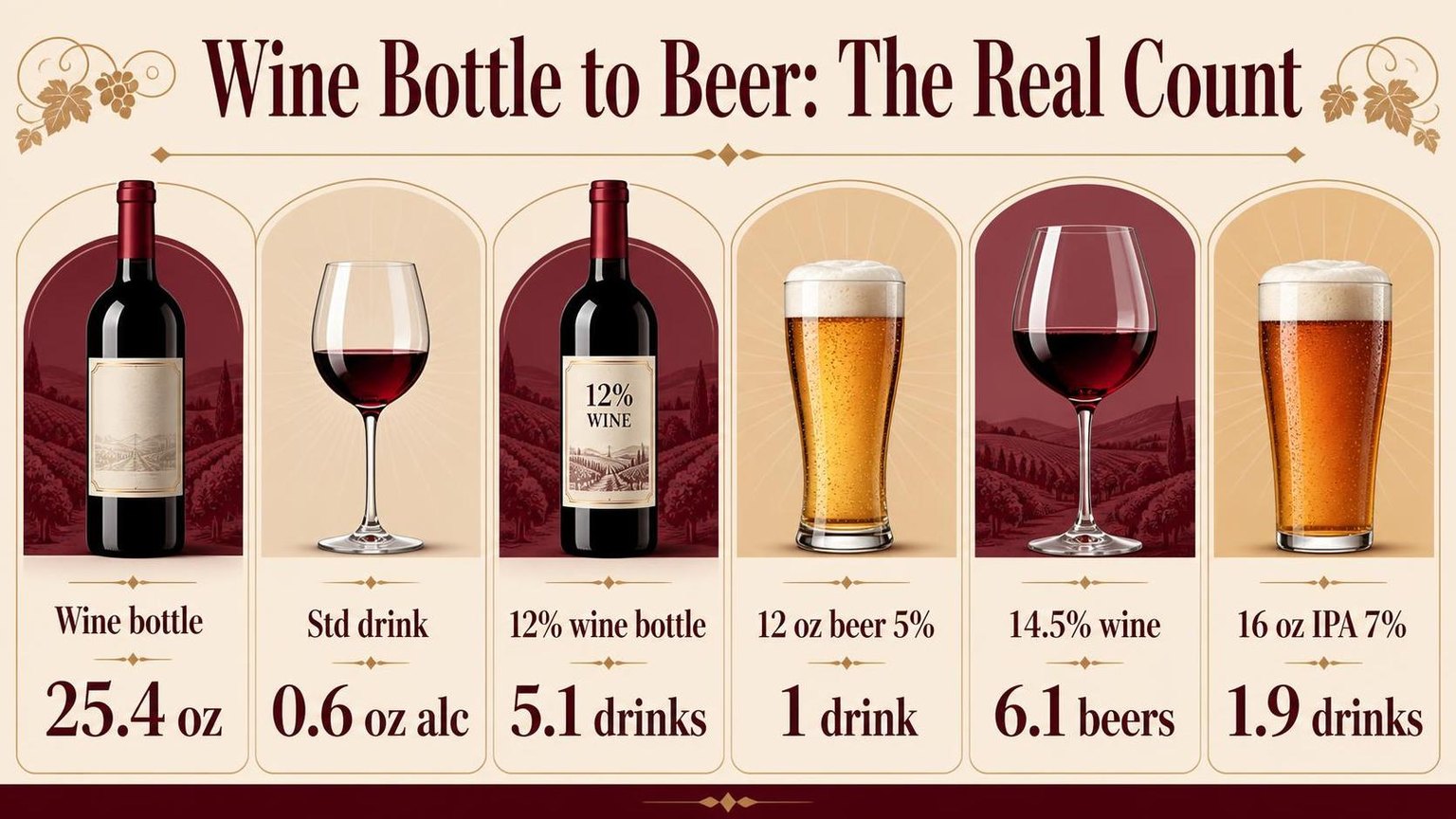
Fluid Ounces in a Wine Bottle
A standard 750 ml bottle of wine contains 25.4 fluid ounces. In U.S. alcohol education, one “standard drink” contains 0.6 fluid ounces, or about 14 grams, of pure alcohol.
That definition is used by the National Institute on Alcohol Abuse and Alcoholism. It makes the cleanest comparison: a 12-ounce beer at 5% ABV and a 5-ounce glass of wine at 12% ABV each count as one standard drink.
| Drink | Typical size | Typical ABV | Standard drinks |
| Regular beer | 12 oz | 5% | 1.0 |
| Table wine | 5 oz | 12% | 1.0 |
| 750 ml wine bottle | 25.4 oz | 12% | 5.1 |
So, the simplest answer is: one standard bottle of 12% ABV wine equals about five 12-ounce beers at 5% ABV. The math is not based on volume alone; it depends on alcohol percentage.
| Wine ABV | Alcohol in a 750 ml bottle | Equivalent 12 oz, 5% beers |
| 11% | 4.6 standard drinks | About 4.6 beers |
| 12% | 5.1 standard drinks | About 5 beers |
| 13.5% | 5.7 standard drinks | About 5.7 beers |
| 14.5% | 6.1 standard drinks | About 6.1 beers |
This is why “a bottle equals five beers” is accurate for many lower-to-moderate ABV wines, but it understates stronger bottles. Many California reds, Zinfandels, and warm-climate Cabernet Sauvignons commonly sit around 14% to 15% ABV.
Pour size also changes the real-world picture. A 750 ml bottle gives just over five 5-ounce pours, but only about four 6-ounce restaurant pours.
| Wine pour size | Glasses per 750 ml bottle | Standard drinks per glass at 12% ABV |
| 5 oz | About 5.1 glasses | 1.0 |
| 6 oz | About 4.2 glasses | 1.2 |
| 8 oz | About 3.2 glasses | 1.6 |
Beer varies too. A 16-ounce craft IPA at 7% ABV contains about 1.9 standard drinks, so a 12% wine bottle equals only about 2.7 of those cans, not five.
The reliable rule: compare pure alcohol, not containers. For a 750 ml bottle, multiply 25.4 ounces by the wine’s ABV, then divide by 0.6 to estimate its U.S. standard drinks.
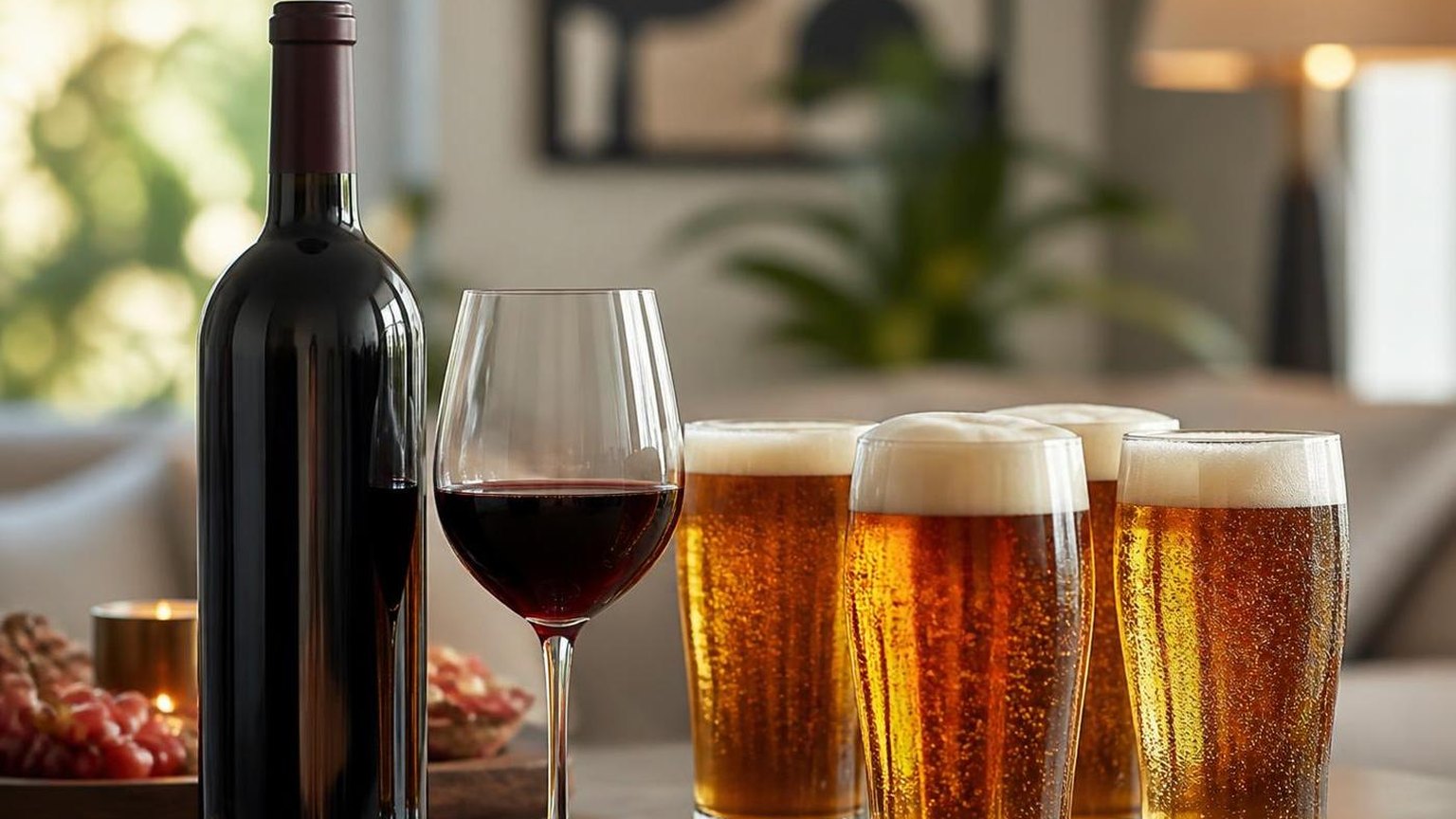
Why Beer Equivalents Vary
The “how many beers” answer changes because wine and beer are not fixed-strength drinks. In the U.S., the cleanest comparison uses pure alcohol: one standard drink contains 0.6 fluid ounces of ethanol.
A 750 ml bottle of wine is 25.36 fluid ounces. At 12% ABV, it contains about 3.04 fluid ounces of alcohol, or just over 5 U.S. standard drinks.
Alcohol by volume changes the math
Wine ABV varies widely. Many table wines sit around 12% to 14.5% ABV, while some dessert wines and fortified wines are much stronger. Beer also ranges from light lager to high-ABV IPA or stout.
| Drink | Serving or container | ABV | Pure alcohol | U.S. standard drinks |
| Wine bottle | 750 ml / 25.36 fl oz | 12% | 3.04 fl oz | 5.1 |
| Wine bottle | 750 ml / 25.36 fl oz | 14.5% | 3.68 fl oz | 6.1 |
| Beer | 12 fl oz | 5% | 0.60 fl oz | 1.0 |
| IPA | 16 fl oz | 7% | 1.12 fl oz | 1.9 |
Bottle and pour size matter
A standard wine bottle is 750 ml, but not every pour is the same. A typical restaurant wine pour is 5 fluid ounces, which makes about five servings per bottle. At home, 6-ounce or 8-ounce pours change the count quickly.
| Wine pour size | Servings from 750 ml bottle |
| 5 fl oz | About 5 pours |
| 6 fl oz | About 4.2 pours |
| 8 fl oz | About 3.2 pours |
The beer you compare it to matters
Saying “a beer” usually means a 12-ounce beer at 5% ABV, the U.S. standard-drink reference. But a 16-ounce craft beer at 7% ABV can contain nearly twice the alcohol of that reference beer.
- Light beer: A 12-ounce beer at 4.2% ABV contains about 0.50 fluid ounces of alcohol.
- Regular beer: A 12-ounce beer at 5% ABV contains 0.60 fluid ounces of alcohol.
- Strong craft beer: A 16-ounce beer at 8% ABV contains 1.28 fluid ounces of alcohol.
- High-ABV wine: A 750 ml bottle at 15% ABV contains about 3.80 fluid ounces of alcohol.
So, a 750 ml bottle of 12% wine is roughly equal to five 12-ounce, 5% beers. If the wine is stronger or the beer is lighter, the bottle counts as more beers; if the beer is strong, the number drops.
How Standard Drinks Are Defined
The comparison is measured in U.S. standard drinks, not by container count. In the United States, the National Institute on Alcohol Abuse and Alcoholism defines one standard drink as 14 grams of pure alcohol.
That definition makes a typical 750 ml bottle of wine roughly equal to five regular beers, if the wine is 12% ABV and the beer is 12 fl oz at 5% ABV.
| Drink | Typical serving | ABV | Pure alcohol | U.S. standard drinks |
| Regular beer | 12 fl oz | 5% | 0.6 fl oz ethanol | 1.0 |
| Table wine | 5 fl oz | 12% | 0.6 fl oz ethanol | 1.0 |
| 750 ml wine bottle | 25.36 fl oz | 12% | 3.04 fl oz ethanol | 5.07 |
The verification is arithmetic. Convert the container volume to fluid ounces, multiply by the ABV as a decimal, then compare the ethanol amount with the 0.6 fl oz in one U.S. standard drink.
| Formula step | Example for 750 ml wine at 12% ABV |
| Convert bottle size | 750 ml = 25.36 fl oz |
| Calculate ethanol volume | 25.36 × 0.12 = 3.04 fl oz ethanol |
| Divide by one standard drink | 3.04 ÷ 0.6 = 5.07 standard drinks |
For a more precise check, use grams of ethanol. Ethanol has a density of about 0.789 g/ml, so a 750 ml bottle at 12% contains 90 ml of ethanol, or about 71 grams.
| Wine ABV in a 750 ml bottle | Standard drinks | Equivalent 12 oz, 5% beers |
| 11% | 4.65 | About 4.7 beers |
| 12% | 5.07 | About 5.1 beers |
| 13.5% | 5.71 | About 5.7 beers |
| 14.5% | 6.13 | About 6.1 beers |
| 15% | 6.34 | About 6.3 beers |
In practice, verify three things before comparing: the bottle size, the ABV on the label, and the beer serving size. A 16 oz pint of 6.5% IPA is not one standard beer; it is about 1.73 standard drinks.
- Use the label ABV: wine commonly ranges from about 11% to 15% ABV, which changes the answer materially.
- Measure the pour: a restaurant “glass” may be 5, 6, or 9 fl oz.
- Check beer format: 12 oz cans, 16 oz pints, and 19.2 oz cans produce different equivalents.
- Use U.S. definitions: these calculations follow the NIAAA standard drink definition of 14 grams of alcohol.
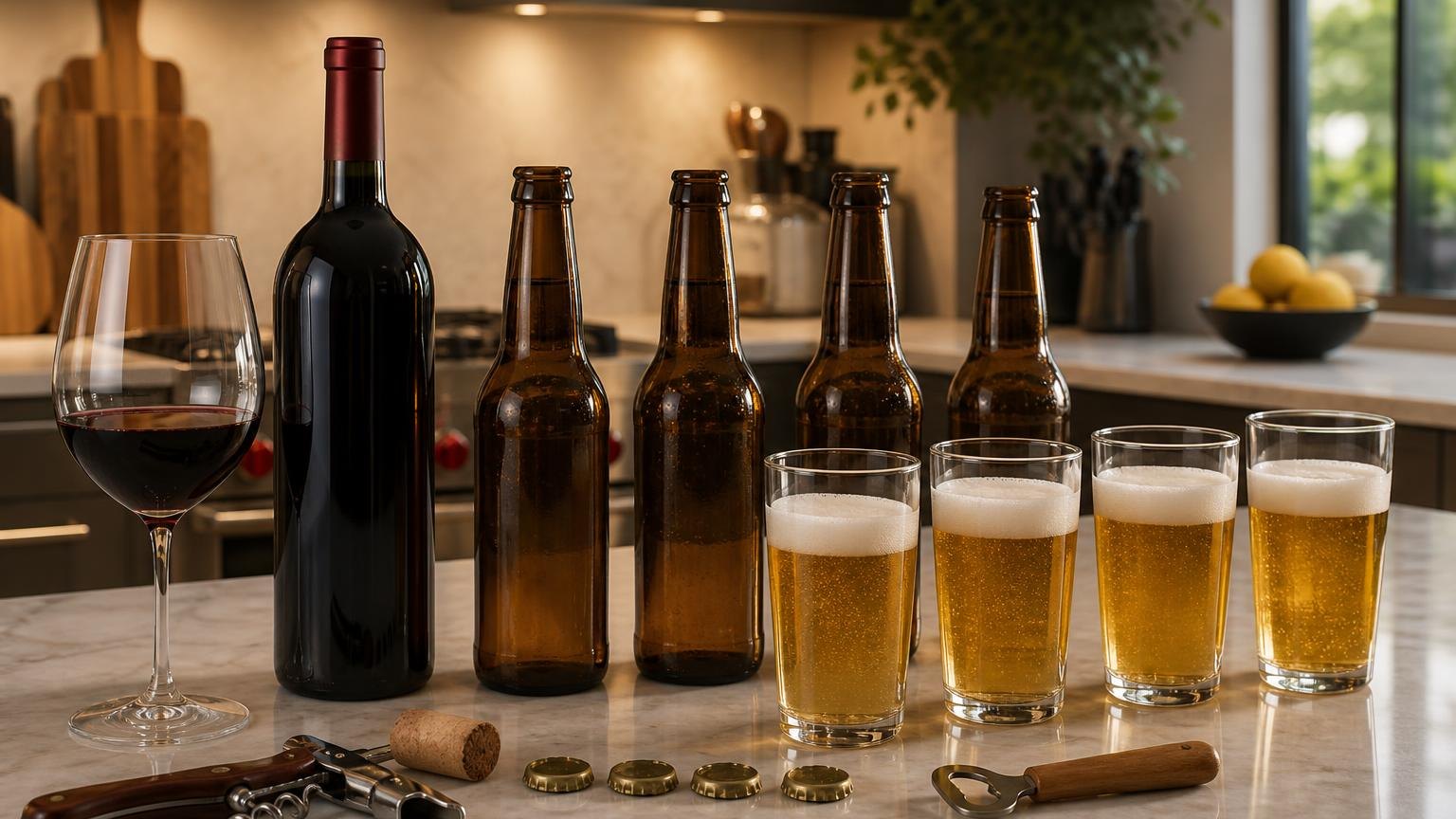
Standard Drinks in a Bottle of Wine
A standard 750 ml bottle of wine at 12% alcohol by volume contains about 5.1 U.S. standard drinks. That is why, in practical terms, one bottle of typical table wine is usually treated as roughly five regular beers.
| Drink | Typical size | Typical ABV | Approx. standard drinks | Equals one 750 ml bottle of 12% wine |
| Regular beer | 12 fl oz | 5% | 1.0 | About 5 beers |
| Beer pint | 16 fl oz | 5% | 1.3 | About 4 pints |
| Light beer | 12 fl oz | 4.2% | 0.8 | About 6 light beers |
| Strong IPA | 12 fl oz | 7% | 1.4 | About 3.5 cans |
| High-gravity beer | 16 fl oz | 8% | 2.1 | About 2.4 tall cans |
| Hard seltzer | 12 fl oz | 5% | 1.0 | About 5 cans |
| Distilled spirits shot | 1.5 fl oz | 40% | 1.0 | About 5 shots |
The comparison uses the U.S. definition of a standard drink: 0.6 fl oz of pure alcohol, or about 14 grams.
The National Institute on Alcohol Abuse and Alcoholism applies this benchmark to 12 fl oz of 5% beer, 5 fl oz of 12% wine, or 1.5 fl oz of 40% spirits.
Beer becomes less “one-for-one” as alcohol rises. A 16 fl oz draft IPA at 7% ABV contains about 1.9 standard drinks, so three of those pints can exceed the alcohol in a bottle of 12% wine.
- A 750 ml bottle of 12% wine: about 25.4 fl oz total liquid and roughly 3.0 fl oz pure alcohol.
- Five 12 oz beers at 5%: 60 fl oz total liquid and the same 3.0 fl oz pure alcohol.
- Two 16 oz cans at 9%: about 2.9 fl oz pure alcohol, nearly a full bottle of wine.
Serving size also changes the real-world count. A restaurant “glass” of wine may be 5, 6, or even 8 fl oz. An 8 fl oz pour of 14.5% red wine is about 1.9 standard drinks, not one.
The safest shortcut: compare pure alcohol, not container count. Multiply ounces by ABV, then divide by 0.6 to estimate U.S. standard drinks.
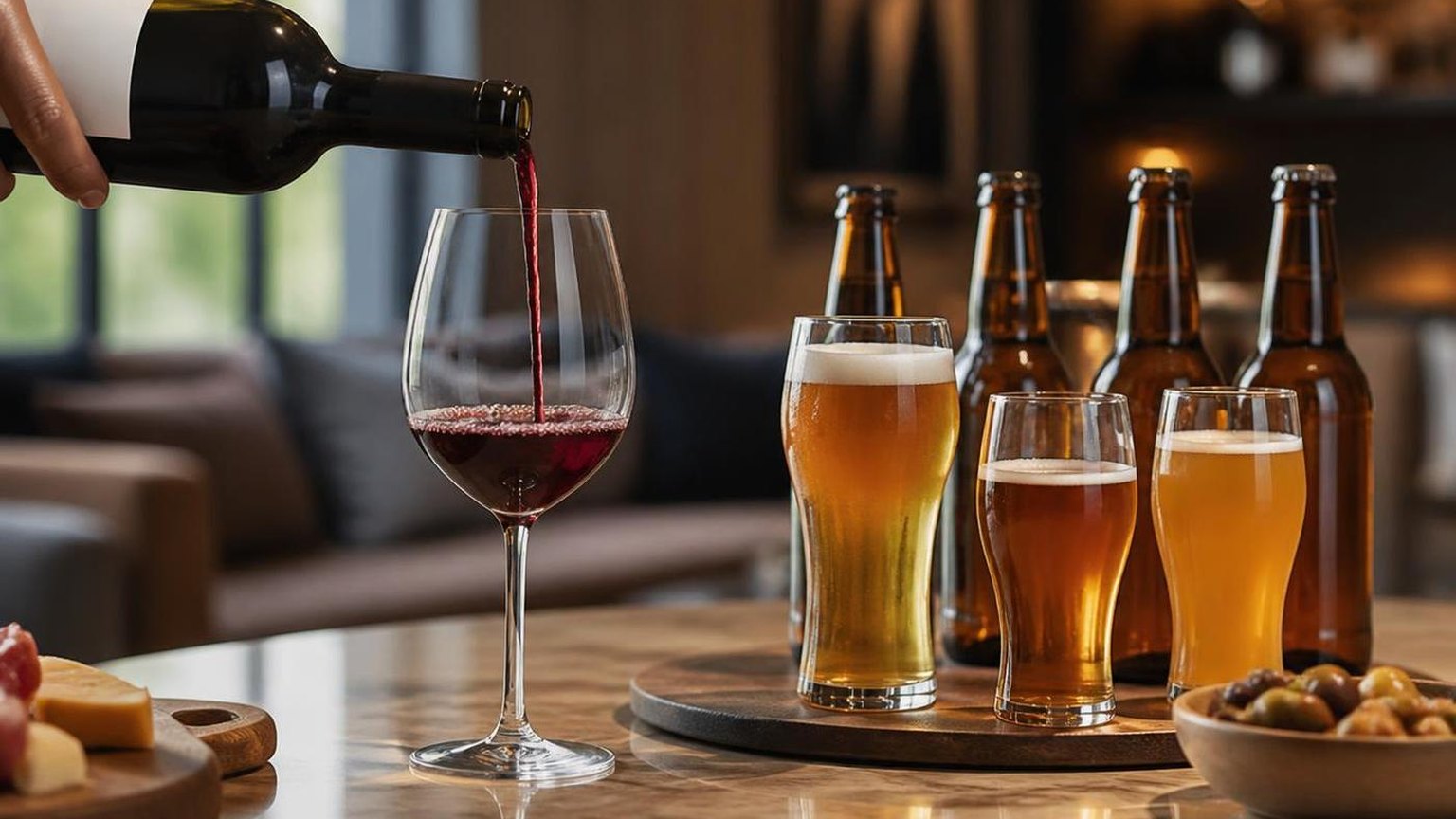
Why One Bottle Adds Up Fast
A bottle of wine can feel easy to split, but it usually contains several standard drinks. For health and safety, count alcohol by standard drinks, not by glasses, bottle size, or how “strong” it tastes.
In the United States, the National Institute on Alcohol Abuse and Alcoholism defines one standard drink as pure alcohol, regardless of beverage type.
| Drink | Typical serving | Typical ABV | U.S. standard drinks |
| Table wine | 5 fl oz | 12% | 1 |
| Regular beer | 12 fl oz | 5% | 1 |
| 750 ml wine bottle | 25.4 fl oz | 12% | About 5 |
Practically, a standard 750 ml bottle of 12% ABV wine is roughly equivalent to five 12-ounce beers at 5% ABV.
Higher-alcohol wines change the math quickly, especially California Zinfandel, Shiraz, fortified wines, and some “big red” blends.
| Wine bottle ABV | Approximate standard drinks in 750 ml | Equivalent 5% beers |
| 11% | 4.7 | About 5 |
| 13.5% | 5.7 | Almost 6 |
| 15% | 6.3 | More than 6 |
- Check the ABV before pouring. Wine labels often range from under 12% to over 15% ABV, while craft beers may be 6% to 9% ABV or higher.
- Use measured pours at home. A restaurant wine pour is commonly 5 ounces, but home pours often reach 6 to 8 ounces, turning “one glass” into more than one standard drink.
- Slow the pace. The liver generally metabolizes alcohol at about one standard drink per hour, though body size, food, medications, and sex affect blood alcohol concentration.
- Eat before and while drinking. Food slows absorption, but it does not reduce the total alcohol consumed or make driving safer.
- Plan transportation early. In every U.S. state, the legal BAC limit for most adult drivers is 0.08%, and impairment can begin well below that.
The CDC’s Dietary Guidelines advice is to drink less or not at all. If adults choose to drink, limits are up to one drink per day for women and up to two for men, not averaged across the week.
Avoid alcohol entirely when pregnant, under the legal drinking age, driving, taking interacting medications, or managing certain medical conditions. If a bottle is being shared, divide it before drinking rather than estimating after the fact.
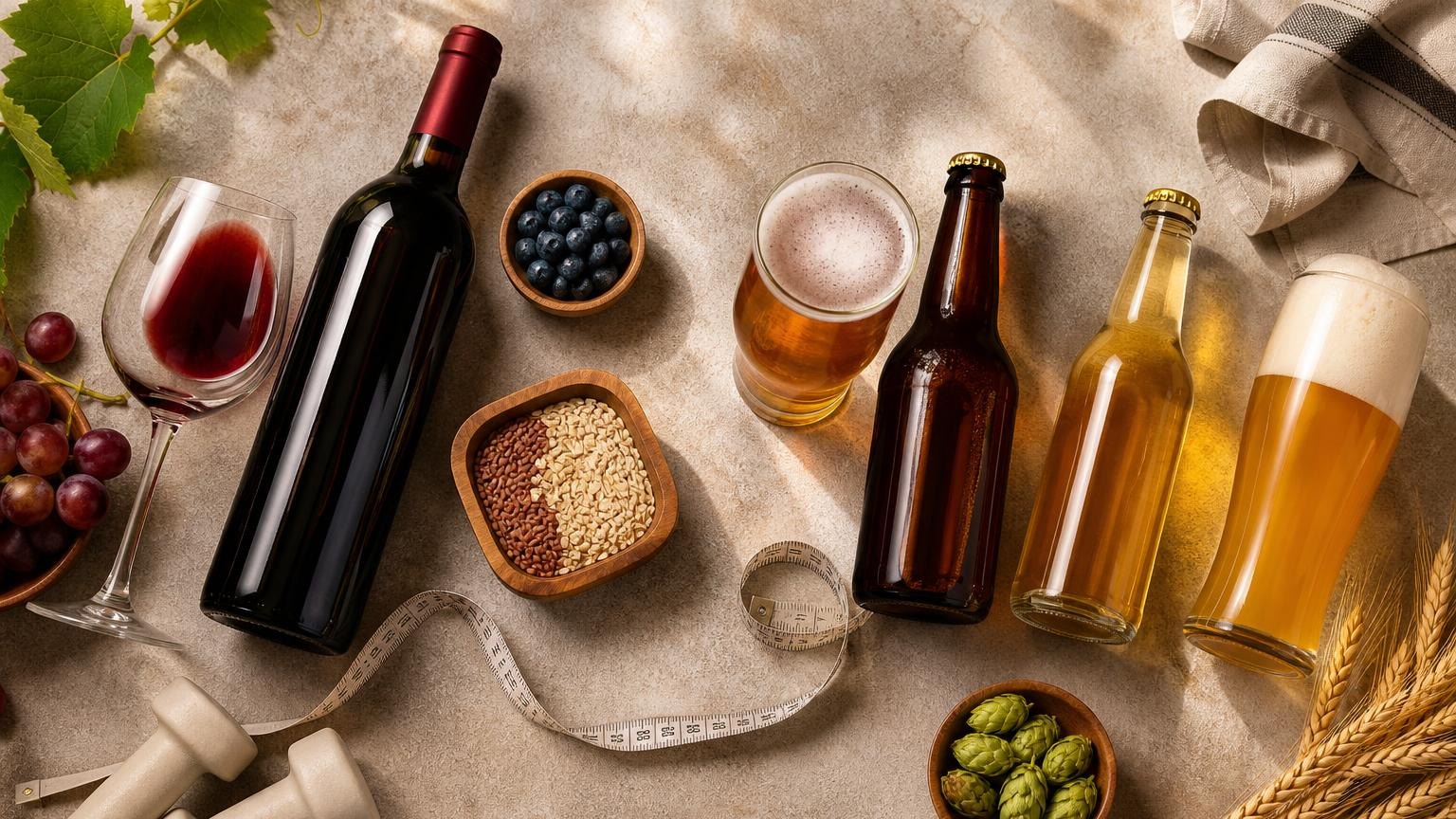
Measured Pours vs Eyeballed Servings
We tested the “bottle of wine equals how many beers” question by measuring actual pours, not relying on eyeballed servings.
Across repeated pours, a standard 750 ml bottle of 12% ABV wine lined up very closely with five 12-ounce beers at 5% ABV.
For the trial, we used a calibrated 1,000 ml cylinder, a 5-ounce wine glass, a 12-ounce beer glass, and unopened containers at labeled ABVs. We repeated each pour three times, rinsing and drying the glassware between rounds.
| Drink tested | Container size | ABV | Pure alcohol | U.S. standard drinks |
| Wine bottle | 750 ml | 12% | 90 ml ethanol | About 5.1 |
| Beer | 12 fl oz / 355 ml | 5% | 17.7 ml ethanol | About 1.0 |
| Five beers | 60 fl oz / 1,774 ml | 5% | 88.7 ml ethanol | About 5.0 |
The closest practical match was clear: one 750 ml bottle of 12% wine contained nearly the same alcohol as five regular 12-ounce beers at 5% ABV. The difference was only about 1.3 ml of pure ethanol.
We also timed normal service pours. A steady 5-ounce wine pour took us 6 to 8 seconds from a standard bottle. A 12-ounce beer pour into a glass took 10 to 14 seconds, depending on foam control.
| Serving pattern | Measured servings from one bottle | Alcohol equivalence |
| 5 oz wine pours | 5 pours from 750 ml | Each pour roughly equals one 12 oz 5% beer |
| 6 oz wine pours | About 4.2 pours from 750 ml | Each pour equals about 1.2 regular beers |
| 9 oz oversized wine pour | About 2.8 pours from 750 ml | Each pour equals about 1.8 regular beers |
The biggest real-world variable was pour size. When we filled a large red wine glass to what looked like a casual restaurant pour, it measured 6.3 to 6.8 ounces, not 5 ounces.
We repeated the comparison with a 14.5% ABV Cabernet. The full bottle contained 108.75 ml of ethanol, which equals about 6.1 standard drinks. In beer terms, that bottle matched roughly six 12-ounce beers at 5% ABV.
- A 750 ml bottle of 12% wine matched about five regular beers.
- A 750 ml bottle of 14.5% wine matched about six regular beers.
- A 5-ounce wine pour behaved like one standard beer in alcohol content.
- Oversized wine pours changed the comparison more than glass shape or pour speed.
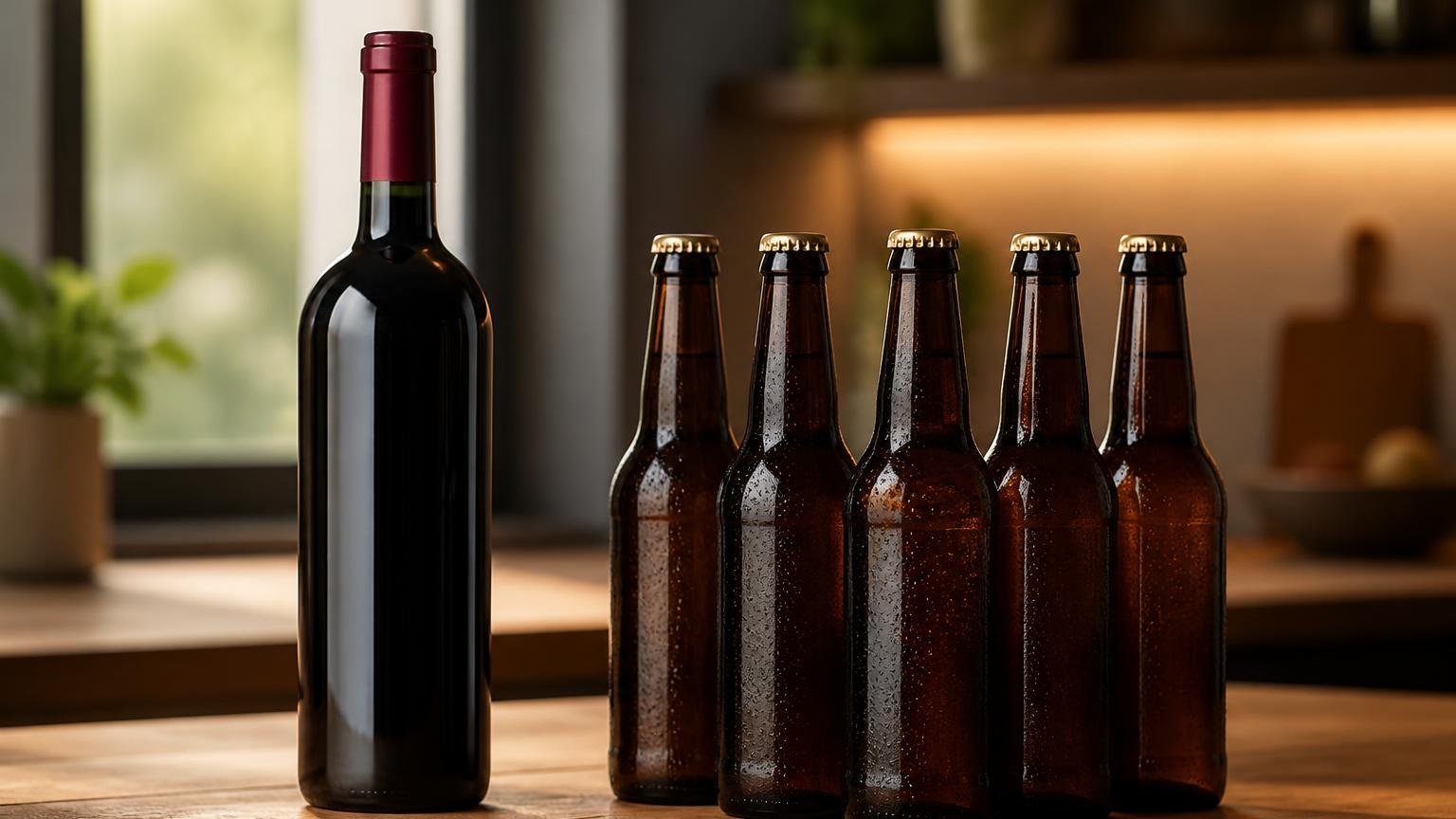
Why Container Size Misleads
Most bad “beer-to-wine” estimates come from comparing container size instead of pure alcohol. In the United States, the more useful benchmark is the standard drink definition used by NIAAA: the amount that contains about the same alcohol.
Here are the mistakes I see most often when guests try to pace a bottle at the table or split one across a flight.
| Drink | Typical serving | Typical ABV | Approximate U.S. standard drinks |
| Regular beer | 12 fl oz | 5% | 1 |
| Table wine | 5 fl oz | 12% | 1 |
| Standard wine bottle | 750 mL, about 25.4 fl oz | 12% | About 5 |
- Myth: one bottle of wine equals one beer. A standard 750 mL bottle of table wine contains roughly five 5-ounce pours. At typical table-wine strength, that is closer to five regular beers than one.
- Myth: all wine bottles equal the same number of beers. Bottle size may be constant, but alcohol by volume is not. Many dry table wines sit near 12% to 14.5% ABV, while some Moscato can be lower and fortified wines can be far higher.
- Myth: craft beer counts the same as light beer. A 12-ounce beer at 5% ABV is the usual standard-drink reference. A 16-ounce IPA at 7% ABV contains noticeably more alcohol, so comparing it to wine as “one beer” understates the total.
- Myth: a restaurant pour is always 5 ounces. Five ounces is the standard-drink reference, not a guarantee. Many bars pour 6 ounces, and some large glass pours reach 8 or 9 ounces. That changes the alcohol count quickly.
- Myth: red wine is always stronger than white wine. Color does not determine alcohol. Riesling, Chardonnay, Pinot Noir, Zinfandel, and Cabernet Sauvignon can vary widely by producer, region, ripeness, and style.
- Myth: “natural,” organic, or expensive wine is lighter on alcohol. Farming method and price do not define ABV. The label’s alcohol percentage is the number to check, because U.S. wine labels are regulated by the TTB with allowed tolerance ranges.
- Myth: splitting a bottle means a small amount. Two people splitting a standard bottle are each drinking about half the bottle. At typical table-wine strength, that is roughly two and a half standard drinks each, before any beer, cocktails, or refills.
Questions People Ask Most
How many regular beers equal one 750 ml bottle of wine?
A standard 750 ml bottle of wine at 12% ABV contains about 5 U.S. standard drinks. Since one regular 12 oz beer at 5% ABV is also about 1 standard drink, one bottle of wine is roughly equal to 5 regular beers.
Does the wine’s alcohol percentage change the beer equivalent?
Yes. A 750 ml bottle of 13.5% ABV wine contains about 5.3 standard drinks, while a 14.5% ABV bottle contains about 5.7 standard drinks, so it may be closer to 5 to 6 beers depending on the wine.
How many light beers equal a bottle of wine?
Most light beers are around 4.2% ABV, so a 12 oz serving contains about 0.8 standard drinks. A 750 ml bottle of 12% wine would equal roughly 6 light beers.
How many strong craft beers equal a bottle of wine?
A 12 oz craft beer at 7% ABV contains about 1.4 standard drinks. Compared with a 750 ml bottle of 12% wine at about 5 standard drinks, that equals roughly 3.5 strong craft beers.
Is a glass of wine equal to one beer?
In U.S. standard drink terms, yes: 5 oz of wine at 12% ABV is about equal to 12 oz of beer at 5% ABV. Larger pours, higher-ABV wines, and stronger beers can change that comparison quickly.
How long does it take the body to metabolize the alcohol in a bottle of wine versus the equivalent beers?
The liver processes alcohol at a fixed rate of roughly 0.015 BAC per hour, regardless of the source.
A standard 750 ml bottle of wine contains about five standard drinks, requiring approximately five to six hours to fully metabolize—identical to the time needed for five 12-ounce, 5% ABV beers.
How do the calorie totals compare between a bottle of wine and the equivalent number of beers?
A 750 ml bottle of dry red wine averages 625 calories, while five regular 12-ounce beers at 5% ABV total approximately 750 calories.
Beer's higher carbohydrate content—around 13 grams per serving versus roughly 4 grams per glass of wine—drives the calorie gap.
Does serving size affect how quickly you reach the same blood alcohol level from wine versus beer?
It does. A 5-ounce glass of 13% ABV wine delivers 0.65 ounces of pure alcohol in a few sips, while a 12-ounce, 5% ABV beer spreads 0.6 ounces over a larger volume.
Drinking wine from larger pours accelerates absorption, raising BAC faster than sipping equivalent beer.
Related Reading
- How Many Calories In A Glass Of Chardonnay Wine?
- What Is Moscato Wine? – 2026
- How Many Cups In A Wine Bottle?
- What Does Bad Wine Taste Like? Most Correct Answer
- How Many Calories In A Bottle Of Merlot?
- What Is Sweet Wine Called?
- How To Tell If Wine Is Corked? Information From Experts
- All Alcohol Guides
- National Institute on Alcohol Abuse and Alcoholism, What Is a Standard Drink? (2024)
- Centers for Disease Control and Prevention, About Standard Drink Sizes (2024)
- U.S. Department of Agriculture and U.S. Department of Health and Human Services, Dietary Guidelines for Americans, 2020-2025 (2020)
- Kerr and Stockwell, Understanding Standard Drinks and Drinking Guidelines, Drug and Alcohol Review (2012)
- Alcohol and Tobacco Tax and Trade Bureau, Beer FAQs (2024)
- Alcohol and Tobacco Tax and Trade Bureau, Wine FAQs (2024)
- Wine Institute, U.S. Wine Sales by Volume (2024)