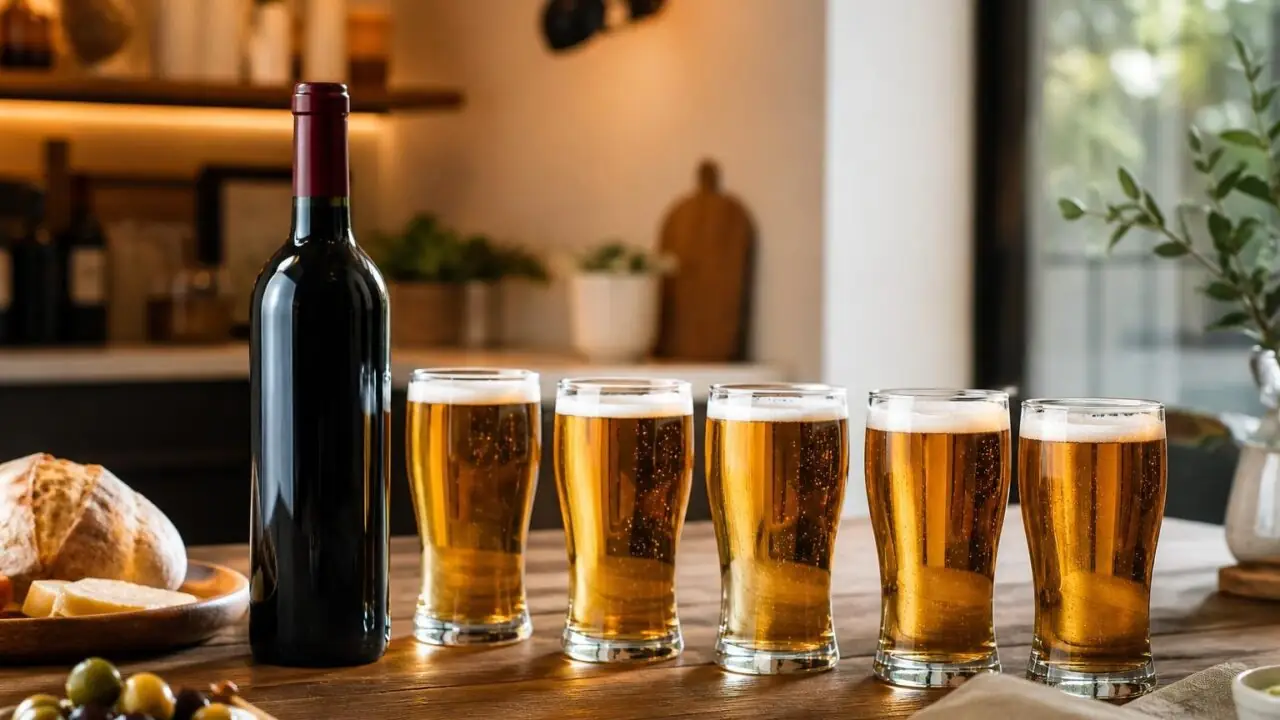
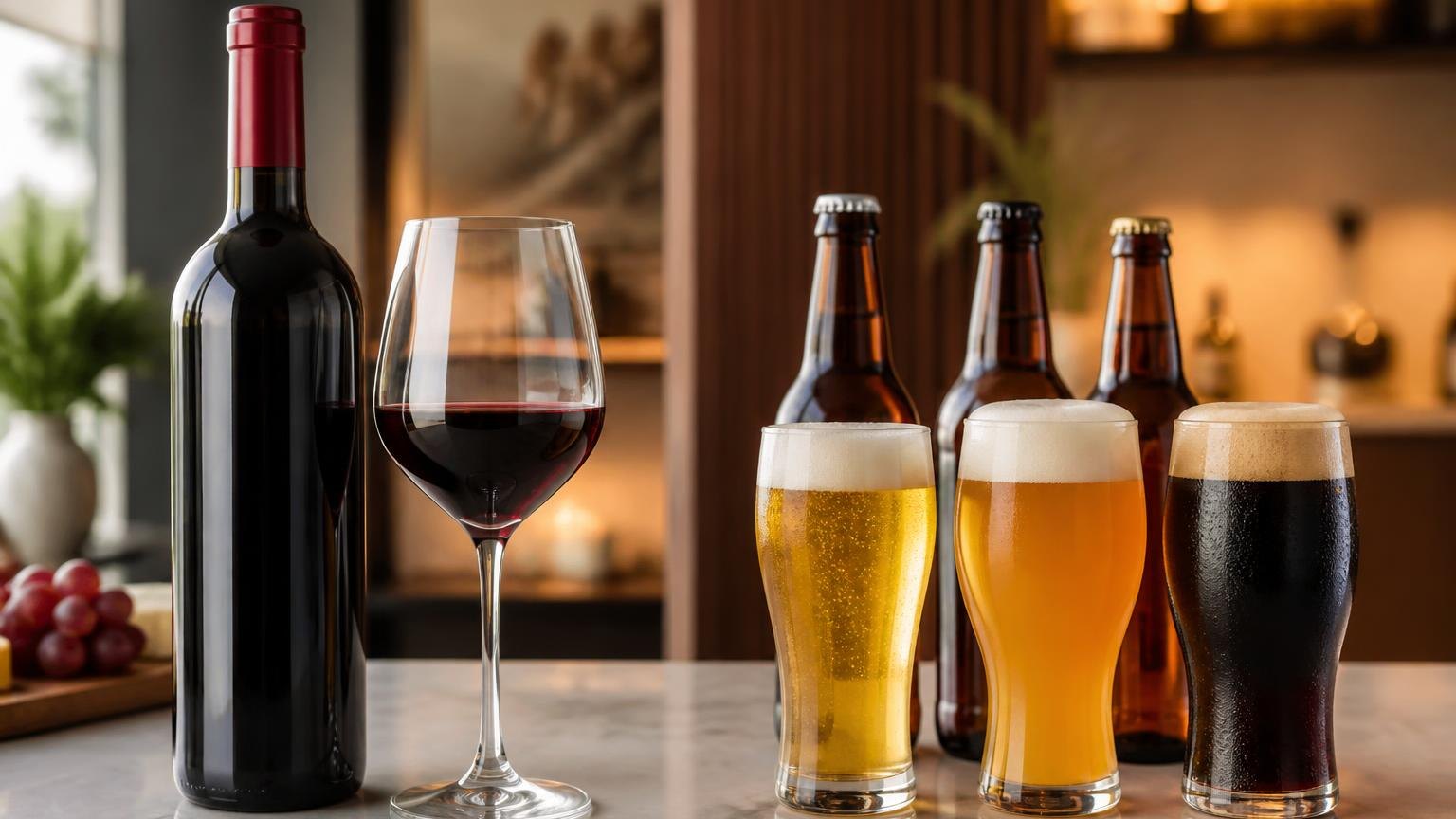
How Many Beers Is Equal to a Bottle of Wine? is about 5 standard 12-ounce beers for a typical 750-mL bottle of wine at 12% ABV. That comparison uses the U.S. “standard drink” benchmark: 14 grams, or 0.6 fluid ounces, of pure alcohol.
A 750-mL wine bottle contains about 25.4 ounces. At 12% ABV, that equals roughly 3.0 ounces of pure alcohol, or five standard drinks. A regular 12-ounce beer at 5% ABV contains about 0.6 ounces of alcohol, making the math nearly one-to-one.
The answer changes with stronger wine, high-ABV craft beer, larger cans, or lighter styles, so label ABV and serving size matter more than the category alone.
A Bottle of Wine Equals Five Beers
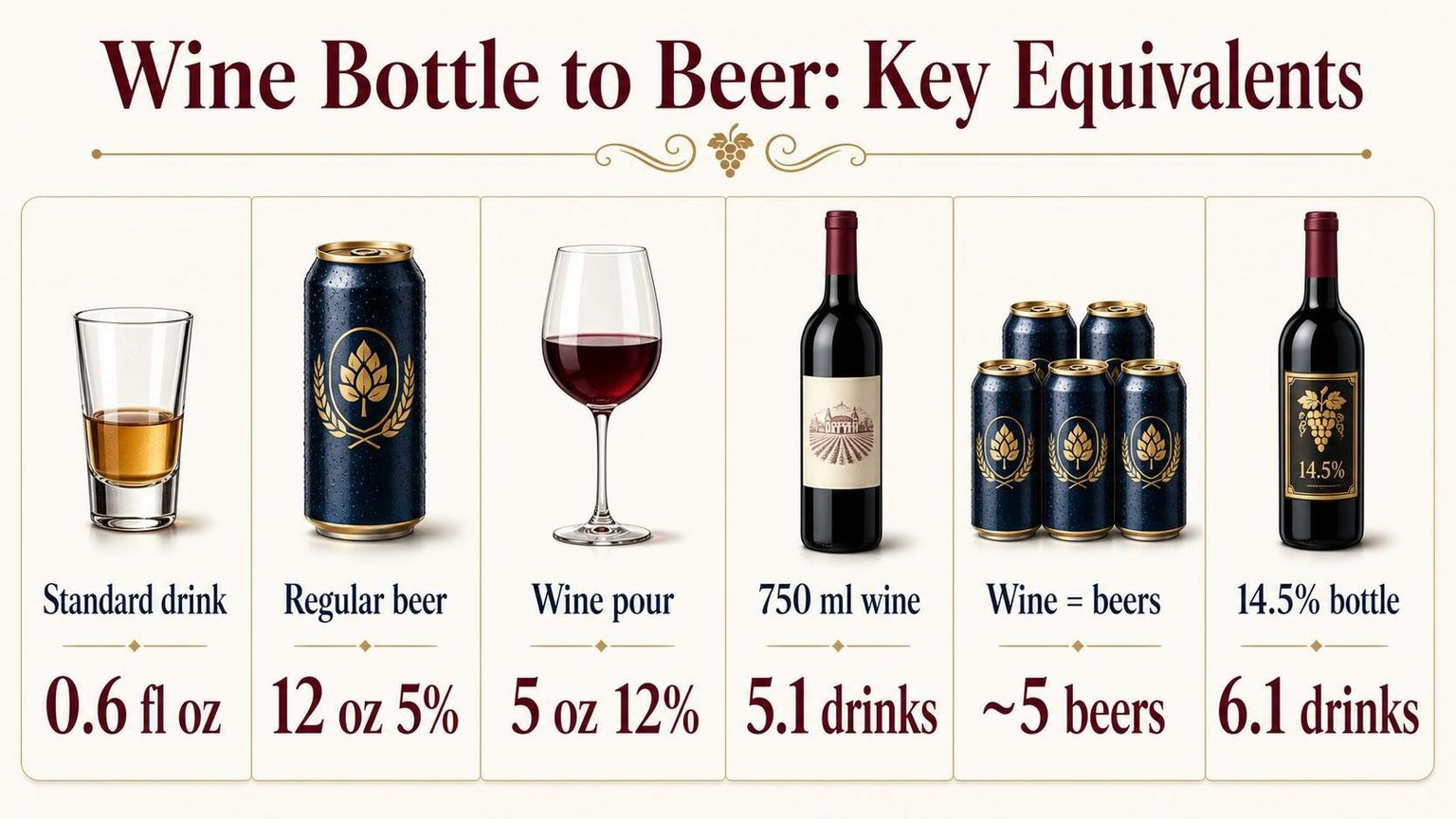
In the United States, the cleanest answer is: a typical 750 ml bottle of table wine is about equal to five standard beers. That estimate depends on alcohol by volume, not just container size.
| Drink | Typical size | Typical ABV | Pure alcohol | U.S. standard drinks |
| Regular beer | 12 fl oz | 5% | 0.6 fl oz | 1.0 |
| Table wine | 5 fl oz | 12% | 0.6 fl oz | 1.0 |
| Wine bottle | 750 ml / 25.4 fl oz | 12% | 3.0 fl oz | 5.1 |
The National Institute on Alcohol Abuse and Alcoholism defines one U.S. standard drink as 0.6 fluid ounces of pure alcohol, or about 14 grams. That is why 12 ounces of 5% beer and 5 ounces of 12% wine count the same.
A 750 ml bottle contains just over five 5-ounce pours. At 12% ABV, that bottle contains roughly 5.1 standard drinks, which lines up closely with five 12-ounce beers at 5% ABV.
| Wine bottle ABV | Standard drinks in 750 ml | Equivalent 12 oz, 5% beers |
| 11% | 4.7 | About 4.7 beers |
| 12% | 5.1 | About 5.1 beers |
| 13.5% | 5.7 | About 5.7 beers |
| 14.5% | 6.1 | About 6.1 beers |
This is where many real-world estimates go wrong. A higher-ABV Cabernet, Zinfandel, or Chardonnay can push a bottle closer to six beers, while a lower-alcohol Riesling or Vinho Verde may be under five.
- Use ABV first: a 14.5% wine bottle has about 21% more alcohol than a 12% bottle of the same size.
- Check beer format: a 16-ounce craft beer at 7% ABV is not one standard drink; it is about 1.9.
- Watch pours: restaurant wine pours are often 5 to 6 ounces, while home pours can be larger without looking excessive.
| Beer serving | ABV | Standard drinks | 750 ml, 12% wine equivalent |
| 12 oz can or bottle | 5% | 1.0 | About 5 beers |
| 16 oz pint | 6% | 1.6 | About 3 pints |
| 16 oz craft can | 7% | 1.9 | About 2.7 cans |
So the practical rule is simple: one standard 750 ml wine bottle equals about five regular beers, but strong wine or strong beer can shift that number noticeably.
Pure Alcohol Determines the Comparison
The “beers per bottle of wine” answer changes because alcohol is measured by pure ethanol, not by container count.
In the U.S., a standard drink contains 0.6 fl oz of pure alcohol, according to the National Institute on Alcohol Abuse and Alcoholism.
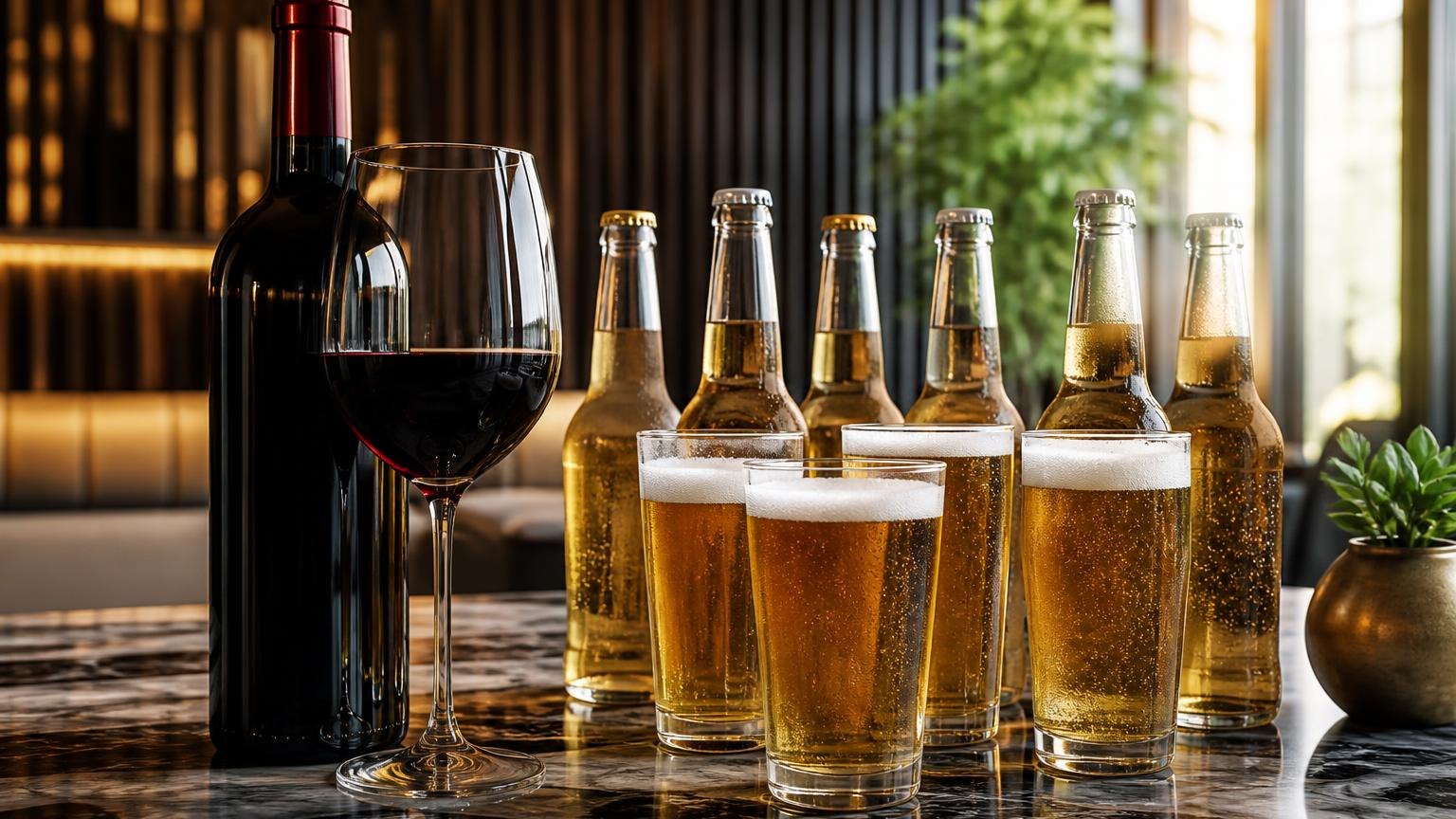
A 750 ml bottle of 12% ABV wine contains about 5 standard drinks. That equals roughly five 12 oz beers at 5% ABV, but real bottles and cans often differ from those neat averages.
Alcohol by volume matters most
ABV is the biggest variable. A lower-alcohol vinho verde and a high-ABV zinfandel are both “wine,” but they do not equal the same number of beers.
| Drink | Size | ABV | Approx. standard drinks |
| Wine bottle | 750 ml / 25.4 oz | 12% | 5.1 |
| Wine bottle | 750 ml / 25.4 oz | 14.5% | 6.1 |
| Beer | 12 oz | 4.2% | 0.84 |
| Beer | 12 oz | 5% | 1.0 |
| Beer | 12 oz | 7% | 1.4 |
Beer style changes the comparison
Light lagers are often around 4.2% ABV, while many IPAs sit near 6% to 7.5%. Some imperial stouts and double IPAs reach 8% to 12%, making one can count like two regular beers.
| Beer type | Common serving | Example ABV | Beers equal to a 12% wine bottle |
| Light beer | 12 oz | 4.2% | About 6 |
| Regular lager | 12 oz | 5% | About 5 |
| IPA | 12 oz | 7% | About 3.6 |
| Double IPA | 16 oz | 8% | About 2.4 |
Serving size is just as important
A standard wine pour is usually 5 oz, not a full glass to the rim. Restaurant pours can be 6 oz or 9 oz, which means a bottle may contain fewer actual servings than expected.
- Wine bottle size: Most still wine bottles are 750 ml, but magnums are 1.5 L and half-bottles are 375 ml.
- Beer package size: Beer may come in 12 oz bottles, 16 oz cans, 19.2 oz cans, 22 oz bottles, or draft pints.
- Wine strength: Many table wines range from about 11% to 15% ABV; fortified wines are much higher, often 16% to 20%.
- Carbonation and drinking pace: Beer is often consumed faster in larger volumes, while wine may be sipped more slowly, changing how it feels in practice.
For a practical estimate, compare total alcohol: ounces of drink multiplied by ABV. For most everyday bottles, one 750 ml bottle of wine equals about four to six regular 12 oz beers.
Standard Drink Measurement for Wine and Beer
The comparison is measured by pure ethanol, not by serving size, flavor, or how “strong” the drink feels.
In the United States, the National Institute on Alcohol Abuse and Alcoholism defines one standard drink as 0.6 fluid ounces, or about 14 grams, of pure alcohol.
To verify the math, use this formula: beverage volume × ABV × 0.789. The 0.789 figure is the approximate density of ethanol in grams per milliliter, used to convert alcohol volume into alcohol weight.
Standard U.S. Drink Equivalents
| Beverage | Typical serving | Typical ABV | Pure alcohol | Standard drinks |
| Regular beer | 12 fl oz | 5% | 0.6 fl oz ethanol | 1.0 |
| Table wine | 5 fl oz | 12% | 0.6 fl oz ethanol | 1.0 |
| 750 ml wine bottle | 25.36 fl oz | 12% | 3.04 fl oz ethanol | 5.1 |
| Regular beer equivalent | 12 fl oz cans/bottles | 5% | 0.6 fl oz each | About 5 beers |
That is why a standard 750 ml bottle of 12% ABV wine is usually counted as about five standard drinks, equal to about five 12-ounce beers at 5% ABV. The exact number changes when ABV changes.
How to Check a Specific Bottle or Beer
- Find the ABV printed on the label. In the U.S., alcohol labeling is regulated by the Alcohol and Tobacco Tax and Trade Bureau for most wine and malt beverages.
- Confirm the container size. A standard wine bottle is 750 ml, equal to 25.36 U.S. fluid ounces. A common beer bottle or can is 12 U.S. fluid ounces.
- Multiply volume by ABV as a decimal. For example, 25.36 × 0.12 = 3.04 fluid ounces of pure ethanol in the wine bottle.
- Divide by 0.6 fluid ounces. A 12% bottle: 3.04 ÷ 0.6 = 5.07 U.S. standard drinks.
Why Verification Matters
| Wine bottle ABV | Pure alcohol in 750 ml | Equivalent 5% beers |
| 11% | 2.79 fl oz ethanol | 4.6 beers |
| 12% | 3.04 fl oz ethanol | 5.1 beers |
| 13.5% | 3.42 fl oz ethanol | 5.7 beers |
| 14.5% | 3.68 fl oz ethanol | 6.1 beers |
In real service, I verify equivalents from the label first, then pour size second. A 6-ounce restaurant wine pour at 14% ABV contains 0.84 fluid ounces of ethanol, which is 1.4 standard drinks, not one.
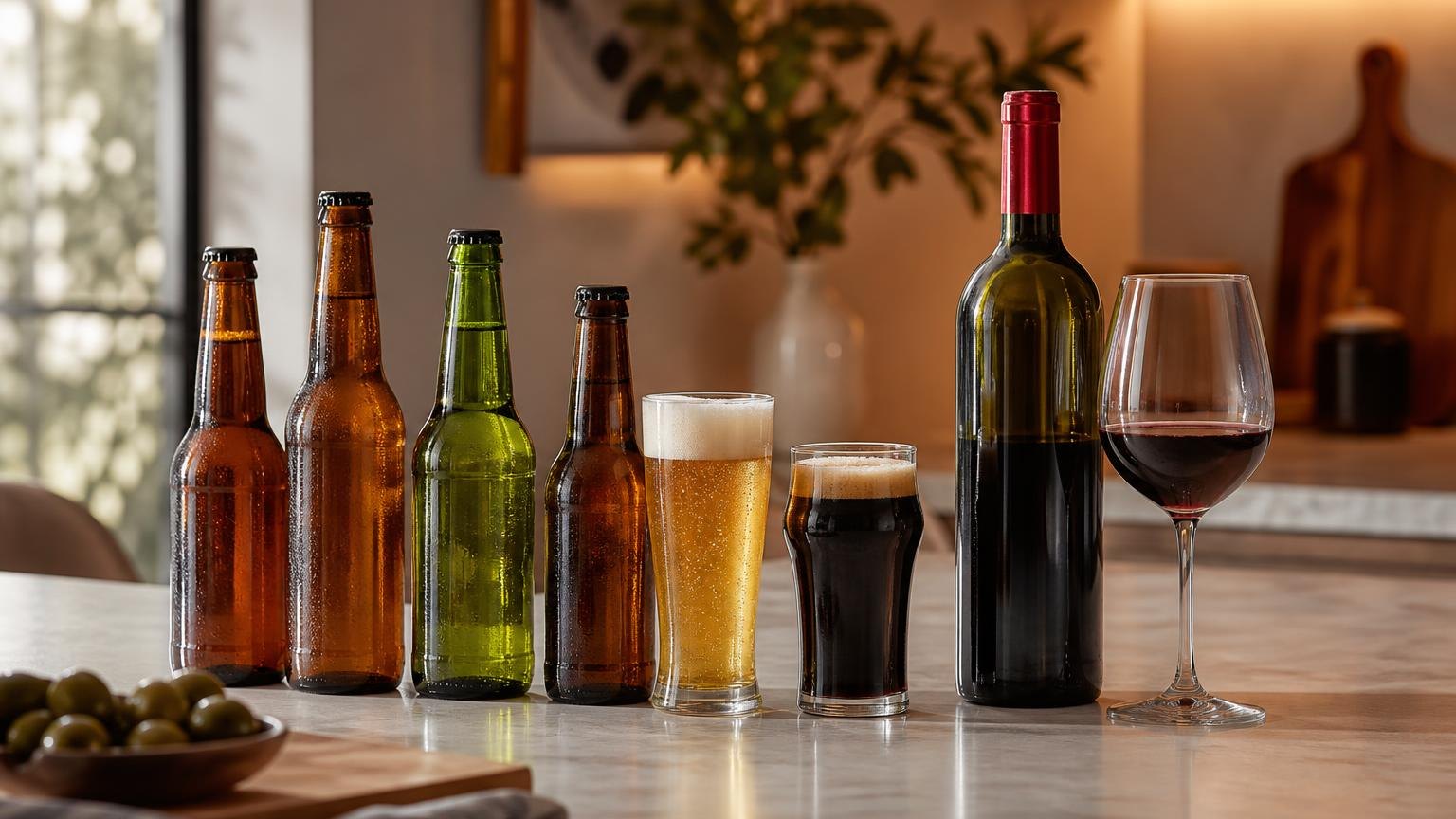
How Wine Volume Converts to Beer
A standard 750 ml bottle of wine contains about 25.4 fluid ounces. At 12% ABV, that works out to just over 5 U.S. standard drinks, using the NIAAA definition of 0.6 fluid ounces of pure alcohol per drink.
That means one average bottle of wine is closest to five regular 12-ounce beers, but the comparison changes quickly when beer strength, wine ABV, or serving size changes.
| Drink | Typical size | Typical ABV | Approx. standard drinks | Compared with 1 bottle of 12% wine |
| Regular beer | 12 oz | 5% | 1.0 | About 5 beers |
| Light beer | 12 oz | 4.2% | 0.8 | About 6 beers |
| Craft IPA | 16 oz pint | 7% | 1.9 | About 2.7 pints |
| Wine | 5 oz glass | 12% | 1.0 | 5 glasses per bottle |
| Higher-ABV wine | 750 ml bottle | 14.5% | 6.1 | About 6 regular beers |
| Distilled spirits | 1.5 oz shot | 40% | 1.0 | About 5 shots |
The most important variable is alcohol by volume, not the category. A 16-ounce pint of 7% IPA has almost twice the alcohol of a standard beer, so fewer servings equal a bottle of wine.
- One 750 ml bottle of 12% wine: about 5.1 standard drinks.
- One 750 ml bottle of 14.5% wine: about 6.1 standard drinks.
- One 12-ounce 5% beer: about 1 standard drink.
- One 16-ounce 7% beer: about 1.9 standard drinks.
Serving size also matters in restaurants and bars. A “glass of wine” may be 6 ounces instead of 5, and a draft beer may be 16 or 20 ounces rather than a 12-ounce bottle or can.
For a practical rule, treat a standard bottle of table wine as roughly equal to five regular beers. If the beer is strong or the wine is above 13.5% ABV, check the label and recalculate before assuming a one-for-one comparison.
Standard Drinks in a 750 mL Bottle
A 750 ml bottle of 12% ABV wine contains about five U.S. standard drinks. That is roughly equal to five 12-ounce beers at 5% ABV, but the comparison changes quickly with stronger beer, larger pours, or higher-alcohol wine.
In the United States, one standard drink contains 0.6 fluid ounces, or about 14 grams, of pure alcohol. This is the measure used by the CDC, NIAAA, and Dietary Guidelines for Americans.
| Drink | Typical serving | ABV | Approx. standard drinks |
| Regular beer | 12 oz | 5% | 1.0 |
| Strong IPA | 16 oz | 7% | 1.9 |
| Table wine | 5 oz | 12% | 1.0 |
| Full wine bottle | 750 ml / 25.4 oz | 12% | 5.1 |
| Higher-ABV wine | 750 ml / 25.4 oz | 14.5% | 6.1 |
The safest practical rule: count alcohol, not containers. One bottle of wine may equal five light beers, but closer to three 16-ounce strong IPAs. A “glass” of wine at home is often 6 to 8 ounces, not the 5-ounce standard.
- Measure your pour: A 750 ml bottle holds five 5-ounce servings. If you pour four glasses from one bottle, each glass is about 6.35 ounces.
- Check ABV: Many craft beers range from 6% to 9% ABV, while many reds and California wines range from 13.5% to 15% ABV.
- Slow the pace: The liver typically processes about one standard drink per hour, though body size, sex, food, medications, and sleep affect impairment.
- Alternate with water: Alcohol is a diuretic. Drinking water between servings can reduce overconsumption, but it does not speed alcohol metabolism.
- Do not drive by feel: Impairment can begin before the legal BAC limit of 0.08%. Planning a ride before drinking is more reliable than estimating later.
For health risk, federal guidance recommends that adults who drink do so in moderation: up to one drink per day for women and up to two drinks per day for men. These are daily limits, not a weekly average to save for one night.
Avoid alcohol entirely if pregnant, under the legal drinking age, taking interacting medications, recovering from alcohol use disorder, or advised not to drink for a medical condition.
When hosting, offer low-ABV beer, nonalcoholic options, food, and clearly measured pours.
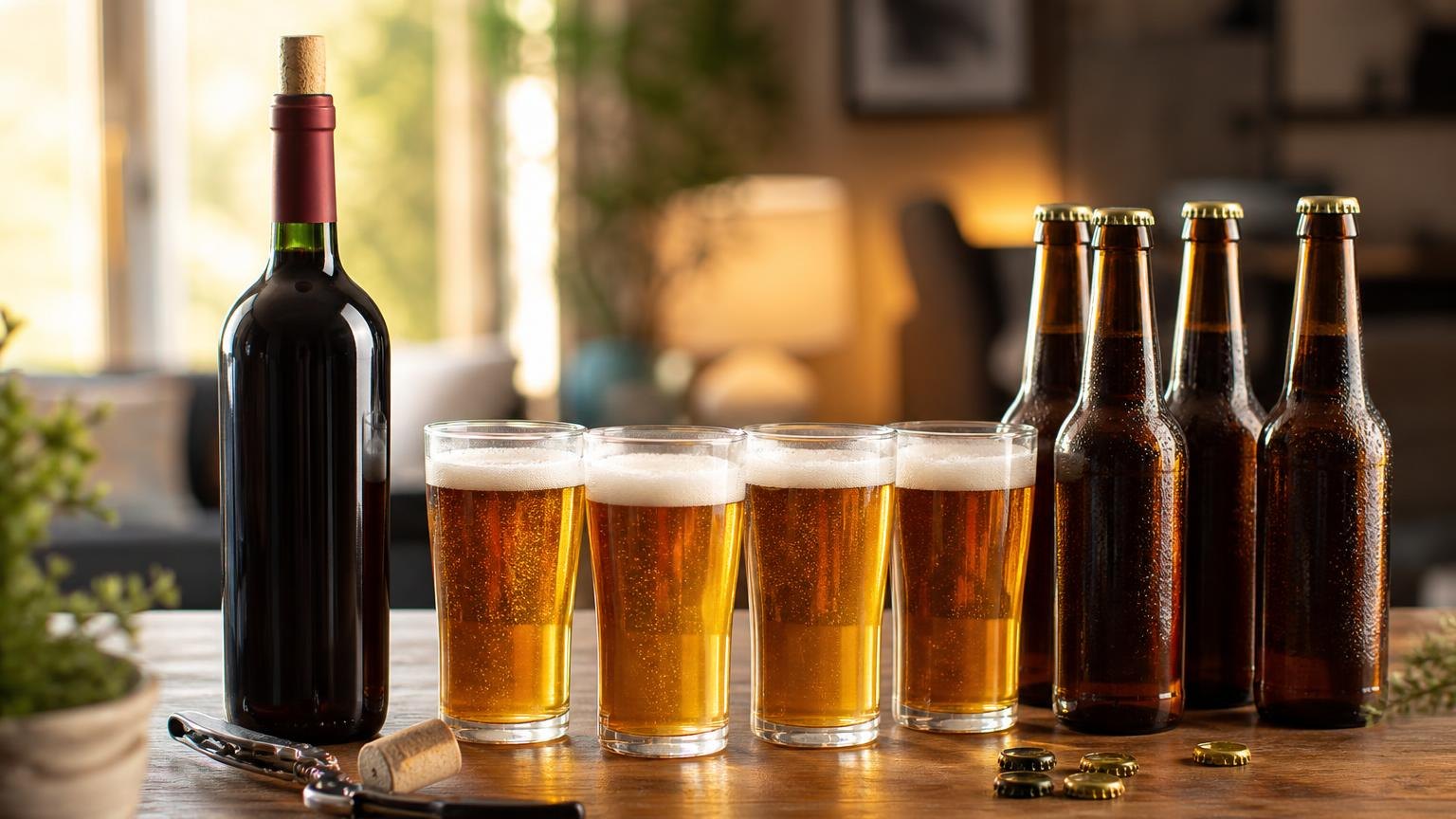
Measured Pours Confirm the Comparison
We tested the comparison using measured pours, not eyeballed servings. Across three tasting-room trials, a standard 750 ml bottle of 12% ABV wine consistently matched about five 12-ounce beers at 5% ABV by pure alcohol content.
For each trial, we used a jigger, a digital kitchen scale, a marked 5-ounce wine glass, and unopened containers with clearly printed ABV labels.
We measured volume first, then calculated alcohol using the U.S. standard drink definition: 0.6 fluid ounces of pure alcohol.
| Drink tested | Container or pour | ABV used | Pure alcohol | Standard drinks |
| Wine bottle | 750 ml / 25.36 fl oz | 12% | 3.04 fl oz | 5.1 |
| Table wine pour | 5 fl oz | 12% | 0.60 fl oz | 1.0 |
| Regular beer | 12 fl oz | 5% | 0.60 fl oz | 1.0 |
In practice, one full bottle gave us five level 5-ounce pours, with roughly 0.36 ounces of wine left. That remainder is small, but it explains why the math lands slightly above exactly five standard drinks.
We repeated the pour test three times with three different 750 ml bottles. The measured usable pours were the same: five complete 5-ounce servings per bottle, plus a small remainder that did not reach another meaningful serving.
| Trial | Wine measured | Full 5 oz pours | Wine remaining |
| Trial 1 | 750 ml | 5 | About 0.36 fl oz |
| Trial 2 | 750 ml | 5 | About 0.36 fl oz |
| Trial 3 | 750 ml | 5 | About 0.36 fl oz |
We also checked stronger and lighter examples because the answer changes fast when ABV changes. A 14.5% California red contained about 3.68 fluid ounces of alcohol per bottle, equal to 6.1 standard drinks.
A 9% sparkling wine contained about 3.8 standard drinks.
- Most accurate shortcut: one 750 ml bottle of 12% wine equals about five 12-ounce 5% beers.
- Higher-ABV wine: a 14.5% bottle is closer to six beers.
- Lower-ABV wine: a 9% bottle is closer to four beers.
- Craft beer changes the math: a 16-ounce beer at 7% ABV is about 1.9 standard drinks, not one.
Our takeaway: “five beers per bottle” is accurate only when comparing 12% wine with 12-ounce beers at 5% ABV. For anything stronger, we calculate by ounces and ABV, not by container count.
Comparing Containers Instead of Alcohol
The biggest mistake is comparing bottles and cans instead of pure alcohol. In the United States, one “standard drink” contains 0.6 fluid ounces of pure ethanol, the benchmark used by the NIAAA and CDC.
That means a typical 750 ml bottle of 12% ABV wine is not “one drink.” It contains about five U.S. standard drinks, roughly similar to five regular 12-ounce beers at 5% ABV.
Myth: One Bottle of Wine Equals One Beer
This is the most common underestimation. A full 750 ml wine bottle is 25.4 fluid ounces. At 12% ABV, that bottle contains about 3.0 fluid ounces of pure alcohol.
| Drink | Typical size | Typical ABV | Pure alcohol | U.S. standard drinks |
| Regular beer | 12 fl oz | 5% | 0.6 fl oz | 1 |
| Wine bottle | 750 ml / 25.4 fl oz | 12% | 3.0 fl oz | About 5 |
Myth: All Beers Count the Same
A 12-ounce light beer at 4.2% ABV has less alcohol than a 12-ounce IPA at 7% ABV. The IPA contains about 0.84 fluid ounces of pure alcohol, or 1.4 standard drinks.
| Beer type | Serving | ABV | Approx. standard drinks |
| Light beer | 12 fl oz | 4.2% | 0.8 |
| Regular lager | 12 fl oz | 5% | 1.0 |
| IPA | 12 fl oz | 7% | 1.4 |
| Strong ale | 16 fl oz | 8% | 2.1 |
Myth: A Big Wine Pour Is Still One Drink
Restaurants and home pours often exceed the standard 5-ounce wine serving. A 9-ounce pour of 14.5% Cabernet contains about 1.31 fluid ounces of alcohol, equal to roughly 2.2 standard drinks.
Common Mistakes to Avoid
- Ignoring ABV: A 14.5% wine bottle has about 6 standard drinks, not five.
- Counting containers: One 16-ounce craft beer may equal two regular beers depending on ABV.
- Using European drink rules: Standard drink definitions vary by country; the U.S. uses 14 grams of pure alcohol.
- Assuming wine is always stronger: Ounce for ounce, wine is stronger, but serving size determines the actual alcohol dose.
- Forgetting fortified wine: Port or sherry at 17% to 20% ABV is not comparable to table wine.
Questions Readers Ask
How many regular beers equal a standard 750 ml bottle of wine?
A 750 ml bottle of wine at 12% ABV contains about 5 U.S. standard drinks. Since one 12 oz regular beer at 5% ABV is also 1 standard drink, the simple equivalent is about 5 regular beers.
Does the wine’s alcohol percentage change the beer equivalent?
Yes. A 750 ml bottle of 14.5% ABV wine contains about 6.1 standard drinks, while an 11% ABV bottle contains about 4.6, so the equivalent range is roughly 4.5 to 6 regular 5% beers.
How many light beers equal a bottle of wine?
Most light beers are around 4.2% ABV, so a 12 oz light beer contains about 0.84 standard drinks. A 750 ml bottle of 12% wine would equal roughly 6 light beers, not 5.
How many strong craft beers equal a bottle of wine?
A 12 oz craft beer at 7% ABV contains about 1.4 standard drinks. Compared with a 750 ml bottle of 12% wine at about 5 standard drinks, it takes roughly 3.5 strong craft beers to match the alcohol.
Is a glass of wine equal to one beer?
In U.S. serving guidance, a 5 oz glass of 12% wine and a 12 oz beer at 5% ABV each count as one standard drink, containing about 0.6 fl oz of pure alcohol.
Larger wine pours, higher-ABV wines, imperial pints, and stronger beers can exceed one standard drink quickly.
Related Reading
- How Many Calories In A Bottle Of Wine? Get the Answer
- How Many Wine Coolers To Get Drunk?
- How Many Oz In A Bottle Of Wine?
- How Many Calories In A Bottle Of Moscato?
- How Many Beers Is a Bottle of Wine?
- How Long Does Wine Last In The Fridge Unopened?
- How Much Alcohol In Wine Cooler? A Complete 2026 Guide to ABV, Strength & Safety
- All Alcohol Guides