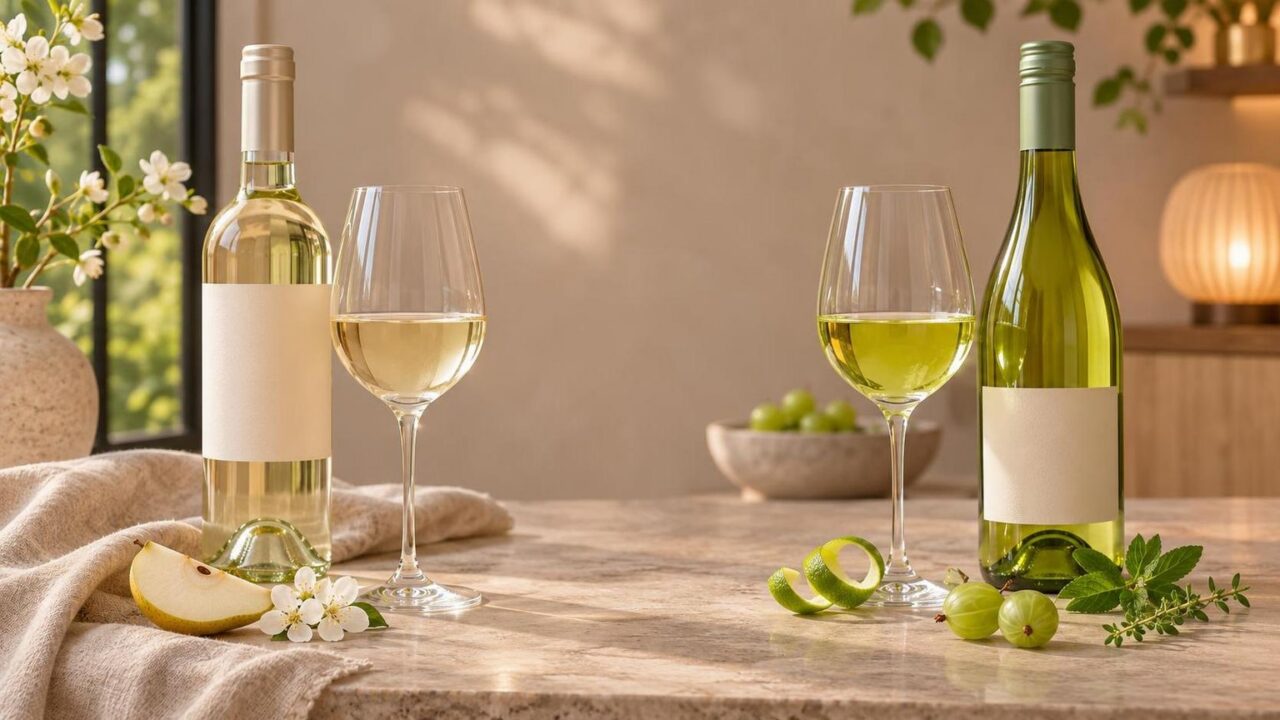
The difference between pinot grigio and sauvignon blanc is that pinot grigio is typically lighter, crisper, and more restrained, while sauvignon blanc is more aromatic, with sharper acidity and pronounced citrus or herbal flavors.
Both are dry white wines, but their grapes and typical styles create distinct profiles.
Pinot grigio commonly shows green apple, pear, lemon, and subtle mineral notes; Italian versions are often lean and refreshing.
Sauvignon blanc can taste of grapefruit, lime, passion fruit, or cut grass, with flavors shaped by climate and winemaking. Cooler-climate examples tend to be more citrusy and herbaceous.
Those differences can guide your choice at the table: pinot grigio suits light seafood, salads, and simple appetizers, while sauvignon blanc’s vivid acidity and aromatics pair well with goat cheese, green vegetables, and herb-forward dishes.
Neither grape guarantees one exact taste, so region and producer matter.
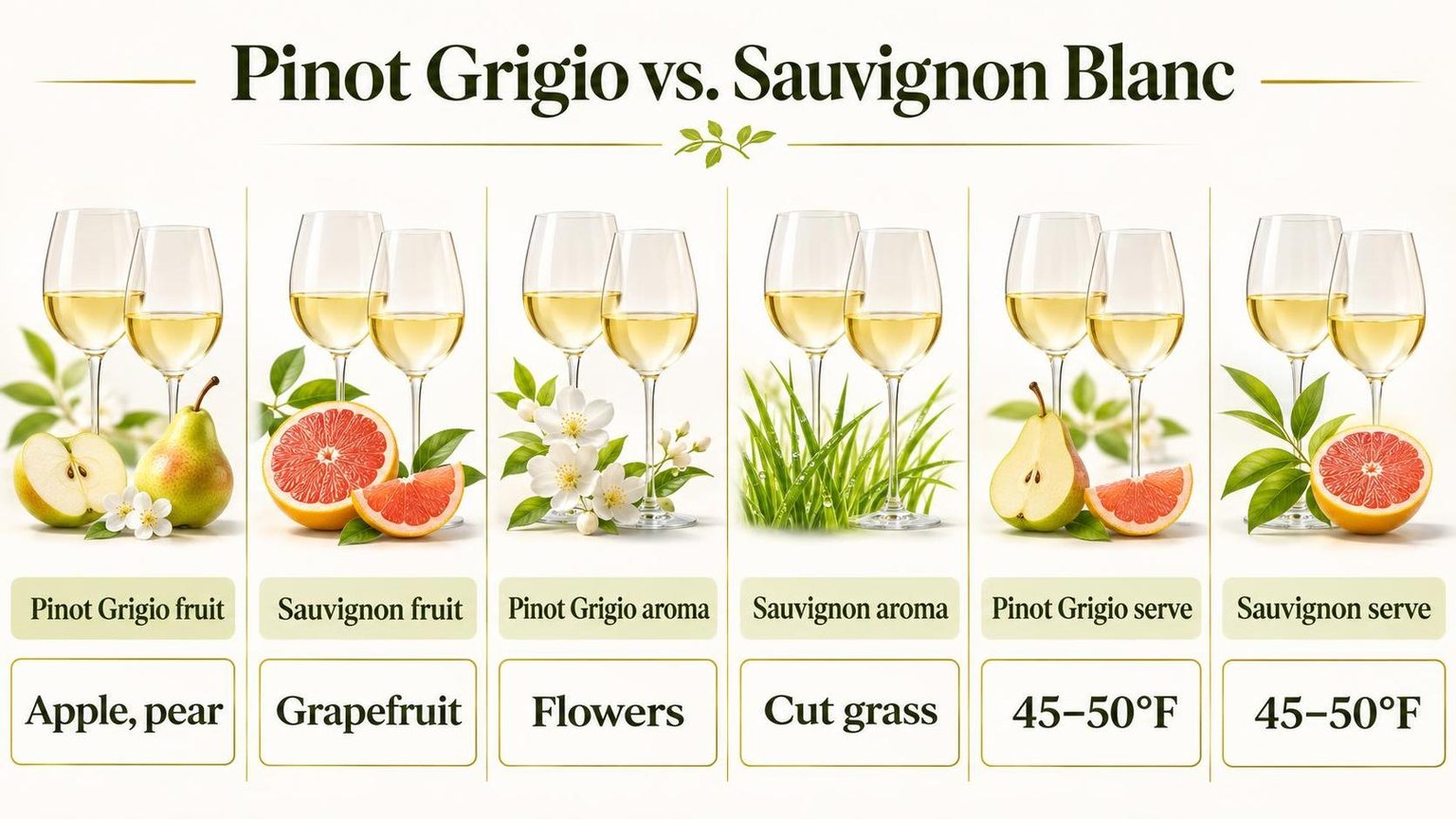
Pinot Grigio and Sauvignon Blanc Flavors
Pinot Grigio usually tastes of crisp apple, pear, lemon, and subtle flowers; Sauvignon Blanc tends toward grapefruit, lime, herbs, and sometimes passion fruit.
Both are typically dry, refreshing white wines, but Sauvignon Blanc more often has an unmistakably grassy or pungent aroma.
| Characteristic | Pinot Grigio | Sauvignon Blanc |
| Common fruit notes | Green apple, pear, lemon | Lime, grapefruit, gooseberry; sometimes passion fruit |
| Common nonfruit notes | White flowers, almond | Cut grass, herbs, green pepper |
| Typical impression | Light-bodied and relatively restrained | More aromatic, with pronounced acidity |
| Serving temperature for crisp, light-bodied examples | 45–50°F (7–10°C) | 45–50°F (7–10°C) |
The table describes common styles, not guaranteed flavors in every bottle. Its serving range follows Wine Enthusiast’s guidance for light-bodied white wines; letting either wine warm slightly in the glass can make its aromas easier to detect.
What Pinot Grigio Tastes Like
Italian Pinot Grigio is often made for freshness rather than intense aroma. Look for lemon, green apple, pear, and a clean finish; some examples add a faint almond note.
Wines from Alto Adige can have more texture and concentration than the lightest versions from northeastern Italy.
Pinot Grigio and Pinot Gris are names for the same grape, but the label can signal a different style. Oregon or Alsace Pinot Gris may be fuller, with ripe pear, peach, or honeyed aromas.
That distinction matters when comparing a particular bottle with Sauvignon Blanc.
What Sauvignon Blanc Tastes Like
Sauvignon Blanc’s signature aromas have a chemical basis.
According to the Australian Wine Research Institute, methoxypyrazines contribute green, herbaceous notes, while volatile thiols contribute aromas including passion fruit, grapefruit, and boxwood.
Their prominence varies with growing conditions and winemaking.
New Zealand Winegrowers describes Marlborough Sauvignon Blanc as intensely aromatic, with tropical fruit, citrus, and fresh herbal notes.
A Loire Valley example, such as Sancerre, may instead emphasize citrus, green fruit, and a more restrained herbal character. Neither region produces just one flavor profile.
How to Tell Them Apart in the Glass
Smell before tasting. A clear cut-grass, green-pepper, or passion-fruit aroma points toward Sauvignon Blanc; a quieter pear-and-lemon aroma points toward Pinot Grigio.
Then notice the texture: Sauvignon Blanc often feels more sharply acidic, while light Italian Pinot Grigio can seem softer despite still tasting crisp.
Oak, ripeness, and bottle age can blur the distinction. Oak-aged Sauvignon Blanc may taste rounder, while richer Pinot Gris may show more fruit than a lean Sauvignon Blanc.
For the clearest comparison, taste young, unoaked examples side by side at the same temperature.
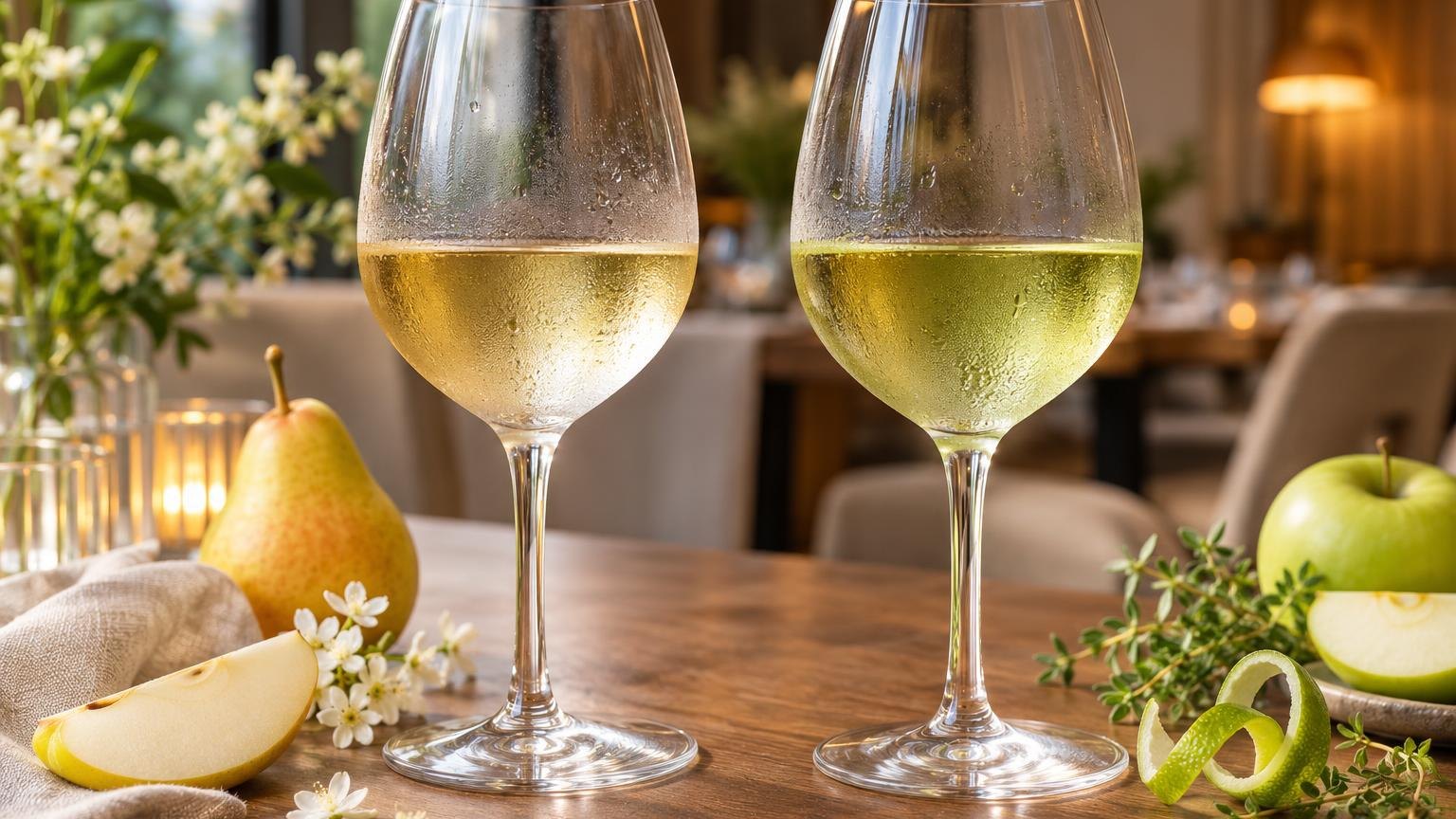
Acidity, Body, and Aroma Differences
Both Pinot Grigio and Sauvignon Blanc can taste crisp, but they achieve that impression differently.
Pinot Grigio usually emphasizes a restrained, clean profile; Sauvignon Blanc more often combines pronounced acidity with unmistakable herbal or fruit aromas.
| Characteristic | Pinot Grigio | Sauvignon Blanc |
| Acidity | Typically high, especially in light northern Italian styles; often feels brisk without dominating the fruit. | Typically high and frequently more conspicuous on the palate, particularly in cool-climate examples. |
| Body | Usually light, though riper examples can feel fuller. | Usually light to medium; ripe fruit or lees aging can add weight. |
| Typical aromas | Lemon, pear, green apple and, in some examples, white flowers. | Grapefruit, lime, gooseberry, passion fruit, freshly cut grass or bell pepper. |
How Acidity Changes the Taste
Acidity creates the mouthwatering sensation that makes both wines refreshing. It is not reliably measured by how sour a wine tastes: sweetness, alcohol and fruit concentration also affect perception.
The Wine & Spirit Education Trust’s grape-variety profiles describe both grapes as capable of high-acid wines.
Sauvignon Blanc often seems sharper because its citrus and green-fruit flavors reinforce the impression of tartness. A Pinot Grigio with similar acidity may seem gentler when pear or ripe-apple flavors lead.
Climate, harvest date and winemaking matter more than the grape name alone when judging a particular bottle.
A laboratory report may list both pH and titratable acidity, but those figures answer different questions. Titratable acidity describes the amount of acid neutralized in a test; pH describes acid strength in solution.
Neither number, by itself, predicts the complete tasting experience.
Why Sauvignon Blanc Smells More Distinctive
Sauvignon Blanc’s recognizable aromas have identifiable chemical contributors. Research reviewed by the Australian Wine Research Institute links volatile thiols such as 3MH and 3MHA with grapefruit and passion-fruit notes.
Methoxypyrazines contribute green impressions, including bell pepper and grass, particularly when grapes ripen in cooler conditions.
Pinot Grigio generally lacks that prominent thiol-and-pyrazine signature. Its aromas are often subtler, so texture, temperature and the food alongside it can be more noticeable.
A glass that smells faintly of lemon and pear is not necessarily poor quality; restraint is characteristic of many Italian examples.
Where the Generalizations Break Down
“Pinot Grigio” and “Pinot Gris” name the same grape, but labeling often signals different stylistic expectations. Italian Pinot Grigio commonly favors a lighter, drier profile.
Pinot Gris from Alsace may be riper, richer and more aromatic, making it a less useful benchmark for a light Italian bottle.
Sauvignon Blanc varies too. A cool-climate wine may emphasize lime and herbs, while a warmer-site wine can suggest tropical fruit. Oak fermentation or aging can soften its overt fruit character and add texture.
For a fair comparison, taste dry, unoaked examples at the same serving temperature.
How Climate Shapes Each Grape
Climate changes the difference between Pinot Grigio and Sauvignon Blanc as much as grape variety does.
Cool conditions generally preserve acidity in both, but the grapes express that freshness differently: Pinot Grigio often emphasizes citrus and pear, while Sauvignon Blanc can add pronounced herbal or passion-fruit aromas.
Pinot Grigio: Cool Sites, Subtle Fruit
Pinot Grigio’s relatively restrained aroma makes growing conditions especially noticeable in the glass. In a cool site, slower ripening helps retain acidity and favors lemon, green apple and crisp pear flavors.
In a warmer site, riper orchard-fruit flavors and a softer impression of acidity can make the wine feel rounder.
Alto Adige illustrates the importance of site. Wines of Alto Adige reports that the region’s vineyards extend from roughly 200 to 1,000 meters above sea level.
Elevation, slope exposure and cool nights give growers options for ripening Pinot Grigio while protecting the briskness associated with many northern Italian examples.
That altitude range describes the region, not a required growing zone for Pinot Grigio. A bottle labeled Pinot Grigio can come from a much warmer vineyard and taste broader.
Climate is a useful clue, but the producer’s site and harvest decisions matter more than the grape name alone.
Sauvignon Blanc: Climate Changes the Aromatics
Sauvignon Blanc’s climate response is often easier to smell. In cooler conditions, wines may show grapefruit, lime and green-pepper or cut-grass notes.
Warmer ripening can shift the fruit toward peach or passion fruit, though site, sunlight exposure and harvest timing also affect the result.
The grape’s green aromas are associated partly with methoxypyrazines, compounds that can be prominent when fruit is less ripe or shaded. Sunlight and ripening generally reduce their impact.
Some passion-fruit and grapefruit aromas, meanwhile, develop from aroma precursors in the grapes during fermentation; temperature alone does not create them.
| Climate example | Pinot Grigio | Sauvignon Blanc |
| Cooler growing conditions | Brisk acidity; lemon, green apple and pear | Brisk acidity; citrus and potentially more noticeable herbal notes |
| Warmer growing conditions | Riper pear or peach; potentially rounder texture | Riper stone or tropical fruit; potentially less prominent green notes |
New Zealand Winegrowers describes Marlborough as having a sunny, relatively dry climate moderated by the sea.
Its Sauvignon Blanc demonstrates why “cool climate” does not mean an absence of ripe fruit: sunshine supports ripening, while maritime influence helps the grapes retain acidity.
When comparing bottles, look for a specific region rather than relying on variety alone.
An Alto Adige Pinot Grigio and a Marlborough Sauvignon Blanc may both taste crisp, yet the former is usually more restrained in aroma and the latter more expressive. Those are regional tendencies, not guarantees for every wine.
Food Pairings for Both Wines
Choose Pinot Grigio when a dish needs a quiet, crisp partner; choose Sauvignon Blanc when herbs, tangy cheese, or assertive vegetables need a wine with more aromatic presence.
Both are typically dry and refreshing, but the bottle’s origin and style matter as much as its grape.
The Wine & Spirit Education Trust (WSET) notes that acidity in wine helps balance rich food, while sweetness in food can make a dry wine taste more acidic and less fruity.
Taste the sauce and garnish—not just the main ingredient—before choosing a bottle.
| Dish | Pinot Grigio | Sauvignon Blanc |
| Steamed mussels with olive oil and lemon | Its restrained fruit leaves the shellfish in focus. | Choose it if parsley, garlic, or lemon dominates the broth. |
| Grilled white fish | Good with a simple salt-and-lemon preparation. | Better suited to salsa verde or a fresh herb dressing. |
| Goat cheese salad | Works best with mild, creamy cheese and a light dressing. | Its acidity and herbal character suit tangy chèvre and vinaigrette. |
| Asparagus or pea risotto | Choose for a delicately seasoned version. | Choose when the vegetables, herbs, or lemon zest lead. |
For a Pinot Grigio dinner, try shrimp with olive oil, lemon, and parsley; sole with steamed potatoes; or a cucumber and mozzarella salad.
These preparations give a light-bodied wine room to show its citrus and pear notes without asking it to compete with heavy cream or powerful spice.
Sauvignon Blanc is especially useful when a recipe includes cilantro, basil, green vegetables, or a sharp vinaigrette.
New Zealand Winegrowers describes the country’s Sauvignon Blanc in terms that include citrus, tropical fruit, and fresh herbs; those aromas make a herb-topped fish taco or asparagus salad a practical match.
For a regional pairing, serve Loire Valley Sauvignon Blanc from Sancerre with Crottin de Chavignol, the local goat cheese.
The Sancerre wine appellation and Crottin de Chavignol cheese appellation share the same area of France.
The cheese’s tang and the wine’s acidity make the combination more specific than a generic “white wine and cheese” recommendation.
Preparation can reverse the choice. Plain grilled chicken favors a subtle Pinot Grigio, but add a caper-lemon sauce and Sauvignon Blanc becomes compelling.
A tomato salsa or generous squeeze of lime likewise shifts seafood toward Sauvignon Blanc; butter and mild seasoning tend to favor Pinot Grigio.
Be cautious with sweet glazes and very hot chilies. WSET’s food-and-wine guidance explains that sweet food can make a dry wine seem harsher, while chili heat can increase the perception of alcohol.
For either wine, keep the glaze restrained, or choose a fruitier, slightly off-dry bottle instead of assuming every Pinot Grigio or Sauvignon Blanc will work.
For a quick side-by-side tasting, make one plate of shrimp with lemon and a second with cilantro-lime dressing. Taste each wine with both plates.
The first highlights whether you prefer Pinot Grigio’s restraint; the second shows whether Sauvignon Blanc’s stronger aromas improve the pairing.
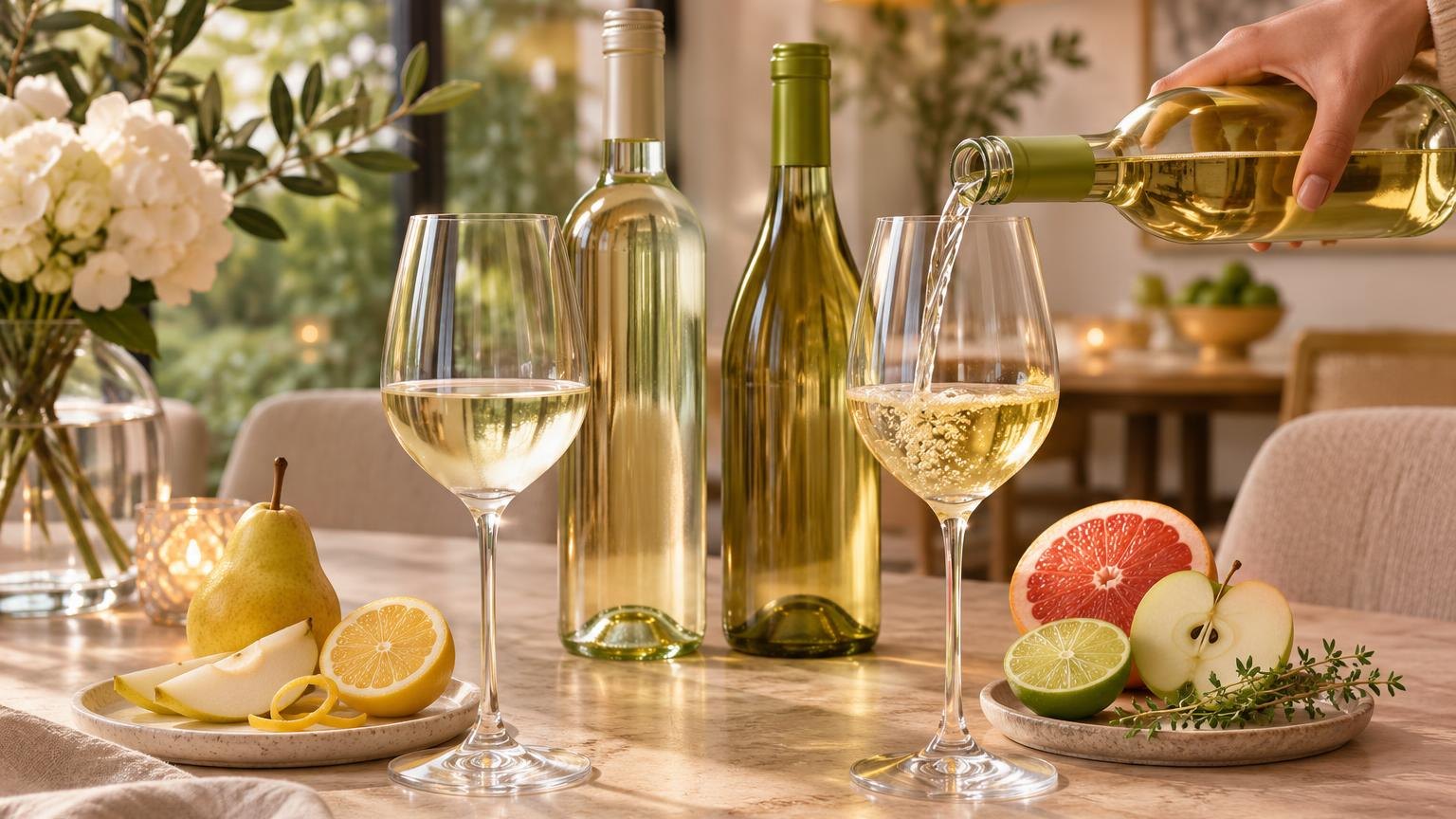
Choosing Between Pinot Grigio and Sauvignon Blanc
Choose Pinot Grigio when you want a quiet, crisp white that will not dominate a meal. Choose Sauvignon Blanc when you want sharper acidity and more conspicuous aromas.
Neither grape guarantees a particular level of sweetness: check the bottle rather than assuming that a fruity smell means sugar.
| What to compare | Pinot Grigio | Sauvignon Blanc |
| Typical aroma | Subtle pear, apple and citrus, especially in light Italian styles | More pronounced citrus, gooseberry and fresh-cut grass; some examples show passion fruit |
| Typical feel | Light-bodied, crisp and relatively restrained | Light- to medium-bodied, with high acidity and a more assertive flavor |
| Useful bottle cues | Look to northern Italy for the familiar lean style; bottles labeled Pinot Gris may be richer | Look to the Loire for mineral and herbal styles, or Marlborough for pungent fruit and herbal notes |
These are starting points, not rules for every bottle. The WSET Level 2 Award in Wines specification describes the grapes through differences in acidity, body and flavor intensity, while recognizing that climate and winemaking change the result.
Compare labels by region as well as by grape.
Match the wine to the meal
Pinot Grigio is a practical pick for simply prepared seafood, light pasta, grilled chicken or a salad with a mild dressing. Its comparatively restrained flavor leaves delicate ingredients in focus.
A lemony sauce can make either wine appealing, but a heavily dressed dish may call for Sauvignon Blanc’s stronger character.
Sauvignon Blanc is particularly useful with goat cheese, asparagus, fresh herbs and vinaigrette. Its acidity stands up to tangy ingredients, while its green aromas can echo herbs and vegetables.
For a spicy dish, first check for alcohol and sweetness: a dry, high-acid wine is not automatically soothing alongside chile heat.
Read beyond the grape name
Italian Pinot Grigio and Alsace Pinot Gris come from the same grape, yet the names often signal different styles. Alsace Pinot Gris can have more body and ripe-fruit character than a lean northern Italian Pinot Grigio.
If you dislike richer whites, do not treat the labels as interchangeable.
Sauvignon Blanc also changes substantially by origin. New Zealand Winegrowers describes Marlborough Sauvignon Blanc as intensely aromatic, with passion fruit, citrus and herbaceous notes.
Loire examples, including Sancerre and Pouilly-Fumé, are often less overtly tropical. Oak-aged examples can taste rounder than the familiar stainless-steel-fermented style.
If sweetness matters, ask for a dry bottle or consult the producer’s tasting notes; aroma alone cannot establish residual sugar. If a wine tastes too sharp, serve it with food before dismissing the grape.
Salt, fat and a squeeze of lemon in a dish can make a brisk white feel more integrated.
For an undecided table, pour both side by side with the same food. Notice whether guests prefer Pinot Grigio’s quieter finish or Sauvignon Blanc’s persistent herbal and citrus flavors.
That direct comparison is more useful than choosing solely by a grape’s reputation.
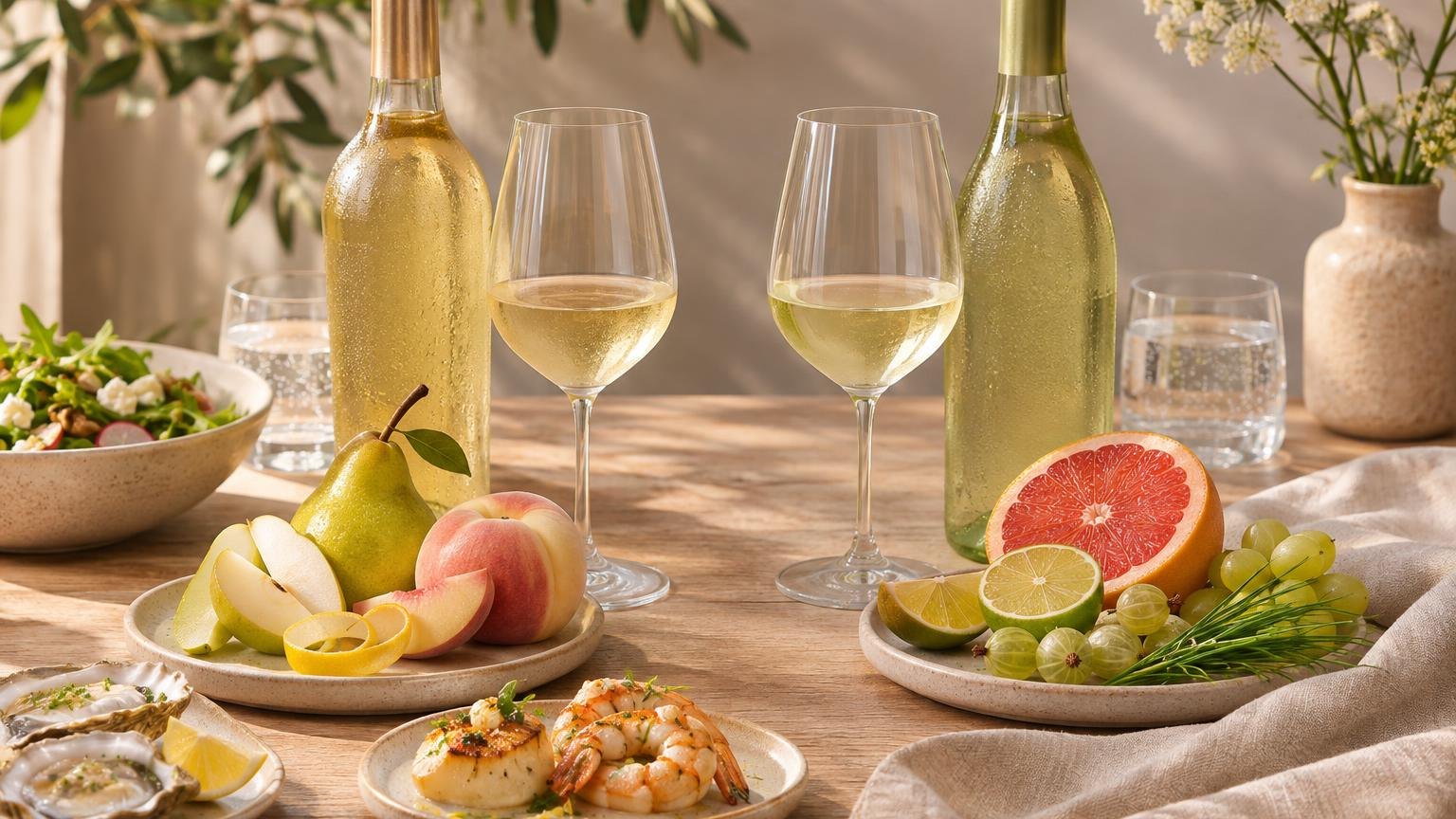
Questions Readers Ask
Are Pinot Grigio and Sauvignon Blanc the same grape?
No. Pinot Grigio is the Italian name for Pinot Gris, a gray-pink-skinned mutation of Pinot Noir; Sauvignon Blanc is a separate white grape variety, as documented in Wine Grapes by Jancis Robinson, Julia Harding, and José Vouillamoz.
How do their aromas differ?
Pinot Grigio commonly shows pear, apple, and lemon, while Sauvignon Blanc often shows grapefruit, passion fruit, and fresh-cut grass.
The Australian Wine Research Institute identifies volatile thiols as important contributors to Sauvignon Blanc’s passion-fruit and citrus aromas.
Which wine usually tastes more acidic?
Sauvignon Blanc often tastes more sharply acidic, especially in cool-climate examples from the Loire Valley or New Zealand.
Pinot Grigio can also be crisp, but its subtler aromas and sometimes rounder texture may make the acidity seem less pronounced; producer and region matter more than the grape name alone.
Which regions are associated with each wine?
Italy’s Alto Adige and Friuli-Venezia Giulia are well-known sources of Pinot Grigio. Sauvignon Blanc is central to France’s Sancerre and Pouilly-Fumé appellations and to New Zealand’s Marlborough region.
Why can Pinot Grigio be pink while Sauvignon Blanc is usually pale?
Pinot Grigio grapes have gray-pink skins; brief contact between the juice and skins can produce a copper-pink wine sometimes labeled ramato. Sauvignon Blanc has green skins and is generally made without extended skin contact, yielding a pale wine.
Does winemaking change the difference between them?
Yes. Stainless-steel fermentation can preserve a lean, fruit-focused style in either grape, while lees contact or oak can add texture and soften the impression of sharpness.
A full-bodied, oak-aged Sauvignon Blanc may therefore feel richer than a light, stainless-steel Pinot Grigio.
Which is better with food?
Pinot Grigio’s restrained flavors work well with delicate dishes such as steamed fish or shrimp.
Sauvignon Blanc’s more assertive acidity and herbal character make it a strong match for goat cheese or herb-dressed vegetables; Sancerre with chèvre is a classic Loire Valley pairing.
Should Pinot Grigio and Sauvignon Blanc be served at different temperatures?
Both are good starting at about 45–50°F (7–10°C).
If either tastes muted straight from the refrigerator, let the glass warm for a few minutes: cold temperatures suppress aromas, particularly Sauvignon Blanc’s expressive fruit and herbal notes.