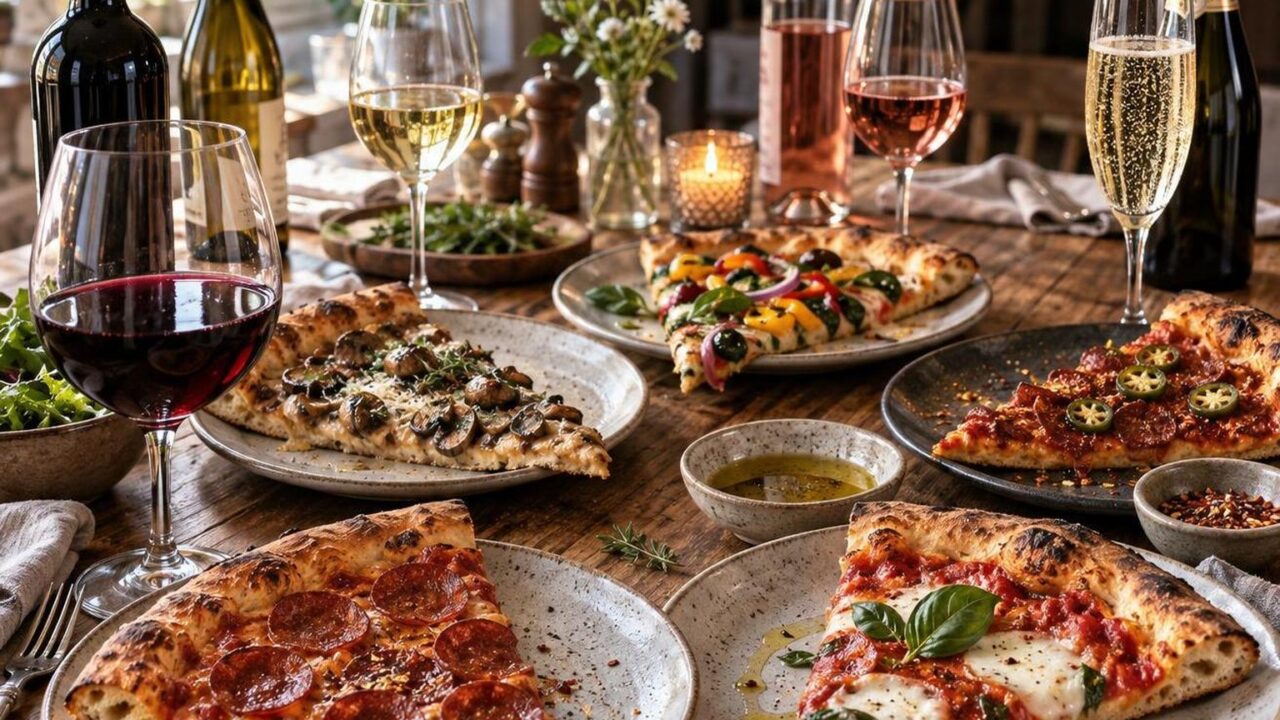
good wine with pizza is a bright, medium-bodied bottle with enough acidity to cut cheese, match tomato sauce, and refresh the palate between salty, chewy bites.
Chianti, Barbera, Lambrusco, dry rosé, and unoaked Chardonnay work because pizza is more about sauce, fat, toppings, and char than formality.
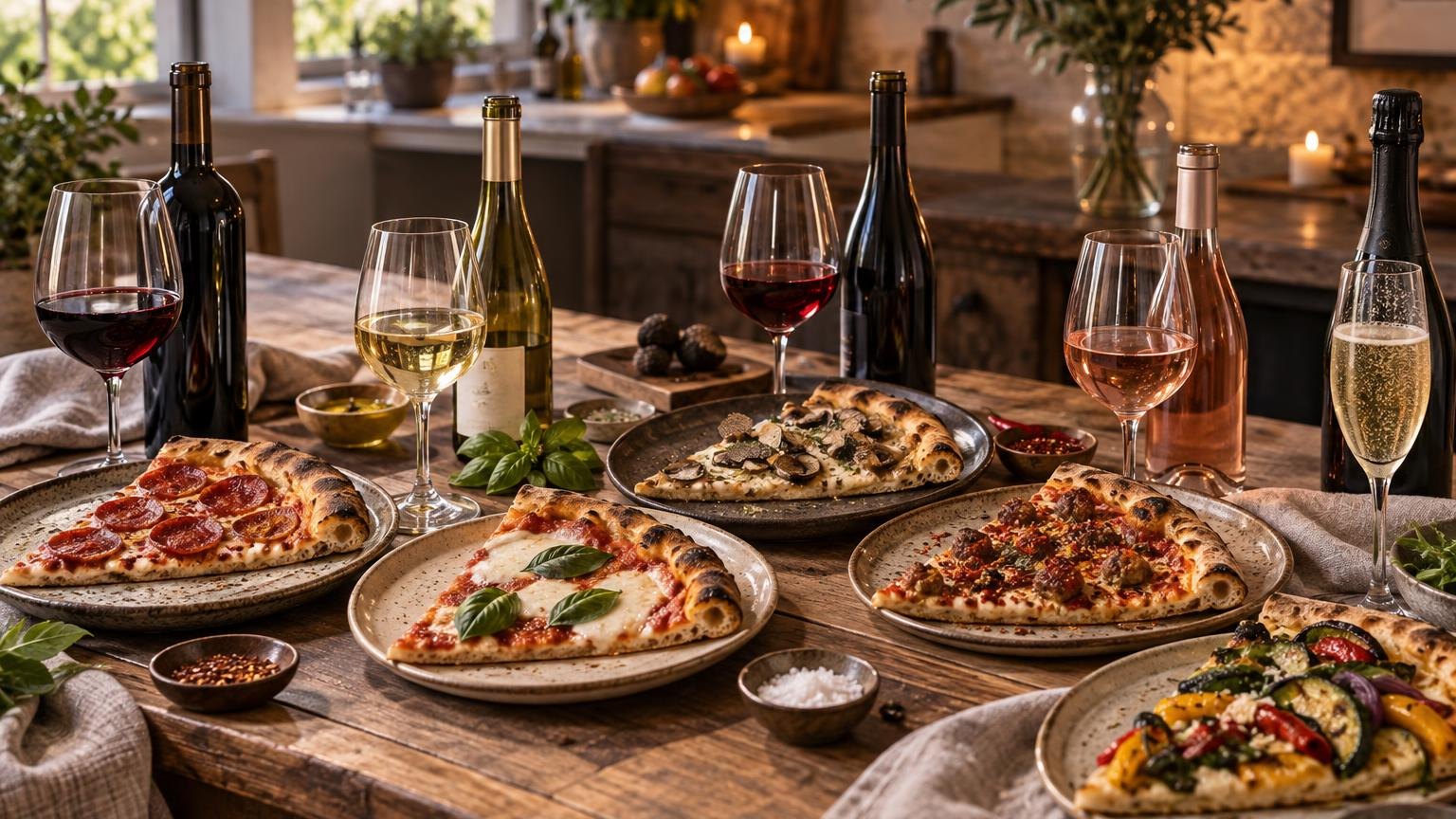
Tomato-based pies favor high-acid reds; pepperoni needs fruit and gentle tannin; mushroom pizza rewards earthy Pinot Noir; white pizza pairs well with crisp whites or sparkling wine.
Use the topping with the strongest flavor as the guide, then choose a wine that is fresher, not heavier, than the slice.
Best Red Wines for Classic Pizza
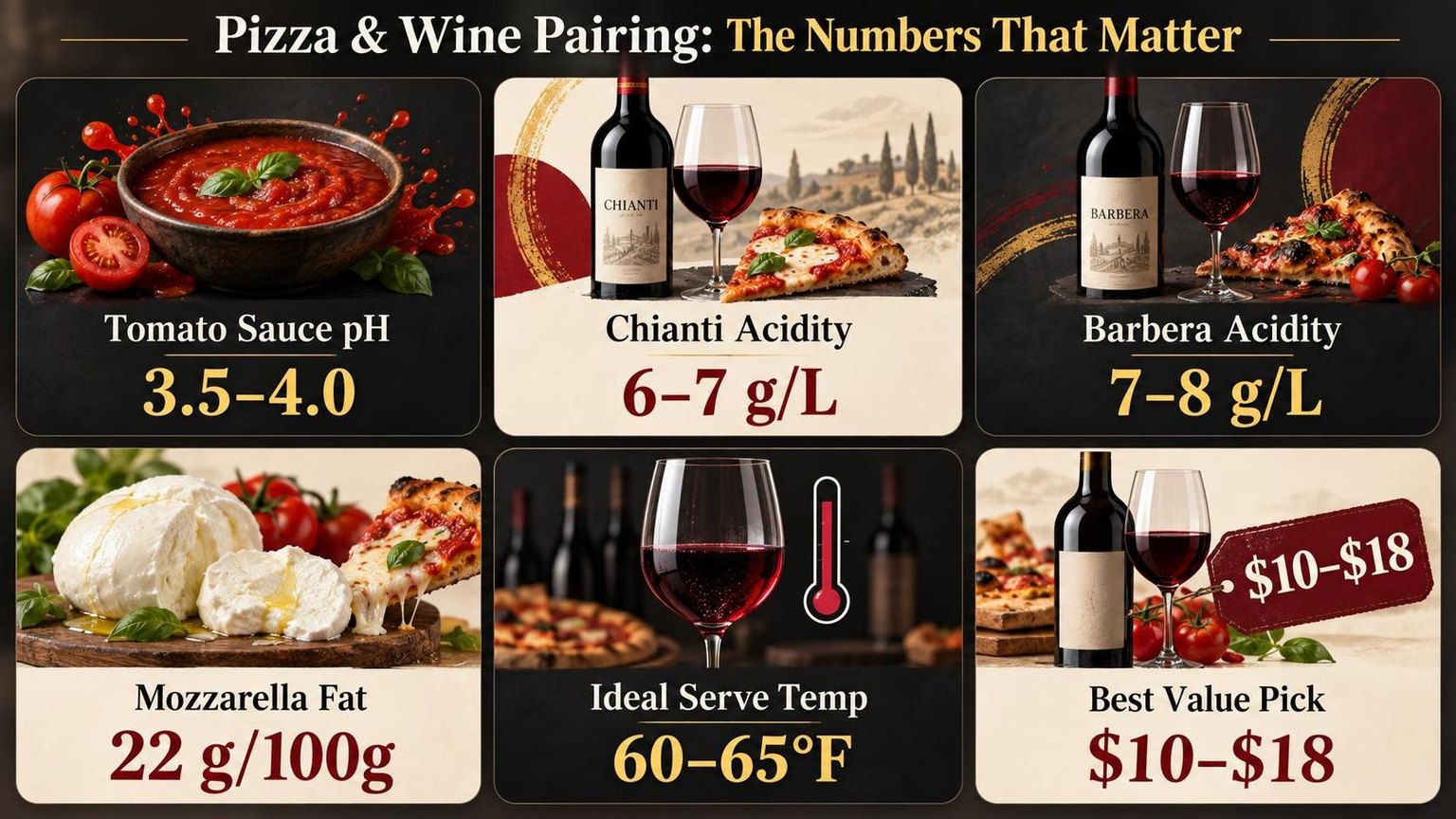
Red wine dominates pizza pairing because its acidity and tannin structure mirror tomato sauce’s natural tartness (pH 3.5–4.0).
The best matches share moderate tannins, bright acidity, and fruit-forward profiles that complement — not overpower — melted cheese and cured meats.
Chianti Classico: The Default Choice
Chianti Classico DOCG requires a minimum 80% Sangiovese, a grape with naturally high acidity (titratable acidity around 6–7 g/L) and firm tannins. This mirrors the acid profile of San Marzano tomato sauce almost exactly.
A Chianti Classico in the $15–$25 range pairs with Margherita, Marinara, and sausage pizzas. Look for producers like Fontodi, Castello di Ama, or Fèlsina for consistent quality at fair pricing.
Montepulciano d’Abruzzo
This central Italian red offers darker fruit, softer tannins, and a rounder mouthfeel than Sangiovese. At 13–14% ABV typically, it handles fattier toppings — pepperoni, ground beef, extra mozzarella — without the wine feeling thin.
Bottles from producers like Masciarelli or Valle Reale cost $10–$18, making Montepulciano d’Abruzzo one of the best value pizza wines available in the U.S. market.
Barbera d’Asti
Barbera’s hallmark is very high acidity (often 7–8 g/L titratable acidity) paired with low-to-moderate tannins. That combination cuts through oily cheese and fatty meat toppings while keeping each bite refreshed.
Red Wine Pairing Reference by Pizza Style
| Pizza Style | Best Red Wine | Why It Works | Price Range (USD) |
| Margherita | Chianti Classico | Acid-to-acid match with tomato and basil | $15–$25 |
| Pepperoni | Montepulciano d’Abruzzo | Soft tannins balance spiced pork fat | $10–$18 |
| Meat Lovers | Primitivo (Puglia) | 14–15% ABV stands up to heavy protein load | $12–$20 |
| Sausage & Pepper | Barbera d’Asti | High acidity cuts richness; complements roasted pepper | $13–$22 |
| Neapolitan (wood-fired) | Nerello Mascalese (Etna Rosso) | Smoky, volcanic minerality echoes char | $18–$30 |
| New York–Style Cheese | Nero d’Avola | Medium tannins, plum fruit, balances tangy sauce | $10–$16 |
Key Selection Principles
- Match acidity levels: Tomato sauce registers pH 3.5–4.0; choose wines with similarly high acidity to avoid a flat, flabby pairing.
- Avoid heavy oak: Heavily oaked reds (new-barrel Napa Cabernet, Reserva Rioja) clash with mozzarella’s mild lactic flavors.
- Serve slightly cool: Red wines for pizza benefit from 60–65°F (15–18°C) serving temperature, preserving freshness alongside hot, greasy slices.
- Stay Italian first: Italy produces over 500 native grape varieties; the country’s winemaking tradition evolved alongside its pizza culture for centuries.
When in doubt, grab a $12–$20 Sangiovese or Montepulciano. These grapes were literally cultivated in the same regions where pizza was perfected — a pairing shaped by geography, not marketing.
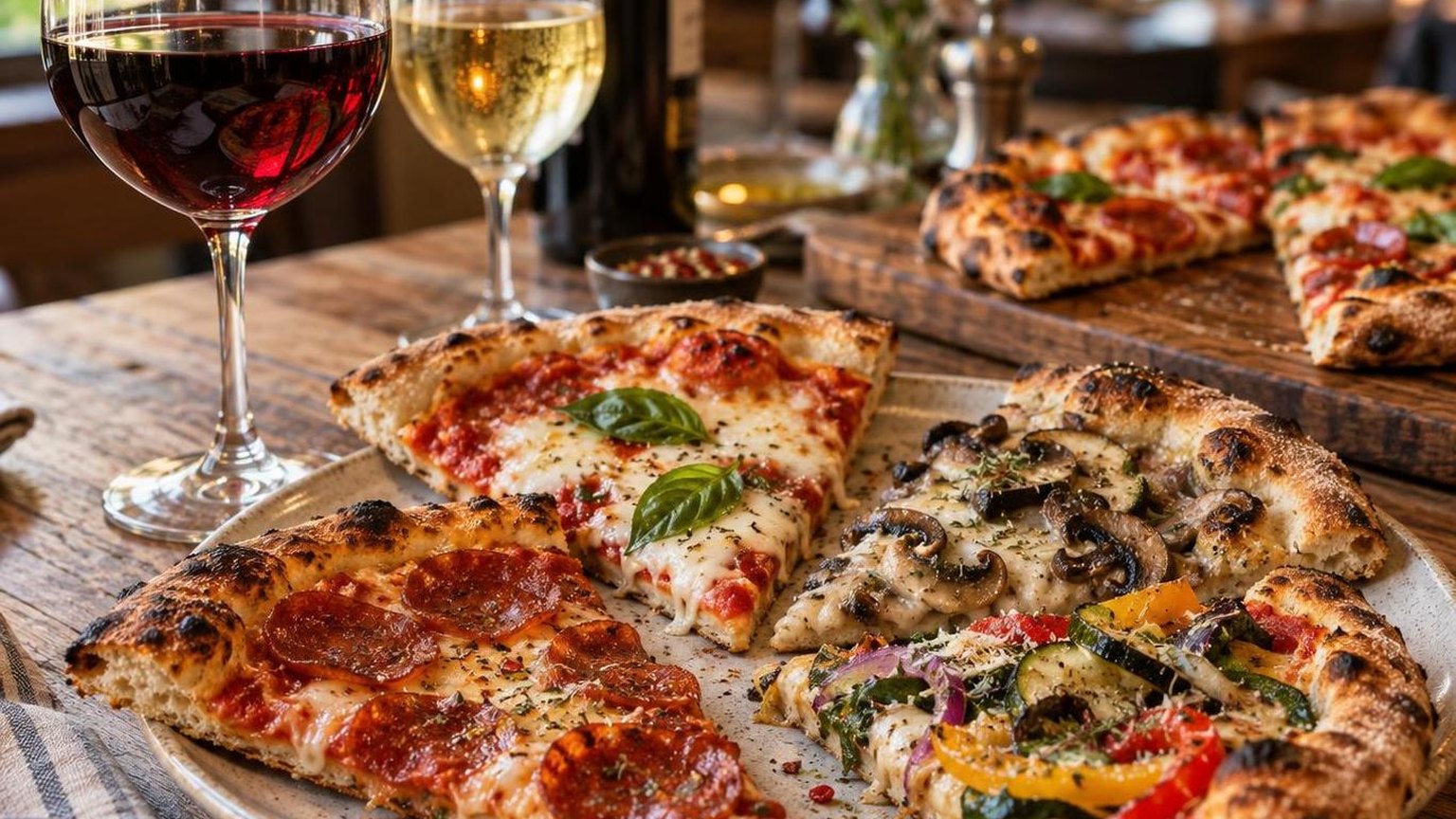
White Wines for Cheese Heavy Pizzas
Cheese-heavy pizzas demand white wines with enough acidity to cut through fat and enough body to stand alongside melted mozzarella, ricotta, and aged provolone.
The right pairing transforms a rich slice into a balanced experience rather than a palate-coating ordeal.
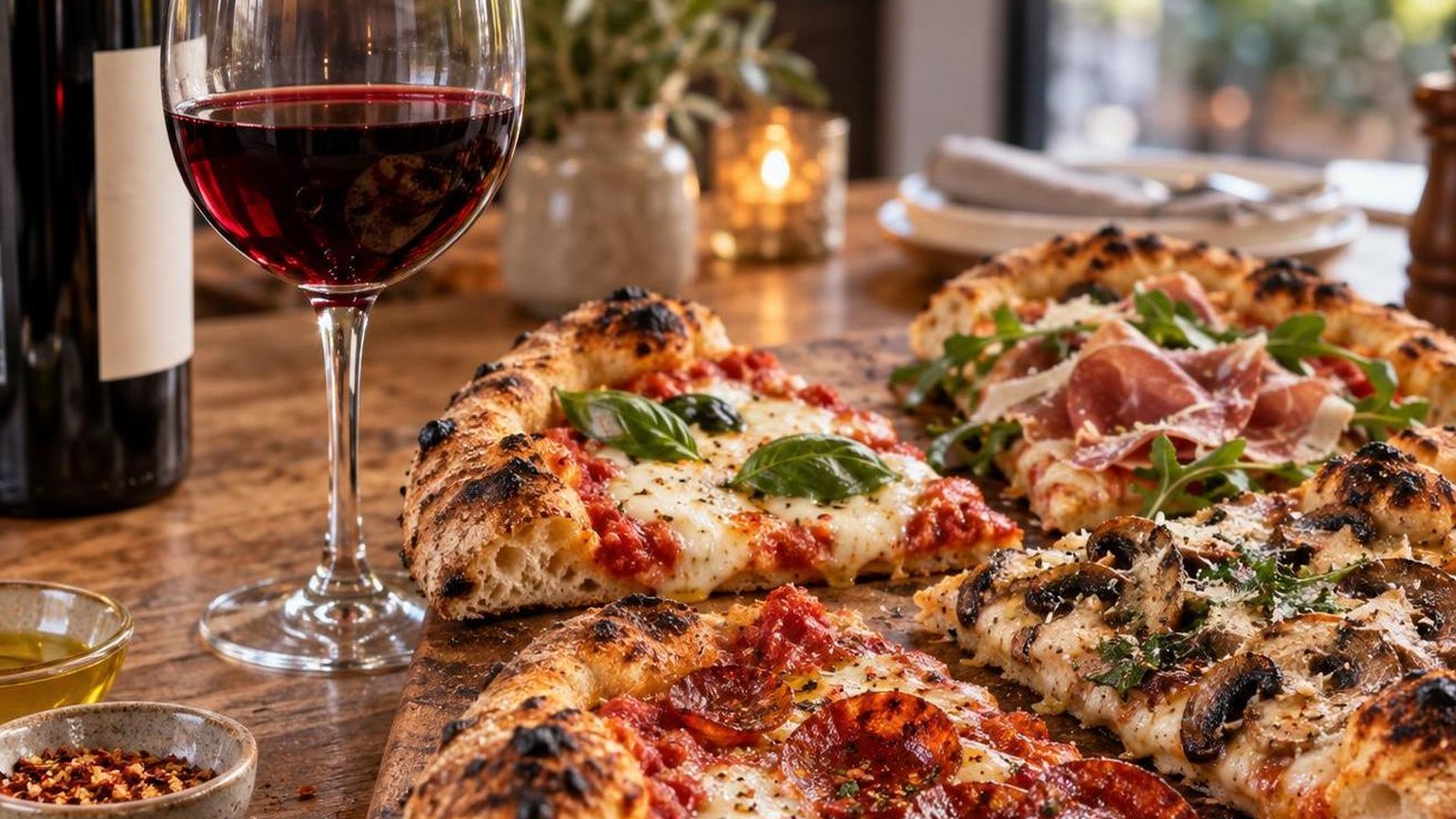
Why Acidity Matters with Cheese
Mozzarella contains roughly 22 grams of fat per 100 grams. Ricotta adds another 13 grams per 100-gram serving. That lipid load coats the tongue and mutes flavor perception without a counterbalancing element.
White wines with total acidity above 6 g/L act as palate cleansers between bites. They strip fat from taste receptors, restoring sensitivity and allowing each slice to taste as vivid as the first.
Top White Wine Picks
| Wine | Region | Typical Acidity (g/L) | Best Pizza Match |
| Verdicchio dei Castelli di Jesi | Marche, Italy | 6.0–7.5 | Quattro Formaggi |
| Greco di Tufo | Campania, Italy | 6.5–8.0 | Margherita with burrata |
| Grüner Veltliner (Federspiel) | Wachau, Austria | 6.0–7.0 | White pizza with ricotta |
| Chablis (Premier Cru) | Burgundy, France | 6.5–7.5 | Truffle and fontina pizza |
| Falanghina | Campania, Italy | 6.0–7.0 | Three-cheese with fresh herbs |
Verdicchio: The Overlooked Champion
Verdicchio dei Castelli di Jesi sells for $12–$18 per bottle in the US market. It delivers lemon zest, green almond, and a saline minerality that mirrors the salt in aged cheeses like pecorino and parmigiano.
Production reached approximately 20 million bottles annually in recent years, making it widely available. Look for the Classico Superiore designation for an extra six months of aging and fuller texture.
Greco di Tufo: Campania’s Native Answer
Greco di Tufo originates from volcanic soils around Avellino, roughly 50 kilometers east of Naples — pizza’s birthplace.
Its naturally high acidity and stone-fruit character complement mozzarella di bufala Campana DOP, which contains 52% moisture.
Serving temperature matters. Pour Greco di Tufo at 10–12°C (50–54°F). Too cold suppresses its aromatic complexity; too warm lets the alcohol (typically 12.5–13.5% ABV) dominate.
Practical Pairing Guidelines
- Match weight to weight: Light mozzarella-only pizzas pair with lighter whites like Falanghina; dense four-cheese pies need fuller Chablis Premier Cru.
- Mirror the herbs: Basil and oregano echo the herbal notes in Grüner Veltliner’s typical flavor profile.
- Avoid oaked Chardonnay: Butter-on-butter creates palate fatigue. Unoaked or lightly oaked styles maintain the acid structure needed.
- Consider residual sugar: Stay below 4 g/L residual sugar. Sweetness amplifies the perception of greasiness rather than countering it.
- Buy Italian first: Wines grown alongside pizza traditions evolved with those flavors over centuries. Regional pairing logic holds.
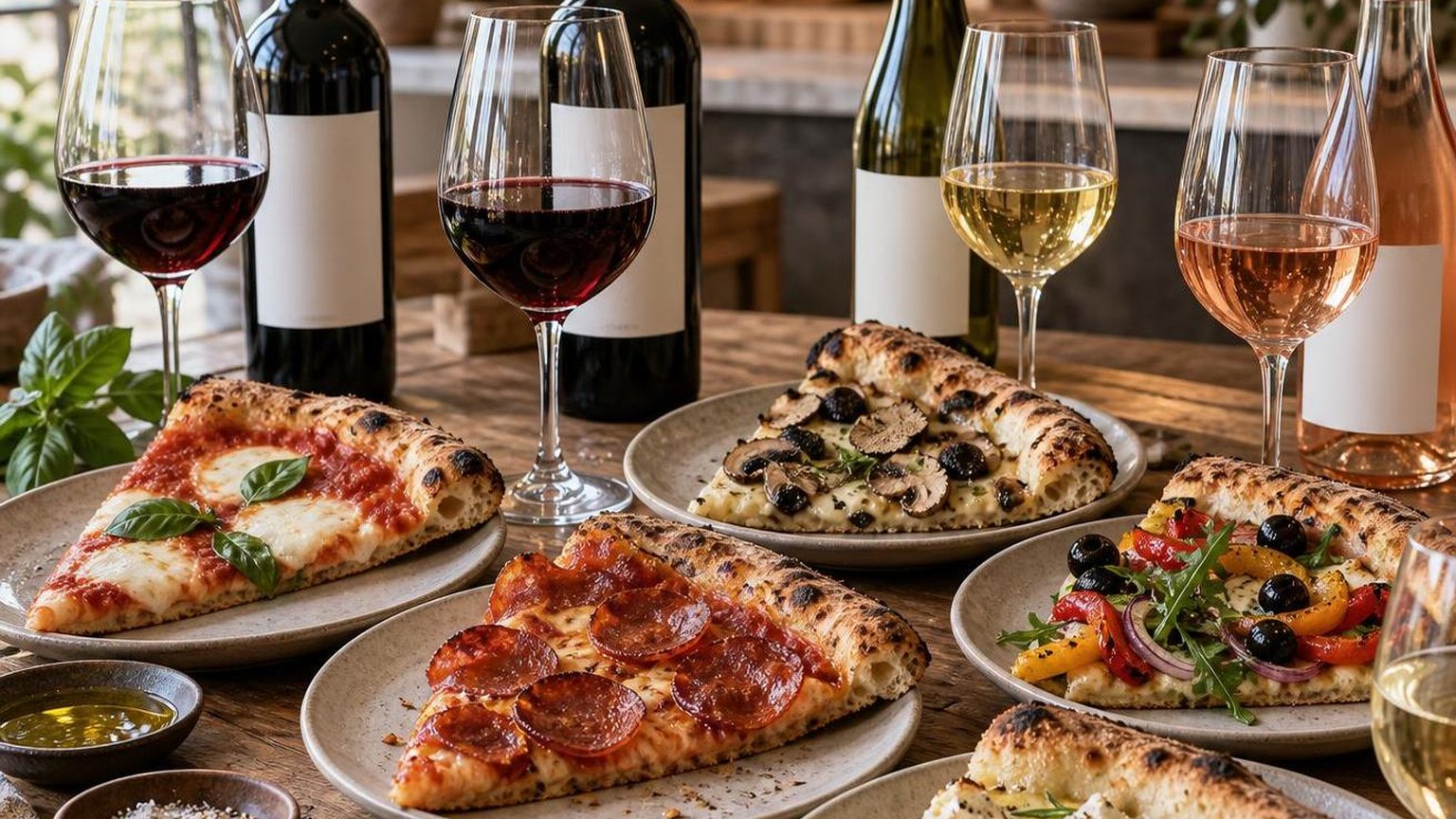
Pairing Wine With Spicy Pizza Toppings
Capsaicin in spicy toppings like jalapeños, pepperoni, and ‘nduja amplifies alcohol’s burn while muting fruit perception. Wines below 13.5% ABV with residual sugar or bright acidity counteract this effect.
The goal is cooling the palate, not competing with the heat.
Why Spicy Toppings Change Wine Behavior
A 2016 study in the Journal of Food Science confirmed that capsaicin sensitizes oral receptors to ethanol’s burning sensation. A 14.5% ABV Zinfandel that tastes balanced alongside margherita pizza feels aggressively hot with a diavola.
Residual sugar directly counters capsaicin’s heat. Sweetness activates cooling signals on the tongue, providing relief that dry, tannic reds cannot deliver. Off-dry whites and rosés excel here.
Best Wines for Spicy Pizza by Topping
| Spicy Topping | Recommended Wine | ABV Range | Why It Works |
| Jalapeño & pepperoni | Off-dry Riesling (Kabinett) | 8–10% | 30–50 g/L residual sugar offsets capsaicin burn |
| ‘Nduja & Calabrian chili | Lambrusco Amabile | 8–11% | Light fizz and sweetness cleanse oily, spicy fat |
| Hot soppressata | Côtes du Rhône rosé | 13–13.5% | Grenache-based fruit complements cured pork |
| Habanero & pineapple | Gewürztraminer (Alsace) | 12–14% | Lychee and rose aromatics mirror tropical fruit |
| Chorizo & pickled peppers | Txakolina (Basque) | 10.5–11.5% | Razor-sharp acidity and slight spritz cut smoked fat |
Wines to Avoid With Spicy Pizza
- Barolo and Brunello — high tannin (often 800–1,200 mg/L polyphenols) intensifies capsaicin’s burning sensation rather than soothing it.
- Oaked Napa Cabernet Sauvignon — typically 14.5–15.5% ABV, which compounds ethanol heat alongside chili heat.
- Bone-dry Muscadet — no residual sugar and limited fruit density leave the palate defenseless against strong spice.
Serving Temperature Matters
Colder serving temperatures suppress alcohol perception. Pour Riesling at 6–8°C and rosé at 8–10°C when pairing with spicy pizza. Warmer pours amplify the very burn you’re trying to reduce.
Sparkling options like Moscato d’Asti (5–5.5% ABV, approximately 120 g/L residual sugar) work exceptionally well. The carbonation scrubs capsaicin oils from the palate while the sweetness soothes the heat.
The Half-Glass Rule
Take a bite of spicy pizza, wait 10–15 seconds, then sip. Capsaicin’s peak oral sensation hits around the 15-second mark according to sensory research.
Sipping at peak heat lets the wine’s sugar and acidity provide maximum contrast and relief.
Match intensity proportionally: mild pepperoncini needs only a dry rosé, while ghost-pepper pizza demands the full sweetness of a Mosel Spätlese with 60–80 g/L residual sugar.
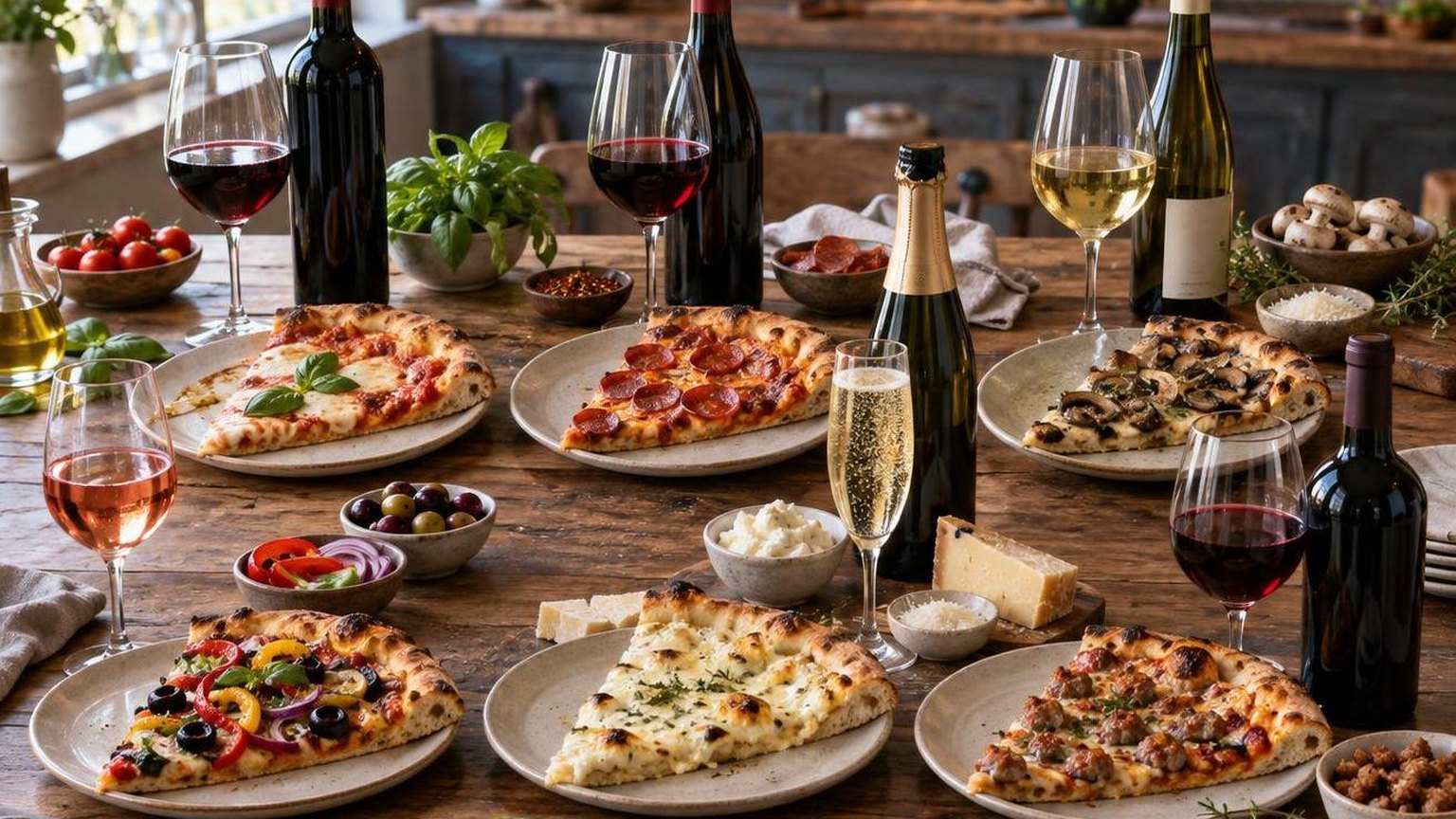
Rosé and Sparkling Pizza Pairings
Rosé and sparkling wines solve a fundamental pizza pairing problem: they cut through cheese fat while matching tomato sauce acidity.
Provence rosé’s 12.5–13% ABV and dry sparkling wines’ high acidity (pH 3.0–3.2) make them versatile across nearly every pizza style.
Dry Rosé with Pizza
Provence rosé dominates pizza-friendly rosé for good reason. Its pale salmon color signals minimal skin contact—typically 2 to 20 hours—producing a wine light enough for Margherita yet structured enough for prosciutto toppings.
Rosés from Grenache, Cinsault, and Mourvèdre grapes offer red-fruit aromatics (strawberry, watermelon) that complement San Marzano tomato sweetness without competing against mozzarella’s milky richness.
| Rosé Style | Best Pizza Match | Why It Works |
| Provence (Grenache blend) | Margherita, Prosciutto e Rucola | Delicate fruit, high acidity (TA 5.5–6.5 g/L) |
| Tavel (Southern Rhône) | Sausage, Pepperoni | Fuller body, 13.5–14% ABV handles spice and fat |
| Cerasuolo d’Abruzzo | Quattro Formaggi, White pizza | Cherry intensity, Montepulciano’s tannic backbone |
| Bandol Rosé | Grilled vegetable, Eggplant | Mourvèdre-driven herbal notes mirror charred toppings |
Sparkling Wine with Pizza
Carbonation acts as a palate cleanser between bites of rich, oily cheese.
Bubbles physically lift fat from the tongue, resetting the palate—a principle backed by a 2009 study in the Journal of Agricultural and Food Chemistry showing CO₂ enhances perceived cleansing.
Prosecco (Glera grape, 11–12% ABV) pairs naturally with lighter pizzas. Its 17–24 g/L residual sugar in Brut versions bridges the gap between tangy sauce and creamy fior di latte.
Brut Champagne or Crémant offers a step up for richer pies. Non-vintage Champagne’s 12–12.5% ABV, extended lees aging (minimum 15 months), and biscuity autolytic character complement caramelized cheese edges and charred Neapolitan crusts.
- Franciacorta Brut: Italy’s answer to Champagne, Chardonnay-Pinot Nero blend with minimum 18 months on lees — ideal with truffle or mushroom pizza
- Cava Brut Nature: Zero-dosage Spanish sparkling at under $15, bone-dry acidity slices through pepperoni grease
- Lambrusco di Sorbara: Semi-sparkling red (frizzante), 11% ABV, with tart cherry notes pairing classically with Emilia-Romagna-style pizza topped with mortadella or porchetta
- Crémant d’Alsace: Pinot Blanc-based, 12% ABV, floral and citrus-driven — outstanding with white pizza featuring ricotta and lemon zest
Serving Temperature Matters
Serve rosé at 46–50°F (8–10°C) and sparkling wines at 43–48°F (6–9°C). Pizza arrives at roughly 150°F, so the temperature contrast amplifies refreshment. A wine served too warm loses its cutting power against melted cheese.
Both categories share one decisive advantage: they pair across mixed-topping pizzas at group dinners where a single red or white would inevitably clash with someone’s order.
How Crust and Sauce Change Pairings
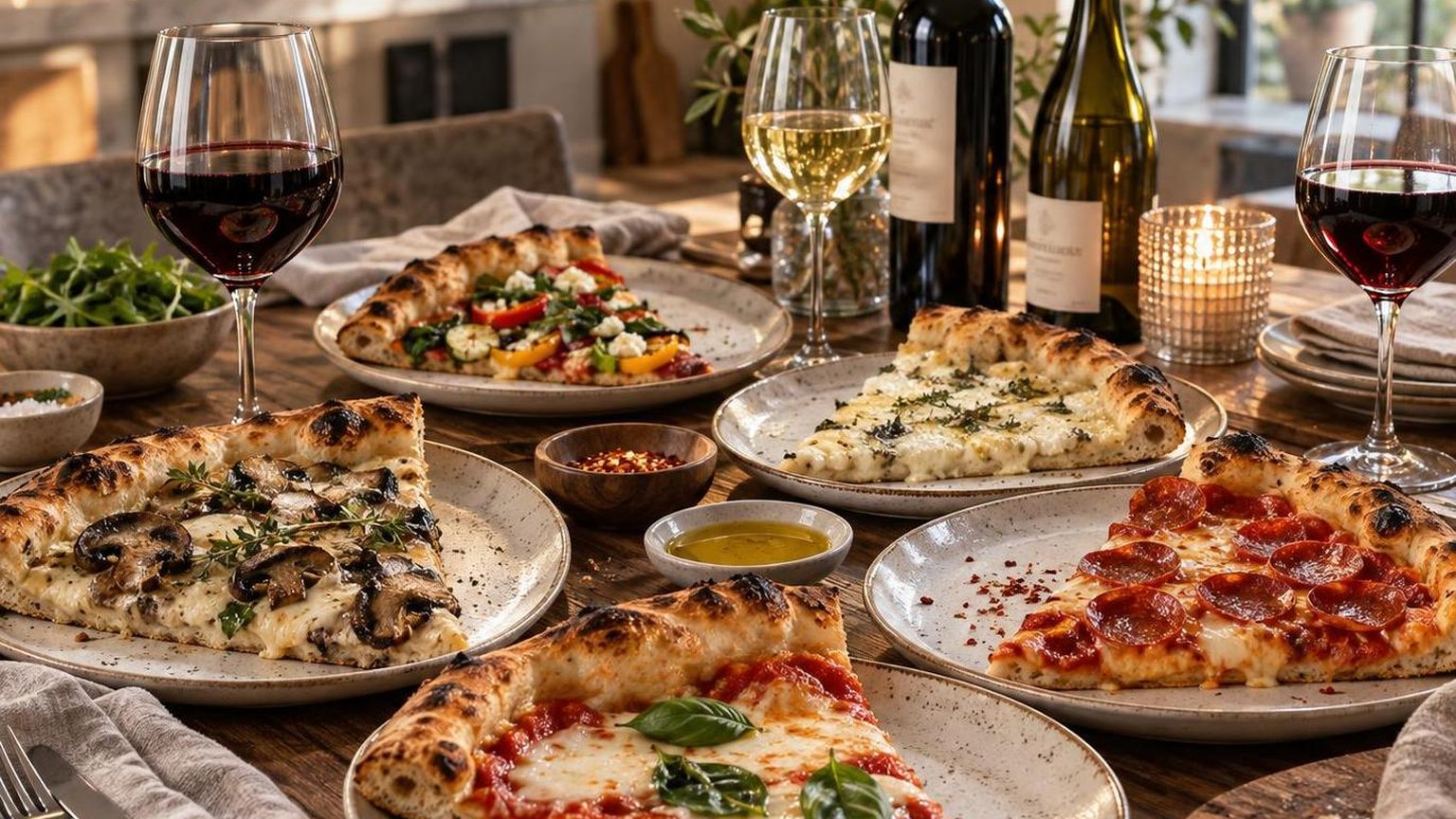
Pizza crust and sauce aren’t background players — they fundamentally shift which wines work. A thin, charred Neapolitan crust demands different acidity and body than a thick, oily deep-dish.
Sauce sweetness, fat content, and herb profiles each pull the ideal wine in distinct directions.
Crust Style and Wine Body
Crust thickness determines how much wine body a slice can handle. Lighter crusts need lighter wines; heavier doughs absorb more fat and require fuller structure to cut through.
| Crust Style | Typical Fat Content | Best Wine Body | Example Pairing |
| Neapolitan (thin, charred) | 3–5% oil by weight | Light to medium | Barbera d’Asti, Nerello Mascalese |
| New York–style (hand-tossed) | 5–7% oil by weight | Medium | Chianti Classico, Montepulciano d’Abruzzo |
| Detroit/Sicilian (thick, pan-fried) | 8–12% oil by weight | Medium to full | Primitivo, Nero d’Avola |
| Chicago deep-dish | 10–15% oil/butter by weight | Full | Aglianico, Zinfandel (14.5%+ ABV) |
The char on Neapolitan crust — typically reaching 800–900 °F in a wood-fired oven — creates bitter, smoky compounds. Wines with moderate tannin and bright acidity complement those flavors without clashing.
Sauce Profiles
San Marzano tomato sauce registers roughly 4.2–4.6 pH acidity. Wine acidity must match or exceed that level, or the wine tastes flat and flabby against the sauce.
- Classic red sauce: Sangiovese and Barbera carry natural acidity around 5.5–7.5 g/L tartaric acid, making them reliable matches for tomato-forward pies.
- White sauce (béchamel/Alfredo): Fat content jumps to 20–30% from butter and cream. Unoaked Chardonnay or Vermentino with crisp acidity (6–7 g/L) slices through richness.
- Pesto (basil-based): Herbaceous oils pair with Vermentino or Sauvignon Blanc, whose thiols mirror basil’s aromatic compounds.
- BBQ sauce: Sugar content reaches 30–40 g per 100 mL. Off-dry Zinfandel or Grenache with 5–8 g/L residual sugar bridges sweetness without creating a cloying effect.
The Cheese Factor on Crust
Stuffed-crust pizza adds approximately 100–140 extra calories per slice from mozzarella. That additional fat and protein coat the palate, demanding wines with firmer tannins — around 40–50 on the Adams-Harbertson tannin scale.
Cauliflower and gluten-free crusts tend to carry less flavor intensity. Delicate wines like Pinot Grigio or light Grenache rosé at 12–12.5% ABV work well rather than overpowering the base.
Practical Rule
Match wine weight to total dough weight per slice. A 100 g thin-crust slice pairs with wines under 13.5% ABV. A 200 g deep-dish slice handles 14–15% ABV without the food being overwhelmed.
Let the crust lead your bottle choice, not just the toppings.
Common Questions
What wine pairs best with a classic Margherita pizza?
Sangiovese-based wines like Chianti Classico match Margherita’s tomato sauce, fresh mozzarella, and basil with mirroring acidity and herbal undertones.
A mid-range Chianti Classico DOCG (typically 12.5–13.5% ABV) has enough bright cherry acidity to cut through the mozzarella fat without overwhelming the simple flavors.
This pairing follows the Italian principle of regional matching — both the pizza and the wine originate from the same culinary tradition.
Does white wine work with pizza or is red always better?
White wine works exceptionally well with white pizzas, seafood pizzas, and lighter vegetable toppings.
A Vermentino or Soave (11.5–13% ABV) pairs naturally with a pizza bianca topped with ricotta and garlic because the wine’s mineral-driven acidity complements the creamy cheese without competing with tomato sauce.
Reserve reds for heavier, sauce-based pies with cured meats.
What wine should I pair with pepperoni or sausage pizza?
Medium-bodied reds with moderate tannins handle the spice and fat of cured meats best — Montepulciano d’Abruzzo, Zinfandel, or Côtes du Rhône are reliable choices.
Zinfandel’s ripe dark-fruit character and peppery finish (typically 13.5–15.5% ABV) stand up to spicy pepperoni and Italian sausage without being overwhelmed.
The wine’s fruit-forward profile also counterbalances the salt content in cured meats, which can reach 1,500–1,800 mg of sodium per serving.
Is sparkling wine a good match for pizza?
Sparkling wine is one of the most versatile pizza pairings because carbonation acts as a palate cleanser between bites of cheese and oil.
A dry Lambrusco (10.5–11.5% ABV) from Emilia-Romagna is a traditional Italian pairing — its effervescence, low tannin, and tart red-berry flavor cut through mozzarella fat while complementing tomato sauce acidity.
Prosecco Brut also performs well with lighter, vegetable-topped pizzas.
How does the style of pizza crust affect the wine pairing?
Thin, charred Neapolitan-style crusts pair well with lighter wines like Barbera d’Asti because the crust’s blistered, slightly bitter flavor complements the wine’s high acidity and low tannin.
Thicker, doughier crusts like Detroit or Sicilian-style absorb more sauce and cheese, creating a richer bite that calls for fuller wines such as Primitivo or Nero d’Avola (13.5–15% ABV).
The crust-to-topping ratio fundamentally shifts the weight of the dish and should guide your wine’s body accordingly.
What is a good budget wine to serve at a pizza party?
Montepulciano d’Abruzzo DOC offers one of the best quality-to-price ratios for pizza, with reliable bottles available in the $8–$14 range in the US market.
It delivers soft tannins, dark cherry fruit, and enough acidity (typically 5.5–6.0 g/L total acidity) to handle both tomato-based and meat-heavy pizzas across a crowd.
Buying magnums (1.5L) reduces per-glass cost by roughly 20–30% compared to standard 750 mL bottles and keeps the table supplied longer.
Related Guides
- How Many Calories In A Glass Of Chardonnay Wine?
- Aperol vs Campari
- Does Wine Get You Drunk Fast?
- Why Store Wine On Its Side? Complete 2026 Guide for Proper Wine Storage
- How To Tell If Wine Is Corked? Information From Experts
- How Many Oz In A Bottle Of Wine?
- How To Store Wine At Home? 8 Tips for Storing Wine
- All Alcohol Guides