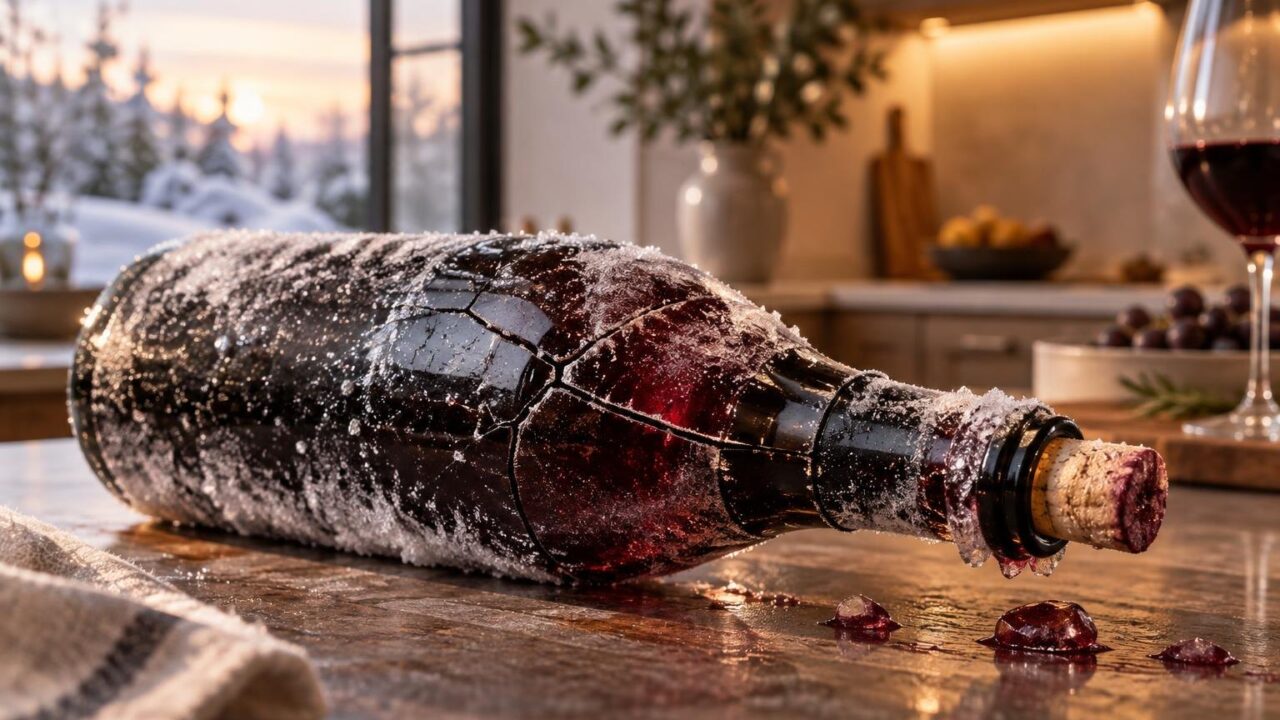
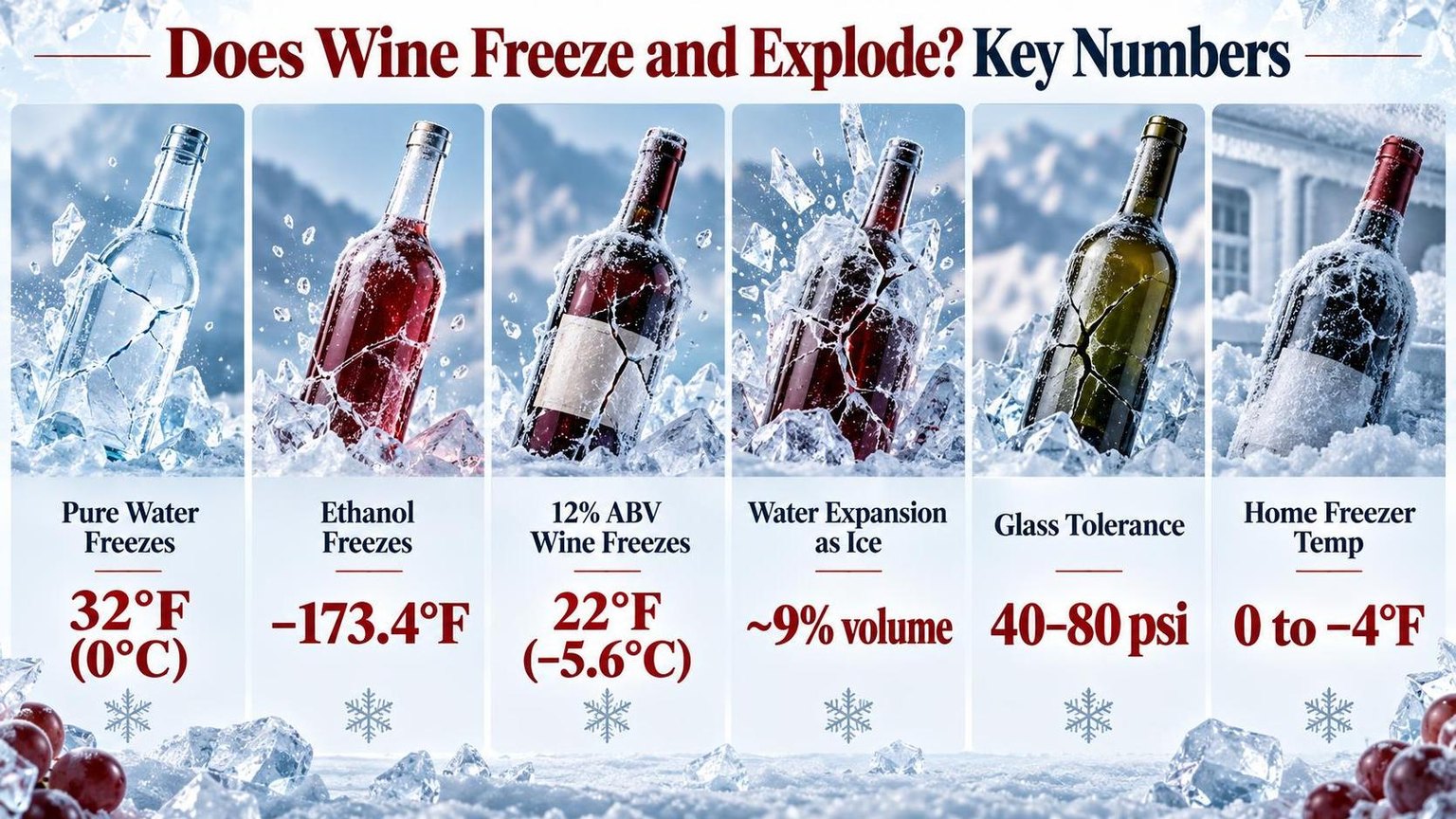
Wine freeze happens at approximately −5 °C (23 °F), well above water’s 0 °C freezing point, because ethanol lowers the solution’s freezing threshold.
Standard 12–14% ABV bottles reach a slushy state before turning solid, and the expansion can absolutely shatter glass.
That expansion is the critical factor. Water expands roughly 9% when it crystallizes into ice.
Since wine is 85–90% water, a sealed 750 ml bottle generates enough outward pressure—potentially exceeding 80 psi—to crack glass, push corks out, or rupture screw-cap seals.
The result: a sticky, stained freezer and wasted wine.
Why Wine Freezes Below 32°F
Pure water freezes at 32°F (0°C), but wine remains liquid well below that threshold.
The alcohol and dissolved solids in wine depress its freezing point through a colligative effect, meaning the freezing temperature drops in direct proportion to the concentration of solute molecules.
Ethanol freezes at −173.4°F (−114.1°C). When mixed with water, ethanol molecules disrupt the formation of ice crystals, forcing the solution to reach a lower temperature before solidifying.
The more alcohol a wine contains, the colder it must get before freezing. This relationship is predictable and measurable across all wine styles.
Freezing Points by Alcohol Content
| Wine Type | Typical ABV | Approximate Freezing Point |
| Moscato d’Asti | 5.5% | 27°F (−2.8°C) |
| German Riesling Kabinett | 8% | 25°F (−3.9°C) |
| Pinot Grigio | 12% | 22°F (−5.6°C) |
| Cabernet Sauvignon | 14% | 20°F (−6.7°C) |
| Zinfandel (high-alcohol) | 16% | 18°F (−7.8°C) |
| Port / Fortified Wine | 20% | 15°F (−9.4°C) |
A practical rule: each 1% increase in ABV lowers the freezing point by roughly 1°F. This gives a quick estimate for any bottle you own.
The Role of Residual Sugar and Dissolved Solids
Alcohol is the dominant factor, but it is not the only one. Residual sugar, tartaric acid, malic acid, glycerol, and mineral salts all contribute additional dissolved particles that further suppress the freezing point.
A late-harvest Riesling with 120 g/L residual sugar freezes at a noticeably lower temperature than a bone-dry Riesling of identical ABV.
The sugar molecules add roughly 1–2°F of additional freezing-point depression beyond what alcohol alone predicts.
Why This Matters for Storage and Transport
Standard home freezers operate between 0°F and −4°F (−18°C to −20°C). Every wine in the table above will freeze solid at those temperatures, typically within 2–5 hours depending on bottle size and freezer airflow.
Garages in northern climates routinely hit 10–15°F (−12 to −9°C) during winter nights. At those readings, most table wines at 12–14% ABV will begin forming ice crystals within hours.
- Wine does not freeze uniformly—water crystallizes first, concentrating the remaining alcohol and solids into a syrupy liquid between ice structures.
- This partial freezing is the same principle behind the production of Eiswein, where grapes freeze on the vine at about 19°F (−7°C) and the concentrated juice is pressed off the ice.
- The expansion of water as it turns to ice generates the internal pressure that can push corks out or fracture glass, a consequence explored in the next section.
Understanding colligative freezing-point depression explains why a forgotten bottle of 8% Riesling is at far greater risk in a cold garage than a 20% Port stored alongside it.
When Wine Bottles Crack or Explode
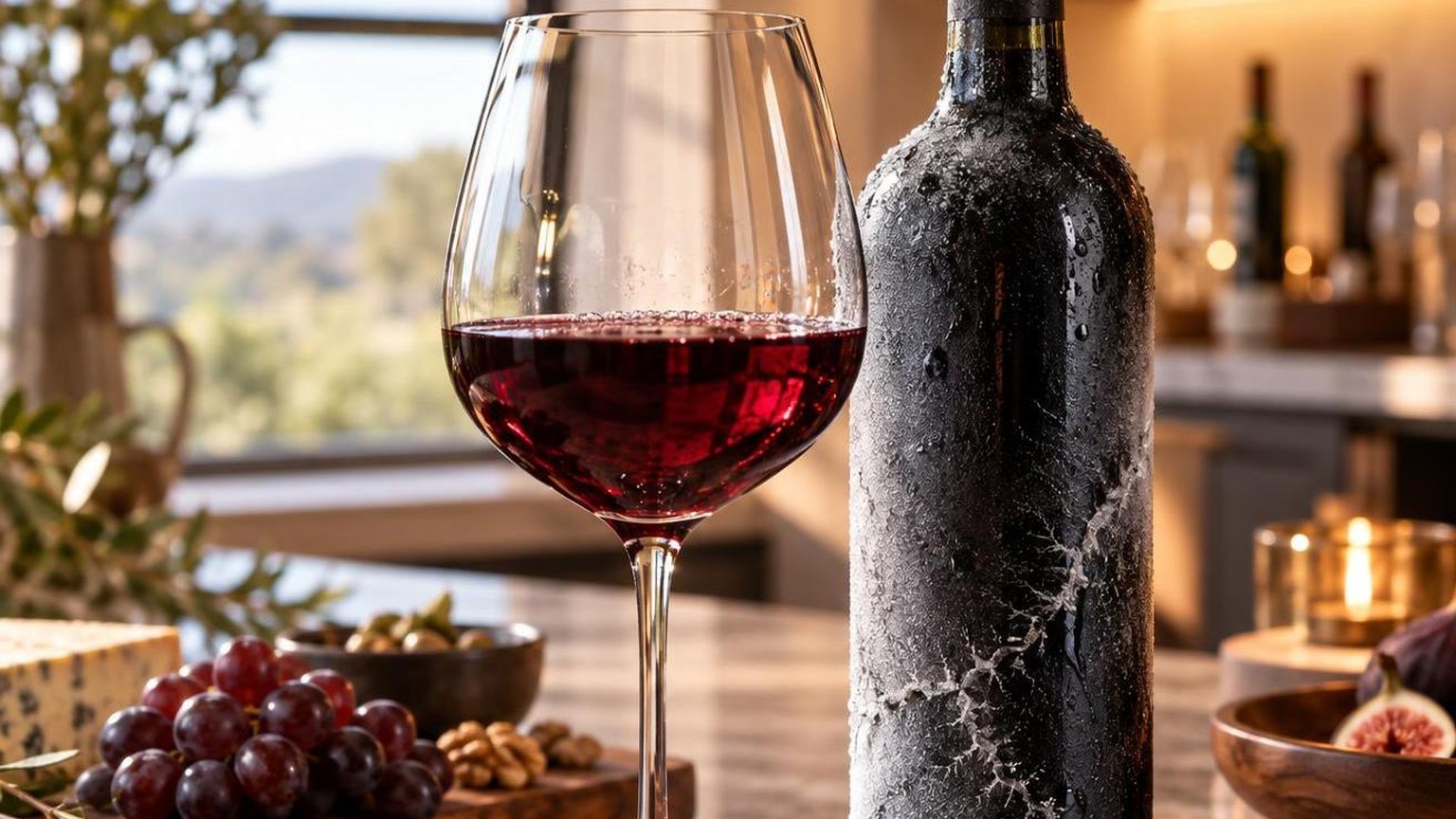
Wine bottles don’t simply shatter the moment ice forms.
Failure occurs when expanding ice generates internal pressure exceeding the glass’s structural tolerance—typically between 40 and 80 psi, depending on bottle construction, fill level, and whether the cork yields first.
How Internal Pressure Builds
Water expands approximately 9% by volume when it freezes. A standard 750 ml bottle filled to a normal level contains roughly 660–700 ml of liquid.
That 9% expansion translates to about 60–63 ml of additional volume the bottle must accommodate.
Glass itself doesn’t flex. The cork or screw cap acts as the only pressure relief valve. If the cork pushes out before pressure peaks, the bottle survives intact—cracked wine, but unbroken glass.
Failure Thresholds by Bottle Type
| Bottle Type | Glass Thickness | Typical Failure Point | Common Outcome |
| Standard Bordeaux | 2.5–3.0 mm | –10 °C (14 °F) | Cork pushed out; occasional crack at shoulder |
| Burgundy | 2.5–3.2 mm | –10 °C (14 °F) | Similar to Bordeaux; slightly more shoulder flex |
| Champagne/Sparkling | 4.0–5.0 mm | –12 °C (10 °F) | Thicker glass delays failure; explosive shatter risk higher due to existing CO₂ pressure |
| Screw-cap bottle | 2.5–3.0 mm | –8 °C (17 °F) | No cork to yield; glass cracks sooner |
Why Sparkling Wine Is the Greatest Risk
Champagne already holds 5–6 atmospheres (73–88 psi) of CO₂ pressure at room temperature. Freezing adds ice-expansion force on top of that existing load. The combined stress can cause violent, dangerous shattering.
Even at refrigerator-adjacent temperatures around –4 °C (25 °F), sparkling wine begins forming slush that blocks the neck, trapping pressure with no escape route.
Factors That Determine Crack vs. Explosion
- Fill level: Bottles filled higher leave less headspace, reaching critical pressure faster.
- Cork condition: Dry or degraded corks resist movement and won’t pop out as a relief mechanism.
- Cooling rate: A bottle placed in a –18 °C (0 °F) home freezer reaches the danger zone in 60–90 minutes. Gradual cooling in a garage at –5 °C gives the cork more time to push out safely.
- Bottle orientation: Upright bottles allow the cork to lift; horizontal bottles trap expanding ice against the cork, increasing sidewall stress.
- Pre-existing flaws: Micro-fractures from shipping or manufacturing lower the glass’s breaking threshold by up to 50%.
What a Frozen Bottle Looks Like Before It Fails
Warning signs include a raised or partially extruded cork, visible ice crystals in the neck, and frost forming along a hairline crack.
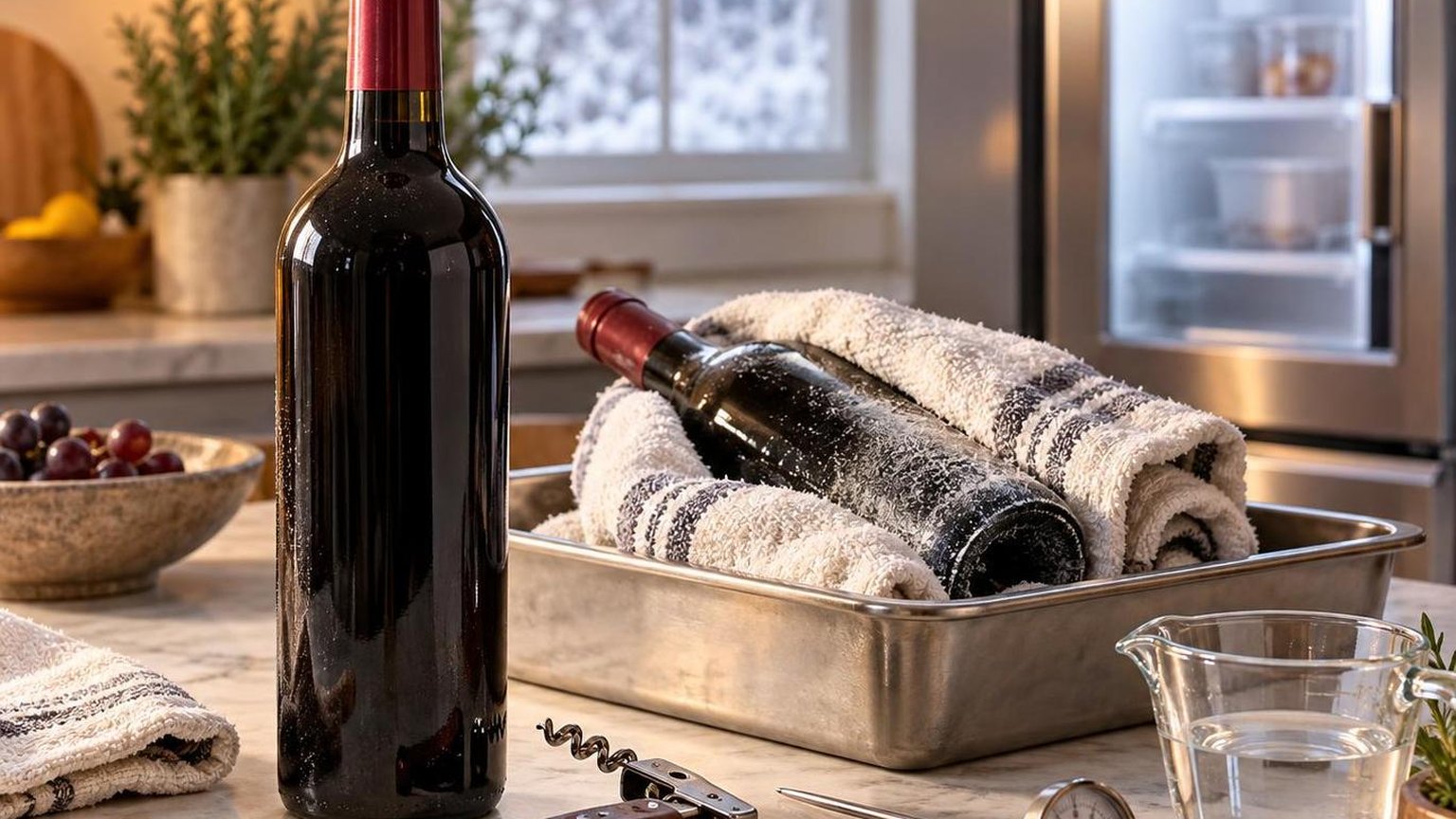
If you spot these, do not handle the bottle with bare hands—wrap it in a towel and let it thaw slowly in a sink at room temperature.
How Alcohol Changes Wine’s Freezing Point
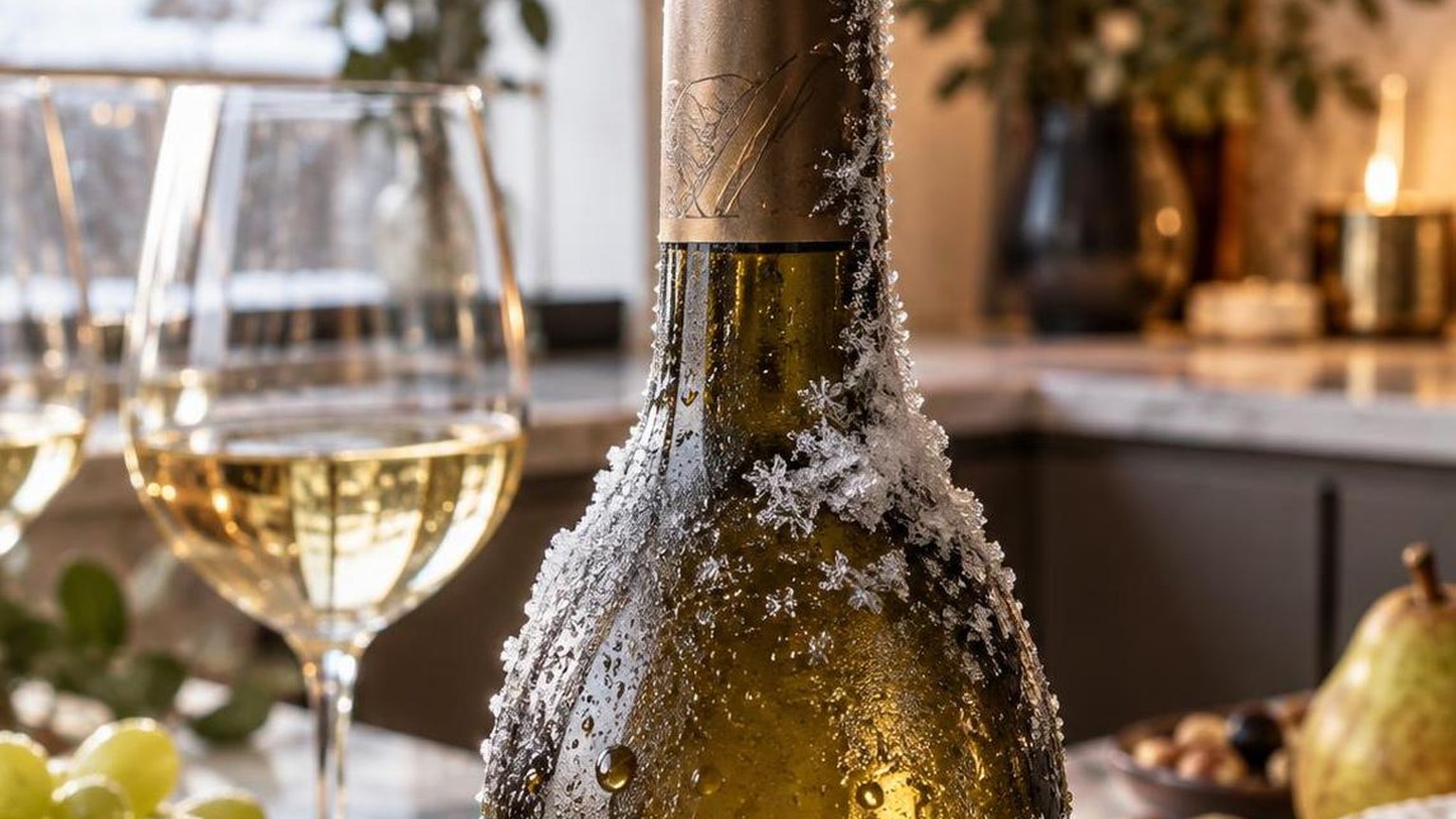
Ethanol freezes at −114 °C (−173 °F), while pure water freezes at 0 °C (32 °F). Wine is roughly 85 % water, so its freezing point lands between these two extremes—typically around −5 °C to −8 °C (23 °F to 17.6 °F).
The principle at work is freezing-point depression. Dissolved solutes—ethanol, sugars, acids, glycerol—disrupt water molecule bonding, requiring a lower temperature before ice crystals form.
Alcohol content is the dominant variable. Higher ABV means a lower freezing point. The table below shows approximate freezing points across common wine styles.
| Wine Style | Typical ABV | Approximate Freezing Point |
| Moscato d’Asti | 5.5 % | −3 °C (26.6 °F) |
| Riesling Kabinett | 8 % | −4 °C (24.8 °F) |
| Pinot Grigio | 12 % | −6 °C (21.2 °F) |
| Cabernet Sauvignon | 14 % | −7 °C (19.4 °F) |
| Zinfandel (high-extract) | 15.5 % | −8 °C (17.6 °F) |
| Port | 20 % | −12 °C (10.4 °F) |
A standard home freezer operates between −18 °C and −23 °C (0 °F to −9.4 °F). Every wine listed above will freeze solid at those temperatures given enough time.
Why ABV Alone Doesn’t Tell the Full Story
Residual sugar also contributes to freezing-point depression. A late-harvest Riesling with 150 g/L residual sugar freezes several degrees lower than a bone-dry Riesling at the same ABV.
Tartaric acid, malic acid, and glycerol add further solute load. Collectively, these non-alcohol solutes can shift the freezing point down an additional 1–2 °C beyond what ABV alone predicts.
The Cryoscopic Constant in Practice
Water’s cryoscopic constant (Kf) is 1.86 °C·kg/mol. Each mole of dissolved solute per kilogram of water lowers the freezing point by that amount.
Ethanol’s low molecular weight (46.07 g/mol) means even moderate ABV contributes significant molal concentration.
A 12 % ABV wine contains roughly 95 g of ethanol per liter. That equates to approximately 2.06 moles of ethanol, producing a theoretical depression of about 3.8 °C from water’s solute-related calculation alone.
Real-world freezing points run slightly lower than simple cryoscopic math predicts because wine contains dozens of additional solutes acting simultaneously.
Key Takeaways for Storage
- No commercially available table wine is safe from freezing in a household freezer left longer than 4–5 hours.
- Fortified wines resist freezing longer but will still solidify below −12 °C.
- A garage or car trunk at −10 °C (14 °F) can freeze most table wines overnight.
- Wine does not freeze uniformly—water crystallizes first, concentrating alcohol and solutes in the remaining liquid phase.
Understanding these thresholds helps prevent the cracked bottles and ruined corks covered in the next section.
Freezer Storage Times for Different Wines
Wine can survive in a standard home freezer (set to −18°C / 0°F) for limited periods before quality degrades or the bottle risks cracking. Storage tolerance varies by wine type, alcohol content, and sugar concentration.
The following table summarizes safe freezer storage windows based on wine category and typical alcohol-by-volume (ABV) range.
| Wine Type | Typical ABV | Max Freezer Time (Quality Preserved) | Bottle Breakage Risk Window |
| Sparkling (Champagne, Prosecco, Cava) | 11–12.5% | 1–1.5 hours | 2–4 hours |
| Light white (Pinot Grigio, Sauvignon Blanc) | 11–13% | 2–3 hours | 4–6 hours |
| Full-bodied white (Chardonnay, Viognier) | 13–14.5% | 3–4 hours | 5–7 hours |
| Rosé | 11–13.5% | 2–3 hours | 4–6 hours |
| Light red (Pinot Noir, Gamay) | 12–13.5% | 3–4 hours | 5–7 hours |
| Full-bodied red (Cabernet Sauvignon, Syrah) | 13.5–15% | 4–5 hours | 6–8 hours |
| Fortified (Port, Sherry, Madeira) | 17–22% | 6–8 hours | 12+ hours |
| Dessert wine (Sauternes, Ice Wine) | 8–14% + high residual sugar | 4–6 hours | 8–10 hours |
Why These Times Differ
Alcohol lowers the freezing point of any liquid. Pure ethanol freezes at −114°C (−173°F). A 12% ABV wine begins freezing around −5°C (23°F), while a 20% ABV Port won’t start solidifying until approximately −9°C (15°F).
Dissolved sugars add further freezing-point depression. A Sauternes with 120–150 g/L residual sugar resists freezing significantly longer than a bone-dry Muscadet at under 4 g/L.
Critical Factors Beyond Wine Type
- Fill level: Wine expands roughly 9% when frozen. A bottle filled to the standard 750 mL with minimal headspace faces higher internal pressure and earlier cork ejection or glass fracture.
- Closure type: Screw caps and synthetic corks create a tighter seal than natural cork, increasing pressure buildup and explosion risk.
- Bottle orientation: Storing upright lets the cork push out before glass shatters. Laying a bottle on its side traps expanding ice against all surfaces equally.
- Freezer temperature: Chest freezers often run colder than −18°C, reaching −23°C (−9°F), which accelerates freeze times by 25–40%.
Intentional Freezer Use
Quickly chilling a room-temperature white wine to serving temperature (7–10°C / 45–50°F) takes approximately 20–30 minutes in a −18°C freezer. Set a timer to avoid forgetting.
For long-term storage of leftover wine intended for cooking, pour into ice cube trays first. Individual 30 mL cubes freeze solid in about 2 hours and remain usable for up to 3 months without quality concerns.
Never place sparkling wine in a freezer unsupervised. CO₂ pressure inside a Champagne bottle already reaches 5–6 atmospheres (roughly 70–90 psi) at room temperature. Adding ice expansion to that force makes rupture genuinely dangerous.
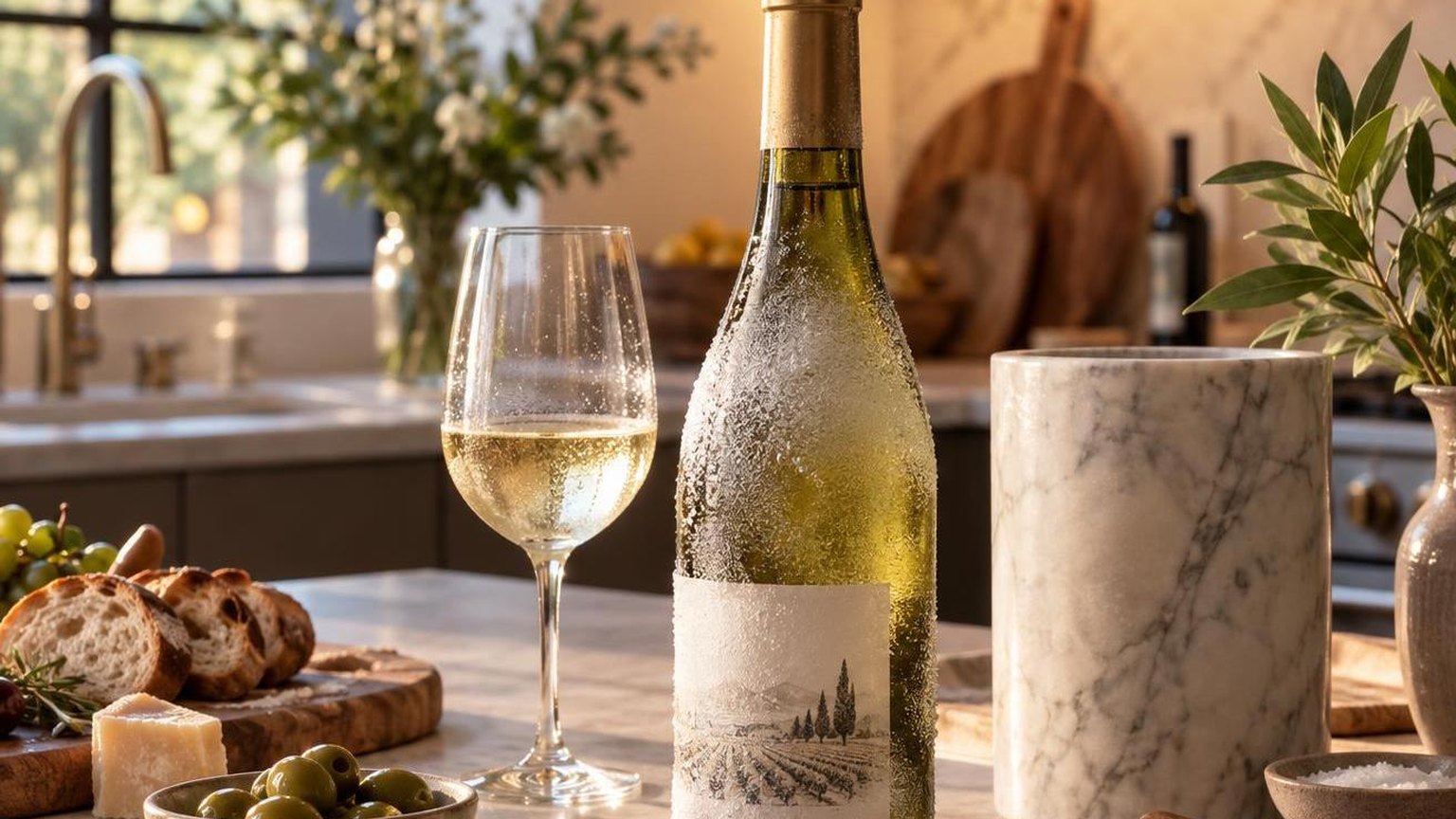
What to Do After Wine Freezes
Frozen wine isn’t automatically ruined. The recovery process depends on whether the bottle remained sealed, how long it froze, and what type of wine you’re dealing with. Acting correctly preserves drinkability in most cases.
Step 1: Assess the Bottle
Check for cracks, a pushed-out cork, or broken seal before doing anything else. A compromised bottle means oxygen exposure, which accelerates oxidation within hours.
| Condition | Action | Drinkability |
| Cork pushed out, no cracks | Thaw and drink within 24–48 hours | Moderate — flavor altered |
| Bottle cracked or shattered | Discard entirely | None — glass shard risk |
| Seal intact, no visible damage | Thaw slowly in refrigerator | Good — minimal change |
| Screw cap bulging | Thaw upright, open carefully | Moderate — possible pressure release |
Step 2: Thaw Correctly
Move the bottle to a refrigerator set between 35–40°F (1.7–4.4°C). A standard 750 mL bottle takes roughly 12–24 hours to thaw completely at refrigerator temperature.
Never microwave or submerge frozen wine in hot water. Rapid thermal shock can crack the glass instantly. Room-temperature thawing works but is less controlled.
Step 3: Evaluate Flavor Changes
Freezing disrupts the colloidal suspension of tannins and tartaric acid in wine. You may notice tartrate crystals — harmless potassium bitartrate deposits — settled at the bottom after thawing.
Common post-freeze changes include:
- Muted aromas due to volatile compound degradation
- Flattened mouthfeel, especially in tannic reds like Cabernet Sauvignon
- Slight color shift — reds may appear more brown, whites more golden
- Reduced acidity perception, making the wine taste duller
- Cork taint becomes more noticeable if already present
Step 4: Decide Whether to Drink or Cook
Previously frozen wine that tastes flat or oxidized still works well for cooking. The alcohol (typically 12–15% ABV) and residual flavors remain functional for deglazing, braising, and reductions.
| Use | Best Wine Condition | Timeframe After Thawing |
| Drinking straight | Seal intact, thawed slowly | Within 1–3 days |
| Cooking (sauces, reductions) | Any non-shattered bottle | Within 5–7 days |
| Sangria or mulled wine | Muted flavor acceptable | Within 3–5 days |
| Discard | Glass compromised or off-putting smell | Immediately |
A Note on Sparkling Wine
Previously frozen sparkling wine loses significant carbonation. Internal CO₂ pressure — normally around 5–6 atmospheres (73–88 psi) — drops substantially once the cage or cork has shifted during freezing.
Expect a noticeably flat pour.
Store recovered wine upright after thawing. Sediment redistribution takes 24–48 hours to settle, and keeping the bottle vertical minimizes contact between displaced tartrates and the wine itself.
Common Questions
At what temperature does wine freeze?
Most wines freeze between −5°C and −8°C (23°F–17.6°F), depending on alcohol content. A typical 12% ABV table wine freezes around −5°C (23°F), while a 20% ABV fortified wine like port needs roughly −9°C (15.8°F).
The higher the ethanol concentration, the lower the freezing point drops below water’s 0°C baseline.
Can a frozen wine bottle actually explode?
Yes. Wine is roughly 85% water, and water expands about 9% when it freezes.
That expansion can push the cork out, crack the glass at the shoulder or punt, or shatter the bottle entirely—especially standard 750 mL bottles with limited headspace.
Sparkling wines face even higher risk because dissolved CO₂ adds internal pressure on top of ice expansion.
How long does it take for a bottle of wine to freeze in a standard home freezer?
A home freezer set to −18°C (0°F) will bring a 750 mL bottle of 12% ABV wine to its freezing point in roughly 4–6 hours, with full solid freezing occurring around 8–10 hours.
Variables like initial wine temperature, bottle glass thickness, and freezer air circulation affect the timeline. Setting a 30-minute timer is the safest approach if you’re quick-chilling a bottle.
Does freezing ruin the flavor or quality of wine?
Freezing disrupts wine’s colloidal structure: tartrate crystals precipitate out, tannin chains aggregate, and aromatic esters can break down during the freeze-thaw cycle.
Thawed wine often tastes flatter with muted fruit and altered mouthfeel compared to a never-frozen bottle.
The wine remains safe to drink, but sommeliers and winemakers universally consider it diminished—best repurposed for cooking sauces or sangria rather than served on its own.
What is the safest way to chill wine quickly without risking a freeze?
Submerge the bottle in an ice-water bath with a handful of salt; this method reaches serving temperature (7°C/45°F for whites, 13°C/55°F for light reds) in 15–20 minutes without any freezing risk.
Salt lowers the water’s freezing point to about −6°C, creating a super-cold liquid environment that transfers heat far more efficiently than freezer air.
If you do use a freezer, set a phone timer for no more than 25–30 minutes and never leave sparkling wine unattended in one.
Keep Exploring
- What is a Wine Flight? – 2026
- What Wine Goes With Pizza?
- How Many Drinks Are in a 10-ounce Glass of Wine?
- How Long Does An Unopened Bottle Of Wine Last?
- Black Friday Wine Deals
- All Alcohol Guides
- CRC Handbook of Chemistry and Physics – Freezing Point Depression Data** (2023)
- USDA FoodData Central – Wine Composition and Alcohol Content** (2024)
- University of Illinois Extension – The Science of Freezing Foods** (2023)
- NIST (National Institute of Standards and Technology) – Thermophysical Properties of Ethanol-Water Mixtures** (2023)
- Journal of Food Science (Wiley) – Thermal Properties of Alcoholic Beverages** (2020)
- TTB (Alcohol and Tobacco Tax and Trade Bureau, U.S. Treasury) – Wine Alcohol Content Standards** (2024)
- PubMed Central – Ethanol-Water Binary System Phase Behavior** (2019)