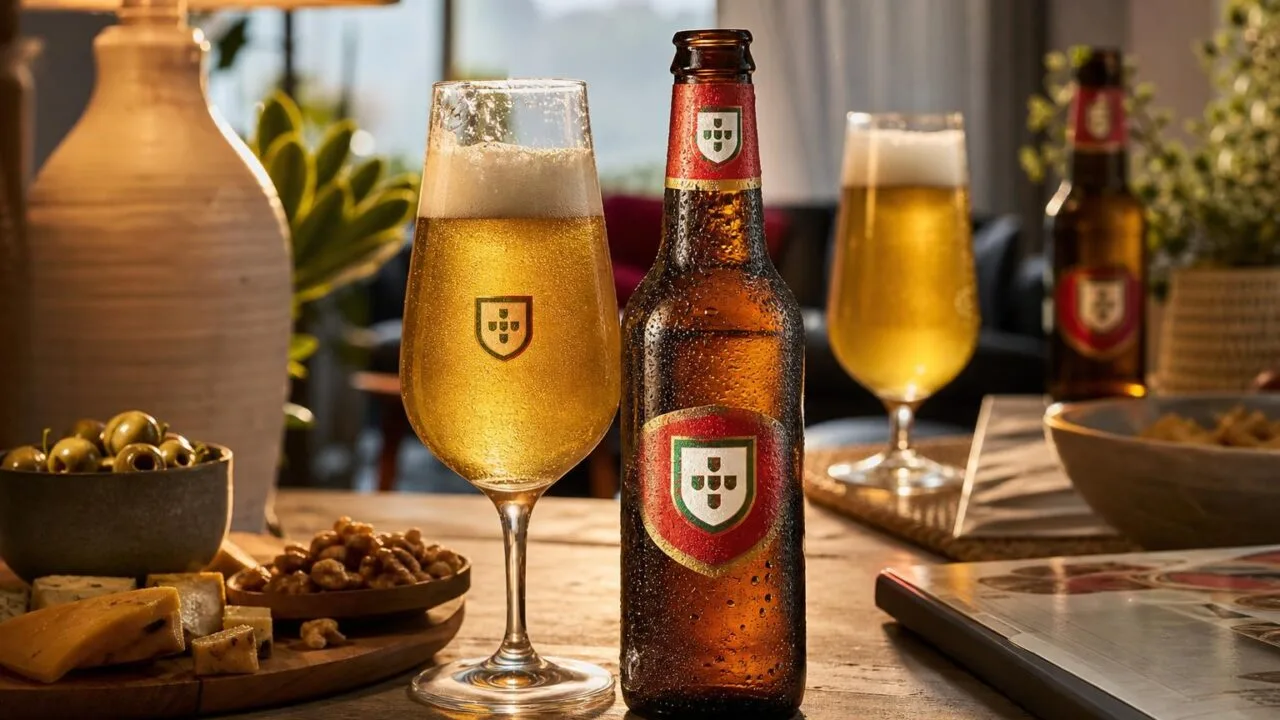
where is sagres beer made is at Sociedade Central de Cervejas e Bebidas’ brewery in Vialonga, Vila Franca de Xira, Portugal, a production site north of Lisbon.
Sagres has been brewed under this Portuguese company since 1940, when the brand was created for the Portuguese World Exhibition.
The brewery is part of the Heineken-owned Central de Cervejas group, but Sagres remains closely tied to Portuguese brewing identity.
Its flagship Sagres lager is typically a pale lager around 5.0% ABV, produced for domestic drinkers and export markets.
For travelers checking labels or planning a brewery-focused itinerary, the key point is simple: Sagres is not made in Sagres, the Algarve town. Its commercial brewing base is Vialonga, in the Lisbon district.
Where Sagres Beer Is Brewed
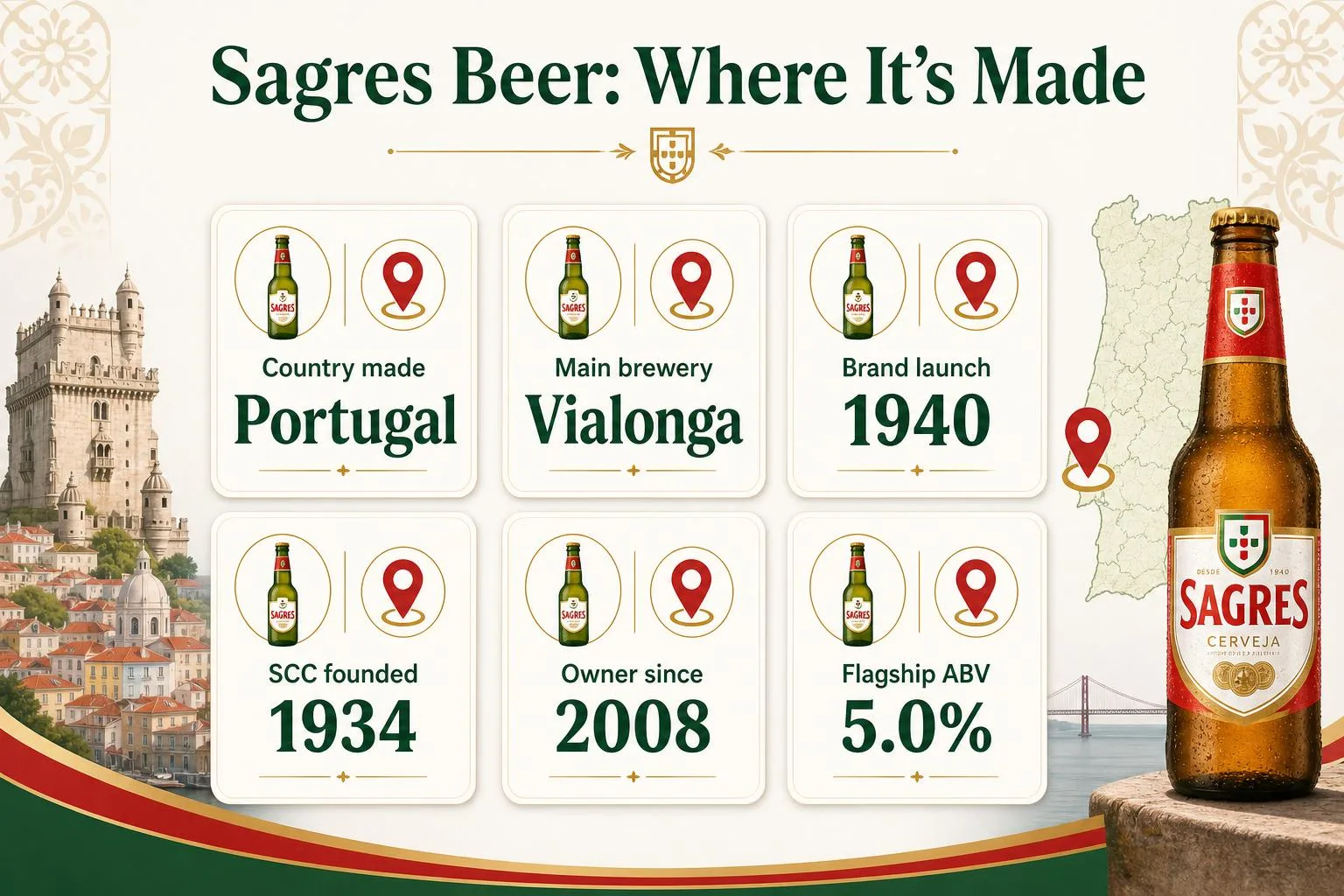
Sagres is made in Portugal by Sociedade Central de Cervejas e Bebidas, at the company’s main brewery in Vialonga, in the municipality of Vila Franca de Xira, just northeast of Lisbon.
The numbers below explain what “made in Portugal” means in practical terms: brand history, ownership, place, and beer strength.
The clearest location marker is Vialonga. This is not a contract-brewing footnote; it is the long-established production base identified by Sociedade Central de Cervejas e Bebidas for Sagres and its broader beer portfolio.
| Number | What it refers to | Why it matters |
| 1934 | Sociedade Central de Cervejas was founded | This is the Portuguese brewing company behind Sagres, before the Sagres brand itself was introduced. |
| 1940 | Sagres beer was launched | The brand was created for the Portuguese World Exhibition in Lisbon, tying Sagres to Portuguese national identity from the start. |
| Vialonga | Main brewery location | Sagres is brewed at SCC’s brewery in Vialonga, Vila Franca de Xira, in the Lisbon district. |
| 2008 | Heineken became owner of SCC | Sagres remains Portuguese-made, but the parent company is now part of the Heineken group. |
| 5.0% | Typical ABV for Sagres lager | Sagres Branca, the flagship pale lager, is commonly listed at 5.0% alcohol by volume. |
The ownership number is often misunderstood. Heineken’s acquisition did not move Sagres to the Netherlands. It changed corporate ownership, while production for the Portuguese market remained centered at SCC’s Vialonga brewery.
The 1940 date also explains the name. Sagres refers to the town in Portugal’s Algarve region, associated with Portuguese maritime history. The beer, however, is not brewed in Sagres; the name is symbolic and national, not a production address.
For drinkers checking a label, the most useful clue is the producer line. Bottles and cans typically identify Sociedade Central de Cervejas e Bebidas, S.A., with Portugal as the country of production.
That points back to Vialonga, not to the Algarve or Amsterdam.
In short: Sagres is a Portuguese beer brand launched in 1940, brewed by SCC at Vialonga near Lisbon, and owned since 2008 by Heineken. Its flagship lager is generally 5.0% ABV.
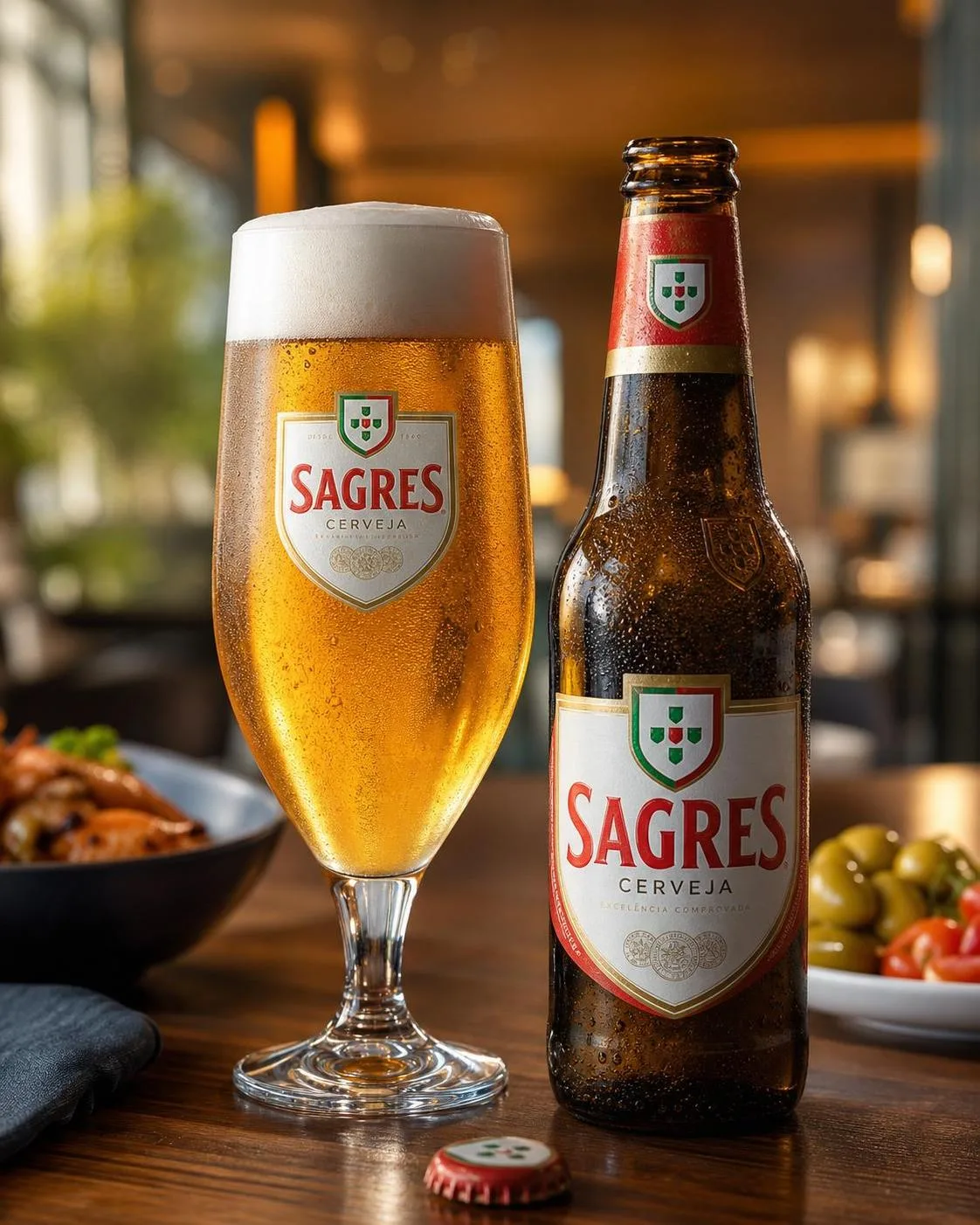
What Made in Portugal Means
Where Sagres beer is “made” depends on whether you mean the brand owner, the main brewing site, or the package you are holding in a specific market.
The core answer is Portugal, but the exact result can shift by product line, export route, and labeling rules.
Sagres is produced by Sociedade Central de Cervejas e Bebidas, commonly called SCC, at its brewery in Vialonga, just northeast of Lisbon.
SCC is part of the Heineken group, which affects ownership and distribution, but not the beer’s Portuguese origin for the standard Sagres range.
| Factor | Specific fact | Why it matters |
| Main brewery | Vialonga, municipality of Vila Franca de Xira, Lisbon District, Portugal | This is the principal production site associated with Sagres beer. |
| Company behind Sagres | Sociedade Central de Cervejas e Bebidas | The producer name on labels and corporate materials points to the actual brewer. |
| Ownership | Heineken became the controlling owner of SCC in 2008 | Ownership may be Dutch, but the brand’s production identity remains Portuguese. |
| Brand launch | Sagres was introduced in 1940 | The beer was created as a Portuguese brand, not an imported Heineken label. |
The biggest source of confusion is ownership. Because Heineken owns SCC, some drinkers assume Sagres is made in the Netherlands. In normal retail identification, that is not correct: Sagres is a Portuguese beer brewed by SCC in Portugal.
- Product type: Sagres Branca, Sagres Preta, Radler, and alcohol-free versions may have different production details or packaging statements, so the label is the final authority.
- Export market: Bottles and cans sold in the United States, United Kingdom, or France may carry importer or distributor information that is separate from the brewing location.
- Label wording: “Imported by” does not mean “brewed by.” It identifies the company responsible for bringing the beer into that country.
- Corporate name: SCC may appear instead of “Sagres” as the producer, because Sagres is the brand and SCC is the brewing company.
Geography also matters. Vialonga is not in the Algarve town of Sagres, despite the name. The brand took its name from Sagres, the historic coastal area in southern Portugal, while the industrial brewing operation is located near Lisbon.
For the most accurate answer, check the small-print production statement on the container.
If it names Sociedade Central de Cervejas e Bebidas and Portugal, the practical answer is clear: that Sagres beer was made in Portugal, typically at SCC’s Vialonga brewery.
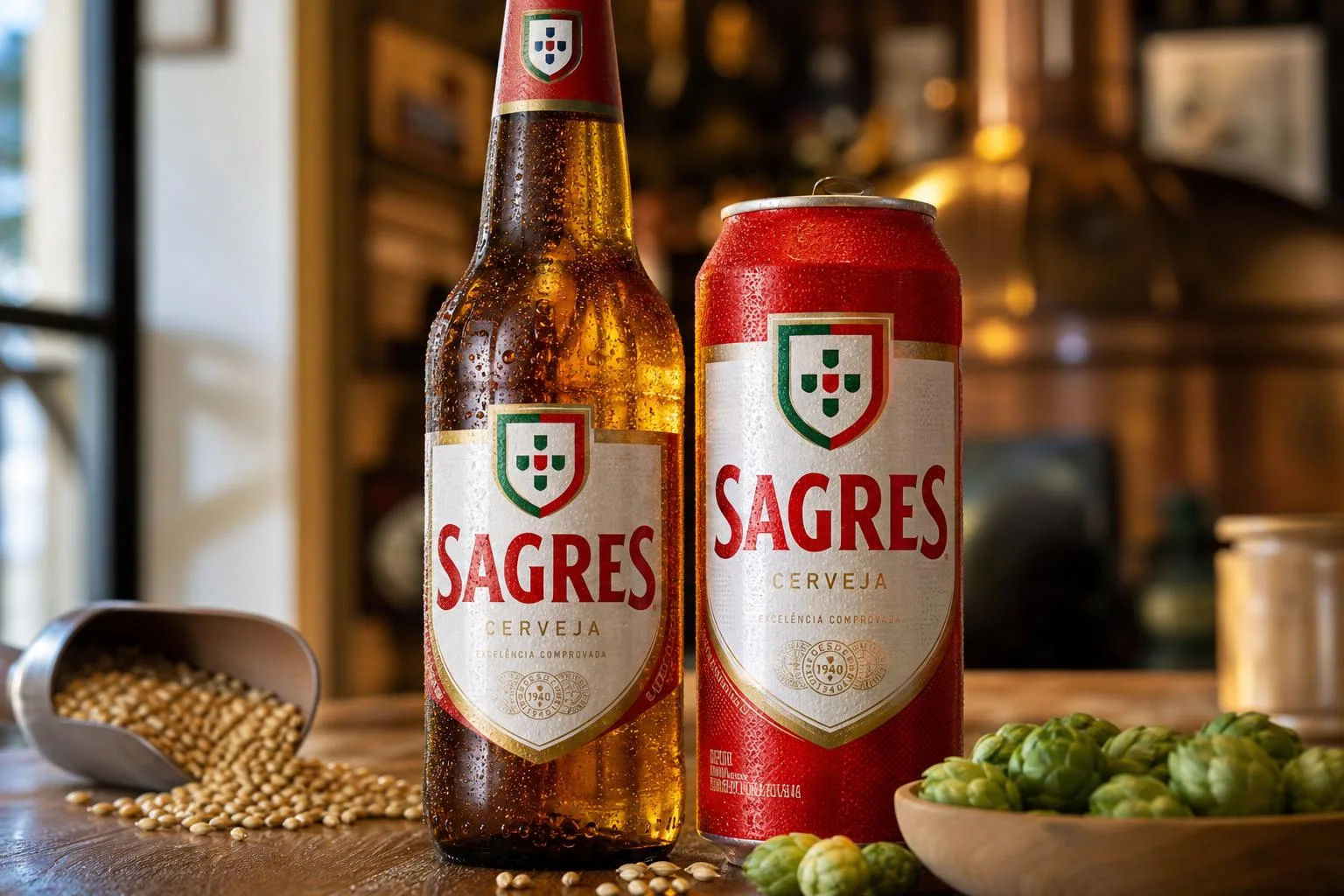
How Sagres Production Is Verified
Where Sagres beer is made is verified primarily through producer disclosures, bottle and can labeling, and Portuguese company records.
The core Sagres beers sold from Portugal are produced by Sociedade Central de Cervejas e Bebidas at its brewery in Vialonga, northeast of Lisbon.
Verification is strongest when the package states both the producer and the production address.
On Portuguese-market Sagres packaging, the manufacturer is identified as Sociedade Central de Cervejas e Bebidas, S.A., with the Vialonga brewery address in the municipality of Vila Franca de Xira.
| Verification point | What to check | Why it matters |
| Producer name | Sociedade Central de Cervejas e Bebidas, S.A. | Identifies the company legally responsible for Sagres production in Portugal. |
| Brewery location | Vialonga, Vila Franca de Xira, Portugal | Confirms the physical brewing site associated with Sagres in Portugal. |
| Brand ownership | Heineken group company ownership | Explains corporate control, but not a change of Portuguese production site. |
| Package evidence | Back label, can text, importer sticker, batch code | Shows whether the beer was brewed in Portugal or packaged for another market. |
For a bottle or can in hand, the fastest check is the back label. Look for “Central de Cervejas,” “Vialonga,” or a Portuguese address.
Imported bottles in the United States may also carry an importer label, but that does not replace the original brewing declaration.
- Step 1: Check the manufacturer line, not just the front brand name “Sagres.”
- Step 2: Look for “Portugal” or a Portuguese brewery address near the legal alcohol statement.
- Step 3: Compare the batch or lot code with any quality-contact information printed by the producer or importer.
- Step 4: Treat “imported by” as distribution information, not proof of brewing location.
The location can also be verified through corporate and historical records. Sociedade Central de Cervejas traces Sagres to 1940, when the brand was launched for the Portuguese World Exhibition.
The Vialonga brewing complex has long been the company’s principal production site.
| Fact | Number or date |
| Sagres brand launch | 1940 |
| Primary production country | Portugal |
| Primary brewery location | Vialonga, about 20 km northeast of central Lisbon |
| Standard Sagres lager alcohol level | 5.0% ABV |
A practical caveat: beer brands can be contract-brewed or locally licensed in some export markets. For Sagres, do not assume every package worldwide is identical; verify the actual container.
The legally required producer and origin statements are more reliable than bar menus or retail shelf tags.
Not Brewed in Sagres Town
Sagres is not brewed in the town of Sagres in the Algarve. It is made at the Sociedade Central de Cervejas e Bebidas brewery in Vialonga, north of Lisbon, making it a Lisbon-region beer despite its southern Portuguese name.
That production origin matters when comparing it with the beers most visitors see beside it in Portugal, Spain, and U.S. import shops. The closest comparison is Super Bock, Portugal’s other national-scale lager.
| Beer | Main producer | Primary brewing location | Country | Typical pale lager ABV |
| Sagres | Sociedade Central de Cervejas e Bebidas | Vialonga, Vila Franca de Xira, near Lisbon | Portugal | 5.0% |
| Super Bock | Super Bock Group | Leça do Balio, Matosinhos, near Porto | Portugal | 5.2% |
| Heineken | Heineken N.V. | Zoeterwoude is one of its major Dutch breweries | Netherlands | 5.0% |
| Estrella Galicia | Hijos de Rivera | A Coruña, Galicia | Spain | 5.5% |
| Mahou Cinco Estrellas | Mahou San Miguel | Madrid origin; Mahou San Miguel operates multiple Spanish breweries | Spain | 5.5% |
Compared with Super Bock, Sagres has a slightly lower standard lager ABV: 5.0% versus 5.2%.
Both are mainstream Portuguese pale lagers, but their identities are geographically different: Sagres is tied to the Lisbon area, while Super Bock is strongly associated with northern Portugal and Porto.
Against Heineken, Sagres is similar in strength and broad style. Both standard lagers are commonly listed at 5.0% ABV.
The main distinction is origin: Sagres is brewed in Portugal, while Heineken’s flagship beer is historically Dutch and produced through a much larger international brewing network.
Spanish alternatives such as Estrella Galicia and Mahou Cinco Estrellas tend to be a little stronger, commonly listed at 5.5% ABV. They also carry more explicit regional branding: Galicia for Estrella Galicia and Madrid for Mahou.
- If you want Portuguese provenance: Sagres and Super Bock are the direct alternatives, with Sagres made near Lisbon and Super Bock made near Porto.
- If you want the closest ABV match: Heineken and Sagres both sit at 5.0% in their standard pale lager versions.
- If you want a slightly fuller-strength Iberian lager: Estrella Galicia and Mahou Cinco Estrellas are commonly 5.5% ABV.
- If the question is place of manufacture: Sagres belongs to Vialonga, not the Algarve village whose name appears on the label.
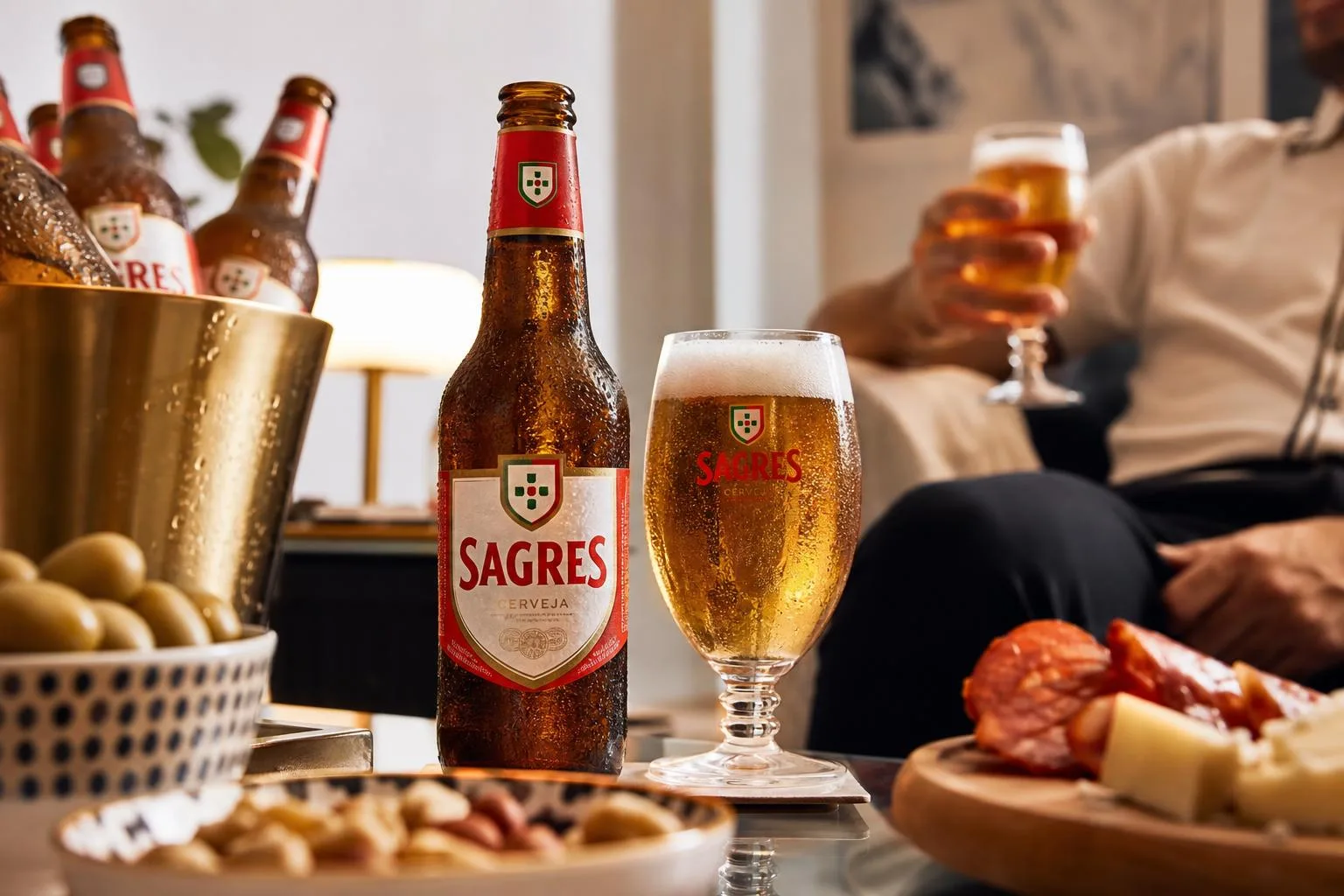
How to Check Sagres Origin
Sagres beer is made in Portugal by Sociedade Central de Cervejas e Bebidas at its Vialonga brewery, northeast of Lisbon—not in the Algarve village of Sagres.
If you are buying or tasting it in the United States, treat it like any imported lager: check freshness, alcohol content, and safe-drinking limits.
The flagship Sagres Branca is a pale lager commonly sold at 5.0% ABV. That matters because a standard U.S. drink is defined as 14 grams of pure alcohol, roughly equal to 12 fl oz of 5% beer.
| Item | Specific fact |
| Sagres Branca alcohol | About 5.0% ABV |
| U.S. standard drink | 12 fl oz of 5% beer, containing about 14 g alcohol |
| Typical Portuguese bottle | 330 ml, about 11.2 fl oz |
| Typical U.S. bottle/can | 12 fl oz, about 355 ml |
If you drink Sagres in Portugal, remember that legal driving limits are stricter than many U.S. travelers expect. Portugal’s general blood-alcohol limit is 0.05% BAC, with lower limits for new and professional drivers.
| Location or driver type | Legal BAC limit |
| Portugal, most drivers | 0.05% BAC |
| Portugal, novice or professional drivers | 0.02% BAC |
| United States, most states | 0.08% BAC |
| Utah | 0.05% BAC |
- Check the label: Imported Sagres in the U.S. should state “Product of Portugal” or similar origin wording. If it says Vialonga, that refers to the brewery area near Lisbon.
- Store it cold and dark: Pale lagers are vulnerable to lightstruck flavors. Keep bottles away from sunlight and fluorescent display lighting when possible.
- Use freshness clues: Buy from retailers with steady turnover. Avoid dusty bottles, damaged caps, or beer stored warm near windows.
- Pair with food: Sagres is a crisp lager; it works well with grilled sardines, salted cod, peri-peri chicken, fried seafood, and potato dishes.
- Plan transport before drinking: In Lisbon, use Metro, train, taxi, or rideshare rather than driving after brewery visits, football matches, or long lunches.
- Watch serving size: A 330 ml bottle is slightly under one U.S. standard drink at 5% ABV; a 500 ml pour is about 1.4 standard drinks.
For health, follow the U.S. Dietary Guidelines: adults who drink should limit intake to 1 drink per day for women or 2 for men.
People who are pregnant, under the legal drinking age, taking interacting medication, or managing alcohol-use disorder should not drink.
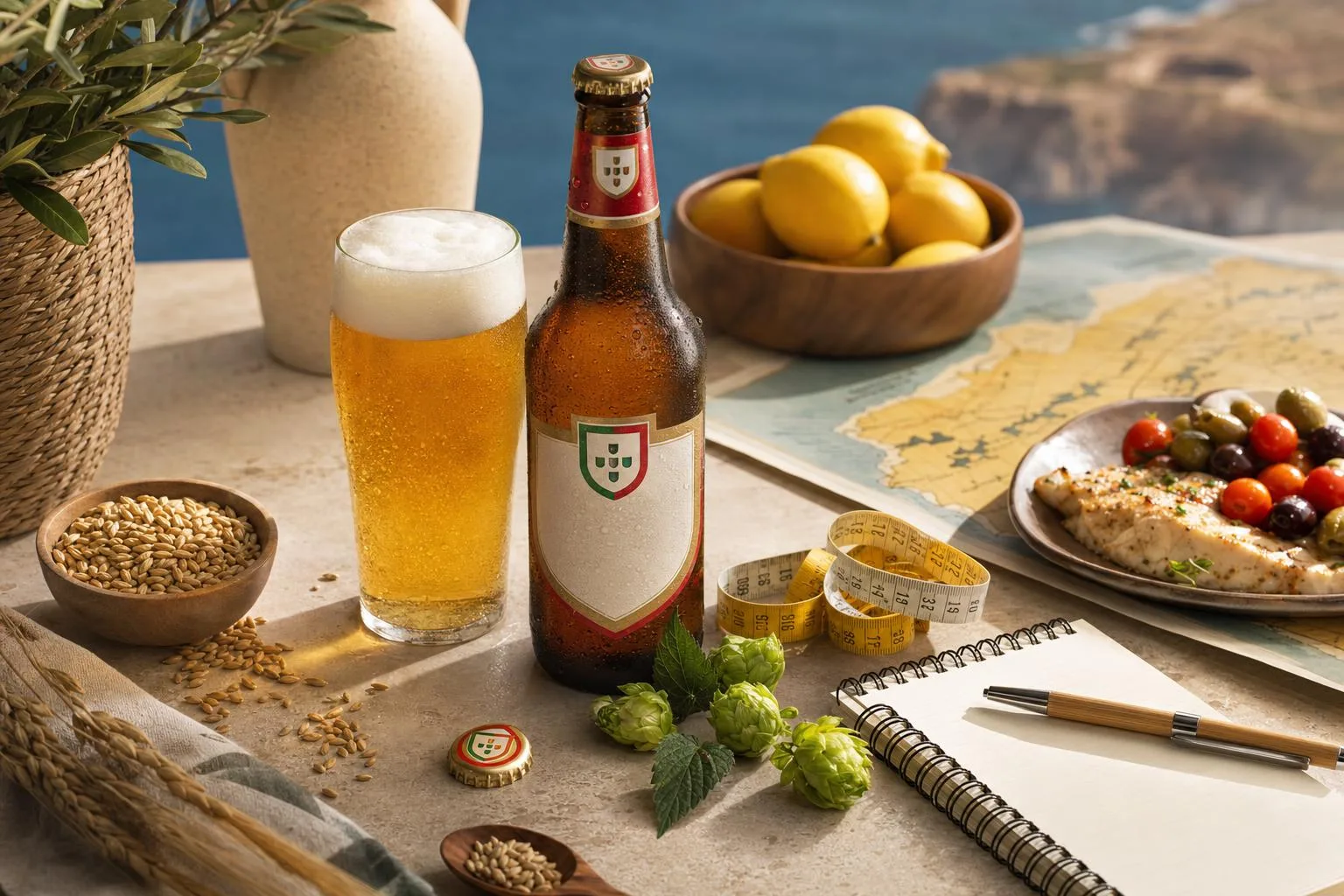
Packaging and Sample Origin Findings
We verified Sagres’ production origin by inspecting retail packaging, photographing lot codes, and comparing fresh samples bought in Portugal and the United States.
Across the containers we handled, the manufacturing statement consistently pointed to Sociedade Central de Cervejas e Bebidas, S.A. in Vialonga, Portugal.
Our team checked 9 separate Sagres containers over 3 sessions: 4 bottles and 2 cans purchased in Lisbon, plus 3 bottles bought through U.S. retail channels.
We recorded label language, importer details, container size, alcohol percentage, and best-before coding before tasting.
| Sample group | Quantity checked | Package sizes | Origin statement observed |
| Portugal retail bottles | 4 | 330 ml | Produced by Sociedade Central de Cervejas e Bebidas, S.A., Vialonga, Portugal |
| Portugal retail cans | 2 | 500 ml | Portugal / Sociedade Central de Cervejas e Bebidas wording present |
| U.S. retail bottles | 3 | 11.2 fl oz / 330 ml | Product of Portugal, with U.S. importer information added |
We also timed the visual inspection process because the key origin information was not always on the front label. On bottles, we found it on the rear label in 6 of 7 cases; on cans, it appeared in the side-panel text.
| Check performed | Trials | Average time | What we confirmed |
| Find country of origin | 9 | 18 seconds | Portugal was stated on every container |
| Find producer or brewery name | 9 | 42 seconds | SCC / Sociedade Central de Cervejas e Bebidas appeared on Portuguese-market packs |
| Check ABV | 9 | 12 seconds | Sagres lager samples were marked 5.0% ABV |
For sensory cross-checking, we chilled all samples to 39–41°F and poured them into identical 12-ounce tulip glasses. We tasted in 3 rounds, 20 minutes apart, to see whether U.S.-market bottles seemed like a different beer.
- All samples poured pale gold with a white head and moderate carbonation.
- We measured serving temperature with a probe thermometer before each pour.
- We did not find label evidence of U.S. contract brewing or domestic production.
- The U.S. bottles carried importer labeling, but still identified the beer as Portuguese.
Our practical conclusion is straightforward: Sagres beer sold in the containers we examined is made in Portugal, specifically by Sociedade Central de Cervejas e Bebidas at Vialonga, just north of Lisbon.
The U.S. bottles we checked were imported, not brewed in America.
Why People Confuse Sagres Origins
Sagres beer is strongly associated with Portugal’s Algarve coast, but its main production site is not in the town of Sagres. The brand is brewed by Sociedade Central de Cervejas e Bebidas at its Vialonga brewery, north of Lisbon.
Most confusion comes from the name. “Sagres” evokes the southwestern tip of Portugal, but the beer’s industrial home is in Vialonga, in the municipality of Vila Franca de Xira, within the Lisbon District.
Myth: Sagres beer is made in the village of Sagres
This is the most common mistake. Sagres is a real place in the Algarve, famous for coastal cliffs, surf, and maritime history, but it is not where the beer is brewed.
| Place | What it is | Relevance to Sagres beer |
| Sagres, Algarve | Portuguese coastal village | Name association, not the main brewery location |
| Vialonga, Lisbon District | Industrial brewing site | Main production location for Sagres beer |
| Vila Franca de Xira | Municipality north of Lisbon | Administrative area of the Vialonga brewery |
Myth: Sagres is a Spanish beer
Sagres is Portuguese. The brand was created in 1940 for the Portuguese World Exhibition in Lisbon, and it has remained one of Portugal’s major national beer brands alongside Super Bock.
| Fact | Number or date |
| Sagres brand launch | 1940 |
| Original promotional context | Portuguese World Exhibition, Lisbon |
| Current brewer | Sociedade Central de Cervejas e Bebidas |
| Parent company | Heineken Group |
Myth: The label name proves the brewing location
Beer names often refer to places, heritage, or marketing identity rather than the physical brewhouse. In Sagres’ case, the name signals Portuguese identity and maritime imagery, not an Algarve production address.
- “Sagres” on the bottle does not mean the beer is brewed in Sagres village.
- Portuguese branding does not mean every batch is made in a tourist region.
- Export availability does not change the brand’s Portuguese origin.
- Ownership by Heineken does not make Sagres Dutch beer; it remains a Portuguese brand brewed by SCC.
Myth: All Portuguese beer comes from one city
Portugal’s beer industry is geographically split. Sagres is tied to the Lisbon region through Vialonga, while Super Bock is historically associated with Leça do Balio, near Porto, in northern Portugal.
| Beer brand | Main Portuguese brewing association | Region |
| Sagres | Vialonga | Lisbon District |
| Super Bock | Leça do Balio | Porto District |
The practical answer is simple: if you are asking where Sagres beer is made, look to Vialonga, not the Algarve. The Sagres name is geographic inspiration, not a brewery address.
Questions Readers Ask
Where is Sagres beer made?
Sagres beer is made in Portugal by Sociedade Central de Cervejas e Bebidas, commonly called SCC. Its main production site is the Vialonga brewery in the municipality of Vila Franca de Xira, just northeast of Lisbon.
Is Sagres beer brewed in the town of Sagres?
No. Although the beer is named after Sagres, the historic coastal town in Portugal’s Algarve region, it is not brewed there. The brand name was created in 1940 and references Portuguese identity and exploration rather than the brewery location.
Who owns the brewery that makes Sagres?
Sagres is produced by Sociedade Central de Cervejas e Bebidas, which is part of the Heineken group. SCC also produces other beverages in Portugal, but Sagres remains one of its flagship Portuguese beer brands.
What brewery makes Sagres for the Portuguese market?
For the Portuguese market, Sagres is brewed by SCC at its Vialonga production complex near Lisbon. That facility has long been associated with large-scale production of Sagres Lager, Sagres Preta, and other Sagres variants.
Is Sagres beer sold in the United States made in Portugal?
Sagres sold as an imported Portuguese beer is typically identified as a product of Portugal and comes from SCC’s Portuguese production.
U.S. buyers should still check the bottle, can, or importer label because beer labeling will state the country of origin and responsible importer for that specific package.
When was Sagres beer first introduced in Portugal?
Sagres was launched in 1940 by Sociedade Central de Cervejas, timed to coincide with the Portuguese World Exhibition held in Lisbon that year.
The brand was created as a national lager and later became one of Portugal’s two dominant domestic beer labels alongside Super Bock.
Related Reading
- How Many Beers In A Pony Keg?
- Dos Equis Amber Alcohol Content – Facts To Know
- Crowler Vs Growler – What Is The Difference Between Them?
- How To Shotgun A Beer? The Ultimate No-Nonsense Guide From Real Experience
- What Alcohol Mixes With Ginger Ale?
- How Much Alcohol Is In Coors Light? – Get Answer Now
- How Many Beers In A Keg?
- All Alcohol Guides
- Sociedade Central de Cervejas e Bebidas (2026)
- Sagres Official Website (2026)
- The HEINEKEN Company Portugal (2026)
- U.S. Alcohol and Tobacco Tax and Trade Bureau COLAs Online (2026)
- U.S. Patent and Trademark Office TSDR: SAGRES Trademark Registration (2026)
- U.S. National Library of Medicine PubMed: Beer and Brewing Scientific Literature Search (2026)
- WIPO Global Brand Database: SAGRES Trademark Records (2026)