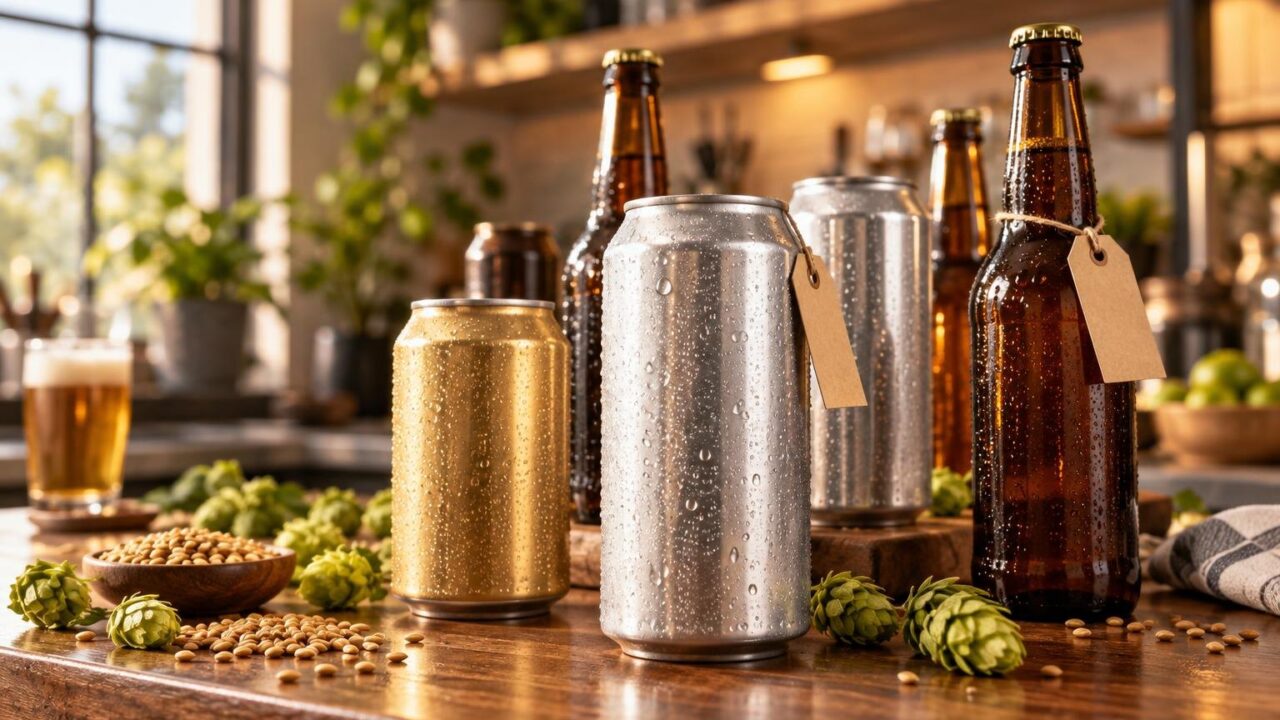
Cheap high alcohol content beer is beer that combines a low shelf price with an ABV above mainstream lagers, often 7% to 12% in U.S. malt liquor, strong lager, and imperial-style cans.
The real comparison is cost per ounce of pure alcohol, not can size or brand hype.
This guide explains which styles deliver the most alcohol for the money, what tradeoffs to expect in flavor, and how to read ABV, serving size, and price before buying.
What Cheap High Alcohol Beer Means
“Cheap high alcohol beer” describes beer that delivers a large amount of alcohol for a low purchase price.
In the United States, no legal category defines “high alcohol,” so shoppers usually compare alcohol by volume (ABV), container size, and cost per standard drink.
Most inexpensive high-ABV options are malt liquor, high-gravity lager, strong ale, or value-brand specialty beer. A product labeled 8% ABV contains 60% more alcohol per ounce than a 5% beer, even when both use the same 12-ounce serving size.
How the Alcohol Adds Up
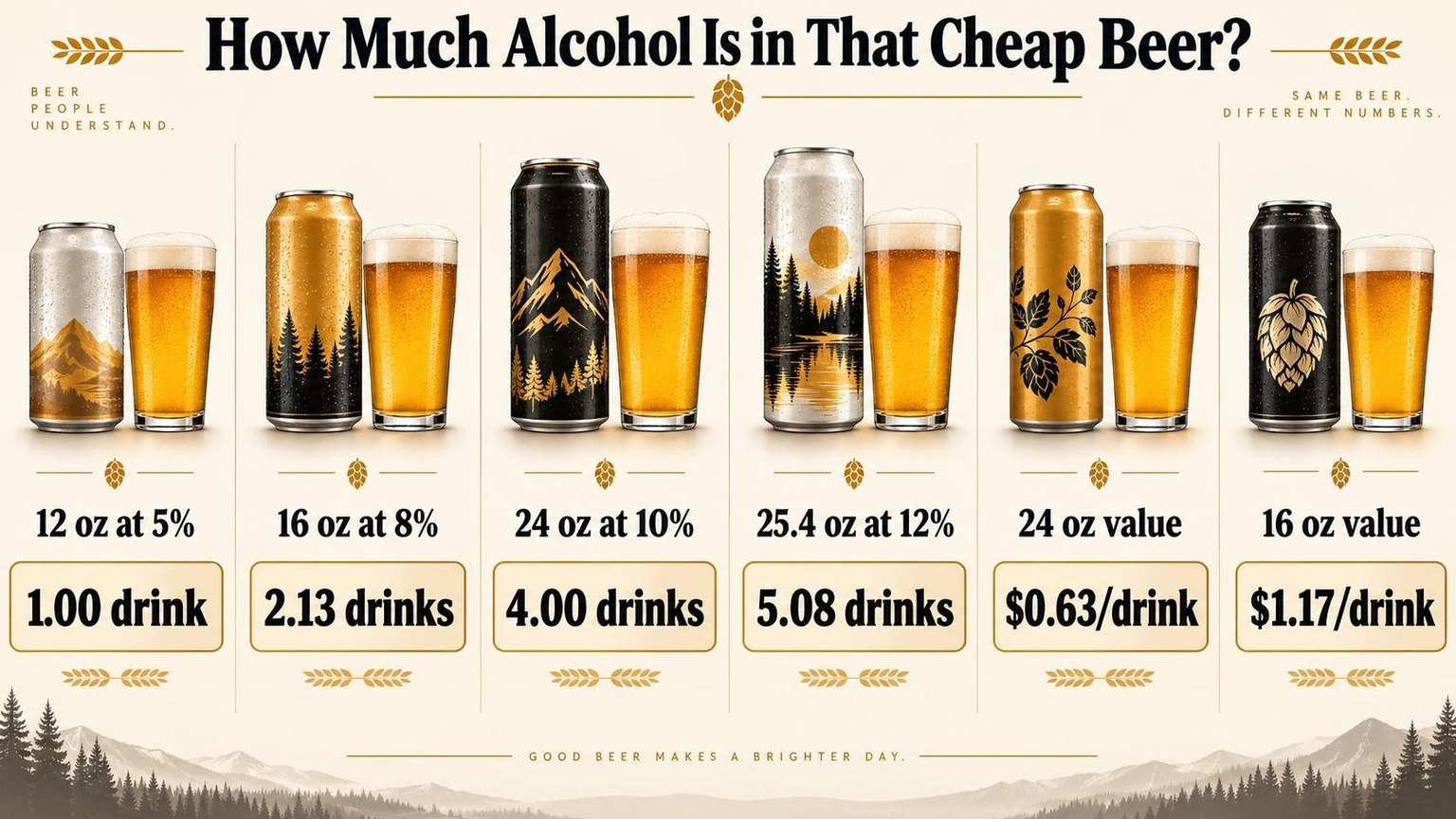
The National Institute on Alcohol Abuse and Alcoholism defines one U.S. standard drink as 0.6 fluid ounces of pure alcohol. The calculation is container volume multiplied by ABV expressed as a decimal.
| Container | ABV | Pure alcohol | Approximate standard drinks |
| 12 fl oz beer | 5% | 0.60 fl oz | 1.00 |
| 16 fl oz beer | 8% | 1.28 fl oz | 2.13 |
| 24 fl oz beer | 10% | 2.40 fl oz | 4.00 |
| 25.4 fl oz beer | 12% | 3.05 fl oz | 5.08 |
Container size can make a low-priced beer deceptively strong. A 24-ounce can at 10% ABV contains four standard drinks, although its label may present the container as two or more servings.
Checking both ABV and fluid ounces prevents underestimating the total alcohol.
What “Cheap” Should Measure
Sticker price alone does not identify the best value. Divide the price by the container’s standard drinks to compare products consistently.
A $2.50, 24-ounce can at 10% ABV costs about $0.63 per standard drink; a $2.50, 16-ounce can at 8% costs about $1.17.
| Example | Price | Standard drinks | Cost per standard drink |
| 24 fl oz at 10% | $2.50 | 4.00 | $0.63 |
| 16 fl oz at 8% | $2.50 | 2.13 | $1.17 |
Prices vary by state, retailer, taxes, deposits, and promotions. Compare shelf price after verifying the ABV, serving size, and number of servings. High alcohol content does not indicate better flavor, higher quality, or lower health risk.
Best Budget High ABV Beer Styles
Malt liquor and high-gravity lager usually deliver the most alcohol per dollar because they use inexpensive adjuncts, large packages, and efficient fermentation.
Strong ales can offer better flavor complexity, but specialty ingredients and smaller packages generally raise their cost.
| Style | Typical ABV | Budget advantage | Main drawback |
| American malt liquor | 6.3%–8.2% | Common in single 24- or 40-ounce containers | Sweet, grainy flavor; limited hop character |
| High-gravity adjunct lager | 8.0%–10.0% | Low-cost grain bill and widely available tall cans | Noticeable alcohol warmth |
| Imperial IPA | 7.6%–10.6% | Strong canned options appear in value multipacks | More expensive hops increase shelf price |
| Belgian-style tripel | 7.1%–10.1% | High attenuation creates substantial strength without heavy body | Usually sold as a specialty beer |
| American barleywine | 8.4%–12.0% | High alcohol and aging potential | Premium pricing and limited availability |
| Imperial stout | 7.0%–12.0% | Dense flavor makes a smaller serving satisfying | Roasted malt, packaging, and barrel aging can increase cost |
The style ranges follow Brewers Association beer-style guidelines.
Malt liquor remains the strongest pure-value category: brands such as Steel Reserve, Olde English 800, and Hurricane High Gravity commonly combine elevated strength with inexpensive large-format packaging, although ABV varies by state and product version.
Compare Alcohol, Not Container Price
Use ounces multiplied by ABV to compare packages. Divide the result by price; the higher result provides more pure alcohol per dollar.
This method prevents a cheap-looking tall can from beating a slightly more expensive product only because its container is larger.
| Package example | Pure alcohol | U.S. standard drinks |
| 24 ounces at 8% ABV | 1.92 fluid ounces | 3.2 |
| 16 ounces at 10% ABV | 1.60 fluid ounces | 2.7 |
| 12 ounces at 9% ABV | 1.08 fluid ounces | 1.8 |
The National Institute on Alcohol Abuse and Alcoholism defines one U.S. standard drink as 0.6 fluid ounces of pure alcohol. A single high-ABV can can therefore contain several drinks, even when marketed as one serving.
Best Buying Strategy
- Choose malt liquor or high-gravity lager when cost per unit of alcohol is the priority.
- Check multipacks of imperial IPA when flavor matters more than the absolute lowest price.
- Buy tripel, barleywine, or imperial stout selectively; they provide strength and complexity, not consistently lower cost.
- Compare fresh local prices because taxes, package sizes, and regional ABV versions materially affect value.
Strong Beers With Low Shelf Prices
High-gravity malt liquor and value-priced lager usually provide the most alcohol for the shelf price. Large single cans often cost less upfront than craft beer, but each container can hold several standard drinks.
The table uses package-label ABV, common U.S. single-can sizes, and typical advertised prices before tax or deposit. Prices vary by retailer and state; compare the shelf tag where you shop.
| Product | ABV | Package | Typical shelf price | Approximate standard drinks |
| Steel Reserve 211 High Gravity | 8.1% | 24 fl oz can | $1.49–$2.29 | 3.2 |
| Natty Daddy | 8.0% | 25 fl oz can | $1.29–$1.99 | 3.3 |
| Hurricane High Gravity | 8.1% | 24 fl oz can | $1.29–$1.99 | 3.2 |
| Olde English 800 | 7.5% in many markets | 24 fl oz can | $1.49–$2.29 | 3.0 |
| King Cobra Premium Malt Liquor | 6.0% | 25 fl oz can | $1.29–$1.99 | 2.5 |
| Bud Ice | 5.5% | 25 fl oz can | $1.49–$2.29 | 2.3 |
ABV and package details come from current producer descriptions and container labels from Anheuser-Busch, Molson Coors, and Pabst Brewing Company. Olde English strength can differ by market, so the printed can label controls.
To compare value accurately, calculate cost per standard drink rather than cost per can. The National Institute on Alcohol Abuse and Alcoholism defines one U.S. standard drink as containing 0.6 fluid ounce of pure alcohol.
- Check ABV: Similar-looking cans may differ substantially in strength.
- Check volume: A larger container delivers more alcohol even when ABV is unchanged.
- Divide price by standard drinks: This exposes whether a low sticker price is genuinely economical.
- Inspect multipacks: A value lager case may beat single-can pricing despite its lower ABV.
These products trade flavor complexity for alcohol-per-dollar efficiency. Expect sweet grain, noticeable corn or adjunct character, moderate bitterness, and a warming finish, especially above typical lager strength.
A single high-gravity can is not equivalent to one drink. Pouring it into a glass, sharing it, and pacing consumption makes the actual dose easier to recognize.
ABV Per Dollar Buying Strategy
Compare beer by ounces of pure ethanol per dollar, not ABV or package price alone. Container size, alcohol percentage, and shelf price all affect value. This method identifies the lowest-cost option while making the actual alcohol dose visible.
Use the ethanol-per-dollar formula
Multiply container volume by ABV expressed as a decimal, then divide by price. The result is fluid ounces of pure ethanol purchased per dollar. Use the ABV printed on the specific package because recipes and state-market versions can differ.
| Measure | Formula |
| Pure ethanol | Container ounces × ABV decimal |
| Ethanol per dollar | Pure ethanol ounces ÷ shelf price |
| U.S. standard drinks | Pure ethanol ounces ÷ 0.6 |
The National Institute on Alcohol Abuse and Alcoholism defines one U.S. standard drink as approximately 0.6 fluid ounces of pure alcohol.
That equals a typical 12-ounce beer at 5% ABV, although one large high-gravity can may contain several standard drinks.
Worked shelf-price comparison
These examples use hypothetical local prices, not national price claims. Taxes, deposits, promotions, package formats, and retailer margins change the ranking. Recalculate with the price shown in your store.
| Package | ABV | Price | Pure ethanol | Ethanol per dollar | Standard drinks |
| 12-ounce lager | 5.0% | $1.25 | 0.60 ounces | 0.48 ounces | 1.00 |
| 24-ounce strong lager | 8.0% | $2.25 | 1.92 ounces | 0.85 ounces | 3.20 |
| 23.5-ounce flavored malt beverage | 14.0% | $3.49 | 3.29 ounces | 0.94 ounces | 5.48 |
| Six 12-ounce lagers | 5.0% | $6.99 | 3.60 ounces | 0.52 ounces | 6.00 |
Under these assumed prices, the strongest single can provides the most ethanol per dollar. It also contains more than five standard drinks, so the cheapest alcohol value can create the highest single-container exposure.
Shop without misreading value
- Compare final checkout prices, including sales tax and container deposits.
- Check multipacks; a low single-can price does not guarantee the best case-level value.
- Reject damaged, leaking, expired, or improperly stored packages regardless of savings.
- Compare serving size as well as value; resealable packaging can reduce pressure to finish a large container.
- Do not treat high ABV as permission to drink faster. Alcohol dose, not beverage category, drives intoxication.
Cheap High Alcohol Beer Safety Limits
Cheap high-alcohol beer can deliver several standard drinks in one can, making intoxication arrive faster than its price suggests.
The safest limit is no alcohol, but drinkers can reduce risk by checking alcohol by volume, serving size, medications, and plans for transportation.
In the United States, one standard drink contains approximately 0.6 fluid ounces of pure alcohol, or 14 grams. Beer strength and container size determine how many standard drinks a product contains, not the number of cans.
| Beer serving | Alcohol by volume | Approximate standard drinks |
| 12 fl oz | 5% | 1 |
| 16 fl oz | 8% | 2.1 |
| 24 fl oz | 8% | 3.2 |
| 40 fl oz | 8% | 5.3 |
These estimates use the standard-drink formula: container ounces multiplied by alcohol by volume, divided by 0.6.
Labels can differ, and some inexpensive malt beverages exceed the listed strength, so treat the package alcohol percentage as a minimum planning figure.
NIAAA defines binge drinking as a pattern that typically brings blood alcohol concentration to 0.08%. The threshold is lower for many people with less body weight, limited food intake, low tolerance, or interactions with medications.
| Pattern | NIAAA threshold | Approximate time |
| Typical adult male | 5 or more standard drinks | About 2 hours |
| Typical adult female | 4 or more standard drinks | About 2 hours |
- Do not drive after drinking. In the United States, the legal adult driving limit is generally 0.08% BAC, but driving ability can decline before that level.
- Avoid alcohol during pregnancy, while under the legal drinking age, and with opioids, sedatives, sleep medicines, or other interacting drugs.
- Count standard drinks before opening the container, eat food, drink water, and stop when coordination, speech, or judgment changes.
- Never leave an impaired person alone. Call emergency services for unconsciousness, slow or irregular breathing, seizures, repeated vomiting, or blue, gray, or pale skin.
Price does not indicate lower alcohol content or lower health risk. Choose a smaller container or lower-strength beer, measure total standard drinks, and arrange a sober ride before drinking.
Where Strong Beer Costs Less
Strong beer usually costs least at high-volume liquor stores, discount grocers, and warehouse retailers, not bars or delivery apps. Compare packages by ounces of pure alcohol per dollar because a low shelf price can hide poor value.
Best Retail Channels
- Large liquor stores: High inventory turnover supports lower margins, frequent case discounts, and more single cans. They also carry beer above grocery-store alcohol limits in states with channel restrictions.
- Discount grocers: Regional lagers and private-label strong beer can undercut national brands. Selection is smaller, and refrigerated packages sometimes cost more than identical warm stock.
- Warehouse retailers: Multipacks commonly reduce the cost per ounce. Some states require alcohol sales to nonmembers, but that rule is not universal; check the retailer and state before visiting.
- Brewery taprooms: Packaged beer is not automatically cheaper at the source. Small-production imperial stouts and double IPAs often command premium prices despite eliminating a retail intermediary.
Measure Alcohol, Not Container Size
Multiply package volume by ABV to estimate pure alcohol. The following examples illustrate the calculation; they are not advertised prices.
| Package | ABV | Example price | Pure alcohol | Alcohol per dollar |
| 24-ounce can | 8% | $2.49 | 1.92 ounces | 0.77 ounce |
| 24-ounce can | 5% | $1.99 | 1.20 ounces | 0.60 ounce |
| 12-pack of 12-ounce cans | 5% | $13.99 | 7.20 ounces | 0.51 ounce |
In this example, the 8% single can delivers the most alcohol per dollar, although the multipack provides more total beer. Sales tax, container deposits, and local alcohol taxes can reverse a narrow advantage.
Location Changes the Final Price
State beer excise taxes vary sharply. Tax Foundation’s 2024 compilation lists Wyoming at $0.02 per gallon and Tennessee at $1.29 per gallon. These taxes are generally embedded in shelf prices rather than shown as a separate checkout line.
Delivery is usually the costliest route after fees, tips, and minimum-order requirements. Bars charge for service and location; a pint also may contain less beer than its menu description if glassware or headspace reduces the measured pour.
Check the shelf’s unit-price label, calculate pure alcohol per dollar, and compare the same package warm and refrigerated. Buy only quantities you can store properly, and treat high-ABV beer as multiple standard drinks rather than one serving.
Budget Strong Beer Storage Tips
Cheap high-alcohol beer keeps best in a cool, dark, temperature-stable space. Proper storage protects carbonation and slows oxidation, while poor storage can produce stale, papery, skunky, or unexpectedly flat beer before the printed date.
Control temperature and light
Heat accelerates flavor deterioration. Refrigeration is safest for inexpensive strong lagers, malt liquors, imperial ales, and flavored high-ABV beers because these products are rarely designed for long-term aging.
| Storage condition | Recommended use | Main concern |
| 35–40°F | Routine refrigerated storage | Preserves freshness and carbonation |
| 50–55°F | Short-term cellar storage for suitable strong ales | Flavor continues developing |
| Above 70°F | Avoid extended storage | Faster oxidation and staling |
| Below 32°F | Avoid | Freezing can expand beer and damage the package |
Keep beer away from windows and fluorescent lighting. Brown glass blocks more ultraviolet and visible light than green or clear glass, but cans provide complete light protection.
Light exposure can create “skunky” aromas when it alters hop-derived compounds.
Store packages upright
Place cans and bottles vertically rather than on their sides. Upright storage reduces the beer’s contact with the cap or liner, limits the surface area exposed to oxygen in the headspace, and helps sediment settle at the bottom.
- Inspect bargain multipacks for bulging cans, leaking seams, rust, sticky residue, or raised bottle caps.
- Avoid repeatedly moving beer between warm and cold locations; stable storage is preferable.
- Use older purchases first and mark unboxed cans with the purchase month.
- Do not store beer in a vehicle, attic, sunny garage, or beside a stove or water heater.
Follow freshness dates
A higher alcohol percentage does not automatically make beer age-worthy. Strong industrial lagers and malt liquors generally taste best fresh; alcohol cannot prevent hop aroma loss, oxidation, or seal failure.
Read the package for a canned-on, bottled-on, or best-by date. A best-by date addresses expected quality, not an automatic safety cutoff. Discard beer with a broken seal, unexpected gushing, abnormal sourness, or packaging damage.
Handle opened beer promptly
Refrigerate an opened beer immediately in a clean, tightly sealed container. A stopper may preserve some carbonation, but it cannot reverse oxidation. For best flavor, finish opened beer within one day rather than saving it for several days.
Questions People Ask Most
What cheap beer has the highest alcohol content?
Hurricane High Gravity Lager and Steel Reserve 211 commonly provide 8.1% ABV, while Natty Daddy reaches 8.0% ABV; availability and formulation can vary by state.
Large single cans often cost less per ounce of pure alcohol than craft imperial stouts, but local shelf prices determine the cheapest option.
How should I compare the value of high-alcohol beers?
Compare the price per U.S. standard drink, not the price per can: multiply fluid ounces by ABV, then divide by 0.6, because the National Institute on Alcohol Abuse and Alcoholism defines one standard drink as 0.6 fluid ounces of pure alcohol.
A 24-ounce can at 8% ABV contains about 3.2 standard drinks, so a $2.40 can costs roughly $0.75 per standard drink.
Which beer styles offer high ABV at a relatively low price?
Economy malt liquor and high-gravity lager commonly range from about 7% to 10% ABV and are often sold in inexpensive 16-, 24-, or 25-ounce cans.
Double IPA, Belgian tripel, and imperial stout can reach similar or higher strengths, but their ingredient costs and craft positioning usually produce higher prices.
Is a large can of 8% beer equivalent to one drink?
No; a 24-ounce beer at 8% ABV contains about 1.92 fluid ounces of pure alcohol, equal to approximately 3.2 U.S. standard drinks.
The Centers for Disease Control and Prevention notes that one standard beer serving is 12 ounces at 5% ABV, so package size alone understates intake.
Why do prices for high-alcohol beer vary by location?
Alcohol excise taxes, distributor markups, container-deposit laws, retail competition, and state restrictions can change the shelf price substantially.
Some jurisdictions also limit beer strength or classify products above a specified ABV differently, affecting where they can be sold and taxed.
Does higher ABV make cheap beer more dangerous?
Higher ABV delivers more ethanol in the same volume, making accidental overconsumption easier when the drink is treated like regular 5% beer. U.S.
Dietary Guidelines advise adults who drink to limit intake to no more than two drinks per day for men or one for women, while some people should avoid alcohol entirely.
- How Much Is A Keg Of Busch Light? Answer By Expert
- Beer Companies That Support LGBTQ Communities
- Good People Hazy Snake Beer Review and Details
- How Many Beers a Day is Too Many? A Real-Life, Honest Look at Drinking Limits
- How Many Beers Is 08? The Most Accurate Answer
- Ginger Beer vs Ginger Ale: Difference, Taste, Cocktails (2026 Guide)
- Dos Equis Alcohol Content – Find Out Now
- How Many Ounces In A Pitcher Of Beer? Get Answer Now
- How Many Bottles Of Beer In A Keg? A Real-World, Experience-Driven Guide
- All Alcohol Guides
- National Institute on Alcohol Abuse and Alcoholism, “Alcohol Facts and Statistics” (2024)
- National Institute on Alcohol Abuse and Alcoholism, “What Is a Standard Drink?” (2024)
- Centers for Disease Control and Prevention, “About Alcohol Use” (2024)
- Centers for Disease Control and Prevention, “Binge Drinking” (2024)
- Centers for Disease Control and Prevention, “Alcohol-Related Disease Impact” (2024)
- U.S. Department of Agriculture, “FoodData Central” (2019)
- U.S. Department of Health and Human Services and U.S. Department of Agriculture, “Dietary Guidelines for Americans, 2020–2025” (2020)
- Alcohol and Tobacco Tax and Trade Bureau, “Beer Labeling” (2024)
- U.S. Food and Drug Administration, “What You Need to Know About Alcohol and Your Health” (2024)